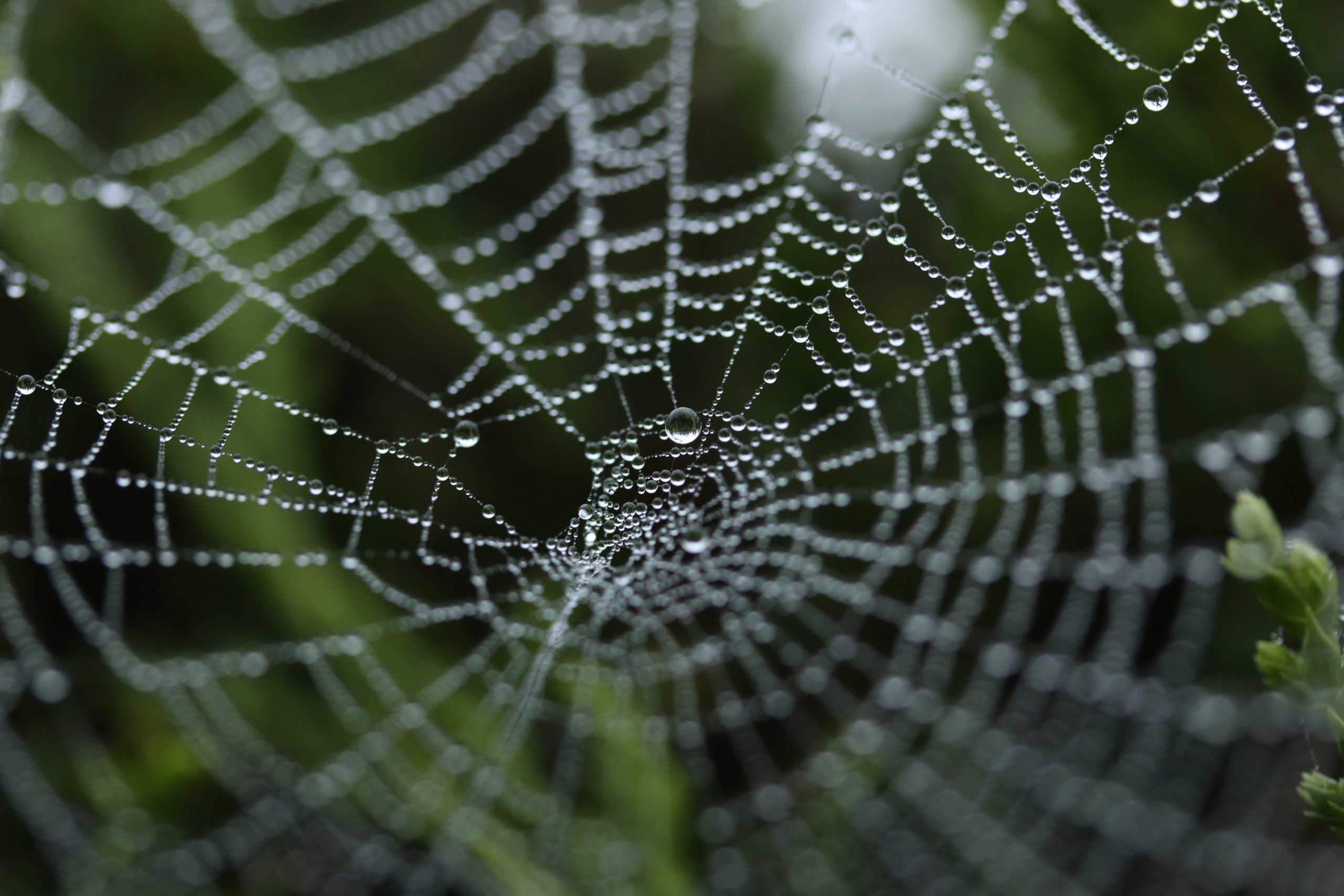
Fragile Habits

Some habits are more fragile than others.

Once established, some habits are very delicate. If you miss a day or try to alter them, it’s easy to knock them out of place completely and see them fade out.

Other habits are more resilient. You can push and prod them, change them in different ways, and they still stick pretty well. At the extreme they act like borderline addictions – it’s harder to stop doing them than to keep doing them.

For me early rising is a relatively fragile habit. I need to be strict with it to keep it in place. I can let myself sleep in a little later very infrequently, like a few times per quarter for an extra hour or two if I really want, but otherwise it’s an always-on habit seven days a week. If I start permitting exceptions even once a week, there’s too much chance of falling out of the habit. Knowing how fragile it is makes it easier for me to accept its fragility and thereby maintain the habit.

Daily exercise is a more resilient habit overall, but some aspects of it are more fragile, so I still have to be careful with it. The timing is sensitive; it usually works best if I do it first thing in the morning. The format is less sensitive, but I’m most consistent with running outside. The duration is very flexible since I can maintain this habit just as well whether I do 30 or 60 minutes or more. The frequency is semi-fragile. If I do 5-6 days per week, I’m good – I don’t need to do this every day to maintain it.

How do you know how fragile certain habits are and to what extent? You test, and you keep track of what you learned from testing.

When some people fail to install a habit or lose a good habit they’d previously gained, they see it as a personal failing. I think that’s a weak way to frame it. Look to the parameters of the habit instead. If those had been slightly different, you might have succeeded. Don’t beat yourself up when a habit doesn’t stick. Examine how you were approaching the habit instead. Where did you cross the line from consistency to collapse?

It’s good to experiment with your habit parameters to see where the fragility is and where you can count on flexibility and robustness. Which tweaks are risky? Which changes are pretty safe? You can discover these answers through experience.

When you lean where the fragile edges are, you can go right up to them when you want extra flexibility without crossing them. Granted these edges will usually be fuzzy, but you can still map out where the safe zones and danger zones are.

I recommend establishing a strict baseline for your habits that you know you can stick with first. This is why I like 30-day challenges as a good starting point. Start with solid consistency for a good month at least. Don’t even skip one day. When you feel confident that you could continue as-is, you can try tweaking the habit here and there to map out the fragile zones. Maybe back off to 5 or 6 days a week. Try doing the habit at a different time of day. Change the duration. Change the setting.

Learn where flexibility works and where it doesn’t. If a habit starts to break, and you catch it early, you can return to your previous baseline for another week or two before you experiment again.

If you totally lose a habit for a while, you can re-establish it with a fresh 30-day challenge. But remember how you broke it, and do your best to avoid making that same mistake again.

One reason I struggled to lock-in being an early riser is that I thought I could be semi-flexible with it, like it would be fine if I gave myself a “cheat day” once a week or so. From many years of emails and coaching calls with people attempting to adopt a similar habit, I can tell you that this is a super common mistake that holds many people back. Too many times I gave myself permission to stay up late, and I screwed it up and lost the habit. I learned from experience that I need to be strict with it to maintain it. That realization keeps me on track. It’s actually easier to get up at the same time daily versus only six days a week.

My recent food logging habit, on the other hand, seems very resilient. It would be hard to break it, partly because it’s so easy to keep going with it. This is also a simple habit to re-establish even if I did break it since it doesn’t require any significant willpower to pick up where I left off. So I’m gradually opening up to be less strict while still keeping to the core value it provides, which is awareness of what I’m eating. I’m starting to eyeball the quantities of more foods that I eat often and where the calories normally fall into tight ranges. One banana is only going to have so many calories, and I really don’t need to weigh a few olives each time. It’s not going to matter much if my estimates are off by +/- 50 calories at the end of a day, especially since my exercise and activity varies each day too. Doing this habit imperfectly still provides essentially the same benefits as doing it perfectly, as long as I don’t fall below some minimum standard of tracking.

If you struggle to adopt or maintain certain habits, consider that you may be dipping into the fragile danger zone with them too often. You may be trying to maintain a more casual and flexible relationship with the habit than it permits. But you may also be able to squeeze more flexibility out of a habit if you accept the necessity from stricter form on the most fragile aspects. For instance, I can choose different routes to run each day.

There’s freedom in strictness. It’s more peace-inducing to know where the boundaries are since then you know what it takes to maintain the habit. Know your minimum standard means that you can trust the habit to stick as long as you stay at or above that standard.


Share Button

Health24.com | Smoking raises aneurysm risk in women

  • An aneurysm is a bulge in an artery, which can rupture and lead to death
  • Women who smoke have a considerably higher risk of aneurysm than nonsmokers
  • More than six million Americans may have an unruptured brain aneurysm

Smoking significantly increases a woman’s risk of potentially deadly brain aneurysms, a new study warns.

An aneurysm is a weakened, bulging section of an artery. If an aneurysm ruptures, it can cause fatal bleeding.

The study included 545 women, aged 30 to 60, who had brain scans at five large teaching and research hospitals in the United States and Canada between 2016 and 2018. The scans showed that 152 of the women had brain aneurysms that hadn’t ruptured.

Compared to nonsmokers, the risk of aneurysm was four times higher in women who smoked, and seven times higher in those who smoked and had high blood pressure.

Most aneurysms located in carotid artery 

The most common reason for a brain scan among the women was persistent headache, which occurred in 62.5% of those with an aneurysm, compared with 44% of those without an aneurysm, the study authors said.

Most of the aneurysms were located in the carotid artery, which is the main blood vessel that leads to the brain.

Women with brain aneurysms were heavier smokers than those with normal brain scans (average of 20 versus 12 cigarettes a day) and had smoked for longer (29 years versus 20 years, on average).

One-third of the women with brain aneurysms had surgery or other invasive procedures, while two-thirds were placed on monitoring, according to the study published online on 27 July in the Journal of Neurology, Neurosurgery & Psychiatry.

“Consideration should be given to screening for [unruptured brain aneurysms] in women aged between 30 and 60 years who smoke cigarettes,” researcher Dr Christopher Ogilvy, with the neurosurgical service at Beth Israel Deaconess Medical Center and Harvard Medical School in Boston, said in a journal news release.

About 6.5 million people in the United States are thought to have a brain aneurysm that hasn’t ruptured. Known risk factors include a previous aneurysm; family history; multiple cysts on the kidneys (polycystic kidney disease); and connective tissue disorders. Previous research suggests that aneurysms are more common in women and in smokers.

Image credit: iStock

Share Button

Virus cases ‘may be levelling off’ in England

After a low in cases at the end of June, the ONS estimated infections had been rising slightly in July.

Share Button

Health24.com | PODCAST | Sex and religion: Your questions answered

The information on Health24 is for educational purposes only, and is not intended as medical advice, diagnosis or treatment. If you are experiencing symptoms or need health advice, please consult a healthcare professional. See additional information.

Share Button

Coronavirus: Asymptomatic cases ‘carry same amount of virus’

But the South Korean study couldn’t say how much this group actually passed coronavirus on.

Share Button

Chemotherapy in cancer patients with Covid-19 ‘not a risk’

Female breast cancer patients were much more likely to survive than other patients, a study says.

Share Button

Coronavirus: England’s contact-tracing app readies for launch

The app will use QR barcode scans as well as Bluetooth handshakes to determine if users are at risk.

Share Button

Hubble uses Earth as proxy for identifying oxygen on potentially habitable exoplanets

Taking advantage of a total lunar eclipse, astronomers using NASA’s Hubble Space Telescope have detected Earth’s own brand of sunscreen — ozone — in our atmosphere. This method simulates how astronomers and astrobiology researchers will search for evidence of life beyond Earth by observing potential “biosignatures” on exoplanets (planets around other stars).

Hubble did not look at Earth directly. Instead, the astronomers used the Moon as a mirror to reflect sunlight, which had passed through Earth’s atmosphere, and then reflected back towards Hubble. Using a space telescope for eclipse observations reproduces the conditions under which future telescopes would measure atmospheres of transiting exoplanets. These atmospheres may contain chemicals of interest to astrobiology, the study of and search for life.

Though numerous ground-based observations of this kind have been done previously, this is the first time a total lunar eclipse was captured at ultraviolet wavelengths and from a space telescope. Hubble detected the strong spectral fingerprint of ozone, which absorbs some of the sunlight. Ozone is important to life because it is the source of the protective shield in Earth’s atmosphere.

On Earth, photosynthesis over billions of years is responsible for our planet’s high oxygen levels and thick ozone layer. That’s one reason why scientists think ozone or oxygen could be a sign of life on another planet, and refer to them as biosignatures.

“Finding ozone is significant because it is a photochemical byproduct of molecular oxygen, which is itself a byproduct of life,” explained Allison Youngblood of the Laboratory for Atmospheric and Space Physics in Boulder, Colorado, lead researcher of Hubble’s observations.

Although ozone in Earth’s atmosphere had been detected in previous ground-based observations during lunar eclipses, Hubble’s study represents the strongest detection of the molecule to date because ozone — as measured from space with no interference from other chemicals in the Earth’s atmosphere — absorbs ultraviolet light so strongly.

Hubble recorded ozone absorbing some of the Sun’s ultraviolet radiation that passed through the edge of Earth’s atmosphere during a lunar eclipse that occurred on January 20 to 21, 2019. Several other ground-based telescopes also made spectroscopic observations at other wavelengths during the eclipse, searching for more of Earth’s atmospheric ingredients, such as oxygen and methane.

“One of NASA’s major goals is to identify planets that could support life,” Youngblood said. “But how would we know a habitable or an uninhabited planet if we saw one? What would they look like with the techniques that astronomers have at their disposal for characterizing the atmospheres of exoplanets? That’s why it’s important to develop models of Earth’s spectrum as a template for categorizing atmospheres on extrasolar planets.”

Her paper is available online in The Astronomical Journal.

Sniffing Out Planetary Atmospheres

The atmospheres of some extrasolar planets can be probed if the alien world passes across the face of its parent star, an event called a transit. During a transit, starlight filters through the backlit exoplanet’s atmosphere. (If viewed close up, the planet’s silhouette would look like it had a thin, glowing “halo” around it caused by the illuminated atmosphere, just as Earth does when seen from space.)

Chemicals in the atmosphere leave their telltale signature by filtering out certain colors of starlight. Astronomers using Hubble pioneered this technique for probing exoplanets. This is particularly remarkable because extrasolar planets had not yet been discovered when Hubble was launched in 1990 and the space observatory was not initially designed for such experiments.

So far, astronomers have used Hubble to observe the atmospheres of gas giant planets and super-Earths (planets several times Earth’s mass) that transit their stars. But terrestrial planets about the size of Earth are much smaller objects and their atmospheres are thinner, like the skin on an apple. Therefore, teasing out these signatures from Earth-sized exoplanets will be much harder.

That’s why researchers will need space telescopes much larger than Hubble to collect the feeble starlight passing through these small planets’ atmospheres during a transit. These telescopes will need to observe planets for a longer period, many dozens of hours, to build up a strong signal.

To prepare for these bigger telescopes, astronomers decided to conduct experiments on a much closer and only known inhabited terrestrial planet: Earth. Our planet’s perfect alignment with the Sun and Moon during a total lunar eclipse mimics the geometry of a terrestrial planet transiting its star.

But the observations were also challenging because the Moon is very bright, and its surface is not a perfect reflector because it is mottled with bright and dark areas. The Moon is also so close to Earth that Hubble had to try and keep a steady eye on one select region, despite the Moon’s motion relative to the space observatory. So, Youngblood’s team had to account for the Moon’s drift in their analysis.

Where There’s Ozone, There’s Life?

Finding ozone in the skies of a terrestrial extrasolar planet does not guarantee that life exists on the surface. “You would need other spectral signatures in addition to ozone to conclude that there was life on the planet, and these signatures cannot necessarily be seen in ultraviolet light,” Youngblood said.

On Earth, ozone is formed naturally when oxygen in the Earth’s atmosphere is exposed to strong concentrations of ultraviolet light. Ozone forms a blanket around Earth, protecting it from harsh ultraviolet rays.

“Photosynthesis might be the most productive metabolism that can evolve on any planet, because it is fueled by energy from starlight and uses cosmically abundant elements like water and carbon dioxide,” said Giada Arney of NASA’s Goddard Space Flight Center in Greenbelt, Maryland, a co-author of the science paper. “These necessary ingredients should be common on habitable planets.”

Seasonal variability in the ozone signature also could indicate seasonal biological production of oxygen, just as it does with the growth seasons of plants on Earth.

But ozone can also be produced without the presence of life when nitrogen and oxygen are exposed to sunlight. To increase confidence that a given biosignature is truly produced by life, astronomers must search for combinations of biosignatures. A multiwavelength campaign is needed because each of the many biosignatures are more easily detected at wavelengths specific to those signatures.

“Astronomers will also have to take the developmental stage of the planet into account when looking at younger stars with young planets. If you wanted to detect oxygen or ozone from a planet similar to the early Earth, when there was less oxygen in our atmosphere, the spectral features in optical and infrared light aren’t strong enough,” Arney explained. “We think Earth had low concentrations of ozone before the mid-Proterozoic geological period (between roughly 2.0 billion to 0.7 billion years ago) when photosynthesis contributed to the build up of oxygen and ozone in the atmosphere to the levels we see today. But because the ultraviolet-light signature of ozone features is very strong, you would have a hope of detecting small amounts of ozone. The ultraviolet may therefore be the best wavelength for detecting photosynthetic life on low-oxygen exoplanets.”

NASA has a forthcoming observatory called the James Webb Space Telescope that could make similar kinds of measurements in infrared light, with the potential to detect methane and oxygen in exoplanet atmospheres. Webb is currently scheduled to launch in 2021.

Video: https://www.youtube.com/watch?v=OHbiPO8bAts&feature=emb_logo

Share Button

How growth rates influence the fitness of bacteria

Bacteria are survival artists: When they get nutrition, they multiply rapidly, albeit they can also survive periods of hunger. But, when they grow too quickly, their ability to survive is hampered, as studies by a research team at the Technical University of Munich (TUM) on E. coli bacteria show. The results could help increase the effectiveness of antibiotics.

“The fitness of bacteria is more complex than expected,” explains Ulrich Gerland, professor for the theory of complex biosystems at the Technical University of Munich. The physicist has been studying the survival strategies of E. coli bacteria for several years.

The unicellular organisms, which go by the Latin name Escherichia coli and support digestion in the large intestine of mammals, are a popular model organism. They facilitate investigations into the way living beings can adapt to changing environmental conditions.

Surviving hard times

“We have known for some time that biological fitness depends on two things: the growth rate when food is available and the ability to survive periods of nutrient deficiency,” explains the scientist. “What was not clear is how these two factors are related.”

For the first time, Gerland and his team have now systematically investigated the extent to which fast or slow growth influences the survivability of E. coli bacteria: “It turns out that changes in growth conditions have a direct impact on death rates. These follow a simple law: The best-nourished and fastest-growing bacteria are the first to die when deprived of food.”

Fat bacteria — poor fitness

So, a good diet is bad for the fitness of bacteria. But why? To find an answer to this question, the TUM researchers carried out a number of experiments: First, cultures of E. coli bacteria were provided nutrient solutions with different compositions.

In the second step, the unicellular organisms were put on a zero diet. Throughout the entire period, the scientists examined whether and how quickly the cells multiplied, and how long they survived.

The fight for survival

The research showed that regardless of how well or poorly they were previously fed, bacteria stopped reproducing when they were deprived of food. In this “maintenance phase,” organisms struggle for bare survival. All available energy sources — for example, the cellular remains of dead bacteria — are used to sustain the metabolism.

In this extreme situation, many cells die of starvation within a few days. However, the death rate is particularly high among rapidly growing E. coli bacteria. “They are primed for rapid growth and waste energy resources. This leads to their demise during the hunger phase,” explains Gerland.

As it turns out, the abundantly fed bacteria have an increased need for energy, as further experiments prove. Surviving times of scarcity is more difficult for organisms with a high energy consumption. “We now understand why evolution doesn’t favor the fastest possible reproduction,” says Gerland. “The biological fitness that is crucial for the survival of a species builds on a balance between growth and survivability.”

Antibiotic therapy with a carrot and a stick

The research results may find application in the future, for example, to improve the effect of antibiotics: “Applying a carrot and stick principle, intestinal bacteria growth could be stimulated by consuming a sweet dish. This would weaken the bacteria if an antibiotic against an intestinal infection is then administered,” explains Gerland. However, it is still too early for concrete recommendations. More research will be necessary.

Share Button

Chemists create the brightest-ever fluorescent materials

By formulating positively charged fluorescent dyes into a new class of materials called small-molecule ionic isolation lattices (SMILES), a compound’s brilliant glow can be seamlessly transferred to a solid, crystalline state, researchers report August 6 in the journal Chem. The advance overcomes a long-standing barrier to developing fluorescent solids, resulting in the brightest known materials in existence.

“These materials have potential applications in any technology that needs bright fluorescence or calls for designing optical properties, including solar energy harvesting, bioimaging, and lasers,” says Amar Flood, a chemist at Indiana University and co-senior author on the study along with Bo Laursen of the University of Copenhagen.

“Beyond these, there are interesting applications that include upconverting light to capture more of the solar spectrum in solar cells, light-switchable materials used for information storage and photochromic glass, and circularly polarized luminescence that may be used in 3D display technology,” Flood says.

While there are currently more than 100,000 different fluorescent dyes available, almost none of these can be mixed and matched in predictable ways to create solid optical materials. Dyes tend to undergo “quenching” when they enter a solid state due to how they behave when packed close together, decreasing the intensity of their fluorescence to produce a more subdued glow.

“The problem of quenching and inter-dye coupling emerges when the dyes stand shoulder-to-shoulder inside solids,” says Flood. “They cannot help but ‘touch’ each other. Like young children sitting at story time, they interfere with each other and stop behaving as individuals.”

To overcome this problem, Flood and colleagues mixed a colored dye with a colorless solution of cyanostar, a star-shaped macrocycle molecule that prevents the fluorescent molecules from interacting as the mixture solidified, keeping their optical properties intact. As the mixture became a solid, SMILES formed, which the researchers then grew into crystals, precipitated into dry powders, and finally spun into a thin film or incorporated directly into polymers. Since the cyanostar macrocycles form building blocks that generate a lattice-like checkerboard, the researchers could simply plug a dye into the lattice and, without any further adjustments, the structure would take on its color and appearance.

While previous research had already developed an approach to spacing the dyes apart using macrocycle molecules, it relied on colored macrocycles to do the job. Flood and colleagues found that colorless macrocycles were key.

“Some people think that colorless macrocycles are unattractive, but they allowed the isolation lattice to fully express the bright fluorescence of the dyes unencumbered by the colors of the macrocycles,” says Flood.

Next, the researchers plan to explore the properties of fluorescent materials formed using this novel technique, enabling them to work with dye makers in the future to realize the materials’ full potential in a variety of different applications.

“These materials are totally new, so we do not know which of their innate properties are actually going to offer superior functionality,” says Flood. “We also do not know the materials’ limits. So, we will develop a fundamental understanding of how they work, providing a robust set of design rules for making new properties. This is critical for putting these materials into the hands of others — we want to pursue crowd sourcing and to work with others in this effort.”

Story Source:

Materials provided by Cell Press. Note: Content may be edited for style and length.

Share Button