COVID-19 infection control, radiographer protection in CT exam areas

In an open-access article published ahead-of-print by the American Journal of Roentgenology (AJR), a team of Chinese radiologists discussed modifications to the CT examination process and strict disinfection of examination rooms, while outlining personal protection measures for radiographers during the coronavirus disease (COVID-19) outbreak.

As Jieming Qu, Wenjie Yang, and colleagues at Shanghai Jiao Tong University Medical School Affiliated Ruijin Hospital noted, to undergo CT, patients must exit the fever clinic and proceed to an examination room elsewhere at the institution. Moreover, CT examination rooms are not designed according to the rule of three zones and two aisles — clean zone, semicontaminated zone, contaminated zone; patient aisle and health care worker aisle.

“We were able to urgently install a CT scanner in the fever clinic at the beginning of the outbreak, which allowed rapid screening and early diagnosis,” Qu et al. wrote. A safe infection control strategy for examination of patients with suspected SARS-CoV-2 was also implemented, including reconstructing the area and planning the path a patient would take. Additionally, Qu, Yang, and team rerouted the walking pathway to be one-way, limiting ingress and egress while separating contaminated zones from clean zones.

Qu, Yang, and colleagues’ extensive routine for examination room disinfection included using an air disinfector (maximum volume of 4000 m3/h) and a movable ultraviolet light (intensity higher than 70 ?W/cm2 per meter); cleaning nonplastic equipment surfaces, radiation protection items, and doorknobs with a solution at least 75% alcohol; washing plastic surfaces with soapy solution; and mopping the floor with a disinfectant containing 2000 mg Cl per liter of water. Similarly, all patient waste was considered infectious medical waste and managed accordingly.

Typically, CT scanning is performed by two radiographers. As Qu et al. explained: “The operating radiographer works in the locked control room and controls the scanner (contaminated area). The positioning radiographer works inside and outside the scanning room (contaminated area) and is responsible for communicating with and positioning the patient. The positioning radiographer is not allowed to enter into the control room until the shift ends.”

Once a shift is finished, the authors of this AJR article noted that the positioning radiographer is allowed to enter the clean zone only after protective equipment has been properly discarded in the buffer zone.

Story Source:

Materials provided by American Roentgen Ray Society. Note: Content may be edited for style and length.

Share Button

Early humans thrived in this drowned South African landscape

Early humans lived in South African river valleys with deep, fertile soils filled with grasslands, floodplains, woodlands, and wetlands that abounded with hippos, zebras, antelopes, and many other animals, some extinct for millennia.

In contrast to ice age environments elsewhere on Earth, it was a lush environment with a mild climate that disappeared under rising sea levels around 11,500 years ago.

An interdisciplinary, international team of scientists has now brought this pleasant cradle of humankind back to life in a special collection of articles that reconstruct the paleoecology of the Paleo-Agulhas Plain, a now-drowned landscape on the southern tip of Africa that was high and dry during glacial phases of the last 2 million years.

“These Pleistocene glacial periods would have presented a very different resource landscape for early modern human hunter-gatherers than the landscape found in modern Cape coastal lowlands, and may have been instrumental in shaping the evolution of early modern humans,” said Janet Franklin, a distinguished professor of biogeography in the department of Botany and Plant Sciences at UC Riverside, an associate member of the African Centre for Coastal Palaeoscience at Nelson Mandela University in South Africa, and co-author of several of the papers.

Some of the oldest anatomically modern human bones and artifacts have been found in cliff caves along the coast of South Africa. For many years, the lack of shellfish in some layers at these sites puzzled archaeologists. In spite of apparently living near the ocean, the inhabitants hunted mostly big game — the sort of animals that typically live farther inland.

Scientists knew a submerged landscape existed on the continental shelf just offshore, but it wasn’t until recently, perhaps inspired by rising sea levels of our current human-caused global warming, they realized these caves might have made up the westernmost edge of a long-lost plain.

During most of the Pleistocene, the geological era before the one we live in now, these caves were not located on the coast. With so much of the Earth’s water locked up in continent-sized glaciers, sea level was much lower, and humans could have thrived between the cliffs and a gentler coastline miles and miles to the east.

A special issue of Quaternary Science Reviews presents papers using a wide range of techniques to reconstruct the environment and ecology of the Paleo-Agulhas Plain. They reveal a verdant world rich with game, plant, and coastal resources, periodically cut off from the mainland during warm spells between glacial periods when sea level rose to levels similar to those of today, which would have played an important role in human evolution.

Franklin and her colleagues used modern vegetation patterns along the Cape south coast to develop models of the expected vegetation for the various soil types, as well as the climate (especially rainfall) and fire regimes of the past glacial periods that framed most of the timeframe in which modern humans emerged.

Joining her in the research were Richard M. Cowling and Alastair J. Potts of Nelson Mandela University; Guy F. Midgley at Stellenbosch University; Francois Engelbrecht of the University of Witwatersrand; and Curtis W. Marean of Arizona State University.

Vegetation was reconstructed based on a model of the ancient climate and fire patterns of these glacial phases that define human evolution. The group developed the vegetation model based on present-day patterns and environmental conditions, compared their model to an independently derived vegetation map to validate it, then applied it to the climate, landforms, and soils reconstructed for the peak of the last ice age on the Palaeo-Agulhas Plain.

Reconstruction, mapping, and modeling of the paleo-climate, geology, and soils by their collaborators are featured in other articles in the special issue.

The model found the paleo-landscape exposed during glacial low-sea levels added a land area the size of Ireland to the southern tip of Africa. Near the coast, it was dominated by “limestone fynbos,” a low-stature, but species-rich shrubland typical of contemporary South Africa’s Cape Floristic Province, a global plant diversity hotspot. The northern plains were mostly grasslands in shallow floodplains and on shale bedrock.

This savanna-like vegetation is rare in the modern landscape and would have supported the megafauna typical of glacial periods. These game animals, found in the archaeological record, include a great diversity of grazing animals, including the now-extinct giant Cape Buffalo, and others of which no longer occur naturally in this part of Africa, such as giraffes.

The Paleo-Agulhas plain had extremely high plant species diversity, as well as a greater variety of ecosystems and plant communities than currently found in this region, including shale grassland with dune fynbos-thicket mosaic on uplands and broad and shallow floodplains supporting a mosaic of woodland and grassland on fertile, alluvial soils.

Share Button

The dreaming brain tunes out the outside world

Scientists from the CNRS and the ENS-PSL in France and Monash University in Australia have shown that the brain suppresses information from the outside world, such as the sound of a conversation, during the sleep phase linked to dreaming. This ability could be one of the protective mechanisms of dreams. The study, carried out in collaboration with the Centre du Sommeil et de la Vigilance, Hôtel-Dieu, AP-HP — Université de Paris, is published in Current Biology on 14 May 2020.

While we dream, we invent worlds that bear no relation to the quietness of our bedroom. In fact, it is rather unusual for elements of our immediate environment to be incorporated into our dreams. To better understand how the brain protects itself from outside influences, researchers invited 18 participants to a morning nap in the lab. Morning sleep is rich in dreams. Dreams mostly occur during what is known as REM sleep, since the brain is somehow in a waking state during this phase of sleep, showing brain activity similar to that when a person is awake. The body, on the other hand, is paralysed, although not entirely. During certain phases of REM sleep, the eyes continue to move. Research has shown that such movements are related to dreaming.

To study how the dreaming brain interacts with external sounds, the scientists got volunteer sleepers to listen to stories in French mixed with meaningless language. By combining the electroencephalogram with a machine learning technique, they confirmed that, even when the brain is asleep, it continues to record everything that goes on around it. They also showed that, during light sleep, the brain prioritises meaningful speech, just as it does when in the waking state. However, such speech is actively filtered out during eye movement phases in REM sleep. In other words, our sleeping brain can select information from the outside world and flexibly amplify or suppress it, depending on whether or not it is immersed in a dream!

The team believe that this mechanism enables the brain to protect the dreaming phase, which is necessary for emotional balance and consolidation of the day’s learning. Although dreams are predominant during periods of eye movement, they can also occur during other phases of sleep. Are they then accompanied by a similar suppression of sensations from the outside world?

Story Source:

Materials provided by CNRS. Note: Content may be edited for style and length.

Share Button

Discipline Ripples

A nice side effect of my daily blogging challenge is that it’s helping me become more disciplined in other areas of life. This in turn increases my capacity to get more done because I can trust that I’ll have abundant discipline to flow through more tasks and projects.

I expected that there would be some discipline ripples, but I’m pleased that they’re better than I anticipated.

Staying caffeine free feels easier than ever. I’m also easily avoiding other stimulants like any forms of chocolate, caffeinated tea, etc. It feels like the part of my brain that recognizes and wants to avoid addictive patterns has been strengthened.

Maintaining my early riser habit feels easier than ever, and I’m often getting up earlier than my usual 5am alarm. This morning I got up at 4:30, which is happening more often. I’ve noticed that I feel less inclined to linger in bed even if I could justify that it’s not time to get up yet. When my body feels awake, it wants to get up and move, not stay in bed longer than it needs to.

On average I’m running for about an hour each morning. This morning’s run was 70 minutes. That used to feel like a long run; now it feels like a normal everyday type of run. The minimum I run is 45 minutes since anything less feels like it’s too little.

With the increased running, I’m flowing through many more nonfiction audiobooks, finishing 2-3 per week, so that will add up to 100-150 audiobooks per year at this rate. I just finished League of Denial yesterday, and this morning I started Big Magic. I’ll finish Big Magic tomorrow and start another audiobook on Sunday.

Work projects are flowing very nicely. I’m doing a better job of staying organized and completing projects in an intelligent order. I’m not perfect at this, but I notice that instead of feeling driven to choose the work for each day based on intuition or emotional impulses, I’m more easily flowing into the most rational project to work on next. And when I sit down to work on it, the discipline is there to stick with it for hours.

I’ve already written more blog articles this year than I did in 2019, 2018, and 2017 combined. By the end of June, you’ll be able to add 2016 to that as well. So that will be like doing four years of blogging in six months.

The interesting thing about 365-day challenges is that initially they’re hard, but eventually they become easy. I’d say that happens somewhere around day 45 to 75. After 6-9 weeks into such a challenge, the resistance crumbles, and the training effect begins to take hold. By enduring that long and not missing a single day, you’ve grown stronger. And it’s easier to keep going because now you get to do the rest of the challenge with a stronger, more aligned, less resistant mind.

It’s hard to stretch ourselves to tackle discipline-building challenges, but note that it does get easier as your mind grows stronger.

The mind that whines about getting up early isn’t the same as the mind that’s already gotten up before dawn for many weeks in a row. The new mind thinks the old mind is a wimp for whining about such an easily maintainable and personally beneficial habit.

The mind that whines about giving up chocolate isn’t the same as the mind that’s free of that addiction and recognizes it as an unnecessary weakness.

The mind that would whine about running for an hour each day isn’t the same as the mind that’s been doing it for weeks, thinks it’s normal, and suspects that 75-minute daily runs would probably be no big deal either.

You’ve gotten used to your current level of self-discipline, but you could train yourself to go beyond that and create a new normal for yourself. Your new normal may yield much better results than your old normal. The transition may be difficult, but once you’ve locked in your new normal, it’s really no more difficult than your old normal. Raising your standards is hard. Keeping them raised is much easier.

When you train up your discipline and then apply it to your life, you don’t suffer every day because the rewards of discipline are greater than the temporary pleasures of an undisciplined life. Life without chocolate isn’t a sad life. It’s a more focused and mentally stable life since the body no longer has to deal with the ups and downs of the stimulant effect.

The sad life is that of the stimulant addict who’s in denial about their addiction. The sad life is a life without daily exercise and its many neurological benefits. The sad life is that of the person who has to suffer with the results of undisciplined habits taking their toll year after year.

Training up your discipline is hard – yes. But not training up your discipline is way, way, way harder.

Imagine what more you could experience and enjoy with more discipline – the ability to get yourself to take rational actions that create desirable results again and again. That’s worth some challenging training, so you can access those long-term benefits.

Share Button

Coronavirus infection ‘R’ rate in UK creeps up

The figure is now much closer to one – the point at which the virus starts spreading rapidly.

Share Button

Coronavirus vaccine: Macaque monkey trial offers hope

Six rhesus macaque monkeys were vaccinated and then exposed to the virus.

Share Button

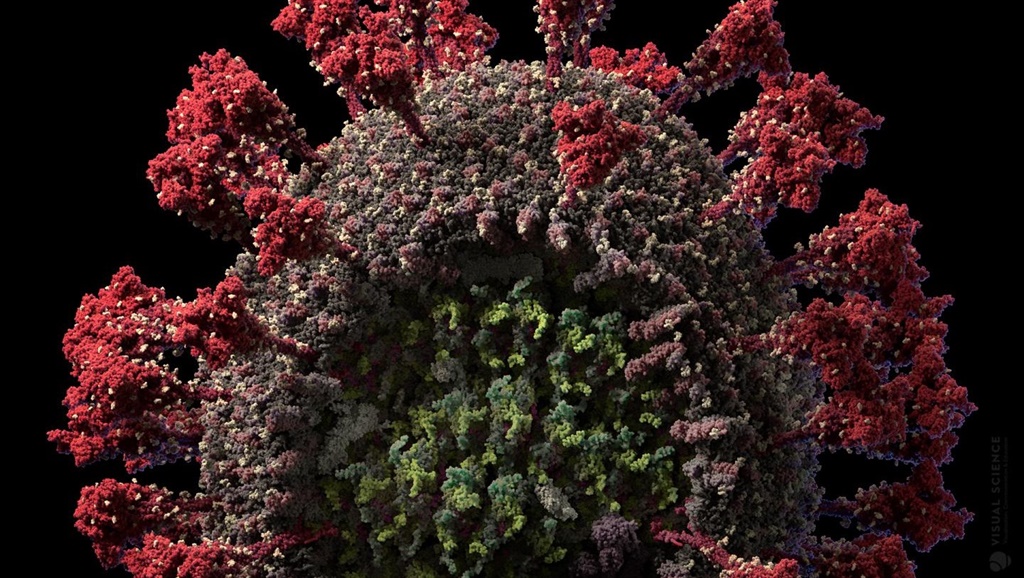
Health24.com | SEE: This is what the coronavirus looks like at an atomic level – according to a 3D model

The new coronavirus, named SARS-CoV-2, received its name for its crown-like spikes on its surface which can be seen under a microscope. However, according to a news release by EurekAlert, scientists from the biomedical visualisation studio, Visual Science, have recently created a three-dimensional (3D) model of the virus at atomic resolution, which allows for the incredible ability to view individual atoms. 

To create an accurate model, the team of scientists and CGI specialists used the latest scientific research that looks at the structure of coronaviruses, and communicated with virologists currently working with SARS-CoV-2. Apart from their recent model, they also previously created models of Ebola, HIV, Zika and flu viruses. Their HIV virion model was awarded first place at the 2010 Science and Engineering Visualization Challenge (SEVC), according to EurekAlert.

“It [the model] shows, in great detail, the intact particle with its spike glycoproteins embedded in the membrane. A cutaway view reveals the viral nucleocapsid inside the particle. 

“These gorgeous images will enhance our understanding of the virus particle, and for the non-scientist will make even more palpable the virus that is infecting millions of people,” Professor Vincent Racaniello at the Department of Microbiology & Immunology of Columbia University, New York, said.

SARS-CoV-2

SARS-CoV-2 main model look. Image credit: Visual Science

READ | Coronavirus in SA: All the confirmed cases

READ | Coronavirus morning update: Level 3 by end-May – but not for all, and symptoms to look out for in kids

READ | Why can two young and healthy individuals be affected so differently by coronavirus?

Image credit: Visual Science

Share Button

Health24.com | WATCH | Why does video chatting drain you so much?

The information on Health24 is for educational purposes only, and is not intended as medical advice, diagnosis or treatment. If you are experiencing symptoms or need health advice, please consult a healthcare professional. See additional information.

Share Button

Health24.com | Covid-19: Is ‘normal’ healthcare being crowded out?

As Covid-19 continues to take centre stage in the world’s hospitals and clinics, concerns are mounting over the impact on ‘normal’ healthcare. This is particularly so in South Africa, where there are increased rates of cancer and diabetes besides severe HIV and tuberculosis (TB) epidemics. Spotlight asked a range of experts and frontline workers how this tension between Covid-19 and other healthcare services is playing out in our healthcare facilities.

Pressure builds for cancer care 

Dr Lydia Cairncross, Head of Groote Schuur Hospital’s Breast and Endocrine Surgery Unit in Cape Town, told Spotlight that the pandemic was landing on top of South Africa’s pre-existing crisis for oncological services.

“At the beginning of the lockdown period we had a large number of women waiting for breast cancer surgery – over 80 [women],” she said. “We also have patients waiting for other forms of diagnostic surgery as well as treatments for other malignancies. What we’ve had to do is prioritise cancer surgery over other elective surgery. We’ve also had to put some patients onto alternative therapies where that has been possible.”

Cairncross said that so far, the hospital has had no major delays in cancer surgeries, except where a surgery requires long admission to hospital and intensive care. 

Professor Jeannette Parkes, Head of Radiation Oncology at Groote Schuur, said that while a lot had changed in the department to protect patients, services were running in full force. “We’re running a full new patient service, full chemotherapy services and full radiotherapy services,” she said. 

“Our concern is that we’ve looked at the lessons that have been learnt in some of the overseas departments and we know that cancer patients do worse from a Covid-19 point of view, and they do worse from a cancer point of view if they are having active treatment while they are infected.”

Routine follow-ups cancelled

Parkes said that patients coming in for treatment were getting what they needed to a large degree, but treatment strategies had been slightly changed. “We’ve cut down the number of chemotherapy and radiotherapy treatments, not the actual treatment but cutting down the number of fractions that we give patients to try and minimise their risk,” she said. 

Parkes explained that where possible, using a method called “hypo-fractionation” which is treating radiotherapy in larger fractions in a shorter period to try to minimise risk, can cut down the number of times a patient has to visit the department.

Adding to this, Parkes said that they’ve cancelled all routine follow-ups, but that this was not sustainable. “Potentially you could have issues with patients who are not having new problems picked up,” she said. 

Cairncross raised concerns that following the pandemic, there could be an epidemic of late diagnosis of cancer.

“The major problem for us is going to be the delay in diagnosis for many, many patients who can’t access the system at the moment. A lot of diagnostic surgery is being delayed and certainly our diagnostic clinics are not running at full-scale,” she said. 

Parkes agreed. “Our concern is the patients who are not being diagnosed because they’ve got a symptom but they haven’t accessed primary care services or had a biopsy. I think everything is going to be overshadowed by this pandemic, not just cancer services,” she said. “It’s a concern that all non-Covid-19 healthcare will become secondary over a period of months.”

Cutting surgery and bracing for the backlog

Dr Kathryn Chu, Director of the Centre for Global Surgery, Department of Global Health at Stellenbosch University, said that surgical delivery has changed dramatically to prepare for Covid-19. She said that elective operations and clinic visits have been drastically reduced or cancelled to free up beds and resources. 

An orthopaedic surgeon working in the Free State’s public sector told Spotlight that half of the operating theatres in their hospital had been re-designated for Covid-19, and that all orthopaedic surgeries, except for trauma cases, had been postponed. 

Similarly, Dr Bruce Biccard, Professor and Second Chair of Anaesthesia and Perioperative Medicine at Groote Schuur, said that all purely elective surgeries at the hospital had been cancelled. 

National Department of Health Spokesperson, Popo Maja, confirmed this. “All health services in both the public and health sector have not been stopped. What has been stopped is elective procedures.” Maja said there were enough intensive care unit (ICU) beds for surgical patients requiring emergency care or life-saving procedures. 

Biccard gave an idea of the types of surgery that continue in the public sector in the Western Cape. “About 10% of surgeries are for cancer, 40% are for a range of emergencies, a further 10% for orthopaedic emergencies, and about 40% for Caesarean sections,” he said. 

Decision-making difficult

In the Free State, Spotlight’s source said, one positive of cancelling elective surgeries was that trauma cases could be in and out of theatre within 24 hours. The source said that trauma case numbers were very low, which could be because of alcohol ban and restrictions on movement and travel. 

According to Biccard, surgical decision-making during this time was very difficult. “For the surgical patient, a delay in surgery increases morbidity and mortality. Surgery is a necessary and essential part of the care of these patients. However, patients who have surgery, and either are infected with Covid-19 at the time of surgery, or who become infected post-operatively have poor outcomes with a high incidence of pneumonia and death,” he said. 

With the community spread of the virus, Biccard said another concern was surgical patients who may be infected but are asymptomatic. Asymptomatic patients have the same poor outcomes after surgery as those with symptomatic infection, he said. 

“Bringing a surgical patient into hospital who is infected, is a disaster, as it is a risk to everyone else in the hospital,” said Biccard. “Remembering that we have a finite healthcare workforce, if they get sick, we cannot provide care. It also puts other patients at risk, who are already in the hospital.”

In the pandemic’s aftermath, Chu said a main concern would be the backlog of surgical conditions needing care, and the collateral damage of lack of access to care during this time. “The long-term impact of Covid-19 on reducing access to care for non-Covid-19 [patients] is unknown, but should not be underestimated,” she said. 

Risk to other healthcare

With the number of confirmed Covid-19 cases rising rapidly, the Western Cape government is worried about the possibility of other health conditions suffering during this time. Dr Keith Cloete, Head of the Western Cape Health Department, said in a media briefing last week that the potential for other conditions to be crowded out of the healthcare system during this time was a real concern.  

“We are not crowding everything out for Covid-19. Our plan says we crowd out 50% of what we’ve done to this point, to make way for Covid-19, but it still means 50% of what we have as our capacity is to deal with everything else,” said Cloete. 

Cloete said certain healthcare like child and maternal health and mental health services cannot stop during the pandemic. “The [conditions] we are concerned about, the area that Covid-19 potentially crowds out, is the competing adult medical conditions, which is where hypertension, diabetes, heart disease, HIV and TB comes in. The short answer is [that] all of those will suffer and has suffered under this. [It’s] the impact of that suffering, we need to keep an eye on,” said Cloete. 

Maja also responded to concerns that other health conditions may be crowded out. “Covid-19 has not impacted negatively to the provision and access to health services.” However, Maja said, there was a decrease in people accessing primary healthcare facilities such as clinics. “[This is] largely because of lockdown regulations and partly because of fear of infection,” he said. 

HIV and TB testing decreases

Spotlight earlier reported that since the lockdown, TB testing had decreased by half. Reasons behind this are unclear, ranging from patients being afraid of healthcare facilities, or patients only screened for Covid-19 and not for TB.

Mzimasi Gcukumana, Media Officer for the National Health Laboratory Services (NHLS), confirmed that during the lockdown both HIV and TB testing had decreased. The NHLS saw a decrease in sampling volumes from clinics. “Monitoring post lockdown will provide better insight,” he said. 

Maja, however, said that the National Department of Health was not aware of a decrease in HIV and TB testing. 

Gcukumana said between 8 April and 8 May this year the NHLS completed 35 604 viral load tests, 2 520 Early Infant HIV Diagnosis (EID) tests, and 57 497 TB tests. To place these numbers in context, Spotlight requested the testing numbers for the same period last year but did not receive the information by the time of publication. 

People living with HIV should ideally get at least one viral load test per year. With over 4.5 million people on treatment in the public sector (a conservative estimate), it works out to at least 375 000 viral load tests per month – ten times the figure provided by Gcukumana. 

Despite the decrease in testing, Gcukumana said test results show people’s viral load counts were not increasing during this time. 

In the Western Cape, Cloete emphasised that HIV and TB, particularly TB, remained the province’s biggest healthcare challenge. “That’s not going to disappear with Covid-19.” Cloete said that one of the major things the province learned from HIV and TB, is how to manage patients outside of healthcare facilities, and that this has gone a long way in managing patients during the pandemic. 

Community healthcare workers being diverted?

There are concerns that community healthcare workers (CHWs) are asked to work on Covid-19 screening and contact-tracing at the expense of their normal duties. CHWs are instrumental in TB contact tracing, among other health support services in communities.

Cairncross who is also a member of the People’s Health Movement of South Africa (PHMSA) said it is unclear if CHWs conducting Covid-19 screening, are also doing other work. “The PHMSA and other organisations have really tried to find out if the CHWs doing screening are the same [ones] that are part of the District Community Outreach Teams, and if so, what’s happening to the work they were doing before,” she said. 

Cairncross said there is a call from many sectors within health for CHWs to do comprehensive screening, rather than just screen for Covid-19. “It doesn’t make sense for us to have a vertical one disease approach to this because people who have hypertension, diabetes and cancer are at higher risk of getting severe Covid-19,” she said. 

Maja said CHWs are still working in communities providing integrated services other than Covid-19 screening. 

The need to strengthen healthcare systems

“Strategically for us, we should argue as health workers that our response to Covid-19 has to embed within it, long-term strategies to strengthen the health system,” Cairncross said. 

“We can’t just have emergency once-off measures, people employed temporarily, community health workers sent out but they’re not kept in the system, once-off grants for very specific periods of time. We actually need the investment that’s going into this epidemic management to be [one] that is sustainable for long-term health systems strengthening.”

*This article was produced by Spotlight – health journalism in the public interest. Sign up for our newsletter and stay informed.

Image credit: Unsplash

Share Button

Coronavirus: Reopening NHS services must be safe, unions say

Hospitals face another “crucial test” when outpatient clinics and operations resume, health unions say.

Share Button