Several schools send pupils and staff home after they return from skiing trips in the country.


Several schools send pupils and staff home after they return from skiing trips in the country.
Pingpong may hold promise as a possible form of physical therapy for Parkinson’s disease. People with Parkinson’s who participated in a pingpong exercise program once a week for six months showed improvement in their Parkinson’s symptoms, according to a preliminary study released today that will be presented at the American Academy of Neurology’s 72nd Annual Meeting in Toronto, Canada, April 25 to May 1, 2020.
Parkinson’s disease is a movement disorder in which a chemical in the brain called dopamine is gradually reduced. This process results in slowly worsening symptoms that include tremor, stiff limbs, slowed movements, impaired posture, walking problems, poor balance and speech changes.
“Pingpong, which is also called table tennis, is a form of aerobic exercise that has been shown in the general population to improve hand-eye coordination, sharpen reflexes, and stimulate the brain,” said study author Ken-ichi Inoue, M.D., of Fukuoka University in Fukuoka, Japan. “We wanted to examine if people with Parkinson’s disease would see similar benefits that may in turn reduce some of their symptoms.”
The study involved 12 people with an average age of 73 with mild to moderate Parkinson’s disease. The people had been diagnosed with Parkinson’s for an average of seven years.
The people were tested at the start of the study to see which symptoms they had and how severe the symptoms were.
Participants then played pingpong once a week for six months. During each weekly five-hour session, they performed stretching exercises followed by table tennis exercises with instruction from an experienced table tennis player. The program was developed specifically for Parkinson’s disease patients by experienced table tennis players from the department of Sports Science of Fukuoka University.
Parkinson’s symptoms were evaluated again after three months and at the end of the study.
The study found that at both three months and six months, study participants experienced significant improvements in speech, handwriting, getting dressed, getting out of bed and walking. For example, it took participants an average of more than two attempts to get out of bed at the beginning of the study compared to an average of one attempt at the end of the study.
Study participants also experienced significant improvements in facial expression, posture, rigidity, slowness of movement and hand tremors. For example, for neck muscle rigidity, researchers assessed symptoms and scored each participant on a scale of zero to four with a score of one representing minimal rigidity, two representing mild rigidity, three representing moderate rigidity and four representing severe rigidity. The average score for all participants at the start of the study was three compared to an average score of two at the end of the study.
Two participants experienced side effects. One person developed a backache and another person fell.
“While this study is small, the results are encouraging because they show pingpong, a relatively inexpensive form of therapy, may improve some symptoms of Parkinson’s disease,” said Inoue. “A much larger study is now being planned to confirm these findings.”
The main limitation of the study was that the participants were not compared to a control group of people with Parkinson’s disease who did not play pingpong. Another limitation was that a single specialist assessed the patients.
Story Source:
Materials provided by American Academy of Neurology. Note: Content may be edited for style and length.
Seeds offer a level of resilience to the harmful effects of climate change in ecosystems across the globe. When seeds are dropped into the soil, often becoming dormant for many years until they are ready to grow into plants, they become part of the natural storage of seeds in “soil seed banks.” These banks have been thought to better withstand extreme conditions than can the sprouted vegetation that exists above-ground.
A new study published in the Ecological Society of America’s journal Ecological Applications examines how warming and increased precipitation (rain and snow) harms the seeds in the ground of the Tibetan Plateau and elsewhere.
“Soil seed banks are essentially the last resort of natural resilience in ecosystems,” says Scott Collins, professor at New Mexico University and an author on the paper. “Too often we focus on what we see above ground and base management decisions just on the appearance of the plant community.”
The Tibetan Plateau, a place that has been grazed for thousands of years, is an ideal place to study direct and indirect climate effects on vegetation in a fragile environment. The study states that as the highest plateau in the world, averaging over 12,000 feet (4000 meters) in elevation, it is regarded as the third pole of the Earth. The warming rate here is nearly 1.5 times that of global warming due to climate change and annual rainfall has increased in most areas of the plateau.
Because the growing season is relatively short on the plateau, the soil samples and the plant surveys were all collected in one year. Researchers from Lanzhou University in China visited 57 sample collection sites at different elevations and ecosystem types in the northeastern part of the plateau. They gathered 1026 soil samples and surveyed the aboveground plant community, which are composed of the grown plants that reflect the types of seeds dropped into the ground over time. Next, the researchers germinated the samples and grew them in experimental plots to study the growth and what different conditions affect the seed soil banks of Tibet.
While some plants appear to grow well under increasing precipitation and warming, these changes have different, harmful effects on the little seeds that lay dormant and resilient in the soil.
“Climate change effects the ability of seeds to germinate, grow and survive,” says Collins. “Although climate change affects adult plants, seedlings are delicate and stress from climate — drought, freezing, etc. — can cause high mortality of seedlings.”
The study states that temperature is a primary factor in controlling seed dormancy. With warmer temperatures, seeds may be triggered to sprout too early when conditions are not ideal for healthy growth. An abnormally warm spell of a few days — which is becoming more common — during an otherwise harsh winter can trigger those seeds to grow but ultimately make them fail. Many seeds might also be triggered to sprout too soon by higher moisture levels in the soil.
Increasing temperature and precipitation can also effect seeds indirectly, by changing the environment around them. Pathogens (microscopic disease-causing organisms) that are harmful to seeds can grow more prolific under warmer and wetter soil conditions. The acidity of the soil can also change, which strongly affects microbial communities and the abundance of those pathogens. Extra nitrogen in the soil, also brought on by changing conditions, allows some plant species to dominate others and leads to a decline in the overall species diversity, which translates to lower diversity of seeds in the ground.
Collins believes the study should compel ecosystem managers and scientists to pay attention to both the direct and indirect effects of global environmental change on belowground systems. “Even when the aboveground community seems badly degraded,” he says, “the soil seed bank may still provide an important but underappreciated source of ecosystem resilience following prolonged disturbance.”
With continued changing climate conditions, however, that resilience continues to be tested.
Story Source:
Materials provided by Ecological Society of America. Note: Content may be edited for style and length.
Electrolyte supplements popular with endurance runners can’t be relied on to keep essential sodium levels in balance, according to researchers at the Stanford University School of Medicine and their collaborators.
Rather, longer training distances, lower body mass and avoidance of overhydration were shown to be more important factors in preventing illness caused by electrolyte imbalances, the researchers found. Their study also showed that hot weather increased the rates of these types of illnesses.
“Electrolyte supplements are promoted as preventing nausea and cramping caused by low salt levels, but this is a false paradigm,” said Grant Lipman, MD, professor of emergency medicine at Stanford and director of Stanford Wilderness Medicine. “They’ve never been shown to prevent illness or even improve performance — and if diluted with too much water can be dangerous.”
Lipman is the lead author of the study, which will be published online Feb. 25 in the Clinical Journal of Sports Medicine. Brian Krabak, MD, a sports and rehabilitation medicine specialist at the University of Washington-Seattle, is the senior author.
Providing care for ultramarathoners
Lipman and several of his co-authors are experienced at providing medical care for ultramarathoners and compete in ultramarathons themselves, so they are familiar with the challenges the athletes face. Ultramarathons are any foot race longer than a marathon. The idea for this study grew out of seeing firsthand how often endurance athletes use electrolyte supplements — whether taken in pill, powder or liquid form — and wanting to know if they prevented illness.
“In the past, athletes were told to make sure they’re taking electrolyte supplements and drinking as much water as they can,” Lipman said. “It was generally thought that that would prevent things like muscle cramping, electrolyte imbalances and dizziness. But there is currently no evidence to show this is true.”
Sodium levels that are too high or too low during exercise can harm athletes. This study focused on two conditions: hypernatremia, which occurs when sodium levels are too high and is associated with dehydration, and exercise-associated hyponatremia, or EAH, which is caused by a drop in sodium levels. EAH can lead to altered mental status, seizures, pulmonary edema and even death. There have been 14 such documented fatalities since 1985, according to previous studies.
“Most athletes worry about dehydration, but that won’t kill you,” Lipman said. “There have been multiple deaths from EAH, not only among endurance athletes but among military, football players and half-marathoners, as well.”
‘The perfect outdoor lab’
To conduct the study, researchers recruited 266 ultramarathoners from RacingThePlanet’s weeklong athletic events, which involve running 155 miles over seven days across rough terrain in extreme weather conditions at different deserts around the world.
“It’s the perfect outdoor lab for easily generalizable results,” said Lipman, who is on the medical advisory board and is research director for the events. Each of the study participants ran in one of five different races held in 2017 and 2018 in South America, Namibia and Mongolia. Data was collected on the fifth day of the event, when the athletes ran 50 miles. Ninety-eight of the runners competed in temperatures that averaged over 93 F.
“It’s a bit crazy,” said co-author Patrick Burns, MD, assistant professor of emergency medicine at Stanford and a participant in the trial, who completed one of the colder races — held in the Patagonia region of Chile. “The race started at 8 a.m. and I finished at 8 p.m. We ran trails through the woods with thousand-foot climbs and multiple river crossings up to your waist. It was cold and overcast and raining. I was soaked. My Achilles tendons were on fire.”
Data was collected from athletes at the beginning and end of the 50-mile race, when the exhausted, thirsty participants finally crossed the finish line. Prior to the race, the participants had been asked what electrolyte supplements they planned to use, how often they planned to take them and what their drinking strategy was — whether they planned to drink at regular intervals or just when they got thirsty. They reported their previous training programs and were weighed in. At the finish line, before hydrating or resting, researchers once again weighed them and asked how closely they followed their plans for drinking and taking supplements. A blood sample was also taken to measure sodium levels.
“People have different strategies in these races,” Lipman said. “Some people take a salt tablet every hour. Some prefer to put the supplements in one water bottle, then alternate with a bottle with just water. Some like a diluted mixture with powder or tablets. There are multiple different methods. However, most electrolyte strategies end up with a drink that has a lower sodium concentration than what is found in the body. This is why drinking too much electrolyte solutions can result in EAH. “
Sodium’s essential roles
Sodium plays several essential roles in the body, such as maintaining blood pressure and regulating the function of muscles and nerves. Keeping sodium levels in balance while exercising is particularly important to prevent a variety of problems, including nausea, muscle cramping, dizziness and fatigue. Both high and low levels can cause these symptoms.
Past evidence has shown that electrolyte supplements don’t protect against EAH. Usually, the disorder is caused by drinking too much while exercising, which dilutes salt levels. “The reality is dehydration is not as dangerous as overhydrating,” Lipman said. “Dehydration and hypernatremia can cause similar symptoms to EAH, which can be easily confused, especially in the heat, but it’s rarely fatal.”
Analysis of the data showed that 41 of the athletes had sodium imbalances by the end of the race: 11 were found to have EAH due to too little sodium, and 30 were dehydrated, with too much sodium in their blood. Also, 88% of the sodium imbalances recorded occurred during the hot races, indicating that heat and hydration levels were far more predictive of sodium imbalances than either the manner or type of electrolyte supplements taken. Each of the participants took supplements, although the type, amount and manner of ingestion showed little to no effect on sodium levels.
“Overhydrating can reduce electrolyte levels, and electrolyte supplements aren’t going to protect you,” said Lipman. “You have to be smart while exercising, especially in the heat when you are sweating more and have greater hydration requirements.”
Further analysis of the data also showed that participants with EAH had, on average, shorter training programs, weighed more and took five to six hours longer to complete the race. Researchers concluded that running in hot temperatures was an independent risk factor for illnesses from sodium imbalances, avoidance of overhydration was the most important factor in preventing EAH, and avoidance of dehydration prevented hypernatremia.
Burns said that this study raises questions about what exactly are the benefits of electrolyte supplements, but he still plans to keep using them during athletic competitions until more research is done.
And, as Lipman said, “Listen to your body. Stop drinking if you feel bloated or nauseous.” Drink to thirst, not at regularly scheduled intervals, he said.
Iraj Harirchi, who has strongly denied any cover-up of a growing outbreak, has self-quarantined.

If you need more than two hands to count the number of lovers you’ve had in your life, new research suggests you might want to worry about your cancer risk.
People who have had 10 or more sexual partners had higher odds of being diagnosed with cancer than those who were less sexually active, researchers report.
Women with that many sex partners had nearly double the risk of developing cancer as women who remained virgins or only had one sexual partner, the study found.
Meanwhile, men’s odds of a cancer diagnosis were increased by nearly 70% compared with those reporting one or fewer sex partners, and by 57% for those who had two to four sex partners during their life.
“We expected there to be an association between number of sexual partners and cancer risk as previous research has shown that specific sexually transmitted diseases may lead to several cancers,” said study co-author Lee Smith, director of research at the Cambridge Centre for Sport and Exercise Sciences at Anglia Ruskin University in England. “Indeed, a higher number of sexual partners means greater potential exposure to STIs [sexually transmitted infections].
“It is interesting that the risk is higher in women when compared to men,” Smith continued. “This may be because the link between certain STIs and cancer is stronger in women, such as HPV and cervical cancer, compared to HPV and penile cancer.”
For the study, Smith and his colleagues drew on data gathered for the English Longitudinal Study of Ageing, a tracking study of people 50 and older.
During the 2012–2013 phase of the ongoing study, more than 5 700 participants were asked how many sexual partners they’d had during their lives. Researchers compared their answers to self-reported diagnoses of cancer.
Participants had an average age of 64, and about three out of four were married. About 28% of men and 41% of women said they were virgins or had only one lifetime sex partner, while 22% of men and about 8% of women reported 10 or more sex partners.
STIs are the main suspect in this increased risk of cancer, but people with more sex partners also tended to indulge in other risky behaviours, Smith noted.
“In our study, those with a greater number of sexual partners were more likely to smoke cigarettes and drink alcohol frequently, behaviours known to be associated with cancer risk,” Smith said. “It is possible that the number of sexual partners one has had captures a combination of likelihood of exposure to STIs and lifestyle profile.”
The study was published in the journal BMJ Sexual & Reproductive Health.
Two US health experts not involved with the study commented on the findings.
While interesting, this study has flaws that make it hard to draw meaningful conclusions about what it found, said Dr Konstantin Zakashansky, an associate professor of obstetrics, gynaecology and reproductive science with the Icahn School Medicine at Mount Sinai in New York City.
Sex and cancer are both touchy subjects, and it’s questionable whether one can trust people to accurately report either their promiscuity or their cancer diagnosis, Zakashansky said.
“The problem is people over-reporting, underreporting. You don’t know how truthful they are,” Zakashansky said. “There’s also recall bias, where they genuinely don’t remember.”
These are real problems with the study, agreed Mia Gaudet, scientific director of epidemiology research with the American Cancer Society.
But Gaudet said that the report does shine a spotlight on a potential cause of cancer that requires further research.
“The overall conclusions are consistent with what we know about the potential role of viruses in cancer, and support further study,” Gaudet said.
Human papillomavirus (HPV) has been linked to cervical, oral, anal and penile cancers, she noted, while hepatitis B and C are tied to liver cancer. It’s likely other viruses could be linked to other forms of cancer.
“Sexual health is something that’s understudied because of the taboos around it. While this study isn’t ideal, it’s helpful to have some information around this space,” Gaudet said.
In the meantime, people who’ve been promiscuous should talk with their doctor, Smith urged.
“People who had risky sexual encounters should contact their health care providers to get checked for potential sexually transmitted infectious and should discuss openly about how to minimise this risk,” Smith said. “Using appropriate protection will reduce the risk of related cancers going forward.”
Image credit: iStock


Nurses trying to prevent infection of hospital patients could be putting themselves at risk of developing chronic lung disease, a new study warns.
The cleaners and disinfectants used to sterilise medical equipment and wash hospital surfaces appear to increase nurses’ odds of developing chronic obstructive pulmonary disease (COPD), according to findings published online in JAMA Network Open.
The study shows that nurses’ health could be threatened by workplace exposure to these chemicals, said Dr Wayne Tsuang, a Cleveland Clinic pulmonologist.
“Equipment needs to be cleaned for good patient care, but at the same time we need to make sure health care workers are protected,” he said, commenting on the findings.
For the new study, researchers tapped into data from an ongoing study of more than 116 000 female registered nurses in 14 states that dates back to 1989.
This new study focused on women who were still nurses and had no lung ailments in 2009. The researchers then tracked their workplace history and lung health from 2009 through 2015, using questionnaires that the nurses filled out every other year.
People with COPD gradually lose their ability to draw a decent breath. Cigarette smoking is the leading cause, but COPD also can be caused by regular workplace exposure to lung irritants, like dust and chemical fumes.
Lead study author Orianne Dumas said, “We found that exposure to several chemicals were associated with increased risk of developing COPD among nurses.” Dumas is a researcher with Inserm, a public scientific institute operated by the French Ministries of Health and Research.
The chemicals included glutaraldehyde and hydrogen peroxide, which are high-level disinfectants mainly used for medical instruments, Dumas said. Nurses also were regularly exposed to fumes from bleach, alcohol and quaternary ammonium compounds, which are mainly used to disinfect surfaces like floors and furniture.
All of these chemicals are known irritants of human airways, and could lead to development of COPD, Dumas said. However, the researchers only found an association, not a cause-and-effect relationship, in this study.
Dr Abhishek Chakraborti is a pulmonologist at Brookdale Hospital and Medical Center in New York City, who studies COPD. He said, “These types of chemicals have been tied to other illnesses, some having a link to causing lung cancer.”
Nurses were between 25% and 36% more likely to develop COPD based on exposure to these cleaning products, even after accounting for whether they were smokers or suffered from asthma, the researchers found.
Weekly use of disinfectants to clean hospital surfaces appeared to increase COPD risk by 38%, the findings showed, while weekly use of the chemicals to clean medical instruments increased risk by 31%.
More study is needed to figure out how these cleaning products might cause COPD, and whether they increase the risk of lung disease for people in other professions – or even in ordinary households that use products like bleach for cleaning, Dumas said.
In the meantime, hospitals could protect nurses’ health by adopting potentially safer alternatives, she suggested. These include using steam or ultraviolet light to disinfect medical equipment and hospital surfaces, or switching to “green” cleaning products that don’t emit harmful fumes.
According to Tsuang, “It’s probably going to take a team approach to both reduce the exposure of nurses to these chemicals while also ensuring for patients’ safety that medical equipment is adequately clean to reduce the spread of infections at a hospital.”
Image credit: iStock

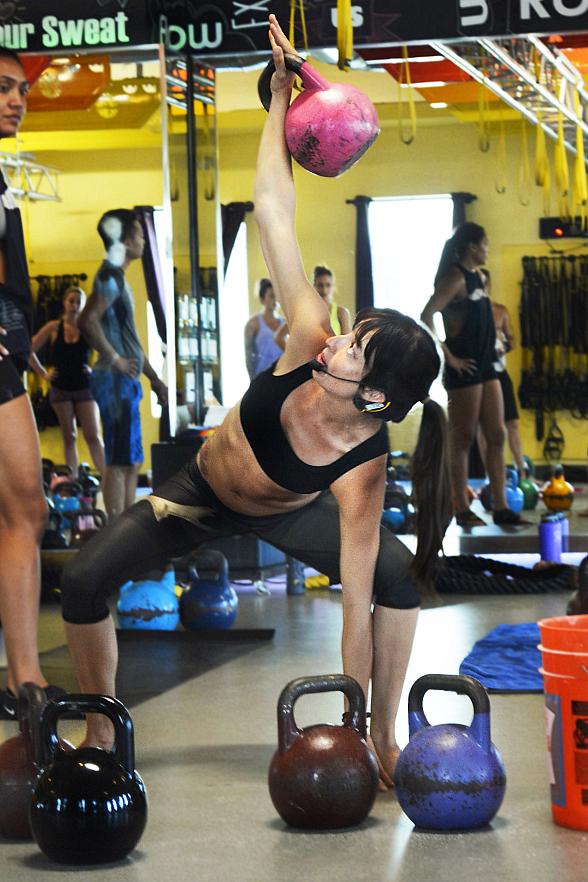
On Sunday night Rachelle and I signed up for a new local fitness studio membership. The place is 5 minutes from our home and is called TruFusion. They only do group classes, so this helps me move forward my intention to make exercise and fitness more social this year.
We attended our first class that same night, starting out easy with a 75-minute candlelight yoga class. This was yin yoga, so it was slow and deep stretching, relaxation, and some meditation and mantras. It was very non-strenuous – my Apple Watch reported that my average heart rate was only 86 bpm – a nice way to glide into getting that first class checked off without killing myself just yet.
Yesterday we did a 75-minute hot yoga class, which was more intense, especially since I haven’t done hot yoga in many years. My heart rate peaked at 176 bpm in that workout, averaging out to 144. I couldn’t do all of the postures yet, but I’ll gradually work my way into more flexibility.
I like this place so far. They have lots of variety with five different rooms for classes, two of them heated. They offer 65+ different types of classes: numerous forms of yoga, indoor cycling, bootcamps, boxing, kettlebell workouts, pilates, battle ropes, TRX, and some classes I’m not familiar with yet. They run classes all throughout the day including evenings, weekends, and holidays – 240 classes per week – so there’s always something to chose from. They’re located in a local shopping mall where we often go for walks or other errands, which makes it easier to slot this into our lives.
This studio has 545 Google reviews with a 4.9-star average, so people really love it. We’re doing a 30-day membership to start, and if it still feels aligned after that, we’ll go for an annual membership. I’m feeling optimistic about that since the staff and members that I’ve interacted with so far have all been very friendly. It reminds me of the camaraderie at the Tae Kwon Do studio where I used to train in the 90s.
TruFusion’s style and vibe feels like a good match from what I’ve experienced of it thus far. They approach fitness from a mind-body-heart-spirit perspective, so it’s not just about the physical. In addition to many upbeat workout classes, they include meditation classes as well as extra trainings and occasional retreats for the members. And during the times of year when the Vegas weather is nice, they offer some outdoor “yoga on the lawn” classes next to the studio as well. I think that’s part of their promotional strategy.
Rachelle is very much onboard with this too, so we’re doing this together. She had done a prior 30-day membership at this studio more about two years ago and is happy to pick it up again. She’s been doing daily yoga at home for 2+ years now (mostly Yoga with Adriene videos on YouTube) and is looking forward to mixing it up and challenging herself more.
I expect that sometimes we’ll do classes together while other times we’ll go separately, depending on our interests. For now it’s nice to go to classes together since there’s so much to try. I’ve never joined a gym with so many different group classes. Since I love variety and stimulation, this aspect feels exciting and fun. It’s been way too many years since I’ve had the experience of showing up to exercise and not knowing what to expect.
My one disappointment was that the boxing classes don’t involve sparring – just bunching bags or pads. So it’s not real boxing, just boxing conditioning. I can understand if they exclude personal sparring for liability reasons. But punching a target that can punch back seems more fun.
This studio could also be another outlet for us to make more local friends who are aligned with personal growth. The vibe is more social and friendly than you’d find at a gym you might join for solo workouts. Earlier this month we joined a kinky meetup group as well, so this change-up of social flows ensures a different kind of year for us. The contrast between these outlets makes life feel more interesting and varied. Tomorrow we’ll likely engage with both. For one group we’ll bring a yoga mat, and for the other we’re supposed to bring duct tape. I’m not entirely sure what the duct tape will be used for yet.
While many people are capable of joining a gym and not showing up, we’re not such people. If we join, we always go… and go often. Our big decision was whether to sign up in the first place.
Any kind of change takes some adjustment. Slotting more things into my life is a challenge, but what I like about this one is that it’s likely to give me energy rather than consume it. It feels like this will help rebalance my life in ways that I’ve been craving lately.
Rachelle and I may also do some date nights that start with a workout, shower, a nice vegan meal at a local restaurant, and a movie. All of these are within easy walking distance of the fitness studio. I suggested this to Rachelle, and she smiled and said, “That sounds yummy.” Maybe I can work in the duct tape as a special surprise. 😉
I’d been thinking about joining this studio since it opened a few years ago, and now I have an actual membership card. What helped to tip me into joining was some story-related work I’ve been doing in a coaching program I joined earlier this year as well as working on the Stature course and thinking about the direction of my character’s story. This helped me see where my old story was being clingy and inflexible, and it also helped me get excited about a new story.
I feel like my new story doesn’t have to be perfectly developed to be effective. It just has to be good enough to tip me into new actions. And then those new actions will lead to new experiences that help co-create other parts of the new story.
I feel like my new story in this area of life has the broad strokes right, but the details are going to have to emerge over time. For instance, I have no idea which of those 65+ classes will become my favorites. And I don’t have clear fitness goals in terms of the physical side, nor do I really care to set them. For me this change has more to do with lifestyle balance and social flows. While fitness is obviously a part of it too, I’m more concerned with freshening up the way I engage with my body, mind, heart, and spirit and how I balance and integrate these aspects of life. I especially want to bring more heart-alignment into how I engage with exercise.
Right now I feel excited to lean into a nice big field of new possibilities to explore – with so many classes to experience and so many people and instructors to meet. Getting back into explorer mode in this area of life feels very aligned. Other improvements, such as increasing my flexibility, will happen if I just keep showing up, and it feels good to allow those changes to unfold organically for now. It resonates with me to frame exercise as being fun, social, varied, and challenging again because that motivates me to show up. I can’t get myself to care about stats or metrics.
I also find the edginess of this motivating. I’ve done enough solo exercise that it’s hard to make it feel edgy because it’s too predictable. I’ve changed my routine numerous times, but I feel drawn to get back into social exercise again, which I haven’t done since kempo training about a dozen years ago. I want to show up to new classes that will knock me off balance. I want to go to classes where I’m the worst in the room. It’s nice to be terrible at something, knowing that if I just keep showing up, I’ll get better.
When the energy of my life grows stale in some area, I feel compelled to break from the old patterns and mix things up to restore the feeling that I’m progressing. I don’t see progress as akin to climbing a ladder. I tend to think of progress as playing in a vast role-playing game.
Am I gaining interesting experience? Is my character growing and evolving? Have I been following the same routine for too many months or years? Where is the path with a heart now? Where’s the fun? Where does the energy want to flow next?
When a part of my life becomes too routine, I feel that it’s wise to break it. Get some fresh energy flowing in a new direction. A great way to do that is to change up the social flows. New social flows generate new energy flows.
I love that with TruFusion, I could go for 30 days in a row and never attend the same class twice. And even when I do attend the same classes, there are many different instructors to engage with, each with their own style. Fortunately the instructors seem to have plenty of freedom for creativity and self-expression, so they aren’t required to teach every class the same way. I like that – I think it’s way better for the instructors too.
The vibe of this studio reminds me of what I missed about doing martial arts. While working out solo is certainly cheaper and more convenient, there’s just no substitute for the vibe of training with other people, especially open-hearted people who are aligned with supporting each other.
My new story will probably involve a lot of soreness this week.

A diagnosis of generalised anxiety disorder need not be a life sentence, a large Canadian study suggests.
“It’s so exciting,” said lead author Esme Fuller-Thomson, director of the Institute for Life Course and Aging at the University of Toronto.
People with generalised anxiety disorder worry excessively for long periods, and most days they struggle to control their discomfort, according to the Anxiety and Depression Association of America. Anxiety affects an estimated 31% of US adults, is almost twice as common in women than men, and often goes hand-in-hand with major depression.
Fuller-Thomson’s team combed data from a 2012 Canadian mental health survey of just over 21 000 people in search of factors associated with “complete mental health.” Of those surveyed, about 2 100 had generalised anxiety disorders.
Researchers defined complete mental health as being free of current mental illness, being able to function well and feeling good about oneself, relationships and community connections.
Of those with a history of anxiety, 72% were in remission; 58% were free of all mental illness for the past year; and 40% met the criteria for complete mental health.
Among the larger group of respondents who had never had a generalised anxiety disorder, 76% were said to have complete mental health.
“I didn’t expect the numbers to be so high,” Fuller-Thomson said. “It did surprise me.”
The study did not look at the types of treatment respondents tried – that information wasn’t available, Fuller-Thomson said – so no conclusions could be drawn about which might be most successful.
Researchers did examine a host of variables that affected respondents, both positively and negatively. These included sex, race, age, education, income and marital status; presence or history of physical and sexual abuse, domestic violence, substance abuse, insomnia and debilitating pain; and use of religion as a coping mechanism.
The paper was published online in the Journal of Affective Disorders.
Dr Ken Duckworth is a psychiatrist and medical director of the National Alliance on Mental Health who was not involved in the study. He called the findings “a breath of fresh air”.
Duckworth said large studies that look at the same variables over time are rare in the treatment of mental illness in the United States. But Canada’s national health care system means gathering that data would be easier, he added.
So which respondents with a history of anxiety had better odds of attaining complete mental health?
The study pointed to those who were white, female, married, in good or excellent physical health and without a major depressive disorder. Those who were more likely to attain complete mental health also had no history of alcohol or drug dependence; were not obese; and did not suffer chronic insomnia.
Also key: They used religion or spirituality to cope and had someone to confide in.
“There is hope,” Fuller-Thomson said. “There is a great deal of recovery, even for people who have suffered for a decade or more.”
Negatives for regaining complete mental health included chronic insomnia, difficulty performing daily activities, and a history of a major depressive disorder or substance abuse.
Fuller-Thomson said the study shows health care providers should consider a patient’s physical health and sleep habits when treating anxiety. Interestingly, “poverty was not a major player” affecting the group with a history of anxiety disorders, she said.
While she said negative coping strategies like alcohol and drugs are “really very harmful”, Fuller-Thomson added that having a confidant and not being disabled had the most positive effect.
“Social support is so key,” Fuller-Thomson said. “People who are isolated don’t do well.”
Childhood experiences also played a big part in respondents’ recovery chances, the study found.
Those who had repeatedly witnessed domestic violence or had been physically abused had lower odds of attaining complete mental health. Fewer than 5% of respondents who had been sexually abused had done so.
Duckworth said he looks forward to a follow-up that examines the same variables along with treatment methods, such as counselling, medication and behaviour modification.
“Is it age or treatment [that caused improvement]?” he said. “Is it socioeconomic status or treatment? How important are the individual factors? I’m sure they’re all significant.”
Image credit: iStock

“If health has stopped improving, that means society has stopped improving,” author of report says.
