Extinct dwarf hippos that once roamed Madagascar lived in forests rather than open grasslands preferred by common hippos on mainland Africa, researchers at the University of Cincinnati discovered.
The findings suggest grasslands that now cover much of the enormous island off the eastern coast of southern Africa were a relatively recent change facilitated by people rather than a natural habitat sustained in part by these famously large vegetarians.
The study was published in the journal Plants, People, Planet.
When Madagascar broke away from Africa’s mainland 150 million years ago, its plants and animals evolved in geographic isolation in the Indian Ocean. Madagascar had no elephants, giraffes, rhinos or other big mammals like those found on the mainland today.
But it did have hippos.
About the size of a cow, the dwarf or Malagasy hippo was far smaller than its four-ton cousin, the common hippopotamus. Even so, the Malagasy hippopotamus was among the largest land animals on the island along with Nile crocodiles and the flightless and enormous elephant bird.
These hippos likely resembled today’s secretive and endangered pygmy hippos found in the forests and swamps of West Africa’s Liberia and Guinea, said Brooke Crowley, a UC professor of geosciences and anthropology and lead author of the study.
“Ecologically, we think the Malagasy dwarf hippos were pretty close to the pygmy hippos that live in forests in West Africa,” Crowley said.
Crowley and her research colleagues conducted an isotopic analysis of stable carbon and nitrogen found in the bones of extinct Malagasy dwarf hippos that roamed the island more than 1,000 years ago. These isotopes, found in the bones of animals, leave behind a fingerprint of the foods they ate. And this provides clues about their preferred habitats.
Researchers took samples from the bones of dwarf hippos at museums along with those the team collected on the island. They found that dwarf hippos did not regularly graze on grass in dry, open habitats, even in regions dominated by grassland today. Instead, they preferred plants found in the wetter, more forested landscapes. This suggests forest was more abundant before people began changing the landscape to grow cultivated plants, graze domesticated cows and goats and obtain firewood and building materials.
Common hippos on the mainland love grass. Their name derives from the Greek words for “river horse.” Each night they leave the safety of rivers and waterholes to find fresh pasture, cropping grass like a horse, before returning in the morning.
But the researchers’ analysis found that grass represented only a small part of the diet of Malagasy dwarf hippos. Instead, they behaved more like browsers, feeding on sedges and leaves. As a result, hippos likely had little influence on maintaining or expanding grasslands on the island.
“For years we’ve seen evidence that these animals were not grazers,” said Laurie Godfrey, a study co-author and professor emerita at the University of Massachusetts Amherst.
Godfrey said there is evidence to suggest that people caused the extinction of hippos on the island when they created permanent communities and moved from hunting and gathering to raising domestic animals and crops. She calls her idea the “Subsistence Shift Hypothesis,” which she said is an elaboration on a similar idea first proposed by noted archaeologist Robert Dewar.
“There is pretty compelling convergent evidence showing that many of the extinct animals disappeared in a short window of time coinciding with the transition of people from hunting and gathering to pastoralism,” UC’s Crowley said.
Crowley thinks restoring native forests is key to helping conserve wildlife on the island. Based on their study, expansive grasslands were not a critical habitat, at least for the island’s hippos.
“Some colleagues argue that grasslands are ancient and that we need to protect and manage them like we do forest,” Crowley said. “I would argue that forests are far more important. We are not contending that grasses did not exist in the past, but pointing out that there is no evidence for large grasslands devoid of trees prior to about 1,000 years ago.”
It’s a point the researchers make in the study as well.
“It is clear that Madagascar faces a biodiversity crisis much greater than that which it has already endured. Preventing this crisis will demand new conservation actions,” the study concluded.
The study was supported by grants from the National Science Foundation, the African Regional Research Program Fulbright and the National Geographic Society.
Communicating science to a general audience can be challenging. Successfully conveying research on polarizing topics such as climate change can be even more difficult.
But a new study from University of Wisconsin-Madison researcher Nan Li shows that intentionally integrating art with data visualizations can help non-expert audiences more meaningfully engage with climate change while also bridging political divides in ways that data alone cannot. In fact, data graphs on their own can exacerbate political division on climate change.
As an assistant professor in the Department of Life Sciences Communication, Li studies how innovative visual representations of science can shape people’s understanding and opinions about various scientific issues. Li teamed up with Isabel Villanueva, Thomas Jilk and Dominique Brossard from UW-Madison and Brianna Rae Van Matre from EcoAgriculture Partners to survey the responses of people across the political spectrum to a painting by Diane Burko entitled “Summer Heat, 2020.”
The painting depicts red, orange and blue motifs of wildfires and melting glaciers that overlap with maps that appear to drip over a graph of global atmospheric carbon dioxide levels. It’s not just art and science side-by-side or pretty colors added to a graph; the two are combined to tell a larger story that makes people stop and think about climate change.
Li thinks this intentional integration of the data into the piece of art is part of its success.
“In order for art to maximize its potential as a tool for public engagement, you really need to use it as a catalyst for triggering self-reflection,” Li says. “People use this piece of art as a starting point to think about what this all means to themselves.”
For the study, published in Communications Earth & Environment, 671 survey participants from across the U.S. were divided into groups and shown four different presentations of the painting and data it contains: the original painting, a detailed version of the graph it includes, a simplified version of that same graph and an edited version of the painting with a detailed graph.
In the first iteration of the survey, participants were instructed ahead of time to reflect on the meaning of and emotions evoked by the visuals. Survey participants who saw the paintings reported stronger positive emotions — like happiness, awe, inspiration and hope — than participants who were shown just the graphs.
The researchers then used a digital editing tool to represent what it would look like if “Summer Heat, 2020” and other visuals were posted to an Instagram feed. The caption contained more details about the painting and facts about climate change.
Participants felt the artwork post was as credible a source of information as the data graphs post. Li says this finding supports the idea that galleries aren’t the only way these kinds of artwork can be successful, but that bringing them to a larger audience through social media is beneficial as well.
In general, when people see graphs about climate change, whether they identify as liberal or conservative influences how they perceive the relevance of the issue. But in the new study, Li’s team saw that the gap between political affiliations was reduced when survey participants saw the painting in a social media format. In other words, when liberals and conservatives both see artistic representations of climate data rather than data alone, they are more likely to share the perception that climate change is relevant to them.
Another iteration of the survey did not instruct participants to reflect on the meaning and emotions the visuals inspired before seeing them. Participants viewed the simulated Instagram posts and then later reported their perceived relevance of climate change. This time, participants’ perceived relevance of climate change was equally polarized along their political ideology despite the different visuals they were shown. To Li, this suggests that priming people for introspection is important for breaking down political barriers.
While the findings are exciting, Li also recognizes this case study is very specific. The study is limited to the use of one painting in one style from one artist.
Moving forward, she and her team hope to complete additional studies that tease out what element of a piece makes communicating the scientific information more successful. They want to expand the study to consider reactions to other styles by artists from other backgrounds and survey reactions of people in other countries. Li and her team also highlight that it’s important for scientists and artists to be aware of their audience’s interest level in art and recognize that not everyone will react emotionally or cognitively to a piece in the same way.
Even though communicating these polarizing concepts can be challenging, Li believes in the ability of art to bridge the gap between a lay audience and scientific data.
“When you show art, I think it sort of makes people think, ‘Hey, wait a minute. What is this all about?'” Li says. “It fills in people’s imaginative deficit of what data means without taking a lecturing approach. It actually engages people to explore the meaning themselves.”
A novel molecular pathway to explain how a mutation in the gene ACTA2 can cause individuals in their 30s — with normal cholesterol levels and no other risk factors — to develop coronary artery disease has been identified, according to researchers with UTHealth Houston.
The study was published in the European Heart Journal.
“The gene ACTA2 codes a specific protein that has nothing to do with cholesterol,” said Dianna Milewicz, MD, PhD, senior author of the study and professor and director of the Division of Medical Genetics at McGovern Medical School at UTHealth Houston. “It was a surprise to find that people with the gene mutation had too much atherosclerosis at a young age and with no risk factors.”
A 2009 study led by Milewicz found that a number of mutations in ACTA2 predispose humans to develop early onset (30s or younger) coronary artery disease.
Atherosclerosis is a buildup of fats, cholesterol, and other substances in and on the artery walls. It can develop over time and most people don’t know they have it until they suffer a heart attack or stroke. Traditional risk factors for developing atherosclerosis include high cholesterol, high blood pressure, diabetes, smoking, obesity, lack of exercise, and consuming a high-fat diet.
ACTA2 is typically found in the smooth muscle cells, which line the arteries and allow the arteries to contract to control blood pressure and flow. Milewicz and her team found that protein coded by this gene is not folded correctly because of the mutation, and it triggers stress in the smooth muscle cell, which then forces the cell to make more cholesterol internally, regardless of the levels of cholesterol in the blood, driving atherosclerotic plaque formation.
“This finding is unique in that we found a completely new pathway to atherosclerosis. It explains why for years we have known statins protect people from heart attacks, even those people whose blood cholesterol levels are normal. In the people with ACTA2 mutations, the statins block the cholesterol made by the stressed smooth muscle cells,” said Milewicz, the President George Bush Chair in Cardiovascular Medicine with McGovern Medical School. “In our study, the mutant protein made by the ACTA2 mutation caused the cells in the artery wall to be stressed, but there are many other factors that can stress cells. We are now working on the risk factors for coronary artery disease, like hypertension, that would also stress the cells and activate this novel pathway for coronary artery disease.”
One of the results of stress in smooth muscle cells associated with atherosclerosis is the deposition of calcium in the arteries.
“Cardiac calcium imaging in individuals with ACTA2 mutations could be a useful early diagnostic tool to monitor the development of the early atherosclerosis in these people. This would allow physicians to decide at what age to start these patients on statins,” Milewicz said.
Using a genetically engineered mouse that contains a particular ACTA2 mutation and feeding the mice a diet rich in cholesterol, the researchers induced atherosclerosis and found that these mice have much more atherosclerosis than similarly treated mice normal mice. The study also found that the increased atherosclerosis could be reversed by treating the mice with pravastatin, a member of the statin group of drugs commonly prescribed to lower blood cholesterol. The researchers confirmed that same molecular pathway is activated in smooth muscles cells isolated from a human patient with an ACTA2 mutation.
Statins prevent coronary artery disease by lowering the levels of cholesterol in the blood. At the same time, more than half of heart attacks occur in apparently healthy men and women with average or low levels of plasma LDL-cholesterol. Statins also reduce heart attack events in people with normal cholesterol levels.
This work was supported by the National Heart, Lung, and Blood Institute (RO1 HL146583); an America Heart Association Merit Award, NIH T32GM120011; Marfan Foundation McKusick Fellowship Award; and American Heart Association Grant 20CDA35310689. Lipid profile analysis was performed at the Mouse Metabolism and Phenotypic Core at Baylor College of Medicine, funded by NIH RO1DK114356 and UM1HG006348. Single cell RNA sequencing was performed at the Single Cell Genomics Core at Baylor College of Medicine, funded by National Institutes of Health shared instrument grants S10OD023469, S10OD025240 and P30EY002520.
Additional UTHealth Houston authors include Kaveeta Kaw, MD, PhD; Abhijnan Chattopadhyay, PhD; Pujun Guan, MM; Jiyuan Chen, PhD; Suravi Majumder, PhD; Xue-yan Duan, PhD, and Callie S. Kwartler, PhD. Other authors include Shuangtao Ma, MD, MSc, with Michigan State University College of Human Medicine (a former postdoctoral fellow at UTHealth Houston) and Chen Zhang, MD, with Baylor College of Medicine.
The prevalence of moderate or severe joint pain due to arthritis varies strikingly across American states, ranging from 6.9% of the population in Minnesota to 23.1% in West Virginia, according to a new study led by a University at Buffalo researcher.
The paper published in the journal PAIN is providing new insights — through its novel combination of individual- and macro-level measures — into geographic differences in pain and their causes.
“The risk of joint pain is over three times higher in some states compared to others, with states in the South, especially the lower Mississippi Valley and southern Appalachia, having particularly high prevalence of joint pain,” says Rui Huang, a sociology PhD student in the UB College of Arts and Sciences, and the paper’s first author. “We also observed educational disparities in joint pain in all states that vary substantially in magnitude, even after adjusting for demographic characteristics.”
The percentage point difference in pain prevalence between people who did not complete high school versus those who obtained at least a bachelor’s degree is much larger in West Virginia (31.1), Arkansas (29.7), and Alabama (28.3) than in California (8.8), Nevada (9.8) and Utah (10.1).
“Education can function as a ‘personal firewall’ that protects more highly educated people from undesirable state-level contexts, while increasing the vulnerability of less educated individuals,” says Huang.
Nearly 59 million people in the U.S. have arthritis, and at least 15 million of them experience severe joint pain because of that condition. Severe joint pain is associated with diminished range of motion, disability and mortality.
While existing research on the social determinants of pain has relied primarily on individual-level data, individuals are embedded in social contexts, such as a specific U.S. state.
Different states can have dramatically different policies that affect many aspects of life including opportunities, resources and social relationships, which can in turn influence individuals’ pain, a potential influence that has gone largely unexplored in previous research.
“Very little research has examined the geography of chronic pain, and virtually none has examined the role of state-level policies in shaping pain prevalence,” says Hanna Grol-Prokopczyk, PhD, UB associate professor of sociology, and a co-author of the study. “We were excited to identify state characteristics that reduce residents’ risk of pain.”
The current study does so by combining data on nearly 408,000 adults (ages 25-80) from the 2017 Behavioral Risk Factor Surveillance System with state-level data about SNAP programs (formerly known as food stamps), Earned Income Tax Credits, income inequality, social cohesion (relationship strength among community members), Medicaid Generosity Scores, and tobacco taxes.
Although SNAP programs exist in all 50 states, some states offer more expansive benefits to qualifying residents than others. States with more generous SNAP benefits had a lower prevalence of pain. The same was true for states with greater social cohesion, indicating that both material resources and social functioning play critical roles in shaping pain risk.
“The increase in the generosity of SNAP benefits could potentially alleviate pain by promoting healthier eating habits and alleviating the life stress associated with food insecurity,” says Huang. “Social factors such as conflict, isolation and devaluation are also among the ‘social threats’ that can lead to physical reactions such as inflammation and immune system changes.”
In addition to providing new information on pain disparities across states, the paper might also fuel a reorientation of pain research that puts equal emphasis on macro- and individual-level factors, according to Huang.
“Chronic pain can — and should — be addressed through macro-level policies, as well as through individual-level interventions,” says Huang. “This study also implies that pain research in general should move towards a greater understanding of the macro contextual factors that shape pain and pain inequalities.”
In research that could lead to a new age in illumination, researchers from Japan and Germany have developed an eco-friendly light-emitting electrochemical cells using new molecules called dendrimers combined with biomass derived electrolytes and graphene-based electrodes. Their findings were published in the journal Advanced Functional Materials.
Electroluminescence is the phenomenon where a material emits light in response to a passing electric current. Everything from the screen you’re using to read this sentence to the lasers used in cutting edge scientific research are results of the electroluminescence of different materials. Due to its ubiquity and necessity in the modern age, it is only natural that extensive resources go into research and development to make this technology better.
“One such example of an emerging technology is ‘light-emitting electrochemical cells’ or LECs,” explains Associate Professor Ken Albrechtfrom Kyushu University’s Institute for Materials Chemistry and Engineering and one of the leads of the study. “They have been attracting attention because of their cost advantage over organic light emitting diodes, or OLEDs. Another reason for LECs popularity is their simplified structure.”
OLED devices generally require the carful layering of multiple organic films, making it tricky and costly to manufacture. LECs on the other hand can be made with a single layer of organic film mixed with light-emitting materials and an electrolyte. The electrode that connects it all together can even be made from inexpensive materials unlike the rare or heavy metals used in OLEDs. Moreover, LECs have lower driving voltage, meaning they consume less energy.
“Our research teams have been exploring new organic materials that can be used in LECs. One such candidate are dendrimers,” explains Prof. Rubén D. Costa of the Technical University of Munich, who led the research team in Germany. “These are branched symmetric polymeric molecules whose unique structure has led to their utility in everything from medicine to sensors, and now in optics.”
Building upon their past work on developing dendrimers, the research team began modifying their materials for LECs.
“The dendrimer we developed initially had hydrophobic, or water repelling, molecular groups. By replacing this with hydrophilic, or water liking, groups we found that the lifetime of the LEC device could be extended to over 1000 hours, more than 10-fold from the original,” explains Albrecht. “What makes it even better is that thanks to our collaboration with Dr Costa’s team the device is very eco-friendly.”
For years, Costa’s team in Germany had been working on developing cheaper and more environmentally friendly materials in light-emitting devices. One material they have been experimenting with is cellulose acetate, a common organic compound used in everything from clothing fibers and eyeglass frames.
“We used biomass derived cellulose acetate as the electrolyte in our new LEC device, and confirmed that it has the same long-life span,” continues Costa. “Moreover, we also found that graphene can be used as an electrode as well. This is a vital step toward making flexible light-emitting devices using environmentally friendly materials.”
The team explains that while their work is promising more research is necessary before the devices can be made to market.
“The device we made here only illuminates in yellow, so we need to develop it to illuminate in the three primary light colors: blue, green, and red. Luminescence efficiency, how bright the light is, also needs work,” concludes Albrecht. “Though thanks to our international collaboration, the future looks bright.”
In June I attended the Psychedelic Science 2023 conference at the Colorado Convention Center in Denver. We were told this was the largest psychedelic-related gathering in the history of the planet, attracting about 12,000 attendees and 500 speakers. In this post I’ll share about my experiences and insights from the conference.
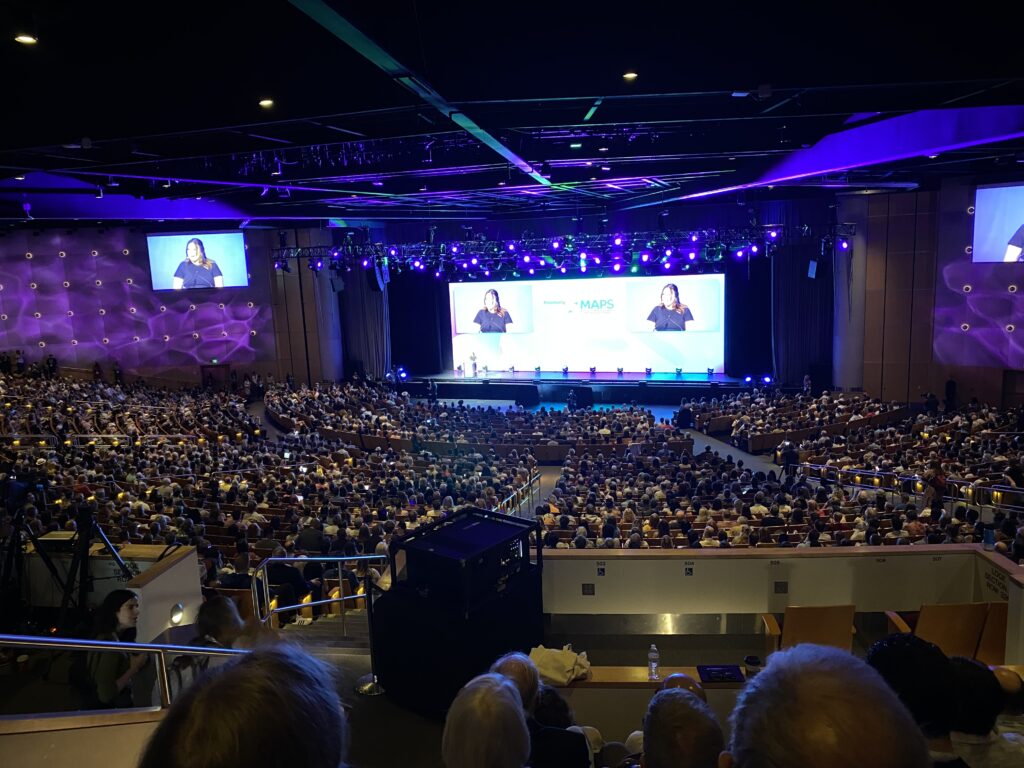
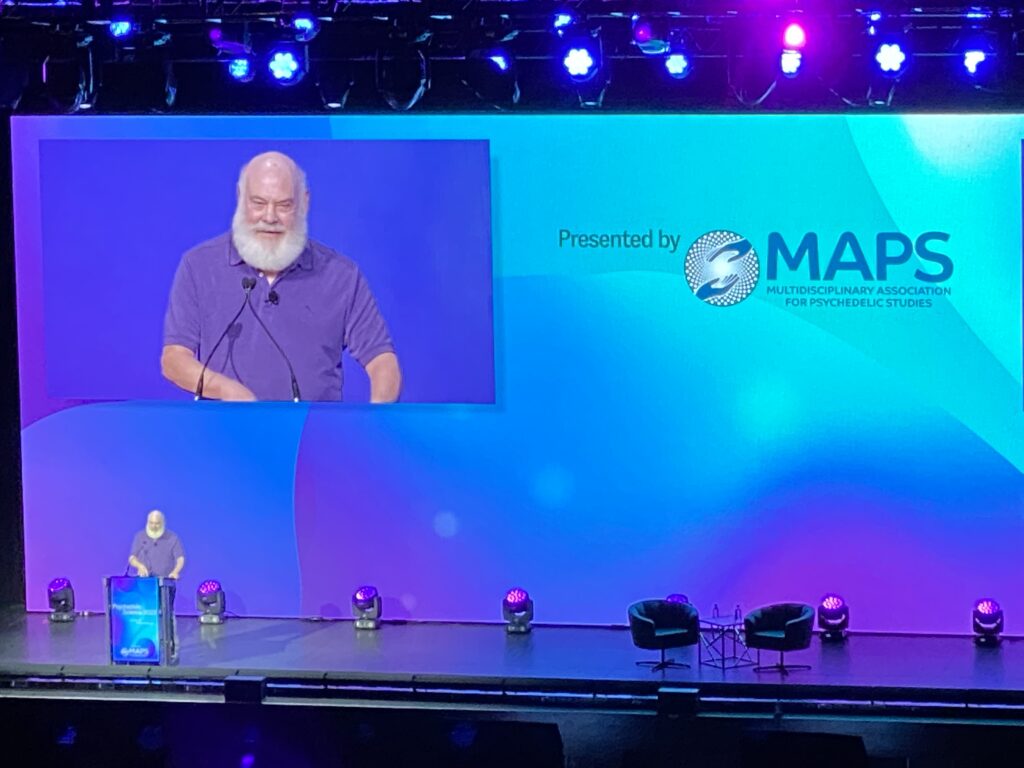
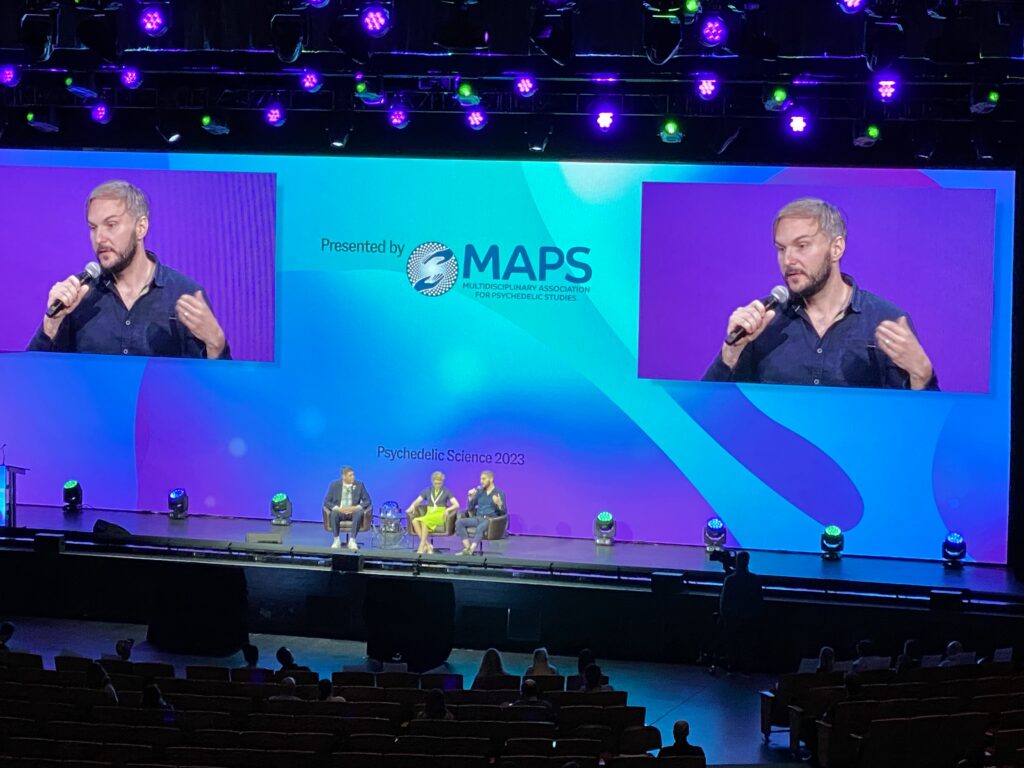
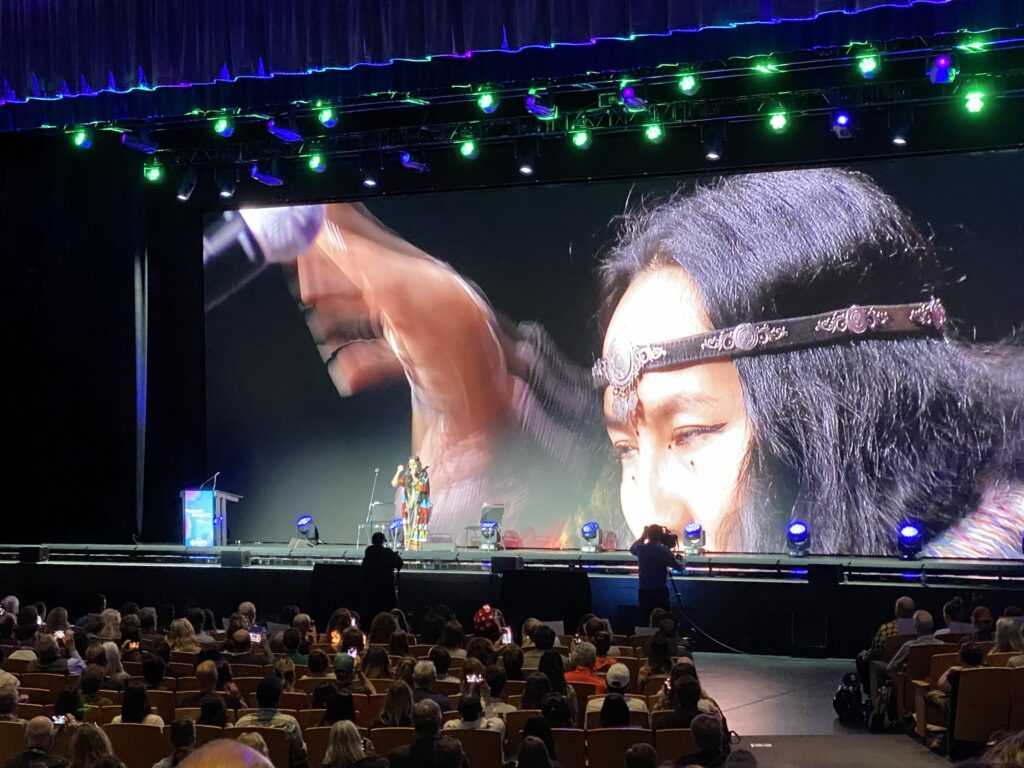
Here’s a pic from inside the Bellco Theater where the main keynotes were held.
The Colorado Convention Center is sizable, and sessions were spread across many different rooms. Even though I didn’t do extra exercise on this trip, I was typically hitting about 1000 calories a day from movement (according to my Apple Watch), mostly from walking between conference sessions but also to and from nearby restaurants for meals. My hotel was across the street from the Convention Center, and I’m glad I stayed close since there was so much to go-see-do.
PS2023 offered hundreds of sessions across several different tracks (science, business, studies, plant medicine, community, society, etc), running concurrently, so I had to be selective and couldn’t possibly see it all. I’m glad I took the time to thoughtfully prep my schedule in advance, using the conference app’s “My Planner” feature. That helped me stay in the flow of attending sessions for all three days instead of feeling overwhelmed by too many possibilities each hour. I prioritized what I wanted to see while allowing for some flexibility to make final choices as I went.
I opted for a balance of different types of sessions, and I came to appreciate how much variety this conference packed in. I especially liked how well it balanced the left- and right-brained aspects of psychedelics. I appreciated the science and studies sessions full of data-rich slides. I loved hearing the personal stories. I enjoyed the panel discussions, which provided diverse perspectives. I especially loved the range of speakers – experienced psychonauts, scientific researchers, therapists, journalists, entrepreneurs, indigenous people, athletes, and more.
The sessions were of varying lengths. Some were only 15 minutes while others were an hour or longer. This made planning trickier since sessions started at different times spread all throughout the day, as opposed to having every track starting their sessions in sync, such as at 9am, 10:30am, etc.
You may find this review very opinionated because I’m going to share my innermost thoughts and feelings about what I experienced, including why some sessions didn’t resonate. My intention is to be as honest as I can in sharing the interior perspective of what it was like for me to attend this unusual conference. I read some journalistic coverage of the conference and found it ridiculously shallow (no surprise there), so I want to give you a deeper understanding of what it was like to be there, including lots of pics.
Rachelle and I opted to stick together for all the sessions instead of making different individual choices – she trusted me to make the selections and manage the conference schedule. We went to the following sessions:
Wednesday, June 21
Welcome to Psychedelic Science 2023 – The event began with a series of short opening addresses within the first hour.
Opening Land Acknowledgement – I know that acknowledging prior indigenous land stewardship of the location, including how that land may have been stolen, has become a popular feature at some live events these days. Personally I find this practice mostly ridiculous, and I’m hoping that it will soon go out of fashion, like MySpace and Twitter. Taking up time to do this as part of the event provides no meaningful value to attendees, and I don’t see it as being very respectful towards indigenous people either. It would make more sense to put such a statement on the conference website, if at all, but don’t do this from the stage. Weaving this into the opening address felt out of place, inappropriate, and disrespectful of the audience. The intention behind it felt misaligned as well. It sounds like, “Okay, so this land we’re on right now was stolen, and in lieu of any actual remedy, let’s invite some collective guilt and shame into the room and reflect upon how much our ancestors were assholes. And we’re assholes too since we’re using this stolen land. Now let’s get on with the show!” Even though this backstory may be true, I don’t see how directly stating this during the event serves the purpose of the event; it only detracts from it. I’d rather see an extra five minutes of value subbed in, like an accounting of which psychedelics were used to create all six seasons of Rick & Morty. If you’re organizing an event and you’re tempted to include a land acknowledgement, I’d recommend surveying your audience first to see if they want it; then use your best judgment when no one fills out the survey.
Opening Address from Rick Doblin, Ph.D. – This was pretty standard opening stuff and a bit self-congratulatory regarding the growth of these conferences: 800 people in 2010, 1900 in 2013, 3000 in 2017, and now 12,000 in 2023. So yeah… interest in psychedelics research and practice is exploding, and we can likely expect huge growth in the years ahead. I think that’s probably no surprise to people who’ve been engaging in the space, although the resurgence of psychedelic interest may surprise some outsiders.
Opening Address from Governor Rick Perry – Rick Perry is a conservative former Texas Governor. I sensed he wouldn’t be too popular at a conference like this and wondered why he was on the agenda (in a WTF sort of way), but I was impressed by how well he addressed the elephant in the room, including using self-deprecating humor by referring to himself as a knuckle-dragger. He demonstrated that he knew how to find common ground with an audience that was likely full of people biased against his political party. Overall I liked the stories he shared. I’d say he was the most memorable part of the opening hour.
Opening Address from Governor Jared Polis – The current Governor of Colorado spoke next. His communication style was very different from Perry’s – more mental and less story-driven – but I also liked what he had to say. He spoke about the decriminalization process and how it’s not perfect and will surely require some adjustments in the years ahead. He also talked about looking into pardoning thousands of people who’d been convicted under past drug laws that have changed. Colorado is really leading the way with decriminalization. I like that they’re paving the way for other states to follow, including my home state of Nevada, which seems to be following a few years behind, first with marijuana and next with psychedelics. Nevada could have gone faster, but despite popular support for decriminalization, the legislature punted the decision by creating a working group to study psychedelics first. At least that allows time to see things go in Colorado first. Polis’ address concluded the opening hour of the conference.
Beyond Medicalization: The Renaissance of Relationship – Natalia Rebollo Corral talked about the importance of reciprocity with indigenous people, a theme I heard a few other times in the conference. I can see how that may apply in some situations like if psychedelic tourists are going to indigenous lands to use their plant medicines, especially when dealing with limited resources. But I don’t see how reciprocity applies when using LSD, MDMA, mushrooms (that can be grown anywhere), etc. It felt like she was suggesting that indigenous people deserve a kickback (such as a licensing fee) for plant medicines they began using first. I resonate with reciprocity in general, but I didn’t resonate with how it seemed to be overextended during this talk.
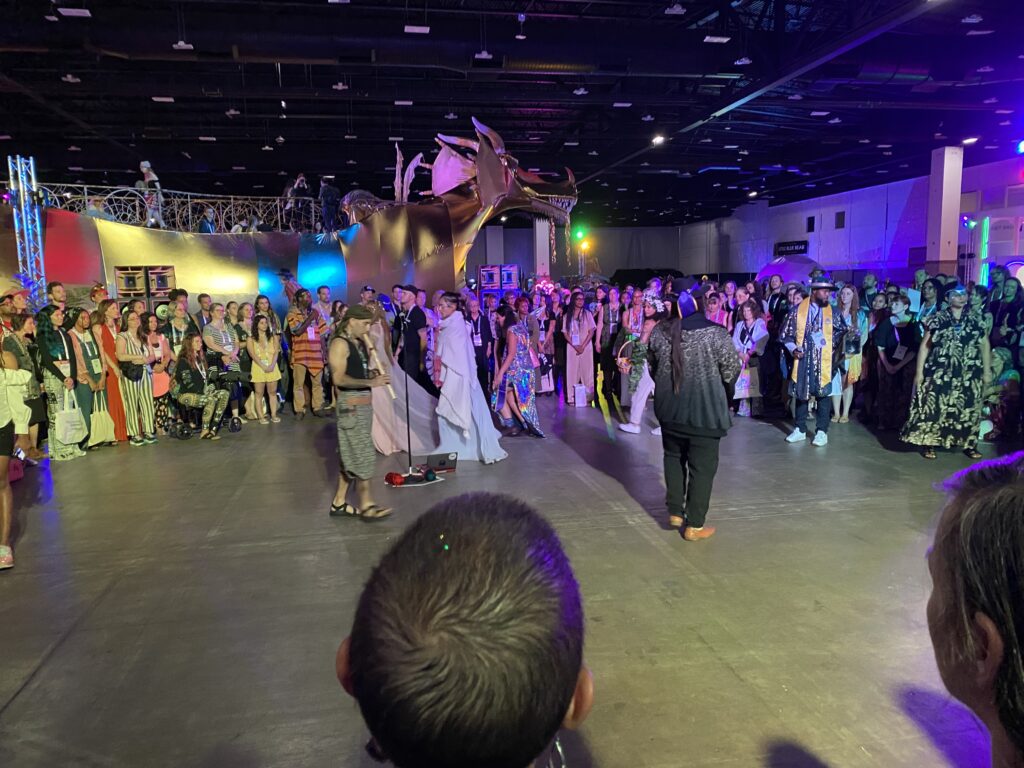
Socio-Celestial Mapping and Living Mandalas, an Opening Ritual Ceremony – This was our first session in the experiential Deep Space area of the conference. It was an hour-long ceremony that begin with everyone getting into groups arranged by astrological sign, so I got to hang out with the awesome Aries folks. Then collectively we all formed one big circle, and in the middle the presenters played out the symbolic roles of the planets, the Sun, the Moon, and Pluto. Each celestial body took turns sharing something for a few minutes, such as a song, performance poetry, a pep talk, drumming, etc. There wasn’t much left-brained content to speak of, but my right-brained side quite enjoyed the costumes, visuals, and experiential nature of it. Rachelle didn’t seem to find it that impressive, perhaps because she was relegated to the Aquarius group, but I found the experience touching and creative. It gave me the idea that I’d love to include some ceremonial or ritualistic aspects in future workshops to see if people like that. I think it can be a nice way to help people feel more connected and a nice balance to left-brained ideas. One aspect I found interesting was how each sign was given an associated statement. For Aries it was, “We are.” For Aquarius it was “We know.” I saw Rachelle’s face light up when she heard the statement for her sign. I felt playfully resonant with “we are” as well, maybe since I feel very comfortable in my own skin, and I regard criticism of who I am or what I’m currently exploring as relatively pointless – it just bounces off my I-am-ness, and I often feel a combo of bewilderment and compassion for those who attempt to knock me off center, much like watching someone run into a wall.
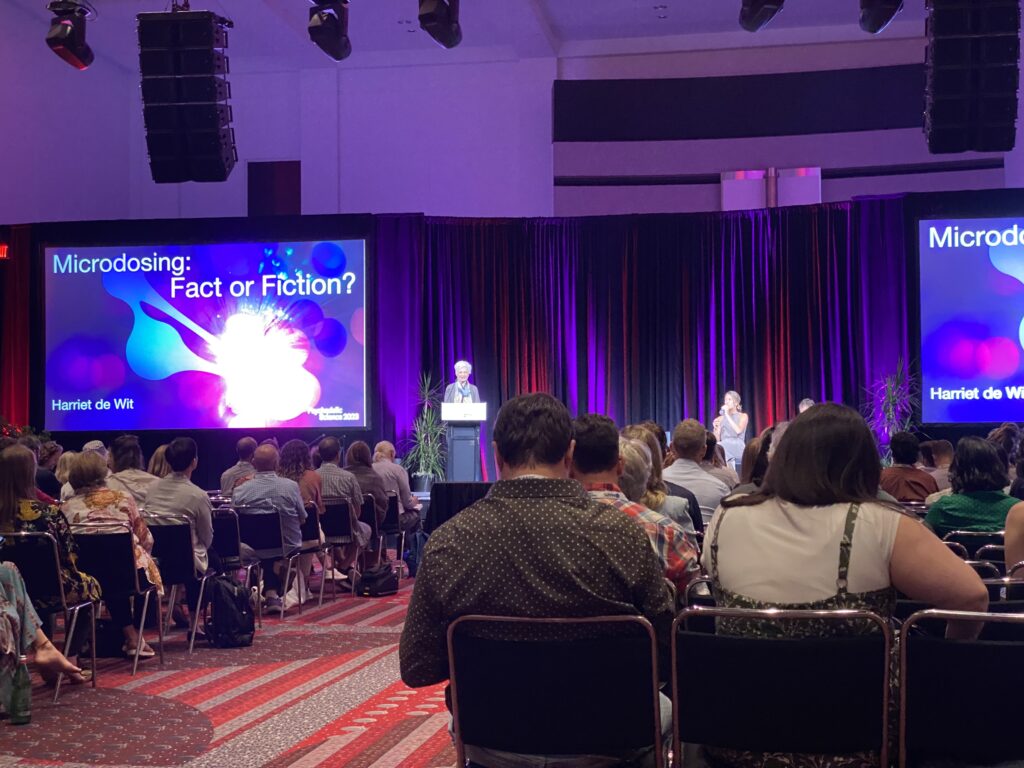
Assessing the Evidence for Microdosing – This presentation shared results from several recent studies on microdosing. It was interesting to see that microdosing does have a measurable positive impact, especially in terms of alleviating depression and anxiety, but that difference is mostly due to the placebo effect. What matters most is whether people believe they’re taking a psychedelic substance, not whether they’re actually taking one. In fact, the benefits can largely be negated when people are microdosing with a psychedelic substance, but they think they’re taking a placebo. That made me ponder if on a certain level, the main effect of psychedelics might be a higher-level placebo effect. We think it will do something powerful to us, so it does.
Lunch Break – We had 90 minutes for lunch each day (1:00 to 2:30pm), and it barely felt like enough time. We usually went to Modern Market, a counter-service restaurant a 5-minute walk from the Convention Center with a few decent vegan options (I liked the Buddha bowl). By the time we walked there, progressed through the food ordering line packed with other attendees, got our food, and ate, we had to get up and leave immediately to make it to the next session.
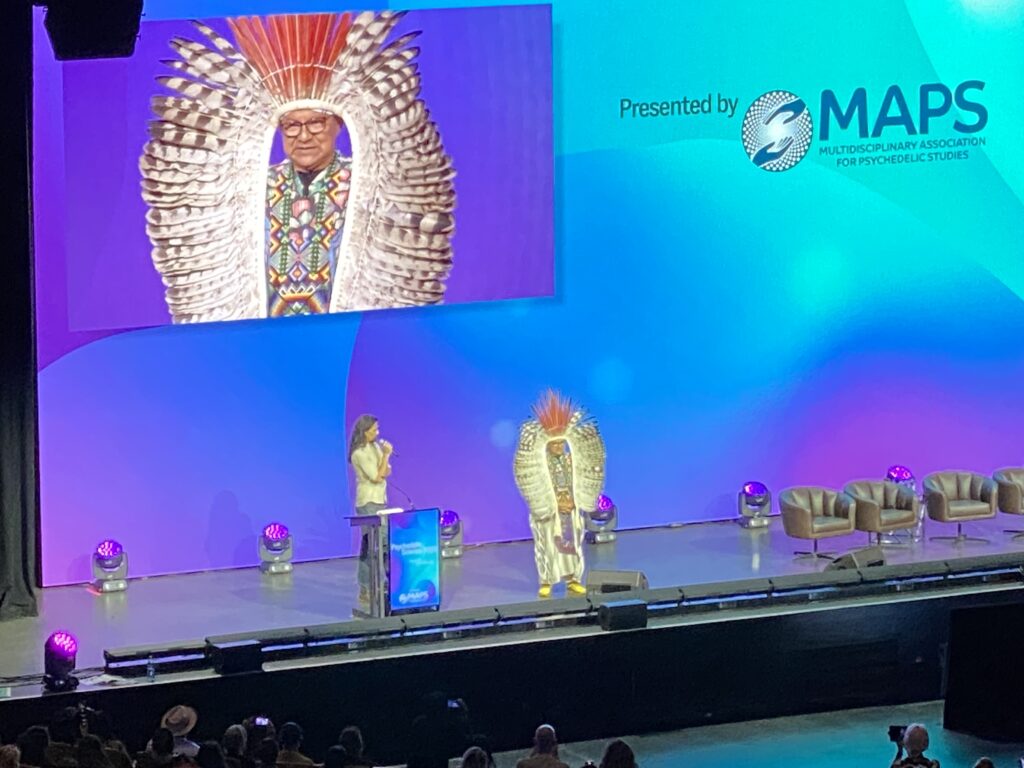
The Mazatec Sierra and the Sacred Mushrooms: Past and Present – This panel had a translator, and it was only 30 minutes, so it was fairly light on content, but was interesting to hear the indigenous perspective on how they use mushrooms and what they think about the proliferation of their usage throughout western society. This helped me see how plant medicines help to create social cohesive in some cultures. I respect that many indigenous people have a lot of psychedelic experience, but I also note that their intentions and frames don’t always resonate with me, and that makes me more interested in cultivating a direct relationship with psychedelics. I feel this perspective was strengthened by attending the conference. I was surprised that hearing directly from indigenous people at the conference actually served to deflate some of my “indigenous elder” framing on psychedelics.
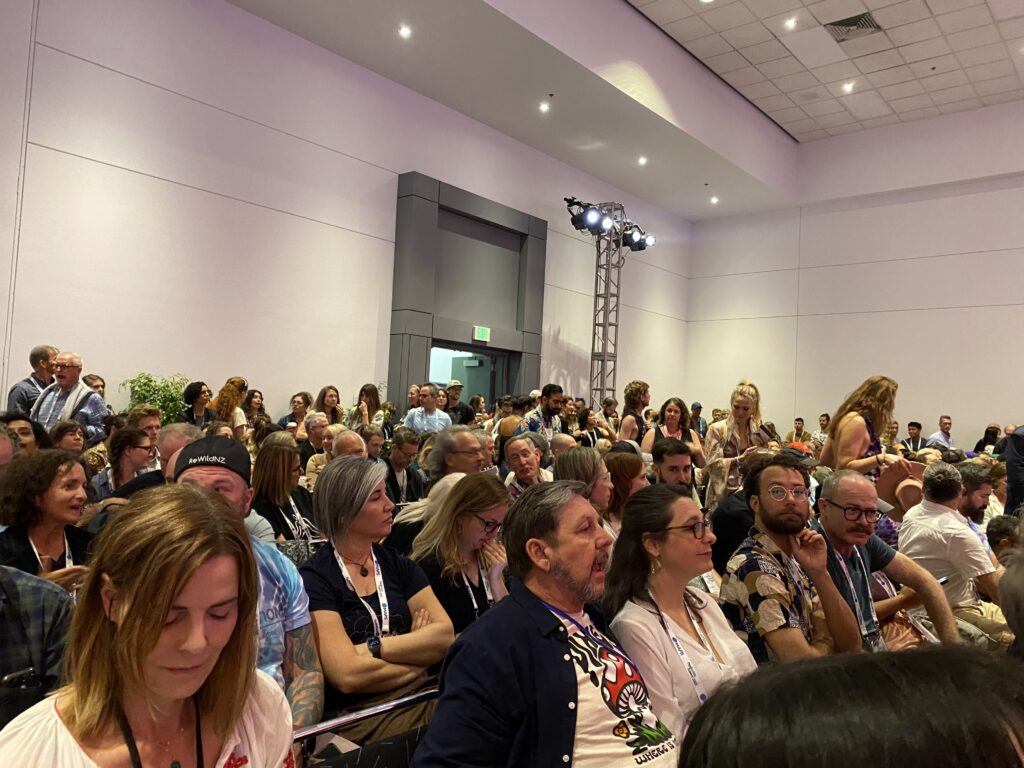
Building Culture with Principles: A Conversation with Burning Man CEO Marian Goodall – I’ve never been to Burning Man (although I’d love to go at some point), and I enjoyed hearing Marian Goodall’s perspective on the events and how they’ve created ripples beyond Nevada’s Burning Man, including by introducing more people to psychedelics. A large portion of the audience raised their hands when asked if they’d attended Burning Man and did psychedelics there. This session made me more curious about connecting with people in this space as well as continuing to gain more psychedelic experience.
Psilocybin Mushrooms and their Tryptamines: Potential Medicines for Neurogeneration – I was looking forward to this session from Paul Stamets after seeing him in Fantastic Fungi. I found it interesting on a technical level as he talked about different mushroom species and their properties, and he was lively and entertaining throughout. However, this talk felt like more of a showcase of his knowledge and experience, and I felt a disconnect in terms of receiving any practical takeaway value. I can’t say I learned anything from it that I can actually apply to my life, and there was nothing here that challenged me or gave me fresh insights. I at least enjoyed seeing his passion for shrooms.
How Psychedelics Can Unlock Elite Performance – This was a popular session where Aubrey Marcus talked with SuperBowl Champion Aaron Rodgers about psychedelics and sports. It was lively and fun. It didn’t go too deep into the promoted topic of unlocking elite performance, and it focused more on the social aspects of doing psychedelics, such as how it’s perceived in a professional setting. The performance aspect mainly had to do with the emotional benefits like reducing depression and anxiety and increasing feelings of team connectedness, especially when multiple players are doing psychedelics. I’d say I got more entertainment value from their repartee than much practical value, but this late in the day I didn’t mind that so much.
A Ceremony of the Psychedelic Story – This was supposed to be a 2-hour evening session, 7:30-9:30pm, showcasing BIPOC psychedelic stories. It was a long day already, but I wanted to squeeze this one in after dinner, especially given my past work with the Diversity Committee in the Transformational Leadership Council. Overall I loved it. There were deep, emotional, and moving stories of transforming trauma with psychedelics, including from those framing it as multi-generational trauma. I was impressed by how far some people went into their journeys, including international travel to advance their transformations. The downside was that this session was disorganized. They started late and ran more than an hour overtime, almost every speaker went long, and they had trouble being consistent with microphone usage, so it was hard to hear some people at first. A lot of attendees left early (perhaps most of them). The room was packed in the beginning, but the final speakers had a much smaller – and more fatigued – audience. That’s too bad since there were powerful messages to be heard throughout. One of my key takeaways was an unspoken one – that if people want to transform their lives, it begins with taking 100% personal responsibility for doing the work. No one else can do the transformation for you, even someone you think may have caused or contributed to the harm you endured. That was a key theme I saw elsewhere in the conference too: We all have to do our own inner work, and if we don’t step up, no one is coming to rescue us. One reason people do psychedelics is that they really want to transform their lives, and they’ve often tried many other approaches before landing in psychedelic land.
I had originally planned to attend a morning session this day called “Microdosing: Remarkable Results, Surprising Implications” with James Fadiman, Ph.D. However, when I got to the room, it was packed with people and spilling out the doorways into the hallway, and I couldn’t get in. That was disappointing since I wanted to learn more about this topic. Seeing the room so overstuffed gave me the early impression that the conference might be oversold. So after this I made a point of getting to potentially overstuffed sessions early, which turned out to be a wise idea.
Thursday, June 22
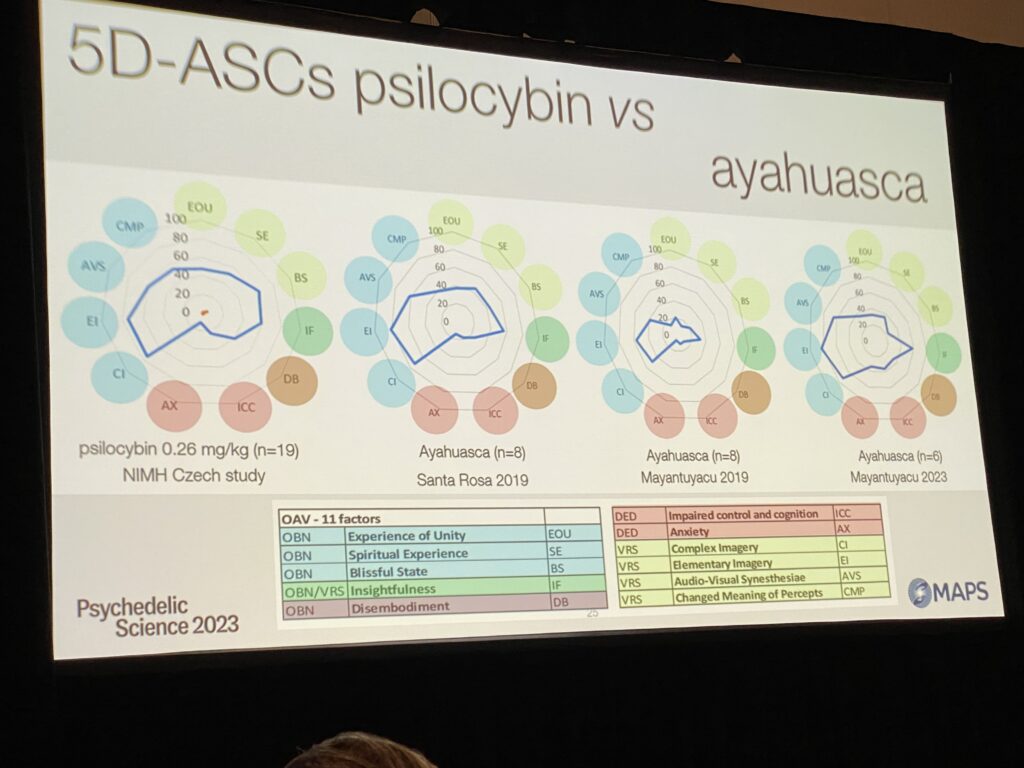
Psychedelics: Spirituality, Mindfulness, and Mortality – Personal Reflections and Visions for the Future – This was a slide-rich presentation by Roland Griffiths, Ph.D. from Johns Hopkins School of Medicine. There was lots of eye-opening data here, and it showed me how researchers are measuring whether people have spiritual experiences on psychedelics and how that can be beneficial. The part about visions for the future was pretty minimal (for timing reasons I think). My main takeaway was that people are clearly finding spiritual benefits in psychedelics. Life becomes more conscious, expansive, and supportive when we take them. An unspoken aspect that I picked up was that studying psychedelics seems to be transformative for the researchers as well, even if they aren’t taking any substances. It’s clearly rewarding doing studies that create such powerful benefits for people. I can see how that would be very motivating and inspiring. Throughout the conference I got the sense that many of these researchers truly love their work and feel that they’re right where they want to be in terms of serving the greater good.
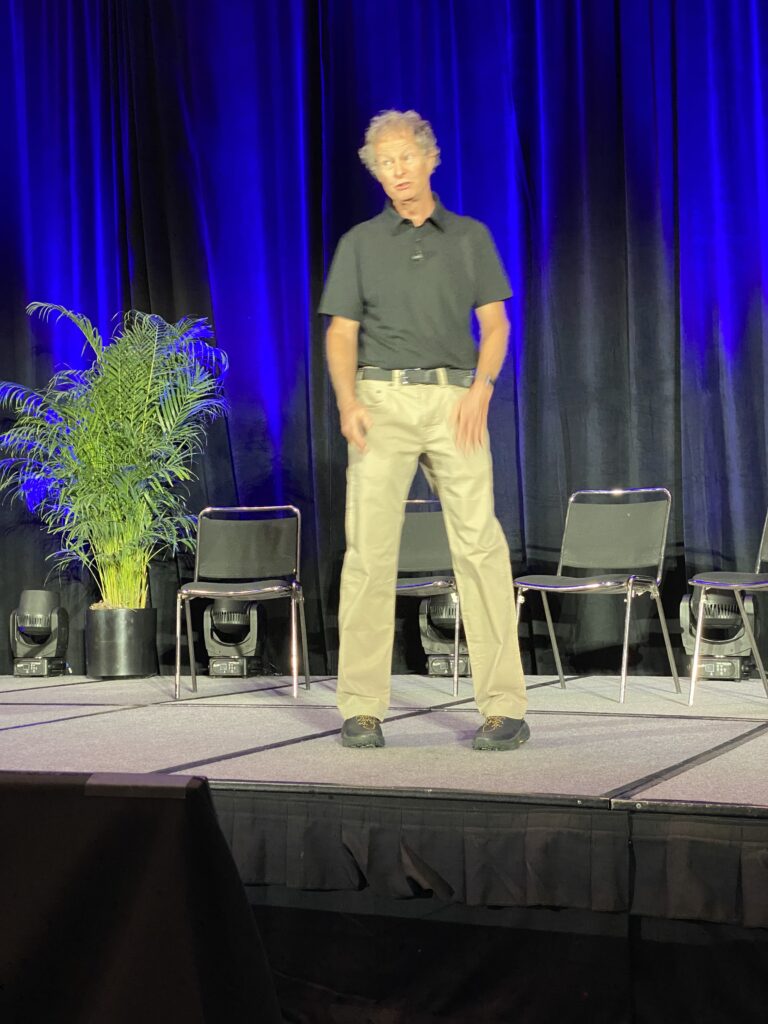
What 50 Years of Psychedelics Have Taught Me About Purpose, Love, and Life: Reflections from John Mackey, Co-Founder of Whole Foods Market – I raced to this session since I thought it might fill up, but it was actually relatively sparse, maybe because it was a Business track session or because of other sessions it was competing with. Rachelle and I grabbed seats in the front center, just several feet from the stage. Even though it was only 20 minutes, this was one of my favorite sessions from the conference. John shared the highlights of his psychedelics journey and how Whole Foods wouldn’t have existed if he hadn’t done LSD first. That LSD experience led him to start thinking about his purpose, which led him to join a vegetarian co-op. Soon he became the food buyer for the co-op, which eventually led to him starting a small grocery store, and that evolved into a small chain which later became Whole Foods. John was warm, personable, and funny – totally the kind of speaker I love watching. I could have listened to him for hours and wished he’d had a longer time slot. I also wish Whole Foods hadn’t been bought by Amazon since the vibe in the store hasn’t been the same since that happened. I still shop there occasionally, especially for items I can’t get elsewhere, but the energy inside feels conflicted, sometimes even gross, like it doesn’t really know what it’s trying to be anymore. Perhaps the new managers could benefit from a fresh round of psychedelics.
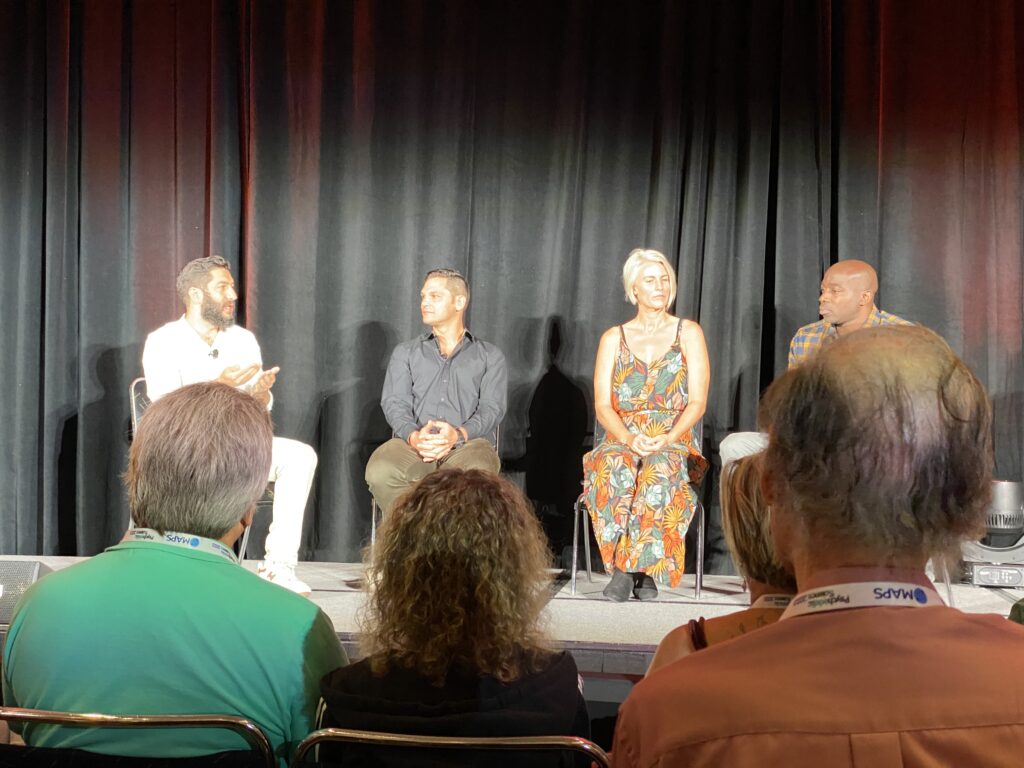
Sports, Psychedelics, and Mental Health: The Mind-Body Connection – This panel was hosted by Daniel Poneman, son of our good friend Debra Poneman, and featured panelists from the NFL, NHL, and NBA. I loved it! It was lively and insightful, and Daniel was an outstanding host. It was interesting to hear more stories about how psychedelics can benefit athletes mentally and emotionally, upping their game but not like physical performance enhancement drugs. I see this as another vector that’s helping to remove the stigma that psychedelics inherited from the old War on Drugs. It strikes me as ridiculous that Twinkies, cigarettes, and alcohol are legal but magic mushrooms aren’t (in most places).
Reflections on a Lifetime with Psychedelics – This was a fun and lively session with Dr. Andrew Weil (who could easily pass for Santa Claus) recounting some of his psychedelic experiences, alone and with friends, including some humorous mishaps. It was a very positive session highlighting the many social benefits of psychedelics and expressing hope for the future if more people engage with psychedelics for transformative experiences, not just for themselves as individuals but for society and the world.
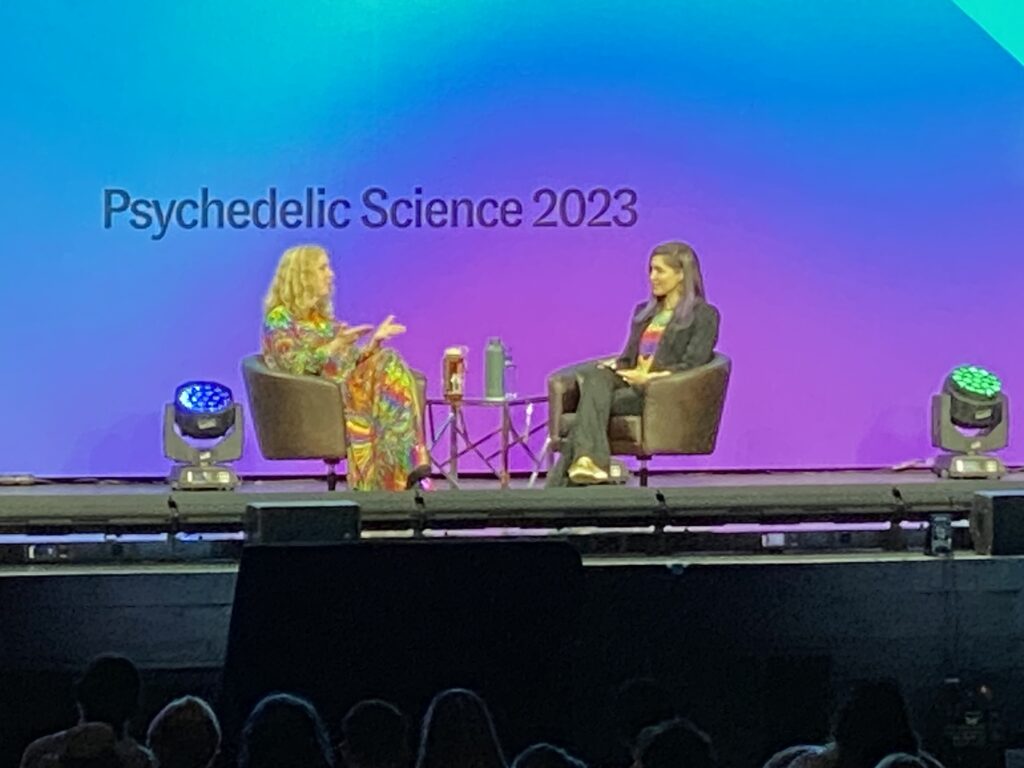
Tempering Psychedelics: A Conversation Between Michael Pollan and Bob Jesse – I went into this session with high hopes since I’d read Michael Pollan’s How to Change Your Mind book and liked the related Netflix series. I found this conversation a bit dull though, with Michael and Bob seeming a little too enamored of each other while not delivering much takeaway value for the audience. The “two people talking organically” format sometimes works and sometimes doesn’t, and IMO this one was a miss. I felt like I was watching an insider conversation between two people who were hornier to talk to each other than to provide value to the audience, and bearing witness to their on-stage bromance didn’t draw me in this time. I kept hoping for something interesting to emerge, but I ended up leaving with a hollow feeling. The main takeaway I got was “Don’t overdo it,” which was about as useful as it sounds.
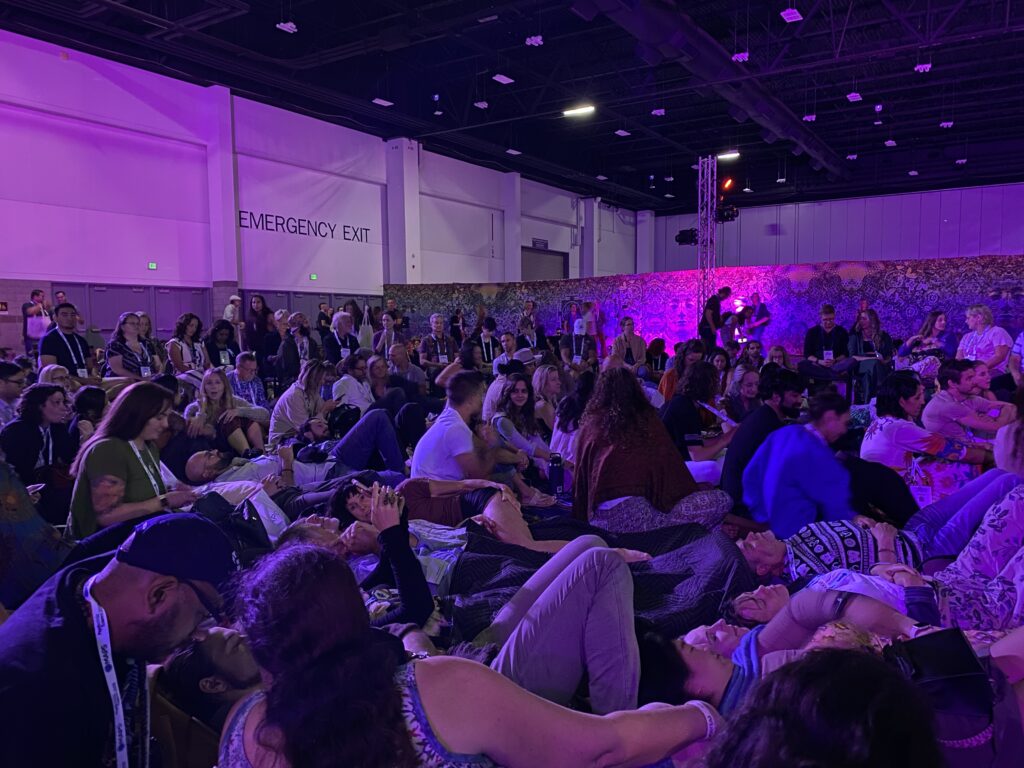
Ceremonia + Soundgasm Present: 432hz Sound Activation – This was an experiential sound bath meditation experience in the Deep Space area. We got there early and snagged seats, and it filled up quickly with people sitting and lying on the floor all around the area, almost like a giant cuddle puddle. This session got off to a rough start, being very late and having mic problems, but once they got going, it was flowed beautifully with gongs, chimes, crystal bowls, singing, flutes, and more. I found it nicely restorative, although I thought it would have been better if it was done in an separate enclosed space instead of in the large open Deep Space exhibit hall with other things happening all around. Think of it like meditating in the middle of a large indoor shopping mall with high ceilings – not the ideal setting but still nice when everyone meditates together.
Buddhism and Plant Medicine: An Acceleration of Healing and Insight – In this 30-minute talk, Spring Washam shared her personal experiences of blending ayahuasca and Buddhist practices. The main takeaway was that yes, they combine well. This relates to a theme I saw elsewhere the conference – that psychedelics and meditation are highly compatible and have overlapping benefits. Both can help you develop greater mindfulness, for instance. Psychedelics just gets you there faster.
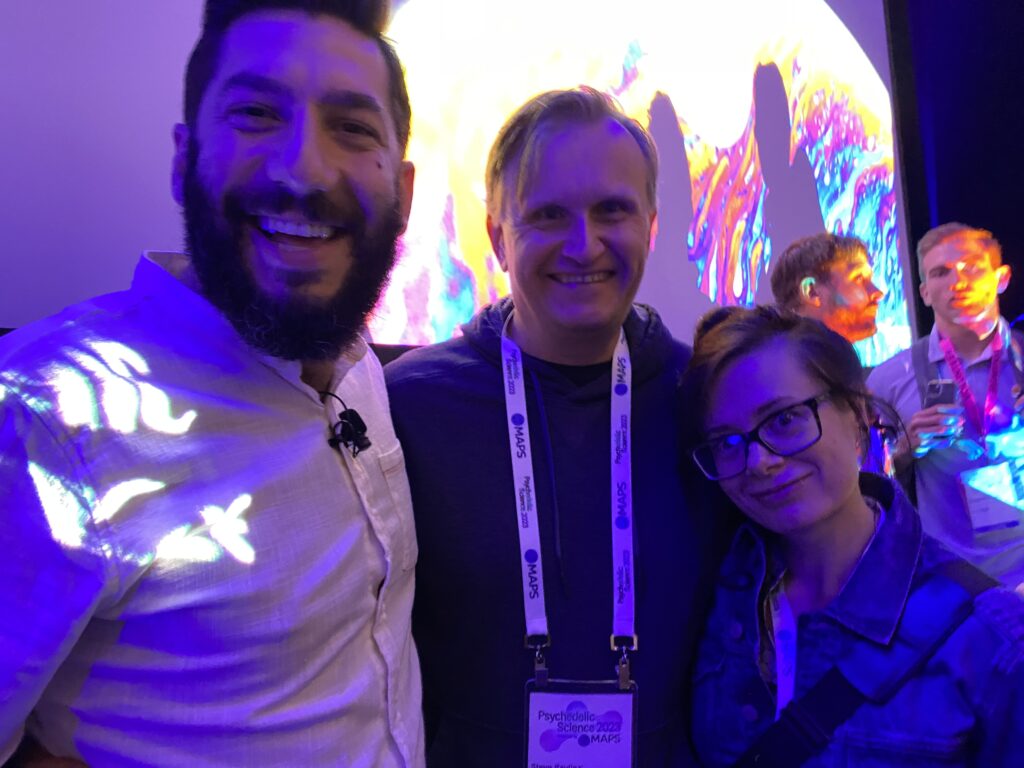
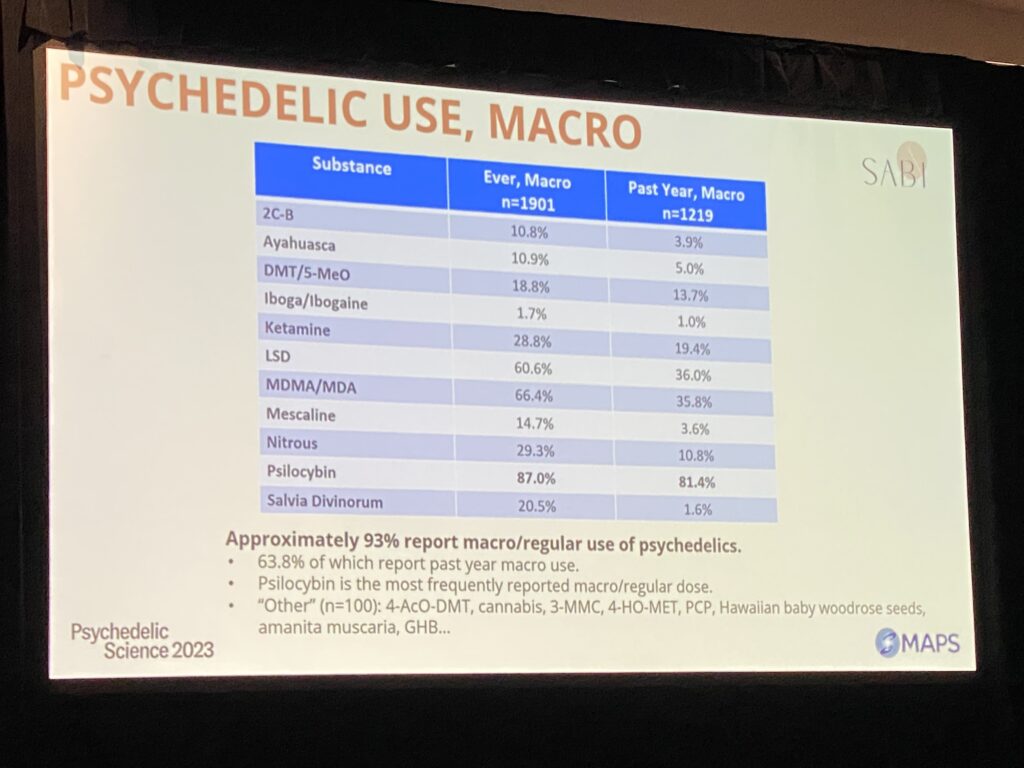
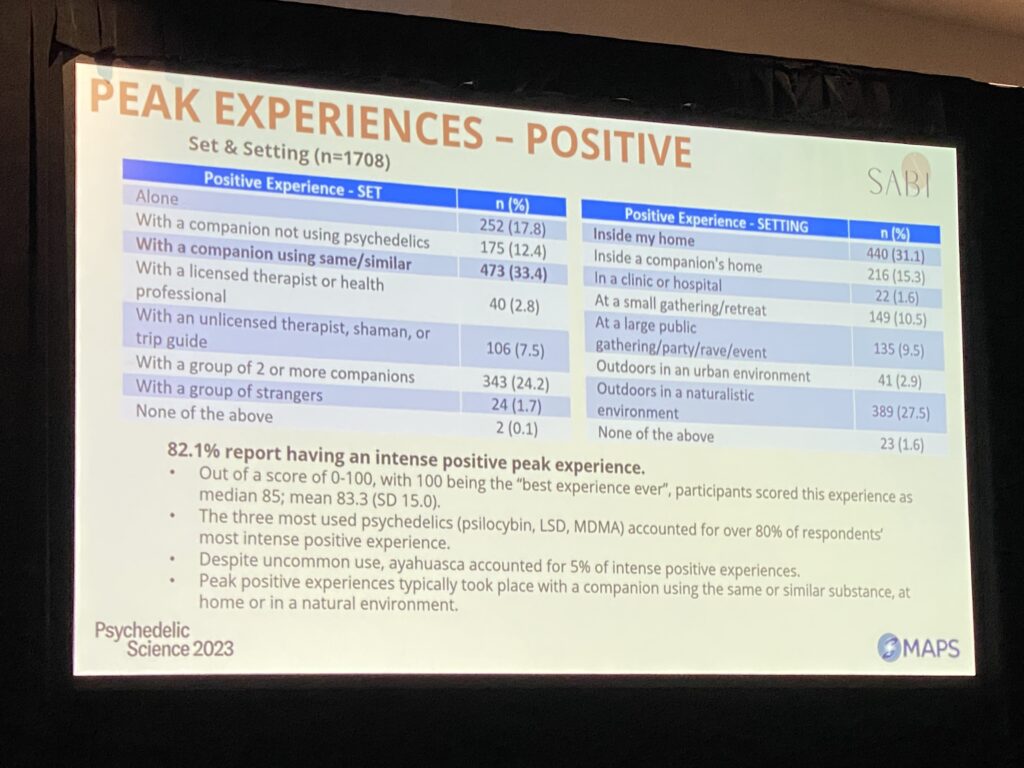
The Canadian Psychedelic Survey: Results of a Large Cross-Sectional Survey of Canadian Adults Who Use Psychedelics – I was late getting to this session since it began at the same time that the previous one ended, and it took time to switch rooms. But I caught most of it and loved what I saw being presented by Philippe Lucas, Ph.D. This was a data-rich presentation based on a massive 650-question survey answered by about 2400 Canadian psychedelics users. The sheer amount of data was very revealing, reminding me of Dr. Kinsey’s revelations about human sexuality practices. I went up and talked to the presenter afterwards, asking him a few more questions before heading off to dinner.
This slide showed psilocybin (magic mushrooms) to be the most popular psychedelic in Canada, followed by MDMA and LSD. Apparently in some Canadian cities, you can buy shrooms in certain marijuana dispensaries. That’s technically illegal in Canada, but some dispensaries aren’t very by-the-book about that, nor is local law enforcement.
This slide seems consistent with my own (very limited) experiences: “Peak positive experiences typically took place with a companion using the same or similar substance, at home or in a natural environment.”
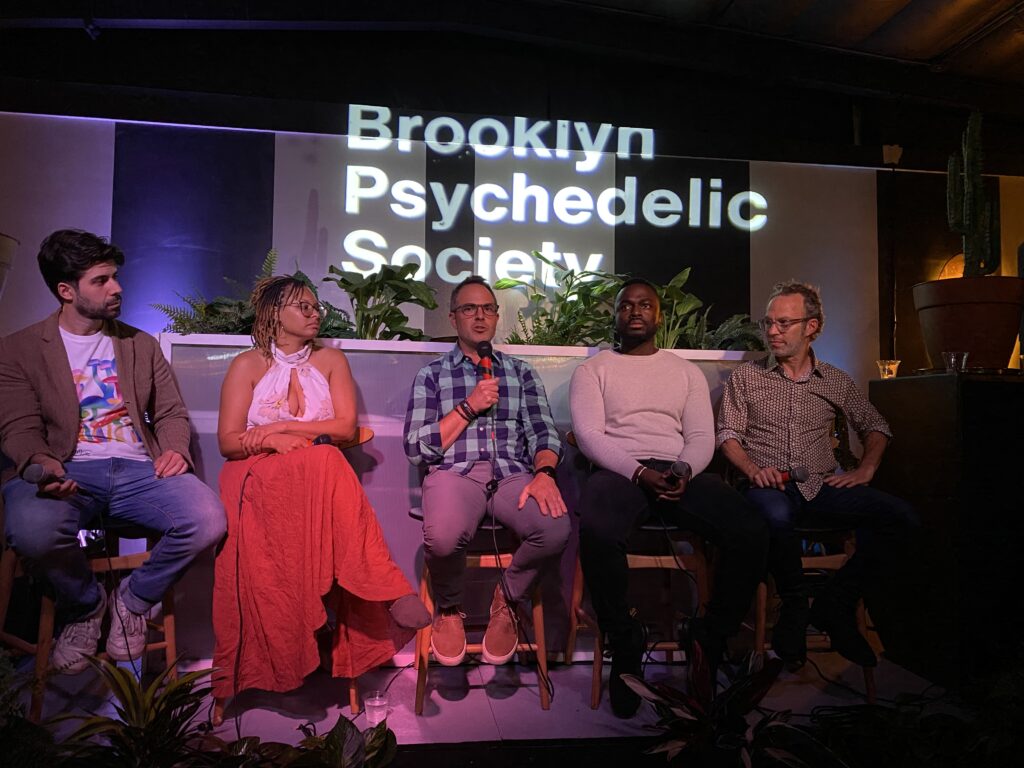
Between Two San Pedros: Building Transformational Psychedelic Organizations – This was a paid after-conference experience from the Brooklyn Psychedelic Society ($30 per person). It was a psychedelic talk show format (like Between Two Ferns) and hosted at a different venue. They got off to a rough start with some audio issues, including nearly blowing out the audience’s eardrums with screeching feedback noise from the large speakers – multiple times – as we howled in pain. They were also pretty late getting going, but once they took the stage and the panel got into a nice flow, I found it compelling and worthwhile. They discussed some interesting aspects of local psychedelic societies, including the legal and economic perspectives. The overall tone felt very aligned with a left-leaning New Yorker perspective. I liked that it broadened my understanding of psychedelic space, and I was glad I went. When they opened it up for Q&A, I asked a question and received some thoughtful answers. There were some concerns expressed about corporate money flowing into this field and doing a lot of damage. I wondered whether some consciousness behind psychedelics may actually be using the corporations to spread their own messages and energy, almost like a Trojan Horse.
BPS Presents “Community is the Medicine” PS2023 Afterparty – Admission to this afterparty was included with the preceding psychedelic talk show, so we opted to stick around, hoping the party would be fun and interesting. It mostly wasn’t though. In one room there was some loud but weaksauce music with a few people dancing (or trying to) and way more people standing around as if they were waiting for some dance-worthy music to finally manifest. Rachelle and I danced a little, trying to make the best of it, but it was nowhere near as fun as what we’d experienced the previous Saturday at the Radiance Festival at Area15 in Vegas. If all they did was play 80s hits, I think everyone would have had more fun. I was offered some shroom gummies but declined because they weren’t vegan, and I’m not into eating liquified horse. The gummies were freely available to everyone there, provided by an event sponsor called Neudelic, which is also a candlemaker. I talked to people from the company about making vegan gummies at some point, but they seemed ignorant about it being possible and cited failed tests, even though other companies are already doing it. Rachelle and I mostly cuddled in a chair and later on a couch, watching some people consume various substances while others seemed to be waiting for something interesting to happen. At one point we watched a 5-minute movie from Neudelic, which was supposed to be some kind of sensory experience, but it really wasn’t worth the wait. Overall this party felt like a mishmash of odd components stuck together piecemeal but without much unity or cohesion. I had short conversations with a few people there, but the overall vibe felt off to me.
Friday, June 23
Opening Address (Plant Medicine Track) – This earned the distinction of being the worst session I attended since it was such an shameless bait and switch. Based on the description, it was supposed to be a session about “cultivating a personal, non-mediated relationship with plant medicines,” which sounded appealing. In actuality it was nothing but an advertisement for a psychedelic “church” called Chacruna, including inviting people to donate. Seriously there was zero content other than that. This kind of bullshit really did not belong at an otherwise awesome conference, so please don’t ever invite these presenters back. I wouldn’t be opposed to a public flogging either.
Sex and Psychedelics: Weaving Altered States for Healing and Pleasure – I had the feeling this would be a popular session, figuring that people in the psychedelic space are probably very sex positive, so we went to this one 20 minutes early just in case. We were lucky to snag seats because it was nearly full already, and by the start time, people were sitting in the aisles and packing the perimeter and doorways too. In fact they had to tell people not to sit in the aisles due to it being a fire hazard. This was a pretty awesome session with four lively women, including one who said she was a former sex worker, talking about two key aspects of this topic: 1) using psychedelics to improve your relationship with your sexuality, such as by healing sexual trauma; and 2) using psychedelics during sex to create different kinds of experiences, such as more oneness, intimacy, and heart connection. One interesting takeaway was that for the latter situation, it can work, but you’d better be open-minded about where it takes you. Taking psychedelics before or during sex can lead to unpredictable results. It might enhance the experience and make it very tantric. Or it might bring up some deep issues that you need to work through, perhaps with your partner, which may not lead in a very sexy direction physically, although it could still be beneficial long-term. That makes total sense to me. I’m not aware of any sexual trauma in need of healing within myself, at least not in this lifetime, and Rachelle is much the same, but I think the second option sounds worthwhile to explore at some point. I appreciated the reminder about not getting attached to outcomes when combining psychedelics with sex. If you’re in the mood for a specific kind of sexual experience, then psychedelics may not mix well. However, this also depends on which substances you take and how much. That said, I do feel like psychedelics could have benefitted me many years ago, in terms of helping to get past all the nonsense about sexuality that I learned growing up Catholic. It’s probably no surprise that the psychedelics community is rich in ex-Catholics like me.
A Message From the Amazon – I went into this session thinking it would be packed with some interesting wisdom, and I left noting that there seems to be an interesting power struggle going on, which includes a number of players from venture capitalists to indigenous people to doctors and therapists to community-oriented psychonauts. Everyone wants to claim a seat at the table and influence how the field evolves. I don’t have a horse in this race personally, but it was hard for me not to see this talk through the lens of indigenous people trying to play the elder card, claiming a privileged position in the psychedelic theater due to their multi-generational history with plant medicines. I was actually rooting for them to make that case, but I don’t think they landed the plane. I left this session feeling even more aligned with cultivating an individual relationship with psychedelics, as opposed to wanting to work with a shamanic gatekeeper. Even with my limited personal experience thus far, I feel I’m better off learning from and journeying with friends, especially locally, and experimenting on my own with a strong focus on thoughtful intentionality, instead of putting someone else on a pedestal because they claim psychedelic elder status. I still want to be open-minded about this, but so far life seems to be steering me down a more individual and local community-oriented path. I prefer to have Rachelle or an experienced local friend as a sitter because I feel safer with them than with a shamanic elder I don’t know and who uses frames that I don’t necessarily resonate with. That said, there are many complex, interwoven issues at play here, and I’m still mapping out my preferred framing. Plus I like to stay nimble with the frames I use, strongly resisting wrapping any into my identity. So if you think I feel a need to defend these frames as “my stance on this,” don’t waste the keystrokes.
The Role of Previous Experience, Gender, and Set and Setting on Acute Psychedelic Experience and Its Persisting Effects – Due to timing I only caught the tail end of this session, where the presenter was sharing about his experiences with indigenous ayahuasca rituals, so I missed much of the data that may have been shared earlier. The small portion I saw reinforced the notion that psychedelic experiences are very sensitive to intention and environment. One way to invite more variety, if you want that, is to deliberately change the environmental factors, such as by doing psychedelics in a different country.
The War in Ukraine and Psychedelic-Assisted Therapy – This was a powerful and moving session about using psychedelic therapy to treat soldiers and civilians impacted by the War in Ukraine, shared from the perspective of two people who grew up in Ukraine and wanted to help. In addition to combat-related issues like PTSD, people are enduring so many other traumatic experiences due to this war. One panelist shared that Russians were injecting the genital areas of Ukrainian women with a foam that renders them sterile, so they can’t bear children. The main takeaway is that psychedelic therapy shows real promise for treating some of the worst psychological hardships that people endure. There was a different session at the conversion about Israelis and Palestinians using psychedelics to build bridges, although I didn’t end up attending that one. It’s impressive to see just how many ways psychedelics are being used globally, including in some of the most difficult situations imaginable. This session really gave me the impression that the psychedelic space is infused with deep compassion, caring, and courage. I can see why some people are very protective of those aspects as really don’t want corporate agendas fucking it up.
Psychedelics, Joy, and Celebration – This seemed like an upbeat topic, with two women talking about the happy side of psychedelics. I found it dreadfully boring though – slow, plodding, shallow, and without meaningful or interesting takeaways. If this was a video, I would have needed to play it at 4x speed. It was like watching two people talking about unicorns grazing on grass. I felt dragged down by a major nap field me from people around me getting sleepy, and I can’t blame them since I was in the thick of it too. Late afternoon sessions can be tough since people’s energy often starts to wane, so it’s important to keep the energy up when you have such a time slot, and these two women did the opposite, talking slowly and with long pauses. I searched for a reason to stay but couldn’t justify it, so after 25 minutes, I suggested an alternative to Rachelle, and she had no resistance to bolting with me. That tuned out to be a good choice since the closing session we flipped to (below) was way more lively and interesting. No nap field. My main takeaway from this session was to trust my instincts and not settle for partial matches.
Reflections on Psychedelic Science 2023 (Closing) – This was a very different kind of closing than I expected – a collage with a surprise. First there were some nice final comments and musical performances, especially from Snow Raven, who performed an incredibly unique musical act showcasing her voice and some mouth instruments, including creating animal-like sounds. She was the star of the show and got a well-deserved standing ovation. Just wow.
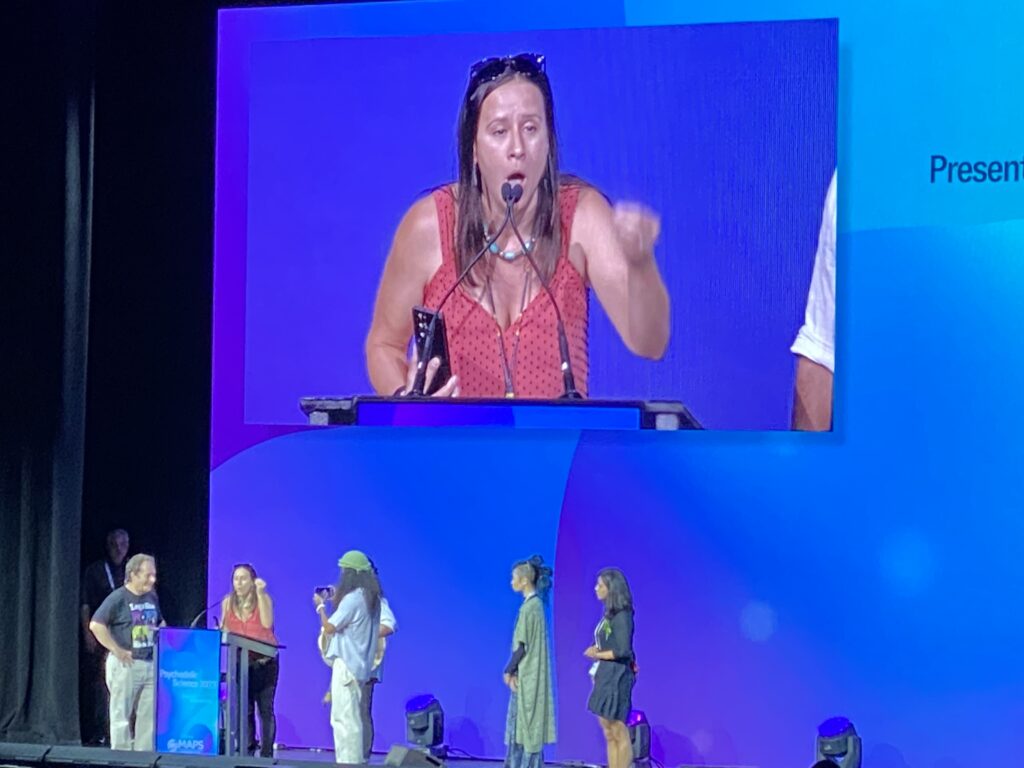
As Rick Doblin took the stage to share his final remarks, some drama ensued. A handful of protestors began shouting, with one of them banging on a large drum, proceeding through the audience and yelling something about our being lied to. Fortunately there was no violence, and I figured they’d be escorted out by security soon enough. Rick tried to verbally assuage them, telling them this wasn’t the right time and place for that, but as they persisted, he eventually flipped to the opposite approach and invited them on stage to say what they wanted to say. It really surprised me that he would do that, but I gathered that he knew at least some of them and that there was probably some history there. Several people took turns at the mic, each briefly voicing their objections, particularly about the commercialization of the psychedelic space and not sharing enough about the risks. One speaker noted how society had transformed what were originally plant medicines and ceremonial tools into addictive cigarettes (from tobacco), cocaine (from coca leaves), the opioid crisis, etc. He warned that we’re doing the same with psychedelics and that we aren’t learning from history. I must say that he did get me wondering about that. Are we heading towards the creation of the Big Psychedelics industrial complex?
Here’s a pic of the passionate protestors taking turns at the mic while Rick Doblin (on the left of the lectern) tries to make lemon Tek out of lemons, which oddly sort of worked. Psychedelic space is remarkably flexible.
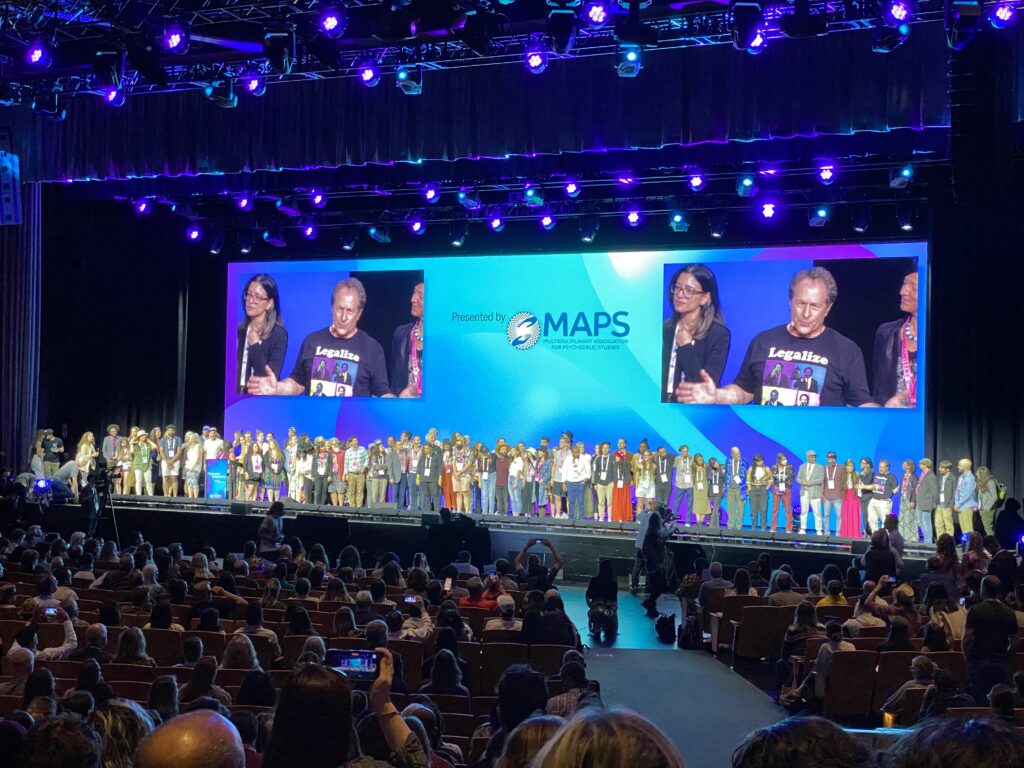
Eventually Rick closed out the event, including inviting the staff on stage, but on a different note than he likely intended. I was impressed by how he handled it under the circumstances, but I’m not privy to the backstory that led up to this. And to their credit, the protestors shared their messages succinctly and without overdoing it. I was resistant to their take-over at first, but I do feel they added some value at the end, giving me even more to reflect upon.
I really appreciated the balance of diverse voices and viewpoints woven into the conference, at least from the parts I got to see. If anything the ending just further reinforced the myriad complexities of psychedelics’ potential impact on society. It’s a bit like generative AI in that regard – lots of benefits and plenty of risks, all woven together in an unpredictable package of emergent possibilities.
This conference further impressed upon me the importance of intentionality. With a different set, setting, and intentional framing, tobacco is a ceremonial tool. With corporate-style intentionality, it becomes a bunch of cancer sticks. It’s a potent reminder to keep reaching for the highest good with our intentions, and avoid succumbing to intentions rooted in neediness and greediness.
Saturday, June 24
On Saturday we attended some post-conferences events at the Denver Sports Castle, which was neither sporty or nor particularly castle-like.
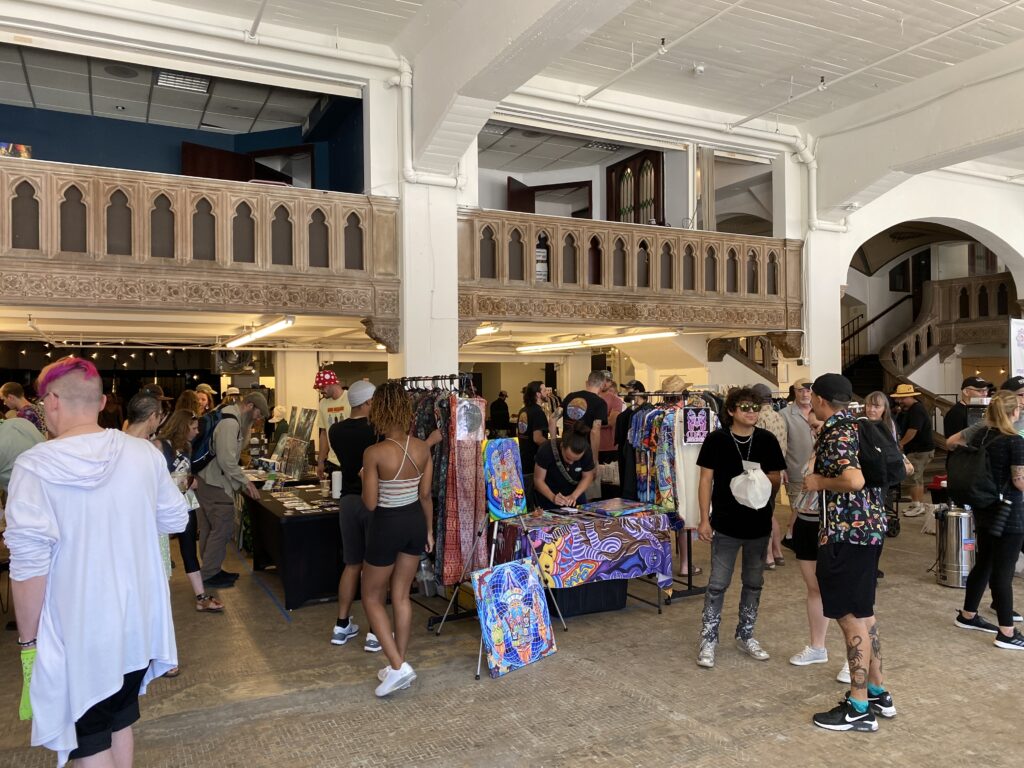
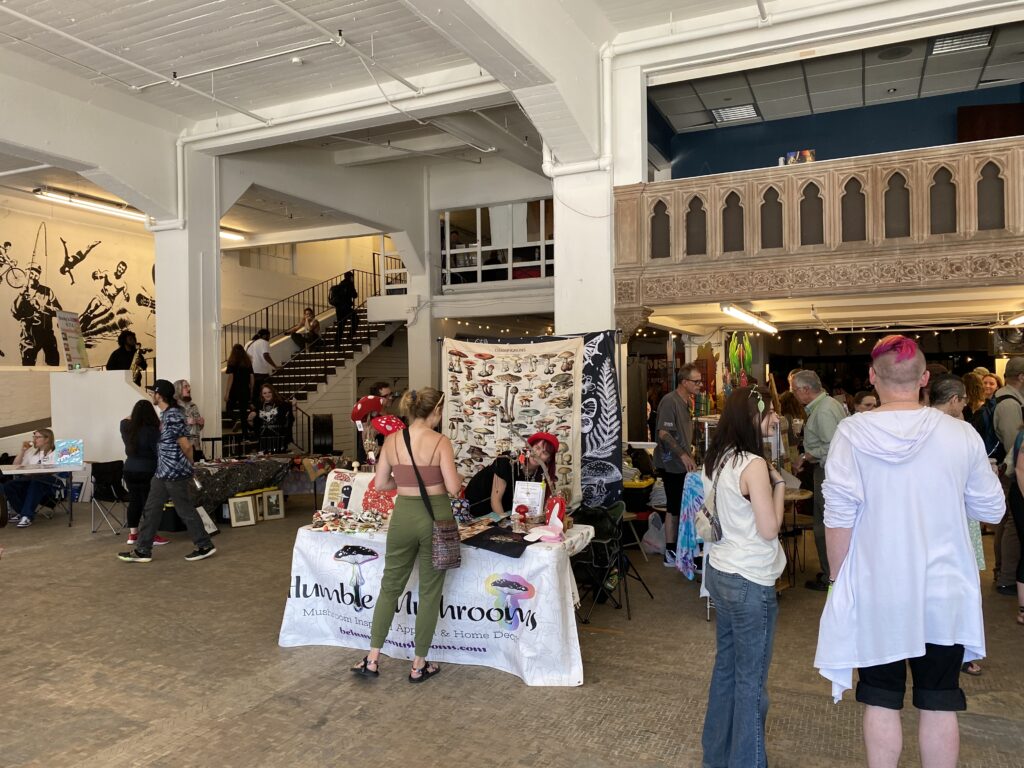
Mindful Marketplace – There was a small indoor marketplace running 10am to 5pm, with people selling psychedelic-related items such as clothing, artwork, jewelry, mushroom grow bags, and spore syringes. We browsed the market casually for a while, and Rachelle bought a nice little handbag. No one was selling psychedelics directly, since that would be illegal even in Denver, but as we experienced later that night at the after-party, it’s okay to grow magic mushrooms for personal use in Colorado, including giving them away.
Mycology Class (Denver Spore Company) – There were several extra classes offered throughout the day, tucked away in the back corner areas of the market. I opted to go to one mycology class, hosted by a guy with 17 years of experience. He did 30 minutes of instruction with slides, followed by 60 minutes of Q&A – a format that worked surprisingly well since there were lots of great questions, and he gave detailed, down-to-earth answers. He also passed around some grow bags in different stages of growth, so we could see the mycelium making progress in a substrate of brown rice and coco coir. I knew a decent amount about this already just from my own research (I’m a fast learner), and I was happy to gain some extra tips and details. It was well worth the $15 each and a nice opportunity to get answers to some questions from a very experienced guy. I also enjoyed some of his humorous customer service stories. This was another pattern I saw in some of the vendors – a nice heart-alignment with serving people and doing their best to help their customers have positive experiences. I noted again that a lot of people don’t want this pleasant vibe getting ruined by too much corporate greed flowing into the space.
Psychedelic Club of Denver Castle Bash (Afterparty) – For an extra $20 each, we attended this afterparty, which wasn’t bad overall. It still had weaksauce music like the Thursday night one, with the predictable impact on people’s willingness to dance, but it had some other redeeming qualities that made it more interesting. Early on there was a psychedelic speed-friending experience, where we did a few rounds of talking to people one-on-one for eight minutes each. I enjoyed that since I love meeting new growth-oriented people. They gave everyone some question cards to use as icebreakers, which was fine for getting started.
Out in front of the building, there was an arcade bus where Rachelle and I played some classic games: Teenage Mutant Ninja Turtles, Street Fighter II, and Super Mario Brothers. I used to be kickass at all three of those a few decades ago, including being able to pass the first level of SMB with my eyes closed, but boy was I rusty. Rachelle even kicked my ass at SF2. I’m never gonna tell my younger self about that if I encounter him during a psychedelic journey; that would only traumatize him. I could at least reveal to him that The Legend of Zelda series is still going strong… and that Octoroks are still assholes.
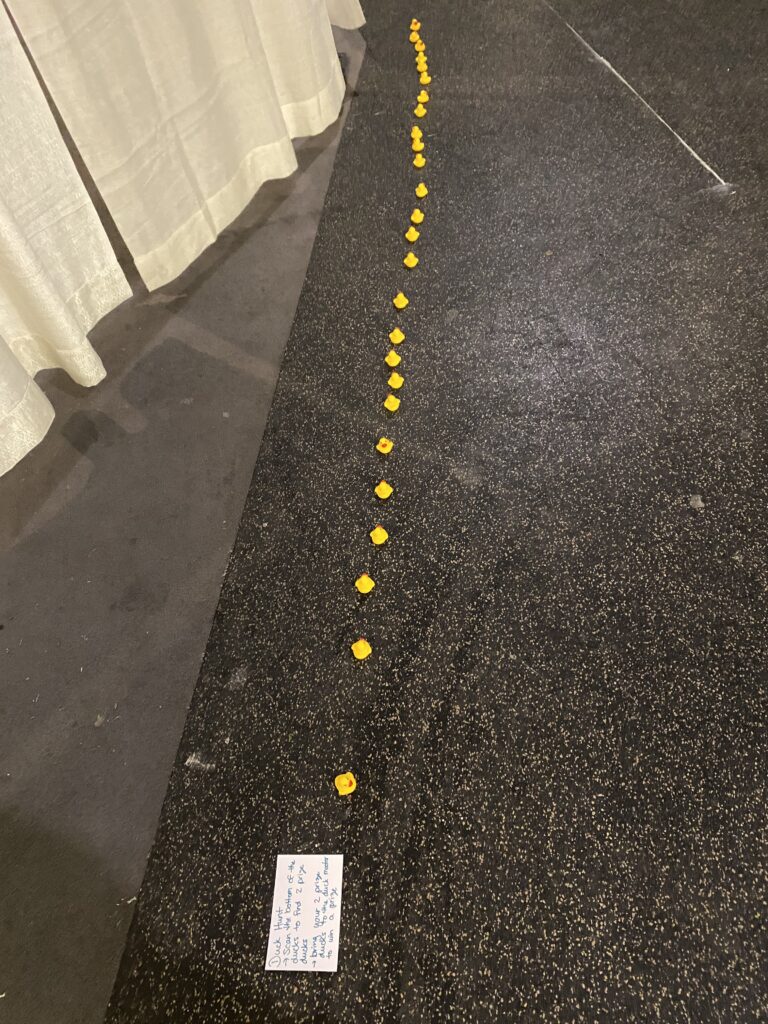
Later that evening they set up a game with a bunch of little rubber ducks, each of which had a QR code on the bottom. If we scanned each duck’s underside with a phone camera, some would lead to psychedelic-related articles, but two of the ducks would open prize confirmation pages. Whoever found both of those prize ducks could go track down a woman holding a bucket full of prizes and claim a prize from it. The prizes were crowd-sourced from people at the event and included various odds and ends. Some were as basic as a pen, a notepad, or a plastic mushroom.
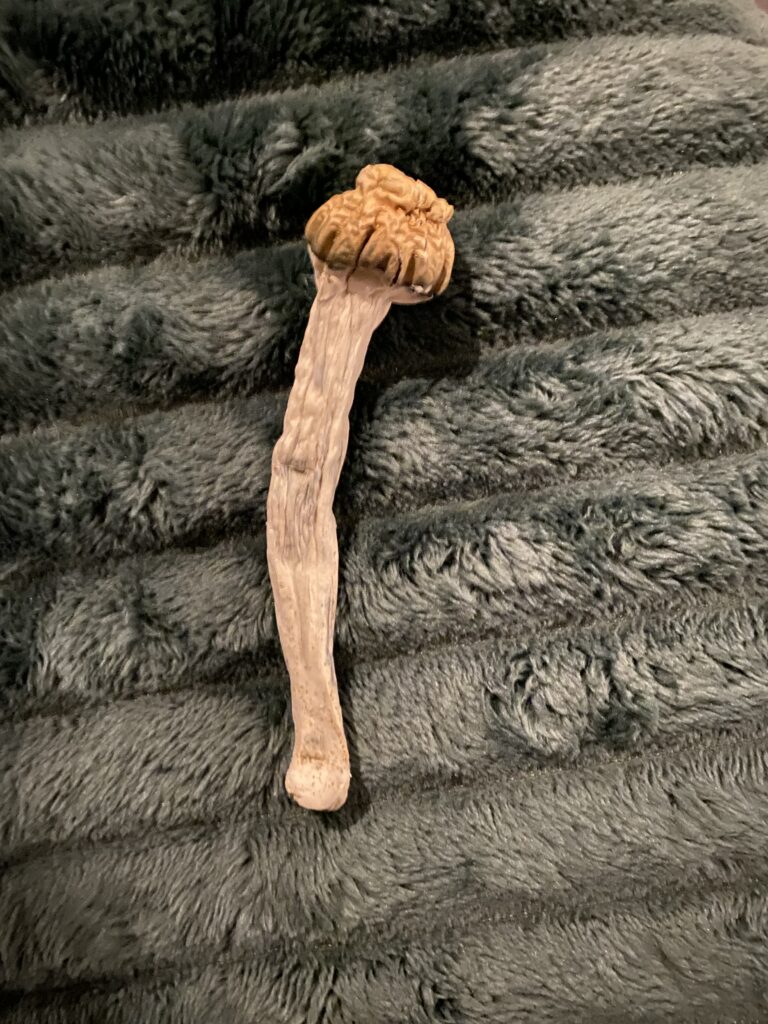
I did the game and claimed the prize of an a dried shroom that someone had donated to the prize pool. This wasn’t too surprising since I saw people eating mushrooms at the event, and there was even a table with jars full of them as well as mushroom chocolates, seemingly free for the taking. In Denver it’s legal to grow and consume magic mushrooms (along with a few other psychedelics), but it isn’t legal to sell them. It’s legal to share them with others for personal use.
You can’t see it too well in the pic, but the stem had some bluish bruising, a telltale sign that it contains psilocybin. I wondered what variety it might be and figured it was probably Golden Teacher (very common). I showed it to a couple of people, including the guy in charge of substance identification. The people I talked to also agreed it was most likely Golden Teacher. This variety is known to be very beginner-friendly, both for growing and consuming. I had some interesting psychedelic experiences with this little guy, including later that night and the following night, but I’ll share that part of the story in a separate post a bit later. For now suffice it to say that I had a decent time at that party, and we left sometime after midnight. The party only ran till 1am, and it wasn’t the right setting for deep psychedelic journey.
Other Conference Activities
Exhibitors – There were dozens of exhibitors at the expo portion of the conference, mostly small booths with mushroom grow kits and spores, clothing, psychedelic societies and non-profits, chocolates, clothing, jewelry, etc. We didn’t have much time to walk through this space, but we briefly walked up and down the aisles just to see what was there. It was about as expected.
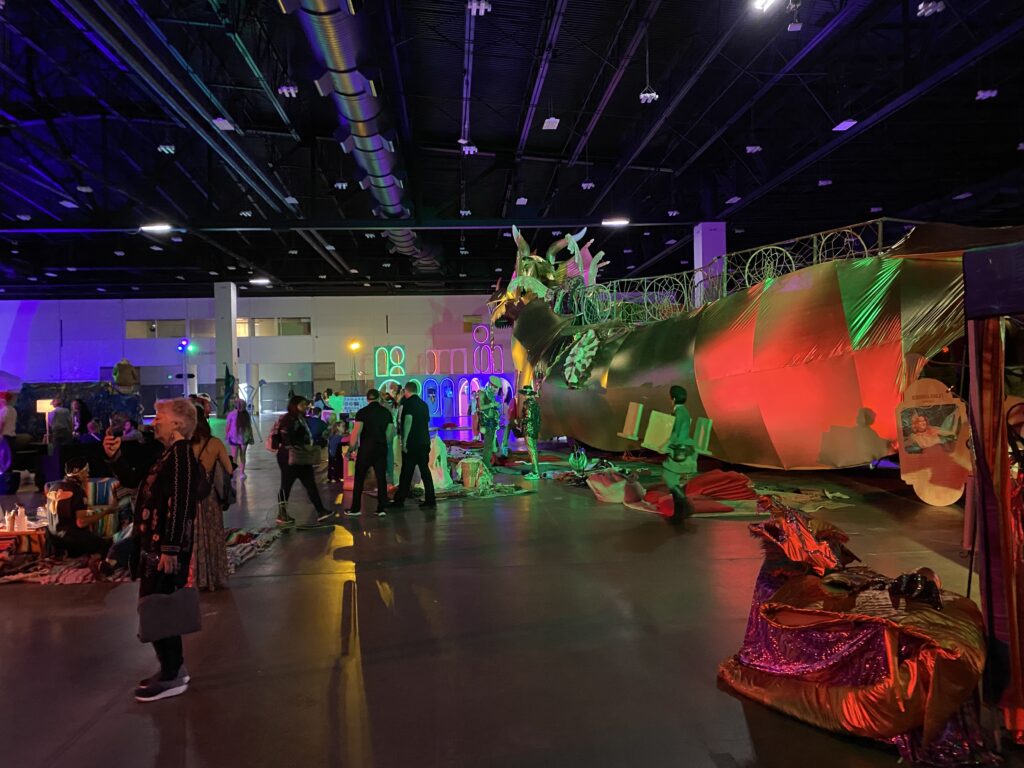
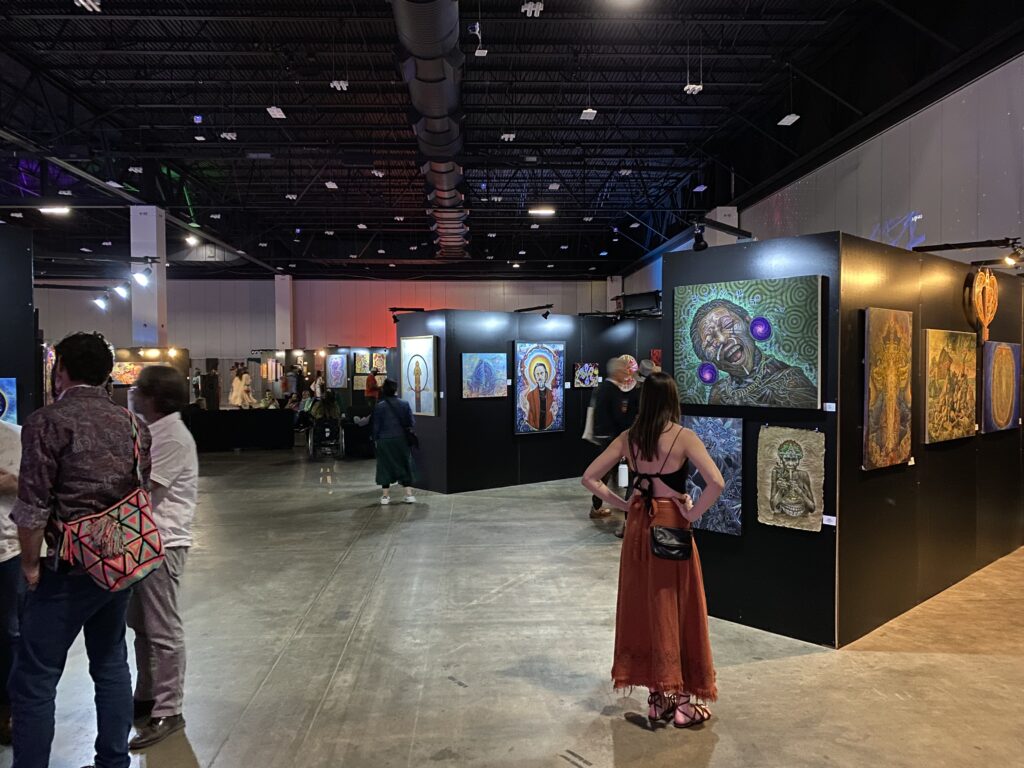
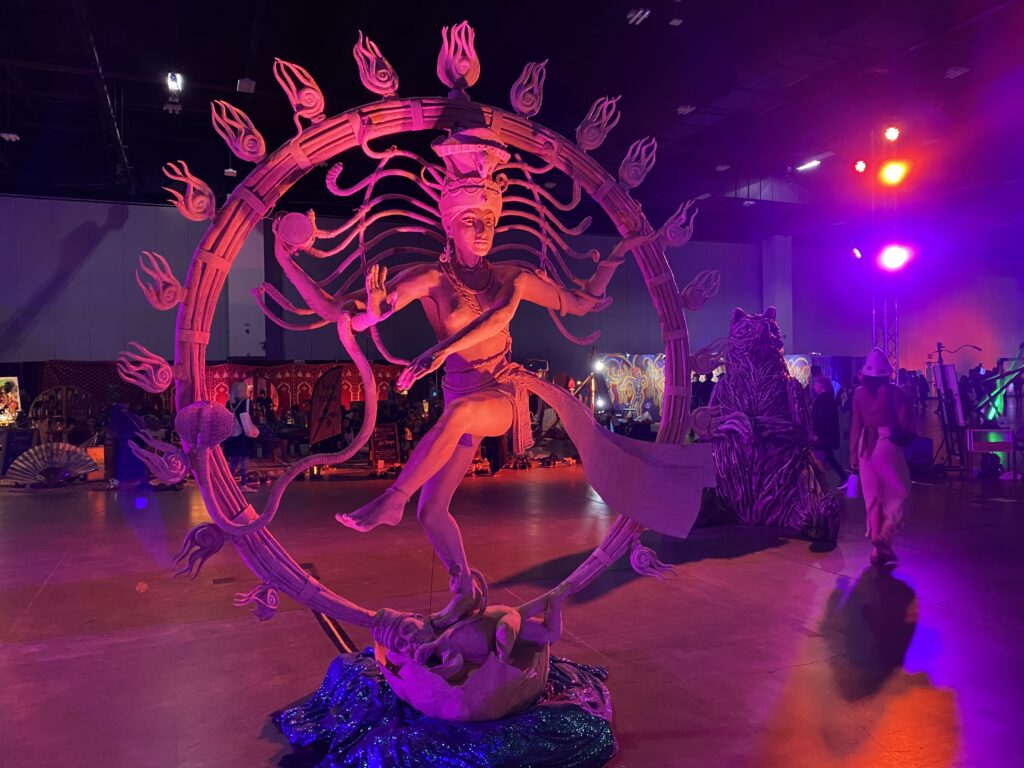
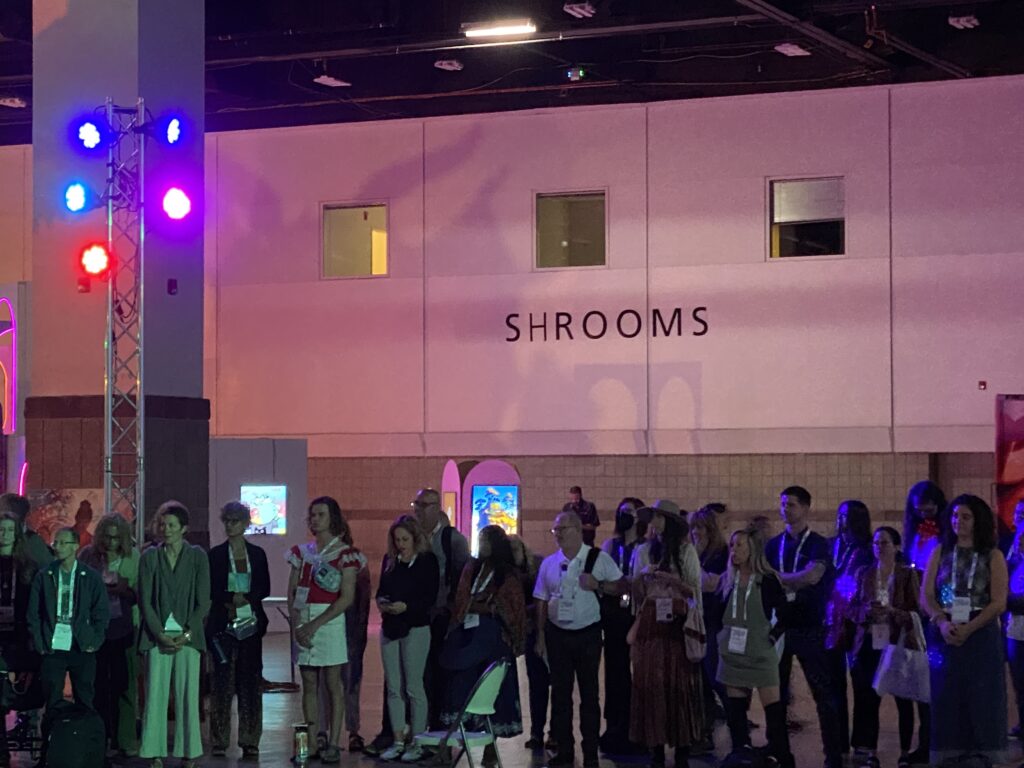
Deep Space – This was an experiential zone in one of the exhibit halls with a variety of experiences, vendors, and artwork. I liked the chill lighting in this space and wished I’d had more time to explore all the nooks and crannies of it. Rachelle and I especially enjoyed some of the artwork we saw.
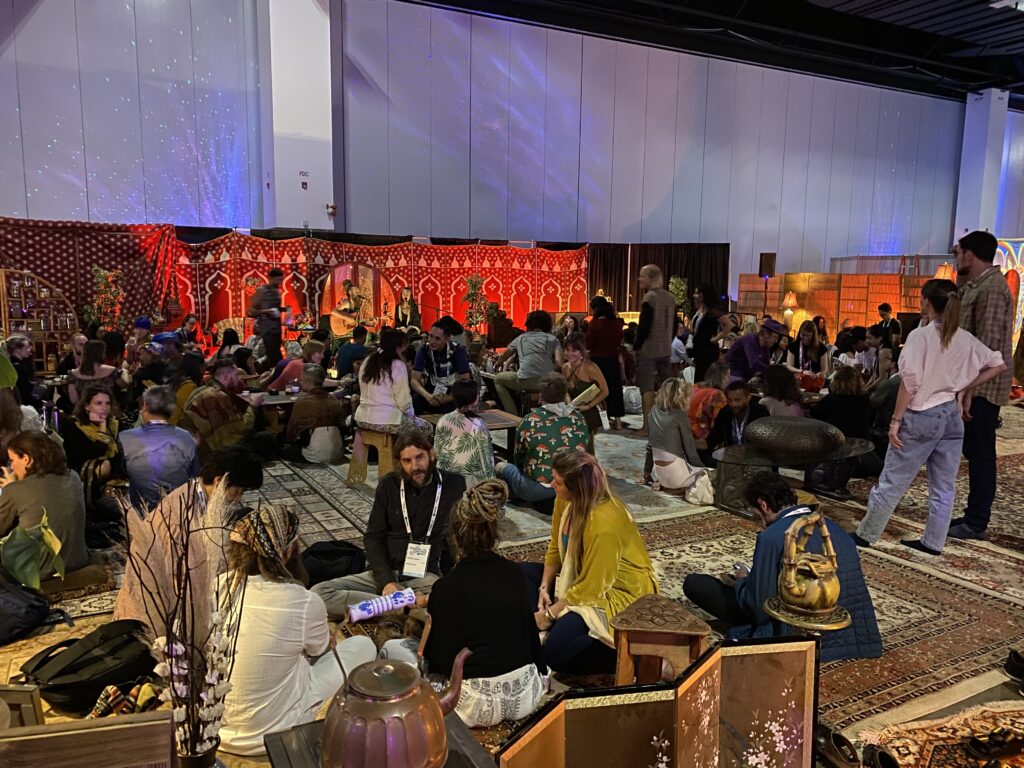
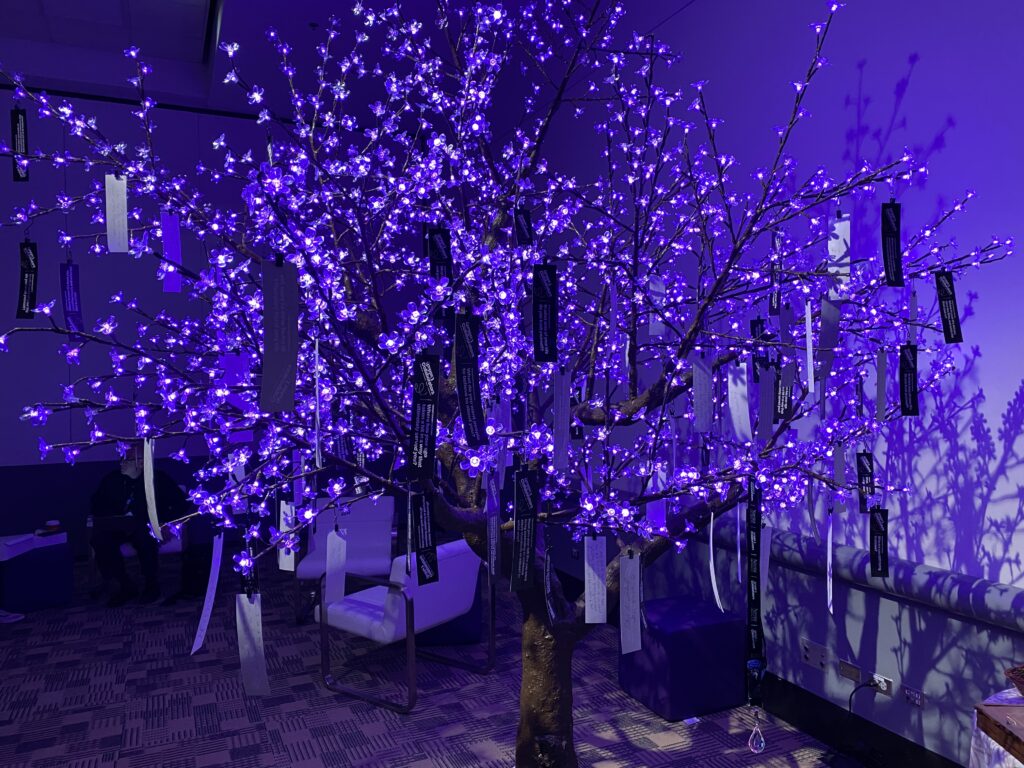
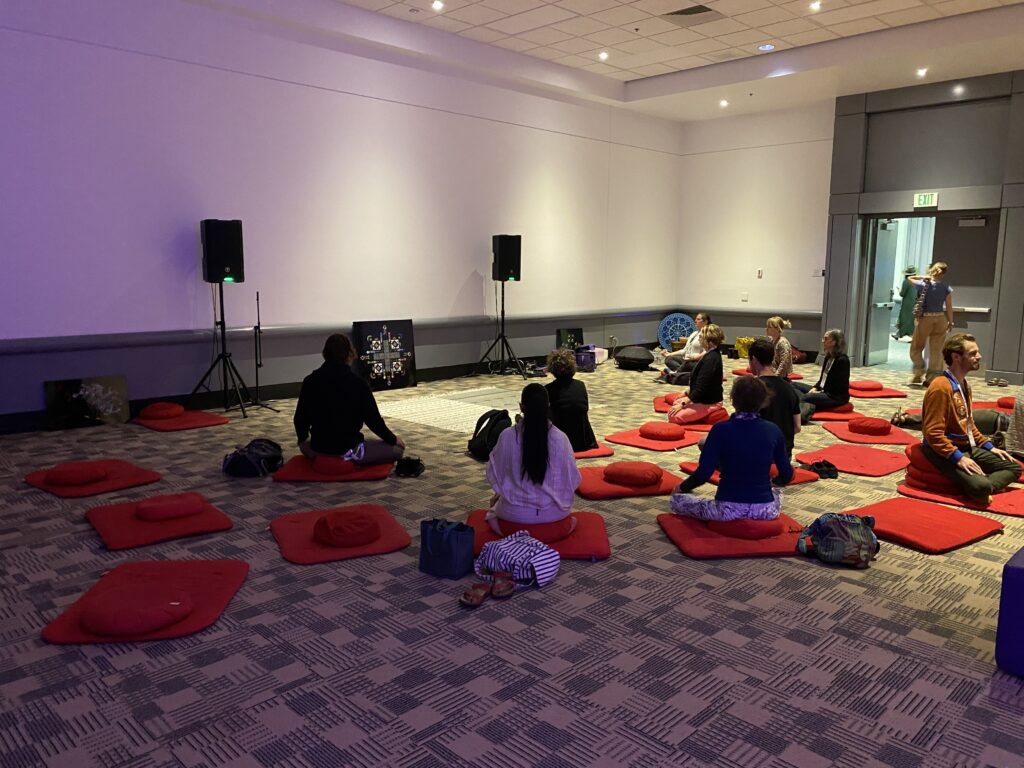
Contemplative Sacred Space – I liked this little area and went there a couple of times to relax, chill, reflect, and briefly chat with other attendees. The area was divided into two sections, one area with a few cozy chairs and couches where people could socialize and another section with cushions for quietly meditating. I took advantage of this space to meditate for 10 minutes between sessions on Friday, which was very nice. I wish more conferences had spaces like this.
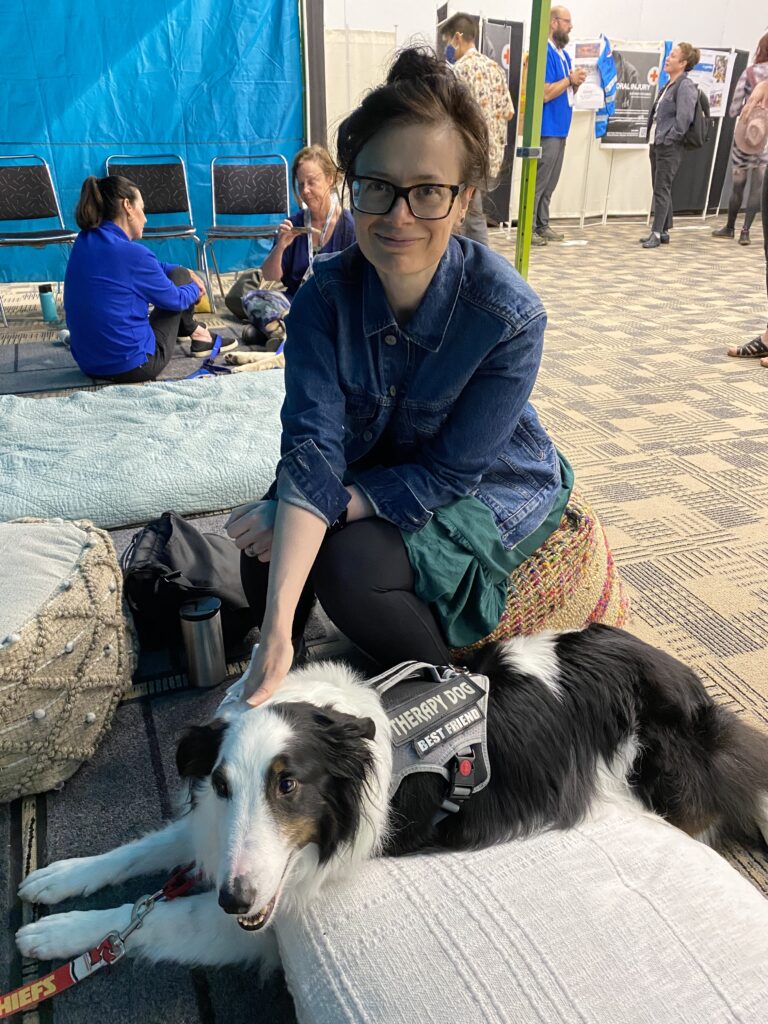
Therapy Dogs – There was a special room at the conference where people could take a break to interact with therapy dogs. That made me curious, so of course I had to check it out. Here’s a pic of therapy dog Louis enjoying Rachelle’s touch (I know the feeling). You might figure that interacting with lots of people might be a bit overwhelming for the dogs, but apparently they’re very social and extroverted dogs who enjoy connecting with humans, and the dogs are only “on duty” for a couple hours. We were told that left to his own devices, Louis would naturally go up and greet every human in the room, one by one. They also maintained a queue, so the dogs weren’t flooded with too many humans at once. Fortunately we popped in when it wasn’t busy.
Quiet Room – Across the hall from doggie land, there was a quiet room, which wasn’t an issue since the therapy dogs were very quiet and didn’t bark. We went in there just to check it out, and there were some people napping on the floor, plus a few tables and chairs, but otherwise it was just a small empty meeting room. I liked the contemplative space much better since it had nicer lighting, cushions, couches, and a bit of decor.
The Social Experience – I very much enjoyed the social aspect of the conference and the chance to engage, however briefly, with so many open-minded, growth-oriented people here and there. I felt totally at home at this conference all the way through. We even ran into a friend from our workshops and shared some meals together with him and had fun catching up – we didn’t know he was going to be there.
I also liked the conference’s style – reasonably well-organized given the scale, yet with a twist of counter-culture here and there. Note the modified restrooms sign in this pic, for instance.
Key Takeaways
This was a whirlwind of a trippy trip, and I’m so glad I went. I’d be delighted to go to this conference again, which could be even more massive next time.
I’m going to share a summary of my main takeaways from the conference in my next post, so I can separate the play-by-play of the experience from the more reflective insights.
In a different upcoming post, I’ll also share about the two magic mushroom journeys I did on the Saturday and Sunday nights after the conference. So stay tuned… 🍄
Oregon Health & Science University researchers showed that consuming THC while pregnant could potentially affect development of the fetus and lead to life-long health impacts for offspring.
The preclinical study was published today in the journal Clinical Epigenetics.
Delta-9-tetrahydrocannabinol, or THC, is the main psychoactive ingredient in cannabis, a substance growing in popularity and availability in the United States. The prevalence of cannabis use in pregnancy is also rapidly increasing, especially during the first trimester — a time when the fetus is most vulnerable to environmental exposures — to mitigate common symptoms like morning sickness. However, the potential effects of prenatal cannabis use on fetal development remain inconclusive, in part due to a lack of safety data. This study aimed to identify the potential long-term health impacts of THC use during pregnancy.
In a non-human primate model, OHSU researchers found that exposing a pregnant subject to THC altered the placental and fetal epigenome — including the chemical modifications to DNA responsible for gene regulation and expression, that is telling genes what, where and when to do something. Researchers also found that that these changes to gene regulation and expression are consistent with those seen with many common neurobehavioral conditions, including autism spectrum disorder.
“Cannabis is one of the most commonly used drugs and is widely available across the country, so there is a common perception that its completely safe to use,” said the study’s lead author Lyndsey Shorey-Kendrick, Ph.D., a computational biologist in the Division of Neurosciences at OHSU’s Oregon National Primate Research Center, or ONPRC. “The reality is that cannabis still carries many health risks for certain populations, including those who are pregnant. If we’re able to better understand the impacts, we can more effectively communicate the risks to patients and support safer habits during the vulnerable prenatal period.”
In a model using nonhuman primates, researchers administered THC in a daily edible and compared its effects to a group receiving a placebo. Specifically, researchers evaluated the epigenetic changes in several key areas that indicate healthy prenatal development: the placenta — the disc of tissue that connects the umbilical cord and uterus — and fetal lung, brain and heart.
When looking at these areas, analyses showed that THC exposure altered the epigenome, meaning a process in which the information encoded in a gene is turned into a function or observable trait. Genes — the segments which make up DNA — are all specifically coded to contribute to different functions of the body and brain, so any impact on epigenetic processes due to drug exposure is concerning, especially during a critical developmental window such as pregnancy.
Researchers found that significant changes involved genes associated with common neurobehavioral disorders, including autism spectrum disorder and attention deficit hyperactivity disorder. These conditions are linked to adverse health outcomes in childhood and adolescence, including poorer memory and verbal reasoning skills, and increased hyperactivity, impulsivity and inattention.
The research team, which includes Eliot Spindel, M.D., Ph.D., Elinor Sullivan, Ph.D., Owen McCarty, Ph.D., and Jason Hedges, M.D., Ph.D., hopes findings from this study will add to the limited existing literature on THC use during pregnancy, and help guide patient counseling and public health polices focused on cannabis in the future.
“It’s not common practice for providers to discuss cannabis use with patients who are pregnant or trying to conceive,” said the study’s corresponding author, Jamie Lo, M.D., M.C.R., associate professor of obstetrics and gynecology (maternal-fetal medicine), OHSU School of Medicine, and Division of Reproductive and Developmental Sciences at the ONPRC. “I hope our work can help open up a broader dialogue about the risks of cannabis use in the preconception and prenatal period, so we can improve children’s health in the long run.”