‘Workplace AI revolution isn’t happening yet,’ survey shows

The UK risks a growing divide between organisations who have invested in new, artificial intelligence-enabled digital technologies and those who haven’t, new research suggests.

Only 36% of UK employers have invested in AI-enabled technologies like industrial robots, chat bots, smart assistants and cloud computing over the past five years, according to a nationally representative survey from the Digital Futures at Work Research Centre (Digit). The survey was carried out between November 2021 and June 2022, with a second wave now underway.

Academics at the University of Leeds, with colleagues at the Universities of Sussex and Cambridge, led the research, finding that just 10% of employers who hadn’t already invested in AI-enabled technologies were planning to invest in the next two years.

The new data also points to a growing skills problem. Less than 10% of employers anticipated a need to make an investment in digital skills training in the coming years, despite 75% finding it difficult to recruit people with the right skills. Almost 60% of employers reported that none of their employees had received formal digital skills training in the past year.

Lead researcher Professor Mark Stuart, Pro Dean for Research and Innovation at Leeds University Business School, said: “A mix of hope, speculation, and hype is fuelling a runaway narrative that the adoption of new AI-enabled digital technologies will rapidly transform the UK’s labour market, boosting productivity and growth. These hopes are often accompanied by fears about the consequences for jobs and even of existential risk.

“However, our findings suggest there is a need to focus on a different policy challenge. The workplace AI revolution is not happening quite yet. Policymakers will need to address both low employer investment in digital technologies and low investment in digital skills, if the UK economy is to realise the potential benefits of digital transformation.”

Stijn Broecke, Senior Economist at the Organisation for Economic Co-operation and Development (OECD), said: “At a time when AI is shifting digitalisation into a higher gear, it is important to move beyond the hype and have a debate that is driven by evidence rather than fear and anecdote. This new report by the Digital Futures at Work Research Centre (Digit) does exactly this and provides a nuanced picture of the impact of digital technologies on the workplace, highlighting both the risks and the opportunities.”

The main reasons for investing were improving efficiency, productivity and product and service quality, according to the survey. On the other hand, the key reasons for non-investment were AI being irrelevant to the business activity, wider business risks and the nature of skills demanded.

There was little evidence in this survey to suggest that investing in AI-enabled technology leads to job losses. In fact, digital adopters were more likely to have increased their employment in the five-year period before the survey.

As policymakers race to keep up with new developments in technology, the researchers are now urging politicians to focus on the facts of AI in the workplace.

The Employers’ Digital Practices at Work Survey is a key output of the Digital Futures at Work Research Centre, which is funded by the Economic and Social Research Council (ESRC) and co-led by the Universities of Sussex and Leeds Business Schools. The First Findings report will be available on the Digit website on Tuesday 4 July.

Share Button

Muscular dystrophy: Child racks up 1,200 miles a month for treatment

Muscular dystrophy patient Elliot, five, makes the journey from Newport to Newcastle twice a month.

Share Button

Wrexham nurse sacked after death of secret lover patient in car park

The patient died after being found unresponsive and partially clothed in a hospital car park.

Share Button

NHS to offer sight-saving drug to premature babies

Premature babies can now routinely be given the drug ranibizumab on the NHS, to prevent blindness.

Share Button

Wimbledon Blighted By Queues As Security Beefed-Up To Counter Just Stop Oil

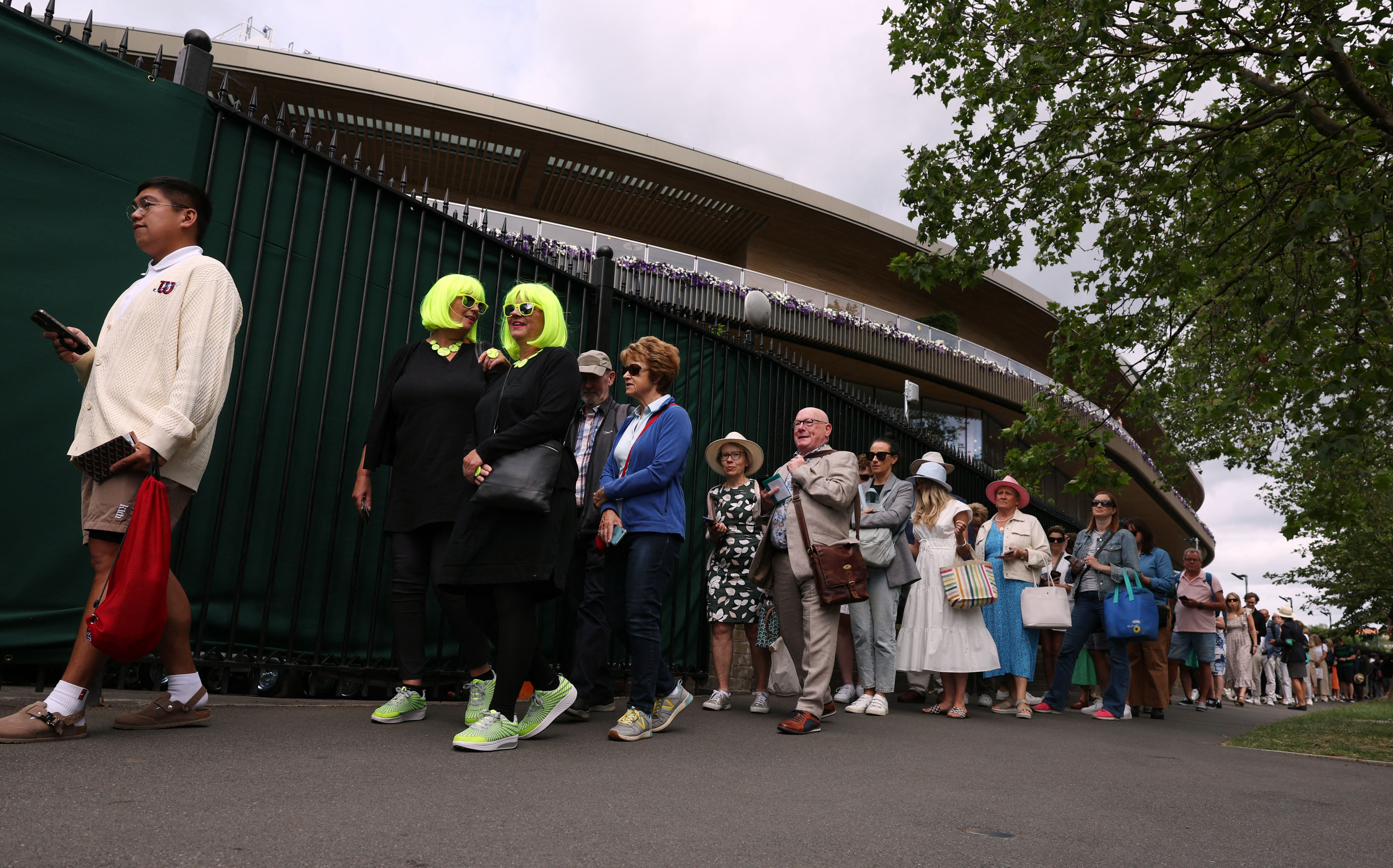
Beefed-up security to prevent protesters disrupting Wimbledon have led to long, frustrating queues on the opening day of the tennis championships.

Just Stop Oil activists have recently interrupted the Ashes cricket test at Lord’s, with one activist carried off the field by England wicketkeeper Jonny Bairstow.

Protesters have also disrupted other sporting events in Britain this year, as well as other events including the Chelsea Flower Show.

Airport-style security was in place in SW19 as staff looked out for chalk dust and powders which have been banned at the prestigious tournament for the first time ever.

Specialist undercover police spotters have also been deployed, The Telegraph reported.

Glue, cable-ties and chains and padlocks are all on the prohibited list as they can be used to disrupt events by protesters attaching themselves to property.

Sky News reported the wait at Wimbledon was as long as eight hours as organisers advised people not to travel to join the queue just before noon.

Wimbledon tweeted: “Our grounds are set to be at capacity today, which means those already in the queue will be waiting several hours for admission. We advise people intending to queue today not to travel to Wimbledon.”

Multiple media outlets in the UK have been reporting that Wimbledon is a prime target for activists with some seeing it as an unrivalled opportunity for publicity.

But the All England Lawn Tennis Club, which hosts the grasscourt grand slam tournament, was confident it had matters under control.

HANNAH MCKAY via Reuters

ADRIAN DENNIS via Getty Images

The club said it had been liaising with organisers of other sporting events, including the English Cricket Board, to refine best practices.

Michelle Dite, Wimbledon operations director, told reporters: “We have plans in place to mitigate the risks working in partnership with specialist agencies and the Metropolitan Police and should an incident occur the appropriate specialist teams will respond.

“The safety and security of all our players, colleagues and visitors is paramount.”

But many were expressing frustration on Twitter.

Share Button

Elon Musk’s Twitter Sued Over Unpaid Office Services

Elon Musk’s Twitter is facing yet another lawsuit over unpaid bills, this time from an Australian company specialising in project management and delivery.

Facilitate alleges in a lawsuit filed last week in US District Court for the Northern District of California that the social media firm owes over $700,000 for work in four Twitter offices outside the U.S. since last year. Twitter, owned by the world’s richest person, owes $40,777 for decommissioning and storing the contents of Twitter’s Sydney office, $257,444 for installing sensors in the London and Dublin offices, and $404,224 for outfitting the Singapore offices, according to the suit, first reported by NCA Newswire.

Facilitate alleges it signed a master services agreement with Twitter in March 2021 after Twitter had used the Sydney-based company since 2015 without issue. The agreement, according to Facilitate, mandates that Twitter must pay within 60 days of receiving an invoice.

“Following the acquisition, Facilitate corresponded about its outstanding invoices with its remaining contacts at the company,” the lawsuit says. “They gave no indication that Twitter disputed it owed the amounts on the invoices and offered no justification for not paying.”

Bloomberg reported in May that at least 10 other vendors, including small businesses, have sued Twitter over unpaid bills since December.

Facilitate also detailed Musk’s chaotic tenure at the social media network, pointing out that the company’s content moderation decisions under his leadership, including the reinstatement of former President Donald Trump’s account, damaged its relationship with advertisers, thus prompting a financial crisis for the company.

“On information and belief, Twitter responded with a campaign of extreme belt-tightening that amounted to requiring nearly everyone to whom it owes money to sue,” the complaint alleges.

HuffPost reached out to Twitter for comment on the lawsuit. Twitter, as is now customary, responded with a poop emoji.

Musk announced over the weekend that Twitter was placing a limit on the posts users can see based on their account status. Those who exceed those “temporary limits” could have their accounts locked for the day, The Associated Press reported.

Twitter in recent weeks started repaying Google Cloud for its services, following a period when Musk reportedly refused to pay. The companies mended their relationship after new Twitter CEO Linda Yaccarino intervened, according to Bloomberg.

Share Button

Birds raise fewer young when spring arrives earlier in a warming world

Rising global temperatures are making it harder for birds to know when it’s spring and time to breed according to a new study published in Proceedings of the National Academy of Sciences.

A large collaboration led by scientists at UCLA and Michigan State University has found that birds produce fewer young if they start breeding too early or late in the season. With climate change resulting in earlier springlike weather, the researchers report, birds have been unable to keep pace.

And, the authors write, the mismatch between the start of spring and birds’ readiness to reproduce is likely to become worse as the world warms, which could have large-scale consequences that would be catastrophic for many bird populations. Birds’ breeding seasons begin whenever the first green plants and flowers appear, which is happening earlier and earlier as the climate warms.

“By the end of the 21st century, spring is likely to arrive about 25 days earlier, with birds breeding only about 6.75 days earlier,” said the study’s first author, Casey Youngflesh, who led the research as a postdoctoral researcher at UCLA and is now a postdoctoral fellow at Michigan State. “Our results suggest that breeding productivity may decrease about 12% for the average songbird species.”

The authors stress that conservation strategies should address bird species’ responses to climate-driven shifts.

Determining if the earlier springs will pose problems for migratory birds has been a major goal of biologists for decades.

“For nearly 30 years, scientists have hypothesized that animals could become mismatched from plants as springs begin earlier,” said Morgan Tingley, a UCLA associate professor of ecology and evolutionary biology and the study’s senior author. “While there have been a few very good case studies of this phenomenon, it has remained a major mystery whether advancing springs will pose a general problem for the majority of species.”

When it comes to raising their young, timing matters for birds. If they breed too early or too late, harsh weather could harm their eggs or newborns. But timing relative to food sources matters too: If birds are looking for food before or after its natural availability, they might not have the resources to keep their young alive.

“Critically, we found evidence for impacts on bird reproduction of both the absolute and the relative timing of birds,” Tingley said.

Using data from a large-scale collaborative bird banding program run by the Institute for Bird Populations, the researchers calculated the timing of breeding and the number of young produced for 41 migratory and resident bird species at 179 sites near forested areas throughout North America between 2001 and 2018.

Then, the authors used satellite imaging to determine when vegetation emerged around each site. They found that each species had an optimal time to breed, and that the number of young produced decreased when spring arrived very early, or when breeding occurred early or late relative to when plants emerged.

While the majority of birds were adversely affected by variations in the start of spring, several species — the northern cardinal, Bewick’s wren and wrentit among them — countered the trend, demonstrating improved breeding productivity when spring began earlier. Those species are mostly non-migratory species that can respond more quickly to the emergence of spring plants that signal the start of the breeding season.

By breeding earlier and without the time constraints imposed by migration, the study noted, non-migratory species may also be able to reproduce more than once per season.

But those species were the exceptions to the rule. Even most non-migratory species couldn’t keep up with earlier spring arrivals. Overall, for every four days earlier that leaves appeared on trees, species bred only about one day earlier.

For migratory species, that discrepancy means that the time between when they arrive at their breeding sites and breeding itself is likely to get shorter as springlike conditions begin earlier. Birds need time to establish territories and prepare physiologically for egg-laying and rearing their young, so that change could cause even greater disturbances to reproduction.

“North America has lost nearly a third of its bird populations since the 1970s,” Tingley said. “While our study demonstrates that the worst impacts of timing mismatch likely won’t occur for several decades yet, we need to focus now on concrete strategies to boost bird populations before climate change takes its toll.”

The study received primary funding from the National Science Foundation and was supported by researchers from the University of Florida; Pennsylvania State University; University of North Carolina, Chapel Hill; and the Institute for Bird Populations.

Share Button

Chemists discover why photosynthetic light-harvesting is so efficient

When photosynthetic cells absorb light from the sun, packets of energy called photons leap between a series of light-harvesting proteins until they reach the photosynthetic reaction center. There, cells convert the energy into electrons, which eventually power the production of sugar molecules.

This transfer of energy through the light-harvesting complex occurs with extremely high efficiency: Nearly every photon of light absorbed generates an electron, a phenomenon known as near-unity quantum efficiency.

A new study from MIT chemists offers a potential explanation for how proteins of the light-harvesting complex, also called the antenna, achieve that high efficiency. For the first time, the researchers were able to measure the energy transfer between light-harvesting proteins, allowing them to discover that the disorganized arrangement of these proteins boosts the efficiency of the energy transduction.

“In order for that antenna to work, you need long-distance energy transduction. Our key finding is that the disordered organization of the light-harvesting proteins enhances the efficiency of that long-distance energy transduction,” says Gabriela Schlau-Cohen, an associate professor of chemistry at MIT and the senior author of the new study.

MIT postdocs Dihao Wang and Dvir Harris and former MIT graduate student Olivia Fiebig PhD ’22 are the lead authors of the paper, which will appear in the Proceedings of the National Academy of Sciences. Jianshu Cao, an MIT professor of chemistry, is also an author of the paper.

Energy capture

For this study, the MIT team focused on purple bacteria, which are often found in oxygen-poor aquatic environments and are commonly used as a model for studies of photosynthetic light-harvesting.

Within these cells, captured photons travel through light-harvesting complexes consisting of proteins and light-absorbing pigments such as chlorophyll. Using ultrafast spectroscopy, a technique that uses extremely short laser pulses to study events that happen on timescales of femtoseconds to nanoseconds, scientists have been able to study how energy moves within a single one of these proteins. However, studying how energy travels between these proteins has proven much more challenging because it requires positioning multiple proteins in a controlled way.

To create an experimental setup where they could measure how energy travels between two proteins, the MIT team designed synthetic nanoscale membranes with a composition similar to those of naturally occurring cell membranes. By controlling the size of these membranes, known as nanodiscs, they were able to control the distance between two proteins embedded within the discs.

For this study, the researchers embedded two versions of the primary light-harvesting protein found in purple bacteria, known as LH2 and LH3, into their nanodiscs. LH2 is the protein that is present during normal light conditions, and LH3 is a variant that is usually expressed only during low light conditions.

Using the cryo-electron microscope at the MIT.nano facility, the researchers could image their membrane-embedded proteins and show that they were positioned at distances similar to those seen in the native membrane. They were also able to measure the distances between the light-harvesting proteins, which were on the scale of 2.5 to 3 nanometers.

Disordered is better

Because LH2 and LH3 absorb slightly different wavelengths of light, it is possible to use ultrafast spectroscopy to observe the energy transfer between them. For proteins spaced closely together, the researchers found that it takes about 6 picoseconds for a photon of energy to travel between them. For proteins farther apart, the transfer takes up to 15 picoseconds.

Faster travel translates to more efficient energy transfer, because the longer the journey takes, the more energy is lost during the transfer.

“When a photon gets absorbed, you only have so long before that energy gets lost through unwanted processes such as nonradiative decay, so the faster it can get converted, the more efficient it will be,” Schlau-Cohen says.

The researchers also found that proteins arranged in a lattice structure showed less efficient energy transfer than proteins that were arranged in randomly organized structures, as they usually are in living cells.

“Ordered organization is actually less efficient than the disordered organization of biology, which we think is really interesting because biology tends to be disordered. This finding tells us that that may not just be an inevitable downside of biology, but organisms may have evolved to take advantage of it,” Schlau-Cohen says.

Now that they have established the ability to measure inter-protein energy transfer, the researchers plan to explore energy transfer between other proteins, such as the transfer between proteins of the antenna to proteins of the reaction center. They also plan to study energy transfer between antenna proteins found in organisms other than purple bacteria, such as green plants.

The research was funded primarily by the U.S. Department of Energy.

Share Button

Planting seeds: Researchers dig into how chemical gardens grow

Since the mid-1600s, chemists have been fascinated with brightly colored, coral-like structures that form by mixing metal salts in a small bottle.

Until now, researchers have been unable to model how these deceptively simple tubular structures — called chemical gardens — work and the patterns and rules that govern their formation.

In a paper published this week in the Proceedings of the National Academy of Sciences, Florida State University researchers lay out a model that explains how these structures grow upward, form different shapes and how they go from a flexible, self-healing material to a more brittle one.

“In a materials context, it’s very interesting,” said FSU Professor of Chemistry and Biochemistry Oliver Steinbock. “They don’t grow like crystals. A crystal has nice sharp corners and grows atom layer by atom layer. And when a hole occurs in a chemical garden, it’s self-healing. These are really early steps in learning how to make materials that can reconfigure and repair themselves.”

Typically, chemical gardens form when metal salt particles are put in a silicate solution. The dissolving salt reacts with the solution to create a semipermeable membrane that ejects upward in the solution, creating a biological-looking structure, similar to coral.

Scientists observed chemical gardens for the first time in 1646 and for years have been fascinated with their interesting formations. The chemistry is related to the formation of hydrothermal vents and the corrosion of steel surfaces where insoluble tubes can form.

“People realized these were peculiar things,” Steinbock said. “They have a very long history in chemistry. It became more like a demonstration experiment, but in the past 10-20 years, scientists became interested in them again.”

Inspiration for the mathematical model developed by Steinbock, along with postdoctoral researcher Bruno Batista and graduate student Amari Morris, came from experiments that steadily injected a salt solution into a larger volume of silicate solution between two horizontal plates. These showed distinct growth modes and that the material starts off as stretchy, but as it ages, the material becomes more rigid and tends to break.

The confinement between two layers allowed the researchers to simulate a number of different shape patterns, some looking like flowers, hair, spirals and worms.

In their model, the researchers described how these patterns emerge over the course of the chemical garden’s development. Salt solutions can vary a lot in chemical makeup, but their model explains the universality in formation.

For example, the patterns can consist of loose particles, folded membranes, or self-extending filaments. The model also validated observations that fresh membranes expand in response to microbreaches, demonstrating the material’s self-healing capabilities.

“The good thing we got is we got into the essence of what is needed to describe the shape and growth of chemical gardens,” Batista said.

Share Button

Ben Stokes Has The Best Response To Australian Media’s ‘Crybabies’ Taunt

England men’s cricket captain Ben Stokes has refused to rise to the Australian media’s bait in the aftermath of the controversial Ashes stumping.

The sportsmanship of the Aussie team has been questioned following the dismissal of England batsman Jonny Bairstow on Sunday’s final day of the second test at Lord’s.

With England on 193-5 and chasing a mammoth target of 371, Australia wicketkeeper Alex Carey underarmed the ball at the stumps after Bairstow left his crease at the end of an over.

While the dismissal was valid by the letter of the sport’s laws, many have questioned whether it undermined the much-cherished “spirit of the game” – as witnessed by the long and loud booing from the Lord’s crowd and Australian players being verbally abused by MCC members in the stadium’s usually staid Long Room.

England eventually lost by 43 runs to trail 2-0 in the five-test series.

The Australian media has responded to the furore by suggesting England just sucks it up.

Andrew Webster, writing in The Sydney Morning Herald, said: “The first rule of MCC Fight Club is know the rules of cricket…I would have thought membership to the most famous club in cricket meant you understood the laws of the game.”

Meanwhile, Gideon Haigh in The Australian similarly suggested that “puce-faced MCC snobs should learn their own rules”.

They went further on the front page of The West Australian, which stunted Stokes up as nappy-wearing, dummy-sucking baby and boomed: “Poms take whingeing to new level with ‘cheating’ drivel.”

“Crybabies,” the splash thundered.

But Stokes took to Twitter in an apparent attempt to defuse the situation.

“That’s definitely not me, since when did I bowl with the new ball,” he said while quote-tweeting the front page, and referencing the depiction of the shiny new cricket ball and the fact he is not an opening bowler.

Stokes had said on Sunday he was keen to move on from the incident but added he would not want to win in such a fashion at the end of an over.

“The first thing that needs to be said is, it is out,” he said.

“If I was the fielding captain I would have put a lot more pressure on the umpires to ask them what their decision was around the over and around the spirit of the game and would I want to potentially win a game with something like that happening – and it would be no.”

Australia captain Pat Cummins has defended his team over Bairstow’s dismissal, and insisted there was no “sneakiness”.

“I thought it was fair. You see Jonny (Bairstow) do it all the time, he did it on day one to David Warner, he did it in 2019 to Steve (Smith),” Cummins told reporters.

“It’s a really common thing for keepers to do if they see a batter keep leaving their crease. Cares (Carey), full credit to him, he saw the opportunity, rolled it at the stumps, Jonny left his crease. You leave the rest to the umpires.

“It was all one motion, there was no pause or sneakiness about it.”

Share Button