Julia Fox Rocks A Completely See-Through Glass Top At Cannes

Leave it to Julia Fox to turn France’s Cannes Film Festival into a veritable runway for her bold ― and unconventional ― sense of style.

Amid the annual event, the “Uncut Gems” actor attended a party Sunday night in a flowing white skirt with a billowing train. Her structured bodice was made of a glasslike material that was completely see-through.

Fox completed the daring look with diamond jewelry from the brand Marli New York. (NSFW images below.)

Victor Boyko via Getty Images

This isn’t the first time that Fox has rocked a sheer look. In March, she wore a black mesh dress while sitting front row at Courrèges’ fall-winter 2023 show during Paris Fashion Week.

And earlier this month, she was photographed in Los Angeles wearing a white miniskirt with a see-through tube top covered in condoms.

Of course, Fox is one of many celebrities who have brought their fashion A-game to Cannes this year. Natalie Portman and Viola Davis were among those who also rocked some impressive looks at the film festival in southern France.

Victor Boyko via Getty Images

Speaking to People last year, Fox said she was providing fans and media outlets “a visual service” with her outré ensembles.

“Sometimes the paparazzi get me, and I look like [shit]. … If they’re gonna get me, I might as well make the best of it,” she explained, adding that the point is “not caring about whether society thinks it’s normal”.

“If I think it’s cool, then it’s cool,” she added.

Victor Boyko via Getty Images

Share Button

A deep underground lab could hold key to habitability on Mars

Tunnels deep underground in North Yorkshire are providing a unique opportunity to study how humans might be able to live and operate on the Moon or on Mars.

Researchers at the University of Birmingham have launched the Bio-SPHERE project in a unique research facility located 1.1 km below the surface, in one of the deepest mine sites in the UK. The project investigates how scientific and medical operations would take place in the challenging environments of the Moon and Mars.

It is the first of a series of new laboratory facilities planned to study how humans might work — and stay healthy — during long space missions, a key requirement for ensuring mission continuity on other planets.

The team is working in partnership with the Boulby Underground Laboratory, a 4,000m3 deep underground facility focused on particle physics, Earth sciences and astrobiology research, run by the Science and Technology Facilities Council (part of UK Research and Innovation) with the support of the Boulby Mine operators, ICL-UK.

The Bio-SPHERE project is based in a 3,000m3 tunnel network adjacent to the Boulby Laboratory, which go through 250-million-year-old rock salt deposits, consisting of Permian evaporite layers left over from the Zechstein Sea. This geological environment, together with the deep subsurface location, have enabled researchers to recreate the operational conditions humans would experience working in similar caverns on the Moon and Mars. This includes remoteness, limited access to new materials and challenges in moving heavy equipment around.

At the same time, thanks to the ultra-low radiation environment provided by that depth, the location will enable scientists to investigate how effective underground habitats might be in protecting space crews from deep-space radiation, which is a significant risk in space exploration, as well as other hazards, such as falling debris from meteorites, which risks damaging the life-support infrastructure.

The first facility to be opened as part of Bio-SPHERE (Biomedical Sub-surface Pod for Habitability and Extreme-environments Research in Expeditions), is based in a 3-metre-wide simulation module and is designed specifically to test biomedical procedures needed to prepare materials for treating tissue damage. These include complex fluids, polymers and hydrogels for regenerative medicine that could be used, for example, in wound dressings, or fillers for damage mitigation.

A paper describing the concept and design of such a habitat was recently published in Nature (NPJ) Microgravity.

Bio-SPHERE, which includes a range of capabilities for sterile work and material processing, combines these simulation facilities and useful geological environment with access to the adjacent physics and chemistry laboratory facilities.

This environment provides the opportunity to simulate various mission scenarios and to conduct cutting edge, interdisciplinary science, ranging from the effects of extreme environments on biological and physicochemical parameters and on medical infrastructure, all the way to investigating how available ‘in-situ’ resources such as ambient pressure, temperature and geology can be used for habitat construction.

Lead researcher Dr Alexandra Iordachescu, in the University of Birmingham’s School of Chemical Engineering, said: “We are excited to be partnering with the fantastic science team at the Boulby Underground Laboratory. This new capability will help to gather information that can advise on the life support systems, devices and biomaterials which could be used in medical emergencies and tissue repair following damage in deep-space missions.

“These types of metrics can guide system design and help to assess the scientific needs and acceptable timeframes in bioengineering operations under the constraints of isolated environments, such as space habitats. The data is likely to bring numerous benefits for Earth-based applications as well, such as delivering biomedical interventions in remote areas or in hazardous environments and more generally, understanding biomedical workflows in these non-ideal environments.”

Professor Sean Paling, Director and Senior Scientist at the Boulby Underground laboratory said: “We are very pleased to be working with Dr Iordachescu and the team from the University of Birmingham on this exciting work. The challenges ahead for humankind in exploring habitats beyond Earth are clearly many and significant. The Bio-SPHERE project promises to help answer some key logistical questions in establishing sustainable living conditions in remote, subterranean environments and in doing so will significantly contribute to the essential preparations for our collective long, difficult and exciting journey ahead. It is also a great example of the diverse range of science studies that can be carried out in a deep underground science facility, and we are very happy to be hosting it.”

Share Button

Electronic noses sniff out volatile organic compounds

Volatile organic compounds are chemicals emitted as gases that can have adverse health effects. They are often found in paints, pharmaceuticals, and refrigerants, among other common products, but they can also act as markers of explosives, insect infestation, food spoilage, and disease.

Tracing VOCs is important for public safety and all “smell” related issues. To this end, in Applied Physics Reviews, from AIP Publishing, Liu et al. introduced a fluid mechanics-based chamber design for an electronic nose (e-nose) that consistently detects VOCs at low concentrations. The strategy, which includes using a shuntlike device to control the behavior of fluid flow, is a step forward in e-nose technology development.

Methods for detecting VOCs face many challenges in terms of selectivity, sensitivity, reproducibility, and stability. E-noses, inspired by the olfactory system, can overcome some of these barriers by combining arrays of chemical sensors with pattern recognition techniques to recognize odors.

However, many e-noses generate different signals toward VOCs of the same concentration when the sensor is located in different parts of the “nose” chamber.

“To counteract this problem, the fluidic behavior of the gas flow needs to be well controlled,” said author Weiwei Wu. “This ensures a uniform fluidic field and concentration of VOCs in the chamber and avoids generating any fake sensing characteristics.”

The starting e-nose design featured a vertical chamber that looks much like a showerhead. This promotes vertical flow as gas spreads through holes at the bottom of the device and around to evenly distributed sensors.

Using fluid mechanics simulations, the team optimized the volume, symmetry, hole location, and sensor location of their e-nose chamber. They added a shuntlike device to promote fluid flow and shorten response time.

Based on their simulation results, the researchers fabricated a Teflon chamber and measured the sensing performance of their e-nose. They compared two chambers, one with the shunt and one without. The chamber with the shunt device consistently performed around 1.3 times better at sensing an example VOC.

In the future, the authors plan to focus on minimizing the chamber and improving the structure further to decrease response and recovery time.

“E-nose research is a highly interdisciplinary field,” said Wu. “Chemists, physicists, biologists, electronics engineers, and data scientists need to work together to solve issues including effective sensing that considers the fundamental mechanisms of absorption/desorption, algorithms that achieve precise recognition of VOCs more quickly and with lower energy consumption, and how new technologies, such as memristors, should be involved.”

Share Button

Boost for the quantum internet

A quarter of a century ago, theoretical physicists at the University of Innsbruck made the first proposal on how to transmit quantum information via quantum repeaters over long distances which would open the door to the construction of a worldwide quantum information network. Now, a new generation of Innsbruck researchers has built a quantum repeater node for the standard wavelength of telecommunication networks and transmitted quantum information over tens of kilometers.

Quantum networks connect quantum processors or quantum sensors with each other. This allows tap-proof communication and high-performance distributed sensor networks. Between network nodes, quantum information is exchanged by photons that travel through optical waveguides. Over long distances, however, the likelihood of photons being lost increases dramatically. As quantum information cannot simply be copied and amplified, 25 years ago Hans Briegel, Wolfgang Dür, Ignacio Cirac and Peter Zoller, then all at the University of Innsbruck, provided the blueprints for a quantum repeater. These feature light-matter entanglement sources and memories to create entanglement in independent network links that are connected between them by a so-called entanglement swap to finally distribute entanglement over long distances.

Even transmission over 800 kilometers possible

Quantum physicists led by Ben Lanyon from the Department of Experimental Physics at the University of Innsbruck have now succeeded in building the core parts of a quantum repeater — a fully functioning network node made with two single matter systems enabling entanglement creation with a photon at the standard frequency of the telecommunications network and entanglement swapping operations. The repeater node consists of two calcium ions captured in an ion trap within an optical resonator as well as single photon conversion to the telecom wavelength. The scientists thus demonstrated the transfer of quantum information over a 50-kilometer-long optical fiber, with the quantum repeater placed exactly halfway between starting and end point. The researchers were also able to calculate which improvements of this design would be necessary to make transmission over 800 kilometers possible which would allow to connect Innsbruck to Vienna.

The current results were published in Physical Review Letters. Funding for the research was provided by a START award from the Austrian Science Fund FWF, the Austrian Academy of Sciences and the European Union, among others. Lanyon’s team is part of the Quantum Internet Alliance, an international project under the EU Quantum Flagship.

Share Button

Essex GP struck off over ‘sexually motivated’ examination

A doctor appears at tribunal over the appointments with four female patients in 2016.

Share Button

Vaping: High lead and nickel found in illegal vapes

Lab analysis finds vapes confiscated from teenagers at a school pose a potential risk to health.

Share Button

Jennie Gow: BBC F1 broadcaster tells of stroke recovery

Jennie Gow, who had a stroke in December, says she is determined to come back “as strong as ever”.

Share Button

Jennifer Lawrence Shrugs Off Cannes’ Unofficial Dress Code With Choice Of Footwear

Jennifer Lawrence knows how to command Cannes ― in flip-flops, no less.

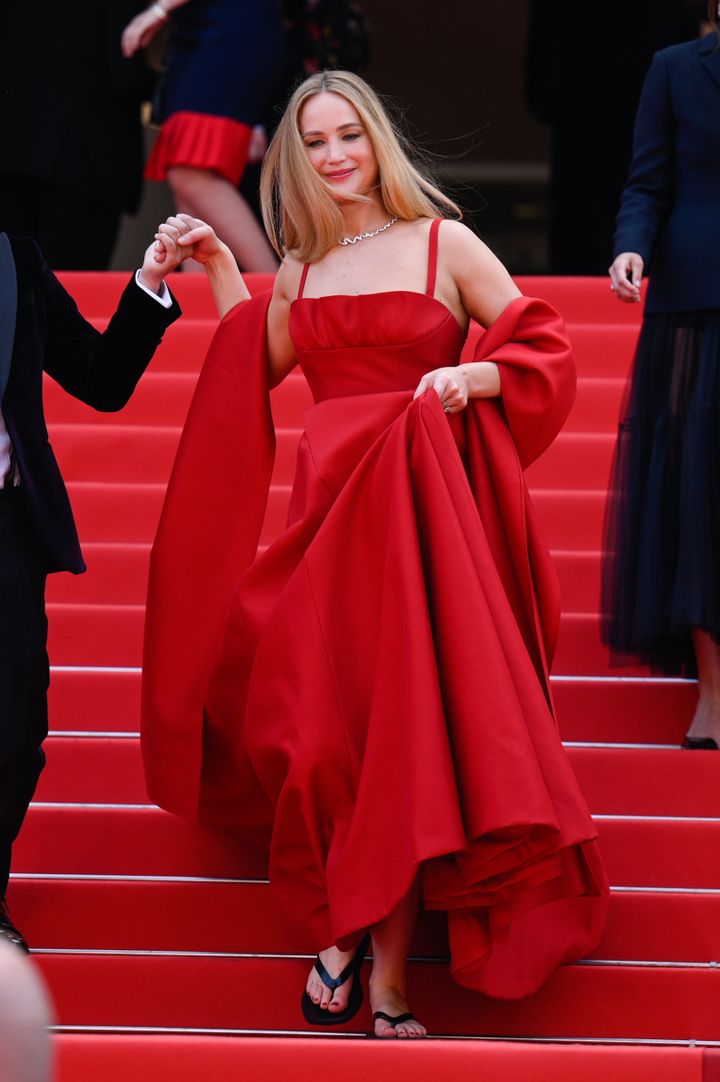
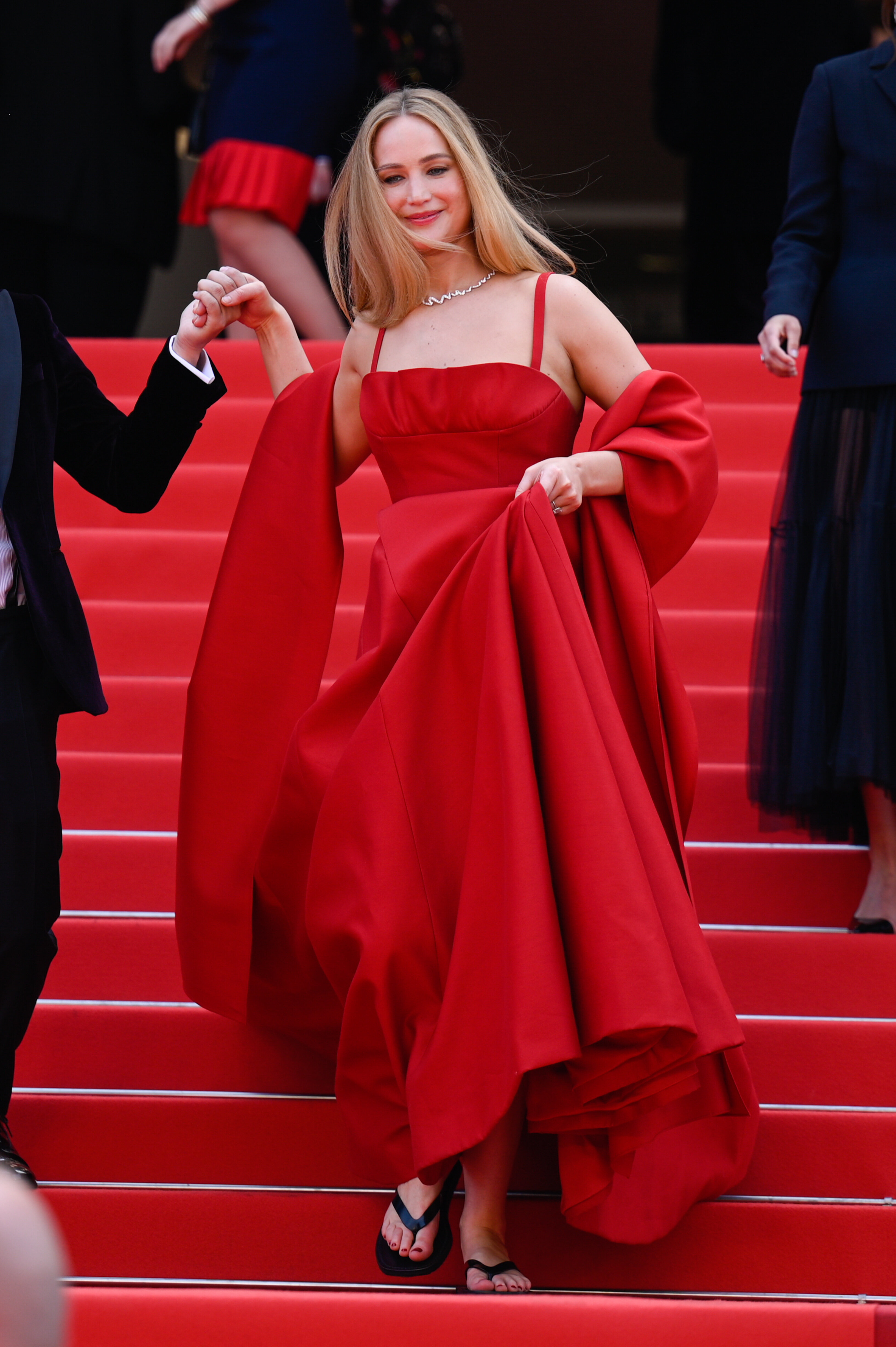
The actor appeared at the Cannes Film Festival for the premiere of Anatomy of a Fall on Sunday, dressed in a red, crepe silk gown by Dior Haute Couture, paired with an Archi Dior necklace made of white gold and diamonds.

Lawrence, who was dressed by stylist Jamie Mizrahi, didn’t walk the official red carpet in sandals.

But, as seen in photos of the event, the actor did wear black flip-flops by The Row at one point on the carpet, Mizrahi confirmed to HuffPost through her agent on Monday.

Actor Jennifer Lawrence attends the "Anatomie D'une Chute (Anatomy Of A Fall)" red carpet during the 76th Cannes Film Festival at Palais des Festivals on May 21.
Actor Jennifer Lawrence attends the “Anatomie D’une Chute (Anatomy Of A Fall)” red carpet during the 76th Cannes Film Festival at Palais des Festivals on May 21.

Pascal Le Segretain via Getty Images

Who could blame Lawrence for wearing sandals on these steep-looking steps?

Stephane Cardinale – Corbis via Getty Images

It was a bold choice, since Cannes famously, and contentiously, encourages women to wear heels on its red carpet. In 2015, a number of women were reportedly turned away from attending a premiere of Carol because they were wearing flats.

HuffPost reached out to the Cannes Film Festival to clarify its current dress code policy.

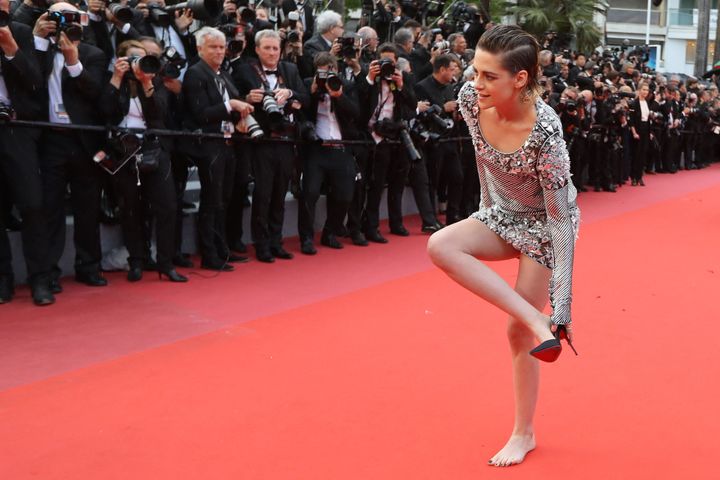
Lawrence’s decision to wear sandals brings to mind Kristen Stewart’s 2018 appearance at the festival. The Spencer star posed for photographers on the red carpet in Christian Louboutin stilettos, which she then removed to walk the rest of the carpet barefoot.

Two years earlier, Stewart had spoken out about the festival’s implied expectation that women wear heels.

Kristen Stewart removes her shoes on the Cannes red carpet as she arrives on May 14, 2018, for the screening of the film "BlacKkKlansman."
Kristen Stewart removes her shoes on the Cannes red carpet as she arrives on May 14, 2018, for the screening of the film “BlacKkKlansman.”

VALERY HACHE via Getty Images

“If [a man and I] were walking the red carpet together and someone stopped me and said, ‘Excuse me, young lady, you’re not wearing heels. You cannot come in,’ then [I’m going to say], ‘Neither is my friend. Does he have to wear heels?’” Stewart said in 2016, according to Vanity Fair.

“It can work both ways,” she added. “It’s just like you simply cannot ask me to do something that you are not asking him. I get the black-tie thing but you should be able to do either version — flats or heels.”

Share Button

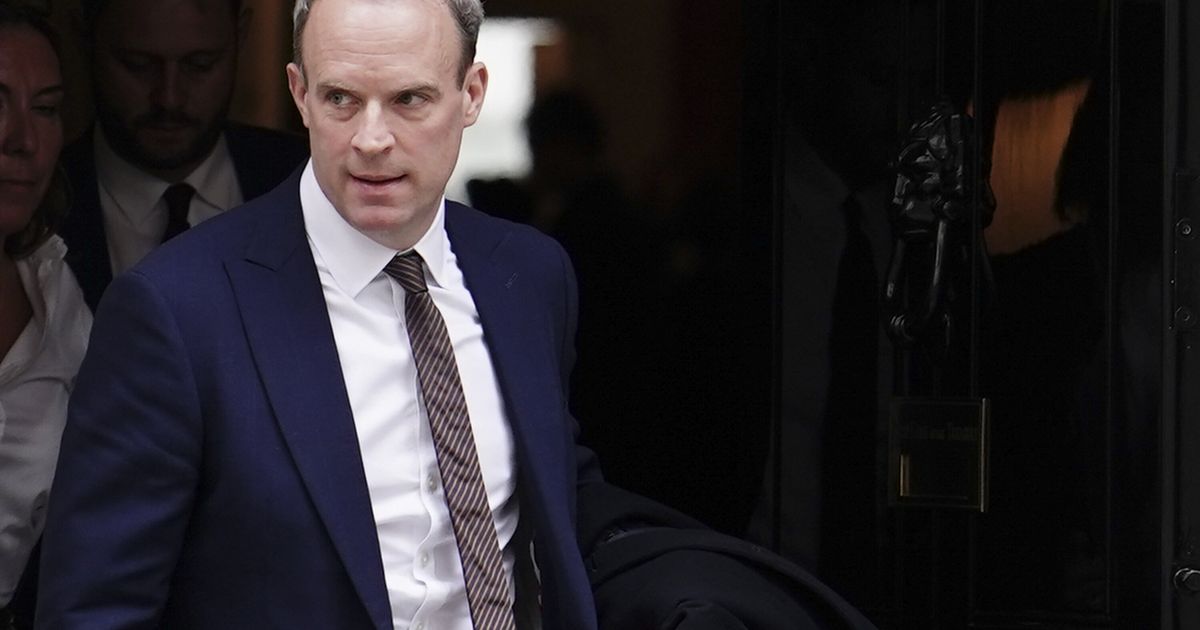
Dominic Raab Is Standing Down As An MP At The Next Election

Dominic Raab has become the latest Tory MP to announce that they are standing down at the next election.

He later signalled to journalists he was the victim of “activist civil servants” who oppose reforms such as Brexit, and the “tyranny of subjective hurt feelings”.

On Monday, the Telegraph reported Raab is quitting because he has been “increasingly concerned over the last few years about the pressure the job has placed on my young family”.

Raab holds a slim 2,743-vote majority in his Esher and Walton constituency in Surrey, which is a top target seat for the Liberal Democrats at the next election.

Share Button

Punisher And Thor Actor Ray Stevenson Dies Aged 58

Actor Ray Stevenson – known for films including King Arthur and Punisher – has died at the age of 58, his representatives have confirmed.

The Northern Irish actor died on Sunday, though no further details were immediately made available.

Stevenson also starred in multiple television shows including as soldier Titus Pullo in the BBC/HBO series Rome from 2005-2007, as well as a spin-off series for the Star Wars franchise.

He starred as Porthos in the 2011 film The Three Musketeers – alongside Luke Evans, Matthew Macfadyen and Milla Jovovich – and was in Divergent with Kate Winslet and Zoe Kravitz in 2014.

More recently, he appeared as the villainous Governor Scott Buxton in the 2022 Oscar-winning Bollywood film RRR.

Stevenson began his career appearing on TV shows in the 1990s then landed action roles in Hollywood films starting in the 2000s.

His first major role came in Antoine Fuqua’s 2004’s movie King Arthur, alongside Clive Owen, Ray Winstone and Keira Knightley.

The actor played Dagonet, one of the knights of the Round Table.

In 2008, Stevenson landed the lead role in Marvel’s Punisher: War Zone, where he played the titular character and his alias Frank Castle – becoming the third actor to do so onscreen.

He later appeared in other films in the Marvel Cinematic Universe (MCU) as Asgardian warrior Volstagg in Thor, Thor: The Dark World and Thor: Ragnarok.

Stevenson also held various roles in the Star Wars universe, lending his voice to Disney’s popular Mandalorian series.

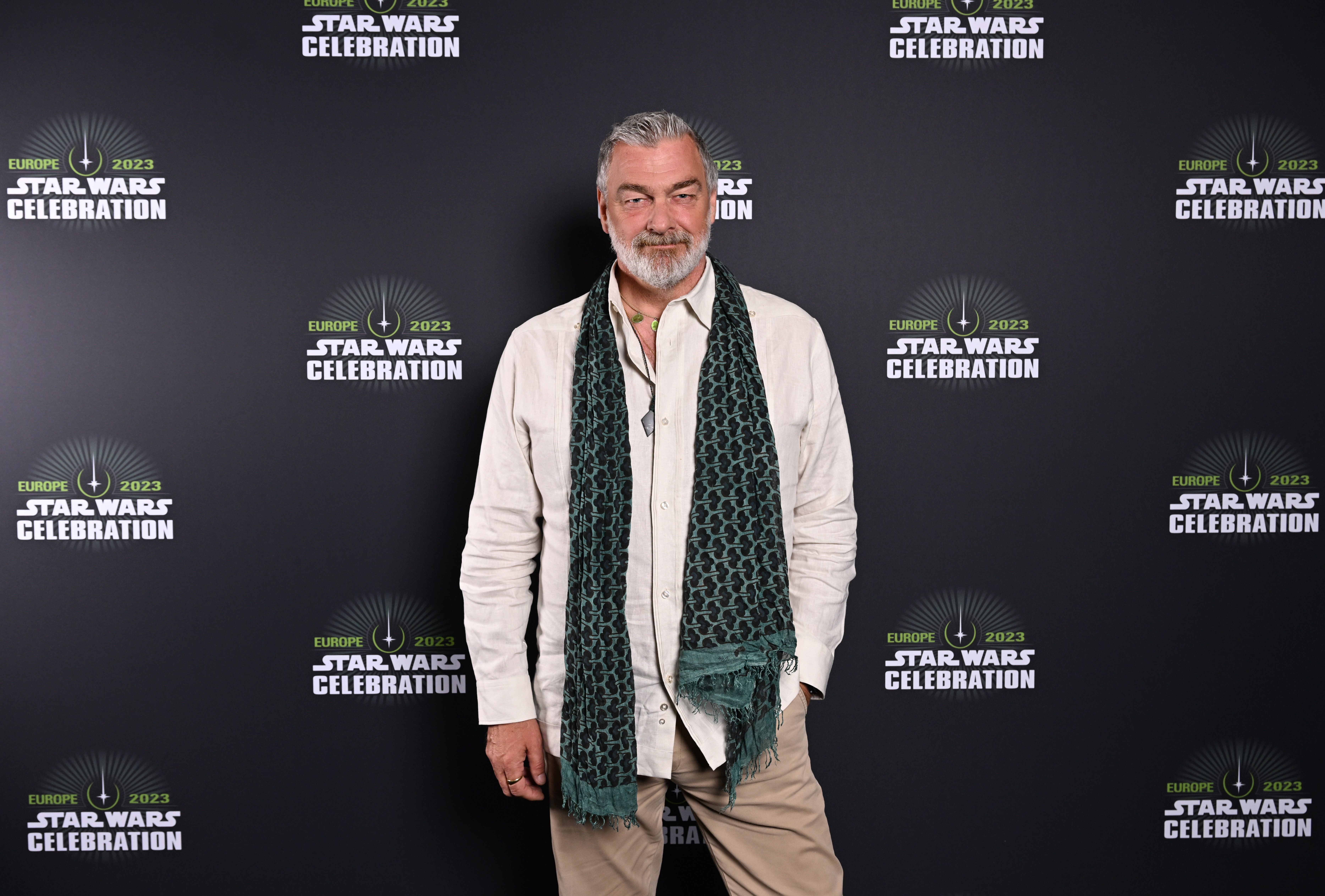
At the 2023 Star Wars celebration in London, it was announced he would appear in the upcoming Ahsoka series.

Following news of his death the Peter Mayhew Foundation, set up by the actor who played Chewbacca in the Star Wars films, tweeted: “We are sad to hear of the passing of Ray Stevenson.

“You may recognise Ray as Baylon Skoll from the upcoming Ahsoka show on Disney+.

“You may also remember his work as the voice of Mandalorian super commando Gar Saxon in The Clone Wars. Our sincerest condolences to his family.”

Actor James Purefoy, who portrayed Mark Antony in Rome, tweeted: “So sad to hear the news that Ray Stevenson, our Pullo in Rome, has passed away. A brilliant, gutsy, larger-than-life actor who filled every part he played right up to the brim. My thoughts are with his family, his lovely wife Betta and their beautiful kids. What a loss.”

Film director James Gun tweeted: “Damn. So sorry to hear about the passing, far too young, of Ray Stevenson. I only knew him a little from shooting post-credits of Thor 2 & a couple interactions at events, but we had some good laughs & he was a joy to work with. His friends & family are in my heart today.”

Share Button