10 pesticides toxic to neurons involved in Parkinson’s

Researchers at UCLA Health and Harvard have identified 10 pesticides that significantly damaged neurons implicated in the development of Parkinson’s disease, providing new clues about environmental toxins’ role in the disease.

While environmental factors such as pesticide exposure have long been linked to Parkinson’s, it has been harder to pinpoint which pesticides may raise risk for the neurodegenerative disorder. Just in California, the nation’s largest agricultural producer and exporter, there are nearly 14,000 pesticide products with over 1,000 active ingredients registered for use.

Through a novel pairing of epidemiology and toxicity screening that leveraged California’s extensive pesticide use database, UCLA and Harvard researchers were able to identify 10 pesticides that were directly toxic to dopaminergic neurons. The neurons play a key role in voluntary movement, and the death of these neurons is a hallmark of Parkinson’s.

Further, the researchers found that co-exposure of pesticides that are typically used in combinations in cotton farming were more toxic than any single pesticide in that group.

For this study, published May 16 in Nature Communications, UCLA researchers examined exposure history going back decades for 288 pesticides among Central Valley patients with Parkinson’s disease who had participated in previous studies. The researchers were able to determine long-term exposure for each person and then, using what they labeled a pesticide-wide association analysis, tested each pesticide individually for association with Parkinson’s. From this untargeted screen, researchers identified 53 pesticides that appeared to be implicated in Parkinson’s — most of which had not been previously studied for a potential link and are still in use.

Those results were shared for lab analysis led by Richard Krolewski, MD, PhD, an instructor of neurology at Harvard and neurologist at Brigham and Women’s Hospital. He tested the toxicity for most of those pesticides in dopaminergic neurons that had been derived from Parkinson’s patients through what’s known as induced pluripotent stem cells, which are a type of “blank slate” cell that can be reprogrammed into neurons that closely resemble those lost in Parkinson’s disease.

The 10 pesticides identified as directly toxic to these neurons included: four insecticides (dicofol, endosulfan, naled, propargite), three herbicides (diquat, endothall, trifluralin), and three fungicides (copper sulfate [basic and pentahydrate] and folpet). Most of the pesticides are still in use today in the United States.

Aside from their toxicity in dopaminergic neurons, there is little that unifies these pesticides. They have a range of use types, are structurally distinct, and do not share a prior toxicity classification.

Researchers also tested the toxicity of multiple pesticides that are commonly applied in cotton fields around the same time, according to California’s pesticide database. Combinations involving trifluralin, one of the most commonly used herbicides in California, produced the most toxicity. Previous research in the Agricultural Health Study, a large research project involving pesticide applicators,had also implicated trifluralin in Parkinson’s.

Kimberly Paul, PhD, a lead author and assistant professor of neurology at UCLA, said the study demonstrated their approach could broadly screen for pesticides implicated in Parkinson’s and better understand the strength of these associations.

“We were able to implicate individual agents more than any other study has before, and it was done in a completely agnostic manner,” Paul said. “When you bring together this type of agnostic screening with a field-to-bench paradigm, you can pinpoint pesticides that look like they’re quite important in the disease.”

The researchers are next planning to study epigenetic and metabolomic features related to exposure using integrative omics to help describe which biologic pathways are disrupted among Parkinson’s patients who experienced pesticide exposure. More detailed mechanistic studies of the specific neuronal processes impacted by pesticides such as trifluralin and copper are also underway at the Harvard/Brigham and Women’s labs. The lab work is focused on distinct effects on dopamine neurons and cortical neurons, which are important for the movement and cognitive symptoms in Parkinson’s patients, respectively. The basic science is also expanding to studies of pesticides on non-neuronal cells in the brain — the glia — to better understand how pesticides influence the function of these critical cells.

Other authors include Edinson Lucumi Moreno, Jack Blank, Kristina M. Holton, Tim Ahfeldt, Melissa Furlong, Yu Yu, Myles Cockburn, Laura K. Thompson, Alexander Kreymerman, Elisabeth M. Ricci-Blair, Yu Jun Li, Heer B. Patel, Richard T Lee, Jeff Bronstein, Lee L. Rubin, Vikram Khurana, and Beate Ritz.


Share Button

One step closer to developing a potentially ultraprotective sunscreen from our own melanin

A new discovery about the structure of melanin has brought scientists one step closer to developing a new, potentially ultra-protective sunscreen derived from a biological substance found in nearly all organisms. Researchers from McGill’s Department of Chemistry, in collaboration with The Ohio State University and the University of Girona, have announced a major advance in understanding the fundamental structure of melanin and one of its components that turns light into heat, protecting the body from sun damage.

Melanin, the pigment that gives humans their skin, eye, and hair colour, is the body’s first and best natural defense against the sun’s harmful rays. Cosmetics companies have long tried to harness the protective powers of natural and synthetic melanin for use in chemical sunscreens and other personal care products. For example, melanin could, in theory, be used to produce a radiation barrier that augments skin care products by matching a more diverse range of natural skin tones. But melanin is so notoriously unstable and difficult to study that, thus far, scientists have not been able to see what it looks like at the molecular level, resulting in a slow, trial-and-error approach to its potential use in personal care products.

“As we gain a better understanding of the structure of melanin, we should be able to predictably make alternatives that perform better than what is currently available,” said Jean-Philip Lumb, one of the lead authors of the paper. The study found that the melanin component converted light into heat from all wavelengths, spanning the ultraviolet to the infrared, offering a broad spectrum of protection. The molecule was also remarkably small, which the researchers say has practical benefits because the number of atoms needed to provide this level of sun protection is fewer than anything reported up to now. “We’ve taken a major step forward in understanding a new mechanism for how melanin can serve as a sunscreen,” Lumb said.

Share Button

Lucy Letby trial: Nurse accuses doctors of conspiracy against her

Lucy Letby accuses a “gang of four” of “apportioning blame” on to her “to cover up” hospital failings.

Share Button

West NHS clinic to offer depression magnet therapy

Patients say the magnet depression treatment is less debilitating than other therapies.

Share Button

Antibiotics: Mum told to crush up pills for strep A baby

A huge rise in demand for antibiotics for children saw shortages of the medicine.

Share Button

Ageing body scans to aid understanding of why diseases occur

The results could open up new ways to spot, treat and prevent some diseases, including cancer, experts say.

Share Button

Salma Hayek Shrugs Off Wardrobe Malfunction While Celebrating Massive Milestone

Salma Hayek knows how to cut loose, and the Living it Up actor did just that to celebrate an impressive new milestone on Instagram.

On Tuesday, the star shared a video of herself joyfully dancing in a robe with her glam team to commemorate reaching 24 million followers on the platform.

After her robe slipped down, revealing some NSFW lady bits — tastefully blurred in the video — an unfazed Hayek continued showcasing her moves as her friends reveled in the background.

“24 million followers, 24 million reasons to smile. Thank you all for joining me on this wild ride!” she wrote in the caption of the merry clip.

“I cannot contain my excitement & gratitude,” the Magic Mike’s Last Dance star added, alongside a dancing emoji.

Hayek, who has been married to husband François-Henri Pinault since 2009, hasn’t been shy about showing off her physique with stunning snaps on social media.

Last month, the actor wowed fans in a neon green bikini, stylishly flipping her hair back as she emerged from the ocean.

Hayek confessed to People in 2020 that her figure doesn’t come from spending long hours in the gym. She said she doesn’t “have time to exercise” with work days of 16 hours or more.

“I work with a woman in London who taught me how to hold my body in a way where the muscles are activated all day long,” she explained, revealing how she manages to stay so fit. “So even when you brush your teeth, you’re working the muscles.”

Hayek added: “She taught me to tone [my muscles] without clenching them. You relax them and focus on the parts that need to be used, but never with tension. If you’re aware of your body, you’d be surprised by the effect it can have.”

Share Button

Kwasi Kwarteng Doesn’t Think People Are Angry With Him For Crashing The Economy

Kwasi Kwarteng has refused to apologise for the financial meltdown unleashed by his time in office alongside Liz Truss – saying “what was done was done”.

The former chancellor also suggested people were not angry about mortgage rates soaring as a result of his mini-budget – and that instead they say “you tried your best”.

On September 23, Kwarteng announced the biggest raft of tax cuts for half a century. The mini-budget triggered turbulence in the financial markets, sending the pound tumbling and forcing the Bank of England’s intervention.

Truss ended up resigning after only 44 days in office, with her economic measures swiftly ripped up by new chancellor Jeremy Hunt and her successor in No 10, Rishi Sunak.

“I’m not going to apologise,” he told Channel 4 News on Wednesday.

“I’ve said very clearly, you know, what was done was done, but I don’t believe that politicians are endlessly, you know, apologising for everything that has gone in the past. I’m looking forward.”

Asked whether he felt people’s anger about crippling mortgage rates, he said “no”.

He added: “I know the media will want to go to a world where people are being angry and outrage … but actually, what I found is that some people will come up to people and say, ‘I’m very angry, I’m very upset.’ You get that.

“I’m very struck, actually, by the fact that people are ‘you tried your best. We understand what you were trying to do. It was difficult.’”

Share Button

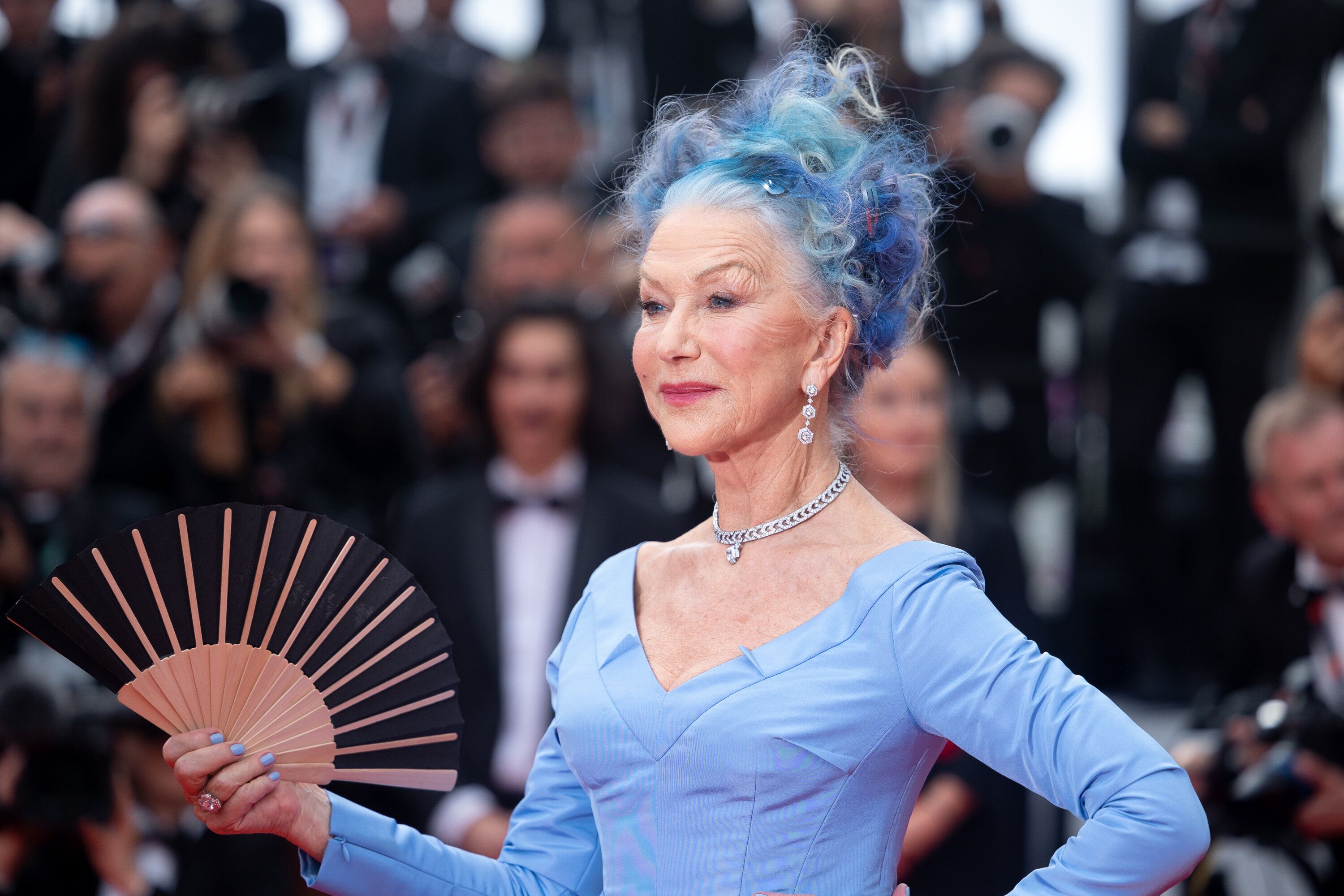
Helen Mirren Looks Like A Queen With Bold Blue Hair At Cannes

Helen Mirren was the coolest thing on the red carpet on the opening night of the Cannes Film Festival in France.

On Tuesday, the star of 2006′s The Queen turned heads with a striking hair transformation, arriving at the event with a wispy, ocean blue coif that perfectly matched her Del Core dress.

Mirren’s gown fell off her shoulders into a deep V with long sleeves, a corseted bodice and long train. Diamonds, soft makeup and a pale blue manicure tied the look together.

As cameras flashed, she showed off one last accessory: a handheld fan with the text #WorthIt, a reference to her partnership with L’Oréal Paris. Altogether, the ensemble created an edgy yet elegant look that was perfect for the film festival.

Helen Mirren attends the Cannes Film Festival on Tuesday, May 16, in France.

Marc Piasecki via Getty Images

Mirren hasn’t shied away from showing off her tresses in the past. In March, she wore her long gray locks down at the Los Angeles premiere of Shazam! Fury of the Gods.

Days before the California event, the 77-year-old star dismissed an all-too-common notion in society — that “you’re not supposed to have longer hair after a certain age”.

“During Covid, I started growing my hair, and I hadn’t actually had long hair since I was in my 20s,” she said during an appearance on the British morning show Lorraine.

“It grew and grew and grew, and I couldn’t be bothered to cut it, basically. And then I thought: You know what? It’s pretty cool. I think I’ll stick with it for a little while,” Mirren added. “It will come off eventually, but I’m kind of enjoying it. It’s quite radical.”

Share Button

Assessing emotions in wild animals

A world-first holistic framework for assessing the mental and psychological wellbeing of wild animals has been developed by UTS Chancellor’s Postdoctoral Research Fellow Dr Andrea Harvey, a veterinarian and animal welfare scientist in the TD School at the University of Technology Sydney.

The significance of the study lies in its potential to revolutionise conservation efforts. Instead of focusing solely on population numbers and reproductive success, the research explores the quality of life experienced by wild animals.

This shift in perspective could provide crucial early warning signals about species challenges and population declines, leading to more effective conservation strategies.

“While research on the welfare of domestic and farm animals has been considerable, including indicators of emotional states such as stress, pain and fear, my aim is to bridge the gap by examining the individual lives, feelings and mental experiences of wild animals,” Dr Harvey said.

“A deeper understanding of the wellbeing of wild animal populations can not only enhance conservation efforts, but also provide an indication of the state of the natural environment and its recognised links to human health and wellbeing.”

The study, which was part of Andrea’s PhD research at the UTS Centre for Compassionate Conservation, focuses on brumbies — free-roaming wild horses — from Australia’s alpine regions, however the framework is widely applicable for evaluating many wildlife species.

Dr Harvey chose brumbies as horse welfare has been studied in domestic environments, providing a bridge to wild animals. The paper, Mental Experiences in Wild Animals: Scientifically Validating Measurable Welfare Indicators in Free-Roaming Horses, was recently published in Animals.

Her comprehensive conceptual framework, called the ’10 Stage Protocol’, includes physical and behavioural indicators for both negative and positive mental experiences in wild animals.

“If you have a dog, you know their usual routine, what they like, and how they behave in certain circumstances. You know if they’re happy, sad, or distressed, so this research is shifting that understanding to wild animals.

“We can never be certain what’s going through an animal’s mind and exactly what they’re feeling. It’s also an area that scientists have traditionally shied away from. However, we know mental experiences arise from physical states, and we can directly measure these states.

“Nutrition, the physical environment, health, and behavioural interactions all provide clues to the mental experience of animals. This includes negative states such as thirst, hunger, heat and cold discomfort, pain, fatigue, anxiety and fear and positive ones such as satiety, exercising agency, physical vitality and positive social interactions.”

This holistic approach brings together different areas of scientific knowledge, including neuroscience, behaviour, and neuroethology — the study of the neural basis of an animal’s natural behaviour — to interpret the data collected and gain insights into wellbeing.

Dr Harvey is currently collaborating with researchers studying Australian water birds, such as the straw-necked ibis and pelicans. These birds serve as indicators of water quality and wetland health, which could inform management decisions in the Murray Darling Basin.

The welfare of koalas, which have been declared endangered in NSW, is also under scrutiny. Previous koala research has focused primarily on survival and disease. Dr Harvey’s research aims to evaluate overall koala wellbeing to inform policy decisions around conservation and habitat protection.

Dr Harvey is also working with other researchers studying the welfare of kangaroos and dingoes at a field station in southern Queensland, focusing on the predator-prey relationship, and the impact of climate change and drought recovery.

Each species presents unique challenges, such as identifying individuals, evaluating mental experiences in large populations, and considering different environments and habitats.

Dr Harvey acknowledges the challenges of studying the mental experiences of wild animals compared to domesticated ones. The absence of close human relationships with individual animals and the difficulty in observing them for extended periods pose significant hurdles.

However, innovative methods like remote camera traps have proven valuable in collecting fine-detail data on wild animal behaviour, including body posture and facial expressions.

Dr Harvey’s ground-breaking research holds immense potential in transforming the field of conservation biology, by shedding light on the mental experiences of wild and endangered animals.

“Welfare assessments need to be part of all wildlife monitoring, and ultimately all environmental policy decision making, which needs to take into account not just individual species, but also interactions between different species, and their ecosystems.”

Share Button