Strictly Come Dancing Adds George Webster As Sixth Celeb For Christmas Special

The 22-year-old presenter and actor will take to the dancefloor with professional dancer Amy Dowden on the Christmas Day episode of the BBC ballroom show.

The news was revealed on Friday’s edition of Strictly companion show It Takes Two.

Speaking of joining the line-up, George said in a statement: “I love Strictly and have watched it every year. I’ve always dreamed of being on the show one year and I’m so excited to be on this year’s Christmas Special! To be partnered with Amy is such an honour, we get on so well, she’s so lovely and an amazing dancer.

“I’m looking forward to being Strictlyfied. Bring on the glitter and everything else. I can’t wait to perform on the Strictly dancefloor.”

Last month, George won a Bafta Children & Young People award for Best Presenter for his work on CBeebies.

He made history when he joined the BBC’s pre-school channel in 2021, being the first presenter on CBeebies with Down Syndrome.

George was also included in the top 20 in the Radio Times 100 list for creating change in entertainment and is in the Shaw Trust disability 100 power list.

Meanwhile, it was previously reported that former Strictly judge Bruno Tonioli would be returning to the ballroom for the Christmas special, where he’ll be performing a festive number.

The current series of Strictly Come Dancing continues on Friday at 8pm on BBC One, with the Christmas special airing on Christmas Day, time TBC.

Share Button

Playing the piano boosts brain processing power and helps lift the blues

A new study published by researchers at the University of Bath demonstrates the positive impact learning to play a musical instrument has on the brain’s ability to process sights and sounds, and shows how it can also help to lift a blue mood.

Publishing their findings in the academic journal Nature Scientific Reports, the team behind the study shows how beginners who undertook piano lessons for just one hour a week over 11 weeks reported significant improvements in recognising audio-visual changes in the environment and reported less depression, stress and anxiety.

In the randomised control study, 31 adults were assigned into either a music training, music listening, or a control group. Individuals with no prior musical experiences or training were instructed to complete weekly one-hour sessions. Whilst the intervention groups played music, the control groups either listened to music or used the time to complete homework.

The researchers found that within just a few weeks of starting lessons*, people’s ability to process multisensory information — i.e., sight and sound — was enhanced. Improved ‘multisensory process’ has benefits for almost every activity we participate in — from driving a car and crossing a road, to finding someone in a crowd or watching TV.

These multisensory improvements extended beyond musical abilities. With musical training, people’s audio-visual processing became more accurate across other tasks. Those who received piano lessons showed greater accuracy in tests where participants were asked to determine whether sound and vision ‘events’ occurred at the same time.

This was true both for simple displays presenting flashes and beeps, and for more complex displays showing a person talking. Such fine-tuning of individuals’ cognitive abilities was not present for the music listening group (where participants listened to the same music as played by the music group), or for the non-music group (where members studied or read).

In addition, the findings went beyond improvements in cognitive abilities, showing that participants also had reduced depression, anxiety and stress scores after the training compared to before it. The authors suggest that music training could be beneficial for people with mental health difficulties, and further research is currently underway to test this.

Cognitive psychologist and music specialist Dr Karin Petrini from the University of Bath’s Department of Psychology, explained: “We know that playing and listening to music often brings joy to our lives, but with this study we were interested in learning more about the direct effects a short period of music learning can have on our cognitive abilities.

“Learning to play an instrument like the piano is a complex task: it requires a musician to read a score, generate movements and monitor the auditory and tactile feedback to adjust their further actions. In scientific terms, the process couples visual with auditory cues and results in a multisensory training for individuals.

“The findings from our study suggest that this has a significant, positive impact on how the brain processes audio-visual information even in adulthood when brain plasticity is reduced.”

Notes

  • Each music training session included two segments. The first 20-minute segment was dedicated to finger exercise. The second segment consisted of learning songs from the ABRSM 2017-2018 piano grade one exam list for 40 minutes. All training sessions were carried out on a one-to-one basis. Participants learned these pieces in the order presented below. They proceeded to the next song once they could play the former one correctly and fluently:

  • William Gillock A Stately Sarabande. Classic Piano Repertoire (Elementary).

  • Johann Christian Bach Aria in F, BWV Anh. II 131.

  • Giuseppe Verdi La donna è mobile (from Rigoletto).

  • Bryan Kelly Gypsy Song: No. 6 from A Baker’s Dozen.

  • Traditional American Folk Song: When the saints go marching in.

Story Source:

Materials provided by University of Bath. Note: Content may be edited for style and length.

Share Button

Palm e-tattoo can tell when you’re stressed out

Our palms tell us a lot about our emotional state, tending to get wet when people are excited or nervous. This reaction is used to measure emotional stress and help people with mental health issues, but the devices to do it now are bulky, unreliable and can perpetuate social stigma by sticking very visible sensors on prominent parts of the body.

Researchers at The University of Texas at Austin and Texas A&M University have applied emerging electronic tattoo (e-tattoo) technology to this type of monitoring, known as electrodermal activity or EDA sensing. In a new paper published recently in Nature Communications, the researchers created a graphene-based e-tattoo that attaches to the palm, is nearly invisible and connects to a smart watch.

“It’s so unobstructive that people sometimes forget they had them on, and it also reduces the social stigma of wearing these devices in such prominent places on the body,” said Nanshu Lu, professor in the Department of Aerospace Engineering and Engineering Mechanics and leader of the project.

Lu and her collaborators have been advancing wearable e-tattoo technology for many years. Graphene has been a favorite material because of how thin it is and how well it measures electrical potential from human body, leading to very accurate readings.

But, such ultra-thin materials can’t handle much, if any strain. So that makes applying them to parts of the body that include a lot of movement, such as the palm/wrist, challenging.

The secret sauce of this discovery is how the e-tattoo on the palm is able to successfully transfer data to a rigid circuit — in this case a commercially available smart watch, in out-of-lab, ambulatory settings. They used a serpentine ribbon that has two layers of graphene and gold partially overlapped. By snaking the ribbon back and forth, it can handle the strain that comes with movements of the hand for everyday activities like holding the steering wheel while driving, opening doors, running etc.

Current palm monitoring tech uses bulky electrodes that fall off and are very visible, or EDA sensors applied to other parts of the body, which gives a less accurate reading.

Other researchers have tried similar methods using nanometer-thick straight-line ribbons to connect the tattoo to a reader, but they couldn’t handle the strain of constant movement.

Lu said the researchers were inspired by virtual reality (VR), gaming and the incoming metaverse for this research. VR is used in some cases to treat mental illness; however, the human-aware capability in VR remains lacking in many ways.

“You want to know whether people are responding to this treatment,” Lu said. “Is it helping them? Right now, that’s hard to tell.”

Other members of the team include Hongwoo Jang and Eunbin Kim from the Texas Materials Institute; Sangjun Kim and Kyoung-Ho Ha from the Walker Department of Mechanical Engineering; Xiangxing Yang from the Chandra Family Department of Electrical and Computer Engineering; and Kaan Sel and Roozbeh Jafari from Texas A&M’s Department of Electrical and Computer Engineering.

Story Source:

Materials provided by University of Texas at Austin. Note: Content may be edited for style and length.

Share Button

Trouble sleeping? You could be at risk of type 2 diabetes

As the Christmas season starts to ramp up, University of South Australia researchers are reminding people to prioritise a good night’s sleep as new research shows that a troubled sleep may be associated with risk factors for type 2 diabetes.

In the first study of its kind, researchers found that people who reported trouble sleeping were on average more likely to have indicators of poor cardiometabolic health — inflammatory markers, cholesterol and body weight — which can contribute to type 2 diabetes.

In Australia, almost one million adults have type 2 diabetes. Globally, type 2 diabetes affects more than 422 million people.

UniSA researcher Dr Lisa Matricciani says different aspects of sleep are associated with risk factors for diabetes.

“Everyone knows that sleep is important. But when we think about sleep, we mainly focus on how many hours of sleep we get, when we should also be looking at our sleep experience as a whole,” Dr Matricciani says.

“How soundly we sleep, when we go to bed and get up, and how regular our sleep habits are, may be just as important as sleep duration.”

“In this study, we examined the association of different aspects of sleep, and risk factors for diabetes, and found a connection between those who had troubled sleep and those who were at risk of type 2 diabetes.”

The study assessed more than 1000 Australian adults* with a median age of 44.8 years. Researchers examined a range of sleep characteristics: self-report trouble sleeping, duration, timing, efficiency, and day-to-day sleep length variability.

“People who reported having trouble sleeping were also more likely to have a higher body mass index, as well as blood markers of cholesterol and inflammation,” Dr Matricciani says.

“When it comes down to the crunch, we know we must prioritise our sleep to help stay in good health. More research is needed, but as this study shows, it’s important to think about sleep as a whole, not just as one aspect.”

Notes

  • *Most participants (87 per cent) were mothers.
  • Approximately half of all participants (48 per cent) reported that they never had troubled sleep.

Story Source:

Materials provided by University of South Australia. Note: Content may be edited for style and length.

Share Button

Adults living in areas with high air pollution are more likely to have multiple long-term health conditions

Exposure to traffic related air pollution is associated with an increased likelihood of having multiple long-term physical and mental health conditions according to a new study of more than 364,000 people in England.

Led by researchers from Institute of Psychiatry, Psychology & Neuroscience (IoPPN), King’s College London, this is the largest study worldwide to examine whether air pollution exposure is linked with the occurrence of multiple long-term health conditions.

Multimorbidity is defined as having two or more physical or mental health conditions and affects 27 per cent of adults in UK primary care. It increases the use of healthcare services and the costs of primary and secondary care, but its association with air pollution has not been studied in the UK until now.

Published in Frontiers in Public Health the study showed that high levels of traffic-related air pollution — fine particulate matter 2.5 (PM2.5) and nitrogen dioxide (NO2) — were associated with an increased risk of having at least two long term health conditions. The strongest associations were observed for co-occurring neurological, respiratory, cardiovascular and common mental health conditions such as depression and anxiety.

This research was funded by National Institute for Health and Care Research (NIHR) Maudsley Biomedical Research Centre and NIHR Applied Research Collaboration (ARC) South London.

Dr Amy Ronaldson, Research Associate at Institute of Psychiatry, Psychology & Neuroscience (IoPPN), King’s College London and first author on the study said: “People with more than one long-term health condition have a lower quality of life and greater dependence on the healthcare system. Our NIHR funded research has indicated that those people that live in areas of higher traffic-related air pollution are at greater risk of having multiple health conditions. The study does not prove that air pollution causes multimorbidity, but it does warrant further research in this area. It could be that simple measures to reduce traffic levels could potentially improve lives and lessen the pressure on our healthcare systems.”

Researchers analysed data from UK Biobank — a large-scale biomedical database and research resource containing anonymised genetic, lifestyle and health information from half a million UK participants. aged between 40 and 69 years. Participants were assessed for 36 physical and five mental health chronic conditions. Multimorbidity was defined as having two or more of these conditions.

Physical and mental health data from UK Biobank in 2010 were linked with the estimated concentration of air pollution at the residential address of the participants.

The study found that those participants exposed to higher concentrations (above 10µg/m3) of fine particulate matter had a 21 per cent increased risk of two or more co-occurring conditions compared to those exposed to concentrations below 10µg/m3.

For participants exposed to above 30µg/m3 of NO2 the research showed a 20 per cent increased risk of having two or more co-occurring conditions compared to those participants that were exposed to concentrations of NO2 below 20µg/m3.

Amongst those with multiple conditions, increased exposure to both PM2.5 and NO2 was linked to a greater severity of the co-occurring conditions.

Dr Ioannis Bakolis, Reader at IoPPN, King’s College London and senior author on the study said: “How air pollution affects multiple organs and systems at the same time is not yet fully understood, but there is some evidence that mechanisms such as inflammation, oxidative stress and immune activation could be triggered by air particulates, which can cause damage to the brain, heart, blood, lungs and gut.

“Our study suggests that it could be through shared mechanisms that air pollution negatively impacts several body systems and increases the likelihood of people developing multiple long term health conditions. More research is needed to understand just how air pollution affects the different bodily systems, but it may be that tackling air pollution could help prevent and alleviate the debilitating impact of multiple long-term health conditions.”

Researchers identified several patterns in the associations: the strongest links were primarily between conditions relating to the respiratory system (asthma, chronic obstructive pulmonary disease) as well as the cardiovascular system (atrial fibrillation, coronary heart disease, heart failure) but also to neurological and common mental conditions (stroke, substance abuse, depression, anxiety).

The study, ‘Associations between air pollution and multimorbidity in the UK Biobank: A cross-sectional study’ was published in Frontiers in Public Health.

This study has been funded by the National Institute for Health and Care Research (NIHR) Biomedical Research Centre at South London and Maudsley NHS Foundation Trust and King’s College London and the NIHR Applied Research Collaboration South London.

Share Button

What is Strep A and what are the symptoms to look out for?

Another UK child has died from this highly contagious infection. What should people look out for?

Share Button

Question Time Panellist Thinks Royal Aide Was ‘Cancelled For One Misspeak’

A Question Time panellist has defended the comments made by a royal aide to a Black domestic abuse campaigner, who was asked repeatedly where she “really came from” at a Buckingham Palace reception.

Ngozi Fulani, founder of the charity Sistah Space, has accused the royal family of institutional racism after the incident involving the late Queen’s lady in waiting, Lady Susan Hussey.

Lady Susan, the Prince of Wales’s 83-year-old godmother, resigned from the household and apologised after she challenged Fulani when she said she was British at the Queen Consort’s reception highlighting violence against women and girls.

But on the BBC’s flagship politics show, Olivia Utley of the GB News broadcaster said Lady Susan was “cancelled for one misspeak”.

She said: “I think it was definitely a very clumsy and surprisingly crass comment from someone who’s spent their life doing these sorts of events.

“But on the other hand I think it’s a bit sad that we live in a society where an 83-year-old woman with 60 years of public service behind her can just be cancelled for one misspeak.

“My heart really goes out to Ngozi Fulani because it sounds like a horrible experience and I can’t quite understand how it happened like that.

“But I think that everyone who knows Lady Susan Hussey says that she’s not in any way racist, she’s a very kind hearted woman, and the rest of her life is going to be blighted by that incident.

“So I worry a bit about cancel culture angle of this whole story but that’s not in any way to undermine what Ngozi Fulani went through because it does sound like a horrible experience.”

Describing how Lady Susan also touched her hair during the incident, Fulani told ITV’s Good Morning Britain: “I was stood next to two other women – black women – and she (Lady Susan) just made a beeline for me, and she took my locks and moved it out of the way so that she could see my name badge.

“That’s a no-no. I wouldn’t put my hands in someone’s hair, and culturally it’s not appropriate.”

Fulani said the comments were down to racism, not Lady Susan’s age.

“I’ve heard so many suggestions it’s about her age and stuff like that. And I think that’s a kind of a disrespect about ageism,” she said on BBC Radio 4’s Today programme.

“Are we saying that because of your age you can’t be racist or you can’t be inappropriate?

“If you invite people to an event, as I said, against domestic abuse, and there are people there from different demographics, I don’t see the relevance of whether I’m British or not British. You’re trying to make me unwelcome in my own space.”

The Palace moved swiftly to respond to Fulani’s tweets on Wednesday morning, saying it took the incident at Tuesday’s reception “extremely seriously” and had investigated immediately.

Share Button

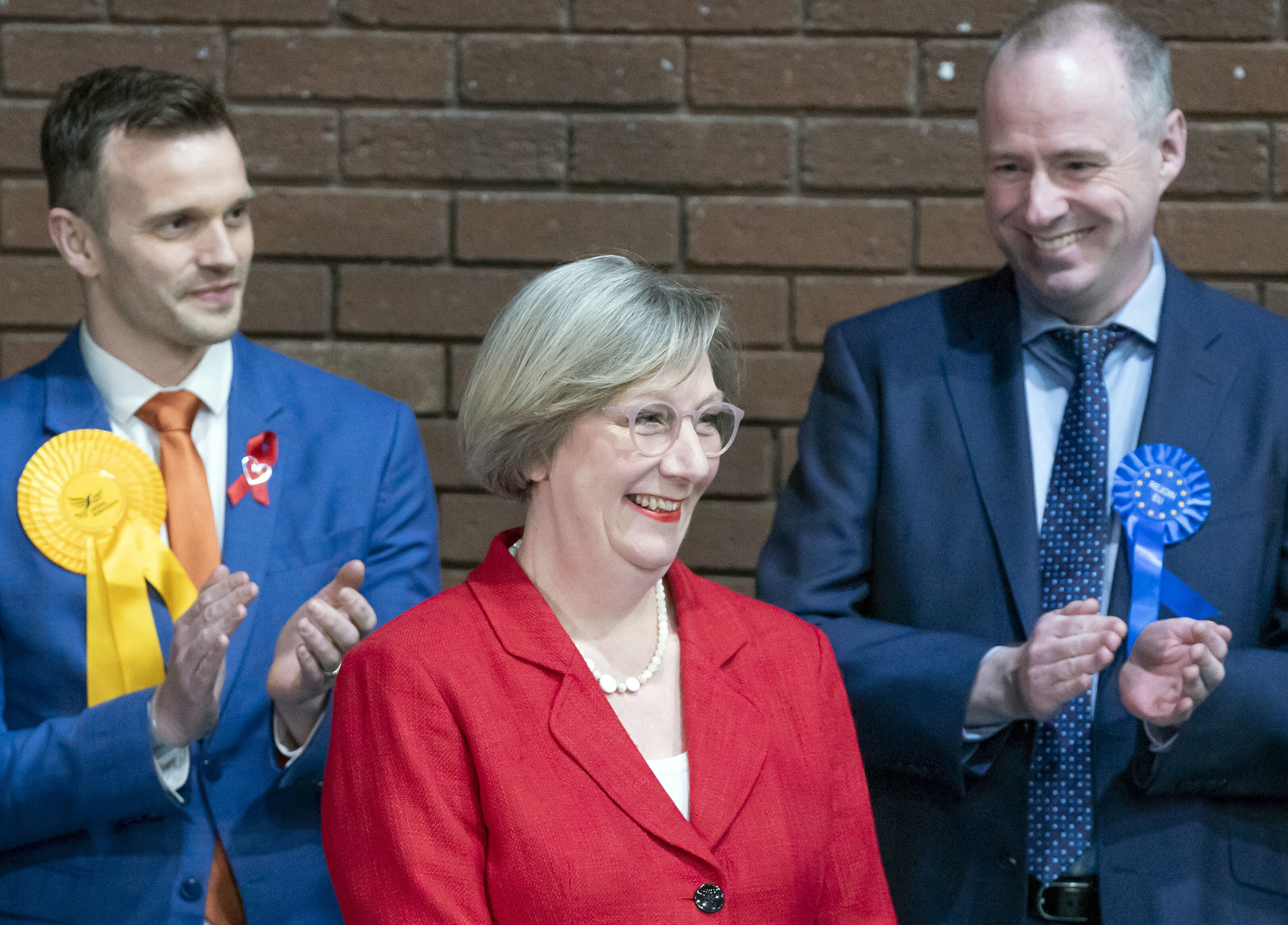
Chester By-Election Result: Labour Holds Seat In Blow To Tories

Labour has easily won the by-election in Chester, a defeat for Rishi Sunak in his first test at the ballot box since becoming prime minister.

Samantha Dixon, Labour’s candidate, won with a majority of 10,974 over Tory Liz Wardlaw.

Labour had been widely expected to hold on to the seat but the size of the win is a boost for Keir Starmer.

The by-election was called after the incumbent Labour MP Christian Matheson resigned after complaints – which he denied – of “serious sexual misconduct”.

It was the first by-election since Boris Johnson was ousted and the market chaos that defined Liz Truss’s short stint in No.10.

Labour won the seat in 2019 with a majority of 6,164. The Conservatives last won it at the general election in 2010 which saw David Cameron become PM.

The result will be seen as further evidence that the Conservatives are on course to lose the next general election, due in 2024.

A YouGov poll released on Thursday, as voters went to the polls in Chester, showed Labour hold a 25 point lead nationally over the Conservatives.

In a victory speech after the result was announced, Dixon said: “People in Chester and across our country are really worried.

“Worried about losing their homes because they can’t afford the mortgage repayments or the rent, worried about whether they can put the heating on, worried about whether they can put food on the table for their families.

“This is the cost of 12 years of Conservative government. The government, which has wreaked havoc with our economy, destroyed our public services and betrayed the people who put their trust in them at the last general election.”

The result is the latest by-election defeat suffered by the Conservatives.

The last two by-elections, which took place on the same day in June, were a disaster for the Tories, with Labour snatching Wakefield and the Liberal Democrats securing a historic victory in Tiverton and Honiton.

The result, which comes just over a month into Sunak’s tenure as prime minister, is unlikely to be seen as a referendum on his leadership.

But it nonetheless comes as a blow to the party, which is facing an uphill battle to remain in office at the next nationwide poll.

The country is facing a gloomy outlook, after chancellor Jeremy Hunt’s autumn statement last month ushered in a fresh round of belt-tightening in the public finances as the UK heads into a recession and soaring inflation squeezes incomes.

With many households struggling with rising energy bills, rail strikes and a planned walk-out by nurses also threaten to cause severe disruption in the run up to Christmas.

Share Button

Infectious Covid virus can stay on some groceries for days

Scientists did the study for the government to better understand possible exposure to shoppers.

Share Button

Matt Hancock To Make First Commons Appearance In Seven Weeks

Matt Hancock is set to end his near seven-week break from parliament when the sitting MP appears in the Commons for the first time since his I’m A Celebrity hiatus.

The former health secretary is scheduled to be back in parliament on Friday to debate his dyslexia bill, on the same day his pandemic journals are serialised in the Daily Mail.

The ex-minister last spoke in the Commons on October 17, when he welcomed the “return of an iron-clad fiscal responsibility” under new chancellor Jeremy Hunt.

His re-appearance comes as speculation mounts over whether he will have the Tory whip restored and seek to stand again at the next election.

He is currently sitting as the independent MP for West Suffolk, having been suspended from the Conservative parliamentary party for choosing to head to the Australian jungle at a time when the house was sitting.

The MP is expected to tell parliament that the current approach to dyslexia “must change”.

“It is not only an issue of morality, but also of both social and economic justice,” he will say.

Friday's order paper
Friday’s order paper

UK Parlament

Hancock, who was diagnosed with dyslexia at university, had vowed to use the “incredible platform” offered by I’m A Celebrity to raise awareness of the learning difficulty.

While his jungle jaunt drew criticism from colleagues, including prime minister Rishi Sunak, Hancock has “no intention of standing down or stepping away from politics”, according to his team.

Tory MPs have been given until Monday December 5 to declare their intention to re-run at the next general election, expected to be in 2024.

The second reading of Hancock’s dyslexia screening and teacher training bill is third on Friday’s order paper, meaning it is likely to be heard before the end of business.

Hancock will tell MPs: “So we rightly screen for physical health conditions to provide the support to individuals, so why don’t we screen for neurological conditions, too?

“My bill today would result in every child being screened for dyslexia in primary schools and giving teachers the adequate level of training to be able to teach dyslexic children properly.”

He will call it an “outrage” that “while every teacher is a teacher of a dyslexic child, teachers do not need to be trained to support dyslexic children”.

“This leaves thousands of dyslexic children left in the classroom without the education they need and deserve.”

“It is a scandal that only one in every five dyslexic children leave school identified with their dyslexia. That means 80% of dyslexics go on to further education or into the world of work not knowing that they have a neurological condition, but just thinking they are bad at reading.”

As is normal procedure, other MPs can join the debate and representatives for both the government and opposition will have their say.

Some might take the opportunity to have a dig at Hancock’s TV escapades since it will be their first chance to put their views to him directly in the house.

Share Button