Differences between the Moon’s near and far sides linked to colossal ancient impact

The face that the Moon shows to Earth looks far different from the one it hides on its far side. The nearside is dominated by the lunar mare — the vast, dark-colored remnants of ancient lava flows. The crater-pocked far side, on the other hand, is virtually devoid of large-scale mare features. Why the two sides are so different is one of the Moon’s most enduring mysteries.

Now, researchers have a new explanation for the two-faced Moon — one that relates to a giant impact billions of years ago near the Moon’s south pole.

A new study published in the journal Science Advances shows that the impact that formed the Moon’s giant South Pole-Aitken (SPA) basin would have created a massive plume of heat that propagated through the lunar interior. That plume would have carried certain materials — a suite of rare-Earth and heat-producing elements — to the Moon’s nearside. That concentration of elements would have contributed to the volcanism that created the nearside volcanic plains.

“We know that big impacts like the one that formed SPA would create a lot of heat,” said Matt Jones, a Ph.D. candidate at Brown University and the study’s lead author. “The question is how that heat affects the Moon’s interior dynamics. What we show is that under any plausible conditions at the time that SPA formed, it ends up concentrating these heat-producing elements on the nearside. We expect that this contributed to the mantle melting that produced the lava flows we see on the surface.”

The study was a collaboration between Jones and his advisor Alexander Evans, an assistant professor at Brown, along with researchers from Purdue University, the Lunar and Planetary Science Laboratory in Arizona, Stanford University and NASA’s Jet Propulsion Laboratory.

The differences between the near and far sides of the Moon were first revealed in the 1960s by the Soviet Luna missions and the U.S. Apollo program. While the differences in volcanic deposits are plain to see, future missions would reveal differences in the geochemical composition as well. The nearside is home to a compositional anomaly known as the Procellarum KREEP terrane (PKT) — a concentration of potassium (K), rare earth elements (REE), phosphorus (P), along with heat-producing elements like thorium. KREEP seems to be concentrated in and around Oceanus Procellarum, the largest of the nearside volcanic plains, but is sparse elsewhere on the Moon.

Some scientists have suspected a connection between the PKT and the nearside lava flows, but the question of why that suite of elements was concentrated on the nearside remained. This new study provides an explanation that is connected to the South Pole-Aitken basin, the second largest known impact crater in the solar system.

For the study, the researchers conducted computer simulations of how heat generated by a giant impact would alter patterns of convection in the Moon’s interior, and how that might redistribute KREEP material in the lunar mantle. KREEP is thought to represent the last part of the mantle to solidify after the Moon’s formation. As such, it likely formed the outermost layer of mantle, just beneath the lunar crust. Models of the lunar interior suggest that it should have been more or less evenly distributed beneath the surface. But this new model shows that the uniform distribution would be disrupted by the heat plume from the SPA impact.

According to the model, the KREEP material would have ridden the wave of heat emanating from the SPA impact zone like a surfer. As the heat plume spread beneath the Moon’s crust, that material was eventually delivered en masse to the nearside. The team ran simulations for a number of different impact scenarios, from dead-on hit to a glancing blow. While each produced differing heat patterns and mobilized KREEP to varying degrees, all created KREEP concentrations on the nearside, consistent with the PKT anomaly.

The researchers say the work provides a credible explanation for one of the Moon’s most enduring mysteries.

“How the PKT formed is arguably the most significant open question in lunar science,” Jones said. “And the South Pole-Aitken impact is one of the most significant events in lunar history. This work brings those two things together, and I think our results are really exciting.”

Story Source:

Materials provided by Brown University. Note: Content may be edited for style and length.

Share Button

What shapes gut microbiomes of Alaska’s brown bears? Location, location, location

A recent study of Alaskan brown bears (Ursus arctos) finds that there is significant variation in the gut microbiome of bear populations, depending on where the bears live. The finding advances our understanding of the relationship between wildlife habitat, diet and gut microbiome diversity.

“The gut microbiome is the ecosystem of microbial life that populates an animal’s digestive system — and this microbiome plays a major role in an animal’s well-being,” says Erin McKenney, co-author of a paper on the work and an assistant professor of applied ecology at North Carolina State University. “Everything we learn about these microbiomes helps us make more informed decisions to support the health of wildlife species.”

“The Alaska wilderness, important habitat for brown bears, is changing,” says Grant Hilderbrand, co-author of the study and associate regional director for resources for the National Park Service in Alaska. “The gut microbiome serves as a new diagnostic tool for understanding the health of wildlife populations. It can also help us predict how animal health will change as the environment changes. The study we’ve done here lays the foundation for advancing our understanding of gut microbiomes in Alaska’s iconic brown bears.”

The researchers launched the project with the goal of characterizing what the gut microbiome of Alaskan brown bears looks like.

“Bears are particularly interesting in this context, because they’re omnivores,” says Diana Lafferty, co-author of the paper and an assistant professor of biology at Northern Michigan University. “Bears function as predators and as scavengers, and they have a relatively simple gut system — which means their microbiome may play a particularly important role in helping them extract nutrients from their diet. With this project, we wanted to establish a baseline of what ‘healthy’ microbiomes look like for these animals, which are relatively undisturbed.”

The researchers also benefited from piggybacking on other research efforts that were already underway. The National Park Service was already engaged in research projects that involved tracking and observing wild brown bears at three national parks and preserves: Katmai; Lake Clark; and Gates of the Arctic.

“By collaborating with ongoing projects, we were able to collect all of the data and samples at no additional cost,” Hilderbrand says.

For this study, the researchers analyzed 66 fecal samples from 51 brown bears that were sampled during previous research operations. Because these samples were collected as part of ongoing research initiatives, the researchers also had data on each bear’s age, sex, size and body condition.

The researchers extracted microbial DNA from the fecal samples, and assessed those results to determine what kinds of microbes were in each sample.

“We found significant differences in the diversity of the bears’ microbiomes at each of the three parks,” says Sarah Trujillo, corresponding author of the paper who worked on the study while a graduate student at NMU. “Katmai had the most diversity, and also had the most diverse array of food sources available. Gates of the Arctic, which had the most limited array of food resources, also had bears with the least diverse gut microbiomes. In other words, we found what we expected: the more diverse the diet, the more diverse the gut microbiome.

“However, while we found clear distinctions in microbiome diversity at each park, those differences could not be fully explained by diet alone. There appears to be something else at play that we don’t fully understand yet. That’s an area for future research.”

The work was done with support from Northern Michigan University and the National Park Service.

Story Source:

Materials provided by North Carolina State University. Original written by Matt Shipman. Note: Content may be edited for style and length.

Share Button

Air pollution responsible for 180,000 excess deaths in tropical cities

The international team of scientists aimed to address data gaps in air quality for 46* future megacities in Africa, Asia and the Middle East using space-based observations from instruments onboard NASA and European Space Agency (ESA) satellites for 2005 to 2018.

Published today in Science Advances, the study reveals rapid degradation in air quality and increases in urban exposure to air pollutants hazardous to health. Across all the cities, the authors found significant annual increases in pollutants directly hazardous to health of up to 14% for nitrogen dioxide (NO2) and up to 8% for fine particles (PM2.5), as well as increases in precursors of PM2.5 of up to 12% for ammonia and up to 11% for reactive volatile organic compounds.

The researchers attributed this rapid degradation in air quality to emerging industries and residential sources like road traffic, waste burning, and widespread use of charcoal and fuelwood.

Lead author Dr Karn Vohra (UCL Geography), who completed the study as a PhD student at the University of Birmingham, said: “Open burning of biomass for land clearance and agricultural waste disposal has in the past overwhelmingly dominated air pollution in the tropics. Our analysis suggests we’re entering a new era of air pollution in these cities, with some experiencing rates of degradation in a year that other cities experience in a decade.”

The scientists also found 1.5- to 4- fold increases in urban population exposure to air pollution over the study period in 40 of the 46 cities for NO2 and 33 of the 46 cities for PM2.5., caused by a combination of population growth and rapid deterioration in air quality.

According to the study, the increase in the number of people dying prematurely from exposure to air pollution was highest in cities in South Asia, in particular Dhaka, Bangladesh (totalling 24,000 people), and the Indian cities of Mumbai, Bangalore, Kolkata, Hyderabad, Chennai, Surat, Pune and Ahmedabad (totalling 100,000 people).

The researchers say that while the number of deaths in tropical cities in Africa are currently lower due to recent improvements in healthcare across the continent resulting in a decline in overall premature mortality, the worst effects of air pollution on health will likely occur in the coming decades.

Study co-author Dr Eloise Marais (UCL Geography) said: “We continue to shift air pollution from one region to the next, rather than learning from errors of the past and ensuring rapid industrialisation and economic development don’t harm public health. We hope our results will incentivise preventative action in the tropics.”

The study was funded by a University of Birmingham Global Challenges PhD Studentship awarded to Dr Vohra and a NERC/EPSRC grant awarded to Dr Marais.

*Cities analysed in the study:

  • Africa — Abidjan, Abuja, Addis Ababa, Antananarivo, Bamako, Blantyre, Conakry, Dakar, Dar es Salaam, Ibadan, Kaduna, Kampala, Kano, Khartoum, Kigali, Kinshasa, Lagos, Lilongwe, Luanda, Lubumbashi, Lusaka, Mombasa, N’Djamena, Nairobi, Niamey, Ouagadougou.
  • South Asia — Ahmedabad, Bangalore, Chennai, Chittagong, Dhaka, Hyderabad, Karachi, Kolkata, Mumbai, Pune, Surat.
  • Southeast Asia — Bangkok, Hanoi, Ho Chi Minh City, Jakarta, Manila, Phnom Penh, Yangon.
  • Middle East — Riyadh, Sana’a.

Story Source:

Materials provided by University College London. Note: Content may be edited for style and length.

Share Button

Key to success of drug-resistant bacteria

Researchers have discovered how Gram-negative bacteria — which cause drug-resistant pneumonia, bloodstream infections, and surgical site infections in hospitalized patients — finish building a crucial component of their outer membrane that shields these pathogens from attacks by the immune system and antibiotics. The new findings could accelerate the development of novel drugs to counteract these potentially deadly bacteria, the source of countless infections in health care settings worldwide.

The study was published online April 6 in Nature.

“Previously, we knew that Gram-negative bacteria construct their outer membrane with two main, non-protein components — lipids and sugars — which together form an impermeable barrier. The missing link was how this lipopolysaccharide component comes together,” says Filippo Mancia, PhD, a co-leader of the study and professor of physiology & cellular biophysics at Columbia University Vagelos College of Physicians and Surgeons.

Using cutting-edge single-particle cryo-electron microscopy, Mancia and colleagues were able to determine the structures of the enzyme that links together the lipids and sugars (called an O-antigen ligase), in two different functional configurations. Then, combining genetic, biochemical, and molecular dynamics experiments, the team learned how the enzyme positions the lipids and sugars so that they can combine to form the protective membrane.

The lipopolysaccharide component of the outer membrane is critical to the survival of Gram-negative bacteria. “If you could block its assembly, then you would make the bacteria more sensitive to antibiotics and more vulnerable to the immune system,” Mancia says.

Construction of this membrane is an ongoing process, beginning when Gram-negative bacteria are first formed and continuing as the membrane naturally degrades and requires repair. “This means that we would have many opportunities to disrupt the membrane, not just at one stage of the bacteria’s life cycle,” Mancia says.

After revealing the structure of the enzyme that performs the last and critical step in assembling lipopolysaccharide barriers in drug-resistant bacteria, the researchers may begin to custom-design drugs that inhibit the biosynthesis of this protective membrane.

Story Source:

Materials provided by Columbia University Irving Medical Center. Note: Content may be edited for style and length.

Share Button

With Le Pen Breathing Down Macron’s Neck, Is France About To Have Its Brexit?

And just like that, everyone’s talking about France and whether it’s about to have its “Brexit/Trump moment”.

The first round of the French presidential election takes place on Sunday, and what might have been a formality only of domestic interest is suddenly generating a much bigger buzz. This is thanks to a series of polls suggesting Marine Le Pen, the far-right’s standard bearer for more than a decade, could pull off a shock win over incumbent Emmanuel Macron.

With the help of HuffPost France’s political correspondent Romain Herreros, here’s everything that you need to know about the vote to determine who runs one of Europe’s biggest economic and military powers as a war rages on the continent.

The basics: what is happening?

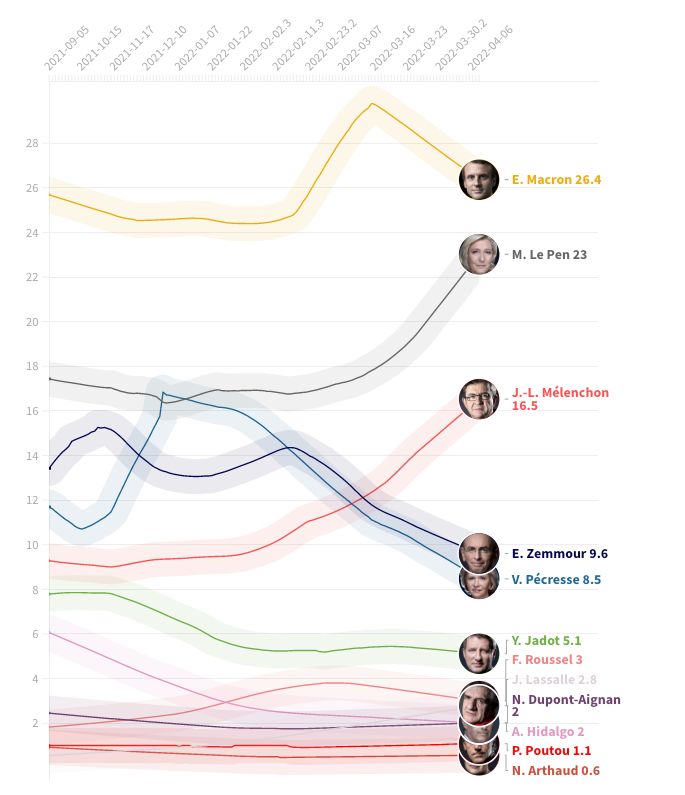
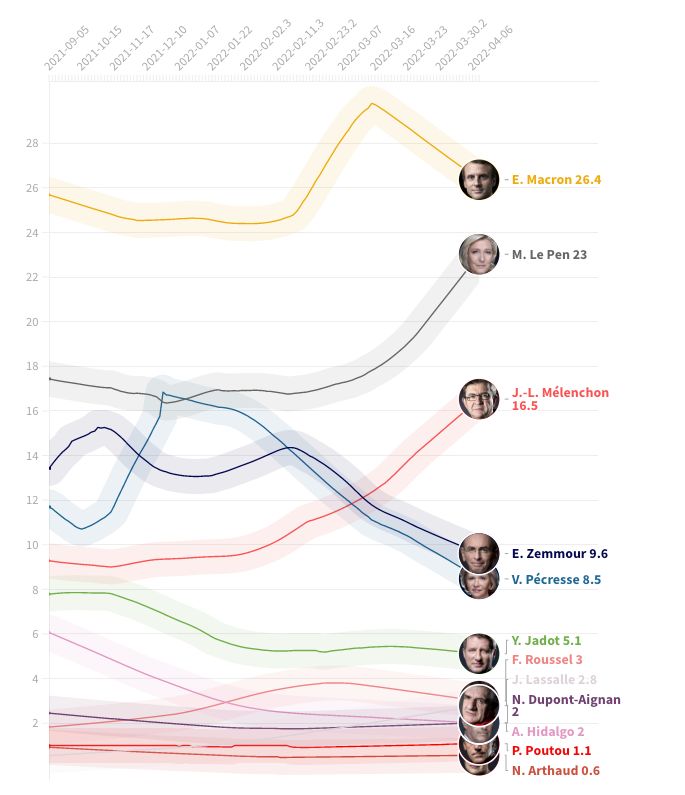
France’s presidential election is to be held in two rounds on April 10 and 24. Polls have for weeks consistently pointed to Macron leading the first round ahead of Le Pen, with both qualifying for a run-off. It would mean a replay of the 2017 election that Macron won comfortably (66% to 34%). But this time around it’s set to be much closer. According to some polls, Le Pen has narrowed the gap enough for victory to be within the margin of error.

There are 12 official candidates. Outside Macron and Le Pen, the names to note in an election where radical positions set the tone are far right-writer-turned-candidate Éric Zemmour and veteran left-winger Jean-Luc Mélenchon. While it’s unlikely either will make the final cut, the second choice of their voters could be crucial in a narrow run-off.

A Le Pen win would send shockwaves around the world, not least given the West’s united front against Russia’s invasion of Ukraine. Having someone who has shown pro-Vladamir Putin sympathies deal with the fallout would be less than ideal. And make no mistake of France’s importance: Brexit compounded its status as the European Union’s main military power and, with Angela Merkel’s exit as German chancellor, Macron has taken a more prominent role in Europe.

Marine Le Pen and the image overhaul

The 53-year-old leader of the National Rally, a movement long known for anti-Semitism, Nazi nostalgia and anti-immigrant bigotry, is running for the third time. The “Le Pen” name is notorious in France thanks to her father, Jean-Marie Le Pen, the firebrand leader of what the same party when it was the National Front.

Since her 2017 defeat, Le Pen has worked to soften her image – stressing her love of cats among other things – and changed the party name. She has strived to appear as a potential leader rather than a radical anti-system opponent. Her campaign has focused on cost of living concerns – amid a huge increase in energy prices and growing inflation – and the candidacy of Zemmour, who is even further to the right than Le Pen, has also helped her appear more palatable to voters.

Herreros says many felt another far-right candidate would split their vote, undermining Le Pen’s chance. “But, in fact, Zemmour was very hard, very radical. So Le Pen looked more soft. People are less afraid of her compared to Zemmour. When we look at the polls, we see that.”

Below, poll aggregator showing how Macron’s lead over Le Pen has narrowed in recent days. See here for latest update.

HuffPostFR

That explains in part why the context is not quite 2016. “The last election was just one year after Brexit and Trump’s election, so we were in a populist moment,” Herreros says of Macron’s 2017 ascent to power. “Now we have seen that Brexit was not what the British people expected, and we saw (Brazil’s populist president) Bolsonaro is a nightmare in Brazil. But Le Pen is not playing the populist role – she says she doesn’t want to leave the euro this time, that she’s not that extreme like Zimmour. ‘Trust me, I’m not evil’.”

But, make no mistake, the core of her party’s programme has not changed. “She is still far-right,” Herreros explains. “She is proposing the same thing on immigration as Zemmour, but with different words. It’s just a different package.”

She would end a number of welfare benefits for foreigners, stop family reunification, give preference to the French for jobs and social housing, ban the hijab in public spaces and kick unemployed foreigners out of France.

Éric Zemmour, not quite the French Trump

The early obsession among the chattering classes was the rise of Zemmour and his fledgling Reconquest! party. A TV pundit who styles himself as a Donald Trump figure and guardian of Old France, he has proposed a Ministry of “Remigration” equipped with airplanes to expedite the expulsions of what he says are undesirable migrants.

Zemmour pushes the white nationalist conspiracy theory known as the “great replacement”, which argues France and Western nations are being overrun by immigrants and other people of colour — notably Muslims.

Reflecting Le Pen’s superficial changes, a batch of her officials and supporters have left for Zemmour. The only one Le Pen spared criticism was her niece, Marion Marechal, a former politician who has returned to the frontline to help Zemmour.

Perhaps what worries most is the two far-right candidates together are drawing more support than the centrist president. In a scenario where Le Pen inherits around 80% of Zemmour’s votes in the second round – a not unreasonable prospect, say analysts – it puts her “close to victory”, says Herreros.

Macron and gone?

For Macron, Le Pen is the candidate to beat, and his camp has worried openly about an “accidental” win for Le Pen – perhaps if moderate voters fail to turn up at the polls.

The 44-year-old former investment banker, elected in 2017 with little political experience with his centrist La Republique en Marche, saw his pristine reputation dented by The Yellow Vest protests and imposing coronavirus restrictions.

His election campaign has been disrupted by the war in Ukraine, with Macron delaying his pitch to the country because of France’s central role in the West’s response. While absence from the campaign trail has its own problems, wartime leadership has allowed him to be presented dealing with the big issues facing the world (see the unusual pictures of him working nights and weekends at the Elysee palace, looking tired and unshaven, in jeans and a hoodie). It may have helped with an initial poll boost, but that appears to have waned.

<img class="img-sized__img landscape" loading="lazy" alt="Emmanuel Macron and Marine Le Pen are set to meet in the run-off for the second consecutive presidential election.” width=”720″ height=”478″ src=”https://www.wellnessmaster.com/wp-content/uploads/2022/04/with-le-pen-breathing-down-macrons-neck-is-france-about-to-have-its-brexit-4.jpg”>
Emmanuel Macron and Marine Le Pen are set to meet in the run-off for the second consecutive presidential election.

Herreros explains Macron is popular for this stage of his presidency – higher than predecessors François Hollande and Nicolas Sarkozy – but he has come unstuck by two factors. “He went too late in the campaign,” says Herreros. “It was difficult for him to say ‘hey, I’m the candidate’ when Putin was invading Ukraine. If he went in January or February, it would have been easier for him. He left the space for the far-right.”

He also bound himself to Le Pen, thinking France would never actually put her in power. “He always thought he would be automatically re-elected against Marine Le Pen. During his presidency he would ‘wink, wink’ to right-wing voters, some of his ministers talked in a way that could be used by Le Pen. Now people are saying you played with fire, now we have the result of what you have done.”

So what will happen?

The neck-and-neck polling doesn’t tell the whole story, say Herreros. A low turnout could kill off all the pre-election anticipation as Le Pen is relying heavily on the working class vote to come out in support. Le Pen’s party is still stinging from her party’s failure in last summer’s regional balloting, blamed on a turnout of only 33% of voters in the first round.

There may also be a moment of clarity. “In France, when the far-right are close to power, people wake up,” says Herreros. “And they lose every time.”

In 2015, Le Pen, who had appeared to be on the cusp of winning the northern region of Nord-Pas-de-Calais-Picardie, lost out in the second round, and her aforementioned niece, thought to be one of the party’s best hopes in the regional elections, also lost in the southern Provence-Alpes-Cote d’Azur.

“They lost,” says Herreros. “But who knows how the voters will react? Le Pen will say, ‘Macron is the system, vote for me. You’re from the left and don’t like Macron, vote for me’. It’s the same thing we saw with Brexit. Maybe people will think … let’s try it.”

Share Button

Covid infections show signs of plateauing in UK

Nearly 4.9 million people would test positive for coronavirus, according to the ONS.

Share Button

Why I gave a kidney to a work colleague

When Ninon Ferguson offered to donate an organ to someone at work, he thought she was joking.

Share Button

Miscarriage: Tens of thousands have PTSD symptoms

Charities say women are not getting the psychological help they need after losing their babies.

Share Button

Keep your waist to less than half your height, guidance says

The advice is contained in updated guidelines to help reduce the risks of specific health conditions.

Share Button

Rejuvenation of woman’s skin could tackle diseases of ageing

Researchers rejuvenate a 53-year-old woman’s skin by decades, but clinical applications are a way off.

Share Button