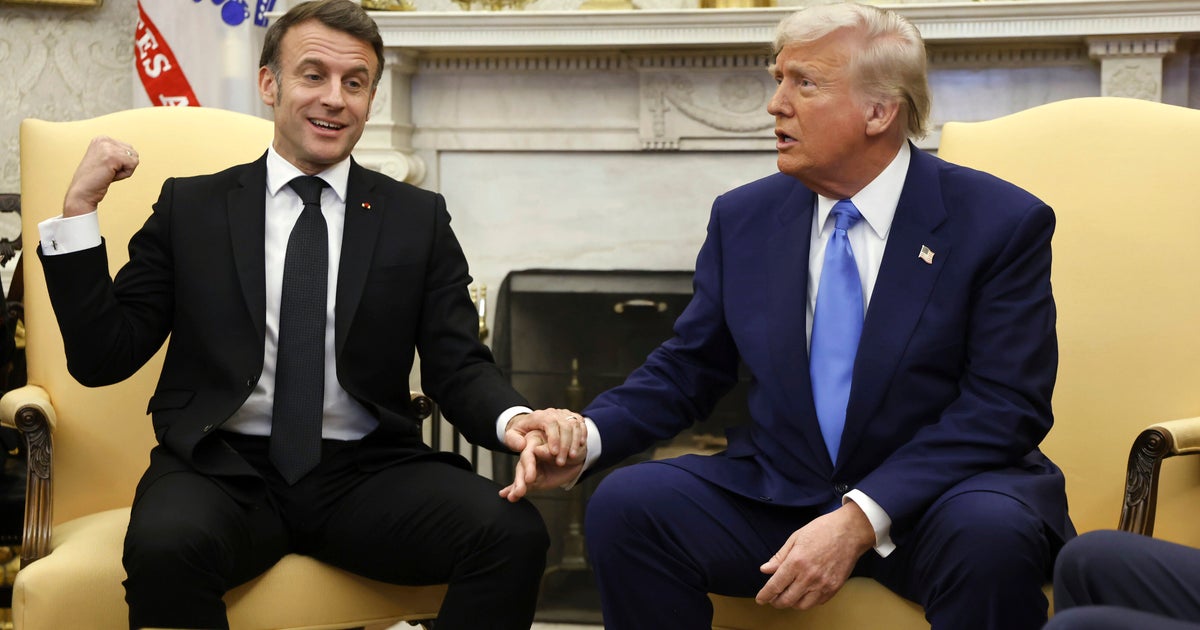
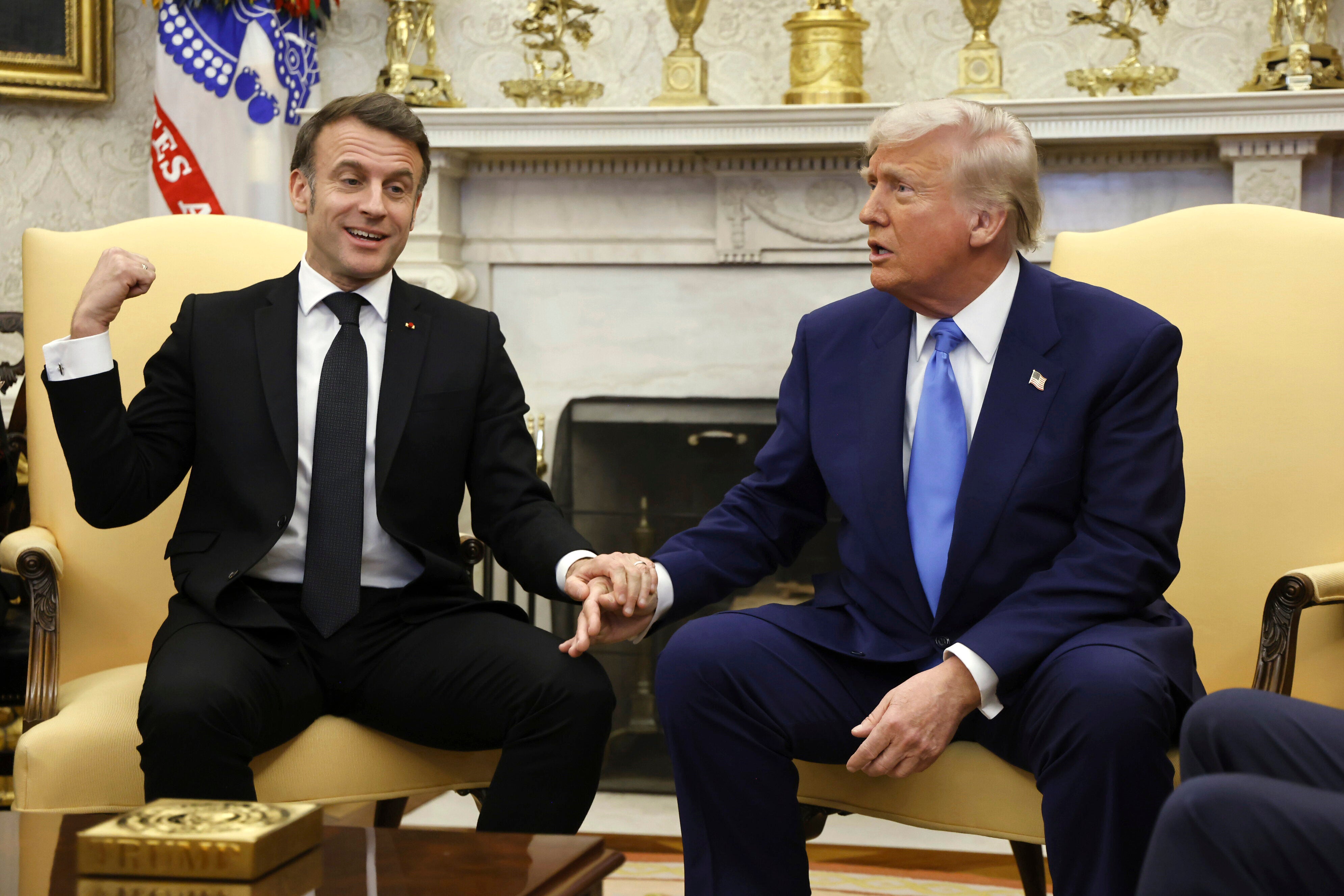
Emmanuel Macron has hit back at Donald Trump after he mocked the French president over an altercation he appeared to have with his wife.
The US president said Macron was “still recovering from the right to the jaw” after the incident last year.
Advertisement
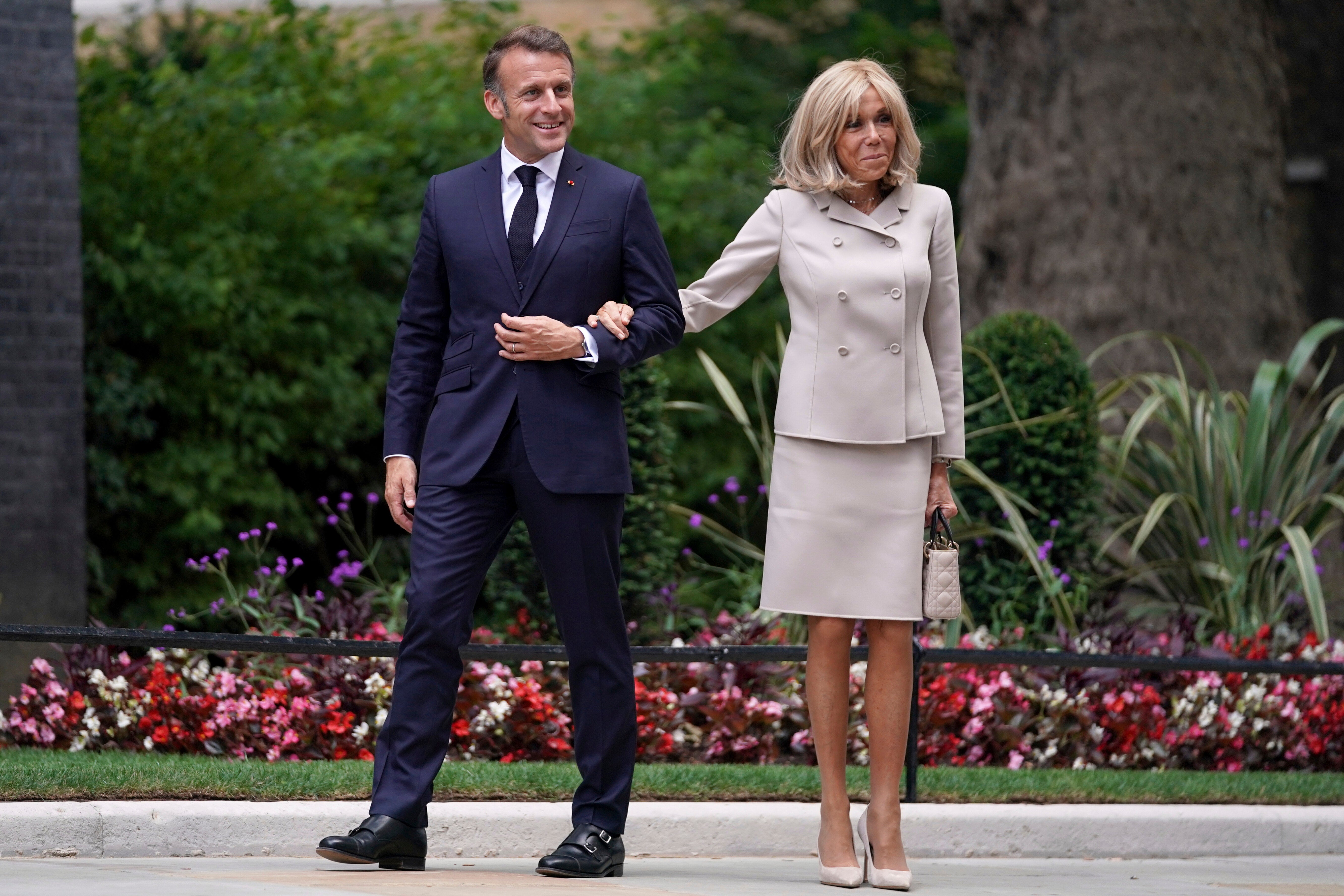
Bridgette Macron was filmed apparently pushing her husband in the face shortly before they disembarked from his presidential plane.
In a speech in Washington on Wednesday, Trump referred to the incident as he criticised the French for not getting involved in the Iran war.
He said: “Macron, whose wife treats him extremely badly. He’s still recovering the right to the jaw.”
Advertisement
Speaking during a state visit to South Korea, Macron said: “The remarks I have heard are neither elegant nor up to standard.
“So I am not going to respond to them. They do not merit a response.”
The French president said Trump’s previous suggestion that the international community use force to re-open the Strait of Hormuz was “unrealistic”.
He also condemned Trump’s criticism of Nato and hints that America could leave the military alliance.
Advertisement
Macron said: “I believe that organisations and alliances like Nato are defined by what is left unsaid – that is, the trust that underpins them, and that has often been the case, incidentally, with military and strategic matters.
“If you cast doubt on your commitment every day, you erode its very substance.”
He added: “We need to be serious, and if you want to be serious, you don’t go around saying the opposite of what you said the day before.
“I think there is too much talk.”
Advertisement
Subscribe to Commons People, the podcast that makes politics easy. Every week, Kevin Schofield and Kate Nicholson unpack the week’s biggest stories to keep you informed. Join us for straightforward analysis of what’s going on at Westminster.
European leaders are rarely upbeat when discussing the devastating war in Ukraine, but Monday’s talks seemed to take the despondence to the next level.
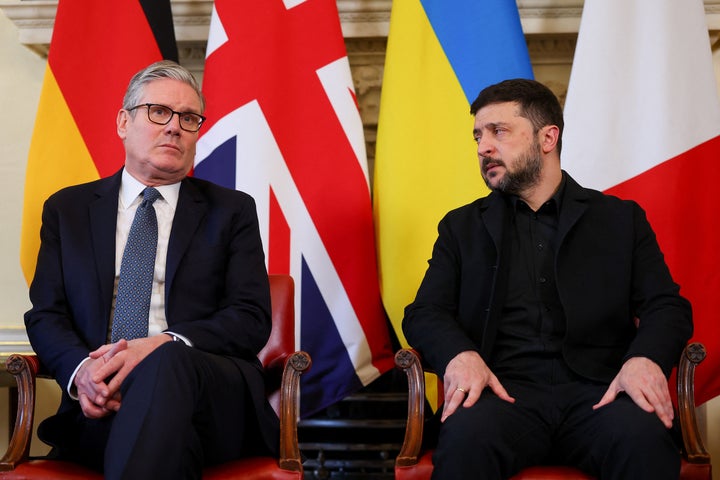
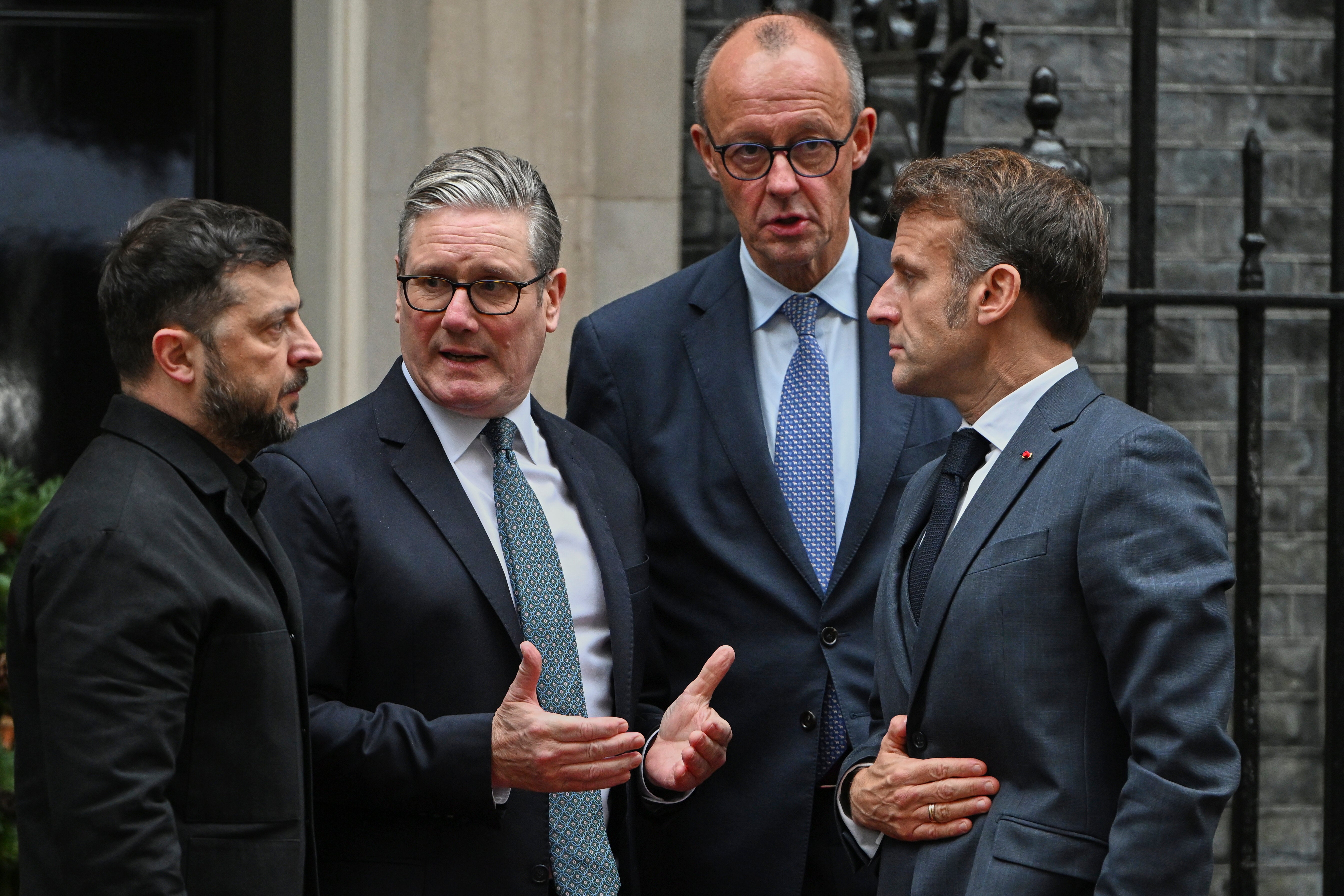
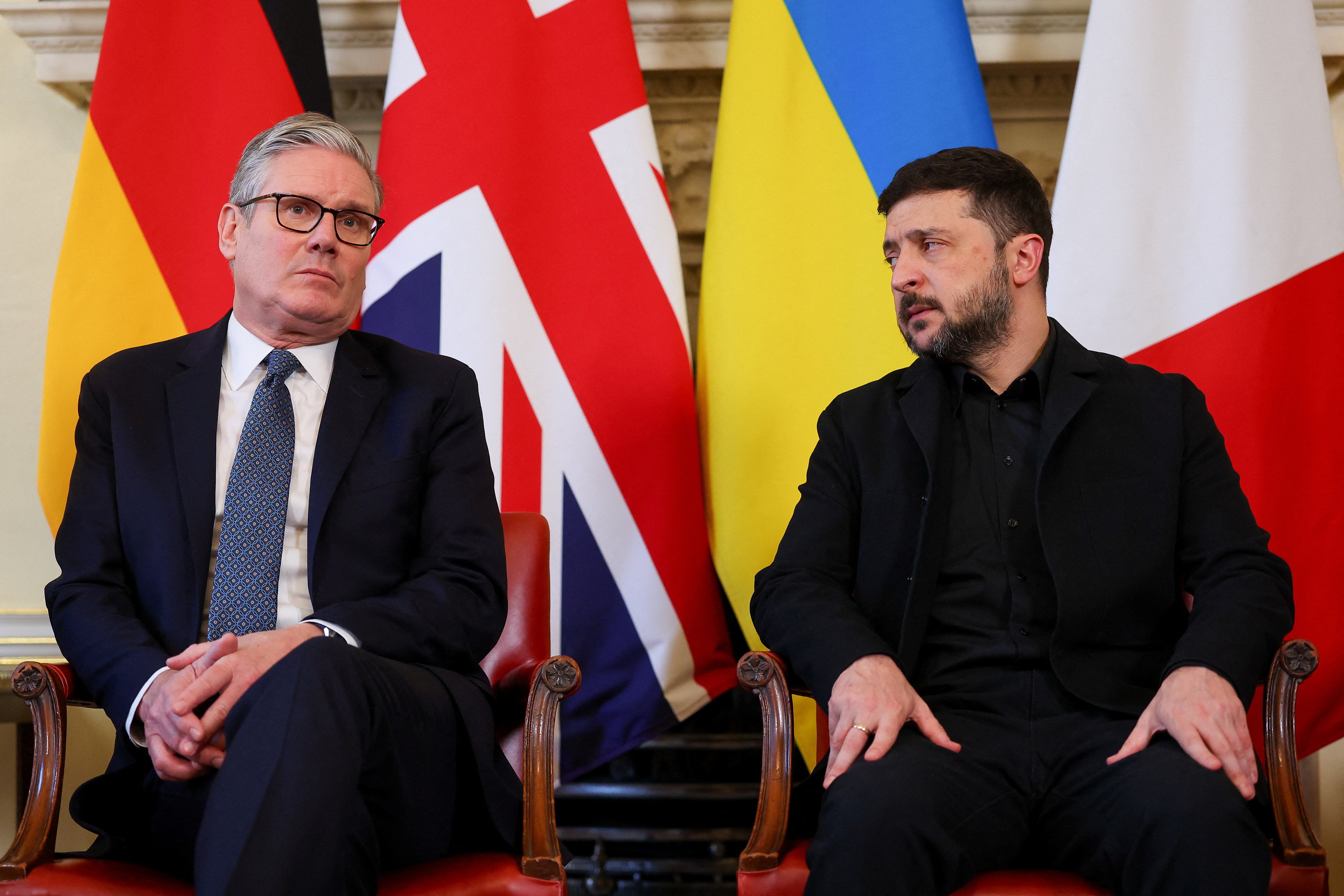
Despite rolling out the red carpet for Volodymyr Zelenskyy outside No.10 Downing Street, and embracing the embattled Ukrainian president tightly, Keir Starmer looked more than just a little concerned as he hosted the small delegation.
Advertisement
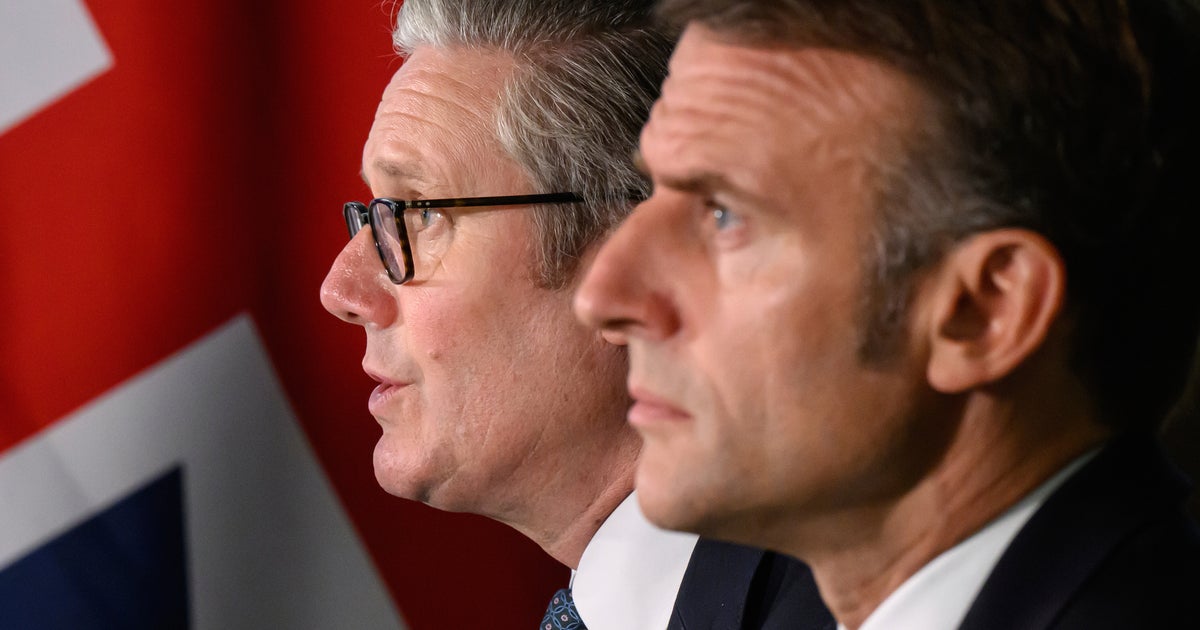
His counterparts, French president Emmanuel Macron and German chancellor Friedrich Merz, wore similarly glum expressions.
Their hastily-arranged meeting came after Ukrainian negotiators failed to make any headway with their US opposites over the latest draft of Donald Trump’s peace deal.
The American president, who is desperate to secure an end to the war by any means possible, was accused of offering up a plan which would reward Russia for its aggression last month.
Advertisement
European allies then watered it down – but the Kremlin deemed some elements of that altered draft unworkable.
Amid wider fears that Washington would be happy to give away even more of Ukraine’s sovereign territory just to placate Putin, Starmer invited Zelenskyy, Merz and Macron to the UK to reiterate their support for the beleaguered country.
Ukrainian President Volodymyr Zelenskyy, right, attends meeting with German Chancellor Friedrich Merz, British Prime Minister Keir Starmer, and French President Emmanuel Macron at 10 Downing Street, in London, Monday, Dec. 8, 2025. (Toby Melville/Pool Photo via AP)
via Associated Press
While the four leaders did not hold a press conference and only spoke for a few moments in front of the media, there were clear signs that all was not going well.
Advertisement
Merz, famously pro-America, was the first to publicly express his concerns about Trump’s plan, saying from Downing Street that he is “sceptical” about “some of the details coming in the documents from the US side”.
Meanwhile Macron said Europe has a “lot of cards in our hands” – a throwaway remark which could be seen as a reference to Trump’s infamous attack on Zelenskyy in the Oval Office in February.
The US president told the Ukrainian leader “you don’t have the cards” when it comes to the war, and that Kyiv needed to “make a deal or we’re out”.
Advertisement
Zelenskyy painted an equally bleak picture by claiming: “We can’t manage without Americans… we can’t managed without Europe.”
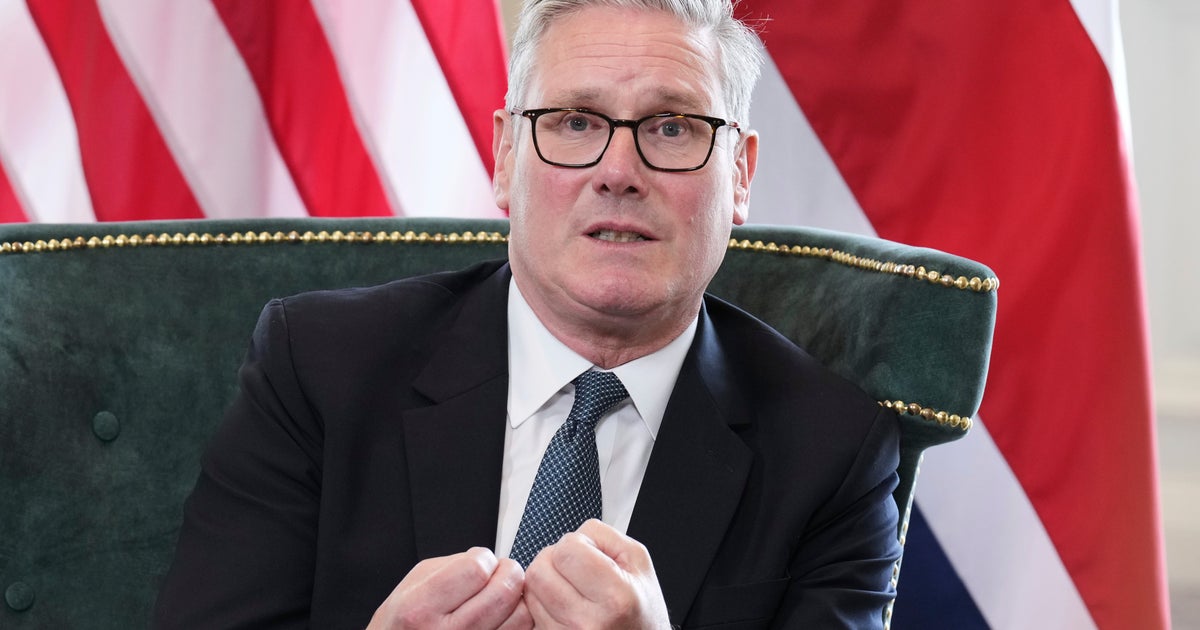
Starmer mainly reiterated his support for Ukraine during today’s meeting in front of the cameras – but his facial expressions spoke for themselves.
Both Merz and Macron left after a short stay in Downing Street.
Starmer and Zelenskyy spoke in private about what they can do next to keep the US on side – while not giving too much to Russia – for an hour before parting ways – and looking rather glum.
Keir Starmer has finally outlined a plan for the UK to formally recognise a Palestinian state this autumn.
A government readout from the prime minister’s meeting with his cabinet said Starmer plans to “recognise the state of Palestine in September” before the UN’s General Assembly.
Advertisement
However, the Downing Street release clarified this would not happen if “the Israeli government takes substantive steps to end the appalling situation in Gaza, reaches a ceasefire, makes clear there will be no annexation in the West Bank, and commits to a long-term peace process that delivers a Two State Solution.”
The prime minister said neither party will get a veto over whether he decides to recognise Palestine as a state in September.
He also “reiterated that there is no equivalence between Israel and Hamas and that our demands on Hamas remain, that they must release all the hostages, sign up to a ceasefire, accept that they will play no role in the government of Gaza, and disarm.”
Advertisement
It means the UK will become the 148th country to either formally recognise Palestine – or announce its intentions to do so – unless Israel takes action on Gaza.
The decision was announced after the prime minister called his cabinet ministers back to Westminster in the middle of their summer recess to discuss the growing concerns about starvation in Gaza.
The worsening humanitarian crisis in the Palestinian territory already pushed Starmer’s ally, French president Emmanuel Macron, to announce his own plan to recognise the Palestinian state this autumn.
But the prime minister has, until now, resisted. Ministers have told the press it is a matter of “when, not if” the UK recognises Palestine as a state, but they have refused to offer a clear timeline.
However, Starmer did get Donald Trump’s stamp of approval on Monday to recognise Palestine on Monday.
Advertisement
The US president said: “I’m not going to take a position, I don’t mind him [Starmer] taking a position. I’m looking for getting people fed right now.”
In the readout, the prime minister told his colleagues now was the time to recognise Palestine.
He said: “The increasingly intolerable situation in Gaza and the diminishing prospect of a peace process towards a two state solution, now was the right time to move this position forward.”
Campaigners and charities around the world have repeatedly raised the alarm in recent weeks that mass starvation is taking place in Gaza right now.
Advertisement
There are hopes that by recognising Palestine, there will be more pressure on Israel to end its military offensive and let more aid into the territory.
However, it remains to be seen just how much of an impact this will have on Israel.
Israel has been attacking Gaza since October 7, 2023.
According to the local, Hamas-run health ministry, more than 60,000 Palestinians have been killed in the 22 months since the war began.
Advertisement
While tensions between Palestinians and Israelis were already high, they escalated after Hamas militants killed 1,200 people on Israeli soil and took a further 250 hostage.
Some of those captives have been released but 50 remain in Hamas’s hands.
French President Emmanuel Macron and his wife, Brigitte Macron, have hit far-right influencer Candace Owens with a defamation lawsuit over her false claims that Brigitte Macron is male.
In a suit filed on Wednesday in Delaware, the Macrons allege that Owens has profited from a “campaign of global humiliation” against the Macrons, the complaint said.
Advertisement
In a March 2024 podcast, Owens said she “would stake [her] entire professional reputation on the face that Brigitte Macron is in fact a man,” according to the lawsuit.
Despite attempts to stop Owens from spreading the conspiracy ― including a retraction letter sent by the Macrons ― she instead “helmed an eight-part podcast series entitled Becoming Brigitte (the ‘Series’) and accompanying X posts,” the lawsuit said.
As part of the series, Owens fired off a series of “outlandish, defamatory, and far-fetched fictions.” More from the lawsuit:
Advertisement
These outlandish, defamatory, and far-fetched fictions included that Mrs. Macron was born a man, stole another person’s identity, and transitioned to become Brigitte; Mrs. Macron and President Macron are blood relatives committing incest; President Macron was chosen to be the President of France as part of the CIA-operated MKUltra program or a similar mind-control program; and Mrs. Macron and President Macron are committing forgery, fraud, and abuses of power to conceal these secrets.
The Macrons allege Owens has turned their lives “into fodder for profit-driven lies,” the complaint said.
“Owens has dissected their appearance, their marriage, their friends, their family, and their personal history — twisting it all into a grotesque narrative designed to inflame and degrade,” the lawsuit said. “The result is relentless bullying on a worldwide scale.”
Advertisement
Owens, a notorious conspiracy theorist who has been banned entry to Australia and New Zealand over her hateful rhetoric, has previously amplified a conspiracy about Jews being “drunk on Christian blood,” a reference to a false, centuries-old antisemitic trope.
And in July of last year, Owens suggested on her podcast that the horrific experiments Nazi physician Josef Mengele conducted on twins at Holocaust death camps never happened, in part because it would be a “tremendous waste of time and supplies.”
“That just sounds like bizarre propaganda,” she concluded.
The lawsuit against her does not specify the amount of damages the Macrons are seeking.
Owens has not responded to the lawsuit, but did respond on Tuesday to news that Brigitte Macron was suing the author of the book that first brought the baseless conspiracy to a mass audience.
Advertisement
“It’s official! Brigitte is now suing the author of ‘Becoming Brigitte’ for ‘cyberbullying,’” Owens posted on X. “Am I next?!”
Emmanuel Macron has blamed Brexiteers for the small boats crisis as he agreed a “groundbreaking” migrant returns deal with Keir Starmer in a bid to solve the issue.
The French president said British voters had been “sold a lie” before the EU referendum in 2016.
He made his comments at a press conference marking the end of his three-day state visit to the UK.
Starmer had earlier announced a “one in one out” agreement which will see illegal immigrants who arrive in Dover in small boats being detained and then returned to France.
Advertisement
In return, the UK will accept the same number of immigrants whose asylum claims have been processed in France.
The PM hopes that the scheme will act as a deterrent to stop asylum seekers making the perilous journey across the Channel.
An initial pilot scheme will start within weeks and will initially see 50 migrants per week being sent to France.
Advertisement
However, that is only one in 17 of the total number who cross the Channel.
The prime minister said: “There is no silver bullet here, but with a united effort, new tactics and a new level of intent, we can finally turn the tables.”
But Macron – a fierce critic of Brexit – used the press conference to launch an outspoken attack on those who had campaigned for the UK to leave the EU with promises that it would lead to a fall in immigration.
He said: “Since Brexit, and I’m saying all this quite honestly – I know this is not your case prime minister – but many people in your country explained that Brexit would make it possible to fight more effectively against illegal immigration, but since Brexit the UK has no migratory agreement with the EU.”
Advertisement
Macron said that meant those crossing the Channel know that they will not automatically be returned to France.
He added: “That makes an incentive to make the crossing, precisely the opposite of what the Brexiters promised.”
The French president later said the British people were “sold a lie…which is that the problem was Europe, but the problem has become Brexit”.
He said: “I am not totally convinced that both the European Union and France and the UK are in the best possible position today.
“I am very respectful for the voice of the people and the choice your country made nine years ago, and I’m lucid about the solemnity of the state visit being the first one of a European head of state post-Brexit.
Advertisement
“But I have to say the European Union was stronger with you and you were stronger with the European Union.”
Reacting to the UK-France migrant deal, shadow home secretary Chris Philp said: “Labour’s deal will only return one in every 17 illegal immigrants arriving.
“Allowing 94% of illegal immigrants to stay will make no difference whatsoever and have no deterrent effect.
Advertisement
“This is the latest catastrophic example that when Labour negotiates, the UK loses.”
The French president said the UK government’s determination to deport migrants to Africa was “a betrayal of [European] values” and would prove to be “ineffective”.
But in a speech in Paris, Macron said he did not agree with “this model that some people want to put in place, which means that you go and look for a third country, for example in Africa, and send our immigrants there”.
He added: “We’re creating a geopolitics of cynicism which betrays our values and will build new dependencies, and which will prove completely ineffective,”
Macron also took a swipe at Brexit which he said had led to “an explosion of negative effects”.
A spokesperson for Sunak said the government’s approach was “the right one”.
He said: “Indeed, we’ve seen other partners and other countries around the world also explore similar options.”
And just like that, everyone’s talking about France and whether it’s about to have its “Brexit/Trump moment”.
The first round of the French presidential election takes place on Sunday, and what might have been a formality only of domestic interest is suddenly generating a much bigger buzz. This is thanks to a series of polls suggesting Marine Le Pen, the far-right’s standard bearer for more than a decade, could pull off a shock win over incumbent Emmanuel Macron.
Advertisement
With the help of HuffPost France’s political correspondent Romain Herreros, here’s everything that you need to know about the vote to determine who runs one of Europe’s biggest economic and military powers as a war rages on the continent.
The basics: what is happening?
Advertisement
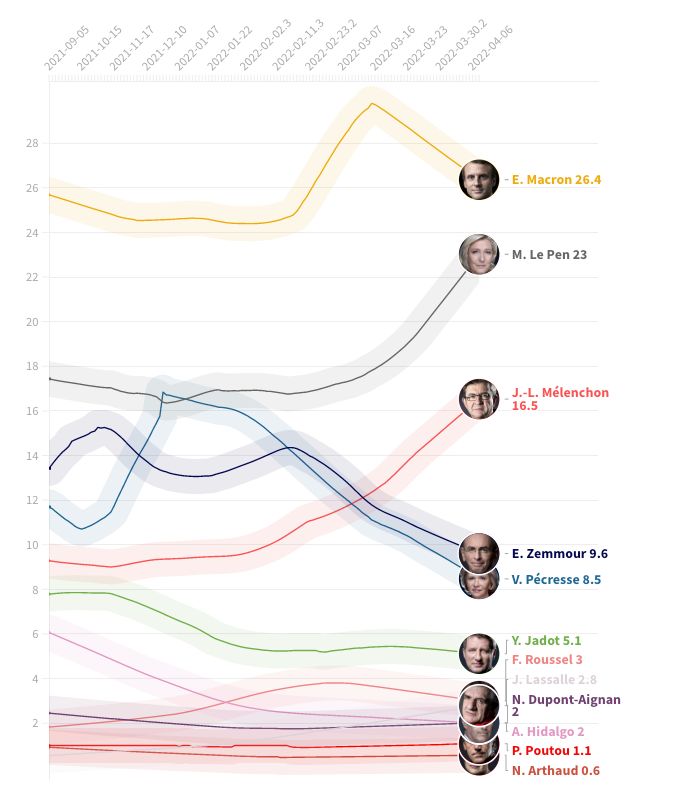
France’s presidential election is to be held in two rounds on April 10 and 24. Polls have for weeks consistently pointed to Macron leading the first round ahead of Le Pen, with both qualifying for a run-off. It would mean a replay of the 2017 election that Macron won comfortably (66% to 34%). But this time around it’s set to be much closer. According to some polls, Le Pen has narrowed the gap enough for victory to be within the margin of error.
There are 12 official candidates. Outside Macron and Le Pen, the names to note in an election where radical positions set the tone are far right-writer-turned-candidate Éric Zemmour and veteran left-winger Jean-Luc Mélenchon. While it’s unlikely either will make the final cut, the second choice of their voters could be crucial in a narrow run-off.
Advertisement
A Le Pen win would send shockwaves around the world, not least given the West’s united front against Russia’s invasion of Ukraine. Having someone who has shown pro-Vladamir Putin sympathies deal with the fallout would be less than ideal. And make no mistake of France’s importance: Brexit compounded its status as the European Union’s main military power and, with Angela Merkel’s exit as German chancellor, Macron has taken a more prominent role in Europe.
Marine Le Pen and the image overhaul
The 53-year-old leader of the National Rally, a movement long known for anti-Semitism, Nazi nostalgia and anti-immigrant bigotry, is running for the third time. The “Le Pen” name is notorious in France thanks to her father, Jean-Marie Le Pen, the firebrand leader of what the same party when it was the National Front.
Since her 2017 defeat, Le Pen has worked to soften her image – stressing her love of cats among other things – and changed the party name. She has strived to appear as a potential leader rather than a radical anti-system opponent. Her campaign has focused on cost of living concerns – amid a huge increase in energy prices and growing inflation – and the candidacy of Zemmour, who is even further to the right than Le Pen, has also helped herappear more palatable to voters.
Advertisement
Herreros says many felt another far-right candidate would split their vote, undermining Le Pen’s chance. “But, in fact, Zemmour was very hard, very radical. So Le Pen looked more soft. People are less afraid of her compared to Zemmour. When we look at the polls, we see that.”
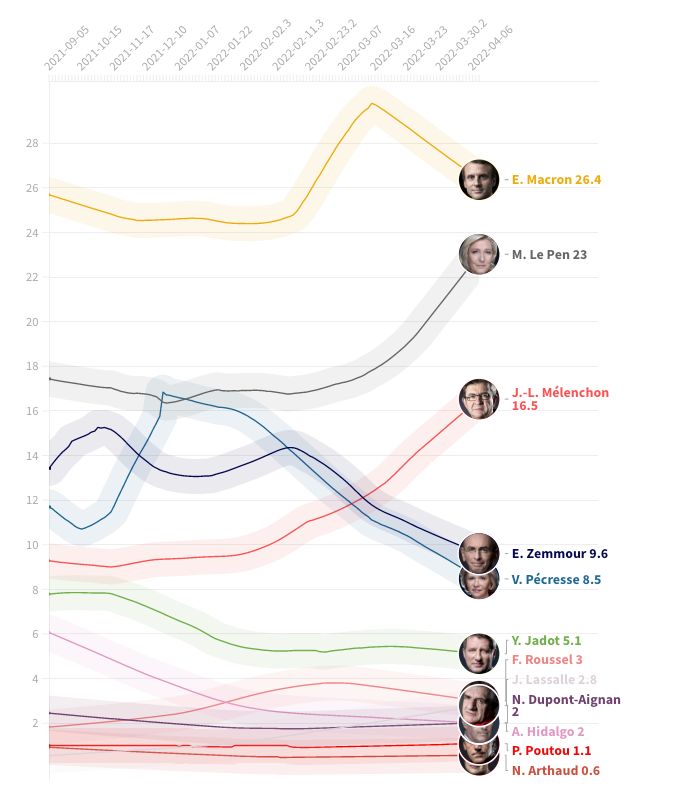
Below, poll aggregator showing how Macron’s lead over Le Pen has narrowed in recent days. See here for latest update.
HuffPostFR
That explains in part why the context is not quite 2016. “The last election was just one year after Brexit and Trump’s election, so we were in a populist moment,” Herreros says of Macron’s 2017 ascent to power. “Now we have seen that Brexit was not what the British people expected, and we saw (Brazil’s populist president) Bolsonaro is a nightmare in Brazil. But Le Pen is not playing the populist role – she says she doesn’t want to leave the euro this time, that she’s not that extreme like Zimmour. ‘Trust me, I’m not evil’.”
But, make no mistake, the core of her party’s programme has not changed. “She is still far-right,” Herreros explains. “She is proposing the same thing on immigration as Zemmour, but with different words. It’s just a different package.”
She would end a number of welfare benefits for foreigners, stop family reunification, give preference to the French for jobs and social housing, ban the hijab in public spaces and kick unemployed foreigners out of France.
Éric Zemmour, not quite the French Trump
The early obsession among the chattering classes was the rise of Zemmour and his fledgling Reconquest! party. A TV pundit who styles himself as a Donald Trump figure and guardian of Old France, he has proposed a Ministry of “Remigration” equipped with airplanes to expedite the expulsions of what he says are undesirable migrants.
Zemmour pushes the white nationalist conspiracy theory known as the “great replacement”, which argues France and Western nations are being overrun by immigrants and other people of colour — notably Muslims.
Reflecting Le Pen’s superficial changes, a batch of her officials and supporters have left for Zemmour. The only one Le Pen spared criticism was her niece, Marion Marechal, a former politician who has returned to the frontline to help Zemmour.
Perhaps what worries most is the two far-right candidates together are drawing more support than the centrist president. In a scenario where Le Pen inherits around 80% of Zemmour’s votes in the second round – a not unreasonable prospect, say analysts – it puts her “close to victory”, says Herreros.
Advertisement
Macron and gone?
For Macron, Le Pen is the candidate to beat, and his camp has worried openly about an “accidental” win for Le Pen – perhaps if moderate voters fail to turn up at the polls.
The 44-year-old former investment banker, elected in 2017 with little political experience with his centrist La Republique en Marche, saw his pristine reputation dented by The Yellow Vest protests and imposing coronavirus restrictions.
His election campaign has been disrupted by the war in Ukraine, with Macron delaying his pitch to the country because of France’s central role in the West’s response. While absence from the campaign trail has its own problems, wartime leadership has allowed him to be presented dealing with the big issues facing the world (see the unusual pictures of him working nights and weekends at the Elysee palace, looking tired and unshaven, in jeans and a hoodie). It may have helped with an initial poll boost, but that appears to have waned.
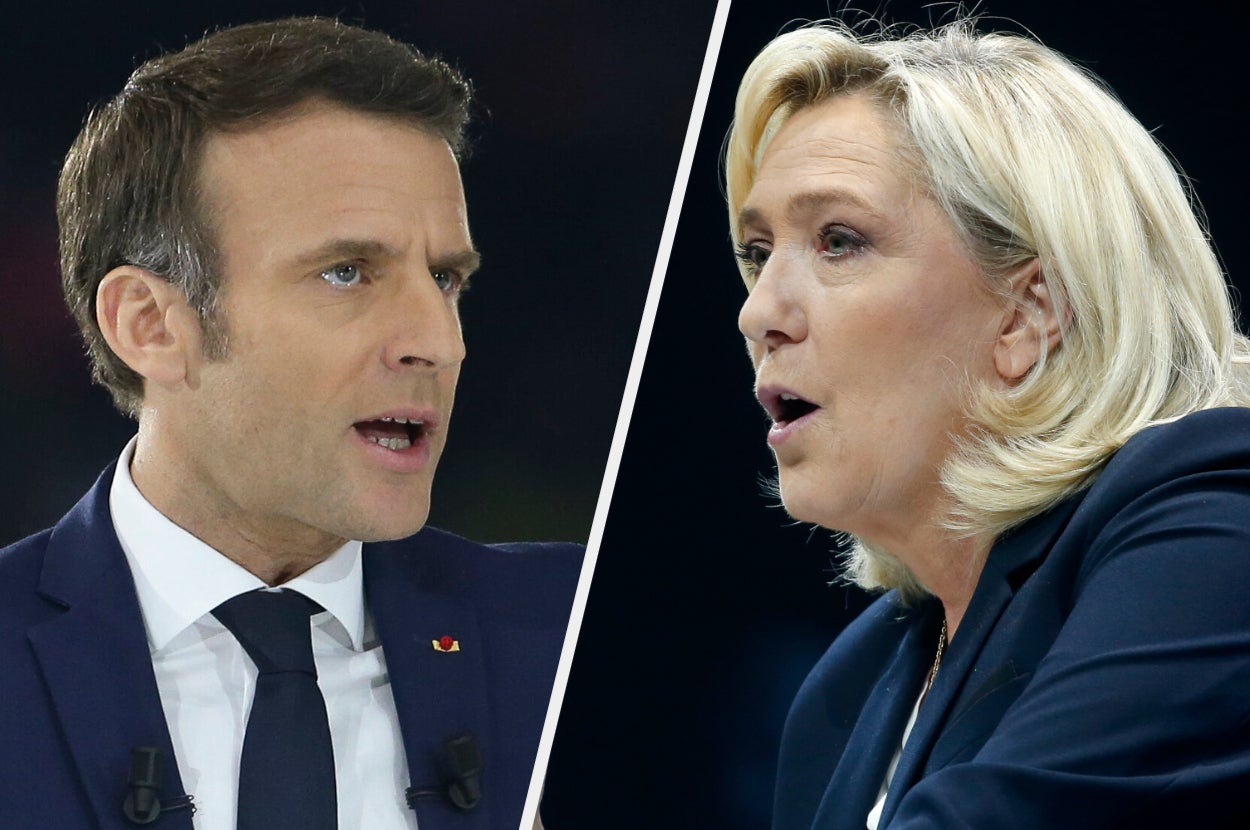
<img class="img-sized__img landscape" loading="lazy" alt="Emmanuel Macron and Marine Le Pen are set to meet in the run-off for the second consecutive presidential election.” width=”720″ height=”478″ src=”https://www.wellnessmaster.com/wp-content/uploads/2022/04/with-le-pen-breathing-down-macrons-neck-is-france-about-to-have-its-brexit-4.jpg”>
Emmanuel Macron and Marine Le Pen are set to meet in the run-off for the second consecutive presidential election.
Herreros explains Macron is popular for this stage of his presidency – higher than predecessors François Hollande and Nicolas Sarkozy – but he has come unstuck by two factors. “He went too late in the campaign,” says Herreros. “It was difficult for him to say ‘hey, I’m the candidate’ when Putin was invading Ukraine. If he went in January or February, it would have been easier for him. He left the space for the far-right.”
He also bound himself to Le Pen, thinking France would never actually put her in power. “He always thought he would be automatically re-elected against Marine Le Pen. During his presidency he would ‘wink, wink’ to right-wing voters, some of his ministers talked in a way that could be used by Le Pen. Now people are saying you played with fire, now we have the result of what you have done.”
So what will happen?
The neck-and-neck polling doesn’t tell the whole story, say Herreros. A low turnout could kill off all the pre-election anticipation as Le Pen is relying heavily on the working class vote to come out in support. Le Pen’s party is still stinging from her party’s failure in last summer’s regional balloting, blamed on a turnout of only 33% of voters in the first round.
There may also be a moment of clarity. “In France, when the far-right are close to power, people wake up,” says Herreros. “And they lose every time.”
In 2015, Le Pen, who had appeared to be on the cusp of winning the northern region of Nord-Pas-de-Calais-Picardie, lost out in the second round, and her aforementioned niece, thought to be one of the party’s best hopes in the regional elections, also lost in the southern Provence-Alpes-Cote d’Azur.
Advertisement
“They lost,” says Herreros. “But who knows how the voters will react? Le Pen will say, ‘Macron is the system, vote for me. You’re from the left and don’t like Macron, vote for me’. It’s the same thing we saw with Brexit. Maybe people will think … let’s try it.”
Boris Johnson this week confirmed that he doesn’t like to call the UK and United States’ close ties the “special relationship”, believing it makes Britain look “needy”.
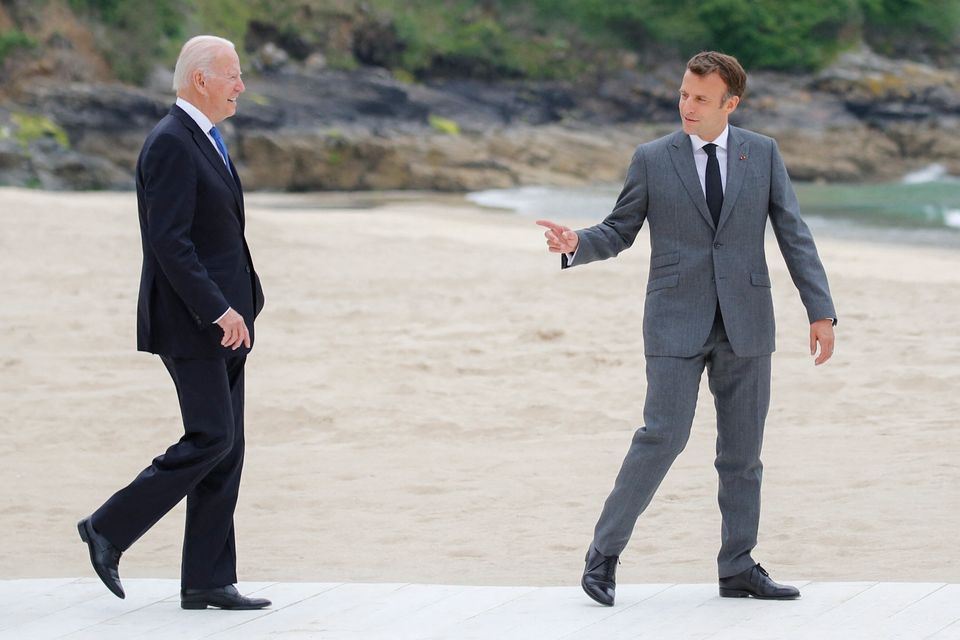
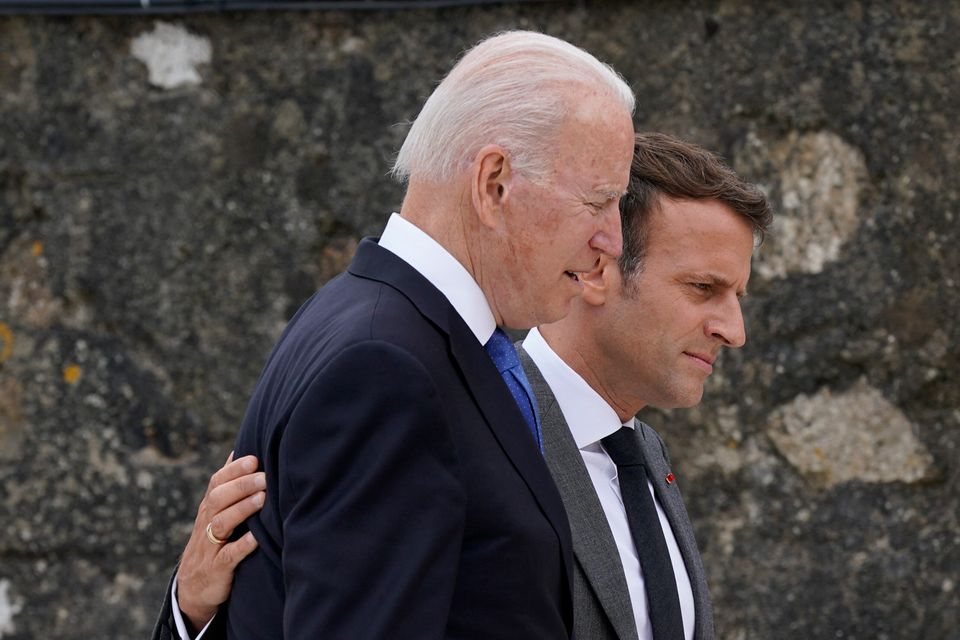
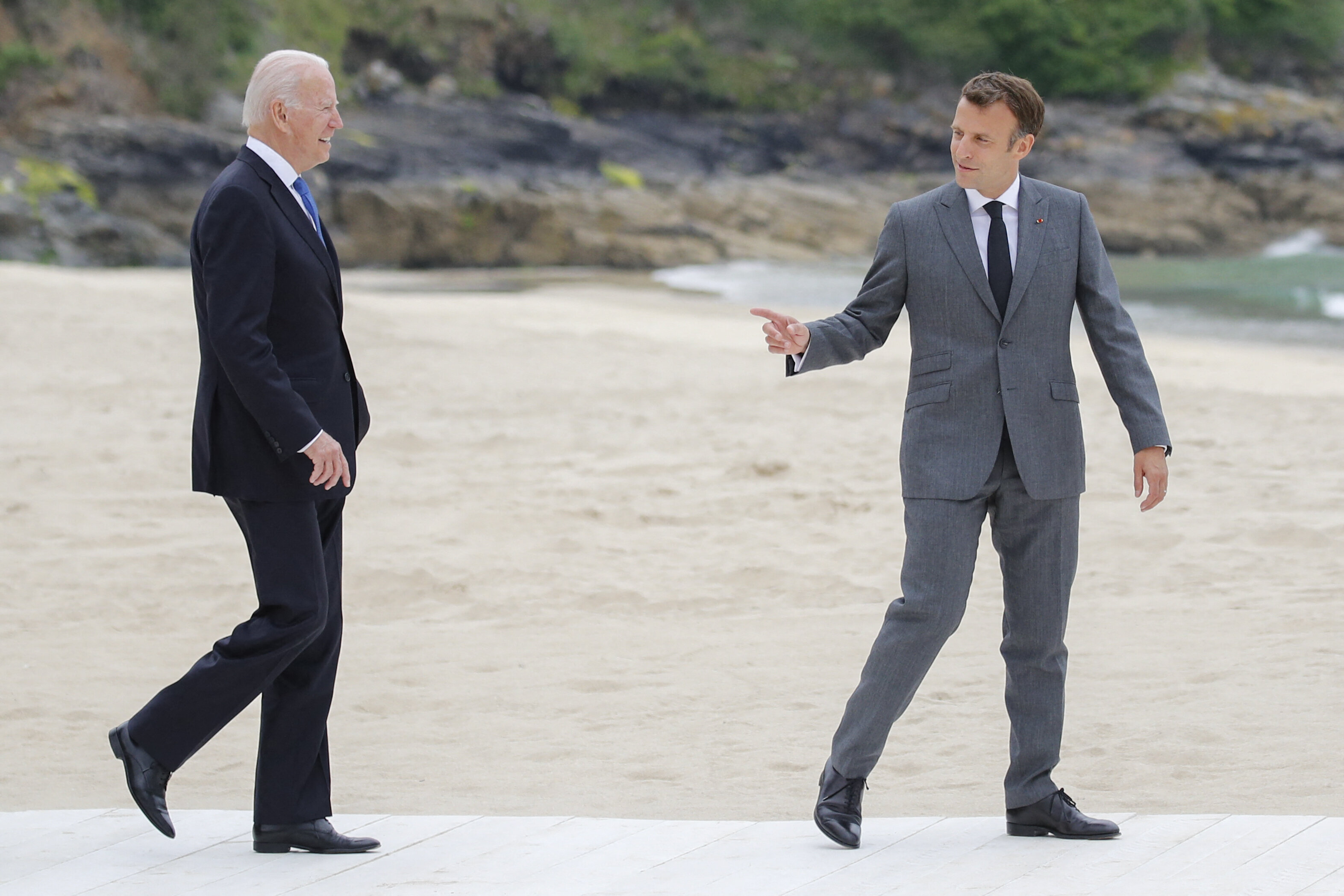
After the G7 summit got underway with an awkward “family photo” on the beach, the French president made a beeline for Joe Biden, throwing his arm around the American’s shoulders and beginning an animated discussion
PHIL NOBLE via Getty ImagesFrench president Emmanuel Macron (right) greets US president Joe Biden at the G7 summit
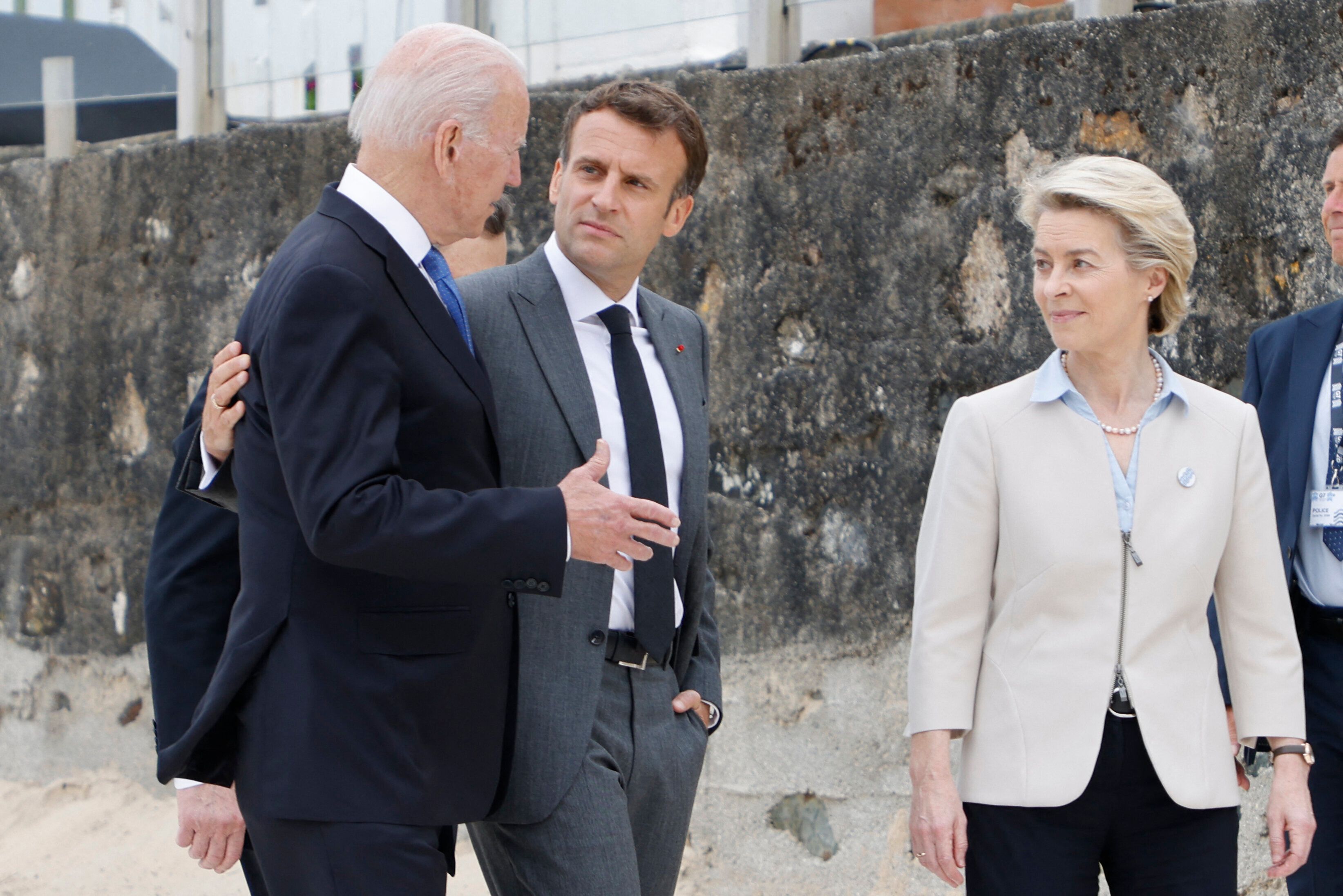
LUDOVIC MARIN via Getty ImagesMacron was flanked by European Commission president Ursula von der Leyen
PATRICK SEMANSKY via Getty Images
The vignette was one of several moments in which G7 leaders appeared uneasy at their first face-to-face meeting since the start of the Covid pandemic.
Biden at one point tried to break the tension, joking “everybody in the water” after leaders and their spouses were greeted with elbow bumps from Boris and Carrie Johnson on the beach at Carbis Bay in Cornwall.
After strolling down a lengthy walkway to the seafront, Jill Biden meanwhile joked that “I feel like we are at a wedding” while Johnson later agreed that it was like “walking down the aisle”.
Leaders then struggled to create any kind of bonhomie as they stood two metres apart for a family photo.
The PM said the citizens of G7 nations “want us to be sure that we are beating the pandemic together and discussing how we will never have a repeat of what we have seen”.
“But also that we are building back better together and building back greener and building back fairer and building back more equal and… in a more gender neutral and perhaps a more feminine way.”
Johnson also appeared to criticise his own Conservative Party for the way it handled the recovery from the 2008 financial crash by taking power in 2010 and embarking on a programme of austerity.
He said the G7 economies had the potential to “bounce back very strongly” from Covid.
“But it is vital that we don’t repeat the mistake of the last great crisis, the last great economic recession of 2008 when the recovery was not uniform across all parts of society,” the PM said.
There was a risk the pandemic could leave a “lasting scar” as “inequalities may be entrenched”, Johnson said.
“We need to make sure that as we recover, we level up across our societies and we build back better,” he added.
HuffPost is part of Verizon Media. We and our partners will store and/or access information on your device through the use of cookies and similar technologies, to display personalised ads and content, for ad and content measurement, audience insights and product development.
Your personal data that may be used
Information about your device and internet connection, including your IP address
Browsing and search activity while using Verizon Media websites and apps
To enable Verizon Media and our partners to process your personal data select ‘I agree‘, or select ‘Manage settings‘ for more information and to manage your choices. You can change your choices at any time by visiting Your Privacy Controls.
HuffPost is part of Verizon Media. Click ‘I agree‘ to allow Verizon Media and our partners to use cookies and similar technologies to access your device and use your data (including location) to understand your interests, and provide and measure personalised ads. We will also provide you with personalised ads on partner products. Learn more about how we use your data in our Privacy Centre. Once you confirm your privacy choices here, you can make changes at any time by visiting your Privacy dashboard.
Click ‘Learn more‘ to learn and customise how Verizon Media and our partners collect and use data.