Health authorities in Scotland and England are looking into 71 unusual cases of the illness.


Health authorities in Scotland and England are looking into 71 unusual cases of the illness.

Rishi Sunak has defended his wife after it emerged she holds the tax-reducing non-domiciled status – but who is to blame for the leak appears to depend on the newspaper you read, as a Westminster briefing war was in full swing.
The chancellor said his spouse Akshata Murty – who is estimated to be worth hundreds of millions of pounds – had done nothing wrong in choosing a financial arrangement that means she is not legally obliged to pay tax in Britain on foreign income.
Advertisement
He blamed Labour for the “awful” smears against his family.
Sunak told The Sun newspaper that Murty was entitled to use the so-called “non-dom” arrangement as she is an Indian citizen and plans to move back to her home country to care for her parents.
Advertisement
The fashion-designer daughter of a billionaire married the chancellor in 2009 before he became an MP.
But there were other reports his allies have accused No. 10 of being responsible for the briefings.
Advertisement
The Telegraph reported that unnamed allies of the chancellor claimed the prime minister’s office were behind the leaks – an allegation No 10 and No 11 strongly denied.
A No 10 spokeswoman told the PA news agency: “It is categorically untrue that No 10 is behind the briefings.
“The prime minister and chancellor are united.”
The Times carried briefings claiming Sunak was the victim of a “political hit job” and a “co-ordinated attack”.
Advertisement
“He thinks it’s a total smear,” one ally said. “It feels like there’s a full-time briefing operation against him. This is a hit job, a political hit job. Someone is trying to undermine his credibility.”
A well as weighing up the Labour vs No. 10 claims, the paper revealed Sunak had told only a few people in government about his wife’s tax status – and that included senior officials at his former berth the housing ministry, as well as the Treasury and the Cabinet Office.
Murty is reported to hold a 0.91% stake in Infosys, an IT business founded by her father, with The Guardian reporting that the share is worth £11.5 million per year to Sunak’s wife.
The paper also reportedMurty had potentially avoided up to £20 million in UK tax by being non-domiciled.
With Murty born in India and her father also from the south Asian country, UK government rules allow her to list India, rather than the UK, as her permanent residence, meaning different tax rules on foreign earnings apply.
The chancellor said it was “unpleasant” to read attacks on his wife “especially when she hasn’t done anything wrong”.
“She hasn’t broken any rules. She’s followed the letter of the law,” Sunak told The Sun.
The chancellor said his partner “pays full UK tax on every penny that she earns here in the same way that she pays full international tax on every penny that she earns internationally”.
Advertisement
Asked during the interview whether he thought his family were victims of a “Labour smear campaign”, Sunak said he did.
But Labour hit back, with a party source telling PA: “The chancellor would do better to look a little closer to home.
“It’s clear that No 10 are the ones briefing against Rishi Sunak and, after his failure to tackle the cost-of-living crisis, you can understand why.”


A hormone that triggers puberty and controls fertility in humans might be developed as a treatment for non-alcoholic fatty liver disease, according to new Rutgers research.
The study, appearing in the Journal of Clinical Investigation, provides powerful evidence that a modified version of the naturally occurring hormone kisspeptin can be used to treat non-alcoholic fatty liver disease (NAFLD). Globally, NAFLD is the most common form of chronic liver disease that affects children and adults and is linked to the rise in obesity and Type 2 diabetes.
NAFLD is known as a “silent” disease because it starts off with few or no symptoms. It begins with the accumulation of fat in the liver, resulting in a condition known as ‘fatty liver’. As the disease worsens, the liver becomes inflamed resulting in non-alcoholic steatohepatitis (NASH). This is followed by fibrosis and cirrhosis, where the liver becomes scarred and irreversibly damaged. A subset of NASH patients with cirrhosis will also develop liver cancer. Currently, there are no approved therapeutics to treat NASH.
Study lead investigator, Moshmi Bhattacharya, an associate professor in the Department of Medicine at the Rutgers Robert Wood Johnson Medical School, has spent over 15 years studying kisspeptin in health and disease. Kisspeptin, encoded by the KISS1 gene, was discovered in Hershey, Pa. and named for the iconic Hershey chocolate “kisses.” In addition to playing key roles in pubertal development and maintaining reproductive function, kisspeptin has also been linked to appetite and sexual attraction.
Bhattacharya along with co-author Andy Babwah, an associate professor in pediatrics at Rutgers Robert Wood Johnson Medical School, initiated this study to decipher the roles of kisspeptin in the liver, under healthy and obese conditions. The study’s first author, Stephania Guzman, is a Ph.D. candidate in Rutgers Molecular Biosciences Graduate Program. This collaborative study also included researchers led by Waljit Dhillo at the Imperial College London, U.K.
The researchers fed mice a high-fat, high-sugar ‘Western’ diet to induce obesity and NAFLD. The study showed that kisspeptin given to these mice protected them from the development of fatty liver, NASH and fibrosis. Kisspeptin works by binding its receptor, a protein called KISS1R. The study also showed that when KISS1R is deleted from liver cells, kisspeptin cannot function and mice on western diet develop fatty liver. These experiments uncover a powerful relationship between kisspeptin and the reduction of liver fat and fibrosis.
The study found:
“This work shows the kisspeptin receptor signaling pathway has a potential therapeutic role in NAFLD,” said co-author, Vinod K Rustgi, director of hepatology and a Distinguished Professor of Medicine at the Rutgers Robert Wood Johnson Medical School. “It does this by protecting against the development of fat in the liver and reducing inflammation and fibrosis. As such, it has the potential to favorably impact the health and lives of millions of patients around the globe.”
Story Source:
Materials provided by Rutgers University. Note: Content may be edited for style and length.

The way we speak today isn’t the way that people talked thousands — or even hundreds — of years ago. William Shakespeare’s line, “to thine own self be true,” is today’s “be yourself.” New speakers, ideas, and technologies all seem to play a role in shifting the ways we communicate with each other, but linguists don’t always agree on how and why languages change. Now, a new study of American Sign Language adds support to one potential reason: sometimes, we just want to make our lives a little easier.
Deaf studies scholar Naomi Caselli and a team of researchers found that American Sign Language (ASL) signs that are challenging to perceive — those that are rare or have uncommon handshapes — are made closer to the signer’s face, where people often look during sign perception. By contrast, common ones, and those with more routine handshapes, are made further away from the face, in the perceiver’s peripheral vision. Caselli, a Boston University Wheelock College of Education & Human Development assistant professor, says the findings suggest that ASL has evolved to be easier for people to recognize signs. The results were published in Cognition.
“Every time we use a word, it changes just a little bit,” says Caselli, who’s also codirector of the BU Rafik B. Hariri Institute for Computing and Computational Science & Engineering’s AI and Education Initiative. “Over long periods of time, words with uncommon handshapes have evolved to be produced closer to the face and, therefore, are easier for the perceiver to see and recognize.”
Although studying the evolution of language is complex, says Caselli, “you can make predictions about how languages might change over time, and test those predictions with a current snapshot of the language.”
With researchers from Syracuse University and Rochester Institute of Technology, she looked at the evolution of ASL with help from an artificial intelligence (AI) tool that analyzed videos of more than 2,500 signs from ASL-LEX, the world’s largest interactive ASL database. Caselli says they began by using the AI algorithm to estimate the position of the signer’s body and limbs.
“We feed the video into a machine learning algorithm that uses computer vision to figure out where key points on the body are,” says Caselli. “We can then figure out where the hands are relative to the face in each sign.” The researchers then match that with data from ASL-LEX — which was created with help from the Hariri Institute’s Software & Application Innovation Lab — about how often the signs and handshapes are used. They found, for example, that many signs that use common handshapes, such as the sign for children — which uses a flat, open hand — are produced further from the face than signs that use rare handshapes, like the one for light (see videos).
This project is part of a new and growing body of work connecting computing and sign language at BU.
“The team behind these projects is dynamic, with signing researchers working in collaboration with computer vision scientists,” says Lauren Berger, a Deaf scientist and postdoctoral fellow at BU who works on computational approaches to sign language research. “Our varying perspectives, anchored by the oversight of researchers who are sensitive to Deaf culture, helps prevent cultural and language exploitation just for the sake of pushing forward the cutting edge of technology and science.”
Understanding how sign languages work can help improve Deaf education, says Caselli, who hopes the latest findings also bring attention to the diversity in human languages and the extraordinary capabilities of the human mind.
“If all we study is spoken languages, it is hard to tease apart the things that are about language in general from the things that are particular to the auditory-oral modality. Sign languages offer a neat opportunity to learn about how all languages work,” she says. “Now with AI, we can manipulate large quantities of sign language videos and actually test these questions empirically.”
Story Source:
Materials provided by Boston University. Original written by Gina Mantica. Note: Content may be edited for style and length.

Mutant mice are providing scientists with a new neurobiological framework to understand the brain changes observed in distractible humans who carry a common gene variant whose frequency has been associated with Attention Deficit Hyperactivity Disorder (ADHD). The scientists demonstrate that mice that express the variant adopt an inattentive phenotype similar to that seen in humans.
The study, led by researchers from the University of Michigan in collaboration with Florida Atlantic University, Temple University, and the National Institute on Deafness and Other Communication Disorders, National Institutes of Health, used genetically engineered mice to examine the neural and behavioral effects of a choline transporter (CHT) variant. Prior work by the team has shown that the variant associated with heightened distractibility in humans, though whether the variant was itself causal for inattention was unclear.
In the new study, researchers made a single change in the gene encoding the neuronal CHT and then searched for physiological changes in the brain, focusing on their ability to sustain production and release of the powerful brain chemical acetylcholine, which is synthetized from choline.
In humans, disruption of acetylcholine signaling impairs one’s capacity to filter distractors and to perform focus-demanding tasks. A total loss of CHT function in mice and people leads to early death due to the role played by acetylcholine in muscle contraction, particularly the muscles that control breathing. Lesser reductions in CHT activity allow for normal growth and movement, but mice with these changes exhibit premature fatigue when made to run on a treadmill. Work from the new study reveals that the mice show signs of mental fatigue as well.
Results of the study, published in The Journal of Neuroscience, indicate that the CHT gene variant known as Val89, reduces the rate of choline uptake and the capacity to sustain acetylcholine production during attention-demanding conditions, effects that lead to diminished cognitive performance when the mice are faced with attentional challenges. Evidence from the mouse studies provides direct evidence that Val89 drives increased vulnerability to distraction and provides a mechanistic basis for the diminished frontal cortex activation observed in Val89-expressing humans.
“Our mouse studies, along with prior behavioral and brain imaging studies, indicate that a single copy of the variant is sufficient to change acetylcholine availability and its resulting cognitive effects,” said Randy D. Blakely, Ph.D., co-author, executive director of the FAU Stiles-Nicholson Brain Institute and professor, FAU Schmidt College of Medicine. “Seeing effects from a single copy of Val89 suggests that choline transport may be mediated by a pair of CHT proteins such that one poorly functioning copy can impact the normal function of the other, leading to stronger effects than expected from simply having one copy compromised.”
This finding has been reported before in people with neuromuscular disorder causing CHT mutations, but this also appears to be the case for brain function.
“Val89 mice lack cognitive flexibility in response to an attentional challenge,” said Eryn Donovan, lead author and a graduate student in the Department of Psychology, University of Michigan. “Our findings from this mouse model suggest the potential for a more complete investigation of the effects of the CHT Val89 mutation in the brain as well as the development of therapeutic strategies for those with disrupted acetylcholine signaling.”
According to the United States Centers for Disease Control and Prevention, the estimated number of children ever diagnosed with ADHD, according to a 2016 parent survey, is 6.1 million. This same survey shows that 6 in 10 children with ADHD had at least one other mental, emotional or behavioral disorder and 62 percent were taking ADHD medication. Although ADHD most often occurs in children, it also can be diagnosed in adulthood.
“We think that the CHT Val89 mouse can be a valuable model to study heritable risk for cognitive disorders that arise from cholinergic dysfunction,” said Blakely. “We now can gain much more insight into the brain effects of the Val89 variant in ways that cannot be done in humans and possibly lead to new ways to treat disorders associated with brain acetylcholine signaling that appear in childhood, such as ADHD, or during aging, as with Parkinson’s disease and Alzheimer’s disease.”
In addition to new insights into a potential risk factor for psychiatric and neurological disorders, Martin Sarter, Ph.D., a professor of psychology and neuroscience at the University of Michigan and the communicating author of the study says that their findings explain why healthy humans expressing this genetic variant exhibit robust attentional vulnerabilities.
“As this genetic variant is quite common, occurring in about 9 to 10 percent of humans, we now understand exactly how this variant influences the brain mechanisms that are essential for paying attention,” said Sarter.
Other study co-authors are Cassandra Avila, a graduate student and Sarah Klausner, an undergraduate student, Department of Psychology, University of Michigan; Vinay Parikh, Ph.D., an associate professor of psychology and neuroscience, Temple University; Maria Cristina Fenollar Ferrer, Ph.D., Laboratory of Molecular Genetics, Section of Human Genetics, National Institute on Deafness and Other Communication Disorders.
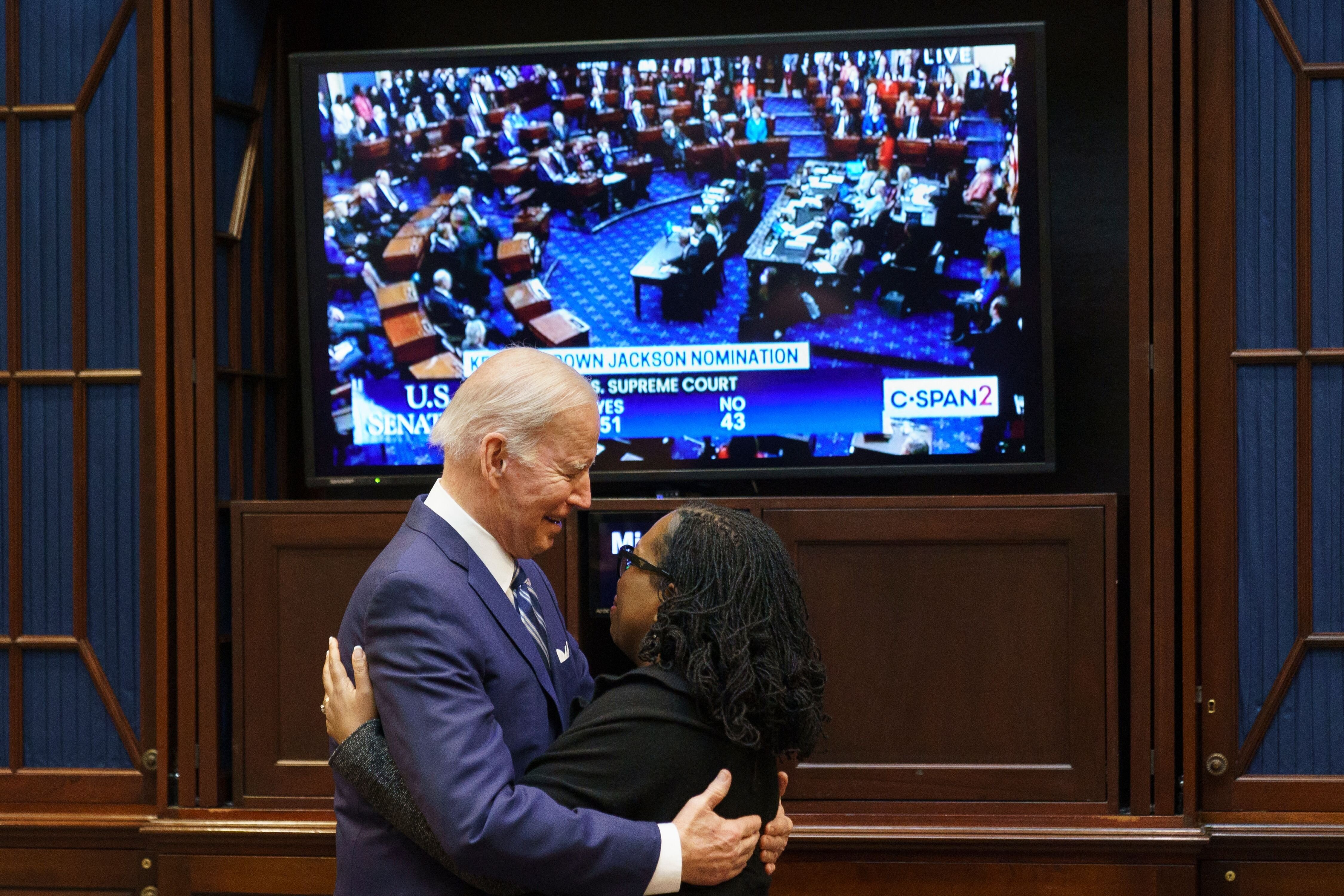
The Senate confirmed Ketanji Brown Jackson to the Supreme Court on Thursday, making her the first-ever Black woman and former public defender to serve on the nation’s highest court.
Jackson, 51, was confirmed in a 53-47 vote. Every Democrat voted for her, along with three Republicans: Sens. Lisa Murkowski (Alaska), Susan Collins (Maine) and Mitt Romney (Utah). When the vote was over, the Senate chamber erupted with cheers and applause from the balcony.
Advertisement
Jackson’s confirmation seals a promise by President Joe Biden, who vowed as a candidate to pick a Black woman for the Supreme Court.
With Jackson on the court, white men will not be a majority of justices for the first time ever.
It’s hard to overemphasize how total the control white men have had on the court for essentially all of U.S. history. Since the Supreme Court was established in 1789, 108 of 115 justices have been white men.
Justice Sonia Sotomayor, who is the first Hispanic member of the court, has talked about the benefit of diversity on the bench, saying that a “different perspective can permit you to more fully understand the arguments that are before you and help you articulate your position in a way that everyone will understand.”
Advertisement
“In the 233-year history of the Supreme Court, never — never — has a Black woman held the title of ‘Justice,’” Senate Majority Leader Chuck Schumer (D-N.Y.) said ahead of Jackson’s vote. “This milestone should have happened generations ago — generations ago — but we are always trotting on a path towards a more perfect union. Nevertheless, America today is taking a giant step towards making our union more perfect.”
In yet another historic moment, Vice President Kamala Harris, the first Black woman to serve in this post, presided over Jackson’s confirmation vote.
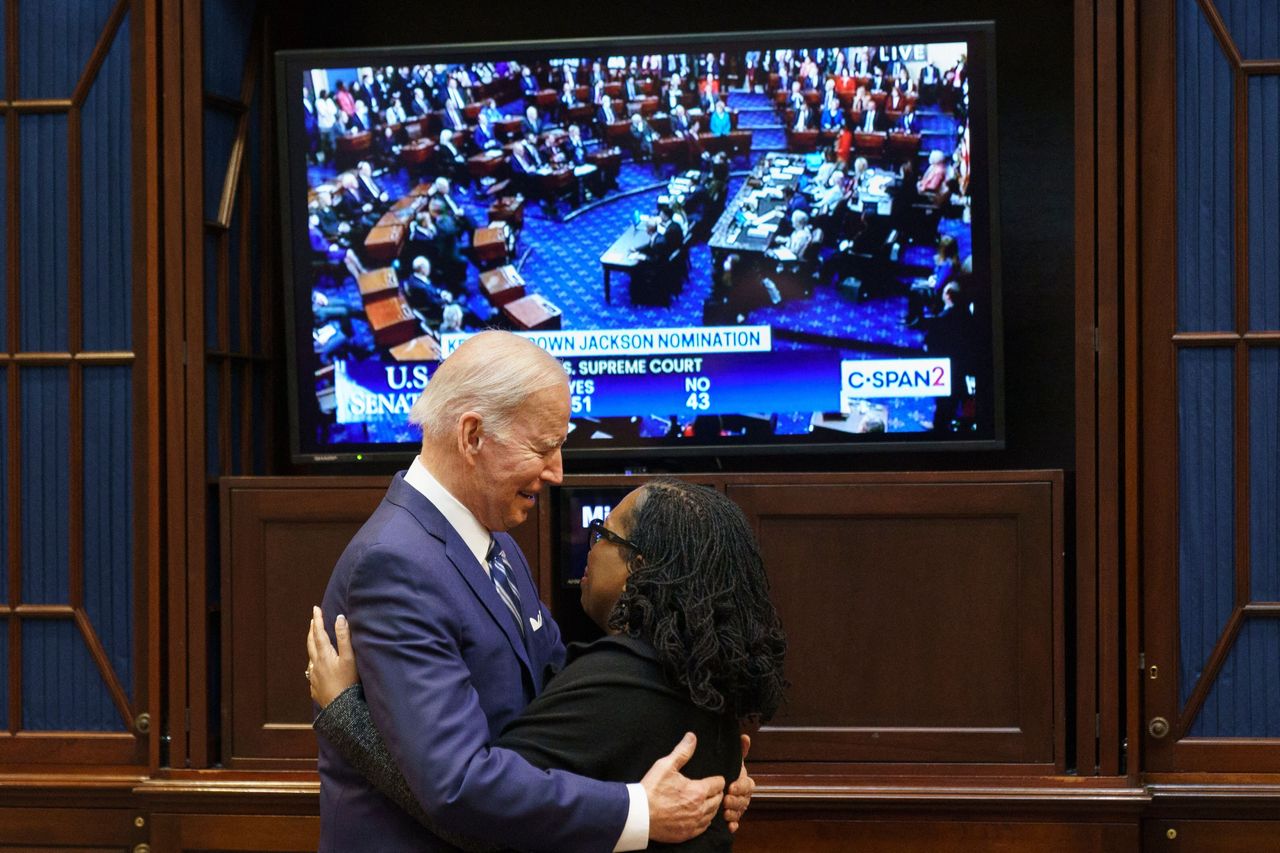
MANDEL NGAN via Getty Images
Jackson, who has been a federal judge for nearly a decade and comes in with an exceptional resume, endured ridiculous and ugly attacks by Republicans during her confirmation process — despite the fact that most of those GOP senators had previously voted to confirm her one, two or even three previous times to other judgeships or the U.S. Sentencing Commission.
Several falsely accused her of being lenient on child sex offenders as a judge, even though they know her record is well within the mainstream. They mocked her for declining to define a “woman” during her confirmation hearing — an attempt to bait her into a contentious debate about transgender people — even though those same Republicans flailed when asked by HuffPost how they would define “a woman.”
Sen. Tom Cotton (R-Ark.) falsely claimed that Jackson likes to help terrorists, and said she would have defended Nazis at Nuremberg. His absurd leap echoes a GOP theme dwelling on Jackson’s stint as a public defender representing Guantanamo Bay detainees accused of terrorism. As a public defender, Jackson did not pick her clients.
Sen. Ted Cruz (R-Texas) made a show of grilling Jackson on whether she thinks “babies are racist,” waving an anti-racism children’s book in the air as he tried to tie her to the GOP’s misleading attacks on an academic discipline known as critical race theory. (Cruz’s effort to smear that book ended up making it a No. 1 bestseller on Amazon.)
But Jackson navigated her hearing with grace and composure, with even some of her toughest GOP critics admitting they were impressed by her. She had staunch defenders around the country who were glued to the hearings and even went to the Supreme Court to rally in support.
By the end of Jackson’s two full days of being grilled by the Senate Judiciary Committee, Sen. Cory Booker (D-N.J.), the only Black member of the panel, delivered an incredible speech that brought her to tears as he talked about the “joy” that her critics can’t take from him as he watches Jackson make history on the court.
“I’m not letting anybody in the Senate steal my joy,” Booker said emphatically.
Advertisement
“You’re a person who is so much more than your race and gender,” he told Jackson. “You have earned this spot. You are worthy. You are a great American … You’re here. And I know what it’s taken for you to sit in that seat.”
Booker said Harriet Tubman has long been his “harbinger of hope,” and now, Jackson is, too.
“This country is getting better and better and better,” he said, becoming emotional. “When that final vote happens, and you ascend onto the highest court in the land, I’m going to rejoice. And I’m going to tell you right now: The greatest country in the world, the United States of America, will be better because of you.”

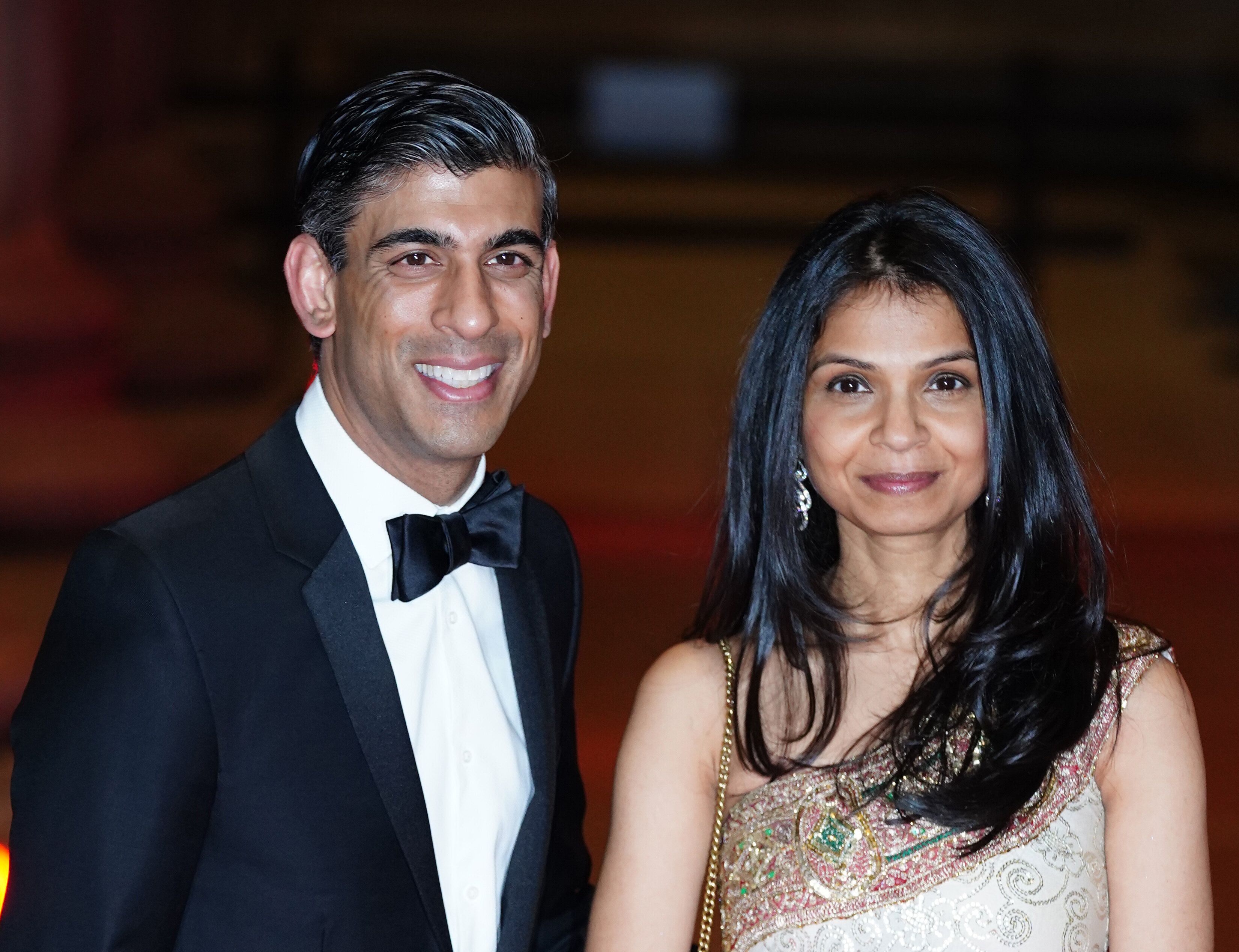
Chancellor Rishi Sunak is under fire after it was revealed his wife has “non-dom” status.
It means Akshata Murthy, daughter of an Indian billionaire, can earn money from abroad free of UK tax.
Advertisement
A non-domiciled tax status is designed for individuals whose permanent home is not the UK.
Murthy, who lives in Downing Street with her husband, said she has the status because of her Indian citizenship as the country does not allow its citizens to hold dual nationality.
Advertisement
However, some experts argue there are ways she can remain an Indian citizen while ending her non-dom status.
There is no suggestion any laws or rules have been broken, however Labour leader Sir Keir Starmer has described the arrangement as appearing to represent “breathtaking hypocrisy”.
Advertisement
A Treasury spokesman has insisted that Sunak has “followed the ministerial code to the letter in his declaration of interests”.
The code states that, on appointment to each new office, ministers must provide their permanent secretary with a full list of all interests which might be thought to give rise to a conflict – including the interests of their spouse, partner or close family.
Labour is arguing that her non-domicile status is a matter of public interest because the chancellor may have directly benefitted from it.
They have written to Sunak with 12 questions, they include:
Advertisement
1. How much have you benefited from Murthy’s tax status as a ‘non-dom’?
2. Has Murthy ever claimed the remittance basis?
3. Do you accept that claiming the remittance basis was an active choice by Murthy, and not [as her spokesperson claimed yesterday] something that followed automatically from her citizenship?
4. What is Murthy’s claimed domicile?
5. On what basis is it not the UK, given her life suggests she intends to permanently remain in the UK?
6. For how long has Murthy been claiming the remittance basis? Companies House filings say Murthy has been living in the UK since at least 2013.
7. How much tax has been saved by claiming the remittance basis?
8. Where are all of Murthy’s non-UK income and gains fully taxed?
9. Does Murthy hold investments/property through trusts or companies in offshore jurisdictions?
10. When Murthy hits 15 years of being in the UK, she will cease to be entitled to claim the remittance basis. Often the wealthy avoid the resultant tax by putting their assets into trusts before the expiry of the 15 years. Will she commit not to do that?
Advertisement
11. Do you as chancellor support the claim of Murthy’s spokesperson that her Indian citizenship means she must be treated as non-domiciled for UK tax purposes?
12. What measures have you as chancellor put in place to ensure that you are not involved in Treasury discussions around potential amendments to the non-domicile status rules?
A Treasury spokesperson has not responded to a HuffPost UK request for a response to the questions.

Winter pressures being felt in spring, as Covid cases remain high and other illnesses rebound.
Drugs charity The Loop says it’s worried the sweets could be putting buyers at risk of death.
Lung and leg clots were much more likely in seriously ill patients, but mild cases can be affected.
