Student researchers discover genes unique to humans in search for source of our evolutionary distinctiveness

A team of student researchers from John Jay College of Criminal Justice has discovered human microRNA genes not shared with any other primate species and which may have played an important role in the unique evolution of the human species. The students, under the direction of John Jay Professors Dr. Hunter R. Johnson and Dr. Nathan H. Lents, found at least three families of microRNA genes on chromosome 21.

The team utilized genome alignment tools to compare the most recent drafts of human and chimpanzee genomes, meticulously scanning for novel genetic elements unique to humans. Beginning with the smallest human chromosome, chromosome 21, the researchers were surprised to find a large region of human-unique DNA, called 21p11, that harbors several orphan microRNA genes.

Although the team found that the long arm of human chromosome 21 aligns well with that of other extant ape species, the short arm aligned poorly, suggesting that this region of the human genome has recently and substantially diverged from that of other primates.

According to their analysis of prehistoric human genomes, these changes predate the divergence of Neanderthals and modern humans. The genes also show little to no sequence-based variation within the modern human population. The team therefore theorized that the microRNA (miRNA) genes found in that region [miR3648 and miR6724] likely evolved in the time since the chimpanzee and human lineages split, sometime in the last seven million years, and are specific to humans.

Using computational tools, the team discovered with a high degree of likelihood that the predicted gene targets of the relevant miRNAs are related to embryonic development. Both miR3648 and miR6724 have been detected in tissues throughout the human body, including the brain, and may conceivably play a role in the evolution of humankind’s most unique organ. The findings point to the intriguing idea that these microRNA genes contributed to the distinct evolution of our species and the uniqueness of humankind.

“Understanding the genetic basis for human uniqueness is an important undertaking because, despite sharing nearly 99% of our DNA sequences with the chimpanzee, we’re remarkably different organisms,” said student researcher José Galván. “Small post-transcriptional regulatory elements like miRNAs and siRNAs [small interfering RNA] are under-appreciated and often misunderstood in the effort to understand our genetic differences.”

Thanks to their small size and structural simplicity, miRNA genes have fewer barriers to de novo creation than other gene types. MicroRNA genes can be extremely prolific in their regulation of other genes, meaning that modest changes to DNA sequence can result in wide-ranging impacts to the human genome. The creation of miR3648 and miR6724 serve as excellent examples of this process. This study revealed a new possible mechanism for the creation of new miRNA genes through duplications of rRNA genes, which calls for further research on how general this phenomenon may be.

The study’s co-authors include Dr. Nathan H. Lents, Professor of Biology at John Jay College of Criminal Justice, Dr. Hunter Johnson, Associate Professor of Mathematics at John Jay College of Criminal Justice, and a team of undergraduate student researchers: Jessica A. Blandino, Beatriz C. Mercado, José A. Galván, and William J. Higgins.

Story Source:

Materials provided by The City University of New York. Note: Content may be edited for style and length.

Share Button

Ukrainian President Volodymyr Zelenskyy Given Standing Ovation From MPs Before Historic Address To Commons

British MPs have given a standing ovation to Ukrainian president Volodymyr Zelenskyy as he gave an historic address to the House of Commons.

MPs took to their feet even before Zelenskyy, who appeared via a live video link from Ukraine, had said a word.

Echoing Winston Churchill, a defiant Zelenskyy said: “We will continue fighting for our land, whatever the cost. We will fight in the forests, the fields, the shores and in the streets.”

Concluding his speech, he thanked Boris Johnson by name and called on the UK for more support.

Speaking through a translator provided by Parliament TV, he said: “We are looking for your help, for the help of Western counties.

“We are thankful for this help and I am grateful to you Boris.

“Please increase the pressure of sanctions against this country (Russia) and please recognise this country as a terrorist country.

“Please make sure sure that our Ukrainian skies are safe.

“Please make sure that you do what needs to be done and what is stipulated by the greatness of your country.

“Glory to Ukraine and glory to the United Kingdom.”

Share Button

Twin thought to be UK’s most premature to survive goes home

Harry Crane, born at 22 weeks and five days, leaves hospital with sister Harley due to follow.

Share Button

Vamps star tells of liposuction body-image pressure

James Brittain-McVey tells MPs he wishes he had talked to friends about worries over how he looked.

Share Button

‘World-first’ heart-thymus transplant success for Easton

Doctors hope the pioneering procedure, believed to be a world first, marks a new chapter for transplant surgery.

Share Button

Shane Warne: Do liquid diets work and are they safe?

What do experts make of the diet Shane Warne was on?

Share Button

Physicists discover method for emulating nonlinear quantum electrodynamics in a laboratory setting

On the big screen, in video games and in our imaginations, lightsabers flare and catch when they clash together. In reality, as in a laser light show, the beams of light go through each other, creating spiderweb patterns. That clashing, or interference, happens only in fiction — and in places with enormous magnetic and electric fields, which happens in nature only near massive objects such as neutron stars. Here, the strong magnetic or electric field reveals that vacuum isn’t truly a void. Instead, here when light beams intersect, they scatter into rainbows.

A weak version of this effect has been observed in modern particle accelerators, but it is completely absent from our daily lives or even normal laboratory environments.

Yuli Lyanda-Geller, professor of physics and astronomy in the College of Science at Purdue University, in collaboration with Aydin Keser and Oleg Sushkov from the University of New South Wales in Australia, discovered that it is possible to produce this effect in a class of novel materials involving bismuth, its solid solutions with antimony and tantalum arsenide.

With this knowledge, the effect can be studied, potentially leading to vastly more sensitive sensors as well as supercapacitors for energy storage that could be turned on and off by a controlled magnetic field.

“Most importantly, one of the deepest quantum mysteries in the universe can be tested and studied in a small laboratory experiment,” Lyanda-Geller said. “With these materials, we can study effects of the universe. We can study what happens in neutron stars from our laboratories.”

Brief summary of methods

Keser, Lyanda-Geller and Sushkov applied quantum field theory nonperturbative methods used to describe high-energy particles and expanded them to analyze the behavior of so-called Dirac materials, which recently became the focus of interest. They used the expansion to obtain results that go both beyond known high-energy results and the general framework of condensed matter and materials physics. They suggested various experimental configurations with applied electric and magnetic fields and analyzed best materials that would allow them to experimentally study this quantum electrodynamic effect in a nonaccelerator setting.

They subsequently discovered that their results better explained some magnetic phenomena that had been observed and studied in earlier experiments.

Funding

U.S. Department of Energy, Office of Basic Energy Sciences; Division of Materials Sciences and Engineering; and the Australian Research Council, Centre of Excellence in Future Low Energy Electronics Technologies

Story Source:

Materials provided by Purdue University. Original written by Brittany Steff. Note: Content may be edited for style and length.

Share Button

Researchers create tool to help protect native fish from hybridizing with non-natives

Oregon State University researchers have created a tool to assess the risk of hybridization among native and non-native fish, a development that could aid natural resource managers trying to protect threatened or endangered freshwater fish species.

The introduction of non-native species poses challenges to native species, including competition for resources and habitat, exposure to diseases carried by the introduced species and the risk of hybridization, which occurs naturally in wild populations as part of the evolutionary process.

The Oregon State research, just published in the journal Frontiers in Environmental Science, focused on two species: bull trout, a fish native to western North America that is protected under the Endangered Species Act; and brook trout, a native to eastern North America introduced in the West more than 100 years ago for recreational fishing purposes.

Bull trout were once abundant in Oregon, Washington, California, Nevada, Idaho and Montana but today are found in less than half of their historic range, and no longer exist in California. They are threatened by habitat degradation and fragmentation, blockage of migratory corridors, poor water quality, the effects of climate change and fisheries management practices, including the introduction of brook trout.

While some studies have documented hybridization among bull and brook trout, there has not been enough research to allow natural resource managers to quantify hybridization risk, the Oregon State researchers said.

“The goal was to come up with a tool that allows managers to look at the potential long-term impacts when they are planning restoration or conservation projects,” said Michael Manning, the lead author of the paper who worked on the research as an Oregon State graduate student.

The researchers developed a hybridization risk model, which could also be applied to other species that hybridize in freshwaters, such as cutthroat or rainbow trout and coho and chinook salmon.

Guillermo Giannico, a freshwater fish ecologist and a co-author of the paper, compared the model to programs people use when deciding where to live.

“In that case, there is this algorithm that combines information about distance to the nearest supermarket, cost of living, where the schools are,” he said. “This risk model we created is roughly the same. It tells you whether this is a good neighborhood for fish based on the gradient of the stream, the substrate at the bottom of the stream, the temperature of the water, how much the water discharge changes through the year.”

In Oregon, 55% of bull trout habitat is in the northeastern part of the state within the John Day and Powder/Burnt River basins. Additional bull trout habitats are located in the Malheur/Owyhee, Klamath, Deschutes, Willamette Valley and Columbia River drainage basins.

The researchers studied 47 sub-basins, a U.S. Geological Survey term for a subsection of a river drainage area. Sub-basins encompass an average area of about 1,125 square miles. Of the sub-basins they studied, 11 had only bull trout, 16 had only brook trout and 20 had both species.

In Oregon, brook trout are present in 9.8% (120 miles) of bull trout spawning habitat. The model showed that an additional 57 miles of bull trout spawning habitat would be at extreme hybridization risk if brook trout were introduced in those areas.

The model also identified 13% (177 miles) of all bull trout spawning habitat as being in the moderate to extreme hybridization risk category. Of these 177 miles, 90% are in northeastern Oregon.

The researchers note that the model is valuable because of its ability to identify hybridization risks in small sections of streams (to the 100-meter scale) whether brook trout already exist in bull trout spawning habitat or are absent.

This level of detail allows natural resource managers to identify individual reaches of streams that might be candidates for brook trout removal, to model potential hybridization risk if bull trout are reintroduced, or to incorporate scenarios of brook trout introductions or expansion, they said.

Other co-authors of the paper are Ivan Arismendi and J. Andres Olivos, both of the Department of Fisheries, Wildlife, and Conservation Science in Oregon State’s College of Agricultural Sciences.

Share Button

Lead exposure in last century shrank IQ scores of half of Americans, study finds

In 1923, lead was first added to gasoline to help keep car engines healthy. However, automotive health came at the great expense of our own health and well-being.

A new study calculates that exposure to car exhaust from leaded gas during childhood stole a collective 824 million IQ points from more than 170 million Americans alive today, about half the population of the United States.

The findings, from Aaron Reuben, a PhD candidate in clinical psychology at Duke University, and colleagues at Florida State University, suggest that Americans born before 1996 may now be at greater risk for lead-related health problems, such as faster aging of the brain. Leaded gas for cars was banned in the U.S. in 1996, but the researchers say that anyone born before the end of that era, and especially those at the peak of its use in the 1960s and 1970s, had concerningly high lead exposures as children.

The team’s paper appeared the week of March 7 in the journal Proceedings of the National Academy of Sciences.

Lead is neurotoxic and can erode brain cells after it enters the body. As such, there is no safe level of exposure at any point in life, health experts say. Young children are especially vulnerable to lead’s ability to impair brain development and lower cognitive ability. Unfortunately, no matter what age, our brains are ill-equipped for keeping it at bay.

“Lead is able to reach the bloodstream once it’s inhaled as dust, or ingested, or consumed in water,” Reuben said. “In the bloodstream, it’s able to pass into the brain through the blood-brain barrier, which is quite good at keeping a lot of toxicants and pathogens out of the brain, but not all of them.”

One major way lead used to invade bloodstreams was through automotive exhaust.

To answer the complex question of how leaded gas use for more than 70 years may have left a permanent mark on human health, Reuben and his co-authors Michael McFarland and Mathew Hauer, both professors of sociology at Florida State University, opted for a fairly simple strategy.

Using publicly available data on U.S. childhood blood-lead levels, leaded-gas use, and population statistics, they determined the likely lifelong burden of lead exposure carried by every American alive in 2015. From this data, they estimated lead’s assault on our intelligence by calculating IQ points lost from leaded gas exposure as a proxy for its harmful impact on public health.

The researchers were stunned by the results.

“I frankly was shocked,” McFarland said. “And when I look at the numbers, I’m still shocked even though I’m prepared for it.”

As of 2015, more than 170 million Americans (more than half of the U.S. population) had clinically concerning levels of lead in their blood when they were children, likely resulting in lower IQs and putting them at higher risk for other long-term health impairments, such as reduced brain size, greater likelihood of mental illness, and increased cardiovascular disease in adulthood.

Leaded gasoline consumption rose rapidly in the early 1960s and peaked in the 1970s. As a result, Reuben and his colleagues found that essentially everyone born during those two decades are all but guaranteed to have been exposed to pernicious levels of lead from car exhaust.

Even more startling was lead’s toll on intelligence: childhood lead exposure may have blunted America’s cumulative IQ score by an estimated 824 million points — nearly three points per person on average. The researchers calculated that at its worst, people born in the mid-to-late 1960s may have lost up to six IQ points, and children registering the highest levels of lead in their blood, eight times the current minimum level to initiate clinical concern, fared even worse, potentially losing more than seven IQ points on average.

Dropping a few IQ points may seem negligible, but the authors note that these changes are dramatic enough to potentially shift people with below-average cognitive ability (IQ score less than 85) to being classified as having an intellectual disability (IQ score below 70).

Moving forward, McFarland is analyzing the racial disparities of childhood lead exposure, hoping to highlight the health inequities suffered by Black children, who were exposed more often to lead and in greater quantities than white children.

Reuben’s next step will be to examine the long-term consequences of past lead exposure on brain health in old age, based on previous findings that adults with high childhood lead exposure may experience accelerated brain aging.

“Millions of us are walking around with a history of lead exposure,” Reuben said. “It’s not like you got into a car accident and had a rotator cuff tear that heals and then you’re fine. It appears to be an insult carried in the body in different ways that we’re still trying to understand but that can have implications for life.”

Share Button

Ukraine Rejects Russia’s Proposed Humanitarian Corridors As ‘Completely Immoral’

Russia has announced new “humanitarian corridors” to provide safe passage for Ukrainian civilians fleeing the invasion instigated by Vladimir Putin.

But the limited ceasefire was dismissed by Ukraine and Western allies as an immoral stunt, as the escape routes would only take displaced people to Russia and its ally Belarus.

What are humanitarian corridors?

A humanitarian corridor is a temporary pause of armed conflict, agreed by both sides, to allow food and medical aid to be brought to a warzone, or for civilians to evacuate.

These demilitarised zones are in most cases negotiated by the United Nations, and are seen as vital to avoiding a humanitarian catastrophe, especially when international law is breached by the shelling of civilians.

Humanitarian corridors have been used since the mid-20th century. During the so-called Kindertransport from 1938 to 1939, Jewish children were evacuated to the UK from areas under Nazi control. They were also created during the siege of Sarajevo, Bosnia, in the 1990s and the 2018 evacuation of Ghouta, Syria.

Access is typically limited to neutral parties, such as the UN or aid organisations including the Red Cross.

What has been proposed?

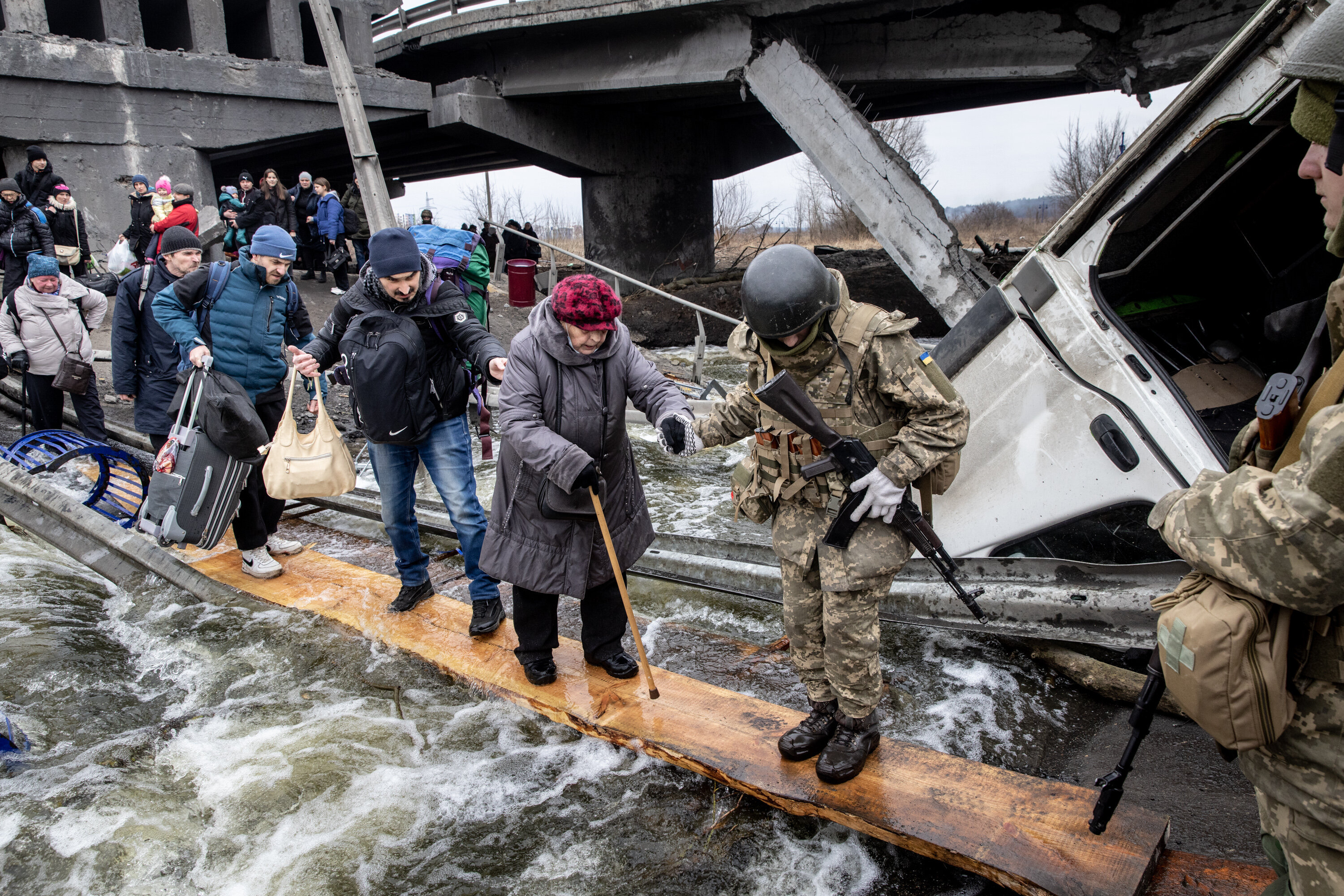
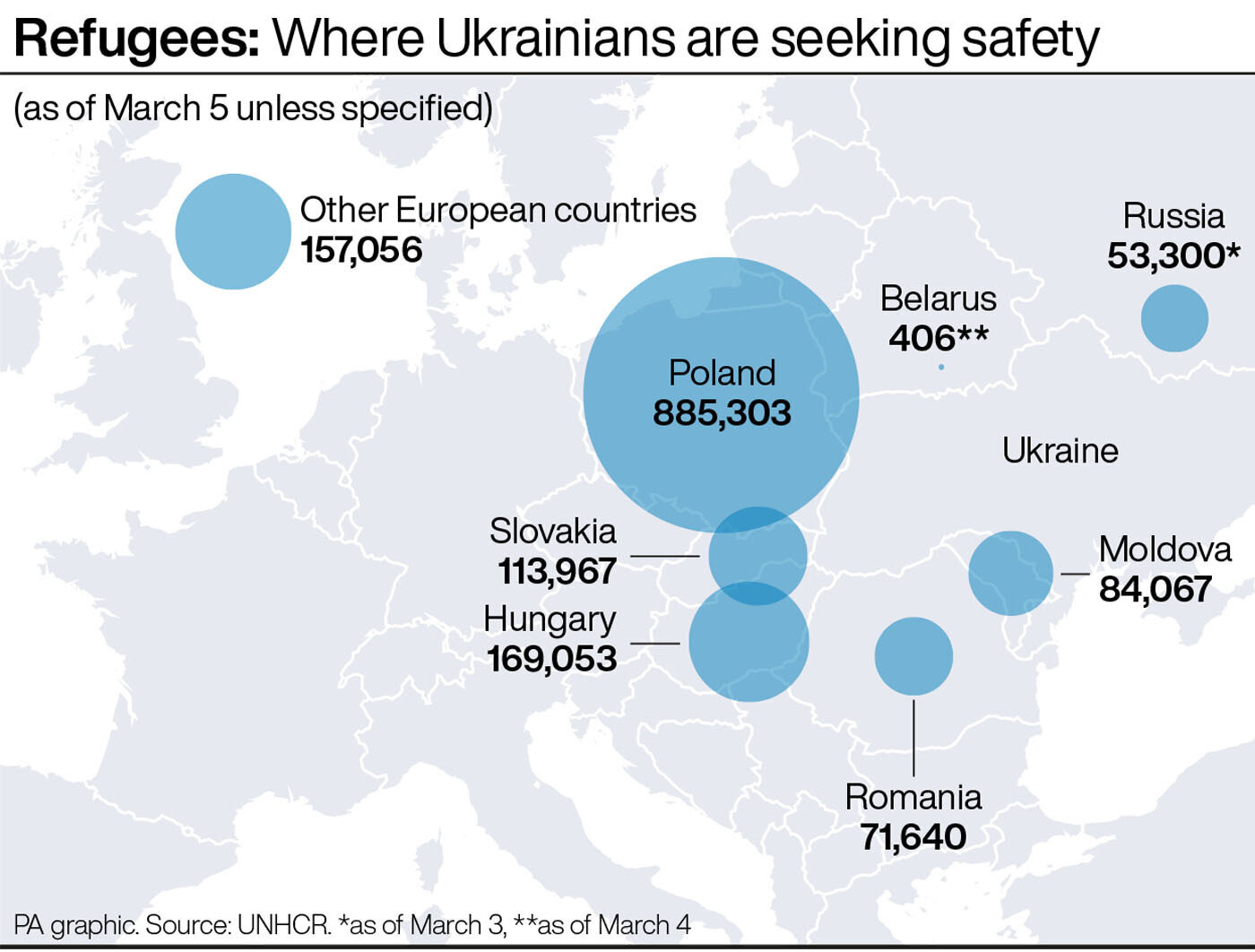
The Russian invasion has pushed 1.5 million people to flee the country, creating what the head of the UN refugee agency called “the fastest-growing refugee crisis in Europe since World War II”.

Two planned evacuation operations from Mariupol and the nearby city of Volnovakha have failed over the last two days as the sides accused each other of failing to stop shooting and shelling.

In Mariupol alone, Ukrainian authorities have said they planned to evacuate over 200,000 civilians, or half of the city’s population.

Ahead of a third round of talks between Russia and Ukraine planned for Monday, Moscow said it would open six humanitarian corridors – passages would open for civilians from the capital of Kyiv, the southern port city of Mariupol, and the cities of Kharkiv and Sumy.

But Ukraine rejected the plan given the proposed routes led into Russian or Belarusian territory. These are unlikely destinations for many Ukrainians who would prefer to head towards countries on the western and southern borders. Belarus is a key ally of Putin and served as a launching ground for the invasion.

Where Ukrainians are seeking safety.

PA Graphics via PA Graphics/Press Association Images

According to maps published by the RIA news agency, the corridor from Kyiv will lead to Belarus, and civilians from Kharkiv will only have a corridor leading to Russia. Corridors from Mariupol and Sumy will lead both to other Ukrainian cities and to Russia.

What has Russia said?

The Russian taskforce said the new pledge for humanitarian corridors was announced at the request of French president Emmanuel Macron, who spoke to Putin on Sunday. Macron’s office said he asked for a broader end to military operations in Ukraine and protections for civilians.

“Attempts by the Ukrainian side to deceive Russia and the whole civilised world…are useless this time,” the Russian defence ministry said after announcing the corridors.

What has Ukraine said?

Ukrainian deputy prime minister Irina Vereshchuk called the proposed evacuation routes to Russia and Belarus “unacceptable”. “Our people won’t go to Belarus and to Russia,” she told a news briefing, claiming that Russia was seeking to manipulate Macron’s sincere desire to help.

Macron criticised the proposal as a case of “cynicism”. “I don’t know many Ukrainians who want to seek refuge in Russia. That’s hypocrisy,” he said.

A spokesperson for Ukrainian president Volodymyr Zelenskyy said the Russian proposal was “completely immoral”. “They are citizens of Ukraine, they should have the right to evacuate to the territory of Ukraine,” the spokesperson said.

The Ukrainian government is proposing eight humanitarian corridors, including from Mariupol, that would allow civilians to travel to the western regions of Ukraine where there is no Russian shelling.

The Russian proposal was reminiscent of similar ones in Syria. In 2016, a joint Russian and Syrian proposal to set up humanitarian corridors out of besieged opposition-held eastern Aleppo was criticised on humanitarian grounds.

Human rights activists said the tactic, coupled by brutal sieges, effectively gave residents a choice between fleeing into the arms of their attackers or dying under bombardment.

Share Button