New study validates benefits of convalescent plasma for some COVID-19 patients

Transfusions of blood plasma donated by people who have already recovered from infection with the pandemic virus may help other patients hospitalized with COVID-19, a new international study shows.

The treatment, known as convalescent plasma, is still considered experimental by the U.S. Food and Drug Administration (FDA). Plasma contains antibodies, blood proteins that are part of the immune system. Shaped so they can attach to the virus that causes COVID-19, SARS-CoV-2, antibodies glom onto and tag it for removal from the body, researchers say.

Led by researchers at NYU Grossman School of Medicine, the study showed that among 2,341 men and women, those who received an injection of convalescent plasma soon after hospitalization were 15% less likely to die within a month from COVID-19 than those who did not receive convalescent plasma or those who received an inactive saline placebo.

Notably, the researchers found that the biggest benefits for the therapy were among patients most at risk for severe complications because of pre-existing conditions, such as diabetes or heart disease. The treatment, which contains antibodies and other immune cells needed to fight the infection, also appears to benefit those with type A or AB blood.

“Our results show that, overall, patients hospitalized with COVID-19 may derive modest benefit from convalescent plasma, with some patient subgroups benefiting more than others,” says study lead investigator and biostatistician Andrea Troxel, ScD. With respect to the groups most likely to benefit, the FDA on Dec. 28, 2021, revised the Emergency Use Authorization for convalescent plasma, limiting its use to patients with diseases that suppress their immune systems, or that receive medical treatments with the same effect.

“Patients with co-existing disease were most likely to show improvement from convalescent plasma, probably because they have the most difficulty producing antibodies to fight their infection,” adds Troxel. “The infused plasma boosts their body’s ability to fight the virus, but only in the early stage of the disease and before the illness overwhelms their body.”

The current study findings, published in the journal JAMA Network Open online Jan. 25, come from the pooling of patient information from eight recently completed studies in the United States, Belgium, Brazil, India, the Netherlands, and Spain on the effects of convalescent plasma for COVID-19.

These benefits of the treatment are only likely to become clear as more data from the trials become available, says Troxel, a professor in the Department of Population Health at NYU Langone. This is because the data from individual trials are too small to show the treatment’s overall impact on subsets of patients, she says. Some individual studies have showed the therapy to be ineffective or of limited value.

Study co-investigator Eva Petkova, PhD, says the team is using its study data to create a scoring system of patient descriptors, including age, stage of COVID-19, and co-existing diseases, making it easier for clinicians to calculate who stands to benefit most from use of convalescent plasma.

“Our treatment benefit index is designed to serve as a quick and effective tool for physicians to use in deciding when to administer convalescent plasma for COVID-19,” says Petkova, a professor in the Departments of Population Health and Child and Adolescent Psychiatry at NYU Langone.

For the study, researchers grouped all patient information from smaller, separate clinical investigations about convalescent plasma therapy, including trials at NYU Langone, Albert Einstein College of Medicine and Montefiore Medical Center, Zuckerberg San Francisco General Hospital, and the University of Pennsylvania in Philadelphia. Researchers hoped any benefits or disadvantages in treatment would be easier to spot among the largest possible sample of patients. All trials were randomized and controlled, meaning that the patient had a random chance of being assigned to receive convalescent plasma or not to receive it.

Included in the analysis were data from another multicenter U.S. study published separately in December 2021 in JAMA Internal Medicine. That study in 941 patients hospitalized with COVID-19 showed that patients receiving high doses of convalescent plasma therapy and not on other medications, such as remdesivir or corticosteroids, were likely to benefit from the blood plasma treatment. Study co-primary investigator Mila Ortigoza, MD, PhD, an assistant professor in the Departments of Medicine and Microbiology at NYU Langone, says these initial results supported the idea that convalescent plasma could be a feasible treatment option, especially when other therapies are not yet available, as at the beginning of a pandemic.

In addition, convalescent plasma collected from previously infected and subsequently vaccinated donors (VaxPlasma) would contain antibodies in high enough quantities and diversity that could provide added protection against emerging viral variants, says Ortigoza. Viruses typically mutate genetically (acquire random changes in their DNA or RNA codes) over the course of any pandemic. For this reason, convalescent plasma has the potential to offer effective treatment more quickly after such mutations than treatment types that tend to become less effective with time and must undergo a re-design process to address a new variant, such as monoclonal antibody treatments.

Besides Troxel, Petkova, and Ortigoza, other NYU Langone researchers involved in the studies are Keith Goldfeld, DrPh; Mengling Liu, PhD; Hyung Park, PhD; Thaddeus Tarpey, PhD; Yinxiang Wu, MA; Danni Wu, MS; Yi Li, MS; Corita Grudzen, MD; and Judith Hochman, MD. Other study investigators include Anup Agarwal, MD; Gunjan Kumar, MD; and Aparna Mukherjee, MD, PhD; at the Indian Council of Medical Research in New Delhi; Cristina Avendaño-Sola, MD; Rafael Duarte, MD, PhD, and Arantxa Sancho-Lopez, MD; at the Hospital Universitario Puerta de Hierro Majadahonda in Madrid, Spain; Emma Bainbridge, MD, MPH; Priscilla Hsue, MD; and Annie Luetkemeyer, MD; at the University of California San Francisco; Katherine Bar, MD; and Pamela Shaw, PhD; at the University of Pennsylvania in Philadelphia (now at Kaiser Permanente); Timothy Devos, MD, PhD; and Geert Meyfroidt, MD, PhD; at Katholieke Universiteit in Leuven, Belgium; André Nicola, MD, PhD; at the University of Brasilia in Brazil; Liise-Anne Pirofski, MD, PhD; and Hyun-Ah Yoon, MD; at Albert Einstein College of Medicine in New York City; Bart Rijnders, MD, PhD; and Casper Rokx, MD, PhD; at Erasmus University in the Netherlands; and Elliott Antman, MD, at Harvard University in Boston. Funding support for the studies was provided by National Institutes of Health grant UL1TR001445.


Share Button

New study suggests two paths toward ‘super immunity’ to COVID-19

New laboratory research from Oregon Health & Science University reveals more than one path toward robust immunity from COVID-19.

A new study finds that two forms of immunity — breakthrough infections following vaccination or natural infection followed by vaccination — provide roughly equal levels of enhanced immune protection.

The new study published online today in the journal Science Immunology.

“It makes no difference whether you get infected-and-then-vaccinated, or if you get vaccinated-and-then-a-breakthrough infection,” said co-senior author Fikadu Tafesse, Ph.D., assistant professor of molecular microbiology and immunology in the OHSU School of Medicine. “In either case, you will get a really, really robust immune response — amazingly high.”

The research follows an OHSU study published in December that described extremely high levels of immune response following breakthrough infections — so-called “super immunity.” That study was the first to use multiple live SARS-CoV-2 variants to measure cross-neutralization of blood serum from breakthrough cases.

The new study found that it doesn’t matter whether someone gets a breakthrough infection or gets vaccinated after a natural infection. In both cases, the immune response measured in blood serum revealed antibodies that were equally more abundant and more potent — at least 10 times more potent — than immunity generated by vaccination alone.

The study was done before the emergence of the omicron variant, but researchers expect the hybrid immune responses would be similar with the new highly transmissible variant.

“The likelihood of getting breakthrough infections is high because there is so much virus around us right now,” Tafesse said. “But we position ourselves better by getting vaccinated. And if the virus comes, we’ll get a milder case and end up with this super immunity.”

Researchers recruited a total of 104 people, all OHSU employees who were vaccinated by the Pfizer vaccine, and then carefully divided them into three groups: 42 who were vaccinated with no infection, 31 who were vaccinated after an infection, and 31 who had breakthrough infections following vaccination. Controlling for age, sex and time from vaccination and infection, the researchers drew blood samples from each participant and exposed the samples to three variants of the live SARS-CoV-2 virus in a Biosafety Level 3 lab on OHSU’s Marquam Hill campus.

They found both of the groups with “hybrid immunity” generated greater levels of immunity compared with the group that was vaccinated with no infection.

A path toward endemic COVID

With the wildly contagious omicron variant now circulating across the globe, the new findings suggest each new breakthrough infection potentially brings the pandemic closer to the end.

“I would expect at this point many vaccinated people are going to wind up with breakthrough infections — and hence a form of hybrid immunity,” said senior co-author Bill Messer, M.D., Ph.D., assistant professor of molecular microbiology and immunology and medicine (infectious diseases) in the OHSU School of Medicine

Over time, the virus will run into an ever-expanding pool of human immunity.

OHSU scientists say they haven’t tested multiple rounds of natural infection, although many people will likely find themselves in that category given that millions of people in the United States and around the world remain entirely unvaccinated. With the spread of the highly contagious omicron variant, many unvaccinated people who were previously infected are likely to confront the virus again.

For that group, previous research reveals a much more variable level of immune response than vaccination, Messer said.

“I can guarantee that such immunity will be variable, with some people getting equivalent immunity to vaccination, but most will not,” he said. “And there is no way, short of laboratory testing, to know who gets what immunity. Vaccination makes it much more likely to be assured of a good immune response.”

Senior co-author Marcel Curlin, M.D., agreed.

“Immunity from natural infection alone is variable. Some people produce a strong response and others do not,” said Curlin, associate professor of medicine (infectious diseases) in the OHSU School of Medicine and director of OHSU Occupational Health. “But vaccination combined with immunity from infection almost always provides very strong responses.

“These results together with our previous work point to a time when SARS-CoV-2 may become a mostly mild endemic infection like a seasonal respiratory tract infection instead of a worldwide pandemic.”

In addition to Tafesse, Messer and Curlin, co-authors included Timothy Bates, Savannah McBride, Hans Leier, Gaelen Guzman, Zoe Lyski, Devin Schoen, Bradie Winders, Joon-Yong Lee of the Pacific Northwest National Laboratory and David Xthona Lee.

The study was funded by a grant from the M.J. Murdock Charitable Trust; an unrestricted grant from the OHSU Foundation; the National Institutes of Health, training grant T32HL083808 and grant R01AI145835; and OHSU Innovative IDEA grant 1018784.

The study authors acknowledge the research participants for their generous contributions; OHSU’s COVID-19 serology study team and the OHSU Occupational Health Department for recruitment and sample acquisition; and the OHSU clinical laboratory under the direction of Donna Hansel, M.D., Ph.D., and Xuan Qin, Ph.D., for SARS-CoV-2 testing and reporting.

Share Button

Hymen repair surgery and virginity testing to be banned in UK

The practice is linked to virginity in some cultures and has been described as a form of violence.

Share Button

Sue Gray Inquiry Could Be Split In Two Due To Met Probe

Sue Gray’s investigation into Partygate could be split in two as a result of the investigation launched by the Metropolitan Police, Downing Street has suggested.

The prime minister’s spokesman said the inquiry’s terms of reference made clear she could not reveal her findings on gatherings subject to a police probe.

It means the full results of Ms Gray’s investigation may not be known for months.

Met Commissioner Cressida Dick confirmed this morning that detectives will investigate “a number” of parties alleged to have taken place in Downing Street during lockdown.

In a briefing for journalists, the prime minister’s official spokesman said that effectively meant Gray report will be in two parts.

He said: “As the terms of reference make clear, they won’t publish anything that relates to the work of the police.

“There are a number of events and allegations that they have looked into that the police said don’t reach their threshold, which they are able to continue looking into. And it is my understanding that they will be able to publish detail about those events rather than ones which the police might be taking forward.

“It’s up to the investigation team when they publish, it’s my understanding they are able to publish the aspects that aren’t a matter for the police.”

Number 10 later denied claims that it was trying to delay the publication of Gray report.

The prime minister’s spokesman said talks were continuing between the police and the inquiry team over how much could be published and when.

He said: “I have seen reports suggesting that we were seeking to prevent the publication and that is not accurate.

“There are discussions still ongoing between the investigations team and the police.

“That still needs to be worked through both in relation to what may or may not be published and the ongoing work of both the police and the investigation.”

Cressida Dick announced the police investigation at the London Assembly.

She said: “What I can tell you this morning is that as a result of the information provided by the Cabinet Office inquiry team and, secondly, my officers’ own assessment, I can confirm that the Met is now investigating a number of events that took place at Downing Street and Whitehall in the last two years in relation to potential breaches of Covid-19 regulations.”

It has also emerged that Boris Johnson decided not to tell his Cabinet colleagues about the Met probe, despite being told about it before their weekly meeting this morning.

The prime minister’s spokesman said: “It’s important not to pre-empt a police statement on this sort of issue at any point.”

Instead, the spokesman said the prime minister had “alluded” to the ongoing row at the end of Cabinet by “emphasising there was more work to do to deliver for the public and that the government would not be deterred from getting on with the job”.

Share Button

Thousands needed to try a new Covid antiviral treatment

A UK study aims to find out who will benefit most from a pill designed to treat Covid-19.

Share Button

Time your lotions right

Mayo Clinic does not endorse companies or products. Advertising revenue supports our not-for-profit mission.

Advertising & Sponsorship

Mayo Clinic Press

Check out these best-sellers and special offers on books and newsletters from Mayo Clinic Press.

Share Button

Boris Johnson Had ‘Birthday Party’ At Downing Street During First Lockdown, Report Says

Boris Johnson is under fresh pressure to resign following reports he had a “surprise” birthday party at No 10 during the first lockdown in 2020.

ITV News claimed a birthday party inside Downing Street’s Cabinet Room was attended by up to 30 people on the afternoon of June 19. The event is said to have lasted between 20 and 30 minutes.

Johnson’s wife Carrie and designer Lulu Lytle – who was renovating his Downing Street apartment – led staff in a chorus of happy birthday, the broadcaster alleged.

ITV News said in its report that family friends were later hosted upstairs in the prime minister’s flat.

Labour leader Keir Starmer hit out at a “chaotic, rudderless government” and repeated his call for Johnson to resign. “He’s got to go,” Starmer said.

But Downing Street disputed the report – saying staff only “gathered briefly” in the Cabinet Room after a meeting.

A No 10 spokesperson said of the afternoon celebration: “A group of staff working in No 10 that day gathered briefly in the Cabinet Room after a meeting to wish the prime minister a happy birthday. He was there for less than ten minutes.”

Of the evening event claim, they said: “This is totally untrue. In line with the rules at the time, the prime minister hosted a small number of family members outside that evening.”

In March 2020, Johnson tweeted praise for a seven-year-old girl called Josephine who had postponed her birthday party until “we have sent coronavirus packing”.

He wrote: “Together we can beat this. In the meantime let’s all wish her happy birthday (twice) whilst washing our hands. #BeLikeJosephine #StayHomeSaveLives.”

Starmer told broadcasters: “This is yet more evidence that we have got a prime minister who believes that the rules that he made don’t apply to him.

“And so we have got a prime minister and a government who spend their whole time mopping up sleaze and deceit.

“Meanwhile millions of people are struggling to pay their bills. We cannot afford to go on with this chaotic, rudderless government.

“The prime minister is a national distraction and he’s got to go.”

The PA news agency reported that Lytle briefly attended while undertaking work in Downing Street.

Soane Britain, the luxury designer co-founded by Lytle, said she was “present in Downing Street on June 19 working on the refurbishment”, which has been subject to multiple investigations into its funding.

“Lulu was not invited to any birthday celebrations for the prime minister as a guest,” the spokeswoman said.

“Lulu entered the Cabinet Room briefly as requested, while waiting to speak with the prime minister.”

It came as senior civil servant Sue Gray was working on her inquiry into a series of claims of rule-breaking parties in No 10. It is expected to be published this week.

ITV News said that picnic food from M&S was eaten during the afternoon gathering. Martin Reynolds, Johnson’s under-fire principal private secretary, was also said to have attended.

Social gatherings indoors were forbidden under lockdown laws at the time, with a relaxation of the regulations permitting gatherings of up to six people to take place outside.

Culture secretary Nadine Dorries, a staunch ally of Johnson, questioned whether the gathering would have broken the rules in place at the time.

“So, when people in an office buy a cake in the middle of the afternoon for someone else they are working in the office with and stop for ten minutes to sing happy birthday and then go back to their desks, this is now called a party?” she tweeted.

Shadow foreign secretary David Lammy tweeted “he needs to go now”.

Lammy wrote: “No more excuses, no more delays, no more waiting for Sue Gray.

“For the sake of all the sacrifices the British people have made, for all the loved ones lost and mourned alone, he needs to go now.”

This is a breaking news story and will be updated. Follow HuffPost UK on Twitter, Facebook and Instagram.

Share Button

Covid left Manchester student who took own life ‘literally isolated’

Finn Kitson took his own life while self-isolating after a flatmate tested positive, an inquest hears.

Share Button

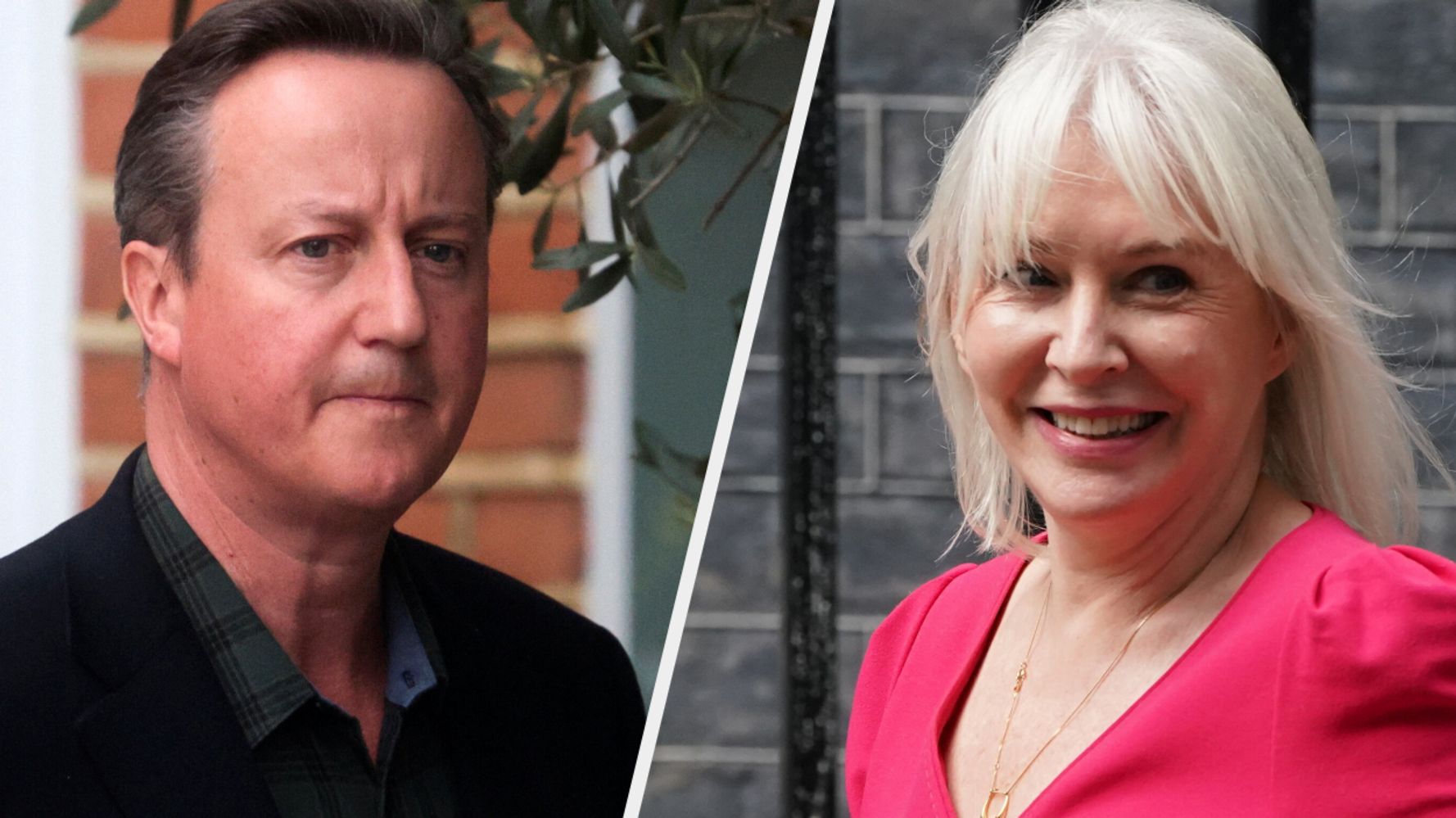
Nadine Dorries Pokes Fun At David Cameron’s New Look

Culture secretary Nadine Dorries has issued a warning about buying tickets from touts – by tweeting a viral photo of former prime minister David Cameron.

The photo quickly became the basis of a meme on social media, with many joking the outfit made Cameron look like the kind of shady character you might find at a pub or car boot sale.

And Cabinet minister Dorries, who once described her one-time party leader as an “arrogant posh boy”, joined in the fun.

She wrote: “Whether it’s a major music festival, sporting event or concert, it’s important that people pay a fair price to see the events they love. Please remain vigilant when considering to buy from ticket touts. Guidance is available if you are unsure.”

Last week, Dorries accused a Tory MP who claims to have faced “intimidation” from their party of “attention-seeking behaviour”.

Many pointed out this was a comment made by the same politician who once appeared on I’m A Celebrity … Get Me Out Of Here and ate ostrich anus on TV.

In any case, Dorries appeared to be going with the consensus in her ribbing.

Last year, Cameron was embroiled in controversy over his intense lobbying for collapsed finance firm Greensill Capital – which was laid bare in 45 emails, texts and WhatsApp messages to ministers and officials.

Share Button

Long Covid: Ipswich Hospital worker says it has changed her life

Jodi Avery experiences fatigue, breathlessness and brain fog after contracting coronavirus twice.

Share Button