Kerry Washington Posts Wrong Scandal Bae In Hilarious Birthday Post: ‘Whoops’

Kerry Washington celebrated her former co-star Scott Foley on his birthday by reminding fans of their very scandalous on-screen love triangle involving Tony Goldwyn. 

The award-winning star, who famously played Olivia Pope in Scandal, posted a fun selfie on Instagram on Thursday of herself pictured with Tony, who played one of her love interests, Fitzgerald Grant III.

However, the caption of the post was dedicated to Scott, who played Jake Ballard, another character romantically involved with Olivia Pope. 

“Happy birthday @scottkfoley!!!!” she wrote. “Miss seeing this gorg face every day. Hope you have an amazing birthday.”

Kerry’s Instagram followers, including Scott himself, quickly took notice. He commented on Washington’s post to clear things up. 

“This is not me,” he wrote. 

She then made amends by posting another photo that showed her making a punching gesture at Scott. 

“WHOOPS wrong TV bae,” she joked. “I really do miss seeing your face (even when I’m fake punching it) every day.”

Fans of the show got a kick out of the mix-up, including Scott’s real-life love, his wife, actor Marika Domińczyk.

“Queen,” she wrote in the comments section of Kerry’s picture with Goldwyn. 

Scandal wrapped up its final season in April 2018 after seven seasons. Kerry told ABC News in 2018 that she’d found it “really hard to say goodbye” when the show ended.

Share Button

England plans biggest winter flu vaccine rollout

Free jabs will be offered to more than 35 million people, including more teenagers than ever before.

Share Button

Coronavirus doctor’s diary: Unvaccinated patients with many regrets

The number of Covid patients in Bradford Royal Infirmary is rising sharply – and half are unvaccinated.

Share Button

3D ‘assembloid’ shows how SARS-CoV-2 infects brain cells

Researchers at University of California San Diego School of Medicine and Rady Children’s Institute for Genomic Medicine have produced a stem cell model that demonstrates a potential route of entry of SARS-CoV-2, the virus that causes COVID-19, into the human brain.

The findings are published in the July 9, 2021 online issue of Nature Medicine.

“Clinical and epidemiological observations suggest that the brain can become involved in SARS-CoV-2 infection,” said senior author Joseph Gleeson, MD, Rady Professor of Neuroscience at UC San Diego School of Medicine and director of neuroscience research at the Rady Children’s Institute for Genomic Medicine.

“The prospect of COVID19-induced brain damage has become a primary concern in cases of ‘long COVID,’ but human neurons in culture are not susceptible to infection. Prior publications suggest that the cells that make the spinal fluid could become infected with SARS-CoV-2, but other routes of entry seemed likely.”

Gleeson and colleagues, who included both neuroscientists and infectious disease specialists, confirmed that human neural cells are resistant to SARS-CoV-2 infection. However, recent studies hinted that other types of brain cells might serve as a ‘Trojan horse.’

Pericytes are specialized cells that wrap around blood vessels — and carry the SARS-CoV2 receptor. The researchers introduced pericytes into three-dimensional neural cell cultures — brain organoids — to create “assembloids,” a more sophisticated stem cell model of the human body. These assembloids contained many types of brain cells in addition to pericytes, and showed robust infection by SARS-CoV-2.

The coronavirus was able to infect the pericytes, which served as localized factories for production of SARS-CoV-2. These locally produced SARS-CoV-2 could then spread to other cell types, leading to widespread damage. With this improved model system, they found that the supporting cells known as astrocytes were the main target of this secondary infection.

The results, said Gleeson, indicate that one potential route of SARS-CoV-2 into the brain is through the blood vessels, where SARS-CoV-2 can infect pericytes, and then SARS-CoV-2 can spread to other types of brain cells.

“Alternatively, the infected pericytes could lead to inflammation of the blood vessels, followed by clotting, stroke or hemorrhages, complications that are observed in many patients with SARS-CoV-2 who are hospitalized in intensive care units.”

Researchers now plan to focus on developing improved assembloids that contain not just pericytes, but also blood vessels capable of pumping blood to better model the intact human brain. Through these models, Gleeson said, greater insight into infectious disease and other human brain disease could emerge.

Co-authors include: Lu Wang, David Sievert and Sangmoon Lee, UC San Diego and Rady Children’s Institute for Genomic Medicine; Alex E. Clark and Aaron F. Carlin, UC San Diego; Hannah Federman, UC San Diego, Rady Children’s Institute for Genomic Medicine and Rutgers University; and Benjamin D. Gastfriend, Eric V. Shusta and Sean P. Palecek, University of Wisconsin-Madison.

Story Source:

Materials provided by University of California – San Diego. Original written by Scott LaFee. Note: Content may be edited for style and length.

Share Button

The PM Predicted The Case Curve, But Will He Carry The Can For July’s Covid Chaos?

You’re reading The Waugh Zone, our daily politics briefing. Sign up now to get it by email in the evening.

Predictions in politics are a dangerous game, as everyone has hopefully learned in recent years. But predictions in pandemics can be uncannily accurate, and today’s latest figures on the number of Covid cases in the UK are bang in line with forecasts.

The 51,870 cases recorded on Friday bear out Boris Johnson’s own sombre warning just under two weeks ago. “We are seeing cases rise fairly rapidly,” he told us. “There could be 50,000 cases detected per day by the 19th.”

Of course our fantastic vaccine rollout means the key chart to watch is the number of hospitalisations. But the number of infections (cases) is now close to outstripping the number of injections (jabs). And while hospitalisations are nowhere near the levels of January, they are still very concerning. 

On Thursday, Chris Whitty said those hospital admissions were doubling every three weeks and could hit “scary numbers” soon. Well, as self-styled ‘Covid centrist’ maths prof Oliver Johnson points out, we are now looking at a doubling of hospitalisations every two weeks. Which is scary indeed.

For some, July 19 is a distraction from the fact that most of the damage was done several weeks ago. It’s arguable that if the borders had been closed earlier to India, the UK would have bought time to get to mid-September with every adult double jabbed and case still low. Labour has yet to convince the public of that so far.

The key thing is that Whitty and chief scientist Patrick Vallance have given their blessing to the Monday’s unlocking, albeit with the need for strong warnings for the public not to ditch masks or working from home. Moreover, NHS England’s medical director Stephen Powis recently gave the PM a dose of political inoculation by saying the NHS could cope even with this third wave.

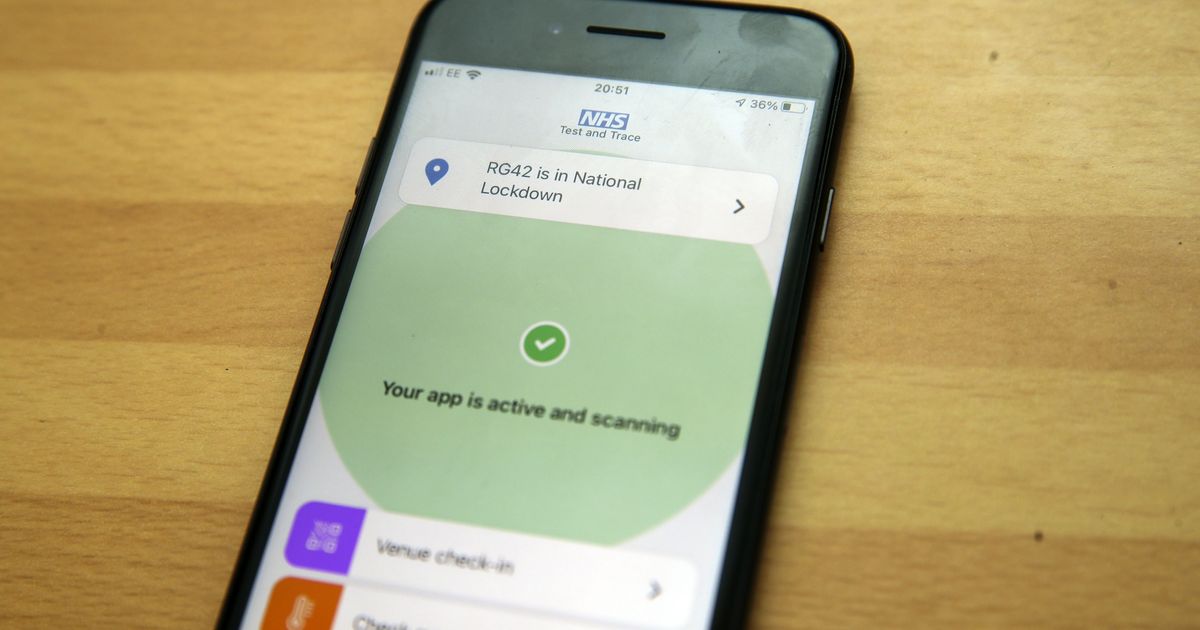
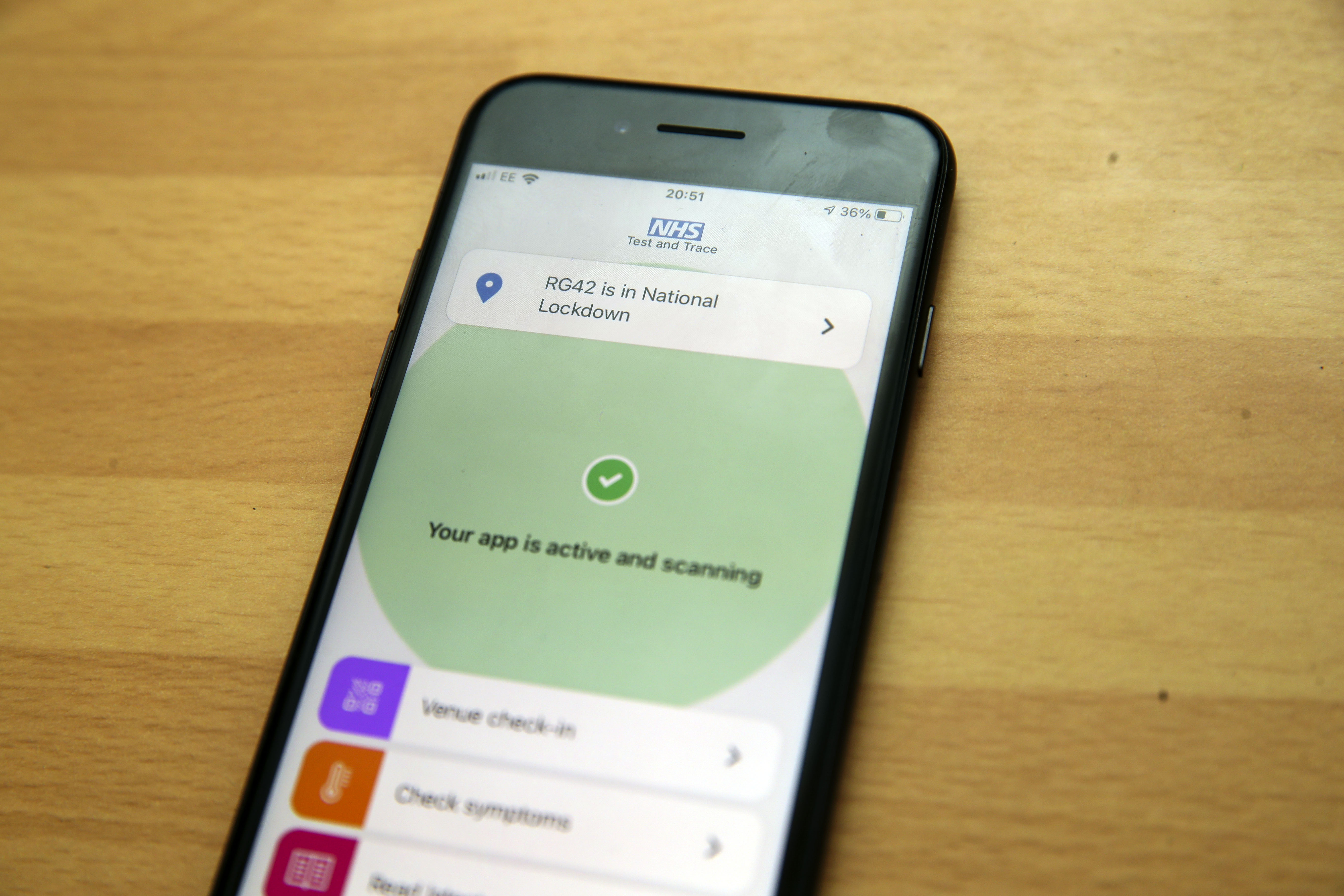
It’s the sheer number of forced isolations from the NHS App that is really causing a headache for No.10. With soaring numbers of schoolchildren, factory and health workers ordered to quarantine, the trigger appy virus is disrupting the economy and education. 

The school holidays offer some respite but with cases and isolation on track to keep soaring, even summer breaks within the UK will be cancelled. Overseas trips look iffy too. It all went Pete Tong for young people banking on a Balearic beat this week, as Majorca and other islands were put back on the government’s amber list.

Tonight’s news that double-vaccinated British travellers returning from France will still face a 10-day quarantine from Monday will add to the gloom.

The armed forces are among the latest casualties, with 5,200 personnel “pinged”. But most importantly of all, some hospitals are now on their knees because of Covid admissions but because of NHS staff (most of whom were double jabbed ages ago) told to isolate after contacts with others. 

Although there has been talk about exempting staff if patient care is at risk, no hospitals have been sent explicit guidance on those lines. The Royal College of Anaesthetists and the Faculty of Intensive Care Medicine today urged an exemption, but their sense of urgency is so far not matched by any government announcement.

Lots of people would like to bring forward the August 16 date when double-jabbed people can avoid self-isolation if they test negative. Yet it’s worth remembering that the very reason that date was pencilled in was because of fears of a lack of PCR tests to cope. That fear was made real this week as many areas simply ran out.

Test and Trace’s lack of capacity, given the many billions spent on it, could end up being the real cause of a ruined summer, not just for the double jabbed but also those who end up with long covid or worse. Commons science and tech committee chairman Greg Clark tells me on this week’s Week In Westminster (aired on Saturday) that the latest blunder is unacceptable. 

With Dido Harding no longer around to blame, will ministers start pointing the finger at her replacement Jenny Harries? Or will they perhaps take on some of the responsibility themselves?

With some MPs and staff pinged in recent days (the Press Gallery too, my own office was officially ‘closed’ with Covid today), SW1 is not immune from the “pingdemic” either. Given all the disruption, it will look rather odd next week if MPs cram into the Commons chamber hugger mugger, simply to give Boris Johnson a rousing send-off at the last PMQs before recess. 

The current disruption was not just predictable, but predicted. That doesn’t make it any less painful politically, even with the backing of the scientists. Claiming the mantle of Captain Foresight may therefore backfire on the PM, if the public abandons the forgiving mood it has held to date.

All it takes is for one minister to blurt out that a certain number of long Covid cases or even deaths were ‘a price worth paying’ for wider immunity, and it could be a cruel, cruel summer indeed.

Share Button

Covid: UK daily cases pass 50,000 for first time since January

It comes after England’s chief medical officer warned hospitalisations could hit “scary numbers”.

Share Button

Scientists create tool to explore billions of social media messages, potentially predict political and financial turmoil

For thousands of years, people looked into the night sky with their naked eyes — and told stories about the few visible stars. Then we invented telescopes. In 1840, the philosopher Thomas Carlyle claimed that “the history of the world is but the biography of great men.” Then we started posting on Twitter.

Now scientists have invented an instrument to peer deeply into the billions and billions of posts made on Twitter since 2008 — and have begun to uncover the vast galaxy of stories that they contain.

“We call it the Storywrangler,” says Thayer Alshaabi, a doctoral student at the University of Vermont who co-led the new research. “It’s like a telescope to look — in real time — at all this data that people share on social media. We hope people will use it themselves, in the same way you might look up at the stars and ask your own questions.”

The new tool can give an unprecedented, minute-by-minute view of popularity, from rising political movements to box office flops; from the staggering success of K-pop to signals of emerging new diseases.

The story of the Storywrangler — a curation and analysis of over 150 billion tweets — and some of its key findings were published on July 16 in the journal Science Advances.

EXPRESSIONS OF THE MANY

The team of eight scientists who invented Storywrangler — from the University of Vermont, Charles River Analytics, and MassMutual Data Science — gather about ten percent of all the tweets made every day, around the globe. For each day, they break these tweets into single bits, as well as pairs and triplets, generating frequencies from more than a trillion words, hashtags, handles, symbols and emoji, like “Super Bowl,” “Black Lives Matter,” “gravitational waves,” “#metoo,” “coronavirus,” and “keto diet.”

“This is the first visualization tool that allows you to look at one-, two-, and three-word phrases, across 150 different languages, from the inception of Twitter to the present,” says Jane Adams, a co-author on the new study who recently finished a three-year position as a data-visualization artist-in-residence at UVM’s Complex Systems Center.

The online tool, powered by UVM’s supercomputer at the Vermont Advanced Computing Core, provides a powerful lens for viewing and analyzing the rise and fall of words, ideas, and stories each day among people around the world. “It’s important because it shows major discourses as they’re happening,” Adams says. “It’s quantifying collective attention.” Though Twitter does not represent the whole of humanity, it is used by a very large and diverse group of people, which means that it “encodes popularity and spreading,” the scientists write, giving a novel view of discourse not just of famous people, like political figures and celebrities, but also the daily “expressions of the many,” the team notes.

In one striking test of the vast dataset on the Storywrangler, the team showed that it could be used to potentially predict political and financial turmoil. They examined the percent change in the use of the words “rebellion” and “crackdown” in various regions of the world. They found that the rise and fall of these terms was significantly associated with change in a well-established index of geopolitical risk for those same places.

WHAT’S HAPPENING?

The global story now being written on social media brings billions of voices — commenting and sharing, complaining and attacking — and, in all cases, recording — about world wars, weird cats, political movements, new music, what’s for dinner, deadly diseases, favorite soccer stars, religious hopes and dirty jokes.

“The Storywrangler gives us a data-driven way to index what regular people are talking about in everyday conversations, not just what reporters or authors have chosen; it’s not just the educated or the wealthy or cultural elites,” says applied mathematician Chris Danforth, a professor at the University of Vermont who co-led the creation of the StoryWrangler with his colleague Peter Dodds. Together, they run UVM’s Computational Story Lab.

“This is part of the evolution of science,” says Dodds, an expert on complex systems and professor in UVM’s Department of Computer Science. “This tool can enable new approaches in journalism, powerful ways to look at natural language processing, and the development of computational history.”

How much a few powerful people shape the course of events has been debated for centuries. But, certainly, if we knew what every peasant, soldier, shopkeeper, nurse, and teenager was saying during the French Revolution, we’d have a richly different set of stories about the rise and reign of Napoleon. “Here’s the deep question,” says Dodds, “what happened? Like, what actually happened?”

GLOBAL SENSOR

The UVM team, with support from the National Science Foundation, is using Twitter to demonstrate how chatter on distributed social media can act as a kind of global sensor system — of what happened, how people reacted, and what might come next. But other social media streams, from Reddit to 4chan to Weibo, could, in theory, also be used to feed Storywrangler or similar devices: tracing the reaction to major news events and natural disasters; following the fame and fate of political leaders and sports stars; and opening a view of casual conversation that can provide insights into dynamics ranging from racism to employment, emerging health threats to new memes.

In the new Science Advances study, the team presents a sample from the Storywrangler’s online viewer, with three global events highlighted: the death of Iranian general Qasem Soleimani; the beginning of the COVID-19 pandemic; and the Black Lives Matter protests following the murder of George Floyd by Minneapolis police. The Storywrangler dataset records a sudden spike of tweets and retweets using the term “Soleimani” on January 3, 2020, when the United States assassinated the general; the strong rise of “coronavirus” and the virus emoji over the spring of 2020 as the disease spread; and a burst of use of the hashtag “#BlackLivesMatter” on and after May 25, 2020, the day George Floyd was murdered.

“There’s a hashtag that’s being invented while I’m talking right now,” says UVM’s Chris Danforth. “We didn’t know to look for that yesterday, but it will show up in the data and become part of the story.”


Share Button

Enabling the ‘imagination’ of artificial intelligence

Imagine an orange cat. Now, imagine the same cat, but with coal-black fur. Now, imagine the cat strutting along the Great Wall of China. Doing this, a quick series of neuron activations in your brain will come up with variations of the picture presented, based on your previous knowledge of the world.

In other words, as humans, it’s easy to envision an object with different attributes. But, despite advances in deep neural networks that match or surpass human performance in certain tasks, computers still struggle with the very human skill of “imagination.”

Now, a USC research team has developed an AI that uses human-like capabilities to imagine a never-before-seen object with different attributes. The paper, titled Zero-Shot Synthesis with Group-Supervised Learning, was published in the 2021 International Conference on Learning Representations on May 7.

“We were inspired by human visual generalization capabilities to try to simulate human imagination in machines,” said the study’s lead author Yunhao Ge, a computer science PhD student working under the supervision of Laurent Itti, a computer science professor.

“Humans can separate their learned knowledge by attributes — for instance, shape, pose, position, color — and then recombine them to imagine a new object. Our paper attempts to simulate this process using neural networks.”

AI’s generalization problem

For instance, say you want to create an AI system that generates images of cars. Ideally, you would provide the algorithm with a few images of a car, and it would be able to generate many types of cars — from Porsches to Pontiacs to pick-up trucks — in any color, from multiple angles.

This is one of the long-sought goals of AI: creating models that can extrapolate. This means that, given a few examples, the model should be able to extract the underlying rules and apply them to a vast range of novel examples it hasn’t seen before. But machines are most commonly trained on sample features, pixels for instance, without taking into account the object’s attributes.

The science of imagination

In this new study, the researchers attempt to overcome this limitation using a concept called disentanglement. Disentanglement can be used to generate deepfakes, for instance, by disentangling human face movements and identity. By doing this, said Ge, “people can synthesize new images and videos that substitute the original person’s identity with another person, but keep the original movement.”

Similarly, the new approach takes a group of sample images — rather than one sample at a time as traditional algorithms have done — and mines the similarity between them to achieve something called “controllable disentangled representation learning.”

Then, it recombines this knowledge to achieve “controllable novel image synthesis,” or what you might call imagination. “For instance, take the Transformer movie as an example” said Ge, “It can take the shape of Megatron car, the color and pose of a yellow Bumblebee car, and the background of New York’s Times Square. The result will be a Bumblebee-colored Megatron car driving in Times Square, even if this sample was not witnessed during the training session.”

This is similar to how we as humans extrapolate: when a human sees a color from one object, we can easily apply it to any other object by substituting the original color with the new one. Using their technique, the group generated a new dataset containing 1.56 million images that could help future research in the field.

Understanding the world

While disentanglement is not a new idea, the researchers say their framework can be compatible with nearly any type of data or knowledge. This widens the opportunity for applications. For instance, disentangling race and gender-related knowledge to make fairer AI by removing sensitive attributes from the equation altogether.

In the field of medicine, it could help doctors and biologists discover more useful drugs by disentangling the medicine function from other properties, and then recombining them to synthesize new medicine. Imbuing machines with imagination could also help create safer AI by, for instance, allowing autonomous vehicles to imagine and avoid dangerous scenarios previously unseen during training.

“Deep learning has already demonstrated unsurpassed performance and promise in many domains, but all too often this has happened through shallow mimicry, and without a deeper understanding of the separate attributes that make each object unique,” said Laurent Itti, a professor of computer science. “This new disentanglement approach, for the first time, truly unleashes a new sense of imagination in A.I. systems, bringing them closer to humans’ understanding of the world.”

Share Button

Single cancer cells have different appetites for fatty acids

A new method developed by Institute for Systems Biology (ISB) and University of California, Riverside provides new insights into cancer biology by allowing researchers to show how fatty acids are absorbed by single cells.

Fatty acids, along with glucose and amino acids, are a major energy source for cellular growth and proliferation, and abnormal fatty acid metabolism is often seen in cancer. Dr. Wei Wei’s lab at ISB and Dr. Min Xue’s lab at UC Riverside have been collaborating for years to develop a series of chemical probes and analytical approaches for quantifying cellular glucose uptake, lactate production, amino acid uptake, and other cancer-related metabolites.

Unlike glucose and amino acids, however, the mechanisms underlying the uptake of fatty acids into cells have been lesser known and difficult to discern. The technical tools for measuring fatty acid uptake at the single-cell level are extremely limited.

“This work is the first example of profiling fatty acid uptake in conjunction with aberrant protein signaling in cancer cells at single-cell resolution and represents an important advance in the single-cell metabolic assay,” said ISB Assistant Professor Dr. Wei Wei, co-corresponding author of a just-published paper in the Journal of the American Chemical Society.

To profile the fatty acid uptake, the researchers chose a surrogate molecule that was structurally similar to natural fatty acids. This similarity tricked the cells into taking up these surrogates like the native ones. Then, using a unique dendrimer molecule — a tree-like polymer — the researchers achieved precise quantitation of those surrogates from single cells.

Applying this new single-cell tool to a brain cancer model, the researchers identified that fatty acid uptake was differentially regulated by two downstream effectors of the Mammalian Target of Rapamycin (mTOR) — a critical regulator of cell proliferation and protein synthesis. The results revealed a compensatory activation of fatty acid metabolism upon oncogene inhibition or attenuation of glucose metabolism in these brain cancer cells and uncovered a novel combination therapy that targets this bioenergetic flexibility to synergistically block the tumor growth.

“This novel tool opens new avenues for studying how fatty acid metabolism affects biological systems. It has also inspired us to develop more metabolic probes for single-cell analysis,” said UC Riverside Assistant Professor Dr. Min Xue, co-corresponding author on the paper.

Story Source:

Materials provided by Institute for Systems Biology. Note: Content may be edited for style and length.

Share Button

Climate change to bring more intense storms across Europe

Climate change is driving a large increase in intense, slow-moving storms, a new study by Newcastle University and the Met Office has found.

Investigating how climate affects intense rainstorms across Europe, climate experts have shown there will be a significant future increase in the occurrence of slow-moving intense rainstorms. The scientists estimate that these slow-moving storms may be 14 times more frequent across land by the end of the century. It is these slow-moving storms that have the potential for very high precipitation accumulations, with devastating impacts, as we saw in Germany and Belgium.

Led by Dr Abdullah Kahraman, of Newcastle University’s School of Engineering, the researchers used very detailed climate model simulations at the UK Met Office Hadley Centre. They found that slower storm movement acts to increase the amount of rainfall that accumulates locally, increasing the risk of flash floods across Europe beyond what has been expected based on previous studies.

Published in the journal Geophysical Research Letters, the study results show that storms producing intense rain may move slower with climate change, increasing the duration of exposure to these extremes.

Dr Abdullah Kahraman, who is also a visiting scientist at the Met Office, said: “With recent advances in supercomputer power, we now have pan-European climate simulations resolving the atmosphere in high detail as short-range weather forecasting models do. These models have grid spacing of approximately 2 km, which allows them to simulate storm systems much better, resulting in better representation of extremes.

“Using these state-of-the-art climate simulations, we have developed metrics to extract potential cases for heavy rainfall, and a smaller, almost-stationary subset of these cases with the potential for high rainfall accumulations. These metrics provide a holistic view of the problem, and help us understand which factors of the atmosphere contribute to heavy rainfall changes.

“This is one of the first studies to explore changes in the speed of such heavy rainfall systems — an important aspect contributing to flood risk. Currently, we are also investigating other extreme weather types by examining the climate simulations data with a severe weather forecaster’s perspective.”

Professor Hayley Fowler, of Newcastle University’s School of Engineering, added: “Governments across the world have been too slow in reducing greenhouse gas emissions and global warming continues apace. This study suggests that changes to extreme storms will be significant and cause an increase in the frequency of devastating flooding across Europe. This, alongside the current floods in Europe, is the wake-up call we need to produce improved emergency warning and management systems, as well as implementing climate change safety factors into our infrastructure designs to make them more robust to these severe weather events.”

Professor Lizzie Kendon, Science Fellow at the Met Office and Professor at Bristol University, said: “This study shows that in addition to the intensification of rainfall with global warming, we can also expect a big increase in slow-moving storms which have the potential for high rainfall accumulations. This is very relevant to the recent flooding seen in Germany and Belgium, which highlights the devastating impacts of slow-moving storms.

“Our finding that slow-moving intense rainstorms could be 14 times more frequent by the end of the century under the high emissions RCP8.5 scenario, shows the serious impacts that we may expect across Europe if we do not curb our emissions of greenhouse gases.”

The study findings are relevant to climate mitigation and adaptation policy in Europe, with specific implications for future flooding impacts, the design of infrastructure systems, and the management of water resources.

Currently, almost stationary intense rainstorms are uncommon in Europe and happen rarely over parts of the Mediterranean Sea. Accurate predictions of future changes in intense rainfall events are key to putting effective adaptation and mitigation plans in place to limit the adverse impacts of climate change.

Story Source:

Materials provided by Newcastle University. Note: Content may be edited for style and length.

Share Button