Consultants will be consulted on industrial action if the 1% pay rise offer is not improved, says union.


Consultants will be consulted on industrial action if the 1% pay rise offer is not improved, says union.
A government scientific advisor tells Newsbeat why four weeks is too soon between Covid jabs.
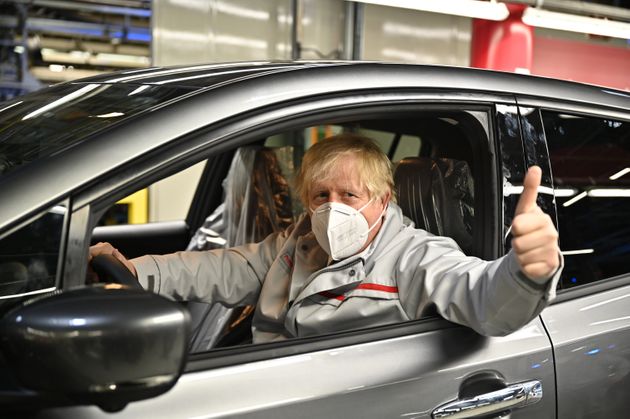
Jeff J MitchellPA
Brace, brace, brace. That’s the mood among Labour MPs as they face what many believe will be another by-election defeat, this time in Batley. But it’s also the mood among some Tory MPs right now, as they prepare for the much more important prospect of a Covid third (or is it fourth?) wave.
You always know something is up when our prime minister strikes a cautious tone, and today he carefully planted the seed of the idea that ‘Freedom Day’ may not in fact mean the total liberty that many had been hoping for.
In one of those not-scripted-honest pool TV ‘clips’ he does to avoid press conferences, the PM said there may be “extra precautions that we have to take” after July 19. New health secretary Sajid Javid refused to say this week that he would lift all restrictions and here was apparent confirmation.
What form these extra precautions will take is still unclear, though it sounds like mask-wearing and social distancing rules will be eased. The extension of the ‘work from home if you can’ edict is a prime candidate to continue, however. With the measure the R or reproduction number of the virus rising, No.10 has long known that home working helps take a chunk of that R value out of the game.
The other clue the PM gave to his current state of mind came when he gently dismissed hopes of urgent action to stop schools from sending kids home in blanket year group ‘bubbles’. Instead, we have to be “cautious” ahead of the “natural firebreak of the summer holidays when the risk in schools will greatly diminish and just ask people to be a little bit patient”.
Rob Halfon, the chair of the Commons education select committee, tells our CommonsPeople podcast this week that he would like to see more widespread use of East Asian-style ‘micro-targeting’ of Covid cases and their contacts in the classroom. The schools that operate such policies certainly seem to make it work effectively.
The PM may be trying to sound cautious about easing some restrictions right now because he knows the scary rise in case numbers will be a presentational problem that makes any unlocking look counterintuitive. We all know by now to focus on hospitalisations rather than case numbers, but the worrying thing is today is that hospital admissions went up by 56% on last week.
No.10 was keen to stress today that case numbers were “not feeding through into big rises in hospitalisations and deaths”. Yet while the vaccination programme has weakened the link between Covid and severe illness, it has not yet broken it. And some of the data is undeniably worrying.
Almost everyone around Johnson believes he will go ahead with the July 19 ‘freedom day’. So far, it seems that his medical and scientific advisers believe that is a credible timetable too. As Chris Whitty hinted a few weeks ago, and as No10 reminded us today, that doesn’t mean there won’t be a third wave. The test is whether that wave has the impact that some fear.
One advantage Downing Street has is the wriggle room that stems from its refusal to set specific benchmarks or thresholds for the levels of case numbers, hospital numbers and, most tellingly, for the level of deaths. But the PM’s line that his roadmap will be “irreversible” does suggest that all the pressure will be on keeping things open.
The risk calculus is something that the PM is grappling with. I’ve asked before what level of deaths he is prepared to tolerate in coming months. Yet in fact it is the general public who will be facing some big questions too: what level of deaths and hospitalisations are they prepared to tolerate? Brace yourself for the answer to that one.


Researchers at La Jolla Institute for Immunology (LJI) have found that T cells from people who have recovered from COVID-19 or received the Moderna or Pfizer-BioNTech vaccines are still able to recognize several concerning SARS-CoV-2 variants.
Their new study, published online on July 1, 2021 in Cell Reports Medicine, shows that both CD4+ “helper” T cells and CD8+ “killer” T cells can still recognize mutated forms of the virus. This reactivity is key to the body’s complex immune response to the virus, which allows the body to kill infected cells and stop severe infections.
“This study suggests that the impact of mutations found in the variants of concern is limited,” says LJI Professor Alessandro Sette, Dr.Bio.Sci., study senior author and member of the LJI Center for Infectious Disease and Vaccine Research. “We can presume that T cells would still be available as a line of defense against viral infection.”
The researchers emphasize that the study only addresses how the body’s T cells respond to Variants of Concern (VOCs). The researchers emphasize that several of these variants, are linked to lower levels of virus-fighting antibodies.
The current study includes data on four of the most prevalent VOCs. Ongoing studies have been expanded to a larger panel of variants, including the Delta (B.1.617.2) variant, which became prevalent after this study had been initiated. The team has also established relationships with more than 20 different laboratories around the world to help monitor T cell reactivity to VOCs.
“These variants are still a concern, but our study shows that even if there is a decrease in antibodies, as other studies have shown, the T cells remain largely unaffected,” says LJI Instructor Alba Grifoni, Ph.D. “The vaccines still work.”
The Johnson & Johnson/Janssen COVID-19 vaccine was not part of this study because it was not available at the time the study was launched.
For the new study, the researchers analyzed T cells from three different groups: people who had recovered from COVID-19, people who had received either the Moderna or Pfizer-BioNTech vaccines, and people never exposed to SARS-CoV-2 (from samples taken before the pandemic).
Both the recovered subjects and the vaccinated subjects were likely to have T cells that recognized the “ancestral lineage” of SARS-CoV-2. This was the original strain that emerged at the beginning of the pandemic; however, the virus has mutated since December 2019, and several variants have been identified as VOCs.
The question was whether people with T cells trained to recognize the ancestral strain would also recognize the new variants. The researchers tested T cell responses from the donor groups against four prominent VOCs: Alpha (B.1.1.7), Beta (B.1.351), Gamma (P.1) and Epsilon (B.1.427/B.1.429).
The researchers found that both vaccinated individuals and the recovered patients had cross-reactive T cells that could target these variants. That is good news for anyone who has received one of the two mRNA vaccines and for anyone who has recovered from any variant of the virus.
“With this study, the underlying message is optimistic,” adds Tarke. “At least, as far as the T cell response goes, your immune system is still able to recognize these new variants and your T cells will be able to respond.”
Similar results reporting largely unaffected T cell reactivity has now been presented through independent studies published in Nature and Science Immunology.
Study co-author and LJI Professor Shane Crotty, Ph.D., says this research highlights the importance of enlisting T cells in fighting SARS-CoV-2.
“COVID vaccines do a fantastic job of making antibodies that stop SARS-CoV-2 infections, but some of the vaccines do less well at stopping infections from variants,” Crotty says. “You can think of T cells as a backup system: if the virus gets past the antibodies — if you have vaccine T cells the T cells can probably still stop the variant coronavirus infection before you get pneumonia.”
Researchers are now looking for ways to take advantage of how flexible the T cells response appears to be. With T cells already working hard to recognize SARS-CoV-2 variants, Grifoni says future “booster” shots could increase immunity by prompting the body to produce more antibodies against the variants and/or by adding additional parts of the virus recognized by T cells.
“T cell epitopes are well conserved among SARS-CoV-2 variants, so incorporating T cell targets into future COVID vaccines could be a clever way to make sure future variants can’t escape the vaccines,” adds Crotty.
There is also the possibility that current SARS-CoV-2 research may one day lead to a universal, “pan-coronavirus” vaccine. This kind of vaccine would train the body to recognize the structural details, such as elements of the spike protein, that all coronaviruses have in common.
“This research shows that a pan-coronavirus vaccine is feasible,” says Grifoni.
The group is now studying a much larger group of 12 different Variants of Concern (VOCs) and Variants of Interest (VOIs), including the Delta variant (B.1.617.2), Eta (B.1.525), Iota (B.1.526), Kappa (B.1.617.1), Lambda (C37) and the variants B.1.526.1, B.1.617.3, R1 and B.1.1.519.
Sette says he’d also like to study T cells from people who have been infected with the variants and see how those T cells react to the ancestral strain of the virus.
The study, “Impact of SARS-CoV-2 variants on the total CD4+ and CD8+ T cell reactivity in infected or vaccinated individuals” was supported by The National Institutes of Health’s National Institute of Allergy and Infectious Diseases (AI142742, 75N9301900065, 75N93019C00001 and SARS-CoV-2 Assessment of Viral Evolution program (SAVE) ), the National Institutes of Health (grants U01 CA260541-01, AI036214), UC San Diego T32s (AI007036, AI007384), the Jonathan and Mary Tu Foundation, and a Clinical and Experimental Immunology Course at the University of Genoa, Italy.
Additional study authors include John Sidney, Nils Methot, Esther Dawen Yu, Yun Zhang, Jennifer M. Dan, Paul Rubiro, Aaron Sutherland, Eric Wang, Ricardo da Silva Antunes, April Frazier, Sydney I. Ramirez, Bjoern Peters, Richard Scheuermann, Stephen A. Rawlings, Davey M. Smith and Daniela Weiskopf.
LJI findings guide COVID-19 vaccine efforts
This study was previously published online as a pre-print in March 2021. The findings were then highlighted by National Institutes of Allergy and Infectious Diseases Director Anthony Fauci, M.D., in a March 31 White House press briefing.
“We’re learning more and more that these CD4+ and CD8+ T cells are very important in that they cross-react against certain viral variants,” Fauci said.
In the time since the paper was first published, the researchers nearly tripled their patient cohort and performed an additional method of stringent statistical analysis. “We’ve also added an unexposed donor cohort,” says study first author Alison Tarke, a Ph.D. student of the University of Genoa, guested in the Sette Lab at LJI.

A study by Stanford University School of Medicine investigators hints that people with COVID-19 may experience milder symptoms if certain cells of their immune systems “remember” previous encounters with seasonal coronaviruses — the ones that cause about a quarter of the common colds kids get.
These immune cells are better equipped to mobilize quickly against SARS-CoV-2, the coronavirus responsible for COVID-19, if they’ve already met its gentler cousins, the scientists concluded.
The findings may help explain why some people, particularly children, seem much more resilient than others to infection by SARS-CoV-2, the coronavirus that causes COVID-19. They also might make it possible to predict which people are likely to develop the most severe symptoms of COVID-19.
The immune cells in question, called killer T cells, roam through the blood and lymph, park in tissues and carry out stop-and-frisk operations on resident cells. The study, published online July 1 in Science Immunology, showed that killer T cells taken from the sickest COVID-19 patients exhibit fewer signs of having had previous run-ins with common-cold-causing coronaviruses.
Discussions about immunity to COVID-19 often center on antibodies — proteins that can latch onto a virus before it’s able to infect a vulnerable cell. But antibodies are easily fooled, said Mark Davis, PhD, a professor of microbiology and immunology; director of Stanford’s Institute for Immunity, Transplantation and Infection; and a Howard Hughes Medical Institute investigator. Davis is the study’s senior author.
“Pathogens evolve quickly and ‘learn’ to hide their critical features from our antibodies,” said Davis, who is also the Burt and Marion Avery Family Professor. But T cells recognize pathogens in a different way, and they’re tough to fool.
Our cells all issue real-time reports on their inner state of affairs by routinely sawing up some samples of each protein they’ve made lately into tiny pieces called peptides and displaying those peptides on their surfaces for inspection by T cells.
When a killer T-cell’s receptor notices a peptide on a cell’s surface that doesn’t belong there — for example, it’s from a protein produced by an invading microorganism — the T cell declares war. It multiplies furiously, and its numerous offspring — whose receptors all target the same peptide sequence — fire up to destroy any cell carrying these telltale-peptide indications of that cell’s invasion by a pathogenic microbe.
Some of the original killer T cell’s myriad daughter cells enter a more placid state, remaining above the fray. These “memory T cells” exhibit heightened sensitivity and exceptional longevity. They persist in the blood and lymph often for decades, ready to spring into action should they ever cross paths with the peptide that generated the wave of T-cell expansion that begat them. That readiness can save valuable time in stifling a previously encountered virus or a close cousin.
As the pandemic progressed, Davis mused: “A lot of people get very sick or die from COVID-19, while others are walking around not knowing they have it. Why?”
To find out, the study’s first author, postdoctoral fellow Vamsee Mallajosyula, PhD, first confirmed that some portions of SARS-CoV-2’s sequence are effectively identical to analogous portions of one or more of the four widespread common-cold-causing coronavirus strains. Then he assembled a panel of 24 different peptide sequences that were either unique to proteins made by SARS-CoV-2 or also found on similar proteins made by one or more (or even all) of the seasonal strains.
The researchers analyzed blood samples taken from healthy donors before the COVID-19 pandemic began, meaning they’d never encountered SARS-CoV-2 — although many presumably had been exposed to common-cold-causing coronavirus strains. The scientists determined the numbers of T cells targeting each peptide represented in the panel.
They found that unexposed individuals’ killer T cells targeting SARS-CoV-2 peptides that were shared with other coronaviruses were more likely to have proliferated than killer T cells targeting peptides found only on SARS-CoV-2. The T cells targeting those shared peptide sequences had probably previously encountered one or another gentler coronavirus strain — and had proliferated in response, Davis said.
Many of these killer T cells were in “memory” mode, he added.
“Memory cells are by far the most active in infectious-disease defense,” Davis said. “They’re what you want to have in order to fight off a recurring pathogen. They’re what vaccines are meant to generate.”
Killer T cells whose receptors target peptide sequences unique to SARS-CoV-2 must proliferate over several days to get up to speed after exposure to the virus, Davis said. “That lost time can spell the difference between never even noticing you have a disease and dying from it,” he said.
To test this hypothesis, Davis and his colleagues turned to blood samples from COVID-19 patients. They found that, sure enough, COVID-19 patients with milder symptoms tended to have lots of killer-T memory cells directed at peptides SARS-CoV-2 shared with other coronavirus strains. Sicker patients’ expanded killer T-cell counts were mainly among those T cells typically targeting peptides unique to SARS-CoV-2 and, thus, probably had started from scratch in their response to the virus.
“It may be that patients with severe COVID-19 hadn’t been infected, at least not recently, by gentler coronavirus strains, so they didn’t retain effective memory killer T cells,” Davis said.
Davis noted that cold-causing seasonal coronavirus strains are rampant among children, who rarely develop severe COVID-19 even though they’re just as likely to get infected as adults are.
“Sniffles and sneezes typify the daycare setting,” he said, “and coronavirus-caused common colds are a big part of the reason. As many as 80% of kids in the United States get exposed within the first couple of years of life.”
Davis and Mallajosyula have filed, through Stanford’s Office of Technology Licensing, for patents on the technology used in this study.
Davis is a member of Stanford Bio-X, the Stanford Cardiovascular Institute, the Stanford Maternal and Child Health Research Institute, the Stanford Cancer Institute and the Stanford Wu Tsai Neurosciences Institute.
Other Stanford study co-authors are former undergraduate student Conner Ganjavi; postdoctoral scholar Saborni Chakraborty, PhD; former life science research professionals Alana McSween and Allison Nau; graduate student Ana Jimena Pavlovitch-Bedzyk; life science research professional Julie Wilhelmy; Monali Manohar, PhD, laboratory director and research scientist at the Sean N. Parker Center for Asthma and Allergy Research; and Kari Nadeau, MD, PhD, professor of pediatrics and director of the Sean N. Parker Center.
The work was funded by the National Institutes of Health (grants AI057229 and U01 AI140498); Stanford’s Institute for Immunity, Transplantation and Infection; the Howard Hughes Medical Institute; the Bill and Melinda Gates Foundation; the Sean N. Parker Center and the Sunshine Foundation.
Stanford’s Department of Microbiology and Immunology also supported the work.

Scientists have long searched in vain for a class of brain cells that could explain the visceral flash of recognition that we feel when we see a very familiar face, like that of our grandmothers. But the proposed “grandmother neuron” — a single cell at the crossroads of sensory perception and memory, capable of prioritizing an important face over the rabble — remained elusive.
Now, newresearch reveals a class of neurons in the brain’s temporal pole region that links face perception to long-term memory. It’s not quite the apocryphal grandmother neuron — rather than a single cell, it’s a population of cells that collectively remembers grandma’s face. The findings, published in Science, are the first to explain how our brains inculcate the faces of those we hold dear.
“When I was coming up in neuroscience, if you wanted to ridicule someone’s argument you would dismiss it as ‘just another grandmother neuron’ — a hypothetical that could not exist,” says Winrich Freiwald, professor of neurosciences and behavior at The Rockefeller University.
“Now, in an obscure and understudied corner of the brain, we have found the closest thing to a grandmother neuron: cells capable of linking face perception to memory.”
Have I seen that face before?
The idea of a grandmother neuron first showed up in the 1960s as a theoretical brain cell that would code for a specific, complex concept, all by itself. One neuron for the memory of one’s grandmother, another to recall one’s mother, and so on. At its heart, the notion of a one-to-one ratio between brain cells and objects or concepts was an attempt to tackle the mystery of how the brain combines what we see with our long-term memories.
Scientists have since discovered plenty of sensory neurons that specialize in processing facial information, and as many memory cells dedicated to storing data from personal encounters. But a grandmother neuron — or even a hybrid cell capable of linking vision to memory — never emerged. “The expectation is that we would have had this down by now,” Freiwald says. “Far from it! We had no clear knowledge of where and how the brain processes familiar faces.”
Recently, Freiwald and colleagues discovered that a small area in the brain’s temporal pole region may be involved in facial recognition. So the team used functional magnetic resonance imaging as a guide to zoom in on the TP regions of two rhesus monkeys, and recorded the electrical signals of TP neurons as the macaques watched images of familiar faces (which they had seen in-person) and unfamiliar faces that they had only seen virtually, on a screen.
The team found that neurons in the TP region were highly selective, responding to faces that the subjects had seen before more strongly than unfamiliar ones. And the neurons were fast — discriminating between known and unknown faces immediately upon processing the image.
Interestingly, these cells responded threefold more strongly to familiar over unfamiliar faces even though the subjects had in fact seen the unfamiliar faces many times virtually, on screens. “This may point to the importance of knowing someone in person,” says neuroscientist Sofia Landi, first author on the paper. “Given the tendency nowadays to go virtual, it is important to note that faces that we have seen on a screen may not evoke the same neuronal activity as faces that we meet in-person.”
A tapestry of grandmothers
The findings constitute the first evidence of a hybrid brain cell, not unlike the fabled grandmother neuron. The cells of the TP region behave like sensory cells, with reliable and fast responses to visual stimuli. But they also act like memory cells which respond only to stimuli that the brain has seen before — in this case, familiar individuals — reflecting a change in the brain as a result of past encounters. “They’re these very visual, very sensory cells — but like memory cells,” Freiwald says. “We have discovered a connection between the sensory and memory domains.”
But the cells are not, strictly speaking, grandmother neurons. Instead of one cell coding for a single familiar face, the cells of the TP region appear to work in concert, as a collective.
“It’s a ‘grandmother face area’ of the brain,” Freiwald says.
The discovery of the TP region at the heart of facial recognition means that researchers can soon start investigating how those cells encode familiar faces. “We can now ask how this region is connected to the other parts of the brain and what happens when a new face appears,” Freiwald asks. “And of course, we can begin exploring how it works in the human brain.”
In the future, the findings may also have clinical implications for people suffering from prosopagnosia, or face blindness, a socially isolating condition that affects about one percent of the population. “Face-blind people often suffer from depression. It can be debilitating, because in the worst cases they cannot even recognize close relatives,” Freiwald says.
“This discovery could one day help us devise strategies to help them.”
More schools should be able to run Asian-style isolation systems for Covid contacts to ensure fewer people are sent home, a senior Tory has said.
Rob Halfon, who chairs the Commons education committee, suggested that official guidance for schools could be cleared up to allow targeted approaches, rather than forcing whole school “bubbles” to go into isolation if there is a virus case.
With around 385,000 pupils in England absent from school as a result of Covid, Halfon stressed: “We are damaging their mental health”.
The government has suggested it will scrap so-called “bubbles” of schoolchildren, who often all have to isolate if one catches Covid, from autumn.
But Boris Johnson is resisting pressure to move quicker, insisting summer holidays would act as a “natural firebreak” to infections.
Halfon spoke to HuffPost UK’s Commons People podcast during a visit to the Ashcroft Technology Academy in south London, which he said was running a much more targeted Asian style model of isolation.
“When they have a Covid outbreak they do not send the whole school year groups or whole bubbles home,” Halfon said.
“They microtarget the students who have been affected, so they only send a few [home] at a time, a bit like the Asian model in some ways, what goes on in South Korea and so on.
“When I asked them how come you do this, they said they speak to Public Health England, they speak to the Department for Education every time there is such an outbreak and they are advised that they are able to do this.
“So if they are, why are 385,000 kids being sent home?
“I appreciate of course it is very difficult for teachers and support staff absolutely and they are doing a remarkable job considering.
“But clearly the guidance is confusing and schools may be being told different things by different arms of PHE or the DfE.”
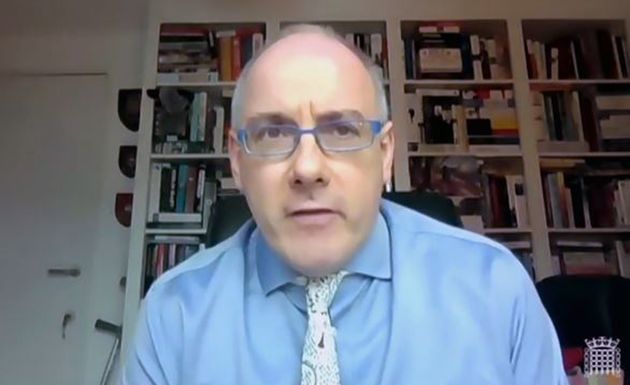
House of Commons/PA
Halfon acknowledged that it would be difficult to roll out a similar system across the whole country.
But he said it would be beneficial if more pupils could benefit from the approach.
“Obviously there’s very different circumstances in some schools, the outbreaks may be greater, they may have many staff off sick for Covid or for Covid-related reasons or shielding, so I get that it’s not possible to replicate it.
“But if one school can do it, there must be others who can do it.
“It doesn’t mean every school can do it, but just because every school can’t do it doesn’t mean that… even if five more schools did it.
“It’s got to stop, sending kids home.
“We are damaging their mental health.”
Halfon added: “We are damaging these children by [them] being at home because inevitably they are not learning as much as they would do at school.
“But their wellbeing and mental health is really suffering and it’s putting huge pressure on the parents.
“This has just got to stop, we need our kids back into school.
“People have been vaccinated now, I’m not a lockdown-sceptic, I’m a ‘schooldown-sceptic’.”
Asked why the government did not just scrap the bubble system now, the prime minister told reporters on Thursday: “I understand people’s frustration when whole classes, whole bubbles, are sent home and people are asked to isolate.
“So what’s happening now is Public Health England and the scientists are looking at the advantages, the possibilities, of going to testing rather than isolation.
“They haven’t concluded yet so what I want to do is just to be cautious as we go forward to that natural firebreak of the summer holidays when the risk in schools will greatly diminish and just ask people to be a little bit patient.”

Leading scientists say the official list needs to be expanded to make sure cases are not missed.
Ollie Bibby’s family say they are happy that visiting restrictions will be reviewed.
The government cannot say how many Covid infections in England are being prevented by sending pupils home.
