A taskforce has been set up after figures showed seven babies in 1,000 die in Birmingham.


A taskforce has been set up after figures showed seven babies in 1,000 die in Birmingham.
The UK is still in a “vulnerable situation”, one of the country’s vaccine advisers says.
A deadly second wave has overrun hospitals and even crematoriums in India.
For Altou, a 19-year-old model, having a ‘slim thick’ body is the key to getting more likes and more work.

Defence minister Johnny Mercer, the Conservative MP for Plymouth Moor View, has resigned from the government.
Boris Johnson thanked Mercer for his service as a minister, according to a Downing Street spokeswoman.
In a statement released shortly after 7pm, the spokeswoman said: “This evening the prime minister has accepted the resignation of Johnny Mercer as minister for defence people and veterans.
“He thanks Johnny Mercer for his service as a government minister since 2019.”
In a letter to the PM, posted on his Twitter account, Mercer said: “It is with a heavy heart that I am forced to offer you my resignation from your government.”
He said he had hoped Johnson’s premiership would “signal a step change in veterans affairs in the UK”.
Mercer added: “Whilst we continue to say all the right things, you will understand that if we fail to match that with what we deliver, we risk damaging an already bruised veterans cohort further, as I told you last month in our first face to face meeting, we crossed that line some time ago.”
This is a breaking news story and will be updated. Follow HuffPost UK on Twitter here, and on Facebook here.


Boris Johnson has announced a new taskforce designed to identify tablets people can take at home to help them recover from Covid-19.
The prime minister said on Tuesday it would be modelled on the “success of our vaccination programme”.
Johnson said medicines could be available as early as the autumn, designed to stop the infection spreading and speed up recovery time.
“Our new antivirals taskforce will seek to develop innovative treatments you can take at home to stop Covid-19 in its tracks,” he said.
“These could provide another vital defence against any future increase in infections and save more lives.”
Antiviral drugs are a type of medication used specifically for treating viral infections, and act by killing or preventing the growth of viruses.
The Department for Health and Social Care (DHSC) said the taskforce’s aim was to have at least two effective treatments this year, a tablet or a capsule, which people can take following a positive test or exposure to someone with the virus.
Matt Hancock, the health secretary, said medicines were a “vital weapon” in combating the disease.
“The UK is leading the world in finding and rolling out effective treatments for Covid-19, having identified dexamethasone, which has saved over a million lives worldwide, and tocilizumab,” he said.
“I am committed to boosting the UK’s position as a life science superpower and this new taskforce will help us beat Covid-19 and build back better.”
Patrick Vallance, the government’s chief scientific adviser, said tablets would be a “key tool”.
“They could help protect those not protected by or ineligible for vaccines. They could also be another layer of defence in the face of new variants of concern,” he said.
“The taskforce will help ensure the most promising antivirals are available for deployment as quickly as possible.”
A chair of the new taskforce has yet to be identified, but a recruitment process will start shortly, DHSC said.

The government has refused to reject the controversial race report, which has been described as “incoherent, divisive and offensive”.
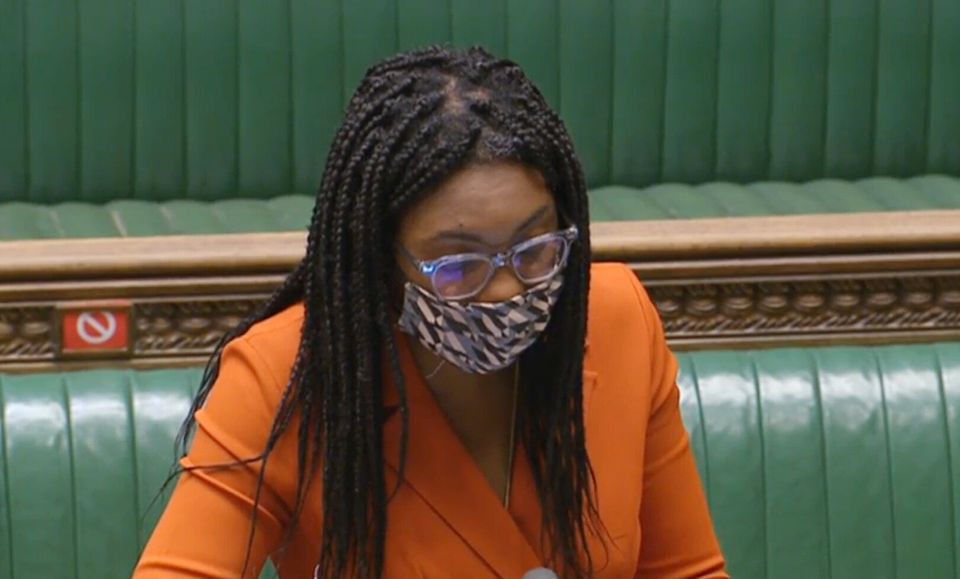
Equalities minister Kemi Badenoch said she was “very proud” of the “independent” report and criticised the “appalling abuse” suffered by members of the commission on race and ethnic disparities.
She rejected calls to reject the review from Labour, which described it as a “shoddy, point-scoring polemic which ignores evidence and does not represent the country”.
The shadow equalities minister Marsa De Cordova said the report had been “discredited” by the British Medical Association, public health expert Sir Michael Marmot, trade unions, Baroness Doreen Lawrence and human rights experts at the United Nations.
On Monday, the UN Working Group of Experts on People of African Descent said the “reprehensible” report attempts to “normalise white supremacy” and could “fuel racism” in the UK.
But Badenoch told the Commons: “I’m very proud of it and of course we will not be withdrawing the report.
The equalities minister also said it was wrong to accuse people who argue for a different approach on how to address racial inequality as being “racism deniers” or “race traitors”.
She added: “The government even more firmly condemns the deeply personal and racialised attacks against the commissioners, which have included death threats.
“And in fact one member from the opposition benches presented commissioners as members of the Ku Klux Klan, an example of the very online racial hatred and abuse on which the report itself recommended more action be taken by government.”
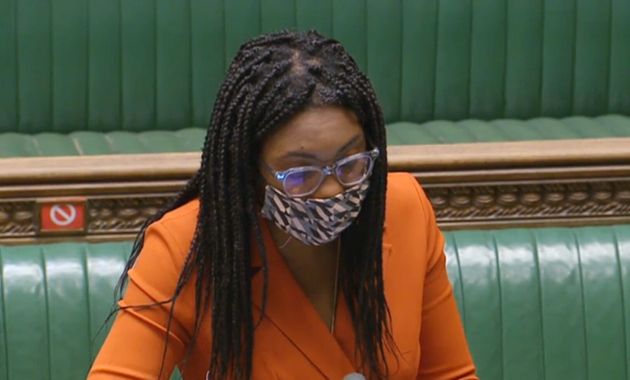
House of Commons – PA Images via Getty Images
Badenoch also claimed the report does not deny institutional racism despite a government briefing on the eve of its publication making clear that “the well-meaning ‘idealism’ of many young people who claim the country is still institutionally racist is not borne out by the evidence”.
She told the Commons: “The report does not deny that institutional racism exists in the UK, rather the report did not find conclusive evidence of it in the specific areas it examined.”
The equalities minister also insisted the commissioners did not want to “put a positive spin on the atrocities of slavery”, despite chair Tony Sewell writing in the report’s foreword that schools should teach a “new story” about African people and that the slave period was “not only… about profit and suffering”.
De Cordova hit back: “If left unchallenged, this report will undo decades of progress made towards race equality in the UK. Since publication, this report has completely unravelled.
“Its cherry-picking of data is misleading and incoherent, its conclusions are ideologically motivated and divisive, it is absolutely clear to all of us on this side of the House and across civil society that this report has no credibility.”
She added: “It is reprehensible and I hope the minister will reject it today so that we can get on with the task of tackling institutional and structural racism which is the lived experience of many.”
Badenoch said the government would respond formally to the report by the summer.
She and the prime minister have established a new, inter-ministerial group to review the report’s 24 recommendations, which will be chaired by Michael Gove.


A novel system of chilled panels that can replace air conditioning can also help reduce the risk of indoor disease transmission, suggests new analysis from the University of British Columbia, University of Pennsylvania and Princeton University.
The researchers computed air conditioning requirements in 60 of the world’s most populous cities — with the additional ventilation required due to COVID-19. Then, they compared the energy costs with their cooling method, using the chilled panels and natural ventilation.
The results, published in the COVID-19 edition of Applied Energy, showed that the alternative solution can save up to 45 per cent of the required energy, while ensuring building occupants are comfortable and rooms are adequately refreshed.
Dr. Adam Rysanek, a professor in the school of architecture and landscape architecture at UBC and co-author of the paper, notes that many public health guidelines, as well as building industry bodies, recommend increasing the flow of fresh, outdoor air into buildings in order to reduce the risk of spreading COVID-19 and other diseases.
“However, if we continue to rely on conventional HVAC systems to increase indoor fresh air rates, we may actually double energy consumption. That’s the nature of conventional HVAC.”
“Alternatively, we can encourage people to install new types of radiant cooling systems, which allow them to keep their windows open even when it’s hot outside. These alternative systems can provide a sufficient level of thermal comfort, increase protection against disease while lessening the impact on the environment,” noted Rysanek, director of the Building Decisions Research Group at UBC’s faculty of applied science.
Rysanek and his colleagues earlier demonstrated their cooling system in the hot and humid climate of Singapore. They built a public pavilion featuring a system of chilled tubes enclosed within a condensation-preventing membrane. This allowed occupants to feel comfortable, and even cold, without changing the air temperature surrounding the human body.
“You can think of it as lean A/C — or, even better, as a green alternative to energy-guzzling air conditioning,” said Rysanek.
Toronto is one of the cities included in the latest analysis, as are Beijing, Miami, Mumbai, New York and Paris. In all these regions, peak summer temperatures can soar past 35 degrees Celsius (95 degrees Fahrenheit).
“A key impact of climate change is the accelerating rise in average and peak temperatures, particularly in urban areas. We are expecting the appetite for indoor cooling will ramp up in the years ahead. Yet, if we want to mitigate urban heat and ensure people are healthy and comfortable while reducing our energy use, we need to seriously consider revolutionising our historical approach to air-conditioning,” adds Rysanek.
Rysanek notes that, though chilled panel systems have been around for decades, adding the special membrane devised by the research team could be the key to making it a commercially viable alternative to traditional HVAC systems in all climates.
Story Source:
Materials provided by University of British Columbia. Note: Content may be edited for style and length.

A long-awaited, high-tech analysis of the upper body of famed fossil “Little Foot” opens a window to a pivotal period when human ancestors diverged from apes, new USC research shows.
Little Foot’s shoulder assembly proved key to interpreting an early branch of the human evolutionary tree. Scientists at the Keck School of Medicine of USC focused on its so-called pectoral girdle, which includes collarbones, shoulder blades and joints.
Although other parts of Little Foot, especially its legs, show humanlike traits for upright walking, the shoulder components are clearly apelike, supporting arms surprisingly well suited for suspending from branches or shimmying up and down trees rather than throwing a projectile or dangling astride the torso like humans.
The Little Foot fossil provides the best evidence yet of how human ancestors used their arms more than 3 million years ago, said Kristian J. Carlson, lead author of the study and associate professor of clinical integrative anatomical sciences at the Keck School of Medicine.
“Little Foot is the Rosetta stone for early human ancestors,” he said. “When we compare the shoulder assembly with living humans and apes, it shows that Little Foot’s shoulder was probably a good model of the shoulder of the common ancestor of humans and other African apes like chimpanzees and gorillas.”
The apelike characteristics will likely attract considerable intrigue as science teams around the world have been examining different parts of the skeleton to find clues to human origins. The USC-led study, which also involved researchers at the University of Wisconsin, the University of Liverpool and the University of the Witwatersrand in South Africa, among others, was published today in the Journal of Human Evolution.
The journal devoted a special issue to Little Foot analyses from a global research group, which looked at other parts of the creature’s skeleton. The process is somewhat akin to the story of blind men and the elephant, each examining one part in coordination with others to explain the whole of something that’s not fully understood.
The Little Foot fossil is a rare specimen because it’s a near-complete skeleton of an Australopithecus individual much older than most other human ancestors. The creature, probably an old female, stood about 4 feet tall with long legs suitable for bipedal motion when it lived some 3.67 million years ago. Called “Little Foot” because the first bones recovered consisted of a few small foot bones, the remains were discovered in a cave in South Africa in the 1990s. Researchers have spent years excavating it from its rock encasement and subjecting it to high-tech analysis.
While not as widely known as the Lucy skeleton, another Australopithecus individual unearthed in East Africa in the 1970s, Carlson said Little Foot is older and more complete.
The USC-led research team zeroed in on the shoulder assemblies because Little Foot provides the oldest and most intact example of this anatomy ever found. Those bones provide telltale clues of how an animal moves. In human evolution, he said, these parts had to change form before our ancestors could live life free of trees, walk the open savannah and use their arms for functions other than supporting the weight of the individual.
The scientists compared the creature’s shoulder parts to apes, hominins and humans. Little Foot was a creature adapted to living in trees because the pectoral girdle suggests a creature that climbed trees, hung below branches and used its hands overhead to support its weight.
For example, the scapula, or shoulder blade, has a big, high ridge to attach heavy muscles similar to gorillas and chimpanzees. The shoulder joint, where the humerus connects, sits at an oblique angle, useful for stabilizing the body and lessening tensile loads on shoulder ligaments when an ape hangs beneath branches. The shoulder also has a sturdy, apelike reinforcing structure, the ventral bar. And the collarbone has a distinctive S-shaped curve commonly found in apes.
Those conclusions mean that the structural similarities in the shoulder between humans and African apes are much more recent, and persisted much longer, than has been proposed, Carlson said.
“We see incontrovertible evidence in Little Foot that the arm of our ancestors at 3.67 million years ago was still being used to bear substantial weight during arboreal movements in trees for climbing or hanging beneath branches,” he said. “In fact, based on comparisons with living humans and apes, we propose that the shoulder morphology and function of Little Foot is a good model for that of the common ancestor of humans and chimpanzees 7 million to 8 million years ago.”
The scientists were able to achieve remarkably clear images of the fossils. That’s because the bones, painstakingly excavated for many years, are in good condition and uniquely complete. The scientists examined them using micro-CT scans, which can detect minute features on the surface of an object, peer deep inside a bone, measure the density of an object and generate a 3D model without harming the fossil.

Nearly a decade ago, global news outlets reported vast ice melt in the Arctic as sapphire lakes glimmered across the previously frozen Greenland Ice Sheet, one of the most important contributors to sea-level rise. Now researchers have revealed the long-term impact of that extreme melt.
Using a new approach to ice-penetrating radar data, Stanford University scientists show that this melting left behind a contiguous layer of refrozen ice inside the snowpack, including near the middle of the ice sheet where surface melting is usually minimal. Most importantly, the formation of the melt layer changed the ice sheet’s behavior by reducing its ability to store future meltwater. The research appears in Nature Communications April 20.
“When you have these extreme, one-off melt years, it’s not just adding more to Greenland’s contribution to sea-level rise in that year — it’s also creating these persistent structural changes in the ice sheet itself,” said lead study author Riley Culberg, a PhD student in electrical engineering. “This continental-scale picture helps us understand what kind of melt and snow conditions allowed this layer to form.”
The 2012 melt season was caused by unusually warm temperatures exacerbated by high atmospheric pressure over Greenland — an extreme event that may have been caused or intensified by climate change. The Greenland Ice Sheet has experienced five record-breaking melt seasons since 2000, with the most recent occurring in 2019.
“Normally we’d say the ice sheet would just shrug off weather — ice sheets tend to be big, calm, slow things,” said senior author Dustin Schroeder, an assistant professor of geophysics at Stanford’s School of Earth, Energy & Environmental Sciences (Stanford Earth). “This is really one of the first cases where you can say, shockingly, in some ways, these slow, calm ice sheets care a lot about a single extreme event in a particularly warm year.”
Shifting scenarios
Airborne radar data, a major expansion to single-site field observations on the icy poles, is typically used to study the bottom of the ice sheet. But by pushing past technical and computational limitations through advanced modeling, the team was able to reanalyze radar data collected by flights from NASA’s Operation IceBridge from 2012 to 2017 to interpret melt near the surface of the ice sheet, at a depth up to about 50 feet.
“Once those challenges were overcome, all of a sudden, we started seeing meltwater ice layers near the surface of the ice sheet,” Schroeder said. “It turns out we’ve been building records that, as a community, we didn’t fully realize we were making.”
Melting ice sheets and glaciers are the biggest contributors to sea-level rise — and the most complex elements to incorporate into climate model projections. Ice sheet regions that haven’t experienced extreme melt can store meltwater in the upper 150 feet, thereby preventing it from flowing into the ocean. A melt layer like the one from 2012 can reduce the storage capacity to about 15 feet in some parts of the Greenland Ice Sheet, according to the research.
The type of melt followed by rapid freeze experienced in 2012 can be compared to wintry conditions in much of the world: snow falls to the ground, a few warm days melt it a little, then when it freezes again, it creates slick ice — the kind that no one would want to drive on.
“The melt event in 2012 is impacting the way the ice sheet responds to surface melt even now,” Culberg said. “These structural changes mean the way the ice sheet responds to surface melting is going to be impacted longer term.”
In the long run, meltwater that can no longer be stored in the upper part of the ice sheet may drain down to the ice bed, creating slippery conditions that speed up the ice and send chunks into the ocean, raising sea levels more quickly.
Polar patterns
Greenland currently experiences change much more rapidly than its South Pole counterpart. But lessons from Greenland may be applied to Antarctica when the seasons shift, Schroeder said.
“I think now there’s no question that when you’re trying to project into the future, a warming Antarctic will have all these processes,” Schroeder said. “If we don’t use Greenland now to better understand this stuff, our capacity to understand how a warmer world will be is not a hopeful proposition.”
The research was supported by a National Defense Science and Engineering Graduate Fellowship and the National Science Foundation (NSF).
Story Source:
Materials provided by Stanford University. Original written by Danielle Torrent Tucker. Note: Content may be edited for style and length.
