
A beating biorobotic heart aims to better simulate valves

Combining a biological heart and a silicone robotic pump, researchers created a biorobotic heart that beats like a real one, with a focus on a valve on the left side of the heart. The heart valve simulator, presented on January 10 in the journal Device, can mimic the structure, function, and motion of a healthy or diseased heart, allowing surgeons and researchers to demonstrate various interventions while collecting real-time data.

“The simulator has a huge benefit as a research tool for those who study different heart valve conditions and interventions,” says senior author and biomedical engineer Ellen Roche of the Massachusetts Institute of Technology. “It can serve as a surgical training platform for clinicians, medical students, and trainees, allow device engineers to study their new designs, and even help patients better understand their own disease and potential treatments.”

Before new interventions reach humans, they undergo rigorous testing in heart simulators and animal subjects. However, current heart simulators don’t completely capture the complexity of a heart and have a short shelf-life of two to four hours. Animal studies are expensive and time consuming, and the findings may not always translate to humans. The biorobotic heart can bridge these gaps as a less expensive method with a shelf life of months.

The researchers focused on mitral regurgitation, a disorder in which the valve between the left heart chambers doesn’t close properly — resulting in a leaky heart valve where blood can flow backwards. This condition, affecting about 24.2 million people worldwide, can cause shortness of breath, swelling in the limbs, and heart failure. Given the intricacy of the valve’s structure, surgeries to correct the disorder are highly complex, highlighting a need for effective technology and precise surgical techniques.

To better understand the mitral valve in healthy and diseased states, the team built a biorobotic heart based on a pig heart. The researchers replaced the heart muscle in the left chamber with a silicone-made soft robotic pump system actuated by air. When inflated, the system twists and squeezes the heart like real heart muscle, pumping artificial blood through a mock circulation system and simulating the beat of a biological heart.

When the team damaged the mitral valve in the biorobotic heart, it showed characteristics of a leaky heart valve. The team then had cardiac surgeons correct the damage with three different techniques: anchoring the flailing valve leaflet tissue with artificial chords, replacing the valve with a prosthetic valve, and implanting a device to help valve leaflet closing.

All three procedures were successful, bringing the pressure, flow, and heart function to normal. The system also enabled the research team to collect real-time data during surgery and is compatible with current imaging technologies used in the clinics. Because the artificial blood used in the system is clear, it also allows direct visualization of the procedure. The findings demonstrated the device as a new heart model.

“It was really interesting for the surgeons to see every step,” says Roche. “When you’re working with patients, you can’t visualize the process because there’s blood in the heart.” She foresees their heart model as a realistic environment for cardiac surgery training and practice.

Next, the team aims to optimize the current biorobotic heart system by shortening the production time and lengthening the shelf life even more. Instead of using a pig heart, they’re also exploring 3D printing technology to recreate a synthetic human heart for the system.

“Our biorobotic heart may help improve the device design cycle, allow rapid iterations, get things approved by regulatory bodies, and launch them into the market quickly,” says Roche. “Expediting and improving these processes will ultimately benefit patients.”

Share Button

Scientists crack mystery of how MS gene spread

The DNA of ancient cattle herders has revealed how diseases evolved in Europe over thousands of years.

Share Button

Covid inquiry postpones vaccine investigation

The probe into vaccines and Covid drugs planned for the summer of 2024 has been delayed, inquiry officials have said.

Share Button

Epstein Accuser Backs Claims He Had ‘Sex Tapes’ Of Trump, Clinton And Prince Andrew

A Jeffrey Epstein accuser is speaking out about past claims she made that the late pedophile kept video footage of his various friends having sex at his home, saying it’s absolutely true and that she only recanted her story years ago out of fear following threats.

“It’s no secret that everything was recorded,” Sarah Ransome, who settled a civil suit with Epstein and his madam Ghislaine Maxwell in 2018, told Good Morning Britain on Tuesday. “Multiple victims have come forward confirming my account, along with others. I have also seen recordings in his office.”

These recordings supposedly show former President Donald Trump, former President Bill Clinton, Prince Andrew, and British business magnate Richard Branson having sex with an unnamed woman, Ransome claimed in 2016 emails that were published on Monday as part of a defamation lawsuit brought by fellow Epstein accuser, Virginia Giuffre.

A representative for Branson’s company, the Virgin Group, said Ransome’s claims are “baseless and unfounded” while citing a past interview she gave that called the tapes’ existence a work of fiction.

“We categorically reject all allegations made by Sarah Ransome. In 2019 she admitted to The New Yorker that the ‘tapes’ had been ‘invented,’ Any suggestion that Sir Richard Branson was involved in a ‘sex tape’ is entirely false. The allegations are baseless and unfounded,” said the representative in a statement to HuffPost. “The actions of Jeffrey Epstein were abhorrent and we support the right to justice for the many victims impacted by his abuse.”

No such tapes have been made public, nor has evidence supporting their existence.

The court documents published Monday include photos of Ransome, Maxwell, Epstein and other young women on Epstein’s private Caribbean island.

A final batch of seven documents from the court case was unsealed Tuesday.

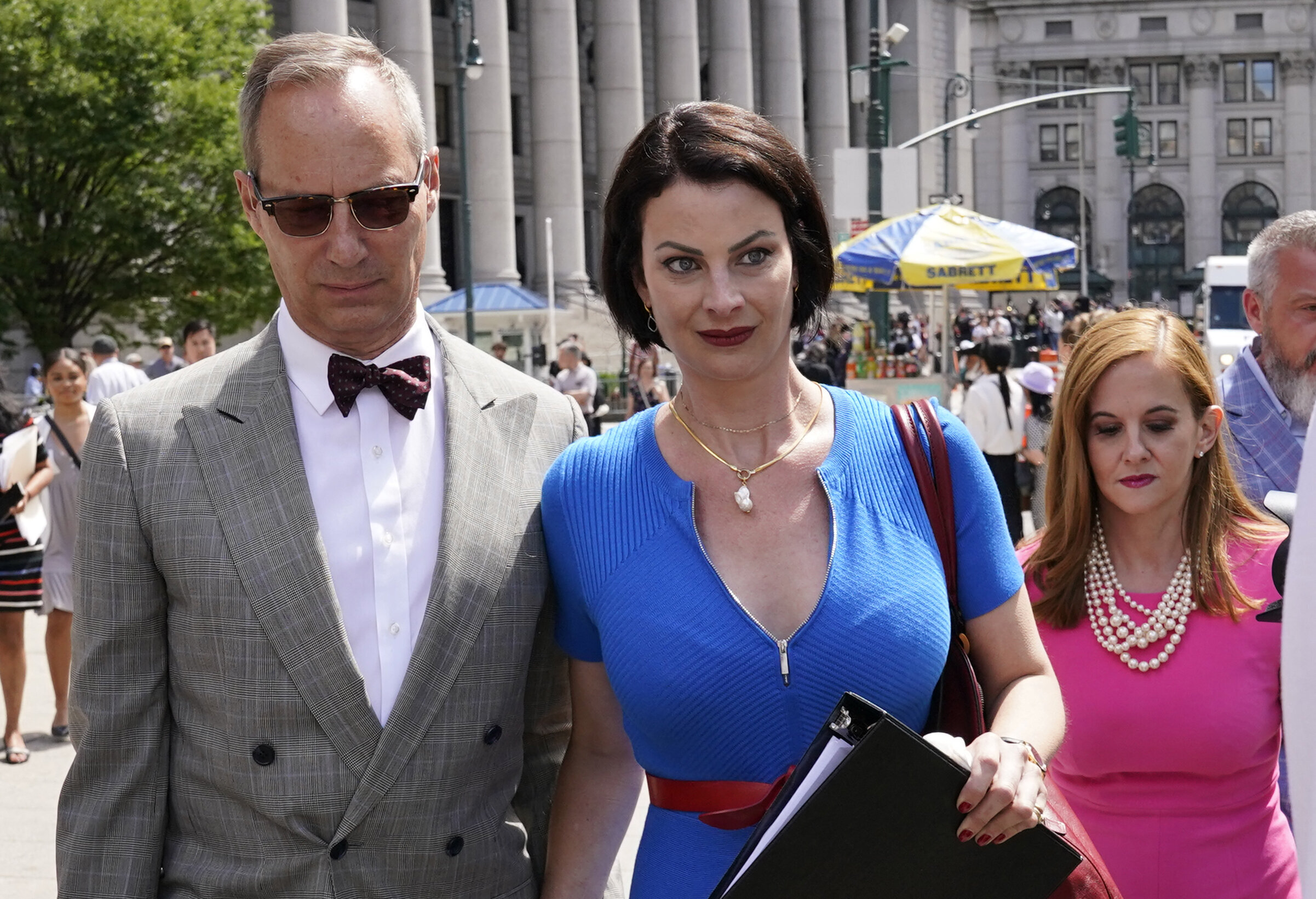
Sarah Ransome leaves a New York courthouse in 2022 following the sentencing hearing of Ghislaine Maxwell.

TIMOTHY A. CLARY via Getty Images

Ransome said she recanted the tapes’ existence years ago because Maxwell, “amongst others, regularly enforced that if I ever did come forward, myself and my family would be harmed,” she told Good Morning Britain.

Epstein died in a New York City jail in 2019 while Maxwell is currently behind bars serving out a 20-year sentence related to helping him commit his sex crimes.

Ransome first came forward with her allegations to a New York Post reporter in 2016. She said the woman who allegedly had sex with the men had personally recalled her experiences with Ransome, particularly the woman’s one-on-one time with Trump, according to the court documents.

“She confided in me about her casual ‘friendship’ with Donald,” Ransome wrote of the woman in one email to the Post reporter. “Mr Trump definitely seemed to have a thing for her and she told me how he kept going on about how he liked her ‘pert nipples.’”

She added: “I also know she had sexual relations with Trump at Jeffery’s NY mansion on regular occasions.”

Ransome retracted these claims to the Post reporter shortly after, saying going public would bring “only bad things” and “pain for my family.” The story was not published.

Then in 2019, Ransome told The New Yorker that she entirely invented the video claims. She said she wanted to draw attention to Epstein’s crimes and make him believe that she had “evidence that would come out” if he went after her, according to her interview at the time.

Ransome told Good Morning Britain on Monday that she’d be willing to testify about their existence.

Share Button

Kettering hospital baby death was investigated by major crime team

Police arrived at a distraught mother’s house the day after her daughter died at Kettering General Hospital.

Share Button

Dunstable GP surgery criticised over woman’s opioid death

A coroner says no plan was in place to reduce a women dosage of “dependency forming drugs”.

Share Button

All India Pregnant Job service: Indian men conned by ‘impregnating women’ scam

Scammers in Bihar state promised to pay huge sums of money to men to get childless women pregnant.

Share Button

Acidity of Antarctic waters could double by century’s end, threatening biodiversity

The acidity of Antarctica’s coastal waters could double by the end of the century, threatening whales, penguins and hundreds of other species that inhabit the Southern Ocean, according to new research from the Univeristy of Colorado Boulder.

Scientists projected that by 2100, the upper 650 feet (200 meters) of the ocean — where much marine life resides — could see more than a 100% increase in acidity compared with 1990s levels. The paper, appeared Jan. 4 in the journal Nature Communications.

“The findings are critical for our understanding of the future evolution of marine ecosystem health,” said Nicole Lovenduski, the paper’s co-author and the interim director of CU Boulder’s Institute of Arctic and Alpine Research (INSTAAR).

The oceans play an important role as a buffer against climate change by absorbing nearly 30% of the CO2 emitted worldwide. But as more CO2 dissolves in the oceans, the seawater becomes more acidic. “Human-caused CO2 emissions are at the heart of ocean acidification,” said Cara Nissen, the paper’s first author and a research scientist at INSTAAR.

The Southern Ocean, which surrounds Antarctica, is particularly susceptible to acidification, partly because colder water tends to absorb more CO2. Ocean currents in the area also contribute to the relatively acidic water conditions.

Using a computer model, Nissen, Lovenduski and the team simulated how the seawater of the Southern Ocean would change in the 21st century. They found it would become more acidic by 2100, and the situation would be severe if the world fails to cut emissions.

“It’s not just the top layer of the ocean. The entire water column of the coastal Southern Ocean, even at the bottom, could experience severe acidification,” Nissen said.

The team then investigated the conditions specifically in Antarctica’s marine protected areas (MPAs). Human activities, such as fishing, are restricted in these regions to protect biodiversity. Currently, there are two MPAs in the Southern Ocean, covering about 12% of water in the region. Scientists have proposed designating three more MPAs to an international council in the past years, which would encompass about 60% of the Antarctic Ocean.

The team’s model showed that both adopted and proposed MPAs would experience significant acidification by the end of the century.

For example, under the highest-emission scenario, where the world makes no efforts to cut emissions, the average acidity of the water in the Ross Sea region — the world’s largest MPA off the northern tip of Antarctica — would increase by 104% over 1990s levels by 2100. Under an intermediate emissions scenario, the water would still become 43% more acidic.

“It’s surprising to me how severe ocean acidification would be in these coastal waters,” Nissen said.

Previous studies have shown that phytoplankton, a group of algae that forms the basis of the marine food web, grow at a slower rate or die out when the water becomes too acidic. Acidic water also weakens the shells of organisms like sea snails and sea urchins. These changes could disrupt the food web, eventually impacting top predators like whales and penguins.

The Weddell Sea is one of the three proposed MPAs located off the coast of the Antarctic Peninsula. Nissen said scientists think the Weddell Sea region could act as a climate change sanctuary for organisms, mainly because this area has the highest levels of sea ice coverage in the Antarctic. The ice shields the ocean from warming and prevents the seawater underneath from absorbing CO2 from the air, thereby reducing the rate of acidification. In addition, the region has little human activity to date.

But the model suggested that as the planet continues to warm, the sea ice will melt, and the Weddell Sea region will experience acidification on par with other MPAs under intermediate to high emission scenarios, but with a slightly delayed progression.

“The result shows that establishing the Weddell Sea region as a protected area should have high priority,” Nissen said.

“As a scientist who typically studies the open ocean, I tend to think of Antarctic coastal areas as a conduit for climate signals to reach the global, deep ocean. This study reminded me that these dynamic Antarctic coastal areas are also themselves capable of rapid change,” Lovenduski said.

The study suggests that the world could only avoid severe ocean acidification of the Southern Ocean under the lowest emission scenario, where society cuts CO2 emissions quickly and aggressively.

“We still have time to select our emission pathway, but we don’t have much,” Nissen said.

Share Button

Plant warfare: The crucial function of Nrc proteins in tomato defense mechanisms

In the fascinating world of plant biology, an innovative study recently featured on the cover of The Plant Journal has been turning heads. The research delves into the intricate defense mechanisms of tomatoes against the notorious bacterial pathogen, Pseudomonas syringae pv. tomato (Pst). It’s a classic tale of nature’s arms race: as pathogens evolve to outsmart plant defenses, plants counter with more sophisticated immune responses.

The study is based on research conducted by scientists in Dr. Greg Martin’s lab at the Boyce Thompson Institute (BTI). Central to the study are proteins called Nucleotide-binding leucine-rich repeat receptors (NLRs), the plant equivalent of immune system warriors. They recognize and respond to pathogen attacks, triggering a series of defense mechanisms. Among these are the helper NLRs, Nrc2 and Nrc3, which work in concert with the tomato NLR Prf and its partner kinase, Pto, in a well-orchestrated defense against Pst.

The groundbreaking aspect of this research lies in its exploration of the roles of Nrc2 and Nrc3. Using CRISPR technology, the scientists created tomato mutant plants lacking these NLRs. While these mutants appeared normal under typical conditions, they exhibited increased susceptibility to Pst, similar to plants lacking the Prf protein. “This finding was pivotal, highlighting the indispensable role of Nrc2 and Nrc3 in the tomato immune response,” noted Dr. Ning Zhang, a post-doctoral researcher at BTI and first author of the study.

One of the most intriguing outcomes of the research is understanding how Nrc2 and Nrc3 fit into the overall defense system. They seem to act upstream in the signaling cascade that leads to programmed cell death — a critical component of the plant’s immune response. This places them as essential intermediaries of the complex network of plant immunity.

The attention to Zhang’s research is a validation of its significance. “I’m thrilled that our discoveries on the workings of helper NLRs received prominent coverage in The Plant Journal,” she remarked. “Our work sheds light on how plants defend themselves — a topic of immense importance in agriculture.”

In essence, the research by Zhang and colleagues isn’t just a story of scientific discovery; it’s a roadmap for future innovations in crop resilience. “By unraveling the roles of helper NLRs like Nrc2 and Nrc3, we are a step closer to developing crops that can better withstand the challenges posed by pathogens, helping ensure food security and agricultural sustainability,” said Zhang.

Share Button

Researchers developing AI to make the internet more accessible

In an effort to make the internet more accessible for people with disabilities, researchers at The Ohio State University have begun developing an artificial intelligence agent that could complete complex tasks on any website using simple language commands.

In the three decades since it was first released into the public domain, the world wide web has become an incredibly intricate, dynamic system. Yet because internet function is now so integral to society’s well-being, its complexity also makes it considerably harder to navigate.

Today there are billions of websites available to help access information or communicate with others, and many tasks on the internet can take more than a dozen steps to complete. That’s why Yu Su, co-author of the study and an assistant professor of computer science and engineering at Ohio State, said their work, which uses information taken from live sites to create web agents — online AI helpers — is a step toward making the digital world a less confusing place.

“For some people, especially those with disabilities, it’s not easy for them to browse the internet,” said Su. “We rely more and more on the computing world in our daily life and work, but there are increasingly a lot of barriers to that access, which, to some degree, widens the disparity.”

The study was presented in December at the Thirty-seventh Conference on Neural Information Processing Systems (NeurIPS), a flagship conference for AI and machine learning research.

By taking advantage of the power of large language models, the agent works similarly to how humans behave when browsing the web, said Su. The Ohio State team showed that their model was able to understand the layout and functionality of different websites using only its ability to process and predict language.

Researchers started the process by creating Mind2Web, the first dataset for generalist web agents. Though previous efforts to build web agents focused on toy simulated websites, Mind2Web fully embraces the complex and dynamic nature of real-world websites and emphasizes an agent’s ability of generalizing to entirely new websites it has never seen before. Su said that much of their success is due to their agent’s ability to handle the internet’s ever-evolving learning curve. The team lifted over 2,000 open-ended tasks from 137 different real-world websites, which they then used to train the agent.

Some of the tasks included booking one-way and round-trip international flights, following celebrity accounts on Twitter, browsing comedy films from 1992 to 2017 streaming on Netflix, and even scheduling car knowledge tests at the DMV. Many of the tasks were very complex — for example, booking one of the international flights used in the model would take 14 actions. Such effortless versatility allows for diverse coverage on a number of websites, and opens up a new landscape for future models to explore and learn in an autonomous fashion, said Su.

“It’s only become possible to do something like this because of the recent development of large language models like ChatGPT,” said Su. Since the chatbot became public in November 2022, millions of users have used it to automatically generate content, from poetry and jokes to cooking advice and medical diagnoses.

Still, because one website could contain thousands of raw HTML elements, it would be too costly to feed so much information to a single large language model. To address this gap, the study also introduces a framework called MindAct, a two-pronged agent that uses both small and large language models to carry out these tasks. The team found that by using this strategy, MindAct significantly outperforms other common modeling strategies and is able to understand various concepts at a decent level.

With more fine-tuning, the study points out, the model could likely be used in tandem with both open-and closed-source large language models such as Flan-T5 or GPT-4. However, their work does highlight an increasingly relevant ethical problem in creating flexible artificial intelligence, said Su. While it could certainly serve as a helpful agent to humans surfing the web, the model could also be used to enhance systems like ChatGPT and turn the entire internet into an unprecedentedly powerful tool, said Su.

“On the one hand, we have great potential to improve our efficiency and to allow us to focus on the most creative part of our work,” he said. “But on the other hand, there’s tremendous potential for harm.” For instance, autonomous agents able to translate online steps into the real world could influence society by taking potentially dangerous actions, such as misusing financial information or spreading misinformation.

“We should be extremely cautious about these factors and make a concerted effort to try to mitigate them,” said Su. But as AI research continues to evolve, he notes that it’s likely society will experience major growth in the commercial use and performance of generalist web agents in the years to come, especially as the technology has already gained so much popularity in the public eye.

“Throughout my career, my goal has always been trying to bridge the gap between human users and the computing world,” said Su. “That said, the real value of this tool is that it will really save people time and make the impossible possible.”

The research was supported by the National Science Foundation, the U.S. Army Research Lab and the Ohio Supercomputer Center. Other co-authors were Xiang Deng, Yu Gu, Boyuan Zheng, Shijie Chen, Samuel Stevens, Boshi Wang and Huan Sun, all of Ohio State.

Share Button