The health secretary says the aim is to tackle a rising demand for services and pressure on the NHS.


The health secretary says the aim is to tackle a rising demand for services and pressure on the NHS.
A long-awaiting report into the shocking and deadly novichok poisonings from 2018 has finally been published – and it lays the blame squarely at Vladimir Putin’s feet.
After an £8.3 million inquiry, here’s what you need to know.
A former Russian spy Sergei Skripal and his daughter Yulia were hospitalised after coming into contact with a nerve agent at their home in Salisbury.
Advertisement
The ex-spook had been settled in a suburban cul-de-sac after a previous spy exchange.
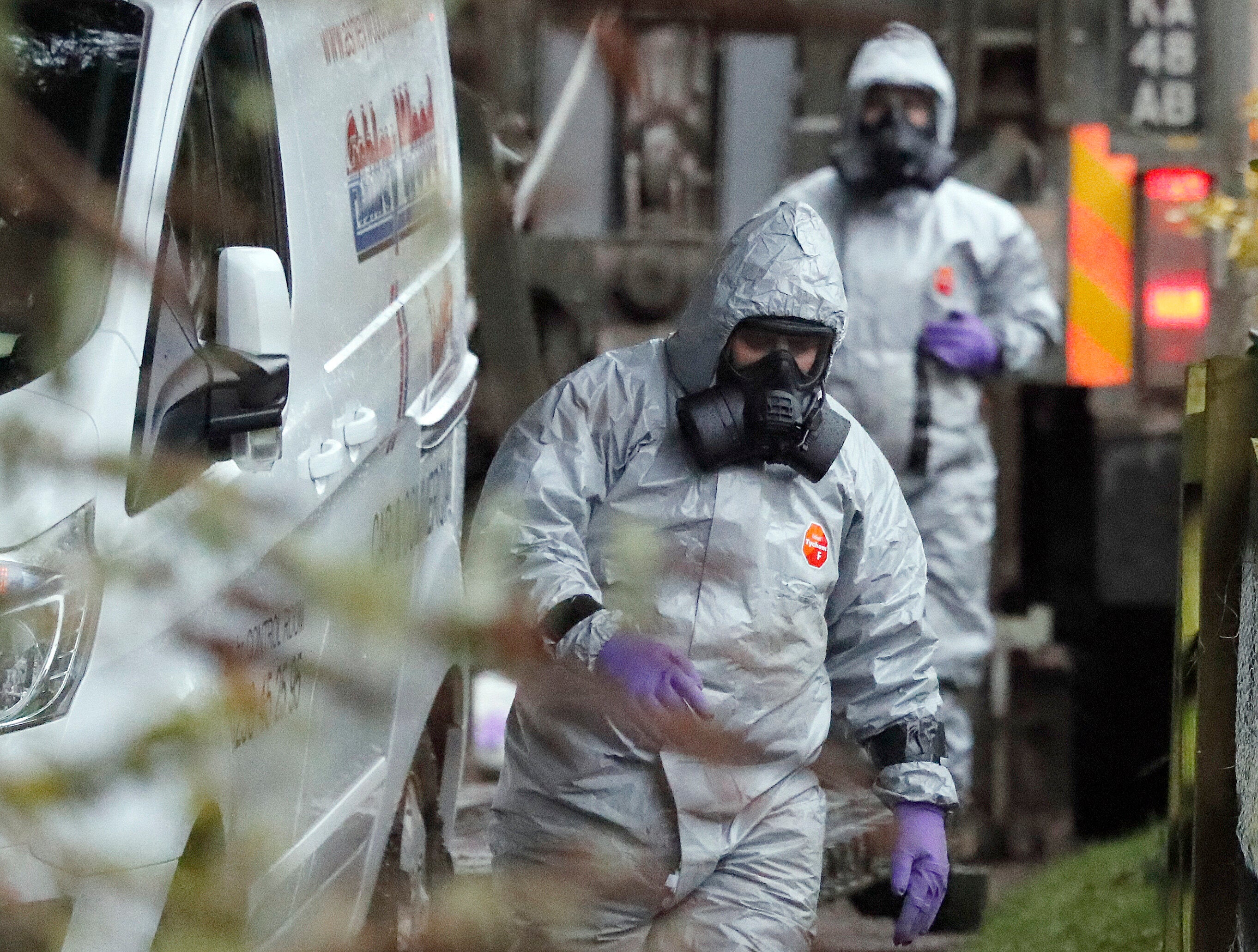
While the Skripals survived their near-death encounter, Russian agents inadvertently poisoned more people by casually disposing of the novichok nerve agent, which was stored in a fake perfume bottle.
An unconnected individual, Dawn Sturgess, later died after spraying the same substance over herself while at the home of her boyfriend Charlie Rowley in Amesbury, on June 30, 2018.
It’s thought Rowley gave the bottle to his partner after he found it abandoned.
He too fell ill and went into a coma after coming into contact with the poison, but later recovered.
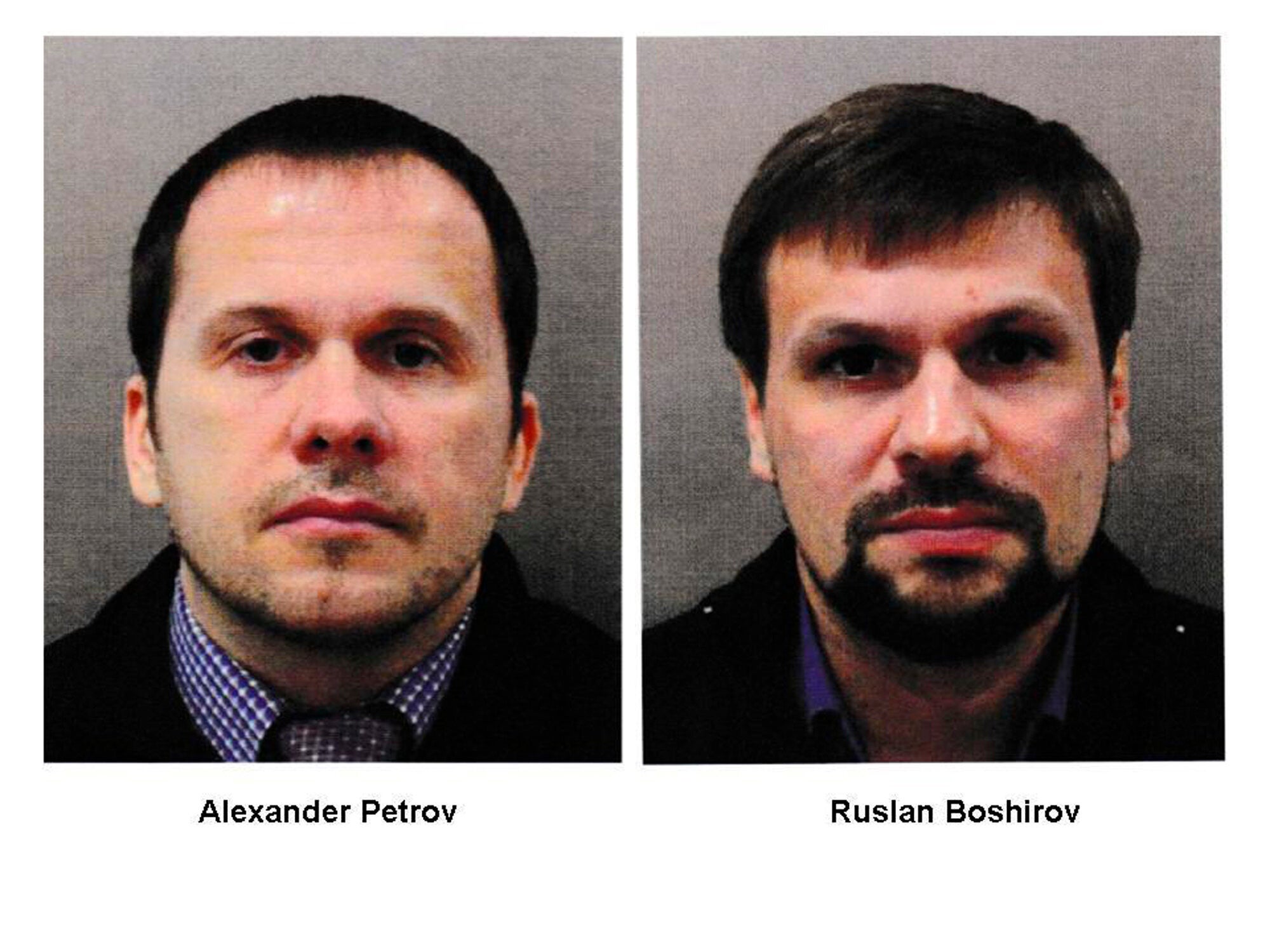
Two Russian men who were named as suspects that September claimed to have been visiting Salisbury Spire as tourists and were supported by Vladimir Putin who claimed there was “nothing criminal about them”.
Advertisement
The incident was instrumental in souring UK-Russian relations.
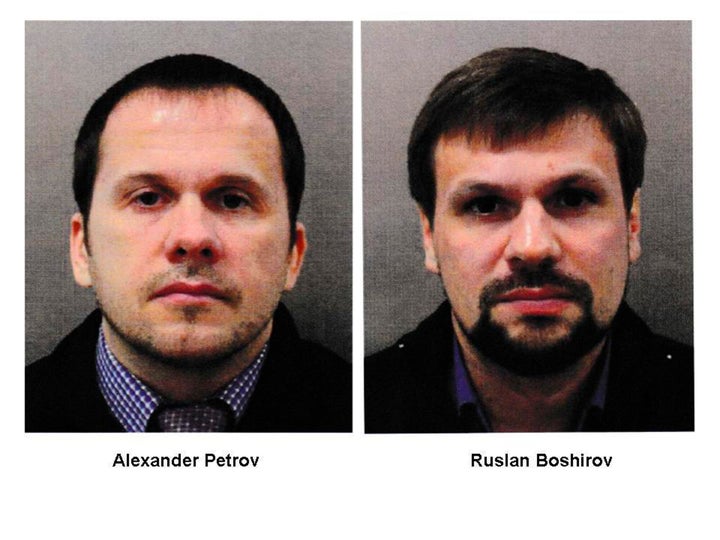
via Associated Press
The inquiry concluded Putin is “morally responsible” for Sturgess’s death and that the poisoning was meant to be a “public demonstration of Russian power”.
Lord Hughes, the inquiry chair, said the Russian president must have authorised the assassination attempt on former spy Sergei Skripal in Salisbury.
Advertisement
He said: “I am sure that in conducting their attack on Sergei Skripal, they were acting on instructions. I have concluded that the operation to assassinate Sergei Skripal must have been authorised at the highest level, by President Putin.”
He also criticised the “astonishingly reckless act” of the Russian men who filled a fake perfume bottle with novichok.
Hughes said: “They recklessly discarded this bottle somewhere public or semi-public before leaving Salisbury. They can have had no regard for the hazard thus created, of the death of, or serious injury to, an unaccountable number of innocent people.”
Advertisement
Sturgess suffered from “very serious brain injury” after her heart stopped for “an extended period of 30 minutes or so immediately after she was poisoned”.
The report also found three Russian operatives had arrived in London from Moscow on March 2, intending to kill the double agent Skripal.
Novichok was later placed on the handle of his front door, according to the inquiry.
Advertisement
Hughes said Wiltshire police wrongly characterised Strugess as a dug user after she was poisoned.
He said there was “no alert” that could have stopped Sturgess’s death or improved her treatment,
But he noted it was reasonable public health officials had not given the public advice not to pick anything up, because it was not clear where the poison came from at the time.
He also said there were mistakes in the way the British state ought to have taken steps to prevent the poisoning, particularly in the way Skripal was managed as an exchanged prisoner.
While Hughes admitted more security would not have helped anything, he added: “The only such measures which could have avoided the attack would have been such as to hide him completely with a new identity.”
Advertisement
The inquiry also called for a new process to be set up to alert local police if anything happens to individuals with “sensitive backgrounds”.
Immediately after the report was released, the Foreign Office (FCDO) declared that it is cracking down on the Russian intelligence agency linked to the poisonings – the GRU, Russia’s military intelligence agency – in its entirety.
The FCDO claims the UK has sanctioned and exposed 11 actors behind Russian state sponsored hostile activity, including those working for the GRU.
Advertisement
The Russian ambassador has also been summoned to the Foreign Office to answer for Russia’s ongoing campaign of hostile activity against the UK.
The new sanctions will also zero in on eight cyber military intelligence officers working for the GRU.
Starmer said: “Today’s findings are a grave reminder of the Kremlin’s disregard for innocent lives.”
However, the Russian agents named as suspects are unlikely to ever face justice as they are protected by the Kremlin.
Advertisement
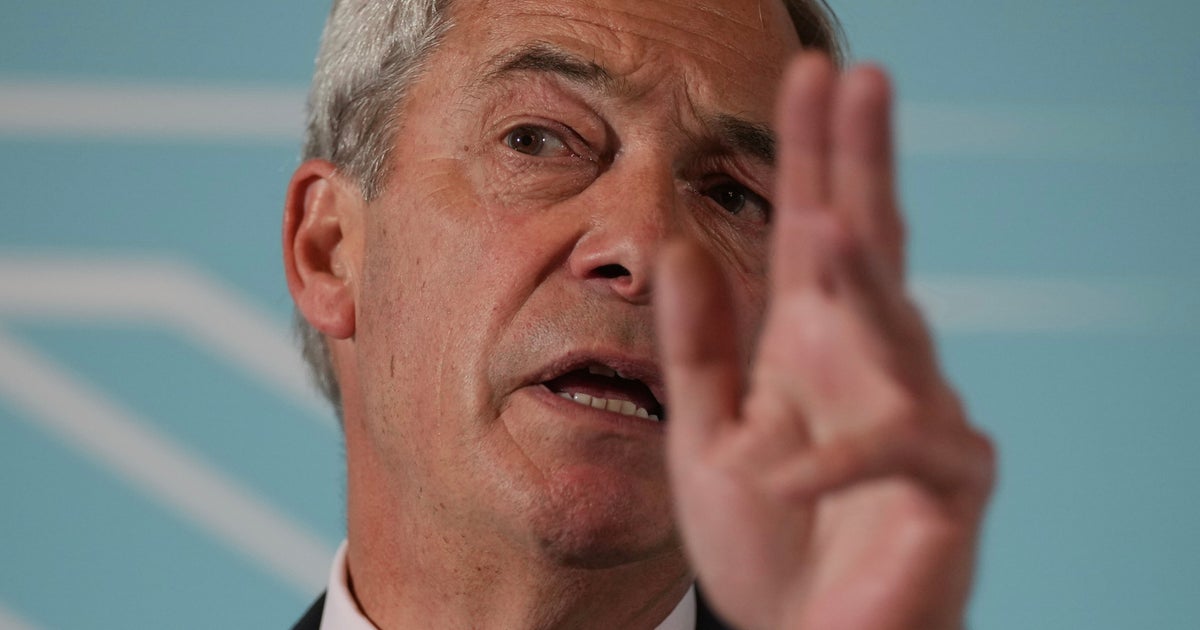
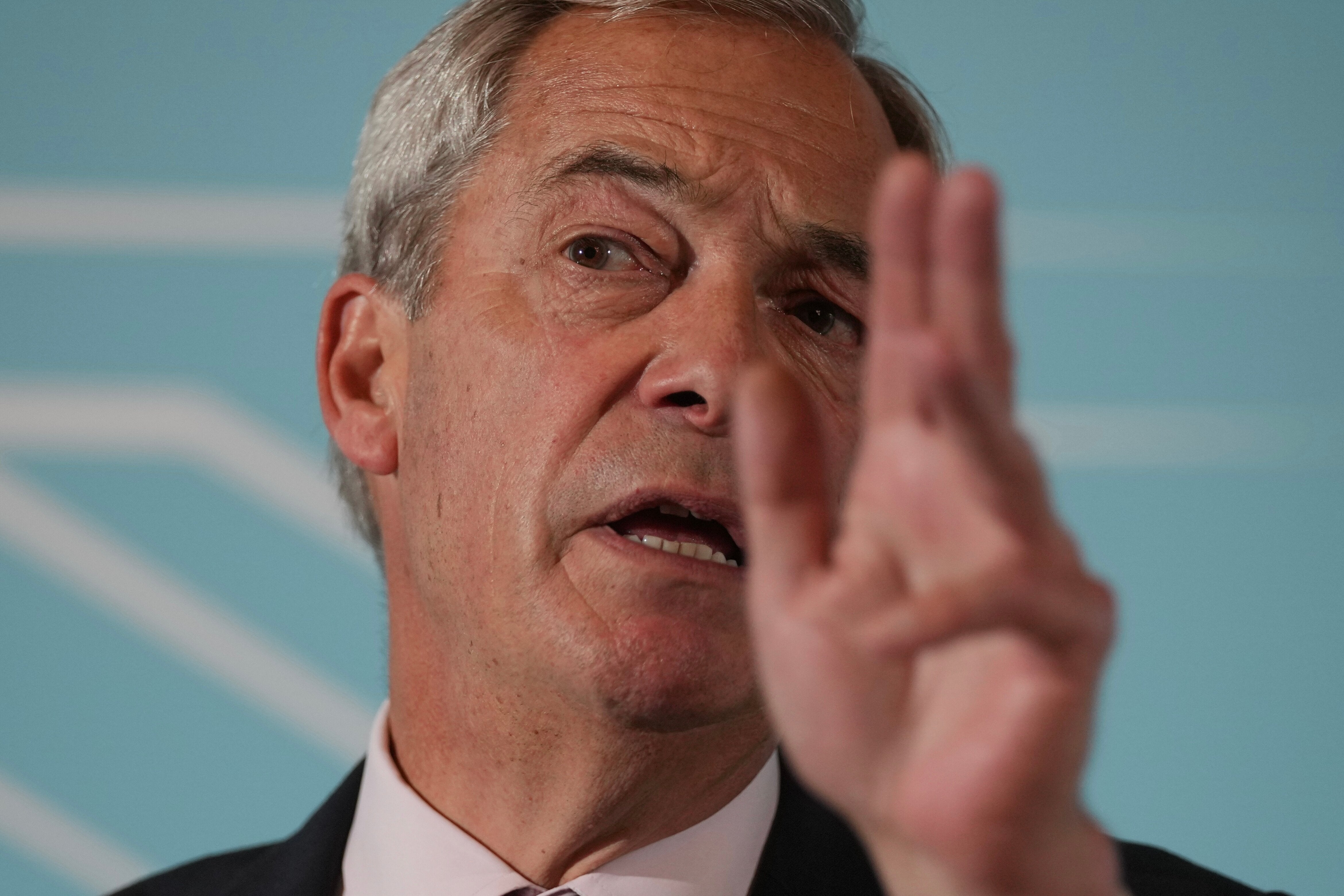
Nigel Farage called for an apology from the BBC during a furious outburst at a press conference today.
Advertisement
BBC Radio 4′s Today co-host Emma Barnett also clashed with Reform deputy, Richard Tice, over what she called Farage’s “relationship” with Adolf Hitler on Thursday morning.
Responding to that interview, and the ongoing racism allegations, Farage told a BBC reporter: “I thought this morning’s performance by one of your lower-grade presenters [Emma Barnett] on the Today programme was utterly disgraceful.
“I think, to frame a question around the leader of Reform’s ‘relationship’ with Hitler, which is how she framed it, was despicable, disgusting beyond belief.
Advertisement
“Are you surprised that half a million people every year refuse to pay the licence fee?”
He continued: “The double standards and hypocrisy of the BBC are absolutely astonishing. The time I was alleged to have made these remarks, one of your most popular weekly shows was the ’Black and White Ministrel [Show].’”
This programme ran from 1958 to 1978 and was accused of using out-dated stereotypes towards the second half of its 20-year run.
He said: “I cannot put up with the double standards of the BBC about what I’m alleged to have said 49 years ago, and what you were putting out on mainstream content.
Advertisement
“So I want an apology from the BBC for virtually everything you did throughout the 1970s and 80s.”
He also claimed he had received many letters from former school peers from his time at Dulwich College, and read one out during the press conference.
The contemporary, who was not named, supposedly said Farage had just used “schoolboy banter”, which was occasionally offensive but “never with malice”.
When the BBC reporter tried to circle back to his original question about the accuracy of the claims against him, Farage just moved on to a different press question.
Advertisement
He told the reporter: “Until you apologise for all of your [BBC] output, your appalling output at the same that I’m accused of saying these things that I deny – I’m not speaking to you.”
Asked if he was going to sue Barnett over defamation, he said such legal claims take up a lot of “emotional and legal capital”.
Listen to Barnett’s full exchange with Tice here:
Advertisement
Record number of patients in hospital in England with flu for this time of year, figures show.
A Reform UK government would “tear” the country apart, Keir Starmer has claimed in one of his most outspoken attacks on Nigel Farage yet.
Speaking to The Economist, the prime minister warned that the party – which is currently leading in the polls – would “tear apart our country with their propositions for not actually respecting the tolerant, diverse country that we are”.
Advertisement
He added: “They’ve got no ideas on the economy whatsoever.
“And my worry is, and this is how history tells us, is that a rightwing proposition like that, with fantastical ideas, leaning towards Russia, if it gets into power, it will find that its policies don’t work, and it won’t become more progressive, it won’t nudge towards the centre, it’ll be go to the right, to the right, to the right.
“We’ve not faced that in this country ever in this form, and it is the political fight of our times and we have to win that political fight.”
He also claimed that he could “sleep at night” if there is a Tory government, but it would be different if there were a more right-wing government in power.
Advertisement
Starmer claimed now is a “real test of centrist politics”.
According to a More in Common mega-poll from September based on responses from almost 20,000 Brits, Reform would win a general election if voters were heading to the ballot box soon.
Reform would take 373 seats while Labour would secure just 90, and the Tories would take 41.
Farage’s populist party also accepted the single largest political donation in history in the third quarter of 2025, according to Electoral Commission figures, accepting £9 million from a Thailand-based donor.
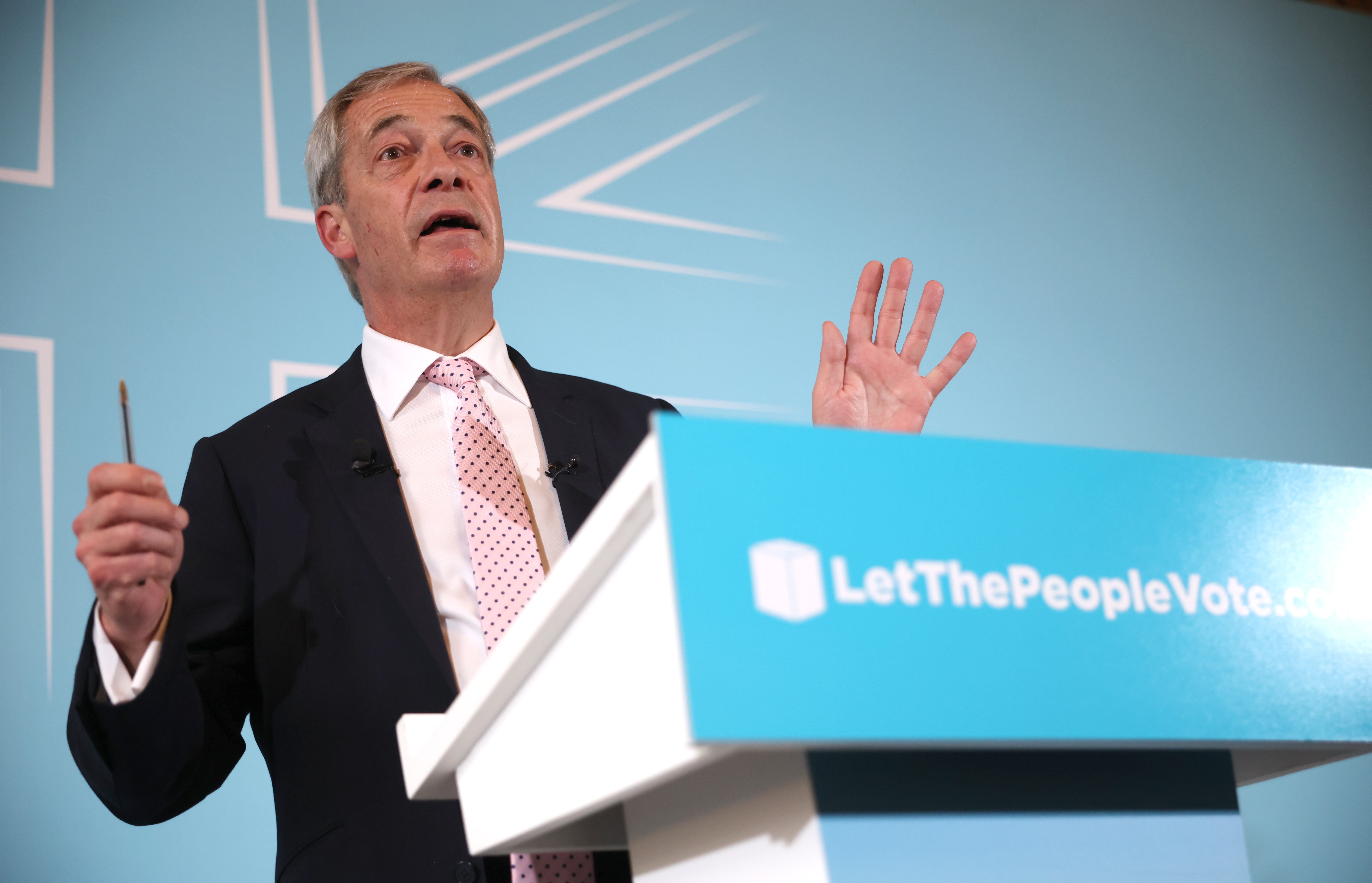
Hours after Starmer’s comments were published, Farage held a press conference where he batted back against racism claims.
Advertisement
The party leader has been accused of being racist and antisemitic when he was a teenager, according to accounts given by some of his peers from Dulwich College.
The Clacton MP has offered a range of responses to the claims, including agreeing he may have made offensive comments – but not with malice or the intent to cause hurt – to claiming the accusations are without foundation.
After a BBC Radio 4 presenter Emma Barnett hit out at Farage’s deputy Richard Tice over the allegations this morning, Farage called her a “lower grade presenters”.
Advertisement
He said: “I cannot put up with the double standards of the BBC about what I’m alleged to have said 49 years ago, and what you were putting out on mainstream content. So I want an apology from the BBC for virtually everything you did throughout the 1970s and 80s.”
Farage later implied that he would remove Reform UK council leader Ian Cooper from his post after he was emerged of making racist social media posts.
He said the party had not been aware of Cooper’s other social media accounts, saying: “We’re going through due process. All I can say is it doesn’t look very good. We expect our people to be truthful with us and if they’re truthful with us, we’ll be honorable towards them.”
Advertisement

England’s chief medical officer says doctors do not appreciate risk of heart attack and stroke, as flu cases rise.

To study the moments when the planet crossed over starspots, researchers relied on the multicolor MuSCAT3 and MuSCAT4 instruments installed on the Las Cumbres Observatory (LCO) 2-meter telescopes. During February and March 2024, they recorded three separate transits and clearly identified signals produced by the planet passing over these dark regions on the star. The way the signal changed with color offered valuable clues about the temperature of the starspots.
Analysis of the light curves showed that the starspots are approximately 200 K cooler than the surrounding stellar surface (3150 K) and cover about 15% of the visible area of the star. The three transit observations also displayed subtle differences in the shape of the spot-crossing features. Since these changes happened over a relatively short period, they are more consistent with the star rotating rather than the starspots themselves evolving.
Monitoring Brightness to Measure Stellar Rotation
To verify this idea, the team conducted an extended photometric monitoring program using LCO’s network of 1-meter telescopes around the world. From December 2024 through March 2025, they tracked the star’s brightness several times each night and identified regular, repeating variations. These measurements allowed them to determine, for the first time, that the star completes a full rotation in 11.05 days.
A Strongly Tilted Planetary System
The rotation period matched the shifts in starspot position seen in the transit data, allowing the researchers to piece together the three-dimensional layout of the system. Their analysis showed that the star’s rotation axis and the planet’s orbital axis differ by roughly 62°, meaning TOI-3884 hosts a significantly tilted planetary orbit. Such extreme misalignments are usually linked to past interactions with massive planets or stellar companions — yet none have been found here, making TOI-3884 an especially compelling system to study.
Glossary of Key Terms
Transit: A transit occurs when a planet passes in front of its star from our point of view, causing a small dip in the star’s brightness.
Spot-Crossing Signal: A change in the transit light curve that happens when a planet moves across a darker, cooler starspot on the star’s surface.
Starspot: A relatively cool, dark region on a star, similar to sunspots on the Sun.
Light Curve: A graph showing how a star’s brightness changes over time. Scientists study its shape to learn about planets, starspots, and stellar behavior.
MuSCAT3 and MuSCAT4: Specialized multicolor cameras designed to measure changes in starlight across different wavelengths to improve transit and starspot analysis.
Photometric Monitoring: Repeatedly measuring the brightness of a star to detect variations caused by rotation, starspots, or orbiting planets.
Stellar Rotation Period: The time it takes for a star to complete one full spin on its axis.
Orbital Axis: An imaginary line defining the orientation of a planet’s orbit around its star.
Stellar Spin Axis: An imaginary line that describes the direction of a star’s rotation.
Misalignment (Orbital Tilt): When the star’s rotation axis and the planet’s orbital axis do not line up. A large misalignment can provide clues about the system’s past.
LCO (Las Cumbres Observatory): A global network of telescopes used for continuous sky monitoring and time-sensitive observations such as transits.
The Hadean Eon, which stretched from 4.6 to 4.0 billion years ago, represents one of the least understood periods in Earth’s past. This era opened with the birth of the planet and was quickly followed by a dramatic collision with a Mars-sized object. The impact produced the Moon and left Earth’s interior completely molten. A solid crust began forming around 4.5 billion years ago, although scientists have long debated what unfolded after that point.
For many years, researchers believed that Earth remained in a “stagnant lid” state until at least the end of the Hadean. According to this idea, the planet was capped by a stiff, unmoving outer shell while heat-driven convection took place deeper in the mantle. In this scenario, the early planet lacked subduction (the process in which crust sinks into the interior) and did not yet produce the continental crust seen in today’s plate tectonic system.
A New Challenge to the Stagnant Lid Hypothesis
Now, scientists from the ERC Synergy Grant Project “Monitoring Earth Evolution through Time” (MEET) — a collaboration between geochemists from Grenoble (France) and Madison (USA), and geodynamic modelers from GFZ Helmholtz Centre for Geosciences in Potsdam (Germany) — are offering a different interpretation.
Ancient Crystals Reveal Evidence of Early Subduction
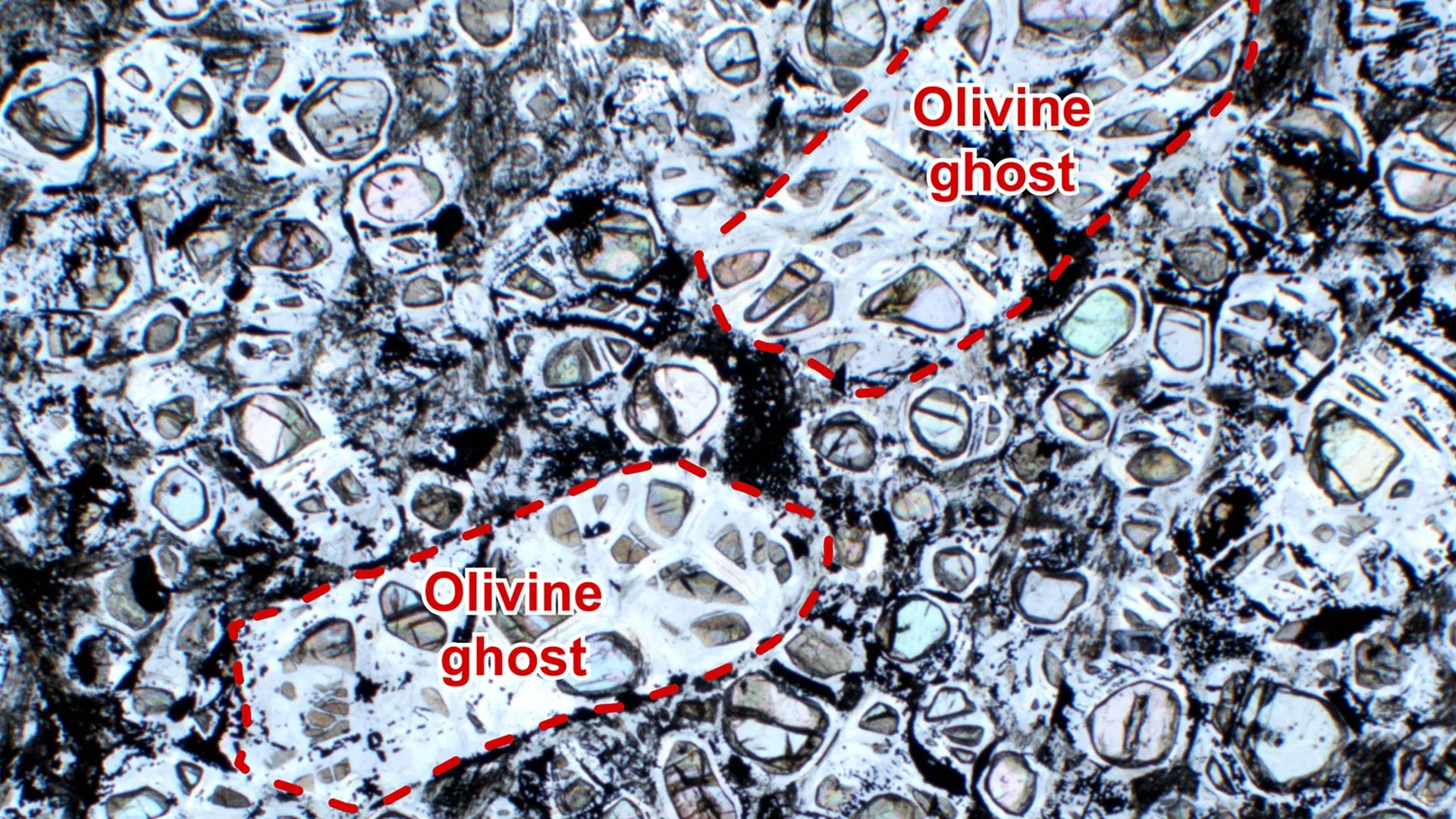
In a study published in Nature Communications, the MEET research team reports evidence that both subduction and continental crust formation were not only active during the Hadean but may have been more intense than previously assumed. The Grenoble group analyzed strontium isotopes and trace elements in melt inclusions trapped inside 3.3-billion-year-old olivine crystals, providing rare geochemical snapshots of early Earth. At the same time, the GFZ group applied advanced geodynamic models to understand how these geochemical patterns relate to ancient tectonic activity.
Their combined results point to a far livelier early Earth, suggesting that widespread subduction and the growth of continental crust may have begun several hundred million years earlier than earlier theories proposed.
Glossary of Key Terms
Hadean Eon: The earliest chapter of Earth’s history (4.6 to 4.0 billion years ago), beginning with the planet’s formation and characterized by extreme heat and frequent impacts.
Subduction: A tectonic process in which one piece of Earth’s crust sinks beneath another and moves downward into the mantle.
Stagnant lid: A tectonic state where the planet’s outer shell is rigid and unmoving, with very little surface recycling compared to modern plate tectonics.
Mantle convection: The slow, heat-driven movement of material within Earth’s mantle that transports energy from the interior toward the surface.
Continental crust: The thick, buoyant type of crust that forms Earth’s continents, distinct from the thinner oceanic crust.
Melt inclusions: Tiny pockets of trapped molten material found inside crystals, preserving chemical information about the environment in which the crystals formed.
Olivine crystals: Greenish mineral grains commonly found in Earth’s mantle and volcanic rocks; they can preserve ancient geochemical clues.
Strontium isotopes: Different forms of the element strontium used by scientists to determine the origin and history of rocks and magmas.
Geodynamic simulations: Computer models that recreate how Earth’s interior moves and evolves over time.
Crustal solidification: The process by which Earth’s once-molten surface cooled and hardened into a solid crust.

Researchers led by Tzyy-Nan Huang and Ming-Hui Lin at Academia Sinica in Taiwan have found that a low-dose combination of zinc, serine, and branched-chain amino acids may ease behavioral difficulties in three mouse models of autism. The study, published December 2nd in the open-access journal PLOS Biology, reports that these supplements work together to strengthen communication between neurons and lead to better social interactions in the animals.
Exploring How Nutrition Influences ASD
Autism spectrum disorder (ASD) is associated with atypical neural development that disrupts how neurons form connections. Nutrition is also recognized as a factor that can influence ASD. Zinc, serine, and branched-chain amino acids have each been linked to potential improvements in neural connectivity. The researchers proposed that combining the three could produce a stronger effect than any single nutrient and might reduce the amount of each needed. To test this, they worked with three mouse models of ASD and examined synapse-related protein levels, tracked amygdala activity using calcium imaging, and evaluated social behavior.
In their experiments, the combined supplements shifted synaptic protein expression in autistic mice so that it more closely resembled that of typical mice. The mixture also reduced the abnormal overactivity of neurons in the amygdala. Social behaviors improved as well, but only when the nutrients were given as a mixture; the same doses of individual supplements produced no measurable change. Two additional autism mouse models showed the same pattern, indicating that the three nutrients must work together to be effective at low doses.
Researchers Highlight Broader Potential of Multi-Nutrient Approaches
Yi-Ping Hsueh explained, “As hundreds of genes are implicated in autism, each with distinct molecular functions, a ‘one gene-one therapy’ approach is impractical for addressing the complexity of ASD. Our findings show that a low-dose nutrient mixture containing zinc, branched-chain amino acids (BCAAs), and serine — working synergistically to improve synaptic function and social behaviors across three ASD mouse models — offers a safer and more practical strategy for long-term, broad application, even beginning in childhood.”
Tzyy-Nan Huang, a first author of the study, added, “High doses of individual nutrient supplements such as zinc, branched-chain amino acids, and serine can improve synaptic function through different mechanisms, but low doses of any single nutrient alone are ineffective. It is exciting to see that combining these nutrients at low doses successfully restores synaptic proteomes and enhances social behaviors in three different mouse models of autism.”
Rapid Neural Circuit Changes Observed
Co-first author Ming-Hui Lin said, “I was thrilled to observe that just seven days of treatment with the nutrient mixture significantly modulated neuronal circuit activity and connectivity in real time. These results provide strong support for the beneficial effects of low-dose nutrient supplement combinations.”
This work was supported by grants from Academia Sinica, Taiwan (AS-IA-111-L01 to Y.-P.H.) and the National Science and Technology Council, Taiwan (NSTC 113-2326-B-001-008 and 114-2326-B-001-005 to Y.-P.H.). The funding organizations did not influence the study design, data collection and analysis, the decision to publish, or the preparation of the manuscript.
Kyle Sieniawski, from Pontypridd, died last month, after being diagnosed with motor neurone disease in January.
