7 Key Takeaways From Donald Trump’s January 6 Indictment

Former President Donald Trump has been indicted over his attempt to remain in power after he lost the 2020 presidential election, yet another moment of reckoning amid a torrent of criminal charges.

Trump faces four felony charges as part of a sweeping, 45-page indictment filed in the U.S. District Court for the District of Columbia. Special counsel Jack Smith’s team of investigators accused the former president of multiple conspiracies to defraud the United States, to obstruct an official proceeding and to deprive people of their right to vote and have that vote counted under the Constitution.

Here are seven key things to know.

1. Trump knew his claims were false but spread them anyway to create an “intense national atmosphere of mistrust and anger.”

Prosecutors note that Trump, like every American, had the right to speak publicly about the election “and even to claim, falsely,” that there had been “outcome-determinative fraud.”

But his efforts became unlawful when he moved to defraud the United States and attempt to subvert the process of collecting, counting and certifying the election results. That plan, the indictment says, included a multi-prong approach to spread lies, install slates of fake electors in swing states and convince election officials and then-Vice President Mike Pence to subvert the will of the people.

“Despite having lost, the Defendant was determined to remain in power,” the indictment says.
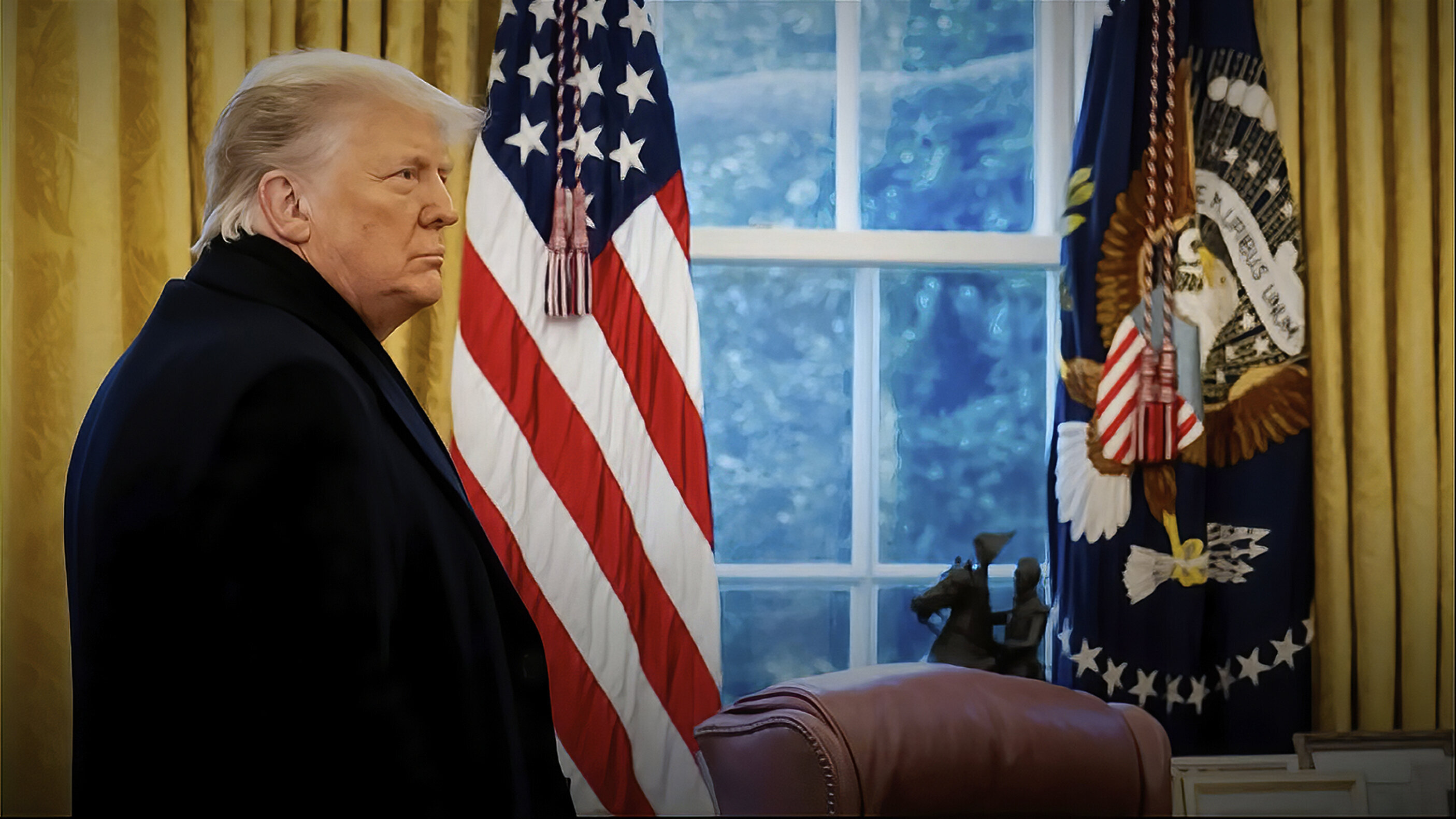
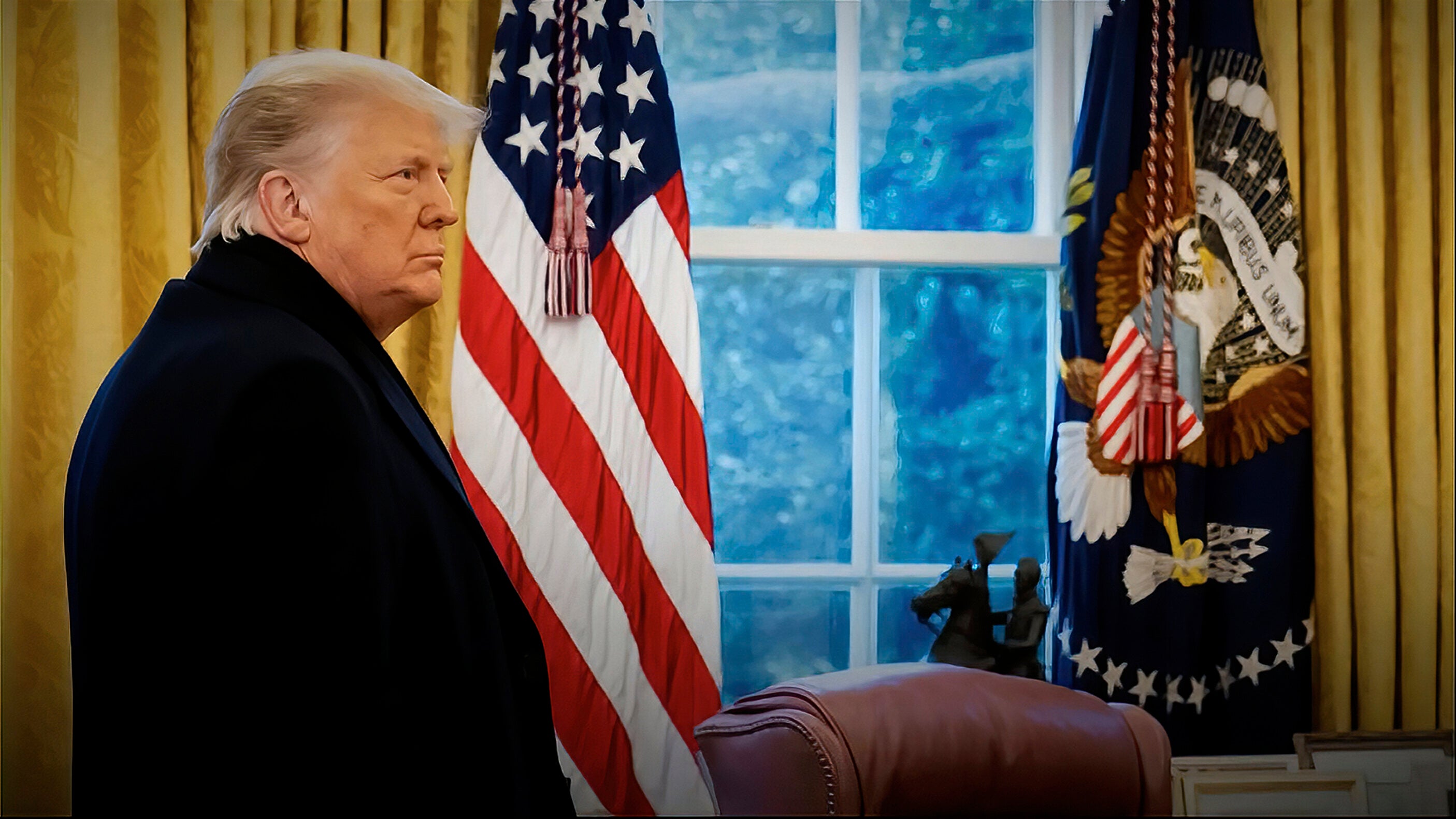
Trump faces four felony charges in the special counsel's investigation into his effort to remain in the Oval Office despite losing reelection in 2020.
Trump faces four felony charges in the special counsel’s investigation into his effort to remain in the Oval Office despite losing reelection in 2020.

via Associated Press

2. The indictment identifies six co-conspirators.

Trump was aided in his effort to overturn the 2020 election by six unnamed co-conspirators, the indictment says.

Five of them are identifiable through details and information provided in the filing documents:

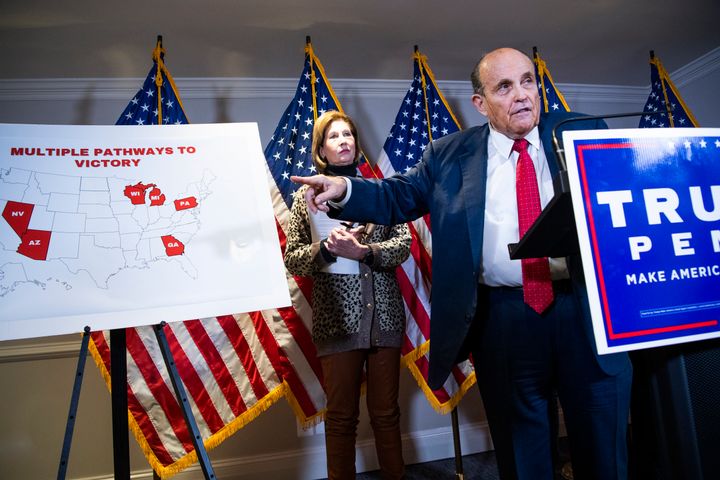
1. Rudy Giuliani is listed as “an attorney who was willing to spread knowingly false claims and pursue strategies that the Defendant’s 2020 re-election campaign attorneys would not.”

2. John Eastman is listed as “an attorney who devised and attempted to implement a strategy to leverage the Vice President’s ceremonial role overseeing the certification proceeding to obstruct the certification of the presidential election.”

3. Sidney Powell is listed as “an attorney whose unfounded claims of election fraud the Defendant privately acknowledged to others sounded ‘crazy.’”

4. Jeffrey Clark is identified as “a Justice Department official who worked on civil matters and who, with the Defendant, attempted to use the Justice Department to open sham election crime investigations and influence state legislatures with knowingly false claims of election fraud.”

5. Kenneth Chesebro is listed as “an attorney who assisted in devising and attempting to implement a plan to submit fraudulent slates of presidential electors to obstruct the certification proceeding.”

6. The sixth co-conspirator is so far unknown but is identified as “a political consultant who helped implement a plan to submit fraudulent slates of presidential electors to obstruct the certification proceeding.”

3. People in Trump’s orbit repeatedly told him there was no evidence of voter fraud.

The indictment alleges Trump and his co-conspirators made repeated, “prolific” claims of election fraud despite knowing they were false. Prosecutors say that Trump was repeatedly told by his inner circle his claims were untrue but that he “deliberately disregarded the truth.”

Smith’s team pointed to conversations Trump had with Vice President Mike Pence, senior leaders at the Justice Department, the director of national intelligence, the Department of Homeland Security and many aides, White House attorneys and campaign staffers, all of whom said his claims were unsubstantiated.

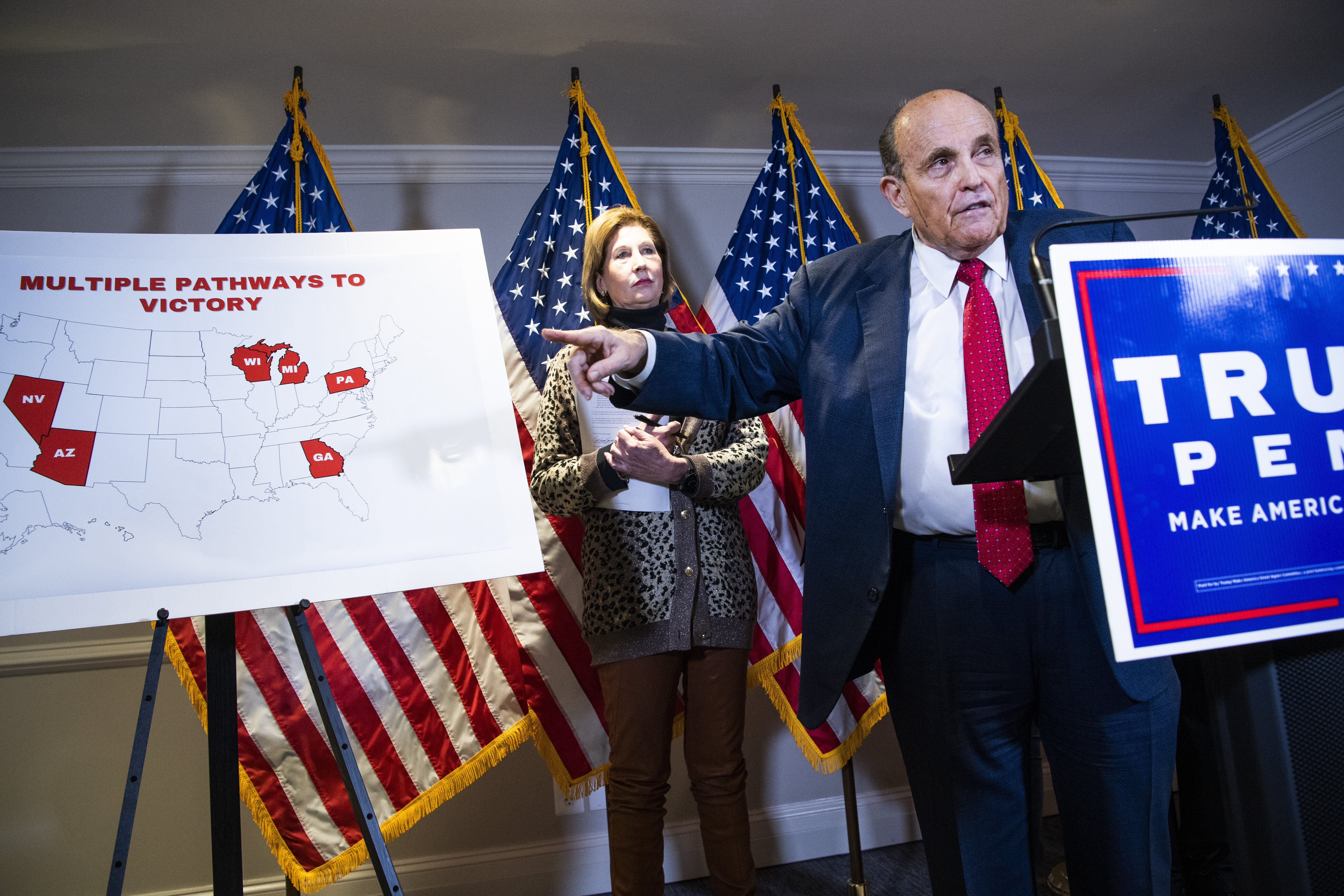
The indictment names six co-conspirators, five of whom can be identified. They include attorneys Sidney Powell (left) and Rudy Giuliani.

Tom Williams via Getty Images

4. Trump acknowledged claims about election fraud and voting machines pushed by a co-conspirator sounded “crazy.”

The indictment notes that even as Trump’s legal advisers were working to undercut election results in Georgia, he knew the claims were unfounded and even described Co-Conspirator 3’s plan as “crazy.”

That sentiment spread through Trump’s close advisers as the effort to install slates of fake electors in swing states began in force in an effort to obstruct a true count of the Electoral College votes.

“Here’s the thing the way this has morphed it’s a crazy play so I don’t know who wants to put their name on it,” Trump’s deputy campaign manager at the time texted to other aides. No one agreed to put their name on the plan as they couldn’t “stand by it.”

5. Trump pressured the Justice Department to support him and threatened to remove those who refused to go along with his plan.

Trump repeatedly tried to get the Department of Justice to support his false claims of election fraud, “thus giving the Defendant’s lies the backing of the federal government.” But the acting attorney general and acting deputy attorney general both refused, saying the agency would not and could not change the outcome of the election.

“Just say that the election was corrupt and leave the rest to me and the Republican congressmen,” Trump replied, the indictment says.

The former president then attempted to install Co-Conspirator 4 as acting attorney general to help further the plot. Trump backed down after many in the White House threatened a mass resignation.
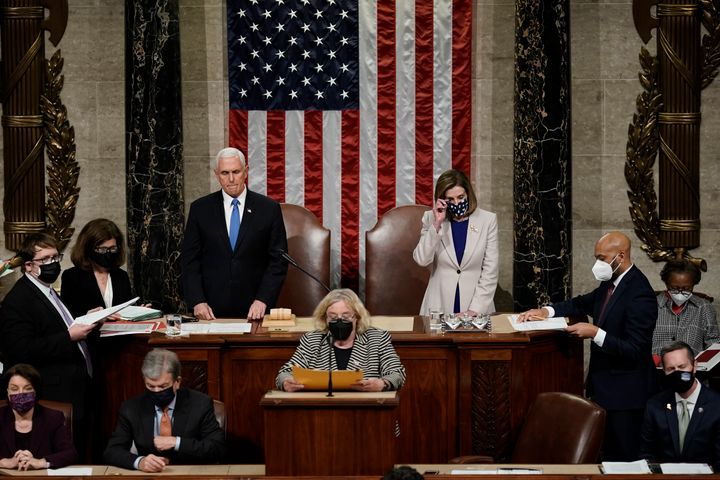
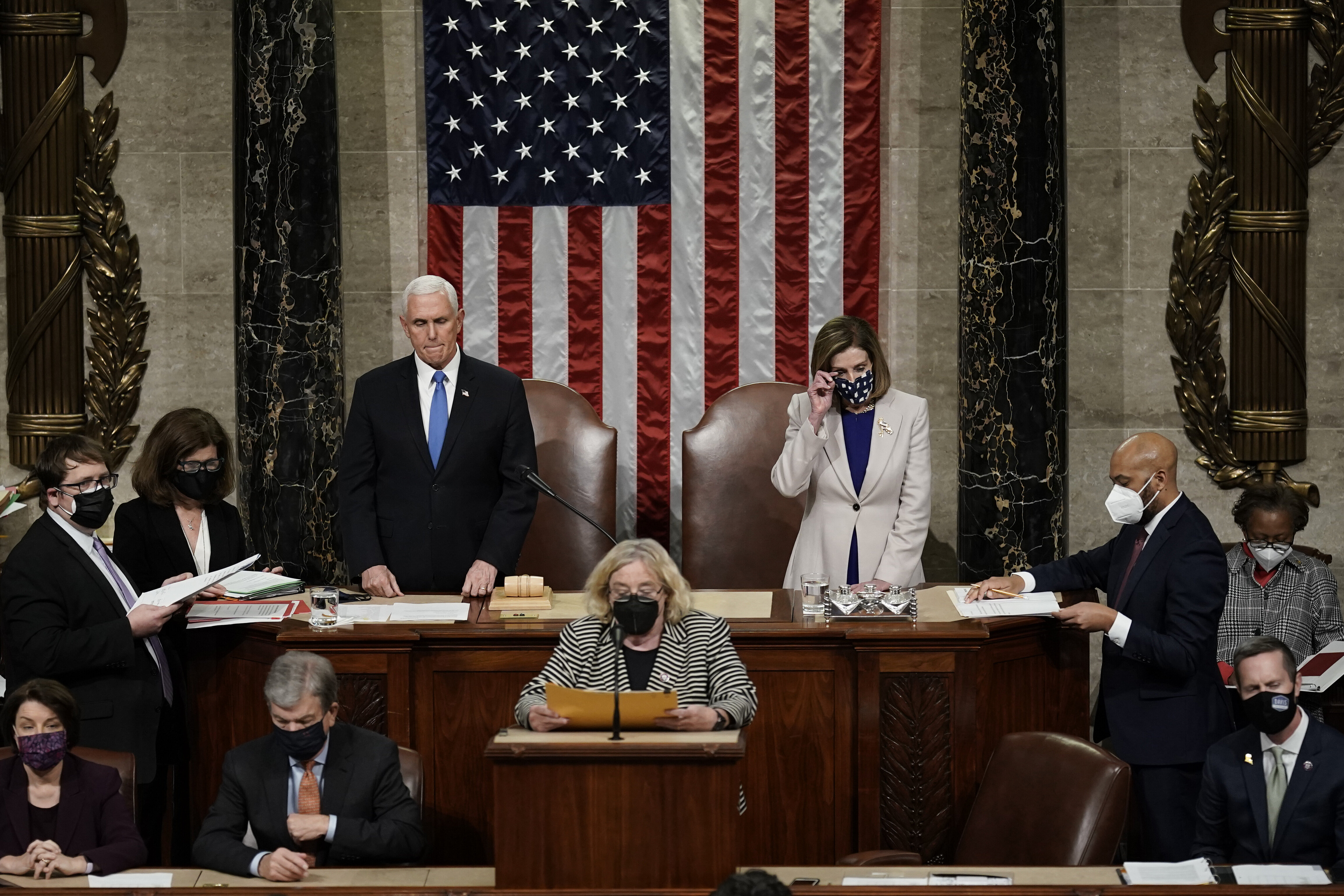
Vice President Mike Pence and Speaker of the House Nancy Pelosi (D-Calif.) read the final certification of Electoral College votes cast in the 2020 presidential election at the Capitol on Jan. 7, 2021, hours after the congressional session was halted by rioting Trump supporters.

J. Scott Applewhite/Associated Press

6. Pence’s notes helped the special counsel craft his case.

Trump heavily pressured Pence to support his effort to remain in power and reject the ceremonial certification of Joe Biden as the winner of the election.

Prosecutors pieced together details of Trump’s conversations and thinking around the time using Pence’s “contemporaneous notes” in the days leading up to Jan. 6.

The vice president rejected Trump’s attempts, telling him to his face that he didn’t believe he had the authority to do what Trump asked.

Trump later told Pence that he would have to publicly criticize him, the indictment says, which prompted his chief of staff to inform the Secret Service about fears for Pence’s safety.

7. Trump waited and watched on TV as his supporters stormed the Capitol.

The indictment claims Trump exploited the violence at the Capitol on Jan. 6 and resisted pleas from his aides and supporters to speak out as the insurrection grew.

“When advisors urged the Defendant to issue a calming message aimed at the rioters, the Defendant refused, instead repeatedly remarking that the people at the Capitol were angry because the election had been stolen,” the document says.
Share Button

Trans people can wait seven years for NHS initial assessment

Trans people in south-west England face the longest delays, the data seen by the BBC shows.

Share Button

Why you should go to sleep at the same time all week

Social jetlag has an impact on what we eat, which may affect the species of bacteria in our guts.

Share Button

Warning over medical clinics using fake Google reviews

The BBC tracked down UK companies using fake reviews to boost their visibility in Google results.

Share Button

Study to test eye drops for nearsightedness

A study conducted at Vanderbilt University Medical Center and 11 other hospitals and practices across the United States shows that use of low-dose atropine eyedrops, commonly used in a higher dose to treat lazy eye, was no better than a placebo at slowing myopia (nearsightedness) progression and elongation of the eye among children treated for two years.

The first randomized controlled trial of its kind aimed at identifying an effective way to manage myopia was published last week in JAMA Ophthalmology. It was conducted by the Pediatric Eye Disease Investigator Group and funded by the National Eye Institute (NEI).

“We found, interestingly, and honestly shockingly, that there was no difference in the use of 0.01% atropine and placebo in treating these children who ranged in age from 5 to 12,” said Lori Ann Kehler, OD, associate professor of Ophthalmology and Visual Sciences, chief of the Optometry Service and the Vanderbilt site principal investigator for the study. Of the 187 trial participants, 21 were from VUMC, she said.

The onset of myopia usually occurs between the ages of 7 and 16 when developing eyes can start growing too long axially (from front to back). Instead of focusing images on the retina — the light-sensitive tissue in the back of the eye — images of distant objects are focused at a point in front of the retina which causes people to have poor distance vision while their near vision remains unchanged.

The condition results in the need for eyeglasses to improve distance vision, and it can also result in medical complications and serious uncorrectable vision loss later in life, like retinal detachments or myopic macular degeneration.

The study contradicts earlier studies from East Asia that showed the small dose of atropine is effective in slowing progression of myopia.

In 2017 the Academy of Ophthalmology endorsed the findings from East Asia saying that although the FDA had not approved atropine for this use, there was sufficient evidence for prescribing the low dose for myopia. Ophthalmologists across the country, including at VUMC, began to offer the prescription to young patients with myopia.

advertisement


“That was a really exciting finding at the time because we had had no treatment options for many years,” Kehler said. The prescription of atropine for treating myopia is not covered by most insurance plans.

“The incidence of myopia is increasing worldwide,” Kehler said. “By 2030 it’s predicted that 39 million people in the U.S. will have myopia. By 2050 that number is expected to increase to more than 44 million people in the U.S. and to 50% of the global population. Once it’s detected in children, it tends to get worse every year,” she said. “Investigators all over the world have tried strategies to intervene, to either stop or slow the worsening of myopia.”

Kehler said it is not known why the incidence of myopia is increasing. “There are several theories. Some believe it’s the increase in the use of screens and screen time, but myopia was increasing even before screens were part of children’s lives. Others think it has to do with industrialization. We were an agricultural society. We were outside more. We weren’t reading. We weren’t looking up close all day. Really, the prevailing thought is whether we’re at a screen or looking at a math book or reading most of the day, we think the lack of sunlight and sustained near effort is what’s causing the increase of myopia.”

Kehler said the percentage of children with myopia using the atropine drop at VUMC is low and estimates fewer than 5% of children with myopia are using the drops nationally.

Going forward, eye specialists should have a frank discussion with parents of children with myopia about the conflicting data between the Asian studies and the new U.S. study.

“The absence of a treatment benefit in our U.S.-based study, compared to East Asian studies, may reflect racial differences in atropine response. The study enrolled fewer Asian children, whose myopia progresses more quickly, and included Black children, whose myopia progresses less quickly compared with other races,” noted the study’s lead co-author, Michael X. Repka, MD, professor of Ophthalmology at Johns Hopkins University, in a news release from the NEI.

advertisement


“All the studies have shown the drops are safe, so we aren’t putting children at risk if we continue to prescribe the 0.01%,” Kehler said. “But we are telling them there is a difference in these studies and it might have to do with your genetics; it might be that it’s more effective in children from Asia than in the U.S. population,” she said.

Further study is needed, Kehler said. The next step is likely to study a higher dose of atropine to see if children in the U.S. experience a benefit.

A study out of Hong Kong — the LAMP study — found that 0.05% might be more effective.

Kehler said other groups are studying the use of red-light therapy to slow the progression of myopia, and there are also new eyeglass lenses that have been developed to slow the progression of myopia, but they are not yet available in the U.S.

“It’s much harder to get drops in very young children,” Kehler said. “But if we had a spectacle option, that would open the door to treating our younger patients.”

Myopia usually stabilizes in about half of children around 16 years of age and among an increasingly larger percentage as they get older. By their early 20s, about 10% of individuals with myopia will continue to grow more nearsighted, and by age 24 that percentage is 4%.

Share Button

Machine learning, blockchain technology could help counter spread of fake news

A proposed machine learning framework and expanded use of blockchain technology could help counter the spread of fake news by allowing content creators to focus on areas where the misinformation is likely to do the most public harm, according to new research from Binghamton University, State University of New York.

The research led by Thi Tran, assistant professor of management information systems at Binghamton University’s School of Management, expands on existing studies by offering tools for recognizing patterns in misinformation and helping content creators zero in the worst offenders.

“I hope this research helps us educate more people about being aware of the patterns,” Tran said, “so they know when to verify something before sharing it and are more alert to mismatches between the headline and the content itself, which would keep the misinformation from spreading unintentionally.”

Tran’s research proposed machine learning systems — a branch of artificial intelligence (AI) and computer science that uses data and algorithms to imitate the way humans learn while gradually improving its accuracy — to help determine the scale to which content could cause the most harm to its audience.

Examples could include stories that circulated during the height of the COVID-19 pandemic touting false alternate treatments to the vaccine.

The framework would use data and algorithms to spot indicators of misinformation and use those examples to inform and improve the detection process. It would also consider user characteristics from people with prior experience or knowledge about fake news to help piece together a harm index. The index would reflect the severity of possible harm to a person in certain contexts if they were exposed and victimized by the misinformation.

“We’re most likely to care about fake news if it causes a harm that impacts readers or audiences. If people perceive there’s no harm, they’re more likely to share the misinformation,” Tran said. “The harms come from whether audiences act according to claims from the misinformation, or if they refuse the proper action because of it. If we have a systematic way of identifying where misinformation will do the most harm, that will help us know where to focus on mitigation.”

Based on the information gathered, Tran said, the machine learning system could help fake news mitigators discern which messages are likely to be the most damaging if allowed to spread unchallenged.

advertisement


“Your educational level or political beliefs, among other things, can play a role in whether you are likely to trust one misinformation message or not and those factors can be learned by the machine learning system,” Tran said. “For example, the system can suggest, according to the features of a message and your personality and background and so on, that it’s 70% likely that you’ll become a victim to that specific misinformation message.”

While other studies have been conducted about using blockchain — a type of shared database technology — as a tool to fight fake news, Tran’s research also expands on previous findings by exploring user acceptability of such systems more closely.

Tran proposed surveying 1,000 people from among two groups: fake news mitigators (government organizations, news outlets and social network administrators) and content users who could be exposed to fake news messages. The survey would lay out three existing blockchain systems and gauge the participants’ willingness to use those systems in different scenarios.

Traceability is one of the nice features of blockchain, Tran said, because it can identify and classify sources of misinformation to help with recognizing the patterns.

“The research model I’ve built out allows us to test different theories and then prove which is the best way for us to convince people to use something from blockchain to combat misinformation,” Tran said.

Tran recently presented his research at a conference hosted by SPIE, the international non-profit dedicated to advancing light-based research and technologies. One paper focused on the machine learning-based framework and another paper dealt with the use of blockchain.

Share Button

Earth’s most ancient impact craters are disappearing

Earth’s oldest craters could give scientists critical information about the structure of the early Earth and the composition of bodies in the solar system as well as help to interpret crater records on other planets. But geologists can’t find them, and they might never be able to, according to a new study. The study was published in the Journal of Geophysical Research Planets, AGU’s journal for research on the formation and evolution of the planets, moons and objects of our Solar System and beyond.

Geologists have found evidence of impacts, such as ejecta (material flung far away from the impact), melted rocks, and high-pressure minerals from more than 3.5 billion years ago. But the actual craters from so long ago have remained elusive. The planet’s oldest known impact structures, which is what scientists call these massive craters, are only about 2 billion years old. We’re missing two and a half billion years of mega-craters.

The steady tick of time and the relentless process of erosion are responsible for the gap, according to Matthew S. Huber, a planetary scientist at the University of the Western Cape in South Africa who studies impact structures and led the new study.

“It’s almost a fluke that the old structures we do have are preserved at all,” Huber said. “There are a lot of questions we’d be able to answer if we had those older craters. But that’s the normal story in geology. We have to make a story out of what’s available.”

Geologists can sometimes spot hidden, buried craters using geophysical tools, such as seismic imaging or gravity mapping. Once they’ve identified potential impact structures, they can search for physical remnants of the impact process to confirm its existence, such as ejecta and impact minerals.

The big question for Huber and his team was how much of a crater can be swept away by erosion before the last lingering geophysical traces disappear. Geophysicists have suggested that 10 kilometers (6.2 miles) of vertical erosion would erase even the biggest impact structures, but that threshold had never been tested in the field.

To find out, the researchers dug into one of the planet’s oldest known impact structures: the Vredefort crater in South Africa. The structure is about 300 kilometers (186 miles) across and was formed about 2 billion years ago when an impactor about 20 kilometers (12.4 miles) across slammed into the planet.

advertisement


The impactor hit with such energy that the crust and mantle rose up where the impact occurred, leaving a long-term dome. Farther from the center, ridges of rock jutted up, minerals transformed and rock melted. And then time took its course, eroding about 10 kilometers (6.2 miles) down from the surface in two billion years.

Today, all that remains at the surface is a semicircle of low hills southwest of Johannesburg, which marks the center of the structure, and some smaller, telltale signs of impact. The bullseye, caused by the uplift of the mantle, appears in gravity maps, but beyond the center, geophysical evidence of the impact is lacking.

“That pattern is one of the last geophysical signatures that is still detectable, and that only happens for the largest-scale impact structures,” Huber said. Because only the deepest layers of the structure remain, the other geophysical traces have disappeared.

But that’s okay, because Huber wanted to know just how reliable those deep layers are for recording ancient impacts from both a mineralogical and geophysical perspective.

“Erosion makes these structures disappear from the top down,” Huber said. “So we went from the bottom up.”

The researchers sampled rock cores across a 22-kilometer (13.7-mile) transect and analyzed their physical properties, searching for differences in density, porosity and mineralogy between impacted and non-impacted rocks. They also modeled the impact event and what its effects on rock and mineral physics would be and compared that to what they saw in their samples.

advertisement


What they found was not encouraging for the search for Earth’s oldest craters. While some impact melt and minerals remained, the rocks in the outer ridges of the Vredefort structure were essentially indistinguishable from the non-impact rocks around them when viewed through a geophysical lens.

“That was not exactly the result we were expecting,” Huber said. “The difference, where there was any, was incredibly muted. It took us a while to really make sense of the data. Ten kilometers of erosion and all the geophysical evidence of the impact just disappears, even with the largest craters,” confirming what geophysicists had estimated previously.

The researchers caught Vredefort just in time; if much more erosion occurs, the impact structure will be gone. The odds of finding buried impact structures from more than 2 billion years ago are low, Huber said.

“In order to have an Archean impact crater preserved until today, it would have to have experienced really unusual conditions of preservation,” Huber said. “But then, Earth is full of unusual conditions. So maybe there’s something unexpected somewhere, and so we keep looking.”

Share Button

Margaret Ferrier: Covid breach MP loses seat after recall petition

A by-election will now be held after almost 12,000 of her constituents signed a recall petition.

Share Button

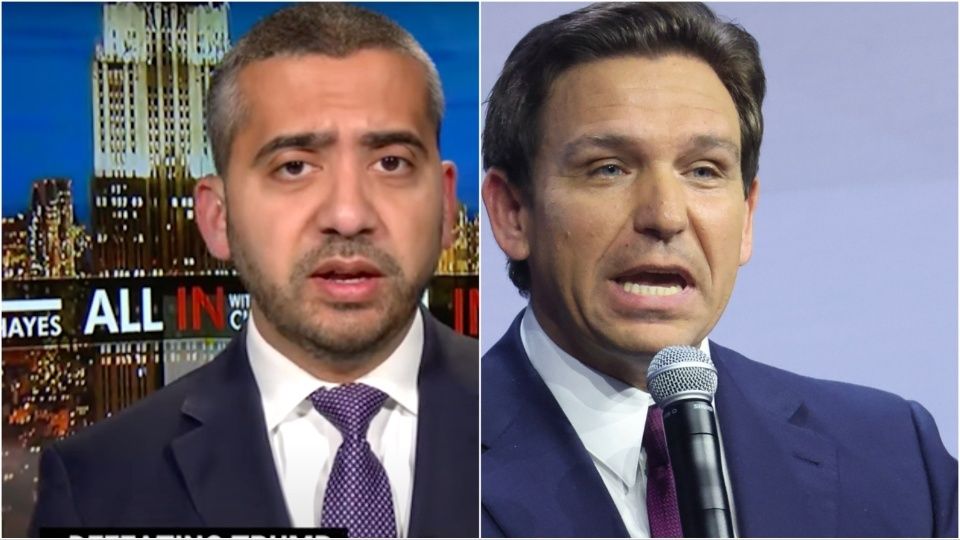
Mehdi Hasan Spots ‘Devastating’ News For Ron DeSantis’ Presidential Hopes

MSNBC’s Mehdi Hasan said a new poll should be considered “funeral rites” for Republicans hoping to defeat Donald Trump in next year’s presidential primary.

And it’s especially bad news for Florida Governor Ron DeSantis, who has been the former president’s chief rival.

“Simply put, it’s done,” Hasan said on Monday evening. “If you had any doubts that this is Trump’s race and Trump’s race to lose, this poll will clear things up for you.”

The New York Times/Siena College poll released Monday shows Trump leading DeSantis by 37 percentage points and ahead by 31 points in a one-on-one matchup. No other candidate pulled more than 3% support. (The poll of 932 likely Republican primary voters was conducted from July 23 to 27.)

DeSantis has made “fighting wokeness” his signature issue, but Hasan noted that Trump polls ahead of him even on that topic.

“Not even close,” Hasan said.

The poll also shows that Trump has sealed his control over the GOP as most Republican voters are unswayed by the criminal charges against the former president.

Overall, just 17% of Republicans polled said they believed Trump had committed a crime. Among “MAGA” Republicans, that number is 0%.

“Oh, it’s not a cult,” Hasan said sarcastically.

See his full analysis below:

Share Button

New Poll Shows Trump Squashing 2024 Republican Competition By A Landslide

Among likely GOP primary voters, the former president is commanding 54% support and leads his nearest rival, Florida Governor Ron DeSantis, by a whopping 37 percentage points.

His other challengers, including his onetime running mate, former Vice President Mike Pence, are all polling at low single digits.

Trump outperformed other candidates by large margins in nearly every single demographic polled. DeSantis especially floundered among the Republicans’ most influential demographics, earning only 9% support among voters 65 and older. Even if all other candidates dropped out, the poll found, Trump would still be poised to beat DeSantis 62 to 31.

Monday’s poll further cements the results of previous ones. Last week, a Monmouth University poll found that nearly 7 in 10 GOP voters believe Trump is either “definitely” or “probably” the party’s strongest candidate to unseat President Joe Biden.

Trump’s success in the polls comes despite his legal troubles. In March, a Manhattan grand jury indicted him over a $130,000 hush money payment made to the porn star Stormy Daniels, who alleges the two had an affair, shortly before the 2016 election. Then, last month, a federal grand jury indicted Trump after an investigation found he took highly classified documents from the White House to his Mar-a-Lago resort and residence in Florida.

Monday’s poll comes about three weeks ahead of the first Republican debate in Milwaukee and about six months out from the Iowa Republican caucuses.

Share Button