Exclusive: Anger As Nadine Dorries Dismisses Steve Barclay Bullying Claims As ‘Politically Motivated’

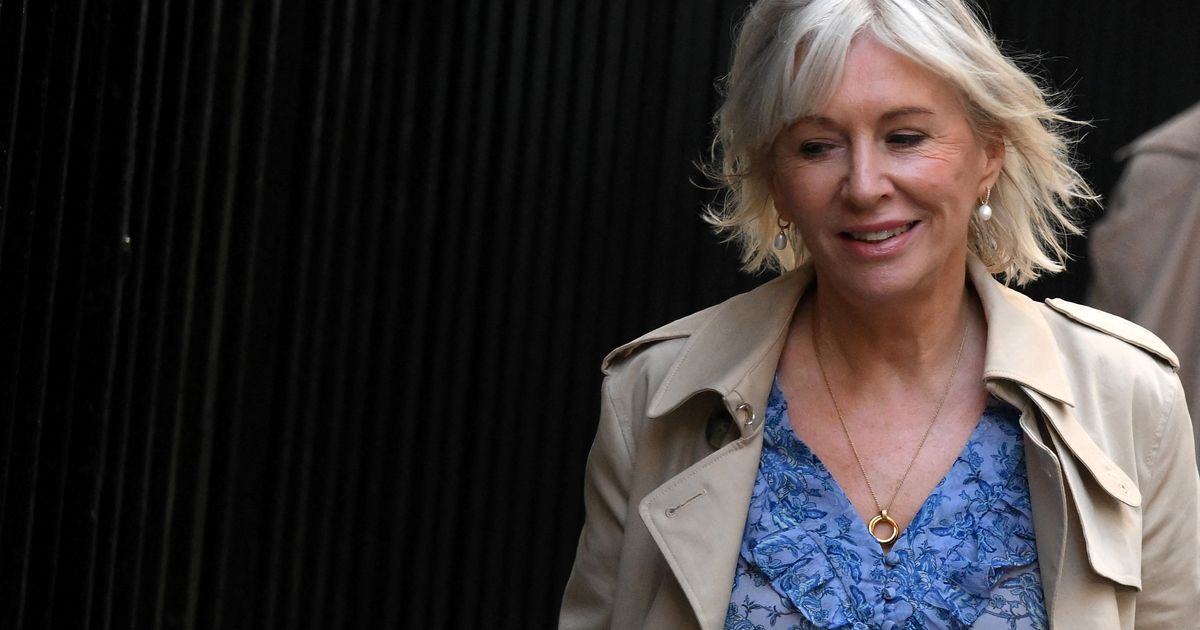
Nadine Dorries has been condemned after she claimed bullying allegations against Steve Barclay were “politically-motivated”.

The former culture secretary made the accusation on her Talk TV chat show.

Barclay, the health secretary, is facing allegations about his treatment of staff just days after the resignation of Dominic Raab following a report into bullying claims against him.

The Guardian reported that civil servants informally complained to the Department of Health’s top mandarin about how they were treated by Barclay, while senior officials privately spoke of “bullying” and other “bad behaviour”.

A source close to the minister told HuffPost UK: “No complaint has been made and the allegations are untrue.”

Dorries, who is standing down as a Tory MP at the next election, said: “I have known Steve Barclay for 18 years and I would defend him with my dying breath. Professional, respectful, courteous, kind, compassionate are the words which jump to mind to describe him if I were ever to be asked.”

On the bullying claims, she said: “It is without doubt politically-motivated by the unions and they have shot themselves in the foot and exposed their true intentions trying to claim the scalp of another cabinet minister who so many respect – but they have chosen the wrong man. This accusation is beyond absurd.”

She added: “If anyone brings forward a genuine bullying claim in the future they are going to find it difficult to be believed because those lefties who are trying to bring down the government by any false means possible will have cried wolf once too often.”

Dave Penman, general secretary of the FDA union, which represents senior civil servants, told HuffPost UK: “Nadine Dorries actively demonstrates two key factors.

“Firstly, she doesn’t understand what bullying is – it’s an abuse of power. The relationship she would have had with a fellow minister has a very different power dynamic to that between a minister and their civil servants.

“Secondly, her entire world view is based on political conspiracies and imagined enemies. She cannot fathom that civil servants might simply be complaining about how they are treated in the workplace.”

Share Button

Why people include themselves in photos

A new study may help explain why people choose to include themselves in some photos — and it is not vanity.

Researchers found that first-person photos (capturing the scene as it looks from one’s own eyes) best represent the physical experience of an event for people.

But third-person photos like selfies (documenting a moment with themselves in it) better depict the deeper meaning of the event in their lives.

“We found that people have a natural intuition about which perspective to take to capture what they want out of the photo,” said lead author Zachary Niese, a PhD graduate of The Ohio State University, now a postdoctoral scholar at the University of Tübingen in Germany.

The results also provide a counter to the view that people post selfies on sites like Instagram just to promote themselves, said study co-author Lisa Libby, professor of psychology at Ohio State.

“These photos with you in it can document the bigger meaning of a moment,” she said. “It doesn’t have to be vanity.”

The study was published today (April 27, 2023) in the journal Social Psychological and Personality Science.

Previous research suggested that capturing the physical experience of an event or its broader meaning may be two important motivations for taking personal photos.

For example, someone at the beach with a friend may take a photo of the ocean to capture the physical experience of the beautiful and relaxing day. Or they could take a photo with themselves in it to capture the bigger meaning of spending time with a friend.

In a series of six studies involving 2,113 participants, the researchers explored the impact of perspective in personal photography.

In one online study, participants read a scenario in which they might want to take a photo, such as spending the day at a beach with a close friend. They were asked to rate how important the experience itself would be for them, and how important the bigger meaning would be. Results showed that the higher participants rated the meaning of the event to them, the more likely they said they would take a photo with themselves in it.

Another study demonstrated the truth of people’s intuitions about whether each perspective better captures the experience or meaning of events. This study asked people to examine photos they posted to their Instagram accounts.

Participants opened their most recent post featuring their own photo and were asked: “What does this photo make you think about more?” with the response options being “The physical experience of the moment” or “The bigger meaning of the moment.”

Results showed that if the photo featured the participant in the shot, they were more likely to say the photo made them think of the bigger meaning of the moment, while photos featuring how the scene looked from their own visual perspective made them think of the physical experience.

But sometimes people may not take the photo that captures their goal — and the result is that they don’t like the photo as much.

In another experiment, the researchers again asked participants to open their most recent Instagram post featuring one of their photos. They were asked whether they were trying to capture the bigger meaning or the physical experience of the moment.

Participants then rated how they felt about the photo on a scale of 1 (not at all positive) to 5 (extremely positive).

“We found that people didn’t like their photo as much if there was a mismatch between the photo perspective and their goal in taking the photo,” Libby said.

For example, if they said their goal was to capture the meaning of the moment, they liked the photo more if it was taken in third person, with themselves in the image.

Overall, the results suggest that people have an intuition about what perspective they should use in photos to fulfill what they want the photo to do, Niese said.

“I hope this study increases people’s knowledge about how photo perspective affects how they react to photos,” he said. “That way they can make sure they consciously choose the perspective that will meet their goal.”

The results also suggest people may be posting photos on Instagram and elsewhere for more than just their audience, Niese said.

“This work suggests people also have very personal motives for taking photos. Even on social media, it appears that people are curating images for themselves to look back on to capture the experience or the meaning of the event,” he said.

Share Button

Male California sea lions are becoming bigger and better fighters as their population rebounds

California sea lions have managed to maintain — and, in the case of males, increase — their average body size as their population grows and competition for food becomes fiercer. This is in contrast to other marine mammals, whose average body size tends to decrease as their numbers increase. Researchers report April 27 in the journal Current Biology that sexual selection was a strong driving force for males to grow bigger and to strengthen muscles in their neck and jaw that help them fight for mates. Both male and female sea lions evaded food shortages by diversifying their diets and, in some cases, foraging further from the shore.

“Body size reduction is not the universal response to population increase in marine predators,” says lead author Ana Valenzuela-Toro, a paleoecologist at the University of California Santa Cruz and the Smithsonian Institution. “California sea lions were very resilient over the decades that we sampled and were able to overcome increasing competition thanks to prey availability. They’re like the raccoons of the sea: they can consume almost everything, and they can compensate if something is lacking.”

While many marine mammal species have rebounded to some extent since the Marine Mammal Protection Act was passed in 1972, California sea lions are notable for the size and duration of their population increase: the number of breeding females, who have been most consistently counted, has more than tripled in the US since the 1970’s — from around 50,000 to nearly 170,000 — and their population growth is only now beginning to plateau.

To explore how California sea lion ecology has changed as their population has grown, the researchers analyzed museum specimens of adult male and female California sea lions collected in central and northern California between 1962 and 2008. To estimate changes in body size, they compared the overall size of more than 300 sea lion skulls collected over the years. They also measured other skull features, such as the size of muscle attachment points, which allowed them to assess changes in sea lion neck flexibility and biting force.

The team additionally took tiny bone samples from some of the skulls and measured their stable carbon and nitrogen isotope composition, which allowed them to make inferences about where the sea lions were foraging and what they were consuming. “Carbon provides information about habitat use — whether they’re foraging along the coast or offshore — and nitrogen provides insights about the trophic level of their prey, for example if they’re consuming smaller or larger fish,” says Valenzuela-Toro.

Overall, the researchers found that male sea lions have increased in size, while female sea lion size has remained stable. This sex difference is probably due to the fact that size matters for male, but not female, mating success. “One male can breed with many females, and males in the breeding colony fight with each other to establish their territory,” says Valenzuela-Toro. “Bigger males are more competitive during physical fights, and they can go longer without eating, so they can stay and defend their territory for longer.”

Male sea lions also increased their biting force and neck flexibility over this same time period. “The neck muscles are really important because they allow them to move their head and neck more agilely, bite harder, and, eventually, win when they are fighting other males in the breeding colony,” says Valenzuela-Toro.

The isotopic analyses indicated that both male and female sea lions managed to meet their nutritional needs by diversifying their diet and feeding on a broader range of prey. Male sea lions also foraged further afield. “Over time, some male sea lions were foraging further north,” says Valenzuela-Toro. “This is consistent with some anecdotal records that they’ve even been seen in Alaska, where they were not known to go in the past.”

Female sea lions consistently had a more diverse diet compared to male sea lions. The authors suggest that this flexibility in food choice is what allowed females to maintain their average body size without foraging further away.

“They remain in a narrow zone around their breeding colony, but they still show a lot of flexibility in what they eat,” says Valenzuela-Toro. “We believe that skull morphology in the rostrum — which is related to the size and shape of the mouth — probably has something to do with this flexible foraging behavior. We found that the size and shape of the mouth of females is related to the size of the prey that they consume.”

However, this flexibility in diet can only take the sea lions so far, and the authors warn that the sea lions’ future may not be so rosy.

“All these dynamics occurred in an environment that was rich in prey: full of anchovies and sardines, two species that are super important for their diet,” says Valenzuela-Toro. “But over the last few years, the populations of these two fish have collapsed, so California sea lions are diversifying their diet to compensate, and apparently they are not doing so well.”

“As climate change progresses, prey availability of sardines and anchovies will decrease even more, and eventually we will have more permanent El Niño-like warming conditions, reducing the size and causing a poleward shift of these and other pelagic fishes,” she says. “It will be a really hostile environment for California sea lions, and eventually we expect that their population size will stop growing and actually decline.”

Share Button

Whorlton Hall: Four guilty of ill-treating secure unit patients

Four former Whorlton Hall workers are convicted of ill-treating patients while five are cleared.

Share Button

Nurses’ strike in England to be cut short after court ruling

The government took the nurses’ union to court in a bitter dispute over whether the strike was lawful.

Share Button

Annabel Wright death: Acne drug safety moves are ‘lip service’, says mum

The family of Annabel Wright, 15, from Ripon, believes Roaccutane was responsible for her death.

Share Button

‘My daughter’s long Covid is not nonsense’

People affected share their experiences as a report calls for “urgent action” to tackle stigma.

Share Button

Direct image of a black hole expelling a powerful jet

For the first time, astronomers have observed, in the same image, the shadow of the black hole at the centre of the galaxy Messier 87 (M87) and the powerful jet expelled from it. The observations were done in 2018 with telescopes from the Global Millimetre VLBI Array (GMVA), the Atacama Large Millimeter/submillimeter Array (ALMA), of which ESO is a partner, and the Greenland Telescope (GLT). Thanks to this new image, astronomers can better understand how black holes can launch such energetic jets.

Most galaxies harbour a supermassive black hole at their centre. While black holes are known for engulfing matter in their immediate vicinity, they can also launch powerful jets of matter that extend beyond the galaxies that they live in. Understanding how black holes create such enormous jets has been a long standing problem in astronomy. “We know that jets are ejected from the region surrounding black holes,” says Ru-Sen Lu from the Shanghai Astronomical Observatory in China, “but we still do not fully understand how this actually happens. To study this directly we need to observe the origin of the jet as close as possible to the black hole.”

The new image published today shows precisely this for the first time: how the base of a jet connects with the matter swirling around a supermassive black hole. The target is the galaxy M87, located 55 million light-years away in our cosmic neighbourhood, and home to a black hole 6.5 billion times more massive than the Sun. Previous observations had managed to separately image the region close to the black hole and the jet, but this is the first time both features have been observed together. “This new image completes the picture by showing the region around the black hole and the jet at the same time,” adds Jae-Young Kim from the Kyungpook National University in South Korea and the Max Planck Institute for Radio Astronomy in Germany.

The image was obtained with the GMVA, ALMA and the GLT, forming a network of radio-telescopes around the globe working together as a virtual Earth-sized telescope. Such a large network can discern very small details in the region around M87’s black hole.

The new image shows the jet emerging near the black hole, as well as what scientists call the shadow of the black hole. As matter orbits the black hole, it heats up and emits light. The black hole bends and captures some of this light, creating a ring-like structure around the black hole as seen from Earth. The darkness at the centre of the ring is the black hole shadow, which was first imaged by the Event Horizon Telescope (EHT) in 2017. Both this new image and the EHT one combine data taken with several radio-telescopes worldwide, but the image released today shows radio light emitted at a longer wavelength than the EHT one: 3.5 mm instead of 1.3 mm. “At this wavelength, we can see how the jet emerges from the ring of emission around the central supermassive black hole,” says Thomas Krichbaum of the Max Planck Institute for Radio Astronomy.

The size of the ring observed by the GMVA network is roughly 50% larger in comparison to the Event Horizon Telescope image. “To understand the physical origin of the bigger and thicker ring, we had to use computer simulations to test different scenarios,” explains Keiichi Asada from the Academia Sinica in Taiwan. The results suggest the new image reveals more of the material that is falling towards the black hole than what could be observed with the EHT.

These new observations of M87’s black hole were conducted in 2018 with the GMVA, which consists of 14 radio-telescopes in Europe and North America [1]. In addition, two other facilities were linked to the GMVA: the Greenland Telescope and ALMA, of which ESO is a partner. ALMA consists of 66 antennas in the Chilean Atacama desert, and it played a key role in these observations. The data collected by all these telescopes worldwide are combined using a technique called interferometry, which synchronises the signals taken by each individual facility. But to properly capture the actual shape of an astronomical object it’s important that the telescopes are spread all over the Earth. The GMVA telescopes are mostly aligned East-to-West, so the addition of ALMA in the Southern hemisphere proved essential to capture this image of the jet and shadow of M87’s black hole. “Thanks to ALMA’s location and sensitivity, we could reveal the black hole shadow and see deeper into the emission of the jet at the same time,” explains Lu.

Future observations with this network of telescopes will continue to unravel how supermassive black holes can launch powerful jets. “We plan to observe the region around the black hole at the centre of M87 at different radio wavelengths to further study the emission of the jet,” says Eduardo Ros from the Max Planck Institute for Radio Astronomy. Such simultaneous observations would allow the team to disentangle the complicated processes that happen near the supermassive black hole. “The coming years will be exciting, as we will be able to learn more about what happens near one of the most mysterious regions in the Universe,” concludes Ros.

Share Button

Unlock Your Full Potential with Conscious Growth Club – Join Us for Year 7! 🌟

Are you ready for a transformative and adventure-filled year? In this fun and playful video, I invite you to join us for the 7th year of Conscious Growth Club (CGC), a unique self-development community that has been changing lives since 2017. Take a moment to watch the video and learn about the incredible experiences and connections that await you within CGC.

Don’t miss out on this once-a-year opportunity to join CGC during our annual enrollment period, which ends on May 1, 2023.

Discover more about Conscious Growth Club and how it can help you get unstuck, amp up your freedom, and create a flowing relationship with life by visiting our invitation page:

Learn More About CGC

I’m excited to see you inside and embark on this transformative journey together! ❤️

Share Button

Braverman Under Fire For Claim Channel Migrants ‘At Odds’ With British Values

Suella Braverman has been accused of striking up a “xenophobic and racist fire” after saying people arriving in the UK in small boats have values which are “at odds with our country”.

The home secretary was facing a backlash to her remarks as government’s controversial immigration legislation cleared the Commons.

She also failed to offer statistical evidence to back her claim that migrants crossing the English Channel are linked to “heightened levels of criminality”.

Braverman said: “I think that the people coming here illegally do possess values which are at odds with our country.”

Asked later whether she had figures to support the crime statement, she said it was based on information she had gathered from police chiefs.

At an event later in Westminster, she added: “Not in all cases, but it is becoming a notable feature of everyday crime-fighting in England and Wales.

“Many people are coming here illegally and they’re getting very quickly involved in the drugs trade, in other forms of exploitation.”

Asked whether that claim was based on empirical evidence, she said: “I consider police chiefs experts in their field and authoritative sources of information.”

Even an outspoken right-wing Tory MP criticised the comments on values.

Conservative MP for Stoke-on-Trent North Jonathan Gullis told LBC they were not “appropriate” or “reasonable”.

He said: “I don’t feel comfortable with the mentioning of the values. I don’t think that was appropriate, nor was it right.”

Labour condemned Braverman’s comments about migrants’ values, with a spokesman calling it the “sort of invective” that signals that the policies being promoted “have failed”.

Campaigners accused her of “pouring petrol on a xenophobic and racist fire they (the government) themselves have lit”.

Steve Valdez-Symonds, Amnesty International UK’s refugee and migrant rights director, said: “Suella Braverman’s dog-whistle remarks about the ‘values’ of migrants being ‘at odds’ with British ‘norms’ are appallingly divisive and shamelessly intended to stoke fear and hatred of people seeking refuge in this country.

“No-one should suffer such blatant exposure to prejudice and hostility, especially not in the form of highly insensitive remarks from the Home Secretary.

“The government’s draconian asylum legislation is already set to tear apart legal protections in this country for refugees, victims of human trafficking and many other people, while Suella Braverman continues pouring petrol on a xenophobic and racist fire they themselves have lit.”

It came as senior backbench Tories, including former prime minister Theresa May and ex-party leader Iain Duncan Smith, voiced concerns inpParliament about the impact the government’s flagship immigration reforms could have on modern slavery protections.

But the bill cleared the House of Commons without any drama in the votes after MPs gave it a third reading by 289 votes to 230, majority 59.

The illegal migration bill will change the law so people who arrive in the UK illegally will be detained and then promptly removed, either to their home country or a safe third country such as Rwanda.

Critics of the Bill have dismissed the proposed legislation as unworkable, while right-wing Tory MPs believe it does not go far enough.

Other Tories want greater protections for minors and victims of human trafficking.

Share Button