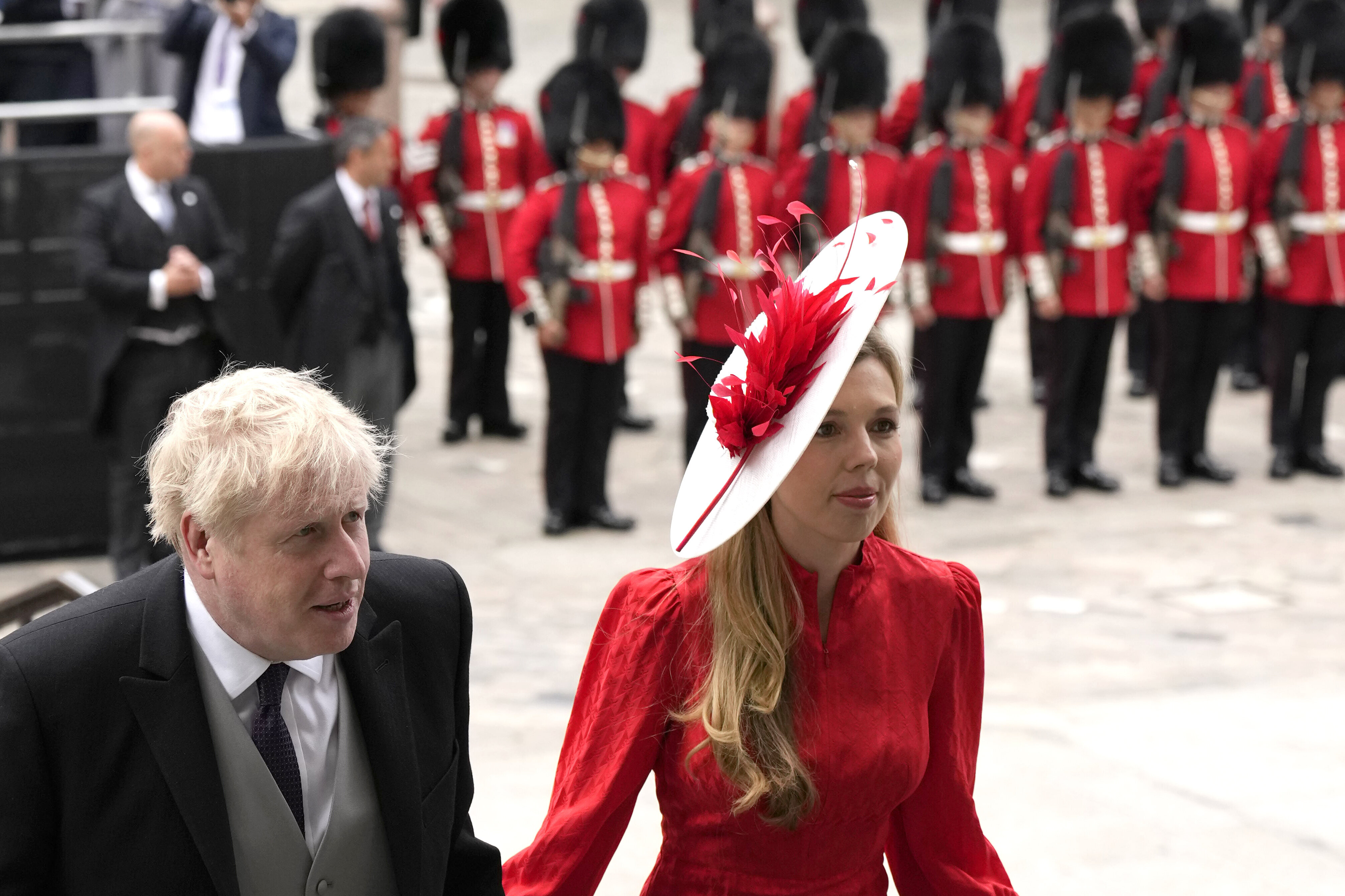
Boris Johnson and his wife were cheered as well as booed by crowds as they attended a Jubilee church service for the Queen, Grant Shapps has insisted.
The transport secretary clashed with the BBC’s Sophie Raworth after she asked him why the prime minister and Carrie Johnson were jeered by the public.
Advertisement
“There were also people cheering and you’re not asking why they did that,” Shapps said.
Television footage showed the PM and his wife clearly being booed as they entered and left the national service of thanksgiving for the Queen at St. Paul’s Cathedral on Friday.
Advertisement
Culture secretary Nadine Dorries, a Johnson loyalist, leapt to the PM’s defence by insisting there were “far, far more cheers” for the couple – prompting a wave of online mockery.
Appearing on the BBC’s Sunday Morning programme, Shapps also attempted to downplay the extent of public opposition to his boss.
Advertisement
He said: “Look, politicians don’t expect to be popular all the time. You know, getting on with running the country is a job where you have to take difficult decisions a lot of the time.
“I wasn’t there, but I heard people booing, I heard people cheering, I think it’s best to get on with the job at hand – running the country – rather than being overly distracted by the clips that you just played.”
Shapps said George Osborne, who was Chancellor at the time, was booed at the 2012 Olympics opening ceremony but the Conservatives still went on to win the 2015 election.
Asked why other politicians – including former PMs like Tony Blair and Gordon Brown – who attended the St. Paul’s service were not booed, Shapps said: “Well, he’s the Prime Minister, rather different from an ex-prime minister or a more minor politician.”
Advertisement
Johnson faces another huge week at Westminster amid mounting speculation he could face a vote of no confidence in his leadership.
In a further blow for the PM, a new poll has revealed that the Tories are 20 points behind Labour in Wakefield, where voters will go to the polls on June 23 in a crunch by-election.
Shapps said he did not believe a confidence vote would take place, but insisted Johnson would win it if one did happen.
To mount a leadership challenge, 54 have to submit a letter to Sir Graham Brady who leads the 1922 committee of backbench Conservative MPs.
Only Brady knows how many have submitted letters and he keeps it a secret until the threshold is reached.
Analysis by Sky News shows 41 MPs have publicly questioned Johnson’s position, while 28 have confirmed they have sent in letters.
Hayward said it was striking that a lot of the MPs who have admitted submitting letters recently had experienced local elections in their constituencies, adding: “They have spent more time asking people for support on behalf of their councillors, their candidates, than other people.
“In the local elections, the Tories did reasonably in being a party of government against the Labour Party in the Midlands of the North.
“But they did far worse than expected in parts of London and in the southeast in the middle class, the what’s described as the gravel drive, Waitrose shopping areas.
“And that has clearly unsettled MPs who had, with their associations, to go out and campaign and what we’re seeing now is that feeding off the losses of May 5.”
Asked if Johnson would lose a confidence vote, Hayward replied: “That is very difficult to say. I think if it were held today, no he wouldn’t.
“But there are these series of hurdles – we’ve got Lord Geidt’s comments yesterday, which have come completely out of the blue nobody was expecting this to have happened and therefore the reset is not proving to be the calming experience that most people at No.10 and within the organisation behind Boris would actually have wanted it to.
“So there is the prospect, but it’s worth remembering Theresa May won a vote of confidence, in theory that gave her another year, but she was out of office within seven months.”
He said a vote of confidence, even if you win, is not a guarantee that you will continue as the party leader because losing support is an “attritional process”.
In order to oust him, 180 MPs would have to vote against Johnson in the confidence vote.
If it gets to that stage, the odds are in the PM’s favour with around 140 MPs on the “payroll” alone including ministers and aides.
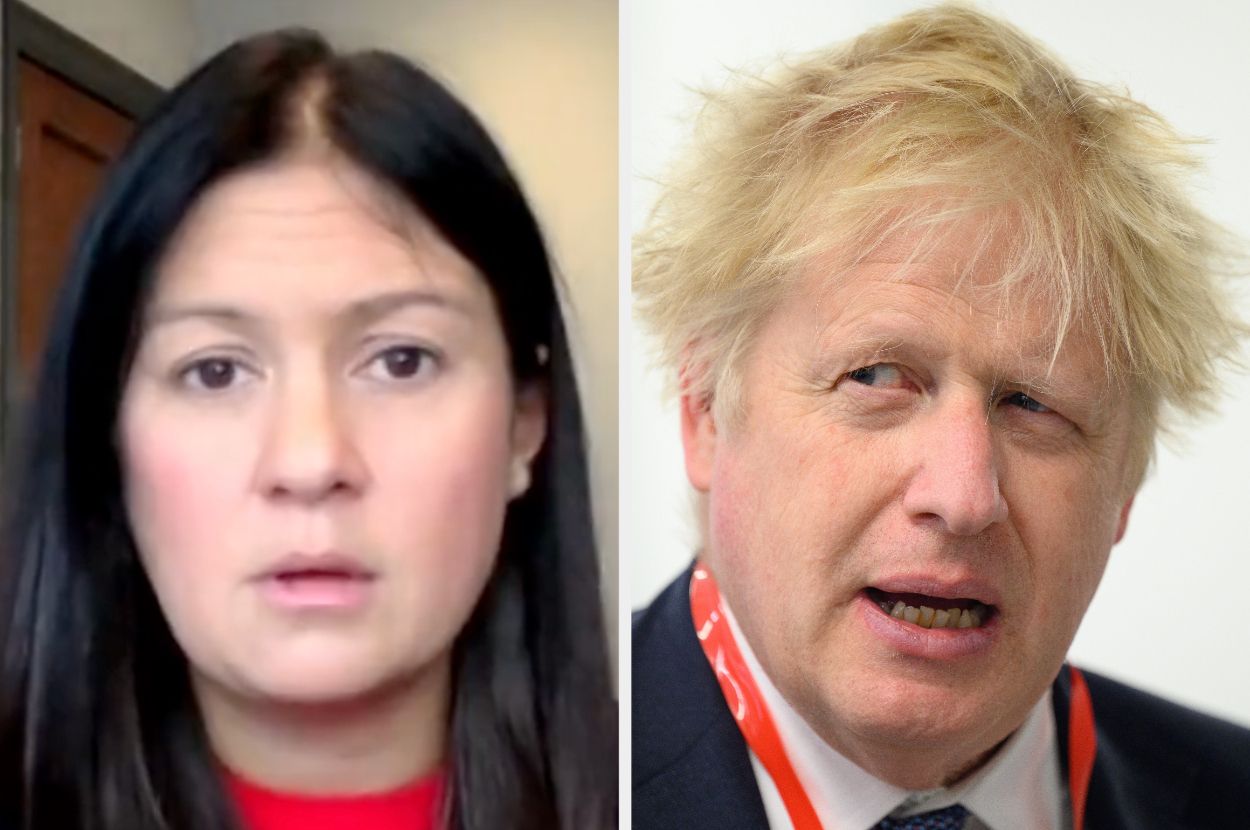
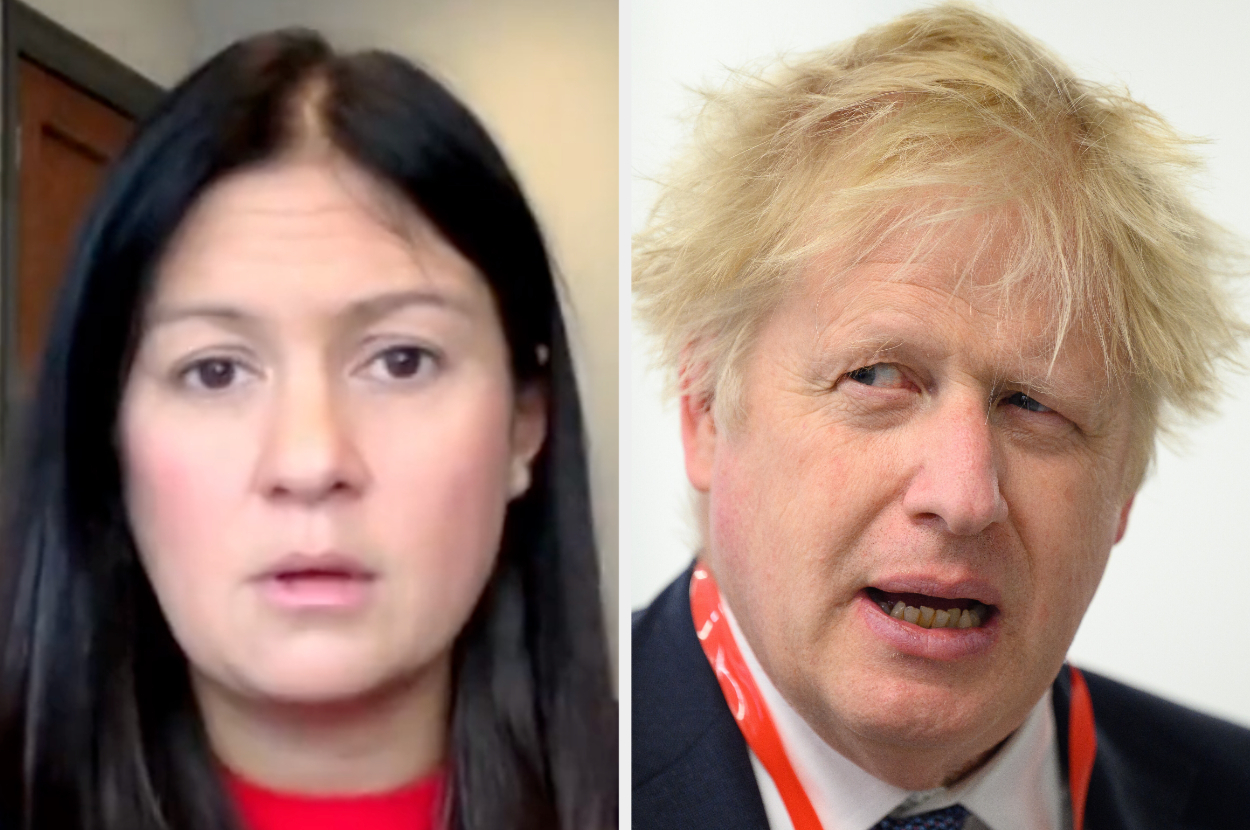
Lisa Nandy criticised the drinking culture in No.10 again on Monday as new partygate claims emerged over the weekend.
The Sunday Times has reported that the prime minister’s wife, Carrie Johnson, may now have had two supposed parties in Downing Street but neither of the alleged gatherings are going to be investigated by Sue Gray.
Advertisement
As Labour’s shadow levelling up secretary, Nandy told Sky News: “What this shows to me is not that there’s been another party or that there should be another investigation.
″Much more that there is clearly a culture which the prime minister has presided over, where people made the rules, they broke the rules, they lied about it and they laughed about it. And they’re still trying to get away with it.
Advertisement
“For a lot of families in this country that is incredibly offensive for the whole country, that’s a very serious thing.”
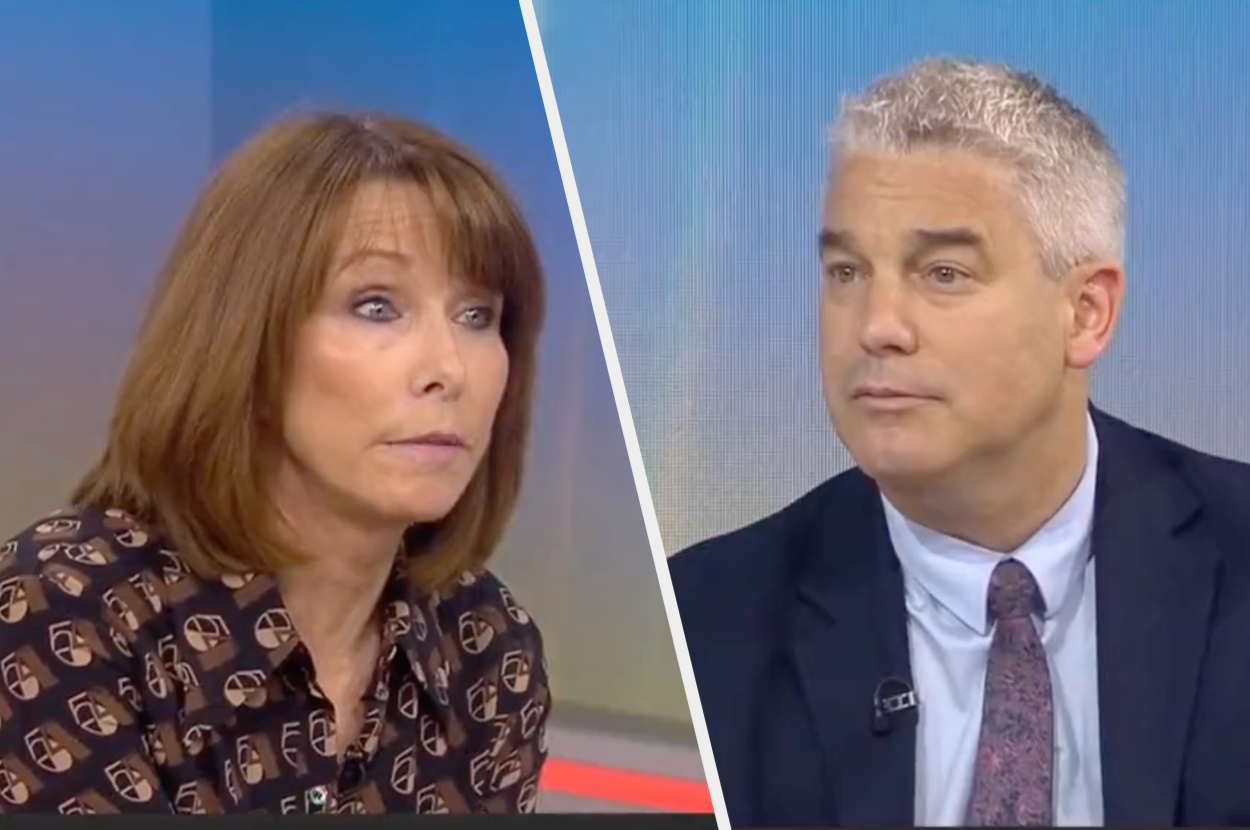
Her strong remarks came after digital minister Chris Philp told Sky’s Kay Burley that he did not see any reason for there to be further investigations into partygate.
Advertisement
“I think we’ve had an unbelievably comprehensive set of investigations, now going on for a period of nearly six months,” Philp said, later adding: “It’s not immediately obvious to me that this has – rightly – been the most thoroughly investigated set of incidents in recent times.”
In response, Nandy claimed: “It’s difficult for him to argue that and probably privately he would accept that, when the revelations keep coming on about more.”
Taking aim at Johnson again, the shadow cabinet minister added: “In the end if you can’t trust the prime minister to make sure the rules he made were followed, what can you trust him to do?”
Last week, No.10 announced it was changing the wording of the ministerial code, removing early references to honesty and making it so minor breaches did not mean people had to resign.
Such a move prompted outrage from the general public.
Labour have since called for there to be an impartial approach to the ministerial code, so those in power “can’t bend the rules to suit them”.
Boris Johnson’s chief of staff has insisted the prime minister had a “duty” to attend staff leaving parties during the pandemic — even when people were unable to say goodbye to dying relatives.
The PM repeatedly stood by his decision to thank departing staff in person following the publication of Sue Gray’s damning report into the partygate scandal that has rocked No.10.
But speaking at a press conference on Wednesday, the prime minister insisted he felt it was his “duty” to make an appearance at the leaving-dos of departing colleagues.
“When I was speaking to colleagues about the departure of another spad [special adviser], or government adviser or official, it didn’t occur to me that this was anything except what it was my duty to do as prime minister during a pandemic.
Advertisement
“That’s why I did it, and that’s why I spoke as I did in the House of Commons. And, yes, as Sue has found and everybody can see and the evidence has shown, after I had been there things did not go well.”
Johnson’s words were immediately seized on by Sky Presenter Kay Burley, who asked Barclay: “So he could say goodbye to a work colleague, but people watching this programme this morning couldn’t say goodbye to a dying relative?”
Barclay replied: “I know from my own families in the constituency that that was heartbreaking for people that weren’t able to say goodbye, I think it was probably one of the worst features of the pandemic that people didn’t get that moment of being able to say goodbye.
“I think as was covered at the time in the rules, people working in Downing Street, because of the nature of their jobs working for the prime minister, they’re working in our vaccine rollout, ensuring we have the PPE, working very long hours in tight-knit situations, and there was a work exemption for them to be able to work together.
Advertisement
“It was in that context that the prime minster was very briefly, usually for a matter of minutes, to meet people.”
Burley interjected: “Why would he feel that he could say goodbye to a work colleague but people couldn’t go to a graveside?”
“Because they were already in the building,” Barclay said. “They were already working in tiny groups, they were already there.”
“Six bottles of wine, two bottles of champagne and a bottle of gin on the table…what sort of workplace is that?”
Barclay replied: “The Met has looked at these issues, these were very brief periods of time, the nature of the prime minster’s job is to go from meeting to meeting to meeting.
“But at the same time he has recognised the need for changes, he’s made those changes, and Sue Gray herself has recognised there’s been significant change with a permanent secretary, with a change of leadership team as a result of the lessons we’ve learned.”
Boris Johnson has been blamed for enabling Westminster’s sleaze culture following the arrest of a Tory MP on suspicion of rape.
Liberal Democrat leader Ed Davey said the latest allegations were “utterly shocking” and there are some MPs “who are behaving outrageously” and “need to punished”.
Advertisement
The unnamed parliamentarian, who is in his 50s, was arrested on suspicion of rape and sexual assault on Tuesday evening.
He has been asked to stay away from Westminster by the party as inquiries continue and has been released on bail.
Davey said it “shouldn’t even be a question” that the whip is removed as he accused the Tories of “dragging their feet when one of their own has broken the law”.
Advertisement
He told Sky News: “I believe in the process of law, but in the meantime during these investigations, these extremely serious allegations, of course the whip should be removed.
“I can’t believe the Conservatives are yet again, dragging their feet when one of their own has broken the law.”
Alluding to the partygate scandal that has engulfed Downing Street, he added\; “This is becoming a theme. And maybe it’s because the prime minister breaks the law and lies about it and gets away with it.
“It’s a prime minister who has created a culture, particularly in the Conservative Party, and this is setting a very bad example for the country, for our young people.
Advertisement
“And the prime minister, frankly — you know I’ve called for him to resign — but I don’t believe he’s a decent person.
“He’s not a decent person to be the prime minister of our great country. And I think true patriots would want him to go.
“This whole culture, it rots from the top sometimes, a fish rots from his head, and if I think we got rid of the prime minister, it will be a big step forward to beginning to address some of these problems.”
Scotland Yard said the man was detained on suspicion of rape and sexual assault offences spanning seven years. He has also been accused of indecent assault, abuse of a position of trust and misconduct in a public office.
The Metropolitan Police said officers initially received a complaint about the MP in January 2020.
News of the arrest came just weeks after Neil Parish resigned as a Tory MP for watching porn in the Commons.
Imrad Ahmad Khan also quit as the Conservative MP for Wakefield after being convicted of sexually assaulting a teenage boy.
David Warburton, the MP for Somerton and Frome, was suspended over allegations of sexual harassment and drug use.
And Rob Roberts, the MP for Delyn in North Wales, was also suspended by the Conservatives for sexually harassing a member of his staff.
Leading charities have demanded the government take immediate action to help people struggling with the cost of living crisis.
It comes after Boris Johnson was criticised for unveiling 38 new bills in the Queen’s Speech, with none of them designed to immediately alleviate the financial pain being suffered right now by millions across the UK.
Advertisement
The prime minister insisted the government’s plans would grow the economy and create thousands of new jobs, thereby bringing down living costs in the longer term.
But charities and think tanks contacted by HuffPost UK said ministers needed to take steps straight away as the public deal with soaring energy bills, rising inflation, higher council tax and increasing interest rates.
Advertisement
They warn that unless they do, minis risk turning a crisis into “a national emergency”.
What has the government announced so far?
Advertisement
In Ferbruary, Rishi Sunak unveiled a £9bn package of measures to help bring down energy and council tax bills.
Under the plan, energy bills will be reduced by £200, with the money being repaid in charges over the next four years. In addition, households in bands A-D are seeing £150 knocked off their council tax bills.
This is in addition to other measures including a 5p reduction in fuel duty, reducing the Universal Credit taper rate to allow people to keep more of the money they earn, increasing the national minimum wage, £25 extra a week in cold weather payments and raising the national insurance thresholds.
According to the Treasury, the total cost of the support already announced is £22bn.
Advertisement
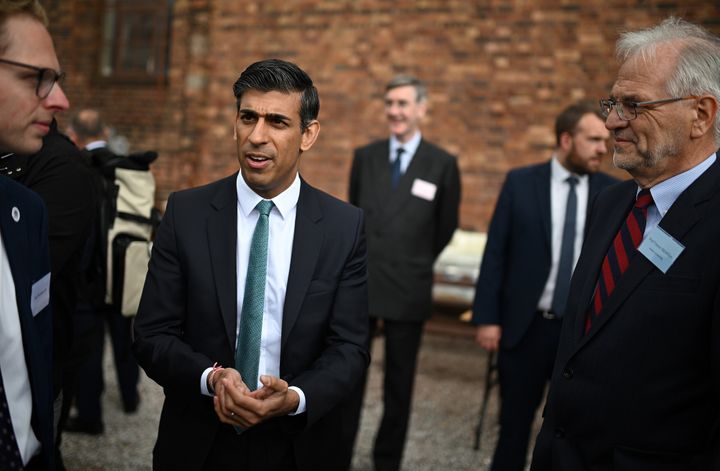
Rishi Sunak is under pressure to do more to help with the cost of living.
Oli Scarff via PA Wire/PA Images
Why was the Queen’s Speech such a let-down?
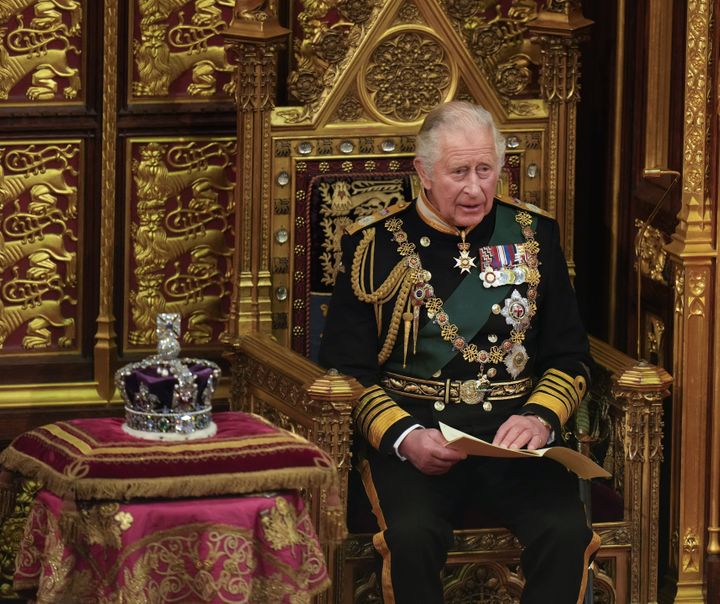
The Queen’s Speech setting out the government’s legislative plans for the next 12 months – delivered by Prince Charles after Her Majesty withdrew over health concerns – contained a total of 38 bills.
However, Boris Johnson was at pains to stress that there was no new money to help people feeling the pinch.
The prime minister said: “We must remember that for every pound of taxpayer’s money we spend on reducing bills now, it is a pound we are not investing in bringing down bills and prices over the longer term.
“And that if anything, this moment makes clear our best remedy lies in urgently delivering on our mission to turbo charge the economy, create jobs and spread opportunity across the country.”
The Prince of Wales delivers the Queen’s Speech during the State Opening of Parliament in the House of Lords.
Alastair Grant via PA Wire/PA Images
Does Boris Johnson get it?
As an unapologetic populist, the prime minister’s instinct will be to make a major announcement on an extra package of financial measures to help struggling voters. But as a fiscal conservative, the chancellor will be resisting any such moves at this time.
This probably explains the bizarre mix-up between Number 10 and the Treasury on the same day the Queen’s Speech was announced.
Johnson told the House of Commons that he and Sunak would say more on the cost of living “in the days to come”, immediately increasing speculation of an emergency budget.
But sources close to Sunak quickly made clear that they knew nothing about it, and insisted no new measures were due before the autumn.
One ally of the Chancellor told HuffPost UK there were “no announcements as far as we are aware”.
They added: “Rishi has always been clear that we would set out plans for support on energy bills for autumn when we know what the [energy] price cap is going to be – but we’re not there yet.”
Does the government have any plan at all?
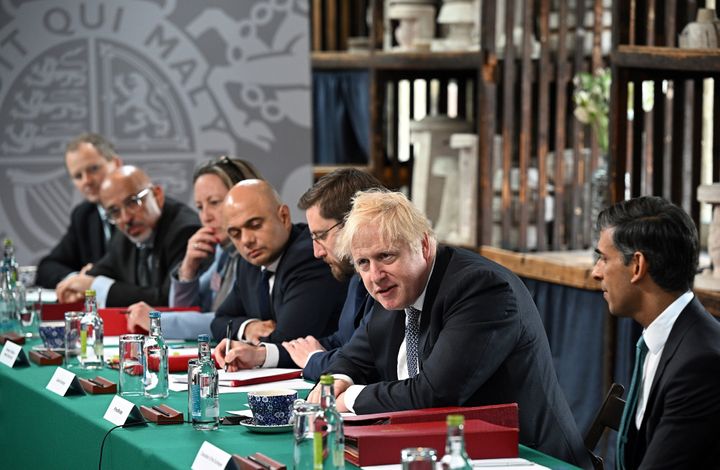
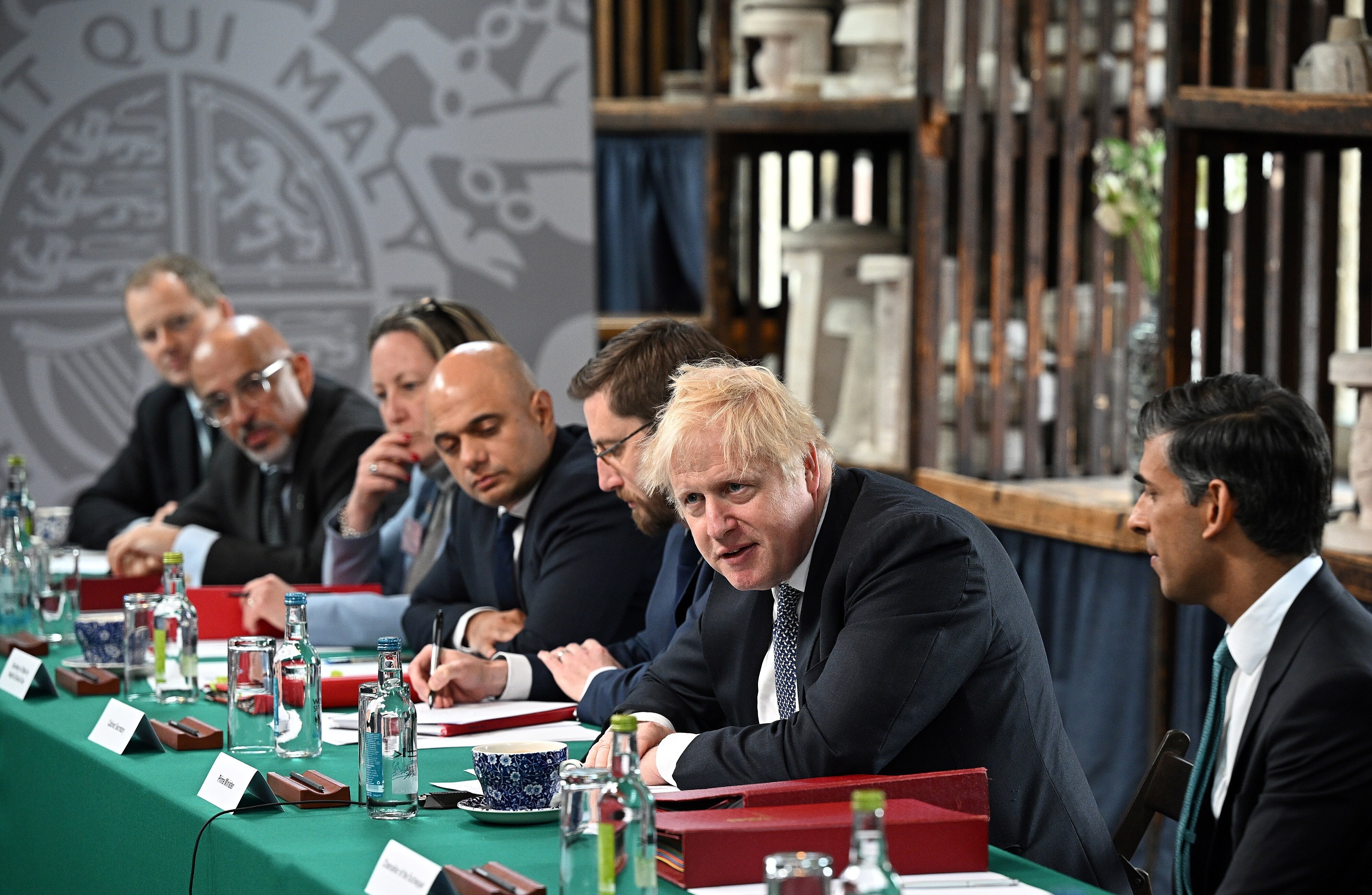
Johnson chaired a special cabinet meeting at an away day in Stoke with his top team on Thursday, where the government’s response to the cost of living crisis was top of the agenda.
Although no new announcements were made afterwards, it is understood that the PM and chancellor are eyeing a potential tax cut before MPs depart for the summer recess.
Talk of a windfall tax on energy firms’ profits – as demanded by Labour – is also increasing, despite both Johnson and Sunak repeatedly voicing their scepticism about such a move, arguing that it could hamper investment.
We also know that the chancellor will unveil a further package of financial support in the autumn, when the energy price cap is expected to rise significantly once again.
But critics say those on those on the lowest incomes, many of whom are regularly forced to choose between heating their homes and feeding their children, cannot wait several months for the government to step in.
Advertisement
Boris Johnson chairs a cabinet meeting in Stoke-on-Trent
Oli Scarff via PA Wire/PA Images
What should the government be doing right now?
HuffPost UK contacted a range of charities to get their take on the crisis and ask what they believe Johnson and co should do without delay to alleviate the suffering of so many people across the country.
The universal view was that the government should be using the benefits system to urgently target support at those who need it most.
Katie Schmuecker, principal policy adviser at the Joseph Rowntree Foundation, said: “The widening gap between the incomes of the poorest and what they need to afford the essentials is not just something that happens naturally – it is a political choice.
“The chancellor could have used the Spring Statement to ensure that benefits were uprated in line with this year’s very high inflation, and it is not too late to act to protect people from the worst of this crisis. It just needs a political will and speedy action.”
Tom Marsland, policy manager at disability equality charity Scope, said disabled people were already dealing with the increased cost of electric wheelchairs, ventilators or adapted vehicles, before factoring in soaring energy bills.
“The Queen’s Speech was an opportunity to help disabled people, but this didn’t happen,” he said.
“The government must urgently provide increased financial support to disabled people direct through the welfare system.
“Disabled people have seen a real terms cut to their cut to benefits as they rise less than inflation. The government has said it will uprate disability benefits again next April, but what are disabled people supposed to do for the next 12 months if they can’t afford basic essentials like food and heating? We need to see benefits rise in line with inflation now.”
Polly Neate chief executive of Shelter, said: “Housing is at the root of the cost-of-living crisis. Private rents are higher than ever, bills are skyrocketing, and housing benefit is lagging dangerously behind. We’ve heard from renters whose landlords have said unless they agree to a hike in their rent they will be kicked out.
Advertisement
“As a priority, the government needs to end the freeze on housing benefit so people can still pay their rent. It must also scrap no-fault evictions as quickly as possible to prevent more people from losing their homes unnecessarily, and the additional financial hardship that brings.”
Peter Grigg, chief Executive of Home-Start UK, said: “As a minimum, the government should ensure benefits rise in line with the cost of living. Benefits are rising by 3.1 per cent, but inflation is around 8 per cent and prices and energy bills rising even higher.
“So for low-income families this all means an income drop. If we can’t find ways to reduce bills and increase financial support for families, it will be pushing even more parents and children into poverty. Our children deserve better.”
Emma Revie, chief executive of the Trussell Trust, said: “We are calling on the UK government to bring benefits in line with the true cost of living. As an urgent first step benefits should be increased by at least 7 per cent.
“In the longer term, we need the government to introduce a commitment in the benefits system to ensure that everyone has enough money in their pockets to be prevented from falling into destitution. By failing to make benefits payments realistic for the times we face, the government now risks turning the cost of living crisis into a national emergency.”
Isabel Hughes of the Food Foundation said: “A commitment to a new Food Bill would have demonstrated that the government was serious about tackling the problems in the food system and making sustainable long-term action to reduce spiralling food insecurity levels a priority. Families need and deserve more support.”
The economist’s view
HuffPost UK also asked the highly-respected Resolution Foundation for its view on what the government could be doing, but is currently failing to.
Mike Brewer, the think tank’s chief economist, agreed with the charities that the benefits system must be mobilised to help the poorest in the country before it’s too late.
He said: “With average incomes on course to fall by around £1,200 this year – the tightest squeeze in half a century – new support will need to be bold.
Advertisement
“Another big rise in the energy price cap this October means that further help with energy bills is inevitable. And while further universal support will be welcome, the Government must also target support at the low-and-middle income families who are at the sharp end of rising cost pressures.
“The most effective way to do this is to bring forward the big increase in benefits due next spring to this autumn, or even sooner if possible. This would deliver significant cash support to millions of hard-hit households, hold back rising poverty levels and would carry no long-term cost to the Treasury.”
Jacob Rees-Mogg has defended Boris Johnson’s plans to slash the number of civil servants by 91,000.
The government efficiency minister said the government wanted to bring the Whitehall headcount back to where it was in 2016.
Advertisement
He said the extra staff were brought in to help deal with the pandemic and the “aftermath of Brexit”.
Rees-Mogg told Sky News: “I know it sounds eye-catching but it’s just getting back to the civil service we had in 2016… since then we’ve had to take on people for specific tasks.
Advertisement
“So dealing with the aftermath of Brexit and dealing with Covid, so there’s been a reason for that increase, but we’re now trying to get back to normal.”
The minister said there was currently too much “duplication” in Whitehall, and insisted most of the jobs could be lost by not replacing the 38,000 civil servants who leave the government every year.
Advertisement
He said: “What I’ve seen within the Cabinet Office, which is where I work and bear in mind each secretary of state will be responsible for is or her own department, is that there’s duplication within government, so you have a communications department and then you have within another department some people doing communications.
“So it’s trying to ensure that you use the resources that you’ve got rather than duplicating it bit by bit.”
Asked why the cuts were not being described as a return to austerity, he said: “I don’t think it is because what is being done is getting back to the efficiency levels we had in 2016.”
Rees-Mogg has previously angered civil servants by leaving notes on the desks of those not in the office in an attempt to discourage working from home.
Advertisement
They read: “Sorry you were out when I visited. I look forward to seeing you in the office very soon. Wish every good wish.”
The drive has been branded “vindictive” by Dave Penman, the general secretary of the FDA representing senior civil servants, who said ministers were out of step with practice in the private sector.
However, sources close to Sunak quickly made clear that they knew nothing about it, and insisted no new measures were due before the autumn.
Gove suggested commentators were “chasing their own tails” and told Sky News: “There won’t be an emergency budget. It is sometimes the case that the words from a prime minister or minister are overinterpreted.
“The prime minister is right. We will be saying more and doing more in order to help people with the cost-of-living challenge we face at the moment, but that doesn’t amount to an emergency budget. It is part of the work of government.
“Last night the prime minister convened a group of ministers – we have all done work on some of the things we could do to help. Those policy initiatives will be announced by individual departments in due course as they are worked up.
“It is part of the process for a government that is always and everywhere thinking of how we can help and how we can provide support, both short term and long term.”
Lib Dem Treasury spokesperson Christine Jardine described the issue as a “complete shambles.”
She added: “Millions of families and pensioners are struggling to get by. They need more help now before things get even worse in the autumn.
“Instead all we get from this Conservative government is chaos and confusion.
“An emergency budget is needed now to cut taxes for ordinary families while taxing the super profits of oil and gas companies. That would be the fair and right thing to do.”
Johnson made his comments in a debate on the Queen’s Speech, which contained 38 bills but no immediate plans for dealing with the cost of living crisis.
He said: “My right honourable friend the Chancellor and I will be saying more about this in the days to come.
“But at the same time as we help people, we need the legislative firepower to fix the underlying problems in energy supply, in housing, in infrastructure and in skills which are driving up costs for families across the country.
“And this Queen’s Speech takes those issues head on. And above all, we are tackling the economic challenges with the best solution of all and that is an ever growing number of high wage, high skill jobs. Jobs, jobs, jobs.”
An ally of the Chancellor told HuffPost UK there were “no announcements as far as we are aware”.
They added: “Rishi has always been clear that we would set out plans for support on energy bills for autumn when we know what the [energy] price cap is going to be – but we’re not there yet.”
Make no bones about it, the Conservative Party has lost more than 400 seats and that is not good. For all the talk of a mid-term protest vote against the governing party, the Tories had already been duffed-up the last time the councils were contested four years ago, so hundreds more councillors going on a like-for-like basis should not be glossed over.
Advertisement
It’s telling the gloss that Boris Johnson’s outriders are painting with focuses on Labour’s lack of gains, not its own deficit. But there was scathing criticism from within the party, including this damning tweet from ex-MP and former Theresa May adviser Gavin Barwell, who called it a “wake up call”.
Waking up to catastrophic results for the party in London. Wandsworth & Westminster were flagship councils. We held them during the Blair honeymoon. We held them during austerity. We held them under Theresa May. Losing them should be a wake up call for the Conservative Party
But, with Johnson facing a leadership challenge if 53 Tory MPs demand a vote of no confidence, there was little sign they were more prepared to wield the axe. With most critics in Westminster keeping their heads down, it was left it to grassroots Tories to speak out.
Advertisement
John Mallinson, leader of Carlisle City Council, hit out after Labour took control of the new Cumberland authority which will replace it, saying: “I think it is not just partygate, there is the integrity issue. Basically I just don’t feel people any longer have the confidence that the prime minister can be relied upon to tell the truth.”
Johnson himself said it had been a “mixed set of results” for the Tories. “It is mid-term,” he said, sticking to the script.
Advertisement
As the losses notched up, and edged towards 500 seats, a Labour Party spokesperson said: “This is a shattering result for the Conservatives.
“Boris Johnson was on the ballot paper and the British public has rejected him.
“The question every decent Conservative will be asking themselves is how much further are they willing fall for a man who never fails to put his own interest above his councillors, his MPs, his party, and his country.”
Next stop: tricky by-elections in Tiverton and Honiton and Wakefield.
Labour’s performance is open to interpretation, and interpret is what commentators have spent much of the last 12 hours doing.
There were the headline grabbing wins in London – flagship Tory councils Wandsworth, Westminster and Barnet fell – and a majority on the newly-created council in Cumberland, which Labour leader Keir Starmer saidshowed his party could win anywhere. The traditional county-wide authority includes ‘Workington Man’, a voter demographic that gets pollsters very excited in terms of who might win a general election.
There’s also something happening for Labour on the coast – it took control of Southampton and Worthing – and the “sea wall” appears to have entered the political lexicon, joining the “red wall” and “blue wall” stolen from US politics.
But Labour has gained 252councils seats – a reflection of the party not pocketing all the Conservative losses. The Tories were briefing how Labour has gone backwards in Sunderland, Tyneside, Hartlepool, Nuneaton, Sandwell and Amber Valley – former heartlands areas in the north and midlands that will be essential to getting back into power in Westminster.
But it’s progress. An analysis for the BBC by Professor Sir John Curtice calculated that if the whole country had been voting Labour would have gained 35% of the vote – five points ahead of the Tories on 30% – the party’s biggest lead in local elections for a decade.
Starmer, who is now facing a fresh “beergate” investigation, proclaimed clear evidence of a Labour revival following its crushing defeat in the 2019 general election. “This is a big turning point for us,” he told cheering supporters in Barnet. “We’ve sent a message to the prime minister: Britain deserves better.”
3. Ravey Davey: The Lib Dem ‘comeback’
The toxicity surrounding the Liberal Democrats following five years of power sharing with the Conservatives, and hiking tuition fees, seems to be a fading memory. Ed Davey’s party have compounded the success in recent Westminster by-elections by taking Hull council and the newly-created Somersetunitary authority. Other wins included Westmorland and Furness and dislodging the Tories in West Oxfordshire.
How has % share of the vote for each party across England changed since 2018 – the last time todays councils were up for election.
Tories down in the south, Lib Dems up everywhere, very mixed bag for Labour
The party has gained 189 seats, which in part explains why Labour’s haul looks meagre. The Green Party, too, made substantial progress – gaining 81 councillors.
Advertisement
The “third party” success raises questions over splitting the “progressive” vote three ways, and whether that would let the Tories back in at a general election by default. Expect to hear more talk about electoral pacts and “lending” votes.
“What began as a tremor in Chesham and Amersham, became an earthquake in North Shropshire, and is now an almighty shockwave that will bring this Conservative government tumbling down,” Davey said.
4. One love: The SNP march on in Scotland
Scotland is increasingly a one-party nation. The SNP claimed its 11th successive national victory, and the number of councillors it boasts has risen in every ballot since 2004.
Perhaps more interesting was the race for second place. After years of decline, Labour has made gains and leap-frogged the Conservatives, whose strong performances under Ruth Davidson have gone in reverse now the former party leader in Scotland has left the stage.
Now with all the final scores on the doors. A very good night for the SNP and Greens, a good night for Labour and the Lib Dems, a terrible night for the Tories.https://t.co/ULWRSeDStr
Improvements in Scotland – coupled with the Lib Dems nibbling away at the Tories in southern England – is part of a complicated route back to Westminster power for Labour.
Scottish Tory leader Douglas Ross described the results as “very disappointing”, adding that Johnson “can’t ignore the message” from voters.
He said: “The Conservatives lost Westminster Council last night, that’s a council that even in the peak Labour years under Tony Blair the party held on to, so there’s been a very strong message from the public to the prime minister and to the party.”
The actual big story?: Sinn Fein closes in on history
While the local elections in England, Scotland and Wales make for good sport for armchair analysts, they may not lead to anything of substance changing. But Northern Ireland’s ballot could lead to a seismic shift for the whole of the United Kingdom.
Advertisement
Sinn Fein is on the brink of political history if it emerges as the largest party in Northern Ireland following Assembly elections.
After years of lagging behind its rival the Democratic Unionist Party, with whom it shares power, the nationalist party has now emerged on top with the potential to change the political landscape.
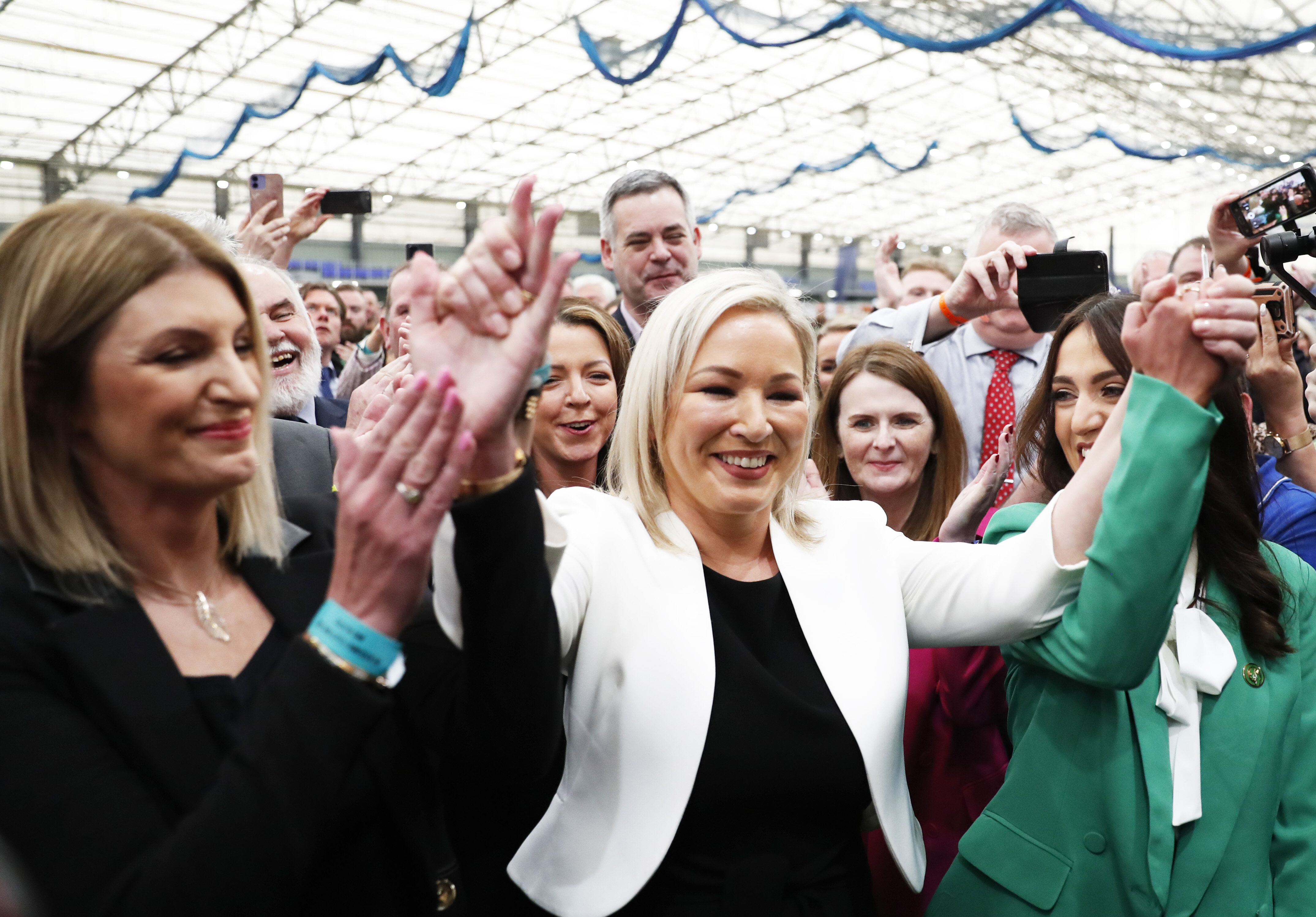
<img class="img-sized__img landscape" loading="lazy" alt="Sinn Fein’s Michelle O’Neill, centre, reacts with party colleagues after being elected in Mid Ulster at the Medow Bank election count centre in Magherafelt, Northern Ireland.” width=”720″ height=”501″ src=”https://www.wellnessmaster.com/wp-content/uploads/2022/05/uk-elections-2022-5-takeaways-as-tories-suffer-shattering-night-2.jpg”>
Sinn Fein’s Michelle O’Neill, centre, reacts with party colleagues after being elected in Mid Ulster at the Medow Bank election count centre in Magherafelt, Northern Ireland.
via Associated Press
With counting for the 90 Stormont seats continuing on Friday evening, the republican party had won 16 seats, well ahead of the Alliance on four and the DUP and UUP on three.
Sinn Fein’s position as the largest party would means a poll on the reunification of Ireland is far more likely – and the debate around Northern Ireland withdrawing from the United Kingdom of England, Scotland and Wales would intensify.
A Conservative council leader has said Tory MPs should try to oust Boris Johnson after his party suffered a humiliating defeat in a local election.
Conservative leader of Carlisle City Council, John Mallinson, vented his frustration after Labour picked up control of the new Cumberland authority after Thursday’s round voting.
Advertisement
The Tories lost 14 seats on the council in north west England, while Labour gained 12 and took overall control.
Mallinson, who will see the council he led replaced by the new Cumberland authority, told the BBC that he had “lost some very good colleagues” in the election, and had found it “difficult to drag the debate back to local issues” while campaigning because of partygate and the cost-of-living crisis.
Advertisement
Mallinson said: “I don’t think it was helping to get comments from people like George Eustice talking about people using value brands to ease their shopping bills. That just seems to have come over very patronising.”
He added: “I think it is not just partygate, there is the integrity issue. Basically I just don’t feel people any longer have the confidence that the prime minister can be relied upon to tell the truth.”
Advertisement
Asked if he thought Conservative MPs should oust the PM, Mallinson said: “That would be my preference, yes.”
Carlisle Tory councillor John Mallinson — a man I spent weeks of my life reporting on in early 2000s council meetings — drops a 3am bomb saying Boris Johnson should go as people don’t trust him to tell the truth. pic.twitter.com/QnH3WFe32P
On Sky News, he said: “(Johnson) must shoulder a lot of the blame. I have been canvassing in rural areas over the last few weeks and it’s been the one issue that people have brought up time and time again. Partygate, the cost of living crisis, the feel that the government were not in touch … and sadly I have to say the prime minister cannot be relied upon to necessarily to be telling the truth.”
He added: “I think he should consider his position now.”
When asked whether the areas three Tory MPs in the region should attempt to oust Johnson, he replied: “I call upon them to do what they think is right.”
Advertisement
Meanwhile, Johnson’s Tories face losing control of a flagship London authority to Labour – but there was a mixed picture for Keir Starmer’s party outside the capital.
Wandsworth, which has been a Conservative authority for more than 40 years, looks set to fall to Labour, with the Tories fearing other boroughs will also be lost.
But outside London, the Liberal Democrats won Hull from Labour, while the Greens also picked up seats in contests around England.
Council seats are up for grabs in Scotland, Wales and many parts of England, while there are elections to Stormont in Northern Ireland.
Votes were only being counted in some of the English contests overnight, including key authorities in the capital.