It is the first drug to be approved that delays the onset of the condition.


It is the first drug to be approved that delays the onset of the condition.

Researchers at the Beckman Institute for Advanced Science and Technology developed a new method to ‘see’ the fine structure and chemical composition of a human cell with unmatched clarity and precision.
It’s why Jaws swam out of sight for more than an hour and hints at the glamour of giftwrap. In movie theaters, living rooms, and even labs, the thrill of the unseen can be counted on to keep us guessing. But when it comes to the hidden chemical world of cells, scientists need no longer wonder.
Inspired by this same thrill, researchers at the Beckman Institute for Advanced Science and Technology developed an innovative way to ‘see’ the fine structure and chemical composition of a human cell with unmatched clarity and precision. Their technique, which appeared in PNAS earlier this week, takes a creative — and counterintuitive — approach to signal detection.
“Biology is one of the most exciting sciences of our time because there has always been a divide between what we can see and what we cannot see,” said Rohit Bhargava, a professor of bioengineering at the University of Illinois Urbana-Champaign who led the study.
As the smallest functional units in our bodies, cells have long commanded the attention of researchers interested in determining what they’re made of and where each element resides. Together, the “what” and the “where” form an all-purpose cellular blueprint that can be used to study biology, chemistry, materials, and more.
Before this study, obtaining a high-resolution copy of that blueprint ranked among the impossible.
“Now, we can see inside cells in a much finer resolution and with significant chemical detail more easily than ever,” Bhargava said. “This work opens a range of possibilities, including a new way to examine the combined chemical and physical aspects that govern human development and disease.”
The researchers’ work builds on prior strides in the field of chemical imaging.
Whereas optical microscopy uses visible light to illuminate surface-level features like color and structure, chemical imaging uses invisible infrared light to reveal a sample’s inner workings.
When a cell is exposed to IR light, its temperature rises, and it expands. We know from night vision goggles that no two objects absorb IR wavelengths in exactly the same way; comparing a poodle to a park bench is evidence enough that warmer objects emit stronger IR signatures than cooler ones. The same is true inside a cell, where each type of molecule absorbs IR light at a subtly different wavelength and emits a unique chemical signature. Examining the absorption patterns — a method called spectroscopy — allows researchers to pinpoint the whereabouts of each.
Unlike night vision goggles, the researchers do not analyze the absorption patterns as a color spectrum. Instead, they interpret the IR waves with a signal detector: a minute beam fastened to the microscope on one end, with a fine tip that scrapes the cell’s surface like the nanoscale needle of a record player.
Innovations in spectroscopy over the last decade have focused on steadily increasing the strength of the initial IR wavelengths.
“It’s an intuitive approach because we are conditioned to think of larger signals as being better. We think, ‘The stronger the IR signal, the higher a cell’s temperature becomes, the more it expands, and the easier it will be to see,'” Bhargava said.
A sizeable setback is hidden within this approach. As the cell expands, the motion of the signal detector becomes more exaggerated and generates “noise”: so-called static that impedes accurate chemical measurements.
“It’s like turning up the dial on a staticky radio station — the music gets louder, but so does the static,” said Seth Kenkel, a postdoctoral researcher in Professor Bhargava’s lab and the study’s lead author.
In other words, no matter how powerful the IR signal became, the quality of the chemical imaging could not advance.
“We needed a solution to stop the noise from increasing alongside the signal,” Kenkel said.
The researchers’ remedy to noisy cellular imaging works by divorcing the IR signal from the detector’s movement, allowing for amplification without the added noise.
Instead of focusing their energies on the strongest possible IR signal, the researchers began by experimenting with the smallest signal they could manage, ensuring that they could effectively implement their solution before upping the strength. Though “counterintuitive,” according to Kenkel, starting small allowed the researchers to honor a decade of spectroscopy research and lay critical groundwork for the future of the field.
Bhargava likens the approach to a road trip gone awry.
“Imagine that spectroscopy researchers were in a car, headed to the Grand Canyon. Of course, everyone would think that the faster the car moves, the faster they’ll reach the destination. But the problem is that the car is headed east from Urbana,” he said.
Increasing the hypothetical car’s speed is analogous to strengthening the IR signal.
“We pulled over, looked at a map, and pointed the car in the correct direction. Now, the increased speed — the increased signal — can effectively move the field forward.”
The researchers’ “map” enables high-resolution chemical and structural imaging of cells at the nanoscale — a scale 100,000 times smaller than a strand of hair. Notably, this technique is free of fluorescent labeling, or dyeing molecules to increase their visibility under a microscope.
While the facilities in Beckman’s Microscopy Suite were critical to the study’s experimental stage, the idea itself arose not from sophisticated technology, but from a culture that supported curiosity, unconventional problem-solving, and diverse perspectives.
“This is why the Beckman Institute is an amazing place,” Bhargava said. “This project needed ideas from spectroscopy, from mechanical engineering, from signal processing, and of course biology. You can’t combine these fields seamlessly anywhere other than Beckman. This study is a classic example of Beckman’s blend of interdisciplinary science at the cutting edge of advanced science and technology.”
Research reported in this press release was supported in part by the National Institute of Biomedical Imaging and Bioengineering of the National Institutes of Health under award numbers T32EB019944 and R01EB009745, as well as the National Science Foundation under award number 2153032. This content is solely the responsibility of the authors and does not necessarily represent the official views of the NIH.

Your entire medical journey lives in digital health records, but how do you know if those records are wrong, incomplete or missing important information? That’s the focus of research done by Varadraj Gurupur, associate professor in UCF’s School of Global Health Management and Informatics.
His latest project created an algorithm that can predict and measure the incompleteness of electronic health records — in everything from your lab results to disease diagnoses, medical history to prescription records.
Missing information in the electronic health records (EHR) that hospitals and doctor’s offices keep is like a leaking pipe, he says. If you don’t know where the leak is, you can’t fix it, and soon the house can flood. The same dangers can happen in healthcare. A recent study by Gurupur revealed that a critical percent of digital health records contained missing information.
His algorithm uses mathematics and computer science to answer, “Where is the water leaking?” he says. The analysis performed by Gurupur and his team found that the level of incompleteness per year varies and there is not a pattern of where missing data happens. His algorithm helps identify attributes that have a higher tendency to be incomplete — the areas of the water pipe that are more vulnerable and can break more frequently.
His previous studies have documented that the biggest reasons for missing health information are communication and education. Communication between patients and their providers isn’t always clear — especially if the patient is interacting with a healthcare professional who does not speak their native language. Cultural barriers may keep patients from sharing important information with their providers. Digital technology also creates its own challenges. Providers may not fill out electronic records until day’s end — and forget what the patient said or not have it accurately in their notes. Hospitals and clinics switch electronic health record systems, requiring extensive new retraining which results in a learning curve for providers. Some healthcare workers, especially those who did not grow up with technology, may not be adept at using EHRs.
“Missing health information can sometimes be as simple as a person who isn’t sure what button to push in the new system,” Gurupur says.
Ayan Nasir ’20MD is finishing his internal medicine residency at Mayo Clinic in Jacksonville, Florida. As a UCF undergraduate and medical student, Nasir did research with Gurupur on health informatics. Before entering the medical field, Nasir worked in finance and says he was amazed at the quality control and data accuracy differences difference between banking and health records. Those discrepancies inspired him to make improving health informatics the subject of his two-year Focused Inquiry and Research Experience (FIRE) project at the medical school, where Gurupur served as his research mentor.
His residency has reinforced his passion for improving health informatics.
“When I see a patient, what I put in the electronic health record reflects one episode of their care,” he says. “But that information is going to guide every future medical decision. That’s why electronic records must be complete.”
Gurupur gave this example to highlight the impact of incomplete health data. A patient with limited English skills visits a new provider who does not speak the patient’s native language. With their communication challenges and the rush of a clinical practice, the patient forgets to mention that they are on a particular drug for Type 2 diabetes. There is nothing about previous diabetes treatment in the electronic health record so the provider prescribes a standard drug in a standard dosage for that condition. Now the patient can be receiving twice the recommended amount.
Medicine is looking at ways to use more big data — artificial intelligence — to diagnose and provide more evidence-based treatments. But that computer analysis relies on complete patient data, Nasir points out.
“When it comes to medicine, you’re only as good as your data,” he says.
Gurupur says developing reliable algorithms for missing data is also important to health systems. Recent studies have shown that hospitals can lose an average of $5 to $8 million a year because of missing data that impacts their insurance reimbursement rates. With the algorithm, hospital leaders can learn exactly where missing information is coming from — a particular floor, department, service — and address it.
Both Gurupur and Nasir believe health informatics is at a critical tipping point. Health systems rely on electronic records but must develop ways to ensure all the information they collect is complete and accurate. Nasir is getting his master’s in health informatics at Northwestern University and points out that such graduate medical training programs show the increasing importance of using data to better care for patients. He believes future health technology will improve care even more — computers will translate conversations between providers and patients directly into the electronic record, reducing the need for providers to input data manually after each visit, for example.
“We are just at the beginning of this transformation,” he says. “It’s exciting to be part of this work.”
Story Source:
Materials provided by University of Central Florida. Original written by Wendy Sarubbi. Note: Content may be edited for style and length.

Researchers at the National Institute of Standards and Technology (NIST) have created grids of tiny clumps of atoms known as quantum dots and studied what happens when electrons dive into these archipelagos of atomic islands. Measuring the behavior of electrons in these relatively simple setups promises deep insights into how electrons behave in complex real-world materials and could help researchers engineer devices that make possible powerful quantum computers and other innovative technologies.
In work published in Nature Communications, the researchers made multiple 3-by-3 grids of precisely spaced quantum dots, each comprising one to three phosphorus atoms. Attached to the grids were electrical leads and other components that enabled electrons to flow through them. The grids provided playing fields in which electrons could behave in nearly ideal, textbook-like conditions, free of the confounding effects of real-world materials.
The researchers injected electrons into the grids and observed how they behaved as the researchers varied conditions such as the spacing between the dots. For grids in which the dots were close, the electrons tended to spread out and act like waves, essentially existing in several places at one time. When the dots were far apart, they would sometimes get trapped in individual dots, like electrons in materials with insulating properties.
Advanced versions of the grid would allow researchers to study the behavior of electrons in controllable environments with a level of detail that would be impossible for the world’s most powerful conventional computers to simulate accurately. It would open the door to full-fledged “analog quantum simulators” that unlock the secrets of exotic materials such as high-temperature superconductors. It could also provide hints about how to create materials, such as topological insulators, by controlling the geometry of the quantum dot array.
In related work just published in ACS Nano, the same NIST researchers improved their fabrication method so they can now reliably create an array of identical, equally spaced dots with exactly one atom each, leading to even more ideal environments necessary for a fully accurate quantum simulator. The researchers have set their sights on making such a simulator with a larger grid of quantum dots: A 5×5 array of dots can produce rich electron behavior that is impossible to simulate in even the most advanced supercomputers.
Story Source:
Materials provided by National Institute of Standards and Technology (NIST). Note: Content may be edited for style and length.
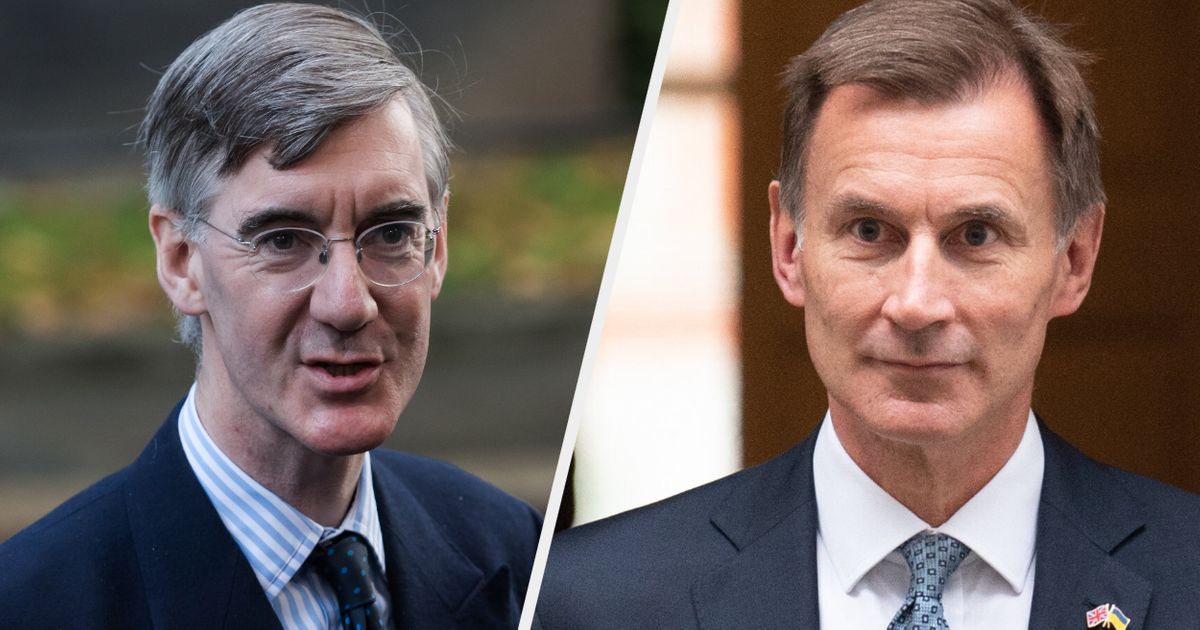
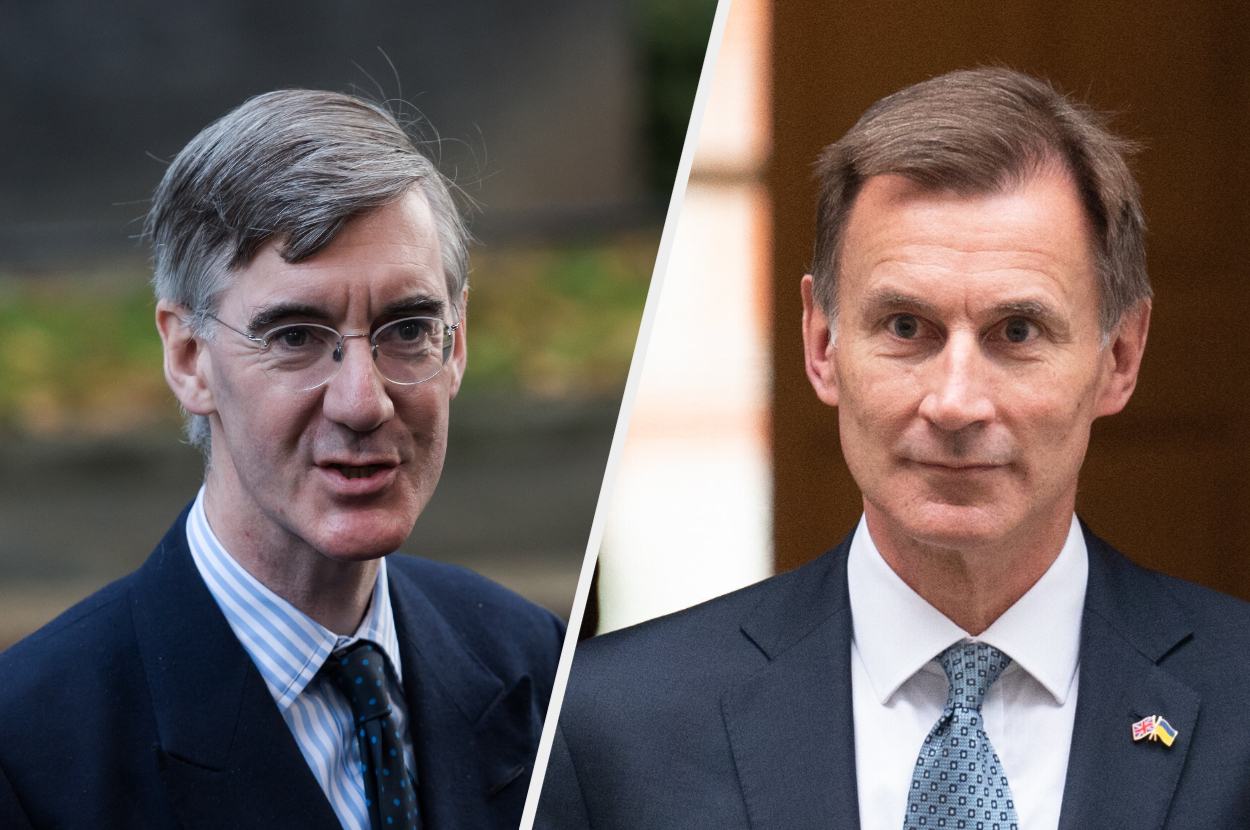
The fragile peace in the Tory party has been exposed as Jacob Rees-Mogg has criticised Jeremy Hunt’s autumn statement for taking the “easy option” by putting up taxes.
The chancellor included almost £25 billion in tax increases in his package to fill the UK’s financial blackhole, with the most well-off taking a hammering.
Advertisement
The Rishi Sunak administration will fear the comments by Rees-Mogg, the former cabinet minister and low-tax enthusiast, reflects wider concerns from the right of the party over raising taxes as the country is entering a recession.
Rees-Mogg, whose time on the ministerial benches was marked by controversial attempts to reduce the headcount of the civil service, said ministers should be seeking to cut spending through efficiency savings in public services.
He told Channel 4 News: “Taxation has got too high and there are issues with the level of expenditure that we have got.
“I think there is a real problem with fiscal drag bringing more and more people into the 40p (tax) band who, particularly if they are living in the south of England, are not necessarily particularly well-off.
Advertisement
“That is going to be hard for them paying an extra level of tax on top of what they are already paying.
“Also freezing the basic band is going to be a burden for all taxpayers, even those who are still in receipt of benefit.
“I think we need to look at the efficiency of government to make sure money is well spent before reaching for the easy option of putting up taxes.
“What we actually need to be doing is having a strategy for growth and looking to lower taxes.”
Rees-Mogg is a long-standing critic of prime minister Rishi Sunak, having previously described him as a “socialist” over his record of raising taxes when he was chancellor. He quit the cabinet when Sunak became PM
Advertisement
His comments will cause concern among ministers after another former minister, Esther McVey, warned she could not support tax rises if the government continued to press ahead with the HS2 rail link.
Rees-Mogg insisted however that he still supported the government.
“I am a Conservative member of parliament and I support the leader of the party. We’ve had three leaders in the last few months – it would be ridiculous to have another,” he said.
Hunt has increased the windfall tax on oil and gas giants and reduced the salary threshold at which workers begin paying the 45p top rate of income tax.
Among a string of little-noticed measures, the chancellor also plans a 23% increase in fuel duty, which adds £5.7 billion to his coffers and is the first tax rise of its kind since 2011.

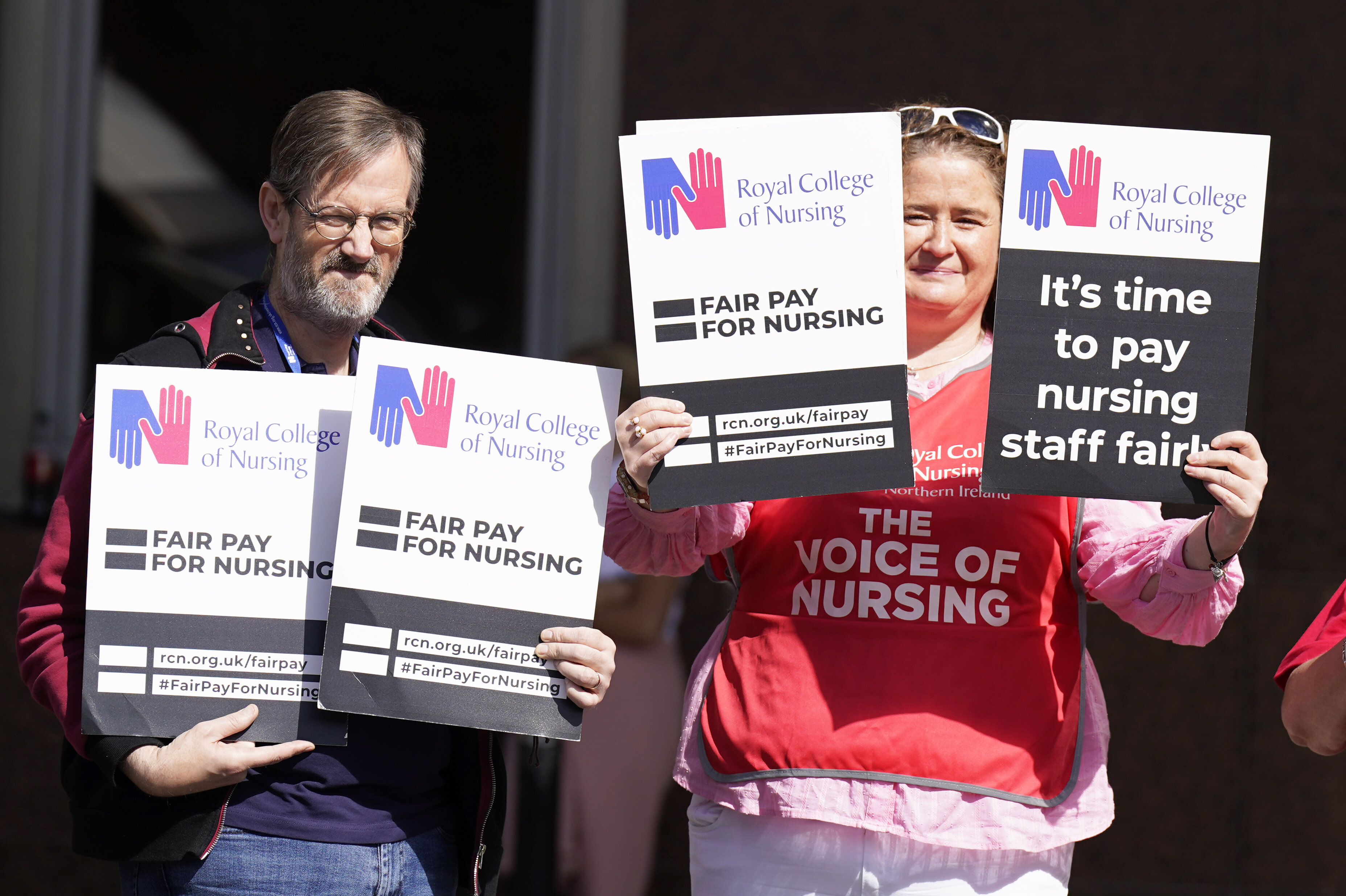
Nurses have called for “detailed negotiations” on pay in the next five days or it will announce strike dates for December.
In a letter to health secretary Steve Barclay following the autumn statement, Royal College of Nursing (RCN) general secretary Pat Cullen said the chancellor demonstrated that “the government remains unprepared to give my members the support they need at work and at home”.
Advertisement
She said that recent meetings with the minister had been “cordial in tone”, but had not resolved the issues at the heart of proposed strike action.
Last week, the RCN announced that nursing staff at the majority of NHS employers across the UK had voted to take strike action over pay and patient safety.
In the letter, she added: “It is with regret that I write to say that unless our next meeting is formal pay negotiations, beginning within the next five days, we will be announcing the dates and locations of our December strike action.”
Advertisement
The RCN is calling for a pay rise of 5% above inflation, saying that despite a pay rise earlier this year, experienced nurses were worse off by 20% due to successive below-inflation awards since 2010.
Cullen said recent meetings with Barclay were welcome, but added: “I must not let my members nor the public confuse these meetings for serious discussions on the issues of NHS pay and patient safety.
“You have again asked to meet in the coming days and for this third occasion I must be clearer in my expectation.
“There is only value in meeting if you wish to discuss – in formal, detailed negotiations – the issues that have caused our members to vote for strike action.
“It is now more than a week since we announced our ballot outcome and your department has dedicated more time to publicly criticising our members’ expectations than finding common ground and a satisfactory conclusion.
Advertisement
“I also point out that this stands in contrast to the approach taken by governments and executives in other parts of the United Kingdom.”
Health secretary Barclay said: “We are all hugely grateful for the hard work and dedication of healthcare staff, including nurses, and we have prioritised the NHS in the autumn statement with an additional £6.6 billion over the next two years, alongside a commitment to publish a comprehensive workforce strategy next year with independently verified forecasts.
“We deeply regret some union members have voted for industrial action.
“These are challenging times, which is why we accepted the recommendations of the independent NHS Pay Review Body in full and have given over one million NHS workers a pay rise of at least £1,400 this year.
“This is on top of a 3% pay increase last year when public sector pay was frozen, and wider government support with the cost of living.”
Jeremy Hunt has set out his plans for almost £25 billion in tax increases and more than £30 billion in spending cuts to fill the UK’s financial blackhole – but some measures have received more attention than others.
While increasing the windfall tax on oil and gas giants and reducing the salary threshold at which workers begin paying the 45p top rate of income tax were highlighted by the chancellor, many striking moves were buried within the pages of autumn statement green book. Here are just five:
Advertisement
How motorists will be affected by a budget is typically one of the headline-grabbing announcements, and yet Hunt failed to mention fuel duty.
But based on a forecast from the Office for Budget Responsibility, which combines the forecast for RPI inflation next year and the assumption that the 5p cut to fuel duty will end, the chancellor could hike the tax for the first time since 2011.
As the Office for Budget Responsibility said: “The planned 23% increase in the fuel duty rate in late-March 2023, which adds £5.7 billion to receipts next year.
“This would be a record cash increase, and the first time any government has raised fuel duty rates in cash terms since January 1, 2011.
Advertisement
“It is expected to raise the price of petrol and diesel by around 12 pence a litre.”

Tory MPs are likely to continue their campaign urging the chancellor to keep prices at the pumps down.
The tax surcharge on banks is to be slashed to 3% from 8%.
The move aligns with the government’s decision to hike up corporation tax from 19% to 25% from April, which banks pay on top of the surcharge.
It means banks will still be paying a higher rate of tax than they were previously, but by just 1% rather than the 6% that they could have faced had the surcharge stayed the same.
Advertisement
Home Office spending is set to be slashed by £100m in real-terms by 2024-25, which is likely to affect frontline policing.
And while Hunt said the government will invest an extra £2.3 billion per year in schools, there will be a £1 billion (14%) real-terms cut in capital spending on education in 2024-25 – meaning crumbling schools left in disrepair.
The now six-year freeze in income tax thresholds is a favourite “stealth tax” of the government – mainly because it avoids announcing a rise, and it tends to affect money people haven’t yet earned, so are less likely to notice the change.
Thursday’s change means a total of 3.2 million new income taxpayers and 2.6 million more people dragged into the higher 40p tax bracket, according to the OBR.
Advertisement
The chancellor has said he will cap the increase in social housing rents at a maximum of 7% in 2023/24, saving the average tenant £200 next year. Hunt said that without the cap, families living in the social rented sector could face rent hikes of up to 11%
But with the government refusing to cover the shortfall, social housing providers will have to fill the gap somehow, and could lead to a reduction in investment in properties and building new homes by £630 million over five years.
Sarah Olney, Treasury spokesperson of the Liberal Democrats, which highlighted many of the little-mentioned changes, said: “Underneath the surface of this terrible ‘cost of chaos’ budget are yet more hidden horrors.
“Everything from police to social housing to our crumbling schools is being left in the dust by this Conservative government.
Advertisement
“Everyone will be forced to pay for this cost of chaos budget with their public services being slashed more each year.
“Banks are being given a huge tax giveaway while millions are dragged into a higher rate of tax.
“The accumulated impact of these cuts will mean a bleak recession for years to come caused by an out of touch Conservative government.”


Our correspondents analyse what impact additional funding might have in three key areas.
Inflation and lack of beds and staff could halt bid to cut long waits, National Audit Office says.

Jeremy Hunt will say the UK is facing an economic “storm” as he prepares to unveil £60 billion-worth of tax rises and spending cuts in his autumn statement.
The chancellor will tell MPs that the government must “take difficult decisions now” to repair the public finances, which have been battered by Covid-19, the war in Ukraine and the effects of Kwasi Kwarteng’s disastrous mini-budget.
Advertisement
HuffPost UK understands Hunt will confirm that he is slashing public spending by around £35 billion and increasing taxes by £25 billion as he tries to balance the nation’s books.
But he will also insist that the government will “protect the vulnerable, because to be British is to be compassionate”.
That could mean that welfare benefits and the state pension will rise in line with inflation, meaning they will not be cut in real terms.
The chancellor will deliver Thursday morning’s autumn statement against a backdrop of rising interest rates, as well as soaring energy bills and inflation.
Advertisement
He is expected to increase taxes for the highest earners by reducing the threshold at which they start paying the 45p top income tax rate from £150,000 to £125,000.
But he has already admitted that everyone in the country will have to pay more tax as the government tried to fill a £55 billion financial black hole.
The windfall tax on the bumper profits of energy firms is also set to be increased and extended to bring in billions of pounds more revenue for the Treasury.
In his statement to the Commons, Hunt will say: “As countries all over the world grapple with inflation, our plan reflects British values: we are both honest about the challenges, and fair in our solutions.
“We are taking difficult decisions to deliver strong public finances and help keep mortgage rates low, but our plan also protects our long-term economic growth.
Advertisement
“At the same time, we protect the vulnerable, because to be British is to be compassionate.
“There is a global energy crisis, a global inflation crisis and a global economic crisis.
“But the British people are tough, inventive, and resourceful. We have risen to bigger challenges before.
“We aren’t immune to these global headwinds, but with this plan for stability, growth and public services – we will face into the storm.”
In a clear repudiation of September’s mini-budget – which saw Kwarteng implement former prime minister Liz Truss’s plan for huge tax cuts funded by extra borrowing – Hunt will say the government’s priority is to bring down inflation, which has hit 11.1%, the highest rate in 40 years.
He will say: “High inflation is the enemy of stability. It means higher mortgage rates, more expensive food and fuel bills, businesses failing and unemployment rising.
“It erodes savings, causes industrial unrest, and cuts funding for public services. It hurts the poorest the most and eats away at the trust upon which a strong society is built.”
Advertisement
Hunt will say the Bank of England has his “wholehearted support” as it tried to tackle inflation by increasing interest rates.
“Families across Britain make sacrifices every day to live within their means, and so too must governments because the United Kingdom will always pay its way,” the chancellor will say.
“We are taking a balanced path to stability: tackling the inflation that eats away at a pensioner’s savings and increases the cost of mortgages to families, at the same time supporting the economy to recover. But it depends on taking difficult decisions now.”
Shadow chancellor Rachel Reeves said the UK had been “held back by 12 years of Tory economic failure and wasted opportunities”.
She said: “What Britain needs in the autumn statement today are fairer choices for working people, and a proper plan for growth.”
Advertisement

