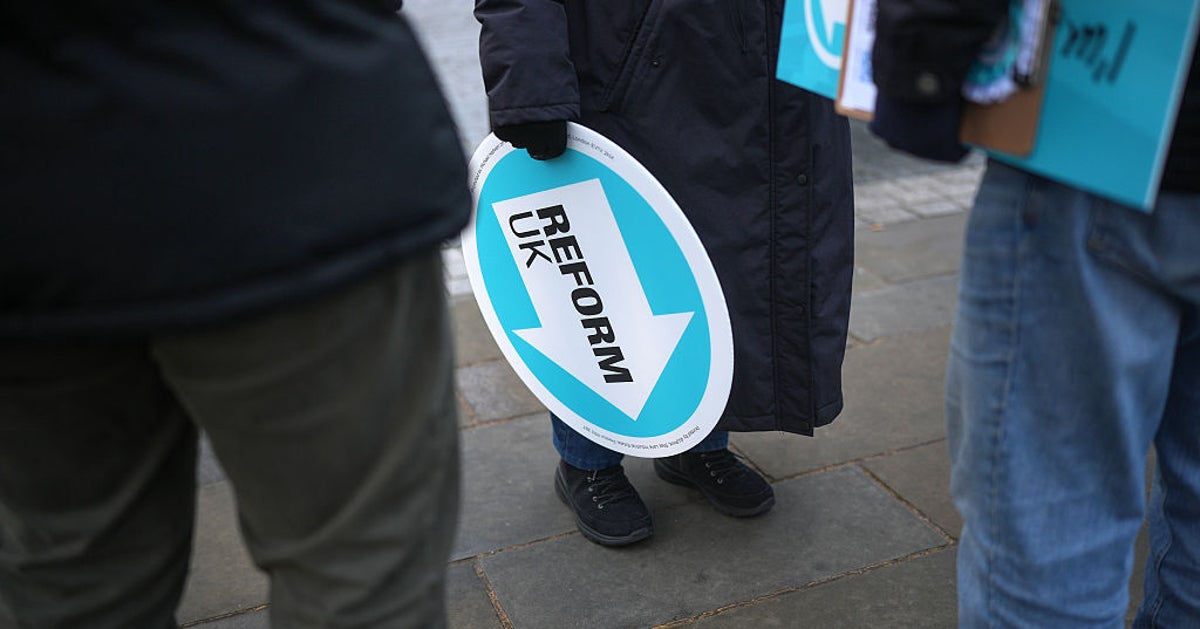
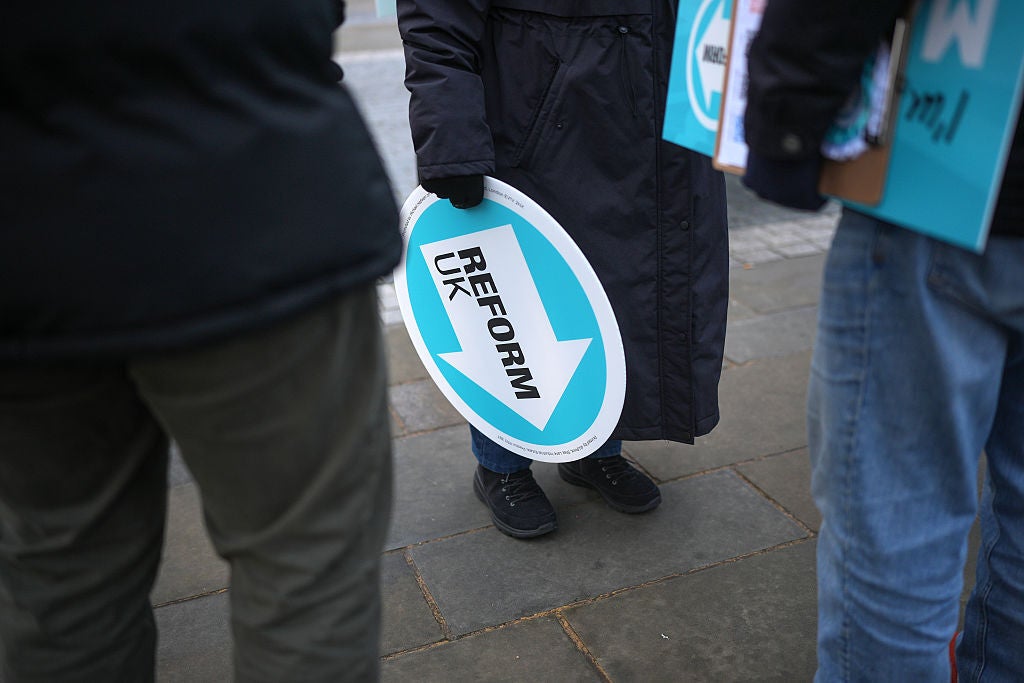
A Lib Dem councillor was left stunned after being asked by Reform UK to stand for the party at the local elections in May.
Sam Webber, who sits on Bromley Council in south east London, was phoned out of the blue by the party’s membership team and asked if he wanted to be a “paper candidate” on May 7.
Advertisement
A paper candidate is someone whose name goes on the ballot representing a party but is not expected to win or do any campaigning.
Speaking to HuffPost UK, Webber accused Nigel Farage’s party of “making a mockery of the election nomination process”.
He said: “Is Reform just randomly calling up people across the country and asking them to stand for election?
Advertisement
“Nominations open in five days time. How much vetting will the party be doing on their candidates in that time? This runs the risk people getting nominated who would be ineligible to serve even if they were elected.
“That would see costly and unnecessary by-elections having to take place after May 7, as we saw after the 2025 local elections.
“Reform UK is making a mockery of the election nomination process. As we have seen in authorities like Kent County Council, it would be total chaos if the party gets anywhere near power. I suspect voters will not like being taken for fools.”
Advertisement
Reform has been contacted for comment.
A staggering 65 Reform councillors who were elected at last May’s local elections have since either resigned as councillors, defected or quit the party.
Calls for a police probe into Peter Mandelson have grown amid suggestions the peer leaked sensitive government information to dead paedophile Jeffrey Epstein.
The US Department of Justice (DoJ) released a vast trove of documents related to Epstein’s network over the weekend, including his email exchanges with Mandelson.
Advertisement
Their conversations suggested that Mandelson passed Epstein at least one confidential memo when he was the business secretary back in 2009, following the financial crash.
He appeared to forward an economic briefing for then-prime minister Gordon Brown to Epstein, who pleaded guilt to procuring an underage child for prostitution the previous year.
Mandelson added the caption: “Interesting note that’s gone to the PM.”
Their conversations suggest Mandelson gave Epstein advance notice of a €500bn bailout from the EU to save the Euro, too.
Advertisement
These emails have sparked fears about whether Mandelson therefore committed misconduct in a public office, which can lead to a maximum sentence of life behind bars.
Both Reform and the SNP have sent separate referrals to the Metropolitan Police to investigate Mandelson.
A Reform UK spokesperson said: “We have today reported Peter Mandelson to the police for misconduct in public office.
Advertisement
“It’s abundantly clear that Peter Mandelson has abused his position in office. It’s now time the police do their job and properly investigate these shocking new revelations.”
SNP Westminster leader, Stephen Flynn, said “the disgraceful revelations” about Mandelson’s messages to Epstein “are shocking and must be fully investigated by the UK government and all appropriate authorities.”
“There is no question that Lord Mandelson’s actions were shameful and unethical – the only question is the extent to which his actions breached the ministerial code and the law,” he said. “I have, therefore, reported Peter Mandelson to the Metropolitan Police.”
Advertisement
Flynn said: “It is essential these matters are fully investigated to ensure maximum transparency and justice.”
Similarly, Lib Dem leader Ed Davey called for a criminal probe.
He said: “The Epstein files suggest Peter Mandelson leaked sensitive government information to a convicted sex offender while serving as a minister, and even suggested a US bank should threaten the government to lower its tax bill.
“These allegations are incredibly serious, it is now only right that the police investigate Peter Mandelson for potential misconduct in public office.”
Advertisement
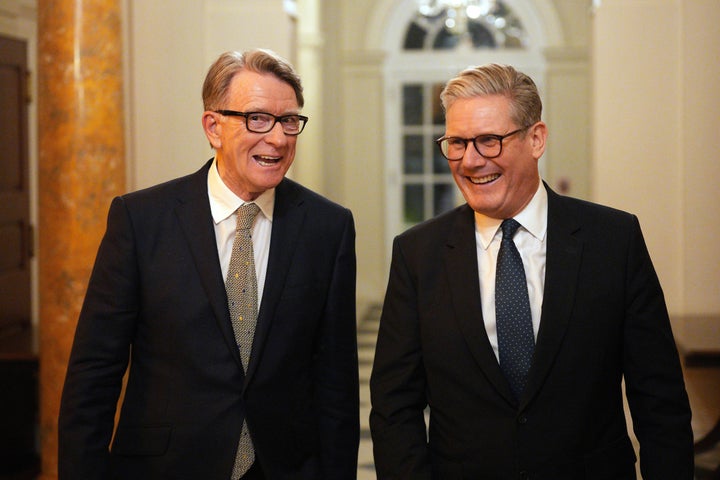
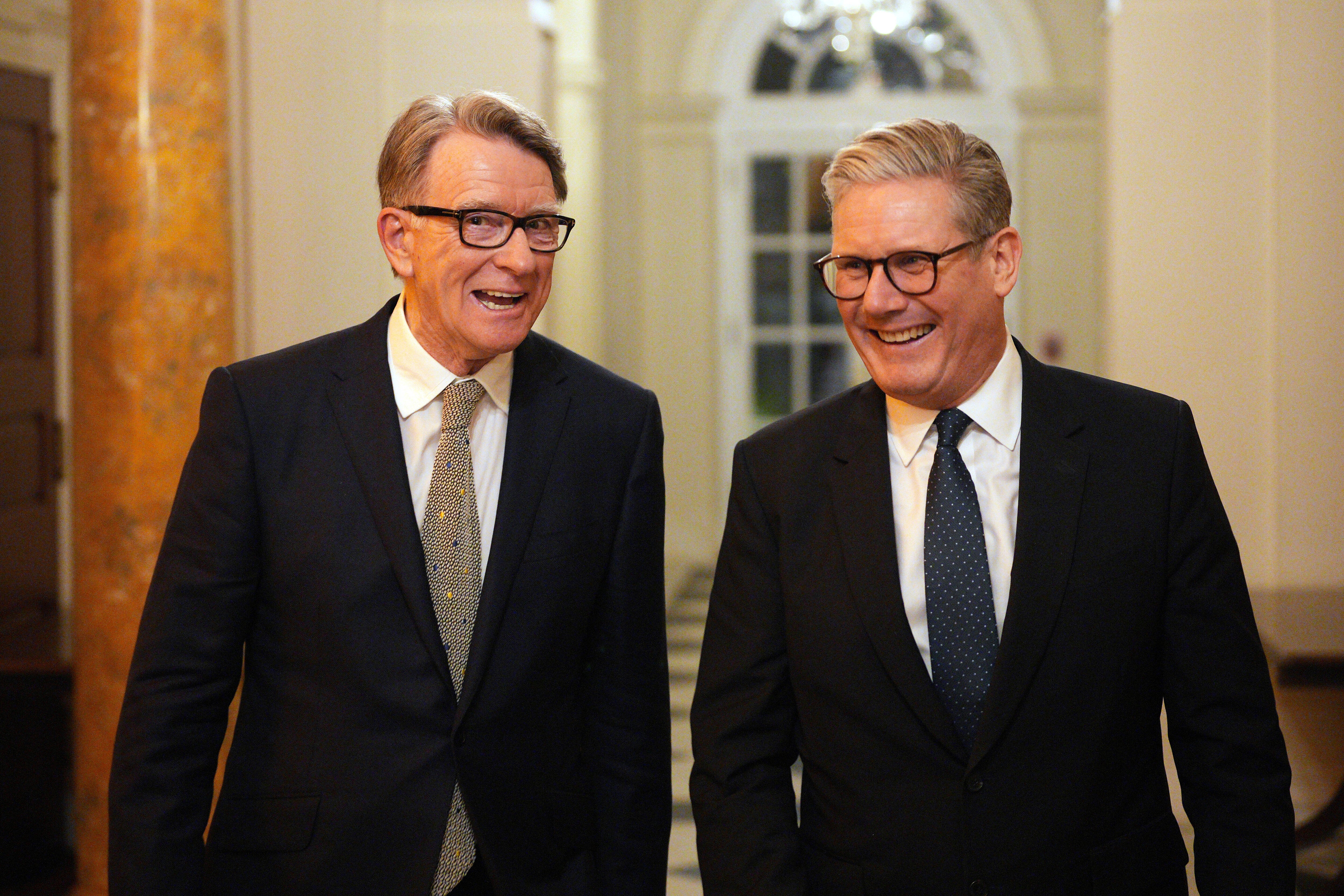
Prime Minister Keir Starmer, with then-ambassador to the United States Peter Mandelson during a welcome reception at the ambassador’s residence on Wednesday, Feb. 26, 2025 in Washington.
via Associated Press
Gordon Brown, who was prime minister between 2007 and 2010, also called for a probe after the “shocking” revelation on Monday.
“I have today asked the cabinet secretary to investigate the disclosure of confidential and market sensitive information from the then business department during the global financial crisis,” he said.
Advertisement
He revealed that he asked the cabinet secretary Chris Wormald to investigate “the veracity of information contained in the Epstein papers about the sale of assets arising from the banking collapse and communications about them between Lord Mandelson and Mr Epstein” back in September.
While that enquiry concluded that there was “no departmental record” of these conversations, Brown said these new documents suggested it was time for a “wider and more intensive inquiry”.
He said the probe should look at the “wholly unacceptable disclosure of government papers and information during the period when the country was battling the global financial crisis.”
Advertisement
Brown’s former government adviser Nick Butler also told Times Radio that Mandelson “should be ashamed of the breach of trust and the betrayal of trust that he’s been involved in”.
“I agree with Gordon Brown that there should be a full inquiry now into all the messages from the government at that time to Epstein,” he added.
“How many more messages on really important issues, important issues on which Epstein could have made a lot of money? How many messages were sent in that period? I think Peter should now resign from the Lords. I think that would be the honourable thing to do.”
Advertisement
Chief secretary to the prime minister Darren Jones told MPs that the prime minister has orded the cabinet secretary to investigate Mandelson’s contact with Epstein.
He added: “Whilst Peter Mandelson must account for his actions and conduct, it is an understatement to say that his decision to continue a close relationship with a convicted paedophile, including discussing private government business, falls far below the standards expected of any minister. His behaviour was unequivocally wrong and an insult to the women and girls who suffered.”
He then quit Labour on Sunday night after the documents appeared to show him receiving $75,000 from the late financier, claiming he did not want to cause “further embarrassment”.
His spokesperson said the government wants to work with the Lords to “strengthen the circumstances in which disgraced members can be removed” from parliament.
Advertisement
He said Starmer “believes that Peter Mandelson should not be a member of the House of Lords or use the title”.
At the moment, it requires an act of parliament is required to removed an individual from the Lords.
A Labour Party spokesman said: “It is right that Peter Mandelson is no longer a member of the Labour Party. Disciplinary action was underway prior to his resignation.
“Jeffrey Epstein’s heinous crimes destroyed the lives of so many women and girls, and our thoughts remain with his victims.”
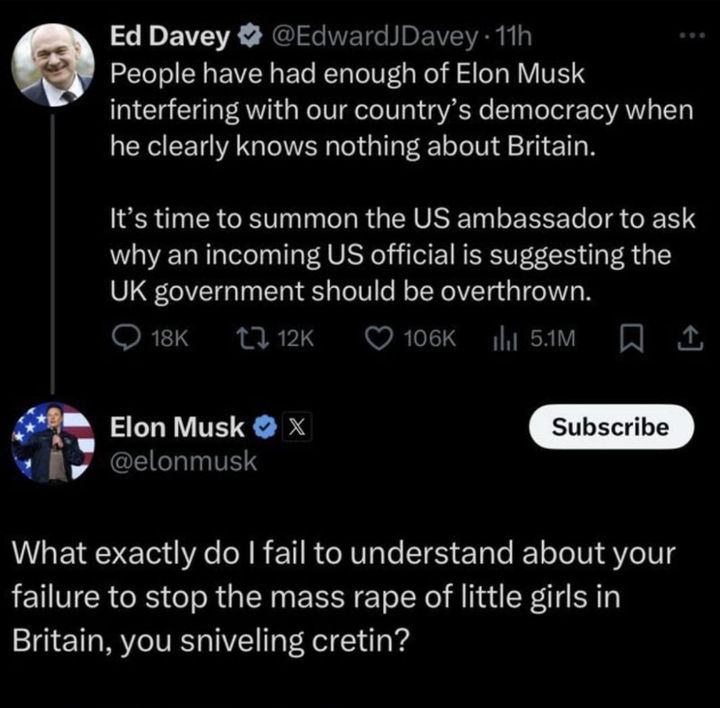
The Lib Dems are raising election funds on the back of Elon Musk calling Ed Davey a “snivelling cretin”, HuffPost UK has learned.
The X owner launched his attack after Davey said he “clearly knows nothing about Britain”.
Musk has repeatedly accused senior MPs – including Keir Starmer and safeguarding minister Jess Phillips – of failing to protect the victims of the grooming gangs scandal.
Advertisement
In an avalanche of posts on X, he has said Phillips should be in jail and called for America to intervene to overthrow the Labour government.
In response, Davey posted: “People have had enough of Elon Musk interfering with our country’s democracy when he clearly knows nothing about Britain.
“It’s time to summon the US ambassador to ask why an incoming US official is suggesting the UK government should be overthrown.”
Advertisement
Musk replied: “What exactly do I fail to understand about your failure to stop the mass rape of little girls in Britain, you snivelling cretin?”
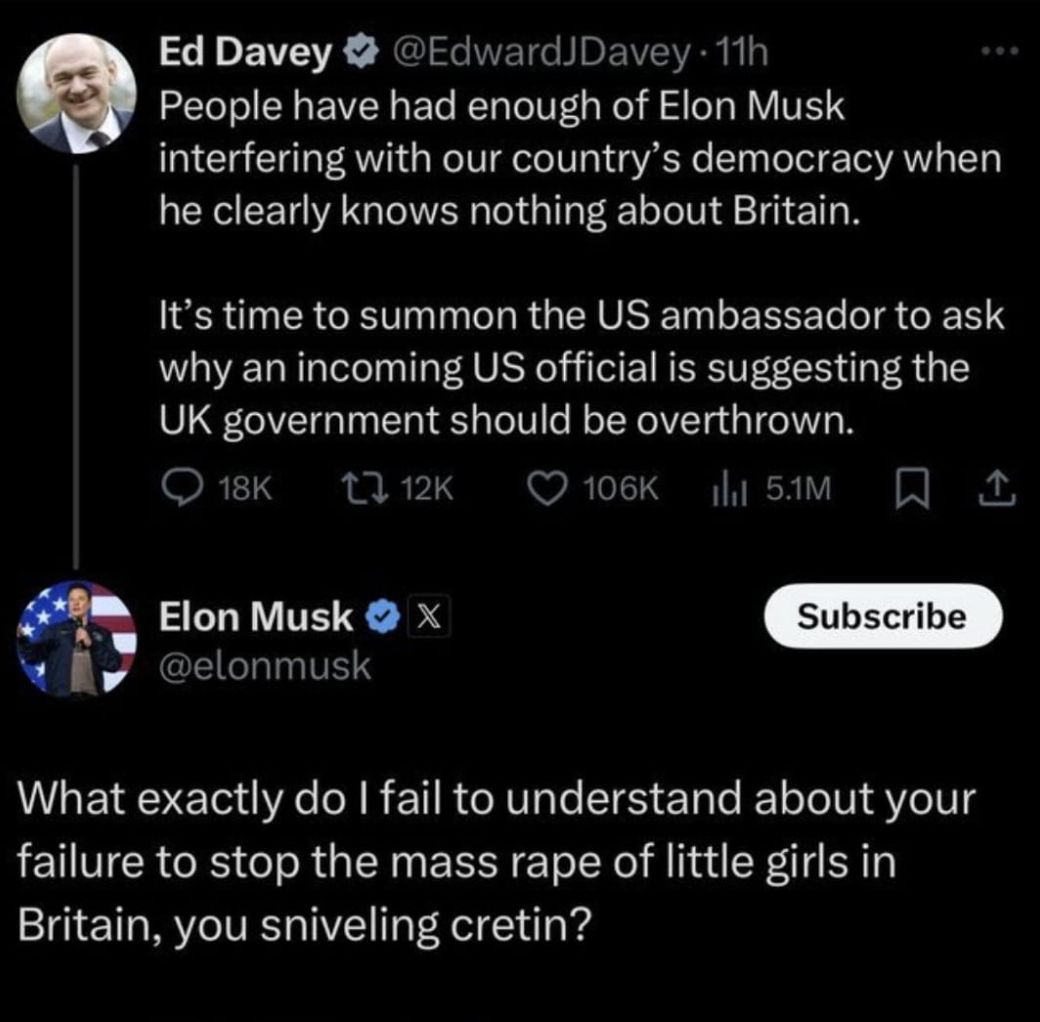
Musk’s exchange with Ed Davey.
Davey has now emailed Lib Dem supporters urging them to use the row to help the party win seats at the upcoming local elections in May.
Advertisement
In the email, he says: “Last night Elon Musk called me a ‘sniveling cretin’, because I dared to call him out for his appalling suggestion that the United States should overthrow the UK government.
“People have had enough of Elon Musk interfering with our politics when he clearly knows nothing about our country.
“While Reform and the Conservatives desperately try to jump on the Musk bandwagon, the Liberal Democrats are standing up to him and his appalling attempts to subvert our democracy and divide our country.
Advertisement
“We need to counter the threat posed by Nigel Farage’s Reform party. Our next big test is May’s local elections in England – our liberal values vs Farage’s divisive politics.
“Elon Musk is the world’s richest man, and already there are rumours he could make a huge donation to Reform. We have to act now so we don’t fall behind.
“Every leaflet we deliver, and every conversation we have with a voter, will be critical to defeating the divisive politics of Farage and Musk this May.
Advertisement
“So I am asking you to contribute today to support our campaigning up and down the country.
“With your help and with our liberal values, I know together we can defeat this division.”
Supporters are given the option of donating £25, £50, £100 or “another amount” to the Lib Dems’ fighting fund.
MPs have backed a bill calling for a change in the voting system for elections.
In a major shock, the Elections (Proportional Representation) Bill was backed by 138 votes to 136.
The bill, in the name of the Lib Dem MP Sarah Olney, calls for the current first past the post system to be replaced by a form of PR.
She said: “This is a historic day in the fight for fairer votes and I am grateful to all the MPs who backed it.
Advertisement
“Trust in our political system is broken following years of the Conservative Party riding roughshod over standards in public life.
“Fixing our broken electoral system, introducing fair votes, and making sure everyone’s voice matters is the best way to rebuild this trust.
“Today, as we have done for a century, Liberal Democrats are leading the fight for fair votes and making sure that no one can be ignored in our democracy.
“The government must now listen to the will of the House, make time for the legislation and make fairer votes a reality and we will be holding their feet to the fire to make this happen.”
Advertisement
However, a spokesman for the prime minister said: “There are no plans for proportional representation or reforms to the voting system.”
Unless the government makes time for the bill at second reading, which it appears unlikely to do, the bill will fall.
A breakdown showing how MPs voted this afternoon showed Labour is split over the issue, with 59 of the party’s MPs voting for it and 50 voting against.
During the Commons debate on the bill, Tory MP Lewis Cockington suggested British voters may struggle to understand PR, despite it being used in other countries around the world.
He said: “It cannot be denied that voters would be confronted with a far more complicated system if any type of proportional representation were to be introduced.”
Advertisement
In a referendum on introducing the alternative vote method of PR in 2011, 68% of voters supported sticking with the current system.
At the end of the 1972 film The Candidate, newly-elected US senator Bill McKay, played by Robert Redford, asks his adviser Marvin Lucas a simple question: “What do we do now?”
It is a question which could equally have been asked of Sir Ed Davey, the leader of the Liberal Democrats, as his party gathers in Brighton this weekend for its first conference since its outstanding result at the general election in July.
Advertisement
The Lib Dems saw their representation in parliament soar from 15 MPs to 72, allowing them to reclaim from the SNP their position as third-biggest party in the Commons.
With the Tories reduced to a rump of 121 MPs, the result has presented Davey with a golden opportunity to present his party as the true opposition to a Labour government with a huge parliamentary majority.
So far, however, it has sometimes appeared as though the Lib Dems are caught between two stools, unsure whether to attack the Labour government or what remains of the Conservatives.
Polling by Savanta, exclusively shared with HuffPost UK, highlights the party’s dilemma.
It shows that voters believe that with Labour in power, the Lib Dems need to “rediscover their purpose”.
Advertisement
Awkwardly for Davey, the research also reveals that Lib Dem voters are pretty happy with the job Keir Starmer is doing so far as prime minister.
They are the only group, apart from Labour supporters, who give the new PM a positive approval rating. And nearly a third – 30% – say they like Starmer and his policies.
Chris Hopkins, political research director at Savanta told HuffPost UK: “Liberal Democrat voters are broadly pretty happy – with the direction of government, the issues they’re tackling and Keir Starmer himself.
“That’s a problem for Ed Davey and his team, as it means they need to find a balance and ultimately rediscover their purpose, now that they’re holding Labour to account, rather than the Conservatives.
“The Liberal Democrats are clearly in the strongest position they’ve been in some while, and are likely looking forward to party conference.
Advertisement
“Through a mixture of message discipline on the NHS and sewage, they’ve taken down the Blue Wall. But the question now is where next? Do you attempt to make further inroads with a depleted Conservative party, or start focusing your ire at the government – who your voters quite like?”
Separate research by the More in Common think-tank, also seen by HuffPost UK, suggests the Lib Dems have a golden opportunity to do even better at the next election – if they have the courage to grasp it.
Focus groups with Lib Dem voters showed they want the party to be a “competent and distinctive” opposition, pushing Labour for tougher action on climate change and a closer relationship with the EU.
Chris Annous of More in Common said the 72 Lib Dem MPs also need to “establish themselves as community champions” if they want to return to parliament at the next election.
“There is room for pushing for a closer relationship with Europe and a quicker timetable on climate action in a way that is unlikely to backfire either in the Blue Wall or the Liberal Democrats own ‘Yellow Wall’, that now extends from Eastbourne to Exmoor, but can instead help the party establish themselves as a distinctive opposition to Labour,” he said.
Advertisement
“These two issues are popular both with their 2024 voters and those who considered voting Liberal Democrat in 2024.”
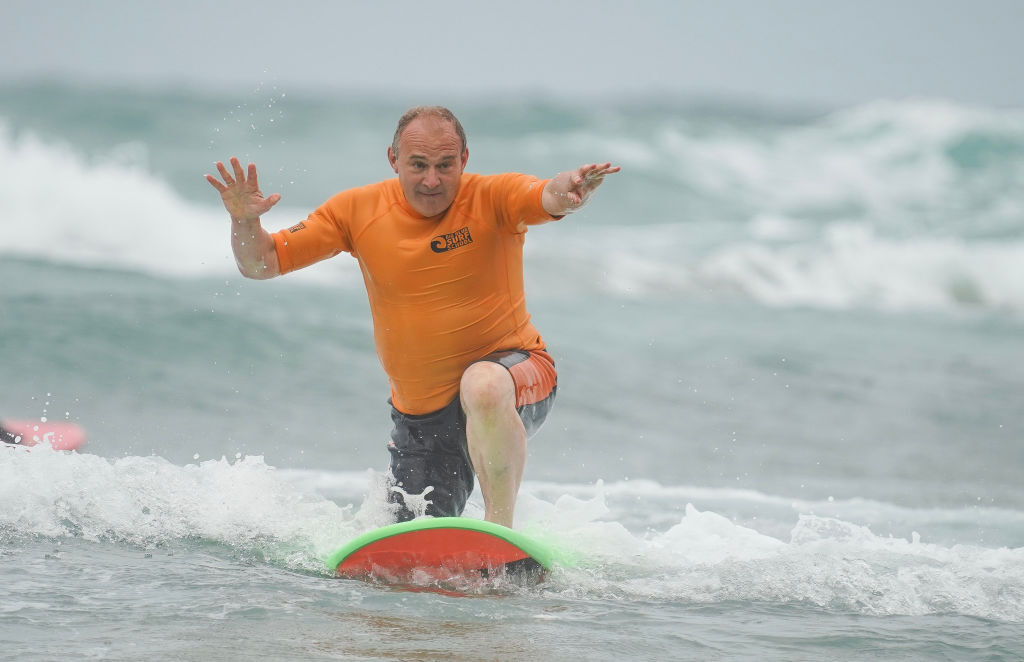
Ed Davey carried out a series of stunts during the election campaign.
Hugh Hastings via Getty Images
Wendy Chamberlain, the MP for North East Fife and the Lib Dems’ work and pensions spokesperson, told HuffPost UK that the party is already proving itself to be the opposition.
“It’s quite clear that the Tories have gone into a even greater degree of meltdown since July 4, and their leadership election is going on until November.
“We’ve already demonstrated that we’re an effective opposition. One example is on Labour’s decision to cut winter fuel payments. That doesn’t feel like the change that people voted for.”
Advertisement
A senior Lib Dem source said: “A lot of people voted for us to get rid of the Tories, but if you look at the polling, the top reason was because of our position on the NHS and care, so it’s really important that we continue to campaign on that issue.
“People put their trust in us at the election and now we need to work hard to keep that trust.
“If you look at the seats where we’re now in second place, they are Conservative-facing. The way we think we can defeat more Tories next time is by being a better opposition than them. We’re going to be united and coherent while they tear themselves apart.”
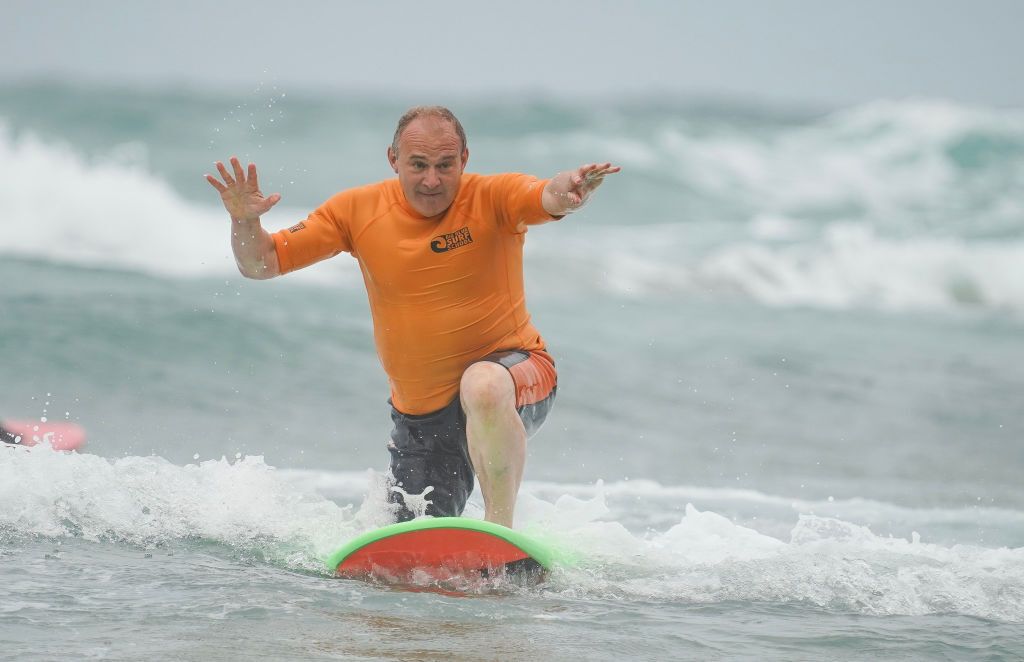
Ed Davey spent the election campaign as if he was on a six-week long stag trip, paddleboarding, surfing, salsa dancing and bungee-jumping his way around the country.
For him and his party, the serious business of holding Labour to account while consigning the Tories to irrelevance starts now.
Labour won by a landslide while the Tories had some of their worst ever results – but this election also painted a very complex picture for Westminster.
Five independents were elected, while the rise of the Liberal Democrats, Reform UK and the Green Party show that last night was not just a tale of two parties.
Advertisement
Here’s a look at all the main stories from overnight.
1. Huge Labour victory
With a couple more seats still to be counted, the party took a whopping 412 seats, only six fewer than it did when Tony Blair was the helm in his famous landslide of 1997.
That works out to a gain of at least 211 seats compared to the 2019 general election.
It means a comfortable majority is ahead for Keir Starmer, as Labour were the largest party in England, Scotland and Wales.
The so-called “red wall” in the North of England was completely restored, too.
However, it’s not all plain sailing – Starmer comes to office on the smallest share of the vote of any winning party in UK history as the votes were widespread across many constituencies but not particularly high in number in any seats.
Only 33.7% of voters backed the supposedly reformed Labour, just 1.6% higher than his predecessor Jeremy Corbyn secured in 2019 when he famously lost.
Advertisement
That seems to reflect the general sentiment that support for Labour was more of an anti-Tory tactic rather than an endorsement of Starmer and his party.
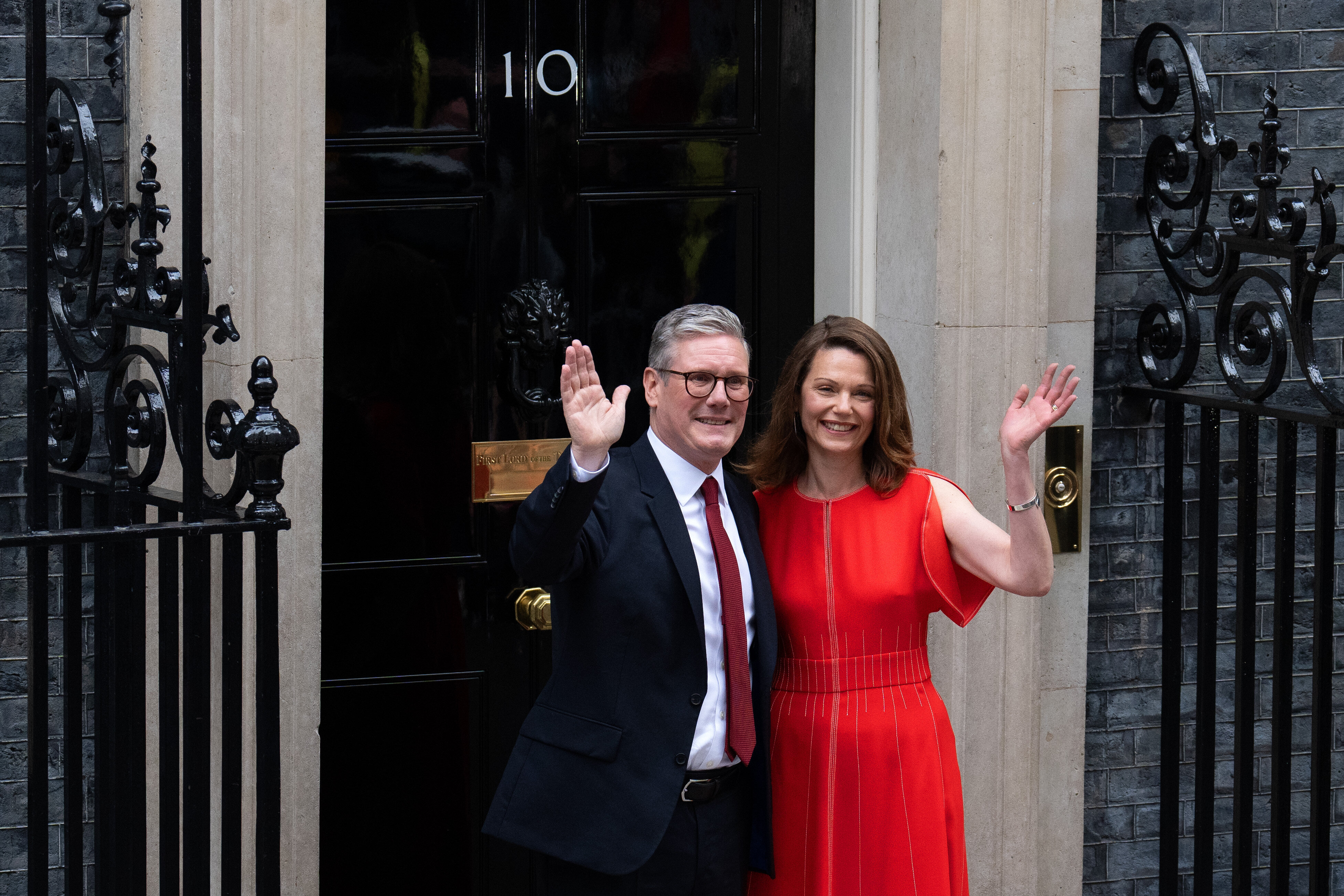
Labour leader and incoming Prime Minister Sir Keir Starmer and wife Victoria enter 10 Downing Street
Carl Court via Getty Images
2. Drop in Muslim support for Labour
The party’s flip-flopping over the Israel-Hamas war in Gaza has had a profound effect on its Muslim supporters.
In constituencies with a large Muslim demographic, support declined by around 23 points to 39%.
But this gave way to the rise of the independents, like ousted Labour leader Jeremy Corbyn who was re-elected into his constituency of Islington North.
In fact five pro-Gaza independent candidates were elected in total, outnumbering the total Reform UK candidates.
Advertisement
3. Worst Tory defeat in history
Rishi Sunak may have comfortably held onto his seat in North Yorkshire, but he was easily the biggest loser of the night.
He led the Conservative Party into its worst electoral defeat ever seen, losing 250 seats.
The Tories secured just 121 constituencies as the party’s vote share fell by 19.9 percentage points to 23.7%.
For comparison, John Major’s Conservatives won 30% of the vote share when they endured a huge defeat in 1997.
They will now have zero seats in Wales, and only one in the North East of England and one in the North West.
Many previously “safe” Tory seats were lost overnight, including four of the five constituencies were the last five Conservative leaders were elected.
The share of the vote particularly fell in areas where high numbers backed leaving the EU.
The dramatic night means there’s likely to be a brutal battle to shape the party now, as Tories struggle to decide whether to pull it further right or into the centre.
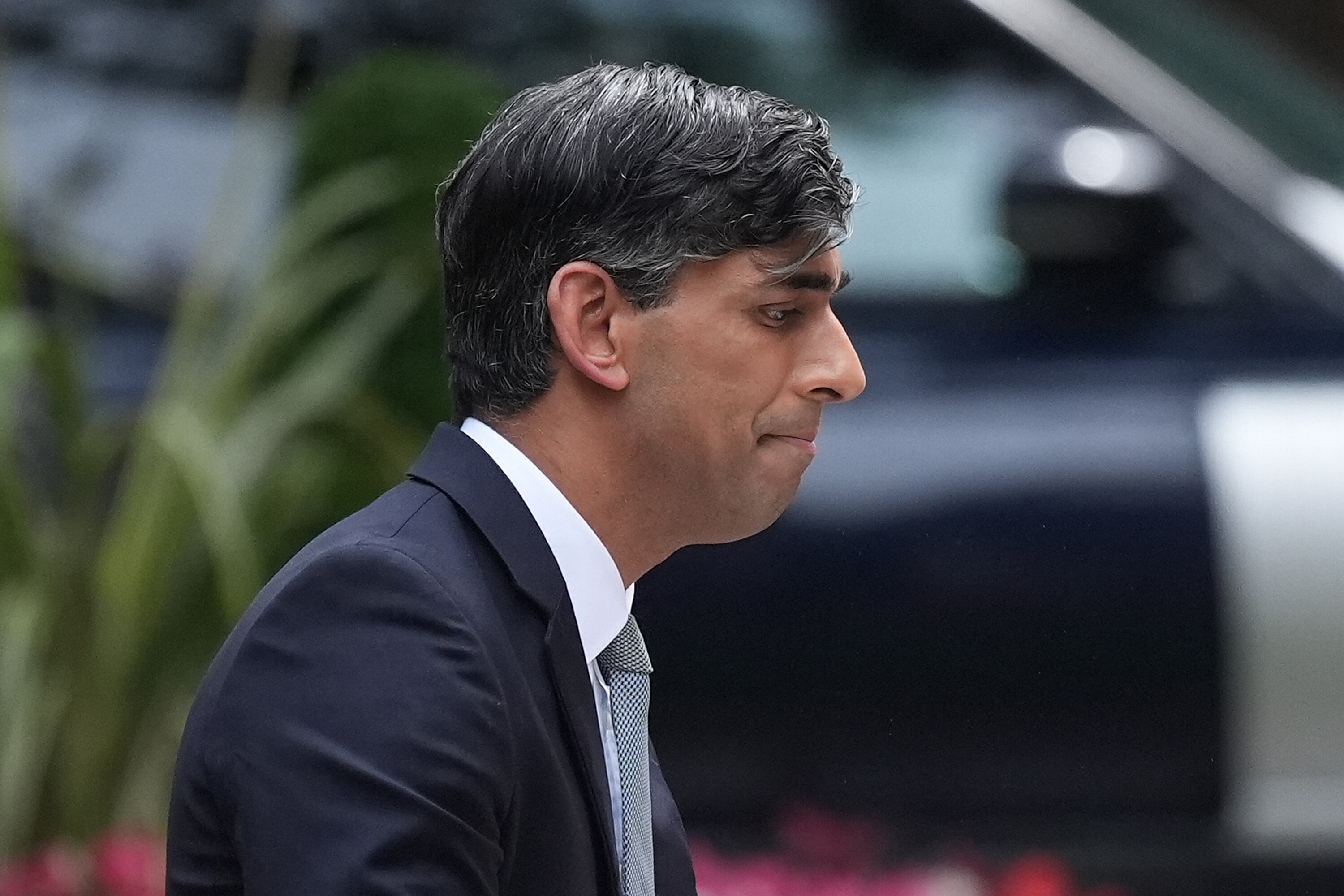
Outgoing Conservative Prime Minister Rishi Sunal
Christopher Furlong via Getty Images
4. Best Lib Dem result since 1923
The party has secured 71 seats – a whopping increase compared to the 2019 election, where they had only eight, and beating their 2005 record of 62.
Advertisement
They’ve won both new seats and old constituencies back – and ousted four cabinet ministers – albeit on just 12% of the vote share.
The Lib Dems also secured constituencies once held by former PMs David Cameron and Theresa May in their campaign where they targeted Tory areas.
It’s a far cry from the 2019 result when the party leader Jo Swinson unexpectedly lost her seat.
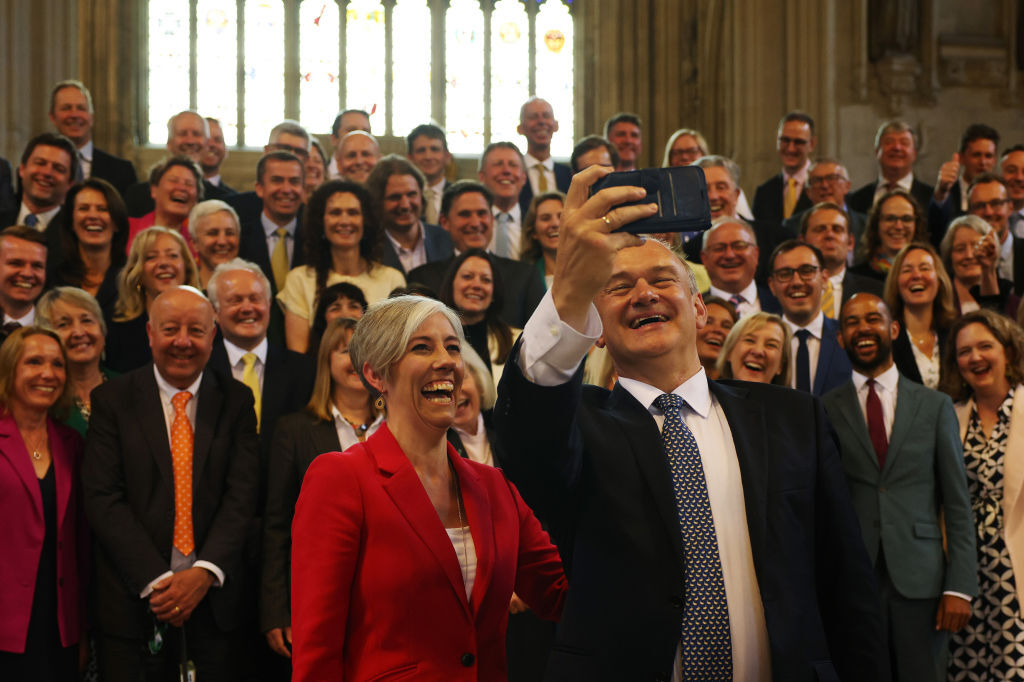
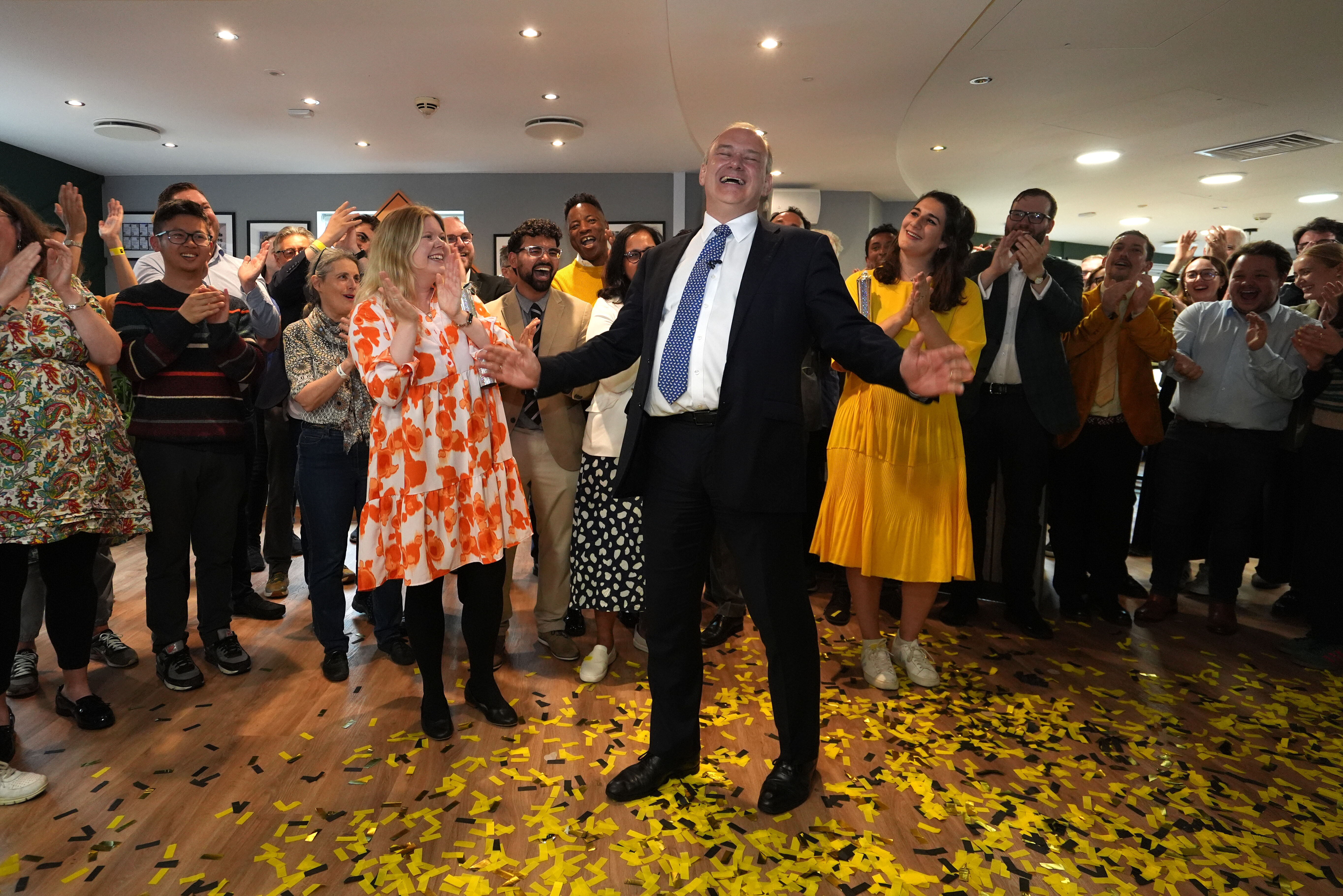
Liberal Democrat leader Sir Ed Davey is greeted by supporters
Gareth Fuller – PA Images via Getty Images
5. SNP in chaos
The Nationalists, who have completely dominated Scottish politics since 2014, secured just nine seats in a major blow to the project for independence.
That’s a drop of 38 representatives in Westminster, with many of their seats going to Labour and a handful going to both the Lib Dems and the Tories.
Advertisement
The SNP’s share of the vote has therefore fallen by 15 points – while Labour’s has increased by 17 in Scotland.
But it’s not a complete wipeout, considering the party still commanding a minority government in the Scottish parliament in Holyrood.
Yet, those seats could soon be at risk in the 2026 devolved election, depending on how Labour’s first few years in parliament goes.
Labour will also have to grapple with the increase of independence supporters among their voters.
6. Reform get a foothold in the Commons
The populist party took votes from the collapse of the Conservative support in many places, secured its first four elected MPs ever.
Party leader Nigel Farage won a seat for the first time (after seven failed attempts over the years) and Tory defector Lee Anderson – the party’s first ever representative in the Commons – was re-elected.
Advertisement
Reform chair Richard Tice and Rupert Lowe were elected, too.
Considering how quickly Reform has managed to gather support – Farage only entered the race two weeks after the election was called – the populists claim they will be able to put serious pressure on Labour in the next five years.
Farage has previously said he wants his party to be the main opposition to Keir Starmer’s party by the time of the next election, and last night said: “We’re coming for Labour, be in no doubt about that.”
7. Green Party get most MPs ever
With four MPs in Bristol Central, Waveney Valley, North Herefordshire and Brighton Pavilion, the Greens had their best set of results ever.
Until now, the party has only ever held the East Sussex constituency of Brighton Pavilion, giving them just one seat in parliament.
But last night, the party’s co-leader Carla Denyer overturned Labour’s shadow culture secretary Thangam Debbonaire with a 10,000 majority.
Advertisement
The other co-leader Adrian Ramsay defeated a 22,000 Tory majority in Waveney Valley, with a swing to the Greens of 32.1%.
Overall, it is expected to take 7% of the overall vote share – more than double what it secured in the 2019 election.
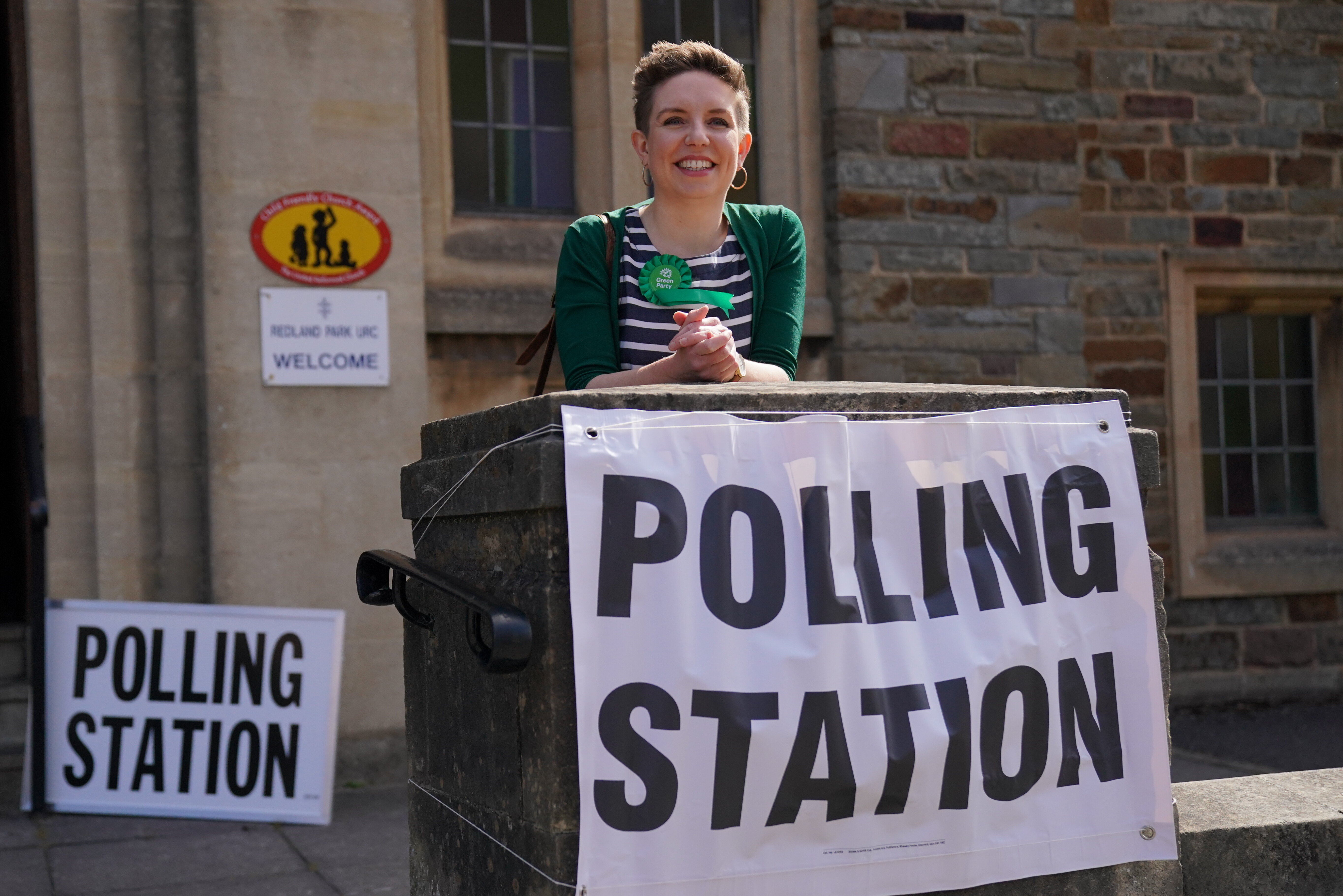
Green Party co-leader Carla Denyer after casting her vote in the 2024 General Election at Redland Park United Reformed Church in Bristol.
Jonathan Brady – PA Images via Getty Images
8. Sinn Fein hold on
The Republican party held onto its seven seats in Westminster, although it does not take them in protest to Northern Ireland being part of the UK.
It means most of the NI seats in Westminster will remain empty.
Sinn Fein is already the largest in local government and in the devolved government of Stormont.
And while the Democratic Unionist Party lost three of its eight seats, with supporters moving to other unionist parties, there was not a noteworthy shift in the vote share between Unionists and Nationalists.
Advertisement
9. Fall in overall voter turnout
This was the second lowest turnout ever recorded with only 60% of the electorate turning up, rivalled only by the 59% seen in 2001.
That suggests apathy and frustration may be more prevalent among the electorate than politicians realise.
Ed Davey deliberately threw himself off a paddleboard on Tuesday, as the Lib Dem leader battled for attention in the first full week of the election campaign.
The Lib Dems have a long history of staging eye-catching stunts to avoid their message being drowned out by the Tories and Labour.
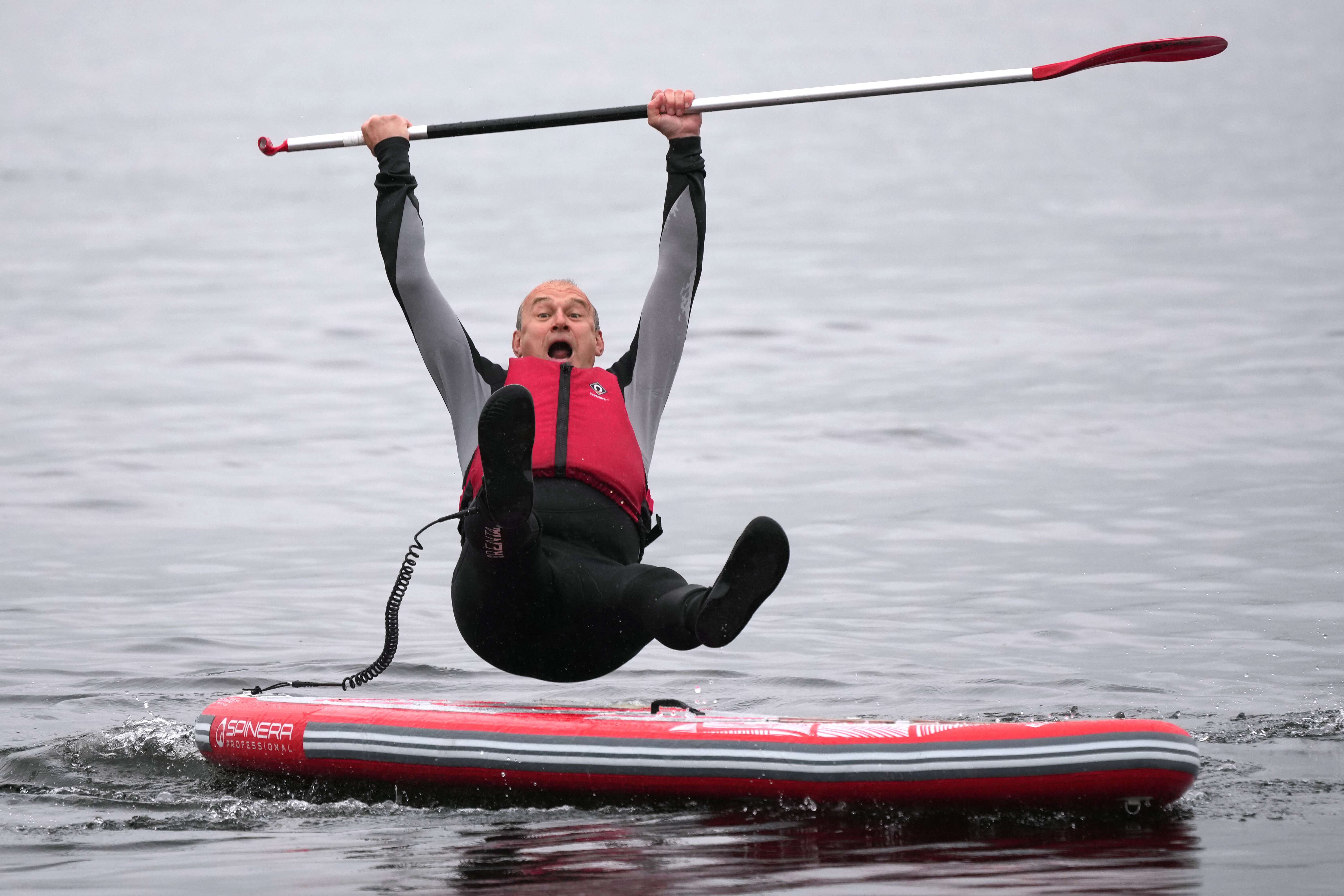
During a campaign stop at Lake Windermere in the Lake District, Davey took a paddleboard into the water then fell off it repeatedly.
Asked by the BBC is he had jumped in “on purpose”, Davey confessed: “Once I did. The rest I just kept falling in. But it’s fun.”
He said the “serious message” the party was trying to highlight was how sewage was damaging the UK’s beaches, rivers and lakes.
The Lib Dems were almost wiped out at the 2015 election following the coalition government and the have struggled to make gains since.
But the party scored a series of impressive by-election victories in the last parliament.
Davey has now tried to position the party as solidly anti-Tory. He said in many parts of the country it was a Lib Dem vote that was the “powerful vote to defeat the Conservatives”.
The world’s attention has understandably been focused on the Middle East in recent days, and is likely to remain so for some time to come.
But two by-elections on Thursday have the potential to be much more politically significant for Rishi Sunak.
Advertisement
The Tories are defending two nominally safe seats, in Mid Bedforshire and Tamworth.
It is no exaggeration to say that, were the Conservatives to lose both of them, the party could swiftly go into meltdown.
In Mid Beds, the Tories are defending a 25,000 majority, while in Tamworth, the party won the seat in 2019 by 20,000 votes. On paper at least, they should be unassailable.
But given the government’s unpopularity, and the circumstances which led to the by-elections, both Labour and the Lib Dems still hold out hopes of causing an upset.
The contest in Mid Bedfordshire has been caused by the resignation of Nadine Dorries after she was denied the peerage promised to her by Boris Johnson.
Both parties insist they are best placed to win, leading to the very real possibility of the anti-Tory vote being split, thereby allowing Conservative candidate Festus Akinbusoye to get elected.
Tamworth is a straight shoot-out between the Tories and Labour, who are odds-on favourites with the bookies.
Nevertheless, Labour insiders insist the prospect of winning either seat is a “moonshot”.
One shadow cabinet member told HuffPost UK: “They’re two very safe Tory seats and it would take a miracle for Labour to win either. Mid Beds is a genuine three way split, but still a real long shot.”
Advertisement
Shadow science, innovation and technology secretary Peter Kyle, who is Labour’s campaign co-ordinator in the seat, said: “I think objectively anybody looking at all of the campaigns would rather be in our position than the others, but this is unlike anything I’ve experienced and uncertainties are constantly lurking.”
But another Labour MP said: “Mid Beds is the Tories for the keeping – no chance of that turning red.
“And to be quite honest, we don’t need it anyway. It’s not a target seat of ours and this isn’t a general election. If anything, it’s amusing that the Tories will frame it as a big win when all they’ve done is keep a seat that is already theirs.”
Labour sources insist winning in Tamworth – where Pincher received 68% of the vote at the last election – would be an even bigger achievement than the party’s stunning victory in Selby and Ainsty in July.
But a senior Tory MP told HuffPost: “I reckon our chances are poor in Tamworth because of how grim Chris Pincher’s reason for leaving was. I think people will punish the party for what he did and vote against us as a protest for all the sleaze we’ve seen in recent years.”
And a Labour MP said: “We do feel good about Tamworth. We know we have the power to overturn such huge majorities, as we’ve done it before.
Advertisement
“This seat in particular often reflects wider politics. It was Labour under Blair and Brown, Tory after that. And now, reflecting how well Labour are doing in the polls, I think that trend will continue.“
Defeat for the Tories would be as much of a psychological blow as an electoral one.
It’s the constituency of former Conservative prime minister Robert Peel, who in 1834 published the Tamworth Manifesto, which paved the way for the modern-day Tory Party.
One Labour MP dispensed with the usual pre-by-election caution and predicted a glory night for the party.
We’ve got both seats in the bag,” the MP said. “It doesn’t matter where the constituency is, or its history – the public want a change and are fed up of Tory lies.
“Their loyal voters are doubting them too, and we will see that on Thursday.”
Labour’s Wes Streeting has insisted they are “not entertaining” the prospect of a coalition with the Liberal Democrats.
The shadow health secretary said he did not think it is the “scenario” the country will be in at the next general election.
Advertisement
However, he did not rule out a coalition with the Lib Dems when repeatedly pressed on the possibility in an interview with Sky’s Sophy Ridge.
In separate interview Lib Dem leader Ed Davey explicitly ruled out working with the Tories but did not rule out a coalition with Labour.
Last week’s council results point to a hung parliament at the next general election. They suggest Labour would be the largest party, but short of a majority.
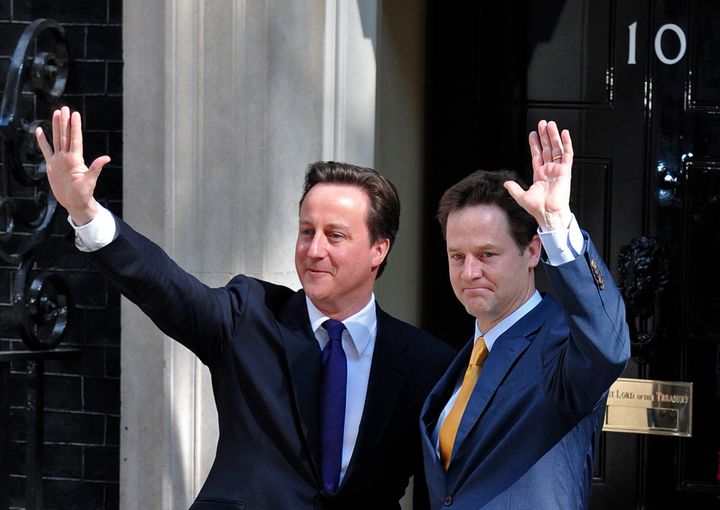
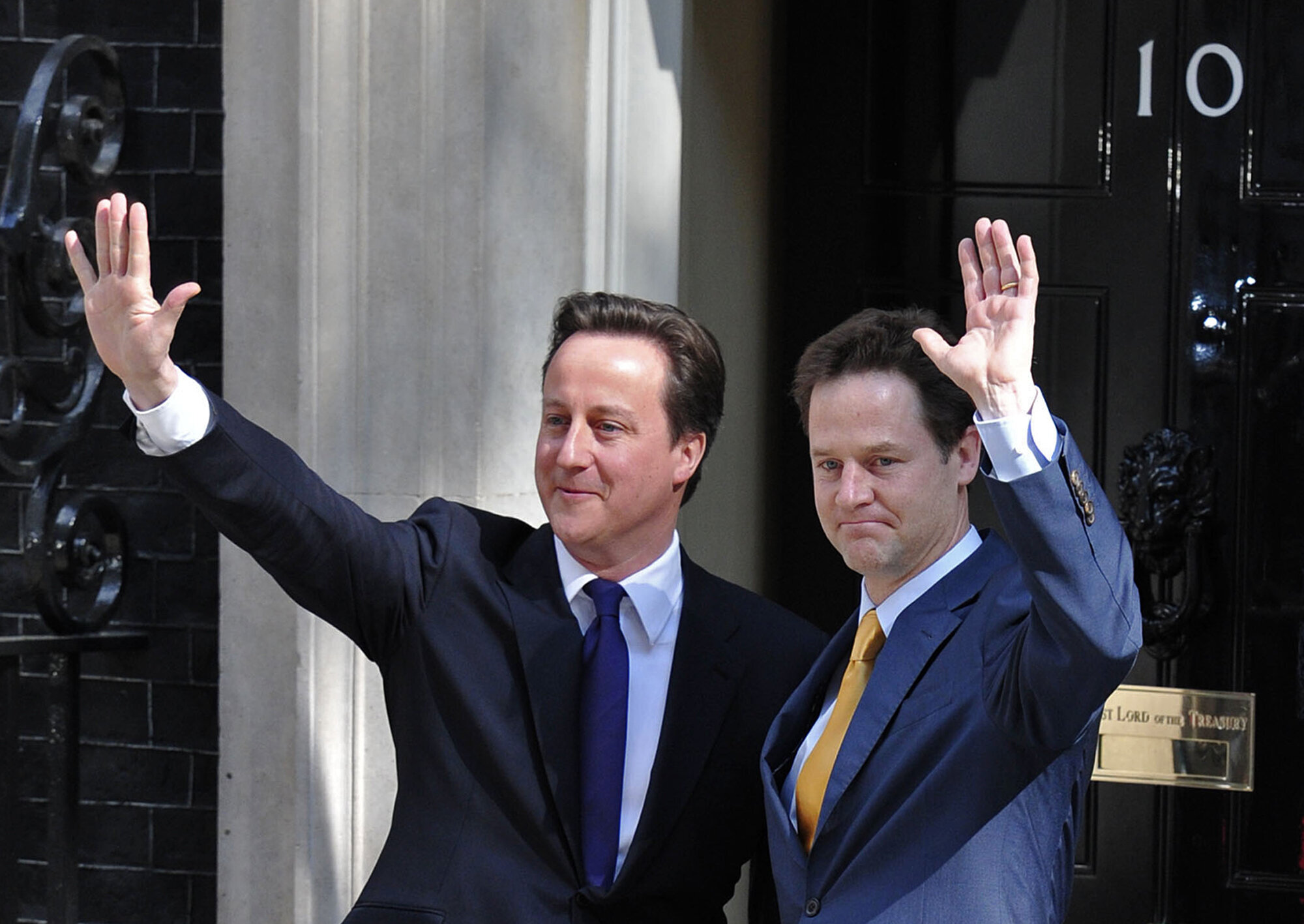
Former prime minister David Cameron and former deputy prime minister Nick Clegg outside 10 Downing Street in London, on May 12, 2010.
AFP via Getty Images
Advertisement
It could be similar to the situation the Tories found themselves in in 2010 when they formed a coalition government with the Lib Dems.
Asked whether Labour would be prepared to go into coalition with the Lib Dems, Streeting said: “We’re not even entertaining that prospect…
“I just don’t think that is the scenario that we are going to be in after the next general election.”
Asked a third time about local election results pointing towards a hung parliament, he said: “This is a process, not an event. We’re not at the final destination yet in terms of the general election.”
Put to him that he was not ruling it out, he gave examples of why “we shouldn’t read the local elections right across”.
Advertisement
He said: “Take Hull, where I saw through gritted teeth the Liberal Democrats did rather well.
“I heard the Lib Dem leader of Hull council the other night saying ‘well, look, locally, people have voted Lib Dem but at the general election people in this city vote Labour’.”
He added: “We’re not complacent about this and there’s so much more still to come.”
When leader Lib Dem leader Davey was asked on the BBC’s Sunday With Laura Kuenssberg show about a coalition with Labour, he said: “That is a hypothetical question because we don’t know what’s going to happen after the next election.”
Put to him that he was ruling out working with the Tories but not Labour, said: “The focus is on getting rid of Conservative MPs. I make no apology for that.”
Advertisement
His deputy leader Daisy Cooper similarly did not rule out a coalition with Labour when challenged.
She told Sky they had “ruled out” working with the Conservatives because of the “damage they are doing to the country”.
But pressed on a coalition with Labour, she replied: “Everything we do between now and the general election will be about focusing on getting Liberal Democrat MPs elected.”
Thursday’s results were disastrous for the Tories who lost some 1,050 seats and control of nearly 50 councils.
It means Labour is now the largest party of local government – overtaking the Conservatives for the first time since 2002.