Cuts in funding in the forthcoming spending announcement will hit poorest people hardest, warn experts.


Cuts in funding in the forthcoming spending announcement will hit poorest people hardest, warn experts.

A single copy of these materials may be reprinted for noncommercial personal use only. “Mayo,” “Mayo Clinic,” “MayoClinic.org,” “Mayo Clinic Healthy Living,” and the triple-shield Mayo Clinic logo are trademarks of Mayo Foundation for Medical Education and Research.
New research shows a genetic link between African ancestry and triple negative breast cancer.

After decades of research and two previous drug development attempts, things are looking promising for a team of University of Arizona researchers working on a less toxic treatment for a specific type of breast cancer.
The researchers have developed a drug compound that appears to stop cancer cell growth in what’s known as triple-negative breast cancer. The drug, which has not yet been tested in humans, has been shown to eliminate tumors in mice, with little to no effect on normal healthy cells, making it potentially nontoxic for patients.
The therapy is based on a newly discovered way that a gene known as epidermal growth factor receptor, or EGFR, leads to cancer. EGFR is a long-investigated oncogene — a gene that in certain circumstances can transform a cell into a tumor cell.
The researchers’ findings are published in the journal Cancer Gene Therapy, and the team is working to get Food and Drug Administration approval to test the compound in phase 1 clinical trials in humans.
Triple-negative breast cancer accounts for about 10 to 15% of all breast cancers. Triple-negative refers to the fact that the cancer cells test negative for the three other types of breast cancer — those driven by too much estrogen, too much progesterone or too much of a protein called HER2, according to the American Cancer Society. Triple-negative breast cancer is more common in women under 40 who are Black or who have a specific mutation in a gene called BRCA1. About half of all cases of triple-negative breast cancer overexpress the EGFR oncogene, according to the National Institutes for Health.
The UArizona researchers devised a compound that blocks EGFR from going to a part of the cell that drives survival of the cancer. The compound shuts down functioning of the EGFR protein that acts in cancer cells but not normal cells.
Often, drugs aren’t targeted enough in their attack and so they will attack parts of other, healthy cells, resulting in unwanted side effects. The researchers wanted to prevent that.
“EGFR has been known to be an oncogene for six decades, and there’s a lot of drugs out there trying to target it, but they all had limitations that didn’t make them workable as drugs for breast cancer,” said Joyce Schroeder, who co-wrote the paper with lead author Benjamin Atwell, a postdoctoral student in the Department of Molecular and Cellular Biology.
Schroeder heads the university’s Department of Molecular and Cellular Biology and leads the lab where the research for the paper was conducted. She is also a member of the university’s BIO5 Institute and Cancer Center.
The first two drug technologies that she and her team created worked to kill the cancer cells, but they had problems.
In their first attempt, the researchers targeted what Schroeder called an “unstructured” part of the EGFR protein, and as a result, the compound couldn’t act consistently and reliably.
The second attempt resulted in a compound that was too generalized and hit a part of the protein that also drove normal activities in healthy cells, making the drug toxic.
To be effective, Schroeder and her team knew that they had to develop a compound that could enter a cancer cell and target the exact right part of the proteins created by the EGFR gene to stop cancer from spreading. They succeeded on their third attempt.
“It was like the Goldilocks effect,” Schroeder said.
She and her team knew they had to find a solution that would not impact a normal cell and that would remain active inside the body.
“When we tested the drug in animal models, we got this fabulous result where it actually didn’t just stop the tumors from going, it caused them to regress and go away, and we’re seeing no toxic side effects,” she said. “We are so excited about this because it’s very tumor specific.”
Like designing a key to fit a very specific lock, molecular and cellular biologists ideally design drug chemistry that will interact with the target protein in the exact right way and nothing else.
“Targeting triple-negative breast cancer has been difficult because it doesn’t have one of these obvious things to target,” Schroeder said. “People have known for a long time that triple-negative breast cancer cells express EGFR, but when the known EGFR drugs were thrown at it, it didn’t respond.”
Many researchers thought that maybe EGFR shouldn’t be the target, so they looked for new ones. Schroeder, on the other hand, thinks EGFR is just working in a way that researchers don’t yet understand. She and her team attempted to target it in a novel way, with success.
The next step, besides human trials, is to test the drug’s ability to suppress metastasis, which occurs when cancer cells spread to other parts of the body, Schroeder said.
The researchers have been working to protect the intellectual property and further invest in licensing the asset with Tech Launch Arizona, the university office that commercializes university innovations.
Funding for the work was provided by the Department of Defense, as well as donations from Ginny L. Clements Breast Cancer Fund and philanthropist Susan Greendorfer.

New research, led by the University of Massachusetts Amherst, refines our understanding of the chemical traces that act as the rain’s fingerprint. The work, which appeared recently in Global Biogeochemical Cycles, is crucial for understanding the Earth’s water cycle, especially as it undergoes rapid change due to global warming, deforestation and other environmental catastrophes.
You no doubt know that water, H2O, is composed of two molecules of hydrogen and one of oxygen. What you may not know is that there are a few different varieties of both hydrogen and oxygen. The “normal” hydrogen, for example, has a nucleus with only one proton, but there’s another version: “heavy hydrogen,” or deuterium, which has both a proton and a neutron in its nucleus. This deuterium is comparatively rarer, and it can be used both to track rainfall amounts over time as well as to understand evaporation and seasonal changes in climate. The same is true for oxygen, which has both a common light version and a rare heavy version.
“Deuterium excess,” or when the ratio of heavy hydrogen to heavy oxygen increases, is a fingerprint that is widely used in climate and hydrological modeling and for reconstructing past climates to understand the history of a raindrop. But the processes that lead to the excess of deuterium aren’t entirely understood. “Our paper is the first to look at seasonal variations of deuterium excess in rainfall across the globe to better understand what affects these chemical tracers at regional scales,” says Matthew Winnick, professor of geosciences at UMass Amherst, and the paper’s senior author.
Winnick and his team, led by Zhengyu Xia, who completed this study as part of his postdoctoral research at UMass Amherst and is now a faculty member in the School of Geographical Sciences at Northeast Normal University, China, have shed new light on how and where different processes combine to impact deuterium excess. For instance, in the tropics, deuterium excess most clearly reflects seasonal changes in humidity and the evaporation of raindrops as they fall through the air. In the mid-latitudes, deuterium excess is primarily tied to climate conditions over the oceans where clouds first form, though these ocean signals are modified as clouds move inland over continents.
“There are multiple processes that can affect the deuterium excess of rain and these have been well recognized, but perhaps, have also puzzled the research community,” says Xia. “Our study combined data analysis and simple modeling to tease apart these complex controls at global scales, filling an important knowledge gap.”
“My hope,” says Winnick, “is that our findings will be used to better track the entire history of a raindrop, from when it first evaporates from the ocean to when it falls on land, trickles into a river and then flows back to the ocean.”
Story Source:
Materials provided by University of Massachusetts Amherst. Note: Content may be edited for style and length.

Researchers at VCU Massey Cancer Center have set their sights on a new therapeutic target for an aggressive form of breast cancer with limited treatment options.
Breast cancer is the second most common cancer in U.S. women, and triple-negative breast cancer (TNBC) is a more aggressive and deadly form of disease that accounts for 10-15% of all breast tumors.
TNBC grows and spreads more quickly than other breast tumors and is associated with worse patient outcomes, accounting for nearly one-third of all breast cancer-related deaths.
Additionally, TNBC affects Black women disproportionately: Black women die from TNBC at a significantly higher rate than white women despite being diagnosed at a younger age. Finding an effective therapy that works well in all patients would be an important step in addressing this disparity.
Through a comprehensive and cutting-edge genomic screening method known as CRISPR/CAS9 screening, Massey scientists — led by Anthony Faber, Ph.D., and Jennifer Koblinski, Ph.D. — were able to identify a specific enzyme called UBA1 that revealed itself as an ideal therapeutic target. Using a novel UBA-inhibiting drug called TAK-243, they blocked the cellular function of UBA1 and effectively killed cancer cells in patient-derived breast tumors in mice.
Previous research has shown that UBA1 inhibitors can have a positive impact in hematological cancers such as acute myeloid leukemia (AML) and chronic myelogenous leukemia (CML). This study — recently published in PNAS Nexus — is the first to suggest that UBA1 inhibitors could be effective in TNBC. TAK-243 has been tested recently in early phase trials, paving the way for potential testing in TNBC patients.
“We found that the majority of TNBC cells in our study were uniformly susceptible to the antitumor effects of TAK-243,” said Koblinski, director of the Cancer Mouse Models Core and member of the Cancer Biology research program at Massey, as well as an associate professor of pathology at the VCU School of Medicine. “In addition to demonstrating this drug’s success at the local site of the primary breast cancer, our findings demonstrate that TAK-243 can also shrink tumors in various organs after the disease has spread.”
The researchers also determined that the c-MYC gene — an important and infamously difficult drug target in TNBC — can be harnessed to cooperate with TAK-243 to initiate a cellular stress response and enhance the drug’s ability to fight TNBC. This supports the notion that TAK-243 may be effective in high-cMYC-expressing TNBC, where c-MYC may serve as a biomarker for response to the drug.
Chemotherapy remains one of the few routinely utilized treatment options for TNBC, with variable patient responses and little efficacy.
“The implementation of targeted therapies — drugs that target a specific genetic defect — has been revolutionary in treating different cancers, including breast cancer,” said Faber, co-leader of the Developmental Therapeutics research program and Natalie N. and John R. Congdon, Sr. Endowed Chair in Cancer Research at Massey, as well as an associate professor in the Philips Institute for Oral Health Research at the VCU School of Dentistry.
However, the hormone receptors, estrogen receptors or human epidermal growth factor receptor 2 (HER2) that can be effectively targeted in breast cancer treatment are missing in TNBC, hence the name “triple-negative breast cancer.”
“Genomic and clinical evidence suggests that the implementation of targeted therapies in the treatment of TNBC will require an expansion of potential targets,” Faber said. “Our study may have identified a key and novel target for the development of new therapies.”
Faber added, “Importantly, as TNBC is a major disease of disparate outcomes between Black patients and white patients, we were able to harness the power of new breast cancer mouse models from Black TNBC patients that were developed by Dr. Koblinski’s group. Traditionally, these models have been underrepresented and are important new tools to identify effective therapies for Black patients. The most exciting part of the study was that we found TAK-243 was effective across these models, suggesting TAK-243 or other UBA1 inhibitors could be equally effective in all TNBC patients.”
The next steps of this research include exploring the use of TAK-243 in TNBC with the drug company that is developing it, and evaluating other targets in the UBA1 pathway that may also demonstrate efficacy.
Story Source:
Materials provided by Virginia Commonwealth University. Original written by Blake Belden. Note: Content may be edited for style and length.
History was made on several accounts on Tuesday, with both Liz Truss and Rishi Sunak breaking records – albeit for very different things.
As the prime minister with the shortest time in office officially left Downing Street while the first British Asian PM took her place, this was a momentous day in politics.
Advertisement
On top of that, there was a dramatic reshuffle, as Sunak seeks to separate himself from the premierships of the last two prime ministers.
Here’s everything you need to know about the day.
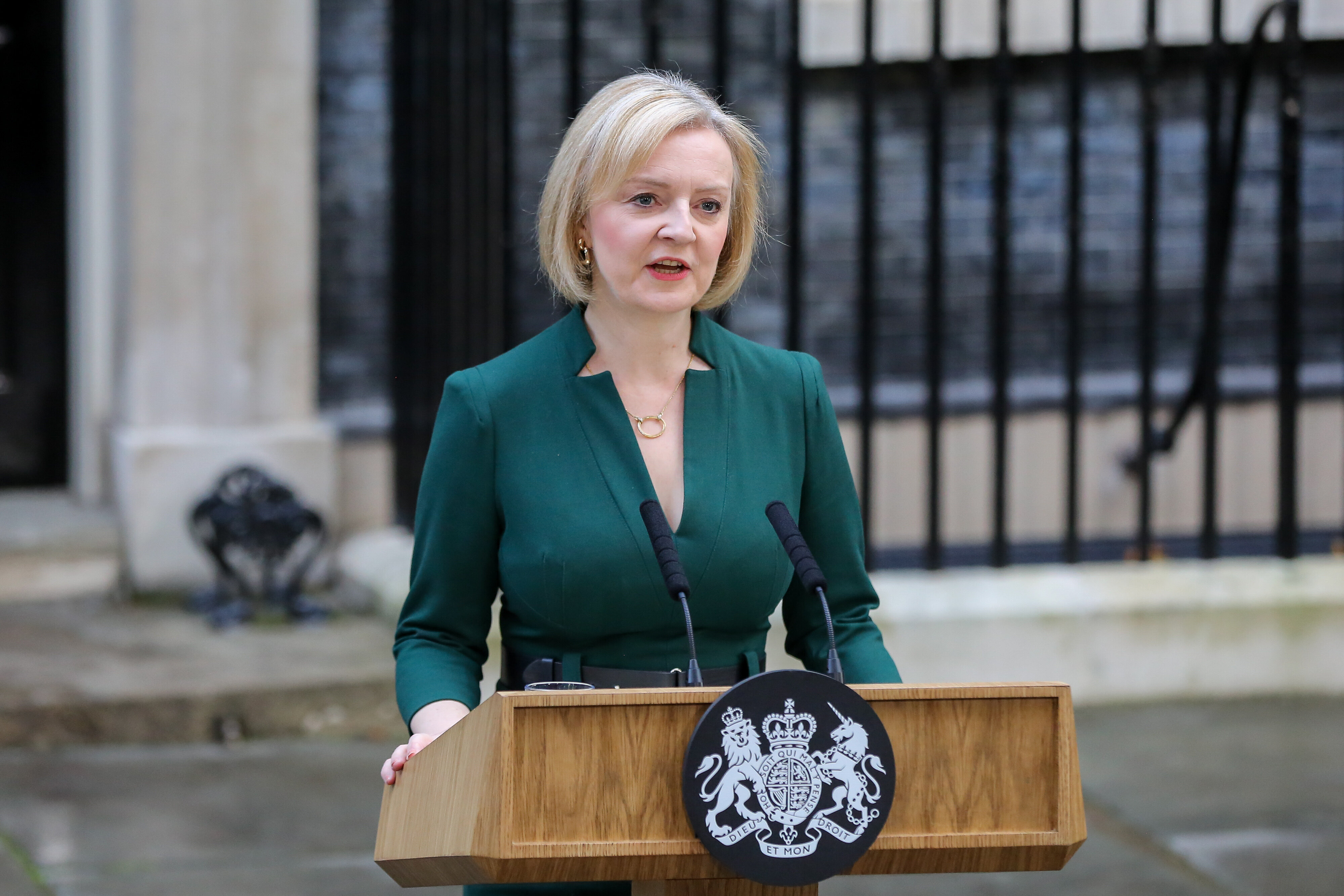
The prime minister with the shortest tenure in UK history said goodbye to Downing Street at 10.15am.
She urged her successor to be “bold” and stick to her tax-cutting agenda, despite the economic chaos it caused and the widespread criticism it evoked.
She offered no apology in her speech and urged Sunak to focus on “growth” by cutting taxes and reducing public spending, maintaining: “I am more convinced than ever we need to be bold and confront the challenges that we face.”
Truss said: “We simply cannot afford to be a low growth country where the government takes up an increasing share of our national wealth and where there are huge divides between different parts of our country.
Advertisement
“We need to take advantage of our Brexit freedoms to do things differently.”
She also tried to champion her policies which the government did not U-turn on, such as assistance with energy bills, and reversing the National Insurance increase.
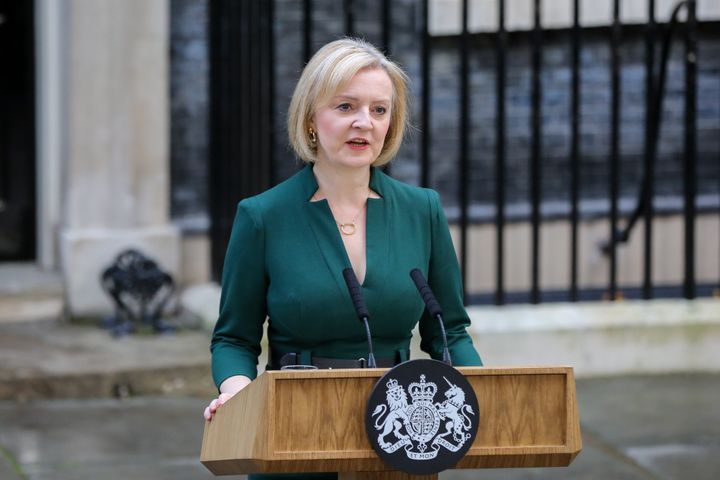
Anadolu Agency via Getty Images
Shortly after Truss met with the King to resign, her successor filed into Buckingham Palace so he could officially be confirmed as the next prime minister.
This was a historic moment, marking the beginning of the first UK premiership led by a Hindu and British Asian. It’s also only the second time a prime minister from an ethnic minority has taken the country’s reins, too.
At 42, Sunak is also the youngest prime minister in more than 200 years.
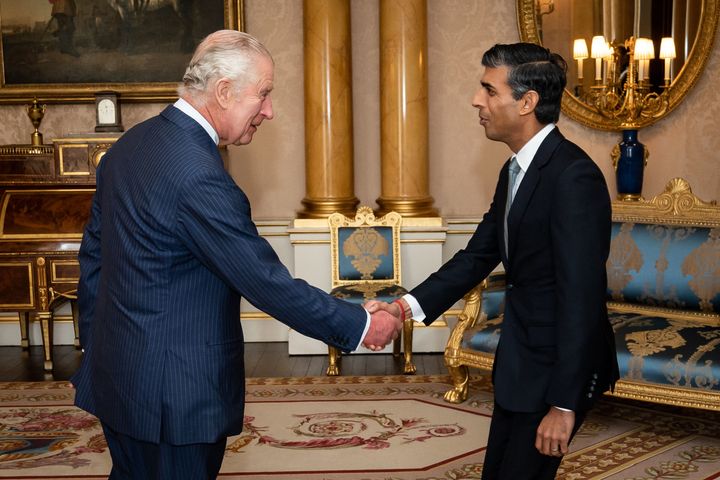
AARON CHOWN via Getty Images
Advertisement
Sunak started his premiership with a bang, by immediately addressing the “mistakes” of his predecessor in a speech before midday.
He said: “Some mistakes were made – not born of ill will, or bad intentions. But mistakes nonetheless.
“And I have been elected as leader of my party and your prime minister in part to fix them.
“And that work begins immediately.”
The new prime minister said while he was “grateful” to Johnson for his “incredible achievements”, “the mandate my party earned in 2019 is not the sole property of any one individual”.
He suggested that he would continue to work on the goals the Tories set out when they won the general election almost three years ago.
Business secretary Jacob Rees-Mogg led a wave of resignations from the cabinet. A prominent ally to both Johnson and Truss, he has not spoken favourably of Sunak in the past, declaring him a “socialist” during the Tory leadership election in the summer.
Chair of the Conservative Party Jake Berry, levelling up secretary Simon Clarke, justice secretary Brandon Lewis, education secretary Kit Malthouse and work and pensions secretary Chloe Smith all followed him out the door.
Robert Buckland also stood down as Welsh secretary as did Wendy Morton, the chief whip during Truss’s time in office, environment secretary Ranil Jayawardena and the minister for development Vicky Ford.
Alok Sharma was removed from the cabinet too, but remains as Cop26 president, meaning he will negotiate on the UK’s behalf at Cop27, but won’t attend cabinet or be known as a minister.
Advertisement

Sunak is under pressure to unite the fractured Conservative Party through his leadership by appointing MPs from all its factions to government positions.
Jeremy Hunt, who replaced Kwasi Kwarteng as chancellor after the mini-budget imploded, is remaining at the top of the Treasury.
Sunak’s loyal ally, former deputy PM and former justice secretary Dominic Raab was rewarded, and handed his old two titles again.
Michael Gove returns to cabinet as levelling up secretary, just two months after he said he was quitting frontline politics.
Advertisement
A few more old faces returned to cabinet amid the reshuffle.
Former Welsh secretary Simon Hart has become the new chief whip while James Cleverly is keeping his job as the foreign secretary and Ben Wallace is staying as defence secretary.
Suella Braverman, who resigned as home secretary a week ago over breaching security rules, returns to that same job.
Oliver Dowden has been appointed as the chancellor of the Duchy of Lancaster, while Nadhim Zahawi has been appointed Conservative Party chair.
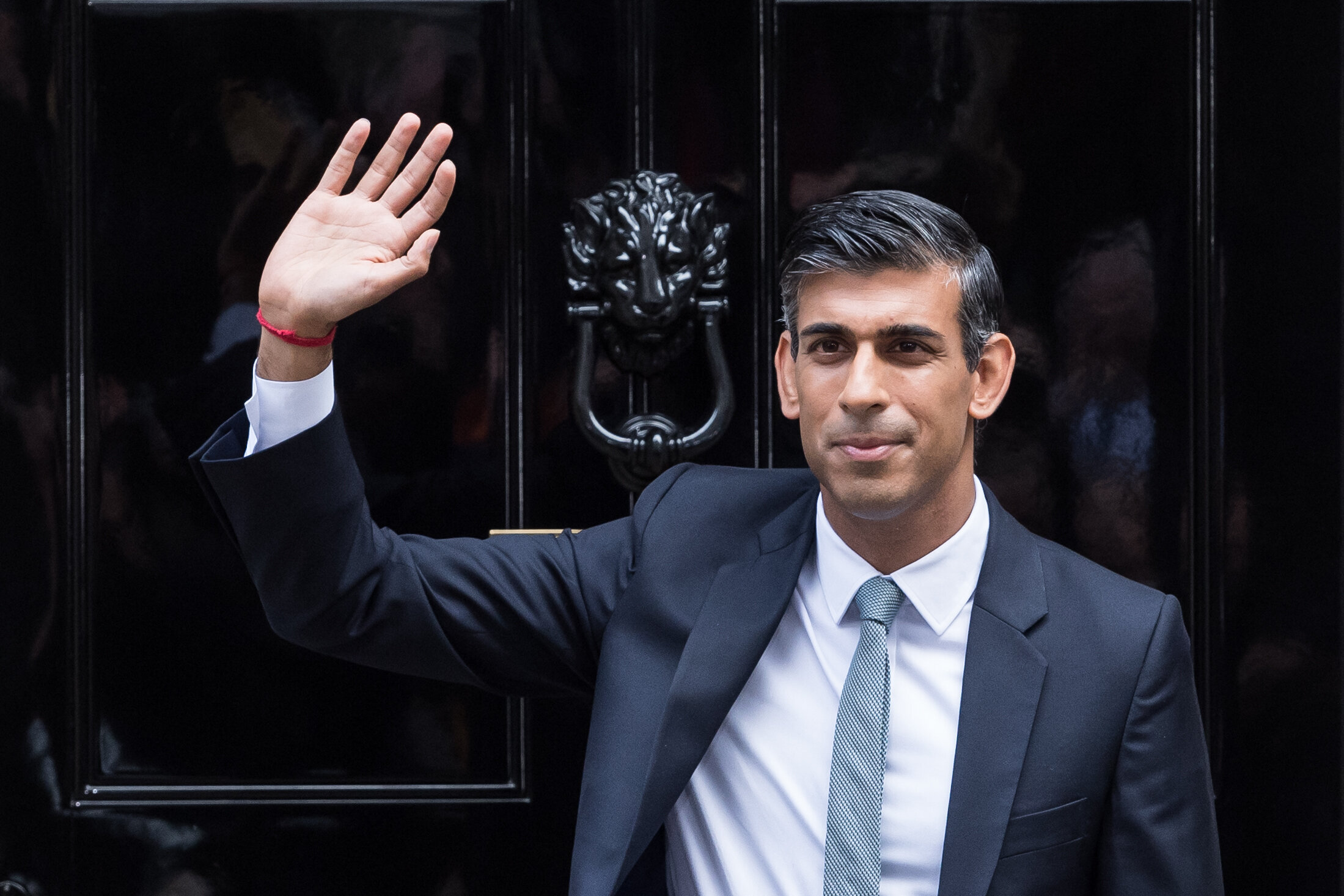



Michael Gove has been appointed levelling up secretary by Rishi Sunak, as the new prime minister assembled his cabinet.
It marks a quick return to office for Gove, who claimed he was quitting frontline politics in August.
Advertisement
Lisa Nandy, Labour’s shadow levelling up secretary, said: “Congratulations.
“The job has got a whole lot harder. But hey, if at first you don’t succeed, try, try and try again.”
Dominic Raab has been made deputy prime minister and justice secretary, while Jeremy Hunt stays on as chancellor.
James Cleverly, a close ally of Boris Johnson, will remain as foreign secretary. Ben Wallace, who also was close to the former PM, stays as defence secretary.
Suella Braverman returns as home secretary, less than a week after resigning from that job after admitting breaching security rules.
Advertisement
Penny Mordaunt came out of the reshuffle as Commons Leader, failing to win a promotion after she challenged Sunak in the Tory leadership race, which he won without a vote being cast.
Simon Hart, a former Welsh secretary, has been appointed chief whip. He will be in charge of enforcing discipline in a party that has been consumed by infighting.
Other allies of Sunak benefited, with Mel Stride appointed work and pensions secretary and Oliver Dowden becoming chancellor of the Duchy of Lancaster having resigned as party chairman after a disastrous double by-election loss under Johnson.
Therese Coffey, one of Truss’s closest friends in Westminster, was demoted from deputy PM and health secretary to become environment secretary.
But several other allies of the two former prime ministers have left cabinet, including Jacob Rees-Mogg, Simon Clarke and Wendy Morton.
Advertisement
Sunak took over as prime minister on Tuesday morning with a promise to “fix” the “mistakes” made by Liz Truss.

A medical expert gives evidence in the cases of babies allegedly murdered by nurse Lucy Letby.

Suella Braverman has been reappointed home secretary by Rishi Sunak, less than a week after she resigned for breaching security rules.
Last Wednesday, Braverman quit as Liz Truss’ home secretary after admitting sending an official government document using her personal email.
Advertisement
When she stepped down, Braverman said “the business of government relied upon people accepting responsibility for their mistakes”.
Over the weekend she delivered a huge boost to Sunak’s leadership campaign by throwing her weight behind his bid.
Braverman is one of the leading Brexiteers on the right of the party who ran for the leadership herself when Boris Johnson was ousted.
She now returns to the Home Office as Sunak moved to assemble his top team.
In his speech in Downing Street shortly after being appointed PM, Sunak said he would lead a government of “integrity, professionalism, and accountability at every level”.
Advertisement
Yvette Cooper, Labour’s shadow home secretary, said: “At noon Rishi Sunak promised ‘integrity, professionalism & accountability’.
“At 5pm he made Suella Braverman home secretary, one week after she resigned for ministerial code breach/security lapse.
“He put party before country. Security is too important for this irresponsible Tory chaos.”
Braverman has previously taken a hardline on immigration and said it was her “dream” and “obsession” to see a flight take asylum seekers to Rwanda.
Sunak has also appointed Dominic Raab as deputy prime minister and kept Jeremy Hunt as chancellor. Michael Gove has returned as levelling up secretary.
The new prime minister said he wanted to fix the “mistakes” made by Truss during her short time in office.
Advertisement

