Claire Nicholls says her organs have been affected by the little-understood disease endometriosis.


Claire Nicholls says her organs have been affected by the little-understood disease endometriosis.
After years of battling, Debbie Schwartz hopes the UK’s first clinic of its type will give answers.
The move is intended to help health workers on the lowest pay.

New research analyzing pieces of the most ancient rocks on the planet adds some of the sharpest evidence yet that Earth’s crust was pushing and pulling in a manner similar to modern plate tectonics at least 3.25 billion years ago. The study also provides the earliest proof of when the planet’s magnetic north and south poles swapped places.
The two results offer clues into how such geological changes may have resulted in an environment more conducive to the development of life on the planet.
The work, described in PNAS and led by Harvard geologists Alec Brenner and Roger Fu, focused on a portion of the Pilbara Craton in western Australia, one of the oldest and most stable pieces of the Earth’s crust. Using novel techniques and equipment, the researchers show that some of the Earth’s earliest surface was moving at a rate of 6.1 centimeters per year and 0.55 degrees every million years.
That speed more than doubles the rate the ancient crust was shown to be moving in a previous study by the same researchers. Both the speed and direction of this latitudinal drift leaves plate tectonics as the most logical and strongest explanations for it.
“There’s a lot of work that seems to suggest that early in Earth’s history plate tectonics wasn’t actually the dominant way in which the planet’s internal heat gets released as it is today through the shifting of plates,” said Brenner, a Ph.D. candidate in the Graduate School of Arts and Sciences and member of Harvard’s Paleomagnetics Lab. “This evidence lets us much more confidently rule out explanations that don’t involve plate tectonics.”
For example, the researchers can now argue against phenomena called “true polar wander” and “stagnant lid tectonics,” which can both cause the Earth’s surface to shift but aren’t part of modern-style plate tectonics. The results lean more toward plate tectonic motion because the newly discovered higher rate of speed is inconsistent with aspects of the other two processes.
In the paper, the scientists also describe what’s believed to be the oldest evidence of when Earth reversed its geomagnetic fields, meaning the magnetic North and South Pole flipped locations. This type of flip-flop is a common occurrence in Earth’s geologic history with the pole’s reversing 183 times in the last 83 million years and perhaps several hundred times in the past 160 million years, according to NASA.
The reversal tells a great deal about the planet’s magnetic field 3.2 billion years ago. Key among these implications is that the magnetic field was likely stable and strong enough to keep solar winds from eroding the atmosphere. This insight, combined with the results on plate tectonics, offers clues to the conditions under which the earliest forms of life developed.
“It paints this picture of an early earth that was already really geodynamically mature,” Brenner said. “It had a lot of the same sorts of dynamic processes that result in an Earth that has essentially more stable environmental and surface conditions, making it more feasible for life to evolve and develop.”
Today, the Earth’s outer shell consists of about 15 shifting blocks of crust, or plates, which hold the planet’s continents and oceans. Over eons the plates drifted into each other and apart, forming new continents and mountains and exposing new rocks to the atmosphere, which led to chemical reactions that stabilized Earth’s surface temperature over billions of years.
Evidence of when plate tectonics started is hard to come by because the oldest pieces of crust are thrust into the interior mantle, never to resurface. Only 5 percent of all rocks on Earth are older than 2.5 billion years old, and no rock is older than about 4 billion years.
Overall, the study adds to growing research that tectonic movement occurred relatively early in Earth’s 4.5-billion-year history and that early forms of life came about in a more moderate environment. Members of the project revisited the Pilbara Craton in 2018, which stretches about 300 miles across. They drilled into the primordial and thick slab of crust there to collect samples that, back in Cambridge, were analyzed for their magnetic history.
Using magnetometers, demagnetizing equipment, and the Quantum Diamond Microscope — which images the magnetic fields of a sample and precisely identifies the nature of the magnetized particles — the researchers created a suite of new techniques for determining the age and way the samples became magnetized. This allows the researchers to determine how, when, and which direction the crust shifted as well as the magnetic influence coming from Earth’s geomagnetic poles.
The Quantum Diamond Microscope was developed in a collaboration between Harvard researchers in the Departments of Earth and Planetary Sciences (EPS) and of Physics.
For future studies, Fu and Brenner plan keep their focus on the Pilbara Craton while also looking beyond it to other ancient crusts around the world. They hope to find older evidence of modern-like plate motion and when the Earth’s magnetic poles flipped.
“Finally being able to reliably read these very ancient rocks opens up so many possibilities for observing a time period that often is known more through theory than solid data,” said Fu, professor of EPS in the Faculty of Arts and Sciences. “Ultimately, we have a good shot at reconstructing not just when tectonic plates started moving, but also how their motions — and therefore the deep-seated Earth interior processes that drive them — have changed through time.”

Rishi Sunak will take over from Liz Truss as prime minister on Tuesday morning, Downing Street has said.
Truss will chair her final cabinet meeting at 9am and deliver a speech outside No.10 at 10.15am.
She will then travel to Buckingham Palace to meet the King and formally resign.
Sunak will then make his way to the Palace where he will meet the King and be appointed PM.
He is due to then make a statement on the steps of No.10 at 11.35am.
The former chancellor won the keys to Downing Street after Penny Mordaunt failed to secure the support from Tory MPs needed to make it onto the ballot.
Advertisement
Sunak told his party on Monday it must “unite or die” in the face of a “profound economic challenge”.
It marks a dramatic comeback for Sunak, who lost out to Truss in the previous contest.
Labour, the Lib Dems and the SNP has demanded the incoming prime minister hold a general election to secure a mandate to govern.
But Sunak told a meeting of Tory MPs behind closed doors in Westminster he would not go to the country early.
The Tory party’s poll ratings have tanked since Truss’ mini-Budget caused market chaos.
At 42, Sunak will be the youngest UK prime minister in over 200 years. He will also be the first Hindu PM.
Advertisement
To make it onto the ballot, Tory leadership candidates had to win the formal support of 100 MPs.
A Mordaunt campaign source said she fell just short, securing the backing of 90 MPs.
Boris Johnson, who stood down as prime minister just last month, toyed with a comeback but dramatically decided not to formally enter the contest on Sunday.
His campaign claimed 102 MPs were willing to nominate the former PM.
Angela Rayner, Labour’s deputy leader, said: “The Tories have crowned Rishi Sunak as prime minister without him saying a single word about how he would run the country and without anyone having the chance to vote.”
Lib Dem leader Ed Davey said the Conservatives had “installed another out-of-touch” prime minister, adding: “The only way to end the chaos is a general election now.”


In most higher organisms, including humans, every cell carries two versions of each gene, which are referred to as alleles. Each parent passes on one allele to each offspring. As they are linked together on chromosomes, adjacent genes are usually inherited together. However, this is not always the case. Why?
The answer is recombination, a process that shuffles the allele content between homologous chromosomes during cell division. Mechanistically, recombination is achieved by crossovers, where homologous chromosomes contact each other, resulting in the exchange of genetic material.
Crossovers have long fascinated scientists and especially plant breeders because manipulating the crossover process offers the potential of increasing genetic diversity and of assembling desired combinations of alleles that boost crop productivity. Crossovers are subject to a “Goldilocks principle”; at least one is required per chromosome pair for successful sexual reproduction; indeed, a lack of crossovers is a major cause of human trisomy such as in the case of Down’s Syndrome. Crossover numbers are also tightly regulated and generally do not exceed three. This limit on crossover number, and therefore, recombination, is achieved by crossover interference, a phenomenon through which crossovers inhibit additional crossovers in their vicinity. However, how this interference works has remained a mystery since it was first described some 120 years ago.
New model of crossover interference
Now, a team led by Raphael Mercier at the Max Planck Institute for Plant Breeding Research in Cologne, Germany, have found convincing evidence in support of a recently proposed model of crossover interference. Mercier and his team, together with collaborators, in work spearheaded by Stéphanie Durand, Qichao Lian, and Juli Jing, achieved these insights by manipulating the expression of proteins known to be involved in either promoting crossovers or in connecting chromosomes together in the model plant Arabidopsis thaliana, a species which Mercier and his colleagues use to gain fundamental insights into the mechanisms of heredity. Boosting expression of the pro-crossover protein HEI10 resulted in a significant increase in crossovers, as did disrupting the expression of the protein ZYP1, a constituent of the synaptonemal complex, a protein structure that forms between homologous chromosomes.
When the scientists combined the two interventions, they were surprised to observe a massive increase in crossovers, showing that HE10 dosage and ZYP1 jointly control CO patterning. Importantly, massively increasing crossovers in this way barely affected cell division.
The considerable increase in crossovers upon increasing HEI10 levels chimes well with an emerging model for how crossover number is regulated. This model, formulated by David Zwicker and his team at the Max Planck Institute for Dynamics and Self-Organization in Göttingen, Germany, is based on diffusion of the HEI10 protein along the synaptonemal complex and a coarsening process leading to well-spaced HEI10 foci that promote crossovers. In the model, HEI10 initially forms multiple small foci and is progressively consolidated into a small number of large foci that co-localize with sites of crossovers. In this simple model, increasing the levels of HEI10 will result in more foci and therefore more crossovers; thus, the formation of droplets along an axis appears to be the determinant of crossover sites.
Mercier is excited by the team’s findings but is also already looking ahead: “These results are an exciting insight into a process that has baffled scientists for over a hundred years. Next, we want to better understand what controls the dynamics of the HEI10 droplets and how they promote crossovers. If we can get a better handle on how the process works, this may allow us selectively boost recombination during plant breeding, enabling the assembly of combinations of beneficial alleles that have remained out of reach.”
Story Source:
Materials provided by Max-Planck-Gesellschaft. Note: Content may be edited for style and length.

Whether it’s a car door not properly closed, a shanked kick in football, or a misplaced note in music, our ears tell us when something doesn’t sound right. A team of neuroscientists has recently uncovered how the brain works to make distinctions between “right” and “wrong” sounds — research that provides a deeper understanding of how we learn complex audio-motor tasks like speaking or playing music.
“We listen to the sounds our movements produce to determine whether or not we made a mistake,” says David Schneider, an assistant professor in New York University’s Center for Neural Science and the senior author of the paper, which appears in the journal Current Biology. “This is most obvious for a musician or when speaking, but our brains are actually doing this all the time, such as when a golfer listens for the sound of her club making contact with the ball. Our brains are always registering whether a sound matches or deviates from expectations. In our study, we discovered that the brain is able to make precise predictions about when a sound is supposed to happen and what it should sound like.”
The researchers focused their work on better understanding everyday phenomena. For instance, we know what a car door should sound like because we have shut them countless times. However, on those occasions when we leave the seat belt in the door jamb of the car and try to shut it, we hear something different — a “clank” rather than a “thump.” It’s the same with a batter in baseball who hits a pitched ball squarely as opposed to merely tipping it — or when a musician hears a note that fits the melody rather than one that disrupts it.
However, it’s unclear how the brain works to recognize “right” from “wrong” sounds. Understanding how it does so may offer insights into how the healthy brain can learn to speak and play music as well as into what goes wrong in neural disorders such as schizophrenia.
To address this, Schneider and his colleagues studied the neurological activity of mice when they performed tasks akin to closing a car door. The scientists trained mice to push a lever with their paws — like the shutting of a car door — and played a tone every time the lever reached a particular position. Eventually, the mice learned exactly what the lever was supposed to sound like. If the researchers removed the sound, played the wrong sound, or played the correct sound at the wrong time, the mice adjusted their behavior, just as humans would do if a car door did something unexpected.
The scientists recorded the mice’s brain activity during these behaviors — specifically, how the neurons responded in the auditory cortex, one of the brain’s “hearing centers.” Overall, these neurons were only minimally active when a mouse pushed a lever and heard the expected sound. However, if the researchers changed the sound to the wrong frequency — similar to car door’s “clank” — or even slightly shifted the timing of the sound, these neurons responded vigorously.
“The auditory cortex seems to signal not what was heard, but whether what was heard matched or violated its expectations,” observes Nicholas Audette, the lead author on the study and a postdoctoral fellow in the Schneider lab.
In addition, the researchers found that if they omitted the sound altogether — similar to not shutting a door hard enough — they observed a select group of neurons become active at the time the sound should have happened.
“Because these were some of the same neurons that would have been active if the sound had actually been played, it was as if the brain was recalling a memory of the sound that it thought it was going to hear,” notes Schneider.
In addition to its role in predicting self-generated sounds during everyday behaviors, the same brain circuitry that Schneider and his colleagues are studying is thought to malfunction in diseases such as schizophrenia, leading to the perception of “phantom voices” that aren’t actually there. Their hope is that by understanding these brain circuits in the healthy brain, they can begin to understand what might go wrong during disease.
The study’s other authors were Alessandro La Chioma, a postdoctoral fellow at the Center for Neural Science, and WenXi Zhou, an NYU doctoral student.
This research was supported by grants from the National Institutes of Health (T32-MH019524, 1R01-DC018802).
Story Source:
Materials provided by New York University. Note: Content may be edited for style and length.
Rishi Sunak, the fifth Conservative prime minister in seven years, inherits many pressing challenges.

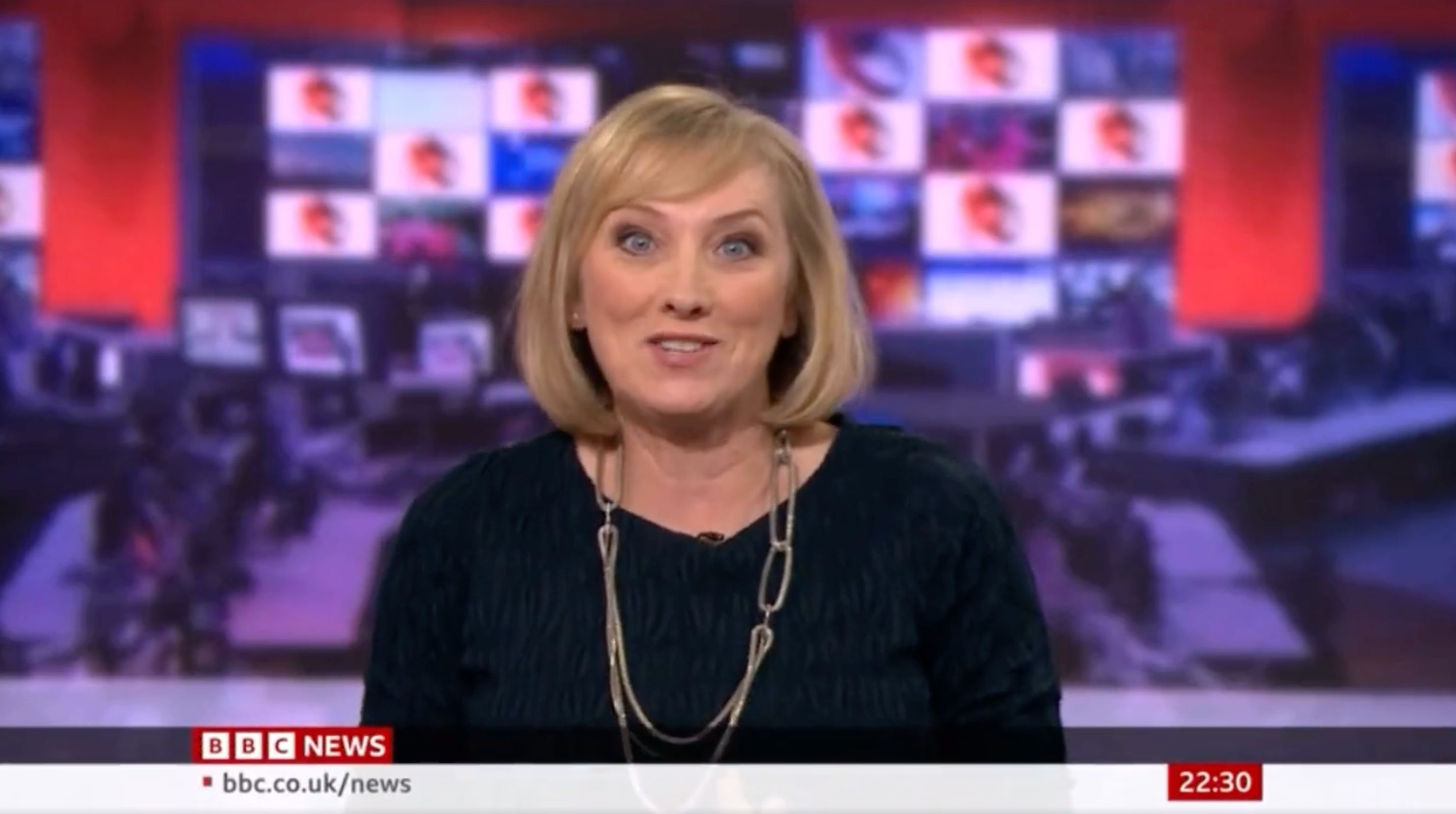
The BBC has said it is “urgently reviewing” comments made on air by newsreader Martine Croxall following Boris Johnson’s exit from the Tory leadership race.
The presenter was accused of breaching the broadcaster’s strict impartiality rules after she asked if she was “allowed to be this gleeful” during Sunday evening’s newspaper review on the BBC News channel, which came shortly after the former prime minister announced he would not be standing to reclaim his old job.
Advertisement
“Well this is all very exciting isn’t it?” she told viewers: “Am I allowed to be this gleeful? Well I am.”
In her first question to her guests, Croxall also remarked: “Can we even show you the front pages just yet, have they arrived? No they haven’t arrived.
“It’s all a little bit, you know, lastminute.com isn’t it? Because all the front pages were probably out of date by the time we received them.”
Advertisement
Croxall also suggested during the programme that her comments could have breached BBC guidelines.
Responding to a guest’s joke aimed at Johnson, she said: “I shouldn’t probably (laugh). I’m probably breaking some terrible due impartiality rule by giggling.”
Her comments – which aired around 90 minutes after Johnson’s announcement – attracted criticism from some viewers and Tory MP Nadine Dorries on social media, claiming they displayed bias.
A statement from the broadcaster said: “BBC News is urgently reviewing last night’s edition of The Papers on the News Channel for a potential breach of impartiality.
“It is imperative that we maintain the highest editorial standards. We have processes in place to uphold our standards, and these processes have been activated.”
Advertisement
The Telegraph and Press Association also reported Martine has been taken off air for an “undefined period”, although the BBC has not officially confirmed this.
The BBC would not verify this claim when contacted by HuffPost UK.
On Twitter, Croxall told one viewer to consider the “context” of her remarks, later clarifying: “The rollercoaster of politics. Fascinating to report on.”
When another Twitter user said they expected her comments were “journalistic excitement and not relief, like most of the viewers”, she replied: “Very much the former!”
Advertisement
On Monday, it was announced that Rishi Sunak had won the Conservative Party leadership contest and will become the next prime minister.
The former chancellor secured the overwhelming support of MPs and will be installed as PM without a vote of the party membership.
The GMB union says the “biggest ambulance strike for 30 years” could be staged before Christmas.
