Researchers have discovered how Gram-negative bacteria — which cause drug-resistant pneumonia, bloodstream infections, and surgical site infections in hospitalized patients — finish building a crucial component of their outer membrane that shields these pathogens from attacks by the immune system and antibiotics. The new findings could accelerate the development of novel drugs to counteract these potentially deadly bacteria, the source of countless infections in health care settings worldwide.
The study was published online April 6 in Nature.
“Previously, we knew that Gram-negative bacteria construct their outer membrane with two main, non-protein components — lipids and sugars — which together form an impermeable barrier. The missing link was how this lipopolysaccharide component comes together,” says Filippo Mancia, PhD, a co-leader of the study and professor of physiology & cellular biophysics at Columbia University Vagelos College of Physicians and Surgeons.
Using cutting-edge single-particle cryo-electron microscopy, Mancia and colleagues were able to determine the structures of the enzyme that links together the lipids and sugars (called an O-antigen ligase), in two different functional configurations. Then, combining genetic, biochemical, and molecular dynamics experiments, the team learned how the enzyme positions the lipids and sugars so that they can combine to form the protective membrane.
The lipopolysaccharide component of the outer membrane is critical to the survival of Gram-negative bacteria. “If you could block its assembly, then you would make the bacteria more sensitive to antibiotics and more vulnerable to the immune system,” Mancia says.
Construction of this membrane is an ongoing process, beginning when Gram-negative bacteria are first formed and continuing as the membrane naturally degrades and requires repair. “This means that we would have many opportunities to disrupt the membrane, not just at one stage of the bacteria’s life cycle,” Mancia says.
After revealing the structure of the enzyme that performs the last and critical step in assembling lipopolysaccharide barriers in drug-resistant bacteria, the researchers may begin to custom-design drugs that inhibit the biosynthesis of this protective membrane.
And just like that, everyone’s talking about France and whether it’s about to have its “Brexit/Trump moment”.
The first round of the French presidential election takes place on Sunday, and what might have been a formality only of domestic interest is suddenly generating a much bigger buzz. This is thanks to a series of polls suggesting Marine Le Pen, the far-right’s standard bearer for more than a decade, could pull off a shock win over incumbent Emmanuel Macron.
Advertisement
With the help of HuffPost France’s political correspondent Romain Herreros, here’s everything that you need to know about the vote to determine who runs one of Europe’s biggest economic and military powers as a war rages on the continent.
The basics: what is happening?
Advertisement
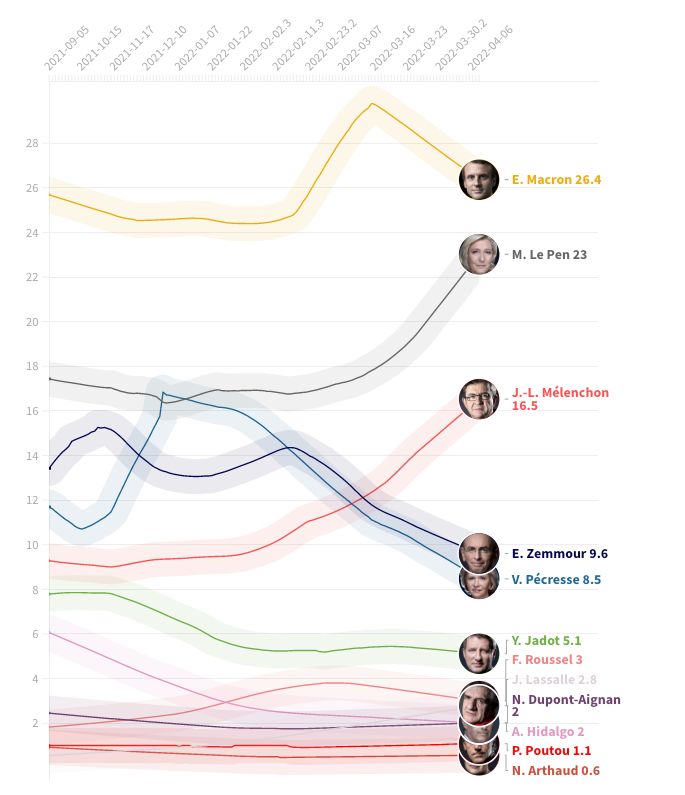
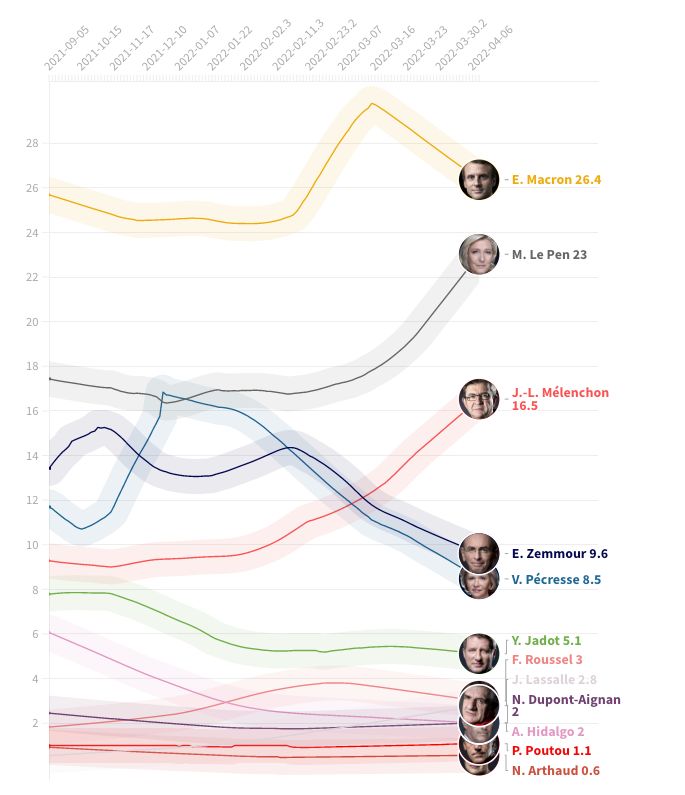
France’s presidential election is to be held in two rounds on April 10 and 24. Polls have for weeks consistently pointed to Macron leading the first round ahead of Le Pen, with both qualifying for a run-off. It would mean a replay of the 2017 election that Macron won comfortably (66% to 34%). But this time around it’s set to be much closer. According to some polls, Le Pen has narrowed the gap enough for victory to be within the margin of error.
There are 12 official candidates. Outside Macron and Le Pen, the names to note in an election where radical positions set the tone are far right-writer-turned-candidate Éric Zemmour and veteran left-winger Jean-Luc Mélenchon. While it’s unlikely either will make the final cut, the second choice of their voters could be crucial in a narrow run-off.
Advertisement
A Le Pen win would send shockwaves around the world, not least given the West’s united front against Russia’s invasion of Ukraine. Having someone who has shown pro-Vladamir Putin sympathies deal with the fallout would be less than ideal. And make no mistake of France’s importance: Brexit compounded its status as the European Union’s main military power and, with Angela Merkel’s exit as German chancellor, Macron has taken a more prominent role in Europe.
Marine Le Pen and the image overhaul
The 53-year-old leader of the National Rally, a movement long known for anti-Semitism, Nazi nostalgia and anti-immigrant bigotry, is running for the third time. The “Le Pen” name is notorious in France thanks to her father, Jean-Marie Le Pen, the firebrand leader of what the same party when it was the National Front.
Since her 2017 defeat, Le Pen has worked to soften her image – stressing her love of cats among other things – and changed the party name. She has strived to appear as a potential leader rather than a radical anti-system opponent. Her campaign has focused on cost of living concerns – amid a huge increase in energy prices and growing inflation – and the candidacy of Zemmour, who is even further to the right than Le Pen, has also helped herappear more palatable to voters.
Advertisement
Herreros says many felt another far-right candidate would split their vote, undermining Le Pen’s chance. “But, in fact, Zemmour was very hard, very radical. So Le Pen looked more soft. People are less afraid of her compared to Zemmour. When we look at the polls, we see that.”
Below, poll aggregator showing how Macron’s lead over Le Pen has narrowed in recent days. See here for latest update.
HuffPostFR
That explains in part why the context is not quite 2016. “The last election was just one year after Brexit and Trump’s election, so we were in a populist moment,” Herreros says of Macron’s 2017 ascent to power. “Now we have seen that Brexit was not what the British people expected, and we saw (Brazil’s populist president) Bolsonaro is a nightmare in Brazil. But Le Pen is not playing the populist role – she says she doesn’t want to leave the euro this time, that she’s not that extreme like Zimmour. ‘Trust me, I’m not evil’.”
But, make no mistake, the core of her party’s programme has not changed. “She is still far-right,” Herreros explains. “She is proposing the same thing on immigration as Zemmour, but with different words. It’s just a different package.”
She would end a number of welfare benefits for foreigners, stop family reunification, give preference to the French for jobs and social housing, ban the hijab in public spaces and kick unemployed foreigners out of France.
Éric Zemmour, not quite the French Trump
The early obsession among the chattering classes was the rise of Zemmour and his fledgling Reconquest! party. A TV pundit who styles himself as a Donald Trump figure and guardian of Old France, he has proposed a Ministry of “Remigration” equipped with airplanes to expedite the expulsions of what he says are undesirable migrants.
Zemmour pushes the white nationalist conspiracy theory known as the “great replacement”, which argues France and Western nations are being overrun by immigrants and other people of colour — notably Muslims.
Reflecting Le Pen’s superficial changes, a batch of her officials and supporters have left for Zemmour. The only one Le Pen spared criticism was her niece, Marion Marechal, a former politician who has returned to the frontline to help Zemmour.
Perhaps what worries most is the two far-right candidates together are drawing more support than the centrist president. In a scenario where Le Pen inherits around 80% of Zemmour’s votes in the second round – a not unreasonable prospect, say analysts – it puts her “close to victory”, says Herreros.
Advertisement
Macron and gone?
For Macron, Le Pen is the candidate to beat, and his camp has worried openly about an “accidental” win for Le Pen – perhaps if moderate voters fail to turn up at the polls.
The 44-year-old former investment banker, elected in 2017 with little political experience with his centrist La Republique en Marche, saw his pristine reputation dented by The Yellow Vest protests and imposing coronavirus restrictions.
His election campaign has been disrupted by the war in Ukraine, with Macron delaying his pitch to the country because of France’s central role in the West’s response. While absence from the campaign trail has its own problems, wartime leadership has allowed him to be presented dealing with the big issues facing the world (see the unusual pictures of him working nights and weekends at the Elysee palace, looking tired and unshaven, in jeans and a hoodie). It may have helped with an initial poll boost, but that appears to have waned.
<img class="img-sized__img landscape" loading="lazy" alt="Emmanuel Macron and Marine Le Pen are set to meet in the run-off for the second consecutive presidential election.” width=”720″ height=”478″ src=”https://www.wellnessmaster.com/wp-content/uploads/2022/04/with-le-pen-breathing-down-macrons-neck-is-france-about-to-have-its-brexit-4.jpg”>
Emmanuel Macron and Marine Le Pen are set to meet in the run-off for the second consecutive presidential election.
Herreros explains Macron is popular for this stage of his presidency – higher than predecessors François Hollande and Nicolas Sarkozy – but he has come unstuck by two factors. “He went too late in the campaign,” says Herreros. “It was difficult for him to say ‘hey, I’m the candidate’ when Putin was invading Ukraine. If he went in January or February, it would have been easier for him. He left the space for the far-right.”
He also bound himself to Le Pen, thinking France would never actually put her in power. “He always thought he would be automatically re-elected against Marine Le Pen. During his presidency he would ‘wink, wink’ to right-wing voters, some of his ministers talked in a way that could be used by Le Pen. Now people are saying you played with fire, now we have the result of what you have done.”
So what will happen?
The neck-and-neck polling doesn’t tell the whole story, say Herreros. A low turnout could kill off all the pre-election anticipation as Le Pen is relying heavily on the working class vote to come out in support. Le Pen’s party is still stinging from her party’s failure in last summer’s regional balloting, blamed on a turnout of only 33% of voters in the first round.
There may also be a moment of clarity. “In France, when the far-right are close to power, people wake up,” says Herreros. “And they lose every time.”
In 2015, Le Pen, who had appeared to be on the cusp of winning the northern region of Nord-Pas-de-Calais-Picardie, lost out in the second round, and her aforementioned niece, thought to be one of the party’s best hopes in the regional elections, also lost in the southern Provence-Alpes-Cote d’Azur.
Advertisement
“They lost,” says Herreros. “But who knows how the voters will react? Le Pen will say, ‘Macron is the system, vote for me. You’re from the left and don’t like Macron, vote for me’. It’s the same thing we saw with Brexit. Maybe people will think … let’s try it.”
Rishi Sunak has defended his wife after it emerged she holds the tax-reducing non-domiciled status – but who is to blame for the leak appears to depend on the newspaper you read, as a Westminster briefing war was in full swing.
The chancellor said his spouse Akshata Murty – who is estimated to be worth hundreds of millions of pounds – had done nothing wrong in choosing a financial arrangement that means she is not legally obliged to pay tax in Britain on foreign income.
Advertisement
He blamed Labour for the “awful” smears against his family.
Sunak told The Sun newspaper that Murty was entitled to use the so-called “non-dom” arrangement as she is an Indian citizen and plans to move back to her home country to care for her parents.
Advertisement
The fashion-designer daughter of a billionaire married the chancellor in 2009 before he became an MP.
But there were other reports his allies have accused No. 10 of being responsible for the briefings.
Advertisement
The Telegraph reported that unnamed allies of the chancellor claimed the prime minister’s office were behind the leaks – an allegation No 10 and No 11 strongly denied.
A No 10 spokeswoman told the PA news agency: “It is categorically untrue that No 10 is behind the briefings.
“The prime minister and chancellor are united.”
The Times carried briefings claiming Sunak was the victim of a “political hit job” and a “co-ordinated attack”.
Advertisement
“He thinks it’s a total smear,” one ally said. “It feels like there’s a full-time briefing operation against him. This is a hit job, a political hit job. Someone is trying to undermine his credibility.”
A well as weighing up the Labour vs No. 10 claims, the paper revealed Sunak had told only a few people in government about his wife’s tax status – and that included senior officials at his former berth the housing ministry, as well as the Treasury and the Cabinet Office.
Murty is reported to hold a 0.91% stake in Infosys, an IT business founded by her father, with The Guardian reporting that the share is worth £11.5 million per year to Sunak’s wife.
The paper also reportedMurty had potentially avoided up to £20 million in UK tax by being non-domiciled.
With Murty born in India and her father also from the south Asian country, UK government rules allow her to list India, rather than the UK, as her permanent residence, meaning different tax rules on foreign earnings apply.
The chancellor said it was “unpleasant” to read attacks on his wife “especially when she hasn’t done anything wrong”.
“She hasn’t broken any rules. She’s followed the letter of the law,” Sunak told The Sun.
The chancellor said his partner “pays full UK tax on every penny that she earns here in the same way that she pays full international tax on every penny that she earns internationally”.
Advertisement
Asked during the interview whether he thought his family were victims of a “Labour smear campaign”, Sunak said he did.
But Labour hit back, with a party source telling PA: “The chancellor would do better to look a little closer to home.
“It’s clear that No 10 are the ones briefing against Rishi Sunak and, after his failure to tackle the cost-of-living crisis, you can understand why.”
A hormone that triggers puberty and controls fertility in humans might be developed as a treatment for non-alcoholic fatty liver disease, according to new Rutgers research.
The study, appearing in the Journal of Clinical Investigation, provides powerful evidence that a modified version of the naturally occurring hormone kisspeptin can be used to treat non-alcoholic fatty liver disease (NAFLD). Globally, NAFLD is the most common form of chronic liver disease that affects children and adults and is linked to the rise in obesity and Type 2 diabetes.
NAFLD is known as a “silent” disease because it starts off with few or no symptoms. It begins with the accumulation of fat in the liver, resulting in a condition known as ‘fatty liver’. As the disease worsens, the liver becomes inflamed resulting in non-alcoholic steatohepatitis (NASH). This is followed by fibrosis and cirrhosis, where the liver becomes scarred and irreversibly damaged. A subset of NASH patients with cirrhosis will also develop liver cancer. Currently, there are no approved therapeutics to treat NASH.
Study lead investigator, Moshmi Bhattacharya, an associate professor in the Department of Medicine at the Rutgers Robert Wood Johnson Medical School, has spent over 15 years studying kisspeptin in health and disease. Kisspeptin, encoded by the KISS1 gene, was discovered in Hershey, Pa. and named for the iconic Hershey chocolate “kisses.” In addition to playing key roles in pubertal development and maintaining reproductive function, kisspeptin has also been linked to appetite and sexual attraction.
Bhattacharya along with co-author Andy Babwah, an associate professor in pediatrics at Rutgers Robert Wood Johnson Medical School, initiated this study to decipher the roles of kisspeptin in the liver, under healthy and obese conditions. The study’s first author, Stephania Guzman, is a Ph.D. candidate in Rutgers Molecular Biosciences Graduate Program. This collaborative study also included researchers led by Waljit Dhillo at the Imperial College London, U.K.
The researchers fed mice a high-fat, high-sugar ‘Western’ diet to induce obesity and NAFLD. The study showed that kisspeptin given to these mice protected them from the development of fatty liver, NASH and fibrosis. Kisspeptin works by binding its receptor, a protein called KISS1R. The study also showed that when KISS1R is deleted from liver cells, kisspeptin cannot function and mice on western diet develop fatty liver. These experiments uncover a powerful relationship between kisspeptin and the reduction of liver fat and fibrosis.
The study found:
Kisspeptin helps reduce fat deposited in the liver and reverse more advanced disease.
The mechanism by which kisspeptin functions in the liver is now understood.
Blood kisspeptin levels change in human NAFLD patients and in a mouse model of NAFLD.
“This work shows the kisspeptin receptor signaling pathway has a potential therapeutic role in NAFLD,” said co-author, Vinod K Rustgi, director of hepatology and a Distinguished Professor of Medicine at the Rutgers Robert Wood Johnson Medical School. “It does this by protecting against the development of fat in the liver and reducing inflammation and fibrosis. As such, it has the potential to favorably impact the health and lives of millions of patients around the globe.”