Genetic ‘hotspots’ that speed up and slow down brain aging could provide new targets for Alzheimer’s drugs

Researchers from a USC-led consortium have discovered 15 “hotspots” in the genome that either speed up brain aging or slow it down — a finding that could provide new drug targets to resist Alzheimer’s disease and other degenerative brain disorders, as well as developmental delays.

The research appears online today in Nature Neuroscience.

“The big game-changer here is discovering locations on the chromosome that speed up or slow down brain aging in worldwide populations. These can quickly become new drug targets,” said Paul Thompson of USC, a lead author on the study and the co-founder and director of the ENIGMA Consortium. “Through our AI4AD (Artificial Intelligence for Alzheimer’s Disease) initiative we even have a genome-guided drug repurposing program to target these and find new and existing drugs that help us age better.”

ENIGMA is working group based at USC that is exploring a vast trove of brain data and has published some of the largest-ever neuroimaging studies of schizophrenia, major depression, bipolar disorder, epilepsy, Parkinson’s disease, and even HIV infection.

To discover the hotspots, or genomic loci, more than 200 ENIGMA-member scientists from all over the world looked for people whose brains were scanned twice with MRI. The scans provided a measure of how fast their brains were gaining or losing tissue in regions that control memory, emotion and analytical thinking.

A million markers screened

After computing brain tissue change rates in 15,000 people of all ages, researchers screened a million markers in their genomes to detect 15 genomic loci — specific, physical locations of genes or other DNA sequences on a chromosome — that were speeding up brain tissue changes.

These loci included some well-known Alzheimer’s risk genes, such as APOE, and some novel ones, Thompson said. The researchers also found overlap with genes involved with depression, schizophrenia and cognitive functioning.

“Some of these genetic variants affect the growth rates of brain substructures in childhood, while others affect the speed of brain tissue loss in older adulthood,” said co-author Neda Jahanshad, an associate professor of neurology at the Keck School of Medicine of USC. “The different parts of the brain have specific genes associated with their rates of change.”

Thompson added, “You can see that APOE — the famous Alzheimer’s gene — hits a couple of brain structures adversely — the hippocampus and amygdala — which also makes sense as they are the brain regions most vulnerable to Alzheimer’s and it seems to speed tissue loss there specifically.”

ENIGMA also has international projects studying childhood brain disorders — from Tourette syndrome and autism to epilepsy. The new list of genes that slow down or speed up brain growth in children provides new leads to pursue in these disorders as well, the researchers said.

About this study

In addition to Thompson and Jahanshad, other USC scientists involved in the study included Sophia Thomopoulos, Joanna Bright, Leila Nabulsi, Linda Ding and Alyssa Zhu, all from the USC Mark and Mary Stevens Neuroimaging and Informatics Institute. For a full list of authors, see the published study.

The study was supported with funding from the National Institutes of Health, including the National Institute on Aging (U01AG068057, R01AG058854, R01AG059874), the National Institute of Mental Health (R01MH117601), the National Institute of Biomedical Imaging and Bioengineering (P41 EB015922), and a Zenith Grant (ZEN-20-644609) from the Alzheimer’s Association.

Story Source:

Materials provided by University of Southern California. Original written by Leigh Hopper. Note: Content may be edited for style and length.

Share Button

Innovation flows across regions and sectors in complex ways, study shows

Knowledge creation — the generation of new ideas and patents — is an important driver of economic growth. Understanding how knowledge moves across industry sectors and regions can inform research and development (R&D) efforts, promote university-industry partnerships for innovation, and impact private businesses’ location decisions. A new study from the University of Illinois in collaboration with Stockholm University and Korea Labor Institute provides a thorough look at the flow of knowledge in five industrial sectors across the United States.

“Our work provides a sort of cooking recipe for patent creation, with a list of ingredients that vary by industrial sector,” says Sandy Dall’erba, professor in the Department of Agricultural and Consumer Economics (ACE) and director of the Center for Climate, Regional, Environmental and Trade Economics (CREATE) at U of I. Dall’erba is a co-author on the study.

“Some sectors depend very much on local input factors, such as the presence of a university, versus elements located further away, such as spending in R&D by another private company. In some cases, this type of collaboration takes place across companies located thousands of miles apart as virtual meetings increasingly have replaced face-to-face meetings,” Dall’erba states.

“In addition, our research measures the extent to which innovation in one sector depends on R&D in the same sector or other sectors. For instance, new patents in the drug and medical industry depend on local and distant R&D in the chemical industry.”

Traditionally, geographical proximity was considered essential for knowledge flows. Clusters such as Silicon Valley’s high-tech industry or Detroit’s automobile industry facilitate face-to-face interactions and informal networking. Economists now acknowledge innovations may be shared across greater distances, but most studies have looked at aggregate results rather than location- and industry-specific patterns.

“We wanted to see the importance of geography for the patterns of knowledge creation in specific industries. We also wanted to examine how information flows across similar or different industries. Finally, we look at spillovers from private and university research and development activities,” says lead author Orsa Kekezi, a scholar at the Swedish Institute for Social Research at Stockholm University. Kekezi began working on this research while she was a visiting scholar at Illinois.

The researchers analyzed knowledge transfers across 853 metropolitan U.S. counties in five manufacturing industries: chemical, drugs and medical, mechanical, computer and communication, and electrical and electronic.

The study uses patent applications as a proxy for knowledge creation, tracking the flow from where patents are created to where they are cited (based on data from the U.S. Patent and Trade Office). This measures the directionality of innovation and identifies the role of external factors in knowledge output.

The core elements in the analysis are intra- and inter-sectoral knowledge spillovers, as well as intra- and interregional flows, defined as local (within county), short distance (neighboring counties in 50-mile radius), and the rest of U.S. (beyond 50 miles). The researchers also looked at the presence of university and private research and development, as well as other factors, such as the number of graduate degree holders and the industrial diversity in a county.

“Overall, the local environment matters greatly for all the sectors. The industry structure in the region, the size of firms, whether there is a university — these elements all matter for innovation. All sectors benefit from the local environment,” Kekezi states.

But the specifics vary by sector and provide a complex picture of interactions. There is no one-size-fits-all approach for the development of patents, and if you look at average results, you’ll miss the intricate details and patterns across sectors and regions.

“While university research matters for all the sectors, there is large heterogeneity here as well,” says study co-author Dongwoo Kang, a research fellow at the Korea Labor Institute, South Korea. “For example, it matters more for the chemical industry and the drugs and medical industry; those sectors really benefit from basic research.

“Universities provide the core research that is needed for the chemical industry to work. Unlike perhaps the mechanical or electric industries, the chemical industry relies more on faculty scholars who are looking at basic processes,” he adds.

Interregional spillovers matter less in the chemical industry, so face-to-face contact is important. On the other hand, for the drugs and medical industry, both inter-sectoral and long-distance regional spillovers matter, so geographic proximity is not as necessary. And for the electrical and electronic industry, inter-sectoral short-distance spillovers play a significant role.

The study findings can help companies decide where to locate their establishments.

“The idea that a company values proximity to a university, or where research and development are already happening, still holds true. But we also show the network of innovation is not completely local,” Dall’erba states.

“The main takeaway from the paper is that we should not only look at local spillovers. We should look at knowledge that comes from further away, and from other industries,” Kekezi notes. “New ideas don’t come only by looking at what has been done in one’s field, but also from looking at the broader picture and how we can combine different types of knowledge to create something new.”

The development of COVID-19 vaccines serves as an example, Kang adds.

“The U.S. invested a lot of money in research and development to stimulate innovation in creating the first COVID-19 vaccines. This is typically done through a central cluster that serves as a basis for innovation. But there are also other networks making new COVID-19 vaccines. Our findings imply that not only local activities, but also research and development in other places are important for making new COVID-19 vaccines,” he explains.

The findings can also help improve the design of future local and national innovation policies.

“We need to move away from an approach whereby everything is driven by similar mechanisms and instead understand much better what really works for one industry might be quite different from what works for another industry. It’s not just about promoting industry clusters; it’s more complicated than that. When governments try to promote innovation, they need to define a strategy that works for a specific industry and a specific location,” Dall’erba says.

Share Button

Government’s Landmark LGBT+ Conference Cancelled After Conversion Therapy Ban Backlash

The UK government’s international LGBT+ conference has been cancelled amid the row over partially banning conversion therapy, multiple reports have suggested.

It comes after more than 100 organisations, including Stonewall, boycotted the landmark Safe To Be Me event, to be held in in London in June, over plans to exclude trans people from the legislation.

Earlier on Tuesday, the government’s LGBT business champion resigned in protest at the decision to water down the ban.

Boris Johnson last week changed the government’s policy twice within a matter of hours.

First, the administration said it was abandoning plans to ban the practice, with the cost of living crisis and war in Ukraine cited as reasons to “rationalise our legislative programme”.

However within hours of the announcement, it was revealed legislation would be included in the Queen’s Speech in May – but trans conversion therapy would be excluded.

Conservative MP Dehenna Davison expressed dismay at the decision to cancel the conference.

“We had such a huge opportunity to prove the UK (and the Conservative Party) is a defender of freedom,” she posted on Twitter.

“As a Conservative member of the LGBT+ community, it is so wrong it has come to this.”

The Times reported a senior Downing Street figure is said to have claimed that “the majority of people won’t care” that the event is not going ahead.

More than 80 LGBT+ groups and more than 20 HIV groups said they will not take part in the global, UK-hosted conference unless Johnson would revert to his promise for a trans-inclusive ban on conversion therapy.

Iain Anderson, the UK’s LGBT+ business champion, quit the role as he accused the government of engaging in a “woke war”.

He said ministers are trying to “drive a wedge” between the community.

Anderson added that it was “profoundly shocking” that the government had backtracked on protection for trans people during the same week that the first trans MP felt able to share his journey.

A government spokeswoman said: “We thank Iain for his contributions as LGBT business champion.

“The government has a proud record on LGBT rights and we remain committed to building upon that work with sensitivity and care.”

On Monday, the UK’s first openly trans MP has said he is “bitterly disappointed” by his own government’s decision to scrap the ban on trans conversion therapy.

Jamie Wallis, who came out last week in a heartfelt post shared on Twitter, said pressing ahead with outlawing conversion therapy – but not for trans people – would be a “broken promise”.

This is a breaking news story and will be updated. Follow HuffPost UK on Twitter, Facebook and Instagram.

Share Button

Zelenskyy: Russians Committing ‘Most Terrible War Crimes’ In Ukraine Since Second World War

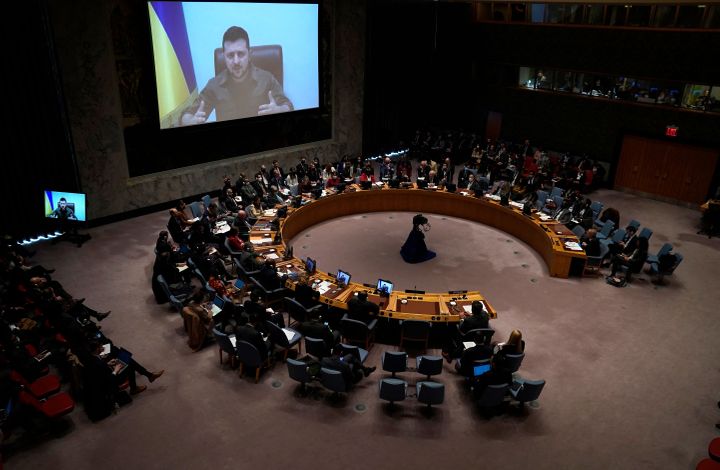
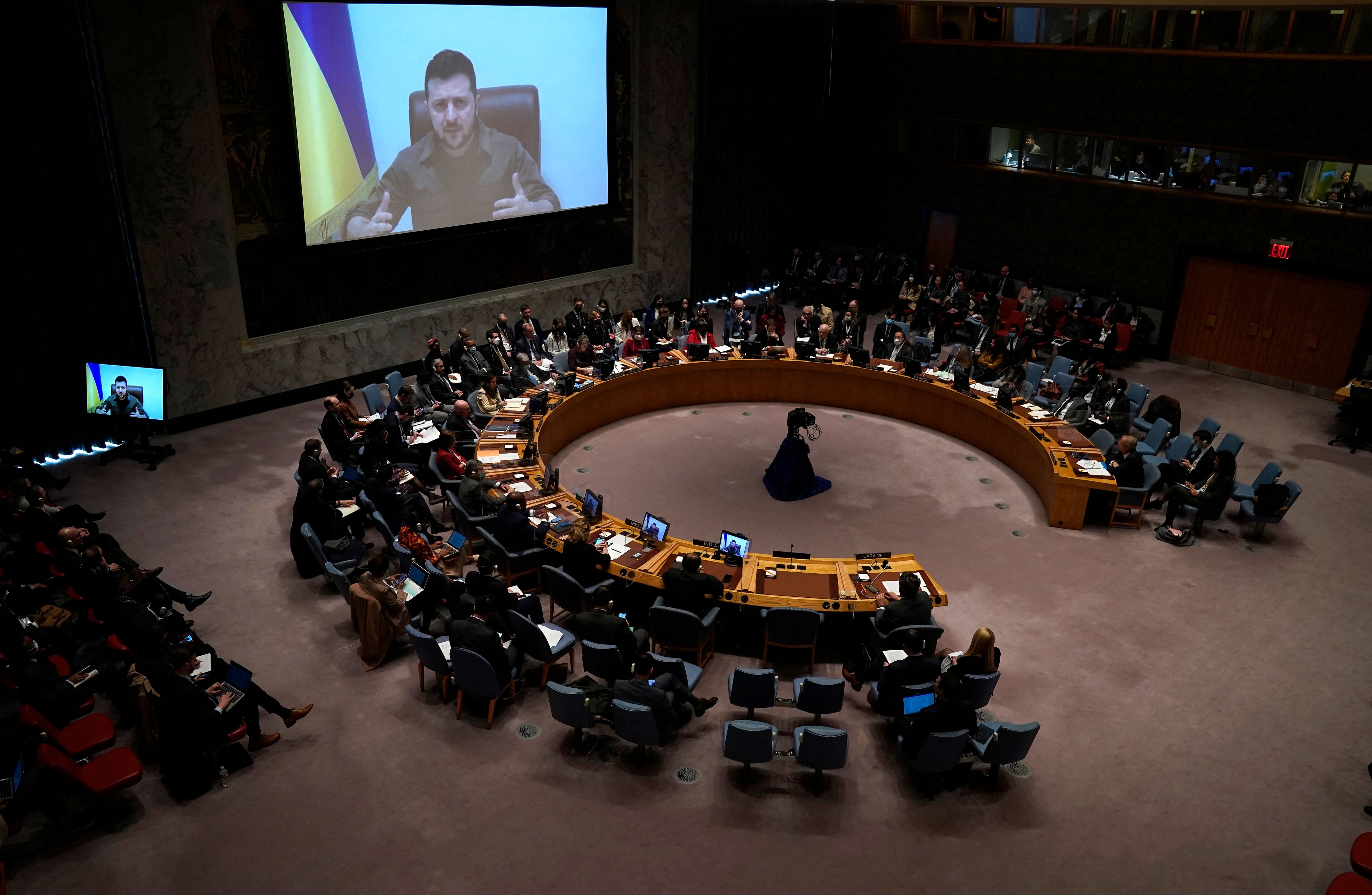
Addressing a meeting of the United Nations Security Council remotely on Tuesday, Ukrainian President Volodymyr Zelenskyy described the alleged atrocities uncovered in recent days as Russian troops moved out of areas in northern Ukraine.

“The most terrible war crimes we’ve seen since the end of World War II are being committed,” Zelenskyy told the council assembled in New York City, later arguing that “Russia wants to turn Ukraine into silent slaves.”

Zelenskyy proposed a tribunal for Russians who ordered or carried out war crimes similar to the Nuremberg trials in the years directly following the second world war.

Ukrainian authorities and journalists have seen evidence of widespread civilian casualties in Bucha, a suburban area northwest of Kyiv. U.S. Secretary of State Antony Blinken described the casualties as evidence of “a deliberate campaign to kill, to torture, to rape” ― not “the random act of a rogue unit.”

President Joe Biden on Monday called for Russian President Vladimir Putin to be held accountable for the violence, which he described as a war crime.

Russia has repeatedly asserted that the violence was committed after its forces left the region. Blinken, however, said Tuesday that reports of atrocities committed by the Russians are “more than credible.”

“I’m addressing you on behalf of the memory of the deceased,” Zelenskyy told the U.N. council. “They died suffering.”

He alleged that Russian troops searched for and killed “anyone who served our country,” including entire families, executing many people in the street. Other people were thrown in wells, Zelenskyy claimed, and some had their limbs or tongues removed. Photographs showed that some of the dead had their hands tied behind their backs.

The world has yet to see the full extent of the brutality, Zelenskyy added.

Ukrainian President Volodymyr Zelenskyy remotely addresses a meeting of the United Nations Security Council in New York City on April 5.

TIMOTHY A. CLARY via Getty Images

The Russians’ behavior is “no different than ISIS,” Zelenskyy said. “And here it is done by a member of the United Nations Security Council.”

The Ukrainian leader condemned the group, whose permanent members include the Russian Federation, for not doing more to end the conflict. He proposed three options: Remove Russia from the security council, reform the council, or dissolve it completely.

Citing what he called Ukraine’s “moral right” to propose reforms, Zelenskyy argued that Russia’s veto power makes the council worthless in fulfilling its main purpose of peacekeeping.

There is currently no process for removing a member of the security council.

“Accountability must be inevitable,” Zelenskyy said.

The Ukrainian delegation sent a video to be played following the president’s remarks, but technical issues prevented it from being shown immediately afterward.

U.S. Ambassador to the United Nations Linda Thomas-Greenfield subsequently announced that the U.S. would seek to suspend Russia from the United Nations Human Rights Council, noting that Russia has used false allegations of human rights abuses on the part of Ukraine to justify its invasion.

Share Button

Boris Johnson Urges Russians To Sidestep State Media To Find Out About Putin’s ‘War Crimes’

Boris Johnson has urged Russian people to use alternative forms of news to find out about Vladamir Putin’s alleged war crimes, arguing they would not support the invasion and crimes that are a “stain on the honour of Russia”.

In a video message directed to the Russian population, the UK prime minister said they only needed an online VPN connection to sidestep state-controlled media and gain access to independent information from around the world.

“Your president knows that if you could see what was happening, you would not support his war,” he said.

“He knows that these crimes betray the trust of every Russian mother who proudly waves goodbye to her son as he heads off to join the military.

“And he knows they are a stain on the honour of Russia itself.”

Speaking in Russian, he added: “Your president stands accused of committing war crimes. But I cannot believe he’s acting in your name.”

His comments follow global outrage at the massacre uncovered at Bucha, a Ukrainian town, that was targeted by the Russian forces on their way to conquer Kyiv in March.

Volodymyr Zelenskyy accused Russia of committing the “most terrible war crimes” since the Second World War as he called for trials akin to those held after the defeat of the Nazis.

The Ukrainian president accused Putin’s forces of creating “mass starvation” and shooting and raping civilians, during a graphic address to the United Nations Security Council on Tuesday.

Russian forces then began to withdraw from the region around March 30, reportedly due to a shortage of resources, meaning journalists have been able to access to beleaguered Bucha once again.

The Associated Press released images from the town showing bodies on the Bucha streets, with their hands tied behind their backs and wounds to the back of their heads.

According to the news agency, at least 21 bodies were found, with at least nine of them in civilian clothing.

Anatoly Fedoruk, Bucha’s mayor, said more than 300 residents in the town had been killed, while Ukrainian prosecutors allege Russian forces used the basement of one house as a torture chamber.

Satellite images showed a 45ft-long mass grave in the town too.

Russia has denied any involvement and suggested the bodies were placed their strategically by the Ukrainians.

Moscow has dismissed any accusations of war crimes too, and claims “Ukrainian radicals” are responsible for the massacre in Bucha as “not a single civilian” faced violent military action from Russian forces.

<img class="img-sized__img landscape" loading="lazy" alt="President Volodymyr Zelensky, of Ukraine, addresses a meeting of the United Nations Security Council in New York City.” width=”720″ height=”469″ src=”https://www.wellnessmaster.com/wp-content/uploads/2022/04/boris-johnson-urges-russians-to-sidestep-state-media-to-find-out-about-putins-war-crimes-2.jpg”>
President Volodymyr Zelensky, of Ukraine, addresses a meeting of the United Nations Security Council in New York City.

TIMOTHY A. CLARY via Getty Images

In his message, Johnson said the reports were so shocking that Putin had deliberately sought to hide the truth from his people.

Johnson said that people only needed a VPN connection to access independent information from around the world.

“When you find the truth, share it,” he said.

“Those responsible will be held to account. And history will remember who looked the other way.”

During the UK-convened meeting of the UN’s most powerful body, whose membership includes Russia, Zelenskyy called for those responsible to be “brought to justice” in a tribunal similar to the Nuremberg trials.

He warned the world is yet to see the acts committed by the Kremlin’s troops in other regions after evidence of atrocities was unearthed after their withdrawal from Bucha, near Kyiv.

“Today, as a result of Russia’s actions in our country, in Ukraine, the most terrible war crimes we’ve seen since the end of World War Two are being committed,” he said in the virtual address.

“Russian troops are deliberately destroying Ukrainian cities to ashes with artillery and air strikes. They are deliberately blocking cities, creating mass starvation. They deliberately shoot columns of civilians on the road trying to escape from the hostilities.

“They even deliberately blow up shelters where civilians hide from air strikes.

“The massacre in our city of Bucha is unfortunately only one of many examples of what the occupiers have been doing on our land for the past 41 days.”

Share Button

Shanghai Covid lockdown extended to entire city

China’s financial hub is now subject to indefinite restrictions after Covid cases hit a new high.

Share Button

NHS not making progress on early cancer diagnosis

Progress in England has been static for six years – and pandemic may make outlook worse, MPs say.

Share Button

New method for probing the bewildering diversity of the microbiome

In recent years, researchers have begun to explore the vast assemblage of microbes on and within the human body. These include protists, archaea, fungi, viruses and vast numbers of bacteria living in symbiotic ecosystems.

Known collectively as the human microbiome, these tiny entities influence an astonishing range of activities, from metabolism to behavior and play a central role in health and disease. Some 39 trillion non-human microbes flourish on and within us, in a ceaseless, interdependent bustle. Together, they make up over half of the human body’s cells, though they may possess 500 times as many genes as are found in human cells. Identifying and making sense of this microbial mélange has been a central challenge for researchers.

In a new study, Qiyun Zhu and his colleagues describe a new method for probing the microbiome in unprecedented detail. The technique provides greater simplicity and ease of use compared with existing approaches. Using the new technique, the researchers demonstrate an improved ability to pinpoint biologically relevant characteristics, including a subject’s age and sex based on microbiome samples.

The innovative research holds the promise of rapidly advancing investigations into the mysteries of the microbiome. With such knowledge, researchers hope to better understand how these microbes collectively act to safeguard human health and how their dysfunction can lead to a broad range of diseases. In time, drugs and other therapies may even be tailor-made based on a patient’s microbiomic profile.

Professor Zhu is a researcher in the Biodesign Center for Fundamental and Applied Microbiology and ASU’s School of Life Sciences. The research team includes collaborators from the University of California, San Diego, including co-corresponding author Rob Knight, Zhu’s former mentor.

The group’s research results appear in the current issue of the journal mSystems.

Tools of the trade

Two powerful technologies have been used to help researchers unlock the diversity and complexity of the microbiome, by sequencing the microbial DNA present in a sample. These are known as 16S and metagenomic sequencing. The technique described in the current study draws on the strengths of both methods to create a new way of processing data from the microbiome.

“We borrow some of the wisdom that developed from 16S RNA sequencing and apply it to metagenomics,” Zhu says. Unlike other sequencing methods, including 16S, metagenomics allows researchers to sequence all the DNA information present in a microbiome sample. But the new study shows that the metagenomic approach has room for improvement. “The way people currently analyze metagenomic data is limited, because whole genome data has to first be translated into taxonomy.”

The new technique, known as Operational Genomic Units (OGU) does away with the laborious and sometimes misleading practice of assigning taxonomic categories like genus and species to the multitude of microbes present in a sample. Instead, the method uses individual genomes as the basic units for statistical analysis and simply attempts to align sequences present in a sample to sequences found in existing genomic databases.

By doing this, researchers can get much more fine-grained resolution, which is particularly useful when microbes are present that are closely related in DNA sequence. This is true because most taxonomic classifications are based on sequence similarity. If two sequences differ by less than a certain threshold, they fall into the same taxonomic category, however the OGU approach can help researchers tell them apart.

Further, the method overcomes errors in taxonomy that persist as relics from the pre-sequencing epoch, when different species were defined by their morphology rather than from DNA sequence data.

In addition to improvements in resolution and simplicity, OGU can help researchers analyze data using what are known as phylogenetic trees. As the name implies, these are branching structures that can describe the degree of relatedness between organisms, based on their sequence similarity. Just as two distantly related species like worms and antelope will appear on more distant branches of a phylogenetic tree, so will more distantly related bacteria and other constituents of the microbiome.

Innovations in sequencing

The most widely used technique for probing the microbiome, known as 16S ribosomal RNA sequencing or just 16S, relies on a simple idea. All bacteria have a 16S gene, which is essential to the machinery bacteria need to initiate protein synthesis. The bacterial 16S gene, measuring 1500 base pairs in length, consists of distinct regions. Some of these regions change very little between different bacteria and over evolutionary timeframes, while others are highly variable.

Researchers realized that the conserved and variable regions of the 16S gene allow it to act as a molecular clock, keeping track of bacteria that are more closely or more distantly related, based on their sequence similarity. Thus, the 8 conserved and 9 variable regions of 16S can be used to fingerprint bacteria.

To do this, a microbiome sample is first collected. This could be a fecal sample, to evaluate the gut microbiome, or a sample from the skin or from the mouth. Each body site is home to a different bacterial menagerie.

Next, PCR technology is used to amplify portions of the 16S gene. By sequencing highly conserved regions, a broad swath of bacteria can be identified, while sequencing of variable regions helps narrow the identity of particular bacteria.

Although 16S is an inexpensive and well-developed method, it has limitations. The technique can only give a general idea of the kinds of bacteria present, with limited resolution. In general, 16S is only accurate to the genus level of identification.

Enter metagenomic sequencing. This technique sequences the full genomes of all microbes present in a microbiome sample, (not just bacteria, as with 16S). Metagenomics allows researchers to sequence thousands of organisms in parallel, providing accurate, species-level resolution. The greater resolution however does come with costs. Metagenomic data is far richer and more computationally challenging to analyze than 16S data and more expensive in time and money to process.

A new path for metagenomics

The OGU technique streamlines metagenomic sequencing, while providing even greater resolution. The approach classifies microbes in a sample strictly according to their alignment with a reference database — no taxonomic assignment required. The approach enables researchers to evaluate the degree of species diversity present in a sample.

Compared with 16S and standard metagenomic sequencing, the new approach is superior in ferreting out biologically relevant information. Using the classic Human Microbiome Project dataset of 210 metagenomes sampled from seven body sites of male and female human subjects, the study demonstrates better correlation between body site and host sex.

Next, 6,430 stool samples collected through a random sampling of the Finnish population were analyzed, using both 16S and metagenomic sequencing. The samples belong to a large, randomly sampled cohort of the Finnish population, known as FINRISK. The aim was to predict the age of sampled individuals, based on gut microbial composition. Again, the OGU method outperformed 16S and conventional metagenomic analysis, providing more accurate predictions.

New research drawing on still larger datasets will further enhance the resolution of the new technique and expand the descriptive power of taxonomy-independent analysis.


Share Button

What Is An NFT? Rishi Sunak Asks Royal Mint To Create A Non-Fungible Token

Chancellor Rishi Sunak has asked the Royal Mint to create a non-fungible token (NFT) which is to be issued by the summer, the Treasury said on Monday.

Critics immediately seized on the move towards a UK state-backed NFT as an example of the government being “out of touch” as the cost of living crisis puts the squeeze on households.

So what is an NFT, and why are they so controversial?

What is an NFT?

NFT stands for non-fungible token.

Things that are fungible can be swapped for an asset of the exact same type and value – traditional currencies such as the pound work like this.

When something is non-fungible, it cannot be changed this way because it is unique. Think of it like a famous painting – there will only be one original, no matter how many copies are made.

An NFT is a distinct cryptographic token that cannot be replicated, which acts as a certificate of ownership for virtual items.

What is the point?

Supporters view NFTs as the next phase in art collection, and they have exploded in popularity in recent years – with NFT artworks selling for millions of dollars.

Physical works of art and other rare memorabilia have long been sold for large sums of money but if you create something digitally it is hard to make gains.

So NFT offers a chance for artists in the internet age to make some money by selling ownership to anyone who wants it.

Selling a digital asset does not mean the original creator loses copyright either, unless it is explicitly stated as part of the sale.

Of course, this does not stop the image being easily copied by anyone online, but an NFT provides someone the honour of knowing they “own” the original image.

An NFT exists on a blockchain – a record of transactions kept on networked computers that serves as a public record allowing anyone to verify its authenticity and who owns it.

As with any blockchain system, records cannot be forged or divided, as they are logged on computers around the world that are part of the network.

What kind of NFTs exist?

All kinds of digital objects – images, videos, music, text and even tweets – can be bought and sold as NFTs.

Digital art has seen some of the most high-profile sales, while in sport, fans can collect and trade NFTs relating to a particular player or team.

NFTs can also be patches of land in virtual world environments, digital clothing, or exclusive use of a cryptocurrency wallet name.

Christie’s became the first major auction house to offer a purely digital work with NFT, selling artist Beeple’s creations for £50.5 million worth of Ether cryptocurrency.

The first tweet from Twitter boss Jack Dorsey – “just setting up my twttr” – sold for $2.9 million (£2.2 million) as an NFT in March last year.

Last month, Liverpool FC became the latest high-profile sports team to get involved with digital assets – announcing the “LFC Heroes Club” will give fans the opportunity to purchase animated, cartoon-style digital artwork of 23 players and manager Jurgen Klopp. All 20 clubs in the Premier League are reportedly exploring the possibility of launching NFTs.

<img class="img-sized__img landscape" loading="lazy" alt="Undated digital artwork issued by Liverpool Football Club of The LFC Heroes Club collection, featuring llustrations of 24 of the male squad, bringing their "individual and superhero characteristics to life".” width=”720″ height=”405″ src=”https://www.wellnessmaster.com/wp-content/uploads/2022/04/what-is-an-nft-rishi-sunak-asks-royal-mint-to-create-a-non-fungible-token-2.jpg”>
Undated digital artwork issued by Liverpool Football Club of The LFC Heroes Club collection, featuring llustrations of 24 of the male squad, bringing their “individual and superhero characteristics to life”.

LFC via PA Media

Why have NFTs surged?

Some attribute the frenzy to lockdowns, which forced people to spend more time at home on the internet.

NFTs are seen as a way to have possessions in online and virtual environments, which can communicate social status and personal taste. For some people, it is the digital equivalent of buying an expensive pair of sneakers.

For others, the lure lies in rapidly rising prices and the prospect of big returns. Some buyers “flip” NFTs, selling them on within a few days or even hours for profit.

What do critics make of it?

Like cryptocurrencies, NFTs are largely unregulated. Anybody can create and sell an NFT and there is no guarantee of its value. Losses can stack up if the hype dies down.

In a market where many participants use pseudonyms, fraud and scams are also a risk.

Given the huge number of computers needed to continuously run for a blockchain to function, there is also the environmental cost to consider.

Share Button

Disbelief in human evolution linked to greater prejudice and racism

A disbelief in human evolution was associated with higher levels of prejudice, racist attitudes and support of discriminatory behavior against Blacks, immigrants and the LGBTQ community in the U.S., according to University of Massachusetts Amherst research published in the Journal of Personality and Social Psychology.

Similarly, across the globe — in 19 Eastern European countries, 25 Muslim countries and in Israel — low belief in evolution was linked to higher biases within a person’s group, prejudicial attitudes toward people in different groups and less support for conflict resolution.

The findings supported the hypothesis of lead author Stylianos Syropoulos, a Ph.D. candidate in the War and Peace Labof senior author Bernhard Leidner, associate professor of social psychology. They collaborated with co-first author Uri Lifshin at Reichman University in Israel and co-authors Jeff Greenberg and Dylan Horner at the University of Arizona in Tucson. The researchers theorized that belief in evolution would tend to increase people’s identification with all humanity, due to the common ancestry, and would lead to less prejudicial attitudes.

“People who perceive themselves as more similar to animals are also people who tend to have more pro-social or positive attitudes toward outgroup members or people from stigmatized and marginalized backgrounds,” Syropoulos explains. “In this investigation, we were interested in examining whether belief in evolution would also act in a similar way, because it would reinforce this belief that we are more similar to animals.”

In eight studies involving different areas of the world, the researchers analyzed data from the American General Social Survey (GSS), the Pew Research Center and three online crowdsourced samples. In testing their hypothesis about the associations of different levels of belief in evolution, they accounted for education, political ideology, religiosity, cultural identity and scientific knowledge.

“We found the same results each time, which is basically that believing in evolution relates to less prejudice, regardless of the group you’re in, and controlling for all of these alternative explanations,” Syropoulos says.

For example, religious beliefs, like political ideology, were measured separately from a belief or disbelief in evolution, the researchers note. “Regardless of whether one considers religion an important part of their life, belief in evolution relates to less prejudice independently from belief, or lack thereof, in God or any particular religion,” Syropoulos says.

Leidner adds, “This whole effect and pattern seems to be present in all major political systems. It’s very much a human phenomenon, no matter where you are in the world.”

The researchers note that Darwin’s 19th century theory of evolution has been cited to perpetrate racism, prejudice and homophobia, in part through the phrase, “survival of the fittest,” used to describe the process of natural selection.

“There have been theoretical accounts that predict the opposite of what we found, so it was exciting for us to show that this actually is not the case, that the opposite is true and that belief in evolution seems to have pretty positive effects,” Leidner says.

The U.S.-based study involved data from 1993, 1994, 2000, 2006, 2008, 2010, 2012, 2014, 2016 and 2018 — the years the GSS surveyed Americans about their beliefs in evolution, as well as measures of attitudes toward immigrants, Blacks, affirmative action, LGBTQ people and other social matters.

The data analysis showed unfailingly “that the disbelief in human evolution is the driving factor and most consistent predictor of prejudice in comparison to other relevant constructs,” the paper states.

In the Israel-based study, people with a higher belief in evolution were more likely to support peace among Palestinians, Arabs and Jews. In the study involving countries in the Islamic world, belief in evolution was associated with less prejudice toward Christians and Jews. And in the study based in Eastern Europe, where Orthodox Christians are the majority, a belief in evolution was linked with less prejudice toward gypsies, Jews and Muslims.

Syropoulos posits that a belief in evolution may expand people’s “moral circle,” leading to a sense that “we have more in common than things that are different.”

The findings also suggest that “teaching evolution seems to have side effects that might make for a better or more harmonious society,” Leidner adds.

The next step, the researchers say, is to investigate how evolution is taught in the classroom and work toward developing models to study and strengthen the positive effects.

Share Button