Keep Renationalisation Of Energy Firms ‘On The Table’, Pleads Nicola Sturgeon

Nicola Sturgeon has said renationalising energy firms should be kept “on the table” to combat the deepening cost of living crisis.

Scotland’s first minister said the energy price cap rise, due to be announced on Friday, should not “be allowed to go ahead”, as she warned it would push families into “destitution and devastation”.

Sturgeon said the country faces a “looming disaster” with energy bills as she prepares to convene a summit of major energy suppliers Scottish Power, OVO Energy and E.ON next week.

The current price cap is set at £1,971 but is expected to reach £3,576 in October and will gradually rise to more than £4,000 by the new year before peaking at £6,000 by April.

Speaking on BBC Scotland’s The Sunday Show, Sturgeon said: “This further increase in people’s energy bills can’t be allowed to go ahead because it is making it impossible for people to provide the basics for themselves and their families, but it is also continuing to fuel inflation, which, of course, is causing the problem in the first place.

“I want to make sure that the Scottish government, working with energy companies, other stakeholders in Scotland, that we are genuinely doing everything we can at our own hand to help here.”

The first minister said she wanted renationalisation to be kept on the table but warned that the Scottish government did not have the power to do this itself.

“I want us to come together to call on the UK government to take the action only it can take,” she said.

“There is a looming disaster that is already unfolding but it is going to get worse.

“This is going to cause destitution and devastation, this will cause loss of life if real action is not taken to stem this crisis.”

Sturgeon’s intervention echoes that of former prime minister Gordon Brown, who said energy firms that fail to bring prices down should be renationalised by the state.

Under Brown’s plan, the energy price cap would be scrapped and new, lower prices would be negotiated with the companies. Those who are not able to arrange lower prices should be bought into public ownership “as a last resort”.

Chris Philp, the former technology minister who is backing Liz Truss for the Tory leadership, criticised proposals to freeze the price cap as way to ease pressure on struggling households.

“Obviously, there’s nothing for free in life,” he told Times Radio. “And if Labour are planning to freeze the price cap for an extended period that will ultimately have to be paid for probably in the form of higher taxes.”

Asked whether higher taxes on energy firms could fund a potential price cap freeze, Philp replied: “I don’t think it’s wholly going to be funded by energy companies because there isn’t enough efficient profit to do that.

“And of course, we have already introduced a windfall tax that amounts to 5 billion pounds a year on energy companies. That was two and a half times bigger than the windfall tax Labour had proposed a few weeks beforehand.”

He added: “What I think is most important is two things: firstly, to get through this winter, which the emergency budget will make sure we do.

“And secondly, put the country on the right footing in the medium term, which means firstly, lower taxes to promote growth, which I strongly believe in, because growth will ultimately increase wages and produce more tax yields, and to fund public services like health and education.”

Share Button

‘Help Is Coming’ To Ease Cost Of Living Pressures, Cabinet Minister Says

People struggling with the rising cost of living will receive more help this winter, a Cabinet minister has suggested.

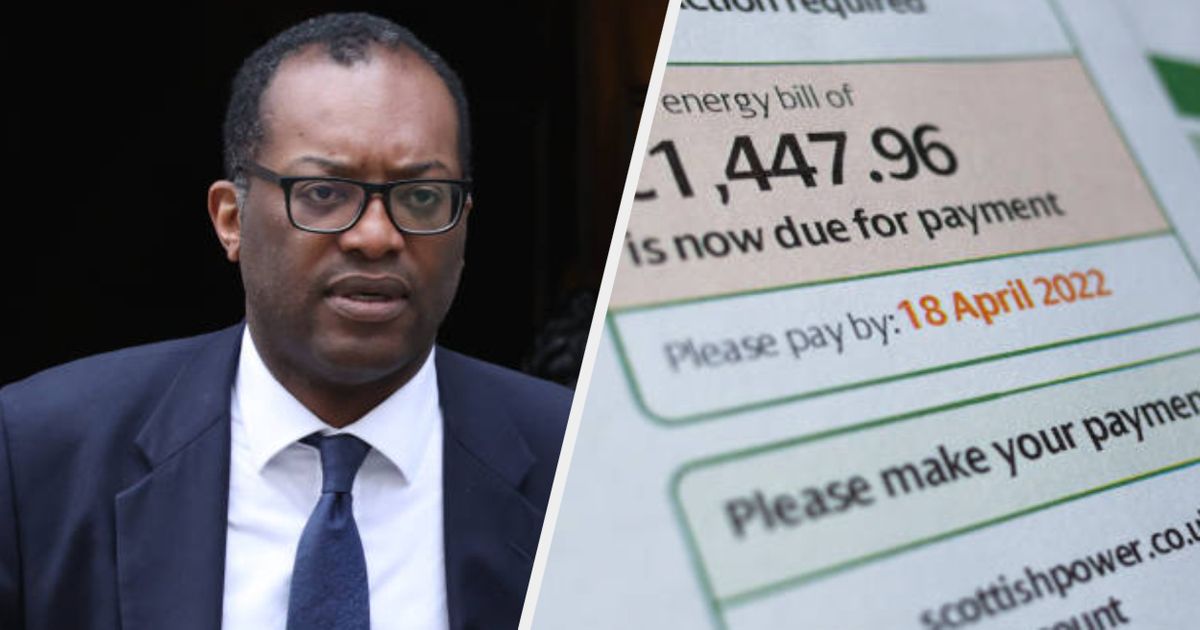
Business secretary Kwasi Kwarteng, who is backing Liz Truss in the Tory leadership contest, said the government was “working on options for the new prime minister”.

In an article for the Mail on Sunday, Kwarteng said he understood the “deep anxiety” rising prices were causing.

“As winter approaches, millions of families will be concerned about how they are going make ends meet,” he added.

“But I want to reassure the British people that help is coming.”

Kwarteng said Truss, who is currently the favourite to replace Boris Johnson as prime minister, “will look at what more can be done to help families”.

However, he said it was “entirely reasonable not to detail the exact shape of that support until she has all the information to hand”.

The government is under pressure to act as inflation hit a 40-year high of 10.1 per cent this week, largely owing to a spike in the price of household staples.

And projections from experts have found that the energy price cap, currently at £1,971 a year, could rocket to £6,000 next April.

Energy consultancy Auxilione said the cap is expected to reach £3,576 in October, rising to £4,799 in January, and finally hitting £6,089 in April.

Labour has vowed to freeze the price cap at its current level while Truss has said she would temporarily scrap green levies on energy bills to bring them down.

Her rival, Rishi Sunak, has said he would also scrap VAT on energy bills for the next year in a move that would save households around £160 a year.

Both leadership rivals have also said they will study proposals from the Treasury over how to bring bills down for families.

One such option to help struggling households, reported by the Sun on Sunday, is to allow GPs to write prescriptions to knock money off energy bills for those most in need.

The GP would verify through a consultation whether the patient needed help and if they did, money could be made available via the local council or in the form of a voucher for gas and electricity.

In response, Labour’s shadow health secretary Wes Streeting said the Conservatives had “lost the plot on the cost of living and haven’t got a clue about the level of pressure on the NHS”.

Elsewhere, Kwarteng said shoring up the UK’s energy independence was vital for Truss, saying she would look at building more nuclear power stations and allowing fracking to take place where local communities approve.

The business secretary poured cold water on the idea of further windfall taxes, saying the country instead needed to “incentivise investment in domestic oil and gas for our own energy security”.

“I appreciate windfall taxes are sometimes popular. But popularity won’t keep the lights on.”

Share Button

5 Updates On Russia’s Invasion Of Ukraine From This Week

A week before the Russian invasion of Ukraine reaches the six-month mark, the war continues to rage on.

From claims about how Russia is managing the “information” war to unexpected events on the frontline, here are the major developments from the last week.

1. Stand-off at the Ukrainian power plant

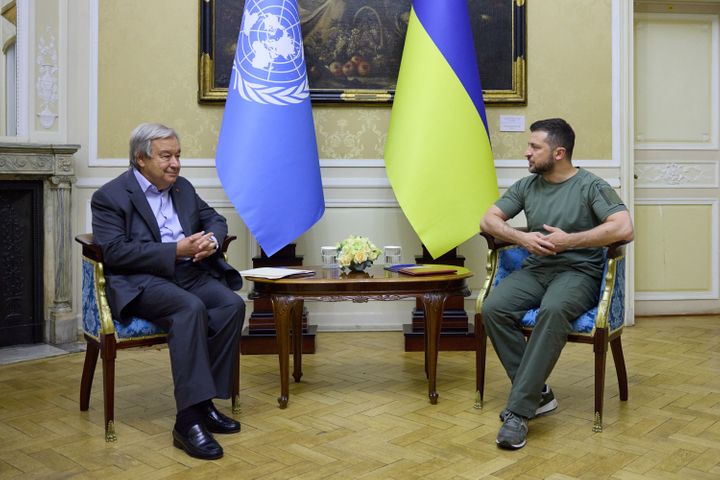
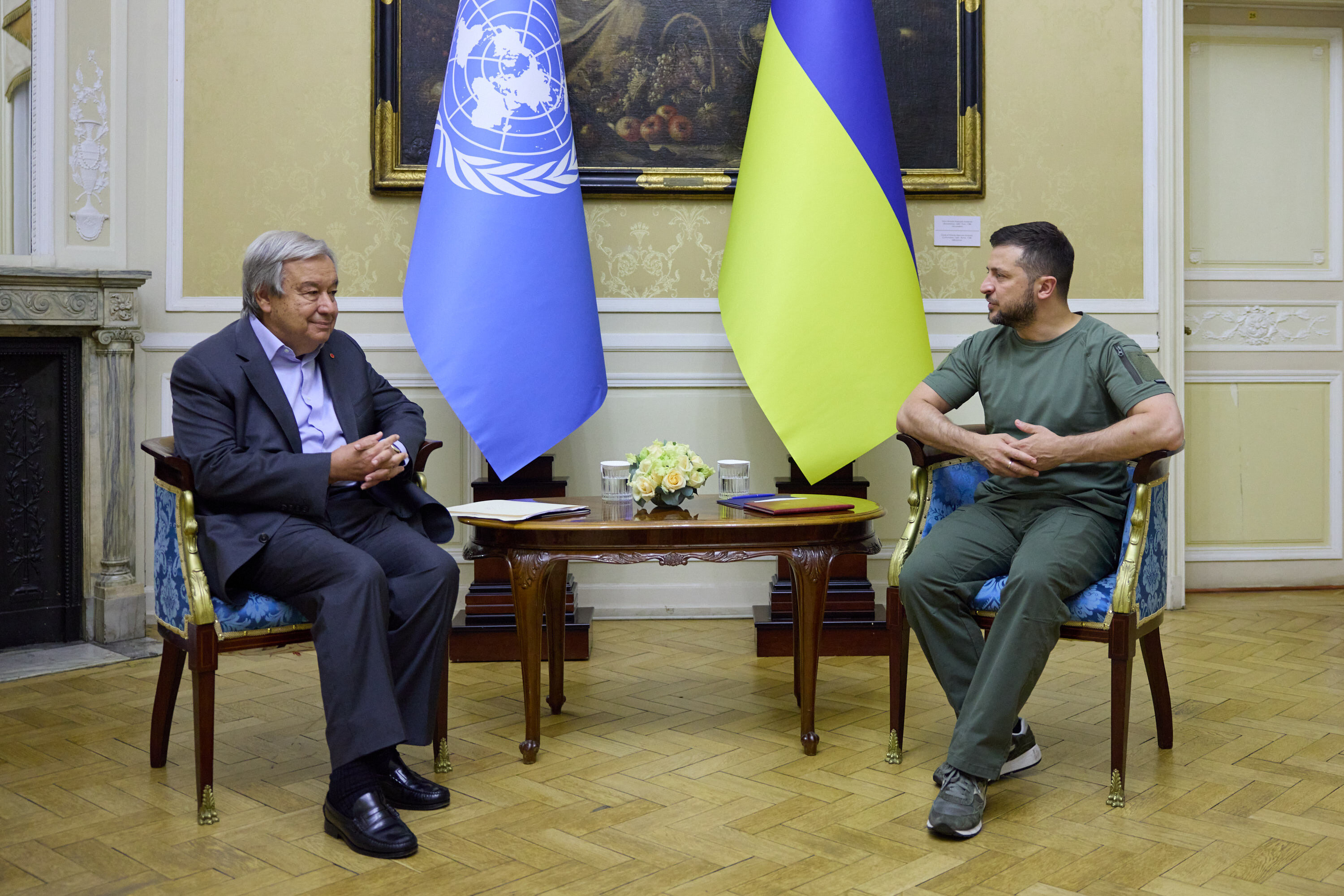
UN chief Antonio Guterres visited a city in western Ukraine, Lviv on Thursday. This was his first meeting with Ukrainian president Volodymyr Zelenskyy since April, and he discussed his fears over the fighting near the Ukrainian nuclear power plant Zaporizhzhia.

The plant is under Russian control but still has Ukrainian technicians operating it, and Kyiv wants to take it back.

Guterres said he was “gravely concerned” about the ongoing fighting in the area, claiming: “Any potential damage to Zaporizhzhia is suicide.”

Turkish leader Recep Tayyip Erdogan was also at the meeting, and expressed his fears on Thursday that there would be “another Chernobyl” by the nuclear power plant if fighting continued.

Ukraine and Russia have been trading blame over the attacks around the nuclear plant in recent weeks, with Zelenskyy claiming that Moscow was responsible for “deliberate” heavy artillery fire over the plant.

Moscow has rejected calls to demilitarise the area (calling it “unacceptable”) despite pleas from Guterres, Erdogan and Zelenskyy.

Ukrainian staff still at the plant also claim the area has become “the target of continuous military attacks”. Kyiv believes Russia wants to disconnect the nuclear complex’s power from the grid too, and could be planning a “provocation” by the plant.

Zelenskyy has warned that “the world is on a verge of nuclear disaster”, in case the plant is hit during battle, and he lashed out at “Russia’s irresponsible actions and nuclear blackmailing”.

Erdogan was also reportedly considering setting up a negotiation between Zelenskyy and Russian president Vladimir Putin, but the Ukrainian president said Moscow must withdraw troops first.

A Russian diplomat sparked hopes on Friday that Putin could allow nuclear inspectors to check on the plant next month, to secure its safety.

Zelenskyy with Guterres

Anadolu Agency via Getty Images

2. The 25th cargo ship left Ukraine

The world’s bread basket, as Ukraine is often dubbed, was able to export its grain supply to other countries once again back in July.

It came after a surprise deal was struck between Ukraine and Russia, following months of Moscow blockading Ukrainian ports.

Although there initial fears that the agreement would be short-lived and the food crisis in various parts of the world would continue, the 25th cargo ship left Ukraine on Thursday.

Guterres praised the agreement during his visit to Ukraine this week, and called for more compromise between Ukraine and Russia.

“I appeal for this to continue and for them to overcome all obstacles in a spirit of compromise and permanently settle all difficulties.”

3. Putin ‘losing’ information war

On Thursday, Jeremy Fleming, the head of the UK’s GCHQ’s intelligence service wrote in The Economist: “So far, president Putin has comprehensively lost the information war in Ukraine and in the West.

“Although that’s cause for celebration, we should not underestimate how Russian disinformation is playing out elsewhere in the world.”

He claimed that Russia’s online plans have fallen short. Despite Moscow’s attempts to destroy and deface Ukrainian government systems, GCHQ said it has been able to intercept and warn Ukraine of such attacks ahead of time.

4. Kharkiv explosion

Kharkiv, Ukraine’s second largest city, continues to be the subjected to heavy artillery, months after Russia tried – and failed – to capture it.

Seventeen people were killed and 42 injured in two separate Russian attacks this week, one on Wednesday and one on Thursday.

Zelenskyy said the attack on Wednesday night was a “devious and cynical strike on civilians with no justification” and was the latest evidence Russia was targeting civilians to destroy Ukraine.

The Ukrainian president promised: “We cannot forgive. We will avenge it.”

The city’s mayor Ihor Terekhov said: “Russian troops shell Kharkiv with such hatred, with such aggressiveness, such cynical destruction of the city occurs because Kharkiv does not give up, Kharkiv is a Ukrainian city that continues to live.”

But, Russia’s “most expensive plane” was reportedly shot down over Kharkiv this week by the Ukrainian forces.

5. Explosions in Crimea

Videos circulated on social media of large explosions in the Russian occupied Crimea peninsula on Thursday.

The area was taken over by Russian forces back in 2014, so it was widely believed that the fires and explosions stemmed from Ukrainian fire.

The Ukrainian defence ministry did not confirm any involvement, but joked about how many explosions in the occupied land were caused by “careless smokers”.

At least four explosions were detected near the airbase of Belbek, near Crimea’s largest city of Svastopol.

Mikhail Razvozhayev, Russian installed governor of Sevastopol, said there were not injuries or damage from the blasts.

This was just one of several attacks this week – further explosions were detected by a major airbase and munitions depot.

Zelenskyy also hinted that more attacks could be on the way, saying he hoped Russians would realise Crimea is “not a place for them”.

Share Button

Tory MP Who Said Food Bank Users ‘Cannot Budget’ Takes Aim At Mick Lynch

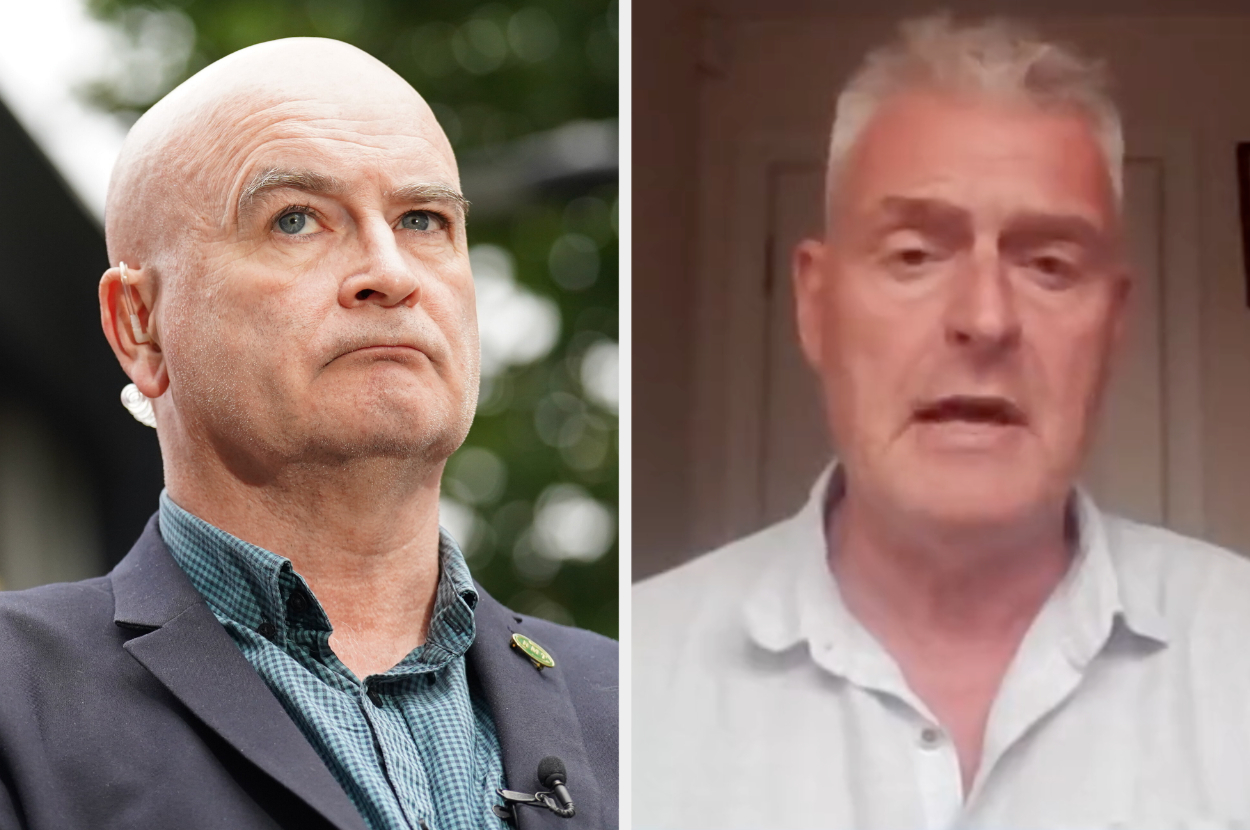
Tory MP Lee Anderson took a pop at union leader Mick Lynch on Thursday, and claimed the striking rail workers were “holding the country to ransom”.

Anderson, who caused a stir in May by claiming people who use food banks can’t budget or cook, did not hold back when discussing the latest industrial action taking place across the country this week.

The MP hit out at the general secretary of the Railway, Maritime and Transport (RMT), Lynch, who has been calling for rail companies to increase workers’ pay, protect jobs and working conditions in recent months.

Speaking to TalkTV, Anderson said: “The union leaders, the Mick Lynchs of this world, are creating havoc throughout this country.

“These people aren’t interested in working class people at all, I don’t even think they’re interested in the members.

“What happens is you get fifth columnists, these union leaders, holding the country to ransom.

Quite frankly they should be ashamed of themselves.”

He also alleged that these are people earning “nearly as much as the prime minister” with £150,000 a year “holding the country to ransom”.

It’s worth noting that Lynch dismissed claims that he was on a six-figure salary on Thursday morning, telling ITV’s Good Morning Britain that such allegations were “completely untrue”.

But this morning, TalkTV’s host, Mike Graham, responded to Anderson’s claims about Lynch by suggesting that there were “champagne socialists” who supported the idea of strikes, and who blame the government for mishandling the entire industry.

Anderson also questioned the industry altogether, claiming that sometimes there’s only one person on his train – himself – and at the underground barriers, there can be “10 or 11 people” being “not very helpful at the best of times”.

While London Underground staff are not involved with the rail strikes, they will be walking out on Friday in a separate dispute over pay.

Anderson continued: “The great British taxpayer – people on minimum wage, people on living wage, are going to work to subside this industry.”

Graham replied by agreeing that trains were not the primary mode of transport for most people.

He even claimed that drivers now have “to pay more and more money to buy the car, everything you do with the car is more expensive, but for most people in this country, the car is the only way you can get around”.

The Tory MP added: “We are being victimised by these union leaders, these rail union leaders, who quite frankly do not give a toss, Mike, about the rest of the country.”

“They’ve got this big bee in their bonnet, they are the official opposition because the Labour Party are pretty useless at the moment, and they’re saying, ‘look at us, we can hold the country to ransom, we’re not bothered that the government has just bailed the country out with taxpayer money over the last two and a half years.’”

Impersonating the union members, Anderson added: “‘You know what, we don’t care about Britain really do we?’”

Share Button

Labour Membership Down By 130,000 From Corbyn-Era Peak

Labour lost 91,000 members in 2021, the party’s latest accounts show.

The accounts, published by the Electoral Commission, said the party’s membership fell from 523,332 at the end of 2020 to 432,213 in a year.

Membership peaked in recent years at 564,443 in 2017 at the height of the Jeremy Corbyn-inspired membership boom. It had fallen to 518,659 by 2018.

The party also ended the year with a financial deficit of more than £5 million.

The figures were described by Momentum as “alarming”, as the pro-Corbyn left-wing pressure group pointed the finger of blame at Keir Starmer’s leadership.

Income from membership fees dropped from £19.3 million to £16.2 million in 2021, though last year’s fees were comparable with 2017 and 2018 levels.

The party treasurer’s report described 2021 as a “difficult and demanding year”, with redundancy pay-offs to cut costs in the long term contributing to the loss.

“Party finances do remain challenging with pressure on income coinciding with increasing costs,” the report said.

The size of Labour’s deficit went up from £1 million to £5.2 million.

The report continued: “The one-off cost of the voluntary severance scheme contributed to the deficit result which required the allocation of cash reserves to fund. For the avoidance of doubt, the Party remains debt free.”

But the report also said there had been a return to more normal operations after Covid, and a Labour spokesman said the party was “on track to returning to a firm financial footing”.

In 2021, the party raised nearly £10 million in donations, including from members, supporters, major donors and unions, up from £5.7 million a year earlier.

Commercial income increased by £2.5 million in 2021.

Labour’s income was also significantly higher than the Conservative Party’s last year, raising nearly £46 million compared with the Tories’ £32 million.

A Labour spokesman said: “Thanks to Keir Starmer’s firm leadership and clear commitment to taking Labour back into power, the party is on track to returning to a firm financial footing – with commercial income and donations rising significantly.”

But Momentum blamed Starmer’s failure to stand by the 10 policy pledges made during the 2019 leadership campaign and his stance towards trade unions for the exodus of members.

The group tweeted: “These figures are alarming.

“Keir Starmer’s pledge-breaking & factional approach have prompted an exodus of members and a financial crisis for the Party.

“Yet the Leadership has welcomed these departures while alienating Labour’s affiliated trade unions.”

Share Button

As Energy Prices Are Set To Soar To £4,000, What Are Politicians Proposing To Do About It?

Last week saw the grimmest development yet for people struggling with the cost of living crisis, with experts predicting that already-unaffordable energy bills could reach an eye-watering £4,000 in January.

Energy bills, which have already risen as a consequence of Russia’s invasion of Ukraine, are set to soar further as the ongoing conflict puts a squeeze on supplies throughout Europe.

The energy price cap, which currently stands at £1,971, is set to increase to £3,582 in October.

The forecasts have prompted a sense of panic and a national conversation about what should be done to help people who may find themselves unable to pay their bills in the winter.

Here HuffPost UK takes you through what the main parties and figures are proposing and how their ideas have been received.

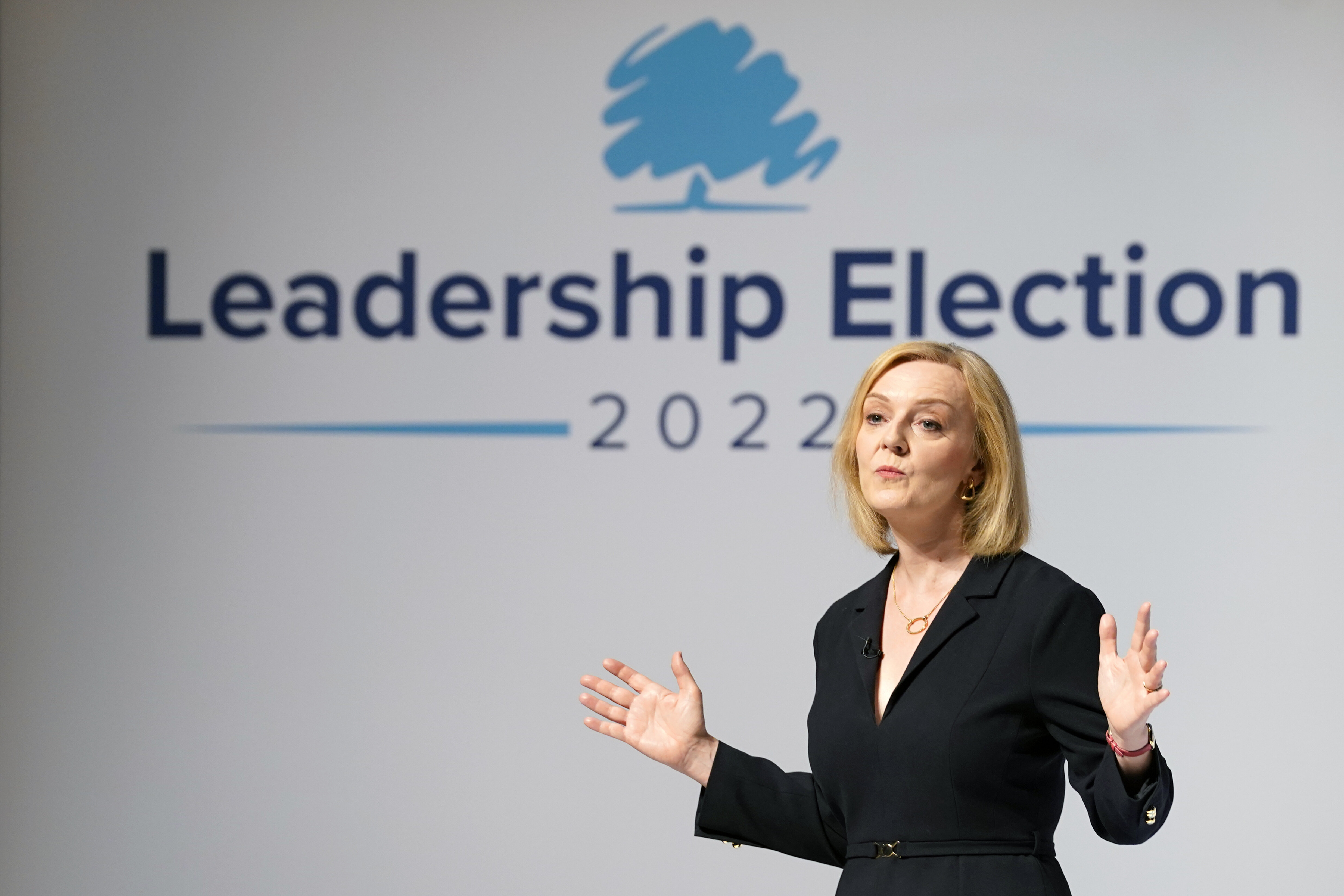
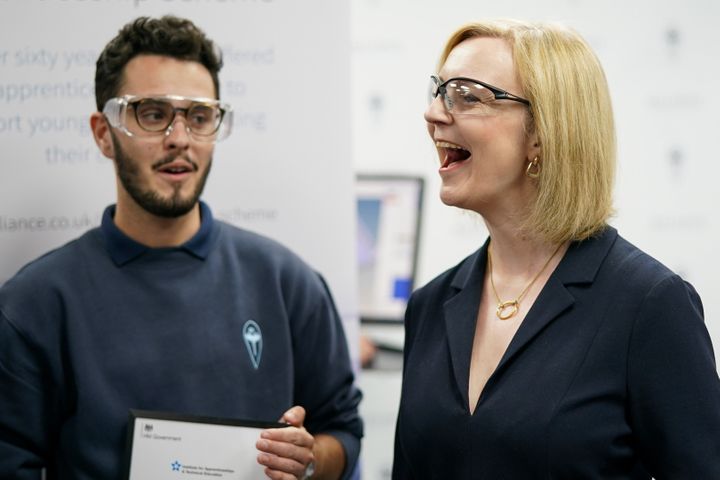
Liz Truss

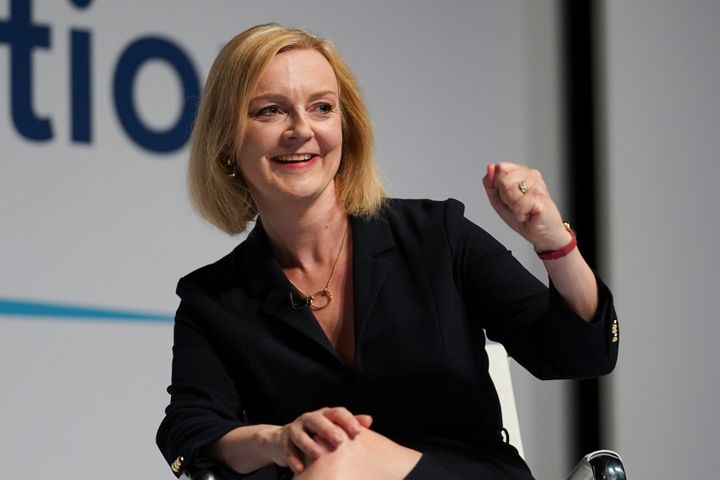
Liz Truss has hardened her stance against a further windfall tax, dismissing the policy as “bashing business”.

Ian Forsyth via Getty Images

The frontrunner in the race to replace Boris Johnson has emphasised tax cuts as the main way she would help people struggling with bill hikes.

The foreign secretary has vowed to immediately reverse the 1.25 percentage point increase in national insurance as well as temporarily scrap green levies on energy bills.

In a recent interview with the Financial Times, Truss said she would hold an emergency budget to outline a new approach to the problem, which she said she wanted to be in the “Conservative way of lowering the tax burden, not giving out handouts”.

That prompted a U-turn of sorts by Truss who said that despite criticism, she was not ruling out further direct support for households completely.

She is said to be considering proposals from the Treasury that could see the price cap fall by scrapping a new allowance suppliers will be allowed to charge families in the winter, in a move that could reduce bills by a further £400.

Instead the shortfall would be made up by the government providing loans to suppliers. However, it is too late to have an effect in October, when the cap is expected to rise once again.

Simon Clarke, a key ally of Truss, also suggested she could tweak the £400 already destined for all households in October so it doesn’t benefit the highest earners but is targeted at the least well-off.

Last week, analysis by the Tony Blair Institute found that Truss’s national insurance reversal would save the poorest families just 76p a month on average while the most wealthy households would benefit from by £93 a month from the policy.

Truss’s leadership rival, Rishi Sunak, also attacked her plan to scrap green levies, saying it would only claw back £150 a year.

Truss has also hardened her stance against a further windfall tax on energy giants, dismissing the policy as “bashing business”.

Rishi Sunak

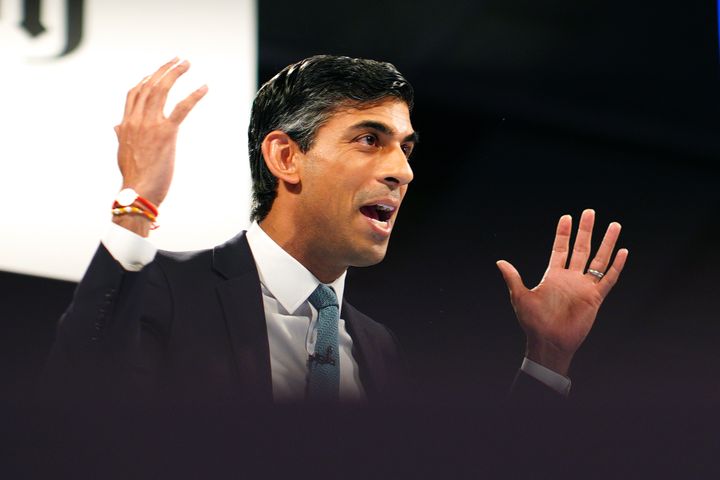
Sunak has indicated he would expand existing support schemes when the price cap rises again in the winter.

Ben Birchall – PA Images via Getty Images

The former chancellor has committed to scrapping VAT on energy bills for a year and has also said he will expand the emergency support schemes already in place.

So far that scheme includes £650 off for the lowest income households, £300 off for eight million pensioner households, £150 off for those receiving non-means tested disability benefits and a £400 energy grant for every household.

In an article for the Times, Sunak said if he is elected PM he would extend the scheme that knocks £400 off bills for every household, rising to £1,200 for pensioners and those on benefits.

He also said he would “drive a programme to identify savings across Whitehall” in order to pay for expanding the help on offer, which The Times said would cost around £10 billion.

Sunak signalled the government could need to raise more revenue from the energy profits levy — the so-called windfall tax —and also refused to rule out “some limited and temporary one-off borrowing as a last resort to get us through this winter”.

According to the Institute of Fiscal Studies, removing VAT on bills would cost £4.3 billion to implement and would provide households with a relief of about £154 on their energy bills.

Labour

Finnbarr Webster via Getty Images

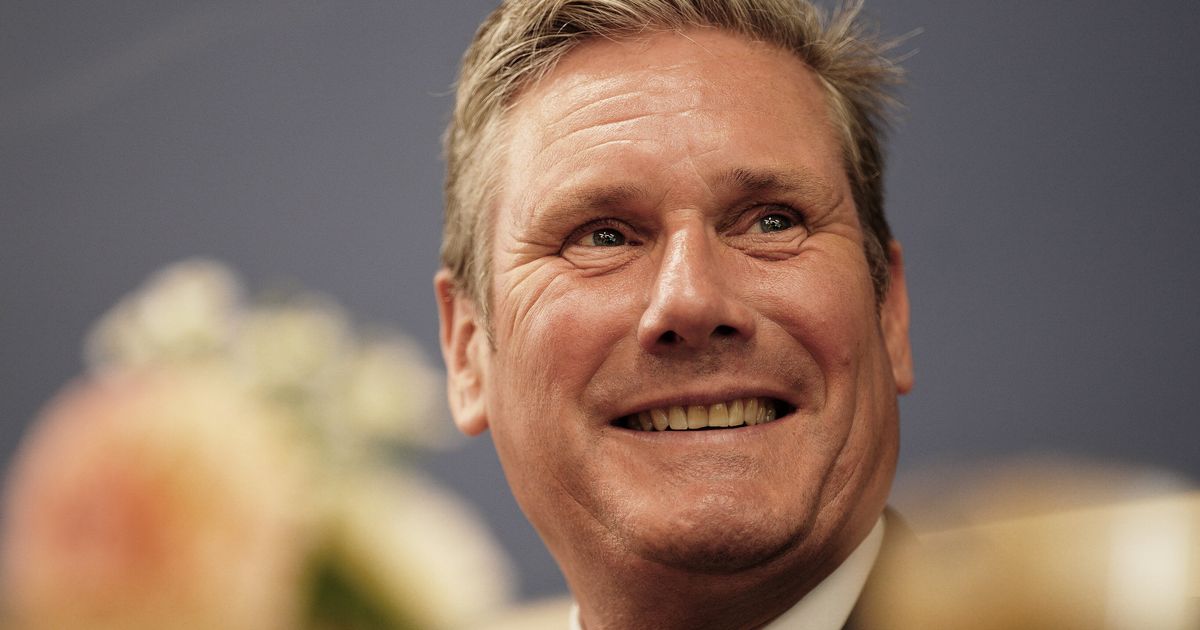
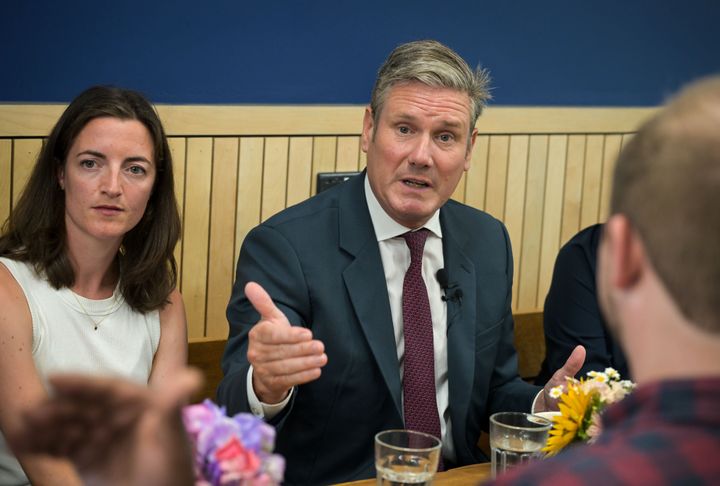
After initially facing criticism for being absent as the new energy projections were revealed, Keir Starmer has offered what he calls a “radical” response to the cost of living crisis.

The Labour leader has vowed to freeze the energy price cap at its current level of £1,971 for six months, meaning households “won’t pay a penny more” on their energy bills.

The scheme would cost £29 billion and would be funded by increasing the windfall tax on energy firms’ massive profits by backdating it to January, in a move that would raise £8 billion.

The party argues that reducing energy bills would also have a knock-on effect on inflation which would lead to cut in government debt interest payments of £7bn.

The government’s current plan to offer £400 off energy bills for every household would be ditched as a result.

Responding to the proposals, the Paul Johnson, the director of the thinktank the Institute for Fiscal Studies, said inflation will continue to climb unless Labour continues to subsidise energy bills beyond the six-month period it has suggested.

He also told BBC Radio 4′s Today programme that Labour’s plan to cancel the rise in energy price cap would be “looking at the cost of furlough” if extended from six months to a year.

The Liberal Democrats

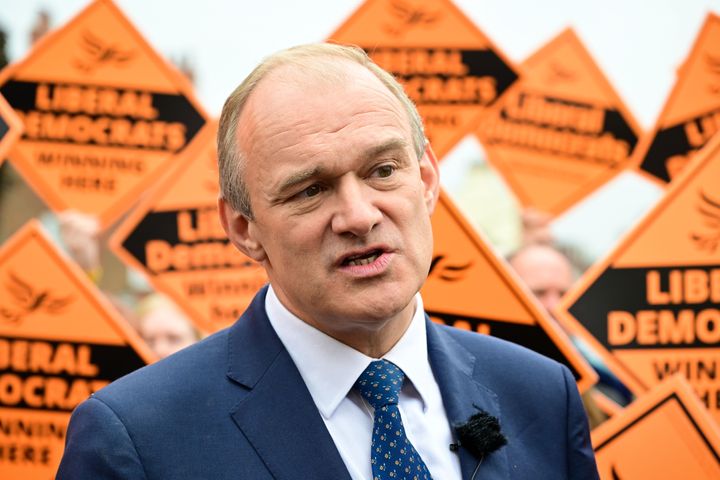
Ed Davey said Liz Truss and Rishi Sunak were Truss "more interested in speaking to their party than taking the action our country needs".
Ed Davey said Liz Truss and Rishi Sunak were Truss “more interested in speaking to their party than taking the action our country needs”.

Finnbarr Webster via Getty Images

Liberal Democrat leader Ed Davey called on the government to cancel the price cap rise in October to help people save hundreds of pounds off their energy bills.

Davey said energy suppliers could supply customers with their current rates if the government covers the shortfall to allow them to do so.

The Lib Dems said the policy would cost £36 billion and said the windfall tax on oil and gas company profits should be increased to help cover it.

…And former PM Gordon Brown

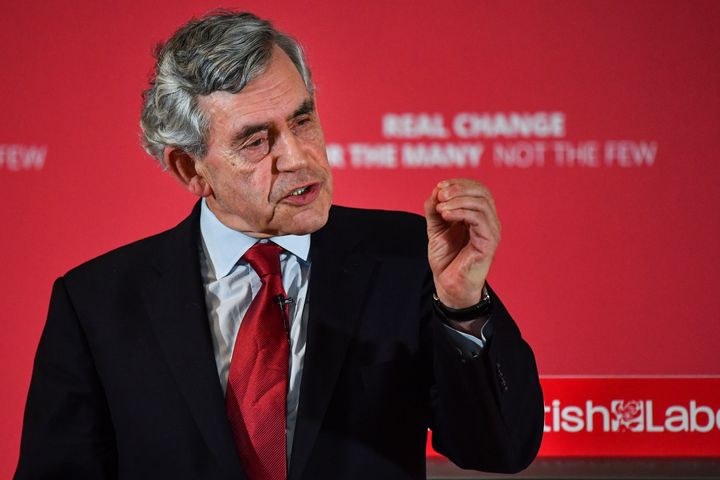
Gordon Brown criticised the Tory leadership candidates, saying: “Time and tide wait for no one. Neither do crises. They don’t take holidays, and don’t politely hang fire – certainly not to suit the convenience of a departing PM and the whims of two potential successors.”

Jeff J Mitchell via Getty Images

Perhaps the most radical response to the energy crisis has come from former Labour leader Gordon Brown, who is no stranger to navigating the country through a crisis.

Brown, who was prime minister during the 2008 financial crash, said the government should take a similar approach to the one he took with banks and renationalise those that fail to bring down prices for customers.

Under Brown’s plan, the energy price cap would be scrapped and new, lower prices would be negotiated with energy giants, who are all raking in bumper profits as gas prices surge.

If firms fail to bring prices down, the government should consider bringing them into public ownership “as a last resort … until the crisis is over”.

Share Button

Liz Truss Sparks Backlash Over ‘Woke’ Civil Service Antisemitism Claim

Liz Truss was today facing a backlash after she claimed that “woke” civil service culture “strays into antisemitism”.

The frontrunner in the race to replace Boris Johnson issued a press release vowing to protect Jews from “creeping antisemitism and wokeism”.

However, one part of the announcement, in which she launched an attack on civil servants, sparked fierce criticism.

Team Truss wrote: “She will change woke civil service culture that strays into antisemitism.”

“The civil service is the best workplace to be Jewish to be honest, everyone is so friendly, so it’s all quite strange.”

– A Jewish civil servant speaks to us anonymously

Reacting to the comments, a civil servant working in a major government department told HuffPost UK they had never once heard about an antisemitism problem.

The civil servant, who we are not naming, said: “Honestly, we’re used to ridiculous comments from ministers but to start throwing around that the civil service is antisemitic is such a baffling and odd attack and so offensive to civil servants.

“It’s also patently nonsensical to say ‘they’re so woke they’re antisemitic’. What on earth does that even mean? Every single day I consider leaving the civil service because of these people.”

Another civil servant, who is Jewish, told us there might have been some issues over diversity courses.

But they added: “I think she’s just vomited out a load of buzzwords and ended up with something objectionable.

“The civil service is the best workplace to be Jewish to be honest, everyone is so friendly, so it’s all quite strange.”

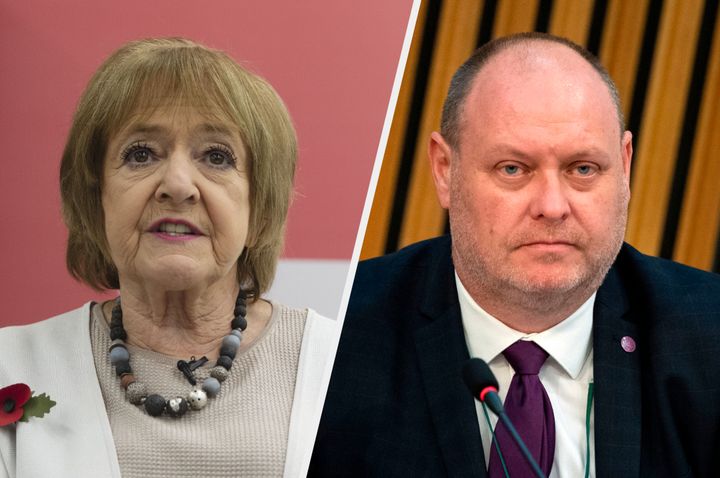
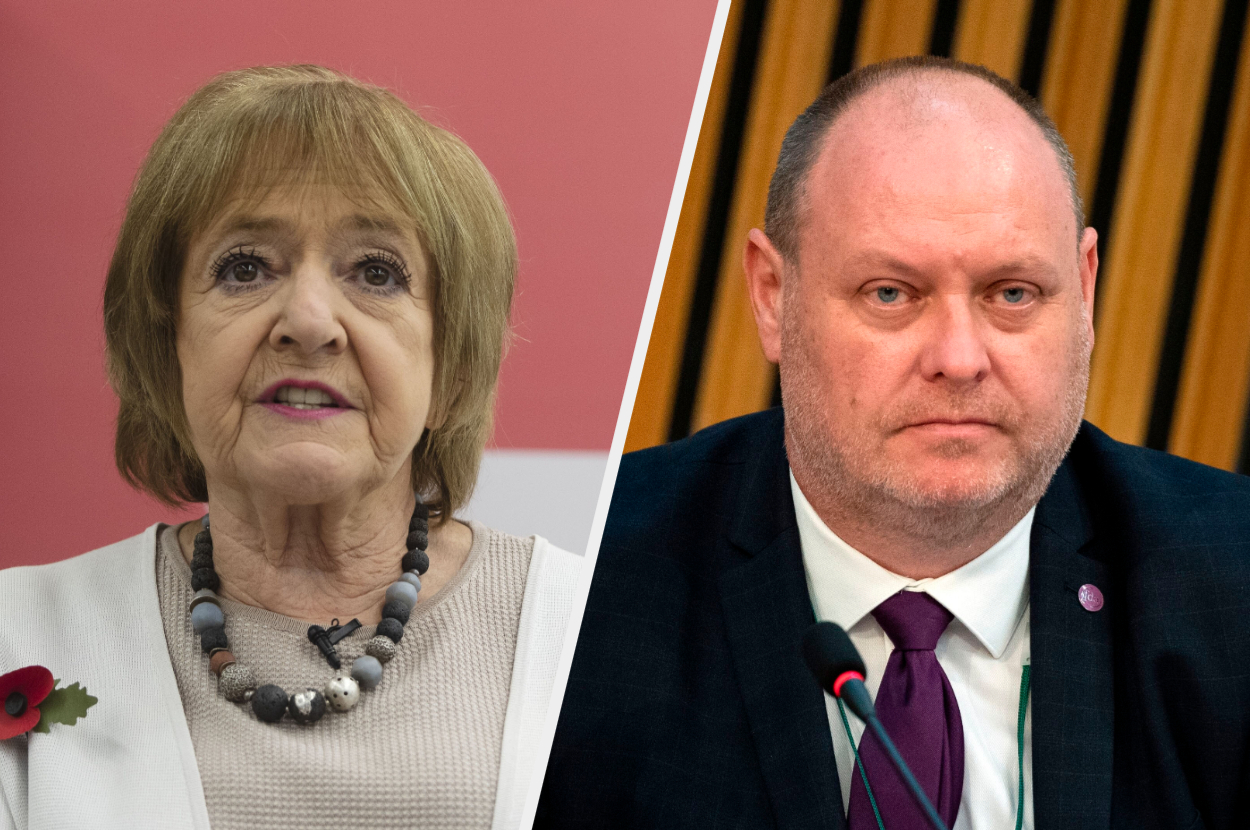
Dame Margaret Hodge and Dave Penman criticised Liz Truss's comments.
Dame Margaret Hodge and Dave Penman criticised Liz Truss’s comments.

A civil servant, who recently left for the private sector, said the “constant attacks” and lack of faith after partygate drove them to leave.

“I know of dozens of good civil servants who are leaving because of this negativity,” they added.

“How ministers, MPs, and leadership candidates can keep making unsubstantiated comments and threats, and still expect to have anyone who can actually deliver left, is beyond me.”

Dave Penman, general secretary of the FDA union for senior civil servants, said Truss’s accusations were a “little ironic” given the Tories had been in power for 12 years.

“Truss’s accusation of antisemitism goes further than the usual dog-whistle politics that has been on display during this leadership campaign when it comes to the civil service,” he added.

“She provides no evidence for her accusation that many civil servants will find both insulting and abhorrent.”

Veteran Labour MP Dame Margaret Hodge described the comments as “below the belt”.

The former cabinet minister, who is Jewish and has been outspoken about antisemitism in her own party, added: “Using antisemitism to peddle the right’s ‘anti-woke agenda’ is below the belt.

“The oldest form of racism is not a tool to use in the divisive culture war nonsense.”

Times journalist Hugo Rifkind commented: “This is baffling, but also grim. Equating Jews with rightwing reactionary politics is what leftwing antisemites do. Am pretty colossally unkeen on Tories doing it, too.”

Sam Freedman, a senior fellow at the Institute for Government, said: “I worked in the civil service for three years and have worked with numerous officials on various things since then and have never once experienced any antisemitism. Bizarre comment.”

Journalist Etan Smallman tweeted: “Antisemitism is far too serious for anyone to be using it in the same sentence as ‘civil service wokeism’. Let alone our prospective prime minister.”

Dr Ruvi Ziegler, associate professor in international refugee law at the University of Reading, commented: “WTAF is ‘woke civil service culture’? Who comes up with this nonsense, and how on earth is this related to British Jews?”

Another Twitter user commented: “Attacking the civil service (who cannot respond in the media) is weak, pathetic and unbefitting someone seeking the highest office in the land.”

HuffPost UK contacted Truss’s team asking for evidence of an antisemitism problem in the civil service.

Her team referred us to an interview Truss gave to the Jewish Chronicle in which she pledged action to change civil service “woke” culture, including within the foreign office.

When discussing how she was committed to eradicating antisemitism in various bodies, she revealed she had to “overrule” foreign office officials who did not share her views.

The article did not outline what the issue was or what she specifically disagreed with civil servants on.

The press release was issued after Truss spoke at a synagogue in Manchester.

In a written statement, hitting out at “civil service wokeism”, Truss said: “Every organisation has its culture, but it’s not fixed, it can be changed.

“That’s what ministerial leadership is about: it’s about making sure that the policies we represent, the values we stand for, are reflected in what we do. I’ve been very clear with our officials about the positions we take on Israel, and that will continue if I become prime minister.”

Truss also announced she would review whether schools are doing enough to educate about antisemitism, rid university campuses of antisemitism and work to secure a free trade agreement between the UK and Israel.

A Truss campaign source also appeared to link Labour’s antisemitism problem when Jeremy Corbyn was leader with Keir Starmer.

The source said: “The Labour Party under Sir Keir Starmer and his colleague Jeremy Corbyn has been a talking shop for antisemitism and antizionism.

“This has increased anxieties within the Jewish community.”

The Labour Party has been approached for comment.

Share Button

Government Slammed As Energy Summit Ends With No New Help For Struggling Customers

Boris Johnson has been slammed after a crunch meeting with energy bosses ended with no new help for people struggling with the cost of living crisis.

The prime minister, chancellor Nadhim Zahawi and business secretary Kwasi Kwarteng held talks with energy and gas executives this morning amid dire warnings that energy bills could reach an eye-watering £5,000 next April.

But despite calls for government action, Johnson told the companies that any “significant fiscal decisions” would be for the next prime minister to take after they take office on September 6.

Shadow climate change secretary Ed Miliband said: “Britain faces a national emergency with rising energy bills and a cost of living crisis. Families are worried about how they will pay their bills.

“But instead of showing leadership, the Conservatives are missing in action. The prime minister and chancellor have gone AWOL, whilst the candidates for the leadership have no substantive ideas about how to help working people meet the challenges they face.”

Following today’s meeting, the PM said: “We will keep urging the electricity sector to continue working on ways we can ease the cost-of-living pressures and to invest further and faster in British energy security.”

The Treasury said that Zahawi and the energy firms agreed to “work closely” over the coming weeks to ensure that the public, including vulnerable customers, are supported in the face of rising costs.

“In the spirit of national unity, they agreed to work with us to do more to help the people who most need it,” Zahawi added.

In response, Liberal Democrat leader Ed Davey said it was “appalling that the Conservatives still haven’t announced any extra support for families and pensioners facing the hardest winter in decades”.

“The cruellest element of this chaos is that those who could actually help, Truss and Sunak, are more interested in speaking to their party than taking the action our country needs,” he added.

“Whether it’s Johnson or Zahawi, Truss or Sunak, not one of them has a big enough plan to help millions of families cope with soaring energy bills.

“That is why the Liberal Democrats are calling on the government to cancel the energy price hike to avoid a country-wide catastrophe.”

The Tories have come under increasing fire for failing to take action until either Rishi Sunak or Liz Truss is elected to replace Johnson.

The meeting comes as forecasts released today by energy consultancy Auxilione predicted that the energy price cap could increase to £5,038 per year for the average household in the three months beginning next April.

It is an even worse than a forecast provided by Cornwall Insight earlier this week which said energy bills could hit £4,200 per year in January.

Share Button

Liz Truss Accused Of Cost Of Living U-Turn After Pledging To ‘Do All I Can’ To Help Struggling Families

Liz Truss has been accused of “a major U-turn” after pledging to “do all that I can to help struggling households” cope with the cost of living crisis.

The Tory leadership favourite has been under pressure since the weekend, when she told the Financial Times: “The way I would do things is in a Conservative way of lowering the tax burden, not giving out handouts.”

Since then, experts have predicted that the energy price cap will rise to more than £4,200 a year, threatening millions of people with poverty.

Both Truss and Sunak have also been urged to meet with Boris Johnson to agree an emergency cost of living support package – something which has been ruled out by the government.

In an apparent change of tack from her previous stance, Truss said today: “As a Conservative I am clear that our first port of call should always be to let people keep more of their own money.

“I understand how difficult the rising cost of living is making life for many, and if elected I will do all that I canto help struggling households.

“As it stands we are hurtling towards a recession. If we don’t get our economy growing we won’t be able to help anyone.

“That’s why I have a bold plan to cut taxes, for individuals and businesses, to turbocharge our economy, grow the size of the pie and increase prosperity for everyone.”

A spokesperson for Sunak’s campaign said: “This is a major u-turn on the biggest issue currently facing the country.

“It’s all very well offering empty words about ‘doing all you can’. But there aren’t lots of different ways to act on this. Taking action means providing direct support, which Truss had previously dismissed as ‘handouts’.

“Twice now, Truss has made a serious moral and political misjudgement on a policy affecting millions of people, after last week reversing plans to cut the pay of teachers and the armed forces outside London. Mistakes like this in Government would cost the Conservative Party the next General Election.”

A spokesperson for Truss said: “Rishi Sunak wouldn’t know how people benefit from a tax cut because he has never cut a tax in his life. People didn’t vote for the Conservative Party to be subjected to old fashioned Gordon Brown style politics of envy.

“You cannot tax your way to growth and Liz’s agenda is to build a high wage, high growth, low tax economy that supports people.

“Liz believes in people keeping more of their own money, not Rishi’s socialist tax and spend which will lead us to recession.”

Share Button

Analysis: Why Is Labour Failing To Capitalise On The Gaping Hole In Government?

There is a huge vacuum at the heart of government as the Conservative Party tears itself apart over Boris Johnson’s replacement.

It is a government mired in scandal, weary after 12 years in power and looking increasingly out of touch in a cost of living crisis.

The prime minister and chancellor were both on holiday when the Bank of England made its gloomy forecast that Britain faces a recession and soaring inflation.

But as outriders for Liz Truss and Rishi Sunak fight like rats in a sack, where is the Labour Party?

Conservative Leadership hopeful Liz Truss.

Ian Forsyth via Getty Images

Keir Starmer is said to be on holiday right now, but that shouldn’t stop the party launching fierce interventions and bright ideas.

Holidays are important but isn’t winning elections even more important? Especially given their criticism of the Tories being “missing in action”.

In this brutal game of chess, surely any ruthless political strategist would see that now was an opportune moment to strike.

Certainly, the Labour Party has been describing itself as a “government in waiting” in recent statements. Now would be a good time for frontbenchers to show they can act like one.

But we have heard more from Lib Dem leader Ed Davey and ex-Labour prime minister Gordon Brown in the last 24-hours than we have from Labour all week.

And let’s not forget money saving expert Martin Lewis who has long been at the front clobbering the government over the cost of living crisis.

Within a few weeks the next prime minister will be appointed, the narrative will shift and there will likely be a cessation in Tory infighting as MPs row in behind their new leader.

Once in power, the new PM will have the machinery of government at their disposal and will turn their sights on the electorate at large.

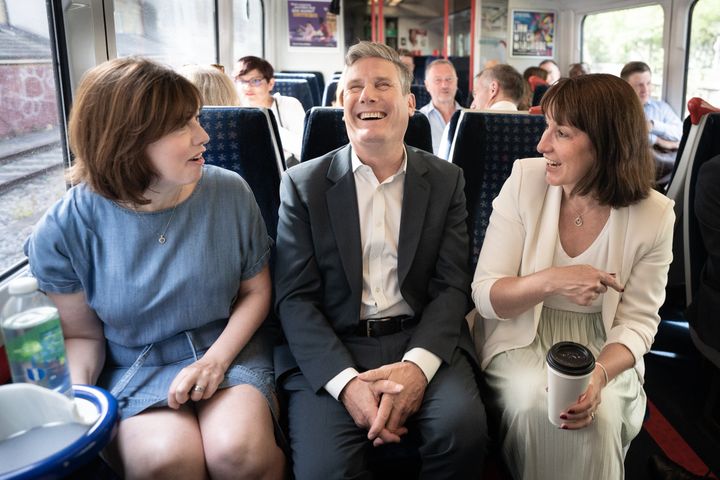
Labour leader Sir Keir Starmer with Shadow Culture secretary, Lucy Powell (left) and Shadow Chancellor, Rachel Reeves.

Stefan Rousseau – PA Images via Getty Images

The public might just decide that “well it’s a new government, a new crisis so maybe let’s give them one more shot”.

Heck, it’s worked before. The Conservatives are the party who have managed to reinvent themselves time and again over the last decade in order to stay in power.

Labour will have fewer opportunities to get their messages across as the country hurtles towards the next general election.

In fact, Labour keep calling for an early election. Are they even ready for it?

Of course you can’t expect Labour to make up policies on the hoof, the Tories might even nick their ideas [again] and let’s not even go there on Labour’s decision making processes.

However, after the government relied on so-called “red meat” policies to keep its head above water, the public is now begging for proper solutions.

Perhaps now is the perfect window of opportunity for Labour to show some leg, instead of descending into their own bouts of infighting (see Sam Tarry).

Scotland aside, the political pendulum will one day swing back to Labour, but the speed at which it swings depends on a number of factors.

Pundits joke about who would want to be in government at this dire time. But if you don’t want to rule, why are you in this game at all?

It might be silly season but there’s nothing funny about the news that millions of families face soaring bills and being plunged into poverty.

Labour has been suffering from a lack of confidence since its devastating 2019 defeat.

But they have been handed a political gift in the form of a Tory leadership race – they should start weaponising it now.

Share Button