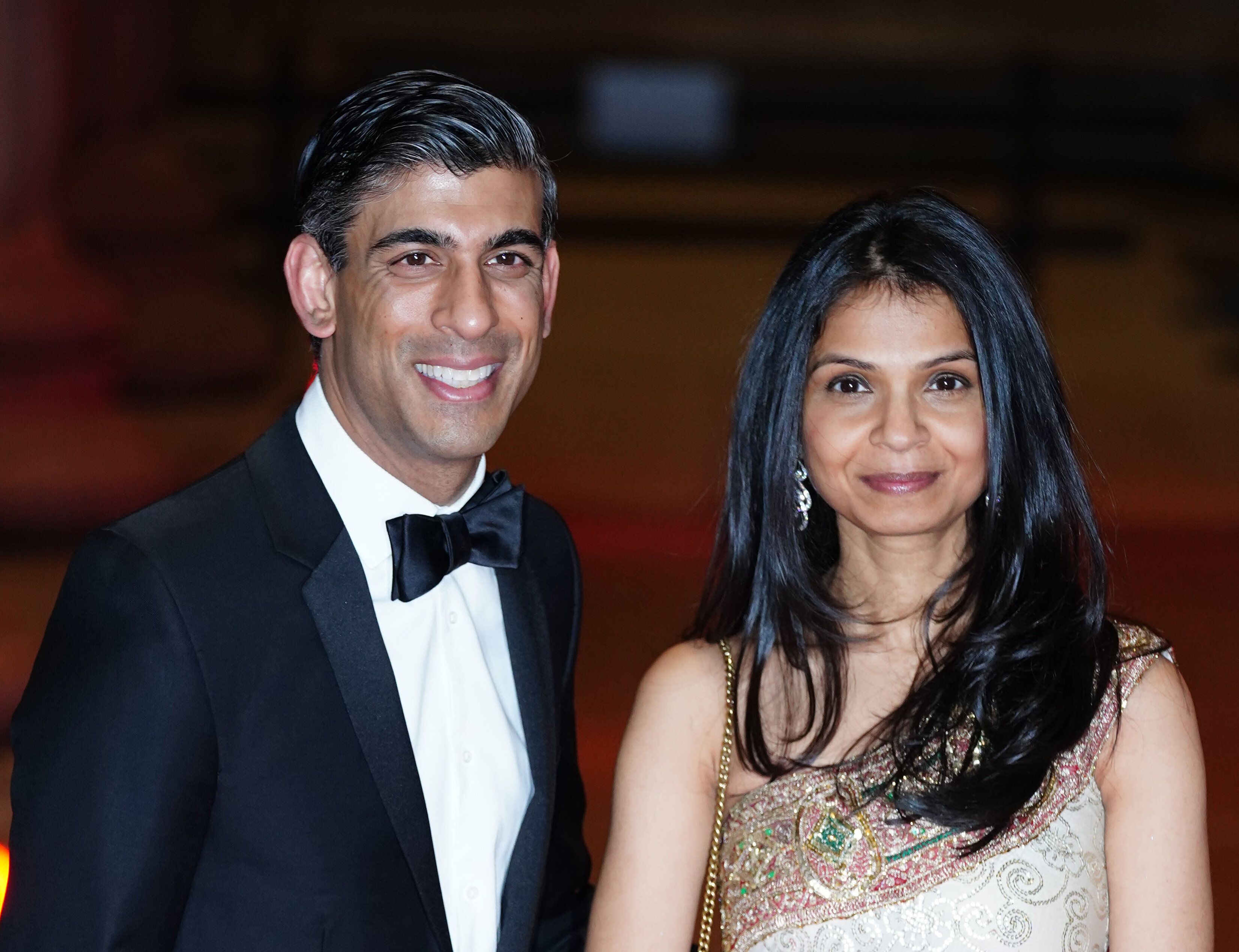
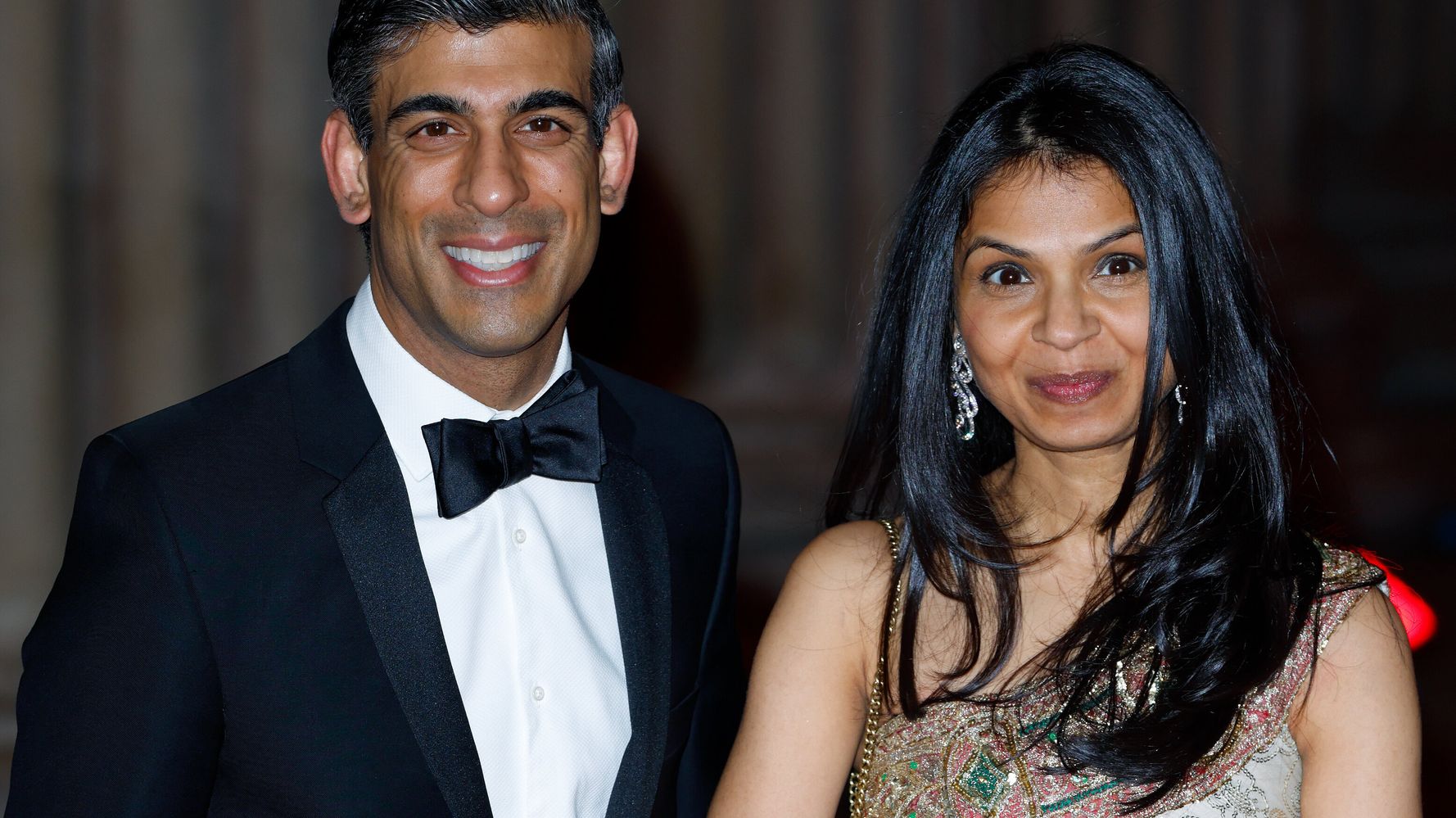
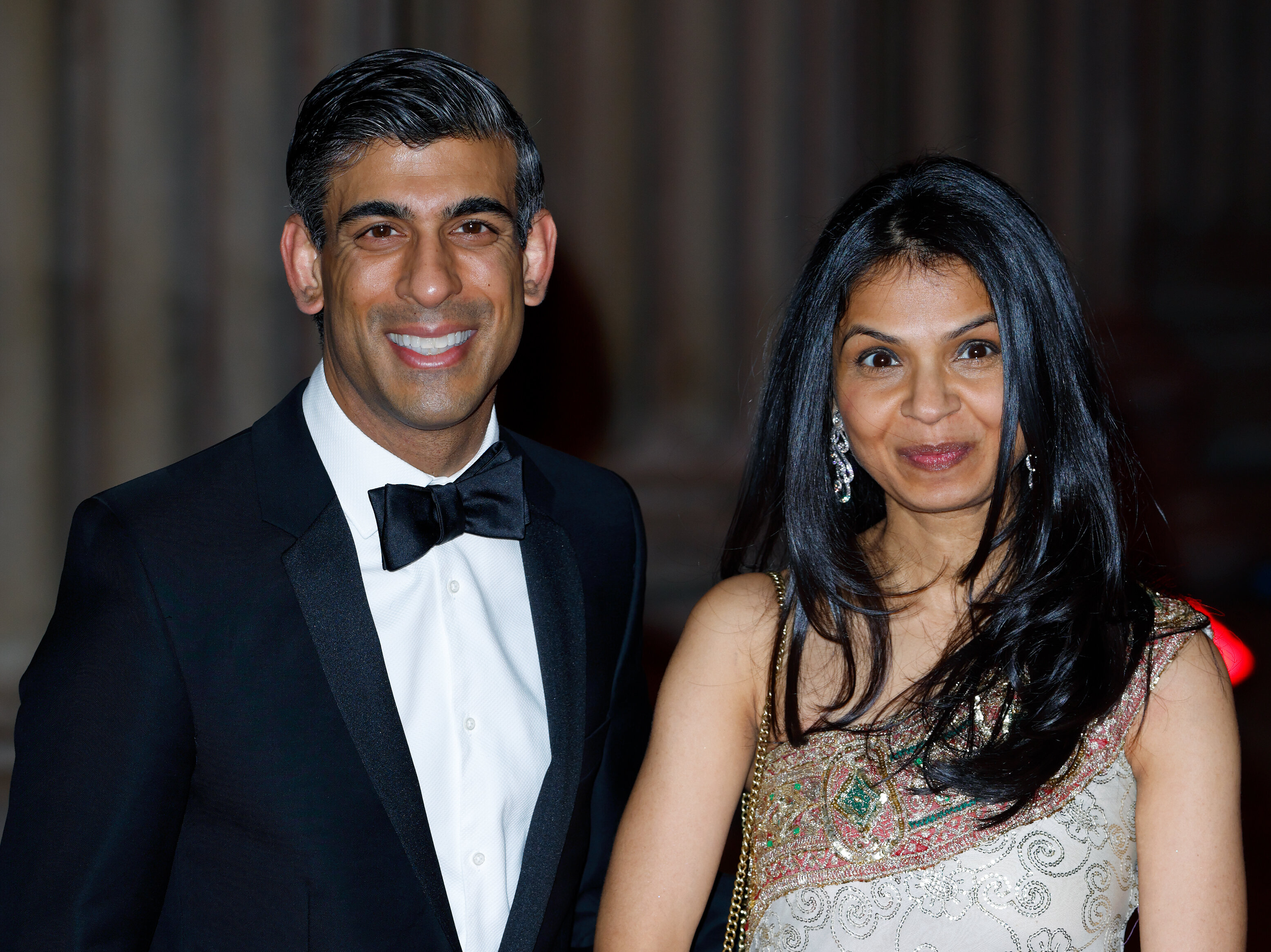
Chancellor Rishi Sunak’s wife, Akshata Murty, has moved to end the controversy around her financial status by saying she will now pay UK taxes on all her overseas income.
Murty is estimated to be worth hundreds of millions of pounds, and the “non-dom” status exempted her from paying tax in the UK on foreign income.
Advertisement
Some reports suggested the fashion-designer daughter of a billionaire potentially avoided up to £20 million in UK tax.
In a statement, Murty said she did not want her non-dom status to be a “distraction” for her husband.
Advertisement
“For this reason, I will no longer be claiming the remittance basis for tax,” she said.
“This means I will now pay UK tax on an arising basis on all my worldwide income, including dividends and capital gains, wherever in the world that income arises.
Advertisement
“I do this because I want to, not because the rules require me to.
“These new arrangements will begin immediately and will also be applied to the tax year just finished.”
Earlier, Sunak faced further embarrassment after he admitted holding a US green card while chancellor, amid demands he “come clean” about his finances.
And the chancellor was also hit by claims in the Independent that he has been listed as a beneficiary of tax haven trusts linked to Murty in the British Virgin Islands and Cayman Islands.
Advertisement
In response, a spokeswoman close to the Sunak family said: “No-one in Akshata’s family is aware of this alleged trust.”
Murty confirmed she holds non-dom status after the Independent website revealed the arrangement on the day a national insurance hike hit millions of workers.
Sunak said his wife was entitled to use the non-dom arrangement as she is an Indian citizen and plans to move back to her home country to care for her parents.
He insisted she is not attempting to pay less tax, saying “the dates don’t make a difference”.
Murty is reported to hold a 0.91% stake in Infosys, an IT business founded by her father, and has received £11.6 million in dividends from the Indian firm in the past year.
Non-dom status means she would not have to pay UK tax at a rate of 39.35% on dividends. India sets the rate for non-residents at 20%, but this can fall to 10% for those who are eligible to benefit from the UK’s tax treaty with India.
Public records show Infosys has received more than £50 million in UK public sector contracts since 2015.
Murty pays an annual levy of £30,000 to the UK government to keep her non-dom status, her spokeswoman said.
Earlier, a spokeswoman for Sunak released a statement confirming that he held a green card while chancellor until seeking guidance ahead of his first US trip in a government capacity, in October last year.
The US inland revenue says anyone who has a green card is treated as a “lawful permanent resident” and is considered a “US tax resident for US income tax purposes”.
Advertisement
The spokeswoman said Sunak continued to file US tax returns, “but specifically as a non-resident, in full compliance with the law”, having obtained a green card when he lived and worked in the States.
And just like that, everyone’s talking about France and whether it’s about to have its “Brexit/Trump moment”.
The first round of the French presidential election takes place on Sunday, and what might have been a formality only of domestic interest is suddenly generating a much bigger buzz. This is thanks to a series of polls suggesting Marine Le Pen, the far-right’s standard bearer for more than a decade, could pull off a shock win over incumbent Emmanuel Macron.
Advertisement
With the help of HuffPost France’s political correspondent Romain Herreros, here’s everything that you need to know about the vote to determine who runs one of Europe’s biggest economic and military powers as a war rages on the continent.
The basics: what is happening?
Advertisement
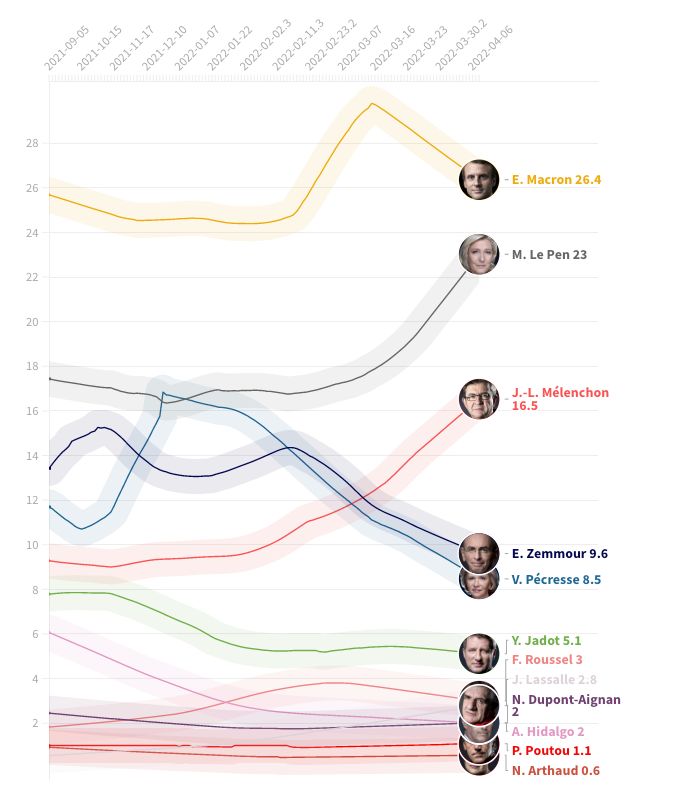
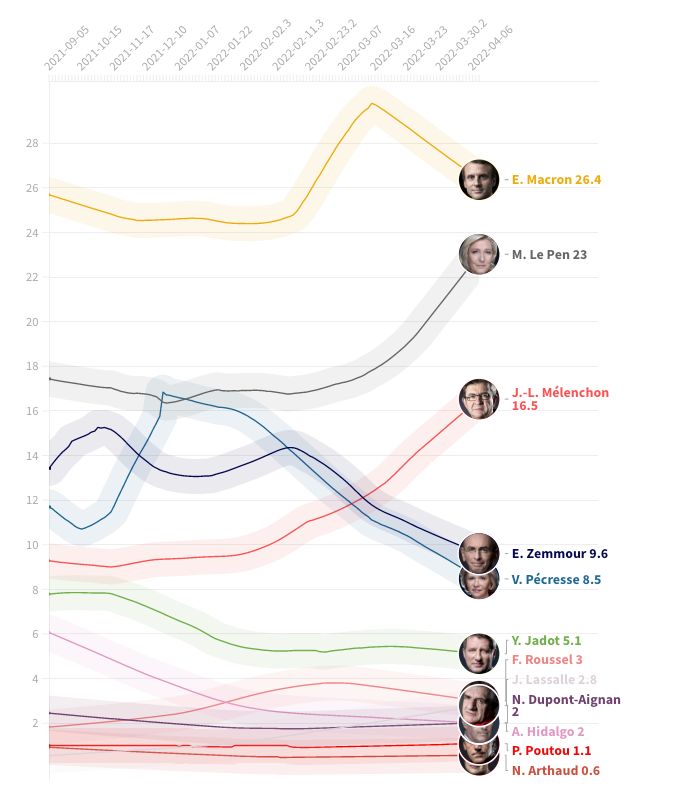
France’s presidential election is to be held in two rounds on April 10 and 24. Polls have for weeks consistently pointed to Macron leading the first round ahead of Le Pen, with both qualifying for a run-off. It would mean a replay of the 2017 election that Macron won comfortably (66% to 34%). But this time around it’s set to be much closer. According to some polls, Le Pen has narrowed the gap enough for victory to be within the margin of error.
There are 12 official candidates. Outside Macron and Le Pen, the names to note in an election where radical positions set the tone are far right-writer-turned-candidate Éric Zemmour and veteran left-winger Jean-Luc Mélenchon. While it’s unlikely either will make the final cut, the second choice of their voters could be crucial in a narrow run-off.
Advertisement
A Le Pen win would send shockwaves around the world, not least given the West’s united front against Russia’s invasion of Ukraine. Having someone who has shown pro-Vladamir Putin sympathies deal with the fallout would be less than ideal. And make no mistake of France’s importance: Brexit compounded its status as the European Union’s main military power and, with Angela Merkel’s exit as German chancellor, Macron has taken a more prominent role in Europe.
Marine Le Pen and the image overhaul
The 53-year-old leader of the National Rally, a movement long known for anti-Semitism, Nazi nostalgia and anti-immigrant bigotry, is running for the third time. The “Le Pen” name is notorious in France thanks to her father, Jean-Marie Le Pen, the firebrand leader of what the same party when it was the National Front.
Since her 2017 defeat, Le Pen has worked to soften her image – stressing her love of cats among other things – and changed the party name. She has strived to appear as a potential leader rather than a radical anti-system opponent. Her campaign has focused on cost of living concerns – amid a huge increase in energy prices and growing inflation – and the candidacy of Zemmour, who is even further to the right than Le Pen, has also helped herappear more palatable to voters.
Advertisement
Herreros says many felt another far-right candidate would split their vote, undermining Le Pen’s chance. “But, in fact, Zemmour was very hard, very radical. So Le Pen looked more soft. People are less afraid of her compared to Zemmour. When we look at the polls, we see that.”
Below, poll aggregator showing how Macron’s lead over Le Pen has narrowed in recent days. See here for latest update.
HuffPostFR
That explains in part why the context is not quite 2016. “The last election was just one year after Brexit and Trump’s election, so we were in a populist moment,” Herreros says of Macron’s 2017 ascent to power. “Now we have seen that Brexit was not what the British people expected, and we saw (Brazil’s populist president) Bolsonaro is a nightmare in Brazil. But Le Pen is not playing the populist role – she says she doesn’t want to leave the euro this time, that she’s not that extreme like Zimmour. ‘Trust me, I’m not evil’.”
But, make no mistake, the core of her party’s programme has not changed. “She is still far-right,” Herreros explains. “She is proposing the same thing on immigration as Zemmour, but with different words. It’s just a different package.”
She would end a number of welfare benefits for foreigners, stop family reunification, give preference to the French for jobs and social housing, ban the hijab in public spaces and kick unemployed foreigners out of France.
Éric Zemmour, not quite the French Trump
The early obsession among the chattering classes was the rise of Zemmour and his fledgling Reconquest! party. A TV pundit who styles himself as a Donald Trump figure and guardian of Old France, he has proposed a Ministry of “Remigration” equipped with airplanes to expedite the expulsions of what he says are undesirable migrants.
Zemmour pushes the white nationalist conspiracy theory known as the “great replacement”, which argues France and Western nations are being overrun by immigrants and other people of colour — notably Muslims.
Reflecting Le Pen’s superficial changes, a batch of her officials and supporters have left for Zemmour. The only one Le Pen spared criticism was her niece, Marion Marechal, a former politician who has returned to the frontline to help Zemmour.
Perhaps what worries most is the two far-right candidates together are drawing more support than the centrist president. In a scenario where Le Pen inherits around 80% of Zemmour’s votes in the second round – a not unreasonable prospect, say analysts – it puts her “close to victory”, says Herreros.
Advertisement
Macron and gone?
For Macron, Le Pen is the candidate to beat, and his camp has worried openly about an “accidental” win for Le Pen – perhaps if moderate voters fail to turn up at the polls.
The 44-year-old former investment banker, elected in 2017 with little political experience with his centrist La Republique en Marche, saw his pristine reputation dented by The Yellow Vest protests and imposing coronavirus restrictions.
His election campaign has been disrupted by the war in Ukraine, with Macron delaying his pitch to the country because of France’s central role in the West’s response. While absence from the campaign trail has its own problems, wartime leadership has allowed him to be presented dealing with the big issues facing the world (see the unusual pictures of him working nights and weekends at the Elysee palace, looking tired and unshaven, in jeans and a hoodie). It may have helped with an initial poll boost, but that appears to have waned.
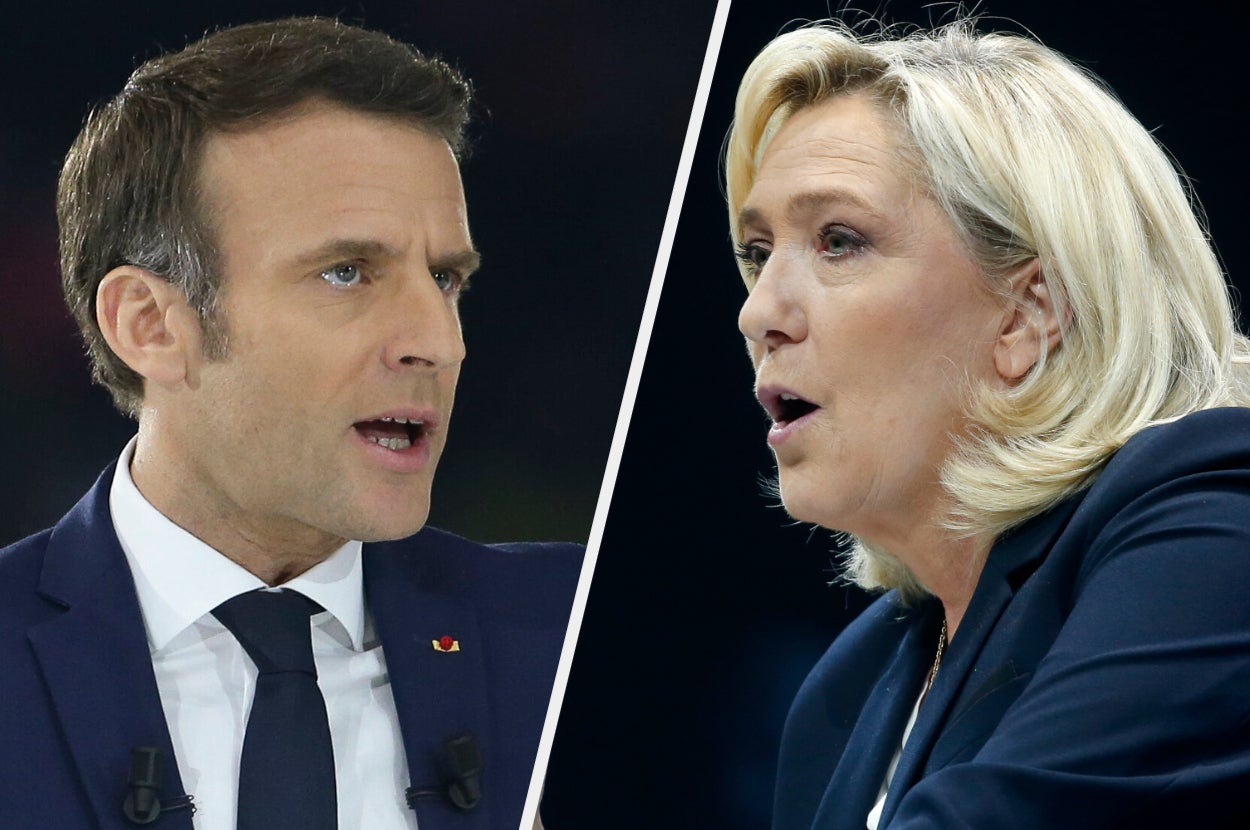
<img class="img-sized__img landscape" loading="lazy" alt="Emmanuel Macron and Marine Le Pen are set to meet in the run-off for the second consecutive presidential election.” width=”720″ height=”478″ src=”https://www.wellnessmaster.com/wp-content/uploads/2022/04/with-le-pen-breathing-down-macrons-neck-is-france-about-to-have-its-brexit-4.jpg”>
Emmanuel Macron and Marine Le Pen are set to meet in the run-off for the second consecutive presidential election.
Herreros explains Macron is popular for this stage of his presidency – higher than predecessors François Hollande and Nicolas Sarkozy – but he has come unstuck by two factors. “He went too late in the campaign,” says Herreros. “It was difficult for him to say ‘hey, I’m the candidate’ when Putin was invading Ukraine. If he went in January or February, it would have been easier for him. He left the space for the far-right.”
He also bound himself to Le Pen, thinking France would never actually put her in power. “He always thought he would be automatically re-elected against Marine Le Pen. During his presidency he would ‘wink, wink’ to right-wing voters, some of his ministers talked in a way that could be used by Le Pen. Now people are saying you played with fire, now we have the result of what you have done.”
So what will happen?
The neck-and-neck polling doesn’t tell the whole story, say Herreros. A low turnout could kill off all the pre-election anticipation as Le Pen is relying heavily on the working class vote to come out in support. Le Pen’s party is still stinging from her party’s failure in last summer’s regional balloting, blamed on a turnout of only 33% of voters in the first round.
There may also be a moment of clarity. “In France, when the far-right are close to power, people wake up,” says Herreros. “And they lose every time.”
In 2015, Le Pen, who had appeared to be on the cusp of winning the northern region of Nord-Pas-de-Calais-Picardie, lost out in the second round, and her aforementioned niece, thought to be one of the party’s best hopes in the regional elections, also lost in the southern Provence-Alpes-Cote d’Azur.
Advertisement
“They lost,” says Herreros. “But who knows how the voters will react? Le Pen will say, ‘Macron is the system, vote for me. You’re from the left and don’t like Macron, vote for me’. It’s the same thing we saw with Brexit. Maybe people will think … let’s try it.”
Rishi Sunak has defended his wife after it emerged she holds the tax-reducing non-domiciled status – but who is to blame for the leak appears to depend on the newspaper you read, as a Westminster briefing war was in full swing.
The chancellor said his spouse Akshata Murty – who is estimated to be worth hundreds of millions of pounds – had done nothing wrong in choosing a financial arrangement that means she is not legally obliged to pay tax in Britain on foreign income.
Advertisement
He blamed Labour for the “awful” smears against his family.
Sunak told The Sun newspaper that Murty was entitled to use the so-called “non-dom” arrangement as she is an Indian citizen and plans to move back to her home country to care for her parents.
Advertisement
The fashion-designer daughter of a billionaire married the chancellor in 2009 before he became an MP.
But there were other reports his allies have accused No. 10 of being responsible for the briefings.
Advertisement
The Telegraph reported that unnamed allies of the chancellor claimed the prime minister’s office were behind the leaks – an allegation No 10 and No 11 strongly denied.
A No 10 spokeswoman told the PA news agency: “It is categorically untrue that No 10 is behind the briefings.
“The prime minister and chancellor are united.”
The Times carried briefings claiming Sunak was the victim of a “political hit job” and a “co-ordinated attack”.
Advertisement
“He thinks it’s a total smear,” one ally said. “It feels like there’s a full-time briefing operation against him. This is a hit job, a political hit job. Someone is trying to undermine his credibility.”
A well as weighing up the Labour vs No. 10 claims, the paper revealed Sunak had told only a few people in government about his wife’s tax status – and that included senior officials at his former berth the housing ministry, as well as the Treasury and the Cabinet Office.
Murty is reported to hold a 0.91% stake in Infosys, an IT business founded by her father, with The Guardian reporting that the share is worth £11.5 million per year to Sunak’s wife.
The paper also reportedMurty had potentially avoided up to £20 million in UK tax by being non-domiciled.
With Murty born in India and her father also from the south Asian country, UK government rules allow her to list India, rather than the UK, as her permanent residence, meaning different tax rules on foreign earnings apply.
The chancellor said it was “unpleasant” to read attacks on his wife “especially when she hasn’t done anything wrong”.
“She hasn’t broken any rules. She’s followed the letter of the law,” Sunak told The Sun.
The chancellor said his partner “pays full UK tax on every penny that she earns here in the same way that she pays full international tax on every penny that she earns internationally”.
Advertisement
Asked during the interview whether he thought his family were victims of a “Labour smear campaign”, Sunak said he did.
But Labour hit back, with a party source telling PA: “The chancellor would do better to look a little closer to home.
“It’s clear that No 10 are the ones briefing against Rishi Sunak and, after his failure to tackle the cost-of-living crisis, you can understand why.”
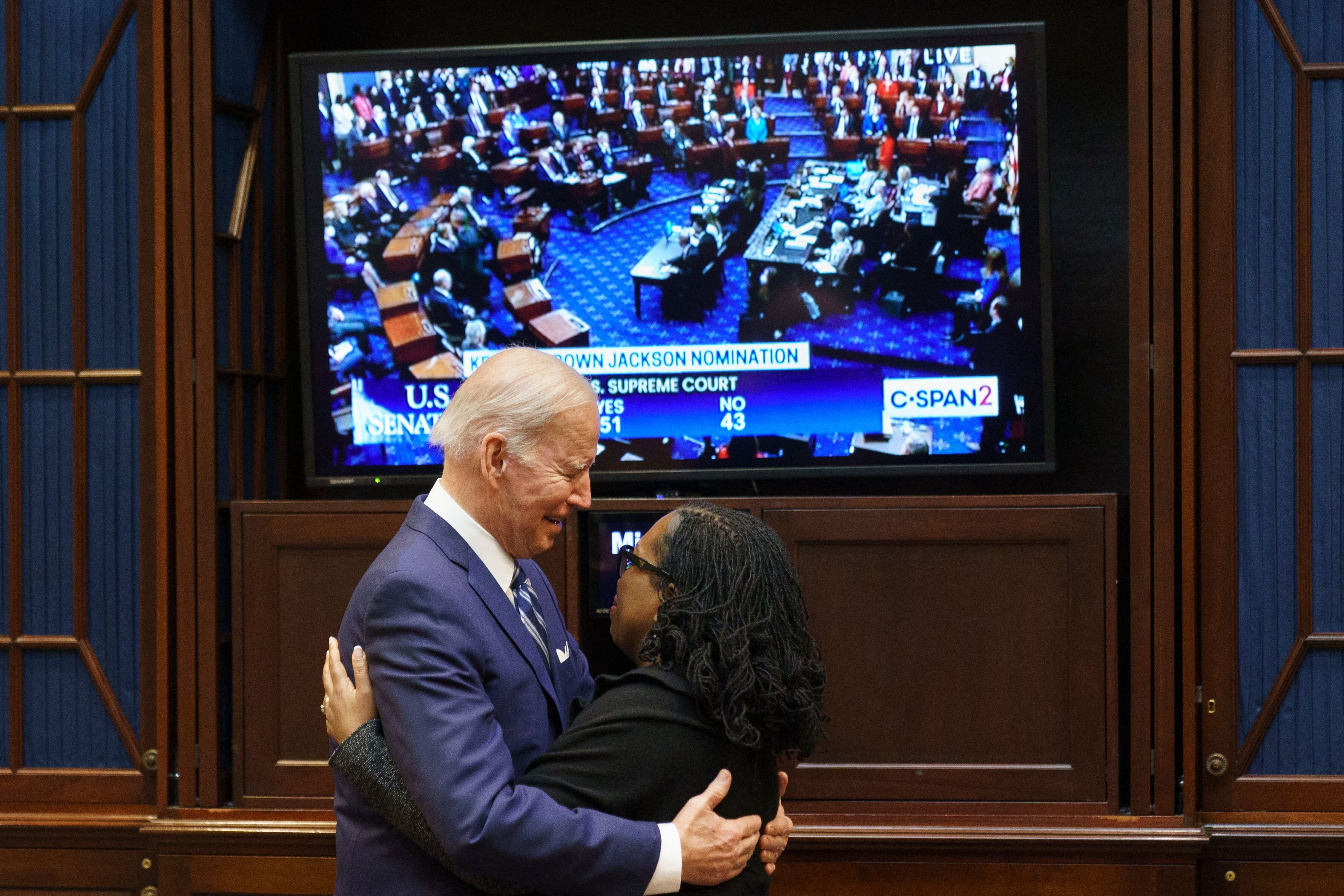
The Senate confirmed Ketanji Brown Jackson to the Supreme Court on Thursday, making her the first-ever Black woman and former public defender to serve on the nation’s highest court.
Jackson, 51, was confirmed in a 53-47 vote. Every Democrat voted for her, along with three Republicans: Sens. Lisa Murkowski (Alaska), Susan Collins (Maine) and Mitt Romney (Utah). When the vote was over, the Senate chamber erupted with cheers and applause from the balcony.
Advertisement
Jackson’s confirmation seals a promise by President Joe Biden, who vowed as a candidate to pick a Black woman for the Supreme Court.
With Jackson on the court, white men will not be a majority of justices for the first time ever.
It’s hard to overemphasize how total the control white men have had on the court for essentially all of U.S. history. Since the Supreme Court was established in 1789, 108 of 115 justices have been white men.
Justice Sonia Sotomayor, who is the first Hispanic member of the court, has talked about the benefit of diversity on the bench, saying that a “different perspective can permit you to more fully understand the arguments that are before you and help you articulate your position in a way that everyone will understand.”
Advertisement
“In the 233-year history of the Supreme Court, never — never — has a Black woman held the title of ‘Justice,’” Senate Majority Leader Chuck Schumer (D-N.Y.) said ahead of Jackson’s vote. “This milestone should have happened generations ago — generations ago — but we are always trotting on a path towards a more perfect union. Nevertheless, America today is taking a giant step towards making our union more perfect.”
In yet another historic moment, Vice President Kamala Harris, the first Black woman to serve in this post, presided over Jackson’s confirmation vote.
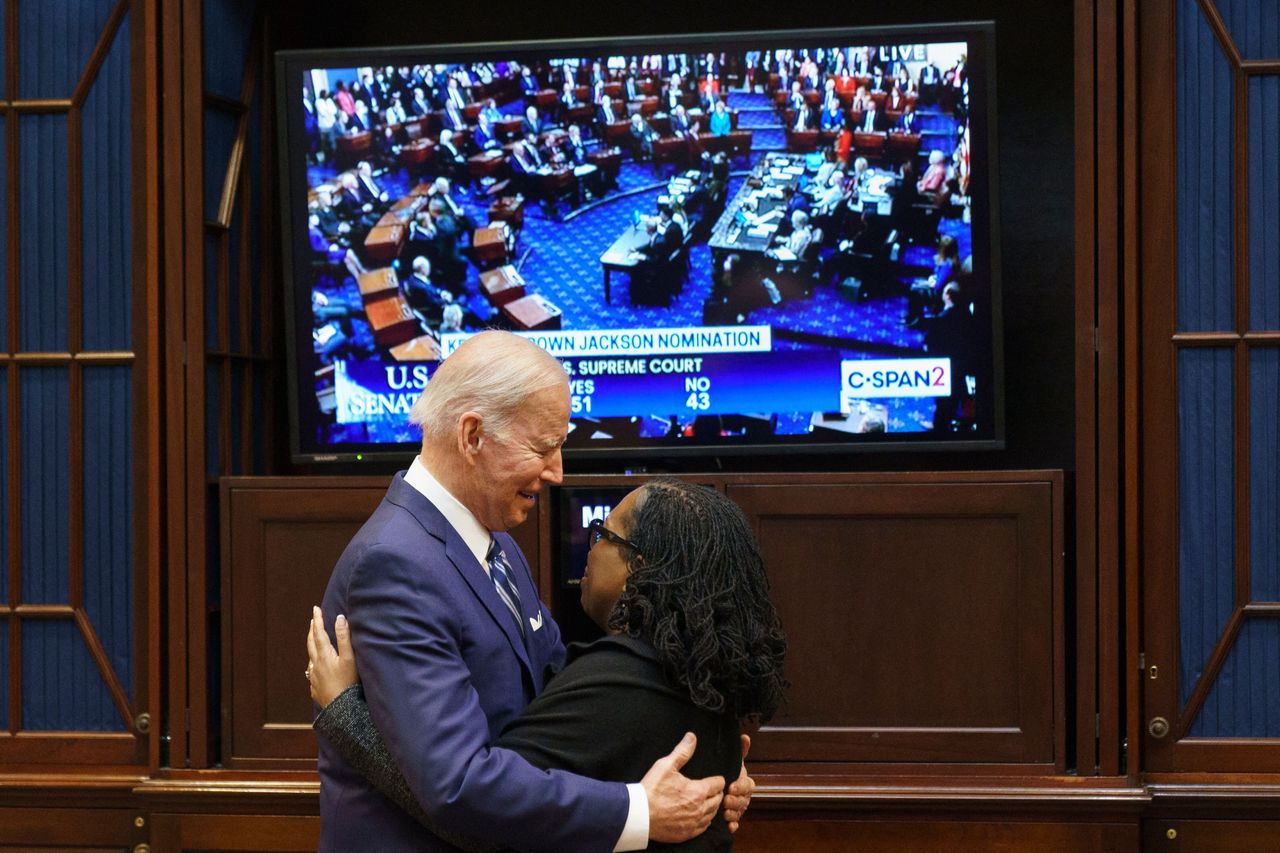
President Joe Biden and Judge Ketanji Brown Jackson watch her Senate confirmation vote together at the White House.
MANDEL NGAN via Getty Images
Jackson, who has been a federal judge for nearly a decade and comes in with an exceptional resume, endured ridiculous and ugly attacks by Republicans during her confirmation process — despite the fact that most of those GOP senators had previously voted to confirm her one, two or even three previous times to other judgeships or the U.S. Sentencing Commission.
Several falsely accused her of being lenient on child sex offenders as a judge, even though they know her record is well within the mainstream. They mocked her for declining to define a “woman” during her confirmation hearing — an attempt to bait her into a contentious debate about transgender people — even though those same Republicans flailed when asked by HuffPost how they would define “a woman.”
Sen. Tom Cotton (R-Ark.) falsely claimed that Jackson likes to help terrorists, and said she would have defended Nazis at Nuremberg. His absurd leap echoes a GOP theme dwelling on Jackson’s stint as a public defender representing Guantanamo Bay detainees accused of terrorism. As a public defender, Jackson did not pick her clients.
Sen. Ted Cruz (R-Texas) made a show of grilling Jackson on whether she thinks “babies are racist,” waving an anti-racism children’s book in the air as he tried to tie her to the GOP’s misleading attacks on an academic discipline known as critical race theory. (Cruz’s effort to smear that book ended up making it a No. 1 bestseller on Amazon.)
But Jackson navigated her hearing with grace and composure, with even some of her toughest GOP critics admitting they were impressed by her. She had staunch defenders around the country who were glued to the hearings and even went to the Supreme Court to rally in support.
By the end of Jackson’s two full days of being grilled by the Senate Judiciary Committee, Sen. Cory Booker (D-N.J.), the only Black member of the panel, delivered an incredible speech that brought her to tears as he talked about the “joy” that her critics can’t take from him as he watches Jackson make history on the court.
“I’m not letting anybody in the Senate steal my joy,” Booker said emphatically.
Advertisement
“You’re a person who is so much more than your race and gender,” he told Jackson. “You have earned this spot. You are worthy. You are a great American … You’re here. And I know what it’s taken for you to sit in that seat.”
Booker said Harriet Tubman has long been his “harbinger of hope,” and now, Jackson is, too.
“This country is getting better and better and better,” he said, becoming emotional. “When that final vote happens, and you ascend onto the highest court in the land, I’m going to rejoice. And I’m going to tell you right now: The greatest country in the world, the United States of America, will be better because of you.”
Chancellor Rishi Sunak is under fire after it was revealed his wife has “non-dom” status.
It means Akshata Murthy, daughter of an Indian billionaire, can earn money from abroad free of UK tax.
Advertisement
A non-domiciled tax status is designed for individuals whose permanent home is not the UK.
Murthy, who lives in Downing Street with her husband, said she has the status because of her Indian citizenship as the country does not allow its citizens to hold dual nationality.
Advertisement
However, some experts argue there are ways she can remain an Indian citizen while ending her non-dom status.
There is no suggestion any laws or rules have been broken, however Labour leader Sir Keir Starmer has described the arrangement as appearing to represent “breathtaking hypocrisy”.
Advertisement
A Treasury spokesman has insisted that Sunak has “followed the ministerial code to the letter in his declaration of interests”.
The code states that, on appointment to each new office, ministers must provide their permanent secretary with a full list of all interests which might be thought to give rise to a conflict – including the interests of their spouse, partner or close family.
Labour is arguing that her non-domicile status is a matter of public interest because the chancellor may have directly benefitted from it.
They have written to Sunak with 12 questions, they include:
Advertisement
1. How much have you benefited from Murthy’s tax status as a ‘non-dom’?
2. Has Murthy ever claimed the remittance basis?
3. Do you accept that claiming the remittance basis was an active choice by Murthy, and not [as her spokesperson claimed yesterday] something that followed automatically from her citizenship?
4. What is Murthy’s claimed domicile?
5. On what basis is it not the UK, given her life suggests she intends to permanently remain in the UK?
6. For how long has Murthy been claiming the remittance basis? Companies House filings say Murthy has been living in the UK since at least 2013.
7. How much tax has been saved by claiming the remittance basis?
8. Where are all of Murthy’s non-UK income and gains fully taxed?
9. Does Murthy hold investments/property through trusts or companies in offshore jurisdictions?
10. When Murthy hits 15 years of being in the UK, she will cease to be entitled to claim the remittance basis. Often the wealthy avoid the resultant tax by putting their assets into trusts before the expiry of the 15 years. Will she commit not to do that?
Advertisement
11. Do you as chancellor support the claim of Murthy’s spokesperson that her Indian citizenship means she must be treated as non-domiciled for UK tax purposes?
12. What measures have you as chancellor put in place to ensure that you are not involved in Treasury discussions around potential amendments to the non-domicile status rules?
A Treasury spokesperson has not responded to a HuffPost UK request for a response to the questions.
Nuclear and offshore wind power are at the heart of the government’s long-awaited energy strategy that has been given added weight by the cost of living crisis and the war in Ukraine.
Ministers are promising “cleaner and more affordable energy” – but the plan has been criticised for being cool on the expansion of onshore wind given its unpopularity in rural Tory heartlands.
Advertisement
Central to the thinking behind the plan is to reduce the UK’s dependence on foreign sources of energy – an issue that has been brought into sharp focus by the reliance on Russian oil and gas since the Kremlin’s invasion of Ukraine.
Rocketing energy bills faced by families, caused in part by a post-pandemic rise in demand for gas and lower levels of production, has also put Boris Johnson under pressure to respond decisively.
Advertisement
Under the government’s fresh plans, a new body, Great British Nuclear, will be launched to bolster the UK’s nuclear capacity with the hope of up to 24 gigawatts (GW) of electricity by 2050 coming from the source of power. That would represent 25% of the projected electricity demand.
It is hoped the focus on nuclear will deliver up to eight reactors – equivalent to one reactor a year instead of one a decade.
Advertisement
The strategy also confirmed the intention to push ahead with a nuclear project at the Wylfa sites in Anglesey.
On offshore wind, the plan outlines the ambition of producing up to 50GW of energy by 2030, which the Department for Business, Energy and Industrial Strategy said would be more than enough to power every home in the UK.
Some 5GW should come from floating offshore wind in deeper seas and planning reforms will slash approval times for new wind farms from four years to one year.
It is thought a major crunch point in the strategy, and one of the reasons its launch has been delayed, is wrangling over onshore wind farms.
Advertisement
Several ministers have aired views backing the development of new oil and gas, but not onshore wind, which is one of the cheapest forms of electricity.
The government said it would be “consulting on developing partnerships with a limited number of supportive communities who wish to host new onshore wind infrastructure in return for guaranteed lower energy bills”.
The cautious wording squares with comments made by Tory ministers in recent days. Transport secretary Grant Shapps said he did not favour a vast increase in onshore wind farms as he said they “can create something of an eyesore”.
Labour said the prime minister had “caved to his own backbenchers” and that the plan would do nothing to help the rising energy costs faced by households.
Johnson said: “We’re setting out bold plans to scale up and accelerate affordable, clean and secure energy made in Britain, for Britain, from new nuclear to offshore wind, in the decade ahead.
“This will reduce our dependence on power sources exposed to volatile international prices we cannot control, so we can enjoy greater energy self-sufficiency with cheaper bills.”
The government has already commissioned a review into the science around fracking, which could pave the way to lifting the moratorium on the controversial process, imposed over the tremors it caused.
A £30m competition to manufacture heat pumps is also to be launched, and there are ambitions to increase solar capacity with a consultation of the rules for solar projects.
Meanwhile, on oil and gas, a new licensing round for new North Sea oil and gas projects is planned for the autumn to cover the “nearer term”.
The plan was welcomed by offshore wind firm Orsted, trade association Hydrogen UK, Shell and EDF, among others.
Advertisement
But Ed Miliband, Labour’s shadow climate change and net-zero secretary, said: “The government’s energy relaunch is in disarray.
“Boris Johnson has completely caved to his own backbenchers and now, ludicrously, his own energy strategy has failed on the sprint we needed on onshore wind and solar, the cheapest, cleanest forms of homegrown power.
“This relaunch will do nothing for the millions of families now facing an energy bills crisis.
“No reversal of the ban on onshore wind and not a penny more on energy efficiency.
“These decisions will force households to pay hundreds of pounds more for their energy bills and keep the UK dependent on imported gas for longer.”
Liberal Democrat leader Sir Ed Davey said the plans were “utterly hopeless”.
Climate think tank E3G said the announced plans had “failed to support the action needed to either get off Russian gas this year or bring down energy bills”.
Ed Matthew, campaigns director at E3G said: “With no new support to save energy and by holding back on solar power and onshore wind, this strategy will do nothing to help the UK get off Russian gas this year.
“Instead, the government has prioritised policies that will keep us dependent on high-cost fossil fuels and nuclear power.
“This isn’t an energy security strategy and will do nothing to bring down energy bills.
Advertisement
“It is a national security threat and the person who will be happiest with it is Vladimir Putin.”
Rishi Sunak’s wife has non-domicile status, allowing her to avoid paying UK taxes on her overseas earnings.
In a major embarrassment for the chancellor, a spokesperson for Akshata Murty confirmed the arrangement, saying it was a result of her Indian citizenship.
Advertisement
“India does not allow its citizens to hold the citizenship of another country simultaneously,” the spokesperson said.
“So, according to British law, Ms Murty is treated as non-domiciled for UK tax purposes. She has always and will continue to pay UK taxes on all her UK income.”
Advertisement
She has a stake in her billionaire father’s IT services company Infosys, from which she receives a multi-million pound annual dividend.
Labour called on Sunak to reveal how much UK tax Murty’s non-dom status has allowed her to avoid, amid reports that it could run into the millions of pounds.
Advertisement
Tulip Siddiq, shadow economic secretary to the Treasury, said: “The chancellor has imposed tax hike after tax hike on the British people. It is staggering that – at the same time – his family may have been benefitting from tax reduction schemes.
“This is yet another example of the Tories thinking it is one rule for them, another for everyone else.
“Rishi Sunak must now urgently explain how much he and his family have saved on their own tax bill at the same time he was putting taxes up for millions of working families and choosing to leave them £2,620 a year worse off.”
It is understood Sunak declared his wife’s tax status to the Cabinet Office when he first became a minister in 2018.
Advertisement
It is not the first time that Murty’s financial arrangements have been called into question in recent days.
Last week, Keir Starmer urged the chancellor to “come clean” about any links his wife’s family business has with Vladimir Putin.
The Labour leader said it would be wrong for the chancellor’s household to be “benefiting” from any money coming from Russia while the government is imposing sanctions on its regime.
Sunak, who has urged companies to pull out of the country in order to squeeze the Russian economy, has said his wife should not be subjected to political attacks.
The chancellor’s personal popularity has taken a nosedive in recent weeks as the cost of living crisis bites.
Although he cut fuel duty by 5p and raised the threshold at which workers start paying national insurance, he has been accused of failing to do enough to tackle soaring energy bills.
Meanwhile, millions of workers and their employers are braced for a 1.25 percentage point hike in the national insurance bills.
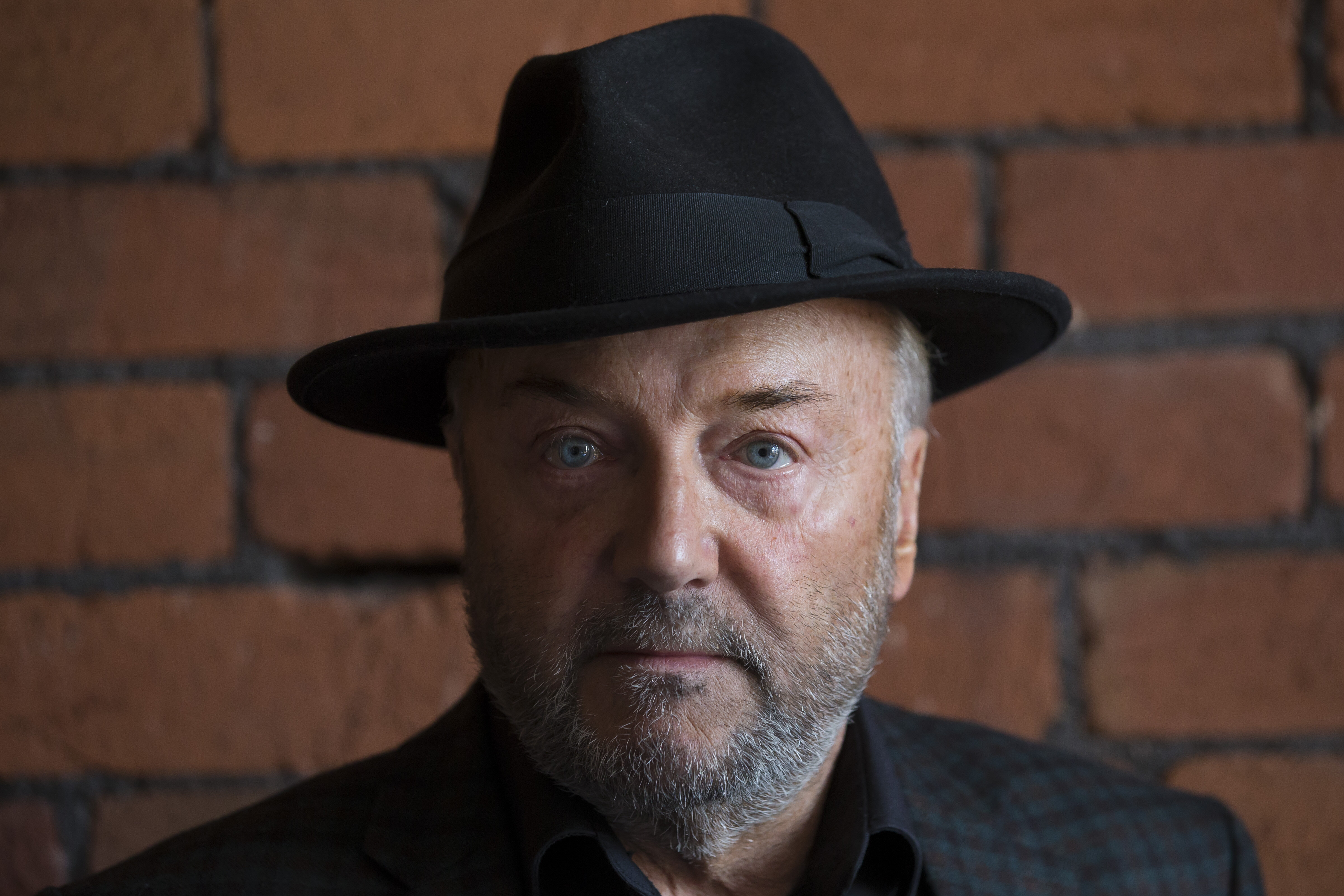
The Twitter account of George Galloway has been labelled “Russia state-affiliated media” – and the former Labour MP is furious about it.
Galloway, who presented the Mother of All Talk Shows on Radio Sputnik, which is owned by the Kremlin, said he would sue the social media giant over the marking.
Advertisement
In an angry message, the politician-turned-commentator urged Twitter to take down the message which was applied to his account.
“I am not ‘Russia state affiliated media’,” he complained.
Advertisement
“I work for NO #Russian media. I have 400,000 followers. I’m the leader of a British political party and spent nearly 30 years in the British parliament.
“If you do not remove this designation I will take legal action.”
Advertisement
Galloway has been a contributor for RT, formerly known as Russia Today, which recently had its licence revoked in the UK by regulator Ofcom.
He has presented The Mother of All Talk Shows on Radio Sputnik since 2019.
Galloway – a Labour MP until he was expelled in 2003, and most recently MP until 2015 for the Respect party – also presented Sputnik: Orbiting The World With George Galloway each week with his wife Gayatri.
When it was pointed out references to the Russian-backed media had been removed from his Twitter profile page, Galloway responded: “I deleted it because it no longer exists. The show, the channel, are closed by government edict.”
Advertisement
You’ve just deleted it from your profile description, so for the benefit of everyone else, here’s what it looked like 60 seconds ago with your Russian state funded RT show listed: pic.twitter.com/Q9MCLYQODm
Galloway later tweeted with reference to new Twitter shareholder Elon Musk: “It’s Kafkaesque really. When I did present on #Russian state media I had NO Twitter designation. Now that I don’t can’t and would be committing a crime if I did I have been given the designation. Shome mishtake shurely @elonmusk.”
On Tuesday, Twitter announced that the platform would no longer “amplify or recommend government accounts belonging to states that limit access to free information and are engaged in armed interstate conflict”.
In a statement last month, broadcasting watchdog Ofcom said RT was not “fit and proper”, given its close links to the Russian state.
The move followed accusations that the channel was promoting pro-Putin propaganda about the war in Ukraine.
It has been unavailable to British viewers since earlier in the month as a result of a ban imposed by the European Union.
Ofcom chief executive Dame Melanie Dawes said: “Freedom of expression is something we guard fiercely in this country, and the bar for action on broadcasters is rightly set very high.
“Following an independent regulatory process, we have today found that RT is not fit and proper to hold a licence in the UK. As a result we have revoked RT’s UK broadcasting licence.”
It comes after more than 100 organisations, including Stonewall, boycotted the landmark Safe To Be Me event, to be held in in London in June, over plans to exclude trans people from the legislation.
Advertisement
Earlier on Tuesday, the government’s LGBT business champion resigned in protest at the decision to water down the ban.
Boris Johnson last week changed the government’s policy twice within a matter of hours.
Advertisement
First, the administration said it was abandoning plans to ban the practice, with the cost of living crisis and war in Ukraine cited as reasons to “rationalise our legislative programme”.
However within hours of the announcement, it was revealed legislation would be included in the Queen’s Speech in May – but trans conversion therapy would be excluded.
BREAKING: The government’s international LGBT conference, which was due to set an example to the rest of the world, has been cancelled.
It follows over 100 organisations boycotting the event over the govt’s plans to only partially ban conversion therapy.
Conservative MP Dehenna Davison expressed dismay at the decision to cancel the conference.
Advertisement
“We had such a huge opportunity to prove the UK (and the Conservative Party) is a defender of freedom,” she posted on Twitter.
“As a Conservative member of the LGBT+ community, it is so wrong it has come to this.”
The Times reported a senior Downing Street figure is said to have claimed that “the majority of people won’t care” that the event is not going ahead.
More than 80 LGBT+ groups and more than 20 HIV groups said they will not take part in the global, UK-hosted conference unless Johnson would revert to his promise for a trans-inclusive ban on conversion therapy.
Advertisement
Iain Anderson, the UK’s LGBT+ business champion, quit the role as he accused the government of engaging in a “woke war”.
He said ministers are trying to “drive a wedge” between the community.
Anderson added that it was “profoundly shocking” that the government had backtracked on protection for trans people during the same week that the first trans MP felt able to share his journey.
A government spokeswoman said: “We thank Iain for his contributions as LGBT business champion.
“The government has a proud record on LGBT rights and we remain committed to building upon that work with sensitivity and care.”
On Monday, the UK’s first openly trans MP has said he is “bitterly disappointed” by his own government’s decision to scrap the ban on trans conversion therapy.
Jamie Wallis, who came out last week in a heartfelt post shared on Twitter, said pressing ahead with outlawing conversion therapy – but not for trans people – would be a “broken promise”.
This is a breaking news story and will be updated. Follow HuffPost UK on Twitter, Facebook and Instagram.
Boris Johnson has urged Russian people to use alternative forms of news to find out about Vladamir Putin’s alleged war crimes, arguing they would not support the invasion and crimes that are a “stain on the honour of Russia”.
In a video message directed to the Russian population, the UK prime minister said they only needed an online VPN connection to sidestep state-controlled media and gain access to independent information from around the world.
Advertisement
“Your president knows that if you could see what was happening, you would not support his war,” he said.
“He knows that these crimes betray the trust of every Russian mother who proudly waves goodbye to her son as he heads off to join the military.
Advertisement
“And he knows they are a stain on the honour of Russia itself.”
Speaking in Russian, he added: “Your president stands accused of committing war crimes. But I cannot believe he’s acting in your name.”
Advertisement
His comments follow global outrage at the massacre uncovered at Bucha, a Ukrainian town, that was targeted by the Russian forces on their way to conquer Kyiv in March.
Volodymyr Zelenskyy accused Russia of committing the “most terrible war crimes” since the Second World War as he called for trials akin to those held after the defeat of the Nazis.
The Ukrainian president accused Putin’s forces of creating “mass starvation” and shooting and raping civilians, during a graphic address to the United Nations Security Council on Tuesday.
Russian forces then began to withdraw from the region around March 30, reportedly due to a shortage of resources, meaning journalists have been able to access to beleaguered Bucha once again.
Advertisement
The Associated Press released images from the town showing bodies on the Bucha streets, with their hands tied behind their backs and wounds to the back of their heads.
According to the news agency, at least 21 bodies were found, with at least nine of them in civilian clothing.
Anatoly Fedoruk, Bucha’s mayor, said more than 300 residents in the town had been killed, while Ukrainian prosecutors allege Russian forces used the basement of one house as a torture chamber.
Satellite images showed a 45ft-long mass grave in the town too.
Russia has denied any involvement and suggested the bodies were placed their strategically by the Ukrainians.
Moscow has dismissed any accusations of war crimes too, and claims “Ukrainian radicals” are responsible for the massacre in Bucha as “not a single civilian” faced violent military action from Russian forces.
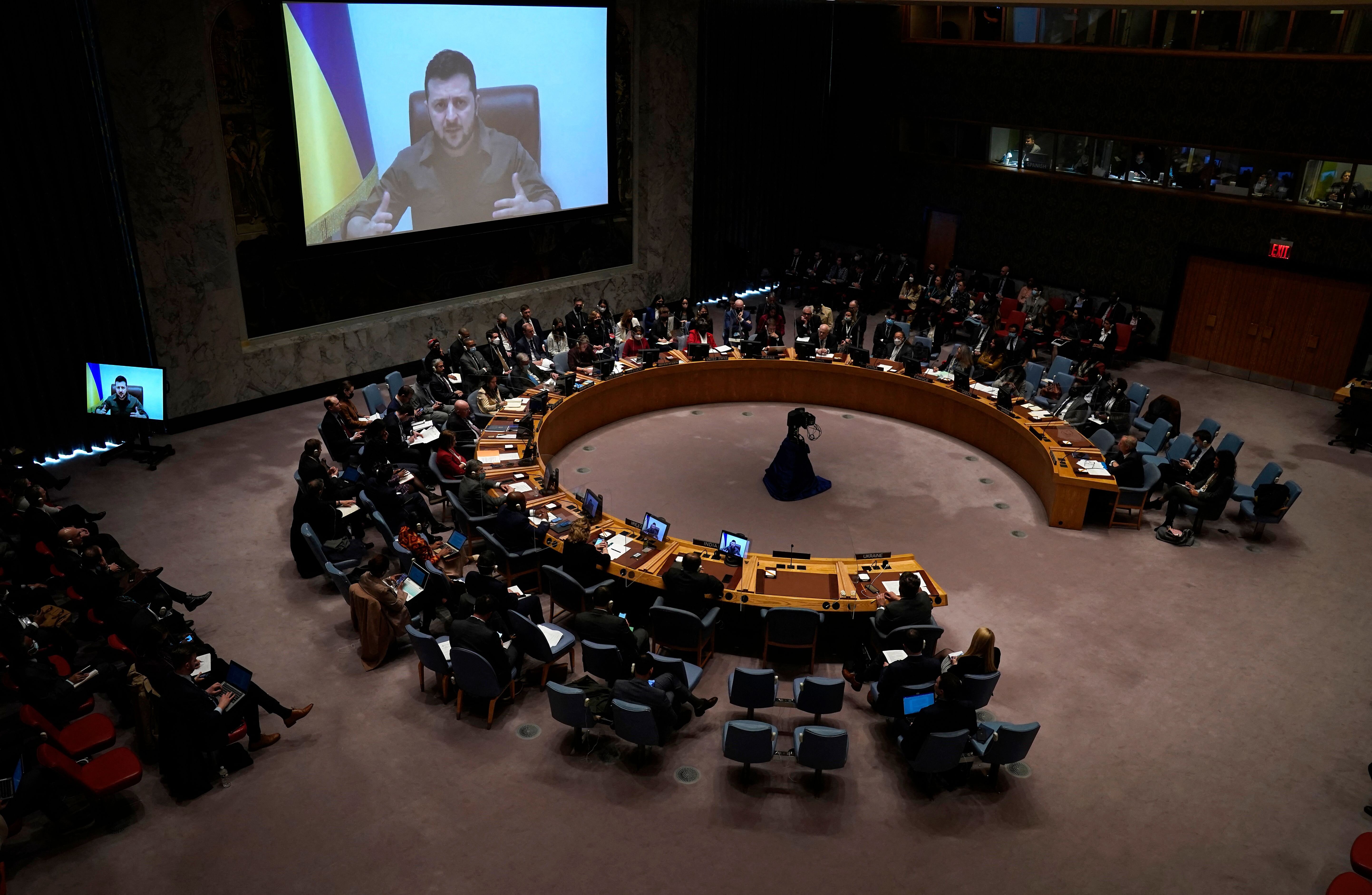
<img class="img-sized__img landscape" loading="lazy" alt="President Volodymyr Zelensky, of Ukraine, addresses a meeting of the United Nations Security Council in New York City.” width=”720″ height=”469″ src=”https://www.wellnessmaster.com/wp-content/uploads/2022/04/boris-johnson-urges-russians-to-sidestep-state-media-to-find-out-about-putins-war-crimes-2.jpg”>
President Volodymyr Zelensky, of Ukraine, addresses a meeting of the United Nations Security Council in New York City.
TIMOTHY A. CLARY via Getty Images
In his message, Johnson said the reports were so shocking that Putin had deliberately sought to hide the truth from his people.
Johnson said that people only needed a VPN connection to access independent information from around the world.
“When you find the truth, share it,” he said.
“Those responsible will be held to account. And history will remember who looked the other way.”
During the UK-convened meeting of the UN’s most powerful body, whose membership includes Russia, Zelenskyy called for those responsible to be “brought to justice” in a tribunal similar to the Nuremberg trials.
He warned the world is yet to see the acts committed by the Kremlin’s troops in other regions after evidence of atrocities was unearthed after their withdrawal from Bucha, near Kyiv.
Advertisement
“Today, as a result of Russia’s actions in our country, in Ukraine, the most terrible war crimes we’ve seen since the end of World War Two are being committed,” he said in the virtual address.
“Russian troops are deliberately destroying Ukrainian cities to ashes with artillery and air strikes. They are deliberately blocking cities, creating mass starvation. They deliberately shoot columns of civilians on the road trying to escape from the hostilities.
“They even deliberately blow up shelters where civilians hide from air strikes.
“The massacre in our city of Bucha is unfortunately only one of many examples of what the occupiers have been doing on our land for the past 41 days.”