Boris Johnson didn’t hold back when calling on the world to act against climate change – and his words definitely caused a stir on Twitter.
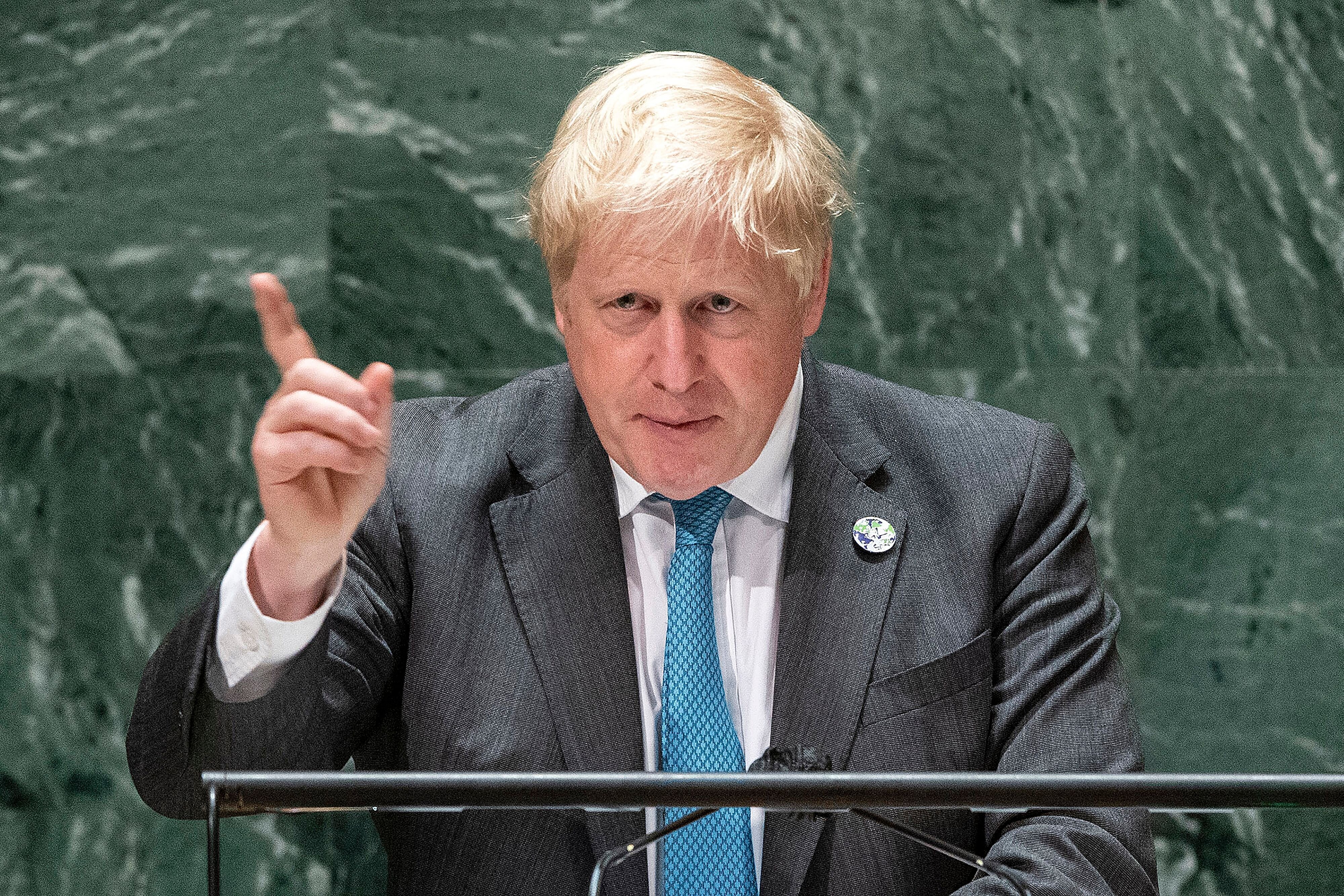
The prime minister spokes to the United Nations General Assembly in New York on Wednesday and urged the world to “grow up” and stop “trashing” the environment.
He then pulled apart the famous saying, “it’s not easy being green” from the Muppets’ character, Kermit the Frog.
The Independent’s Tom Peck pointed out that Johnson himself did not support the idea of climate change for ten years after Al Gore’s 2016 film, An Inconvenient Truth which looks at how humanity have damaged the Earth.
Peck added: “And now, apparently, we’re meant to take this cartoon clown seriously.”
For ten years after the release of Al Gore’s film ‘An Inconvenient Truth,’ @BorisJohnson carried on as a committed climate change denialist, and now, apparently, we’re meant to take this cartoon clown seriously, as he stands up there, dribbling words out of his mouth arse. pic.twitter.com/aMVk8SoV09
Satire website The Poke did not hesitate to take aim at Johnson either, noting that he told the world to “grow up” just hours after he had flown to the US and told France to “get a grip” of its anger over the new AUKUS pact.
“Boris said it’s time for leaders to grow up and take climate change seriously. What did he say, Roy?” “He flew in on his private jet and said ‘Eff off, Frenchies.'” pic.twitter.com/h8ABEXFVw3
Even Brexiteer and former MEP Patrick O’Flynn tweeted: “Perhaps someone on the team could have look at the draft [of the speech] and told the PM: ‘Some people may react to this passage by saying ‘speak for yourself mate’.”
This was then retweeted by Alastair Campbell, former prime minister Tony Blair’s spin doctor.
Perhaps someone on the team could have looked at the draft and told the PM: “Some people may react to this passage by saying ‘speak for yourself mate’.” https://t.co/0JFH9tY2R8
Johnson wrote several columns for The Telegraph over the last two decades which undermine the idea of climate change.
In 2012 he described fracking as a “miracle”, in 2013, he backed climate change denier Piers Corbyn and questioned the phrase “climate warming”, and in 2015, he rejected the idea that warm weather in December was down to a change in the climate.
This checkered past did not escape other Twitter accounts either last night as they mocked his speech.
Difficult to square @BorisJohnson’s aspirational words on climate action at the United Nations overnight with his government’s recent actions on food & trade. https://t.co/ApSTpI2paN
Some accounts noted that just the other day, he appointed former climate change denier Ann-Marie Trevelyan as his new international trade secretary.
Johnson says “the facts change”. Actually they don’t, @BorisJohnson, & unlike Tinkerbelle, they don’t stop being real if you don’t believe in them. 1/2 https://t.co/HAumjlGK19
Not everyone thought the prime minister’s words should be mocked, though.
Times Radio’s Matt Chorley tweeted that it was a “bad take” to criticise Johnson’s accurate remarks based on his past climate denialism.
Also: “he used to be a terrible climate denier but now agrees with me that we must act but I still don’t like what he’s saying because it’s him saying it” is such a bad take
Former leader of the Green Party Caroline Lucas also took note of his speech – and demanded that the prime minister’s actions now reflected his words.
She tweeted: “Good to hear PM’s new enthusiasm for climate action.
“Since Govt failing its own climate targets, I look forward to imminent cancellation of Cumbrian coal mine, Cambo oil field, £27 billion road building plan, reversal of aid cut and a #GreenNewDeal.”
She added the hashtag #WalkYourTalk.
Good to hear PM’s new enthusiasm for climate action. Since Govt failing its own climate targets, I look forward to imminent cancellation of Cumbrian coal mine, Cambo oil field, £27bn road building plan, reversal of aid cut, & a #GreenNewDeal#WalkYourTalkhttps://t.co/RS7zql4Ne7
Former London MEP Lance Forman appeared exasperated just at the idea Johnson had referred to a character from the Muppets in a serious speech on the world stage – an opinion shared by plenty of others too.
In his big speech at the UN on climate change yesterday, Boris Johnson quoted from the Muppets.
Greta Thunberg denounced the claim that the UK is a climate leading nation on Friday and said that is a “lie”.
The Swedish activist has a reputation for calling out world leaders when they don’t act on their climate promises – and it now seems the UK is in her sights.
She attacked the claim that the UK has reduced its climate emissions by 44 percent since 1990, a comment prime minister Boris Johnson made at this year’s Leaders’ Climate Summit, and said that Downing Street is good at “creative carbon accounting” instead.
Thunberg added: “I am hoping that we stop referring to the UK as a climate leader. If you look at the reality, that is simply not true.”
Here’s a breakdown of the top concerns about Britain’s battle against the climate crisis.
CARL-JOHAN UTSI via Getty ImagesSwedish climate activist Greta Thunberg poses for a photo
1. UK Emission targets aren’t as ambitious as they seem
The UK has technically promised to cut emissions faster than other developed nations by vowing to make 68% cuts by 2030 when compared to UK emissions released in 1990.
The UK does have the 2035 target to cut 78% too, according to the 2008 Climate Change Act, and it did cut more greenhouse gas emissions between 1990 and 2016 than any other G7 country.
However, the UK’s emission figures are misleading. Britain contributes to approximately 2% of the global emissions, meaning its target cuts are unlikely to have a major impact.
The US contributes 15% to global emissions, and has promised to cut around 50% when compared to 2005 levels – meaning by 2030, the States will have had more of an impact than the UK.
Emissions for UK transport have not shifted much at all over the past decade either, and home heating emissions are still very high.
Rachel Kyte, former top World Bank official at the Paris climate talks, told The Guardian: “What the UK is doing is like dad dancing – it is not that they’re evil, just that they are very uncoordinated. They have not yet perfected a whole government approach to getting to net zero.”
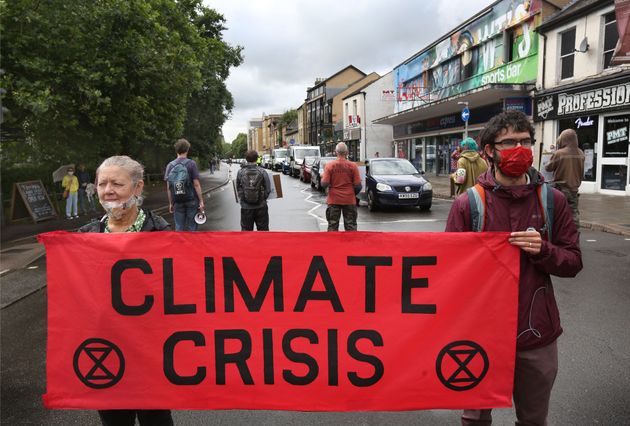
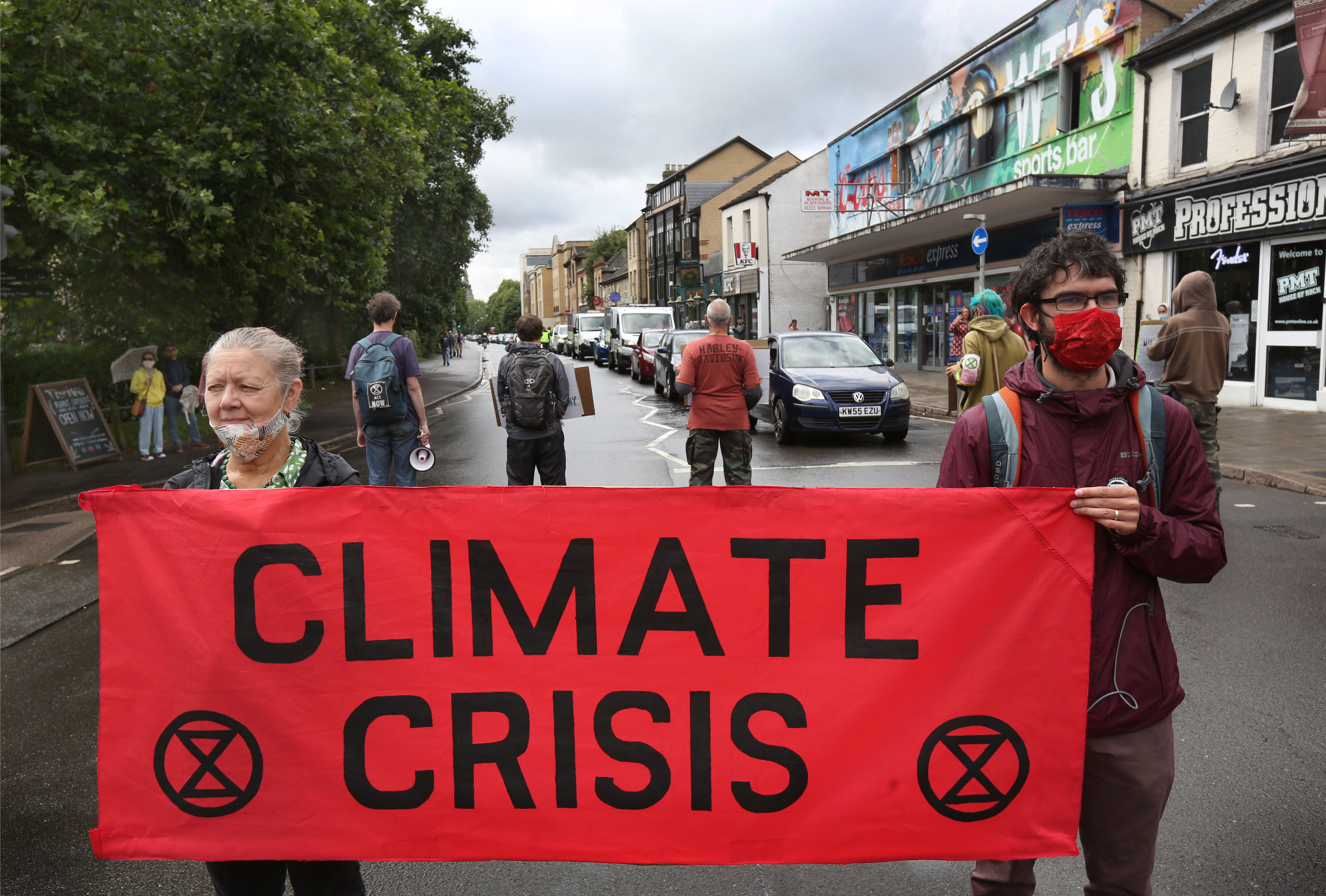
SOPA Images via Getty ImagesProtesters hold a banner saying climate crisis during the demonstration in Cambridge
2. Official climate advisers worry there’s no plan
The UN did actually urge more countries to follow the UK’s lead ahead of COP26, back in February.
The UK and the EU were the only two out of the world’s top 18 greenhouse gas emitters to submit plans for reducing emissions in the winter.
But, despite having a plan, there are concerns it was not thorough enough.
Chief executive of the Climate Change Committee, Chris Stark, shared his worries with Sky News in June about how the UK would reach net zero by 2050.
The government adviser said: “It is true the ambition of the country has changed in the last 12 months and this useful.
If we don’t take action now we risk falling to the back of the pack on tackling climate changeThe Energy and Climate Intelligence Unit’s Jess Ralston
“But unless it is being physically delivered, so the things that will drive us towards net zero, the changes we will see in homes, industry and transport, we can’t say we are credibly on track. The government has to change course.”
The committee advisers made 200 recommendations to Downing Street, including a Planning Bill to ensure new houses are low carbon and adapted for rising temperatures.
The committee also claimed the UK would only have to spend less than 1% of GDP a year to meet the net-zero target, and it could deliver a return boost of 2% by 2035.
The climate advisers also said the country was less prepared to tackle global warming than it was five years ago.
Stark said: “We’ve been raising our concerns consistently for some time now. [The government has] found it far too easy to dismiss those.”
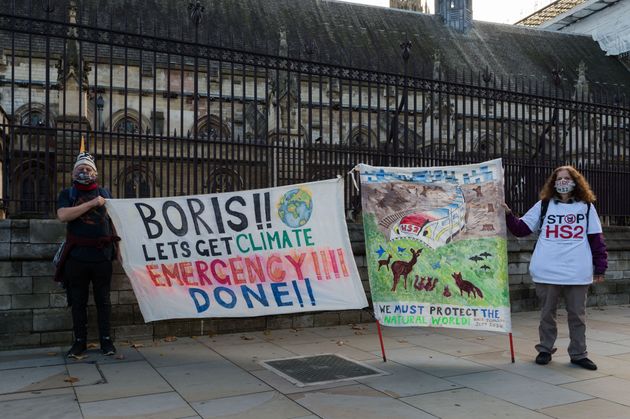
Barcroft Media via Getty ImagesEnvironmental activists protest in Parliament Square against the UK’s High Speed 2 railway project as well as the Government’s failure to act on the climate and ecological crisis in October
3. The UK is not adapting to a warmer future
The climate goals mean the world will have to adapt to an increase in temperature of between 1.5 degrees Celsius and 2 degrees Celsius in the next 80 years.
If not enough is done to reduce global warming, the average climate could rocket up to 4 degrees Celsius.
Professor Dame Julia King, chair of the Climate Change Committee, warned in June: “We cannot deliver net zero without adaptation.
“It’s absolutely illogical that we are not doing it.”
She also claimed it was a “failing” that the Treasury’s assessment did not consider the cost of adapting the nation to climate change.
Downing Street responded by acknowledging the report and saying it would examine its recommendations “closely”.
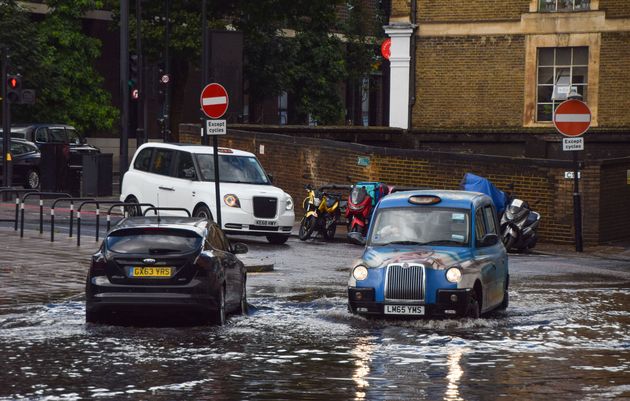
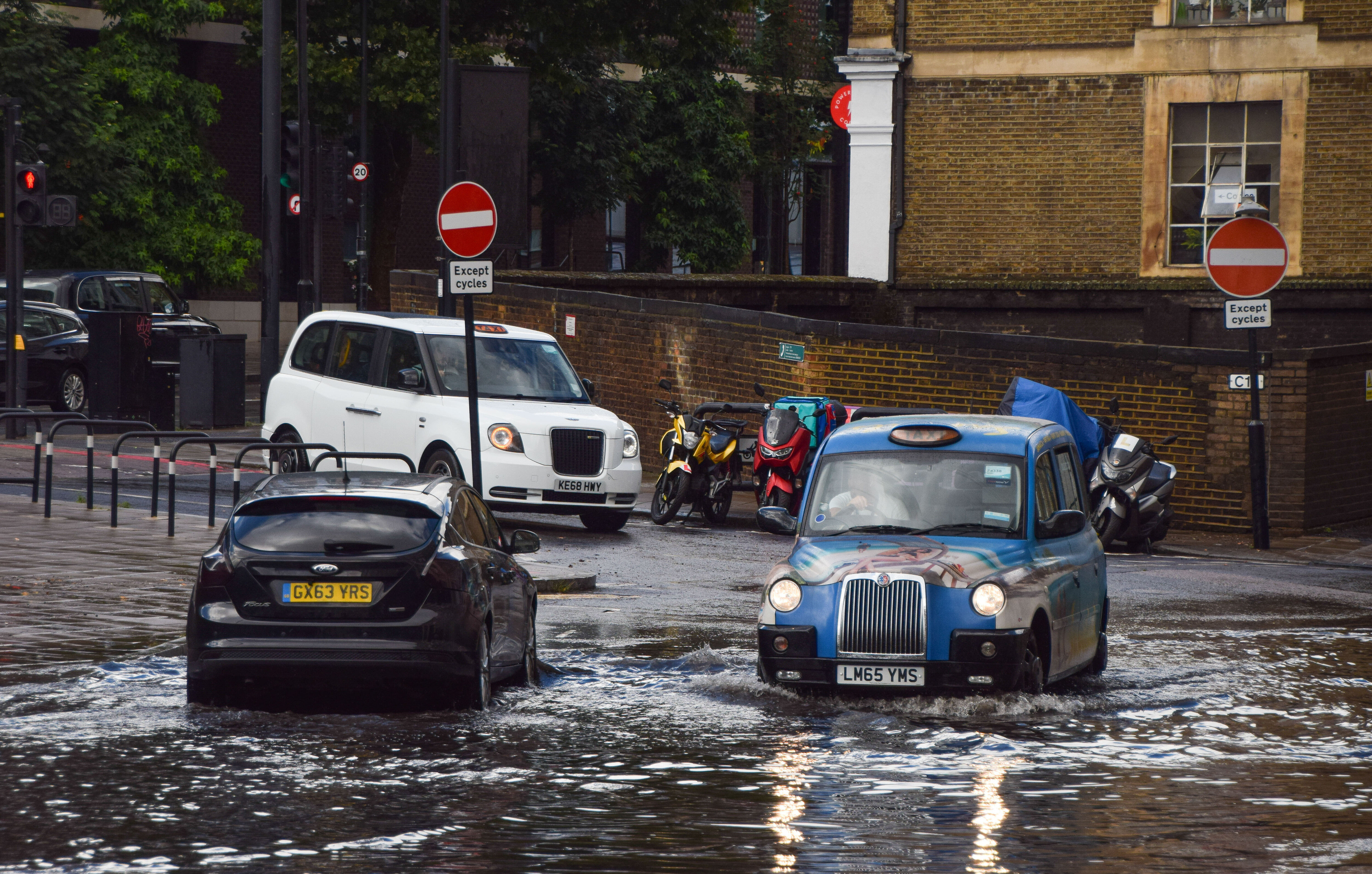
SOPA Images via Getty ImagesA taxi drives through a flooded Farringdon Lane in central London after a day of heavy rain in the capital in 2021
4. Time is ‘getting a bit thin’ to make a change
The Energy and Climate Intelligence Unit’s Jess Ralston said the UK needs to make an action plan ahead of the year it hosts the climate summit.
She told Sky News: “This year is the government’s chance to prove to the world that they are not just talking about this, they are delivering on it as well.
“Time is getting a bit thin.
“If we don’t take action now we risk falling to the back of the pack on tackling climate change. We also risk missing out on new life-long jobs in green industries, which are the future of the UK.”
However, the government did respond to Ralston’s complaints.
A spokesperson said: “Our forthcoming strategies on heat and buildings, hydrogen, transport and comprehensive net zero strategy this year will set out more of the very policies the Climate Change Committee is calling for as we redouble our efforts to end the UK’s contribution to climate change.”
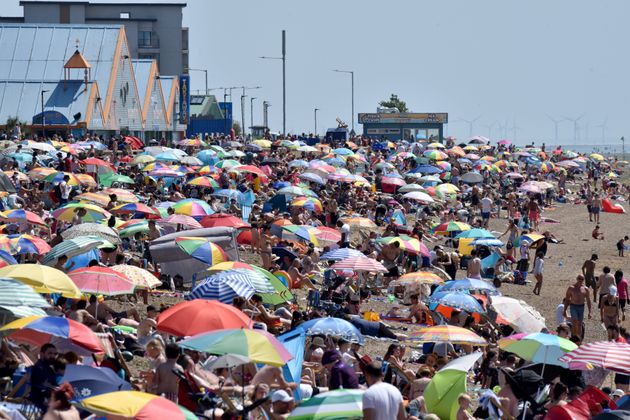
John Keeble via Getty ImagesHeatwaves are becoming more frequent in the UK
5. Many changes are already ‘locked in’
According to the Climate Change Committee, the UK has already seen the average land temperature rise by around 12 degrees Celsius from pre-industrial levels.
Sea levels from around the country have risen by 16cm since 1900 as well, and extreme heat is becoming more common.
In the last five years, more than 57,000 new homes have been built which the committee believes are not resilient enough to sustain higher temperatures.
In the last three years, there have been 4,000 deaths related to heat in England alone.
Nearly 60 percent of the total risks noted by the committee were also given the highest urgency score.
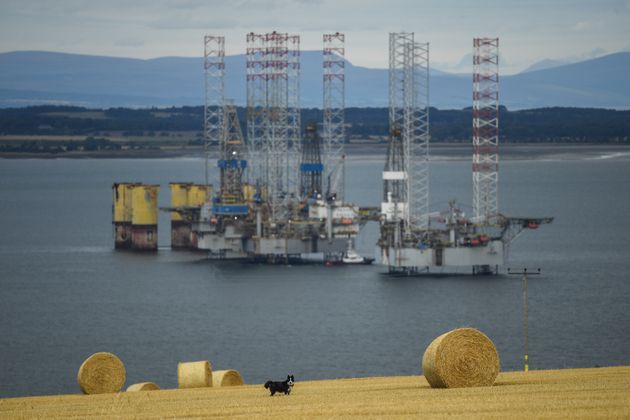
Peter Summers via Getty ImagesOil rigs in Scotland
6. The UK gives a lot of subsidies to fossil fuel companies
Britain gives more subsidies to fossil fuel firms than any other country in Europe.
The government is also attempting to open a new coal mine in Cumbria, near Whitehaven, while continuing to grant new oil and gas exploration licenses.
There is an ongoing debate about the proposal to mine Cambo – an oil field in the North Sea – as well, even though it could undermine the UK’s credibility at COP26 in Glasgow come November.
This site could produce up to 880 million barrels of oil.
However, shouting down calls from activists not to open the oil field, Downing Street has said the initial exploration license was granted two decades ago.
It also claimed that if anything is extracted, the Oil and Gas Authority will only grant a license for 170 million barrels.
7. The UK relies on ‘false solutions’
The UK has been criticised for relying on “offsetting schemes” which promisees to reduce carbon emissions in the future.
However, delayed action could contribute to an additional 1.4 degrees Celcius of warming.
Friends Of The Earth claimed carbon offsetting does not work most of the time in practice, after a study for the European Commission found only 2% of offsetting projects were likely to resulted in additional emissions reductions.
The campaigners claimed carbon-offsetting was not the best way to tackle the climate crisis, and that it was best to prioritise the reduction of carbon emissions. This is a view also shared by renowned environmental organisation, Greenpeace.
HuffPost is part of Verizon Media. Verizon Media and our partners need your consent to access your device and use your data (including location) to understand your interests, and provide and measure personalised ads. Verizon Media will also provide you with personalised ads on partner products. Learn more.
How Verizon Media and our partners bring you better ad experiences
To give you a better overall experience, we want to provide relevant ads that are more useful to you. For example, when you search for a film, we use your search information and location to show the most relevant cinemas near you. We also use this information to show you ads for similar films you may like in the future. Like Verizon Media, our partners may also show you ads that they think match your interests.