Actually, There Was Nothing Indian About The British Museum’s India-Themed Pink Ball

Let’s get the obvious irony out of the way. I like to think of myself as something of a museum buff, and London really panders to this curiosity with a spectrum of exhibitions that span from obvious to obscure.

Yet the one–plenty famous–cultural space that many immigrants, including me, struggle to walk up to is the British Museum. Or as some historians would call it, the grand British repository of stolen artefacts that were forcibly taken from people of colour during the colonial rule.

Now that you have the context in place, imagine the absolute shock that swept over when the British Museum announced that the theme for its first ever fundraising ball, an across-the-Atlantic parallel to the revered Met Gala, is inspired by ancient India. Call it internalised colonialism, but the idea of this massive, momentous occasion being anchored to desi textiles and crafts felt exhilarating, as if it was validating some long held desire for approval.

Immediately taken in, I did all the research I could. Held on October 18 for 800 exclusive guests who pay £2000 each to enter, the event marks the end of the museum’s Ancient India: Living Traditions exhibition.

It also serves a dual purpose: first, to solidify London’s position as the global centre of culture and second, to raise money for the museum’s many international partnerships, ranging from archeological projects in Ghana and Iraq to Mumbai.

And then came the fine text: “the theme for 2025 is pink, drawing inspiration from the colours and light of India…” Wait, what?

How did the organisers whittle down centuries of Indian design and culture to a singular colour? Who was in this room and how did they all nod to this bizarrely random choice? I remember looking around in disbelief as I read the announcement, confused that no one else was kicking and throwing their arms in protest.

Well, fortunately, PhD candidate, podcast host and Substacker Maalvika Bhat resonates with the sentiment. “To say ‘inspired by India’ and then arrive at ‘pink gowns’ feels like a quiet tragedy, a flattening of textile history, trade, and storytelling,” she says. “Indian fashion has never just been decorative; it’s been migratory, political, and philosophical, it is a record of movement, resistance, and craft.” I couldn’t agree more, but a part of me really wanted this big Ball to be a reclamation of years of wrongdoing and a tiny step towards accountability.

So I reasoned with myself to be patient, to wait until the evening arrives and hold a little space to be pleasantly surprised. Also the museum’s British Ball 2025 Committee List stockpiled some South Asian names, from luxury couturier Sabyasachi Mukherjee and Bollywood actor Sonam Kapoor to The Business of Fashion’s founder Imran Amed and a string of Indian billionaires.

Surely, these many fashion biggies in a room will platform indigenous crafts and age-old textile practices, right?!

Turns out, most of the people from that committee didn’t show up to the Pink Ball, or in the off chance that they did, they were not covered by any media which, let’s be real, is implausible.

And from the creme of London that did attend, here are some standout looks: Janet Jackson wore a rouge Stephane Rolland gown, Adot Gak arrived in Miss Sohee, Adwoa Aboah in Saint Laurent, Lady Kitty Spencer in Dolce & Gabbana and Naomi Campbell took the cake by wearing a Givenchy ode to the Union Jack flag. This longlist is so obviously jarring it feels like a prank.

I can count on one hand how many famous people actually wore Indian designers or textiles. There’s Isha Ambani, billionaire heiress and co-chair of the Ball, in a two-piece, hand embroidered set by Abu Jani Sandeep Khosla, her mother and patron of the arts Nita Ambani in a sari by Swades and actor-creator Uorfi Javed in another AJSK look. Maybe if you screen the internet with a microscope you can find a couple more looks. Everyone else just wore gowns and Western Formals in various tonalities of pink and dubbed that as effort enough towards an India-inspired dress code.

This utter lack of thought is more striking in the UK where Asians are the largest minority. “Even if people didn’t want to wear homegrown designers, they had the opportunity to work with British-Indian names like Harri, Ahluwalia, Ashish or Supriya Lele,” says fashion and culture writer Avani Thakkar, frustrated that the gala was reduced to just another red carpet.

Meanwhile, culture creator and strategist Pranjal Jain draws attention to the disparity in rigour and care between the British Museum’s India-inspired Ball versus its recently concluded exhibition. “The resources, attention to detail, and respect given to that exhibit far exceeded what this high-budget, highly publicized event invested in its programming. This dissonance raises a question: why does an academic exhibit get thorough research and thoughtful curation, while a gala with presumably more visibility and budget doesn’t,” asks Jain. “It points to a broader pattern where performative nods to culture—without depth, context, or narrative—are considered sufficient for social events, even when the opportunity to do better is obvious.”

The closer you look, the more hollow the attempts at representation feel. In the name of driving in Indian culture, the Pink Ball served attendees a desi culinary fare in hand painted tiffin boxes. Even if the effort was well intentioned, the lack of context positions it better as mockery than celebration. Instead of borrowing rich Indian textiles such as Kanjivaram silks, sheer mulmul cotton woven with chikankari or rolls of ikat as drapes and finery, the gala filled the museum with pink light as decor. Imagine the gall of having Sabyasachi, among the most aspirational craft names of the world, on your committee and not leaning on him for curatorial guidance on traditional design?

The timing further heightens the disappointment. The British Museum’s apparent ode to India came in when anti-immigrant sentiment in the UK continues to rise. On September 13, mere weeks before attendees wore pink to the Ball, 150,000 people took part in a London march organised by far-right activist Tommy Robinson to ‘Unite the Kingdom’ against residents from the embittered “outside”. Beyond the political anxiety brewing on ground, rooms of art and culture have also echoed this failure to credit. Only a few months ago the internet misappropriated the Indian dupatta as a Scandinavian scarf while Prada crafted footwear inspired by regional Kolhapuri slippers without so much as a mention to the artisanal communities.

“So much of the world already wears India without realising it, in the plaid that began as Madras checks…and the bandanas that were once wrapped around the heads of Indian workers before they became American symbols,” explains Bhat. And this refusal to acknowledge and to appreciate remains the issue.

Sure, the British Museum’s Ball could not undo decades of deep rooted bias and appropriation but by platforming Indian crafts head on, it had a real opportunity to make a statement. To make millions feel seen and their place in this country secured just a little safer.

But sadly, the Pink Ball was far from it, rather it was just another tokenistic jab at diversity where India, once known as the land of snakecharmers and colourful bazaars, was still just that. Only now packaged marginally more politically correct.

Same essence, different fonts.

Share Button

The Internet Loves Getting ‘Cheaters’ Fired – But I Worry We’re Missing The Point

I still remember the backlash when it turned out that Ned Fulmer, the ex-BuzzFeeder who had been dubbed the “wife guy” of online group Try Guys, had cheated on his partner with his colleague.

He was let go from his Try Guys role amidst public outrage. And now, Astronomer’s CEO Andy Bryon has stepped down from his role following a TikTok clip which some online sleuths say shows him cheating with his HR lead at a Coldplay concert.

Though the company have not confirmed Andy was the person in the viral video, they have written in a statement that “Our leaders are expected to set the standard in both conduct and accountability, and recently, that standard was not met.”

I have already shared that I’m not the biggest fan of how some people are engaging with the “Coldplay affair.”

Nor do I think that public reaction should influence a person’s professional status before an official investigation.

For instance, the company’s Senior Director of People, “identified” by TikTok detectives, has had her LinkedIn profile bombarded by commenters who think she got her promotion by hiding her boss’ romance.

The comments came despite there being absolutely no evidence that this was the case (the company has since revealed she “was not there. This is a rumour started on Twitter”).

This is wrong. A likely innocent woman’s professional page is now littered with potentially career-disrupting claims due to almost certainly baseless delusions of online “accountability.”

That’s the sort of perversely gleeful dogpiling I’m sure Jon Ronson’s So You’ve Been Publicly Shamed would have a field day with.

Ned Fulmer

via Associated Press

Ned Fulmer

Lawyer Eric Kingsley, firm partner at Kingsley Szamet Employment Lawyers, told us: “Legally, the private life of an individual usually will not be cause for termination unless the private life somehow overlaps the professional environment or threatens the organisation.”

But in the case of both Fulmer and, if true, Bryon, there’s more to the story than just “bad vibes.”

“If the conduct in question involves other staff members or directly affects the workplace environment, the rationale for termination greatly changes,” the lawyer said.

Fulmer’s relationship was with a relatively junior employee, while Bryon’s suspected “affair” was alleged to be with his HR lead.

“A Chief Executive Officer being involved in a romantic relationship with an employee, even more so if there exists a position of power, creates huge potential for problems of favouritism, coercion, and the risk of legal action based upon harassment or retribution,” Kingsley added.

“Even if the relationship remains voluntary, the potential can damage the morale of employees, cause intra-company disputes, or violate stated policies of the company. Some companies place explicit policies regarding intra-company relations in place in order to avoid complications.”

The pair on a kiss cam

@instaagrace via TikTok

The pair on a kiss cam

Meanwhile, Thomas Roulet, a fellow and director of studies in psychology and behavioural science at King’s College, Cambridge, says that “If someone’s personal life affects their professional performance and engagement, yes, we could definitely consider HR interventions (it could be a warning or go as far as getting fired).”

The same goes if their performance and judgement are affected by the relationship, he added.

But I don’t think unfairly prying and overly moralistic internet commenters keep those rules in mind in their hunt for a perceived “bad guy” – Astronomer’s Senior Director of People is proof that many of us make the court of public opinion far too punishing, despite using inconsistent “laws.”

That misses the point; it’s all about power dynamics.

As it happens, piling on an (again, likely innocent) woman who you believe to have gotten her promotion based solely on hiding an affair without any evidence whatsoever is not exactly the best use of our collective power.

I fear the “reward” of firing a person armchair warriors believe to have cheated has left some to believe that their beliefs about adultery, whether grounded or not, ought to result in indiscriminate real-life action.

Personally, I don’t think that unkind quest has anything to do with accountability; we are confusing our own amateur sleuthing for genuine, professional investigation.

Just because the two might sometimes have the same result, though, does not mean it’s fair to equate them.

Share Button

Opinion: Karen Millen Called A Breastfeeding Mum ‘Selfish’ – Here’s Why She’s Wrong

I’m breastfeeding my 1.5-year-old so naturally we’re probably both addicted to it and she’s going to be emotionally ruined. That’s according to Karen Millen’s logic, anyway.

In a bizarre segment on Jeremy, Storm & Vanessa On 5 this week, in which for whatever reason they thought it was OK to pass judgement on a mum’s choice to breastfeed her three-year-old, the fashion designer suggested the parent had breastfed for “far too long”.

“There’s no benefit, is there, for a child to be breastfed beyond six months really,” said Millen.

And she didn’t stop there. “I think it’s quite a selfish thing on the mother’s part,” she continued.

When Vanessa Feltz pressed her on why she thought that, Millen replied: “Well I just think, you know, that’s not good emotionally for that child.

“I mean, what does that child do later in life and the attachment and, like you said, it becomes an addiction – and an addiction for that child too because they only know the boob … and it’s just not normal is it?”

I’m no expert in breastfeeding but I have breastfed two kids and can safely say what a load of codswallop (and that’s putting it politely).

As the NHS says, breastfeeding has long-term benefits for babies, lasting right into adulthood: “Any amount of breast milk has a positive effect. The longer you breastfeed, the longer the protection lasts and the greater the benefits.”

Breastfeeding can reduce a baby’s risk of infections, and diarrhoea and vomiting (with fewer visits to hospital as a result), as well as sudden infant death syndrome (SIDS), obesity and cardiovascular disease in adulthood.

The World Health Organisation adds that “breastfeeding is one of the most effective ways to ensure child health and survival”.

Not only does breastmilk provide all the energy and nutrients babies need for the first months of life, but in the second half of the first year – which is when Karen thinks we should stop whipping out the boob – it can provide up to half or more of a child’s nutritional needs.

Oh, and up to one third of their nutritional requirements during the second year of life. (But go off Karen about how there’s no benefit past six months.)

As for the emotional damage we’re inflicting, according to the American Academy of Family Physicians (AAFP) “there is no evidence that extended breastfeeding is harmful to parent or child”.

Whether a parent chooses to keep going, or stop breastfeeding, or feed their baby with formula milk, it’s ultimately their choice to do so – and they shouldn’t have to fear being shamed or slammed as “selfish” for doing so.

I’d argue that if you find it weird to see a kid breastfeeding, it probably says more about you and your feelings towards breasts than anything else.

The judgement emanating from that TV sofa – the suggestion it’s “selfish” to feed a child past a certain point, and “not good emotionally” for them – made me, as a breastfeeding mum, feel like a pariah. It was a gut punch – and I won’t be the only one who felt that.

The wrinkled noses, the scoffing, the wincing when a viewer called in and said they breastfed their child until the age of four… There is a huge stigma around extended breastfeeding. I’ve experienced it, I’ve written about it, I know it’s there.

And unhelpful – not to mention, incorrect – comments made on national TV simply add fuel to the fire. It’s yet another stick to beat mothers with. And honestly? I’m fed up of it.

If you’re not breastfeeding your baby, you’re shamed. If you are breastfeeding them past 12 months, you’re shamed. Honestly, you can’t win.

Millen has since apologised, saying: “I know I’ve upset a lot of your viewers and that was not my intention. The question was aimed at a three-year-old being breastfed and my thoughts on that and my answers reflected that, not the subject of breastfeeding…

“And as a woman to women, I do respect your choices and I do want to support you. So my apologies once again, I hope you forgive me.”

For those feeding their child and facing the comments – whether from relatives, friends or people on the TV who should know better – know that you’re not selfish, fuelling some weird boob addiction, or ruining your child emotionally.

Those who do manage to breastfeed past six months deserve a bloody medal, not the nation’s judgement.

Update: the article has been amended to include Karen Millen’s apology.

Share Button

Rushed Vaccine Passports Would Do More Harm Than Good

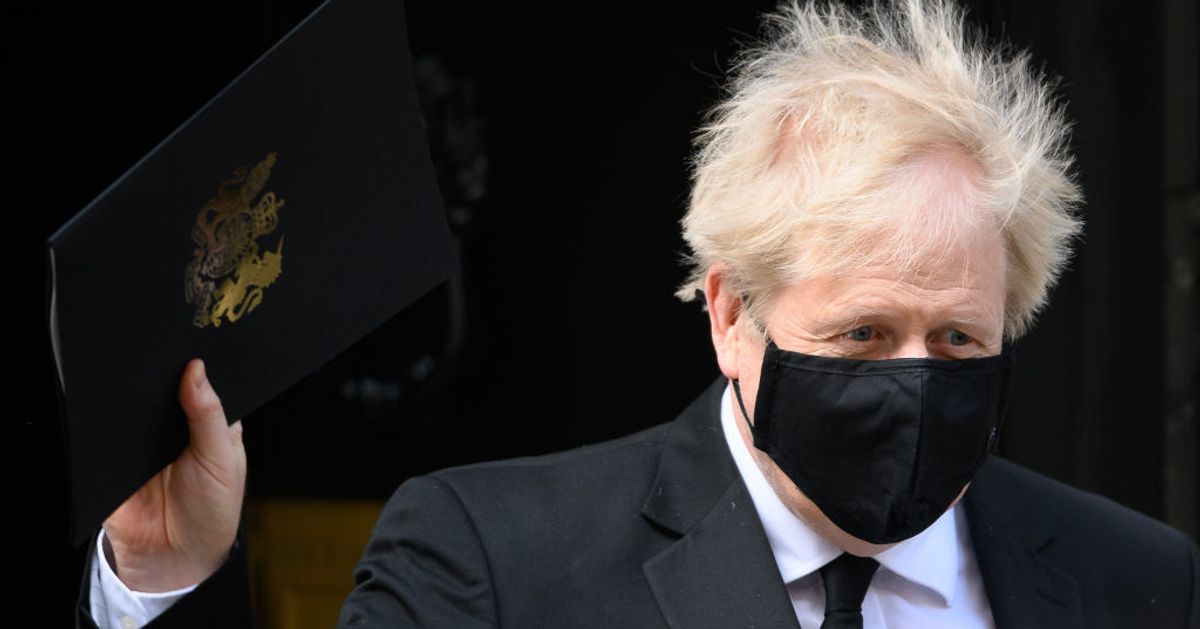
With drinkers huddled around makeshift heaters outside pubs trying to enjoy the latest taste of freedom, the biggest item in Boris Johnson’s in-tray as he considers the next stages of the government’s lockdown exit roadmap is the vexed question of Covid passports. 

A government review is ongoing. It will not report until June, but two weeks ago Johnson came out in favour of their domestic use. Covid passports are already set to become a feature of international travel, given disparities in infection rates and vaccination schedules around the world. 

The prime minister said passports would be piloted at mass events, including football matches and concerts; they could be used in theatres and nightclubs; and he would not rule them out in shops, bars, restaurants and, yes, pubs. 

Johnson faces opposition across parliament, while scientists, business owners, civil liberties groups and others have all voiced concerns. Yet when pressed on his rationale, he has been evasive. 

No one should expect the prime minister to be able to present the exact workings of a future system – the whole point of the review and the pilots is to look at options. But in the coming weeks, a crucial phase in the vaccine rollout and lifting of lockdown, he will need some better answers. A new Institute for Government report sets out eight questions that the government needs to address, from what problem passports could solve to where and how they could feasibly work.

Johnson may understandably be keen to avoid another broken promise. But a rushed or poorly thought through passport scheme could spread the virus and harm vaccine confidence

Johnson’s main rationale is that he view Covid passports as the only way to meet his target of removing social distancing measures entirely by 21 June. Scientific advisers are against this following major outbreaks in Europe, with modelling suggesting a third wave in the UK remains likely. A delay to the full easing of restrictions would allow further progress on vaccination, they argue, while there are also calls to tighten the border quarantine

The prime minister may understandably be keen to avoid another broken promise. But a rushed or poorly thought through passport scheme could spread the virus and harm vaccine confidence. 

First there is the question of enforcement. Large sports and music venues, which already have security and scan tickets on entry, may be able to implement a scheme. Piloting them in these venues and developing some capability makes sense as an insurance policy given the uncertainties ahead, including the threat of vaccine-resistant variants.  

But pubs and theatres have warned that they lack the capability and resources to do so. Ministers may think that reduced social distancing offers a sufficient incentive. Yet cash-strapped venues may end up operating without social distancing or proper enforcement – the worst of all worlds. It is hard to see how the government could check that all pubs in the land were complying.

The experience of the NHS contact tracing app – four months late and beset with problems – does not inspire confidence

Israel’s “green pass” is frequently cited in government documents, but the closer you look the less of a model it appears. True, the pass has been widely adopted, but bars and cafes have enforced it weakly, with many complaining of additional costs. Israeli venues are also still following social distancing measures, and (unlike in the UK) the government hasn’t announced any plans to change this. 

Next is technology. Developing an app that integrates vaccine status, PCR tests and rapid tests securely while protecting privacy and guarding against fraud would be a major challenge. The experience of the NHS contact tracing app – four months late and beset with problems – does not inspire confidence. There are questions, too, about the role of testing: the government may have a surplus of rapid tests, but their suitability as a “test and release” measure is unclear.

The government will also need to think very carefully about vaccine confidence and the risk of exclusion. Some passport proponents argue requiring passes for bars or clubs would incentivise the young to get vaccinated. Perhaps, but threatening exclusion from core activities also appears to reduce confidence among those least likely to take the vaccine, who often lack trust in government. This has happened in Israel and could happen here, where uptake already varies across groups. Vaccine confidence already faces a stern test following evidence of a link between the Oxford/AstraZeneca vaccine and incredibly rare blood clotting.  

Covid passports could have real benefits in helping countries bridge the gap between lockdowns and the “new normal”. Examining what is possible is sensible. But there is a risk of the government seeing them as another “moonshot” or a shortcut back to normality while glossing over the major difficulties and risks involved. Without more compelling answers, it will be hard for parliament – or the public – to have confidence in its plan. 

Tom Sasse is an associate director at the Institute for Government and co-author of Covid Passports: Questions for the Government. Follow him on Twitter at @tom_sasse

Share Button

Sarah Everard’s Mourners Will Not Be Cowed By A Crackdown On Protests

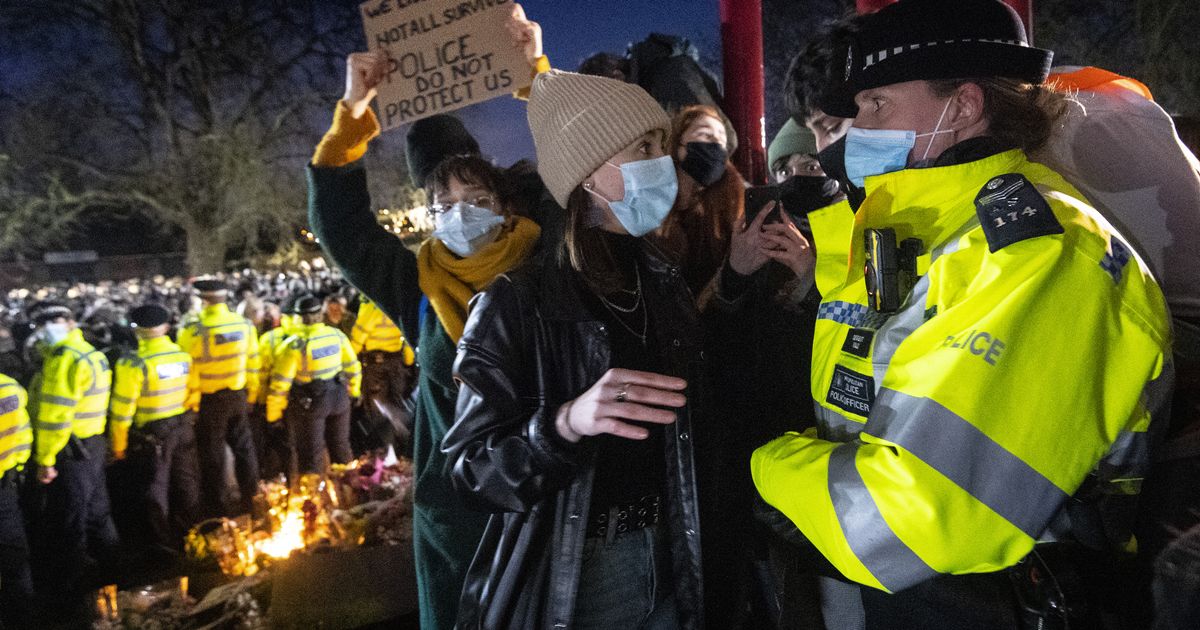
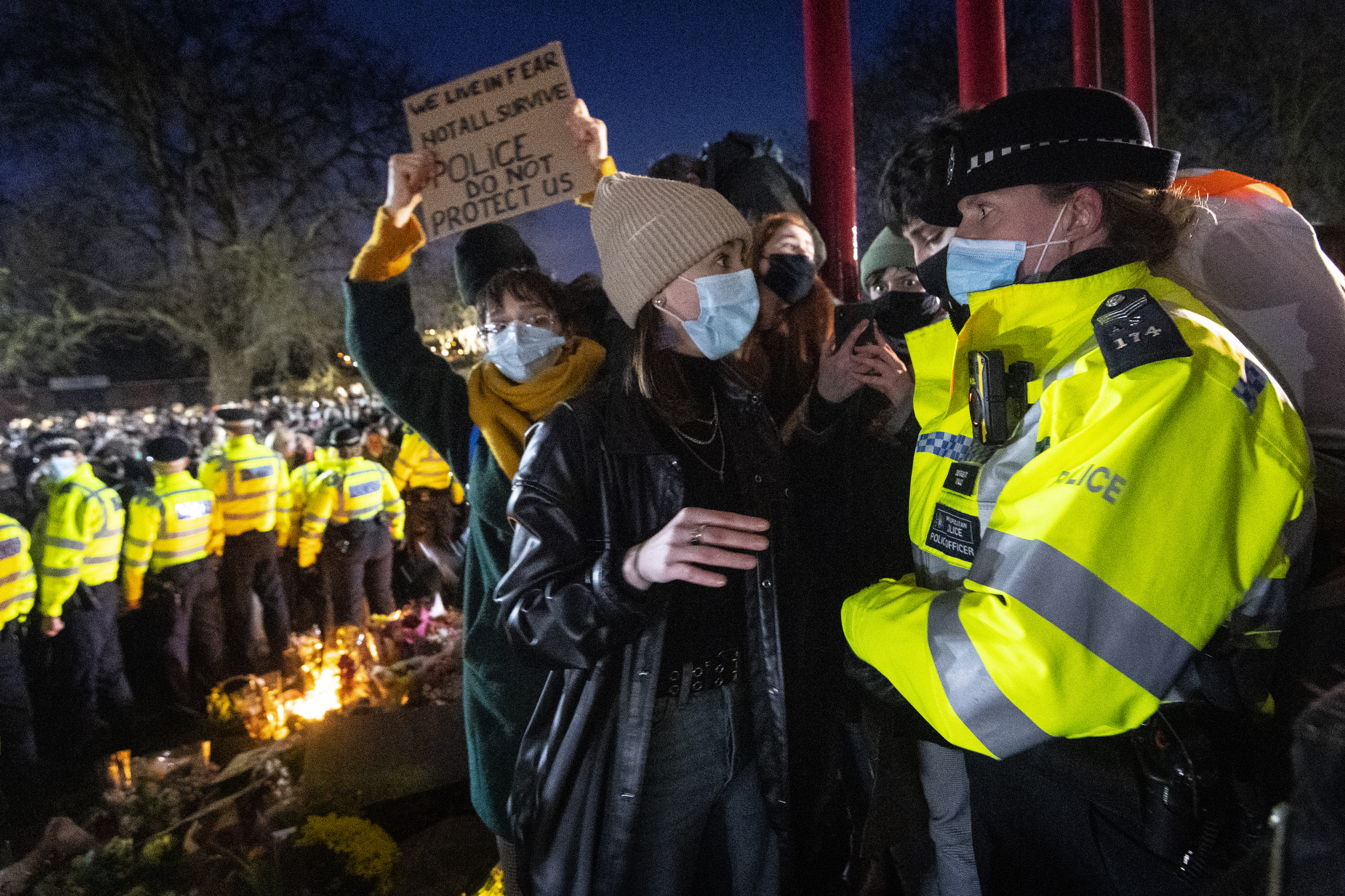
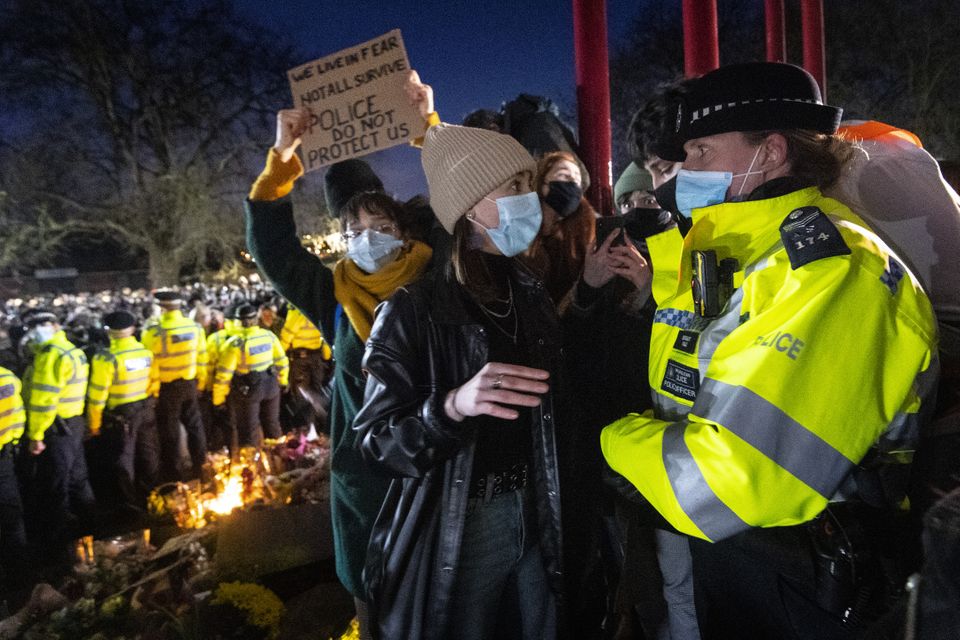
The scenes from Clapham Common on Saturday evening were horrific by anyone’s standards. The sight of Met Police officers trampling flowers lain in remembrance, dragging away and pinning to the floor women attending a vigil would be stomach churning under normal circumstances. But these are not normal circumstances.  

That a vigil held in the wake of the horrific murder of Sarah Everard should descend into such horror, allegedly at the hands of an officer of the same police force, shames us all. But whilst the fallout from this shameful episode and the calls for Cressida Dick’s resignation will ring out clearly in the next few days and weeks, we must organise against the next assault on our liberties.

There is no doubt that Cressida Dick should resign. No justification exists for the scenes on Clapham Common but this will not solve the underlying issue. 

This week the police, crime, sentencing and courts bill come before the House of Commons. This hurried piece of legislation is wide ranging and contains many parts to it which appear fairly benign. Sadly, there are some dangerous aspects to the bill too. At the heart of it lies the dangerous and dark curbs on protest. It is a cruel quirk that commissioner Dick has penned an accompanying statement to the legislation.  

It is why the illusionists in government have been so keen to provoke a culture war. To try to divide those usually opposed to them into opposing camps

One might question why a government riding so high in the polls would seek to further neuter dissenting voices. But after presiding over a response to the Covid pandemic, which has seen us suffer the world’s worst death tolls and amongst the most disastrous financial slumps, they are aware their hold on power is built on sand.

It is why the illusionists in government have been so keen to provoke a culture war. To try to divide those usually opposed to them into opposing camps. Those protesting the brutality that people of colour suffer, or against the destruction of our planet, are branded extremists. 

It is in this framing that the bill, in front of the Commons this week, is presented. In doing so the government are seeking consent from those who may have been conditioned to believe that the aforementioned groups should have draconian measures implemented upon them, whilst hoping they do not realise that the same legislation would have much farther-reaching consequences. What they appear not to have bargained for is something so shocking as Saturday’s events coming before the legislation could pass.

Saturday’s shameful scenes put protesters and the government on a collision course. This time, as ever, it is the protesters who are on the side of the angels

The history of protest is littered with events that have changed history, where people who have demanded change we now see as common, sense they have been demonised for daring to ask. The suffragettes, civil rights movement and trade unionists through the ages have all been forced through fighting for what is right, onto the wrong side of the law. Should the government do so again, protests will not stop – criminalising protest never ends well. 

As a young miner on strike during the 1984-85 dispute I saw first-hand how politically enabled state apparatus could be turned on hardworking communities for opposing the government’s regressive agenda. As a representative of those communities who suffered so much as a result, I will never bow to the authoritarianism embodied by this government. I am very pleased that the Labour frontbench see the dark turn at the heart of this legislation and will be whipping to oppose.

Like those giants who have protested before them, the women mourning Sarah Everard and demanding change will not be cowed into submission by a legal framework intent on silencing them. Saturday’s shameful scenes put protesters and the government on a collision course. This time, as ever, it is the protesters who are on the side of the angels.

Ian Lavery is the Labour MP for Wansbeck and former party chair.

Share Button

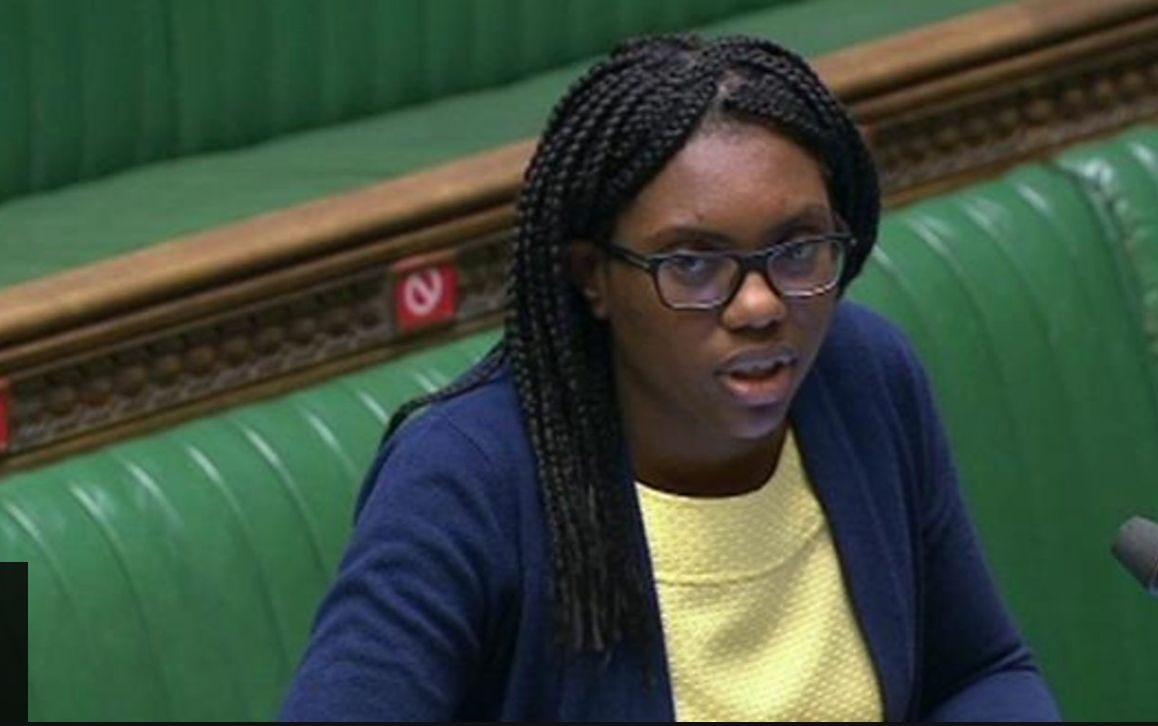
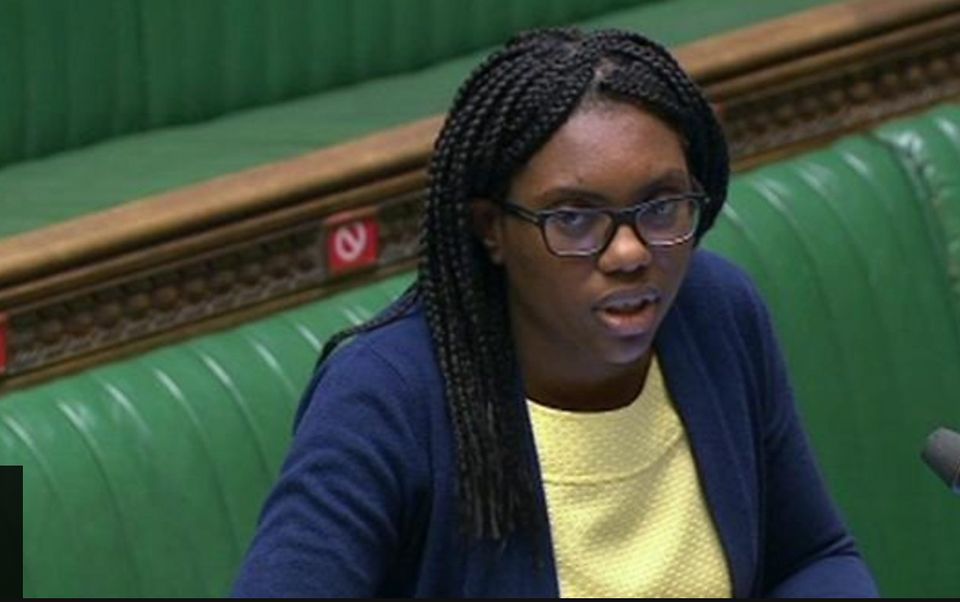
Who Is Accountable For Kemi Badenoch’s Public Attack On Our Journalist?

Some people call it “cancel culture”. Others call it accountability. Rightly or wrongly, your Twitter feed can get you in trouble at work, or worse. But we’ve now learned that members of our government are not held to the same standards as the rest of us.

It’s almost a month since Britain’s equalities minister posted an eight-tweet thread filled with false allegations about the conduct of HuffPost reporter Nadine White. Nadine had asked Kemi Badenoch, as one of parliament’s most senior Black MPs and the minister with the portfolio for race and inequality, why she hadn’t appeared in a video aimed at increasing uptake of the vaccine among Black people. She emailed the MP’s office, and the Treasury press team, where Badenoch also holds a ministerial role. Rather than respond via either of those channels, the minister fired off a Twitter tirade about how this routine press enquiry was a “sad insight into how some journalists operate”, describing it as “creepy and bizarre”. Nadine was forced to lock her Twitter account after she received abuse.

It took us a couple of hours to file a formal complaint with the Cabinet Office. It took them three and a half weeks to reply, but at last the government has seen fit to answer our complaint. 

Their letter is short and to the point. “I note that the tweets were not issued from a government Twitter account but instead from a personal Twitter account,” writes Cabinet Office permanent secretary Alex Chisholm. “The minister is personally responsible for deciding how to act and conduct herself, and for justifying her own actions and conduct. As such, this is a matter on which the minister would be best placed to offer a response.”

The ministerial code states that “ministers of the Crown are expected to maintain high standards of behaviour and to behave in a way that upholds the highest standards of propriety”. But not, it seems, on their ministerial Twitter accounts. 

We were not alone in mistakenly thinking that the minister’s verified Twitter account, in which she describes herself as “Treasury & Equalities Minister”, was in some way linked to her job

How stupid of us. It is cold comfort that we were not alone in mistakenly thinking that the minister’s verified Twitter account, in which she describes herself as “Treasury & Equalities Minister”, was in some way linked to her job. The National Union of Journalists called Badenoch’s original outburst about Nadine “frankly weird, completely out of order and an abuse of her privilege”. The Council of Europe’s Safety of Journalists Platform flagged the incident as a potential threat to media freedom under the European Convention on Human Rights. The European Centre for Press and Media Freedom, recorded the attack as a “violation of media freedom”. I wonder how many of Kemi Badenoch’s 40,000 followers are also under the impression that her Twitter account is a reflection of her professional role and work as an elected representative.

Also mistaken was No.10’s race adviser Samuel Kasumu, who was so upset about Kemi Badenoch’s behaviour that he handed in, but was then persuaded to withdraw, his resignation. Apparently unaware of that Kemi Badenoch’s official parliamentary Twitter account is only “personal”, he wrote: “I believe the Ministerial Code was breached. However, more concerning than the act was the lack of response internally. It was not OK or justifiable, but somehow nothing was said. I waited, and waited, for something from the senior leadership team to even point to an expected standard, but it did not materialise.”

Nadine is a reporter who has done crucial work for HuffPost UK on racial inequality in the UK, not least during the Covid pandemic. So it’s just as well that it was not in a ministerial capacity, but from her “personal Twitter account”, that the minister for equalities made a show of not understanding how news works. Had she only had her professional hat on, she might have remembered that journalists send literally hundreds of requests for comment every day to every institution in the UK in order to find out if a story is accurate. We don’t publish stories without doing this – indeed, no story was published in this case.

It is a little confusing that Kemi Badenoch published screenshots of messages sent to her professional address and the Treasury press office in a “personal” capacity. But it’s certainly a relief that, when she declared to her 39,000 followers that Nadine’s conduct was a “sad insight into how some journalists operate”, and accused HuffPost and Nadine of “looking to sow distrust”, she wasn’t speaking as a government minister – because these claims are not only unbecoming of a senior politician, but betray either an alarming ignorance of how the press fits into our democratic system or a cynical display of bad faith.

In the end, Kemi Badenoch broke her silence by contacting a journalist – not Nadine or anyone from HuffPost, but a reporter at her local paper, the Saffron Walden Reporter. In a statement, she repeated her defamatory allegations about Nadine, this time claiming we had “stoked” a “false story” on social media, claims that were withdrawn from publication when it was pointed out that there was no evidence for them.

This apparently did not trouble her ministerial employers in the Cabinet Office or No.10. Perhaps they might like to clarify whether someone is speaking in an official capacity when they begin a statement with the words “as Equalities Minister”. 

It is absurd to any reasonable person to suggest the words of a minister are somehow less accountable if they are written by them on Twitter than a press release, or were given in an interview.

So who is responsible for the actions of the government’s ministers, if not the government? The Cabinet Office was clear: “This is a matter on which the minister would be best placed to offer a response.” No.10 agreed, with the prime minister’s press secretary saying it was “a matter for Kemi Badenoch” –although she added: “That would not be how we in No.10 would deal with these things.” 

Kemi Badenoch’s office, however, does not agree that it her responsibility, telling Nadine this week: “She has nothing further to add beyond what is included in the letter sent earlier today from Alex Chisholm to your editor.” The same Alex Chisholm who made it very clear it was for her to respond.

This story is not just about a government machine that is out of touch with the realities of our digital lives. It is absurd to any reasonable person to suggest that the words of a minister are somehow less accountable if they are written by them on Twitter than if they appeared in a press release, or were given in an interview. If any member of the public were to tweet out emails sent to their work address, accompanied by a slew of false allegations, they would expect a swift call from HR. Indeed, someone might like to tell transport secretary Grant Shapps, who formally announces weekly updates to the government’s travel and quarantine policies through his own Twitter account, whose handle he literally read out in Parliament. 

The ministerial code, which the government concluded Kemi Badenoch had not breached with her public attack on a journalist doing her job, is built around the loftily-titled Seven Principles of Public Life. Hopefully ministers are asked to read it when they enter office. “Accountability,” reads one principle. “Holders of public office are accountable for their decisions and actions and must submit themselves to whatever scrutiny necessary to ensure this.”

We’re a long way from David Cameron’s famously cringeworthy comment that “too many tweets might make a twat” – ministers of Kemi Badenoch’s generation are all too aware of how useful a platform Twitter is for their political and personal profile. But where they are rightly accountable for their conduct as elected representatives elsewhere in their lives, this effectively allows them impunity online.

The Cabinet Office themselves “noted” to us in their response that “the prime minister’s press secretary has already provided comments on this matter”, suggesting a tacit endorsement of their belief that this is not how a minister should behave. But both institutions apparently felt it was not their place to get involved.

Like a parent banning their teenager’s laptop but leaving them with a phone, Whitehall feels dangerously out of touch in providing such an obvious loophole. Remember next time you see a prospective candidate or councillor cancelled online for tweets they sent at university – our government ministers are allowed to say whatever they like.

Jess Brammar is editor-in-chief of HuffPost UK. Follow her on Twitter @jessbrammar

Share Button

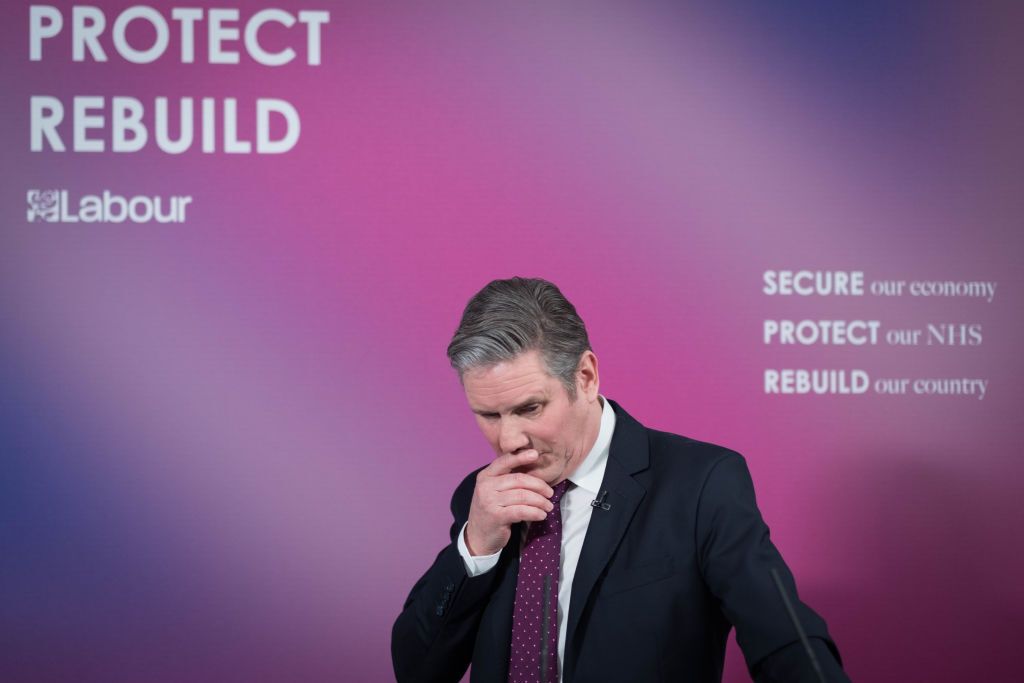
Keir Starmer Must Dive Headlong Into Britain’s Challenges, Not Simply Dip A Toe

For the last two years, we have consistently pointed out the need for a rupture in the existing political, economic and social arrangements in Britain. The system simply is not working for the majority, and Labour needs to be clear that we are determined to bring about root and branch change. 

The strategy we have adopted under Starmer’s leadership so far has simply not worked. “Constructive opposition” in a national crisis may play well with focus groups, but it is clear that seeking to gain narrow party advantage is totally inappropriate when people are dying and the hospitals are at breaking point. 

But in the real world it has embedded a Tory narrative that they’ve done as well as could be expected. This is clearly untrue. Outside of Westminster, hundreds of thousands of families have lost loved ones and millions more are in financial peril due to Tory incompetence and neoliberal ideology. Yet still they cling to a stubborn lead in the polls. 

While there was much in Keir Starmer’s speech on Thursday that members across the Labour party could find agreement with, it certainly didn’t feel like something which lived up to the hype. Opposing the cut to Universal Credit, refusing to back an increase in council tax and an end to the public sector pay freeze have widespread support, but are not earth-shattering pronouncements. This was an opportunity to dive headlong into the sea of challenges we face – but it felt like we merely dipped a toe in.

Our country is at serious risk of calamitous decline, and we must show how to break through to a new dawn.

Where Brexit catalysed changes in voting patterns, occurring over decades, Covid is hastening the demise of the high street, laying bare injustices in the workforce and showing the frailties of a public service network that has been wilfully neglected. This is to say nothing of the crises of our time like climate change, demographic ageing, or automation. 

Problems of this magnitude can not be met with timidity. They need a bold confident Labour Party showing another way. Although we have great faith in the British people’s abilities, the truth is our country is at serious risk of calamitous decline, and we must show how to break through to a new dawn. 

Invoking the spirit of the post-war government and using Marmot as a rallying call seems appropriate; the millions of people who have suffered ill health, financial distress and loneliness must be given the promise of a better future. But this has to go beyond rhetoric. In the same way as Clement Attlee’s Labour offered the opportunity for Britain to “win the peace”, the Labour of now must offer a vision of “winning the health”.

We welcome the Labour plan to issue bonds to boost savings and fuel the post-Covid recovery, which was an innovative proposal in Starmer’s speech. But it falls short of the Marshall Plan-style scale of spending which is required to deliver the stated aim of stopping the neglect of British towns and villages in held back areas. 

Billionaires have raked in profits driven by the disaster that has befallen us all. A Labour Party comfortable in its own skin would have no issue calling this out.

In outlining the new contract with the British people we must be both ambitious for our country and concrete in the steps we will take. That 70% of children in poverty are in working families shows the current settlement is bust. 

As we outline a new relationship with business, workers must be at the forefront of our minds. Of course Labour should not be anti-business, but neither should it be subservient to it. The pandemic has shown the best and worst elements of British business and we should be confident in saying those who have exploited the Covid crisis for a competitive edge should play no part in setting the priorities of our country. We should also be confident in saying that the public institutions that have kept our country afloat in the last year belong in public ownership. 

Over the course of the pandemic as working people have seen their finances decimated, UK billionaires have raked in profits driven by the disaster that has befallen us all. A Labour Party comfortable in its own skin would have no issue calling this out and demanding a windfall tax on the profits of disaster. This could be used to fuel the renaissance that towns in all of our constituencies desperately need. 

If Labour is to win again, it must remember its roots and be comfortable in articulating the anguish of communities that turned away from it. Starmer’s speech showed an acknowledgement that the previous strategy wasn’t working. We urge the leadership to look at the monolithic challenges we face, reject the triangulation of the past, and outline a path to a country that truly is the best place in which to grow up and grow old.

Ian Lavery MP is the Labour MP for Wansbeck

Jon Trickett MP is the Labour MP for Hemsworth

Laura Smith is a Labour councillor and former MP for Crewe and Nantwich

Share Button

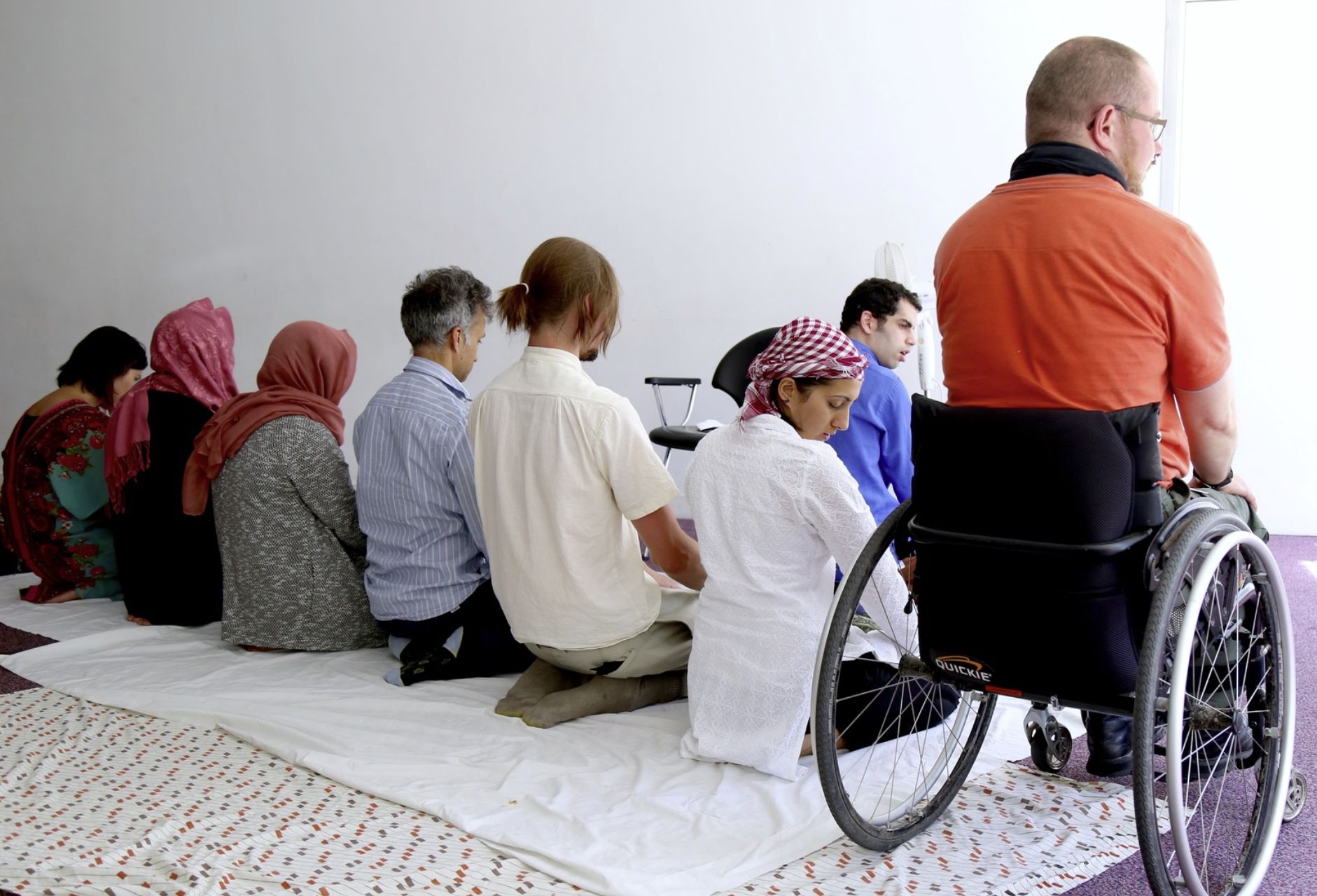
Woman’s Hour’s White Feminism Let Down Female Imams Like Me

HuffPost is part of Verizon Media. We and our partners will store and/or access information on your device through the use of cookies and similar technologies, to display personalised ads and content, for ad and content measurement, audience insights and product development.

Your personal data that may be used

  • Information about your device and internet connection, including your IP address
  • Browsing and search activity while using Verizon Media websites and apps
  • Precise location

Find out more about how we use your information in our Privacy Policy and Cookie Policy.

To enable Verizon Media and our partners to process your personal data select ‘I agree‘, or select ‘Manage settings‘ for more information and to manage your choices. You can change your choices at any time by visiting Your Privacy Controls.

Share Button

Hardening Of The Categories: Why We Have A Shortage Of Physicians To Treat COVID-19 Patients

Because science is advancing our understanding of medicine at an exponential rate, physicians and surgeons have been turning to subspecialization as a means to narrow their required domains of expertise.  “Carving out a niche” makes sense in a profession where new research is being published at a rate of two million articles per year. Just filtering the signal from the noise can be a full time job.

However, the consequences of narrowing one’s expertise is that you lose flexibility. For example, an orthopedist who has subspecialized in the surgical management of the shoulder joint doesn’t keep her skills sharp in knee replacement surgery or other general surgical procedures that she once performed. Neurologists who focus on movement disorders become comfortable with a small subset of diseases such as Parkinson’s, but then close their doors to patients with migraines or strokes.

The continued march towards ultra-subspecialization has been a boon in urban and academic centers, but has left spotty expertise in surrounding areas and small towns. And now, the COVID-19 pandemic has unmasked the biggest downside of niche medicine: a hardening of the categories that prevents many physicians from being able to help in times of crisis. Retina specialists, plastic surgeons, rheumatologists, and radiation oncologists (to name just a few) may want to help emergency medicine physicians (EM), internists (IM), and intensivists (CCM) expand their reach as COVID cases surge and hospitals become overwhelmed. But what are they to do? They are not trained to manage airways, place central lines, or monitor renal function, and legitimately fear legal repercussions should they attempt to do so.

Medicine is fundamentally based upon apprentice-style learning – this is why we undergo years of residency training – to stand shoulder-to-shoulder with more senior experts and learn their craft under close supervision. Upon graduation from medical school, physicians are deemed ineligible to treat patients until they have practical experience under their belts. The old adage: “see one, do one, teach one” is the bedrock of how we train. So now, there needs to be a pathway available for those who have completed residency to re-train to meet the demands of this crisis and others.

Perhaps it’s a radical idea to consider pairing subspecialist physicians with current frontline COVID-19 doctors – but turfing patients to “non physician practitioners” or NPPs when access is limited to an emergency medicine specialist,  internist, or intensivist, seems to be the current plan. I believe that medical school and internship are a solid foundation for COVID management (common to all physicians), and that given a designated EM, IM, or CCM mentor, the willing subspecialists will be able to follow protocols and take on new challenges rapidly and with excellence. I hope that the government will issue more detailed “good Samaritan” type laws to protect mentors and their subspecialty partners from frivolous law suits in times of COVID (those in place are for volunteer positions only), and that the house of medicine, led by the AMA and other sub-specialty organizations, will pave the way for rapid cross-disciplinary instruction and certification.

Going forward, there should be opportunities for post-residency, mid-career physicians to complete fellowship programs outside of their sub-specialty’s usual offerings. An ophthalmologist should have the ability to spend a year studying pulmonary medicine, for example, if they want to moonlight with an ICU physician in the future. In our current system, it is very difficult to obtain a fellowship after significant time has elapsed since one’s residency training. While there are a few “re-entry programs” for physicians who haven’t practiced clinical medicine for years, there is no path established for those who simply wish to switch specialties or assist outside of their specialty in a time of crisis.

I am not arguing that a fellowship should be considered equivalent to a residency program. We may need to create a new type of physician certification that allows fellowship-trained physicians from unrelated residency programs to operate under the license of an agreeable mentor/sponsor already established in the field by virtue of medical school and residency training. This would open up employment opportunities for over-specialized physicians, while not threatening those who are residency-trained in the field. In essence, this would allow physicians to operate in the way that NPPs have been for decades, and get subspecialty physicians off the bench and into the fight against COVID and perhaps into underserved areas more effectively as well.

For those subspecialists who have become disillusioned with their field, but still enjoy medicine or surgery – their talent could be retained if there were a path to re-training. An estimated 20% of physicians would change their specialty if they could. Currently, physicians have few clinical options if they no longer wish to practice in the field in which they completed a residency. I suspect that sweeping physician burnout rates (highest among mid-career physicians) could be improved by providing opportunities for “reimagining” themselves – and course-correcting to rekindle the scientific and clinical passion that led them to apply to medical school in the first place.

This would require some mental and regulatory flexibility – which could be a good side effect of the otherwise dreadful COVID pandemic.

Share Button

The New York Post Outed A Paramedic As A Sex Worker. Here’s What They Didn’t Tell You

HuffPost is part of Verizon Media. We and our partners will store and/or access information on your device through the use of cookies and similar technologies, to display personalised ads and content, for ad and content measurement, audience insights and product development.

Your personal data that may be used

  • Information about your device and internet connection, including your IP address
  • Browsing and search activity while using Verizon Media websites and apps
  • Precise location

Find out more about how we use your information in our Privacy Policy and Cookie Policy.

To enable Verizon Media and our partners to process your personal data select ‘I agree‘, or select ‘Manage settings‘ for more information and to manage your choices. You can change your choices at any time by visiting Your Privacy Controls.

Share Button