UK Elections 2022: 5 Takeaways As Tories Suffer ‘Shattering Night’

1. Boris GONE-son?: Tories in trouble

Make no bones about it, the Conservative Party has lost more than 400 seats and that is not good. For all the talk of a mid-term protest vote against the governing party, the Tories had already been duffed-up the last time the councils were contested four years ago, so hundreds more councillors going on a like-for-like basis should not be glossed over.

It’s telling the gloss that Boris Johnson’s outriders are painting with focuses on Labour’s lack of gains, not its own deficit. But there was scathing criticism from within the party, including this damning tweet from ex-MP and former Theresa May adviser Gavin Barwell, who called it a “wake up call”.

But, with Johnson facing a leadership challenge if 53 Tory MPs demand a vote of no confidence, there was little sign they were more prepared to wield the axe. With most critics in Westminster keeping their heads down, it was left it to grassroots Tories to speak out.

John Mallinson, leader of Carlisle City Council, hit out after Labour took control of the new Cumberland authority which will replace it, saying: “I think it is not just partygate, there is the integrity issue. Basically I just don’t feel people any longer have the confidence that the prime minister can be relied upon to tell the truth.”

Johnson himself said it had been a “mixed set of results” for the Tories. “It is mid-term,” he said, sticking to the script.

As the losses notched up, and edged towards 500 seats, a Labour Party spokesperson said: “This is a shattering result for the Conservatives.

“Boris Johnson was on the ballot paper and the British public has rejected him.

“The question every decent Conservative will be asking themselves is how much further are they willing fall for a man who never fails to put his own interest above his councillors, his MPs, his party, and his country.”

Next stop: tricky by-elections in Tiverton and Honiton and Wakefield.

2. Keir, there, everywhere: Labour’s contrasting fortunes

Labour’s performance is open to interpretation, and interpret is what commentators have spent much of the last 12 hours doing.

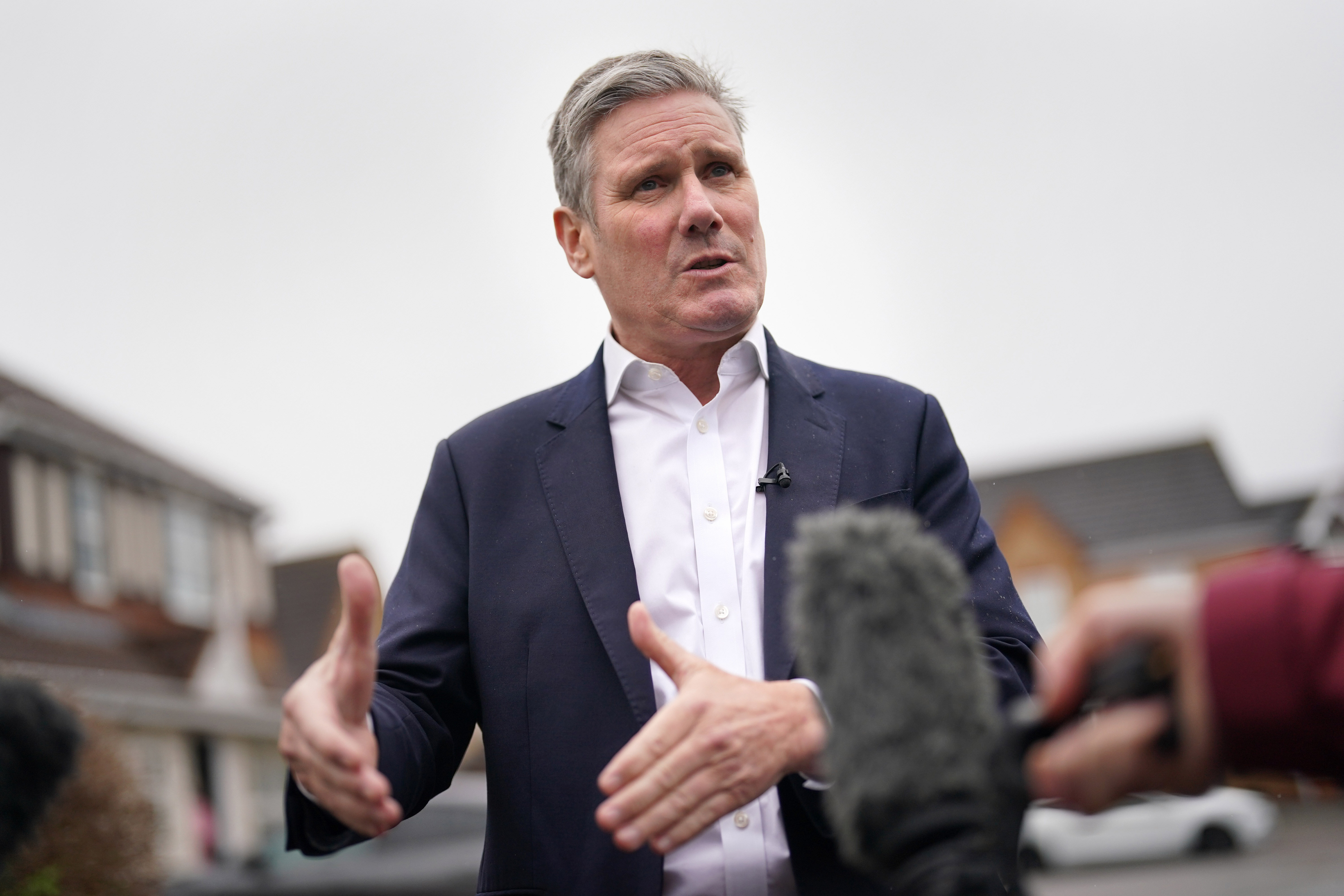
There were the headline grabbing wins in London – flagship Tory councils Wandsworth, Westminster and Barnet fell – and a majority on the newly-created council in Cumberland, which Labour leader Keir Starmer said showed his party could win anywhere. The traditional county-wide authority includes ‘Workington Man’, a voter demographic that gets pollsters very excited in terms of who might win a general election.

There’s also something happening for Labour on the coast – it took control of Southampton and Worthing – and the “sea wall” appears to have entered the political lexicon, joining the “red wall” and “blue wall” stolen from US politics.

But Labour has gained 252 councils seats – a reflection of the party not pocketing all the Conservative losses. The Tories were briefing how Labour has gone backwards in Sunderland, Tyneside, Hartlepool, Nuneaton, Sandwell and Amber Valley – former heartlands areas in the north and midlands that will be essential to getting back into power in Westminster.

But it’s progress. An analysis for the BBC by Professor Sir John Curtice calculated that if the whole country had been voting Labour would have gained 35% of the vote – five points ahead of the Tories on 30% – the party’s biggest lead in local elections for a decade.

Starmer, who is now facing a fresh “beergate” investigation, proclaimed clear evidence of a Labour revival following its crushing defeat in the 2019 general election. “This is a big turning point for us,” he told cheering supporters in Barnet. “We’ve sent a message to the prime minister: Britain deserves better.”

3. Ravey Davey: The Lib Dem ‘comeback’

The toxicity surrounding the Liberal Democrats following five years of power sharing with the Conservatives, and hiking tuition fees, seems to be a fading memory. Ed Davey’s party have compounded the success in recent Westminster by-elections by taking Hull council and the newly-created Somerset unitary authority. Other wins included Westmorland and Furness and dislodging the Tories in West Oxfordshire.

The party has gained 189 seats, which in part explains why Labour’s haul looks meagre. The Green Party, too, made substantial progress – gaining 81 councillors.

The “third party” success raises questions over splitting the “progressive” vote three ways, and whether that would let the Tories back in at a general election by default. Expect to hear more talk about electoral pacts and “lending” votes.

“What began as a tremor in Chesham and Amersham, became an earthquake in North Shropshire, and is now an almighty shockwave that will bring this Conservative government tumbling down,” Davey said.

4. One love: The SNP march on in Scotland

Scotland is increasingly a one-party nation. The SNP claimed its 11th successive national victory, and the number of councillors it boasts has risen in every ballot since 2004.

Perhaps more interesting was the race for second place. After years of decline, Labour has made gains and leap-frogged the Conservatives, whose strong performances under Ruth Davidson have gone in reverse now the former party leader in Scotland has left the stage.

Improvements in Scotland – coupled with the Lib Dems nibbling away at the Tories in southern England – is part of a complicated route back to Westminster power for Labour.

Scottish Tory leader Douglas Ross described the results as “very disappointing”, adding that Johnson “can’t ignore the message” from voters.

He said: “The Conservatives lost Westminster Council last night, that’s a council that even in the peak Labour years under Tony Blair the party held on to, so there’s been a very strong message from the public to the prime minister and to the party.”

The actual big story?: Sinn Fein closes in on history

While the local elections in England, Scotland and Wales make for good sport for armchair analysts, they may not lead to anything of substance changing. But Northern Ireland’s ballot could lead to a seismic shift for the whole of the United Kingdom.

Sinn Fein is on the brink of political history if it emerges as the largest party in Northern Ireland following Assembly elections.

After years of lagging behind its rival the Democratic Unionist Party, with whom it shares power, the nationalist party has now emerged on top with the potential to change the political landscape.

<img class="img-sized__img landscape" loading="lazy" alt="Sinn Fein’s Michelle O’Neill, centre, reacts with party colleagues after being elected in Mid Ulster at the Medow Bank election count centre in Magherafelt, Northern Ireland.” width=”720″ height=”501″ src=”https://www.wellnessmaster.com/wp-content/uploads/2022/05/uk-elections-2022-5-takeaways-as-tories-suffer-shattering-night-2.jpg”>
Sinn Fein’s Michelle O’Neill, centre, reacts with party colleagues after being elected in Mid Ulster at the Medow Bank election count centre in Magherafelt, Northern Ireland.

via Associated Press

With counting for the 90 Stormont seats continuing on Friday evening, the republican party had won 16 seats, well ahead of the Alliance on four and the DUP and UUP on three.

Sinn Fein’s position as the largest party would means a poll on the reunification of Ireland is far more likely – and the debate around Northern Ireland withdrawing from the United Kingdom of England, Scotland and Wales would intensify.

Share Button

Keir Starmer Under Pressure To Capitalise on Tory Woes As Voters Go To The Polls

The received Westminster wisdom is that the local elections are do-or-die for Boris Johnson.

After months of awful headlines about partygate, and with the mood among Tory MPs once again turning fractious, a bad night for the Conservatives next Thursday may well be the trigger for a move to unseat the prime minister.

What is less discussed, however, is how the elections are also a key test for Keir Starmer and whether he has what it takes to lead Labour to victory at the general election in two years’ time.

With a new poll yesterday giving Labour a nine-point lead over the Conservatives, expectations are high that the party is set to make sweeping gains on Thursday.

But Starmer’s internal detractors are looking for any signs that the party is stalling to confirm their suspicions that he is failing to seal the deal with voters.

Here, HuffPost UK assesses where the main parties are ahead of a crucial night on May 5.

The State Of The Parties

A total of 6,812 council seats in England, Wales and Scotland are up for grabs on Thursday.

In addition, there are also mayoral elections in South Yorkshire, Hackney, Lewisham, Newham, Tower Hamlets, Watford and Croydon, as well as the Northern Ireland Assembly election.

In England, the Tories are defending 1,404 seats, Labour 2,222 and the Lib Dems 517. The rest are held by independents.

In Wales, Labour hold 462 council seats, with Plaid Cymru on 208, the Conservatives on 197 and the Lib Dems on 59. More than 300 seats are held by independents.

And in Scotland, the SNP have 432 seats, with the Tories second on 277, Labour on 262 and the Lib Dems on 67. Nearly 200 of Scottish councillors are independents.

What’s At Stake?

An awful lot more than which parties will be responsible for your bin collections for the next four years.

With a general election expected in 2024, this is likely to be the last big electoral test that Labour and the Tories will face before then.

As such, it will act as an important barometer of the national mood and indicate which parties, if any, are starting to build up momentum as the general election draws nearer.

Johnson needs to prove to his restive MPs that he is still the election winning-machine who delivered an 80-seat majority in 2019, and that the damage done to his reputation by partygate is not terminal.

The stakes are arguably even higher for Starmer who, two years after becoming Labour leader, has still to convince the public that he has what it takes to lead the country.

Is Starmer’s Labour Working?

While Labour has established a consistent poll lead in recent months, there remains a strong suspicion that it owes more to the public’s dissatisfaction with the Conservatives than any great enthusiasm for the Starmer project.

HuffPost UK revealed this week that the Labour leader is facing internal pressure to show voters how the party would tackle the cost of living crisis rather than focusing on the partygate scandal.

At a shadow cabinet meeting, communities spokesperson Lisa Nandy said Labour risked looking “out of touch” at a time when families across the country are struggling to make ends meet.

One senior frontbencher said: “Lisa’s not alone on this. There was strong agreement in the room to focus on the cost of living.”

It’s clear, therefore, that Starmer’s critics will be scrutinising Thursday’s results to try and assess whether the public support the leader’s strategy or are yet to be convinced.

Lisa Nandy has questioned Keir Starmer's strategy
Lisa Nandy has questioned Keir Starmer’s strategy

Christopher Furlong via Getty Images

What Does Success Look Like?

The main problem facing Labour is that the last time these council seats were up for grabs four years ago, the party did very well, making it harder for them to make sweeping gains this time around.

That said, a failure to pick up a significant number of council seats, and at least show progress in the Red Wall areas the party needs to win back if it’s to stand any chance of winning in 2024, will constitute a disappointing evening for Starmer.

“It’s a strange set of elections,” said one Starmer ally. “2018 was a bad night for the Tories and a very, very good one for Labour.

“So another bad night for the Tories and a good night for us isn’t going to result in a lot of exciting change.”

As polling gurus Colin Rallings and Michael Thrasher summed up the situation in a recent article: ”[Labour] will do well to avoid making standing still rather than picking up gains seem rather underwhelming when the post-mortem takes place.

“For the Conservatives, by contrast, the less dramatic the results, the more they can claim not to be suffering traditional ‘mid-term blues’.”

Labour sources are attempting to play down the prospect of the party seizing totemic Tory councils like Westminster and Wandsworth, but they admit that winning back Barnet is a distinct possibility.

Beating the Tories into second place behind the SNP is also essential if the party is to have any hope of re-establishing an electoral foothold in its former Scottish heartland.

Just as important as winning more council seats, insiders say, are signs of progress in seats currently held by the Tories in England and the SNP north of the border.

“We are also tracking where we are in about about 50-70 constituencies that would put us in government at a general election, so we will be keeping an eye on them on Thursday,” said a Labour source. “Places like Stevenage, Wakefield, Bury and Glasgow.

“We need to beat the Tories and SNP in them.”

The Tory View

Unsurprisingly, the Conservatives are keen to raise the bar as high as possible for what would constitute a good night for Labour in the hope they will come nowhere near clearing it.

One Tory source told HuffPost UK: “Labour are obviously saying how difficult it’s going to be to improve on 2018, but the reality is they are ahead in the polls and so should be doing well.

“It’s going to be very difficult for us in certain places, especially central London and in places like Wandsworth, Westminster and Kensington and Chelsea, where the demographics are turning against us.

“Outer London is a bit better, but things are also going to be difficult in the affluent south – places like Surrey and West Oxfordshire, where Labour are doing well.”

Significantly, however, the Tories are more confident of holding off Labour in the Red Wall, where partygate is not the major political issue many at Westminster believe it is.

“The question for Labour is whether they can make adequate progress in the places they lost in 2019 and need to win back next time,” the source said.

“While those voters are bothered about partygate, they’re more concerned with bread and butter issues such as the cost of living. They’re pissed off with the PM about partygate, but they also like what we did on vaccines and furlough.”

Winning Here?

Like Labour, the Lib Dems performed well in 2018, making further progress more difficult this time around.

“What we’re really looking to is consolidate the gains we made in places like South Cambridgeshire, Richmond and Kingston,” a source told HuffPost UK. “If we hold our ground and edge forward a little in other areas, it should spook a few Tory MPs.”

These include Stephen Hammond in Wimbledon, where the Lib Dems launched their local election campaign. The party also wants to make progress in Wokingham, where the local MP is one Dominic Raab.

The source added: “The big picture is we’re going after the Conservatives and laying the groundwork for the next election.”

The Pestminster Factor

In the past week alone, unnamed Tory MPs have smeared Angela Rayner by accusing her of using her legs to distract Boris Johnson, while another has been suspended by the party for allegedly watching porn in the Commons.

The timing could hardly have been worse for the Conservatives. Will voters use their ballots to register their disgust at the latest examples of Tory sleaze? Keir Starmer and Labour certainly hope so.

Share Button

‘Low Taxation’ Rishi Sunak Derided As Tories And Labour Square Off Over The Economy

Labour has questioned Rishi Sunak’s attempt to portray himself as a low taxation Conservative as both parties stake their claims to being the most trusted on the economy.

The chancellor and Labour leader Keir Starmer will on Tuesday both deliver speeches that make their cases to be the next prime minister.

Sunak, seen as the most likely Tory to succeed Boris Johnson if the PM is brought down by the partygate scandal, will insist he wants to create a “lower tax economy” in an appeal to traditional Conservatives.

Meanwhile, Starmer will evoke the spirit of former Labour prime minister Harold Wilson by promising the “white heat” of a new technological revolution will deliver prosperity for all.

But in an attempt to thwart Sunak’s ambitions, Labour will claim the chancellor has slapped 15 tax rises on households and businesses in the last two years – and that he has raised the most tax on average per budget than any chancellor in the last 50 years.

Amid the cost of living crisis, the chancellor and the prime minister have been refusing to back down on the 1.25 percentage point hike to National Insurance for April despite pressure from numerous Tory MPs.

Delivering a lecture to the Bayes Business School in London, Sunak is to insist he will make “difficult and often unpopular arguments” on spending, hinting at his determination to resist calls from cabinet colleagues for fresh money.

He will argue that cutting taxation in the future needs to be done in a “responsible way”, following a row with health secretary Sajid Javid over funding the “living with Covid” plan.

Sunak is expected to say: “I firmly believe in lower taxes.

“The marginal pound our country produces is far better spent by individuals and businesses than government.

“I am going to deliver a lower tax economy but I am going to do so in a responsible way, and in a way that tackles our long term challenges,” he is due to add.

But in comments that will be seen as a challenge to ministers demanding increased spending, he is expected to say: “Cutting tax sustainably requires hard work, prioritisation, and the willingness to make difficult and often unpopular arguments elsewhere.”

He will also say that he is “disheartened” when he hears the “flippant claim” that tax cuts always pay for themselves, adding: “They do not.”

In response, shadow chancellor Rachel Reeves used the speech to brand the Conservatives the party of “high tax” as a result of being “the party of low growth”.

“Over a decade of Tory government, the economy has grown far slower than when Labour was in power, and it is set to go even slower in the coming years,” she said, citing research suggesting the £27.3bn raised by Sunak per year is higher than that brought in by 12 Tory and Labour predecessors at the Treasury since 1970.

Elsewhere, Starmer will promise to build a “new economy of security” as he borrows from Wilson’s 1963 pledge to harness “the white heat of technological change”. At the time, Wilson was seeking to become the first Labour prime minister for more than a decade.

Speaking in Wilson’s home town of Huddersfield in West Yorkshire, Starmer will say that after 12 years of a Conservative government, it will fall to Labour to deal with the next generation of change.

“Our country and our economy are entirely different now, but we too are going through the white heat,” he is expected to say.

“We face our own revolutions in technology and industry, and it will fall to the next Labour government to shape that change so it works for all.”

It marks the latest stage of his effort to restore the party’s economic credibility in the eyes of voters following the controversy over Jeremy Corbyn’s plans.

Starmer will declare his determination to end the “economic fatalism” of the Tories, who he will accuse of lacking a clear plan for business.

“Britain cannot rise to the great challenges of the day without the innovation of business,” he will say.

“A political party without a clear plan for making sure businesses are successful and growing … which doesn’t want them to do well and make a profit … has no hope of being a successful government.”

He will argue that if the Tories had matched Labour’s record on growth, people would have enjoyed higher incomes while an additional £30 billion a year would have been available for public services without raising taxes.

“We will build a new economy of security, where stable employment will be the bedrock of a better future for the next generation,” he will say.

“We will build an economy of prosperity, in which the places that once powered Britain flourish again. We will build a new economy of respect, where the contribution of every worker and employee is given its due.”

Share Button

Keir Starmer: Stop The War Coalition Are Siding With Russia Over Ukraine

Keir Starmer has accused the Stop The War coalition of siding with Russia as fears grow that it is about to invade Ukraine.

The Labour leader accused the organisation – which has his predecessor Jeremy Corbyn as its vice-president – of consistently supporting the west’s enemies.

His comments, in an article for The Guardian, came as Corbyn addressed a Stop The War rally in London titled “No war in Ukraine – Stop NATO expansion.”

Starmer wrote: “Nobody wants war. At first glance, some on the left may be sympathetic to those siren voices who condemn NATO. But to condemn NATO is to condemn the guarantee of democracy and security it brings, and which our allies in eastern and central Europe are relying on, as the sabre-rattling from Moscow grows ever louder.

“That’s why the likes of the Stop the War coalition are not benign voices for peace. At best they are naive; at worst they actively give succour to authoritarian leaders who directly threaten democracies.

“There is nothing progressive in showing solidarity with the aggressor when our allies need our solidarity and – crucially – our practical assistance, now more than ever. The kneejerk reflex, “Britain, Canada, the United States, France – wrong; their enemies – right”, is unthinking conservatism at its worst.

“To truly stop war, you need to show you are serious about standing up for peace, that you are serious about keeping your promises to your friends, and that you will always stand up to those who threaten.”

The Labour leader added: “Moscow’s hard-line leadership won’t see a rally on the streets of Britain as a reason to pull its tanks from Ukraine’s borders. All it will see is naivety and weakness – virtue signallers in the west providing a smokescreen so it can go on beating up and jailing those brave individuals who dare to stand up to its despotism on the streets of Russia.”

Starmer said that under his leadership, “Labour’s commitment to Nato is unshakable”.

However, in an interview with the BBC during a visit to NATO HQ in Brussels, he was repeatedly asked why he sat on Corbyn’s frontbench as shadow Brexit secretary when he knew the then leader held strong anti-NATO views.

Starmer said: “Jeremy Corbyn and I disagreed on many things. I was leading for our party on the Brexit negotiations, the difficult votes we had in Parliament, and it was very important that we had that lead at the time, that were very difficult, seems a long time ago.

“Very difficult discussions and decisions at the time, but does it mean I agree with Jeremy Corbyn on everything? Of course it doesn’t. He was leader of the party and I was leading on the Brexit negotiations.”

Share Button

Boris Johnson Blamed For Fuelling Mob Ambush Of Keir Starmer

Boris Johnson’s Jimmy Savile smear of Keir Starmer has been blamed for a mob ambushing the Labour leader near the houses of parliament – prompting a wave of Tory MPs to criticise their leader.

Police had to bundle the opposition leader into a car as the group, some protesting about Covid restrictions and shouting “traitor”, followed him and shadow foreign secretary David Lammy from outside Scotland Yard.

There were angry clashes with police after Starmer was escorted into a police car on the Victoria Embankment shortly after 5pm on Monday. Starmer faced baseless allegations of “protecting paedophiles” and chants about the sex offender from protesters before being bundled into a police car for protection.

After some Conservative MPs said Johnson last week accusing Starmer of having “used his time prosecuting journalists and failing to prosecute Jimmy Savile” while director of public prosecutions for stoking the abuse, the PM condemned the “completely unacceptable” incident. Notably he did not apologise.

Footage posted to social media showed Piers Corbyn, the Covid-19 conspiracy theorist brother of former Labour leader Jeremy, addressing the crowd before the incident and later leading chants of “resist, defy, do not comply”.

Video showed Starmer, surrounded by police, being followed down the street while being targeted with shouts of “why aren’t you opposing?” and “traitor”.

“Why did you go after Julian Assange, why did you go after journalists?,” one man shouted.

It was understood Starmer was not harmed during the incident and was soon back at his desk.

After he was taken to safety, an officer was called a “pathetic little thug” during angry exchanges.

Protesters were seen displaying signs opposing mandatory vaccination and the use of restrictions to prevent Covid-19 deaths.

After footage of the confrontation spread on social media, MPs from across the political spectrum hit out at the prime minister’s slur against Starmer.

The PM on Monday referenced Starmer’s former job as director of public prosecutions, suggesting his opponent was responsible for failing to prosecute serial sex offender Savile – even though fact-checkers have since proven the Labour leader was not.

The prime minister clarified his comments on Thursday and claimed he had not been talking about Starmer’s “personal record”, but notably did not apologise for the slur.

After the attack, Tory MP Julian Smith linked the incident to Johnson’s Savile smear in the Commons last week.

He tweeted: “What happened to Keir Starmer tonight outside parliament is appalling. It is really important for our democracy & for his security that the false Savile slurs made against him are withdrawn in full.”

Another Conservative MP, Robert Largan, added: “I agree with Julian. Words matter. What we say and how we say it echoes out far beyond parliament. It can have serious real world consequences. Elected representatives have a responsibility to lower the temperature of debate, not add fuel to the fire.”

Deputy speaker of the house of commons, Eleanor Laing, said the attack was “unacceptable. Period.”

She tweeted: “Elected representatives must be able to go about their work without the fear of verbal or physical attacks.”

“It doesn’t matter which political party you support we all must stand up for freedom of speech and the rule of law.”

Another Tory MP, Aaron Bell, said: “Physical intimidation has no part in our democracy, and we all have a responsibility to debate in a measured and accurate way.”

After he was heckled alongside Starmer, Lammy tweeted alongside a video clip of the incident: “No surprise the conspiracy theorist thugs who harassed Keir Starmer and I repeated slurs we heard from Boris Johnson last week at the despatch box.

“Intimidation, harassment and lies have no place in our democracy.

“And they won’t ever stop me doing my job.”

He added: “My thanks to the Met Police who helped get me safely back to parliament.”

Labour MP Chris Bryant tweeted: “This is appalling. People were shouting all sorts at Keir, including ‘Jimmy Savile’. This is what happens when a prime minister descends into the gutter and recycles lies from hard-right conspiracy theorists. Political poison has an effect. Johnson has no moral compass.”

A Labour source told HuffPost UK: “Boris Johnson and his cabinet chose to lie down with the dogs – and now the whole lot of them are covered in fleas.”

Johnson later tweeted: “The behaviour directed at the leader of the opposition tonight is absolutely disgraceful. All forms of harassment of our elected representatives are completely unacceptable.

“I thank the police for responding swiftly.”

Scotland Yard said two arrests were made after the clashes.

A Metropolitan Police statement said: “Shortly after 5.10pm on Monday, February 7, a man who had been surrounded by a group of protesters near to New Scotland Yard, was taken away from the scene by a police car.

“A man and a woman were arrested at the scene for assault of an emergency worker after a traffic cone was thrown at a police officer.

“They have been taken into custody.”

Share Button

Kwasi Kwarteng Says Boris Johnson’s Jimmy Savile Smear Was ‘Entirely Legitimate’

Boris Johnson’s attempt to smear Keir Starmer over the failure to prosecute Jimmy Savile was “entirely legitimate”, according to Kwasi Kwarteng.

The Business Secretary’s support for the prime minister over the row puts him at odds with Cabinet colleagues Rishi Sunak and Sajid Javid, both of whom have distanced themselves from the PM.

Johnson sparked fury last Monday, during a debate on Sue Gray’s report into partygate, when he made the untrue claim about Starmer’s involvement in Savile escaping justice.

Referring to the Labour leader’s past role as Director of Public Prosecutions, the PM claimed he had “spent most of his time prosecuting journalists and failing to prosecute Jimmy Savile”.

Johnson eventually “clarified” his remarks by insisting he did not believe Starmer was personally responsible for the decision not to prosecute the notorious sex offender.

But that was too late to prevent the resignation of No. 10 policy chief Munira Mirza. In a devastating resignation letter, she said: “I believe it was wrong for you to imply this week that Keir Starmer was personally responsible for allowing Jimmy Savile to escape justice.

Several Conservative MPs have also identified the smear as one of the reasons why they have submitted letters of no confidence in the PM.

Chancellor Rishi Sunak openly criticised Johnson by saying he “wouldn’t have said” what he did, while Health Secretary Sajid Javid said Starmer deserved “respect” for the job he did as DPP.

But appearing on Trevor Phillips on Sunday on Sky News, Kwasi Kwarteng said it had been “entirely legitimate” for the prime minister to attack Starmer in the way he did.

He added: “It was perfectly reasonable to mention the fact Sir Keir apologised on behalf of the organisation he led about the fact they failed to prosecute Jimmy Savile. So the fact he apologised suggests he does at some level bear some responsibility.”

Kwarteng added: “I’m not saying he had personal blame, he didn’t, and we’ve been very clear about that, the PM clarified that position as well. But I think in the cut and thrust of debate… bringing up something Sir Keir himself apologised for seems reasonable.”

His comments came as Johnson tried to regain the political initiative by announcing a shake-up of his Downing Street operation.

Former BBC journalist Guto Harri – who worked for the PM when he was London mayor – has been appointed the new No. 10 director of communications, while Tory MP Steve Barclay is the new Downing Street chief of staff.

The moves follow the resignation of Munira Mirza and four other No. 10 advisers in the space of 24 hours at the end of last week.

Share Button

Boris Johnson Does Not Deny ‘Boozy Party’ Held In Downing Street In Lockdown

Boris Johnson has not denied allegations that Christmas parties were held in Downing Street during lockdown last year.

The prime minister faced a grilling after the Mirror reported claims that he and aides attended gatherings in No10, despite imposing new restrictions on the country at the time.

During prime minister’s questions, Keir Starmer asked whether a “boozy party” was held at No10 in run-up to Christmas 2020.

Johnson did not deny it, simply saying that “all guidance was followed completely at No10”.

The report accused the prime minister of attending a leaving do for an aide on November 27 last year while the second lockdown was in force.

His staff are then alleged to have held their own festive party in Downing Street on December 18, which Johnson did not attend.

Starmer asked: “As millions of people were locked down last year, was a Christmas party thrown in Downing Street for dozens of people on December 18?”

Johnson replied: “All guidance was followed completely.”

Starmer pressed him again: “The defence seems to be ‘no rules were broken’. Well, I’ve got the rules that were in place at the time, prime minister, of this party, they are very clear: you must not have a work Christmas lunch or party.

“Does the prime minister really expect the country to believe that whilst people were banned from seeing their loved ones at Christmas this year it was fine for him and his friends to thrown a boozy party in Downing Street?”

The PM replied: “I have said what I said about Number 10 and the events of 12 months ago.”

The Labour leader added: “The prime minister does not deny there was a Downing Street Christmas party last year. He says no rules were broken.

“Both of those things can’t be true, Prime Minister. He is taking the British public for fools”.

Share Button

Angela Rayner Says She Doesn’t Know What’s Going On Amid Starmer Reshuffle

A fresh row between Keir Starmer and Angela Rayner erupted after the Labour leader launched a reshuffle while his deputy was making a major speech on Tory corruption.

The deputy leader told an audience at an Institute for Government (IfG) event that she did not “know the details” of the shadow cabinet reshuffle that was taking place because she was “concentrating on the job at hand”.

Speculation that the reshuffle was underway began on social media after the Times reported that key figures such as shadow home secretary Nick Thomas-Symonds, shadow education secretary Kate Green and shadow culture secretary Jo Stevens all faced the sack.

Instead of taking questions on the Labour party’s attempts to clean up politics, Rayner fielded multiple questions on whether she was consulted about the reshuffle and whether she thought it was the right time.

She replied: “I don’t know the details of any reshuffle, I’ve been concentrating on the job at hand.”

In an interview with Times Radio after the event, she said she had not been consulted on the reshuffle and that there was no “focus on that at the moment”.

Asked whether she would have expected to hear about it first, she replied: “I reckon that Keir would tell me first, yeah.”

However, it is understood Rayner met with Starmer after her media round in the morning and before she went to the IfG event.

In response, Rayner’s spokesperson said: “My understanding is that Keir and Angela had a short conversation in between her media round and her speech.

“She was not aware of the details of the reshuffle and she was not consulted on the reshuffle as she said herself.”

The timing and handling of the reshuffle risks reigniting the fury that erupted in the fallout of the Hartlepool by-election, in which Starmer sacked Rayner as party chair before reinstating her to other posts.

While Rayner was still speaking at the IfG event, a tit-for-tat broke out between the leadership’s two teams.

Sources close to Rayner expressed anger at Starmer’s team for its tactics and timing, with one calling it “plain offensive”.

One ally told HuffPost UK: “The incompetence is shocking. Why do this while she’s on her speech giving a planned intervention on a key Labour attack line? It makes absolutely no sense.”

A friend of Rayner said: “Trying to sack Angela and make her the scapegoat for Hartlepool was stupid. But doing a reshuffle when she’s literally on her feet giving a speech attacking the Tories for being corrupt is just plain offensive.”

And a spokesman for Rayner added: “Angela is focusing on attacking the Tories for being corrupt and setting out how she will stamp out corruption. That is her priority.”

But a source close to Starmer said it was “interesting that the wording from this friend of Angela and her spokesman is virtually identical”.

Another Labour source further questioned Rayner’s assertion that she wasn’t consulted on the reshuffle, claiming: “She’s been pushing it for months. She’s desperately trying to confect a row.”

Rayner’s spokesperson said it was was “categorically untrue that Angela was pushing for a reshuffle. She has just given a speech setting out her plans to tackle Tory corruption.”

Labour figures that are tipped for a promotion include Yvette Cooper, chair of the home affairs select committee, Wes Streeting, the shadow secretary of state for child poverty, and shadow schools minister Peter Kyle.

Liz Kendall, shadow minister for social care, and Alison McGoven, shadow minister for cultural industries and sports, may also get a spot on the frontbench.

Share Button

Keir Starmer Forced To Withdraw ‘Coward’ Insult At Boris Johnson During Testy PMQs

Labour leader Keir Starmer has been forced to withdraw comments in which he called Boris Johnson a “coward not a leader” following a rebuke from the Speaker.

During a fiery and ill-tempered session of prime minister’s questions, Starmer called on Johnson to apologise for his handling of the Owen Paterson scandal, in which the government sought to overturn punishment for the former Cabinet minister and paid lobbyist.

The Labour leader pointed out that while the business secretary, Kwasi Kwarteng, and the leader of the House, Jacob Rees-Mogg, had both apologised for their role in the affair, Johnson was yet to do the same.

“Across the country and belatedly across this house, there is now agreement that Owen Paterson broke the rules and that the government should not have tried to let him off the hook,” Starmer said.

“Many members opposite have apologised. The business secretary has apologised for his part. The leader of the House has apologised for his part, but they were following the prime minister’s lead.

“So will he do the decent thing and just say sorry for trying to give the green light to corruption?”

Johnson replied that it was “certainly a mistake” to conflate reform of the standards system with Paterson’s case before moving on to challenge Starmer’s former paid work at the law firm Mishcon de Reya.

Starmer hit back: “That’s not an apology. Everybody else has apologised for him, but he won’t apologise for himself.”

He continued: “A coward not a leader. Weeks defending corruption. Yesterday a screeching last-minute U-turn to avoid defeat on Labour’s plan to ban MPs from dodgy second contracts.

“But waving one white flag won’t be enough to restore trust.”

Starmer’s uncharacteristically strong language was seized on by Tory MP Michael Fabricant, who used a point of order to urge the Labour leader to withdraw his comment.

Speaker Lindsay Hoyle noted: “Coward is not what is used in this House.”

Starmer replied: “I withdraw it, but he’s no leader.”

During the session the Speaker repeatedly made clear his anger at the mood and rough language used in the House, especially in the aftermath of the death of Tory MP David Amess and the conversation it sparked about language in politics.

Hoyle also clashed with Johnson over his attempts to question Starmer’s links to Mishcon de Reya. Starmer turned down a second job with the law firm in the summer of 2017 following accusations it conflicted with his role as shadow Brexit secretary.

Hoyle told the PM: “I don’t want to fall out about it, I’ve made it very clear – it is prime minister’s questions, it’s not for the Opposition to answer your questions.

“Whether we like it or not those are the rules of the game that we’re all into and we play by the rules, don’t we? And we respect this House, so let’s respect the House.”

Despite the reprimand, Johnson attempted to ask again about the issue in a later exchange, to which the Speaker said: “Prime minister, sit down!

“I’m not going to be challenged, you may be the prime minister of this country but in this House I’m in charge.”

Johnson later accused Starmer of “Mish-conduct”, a play on words that prompted outcry from the Labour benches.

At the end of the session, Hoyle lamented the conduct of MPs and said the House had not done “any good” today.

“I’ll be quite honest, I think it’s been ill-tempered, I think it shows the public that this House has not learnt from the other week, I need this House to gain respect but it starts by individuals showing respect for each other,” he said.

Share Button

Confused, Contradictory, Chaotic: The ‘3 Cs’ Of Boris Johnson’s Covid Policy

It’s been a few weeks since Boris Johnson jibed Keir Starmer with his alliterative soundbite of choice: “we vaccinate, they vacillate!” And given the past week of wibbly-wobbly, hokey-cokey pronouncements from him and his government, it’s perhaps fitting that the PM has laid off that particular attack line. 

In a dizzying few days of dithering, Johnson exempted himself from isolation rules then isolated himself, his ministers contradicted him on the need to obey Covid ‘pings’ and key policy on critical workers changed by the hour. 

The National Insurance rise to pay for social care was on and then off. The NHS pay rise was off and then on. Compulsory Covid passports were revived from the dead, just weeks after being quietly euthanised by Michael Gove. 

At times, the PM looked like Gromit desperately trying to lay new track in front of his train of state as it sped towards the parliamentary recess. But although getting over the line of the summer break may stop backbenchers from gathering in grumbly groups in the Commons tea room, ministers know there are gruelling weeks ahead. 

At the heart of the problem lies a fundamental confusion in Johnson’s pandemic strategy. He (backed by Chris Whitty and Patrick Vallance, to be fair) has decided England will become the first country in the world to open up a country from lockdown precisely at the point when cases are soaring.

But instead of honestly admitting that his objective is a form of herd immunity  – ie “hybrid immunity” stemming from infections and vaccinations – the PM is telling the public to be cautious and “slowly” take full advantage of all the freedoms he has now granted.

There’s an easy answer to the “if not now, when?” question about full unlocking: mid-September, when all of the adult population has been offered a second jab. The PM counters that keeping restrictions in place until then would simply delay the covid wave, not suppress it. And a wave in summer is easier for the NHS to cope with than a wave in winter, he adds. 

Yet on that logic, being cautious and not “tearing the pants out of it” simply delays the wave too. Isolating after “ping” from the App delays the wave. Wearing masks delays the wave. Meeting outdoors delays the wave. But the PM says he doesn’t want to delay it. It’s hard to think of a more confused and chaotic public health policy, especially during a pandemic.

It would be more honest if Johnson admitted he wants the maximum number of infections this summer, just short of tipping the NHS into a serious crisis. And helpful if the department of health told us just what level of infections it thinks the NHS can cope with before lurching into that meltdown.

The other objective for opening up fully is to help ease the pain of businesses and all those who work in them. But if you’re then effectively telling the public not to use those businesses, because they should be “careful”, what is the point? That’s why, whenever Johnson was asked to define what tearing the pants out of it meant, he struggled with specifics.

It’s possible that the real, unstated reason for Freedom Day was not just “hybrid immunity”, but because ministers can see that young people simply aren’t going to be double jabbed in big numbers by mid-September anyway. Take-up rates are worryingly lower than older age groups, so if government waits for the magic 80% double-jabbed figure, it could be waiting indefinitely.

I suspect that’s what really lies behind Johnson’s drive for compulsory Covid passports. They will drive up jab rates, while giving attendees of nightclubs, football matches, music gigs (and cinema and theatre goers, and maybe indoor pub goers?) the security that they will be mixing with similarly protected people. Compulsion will also drive demand for booster jabs over the winter.

The big issue however over coming weeks will be just when restrictions are reintroduced. Johnson has already tried to soften up opinion this week by saying he merely “hoped” his roadmap would be “irreversible”. 

Would it make sense to have a roadmap back into lockdown, just as he had one out of lockdown? I used to think so, as it would allow individuals and businesses to plan their next steps.

But the problem may fundamentally be that the virus doesn’t respond to graduated steps. If you really want to flatten (not delay) a sombrero of cases, a hard and fast lockdown may be the only answer. Just reimposing masks and working from home may not cut it.

Yet given how confused and contradictory the current policy is, it wouldn’t be surprising if the policy that replaces it is similarly incoherent. Learning to “live with Covid” is obviously where we need to end up, but that requires maximum vaccinations for genuine herd immunity. It also requires more honesty from government about what its real strategy is.

The latest data on Friday suggests the third wave may, just, be peaking. But I’ve genuinely no idea if that’s what No.10 wants, or if it wants to ride the wave for a few more weeks.

Deputy chief medical officer Jonathan Van-Tam this week repeated his advice to avoid places with the ‘3 Cs’ overlapping: closed settings, with crowds and close contacts. Unfortunately, the real ‘3 Cs’ that have defined Johnson’s policy are chaos, confusion and contradiction.

Share Button