Exclusive: Ministers Face Legal Action Over Tory Slogan Used In Taxpayer-Funded Adverts

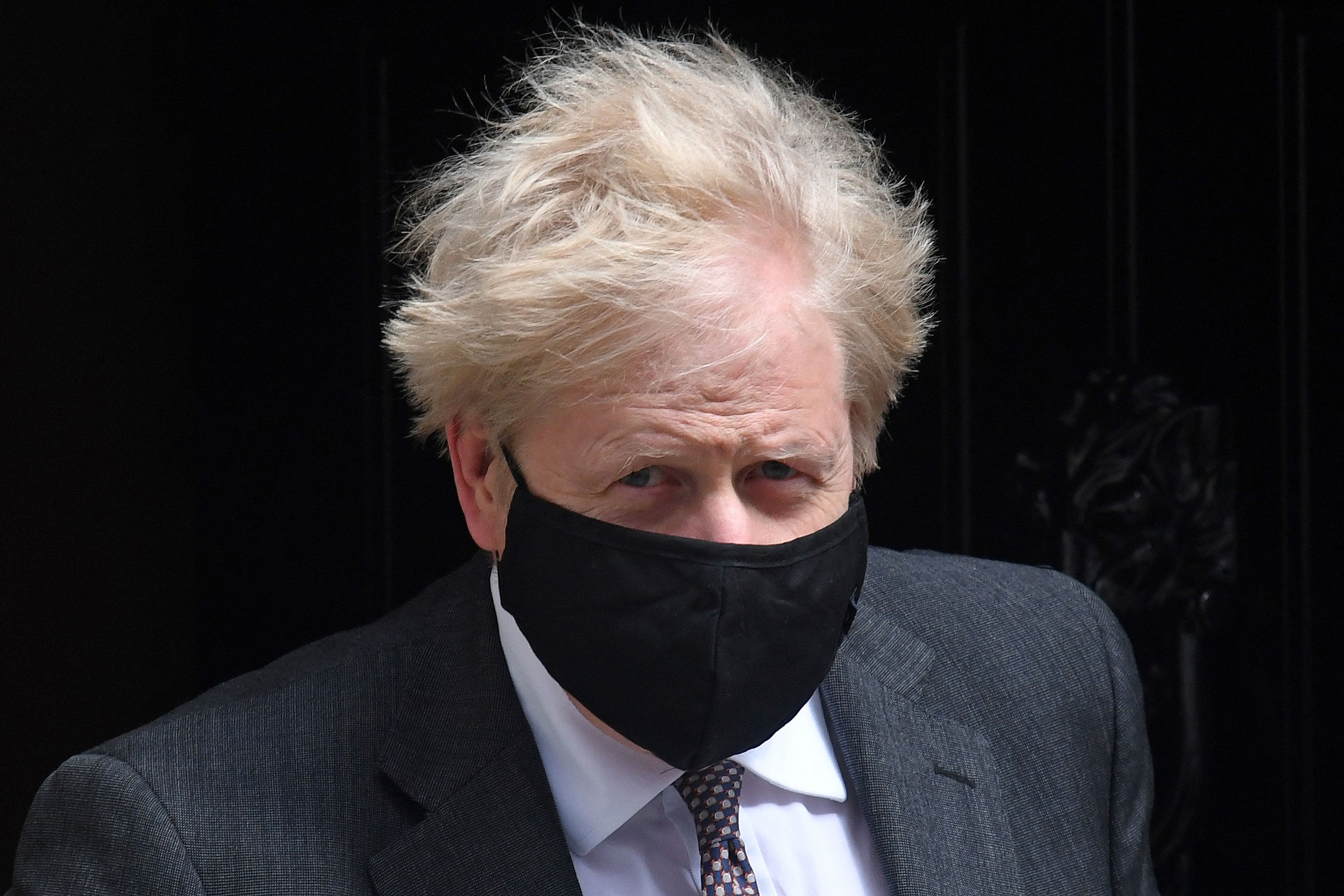
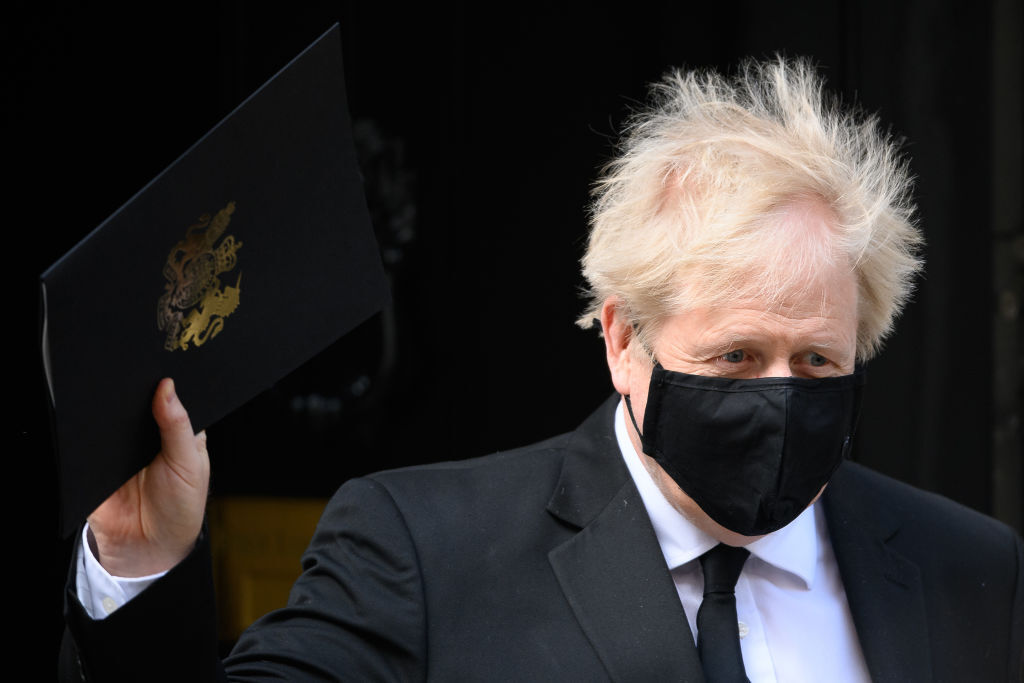
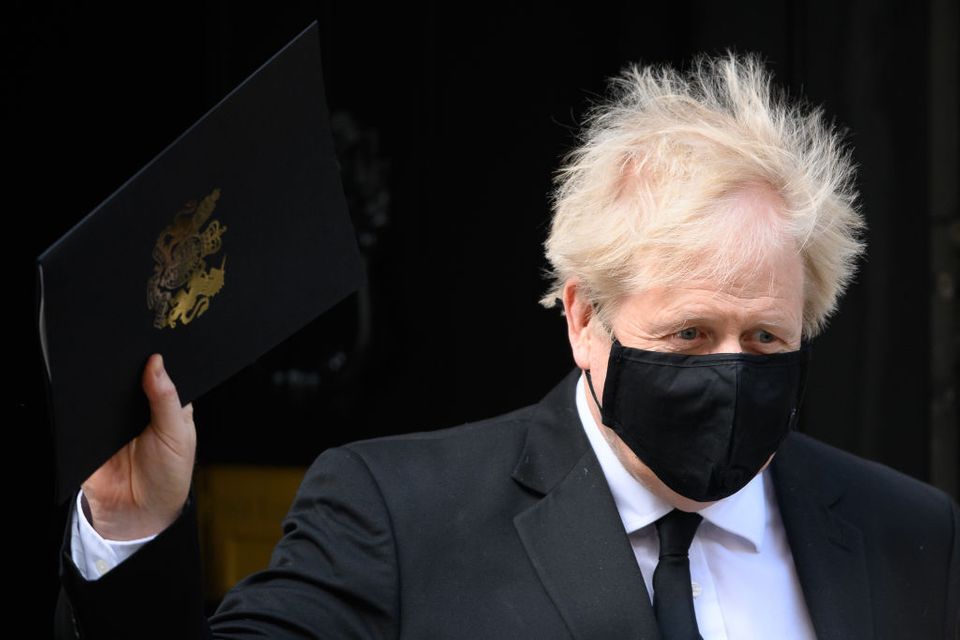
DANIEL LEAL-OLIVAS via AFP via Getty Images

The government has been accused of using public money to “feather the Tory party nest”.  

Boris Johnson’s ministers are facing legal action over claims his government misused public funds to pay for Tory party “political messaging” ahead of local elections. 

The Good Law Project has triggered proceedings in a letter to Cabinet Office minister Michael Gove and has told HuffPost UK the “Trumpian” government is using public money to “feather the Tory party nest”. 

Ministers are trying to boost the Tories’ chances in town hall elections next month by blurring the divide between the “dissemination of government information and party political campaigning”, the campaign group says. 

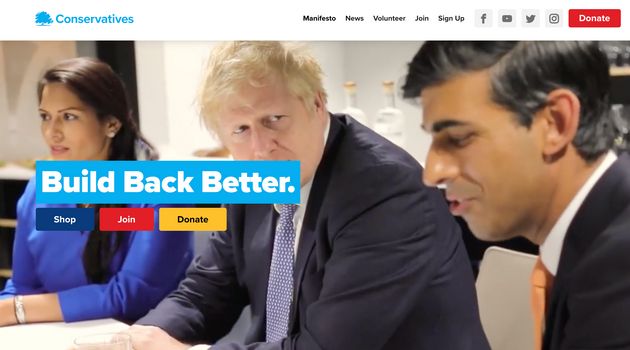
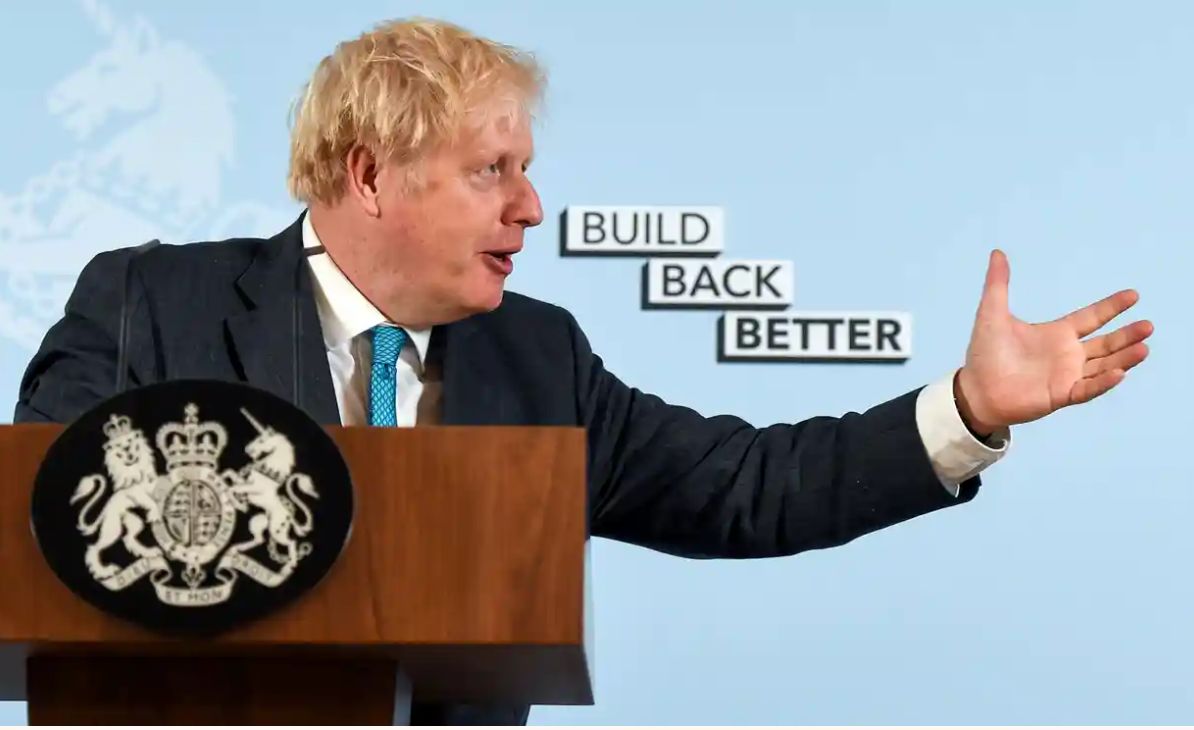
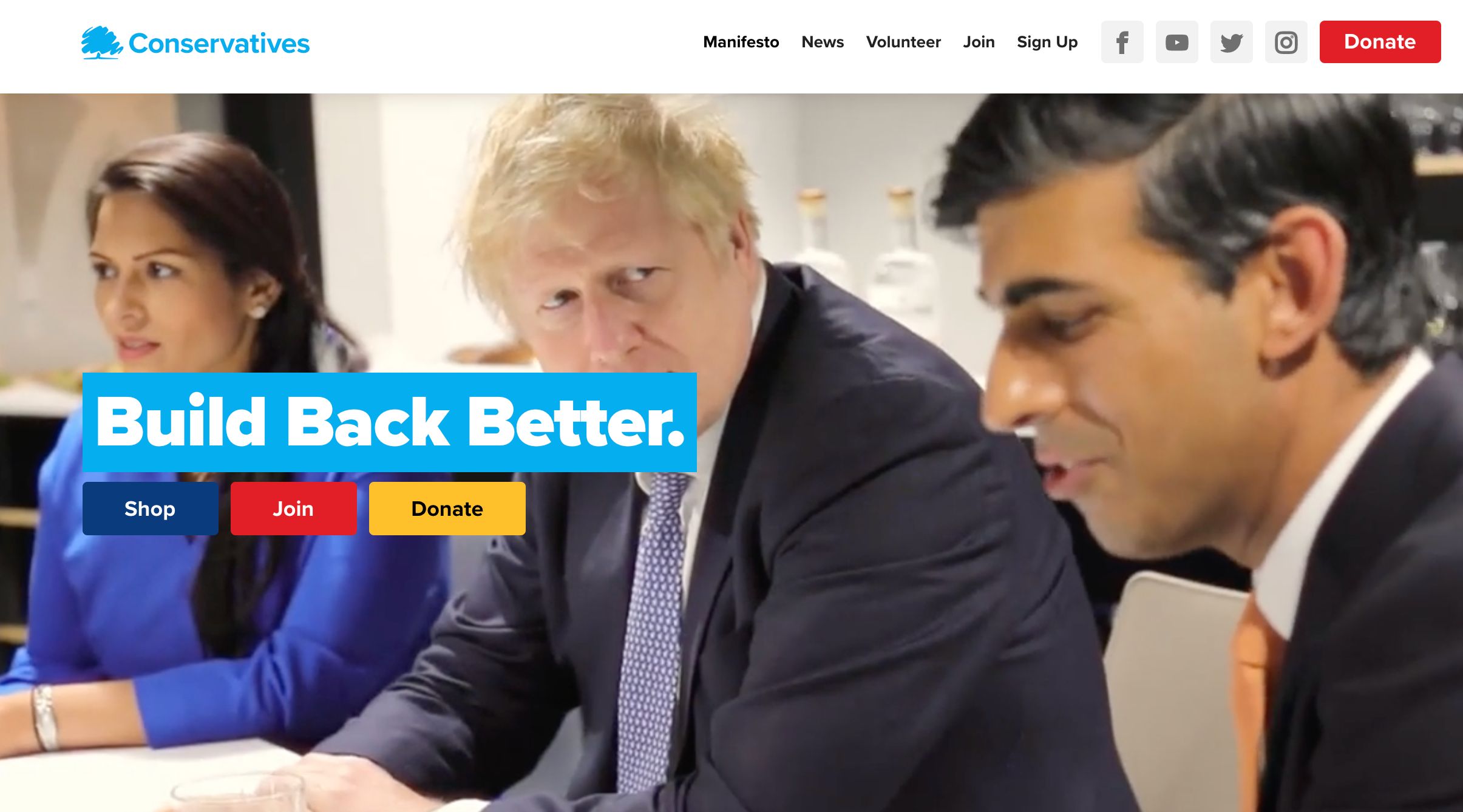
It says government-funded videos, which often feature the Conservatives’ “Build Back Better” slogan and the No 10 crest, are “virtually impossible to distinguish” from political campaign videos on the ruling party’s website.

It comes as Johnson faces a slew of allegations of “Tory sleaze”, with the prime minister himself texting billionaire James Dyson pledging to “fix” tax problems for the manufacturer if they would make ventilators.  

The party’s ‘Build Back Better’ slogan on the Conservative Party website

The party’s ‘Build Back Better’ slogan on the Conservative Party website

Gemma Abbott, legal director of the Good Law Project, told HuffPost UK: “Make no mistake, this is Trumpian stuff. And is all the more egregious given that we are just weeks away from the biggest set of local elections this side of a general election.

“This issue goes to the very heart of our democracy. The British public should not be paying to further the electoral ambitions of the Conservative Party. We will not allow this misuse of state resources to go unchallenged.” 

Lawyers pick out the “Build Back Better” slogan, used both on the masthead of the Conservative Party website and in government communications, and replicated as “Bus Back Better” and “Build Back Greener” in separate publicly-funded campaigns to underline investment in buses and energy projects. 

Lawyers highlight several recent government videos which it says “carry the distinct look and feel of a party political broadcast”.

They include:

  • Sleek ads promoting Union connectivity projects in Scotland and Wales, where devolved administrations are electing new governments

  • An ad for two new offshore wind ports in the Humber and on Teesside, where key mayoral elections are taking place

  • A video marking a long-planned and previously-promoted boost to the minimum wage on April 1

Governments are legally required to have a policy for how they maintain a clear dividing line between informative communications, and electoral materials, so  that they cannot use state resources to maintain their grip on power.

The Good Law Project is calling on the government to outline its policy and how it has been adhered to. 

The letter from the campaign group to Gove says: “The government has disseminated publicly funded videos and other media purporting to provide information to the public concerning government initiatives and policies, but where it is very difficult to see the public benefit of the information.

“Instead the material would appear (in effect if not in purpose) to be
primarily material that promotes a political party, reflecting and
supporting the party’s political messaging.” 

The Cabinet Office has said the slogan “articulates the government’s priority to support economic recovery”. 

It also says the government issues guidance to communications officers on material that may be political and says that videos outlined to the government predate the election campaign period. 

The House of Commons Library says that the convention for civil servants to avoid any communications that could influence voters is three weeks ahead of an election. Voters go to the polls across the UK on May 6, but due to the pandemic many will be casting a postal ballot earlier. 

Boris Johnson has used his party’s ‘Build Back Better’ slogan across government

Boris Johnson has used his party’s “Build Back Better” slogan across government

The civil service code also says civil servants must remain politically impartial and cannot “act in a way that is determined by party political considerations, or use official resources for party political purposes”. 

The legal challenge follows strong criticism of Johnson hijacking a press conference on Covid to launch a political attack on London mayor Sadiq Khan, who is running for a second term against Tory candidate Shaun Bailey.  

A Cabinet Office spokesman said“‘Build Back Better’ articulates the government’s priority to support economic recovery, increase job opportunities and level up across all four corners of the UK.

“The government issues guidance to ensure that civil servants act with political impartiality, in line with legislation and the civil service code.”

Share Button

Top Official Stonewalls Questions On Cummings Leak Row And PM’s Flat Refurb

The UK’s most senior civil servant has been criticised for refusing to answer questions about the leaking row between Boris Johnson and Dominic Cummings.

Parliamentarians likened cabinet secretary Simon Case’s answers to Line of Duty’s “no comment” interview scene on Sunday night and a “badly scripted version of Yes, Minister”.

Case repeatedly refused to answer questions on the extraordinary controversy surrounding the prime minister and Cummings, his former top adviser.

Earlier, No.10 refused to deny that Johnson had personally phoned newspaper editors to accuse Cummings of leaking private texts between the PM and businessman James Dyson, which sparked questions around cronyism.

Cummings responded to those claims by launching an extraordinary public attack on Johnson, his former boss, accusing the PM of seeking to block the so-called “chatty rat” inquiry into who leaked plans for a second lockdown in England after learning that a close friend of his fiancee Carrie Symonds had been implicated.

In a blog, Cummings also denied leaking the PM’s private texts with Dyson and said he warned Johnson against plans to have donors secretly pay for the refurbishment of his Downing Street flat, saying they were “unethical, foolish (and) possibly illegal”.

The PM has since been forced to deny separate claims that he said he was prepared to let “bodies pile high” rather than order a second Covid lockdown in autumn.

Case on Monday confirmed that the leak inquiry was still ongoing six months after the lockdown plans leaked to newspapers.

But he said that because of this, he could not answer various questions from MPs about Cummings’ blog.

Citing the “security classification” of the leak inquiry, Case told the Commons public administration he was “very constrained in what I can say”.

The cabinet secretary, who is the PM’s most senior official policy adviser, was also unable to say whether Johnson had received any donations to help pay for the refurbishment of the Downing Street flat where he lives with Symonds.

“I do not have all the facts and details at my disposal on this,” Case said, adding that the PM had asked him to carry out a review of the refurbishment to report in “a matter of weeks”

MPs on the committee expressed frustration with Case’s answers several times.

At one point, the chair and Tory MP William Wragg interjected: “Mr Case, you’ve known you’v been coming to this committee, for which we are grateful, for some weeks now.

“There are a number of – how can I put it – topical issues about the place at the moment, one of which is the vexed question of a flat refurbishment.

“I’m surprised that you haven’t been better furnished with the answers to give to the committee.

“Has no conversation taken place between yourself and others… is this a storm in a teacup or is it more [serious]? I’m surprised you haven’t been briefed further.”

Responding, Case said he wanted to avoid “misleading the committee” by giving “partial insights”.

Labour former shadow chancellor John McDonnell meanwhile likened his answers to a “badly scripted version of Yes, Minister”.

Away from the committee, Labour peer Lord Stewart Wood suggested Case’s appearance at the committee resembled a police interview scene in BBC drama Line of Duty, in which one of the series’ protagonists repeatedly answers allegations about her wrongdoing with “no comment”.

During the committee hearing, Case was asked if he had authorised Downing Street to tell the media that neither Cummings nor his ally, former No.10 director of communications Lee Cain, leaked details of the second lockdown, as the former adviser’s blog claimed.

Case said: “I am not trying to frustrate, but this is drawing me into details of an ongoing investigation which – for reasons I have set out – I can’t go into in this setting.” 

He said Commons Speaker Sir Lindsay Hoyle was being updated on the investigation in secret, under Privy Council terms, with the latest briefing coming around two weeks ago.

Case also revealed that a process involving the police and Crown Prosecution Process concluded “this leak did not meet the threshold for an offence under the Official Secrets Act or the offence of misconduct in public office”.

But that dd not mean he could talk openly about the inquiry with MPs, he said.

“Just because something isn’t a criminal offence doesn’t mean there aren’t national security issues involved – or classified matters, rather, I should say, very specifically – in relation to how that investigation is conducted,” Case said.

“That’s why I’m unable to comment.”

Case did cast doubt on Cummings’ claims that Johnson threatened to block the leak inquiry, insisting that “from the outset” the prime minister and others were “determined” to find the culprit.

“In relation to this particular leak and others, the prime minister has always been clear, very determined to see these inquiries complete,” Case said.

On the flat refurbishment, Case revealed the PM had looked into setting up a charitable trust headed up by Tory donor Lord Brownlow to help fund upgrades, but that this arrangement could not cover private residences.

Johnson has now asked Case to conduct a review of the flat refurbishment, which would take a “matter of weeks”.

But asked whether he was personally aware of any donations contributed towards the renovations, Case said: “I do not have all the facts and details at my disposal on this, which is why the prime minister has asked me to conduct this review.”

Share Button

Minister Has ‘No Idea’ When Register Of Ministers’ Interests Will Be Published

A cabinet minister has said she has no idea when the latest register of ministers’ interests will be published, amid a row over how Boris Johnson paid for the refurbishment of his Downing Street flat.

Speaking to the BBC’s Andrew Marr Show on Sunday, international trade secretary Liz Truss said the prime minister had paid for the refit himself. 

But she was unable to say where he got the money.

Labour has demanded the government publish the register before the local elections on May 6.

The register, which sets out the financial interests of ministers, was last published in July 2020 despite the ministerial code requiring it to be released “twice yearly”.

Asked when the latest version would be released, Truss said: “I’m sure it will be published.”

Marr asked Truss: “You could go back after this programme, literally press the send button and publish it. Why not?”

She said: “I’m sure it will be published in line with the rules.”

Pressed on if she had “any idea why it’s not been published”, Truss said: “No, I haven’t.”

Labour’s deputy leader Angela Rayner said there was a “real stench” around the government and called on Johnson to go to parliament on Monday to explain what happened.

Rayner said the commission should now launch a full inquiry and she called on the prime minister to publish the latest register of ministers’ interests which was now eight months overdue.

“These are serious allegations,” she told Marr.  “Why are they hiding the fact that ministers have to declare these donations and they’ve not done that? That’s serious. This is a real stench around what (the) government is about.”

The Electoral Commission – which first raised the issue with the Conservative Party more than a month ago – has said it is still looking into whether any of the sums relating to the work on the flat should have been declared under the rules on political donations. 

Share Button

Can Boris Johnson Escape Dominic Cummings?

You’re reading The Waugh Zone, our daily politics briefing. Sign up now to get it by email in the evening.

Despite swimming in allegations of “Tory sleaze” from his opponents, Boris Johnson was characteristically upbeat when he faced reporters on Friday afternoon.

Pressed on those leaked text messages he exchanged with billionaire James Dyson at the height of the pandemic, he snapped back that there was not “anything remotely dodgy or rum or weird or sleazy about trying to secure more ventilators”.

The PM was, as ever, carefully sidestepping the real question: what exactly did he mean when he told the Tory donor that Rishi Sunak could “fix” tax issues for Dyson?

But with election warfare resuming proper and Covid infection rates continuing to fall, this week felt as though the normal rough and tumble of politics was back and crackling.

Not least because it marked the return to the stage of a very familiar Westminster actor: the Downing Street source.

Also known as ‘a source close to the prime minister’ or ‘one familiar with the workings of Number 10’, the source briefed three newspapers that the PM’s former aide Dominic Cummings was behind leaks to the media.

The PM was “disappointed” at how “bitter” Cummings had become, the source said, in three reports published at almost exactly the same time on Thursday.

Johnson’s official spokesperson attempted to distance the PM from the reports (yes, the ones citing a ‘Downing Street source’), calling them “speculation”.

Not one to take it on the chin, Cummings hit back hard in a blog today, saying it was “sad to see the PM and his office fall so far below the standards of competence and integrity the country deserve”, but he “will not engage in media briefing regarding these issues”. He repeated his call for a public inquiry into how the government has handled Covid and said he will give evidence to MPs.

An internal investigation is underway to find out who leaked what, but one thing’s for sure: Keir Starmer’s calls for a probe into the Dyson texts now seem like a sideshow.

And, while Johnson may struggle to escape Cummings’ desire for revenge if the former Vote Leave boss is indeed on the war path, it does Number 10 no harm if Johnson is able to sidestep scrutiny in the process.

It comes just days after the PM demoted his press secretary Allegra Stratton and scrapped on-camera briefings for journalists – rendering useless the new £2.6m press room Dominic Raab once insisted was “value for money”, which further raises questions about the government’s media strategy, both nationally and locally.

Angela Rayner was the first to go on the attack, telling Johnson had presided over a day of “cover-ups and cock-ups” and shown “breath-taking contempt for the country” over both the texts and Cummings.

The deputy Labour leader has also written to Tory chair Amanda Milling over the party amplifying “fake news” about hospital cuts in Teesside from a US-based site called Hartlepool TV. The site and its associated pages have also shared conspiracy theories about vaccines, the Capitol Hill attack and voting fraud in the 2020 US elections.

Rayner warned campaigning in the forthcoming elections must “not be used as a vehicle for the spreading of hate, conspiracy theory and misinformation”.

Culture secretary Oliver Dowden won plaudits for his punchy pledge for a fans-led review of football this week. He has previously warned the government’s long-awaited online harms bill would herald a “new age of accountability” for tech companies who fail to tackle fake news on their platforms.

Here’s hoping the fast-approaching end of the pandemic is not seen by this government as a green light to avoid scrutiny itself.

Share Button

Dominic Cummings Blasts Boris Johnson Over His ‘Competence And Integrity’ And Denies Leaking Stories

Dominic Cummings has questioned Boris Johnson’s “competence and integrity” as he accused the prime minister of being responsible for a series of false allegations about him in the media.

In an explosive blog posting, Johnson’s former top adviser denied he was responsible for the leak of private texts in which he promised to “fix” a tax issue for the entrepreneur Sir James Dyson.

He also claimed the PM had tried to stop an inquiry into the leak last year of plans for a second lockdown because it implicated a friend of his fiancee, Carrie Symonds.

He said that he had also warned Johnson against plans to have donors secretly pay for refurbishment of his Downing Street flat, saying they were “unethical, foolish (and) possibly illegal”.

“It is sad to see the PM and his office fall so far below the standards of competence and integrity the country deserves,” he said.

His attack follows briefings to a number of newspapers, which said Johnson believed Cummings was the source of the leaks about the lockdown and his texts to Sir James as well as stories about the flat refurbishment.

It follows his dramatic departure from No 10 last year amid the fallout from a bitter power struggle with Symonds.

Denying the being the source of the BBC story on Johnson’s text communications with the businessman, Cummings said: “I do have some WhatsApp messages between the PM/Dyson forwarded to me by the PM. I have not found the ones that were leaked to Laura Kuenssberg on my phone nor am I aware of being sent them last year. I was not directly or indirectly a/the source for the BBC/Kuenssberg story on the PM/Dyson texts.”

He said he is “happy to meet with the Cabinet secretary” and to have his phone searched.

He added: “If the PM did send them to me, as he is claiming, then he will be able to show the Cabinet secretary on his own phone when they were sent to me.

“It will therefore be easy to establish at least if I was ever sent these messages. I am also happy to publish or give to the Cabinet Secretary the PM/Dyson messages that I do have, which concerned ventilators, bureaucracy and covid policy — not tax issues.”

Referring to the leak of a decision on having another lockdown last autumn, Cummings said: “Last year there was a meeting between the PM, Cabinet Secretary, the director of communications and me regarding the leak of the decision for a further lockdown on the Friday evening immediately after the meeting in the Cabinet Room that made the decision (known in the media as ‘the chatty rat story’).”

He said Johnson “knows that I was not the source of the leak and that the Cabinet secretary authorised the prime Minister’s official spokesman to tell the media this, yet he has now authorised his DOC (director of communications) to make this accusation”.

He said events around that situation had “contributed to my decision to stick to my plan to leave No10 by 18 December, which I had communicated to the PM in July the day before my long-delayed operation”.

Cummings said Johnson had “stopped speaking” to him about renovations to the Downing Street flat last year “as I told him I thought his plans to have donors secretly pay for the renovation were unethical, foolish, possibly illegal and almost certainly broke the rules on proper disclosure of political donations if conducted in the way he intended”.

He added: “I refused to help him organise these payments. My knowledge about them is therefore limited.

“I would be happy to tell the Cabinet secretary or Electoral Commission what I know concerning this matter.”

Cummings said he has “made the offer to hand over some private text messages, even though I am under no legal obligation to do so, because of the seriousness of the claims being made officially by No10 today, particularly the covid leak that caused serious harm to millions”.

However, he added that this “does not mean that I will answer every allegation made by No10”.

He said the “proper way for such issues to be handled” would be through a parliamentary inquiry into the government’s conduct over the Covid crisis.

He said this “ought to take evidence from all key players under oath and have access to documents”.

He added: “Issues concerning covid and/or the PM’s conduct should not be handled as No10 has handled them over the past 24 hours.

“I will cooperate fully with any such inquiry and am happy to give evidence under oath.

“I am happy for No10 to publish every email I received and sent July 2019-November 2020 (with no exceptions other than, obviously, some national security / intelligence issues).”

The ex-aide confirmed he will appear before MPs next month.

He wrote: “I will not engage in media briefing regarding these issues but will answer questions about any of these issues to parliament on 26 May for as long as the MPs want.”

Johnson declined to say why No 10 insiders suspected Cummings is behind leaks of his correspondence.

During a campaign visit to Hartlepool, Johnson told broadcasters: “I think people aren’t so much interested in who is leaking what to whom as the substance of the issue at hand. The issue is really the question of the ventilators as you will remember James Dyson was offering to make.

“Let’s be absolutely clear I think it was right to talk to him.”

He said he is “mystified” as to why some people have “chosen to attack” his communications.

Asked if he will take legal action against Cummings, the prime minister said: “I think there’s much more public interest in what we’re doing not just to procure ventilators…

“And we’re now in a position where we do have 30,000 ventilators, we’re able for instance to think about what we can do to help the people of India who are suffering so terribly at the moment.”

Share Button

No.10 Launches Leak Inquiry Into Boris Johnson’s Texts With James Dyson

Downing Street has announced an internal inquiry into the leak of private text messages between Boris Johnson and billionaire James Dyson over the tax status of his employees.

The prime minister promised the businessman he would “fix” the issue after personal lobbying from Dyson via texts.

Dyson was seeking assurances before he agreed to build ventilators at the height of the coronavirus crisis. In the end, Dyson never supplied any ventilators to the NHS.

Labour has demanded an urgent investigation be conducted by parliament’s liaison committee, which is made of up senior MPs.

Speaking during PMQs on Wednesday, Labour leader Keir Starmer suggested it was “one rule for those that have got the prime minister’s phone number, another for everybody else”.

The text messages were obtained by the BBC. Asked if there would be a leak inquiry, the prime minister’s spokesperson said on Thursday: “I can confirm that, yes, we have instructed the Cabinet Office to look into this.”

Downing Street also said it will publish correspondence between Johnson and Dyson “shortly”.

“The prime minister said in the House he’s happy to share all the details with the House, as he shared them with his officials,” the spokesperson said.

“That’s what we’re working on, we’re pulling together that information.”

No.10 also did not deny reports, including in The Times, that cabinet secretary Simon Case advised Johnson to change his phone number because of concerns over the ease with which lobbyists and others from the business world were able to contact him.

The spokesperson said: “We don’t get into details of the advice provided between a cabinet secretary and a prime minister ,and so I’m not going to do that in this instance.”

Share Button

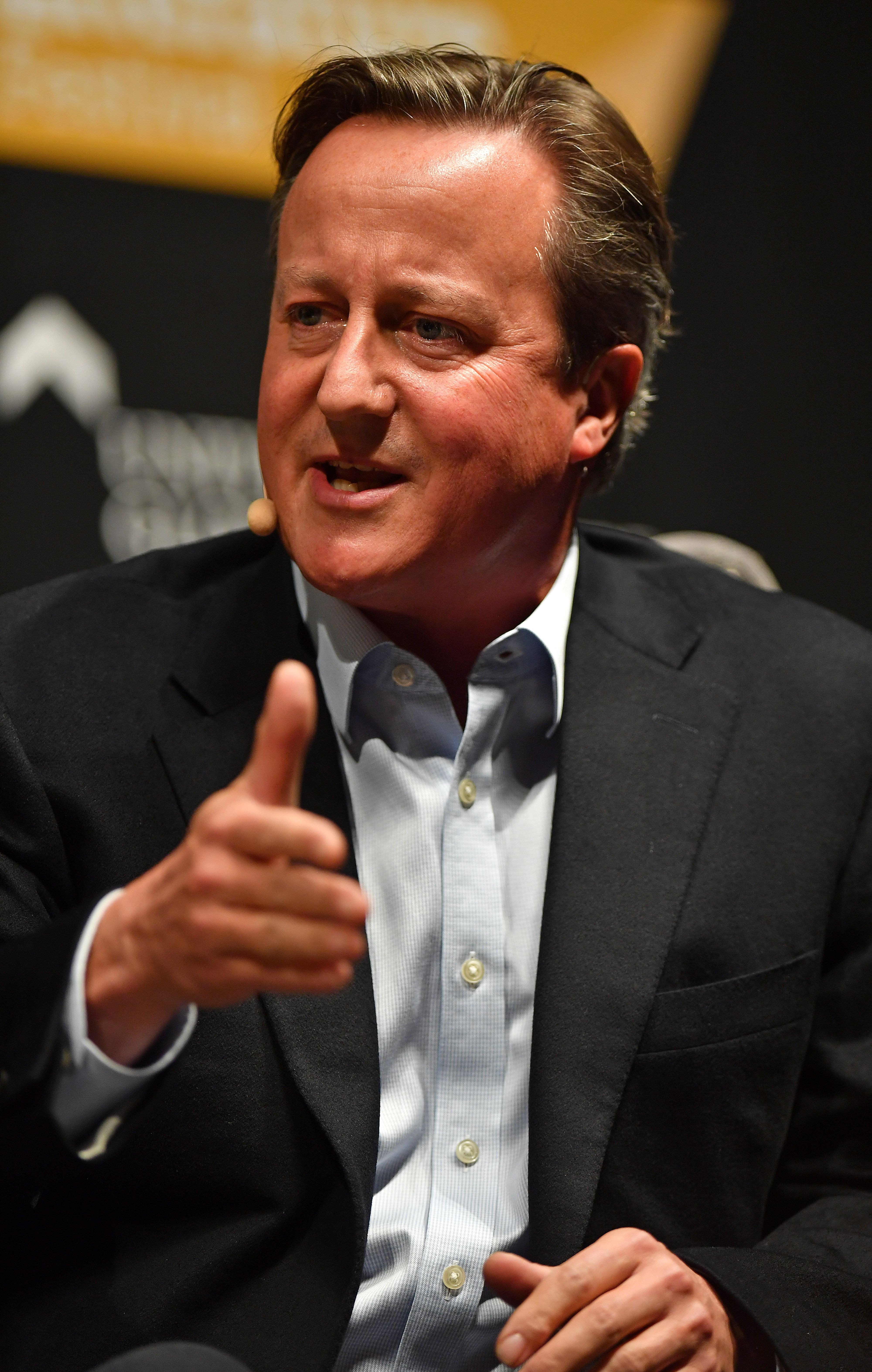
Greensill Scandal: Whitehall Chief Under David Cameron Took Job With Finance Firm

Since 2018, Greensill has filed for insolvency after failing to secure support through the government’s Covid corporate financing facility. Its collapse threatens thousands of jobs in Liberty Steel.

In a letter to the cabinet secretary Simon Case, shadow chancellor Anneliese Dodds and Reeves called for a “full, transparent and thorough investigation” into Greensill’s links with the Conservative government.

“The irresponsible behaviour of Greensill Capital and its almost unparalleled access to the heart of government raises serious questions about what kind of businesses the government is engaging with,” they said.

The latest claims came after Labour said it had been handed a business card dating from Greensill’s time working as an adviser in the Cabinet Office, describing him as a senior adviser in the prime minister’s office.

The card, which was said to have been given to an industry figure in 2012 shortly after Greensill became an unpaid adviser on supply chain finance issues, included a Downing Street telephone number and email address.

After he left office, Cameron became an adviser to Greensill Capital, and reportedly personally lobbied chancellor Rishi Sunak for cash support for the firm through the Covid Corporate Financing Facility.

He took the job two years after leaving No 10 and therefore it did not require the approval of Acoba.

Asked about Cameron’s approach, Sunak told ITV News: “I think it’s important that, whoever people are, whether they’re prime ministers or anyone else, that they follow the rules and the guidelines that we have in place for lobbying.

“We have the rules in place for good reason. And I think whoever you are, it’s important processes are appropriately followed.”

Prime minister Boris Johnson, meanwhile, has failed to back a parliamentary inquiry into government links with Greensill but has committed to a review of how the company was able to secure government contracts. 

The independent probe will be led by lawyer Nigel Boardman. 

Johnson told broadcasters on Tuesday, it will be given the “maximum possible access” to those involved.

“I’ve asked Nigel Boardman to have a look at this whole issue of supply chain finance and given him pretty much carte blanche to ask anybody whatever he needs to find out,” Johnson said. 

“I would like it to be done quickly, but I want him to have the maximum possible access so we can all understand exactly what has happened, and that will of course be presented to parliament in due course.”

Share Button

Rushed Vaccine Passports Would Do More Harm Than Good

With drinkers huddled around makeshift heaters outside pubs trying to enjoy the latest taste of freedom, the biggest item in Boris Johnson’s in-tray as he considers the next stages of the government’s lockdown exit roadmap is the vexed question of Covid passports. 

A government review is ongoing. It will not report until June, but two weeks ago Johnson came out in favour of their domestic use. Covid passports are already set to become a feature of international travel, given disparities in infection rates and vaccination schedules around the world. 

The prime minister said passports would be piloted at mass events, including football matches and concerts; they could be used in theatres and nightclubs; and he would not rule them out in shops, bars, restaurants and, yes, pubs. 

Johnson faces opposition across parliament, while scientists, business owners, civil liberties groups and others have all voiced concerns. Yet when pressed on his rationale, he has been evasive. 

No one should expect the prime minister to be able to present the exact workings of a future system – the whole point of the review and the pilots is to look at options. But in the coming weeks, a crucial phase in the vaccine rollout and lifting of lockdown, he will need some better answers. A new Institute for Government report sets out eight questions that the government needs to address, from what problem passports could solve to where and how they could feasibly work.

Johnson may understandably be keen to avoid another broken promise. But a rushed or poorly thought through passport scheme could spread the virus and harm vaccine confidence

Johnson’s main rationale is that he view Covid passports as the only way to meet his target of removing social distancing measures entirely by 21 June. Scientific advisers are against this following major outbreaks in Europe, with modelling suggesting a third wave in the UK remains likely. A delay to the full easing of restrictions would allow further progress on vaccination, they argue, while there are also calls to tighten the border quarantine

The prime minister may understandably be keen to avoid another broken promise. But a rushed or poorly thought through passport scheme could spread the virus and harm vaccine confidence. 

First there is the question of enforcement. Large sports and music venues, which already have security and scan tickets on entry, may be able to implement a scheme. Piloting them in these venues and developing some capability makes sense as an insurance policy given the uncertainties ahead, including the threat of vaccine-resistant variants.  

But pubs and theatres have warned that they lack the capability and resources to do so. Ministers may think that reduced social distancing offers a sufficient incentive. Yet cash-strapped venues may end up operating without social distancing or proper enforcement – the worst of all worlds. It is hard to see how the government could check that all pubs in the land were complying.

The experience of the NHS contact tracing app – four months late and beset with problems – does not inspire confidence

Israel’s “green pass” is frequently cited in government documents, but the closer you look the less of a model it appears. True, the pass has been widely adopted, but bars and cafes have enforced it weakly, with many complaining of additional costs. Israeli venues are also still following social distancing measures, and (unlike in the UK) the government hasn’t announced any plans to change this. 

Next is technology. Developing an app that integrates vaccine status, PCR tests and rapid tests securely while protecting privacy and guarding against fraud would be a major challenge. The experience of the NHS contact tracing app – four months late and beset with problems – does not inspire confidence. There are questions, too, about the role of testing: the government may have a surplus of rapid tests, but their suitability as a “test and release” measure is unclear.

The government will also need to think very carefully about vaccine confidence and the risk of exclusion. Some passport proponents argue requiring passes for bars or clubs would incentivise the young to get vaccinated. Perhaps, but threatening exclusion from core activities also appears to reduce confidence among those least likely to take the vaccine, who often lack trust in government. This has happened in Israel and could happen here, where uptake already varies across groups. Vaccine confidence already faces a stern test following evidence of a link between the Oxford/AstraZeneca vaccine and incredibly rare blood clotting.  

Covid passports could have real benefits in helping countries bridge the gap between lockdowns and the “new normal”. Examining what is possible is sensible. But there is a risk of the government seeing them as another “moonshot” or a shortcut back to normality while glossing over the major difficulties and risks involved. Without more compelling answers, it will be hard for parliament – or the public – to have confidence in its plan. 

Tom Sasse is an associate director at the Institute for Government and co-author of Covid Passports: Questions for the Government. Follow him on Twitter at @tom_sasse

Share Button

Boris Johnson Orders Independent Probe Into Cameron Lobbying Row

Boris Johnson has ordered an independent review of David Cameron’s lobbying of the government on behalf of finance firm Greensill Capital.

The prime minister’s official spokesperson announced that City lawyer Nigel Boardman will lead a probe into links between the company and ministers, including personal approaches made by Cameron.

MPs have demanded answers after it emerged that the former premier had personally emailed and texted Chancellor Rishi Sunak and others to help Greensill win Whitehall contracts and financial roles.

Sunak is under huge political pressure for his admission that he sent a text to Cameron in which he said he had “pushed” Treasury officials to look at helping the firm with access to multi-million pound Covid support schemes.

In a new move, Speaker Lindsay Hoyle granted shadow chancellor Anneliese Dodds an urgent question to be answered on Tuesday into the row.

Dodds’ question calls on Sunak to deliver “a statement on the process by which Greensill Capital was approved as a lender for the Coronavirus Large Business Interruption Loans Scheme”.

Cameron broke his silence on the row on Sunday, saying he should have acted “through only the most formal of channels” rather than personally texting Sunak. 

Johnson wants the new probe to be completed “promptly”, the spokesperson said.

“The Cabinet Office is commissioning an independent review on behalf of the prime minister to establish the development and use of Supply Chain Finance and associated activities in government, and the role Greensill played in those,” he said.

“This independent review will also look at how contracts were secured and how business representatives engaged with government.

“The PM has called for the review to ensure government is completely transparent about such activities, and that the public can see for themselves if good value was secured for taxpayers money.”

Greensill collapsed into administration in March, which in turn put at risk one of its biggest clients, steelmaker Liberty Steel.

The Financial Times and Sunday Times have revealed how the firm’s founder Lex Greensill had unprecedented access within Whitehall as he sought to get the government to use his finance firm to offer loans for public services.

And Cameron, who was hired by Greensill after he left office, piled pressure onto ministers in the Treasury to grants access to Covid support funds for the firm over the past year.

The ex-PM also lobbied health secretary Matt Hancock. He brought Lex Greensill and director Bill Crothers to private drinks with Hancock in 2019, when they lobbied for the adoption of a payment scheme for doctors and nurses that was later rolled out within the NHS.

After weeks of refusing to comment, Cameron issued a statement on Sunday to the PA news agency, in which he said that having “reflected on this at length” he accepts there are “important lessons to be learnt”.

On Monday morning, former PM Gordon Brown called for tougher rules to prevent ex ministers lobbying within government, claiming it “brings public service into disrepute”.

Cameron insists that he broke no codes of conduct on former ministers’ links to government, but several MPs from all parties have called for tighter rules.

Labour insists that Sunak has questions to answer over whether he broke the ministerial code in “pushing” officials to help Greensill on Cameron’s behalf.

The chancellor last week voluntarily published his texts to the ex-PM under the Freedom of Information Act, although Cameron’s texts have not yet been published. Treasury sources insist that officials rebuffed Cameron’s main request in the proper way.

Boardman, who has spent years as a partner at the City law firm Slaughter and May, is a non-executive board member of the Department for Business and chair of the government’s Audit, Risk and Assurance committee.

He conducted a review of the Cabinet Office’s procurement processes which was published in December, 2020.  “He seems like he is an experienced person to lead this independent review,” the PM’s spokesperson said.

But shadow Cabinet Office minister Rachel Reeves said: “This has all the hallmarks of another cover-up by the Conservatives.

“Just as with the inquiry into Priti Patel’s alleged bullying, this is another Conservative Government attempt to push bad behaviour into the long grass and hope the British public forgets.

“The Conservatives can’t be trusted to yet again mark their own homework. We need answers on Greensill now – that means key players in this cronyism scandal like David Cameron, Rishi Sunak and Matt Hancock appearing openly in front of Parliament as soon as possible to answer questions.”

Boardman’s former firm Slaughter and May, which is part of the so-called “Magic Circle” of corporate law companies, came under fire in 2018 during collapse of public-private sector construction giant Carillion.

Labour had accused such corporate law firms of “circling Carillion like vultures, squeezing every last penny of fee income as the company was going down”.

Boardman, whose late father was Tory cabinet minister Tom Boardman, would “access to the documents that he needs”, No.10 said.

Asked whether Johnson believed lobbying rules needed to be changed, the prime minister’s official spokesperson replied: “As you have seen from what we have announced today, the prime minister understands the significant public interest in this and wants to look at the issues raised and get more details.

“But I think you can judge from his actions.”

Share Button

Boris Johnson Accused Of Breaking Ministerial Code With ‘Political’ Attack On Sadiq Khan

Stefan RousseauPA

Prime Minister Boris Johnson, during a media briefing in Downing Street, London, on coronavirus (Covid-19). Picture date: Monday April 5, 2021.

Boris Johnson broke ministerial rules and misled the public when he launched on “unprompted political attack” on Sadiq Khan using the government’s new £2.6m Downing Street press room, Labour has said. 

The prime minister was reaching the end of a televised briefing on the Covid pandemic when he made false claims about the London mayor and Transport for London (TfL) budget. 

Johnson, Khan’s predecessor at City Hall, claimed he left TfL’s finances in “robust, good order”, and the current mayor had blown a “black hole” in the budget with a fares freeze. 

The complete collapse in passenger numbers since Covid hit, however, has seen government agree a £1.6bn bailout in May, followed by a £1.8bn deal in November.

A TfL report published a month before Johnson left office in 2016 also showed TfL had a nominal debt of £9.1bn.

Labour deputy leader Angela Rayner has now written to cabinet secretary Simon Case calling for him to investigate and for the PM to apologise. 

She alleges Johnson broke the ministerial code by using government resources – the Downing Street press room – for political campaigning during an election period. 

It comes ahead of local elections in May, including at City Hall. 

The code, which governs ministers’ conduct, states: “Official facilities and resources may not be used for the dissemination of party political material”.

Rayner writes: “The attack was political in nature, unprompted, and entirely unrelated to either the topic of the press conference or the question the prime minister was asked.” 

The deputy leader also hit out at Johnson’s decision not to sack home secretary Priti Patel after a formal investigation found evidence that she bullied civil servants. 

Ethics adviser Alex Allan quit after Johnson ruled Patel should stay in post. 

Rayner said: “The ministerial code, by which government ministers are bound, clearly states that official facilities and resources may not be used for the dissemination of party political material.

“This includes the prime minister’s new media briefing room, which cost the British taxpayer £2.6 million.

“The prime minister has a lot of experience with the ministerial code – his home secretary was found to have breached it after bullying staff, prompting his independent advisor on ethics and ministerial standards to resign.

“The British people would rightly not expect a prime minister who has spent so much first-hand experience of dealing with matters relating to the Code to be so blatant in flouting it during a pre-election period.”  

Rayner states that in the four years Sadiq Khan was mayor before Covid hit, he reduced the operating deficit of TfL, left by the previous mayor, by 71%. 

But Johnson said during the press briefing on Monday: “As for the finances of TfL I must respectfully remind you that I left them in robust, good order. It is not through any fault of my own the current Labour mayor decided to blow them all on an irresponsible fares policy. 

“We are doing our best to help them out and we will continue to do so. But I’m afraid you have to look at some of the decisions that were taken by the current Labour mayor as well.

“I hesitate to make a point like that but since you rightly draw attention to the fact I’m a proud former mayor of London I do think we could look at the way TfL is being run.” 

The Cabinet Office confirmed the letter had been received.

Share Button