Children can test the new miniature replica of an MRI machine on different toys.


Children can test the new miniature replica of an MRI machine on different toys.
The British Medical Association has announced more strike action in an ongoing dispute over pay.
The aim of the Hele Road ward is to give students hands-on experience with equipment and patients.
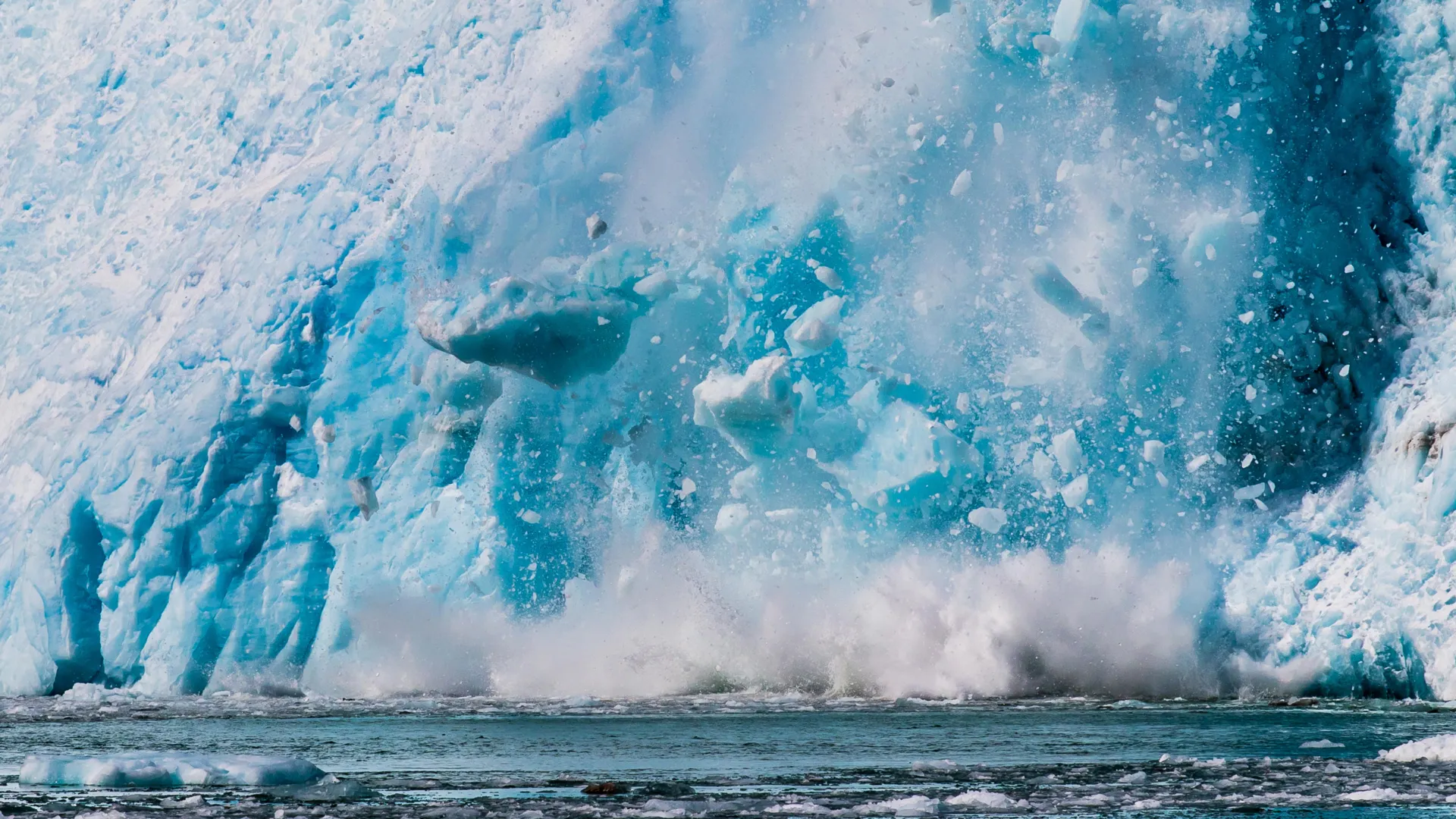
Alaska’s glaciers are highly sensitive to rising temperatures. According to new research using satellite radar observations, every 1 degree Celsius increase in average summer temperatures extends glacier melting by roughly three weeks.
A single degree Celsius equals 1.8 degrees Fahrenheit.
The study also demonstrates that synthetic aperture radar (SAR) can automatically and consistently monitor glaciers and their snowlines throughout the year. Traditionally, snowlines are usually measured only near the end of the melt season using optical instruments.
Researchers found that SAR provides more dependable data than conventional surface-based optical methods.
The findings were published in Nature.
The study was led by Albin Wells, a recent Ph.D. graduate from Carnegie Mellon University. Co-authors include Carnegie Mellon assistant professor David Rounce and Mark Fahnestock of the University of Alaska Fairbanks Geophysical Institute. Rounce previously worked at the Geophysical Institute as a postdoctoral fellow and research associate.
Tracking Glacier Melt From Space
The research team used radar observations to measure glacier “melt days.” A melt day may represent a full 24-hour period when an entire glacier is melting, or it can consist of several days during which melting occurs across different portions of the glacier until the total affected area equals the glacier’s full surface.
An increase in melt days indicates that the melt season is becoming longer, which contributes to greater overall ice loss.
Using data from Europe’s Sentinel-1 radar satellites, the scientists monitored seasonal changes on nearly every Alaska glacier larger than about half a square mile between mid-2016 and 2024.
Synthetic aperture radar operates by transmitting microwave pulses from a moving satellite or aircraft toward Earth’s surface and then combining the returning signals into detailed images. Because it does not rely on sunlight, SAR can collect data through clouds and in darkness.
Sentinel-1 revisits the same location every 12 days and covers more than 3,000 glaciers across Alaska.
Heat Waves Accelerate Snow Loss
The researchers also discovered that short-term heat waves can dramatically reduce the snow cover that protects glaciers. During unusually warm periods, glaciers lost up to 28% more protective snow than they do in typical years. This percentage applies at the scale of individual mountain ranges and does not necessarily affect every glacier equally within those regions.
“Our ability to quantify these changes is really important,” Wells said. “Melt extents and snowlines are proxies for glacier mass balance.”
Glacier mass balance refers to the difference between how much snow and ice a glacier gains and how much it loses over time.
“These correlations with temperature begin to give a sense for how much melt or snowline retreat we can anticipate under future, warmer climates across the region,” Wells said.
A snowline marks the boundary between a glacier’s accumulation zone, where snow builds up and adds mass, and its ablation zone, where melting removes snow and ice.
Why Radar Outperforms Optical Monitoring
Glaciologists generally rely on optical instruments to evaluate snowlines near the end of the melt season, usually in late summer or early autumn.
“In optical data, the snowline can be really hard to observe,” Fahnestock said. “If you’re a day late taking your picture, it might have snowed on the entire glacier, and you can’t see where the bare glacier ice is down below and where the snow and firn is above.”
Firn is partially compacted granular snow found near the upper portions of glaciers. Over time, it can gradually transform into glacier ice.
According to Fahnestock, optical observations can be affected by changing lighting conditions, shadows, cloud cover, and variations in whether firn appears clean or dirty.
SAR avoids many of those limitations and can provide regular snowline measurements throughout the melt season.
“What Albin has done is operationalize the tracking of surface conditions on the glaciers in a way that can be applied anywhere,” Fahnestock said.
The 2019 Alaska Heat Wave
The researchers closely examined an intense Alaska heat wave that lasted from June 23-July 10, 2019. The event affected every glaciated region of the state except the Brooks Range.
For nearly two weeks, temperatures at many locations ran 20 to 30 degrees above average. Several all-time records were broken, including a reading of 90 degrees Fahrenheit at Ted Stevens Anchorage International Airport. Typical summer highs in Anchorage are usually in the mid-60s.
According to the study, the extreme heat pushed glacier snowlines nearly 350 feet higher in elevation. In an average year, snowlines would not reach those elevations until roughly two months later.
As a result, bare ice and firn remained exposed for longer periods, increasing overall ice loss.
The authors write that this highlights “the sensitivity of glaciers to short-term climatic variability.”
Coastal and Inland Glaciers Behave Differently
The study also identified consistent differences between glaciers located on the coastal side of mountain ranges and those farther inland.
Wells said the number of melt days varied between the two groups, suggesting they respond differently to environmental conditions even though many are losing ice at broadly similar rates.
“This is an important finding,” Wells said, “because it corroborates prior knowledge that glaciers in Alaska on the coastal side of mountains have more melt in summer and more accumulation in winter than those on the continental side of the ranges.”
A team of researchers from the CSIR-Central Salt and Marine Chemicals Research Institute (CSMCRI), the Indian Institute of Technology Gandhinagar (IITGN), Nanyang Technological University in Singapore, and the S N Bose National Centre for Basic Sciences has developed a new type of highly precise filtration membrane. The study, published in the Journal of the American Chemical Society, describes a technology that could help industries cut energy use and dramatically increase water reuse.
Many industrial activities depend on separating different substances from one another. These separation processes are essential for tasks such as drug purification, textile dye treatment, and food production. Yet they are also among the most energy-intensive operations in manufacturing, accounting for roughly 40% to 50% of global industrial energy consumption.
Most facilities still rely on traditional approaches such as distillation and evaporation. While effective, these methods require large amounts of energy and contribute significantly to carbon emissions. Membrane-based filtration is generally considered a cleaner alternative, but conventional polymer membranes often contain pores of uneven size. Over time, those pores can change shape or degrade, reducing performance and limiting their usefulness in demanding industrial environments.
Nature-Inspired POMbranes With One-Nanometer Pores
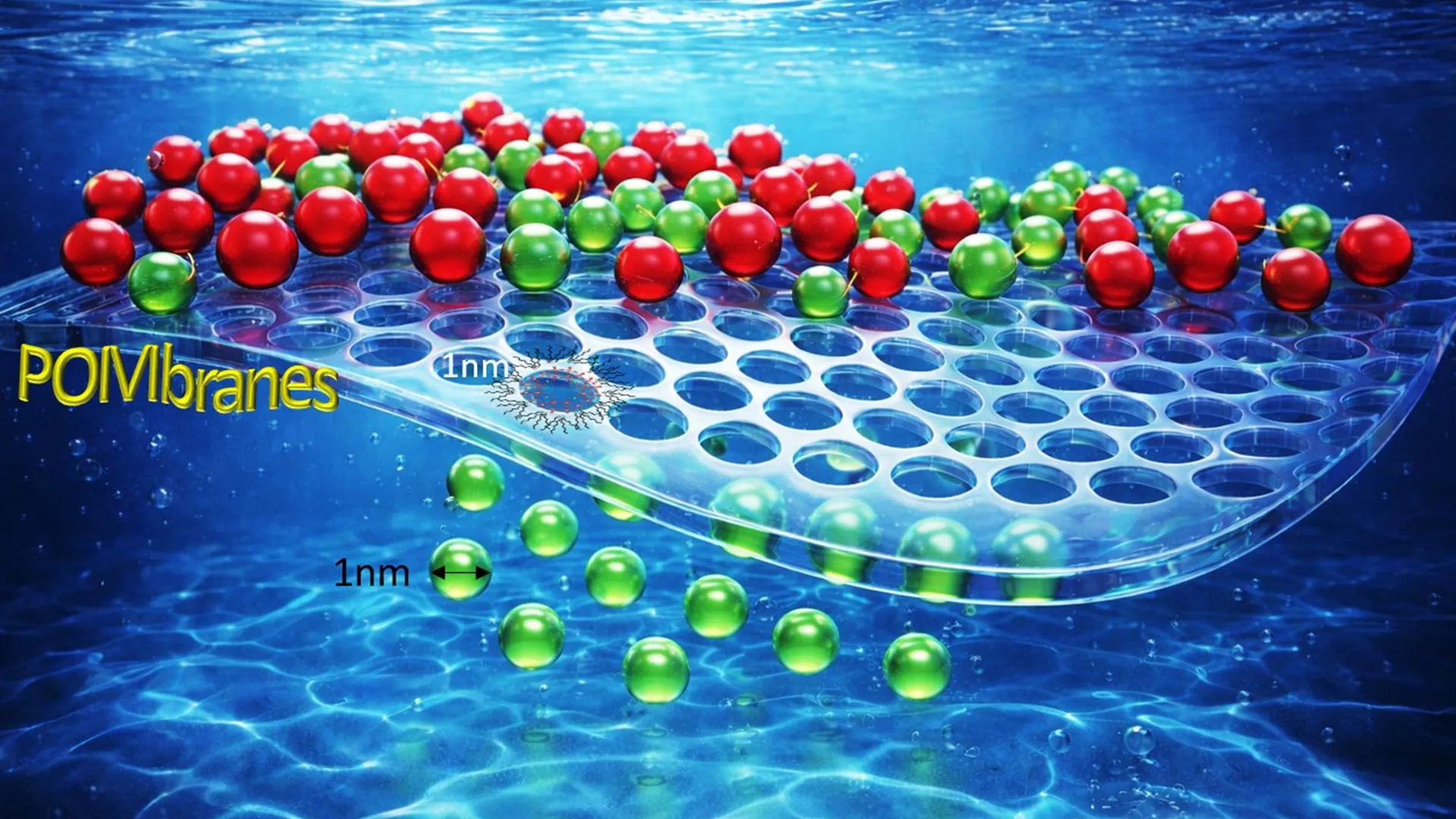
“To address these limitations, we engineered a new class of ultra-selective, crystalline membranes called “POMbranes,” which contain pores that are about one nanometer wide, thousands of times thinner than a human hair,” said Dr. Shilpi Kushwaha, Senior Scientist at CSMCRI.
The new membranes draw inspiration from biological systems such as aquaporins, which regulate the movement of molecules through precisely sized channels. To achieve this level of control, the researchers used polyoxometalate (POM) clusters. Each cluster contains a naturally occurring opening that is exactly 1 nanometer wide and remains permanently stable.
According to Ms Priyanka Dobariya, a CSMCRI research scholar and co-first author of the article, “These POMs are tiny, crown-shaped metal clusters that have a permanent, perfect hole in their centre that does not change or lose shape, which is the biggest hurdle with traditional plastic filters.”
Building an Ultrathin Molecular Sieve
Creating a practical membrane required arranging billions of these tiny ring-like structures into a continuous, defect-free layer. To accomplish this, the researchers attached flexible chemical chains to the POM clusters.
When the modified clusters were placed on water, they naturally spread out and organized themselves into a large-area ultrathin film. By changing the length of the attached chains, the team was able to control how closely the clusters packed together.
“This forced molecules to cross the membrane through the only open path, the one-nanometer holes built into each cluster, allowing the membrane to act like a high-tech sieve,” added Dr. Raghavan Ranganathan, Associate Professor at IITGN’s Department of Materials Engineering.
Dr. Ranganathan and Mr. Vinay Thakur, a PhD scholar at IITGN and the co-first author of the article, also carried out molecular-level simulations that revealed how the membranes perform their filtering function.
Nearly Ten Times Better Separation Performance
Testing showed that the membranes could distinguish between molecules that differ by only 100-200 Daltons, a level of precision that is extremely difficult to achieve with conventional polymer membranes.
According to Dr. Ketan Patel, Principal Scientist at CSMCRI, this capability could create new opportunities for more sustainable manufacturing processes.
“Our membranes show almost ten times better separation performance compared to existing technologies, while remaining flexible, stable, and scalable,” he said.
“Additionally, these membranes are flexible, stable across different acidity levels (pH ranges), and can be manufactured in large sheets. This combination is essential if the membranes are to be adopted widely in industry.”
Potential Benefits for Textiles and Water Recycling
The technology could be particularly valuable for India’s textile and pharmaceutical industries, both of which play major roles in the country’s economy.
India’s textile and apparel sector contributes more than 2.3% of GDP and represents approximately 13% of industrial production. The domestic market is currently valued at $160-225 billion and is expected to expand to $250-350 billion by 2030.
Textile dyeing and finishing operations generate large amounts of contaminated wastewater, making dye removal and water reuse ongoing challenges. The new membranes could selectively remove dye molecules while allowing water to be recycled, reducing both freshwater demand and chemical waste. This advantage is especially important as India’s wastewater treatment market continues to grow.
Applications in Pharmaceutical Manufacturing
The membranes could also benefit pharmaceutical production, where highly accurate separations are critical for product quality and manufacturing efficiency.
“Processes like drug purification and solvent recovery are both energy-intensive and quality-sensitive,” noted Mr. Vinay Thakur. “Highly selective membranes such as these can lower energy use while maintaining the stringent standards required in pharmaceutical production.”
A Platform Technology for Sustainable Manufacturing
Researchers describe the new POMbranes as a versatile platform technology. Their adjustable structure, high selectivity, and ability to withstand harsh chemical environments make them suitable for a broad range of industrial separation tasks, from wastewater treatment to advanced chemical manufacturing.
As industries increasingly look for technologies that combine efficiency, durability, and sustainability, molecularly engineered membranes may become an important part of next-generation manufacturing systems. By applying a principle commonly found in biology, precise control at the molecular scale, and adapting it into a scalable materials technology, the researchers have demonstrated how nature-inspired design can help solve major industrial challenges.
Patients have been urged to only attend A&E if their condition is life-threatening or serious.
As people grow older, their cells steadily pick up new genetic mutations. A study from Boston Children’s Hospital, published in Cell, has uncovered an unexpected twist in that process. Researchers found that microglia, the immune cells that reside in the brain, accumulate mutations in specific cancer-driving genes. Rather than causing cancer, however, these mutations may contribute to the development of Alzheimer’s disease.
The research was led by Christopher Walsh, MD, PhD, Chief of the Division of Genetics and Genomics at Boston Children’s Hospital and an Investigator of the Howard Hughes Medical Institute. Collaborators included Alice Eunjung Lee, PhD, and August Yue Huang, PhD, also of the Division of Genetics and Genomics. All three are Professors at Harvard Medical School and Associate Members of the Broad Institute of MIT and Harvard.
The team says the findings could point to new ways to diagnose and treat Alzheimer’s disease.
“We find that to some extent, Alzheimer’s disease is a little like cancer — driven by the same mutations that drive blood cancers like lymphoma and leukemia,” said Walsh. “This is helpful because we have a lot of drugs to fight cancer and some of them might be useful therapeutically for Alzheimer’s disease.”
Cancer Driver Mutations Found in Alzheimer’s Brains
To investigate, researchers analyzed 149 cancer-driving genes in brain tissue samples from 190 people with Alzheimer’s disease and compared them with samples from 121 healthy brains.
The Alzheimer’s samples contained more single-letter DNA changes than the healthy tissue. Many of these alterations repeatedly appeared in the same five cancer driver genes, suggesting that microglia were accumulating mutations in a specific set of genes.
Microglia serve as the brain’s cleanup crew. These cells remove debris and help eliminate infected, damaged, or dying cells. Scientists had long believed that microglia remain confined to the brain and do not cross the blood brain barrier, unlike many other immune cells that circulate through the bloodstream.
Unexpected Link Between Blood Cells and the Brain
The mutations identified in microglia are commonly associated with blood cancers. That observation prompted the researchers to look for the same mutations in blood samples from people with Alzheimer’s disease.
They did not expect to find them.
Instead, the blood cells from the same Alzheimer’s patients carried the identical cancer-associated mutations.
“It was actually a really unexpected finding that suggests a totally new mechanism for Alzheimer’s disease pathogenesis,” said Huang. “The findings mean that the blood’s immune cells with cancer mutations are likely getting into the brain and contributing to disease.”
How Mutant Immune Cells May Fuel Alzheimer’s
The researchers propose that aging or injury can weaken the blood-brain barrier, allowing immune cells from the bloodstream to enter the brain. Once there, these cells may transform into microglia-like cells.
At the same time, protein clumps that build up in the brain trigger microglia to multiply and respond. Cells that possess a biological advantage are more likely to expand, including the microglia-like cells carrying cancer-related mutations.
According to the researchers, these mutated cells may create a more inflammatory and damaging environment than healthy microglia. As a result, nearby neurons can be harmed and die, contributing to the progression of Alzheimer’s disease.
Potential for New Alzheimer’s Tests and Treatments
The discovery could eventually lead to new approaches for detecting Alzheimer’s risk.
“Because it’s hard to access brain tissue in a living patient, genetic screens using blood samples could be developed to test whether a person carries these mutations, and has an increased risk of developing Alzheimer’s disease,” said Lee.
In a follow-up study posted as a preprint on bioRxiv, Huang and Lee found additional evidence supporting the connection. Their analysis showed that cancer driver mutations detected in blood samples increased Alzheimer’s disease risk independently of APOE4, a well-established genetic risk factor for the disease.
The research was conducted in collaboration with the Icahn School of Medicine at Mount Sinai. Funding was provided by the Howard Hughes Medical Institute, the National Institute on Aging, the NIH Common Fund through the Somatic Mosaicism Across Human Tissues (SMaHT) consortium, and the Suh Kyungbae Foundation (SUHF).
As I enter the eighth decade of my life, I find that I no longer want to kill anything.
Anything at all.
This dawned on me one recent night as I was brushing my teeth. A fly was buzzing around, in the chaotic path that makes sense only to flies, and I absent-mindedly swatted at it with my free hand. It was an arguably lucky swat, sending the fly in a spiral down to the drain hole of the sink. As it lay there, weakly flailing alongside the stopper, a perfect victim waiting to be washed away, I reached for the faucet handle … and stopped myself, feeling a twinge of misgiving.
About a fly.
How did I come to this? Growing up in a family where hunting season meant putting food on the table, I often hunted with my father, and I killed numerous creatures, including deer and antelope. I would join in the field-dressing of the carcasses (these were not fancy hunts facilitated by a guide; it was just my dad and me, bumping along snowy gravel roads in a battered Chevy pickup), so I was immersed in the visceral aftermath. Whatever misgivings or remorse I had were overwhelmed by the work at hand.

Courtesy of Larry F. Slonaker
Advertisement
My father had no remorse. He grew up in northern Montana over a hundred years ago, one of eight children who lived on a homestead in a shack without electricity or running water. Hunting was an intrinsic part of life for him and his brothers — a never-ending exercise to bring home protein to feed a large family. Beyond that, though, they took joy in the act itself — the rush brought on by pursuing, shooting and killing. I know it’s unbelievable (unfathomable, really) to many, but for some it’s undeniably true.
That’s the boldface dividing line between those who hunt and those who find it repulsive. As a kid, I had none of the privations my dad had experienced, but I was introduced early to that thrill of the hunt and the kill. In my childhood home, autumn was enlivened by football, Halloween and deer season.
Then the day came for me to leave that home. I went off to college in a big city, and then started a career in journalism, where co-workers were almost all anti-gun and anti-hunting and not timid about saying so. Within an otherwise like-minded bubble, I was an outlier who thought it was OK for a person (that is, a demonstrably sane person who has had safety training) to own a gun, and to shoot an animal for food. While I didn’t hide my feelings about it, I didn’t go out of my way to advertise them, either.
Advertisement
Courtesy of Tom Van Dyke
This changed one September, when an in-law who was a veteran hunter persuaded me to go deer-hunting with him. I thought it would be interesting to revisit that experience, and at the same time, reexamine this whole notion about the joy of hunting. I pitched a story to the editor of my newspaper’s Sunday magazine, the late Jeffrey Klein (once of Mother Jones), who signed off with enthusiasm.
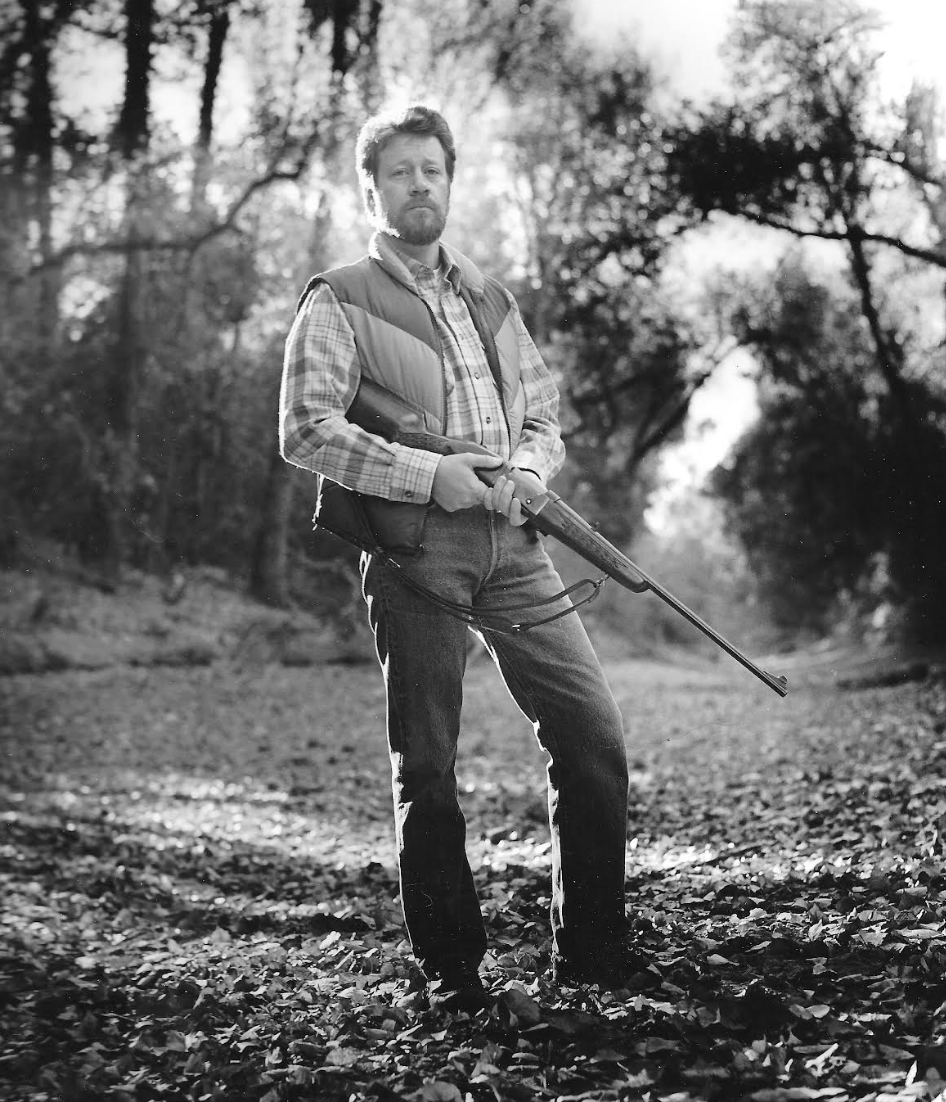
The story ended up being a lot about the nature of hunting, and not very much about the hunt itself, except for a description of two or three confused minutes in which I ended up shooting a buck. When it was published — complete with a woodsy photo of me carrying a rifle and wearing a Natty Bumppo-like scowl — it elicited an onslaught of reader response, including the most hateful mail I’d ever received. (When you write a weekly column, as I did, you sometimes are a convenient target for the angry, the disgruntled, the anal grammarian, etc.). Workplace reactions were more muted, but I did detect a subtle shift among my colleagues.
Advertisement
The larger shift occurred internally. I spent a lot of time reviewing the hunt and brooded over one part in particular. As is often the case, no matter how skilled the hunter, there was a lapse of several seconds or longer between when the animal was struck and when it drew its last breath. As somebody with easy access to countless sources of humanely processed protein, I asked myself: How could I justify that lapse, just for a taste of some vague atavistic thrill?
I couldn’t. And that’s the realization that started my transformation.
At first the change was gradual. Because my wife and I live in a semi-rural area, we have numerous critters hanging around. When we moved in, our horseshoer — a lanky old cowpoke who loved to hunt and shoot — warned us about diurnal skunks, which he claimed are inevitably rabid.
“If you see a skunk in the daylight, you better shoot it,” he told me.
He said this with such conviction that I was ready to shoot any skunk under the sun.
But one afternoon as I was entering an outbuilding with one foot on a step and the other on the ground, I froze. A decidedly non-rabid skunk had suddenly materialized from behind me, and proceeded to casually waddle directly between my legs, and thence into a small gap under the building. (It did not emit that acrid, sense-shocking odor usually associated with a skunk… just a whiff, maybe akin to that of a slightly flatulent and embarrassed elder relative shuffling to a corner of the room.) I was no more inclined to shoot that skunk than my own dog.
Advertisement
The image of this creature going about its business — and, it seemed to inquire, why didn’t I mind my own? — awakened in me a sensibility of whenever-possible-live-and-let-live. As time passed there were more skunks, then possums in the garage (mama and four or five babies, all aghast at the site of me), bold and kind of scary raccoons, raucous crows, and so on. We cohabitated without incident, though the lawn and the dogs’ water bowls did suffer some.

Courtesy of Larry F. Slonaker
This became the rhythm of life for months and years, until a sudden change. Maybe intensification would be a better word. A time came when I swung drastically to where live-and-let-live became more like live-and-let-everything live. Not only that — help them live.
Advertisement
There was the mouse that had been fetched indoors by the cat, who relinquished it only after considerable coaxing. I gently swept the dazed creature into a dustpan and transported it to a reasonably safe spot outside. Soon after, there was another mouse (wait, was this the same mouse?), whose best-laid plan to get a drink from the edge of the swimming pool had gone agley. As it desperately swam, I scooped it out and deposited it to another safe spot, adding a gratuitous admonishment to be more careful.
There was the wolf spider that I collected with the same dustpan; the lizard, also packed in by the cat, also relocated via the dustpan; and the hummingbird, which trapped itself in the garage and chose the cobwebby window as the only way out, despite the garage door whose gaping openness, in hummingbird dimensions, must have been akin to the Grand Canyon. (The process of shepherding it out the door required a full 15 minutes of slow-mo walk-and-talk-and-wave action.) There was even the nest of pesky yellowjackets gingerly hauled from the barbecue area to the back pasture, which mitigated their peskiness not at all.
And then at last there was the fly, dazed at the sinkhole, my hand poised at the faucet handle, bringing me back to the question: How did I come to this?
Advertisement
Answer: I got old.
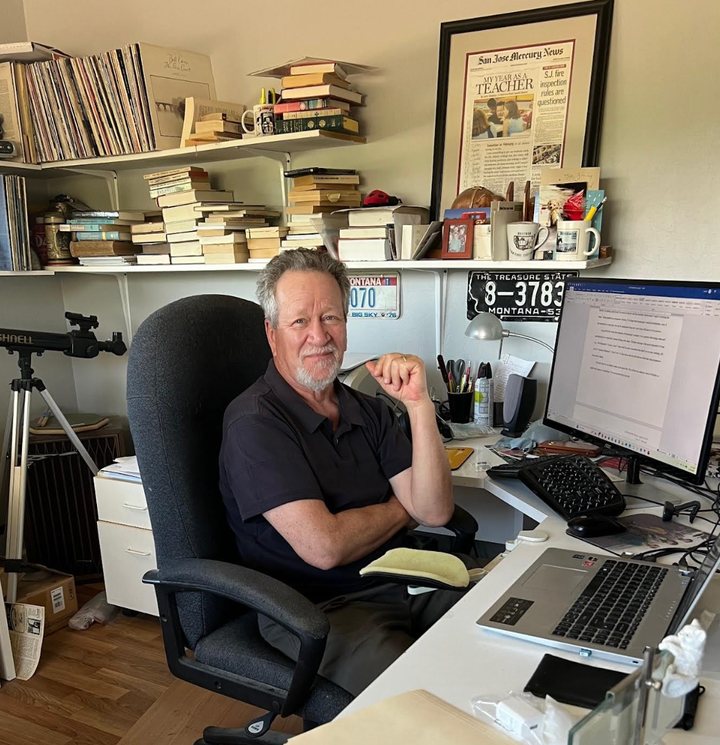
Courtesy of Larry F. Slonaker
After age 30, the ensuing birthdays were inconsequential. Just another day. But surprise! The 70th, the ol’ seven-oh, wasn’t another day, but that day. At 70, a heretofore gossamer notion was revealed to be fact. Everybody must die — shockingly, even me.
Facing this reality, I realized I had no interest in hastening others to their own fate. I kept thinking of Robert Burns’ mouse, and those self-referential lines:
Advertisement
…thy poor, earth-born companion, / An’ fellow-mortal!
Yes, on this earth, we far-flung and disparate fellow-mortals are all crowded together onto one ineluctable path to the same end. So don’t let me rush you.
Some will want to remind me that as we proceed on the path, there always will be blood. Old fools cannot change the immemorial dynamic of dog-eat-dog and cat-eat-mouse and kill-or-be-killed. Albert Schweitzer’s “Reverence for Life” is delusional, laughable. I’m unmanly, sentimental, weak.
Yeah, I’m good with all that.
As for the fly: I wrapped it up in a bit of tissue, took it outside, and lay it on the porch. The next morning — where, how, who knows, didn’t matter — it was gone.
Advertisement
Larry F. Slonaker is an essayist and the author of the novel “Nothing Got Broke.” He was born and raised in Great Falls, Montana, and worked as a writer and editor at the once-renowned San Jose Mercury News, and the still-renowned Stanford University. There were a few stops at never-renowned places as well. He and his wife now live in California on five acres, which is just large enough to contain three horses and several semi-feral (all neutered!) cats.
Do you have a compelling personal story you’d like to see published on HuffPost? Find out what we’re looking for here and send us a pitch at pitch@huffpost.com.
Advertisement
Whether it’s the new Pride and Prejudice and Sense and Sensibility adaptations (this time from Netflix and Focus Features, respectively) or yet another instalment in the Dune franchise, 2026′s film and TV schedule ought to make readers pretty happy.
There’s something for sci-fi, romance, and classic lit lovers alike – bonus points if you’re a fan of Twilight star Robert Pattinson, who’s set to appear in both Christopher Nolan flick The Odyssey and Dune: Part Three this year.
If you want to read ahead of this year’s releases or are keen to find out more about the origins of the movies and shows already out this year, we’ve got your back (or should that be your spine?).
Advertisement
Here are eight books to read from 2026′s most exciting book-to-screen options:

via Associated Press
The 2021 sci-fi novel focuses on teacher Ryland Grace, who wakes up on a spaceship one day with no memory of how he got there. Then, he learns he’s accidentally become humanity’s last hope (space enthusiasts will be pleased to learn that some of its scientific details are NASA-backed).
The movie stars Ryan Gosling, Oscar nominee Sandra Hüller, and, if you listen close enough, Meryl Streep. Even better news: it’s set to be released on streamer MGM+ on Thursday, June 18, in the UK, and can be rented through YouTube or Amazon Prime already.
Advertisement
Movie release date: It came out on March 9, 2026
The Hunger Games author’s prequel explores the experience Katniss and Peeta’s tutor, Haymitch, had as a young tribute in Panem’s earlier Games.
Portrayed by Owen Wilson in the original movies, Sunrise On The Reaping’s Haymitch will be played by Joseph Zada (previously part of Prime Video’s YA adaptation, We Were Liars) instead. The cast will also include Ralph Fiennes, Regretting You’s McKenna Grace, and Hocus Pocus 2′s Whitney Peak.
Advertisement
Movie release date: 20 November, 2026
via Associated Press
The 1988 novel is the second of Dame Jilly Cooper’s 11 Rutshire Chronicles books (the last, Tackle!, was published much later than the others, in 2023).
Not only is the Rivals book filled with all the sex, scandal, and ’80s glamour you’d expect, rumour has it that the production company that made the Disney+ version has the rights to nine of the original 10 books – meaning readers who keep leafing through the series could be richly rewarded later on.
Advertisement
While 2026′s second Rivals season deviates from the book at times, it’s proven a hit among viewers and critics alike.
TV show release date: the first season is available to stream on Disney+, as are the first six episodes of season two. However, the series has taken a break and is expected to return to the streamer in November 2026.
Advertisement
It’s no secret I’m a bit of an Austen fan, but even those who don’t usually go in for Regency novels ought to give the classic book a go. The funny, quietly subversive story focuses on the almost-certainly-financially-screwed Bennet sisters, the ridiculous and cynical Georgian marriage market, and some very eligible real estate.
If nothing else, reading it will add an extra layer of enjoyment to on-screen hits like The Other Bennet Sister and Bridget Jones.
Plus, when the 2026 Netflix series (starring Emma Corrin and Olivia Colman) comes out, you can decide for yourself whether screenwriter Dolly Alderton kept faithful ot the text – or, like Emerald Fennell’s Wuthering Heights, carved her own controversial path.
Advertisement
TV show release date: autumn, 2026
The way this Ancient Greek poem is talked about, you’d swear it wasn’t basically a sex and violence-packed soap opera. But in many ways, soldier Odysseus’ long journey home is exactly that – he meets with fantastical creatures, evil witches, and sneaky sirens during what must surely go down in history as the world’s most eventful commute.
It seems Christopher Nolan’s The Odyssey, which stars Matt Damon in the lead role, Anne Hathaway as his wife Penelope and Tom Holland as his son Telemachus, alongside Zendaya, Lupita Nyong’o, Travis Scott, Charlize Theron and Robert Pattinson, will be similarly impressive.
Advertisement
Not only is the movie shot entirely with IMAX cameras – a first for director – but the star-studded cast has described it as “unlike anything that I’ve ever seen before” and “exactly what you want [from] a summer movie”.
Movie release date: July 17, 2026
A sequel to The Handmaid’s Tale, this story is set 15 years after the cliffhanger ending of the first book. Aunt Lydia shows her mettle as she fights against the oppressive regime set in the original novel.
Advertisement
The Disney+ series sees Ann Dowd, who also played Aunt Lydia in The Handmaid’s Tale series, reprise her role. She stars alongside One Battle After Another actor Chase Infiniti and Bafta winner Lucy Halliday in a show critics have dubbed “ravishing” and “a triumph”.
TV show release: The first season is already out on Disney+.

Amy Glover / HuffPost UK
Advertisement
To be honest, the first novel will see you through most of the first two movies, and is more than enough to call yourself a sandworm bookworm. But Dune: Part Three leans heavily on Dune: Messiah, the second in Herbert’s canonical six-part series.
It’s less action-packed than the first entry, but it contains arguably weirder characters – like a gas-guzzling fish-human hybrid – that make you wonder where the movie, starring Timothée Chalamet, Zendaya, Robert Pattinson, and Florence Pugh, could possibly go.
Movie release date: December 18, 2026 (just about enough time to finish the first trilogy)
Advertisement
It might not be as essential an Austen read as Pride and Prejudice. But Elinor and Marianne Dashwood’s plight is no less engaging than the Bennet sisters’: after some significant downsizing, the family has to make their way in a very new society. Yearning and love troubles inevitably ensue.
This year’s movie marks the first screen adaptation of the book since the BBC’s excellent 2008 TV series. Only time will tell if stars Daisy Edgar-Jones and Hanna star Esmé Creed-Miles will prove just as dazzling on the big screen.
Movie release date: September 25, 2026.


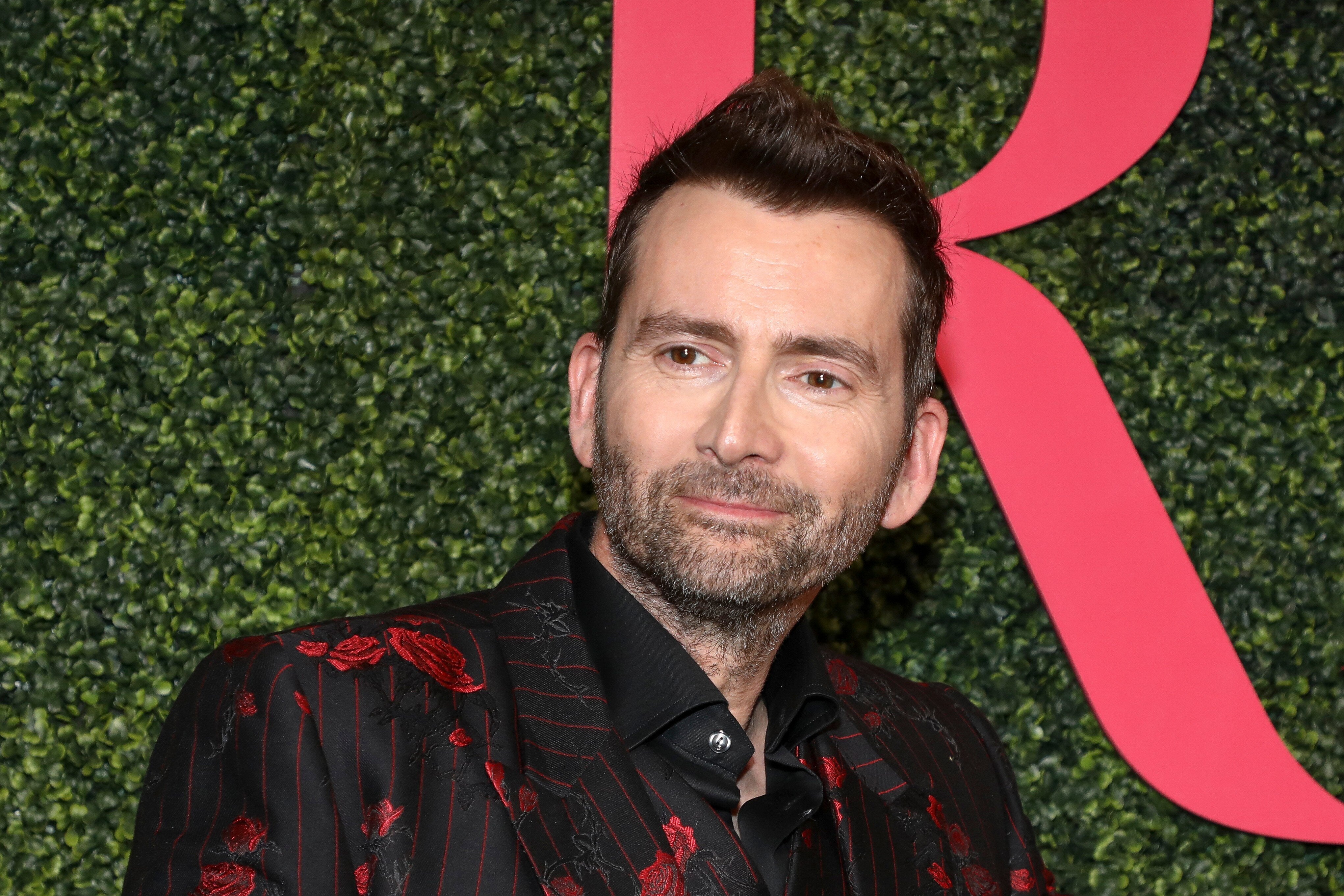

Reform’s deputy leader was left squirming by a GB News journalist over the party’s record on defence.
Richard Tice clashed with Christopher Hope, the broadcaster’s political editor, after John Healey’s resignation as defence secretary.
Advertisement
Hope said the fact that Reform does not even have a designated defence spokesman showed the party “isn’t serious” about the issue.
At one point in the live interview, Tice even claimed that Nigel Farage, the party’s leader, was also its defence spokesman.
Hope told him: “You don’t take it seriously … you don’t have a defence spokesman. That says everything about your seriousness as a party.
Advertisement
“If you think you are a serious party on defence, who is your spokesman?”
A clearly-flustered Tice insisted that “what matters” is Reform’s pledge to boost defence spending.
“We’ve shown how you do it, that’s what matters,” he said. “That’s why we’re leading in the polls.”
But Hope asked him again: “Can you name your defence spokesman? It’s not an MP, is it? It’s someone else. Who is your defence spokesman?”
Tice said: “Listen, Nigel and I cover foreign and defence, and we know how you get the money. You scrap net zero, you provide at least an extra £10-£20 billion as required in order to keep British citizens safe.”
Hope hit back: “But your party isn’t serious without having a defence spokesman. You can’t come on GB News – it insults our viewers for you to say it’s important.”
Advertisement
Watch the full clash below.
Subscribe to Commons People, the podcast that makes politics easy. Every week, Kevin Schofield and Kate Nicholson unpack the week’s biggest stories to keep you informed. Join us for straightforward analysis of what’s going on at Westminster.