I Thought I’d Conquered My Disordered Eating — Then I Got Pregnant

“And what does it say about me that being told I can’t have sugar makes me feel like this, like I’m losing my mind — why am I so OBSESSED with sugar? What’s WRONG WITH ME?”

Tears were creeping down my cheeks, inhales coming in broken and sniffly as I typed in the chat my husband and I used to communicate during work hours, dumping out all the intense feelings that had been pummelling me since my midwife sent the email diagnosing me with gestational diabetes.

After undergoing gastric bypass at 17 and losing 100 pounds — enough to get me into a J. Crew dress but never their pants; enough to get me attention from certain boys but never cross the societal line from “fat friend” to “cute girl” — I’d decided that, while it hadn’t made me thin, the surgery had “levelled the playing field,” meaning I could diet like a normal woman and exert some control over my previously unruly body.

I spent the next 15-plus years swinging between crash diets and hands-off-the-wheel reactive eating, punishing myself at the gym and then spending my lunch hour texting my long-distance boyfriend about what I’d eaten that day and how many calories I had left.

By the time I turned 30, though, I’d mostly accepted that my body just didn’t want to be smaller than a size 16. Dieting made me insufferably boring, so I tried to avoid it, and I’d recently discovered that yoga made me feel great, even when it didn’t make me smaller. But I was also already the smallest I’d ever been, as the result of nine months of deep depression following the end of my engagement to the aforementioned boyfriend.

When I started regaining some of that weight after meeting a new man (now my husband), my issues with food began to resurface. I scared the crap out of him with the level of my obsession, my inability to just make a change and behave normally. When I tried to be paleo for three days, making batch after batch of “cloud bread” and “cheese crisps,” he and my therapist both put their feet down. I was banned from dieting, at least without talking to my therapist first.

Things got better again. Between therapy, investing more time and energy in fat-positive spaces, and beginning to work with a nutritional counselor who specializes in intuitive eating, I was able to fight my obsession with smallness and control. Even when the pandemic weight I knew I’d gained, but hadn’t kept track of, was recorded against my will at an urgent care center and plastered in huge numbers across the top of my aftercare paperwork, I didn’t diet.

I cried, and raged, and panicked, but I didn’t diet.

Then, at 36, I got pregnant.

The first trimester was mostly OK. Yes, finding a provider who wouldn’t obsess about my BMI was a struggle, and morning (or, for me, all-day) sickness was no joke, but with the help of my nutritional counsellor I was able to let go of preconceived notions about what and how much I should be eating and focus on nourishing my body with whatever it could tolerate — pretty much just salty carbs.

But as my pregnancy advanced and the nausea eased, things only got harder. Since my gastric bypass, I’ve had to avoid particularly fatty or sweet foods; a few years later, I was diagnosed with oral allergy syndrome, which drastically limited the number of fresh fruits and vegetables I can eat without cooking or pickling. I’d gotten pretty used to those restrictions, but then came pregnancy.

No raw seafood. No tuna, even if it’s fully cooked. No pink meat. No fresh/soft cheeses. No pineapple. No Caesar salads. No more than 200mg of caffeine. No Googling “Can I eat xyz during pregnancy?” unless you want to be told that thing you were about to put in your mouth might kill your unborn child.

Years of work to dismantle the binary of good versus bad foods and here was an easy loophole! I could assign moral value to foods if it pertained to my condition.

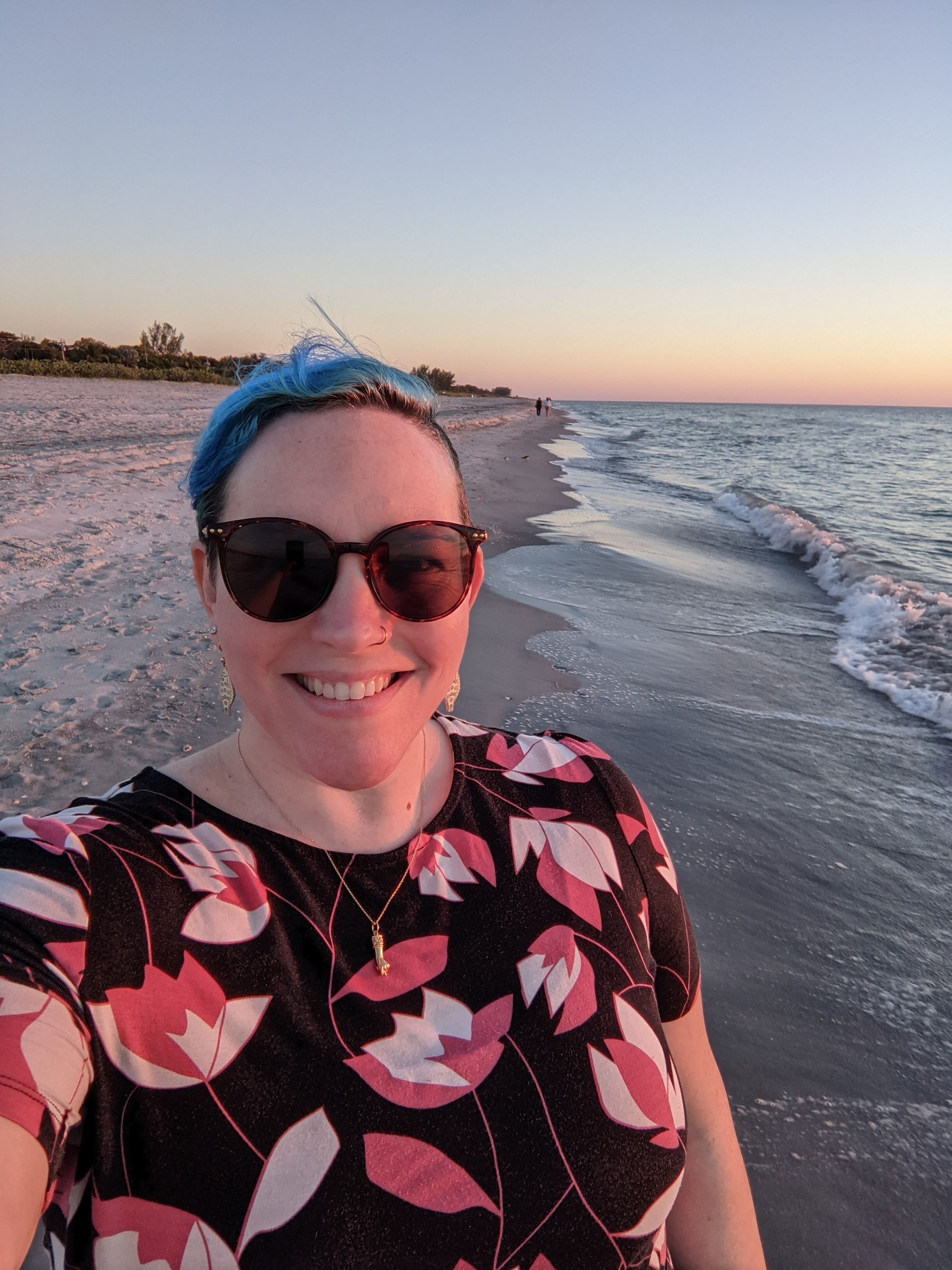
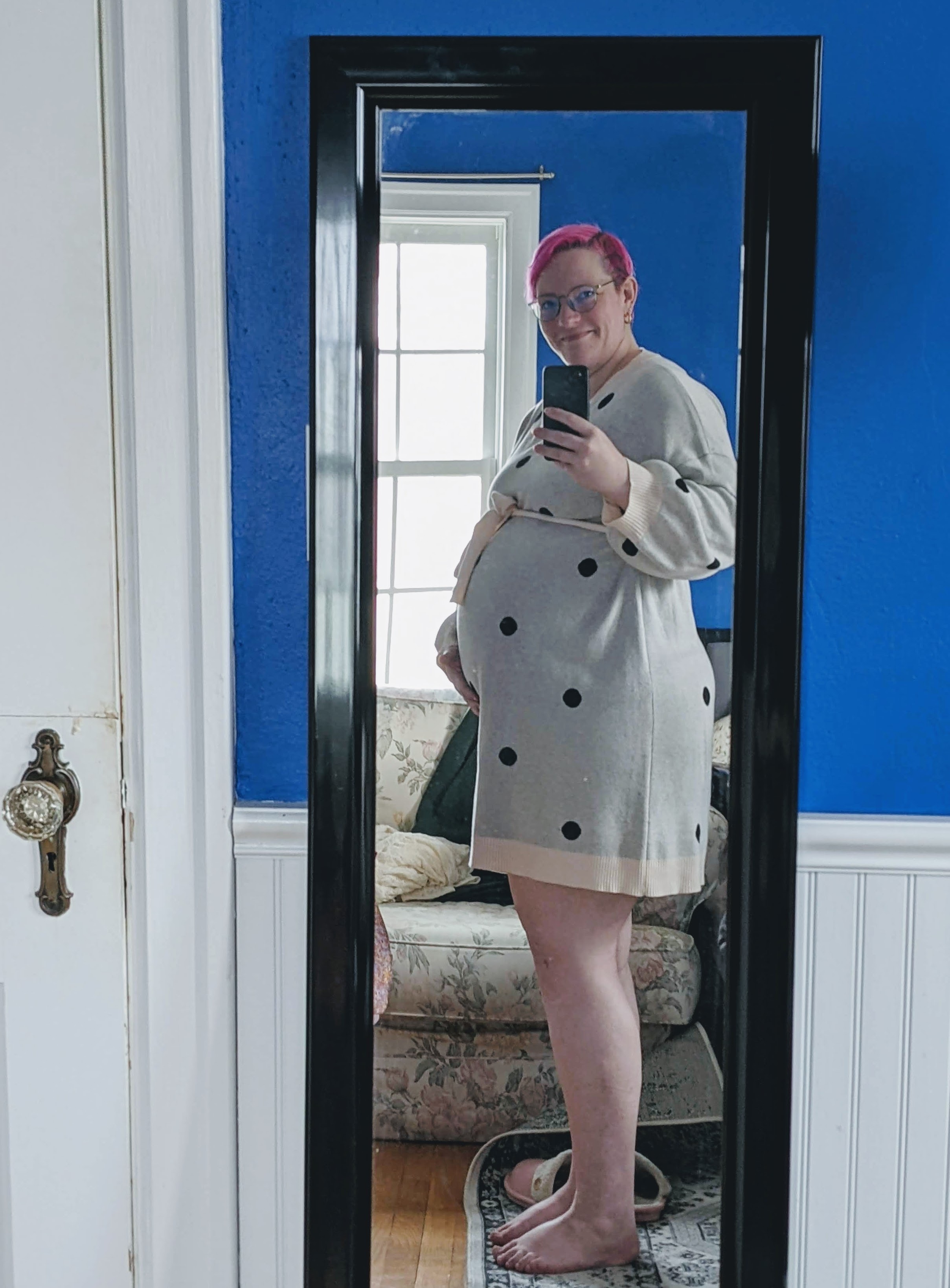
A pregnancy selfie.

Photo Courtesy of Anne H. Putnam

A pregnancy selfie.

The noose only tightened when we got to the blood glucose testing stage of the pregnancy and found that, counter to the reactive hypoglycemia I’ve lived with since the gastric bypass, I was in fact teetering on the edge of gestational diabetes.

At first I was only supposed to be tracking my blood glucose and not changing my diet — I was in an “observational period” — but I knew better than to trust that. I began examining everything that went into my mouth, secretly Googling whether foods were “allowed” with gestational diabetes, and avoiding but also obsessing over carbs.

I fixated on them, at once desperate to eat nothing but bread and pastries and candy and repulsed by my own desperation, my weakness. I hunted down recipes that were diabetes-friendly but not full of fake sugar — I actually found one good one — and bought hundreds of dollars’ worth of keto substitutions for snacks I missed (word to the wise: Kodiak waffles are no Eggos).

My last defenses had failed. After years of nutritional counseling and pushing back against diet talk at work/with my family/among friends/online, I was back to my ’90s California roots: Carbs were the enemy. And this time I couldn’t argue, because it was my baby’s health at risk, not mine.

My husband kept reminding me that this burning hot medical spotlight on my diet was temporary, but I knew something much older and more enduring had been kicked loose in my brain.

And now here I was, being explicitly told to diet, the last scraps of my sanity obliterated by an informational PDF full of condescending, shaming language around food and weight. All the time and energy (and money) I’d spent working toward a release from diet culture felt worthless in the face of this fairly common but intensely triggering diagnosis.

When I emailed my nutritional counsellor about the diagnosis, she ordered me not to look at the pamphlet again and recommended that I work with a certified diabetes educator (CDE) with experience working with people in recovery from eating disorders and diet culture trauma.

And she was right. I can’t overstate the benefit of working with someone who understands the complexities of diabetes, who can view my glucose readings holistically, and who can contextualise my questions and concerns against my history and other restrictions. Every time I leave a virtual appointment with my CDE, I feel infinitely better.

But it doesn’t last. The minute it’s time to eat again, I’m thrown into turmoil. It’s actually worse than my past experiences with dieting, because the rules are less rigid: I’m supposed to eat carbs, but they have to be the right kind of carbs, in the right amounts, alongside the right balance of protein and fat and fibre. It’s enough to make me long for my fat camp days, when some skinny adult would portion everything out for me and I could just eat mindlessly (if miserably).

The constant calculations and carb-tracking and food prep are good reminders of why dieting made me so unhappy for so long. It’s exhausting and all-consuming. But I have to do it, and unfortunately my damaged brain is a little too good at it; I hate to admit that I’m settling into this joyless eating pattern, fighting the diet less every day.

Between my limited food choices and the baby squishing my stomach, I don’t feel much like eating anyway — I have to remind myself to do it, to keep us both alive. This has also caused me to steadily lose weight during the second half of my pregnancy, which my midwife seems a little too happy about for my liking (despite the dark, ancient pride that sometimes oozes up from the deepest parts of me when she mentions it).

The good news is that most of these issues should go away within a day or two after the birth — thinking about the deli turkey sandwich I’m going to make my husband bring me in the hospital is the only thing that makes me actually look forward to labor.

I say “should” because don’t google the statistics about type 2 diabetes after gestational diabetes. But as my CDE points out, it’s just another risk factor like any other. And thank goodness, because the last thing I need is to be obsessing over carbs and glucose readings and how much fruit I can eat when I’m trying to keep this little human alive outside my body.

What’s less certain is whether I’ll be so quick to get back to thinking of food choices as neutral or joyful, instead of as a test of my morality. I can only hope, and prepare — in case my mental health doesn’t “snap back” — to get back to the work of dismantling the lessons of diet culture that were so easy to slip back into.

If you’re struggling with an eating disorder, call the National Eating Disorder Association hotline at 1-800-931-2237.

Help and support:
Share Button

Stop Telling Women Not To Share About Their Early Pregnancy

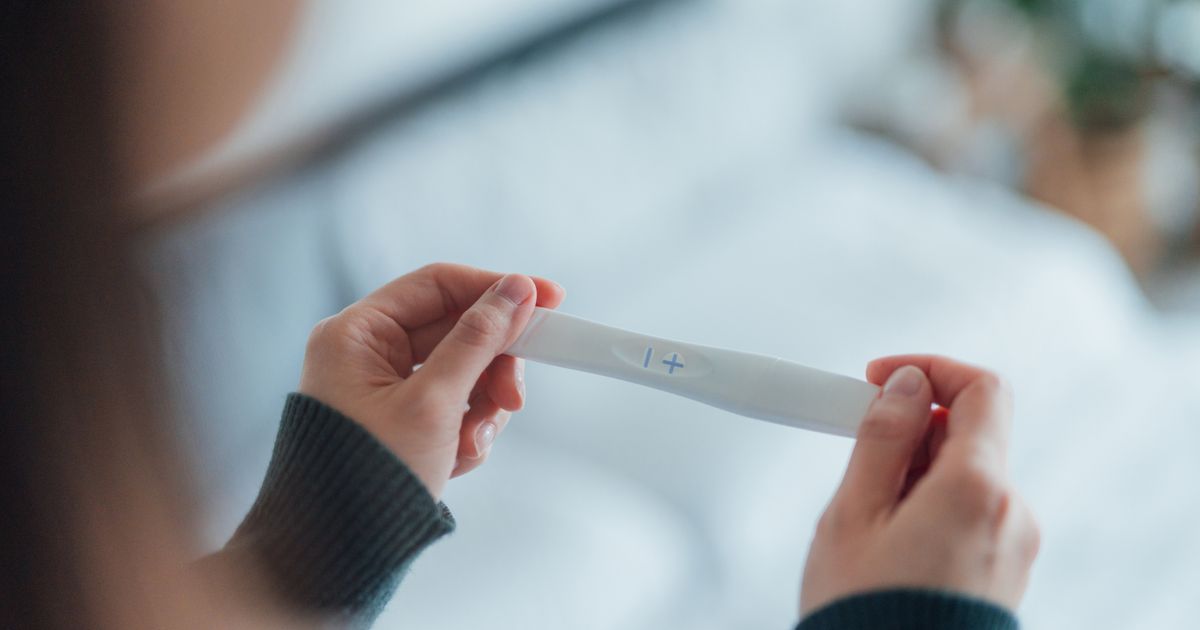

I stared at the pregnancy test with relief, sadness, fear, longing and regret. “Pregnant,” it said.

I tried to breathe. I guess I couldn’t have that glass of wine I had been planning after all. In fact, the reason I bought the test was that I wanted to drink. I hadn’t for the past several days because I started to become alarmed that my period was so late. Holy buckets. Pregnant! How did this happen?

Oh yeah, that one time I had unprotected sex. I didn’t bother taking the morning after pill because I figured I was too ancient for something to happen.

I honestly didn’t think I could get pregnant. I spent my 20s doing everything in my power to prevent such an occurrence, including taking the morning after pill numerous times.

Then in my 30s, I came around to the idea that I actually did want to have a kid and tried to conceive with my partner at the time. I went off birth control for years with no result. I looked into going to a fertility clinic, but the cost was prohibitive.

In my late 30s, my inability to get pregnant caused acute pain and an ongoing feeling of loss. When I turned 40, I was finally able to come to peace with what I assumed was my own infertility. When I turned 42, I figured that window had closed.

Then I found myself about to turn 43 and pregnant by someone I’d met on Hinge and with whom I had four dates.

I paced and paced, my mind spinning. This thing I wanted for so long finally came to fruition. A baby! I never considered getting an abortion, despite the less-than-ideal situation of being without a partner. Yes, I was scared of all the risks of having a kid as an older mom, but there was no way I’d let this chance pass me by.

I started to think of baby names right away, and before I even told anyone, plotted scenarios of how on earth I would make it work. I’d need to get a two-bedroom apartment, I thought. Maybe my parents could help with child care. Or I could ask my nieces and nephews to help babysit. I plotted and schemed how I’d make it work.

I didn’t tell anyone until the next day. The first person I called was my sister. “I think I’m going to keep it,” I found myself saying.

I told a few other close friends. Everyone was supportive, though some encouraged me not to make my decision right away about keeping it or not. I said I would think about it to appease them, but I had already made up my mind.

“I began to see how people in early pregnancy should instead lean into their community. If the worst happens, then the village is there to offer support. Why keep things secret and battle that loss alone?”

I found it very difficult not to tell people my happy news. I wanted to share it with the world, but I didn’t even tell my parents, nor did I tell the Hinge guy, who I hadn’t spoken to in two months. I knew I would tell them, but I felt I needed to wait.

I had heard you weren’t supposed to announce your pregnancy until you were 12 weeks along. I had people I was close to encourage me to wait until that long to share widely, but I didn’t understand why.

Abortion stigma and miscarriage stigma are two sides of the same coin. In both cases, instead of seeing reproductive health as simply that — a part of a person’s overall health care, it’s instead loaded with politics and morality. One sequence of events means you are a terrible person, another sequence of events means you somehow are lacking as a real woman.

One-quarter of pregnancies end in miscarriage. We are told to keep early pregnancies private in order to be spared the pain of sharing our loss. I began to see how people in early pregnancy should instead lean into their community. If the worst happens, then the village is there to offer support. Why keep things secret and battle that loss alone?

A week and a half after I found out I was pregnant, I was reading on the couch, and I felt a sudden gush of liquid. I went to the bathroom and realised I was spotting. I happened to have my first ultrasound appointment the next day, and I was prepared for the worst.

At first, when the technician began the ultrasound, I didn’t realise that my insides were being projected on the screen in front of me. I opened my legs apart so I could see the image. I gasped. I saw the most miraculous thing. It was my very own little nugget right there!

Finally, the technician took the wand out and told me she was very sorry but couldn’t detect a heartbeat. It was like she jabbed me with a knife. I started crying then, and she took me to a private room so I didn’t have to go to the waiting room.

I immediately regretted not telling my parents. I needed my mom more than ever. Why hadn’t I shared with her the truth from the beginning?

“Our culture has a long way to go to support people who get pregnant, and that starts with getting rid of the shame of miscarriage, the politicization of abortion, and the judgment of not having children at all.”

I felt shame too, about the people I had told. Now I would have to tell them about the miscarriage. But then I started to question myself. Wasn’t it a good thing to seek support when something terrible happens? Why should I feel ashamed?

It took three more weeks for the miscarriage to actually happen. I decided to wait for it to happen naturally, and I ended up needing to go to the emergency room. It was traumatic, and yet I still felt hesitant to share with people outside of my closest circle.

I didn’t truly feel comfortable saying it was a loss, but it was. That doesn’t negate other people’s experiences of becoming pregnant and deciding to abort. Those two truths can exist for different people. For me, I lost someone I wanted to meet and love. I had to say goodbye before they were even born.

Our culture has a long way to go to support people who get pregnant, and that starts with getting rid of the shame of miscarriage, the politicization of abortion, and the judgment of not having children at all.

That’s why you should share whenever you feel compelled to share. For me, keeping the news bottled inside me ended up preventing me from getting all the support I needed. Maybe other pregnant folks want to wait a bit longer.

The important thing is that as a society, we need to stop telling people they have to wait until some arbitrary predetermined date. Get rid of the stigma around miscarriage and start caring for people at all stages of their pregnancy journey, even pregnancies that don’t come to term.

Help and support:

  • Sands works to support anyone affected by the death of a baby.
  • Tommy’s fund research into miscarriage, stillbirth and premature birth, and provide pregnancy health information to parents.
  • Saying Goodbye offers support for anyone who has suffered the loss of a baby during pregnancy, at birth or in infancy.
Share Button

The Joy Of Being A ‘One And Done’ Family

Brenda Seltzer was still in the hospital, having just delivered her son, when her family started asking when she was going to have another one.

“Everybody was like, ‘How long are you going to wait until you have the second one?’” Seltzer, 33, told HuffPost. “I was like, ‘He was just born. What do you mean a second one?’”

Before she got pregnant, Seltzer had assumed she and her husband would have two children, but almost immediately she began having doubts. Her birth was hard and Seltzer required a blood transfusion. Finances also came into play. Seltzer and her husband both work full time, and her son’s full-time preschool cost nearly $20,000 a year.

“We started questioning: Why would we have two? I had a bad birth experience … we were working full time, and we didn’t have much help with family nearby,” said Seltzer.

By having one child, they’ve been able to put money toward fun family activities, like a pre-COVID cruise and a family season pass to Disney World. They’re also able to pour themselves into playtime with their son when they’re not at work.

“We can have a great relationship with him,” she said. “We enjoy being with him.” Having “just” one child was the perfect choice for her family.

And they’re not alone. The number of American parents who have one child has been steadily increasing for years. According to data from the Pew Research Center, the proportion of moms at the later end of their childbearing years who have one child doubled from the mid-1970s to 2015 — from 11% to 22%.

For many parents, the choice to have one child really comes down to knowing — and honouring — themselves and their particular circumstances.

“I chose to give my child a healthy and happy parent instead of a sibling,” said Amanda Pacovsky, 36, who has a 7-year-old daughter with her husband. She grappled with undiagnosed postpartum depression and anxiety, which “really took a toll on my mental health,” she told HuffPost, and could not imagine going through that again.

“What one-and-done parents are sick of is having their choice looked down on, or having it dismissed as a passing phase. They resent the notion that they’re not just as joyful about their family arrangement as a family of two or three or more children might be.”

Her choice was also rooted in the desire to be able to afford extracurriculars for her daughter. Currently, she’s into cheerleading and running, but they’ve also signed her up for soccer and dance without fretting too much about whether they can afford it.

“We are definitely not wealthy,” Pacovsky said. Having just one child gives them some financial breathing room — because as any American parent can attest, having kids is wildly expensive. It costs more than $230,000 to raise a child from birth through age 17, and that is without factoring in college.

Pacovsky and her husband are really happy about the decision they made to have one child, but she is struck by how many people in her life are not — or assume that must not be the case.

Like Seltzer, she’s spent years having her decision dismissed, with family and friends telling her that she will eventually change her mind. Or noting the (debunked) stereotypes that only children are spoiled. Or even asking her what will happen to her daughter when she and her husband die. Pacovsky started a popular Instagram page dedicated solely to one-and-done parenting memes to, as she puts it, squash the stigma of being an only-child parent.

One-and-done families say that stigma is real. Despite the steady rise in only-child households, Americans still generally think of larger families as “ideal.” About 50% of Americans say two children is best, while 40% say three or more is ideal. This in spite of research suggesting that having a second child doesn’t make parents any happier — and may specifically cause women’s happiness to dip.

Ultimately, what one-and-done parents are sick of is having their choices looked down on, or having their desire to have one child dismissed as a passing phase. They resent the notion that they’re not just as joyful about their family arrangement as a family of two or three or more children might be. (Of course, some families have one child because of infertility or a death or other reasons out of their control.)

“Our son is amazing. I know everyone says that, but our son has changed our lives. He’s the perfect blend of both of us,” said Meredith Rufino, 39, who has a 6-year-old son. “He brings out the best in my husband. He brings out the best in me. He has truly been a blessing.”

Her friends and family have been puzzled by how it is possible for her to so obviously delight in parenting — to so enjoy the company of her son — but not want to grow her family to try to replicate the experience.

Rufino, however, wouldn’t dream of it.

“I know myself. I know my own strengths, and I know my own limitations,” she said, noting that she has dealt with depression and anxiety. “I would rather be a great parent to one rather than an OK parent to two.”

Share Button

Benjamin Netanyahu Heckled By Hostages’ Families During Speech On Israeli Offensive

Israeli Prime Minister Benjamin Netanyahu was heckled Monday by family members of hostages who are believed to still be in captivity in Gaza.

In an address to the country’s parliament, Netanyahu spoke about the ongoing Israeli offensive in the territory and said that “we will not stop until victory.” As he spoke, families in the gallery held up photos of the hostages who have not yet been freed and chanted for them to be released “now.”

“We wouldn’t have succeeded up until now to release more than 100 hostages without military pressure,” Netanyahu said. “And we won’t succeed at releasing all the hostages without military pressure.”

He also said Monday that the fight against Hamas “isn’t close to finished,” despite growing calls from some of Israel’s allies for a cease-fire.

Around 240 people were taken hostage during Hamas’ Oct. 7 attack on Israel, with the country saying that the assault killed around 1,200 as well. After a short period in which some hostages were released, more than 100 are thought to remain in captivity, according to The Associated Press. Earlier this month, the Israeli military said that it had mistakenly killed three of the hostages.

Israel’s retaliation against Hamas has killed more than 20,000 people in Gaza, according to officials in the Palestinian enclave. Around 2 million people have been displaced there, and more than half a million people are starving following Israel’s siege of the territory, according to a report released this month by the United Nations and other agencies.

The AP reported Tuesday that Israeli forces had made moves signaling an expanded ground offensive.

Share Button

Gaza Is Set To Torpedo Joe Biden’s Claim To A Human Rights Legacy

Visiting the State Department 10 days after his inauguration, President Joe Biden said his foreign policy would prioritize an approach to diplomacy defined by: “defending freedom, championing opportunity, upholding universal rights, respecting the rule of law, and treating every person with dignity.”

Nearly three years later, Biden’s handling of the biggest international crisis of his presidency — a shock Hamas attack on Israel on Oct. 7 and a devastating U.S.-backed Israeli campaign of retaliation since — has shattered any credibility he had in claiming those guiding lights.

Biden’s narrative of championing human rights globally crumbled in striking ways throughout his presidency. But foreign affairs watchers say his actions over the last three months have dealt a knockout blow to that image — and to Biden’s pledge to represent America in the world in a meaningfully more humane way than his predecessor and likely 2024 presidential election rival Donald Trump.

“Biden and his administration told us in their own words … how all this stuff is important, so this is the standard that they created for themselves,” said Yousef Munayyer, a senior fellow at the Arab Center think tank. “The scale of destruction of Palestinian life, the mass killing, the cruelty that we’re seeing the United States support and stand by is unlike anything we have ever seen, and not like anything we saw during the Trump administration.”

Israel’s onslaught in Gaza, where Hamas is based, has killed more than 20,000 Palestinians in Gaza, the vast majority women and children, local health officials say, and displaced nearly 2 million people. The Biden administration has rejected nearly all global calls to force Israeli restraint. Officials say they are encouraging Israel to avoid hurting civilians, but repeatedly note it is establishing no red lines in support for the U.S. ally that the president has long defended, even despite concerns from other Israel supporters who see its war strategy as self-defeating.

The U.S.’s reluctance to rein in Israel drove United Nations Secretary General António Guterres to invoke a rarely used emergency article of the U.N. charter for the first time in his seven-year tenure, and has sparked huge anxiety among American partner nations and U.S. officials.

The internal effect of Biden’s hardline views on Israel-Palestine was clear to Josh Paul, a veteran State Department official who resigned over the Gaza policy in a development first reported by HuffPost. “I have had my fair share of debates and discussions,” he told HuffPost in his first interview after quitting. “It was clear that there’s no arguing with this one.”

Widespread frustration among rights proponents and international relations experts extends to the rest of the Biden administration, notably controversial advisers like White House Middle East coordinator Brett McGurk.

Yet the president’s specific influence over foreign policy makes the Biden administration’s rights record even more disturbing for many observers.

“No principal in this administration is an equivalent heavyweight when it comes to experience or foreign policy to the president himself,” Munayyer noted. He anticipates political headwinds for Biden in 2024 given his prominence on global affairs and his limited ability to sell himself as different.

“I don’t find it a very convincing argument to tell people your only chance of saving democracy is voting for this one candidate because the alternative is you’re going to get deported,” Munayyer said, referring to the Biden reelection’s campaign’s recent focus on emphasizing Trump’s hardline immigration policies. “That’s not exactly how democracy works, and the fact that it’s come to that speaks volumes about how much things have deteriorated already.”

Early Hope, Rapid Disappointment

In his first months in office, rights advocates celebrated as Biden took steps to address a policy that began with President Barack Obama and expanded under Trump, ultimately creating the world’s worst humanitarian crisis: U.S. support for one side in the civil war in Yemen.

Biden barred American offensive weapons for Saudi Arabia and the United Arab Emirates, close U.S. partners in the Middle East that had been bombing Yemen since 2015 and arming fighters there to battle an Iran-backed militia called the Houthis. He appointed a special envoy to try to end the Yemen war. And he moved to make good on his campaign promise of a less pro-Saudi policy than Trump by declassifying a U.S. intelligence determination that de facto Saudi ruler Crown Prince Mohammed bin Salman ordered the killing of journalist Jamal Khashoggi in 2018.

Yet it soon became clear the old-school president would not truly break with the old U.S. foreign policy habit of treating human rights as a secondary concern. In April 2021, HuffPost broke the news that Biden greenlit the biggest arms deal of the Trump era, a $23 billion package for the UAE that many lawmakers and national security experts saw as destabilizing, given the Emirates’ pattern of fueling conflicts across the Middle East.

A U.S.-backed campaign of air strikes by Saudi Arabia and the United Arab Emirates devastated Yemen. Biden promised to alter the policy but quickly drew close to the Saudis and Emiratis.

MOHAMMED HUWAIS via Getty Images

Critics of the Saudis soured on Biden by fall 2021, saying his initial response seeking greater Saudi appreciation for universal values was undercut by moves guided by McGurk, his Trump-era adviser, to grow closer to the repressive kingdom. By summer 2022, Biden traveled to Saudi Arabia and met with bin Salman in a move widely interpreted as signaling impunity for the prince’s past and future abuses.

In the interim, Biden sparked worldwide horror by fulfilling his promise to withdraw from Afghanistan through a chaotic August 2021 pull-out that abandoned thousands of Afghans who worked with the U.S. and ushered in mass rights violations, particularly against women and religious minorities, by Taliban militants.

The trauma remains deep years later, current and former officials told HuffPost this spring, as well as the impression that Biden botched it: “There were challenges that were inherited, but I do not believe they couldn’t have been overcome,” noted civilian protection expert Marla Keenan.

The administration continued to try to bolster its pro-human rights credentials. It restored U.S. membership to the U.N. Human Rights Council, which Trump had ended, and launched a new program of Summits for Democracy which, while controversial, spurred some hope among analysts of resisting the trend of resurgent global authoritarianism.

Biden’s team also rolled out new regulations U.S. officials and outside experts described as valuable tools to prevent and seek justice for rights violations internationally. Those include a new Pentagon plan to reduce the civilian toll of American military operations; a new policy governing arms deals that bars weapons transfers if U.S. officials determine it is “more likely than not” those arms will be used to violate international law; and a new system for tracking whether American partners use U.S. equipment to injure or kill civilians. They additionally wound down America’s drone program to some degree.

But Biden continued to be selective in treating concerns about universal values as his priority.

Earlier this year, he hosted Indian Prime Minister Narendra Modi for a high-level White House visit without securing any serious commitment by India — the world’s largest country — to address its worsening repression of its minority communities, primarily Muslims, and of anti-Modi voices. “Modi’s red-carpet treatment was a significant endorsement of his governance, and one few world leaders have received,” wrote Knox Thames, a senior State Department official under both Biden and Trump. “Modi’s damaging policies should not lead to self-censorship.”

And since the Israel-Hamas war began, the administration’s refusal to challenge Israeli actions widely seen as war crimes — from collective punishment of Gaza’s civilian population to attacks on civilians — has made it impossible for most observers to take Biden seriously on human rights.

Annie Shiel, the U.S. advocacy director for the rights group CIVIC, reflected on the contrast in a Dec. 21 statement reacting to the Defense Department’s announcement of a policy to shield civilians.

“For this policy to be meaningful, it must be applied consistently. The department’s response to catastrophic civilian harm and destruction in Gaza, caused by Israeli operations directly supported by U.S. assistance, has failed to live up to and actively undermined U.S. civilian protection efforts like this policy,” Shiel said. “A true commitment to protecting civilians must go beyond rhetoric and be backed by action and leverage — including the political will to suspend military aid that is directly contributing to the deaths of thousands of civilians.”

The same day, The New York Times reported that Biden was lifting his ban on offensive weapons for the Saudis — a shift HuffPost first reported as under consideration despite deep wariness about it among U.S. national security officials.

The Overwhelming Pain Of Gaza

Israel’s U.S.-backed operation in Gaza has created a crisis that United Nations officials and humanitarian experts call unprecedented and horrifying.

Amid Biden’s refusal to seriously limit American support for the campaign and attempts to shield the U.S. ally from global accountability for actions from killing journalists and destroying tens of thousands of homes to repeatedly striking medical facilities, the Israeli offensive has continued to expand.

Palestinians killed in Israeli attacks are buried in a mass grave as some cemeteries run out of space due to the rising death toll as Israeli attacks continue in Gaza City, Gaza, on Dec. 23.

Anadolu via Getty Images

U.S. officials and outside analysts say the upshot is deep unnecessary civilian suffering and an erosion of any American ability to promote human rights globally, from Europe to Asia.

Tobita Chow, the founding director of the advocacy group Justice Is Global, noted the hollowness of American condemnations of China’s deepening crackdown in Hong Kong.

“Gestures like this might be more effective coming from a government that was not busy sacrificing its international legitimacy along with the lives of the people of Gaza,” Chow wrote on X in response to a recent statement from Secretary of State Antony Blinken.

Antonio De Loera-Brust, a former aide to Blinken, has warned against the administration’s approach to seeking a new aid package for Israel and Ukraine, which involves accepting reduced U.S. protections for migrants. “U.S. support for Ukraine must be attentive to the perspectives and interests of the Global South, especially given the wedge the conflict in Gaza is already creating between the United States and nations in Latin America, Africa and the Middle East. The negative optics of U.S. aid to Ukraine (and Israel) coming at the expense of Latin America would be unavoidable,” he wrote in The Washington Post.

And within the administration, officials say the president’s treatment of Israel policy conflicts with his claims of improving American foreign policy by boosting diversity among national security personnel.

“One reason to want a diverse staff is to have a variety of inputs into your decision-making, not just to check a box on a little quota sheet,” a person in the administration told HuffPost in October. “The inner, inner circle on [Gaza] is not at all diverse. Does that completely explain the monstrous disregard for innocent Palestinian lives? No, but it’s hard to think these things are entirely disconnected.”

A sliver of faith in Biden persists among human rights advocates going into 2024, but it could quickly dissipate.

“From India, to Ethiopia, to Saudi Arabia, and beyond, the administration has appeared to put partnerships over human rights,” said Amanda Klasing, the national director of government relations and advocacy at Amnesty International USA. “It is also hard to imagine the unfolding catastrophe in Gaza will not define [Biden’s] legacy, without a significant shift in policy.”

“In 2024, we hope to see actions that match the administration’s rhetorical commitment to human rights,” Klasing told HuffPost.

Share Button

Trump Sends Warm Christmas Wishes To Foes: ‘ROT IN HELL’

Donald Trump read off his political naughty list in a hellish holiday rant on Christmas Day.

The former president hopped on his Truth Social platform to unwrap a number of festive screeds to foes including one that criticized Jack Smith, the special counsel who has brought two cases against Trump.

“Merry Christmas to all, including Crooked Joe Biden’s ONLY HOPE, Deranged Jack Smith, the out of control Lunatic who just hired outside attorneys, fresh from the SWAMP (unprecedented!), to help him with his poorly executed WITCH HUNT against ‘TRUMP’ and ‘MAGA,’” the former president wrote on Monday.

The unhinged, frosty rant comes just days after the Supreme Court, on Friday, rejected Smith’s request to fast-track consideration of Trump’s presidential immunity claim in his 2020 election case.

Trump, who celebrated Christmas by launching into a rant full o’ caps last year, later directed his holiday wishes to “both good and bad” world leaders before comparing them to his adversaries in America.

He continued: “But none of which are as evil and ‘sick’ as the THUGS we have inside our Country who, with their Open Borders, INFLATION, Afghanistan Surrender, Green New Scam, High Taxes, No Energy Independence, Woke Military, Russia/Ukraine, Israel/Iran, All Electric Car Lunacy, and so much more, are looking to destroy our once great USA. MAY THEY ROT IN HELL. AGAIN, MERRY CHRISTMAS!”

Trump has used several holidays to air his grievances this year including Easter, Mother’s Day and Memorial Day.

The former president – elsewhere on Christmas Day – claimed Biden would interfere in next year’s election, warned of looming “MADNESS & DOOM,” boasted about his polling performance and declared that people “will be happy, not sad” with his Obamacare alternative.

Trump remains the GOP presidential frontrunner, leading Florida Gov. Ron DeSantis by over 50 percentage points in an average of national polls, according to polling aggregator FiveThirtyEight.

Share Button

King Charles Calls For ‘Universal’ Values To Be Protected Amid Wars In Gaza And Ukraine

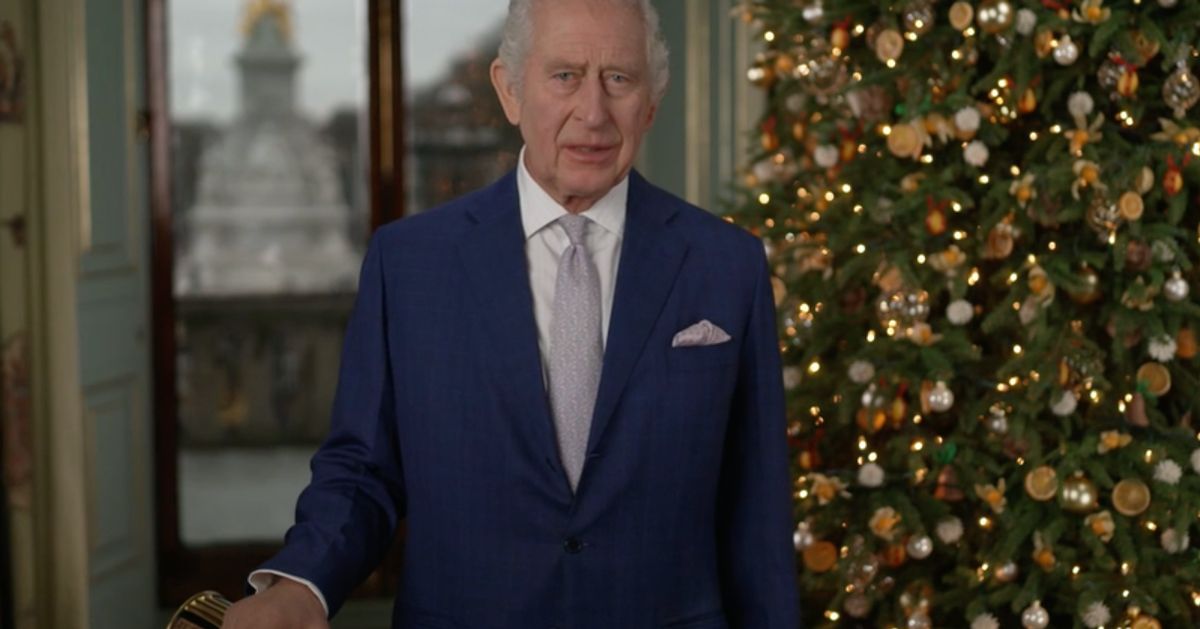
King Charles has used his Christmas message to call on people to imagine themselves in the “shoes of our neighbours” at a time of “increasingly tragic conflict around the world”.

In the speech delivered on Monday afternoon, amid the bloody wars in Gaza and Ukraine, the King said people should “love our neighbour as ourselves”.

The King – a committed environmentalist – also said it was the duty of people “all faiths” to protect the planet.

In his second Christmas message since ascending to the throne, the King said: “At a time of increasingly tragic conflict around the world, I pray that we can also do all in our power to protect each other.

“The words of Jesus seem more than ever relevant: ‘Do to others as you would have them do to you.’

“Such values are universal, drawing together our Abrahamic family of religions, and other belief systems, across the Commonwealth and wider world.

“They remind us to imagine ourselves in the shoes of our neighbours, and to seek their good as we would our own.”

It came following reports Egypt has put forward a plan to end the Israel-Hamas war with a cease-fire, a phased hostage release and the creation of a Palestinian government.

Israeli airstrikes have been heavily pounding central and southern Gaza, crushing buildings on families sheltering inside.

In the Maghazi refugee camp, rescue workers pulled dozens more bodies from the wreckage hours after a strike levelled a three-story building and shattered others nearby.

On the environment, the King said: “Service to others is but one way of honouring the whole of creation which, after all, is a manifestation of the divine. This is a belief shared by all religions.

“To care for this creation is a responsibility owned by people of all faiths and of none. We care for the Earth for the sake of our children’s children.

“During my lifetime I have been so pleased to see a growing awareness of how we must protect the Earth and our natural world as the one home which we all share.”

Share Button

Thought Doctor Who Newbie Millie Gibson Looked Familiar? This Is Why

In addition to the usual fun and festivities associated with this time of year, Christmas Day in 2023 is a particularly big one for Doctor Who fans.

After those three stand-alone anniversary specials featuring David Tennant and Catherine Tate, this year’s festive special sees Ncuti Gatwa taking the lead at the helm of the Tardis for the first time.

But he’s not doing it alone.

The new Christmas episode The Church On Ruby Road also introduces us to the Time Lord’s new companion Ruby Sunday (as well as an absolute fuck-ton of goblins, but we can get into that another time).

Ruby is played by Doctor Who newbie Millie Gibson, who regular TV viewers (and, in particular, soap fans!) may well already recognise.

If you thought Millie looked a little familiar, here’s where you may well have seen her before..

Jamie Johnson

<div class="js-react-hydrator" data-component-name="YouTube" data-component-id="4915" data-component-props="{"itemType":"video","index":9,"contentIndexByType":1,"contentListType":"embed","code":"

","type":"video","meta":{"author":"planetmilliegibsonx","author_url":"https://www.youtube.com/channel/UCFLQMNqyDlbDqlbGuNBqFZg","cache_age":86400,"description":"Clip from Jamie Johnson Series 2, Episode 1 \"Hero to Zero\"\n\nMillie plays a boisterous and cheeky schoolgirl called \"Indira Cave\". The first scene she is introduced to us in, she has a crush on Jamie and wants a selfie with him after her cousin showed his winning goal to her from Copenhagen.\n__________________________________________________________________________\n\nAre you a fan of Millie Gibson too? Then please subscribe for further content and posts!\n\n\nCoronation Street \nKelly Neelan\nMillie Gibson\nMilliegibbo\nPlanetmilliegibsonx\nCorrie\n#CoronationStreet\n#KellyNeelan\n#MillieGibson\n#Corrie\n#CorrieKelly","options":{"_cc_load_policy":{"label":"Closed captions","value":false},"_end":{"label":"End on","placeholder":"ex.: 11, 1m10s","value":""},"_start":{"label":"Start from","placeholder":"ex.: 11, 1m10s","value":""},"click_to_play":{"label":"Hold load & play until clicked","value":false}},"provider_name":"YouTube","thumbnail_height":720,"thumbnail_url":"https://i.ytimg.com/vi/Boia4kcsqWM/maxresdefault.jpg","thumbnail_width":1280,"title":"Jamie Johnson Clip S2E01 – Indira Cave meets Jamie Johnson (2017)","type":"video","url":"https://www.youtube.com/watch?v=Boia4kcsqWM","version":"1.0"},"flags":[],"enhancements":{},"fullBleed":false,"options":{"theme":"news","device":"desktop","editionInfo":{"id":"uk","name":"U.K.","link":"https://www.huffingtonpost.co.uk","locale":"en_GB"},"originalEdition":"uk","slideshowAd":{"scriptTags":[],"otherHtml":""},"slideshowEndCard":{"scriptTags":[],"otherHtml":""},"isMapi":false,"isAmp":false,"isVideoEntry":false,"isEntry":true,"isMt":false,"entryId":"65844d08e4b0fe4ffe3257dd","entryPermalink":"https://www.huffingtonpost.co.uk/entry/millie-gibson-doctor-who-where-seen-before-coronation-street_uk_65844d08e4b0fe4ffe3257dd","entryTagsList":"we-love-tv,uk-soaps,coronation-street,doctor-who,millie-gibson","sectionSlug":"entertainment","deptSlug":null,"sectionRedirectUrl":null,"subcategories":"","isWide":false,"headerOverride":null,"noVideoAds":false,"disableFloat":false,"isNative":false,"commercialVideo":{"provider":"custom","site_and_category":"uk.entertainment","package":null},"isHighline":false,"vidibleConfigValues":{"cid":"60afc140cf94592c45d7390c","disabledWithMapiEntries":false,"overrides":{"all":"60b8e525cdd90620331baaf4"},"whitelisted":["56c5f12ee4b03a39c93c9439","56c6056ee4b01f2b7e1b5f35","59bfee7f9e451049f87f550b","5acccbaac269d609ef44c529","570278d2e4b070ff77b98217","57027b4be4b070ff77b98d5c","56fe95c4e4b0041c4242016b","570279cfe4b06d08e3629954","5ba9e8821c2e65639162ccf1","5bcd9904821576674bc55ced","5d076ca127f25f504327c72e","5b35266b158f855373e28256","5ebac2e8abddfb04f877dff2","60b8e525cdd90620331baaf4","60b64354b171b7444beaff4d","60d0d8e09340d7032ad0fb1a","60d0d90f9340d7032ad0fbeb","60d0d9949340d7032ad0fed3","60d0d9f99340d7032ad10113","60d0daa69340d7032ad104cf","60d0de02b627221e9d819408"],"playlists":{"default":"57bc306888d2ff1a7f6b5579","news":"56c6dbcee4b04edee8beb49c","politics":"56c6dbcee4b04edee8beb49c","entertainment":"56c6e7f2e4b0983aa64c60fc","tech":"56c6f70ae4b043c5bdcaebf9","parents":"56cc65c2e4b0239099455b42","lifestyle":"56cc66a9e4b01f81ef94e98c"},"playerUpdates":{"56c6056ee4b01f2b7e1b5f35":"60b8e525cdd90620331baaf4","56c5f12ee4b03a39c93c9439":"60d0d8e09340d7032ad0fb1a","59bfee7f9e451049f87f550b":"60d0d90f9340d7032ad0fbeb","5acccbaac269d609ef44c529":"60d0d9949340d7032ad0fed3","5bcd9904821576674bc55ced":"60d0d9f99340d7032ad10113","5d076ca127f25f504327c72e":"60d0daa69340d7032ad104cf","5ebac2e8abddfb04f877dff2":"60d0de02b627221e9d819408"}},"connatixConfigValues":{"defaultPlayer":"8b034f64-513c-4987-b16f-42d6008f7feb","clickToPlayPlayer":"5a777b9b-81fe-41a6-8302-59e9953ee8a2","videoPagePlayer":"19654b65-409c-4b38-90db-80cbdea02cf4"},"customAmpComponents":[],"ampAssetsUrl":"https://amp.assets.huffpost.com","videoTraits":null,"positionInUnitCounts":{"buzz_head":{"count":0},"buzz_body":{"count":0},"buzz_bottom":{"count":0}},"positionInSubUnitCounts":{"article_body":{"count":8},"blog_summary":{"count":0},"before_you_go_slideshow":{"count":0}},"connatixCountsHelper":{"count":0},"buzzfeedTracking":{"context_page_id":"65844d08e4b0fe4ffe3257dd","context_page_type":"buzz","destination":"huffpost","mode":"desktop","page_edition":"en-uk"},"tags":[{"name":"we love tv","slug":"we-love-tv","links":{"relativeLink":"news/we-love-tv","permalink":"https://www.huffingtonpost.co.uk/news/we-love-tv","mobileWebLink":"https://www.huffingtonpost.co.uk/news/we-love-tv"},"section":{"title":"Life","slug":"lifestyle"},"topic":{"title":"We Love TV","slug":"we-love-tv","overridesSectionLabel":false},"url":"https://www.huffingtonpost.co.uk/news/we-love-tv/"},{"name":" uk soaps","slug":"uk-soaps","links":{"relativeLink":"news/uk-soaps","permalink":"https://www.huffingtonpost.co.uk/news/uk-soaps","mobileWebLink":"https://www.huffingtonpost.co.uk/news/uk-soaps"},"section":{"title":"Entertainment","slug":"entertainment"},"topic":{"title":"Soaps","slug":"soaps","overridesSectionLabel":false},"url":"https://www.huffingtonpost.co.uk/news/soaps/"},{"name":"Coronation Street","slug":"coronation-street","links":{"relativeLink":"news/coronation-street","permalink":"https://www.huffingtonpost.co.uk/news/coronation-street","mobileWebLink":"https://www.huffingtonpost.co.uk/news/coronation-street"},"relegenceId":3073538,"section":{"title":"Entertainment","slug":"entertainment"},"topic":{"title":"Coronation Street","slug":"coronation-street","overridesSectionLabel":false},"url":"https://www.huffingtonpost.co.uk/news/coronation-street/"},{"name":"Doctor Who","slug":"doctor-who","links":{"relativeLink":"news/doctor-who","permalink":"https://www.huffingtonpost.co.uk/news/doctor-who","mobileWebLink":"https://www.huffingtonpost.co.uk/news/doctor-who"},"relegenceId":3449739,"url":"https://www.huffingtonpost.co.uk/news/doctor-who/"},{"name":"millie gibson","slug":"millie-gibson","links":{"relativeLink":"news/millie-gibson","permalink":"https://www.huffingtonpost.co.uk/news/millie-gibson","mobileWebLink":"https://www.huffingtonpost.co.uk/news/millie-gibson"},"url":"https://www.huffingtonpost.co.uk/news/millie-gibson/"}],"isLiveblogLive":null,"cetUnit":"buzz_body","bodyAds":["

\r\n\r\n HPGam.cmd.push(function(){\r\n\t\treturn HPGam.render(\"inline-1\", \"entry_paragraph_1\", false);\r\n });\r\n\r\n","

\r\n\r\n HPGam.cmd.push(function(){\r\n\t\treturn HPGam.render(\"inline\", \"entry_paragraph_2\", false);\r\n });\r\n\r\n","

\r\n\r\n HPGam.cmd.push(function(){\r\n\t\treturn HPGam.render(\"inline-2\", \"entry_paragraph_3\", false);\r\n });\r\n\r\n","

\r\n\r\n HPGam.cmd.push(function(){\r\n\t\treturn HPGam.render(\"inline-infinite\", \"repeating_dynamic_display\", false);\r\n });\r\n\r\n"],"adCount":0},"isCollectionEmbed":false}”>

In 2017, Millie made her small-screen debut in the CBBC series Jamie Johnson, which centres around the titular teenager’s personal struggles and ambitions of becoming a professional footballer.

Millie joined the show in its second season as Jamie’s schoolmate Indira Cave, sticking around until the end of the third run.

Butterfly

<div class="js-react-hydrator" data-component-name="YouTube" data-component-id="2605" data-component-props="{"itemType":"video","index":14,"contentIndexByType":2,"contentListType":"embed","code":"

","type":"video","meta":{"author":"planetmilliegibsonx","author_url":"https://www.youtube.com/channel/UCFLQMNqyDlbDqlbGuNBqFZg","cache_age":86400,"description":"Focusing on Millie’s other appearances besides Coronation Street. Before joining Corrie, in 2018, she played the role of \"Lily Duffy\" – a teenage girl belonging to a family with the storyline being based around her transgender sister, identifying as a boy and Lily being there to support her.\n\nThis edit compiles some of her character’s best lines, moments and scenes throughout the series she was in. Please note there are 1 or 2 scenes with strong language in, but nothing major.\n\nPlease do not repost or re-upload without permission or asking first, as this is an edit I have done myself.\n–––––––––––––––––––––––––––––––––––––––––––––––––––\n\nAre you a fan of Millie Gibson too? Then please subscribe for further content and posts!\n\n\nCoronation Street \nKelly Neelan\nMillie Gibson\nMilliegibbo\nPlanetmilliegibsonx\nCorrie\n#CoronationStreet\n#KellyNeelan\n#MillieGibson\n#Corrie\n#CorrieKelly\n#ITVButterfly\n#LilyDuffy\n#EmmettJScanlan","options":{"_cc_load_policy":{"label":"Closed captions","value":false},"_end":{"label":"End on","placeholder":"ex.: 11, 1m10s","value":""},"_start":{"label":"Start from","placeholder":"ex.: 11, 1m10s","value":""},"click_to_play":{"label":"Hold load & play until clicked","value":false}},"provider_name":"YouTube","thumbnail_height":720,"thumbnail_url":"https://i.ytimg.com/vi/rcpEXyGImfA/maxresdefault.jpg","thumbnail_width":1280,"title":"Butterfly – Lily Duffy’s Best Moments","type":"video","url":"https://www.youtube.com/watch?v=rcpEXyGImfA","version":"1.0"},"flags":[],"enhancements":{},"fullBleed":false,"options":{"theme":"news","device":"desktop","editionInfo":{"id":"uk","name":"U.K.","link":"https://www.huffingtonpost.co.uk","locale":"en_GB"},"originalEdition":"uk","slideshowAd":{"scriptTags":[],"otherHtml":""},"slideshowEndCard":{"scriptTags":[],"otherHtml":""},"isMapi":false,"isAmp":false,"isVideoEntry":false,"isEntry":true,"isMt":false,"entryId":"65844d08e4b0fe4ffe3257dd","entryPermalink":"https://www.huffingtonpost.co.uk/entry/millie-gibson-doctor-who-where-seen-before-coronation-street_uk_65844d08e4b0fe4ffe3257dd","entryTagsList":"we-love-tv,uk-soaps,coronation-street,doctor-who,millie-gibson","sectionSlug":"entertainment","deptSlug":null,"sectionRedirectUrl":null,"subcategories":"","isWide":false,"headerOverride":null,"noVideoAds":false,"disableFloat":false,"isNative":false,"commercialVideo":{"provider":"custom","site_and_category":"uk.entertainment","package":null},"isHighline":false,"vidibleConfigValues":{"cid":"60afc140cf94592c45d7390c","disabledWithMapiEntries":false,"overrides":{"all":"60b8e525cdd90620331baaf4"},"whitelisted":["56c5f12ee4b03a39c93c9439","56c6056ee4b01f2b7e1b5f35","59bfee7f9e451049f87f550b","5acccbaac269d609ef44c529","570278d2e4b070ff77b98217","57027b4be4b070ff77b98d5c","56fe95c4e4b0041c4242016b","570279cfe4b06d08e3629954","5ba9e8821c2e65639162ccf1","5bcd9904821576674bc55ced","5d076ca127f25f504327c72e","5b35266b158f855373e28256","5ebac2e8abddfb04f877dff2","60b8e525cdd90620331baaf4","60b64354b171b7444beaff4d","60d0d8e09340d7032ad0fb1a","60d0d90f9340d7032ad0fbeb","60d0d9949340d7032ad0fed3","60d0d9f99340d7032ad10113","60d0daa69340d7032ad104cf","60d0de02b627221e9d819408"],"playlists":{"default":"57bc306888d2ff1a7f6b5579","news":"56c6dbcee4b04edee8beb49c","politics":"56c6dbcee4b04edee8beb49c","entertainment":"56c6e7f2e4b0983aa64c60fc","tech":"56c6f70ae4b043c5bdcaebf9","parents":"56cc65c2e4b0239099455b42","lifestyle":"56cc66a9e4b01f81ef94e98c"},"playerUpdates":{"56c6056ee4b01f2b7e1b5f35":"60b8e525cdd90620331baaf4","56c5f12ee4b03a39c93c9439":"60d0d8e09340d7032ad0fb1a","59bfee7f9e451049f87f550b":"60d0d90f9340d7032ad0fbeb","5acccbaac269d609ef44c529":"60d0d9949340d7032ad0fed3","5bcd9904821576674bc55ced":"60d0d9f99340d7032ad10113","5d076ca127f25f504327c72e":"60d0daa69340d7032ad104cf","5ebac2e8abddfb04f877dff2":"60d0de02b627221e9d819408"}},"connatixConfigValues":{"defaultPlayer":"8b034f64-513c-4987-b16f-42d6008f7feb","clickToPlayPlayer":"5a777b9b-81fe-41a6-8302-59e9953ee8a2","videoPagePlayer":"19654b65-409c-4b38-90db-80cbdea02cf4"},"customAmpComponents":[],"ampAssetsUrl":"https://amp.assets.huffpost.com","videoTraits":null,"positionInUnitCounts":{"buzz_head":{"count":0},"buzz_body":{"count":0},"buzz_bottom":{"count":0}},"positionInSubUnitCounts":{"article_body":{"count":8},"blog_summary":{"count":0},"before_you_go_slideshow":{"count":0}},"connatixCountsHelper":{"count":0},"buzzfeedTracking":{"context_page_id":"65844d08e4b0fe4ffe3257dd","context_page_type":"buzz","destination":"huffpost","mode":"desktop","page_edition":"en-uk"},"tags":[{"name":"we love tv","slug":"we-love-tv","links":{"relativeLink":"news/we-love-tv","permalink":"https://www.huffingtonpost.co.uk/news/we-love-tv","mobileWebLink":"https://www.huffingtonpost.co.uk/news/we-love-tv"},"section":{"title":"Life","slug":"lifestyle"},"topic":{"title":"We Love TV","slug":"we-love-tv","overridesSectionLabel":false},"url":"https://www.huffingtonpost.co.uk/news/we-love-tv/"},{"name":" uk soaps","slug":"uk-soaps","links":{"relativeLink":"news/uk-soaps","permalink":"https://www.huffingtonpost.co.uk/news/uk-soaps","mobileWebLink":"https://www.huffingtonpost.co.uk/news/uk-soaps"},"section":{"title":"Entertainment","slug":"entertainment"},"topic":{"title":"Soaps","slug":"soaps","overridesSectionLabel":false},"url":"https://www.huffingtonpost.co.uk/news/soaps/"},{"name":"Coronation Street","slug":"coronation-street","links":{"relativeLink":"news/coronation-street","permalink":"https://www.huffingtonpost.co.uk/news/coronation-street","mobileWebLink":"https://www.huffingtonpost.co.uk/news/coronation-street"},"relegenceId":3073538,"section":{"title":"Entertainment","slug":"entertainment"},"topic":{"title":"Coronation Street","slug":"coronation-street","overridesSectionLabel":false},"url":"https://www.huffingtonpost.co.uk/news/coronation-street/"},{"name":"Doctor Who","slug":"doctor-who","links":{"relativeLink":"news/doctor-who","permalink":"https://www.huffingtonpost.co.uk/news/doctor-who","mobileWebLink":"https://www.huffingtonpost.co.uk/news/doctor-who"},"relegenceId":3449739,"url":"https://www.huffingtonpost.co.uk/news/doctor-who/"},{"name":"millie gibson","slug":"millie-gibson","links":{"relativeLink":"news/millie-gibson","permalink":"https://www.huffingtonpost.co.uk/news/millie-gibson","mobileWebLink":"https://www.huffingtonpost.co.uk/news/millie-gibson"},"url":"https://www.huffingtonpost.co.uk/news/millie-gibson/"}],"isLiveblogLive":null,"cetUnit":"buzz_body","bodyAds":["

\r\n\r\n HPGam.cmd.push(function(){\r\n\t\treturn HPGam.render(\"inline-1\", \"entry_paragraph_1\", false);\r\n });\r\n\r\n","

\r\n\r\n HPGam.cmd.push(function(){\r\n\t\treturn HPGam.render(\"inline\", \"entry_paragraph_2\", false);\r\n });\r\n\r\n","

\r\n\r\n HPGam.cmd.push(function(){\r\n\t\treturn HPGam.render(\"inline-2\", \"entry_paragraph_3\", false);\r\n });\r\n\r\n","

\r\n\r\n HPGam.cmd.push(function(){\r\n\t\treturn HPGam.render(\"inline-infinite\", \"repeating_dynamic_display\", false);\r\n });\r\n\r\n"],"adCount":0},"isCollectionEmbed":false}”>