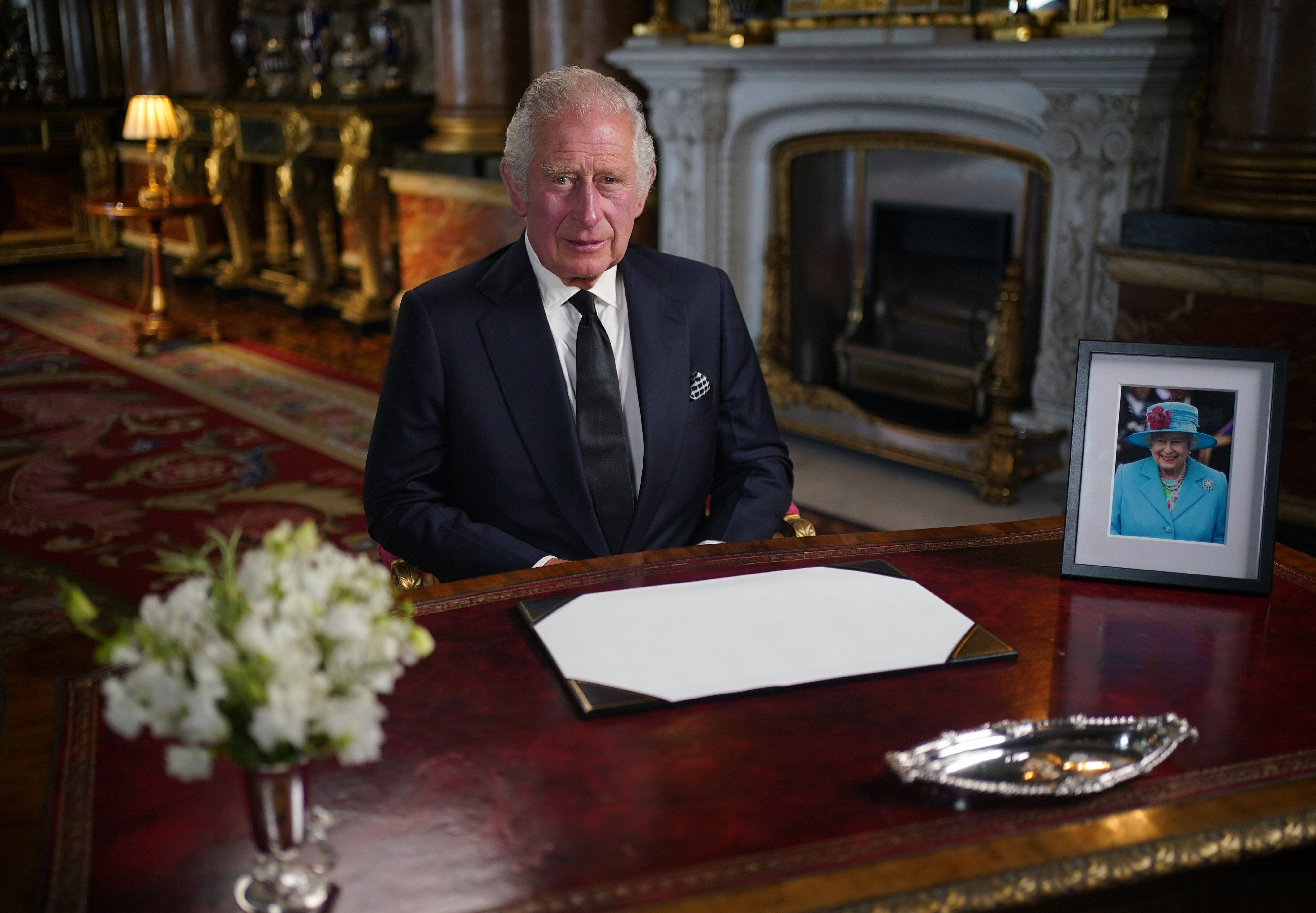
The King has given a moving tribute to his “darling Mama” the Queen in his first public broadcast as monarch, as he promised to continue her “lifelong service” to the country.
Ending his address, the new monarch said: “To my darling Mama, as you begin your last great journey to join my dear late Papa, I want simply to say this: thank you.
Advertisement
“Thank you for your love and devotion to our family and to the family of nations you have served so diligently all these years. May ‘flights of Angels sing thee to thy rest’.”
The King pledged his whole life as service as the new sovereign just as the Queen did, saying: “That promise of lifelong service I renew to you all today”.
King Charles III delivers his address to the nation and the Commonwealth from Buckingham Palace, London, following the death of Queen Elizabeth II on Thursday.
And he paid tribute to his “darling wife” Camilla – calling her “my Queen Consort”, saying he can “count on her loving help”.
The King also set out his changing role, as he steps away from his considerable charity work which shaped his life as the heir to the throne.
“My life will of course change as I take up my new responsibilities. It will no longer be possible for me to give so much of my time and energies to the charities and issues for which I care so deeply. But I know this important work will go on in the trusted hands of others,” he said.
The monarch pre-recorded the lengthy speech, which was just under 1,000 words and lasted around nine-and-a-half minutes in the Blue Drawing Room of the royal residence in central London, and it was played out at 6pm on Friday.
Charles said of his “beloved mother” the late Elizabeth II: “We owe her the most heartfelt debt any family can owe to their mother; for her love, affection, guidance, understanding and example”.
“I campaigned as a Conservative and I will govern as a Conservative,” she said. “We need to deliver over the next two years.”
She celebrated her victory by having lunch with her husband, Hugh O’Leary.
It was to be her last moment of relaxation for some time.
Exit Boris, Enter Liz
On Tuesday morning, Boris Johnson left 10 Downing Street for the last time as prime minister, travelling to Balmoral to hand in his resignation to the Queen.
Advertisement
Before his departure, in a speech outside the famous black door, he took one final swipe at the Tory MPs who had forced him from office less than three years after he led them to a thumping election victory.
“The baton will be handed over in what has unexpectedly turned out to be a relay race. They changed the rules halfway through, but never mind that now.”
As soon as his private plane landed at Aberdeen airport, the government jet carrying Truss north for her own audience with the 96-year-old monarch took off from RAF Northolt.
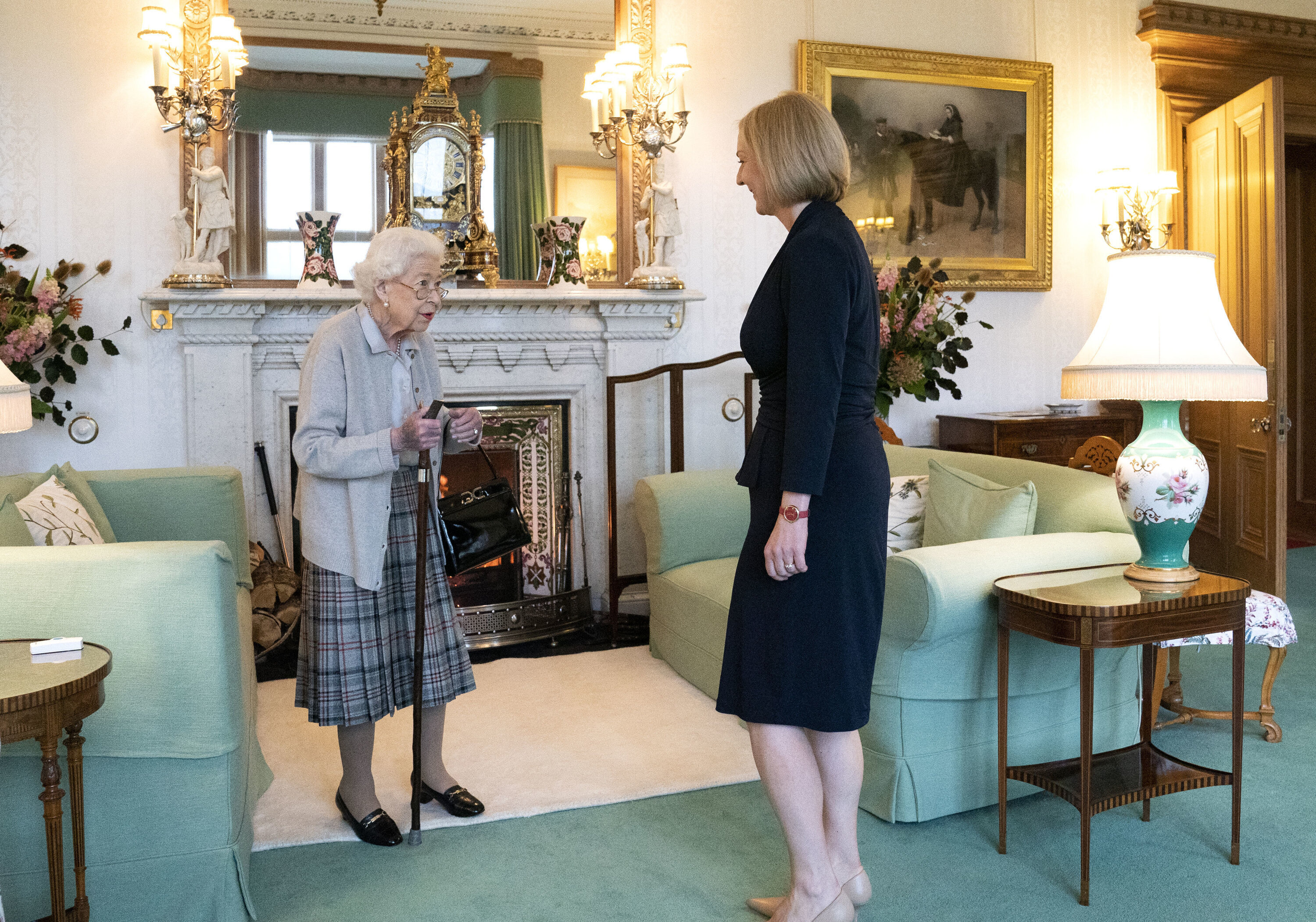
In what was to be her first and last meeting with the Queen as prime minister, Truss was invited to form a government.
Standing outside No.10 a few hours later, she echoed Winston Churchill as she vowed to take “action this day” to tackle the cost of living crisis.
Advertisement
“I am confident that together we can ride out the storm, we can rebuild our economy and we can become the modern, brilliant Britain that I know we can be,” she said.
“This is our vital mission to ensure opportunity and prosperity for all people and future generations. I am determined to deliver.”
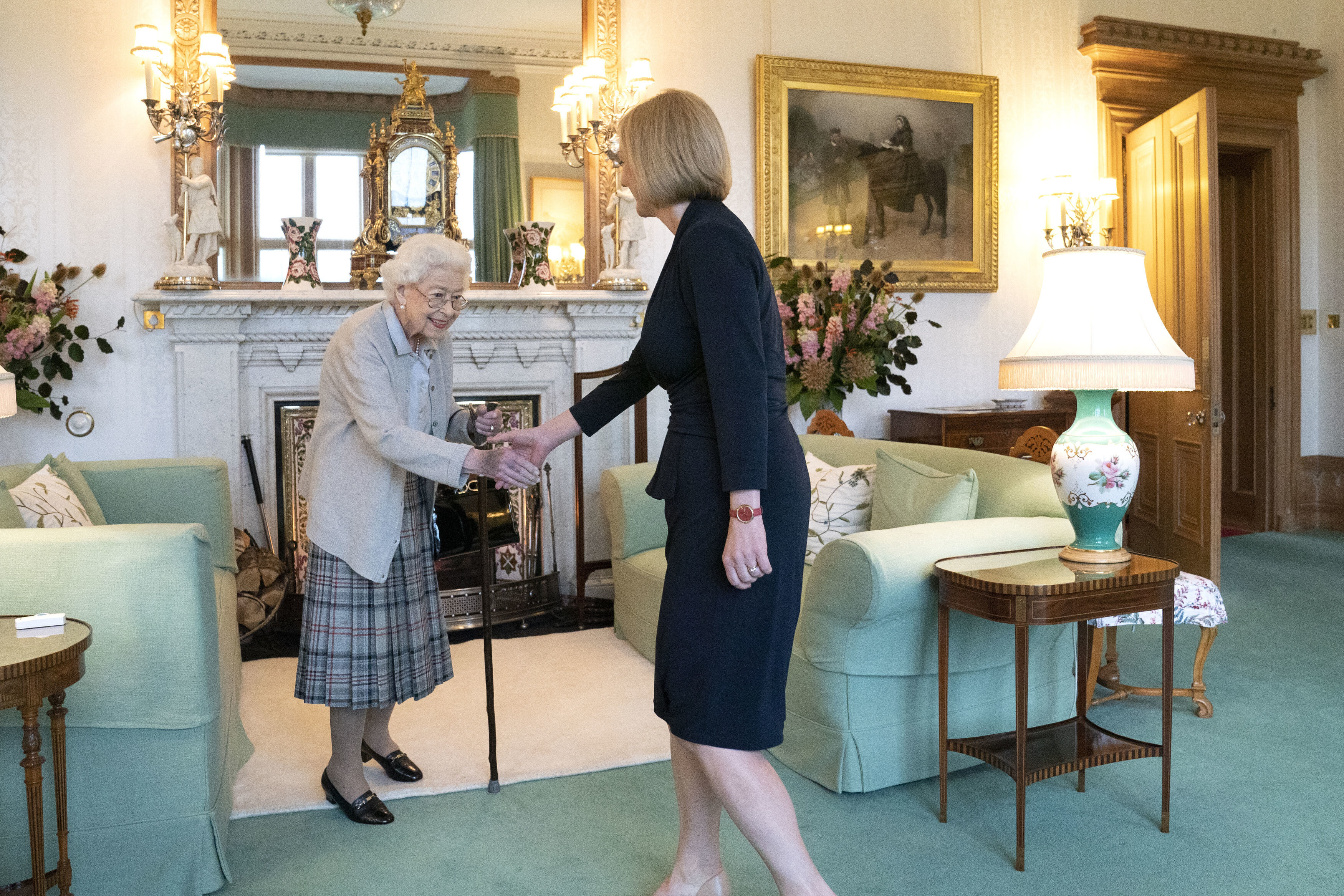
The Queen invites Liz Truss to form a government during an audience at Balmoral.
Jane Barlow via PA Wire/PA Images
In Liz they Truss-t
By her own admission, Truss is not a great public speaker, so expectations were not high ahead of her first prime minister’s questions.
And while she did not scale the rhetorical heights of her predecessor, she more than held her own against Labour leader Keir Starmer, earning her the loud approval of her sceptical MPs.
Advertisement
She also managed to make a clean break from the Johnson era by giving straight answer to his questions, especially when he asked her whether she would bring in a new windfall tax on energy firms’ huge profits.
Truss said the UK couldn’t “tax its way to growth”, adding: “The way we will grow our economy is by attracting investment, keeping taxes low, delivering the reforms to build projects quicker.”
The bad news breaks
Rumours about the Queen’s health were already swirling at Westminster on Thursday morning ahead of the PM’s announcement that the energy price cap was being frozen at £2,500 for the next two years.
Shortly after Truss had made the announcement in the Commons, she was seen in deep conversation with Cabinet Office minister Nadhim Zahawi, while a note was also passed to Keir Starmer. The atmosphere in the chamber noticeably darkened as MPs’ thoughts turned to the monarch’s wellbeing.
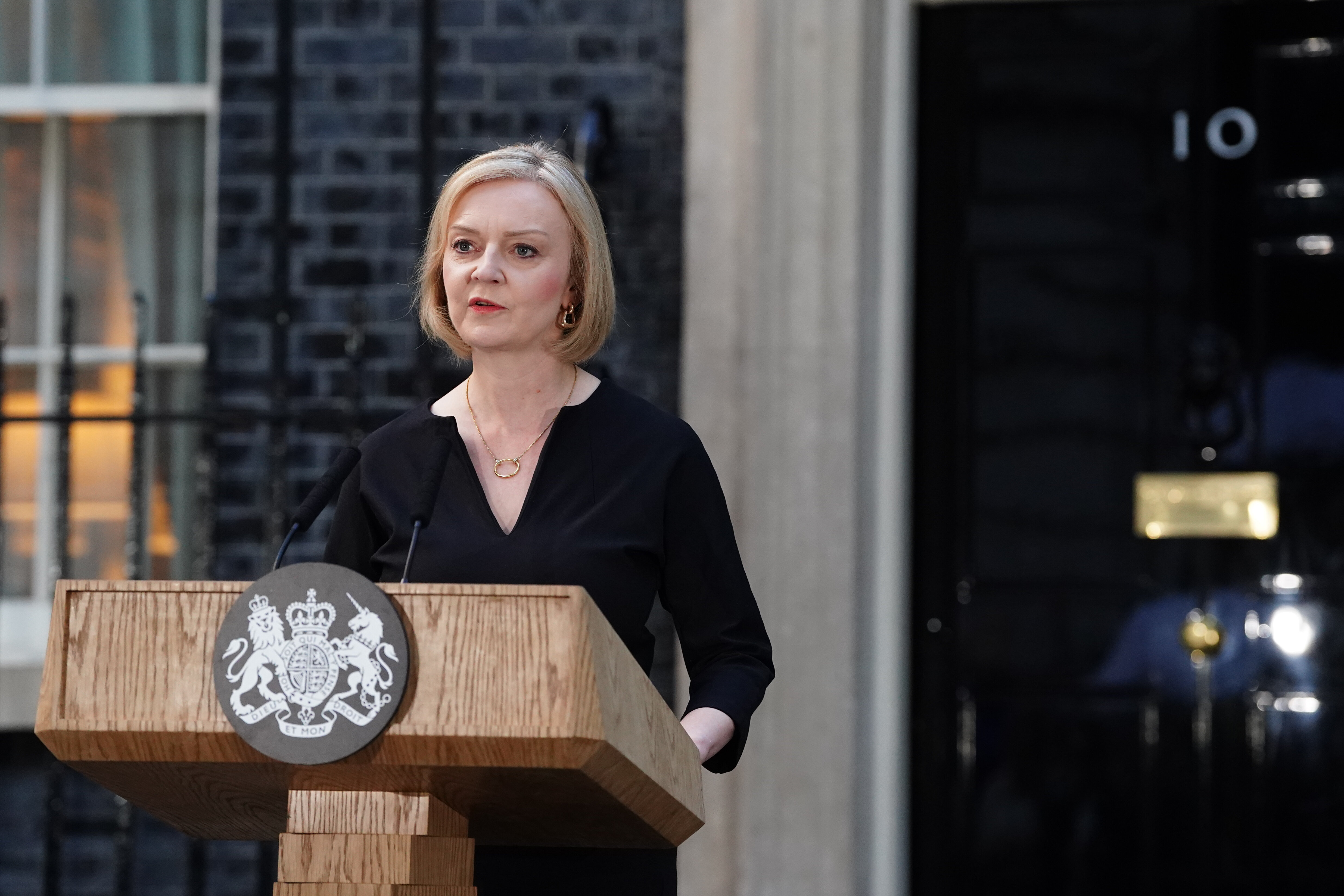
Within the hour, Truss was outside 10 Downing Street, standing at the same spot and behind the same lectern where she had addressed the nation for the first time as prime minister barely 48 hours before.
This time, she was leading the nation’s response to the news that the monarch had died after 70 years on the throne.
“Queen Elizabeth II was the rock on which modern Britain was built,” she said. “Our country has grown and flourished under her reign. Britain is the great country it is today because of her.”
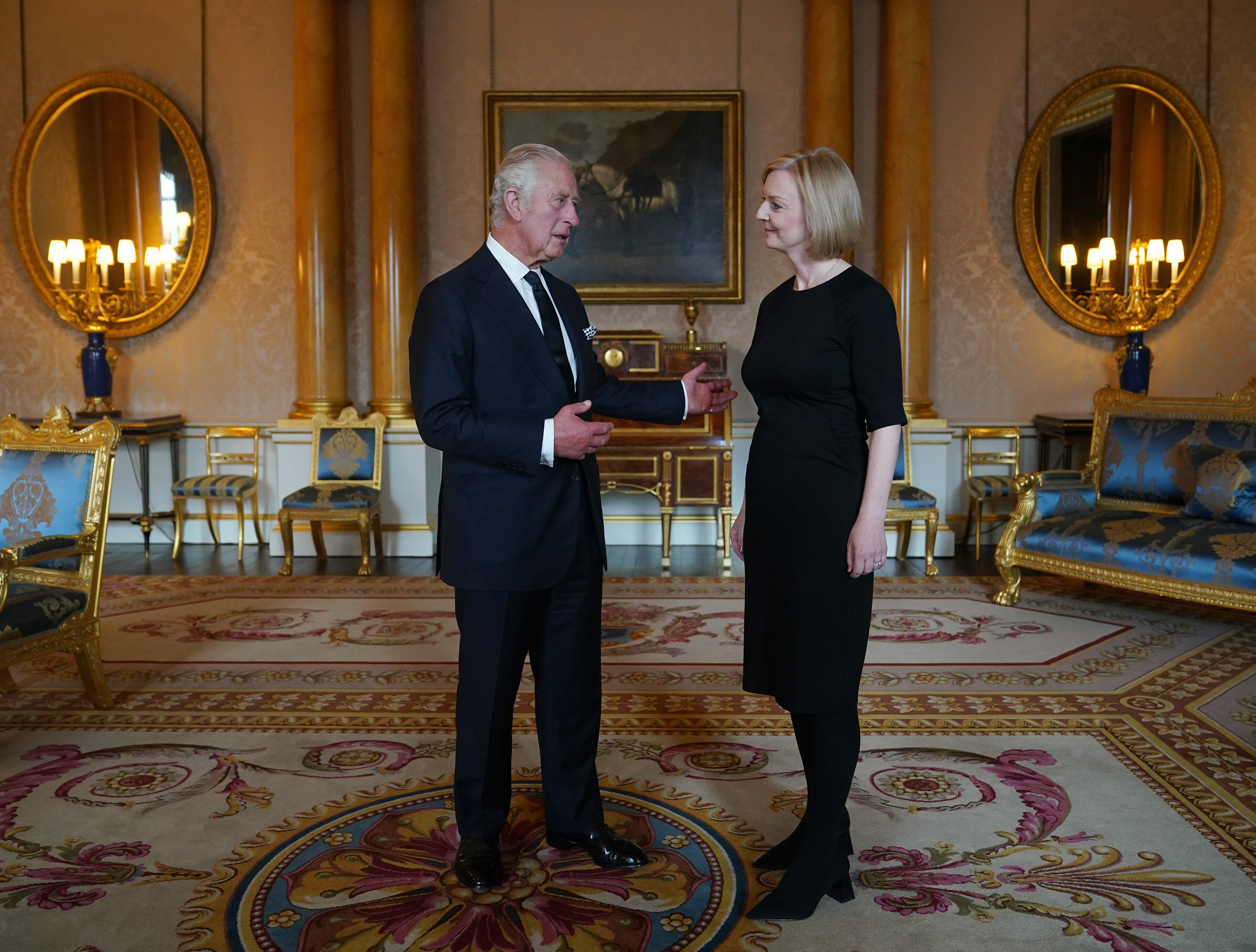
King Charles III during his first audience with Liz Truss at Buckingham Palace.
Yui Mok via PA Wire/PA Images
Advertisement
God save the King
Truss had her first audience with King Charles III this afternoon at Buckingham Palace, just three days after accepting his late mother’s invitation to form a new government.
Of his mother’s death, he said: “It’s the moment I’d been dreading, as I know a lot of people have. But, have to try and keep everything going.”
No matter what the rest of her time in office brings, it is highly unlikely that it will match the intensity and national significance of her first week as prime minister.
The Ukrainian president joined the likes of US president Joe Biden and French leader Emmanuel Macron in offering their condolences.
Advertisement
Writing on Twitter, Zelenskyy said: “It is with deep sadness that we learned of the death of Her Majesty Queen Elizabeth II.
“On behalf of the Ukrainian people, we extend sincere condolences to the entire United Kingdom and the Commonwealth over this irreparable loss. Our thoughts and prayers are with you.”
Biden said the Queen had been “a stateswoman of unmatched dignity and constancy” who “helped make our relationship special”.
He added: “In the years ahead, we look forward to continuing a close friendship with The King and The Queen Consort.
Advertisement
“Today, the thoughts and prayers of people all across the United States are with the people of the United Kingdom and the Commonwealth in their grief.
“We send our deepest condolences to the Royal Family, who are not only mourning their Queen, but their dear mother, grandmother, and great-grandmother.
“Her legacy will loom large in the pages of British history, and in the story of our world.”
French president Macron said the Queen “embodied the British nation’s continuity and unity for over 70 years”.
He added: “I remember her as a friend of France, a kind-hearted queen who has left a lasting impression on her country and her century.”
Her Majesty Queen Elizabeth II embodied the British nation’s continuity and unity for over 70 years. I remember her as a friend of France, a kind-hearted queen who has left a lasting impression on her country and her century.
Justine Trudeau, Canada’s prime minister, tweeted: “It was with the heaviest of hearts that we learned of the passing of Canada’s longest-reigning Sovereign, Her Majesty Queen Elizabeth II.
“She was a constant presence in our lives – and her service to Canadians will forever remain an important part of our country’s history.
“As we look back at her life and her reign that spanned so many decades, Canadians will always remember and cherish Her Majesty’s wisdom, compassion, and warmth.
“Our thoughts are with the members of the Royal Family during this most difficult time.”
’She was our queen for almost half of Canada’s existence’ — Listen to Canadian PM Justin Trudeau’s full statement on the death of Queen Elizabeth II pic.twitter.com/YlAaCgbJxU
Maltese leader Robert Abela said his country “joins the rest of the world in mourning the death of HM The Queen Elizabeth II”.
Advertisement
“As monarch and Head of the Commonwealth, she was loved by all. We will always remember her fondly, especially living here as a young princess. My condolences to the Royal Family.”
In a statement issued this afternoon, Buckingham Palace confirmed that the Queen died “peacefully” at Balmoral.
She has already been succeeded as monarch by her son, who will be known as King Charles III.
Speaking on the steps of Downing Street, new prime minister Liz Truss said: “We offer him our loyalty and devotion, just as his mother devoted so much, to so many, for so long.
“And with the passing of the second Elizabethan age, we usher in a new era in the magnificent history of our great country, exactly as Her Majesty would have wished, by saying the words ‘God save the King’.”
Truss said: “We are all devastated by the news we have just heard from Balmoral. The death of her Majesty the Queen is a huge shock to the nation and to the world.
“Queen Elizabeth II was the rock on which modern Britain was built. Our country has grown and flourished under her reign. Britain is the great country it is today because of her.”
Truss said the UK was now “a modern, thriving, dynamic nation” as a result of the Queen’s 70-year reign.
Advertisement
“Through thick and thin, Queen Elizabeth II provided us with the stability and the strength that we needed,” she said. “She was the very spirit of Great Britain and that spirit will endure.”
The PM said the late monarch had been “a personal inspiration to me and to many Britons – her devotion to duty is an example to us all”.
And she added: “In the difficult says ahead, we will come together with our friends across the United Kingdom, the Commonwealth and the world to celebrate her extra ordinary lifetime of service.
“It is a day of great loss, but Queen Elizabeth II leaves a great legacy.”
In his own tribute on Twitter, Johnson said: “This is our country’s saddest day,”
“We think of her deep wisdom, and historic understanding, and her seemingly inexhaustible but understated sense of duty,” he said.
“Relentless though her diary must have felt, she never once let it show, and to tens of thousands of events – great and small – she brought her smile and her warmth and her gentle humour – and for an unrivalled 70 years she spread that magic around her kingdom.
Advertisement
“This is our country’s saddest day because she had a unique and simple power to make us happy. That is why we loved her.
“That is why we grieve for Elizabeth the Great, the longest serving and in many ways the finest monarch in our history.”
Labour leader Keir Starmer said the country would mourn “the passing of a remarkable sovereign”.
He said: “We will always treasure Queen Elizabeth II’s life of service and devotion to our nation and the Commonwealth; our longest-serving and greatest monarch.”
Commons Speaker Lindsay Hoyle tweeted: “Few of us in the House of Commons have ever known a time when Her Majesty was not there, so her passing has left a huge hole in our lives.
“She was our equilibrium, our history, our guide and our Queen – and we will miss her beyond measure.”
Advertisement
Scottish first minister Nicola Sturgeon tweeted: “The death of Her Majesty Queen Elizabeth is a profoundly sad moment for the UK, the Commonwealth and the world.
“Her life was one of extraordinary dedication and service. On behalf of the people of Scotland, I convey my deepest condolences to The King and the Royal Family.”
Former prime minister Tony Blair said the Queen “was not only respected but loved”.
“Respected because of the qualities of duty, decency, integrity and fidelity which she embodied,” he said. “And loved because of the love and affection she bestowed on us.”
Lib Dem leader Ed Davey said: “We are all deeply mourning the profound loss of a great monarch, who served our country so faithfully all her life and who was loved the world over.
“For many people, including myself, The Queen was an ever-fixed mark in our lives. As the world changed around us and politicians came and went, The Queen was our nation’s constant.
Advertisement
“The Queen represented duty and courage, as well as warmth and compassion. She was a living reminder of our collective past, of the greatest generation and their sacrifices for our freedom.”
Meanwhile, RMT general secretary Mick Lynch announced that the rail strikes planned for September 15 and 17 have been suspended following the Queen’s death.
He said: “The RMT joins the whole nation in paying its respects to Queen Elizabeth.
“The planned railway strike action on 15 and 17 September is suspended. We express our deepest condolences to her family, friends and the country.”
Queen Elizabeth II has died aged 96, Buckingham Palace has confirmed.
In a statement, the Palace said: “The Queen died peacefully at Balmoral this afternoon. The King and The Queen Consort will remain at Balmoral this evening and will return to London tomorrow.”
Prince Charles, who is the heir apparent, was with her.
It comes shortly after the UK’s longest-reigning monarch celebrated her 70th year on the throne, her platinum jubilee.
Advertisement
The whole country came together to honour the occasion across the extended bank holiday, paying tribute to her unprecedented reign through Trooping the Colour, a service of Thanksgiving and Big Jubilee Lunches up and down the UK.
The Queen was also a reassuring presence for many as the country tried to cope with successive lockdowns, despite catching Covid herself in February 2022.
In her 2020 Christmas message she praised the efforts of individuals and called on the nation to “remain united and resolute” in the face of the outbreak. And in a poignant video to mark the 75th anniversary of VE day in 2020, she delivered a message of hope, promising in the words of Dame Vera Lynn’s wartime anthem: “We will meet again.”
The royal family also grieved in April 2021, when the Queen’s husband of 73 years, Prince Philip, died. The entire ‘Firm’ followed Covid restrictions and sat apart in their bubbles at the televised funeral – meaning the Queen had to sit on her own.
Advertisement
The Queen was widely praised for returning to her royal duties after just a two-week mourning period for the Duke of Edinburgh, who she referred to as her “strength and stay”.
The news of her death marks the end of a new Elizabethan era that began when the 25-year-old princess became Queen Elizabeth II on the death of her father King George VI, in the early hours of February 6, 1952.
She became the longest-ever reigning monarch in British history on September 9, 2015, bypassing the record set by her great-great-grandmother Queen Victoria. This took into account 63 years plus 16 leap days, additional months and days, and the timing of George VI’s death.
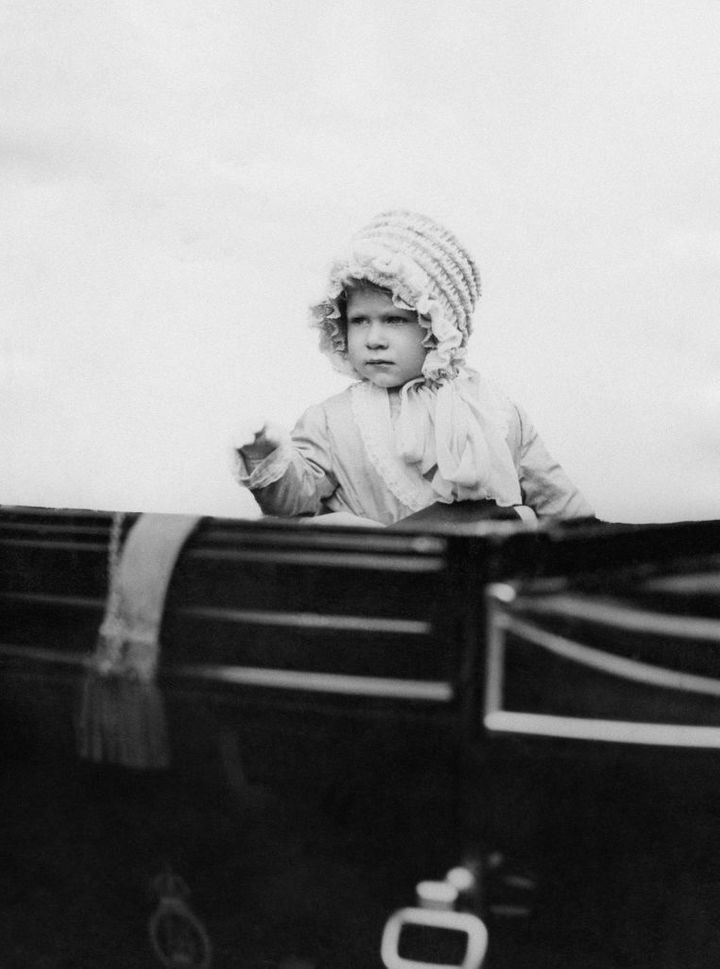
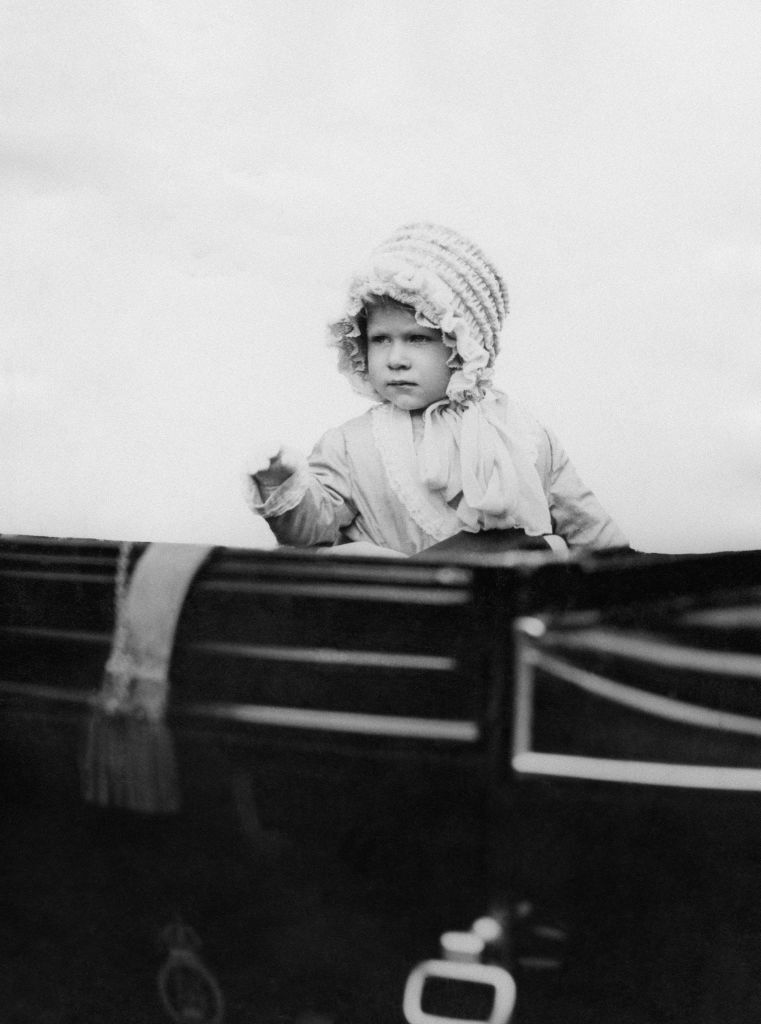
Princess Elizabeth waves from her carriage in London in 1928
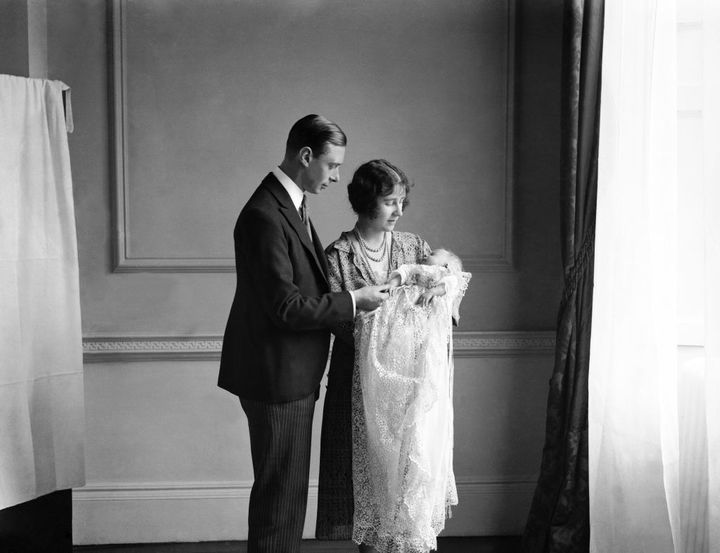
The Queen Mother (then the Duchess of York) with her husband, King George VI (then the Duke of York), and their daughter Elizabeth II at her christening in May 1926
Advertisement
With the death of 88-year-old King Bhumibol Adulyadej of Thailand in 2016, the Queen then took the record for the world’s longest reigning living monarch.
She is the world’s second-longest reigning monarch ever, after French King Louis XIV, who served on the throne for more than 72 years.
Princess Elizabeth Alexandra Mary was born by Caesarian section on April 21, 1926, in her maternal grandparents’ London home: 17 Bruton Street, Mayfair, while the home secretary Sir William Joynson-Hicks waited in the next room.
The presence of the government minister was an age-old custom designed to ensure that no substitute had been smuggled in hidden in a warming pan or similar receptacle. Apparently one of Princess Elizabeth’s first acts was to yawn at Sir William.
Elizabeth’s father, George VI, only became king after the abdication of his brother Edward VIII in 1936 – when she was born, the princess was not expected to take the throne.
Advertisement
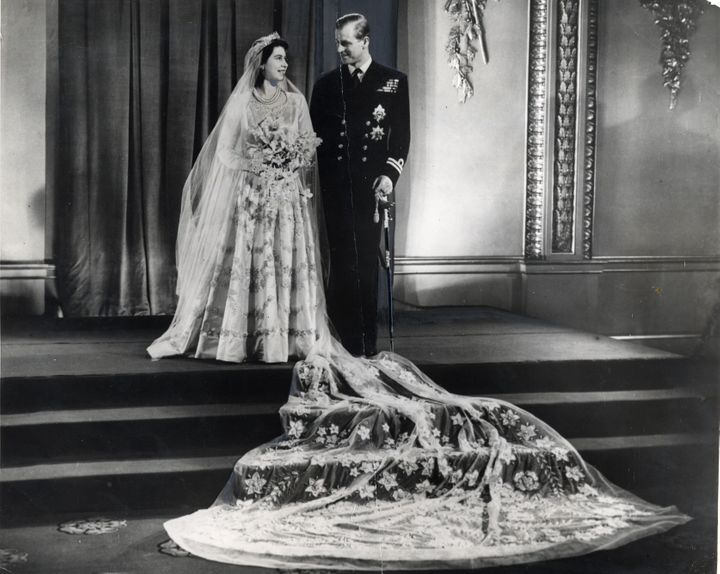
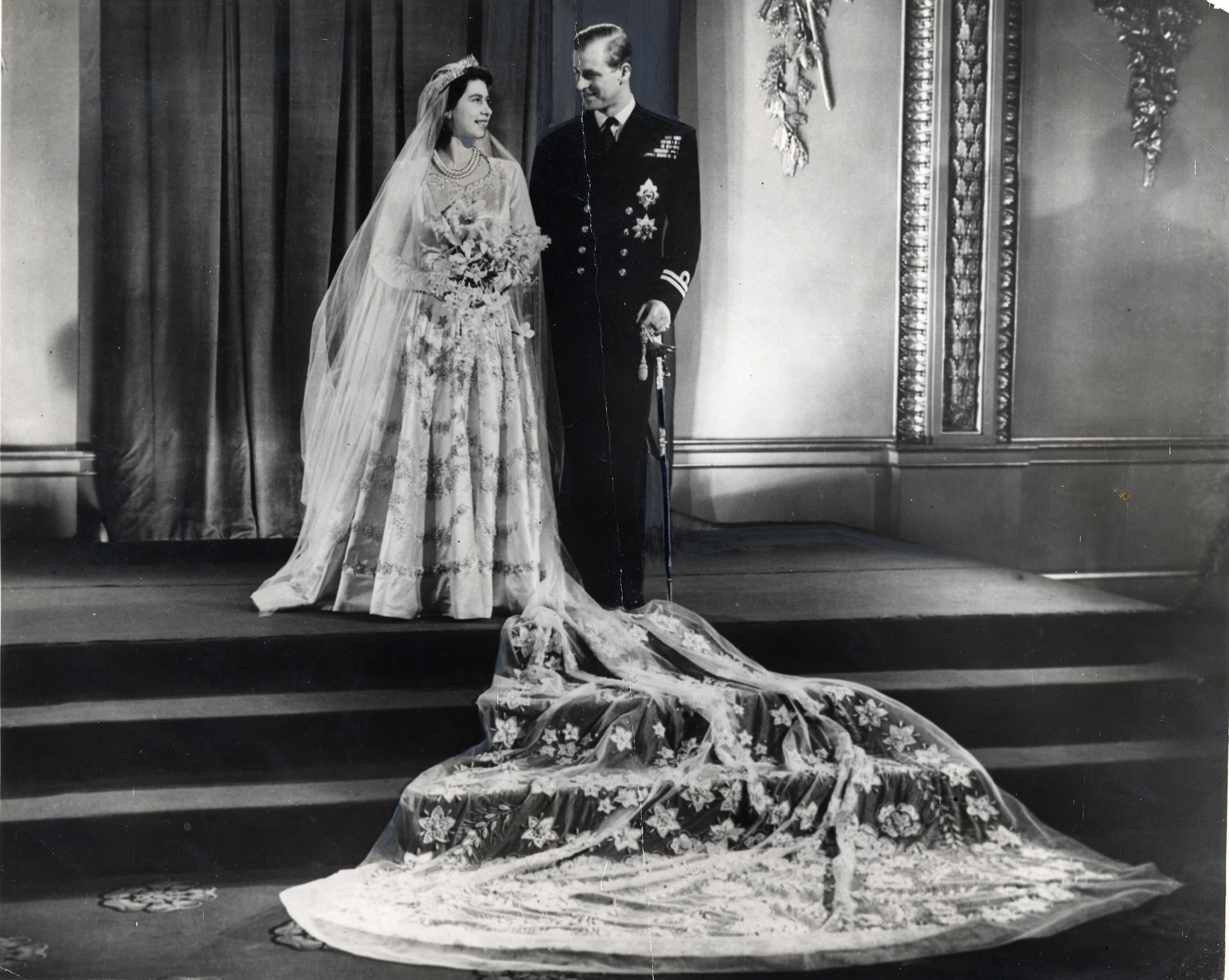
She married Lieutenant Philip Mountbatten of Greece at the age of 21 at Westminster Abbey in 1947 in front of 2,000 guests. Princess Elizabeth was dressed in an ivory silk Norman Hartnell gown, decorated with 10,000 seed pearls, glittering crystals and an intricate 13ft (4m) star-patterned train. The dress was bought with food rationing coupons as the UK was still struggling in the aftermath of World War 2. Philip, 26, was fresh from serving in the Royal Navy for the war effort.
Princess Elizabeth and the Duke of Edinburgh on their wedding day in 1947
Evening News/Shutterstock
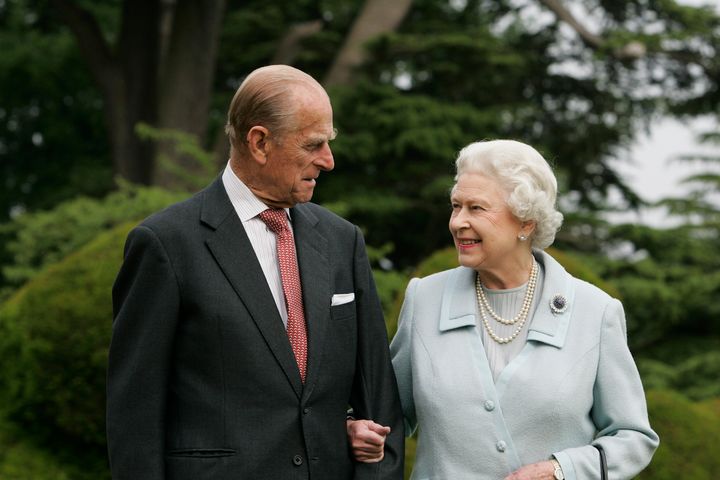
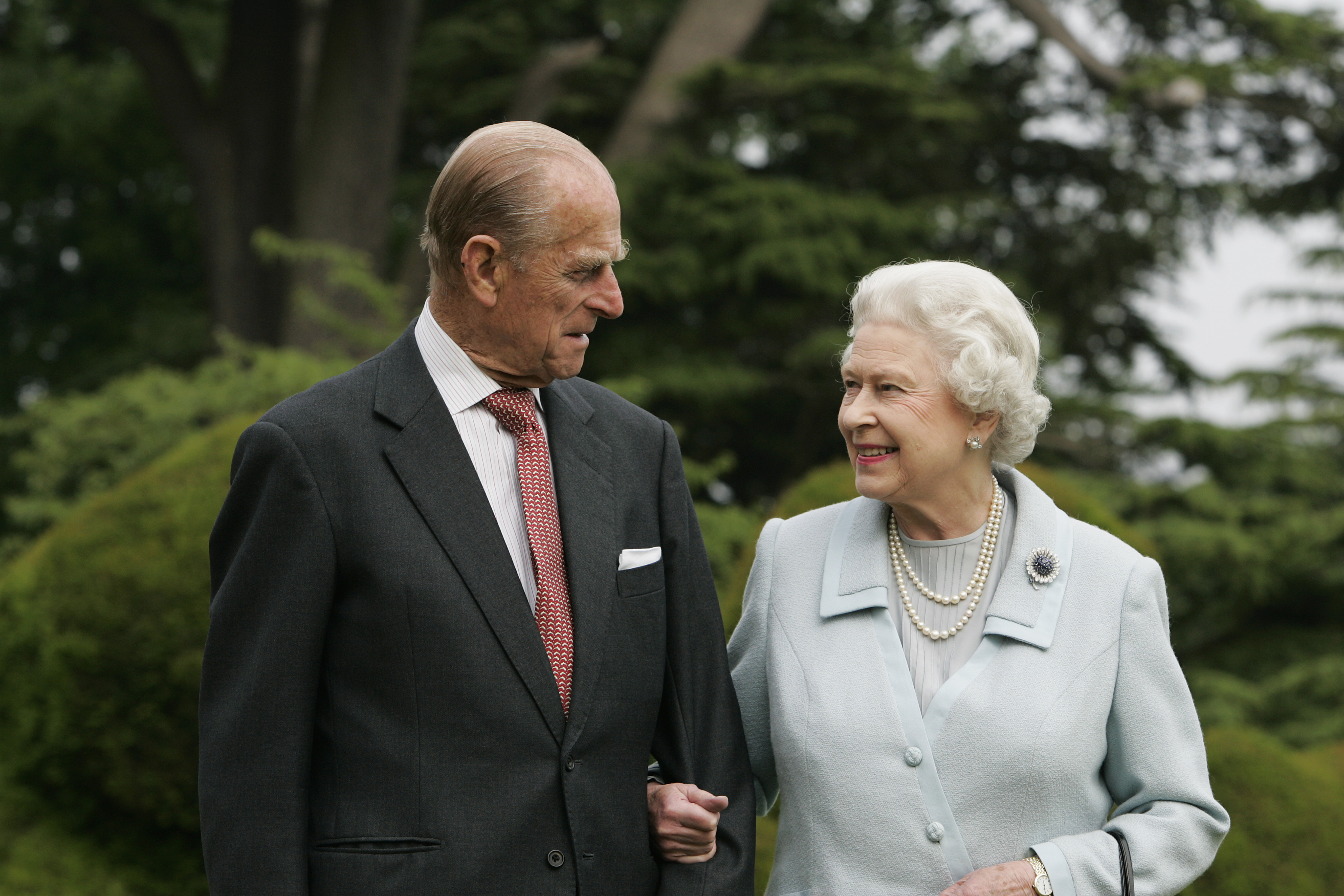
Prince Philip and the Queen for their Diamond Wedding Anniversary in 2007
Tim Graham via Tim Graham/Getty Images
Another 200 million people listened to the radio broadcast of the nuptials and thousands lined the streets to watch the spectacle.
The pair had begun exchanging letters in 1939 when Elizabeth was 13 and Philip was 18, and their friendship blossomed over the years.
Advertisement
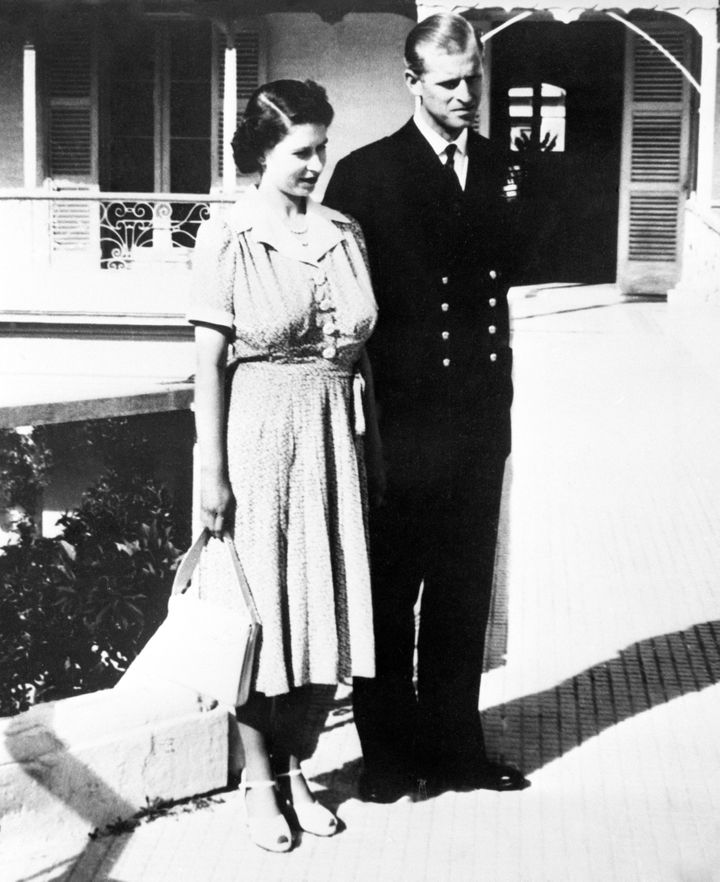
After their wedding, the couple lived together on the island of Malta for periods between 1949 and 1951 while the duke served on HMS Chequers with the Mediterranean Fleet.
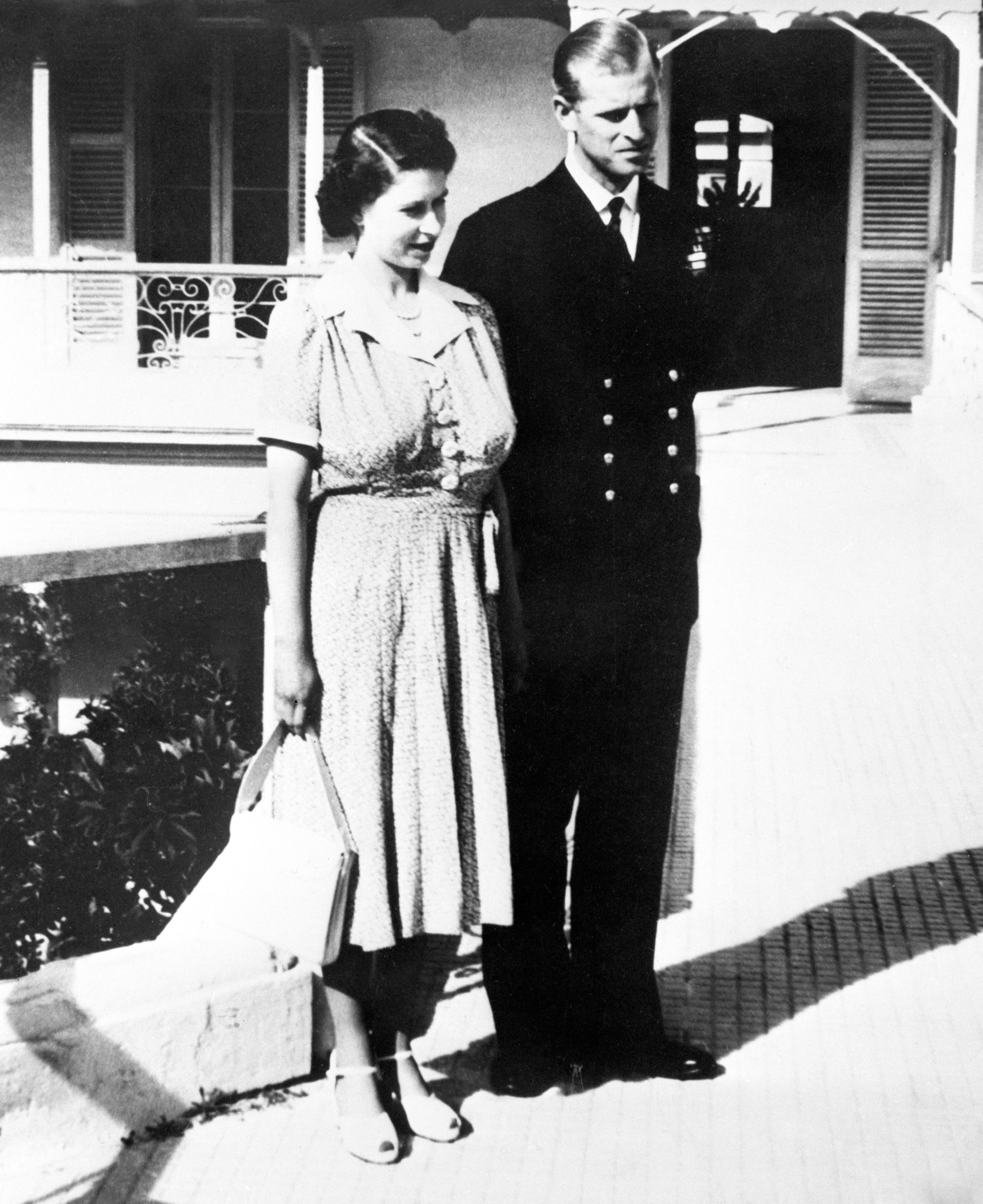
Villa Guardamangia, a palazzo-style mansion on the outskirts of the capital Valletta, served as a much-loved base for the couple in the early years of their marriage. Their stay in Malta offered them their only real taste of life as a relatively ordinary couple.
They enjoyed parties, picnics and boat expeditions, and the princess was even able to take a trip to the hairdresser for the first time. In 2015 during an official trip, the Queen recalled: “Visiting Malta is always very special for me. I remember happy days here with Prince Philip when we were first married.”
Princess Elizabeth and the Duke of Edinburgh, celebrating the her 24th birthday at Villa Guardamangia, Malta
PA Wire/PA Images
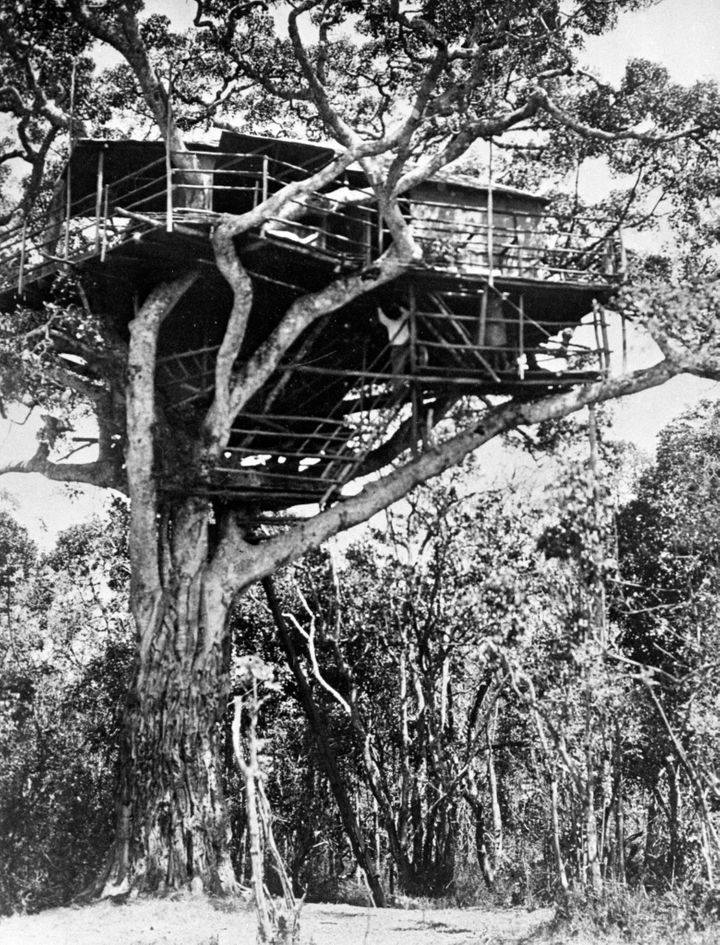
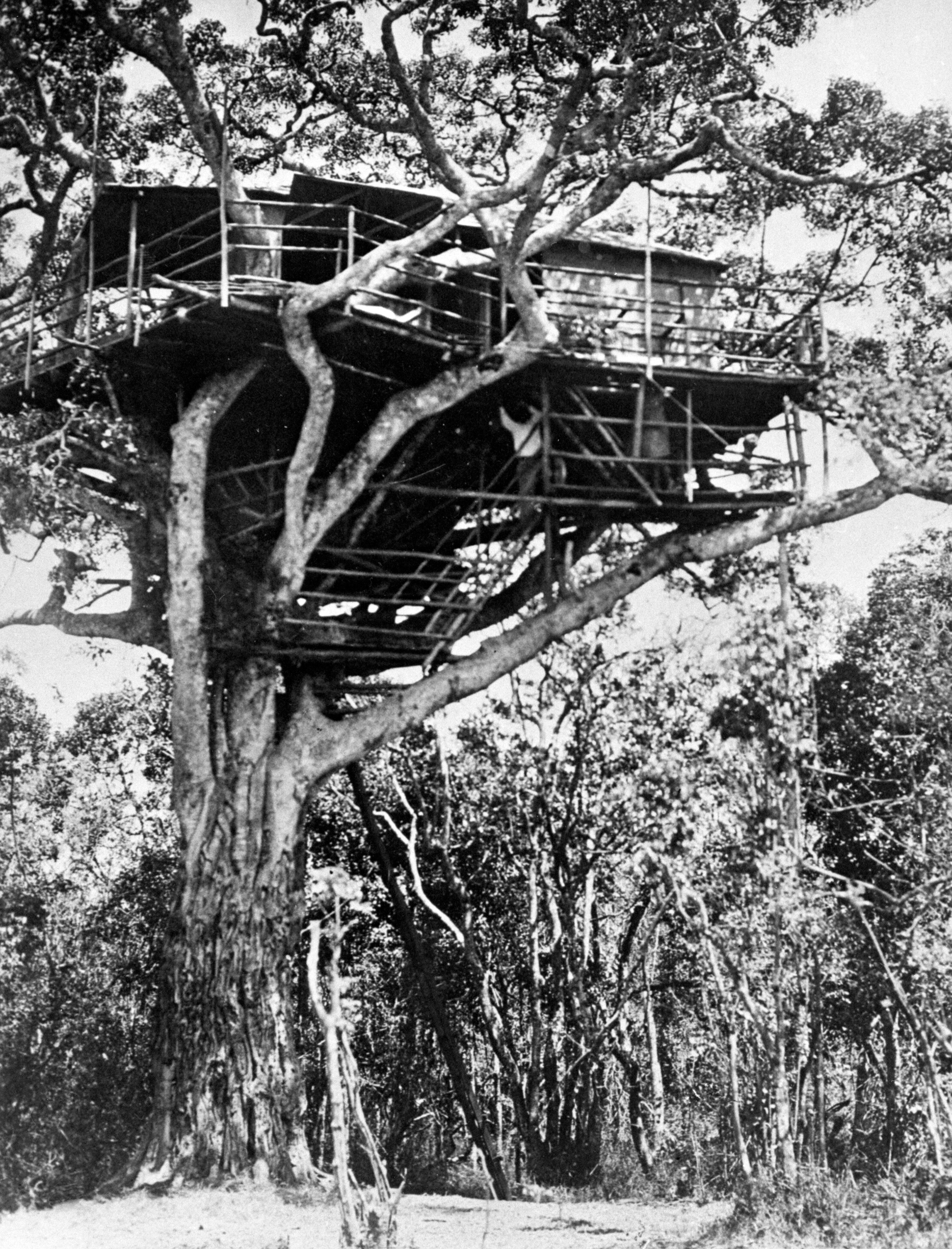
Princess Elizabeth was staying in an exclusive tree house hotel in Kenya in 1952 when she was informed of her father’s death.
Advertisement
Former lady-in-waiting Pamela Hicks recalled: “She goes up as a princess. The king died that night. She comes down the ladder as a queen.”
Prince Philip was told the news first, and covered his face with his newspaper, murmuring “this will be such a shock”, before taking her for a walk in the gardens, where he told his young wife of her father’s death and that she was now to be Queen.
Treetops Hotel, in Kenya – it was here that Princess Elizabeth learned of the death of her father, King George VI
PA Archive/PA Images
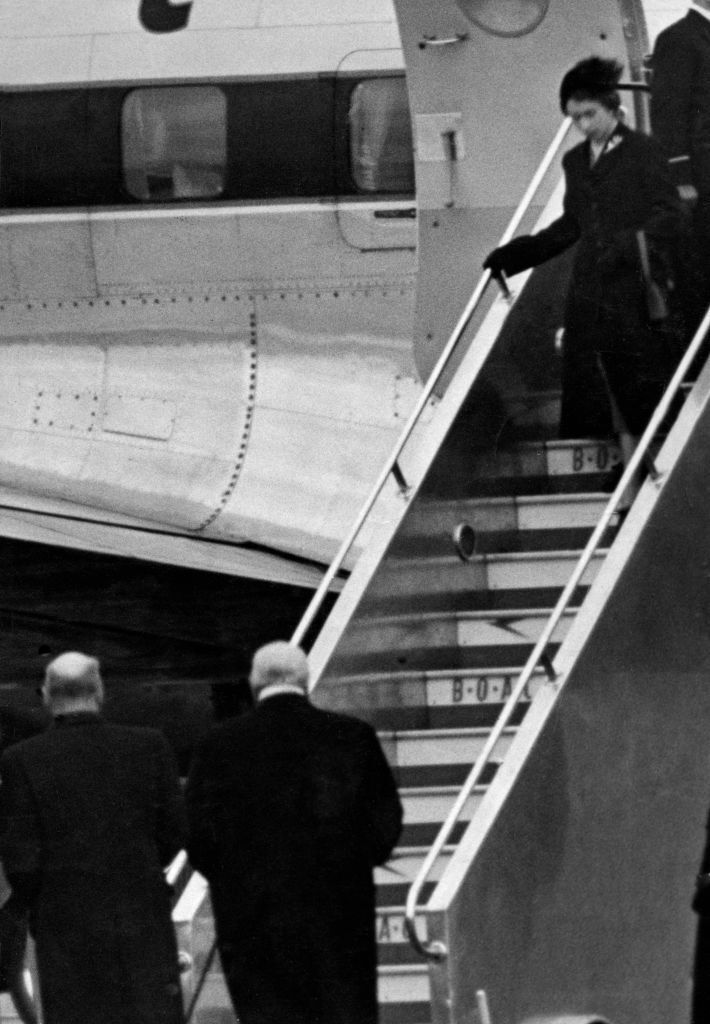
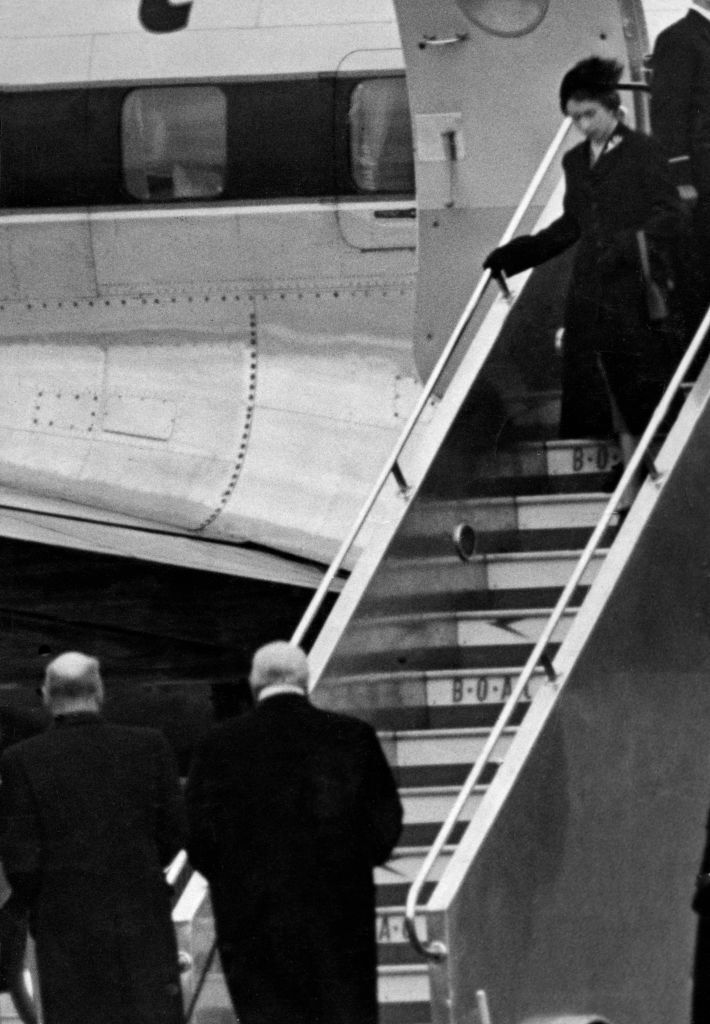
Elizabeth II sets foot on British soil for the first time since her accession as she lands in Britain, following the death of her father. Waiting for her at the bottom of the plane steps are Clement Attlee and then prime minister Winston Churchill
The couple’s children, Prince Charles, Princess Anne, Prince Andrew and Prince Edward, were born between 1948 and 1964, all at Buckingham Palace.
Advertisement
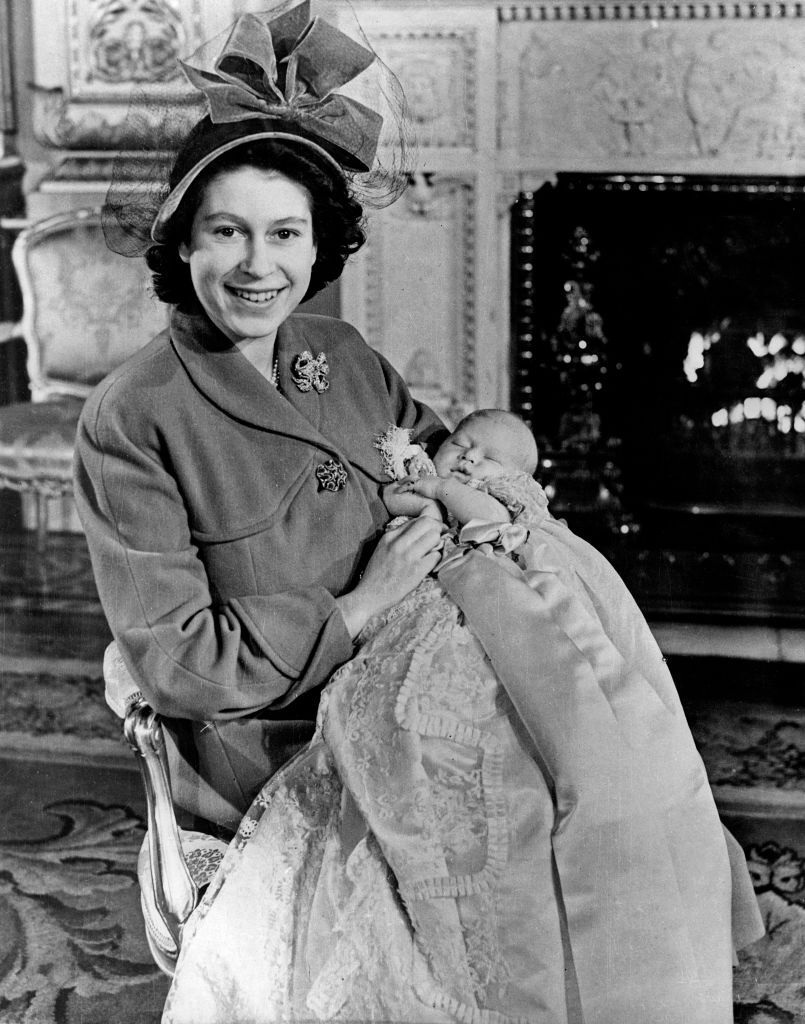
Charles’ birth on November 14, 1948, was the first in centuries without a government minister present to witness the arrival of a future heir to the throne. The occasion was marked publicly with the fountains of Trafalgar Square lit up in blue. The Duke of Edinburgh, said to be “not indifferent but restless”, played squash while his wife was in labour.
As Victoria had done the previous century, Elizabeth acted as a figure of continuity as the country modernised. Serving through the 20th century, the Millennium and well into the 21st century, she was also head of state, the armed forces and the commonwealth.
She witnessed many new technological advances and a succession of British governments of different political persuasions.
Elizabeth II met every US president of her reign – except one.
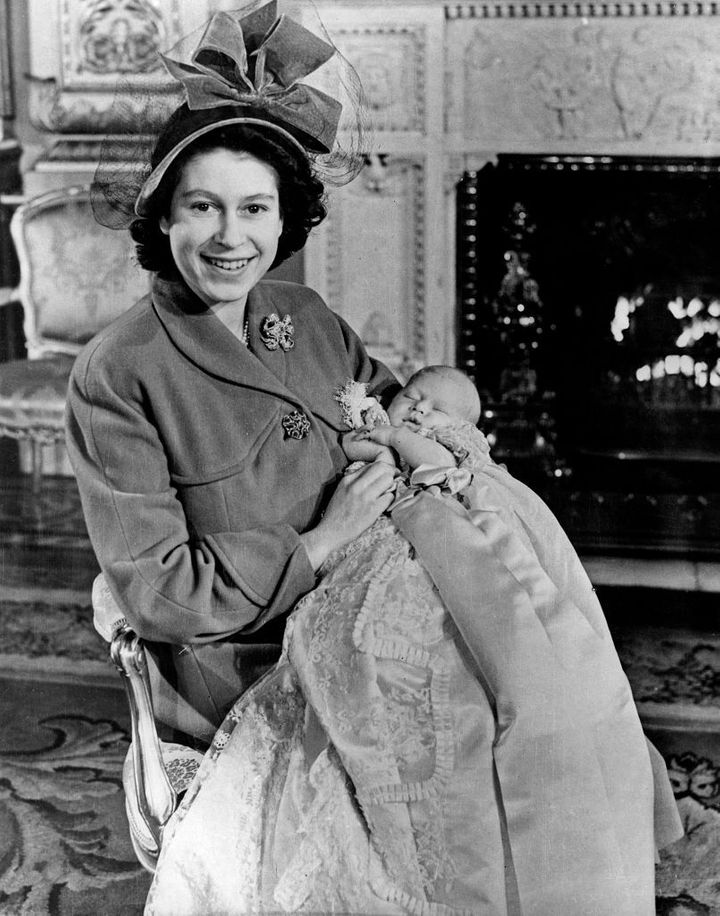
Queen Elizabeth II and baby Prince Charles at Buckingham Palace in 1948
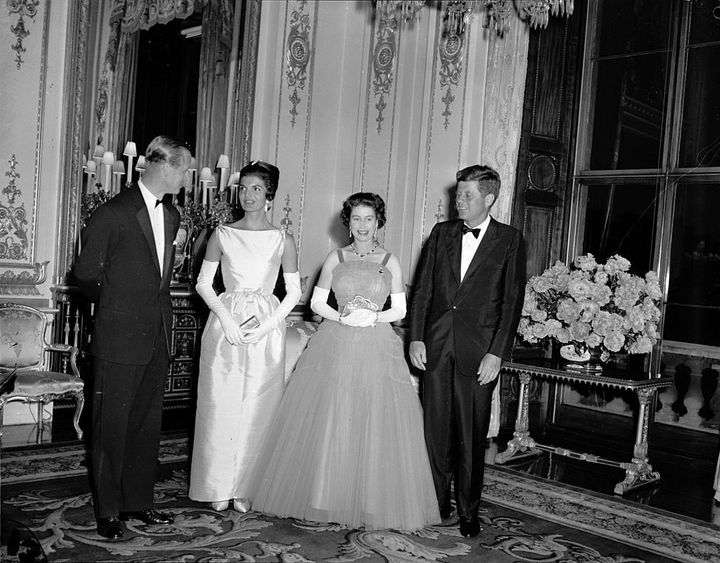
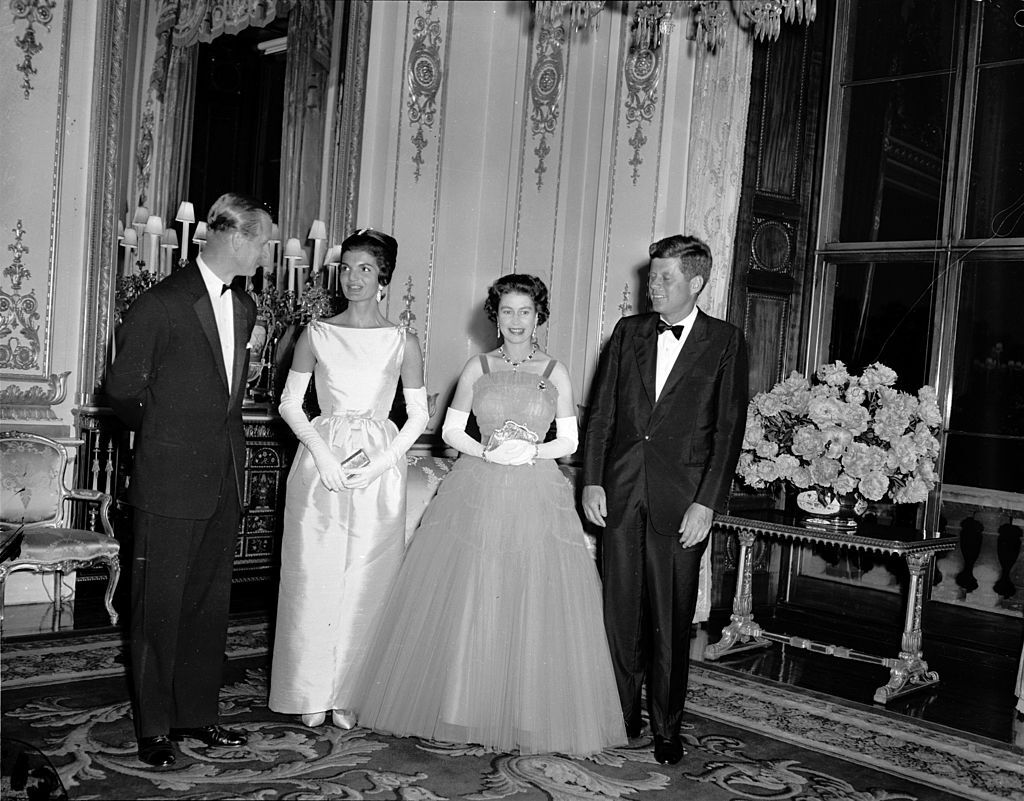
President John Kennedy with his wife Jackie, meeting the Queen and the Duke of Edinburgh at Buckingham Palace in London, 1961
Advertisement
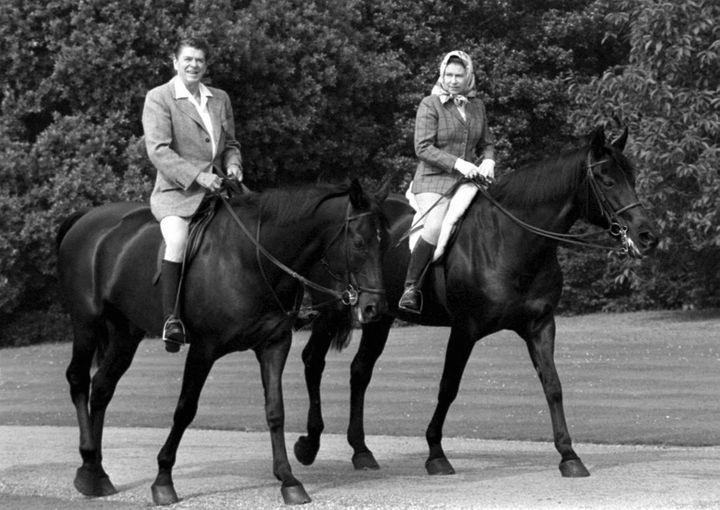
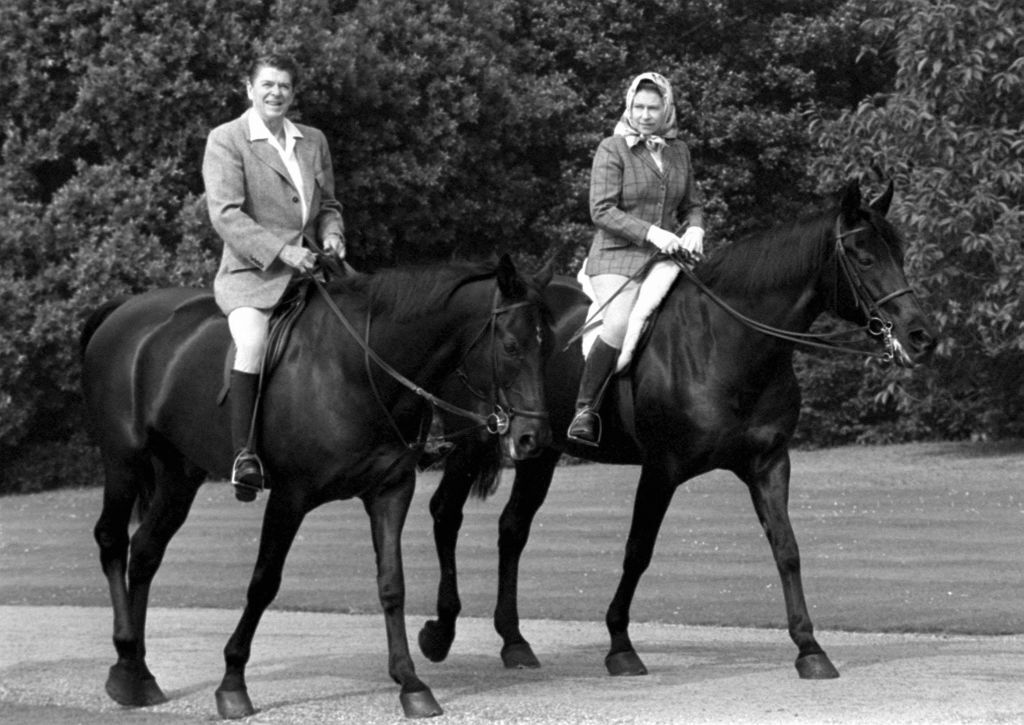
US President Ronald Reagan goes riding in Windsor Home Park with the Queen
Lyndon B Johnson, who took over in 1963 following John F Kennedy’s assassination, never crossed paths with the Queen. By contrast, president Donald Trump, who visited Britain three times during her reign, boasted about having “automatic chemistry” with her and praised her as a “spectacular woman”.
Current President Joe Biden took office in January 2021, and made his first official visit overseas to visit the UK – and its monarch – in June.
The Queen had become accustomed to milestones during her decades on the throne. In December 2007, she became the longest living British monarch, overtaking Victoria who died when she was 81, and in May 2011, she became the second-longest reigning monarch in British history, when she overtook George III.
According to Guinness World Records, the Queen also held the world record for most currencies featuring the same person.
Advertisement
Her Diamond Jubilee river pageant in 2012 set a new world record for the number of boats in a parade with more than 1,000 vessels taking part and 670 making the complete trip down the Thames to Tower Bridge.
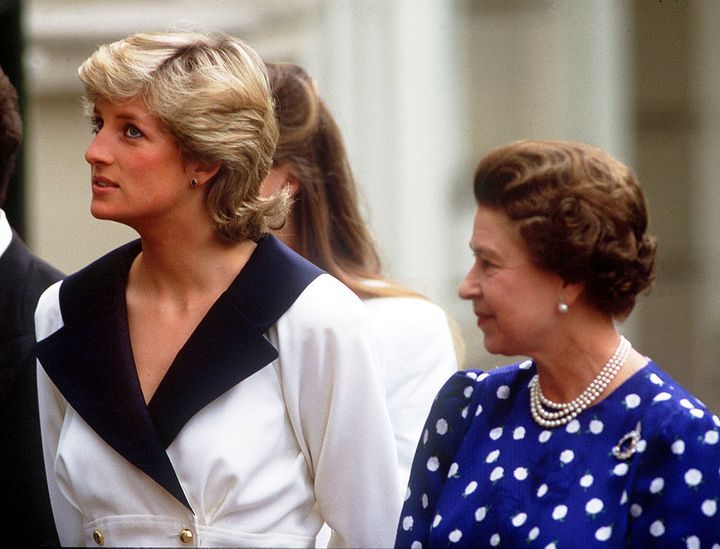
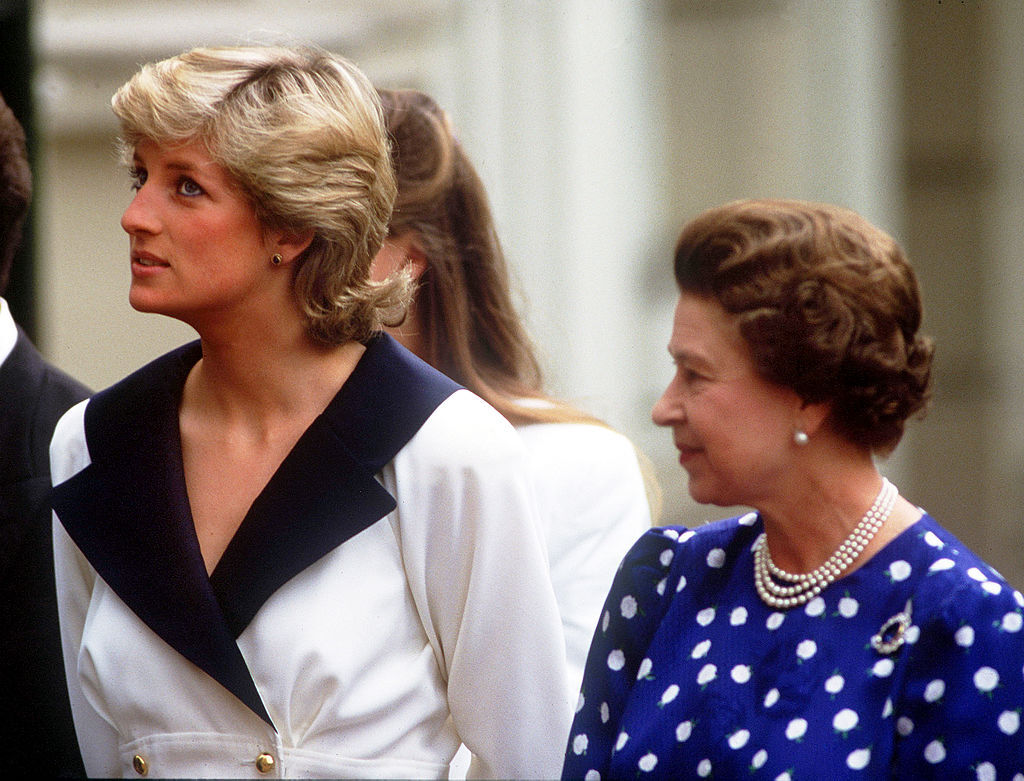
Princess Diana with Queen Elizabeth II on the Queen Mother’s 87th Birthday, at Clarence House, in 1987
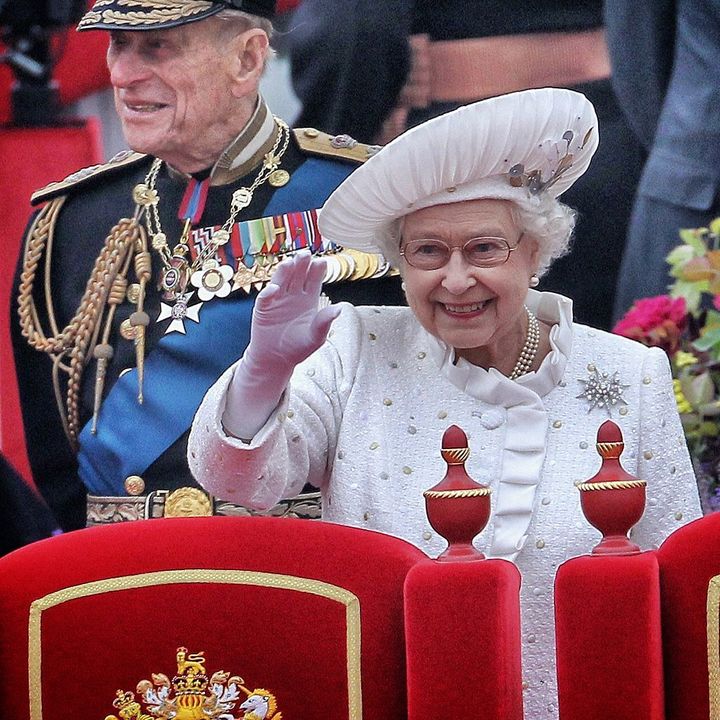
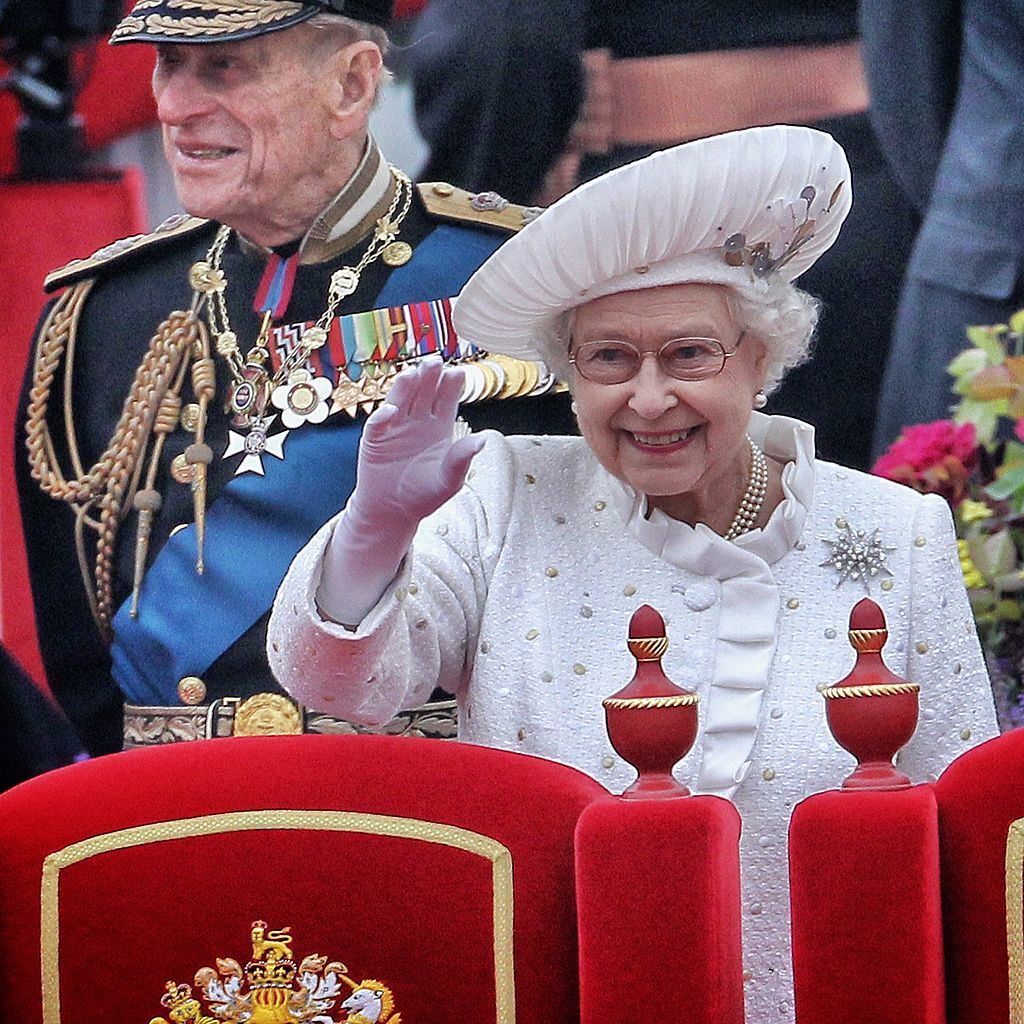
The Queen and Prince Philip during the Diamond Jubilee River Pageant in 2012
The monarch’s “second birthday” – that is, the official celebration – was marked on the second Saturday in June each year, commemorated with the Trooping the Colour parade. The double birthday tradition was introduced in 1748 by King George II, who was born in November – a time where the UK weather was typically dreary. Wanting a big public celebration, the king decided to hold a birthday parade in the sunnier months and to combine it with an annual military parade.
The Queen was also the first British monarch to send an email, to have a message put on the moon, to conduct a royal “walkabout” and to hold a public concert in her back garden.
Advertisement
Each year, without fail, the Queen would retreat to Balmoral in Aberdeenshire during the summer months, where she is said to have been happiest. It was her private home and was handed down to her through generations of royals after being bought for Queen Victoria by Prince Albert in 1852.
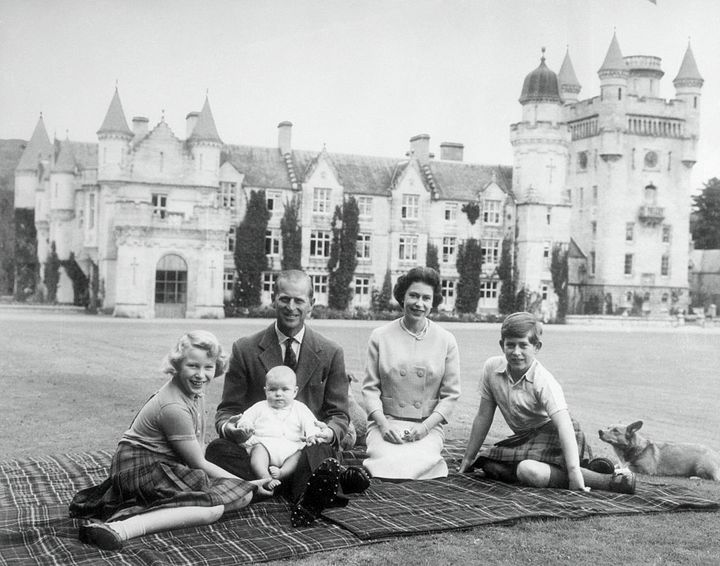
Baby Prince Andrew perches on Prince Philip’s lap during a picnic on the grounds of Balmoral Castle. Also pictured are Queen Elizabeth, Prince Charles, and Princess Anne
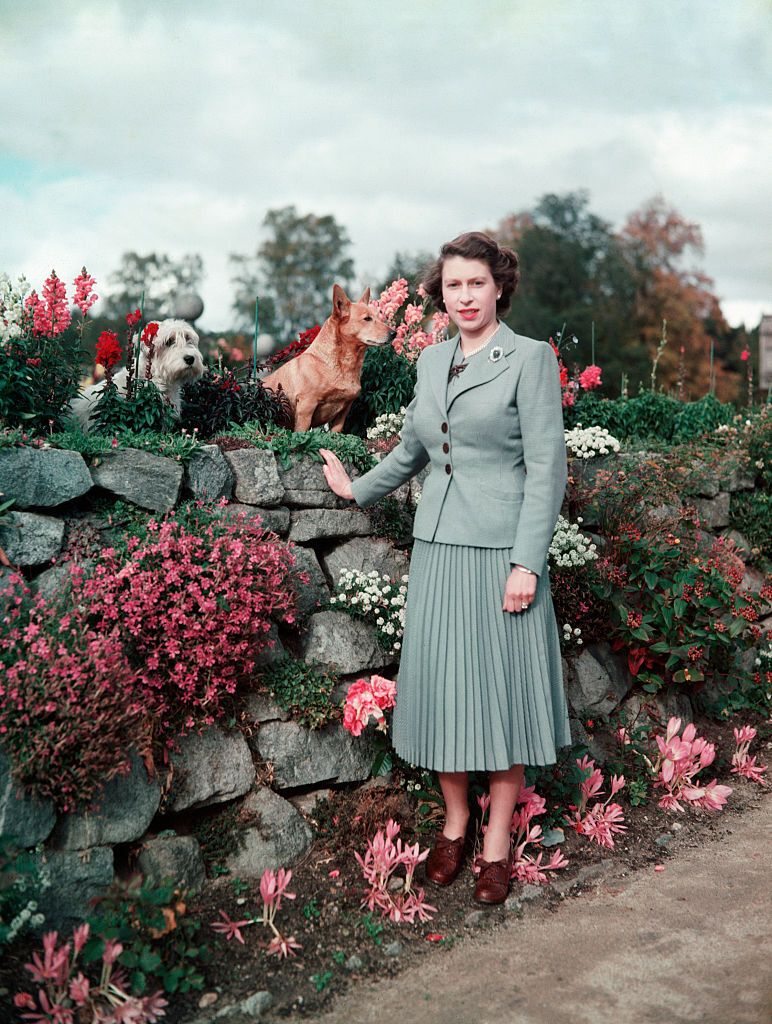
The Queen at Balmoral Castle with some of her beloved dogs in 1952
Victoria described Balmoral as her “heaven on Earth” and it was where she sought solace after Albert’s death. Queen Elizabeth’s usual two-month stay in August and September traditionally included a visit to the nearby Braemar Gathering, where she was chieftain of the Highland games.
Princess Eugenie, the Queen and Duke of Edinburgh’s granddaughter, once described Balmoral as the most beautiful place on the planet.
Advertisement
“Walks, picnics, dogs – a lot of dogs, there’s always dogs – and people coming in and out all the time,” she said.
“It’s a lovely base for granny and grandpa, for us to come and see them up there; where you just have room to breathe and run.”
Years of happy royal memories were forged at Balmoral, including family barbecues – where Philip did the cooking and the Queen the washing-up – and each morning a lone piper would play below the Queen’s bedroom window.
In recent times, the Queen had endured the biggest crisis the royal family had faced in years after her supposed “favourite son” Prince Andrew gave a television interview about his friendship with late sex offender Jeffrey Epstein.
It triggered a public outcry, and it was decided in an unprecedented move for Andrew to step back from public duties for the “foreseeable future”. Andrew kept a low profile but fell back into the spotlight when one of Epstein’s alleged victims started a civil case against him.
Advertisement
And in early 2020, her grandson Harry and his new wife, the actress Meghan Markle, sparked a major royal crisis when they made a decision to step down as senior royals for personal and financial freedom, in a move that was dubbed by the media as Megxit.
The Queen did not comment on either matter publicly.
She had previously dubbed 1992 her “annus horribilis”, following a series of scandals involving her children.
Prince Charles separated from Diana, his first wife; the Princess Royal divorced; and Andrew’s newly estranged wife Sarah Ferguson appeared in the tabloids topless and having her toes sucked.
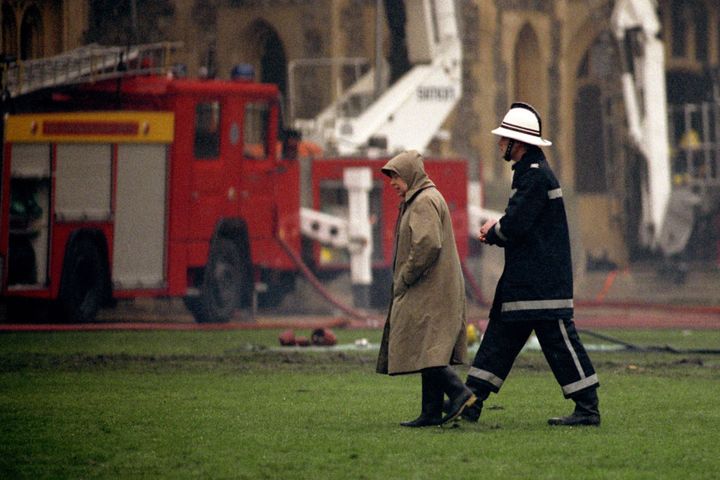
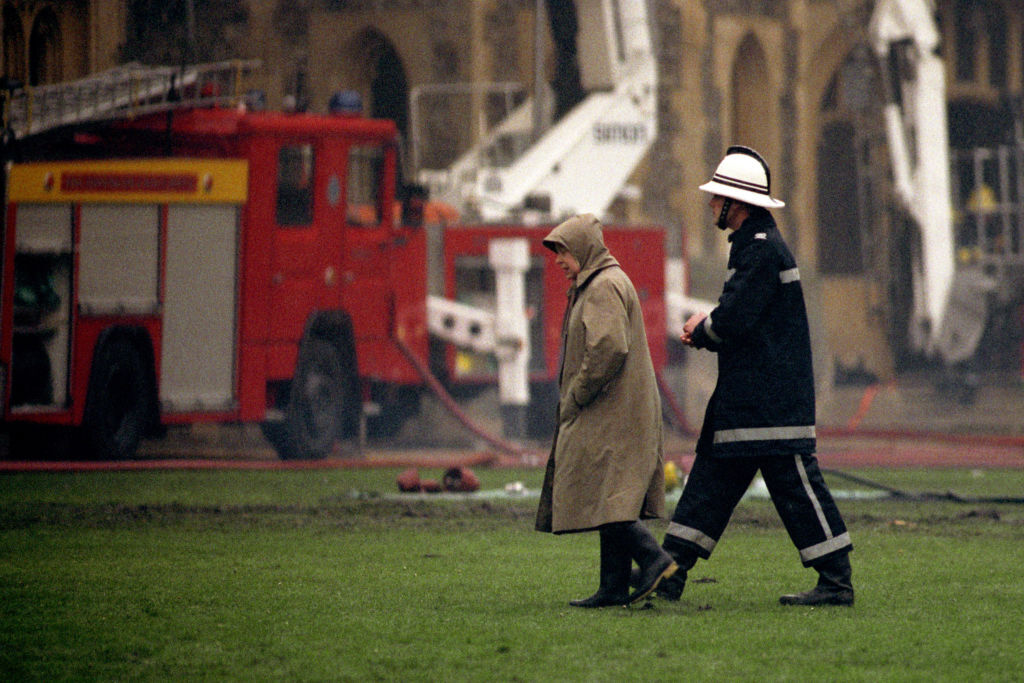
That year also saw public opinion turn against the royals amid fears that taxpayers would have to foot the bill for repairs to Windsor Castle after a fire. In the end, the Queen agreed to pay 70% of the £36.5 million costs by opening Buckingham Palace to the public for the first time to generate extra income.
It was also announced that she would pay income tax for the first time and cut down the size of the Civil List.
Advertisement
The Queen surveying the scene at Windsor Castle following the fire in 1992
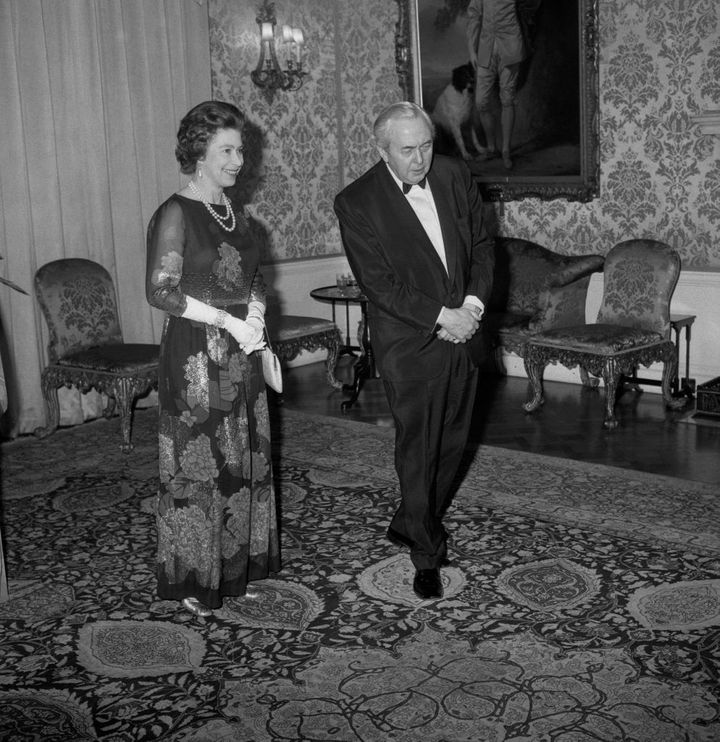
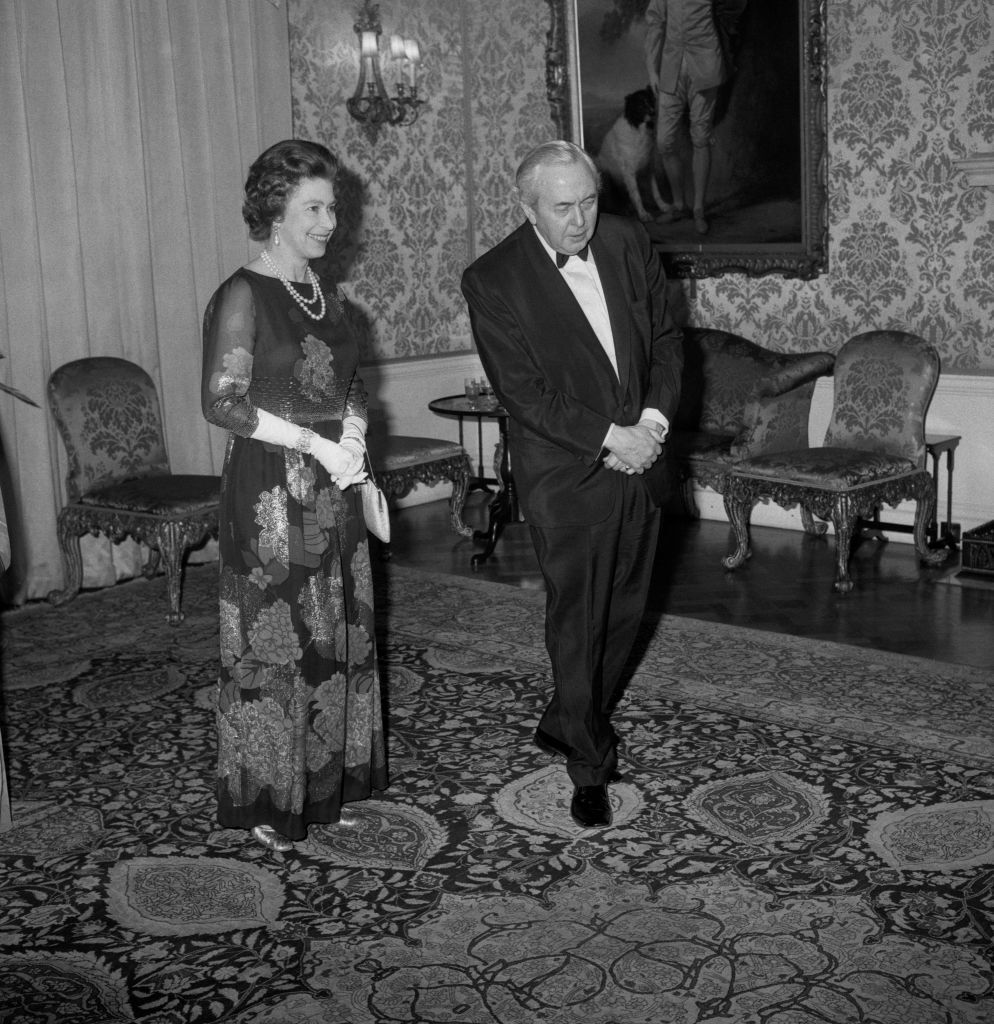
The Queen at 10 Downing Street at a farewell dinner for retiring prime minister Harold Wilson
With a reign spanning many British governments under 15 prime ministers and dozens more in the Commonwealth, the Queen did not escape constitutional difficulties over the years.
She officially accepted Johnson’s resignation just two days before her death and invited his successor, newly-elected Tory leader Liz Truss, to form a government.
Advertisement
However, the Queen’s dedicated attention to her constitutional functions has been commented upon by many of her prime ministers.
Politicians knew they ought not go to Buckingham Palace unless fully prepared.
Harold Wilson once confessed that he felt like a schoolboy who had not done his homework when the Queen cited a document which he had not read.
In the documentary Elizabeth R, filmed in 1992 to mark her 40th year on the throne, the Queen gave her view on the importance of her meetings with her prime ministers.
“They unburden themselves or tell me what is going on or if they have any problems, and sometimes I can help in some way as well,” she said.
“They know I can be impartial and it is rather nice to feel one is a sponge.
“Occasionally one can put one’s point of view and perhaps they have not seen it from that angle.”
As head of state, the Queen was politically neutral and acted on the advice of her government in political matters, but her political knowledge was known to be immense.
Advertisement
She rarely voiced her thoughts on current affairs but was occasionally caught on camera revealing her real opinions, such as when she expressed her frustration with world leaders who “talk but don’t do” when it comes to the climate crisis.
She received weekly briefings from the prime minister of the day and dozens of government documents passed across her desk every week for formal approval.
The Queen is survived by her four children – Charles, Anne, Andrew and Edward – and her 20 grandchildren and great-grandchildren.
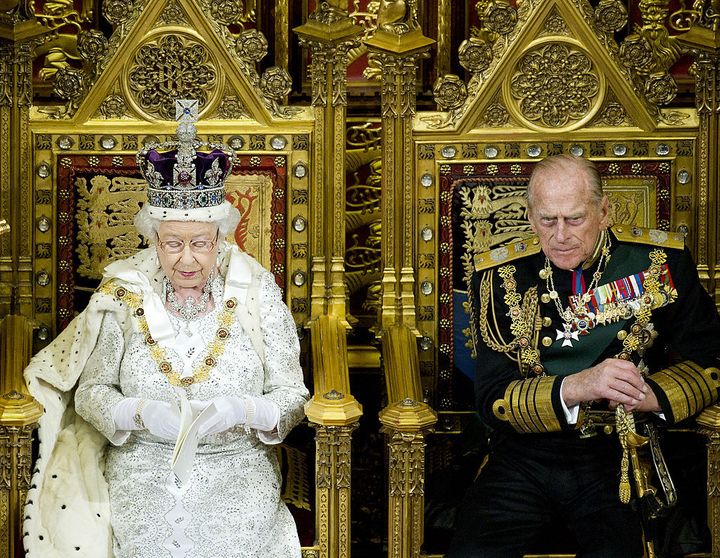
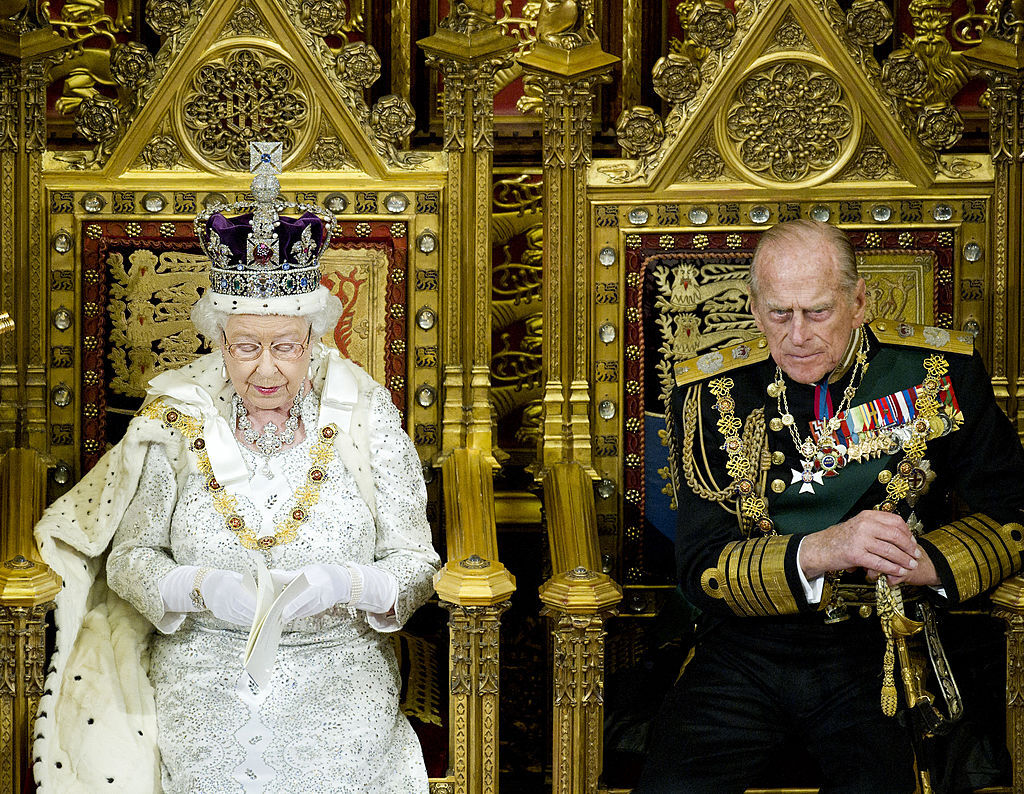
The Queen and Prince Philip seated on thrones in the House of Lords at the state opening of parliament in 2013
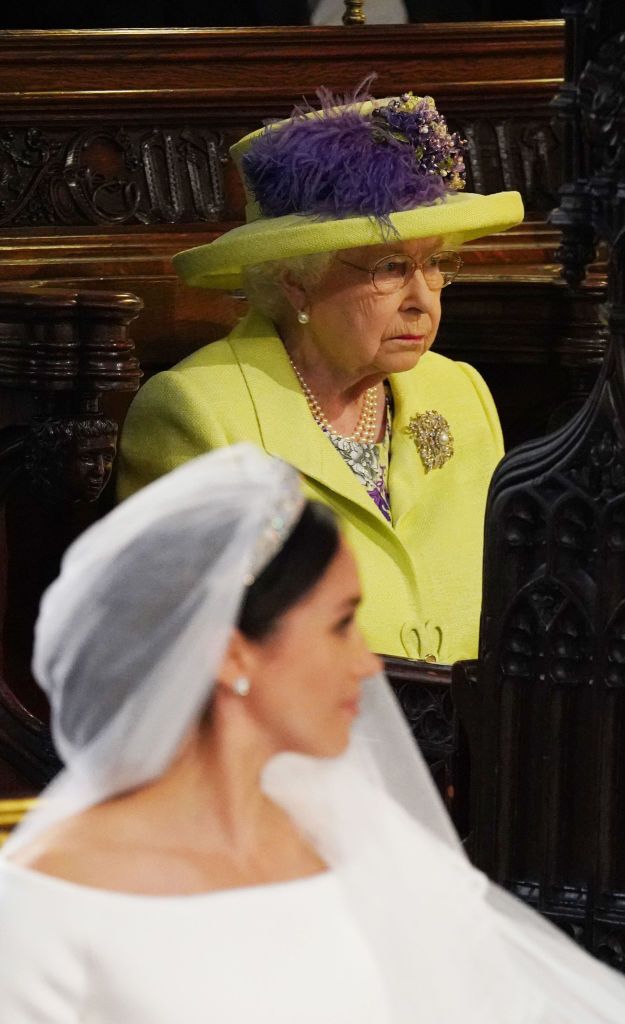
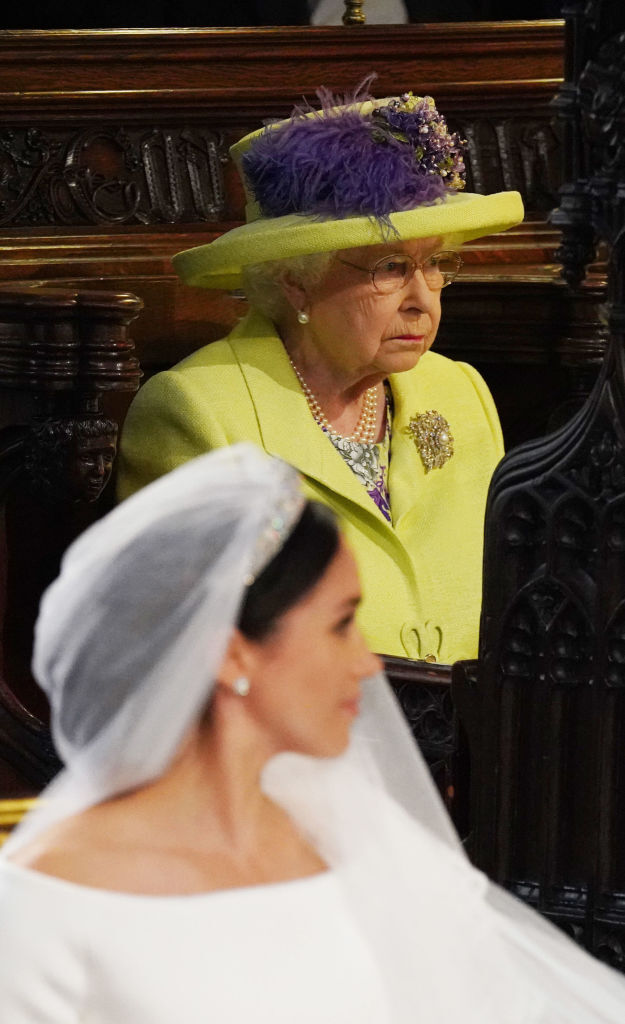
The Queen at the wedding of her grandson Prince Harry to American actress Meghan Markle in May 2018
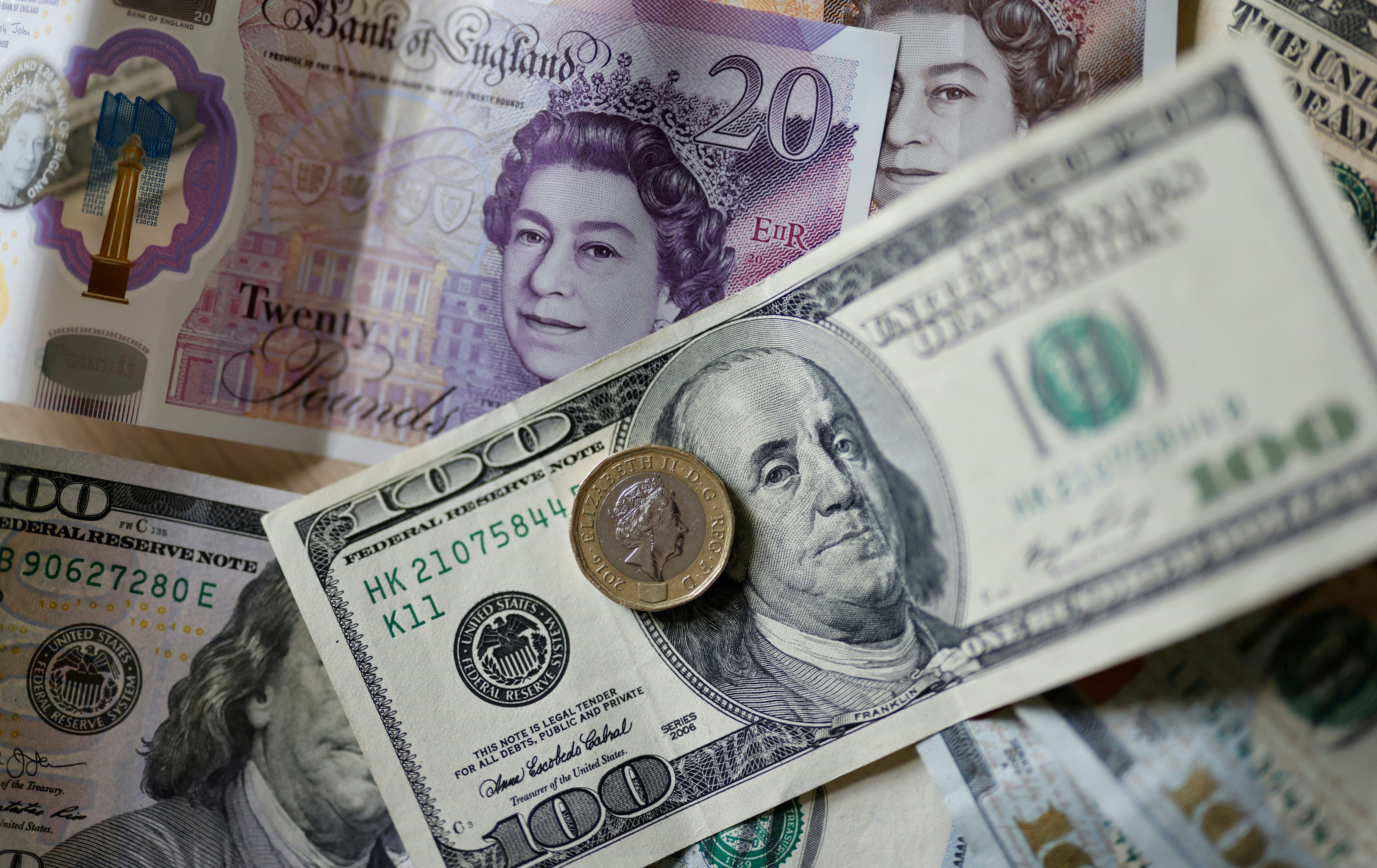
The economic woes facing new prime minister Liz Truss have been underlined by the pound slipping to a new 37-year-low against the US dollar.
In symbolism noted by many, the last time sterling dipped this low was 1985 – when Truss’s political hero Margaret Thatcher was in power.
Advertisement
Britain’s currency dropped to as low as $1.1403 on Wednesday, surpassing the trough of $1.1412 seen at the outset of the Covid-19 pandemic in March 2020.
The currency is down more than 15% against the dollar so far this year.
Sterling hit an all-time low of $1.0545 in March 1985, just before the Group of Seven (G7) economies acted to rein in the superdollar of the Reagan era in the so-called Plaza Accord.
Why has the pound fallen so low against the US dollar?
The value of a currency invariably reflects how traders fell about the health of a country’s economy – either for better or worse.
Advertisement
The UK is suffering from a series of factors – most pressingly, soaring energy bills – but the pound’s plunging value against the dollar is also a measure of the relative strength of the American economy, where inflation is easing and strong jobs numbers continue.
Andrew Bailey, governor of the Bank of England, highlighted the strength of the US currency during a Treasury select committee meeting earlier on Wednesday, as he explained to MPs the recent weakness in the pound.
Pound hits new low against the dollar, $1.1406, lowest since 1985. That’s one more parallel between Truss and Thatcher ticked off
A sustained rally in the US dollar, referred to by traders as the “greenback”, has also seen it hit a 24-year high against the Japanese yen – reflecting how the UK is not in a unique position.
Against the euro, the pound was also down almost 1% on Wednesday, although sterling has held up far better against the euro than versus the dollar. It is down just 3% versus the single currency this year.
Advertisement
Nonetheless, investors are dumping British assets in the face of a bleak economic outlook that incudes the rising risk of a recession. The country’s surging inflation rate is also the highest among G7 powers, with the Bank of England previously predicting inflation could pass 13% in October. Concerns over tax cuts and increased public spending under the new Truss government also add to the uncertainty influencing traders.
Britain has further been hit differently by the energy crisis. While the UK only imports a small percentage of its gas from Russia, it relies more on gas than its European neighbours because it has less nuclear and renewable energy and does not have as much capacity to store gas.
“The British pound slid to its lowest level against the U.S. dollar since 1985, a reflection of the U.K.’s dire economic situation. Investors are braced for sterling to weaken even further to a nadir not seen in more than two centuries” https://t.co/PFtOkw8G1k
Analysts say the direction of the pound could now be swayed by the economic plans of the new prime minister, with Truss expected to detail her response to energy bills on Thursday, with government borrowing likely to pick up the tab for freezing bills for households and businesses.
The tumbling pound is also a headache for the Bank of England since it increases the cost of imports and can cause more imported inflation. The UK’s central bank meets next week and is expected to hike interest rates by 0.5 or even 0.75 percentage points.
Advertisement
The worst could yet come. Nordea chief analyst Jan von Gerich said: “There could be a recovery in sterling but I wouldn’t catch a falling knife for now.”
What does this mean for Brits?
The immediate impact of the falling pound is being felt by British travellers heading off for their holidays.
This means that travellers to the US – and to a lesser extent, Europe – will find their pound does not go very far, hiking up the cost of everything from accommodation to food.
Other countries use the greenback as the main currency, so even destinations such as Dubai and China are more expensive as their currencies are pegged to the US dollar.
Is it just holidaymakers who will be affected by the pound’s tumble?
All UK consumers stand to be impacted by a sustained plummet in the value of the pound, because it makes it more expensive for retailers and manufacturers to import food, goods and materials.
Advertisement
This means prices will be pushed up for goods and services, sending UK inflation rising even further and hitting Brits hard in the pocket.
Are there any benefits to a falling pound?
A weak pound can prove helpful in a number of ways, by making it cheaper for foreign companies to buy UK goods and boosting exports as a result.
It can also increase foreign investment in the UK, for example in property and in shares.
The FTSE 100 Index on London’s stock market usually rises when the pound falls as it is dominated by internationally-focused firms, which trade largely in US dollars.
A falling pound can also increase tourism to the UK, with overseas travellers looking to make the most of a better exchange rate.
This offers a boost to retailers and other sectors, such as restaurants and leisure attractions.
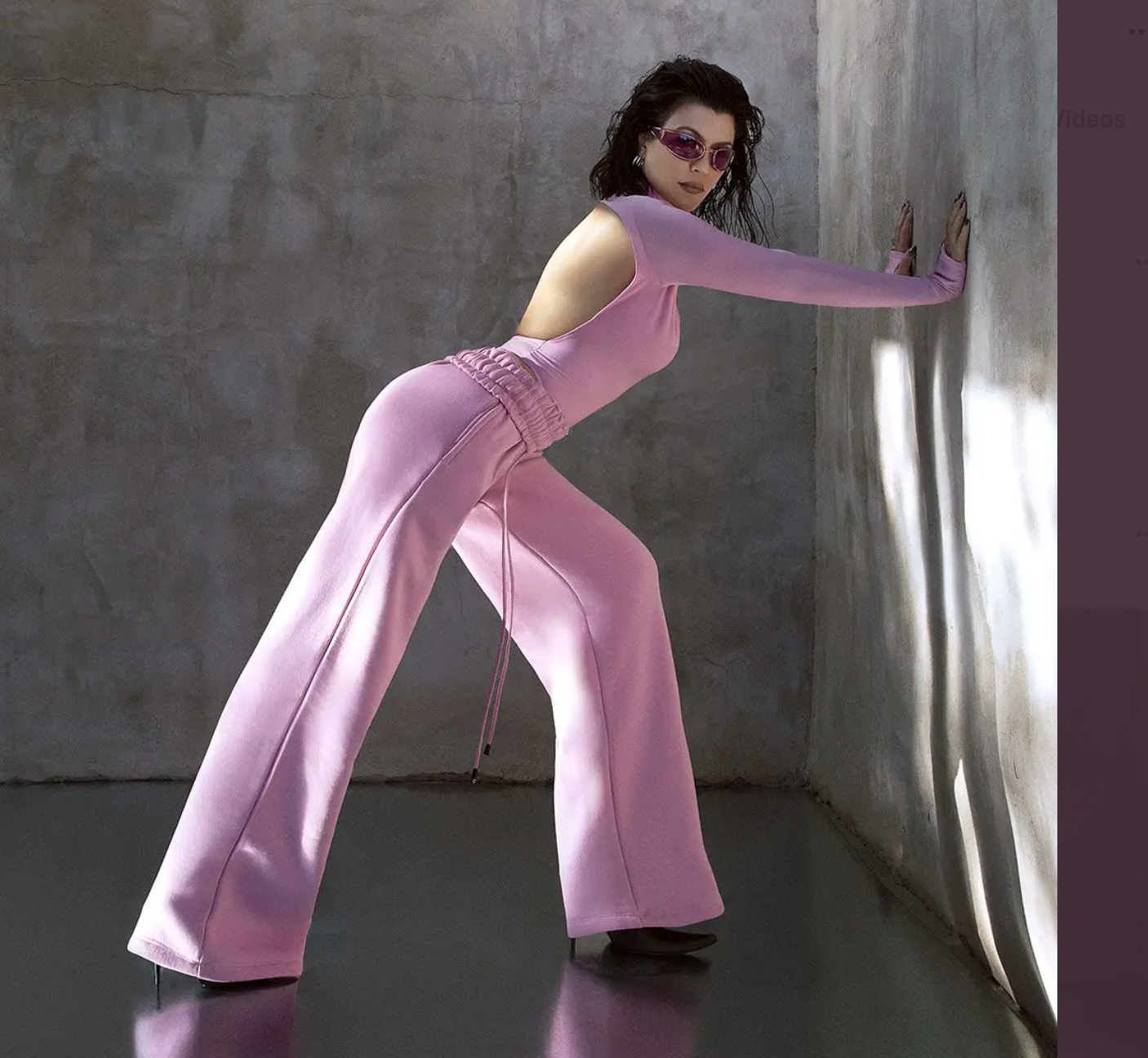
This collaboration sees the reality TV star release a new line Boohoo, which will include two 46-piece limited edition collections, the first of which will be showcased during New York Fashion Week on September 13.
Advertisement
This comes hot on the kitten heels of news that Pretty Little Thing – the fast fashion brand that’s also owned by Boohoo – has introduced an app encouraging shoppers to buy and sell second hand clothes.
Kourtney’s first Boohoo line – set to launch in the US market – ranges in price from $6 to $100 and will include items made with recycled polyester and recycled cotton, as well as two vintage-style biker jackets.
“When Boohoo first approached me to collaborate on a line, I was concerned about the effects of the fast-fashion industry on our planet,” Kourtney, 43, told WWD in an interview about the line.
“I’m grateful for the opportunity to use my platform to drive conversations that lead to ongoing change and use my voice to share actionable tips with consumers on how we can play our own part.”
Advertisement
Social media seems less than impressed by news of the collaboration, however. Echoing criticism of Pretty Little Thing’s marketplace, Boohoo’s latest announcement has been labelled by some as an act of greenwashing.
People have also queried Kardashian’s involvement, given her penchant for a private jet or two, and her family’s reputation for excess.
Boohoo’s business model is famously based on fast turnaround to meet and stoke demand, with more than 3,000 new styles added weekly to its site and some items taking just 48 hours to go on sale from idea to manufacture.
In July, the UK Competition and Markets Authority opened an investigation into whether eco-friendly claims made by various UK fast fashion chains added up – Boohoo is one of the brands under investigation, alongside Asos and Asda.
It was also hit by scandal mid-pandemic in 2020, when a series of newspaper investigations alleged that some UK workers producing clothes for Boohoo in factories in Leicester were being paid below minimum wage and working in non-Covid safe environments.
Advertisement
This led the company to severing ties with various UK suppliers, and some of its shareholders voting against big payouts for top Boohoo executives.
It’s hardly surprising, perhaps, that people have taken issue with this new collab on social media.
Kourtney isn’t exactly the most sustainable celebrity
Boohoo has hired Kourtney Kardashian as a green guru ambassador & to question whether “style and sustainability can eve mr go together”. Interesting move for a fast fashion firm still recovering from Leicester scandal & a member of a family that’s sold mass consumption pic.twitter.com/Fsoapa3Sxa
big big fast fashion conglomerate suddenly creating sustainability lines and schemes is bare cheeky. and then to appoint a kardashian as an ambassador?? that’s brazen https://t.co/nzTwypWWgJ
Fast fashion and sustainability don’t really go together
Kourtney Kardashian collab with Boohoo is not what I was expecting at all!!!! Even if it is sustainable, it’s still fast fashion and something I didn’t think she’d believe in?
A private-jetting Kardashian worth $65 million is now “sustainability ambassador” for fossil fuel fashion brand boohoo, where she’ll chat “with sustainability experts to better understand challenges and opportunities in the fashion industry.” We absolutely KANNOT. pic.twitter.com/cmI8zwB3ui
And what about the garment makers behind the new line?
Not Kourtney Kardashian releasing a “sustainable” line with boohoo, girl you have money you can turn down an offer from them and work with a brand that genuinely promotes slow fashion AND pays their garment workers ✌🏽✌🏽
Items are priced starting at $6 !! Sorry Kourtney their is no way to make a new sustainable garment to retail at $6. Sustainable means fair and honest wages for garment workers, for farmers growing the material for the fibres, or the factory worker reconstituting recycled fibre https://t.co/0EtI6PJcQn
When we reached out to Boohoo, Cheryl Chung, head of communications for the brand, responded.
“We recognise that working with Kourney is a choice a lot of people will find unusual,” she told HuffPost UK.
“Kourtney has faced a lot of criticism about her own sustainability practices. But we’re talking to a lot of sustainability experts as part of this project.”
Chung emphasised Kourtney’s huge following on Instagram –196 million followers at last count – to explain that hiring her in an ambassadorial role could influence a larger number of people to learn more about sustainability.
The brand is releasing her conversations with experts as a docuseries, available to view on YouTube.Those experts include Tim Nelson, the CEO of Hope For Justice, which works on freeing people from modern slavery around the world.
Advertisement
“We’re working with her and tackling conversations around the challenges of textile waste, the challenges of worker welfare, and how you responsibly deal with your clothes at the end of their life,” Chung said, adding that Kourtney’s conversations about massive challenges facing the fashion industry was “the most important part of the collaboration”.
Asked whether the venture was another example of greenwashing, Chung responded that in-house designers working on Kardashian’s line are concentrating on using fabrics and materials that wouldn’t harm the environment, but didn’t speak to further supply chain logistics.
“We’re not claiming to be perfect in any way but we’re categorically trying to do our best to be as honest and open and transparent,” she added.
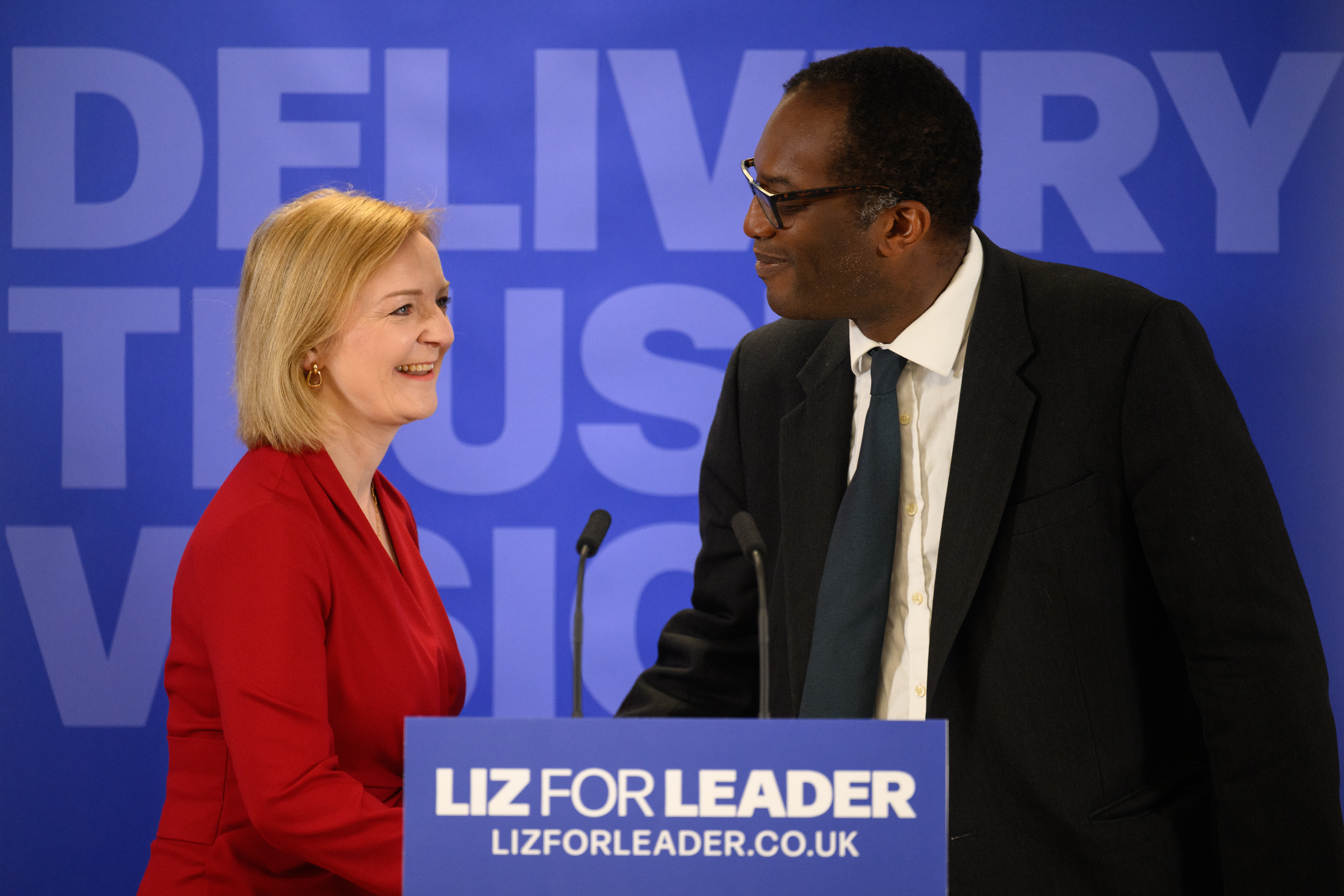
Kwasi Kwarteng has been appointed chancellor as Liz Truss made major changes as the new prime minister assembled her new cabinet.
He served as business secretary under Boris Johnson and is a close ally of Truss and early supporter of he leadership bid.
The appointments mean that for the first time in history none of the great offices of state are held by white men.
It follows Therese Coffey being appointed health secretary and deputy prime minister.
Truss began her cabinet reshuffle with a cull of prominent Rishi Sunak supporters, sending Dominic Raab, Grant Shapps and Steve Barclay to the backbenches swiftly after she became prime minister.
She removed the senior figures who had backed her rival in the Tory leadership race promptly after heading to her House of Commons office following her first speech in Downing Street on Tuesday.
Kwarteng, whose appointment to No 11 had been widely expected, replaces Nadhim Zahawi in the Treasury.
Liz Truss has appointed Therese Coffey deputy prime minister and health secretary during a major reshuffle of the government.
The new prime minister appointed Kwasi Kwarteng as chancellor as she also made James Cleverly the foreign secretary.
Advertisement
Former attorney general Suella Braverman was appointed home secretary, replacing Priti Patel after she pre-emptively resigned.
The appointments mean that for the first time in history none of the great offices of state are held by white men.
Truss began her cabinet reshuffle with a cull of prominent Rishi Sunak supporters, sending Dominic Raab, Grant Shapps and Steve Barclay to the backbenches swiftly after she became prime minister.
Advertisement
She removed the senior figures who had backed her rival in the Tory leadership race promptly after heading to her House of Commons office following her first speech in Downing Street on Tuesday.
Coffey, the former work and pensions secretary who is regarded as Truss’s closest friend in Westminster, replaced Raab as the second in command after he described Truss’s tax plans as an “electoral suicide note”.
Coffey has spelled out her top four priorities. She told Sky News: “I’m just about to enter the department and go to meet our great civil servants I’m going to work with.
“We’ve got priorities A, B, C, D – ambulances, backlogs, care, D – doctors and dentists. And we’re going to work through that and we’ll make sure that we’re delivering for the patients”.
Asked whether she is ready for strikes, Coffey said: “I think we’ve got to be ready for patients and that’s my top priority, and how we can make best use of our department and of course the NHS in order to achieve the best outcomes for them.”
Advertisement
Asked what her message is to potentially demoralised NHS staff, Coffey she recognised “they’ve done excellent work” and repeated her priorities.
This is a breaking news story and will be updated. Follow HuffPost UK on Twitter, Facebook and Instagram.
A metaphor was handed to critics of Liz Truss on a plate as the weather wreaked havoc on her first speech as prime minister.
Heavy rain forced the Number 10 lectern inside and out again before the new Tory leader addressed the nation on Tuesday.
Advertisement
Journalists and MPs were left in limbo as the heavens opened while Truss’s convoy drove through London towards Downing Street.
<img class="img-sized__img landscape" loading="lazy" alt="The lectern is prepared ahead of new UK prime minister Liz Truss arriving to give her first speech at Downing Street.” width=”720″ height=”480″ src=”https://www.wellnessmaster.com/wp-content/uploads/2022/09/liz-truss-upstaged-by-a-bin-bag-before-first-speech-as-pm-3.jpg”>
The lectern is prepared ahead of new UK prime minister Liz Truss arriving to give her first speech at Downing Street.
Leon Neal via Getty Images
At one point, a bin bag was draped over the podium microphone.
On the BBC News channel, Huw Edwards was padding for Britain as the plastic protection took centre stage for a full 30 seconds.
The bin bag featured above the headline “Liz Truss appointed Prime Minister”.
Advertisement
However, just as it looked as though Truss would be forced inside, the inclement weather subsided and the podium, which had been taken inside, was again brought back on to the street.
Of course, the Twitterati had already pounced on the symbolism. The Times writer Caitlin Moran said: “Well, there it is. The picture that will go around the world.”
Staring at a bin bag on a lectern in the pissing rain is a very strong 2022 vibe.
“It all gives the sense… that Britain is broken,” says Sky News’ host as Downing Street staff remove a bin bag from the top of Liz Truss’ lectern and leg it inside from the downpour. pic.twitter.com/HWPLGV6LlH
After the lectern was eventually unsheathed, Truss gave her inaugural address as PM – chanelling Winston Churchill as she pledged to pull the UK out of the doldrums.
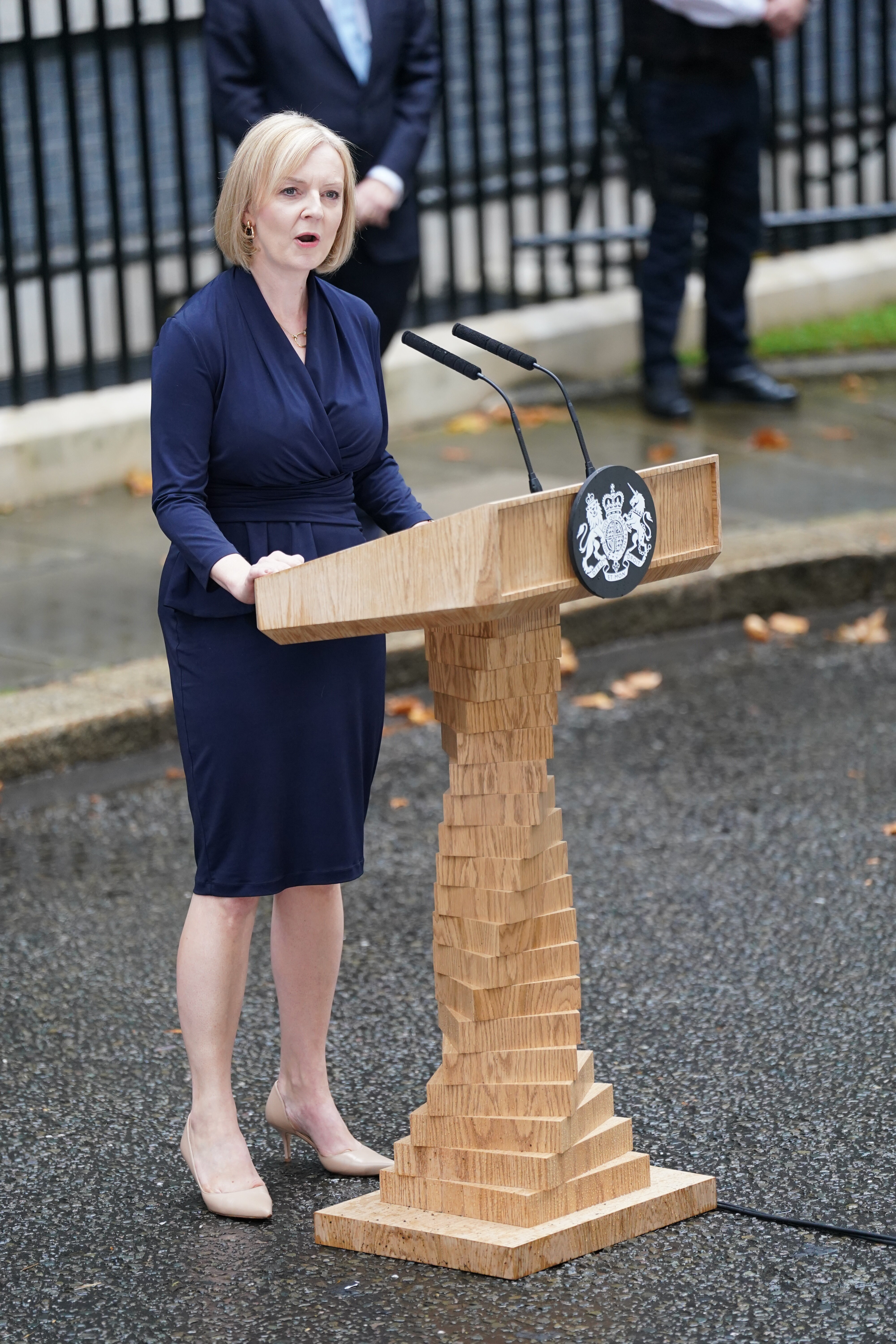
<img class="img-sized__img portrait" loading="lazy" alt="New prime minister Liz Truss makes a speech outside 10 Downing Street.” width=”720″ height=”1080″ src=”https://www.wellnessmaster.com/wp-content/uploads/2022/09/liz-truss-upstaged-by-a-bin-bag-before-first-speech-as-pm-4.jpg”>
New prime minister Liz Truss makes a speech outside 10 Downing Street.
Kirsty O’Connor via PA Wire/PA Images
Speaking as she prepared to enter Number 10 for the first time as prime minister, Truss pledged to take “action this day” to turn the country’s fortunes around.
During the second world war, Churchill famously attached red stickers with those same words to documents needing immediate attention by his staff.
Truss, who was forced to delay her arrival in Downing Street by heavy rain, said she was “honoured to take on this responsibility at a vital time for our country”.
She said: “What makes the United Kingdom great is our fundamental belief in freedom, in enterprise, and in fair play.
“Our people have shown grit, courage and determination time and time again.
“We now face severe global headwinds caused by Russia’s appalling war in Ukraine and the aftermath of Covid.
“Now is the time to tackle the issues that are holding Britain back.”
The new PM added: “We will transform Britain into an aspiration nation with high-paying jobs, safe streets and where everyone everywhere has the opportunities they deserve.
“I will take action this day and action every day to make it happen.”