[unable to retrieve full-text content]



[unable to retrieve full-text content]
Roger Bainton carried out dozens of unnecessary operations and “experimental procedures”.
People at the highest risk should be offered weight loss and healthy eating programmes, advice says.
Topday, 15 September, is World Lymphoma Day and the plight of patients like Klaas Meyer, a Hodgkin’s lymphoma survivor, is the focus of this awareness day.
Meyer said that in March 2014 he started to get sick.
“I had a fever, night sweats and headache which resulted in me losing weight. I went to a doctor and he gave me some medication and told me that it was just flu,” Meyer said, adding that the symptoms persisted.
12 cycles of chemotherapy
“I went back to the doctor and he referred me to Baragwanath Hospital and I was admitted. Two days later I was discharged without a diagnosis.”
Meyer went to several clinics, but did not get better. So he turned to private doctors who referred him to Netcare Garden City Hospital for tests.
“But I could not be helped because I did not have medical aid. So I was given a referral letter for Baragwanath Hospital, and they took two weeks to diagnose me.”
Meyer’s first chemotherapy took place in July 2014.
“I was given 12 cycles of chemotherapy and on 17 February 2015 I was in remission. And it has lasted until today,” he said happily.
‘I thought about my children’
Felicity Jethney (32), who was diagnosed with cancer four years ago, said, “I was devastated by the news. I could not understand how a young person like me could get cancer. I always thought of it as an older person’s disease.”
Jethney said that she always feared that she would not survive, as many people have lost their lives to cancer.
“I thought about my children, and if they would have to grow up without a mother. I promised them I was not going to die, and I intend to keep that promise,” she said.
A global day
World Lymphoma Day will for the first time be a globally-branded event launched by Campaign for Cancer.
Speaking at the pre-launch media briefing for World Lymphoma Awareness Day in Johannesburg, Lauren Pretorius, CEO of Campaigning for Cancer, said, “This is the first time that there has been a globally coordinated campaign.”
Centred on a Twitter chat
She said 64 countries including South Africa will participate in creating a worldwide network of lymphoma patients, their caregivers and loved ones, and healthcare practitioners.
“It’s a step in the right direction to a global effort to create awareness about lymphoma and advocate for access to treatment for patients,” said Pretorius.
The activation of this network will centre on a Twitter chat on September 15 at 2pm South African time. The chat will focus on the unique hashtag, #EverythingChanges.
According to Pretorius the warning signs of Lymphoma can be similar to other less serious illnesses, and can sometimes be mistaken for ?u or fatigue.
“We believe it is essential that members of the global Lymphoma community stand together raising a collective voice that tells the world that we need to focus on this disease,” Pretorius added.
Support for people living with lymphoma
Campaigning for Cancer has established a Lymphoma Patient Advisory Board (PAB) and together Campaigning for Cancer and the PAB have worked to understand the needs of South African lymphoma patients.
People can show their support for people living with lymphoma simply by engaging with them in the global social media chat on Friday at 2pm. – Health-e News.
Image credit: iStock


 Medical school prepares physicians to prescribe medications for prevention and treatment of disease, but little to no time is spent teaching something just as important: de-prescribing. In our current system of auto-refills, e-prescriptions, and mindless “check box” EMR medication reconciliation, patients may continue taking medications years after their original prescriber intended them to stop. There is no doubt that many Americans are over-medicated, and the problem compounds itself as we age. Although “no-no” lists for Seniors (a tip of the hat to the American Geriatrics Society “Beers List”) have been published and promoted, many elderly Americans are prescribed medicines known to be of likely harm to them.
You may be surprised to learn that one medical specialty has taken advanced steps to address this problem. Physiatry (also known as Physical Medicine and Rehabilitation or PM&R) is a national leader in pain management education, and is the author and promoter of the majority of continued medical education (CME) courses on reducing opioid prescribing in favor of alternative pain management strategies. But did you also know that most patients who are admitted to an inpatient rehabilitation facility (IRF) are tested on their capability to correctly administer their own medications before they are discharged home?
The MedBox test provides a validated cognitive performance assessment of whether or not an individual can correctly distribute multiple prescription medications into weekly pill boxes as directed on the containers. This is a short video of how the test works, demonstrated by some occupational therapists having a good time with it. In one fell swoop, this test checks vision, reading comprehension, pharmaceutical knowledge, manual dexterity, attention, and short term memory.
This test is very helpful in picking up potential misunderstandings in how prescription meds are to be taken, and identifying cognitive deficits that might preclude accurate self-administration of prescription meds at home. One of our main goals in rehab is to make sure that patients have the skills, assistance, and equipment necessary to thrive at home, so that they can remain hospital-free for as long as possible. To that end, we feel strongly that limiting medications to those only truly necessary, as well as making sure that patients can demonstrate safe-use of their medications (or have a caregiver who can do this for them), can reduce hospital readmission rates, falls, unwanted drug side-effects and accidental drug-drug interactions.
In addition to MedBox testing, physiatrists invite hospital pharmacists to join their weekly patient team conferences. While we discuss patient progress in physical, occupational, and speech therapies, we also review nursing assessments of medication self-administration competency, and ask our pharmacist(s) which medications can potentially be stopped or decreased that week. Rehab physicians (familiar with patient health status, goals, and current complaints) and pharmacists together come up with stop dates and taper regimens at these weekly meetings.
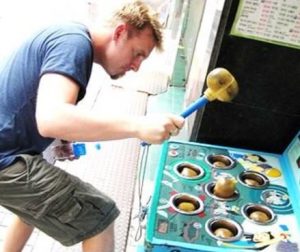
Part of the reason why inpatient rehabilitation has been so successful at reducing hospital readmission rates, in my view, is that we are committed to pharmaceutical whack-a-mole. “Test-driving” patient competency at medication self-administration, in the setting of responsible de-prescribing in a monitored clinical environment, is a highly valuable (though sadly under-reported) benefit of rehabilitation medicine. I hope that my medical and surgical peers will join us physiatrists in combating some of the patient harms that are passively occurring in our healthcare system designed to add, but not subtract, diagnoses and treatments.
 This is a true story. Nothing fancy, just common sense and commitment. A great way to also increase longevity and health. If you are interested click here. The only thing I don’t like in this short report is the idea of skipping breakfast. I would just recommend avoiding greasy animal food and sugary stuff and replace it with some fruits and vegetable. For the rest I would add that her technique is great to increase self esteem. When you make a commitment go for it until you get the wanted result. A great side effect is that you feel great and prepare yourself to the next step whatever you decide it to be.
“If exercise and health is a top priority in your life, you will find the time to exercise.”
So why is it so difficult to start an exercise program and make it a regular habit?
To motivate yourself read this article of the Collegian.
Dr. Megan Hood, a clinical psychologist with an expertise in stress management at Chicago’s Rush University Medical Center, said trying to attain a more stress-free existence is a pretty popular goal around the holidays and the new year.
But staying away from stress is not as simple as making a New Year’s Eve wish.

To know more click here.
Nothing wrong with walking, to the contrary. But there is more than just walking to enjoy a healthy, vibrant body.
The real start is mind building, building a strong character to find the strength to implement the decisions we make.
Time again to start a new year. I wish you to live a great healthy fascinating year.
Time also to make new resolutions. If you want them to last more than a few weeks try this:
To discover a few progressive steps that make sense and can easily be implemented, click here.
