Severe Covid-19 is rare and dying from it exceptionally rare, a study of UK hospital data finds.


Severe Covid-19 is rare and dying from it exceptionally rare, a study of UK hospital data finds.

The metabolic benefits of weight loss in severely obese people are the same whether they lose excess pounds through dieting or surgery, a new study says.
That suggests that weight loss alone, not any effects of weight-loss (bariatric) surgery, is responsible for metabolic improvements such as better blood sugar control and diabetes remission, according to researchers at the Washington University School of Medicine in St. Louis.
“It has been presumed that gastric bypass surgery has therapeutic, metabolic effects that result in better glucose control and even remission of diabetes beyond the effects expected from weight loss alone,” said principal investigator Dr Samuel Klein, director of the university’s Center for Human Nutrition. “But we found gastric bypass surgery improves metabolic function by causing weight loss.”
Similar improvements
He said there were no differences in reduction of diabetes medications or in rates of diabetes remission between surgery patients and those who lose the same amount of weight through dieting alone.
The study included 22 severely obese adults with diabetes who lost 18% of their body weight after gastric bypass surgery or through diet alone. Each group had 11 patients.
After their weight loss, both groups showed similar improvements in metabolism, including lower blood sugar throughout the day; better insulin action in liver, muscle and fat tissue, and reduced need for insulin and other diabetes medications.
The findings were published on 20 August in the New England Journal of Medicine.
Unique therapeutic effects
“It has been suggested that weight loss induced by gastric bypass surgery is different from weight loss induced by a low-calorie diet, based on the fact that certain factors – such as increased bile acid concentrations, decreased branched-chain amino acid concentrations and alterations in the gut microbiome – are different in surgery patients and may be responsible for the unique therapeutic effects of gastric bypass surgery,” Klein said in a university news release.
Researchers found that all of those factors were, in fact, different in the two groups.
“Yet,” Klein pointed out, “those changes were not associated with any physiologically or clinically important metabolic benefits.”
Each year more than 250 000 people in the United States have weight-loss surgery.
Image credit: iStock

There’s to be a new effort to understand how the immune system responds to Covid-19.

Mayo Clinic does not endorse companies or products. Advertising revenue supports our not-for-profit mission.
Advertising & Sponsorship
Check out these best-sellers and special offers on books and newsletters from Mayo Clinic.
The number of new positive test results has risen to 1,522 in the past 24 hours.
I often get asked what I eat as a vegan, so I’ll share one of my favorite breakfasts that I’ve been enjoying lately. I’ve eaten this simple meal for most days of the month.
Previously I would typically have steel cut oatmeal for breakfast, but this month I’m doing a 30-trial of eating grain-free, legume-free, and sugar-free. So I needed to figure out a breakfast that would satisfy those criteria.
This breakfast is also:
Here we go…
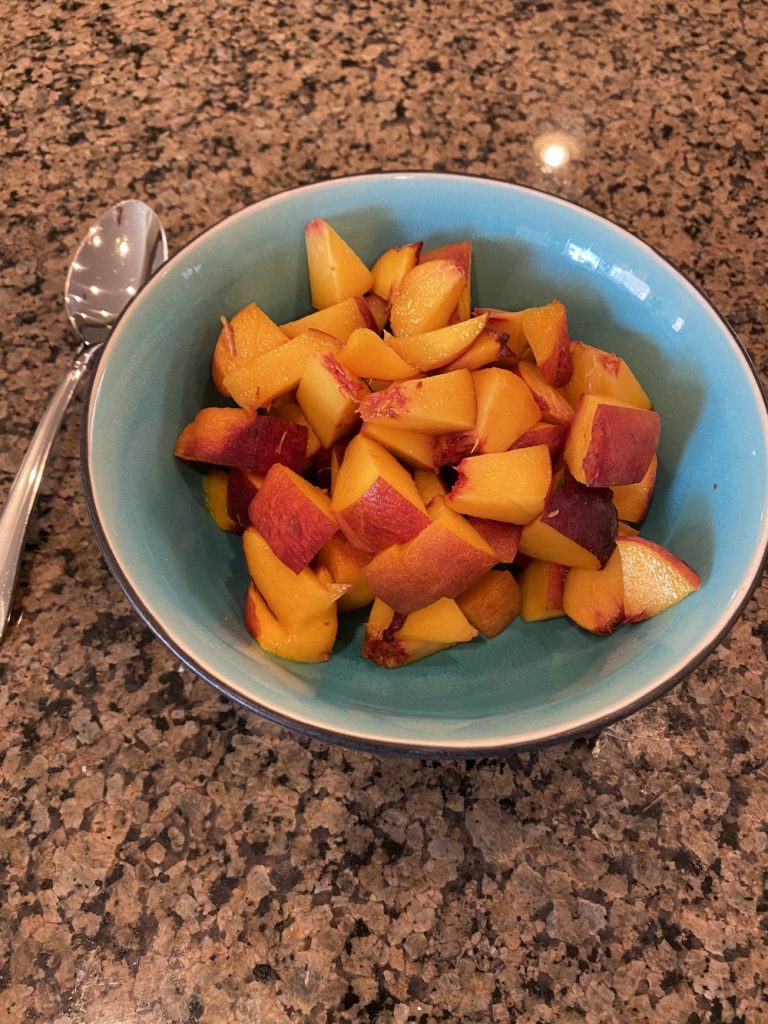
2 sliced peaches (110 calories):
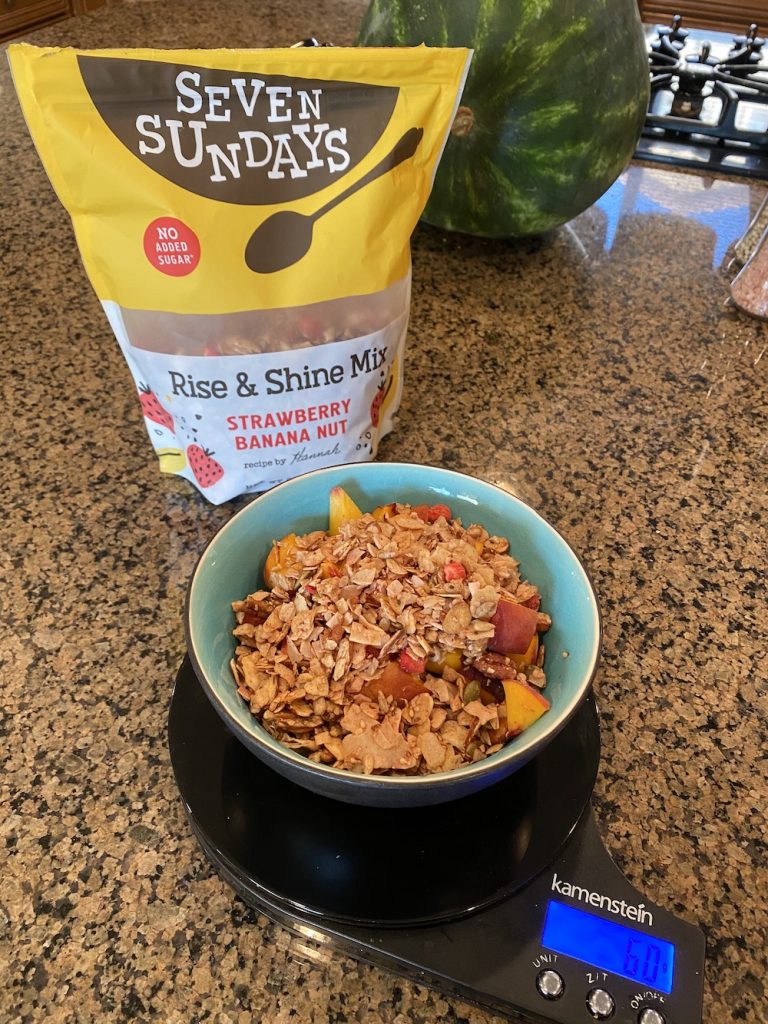
60g grain-free granola (340 calories):
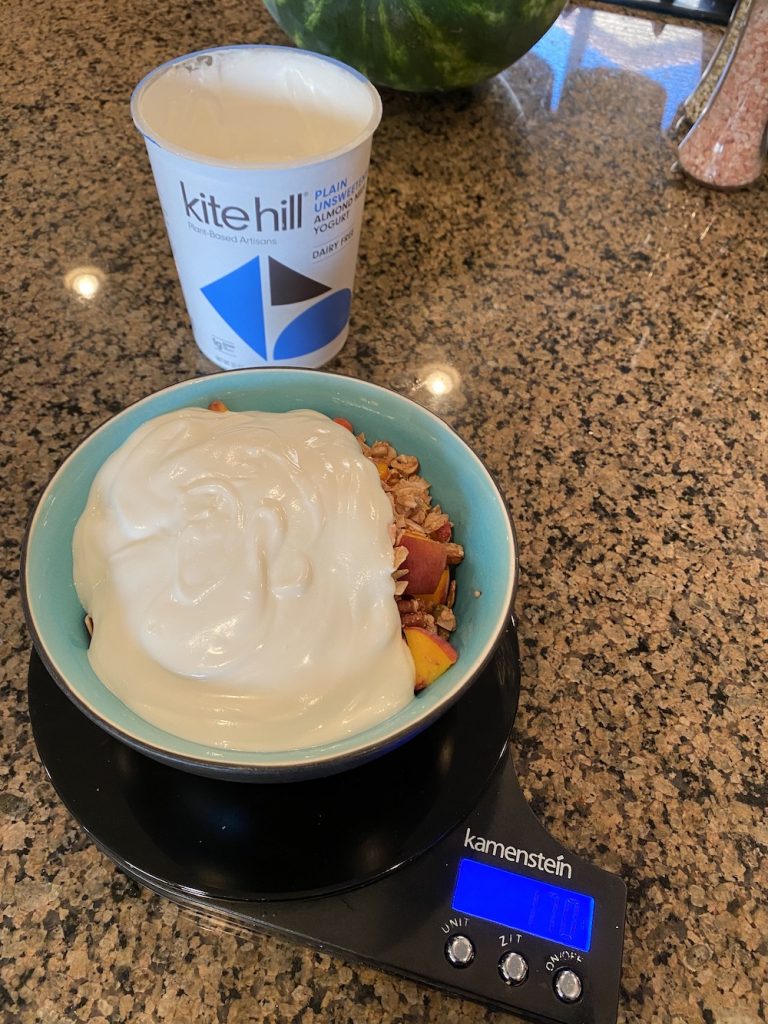
170g unsweetened almond milk yogurt (140 calories):
After mixing:
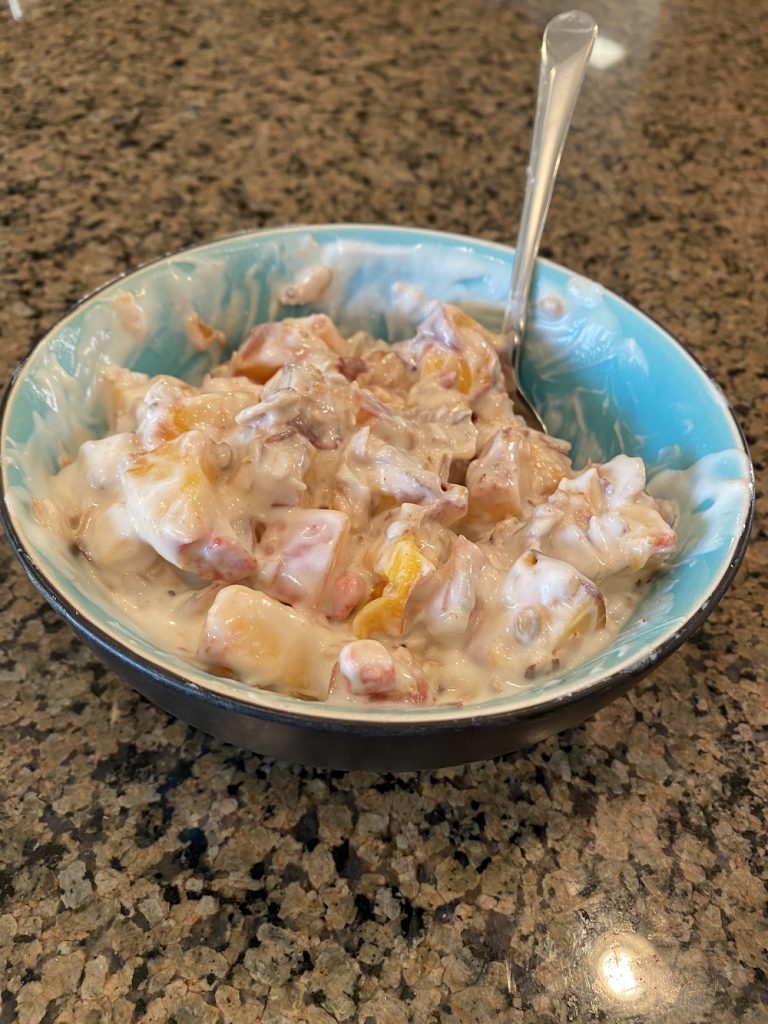
So good! I just love the combo of the juicy softness of the peaches, the creaminess of the yogurt, and the mild crunch of the granola.
Total calories = 110 (peaches) + 340 (granola) + 140 (yogurt) = 590
Here are the granola ingredients:
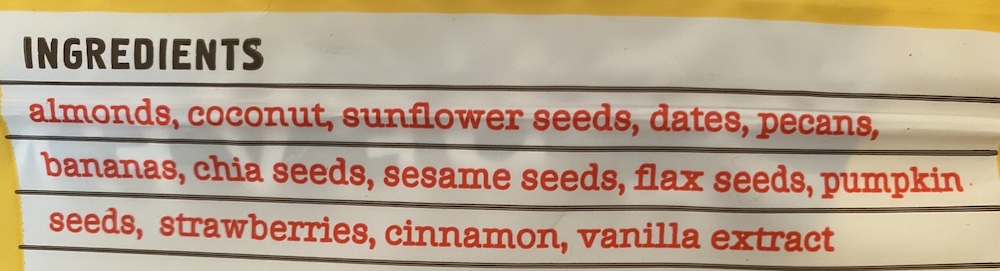
The peaches are from Trader Joe’s (this time, but I usually get them from Costco), the granola from Costco, and the yogurt from Whole Foods. Getting groceries from 3+ different stores is pretty normal for a vegan, and fortunately all of these stores are close to us.
Here are some variations I often make:
If you like coffee, this goes really well with coffee too. I recommend trying it with a cup of Stumptown Founder’s Blend (organic) mixed with 50 ml of coconut milk (no sugar).
I especially like how this meal makes me feel. It digests easily, gives me good energy, and leaves me feeling light and happy. This is a really satisfying breakfast to have after a morning run.
Enjoy!
Nature has worked for eons to perfect surface textures that protect, hide and otherwise help all kinds of creatures survive.
There’s the shiny, light-scattering texture of blue morpho butterfly wings, the rough, drag-reducing texture of shark skin and the sticky, yet water-repelling texture of rose petals.
But how to use those natural textures and properties in the engineered world? Could the water-repelling, ultrahydrophobic texture of a lotus plant somehow be applied to an aircraft wing as an anti-icing device? Previous attempts have involved molding polymers and other soft materials, or etching patterns on hard materials that lacked accuracy and relied on expensive equipment. But what about making inexpensive, molded metallic biostructures?
Iowa State University’s Martin Thuo and the students in his research group have found a way in their pursuit of “frugal science/innovation,” what he describes as “the ability to minimize cost and complexity while providing efficient solutions to better the human conditions.”
For this project, they’re taking their previous development of liquid metal particles and using them to make perfectly molded metallic versions of natural surfaces, including a rose petal. They can do it without heat or pressure, and without damaging a petal.
They describe the technology they’re calling BIOMAP in a paper recently published online by Angewandte Chemie, a journal of the German Chemical Society. Thuo, an associate professor of materials science and engineering with a courtesy appointment in electrical and computer engineering, is the corresponding author. Co-authors are all Iowa State students in materials science and engineering: Julia Chang, Andrew Martin and Chuanshen Du, doctoral students; and Alana Pauls, an undergraduate.
Iowa State supported the project with intellectual property royalties generated by Thuo.
“This project comes from an observation that nature has a lot of beautiful things it does,” Thuo said. “The lotus plant, for example, lives in water but doesn’t get wet. We like those structures, but we’ve only been able to mimic them with soft materials, we wanted to use metal.”
Key to the technology are microscale particles of undercooled liquid metal, originally developed for heat-free soldering. The particles are created when tiny droplets of metal (in this case Field’s metal, an alloy of bismuth, indium and tin), are exposed to oxygen and coated with an oxidation layer, trapping the metal inside in a liquid state, even at room temperature.
The BIOMAP process uses particles of varying sizes, all of them just a few millionths of a meter in diameter. The particles are applied to a surface, covering it and form-fitting all the crevices, gaps and patterns through the autonomous processes of self-filtration, capillary pressure and evaporation.
A chemical trigger joins and solidifies the particles to each other and not to the surface. That allows solid metallic replicas to be lifted off, creating a negative relief of the surface texture. Positive reliefs can be made by using the inverse replica to create a mold and then repeating the BIOMAP process.
“You lift it off, it looks exactly the same,” Thuo said, noting the engineers could identify different cultivars or roses through subtle differences in the metallic replicas of their textures.
Importantly, the replicas kept the physical properties of the surfaces, just like in elastomer-based soft lithography.
“The metal structure maintains those ultrahydrophobic properties — exactly like a lotus plant or a rose petal,” Thuo said. “Put a droplet of water on a metal rose petal, and the droplet sticks, but on a metal lotus leaf it just flows off.”
Those properties could be applied to airplane wings for better de-icing or to improve heat transfer in air conditioning systems, Thuo said.
That’s how a little frugal innovation “can mold the delicate structures of a rose petal into a solid metal structure,” Thuo said. “This is a method that we hope will lead to new approaches of making metallic surfaces that are hydrophobic based on the structure and not the coatings on the metal.”
A new study finds that Earth’s water may have come from materials that were present in the inner solar system at the time the planet formed — instead of far-reaching comets or asteroids delivering such water. The findings published Aug. 28 in Science suggest that Earth may have always been wet.
Researchers from the Centre de Recherches Petrographiques et Geochimiques (CRPG, CNRS/Universite de Lorraine) in Nancy, France, including one who is now a postdoctoral fellow at Washington University in St. Louis, determined that a type of meteorite called an enstatite chondrite contains sufficient hydrogen to deliver at least three times the amount of water contained in the Earth’s oceans, and probably much more.
Enstatite chondrites are entirely composed of material from the inner solar system — essentially the same stuff that made up the Earth originally.
“Our discovery shows that the Earth’s building blocks might have significantly contributed to the Earth’s water,” said lead author Laurette Piani, a researcher at CPRG. “Hydrogen-bearing material was present in the inner solar system at the time of the rocky planet formation, even though the temperatures were too high for water to condense.”
The findings from this study are surprising because the Earth’s building blocks are often presumed to be dry. They come from inner zones of the solar system where temperatures would have been too high for water to condense and come together with other solids during planet formation.
The meteorites provide a clue that water didn’t have to come from far away.
“The most interesting part of the discovery for me is that enstatite chondrites, which were believed to be almost ‘dry,’ contain an unexpectedly high abundance of water,” said Lionel Vacher, a postdoctoral researcher in physics in Arts & Sciences at Washington University in St. Louis.
Vacher prepared some of the enstatite chondrites in this study for water analysis while he was completing his PhD at Universite de Lorraine. At Washington University, Vacher is working on understanding the composition of water in other types of meteorites.
Enstatite chondrites are rare, making up only about 2 percent of known meteorites in collections.
But their isotopic similarity to Earth make them particularly compelling. Enstatite chondrites have similar oxygen, titanium and calcium isotopes as Earth, and this study showed that their hydrogen and nitrogen isotopes are similar to Earth’s, too. In the study of extraterrestrial materials, the abundances of an element’s isotopes are used as a distinctive signature to identify where that element originated.
“If enstatite chondrites were effectively the building blocks of our planet — as strongly suggested by their similar isotopic compositions — this result implies that these types of chondrites supplied enough water to Earth to explain the origin of Earth’s water, which is amazing!” Vacher said.
The paper also proposes that a large amount of the atmospheric nitrogen — the most abundant component of the Earth’s atmosphere — could have come from the enstatite chondrites.
“Only a few pristine enstatite chondrites exist: ones that were not altered on their asteroid nor on Earth,” Piani said. “In our study we have carefully selected the enstatite chondrite meteorites and applied a special analytical procedure to avoid being biased by the input of terrestrial water.”
Coupling two analytical techniques — conventional mass spectrometry and secondary ion mass spectrometry (SIMS) — allowed researchers to precisely measure the content and composition of the small amounts of water in the meteorites.
Prior to this study, “it was commonly assumed that these chondrites formed close to the sun,” Piani said. “Enstatite chondrites were thus commonly considered ‘dry,’ and this frequently reasserted assumption has probably prevented any exhaustive analyses to be done for hydrogen.”
Story Source:
Materials provided by Washington University in St. Louis. Original written by Talia Ogliore. Note: Content may be edited for style and length.
Although helminth infections — including tapeworms and roundworms — are among the world’s top neglected diseases, they are no longer endemic in Europe. However, researchers reporting in PLOS Neglected Tropical Diseases report that these infections were common in Medieval Europe, according to grave samples analyzed from across the continent.
Helminths are parasitic worms and they infect an estimated 1.5 billion people worldwide. The worms are transmitted through eggs that are present in human feces and can contaminate soil and water. While some infections cause only mild symptoms, others are associated with chronic malnutrition and physical impairment, particularly in children.
In the new work, Adrian Smith of the University of Oxford, UK, and colleagues analyzed 589 grave samples from 7 European sites dated between 680 and 1700 CE. Samples were taken from the pelvises of skeletons. Data associated with the sites allowed them to assess the influence of age, sex and community size on helminth infection rates.
Two soil transmitted nematodes — Ascaris spp. and Trichuris trichiura — were identified at all locations, and two food derived cestodes — Diphyllobothrium latum and Taenia spp. — were found at 4 sites. No helminths were found in any control samples. The rates of nematode infection in the medieval population were estimated at 8.5% (range 1.5%-25.6%) for T. trichiura and 25.1% (range 9.3%-42.9%) for Ascaris, similar rates to those seen in modern endemically infected populations. There were no differences in infection rates by sex or community population size, but infection rates were most common among children.
“Since the prevalence of medieval soil transmitted helminth infections mirror those in modern endemic countries, the factors affecting helminth decline in Europe may also inform modern intervention campaigns,” the researchers say. “The parasites in past communities can tell us a lot about living conditions including hygiene, sanitation and even culinary practices.”
Story Source:
Materials provided by PLOS. Note: Content may be edited for style and length.
Guidance has changed but the Welsh government says that reflects low infection rates.
