King Charles Calls For ‘Universal’ Values To Be Protected Amid Wars In Gaza And Ukraine

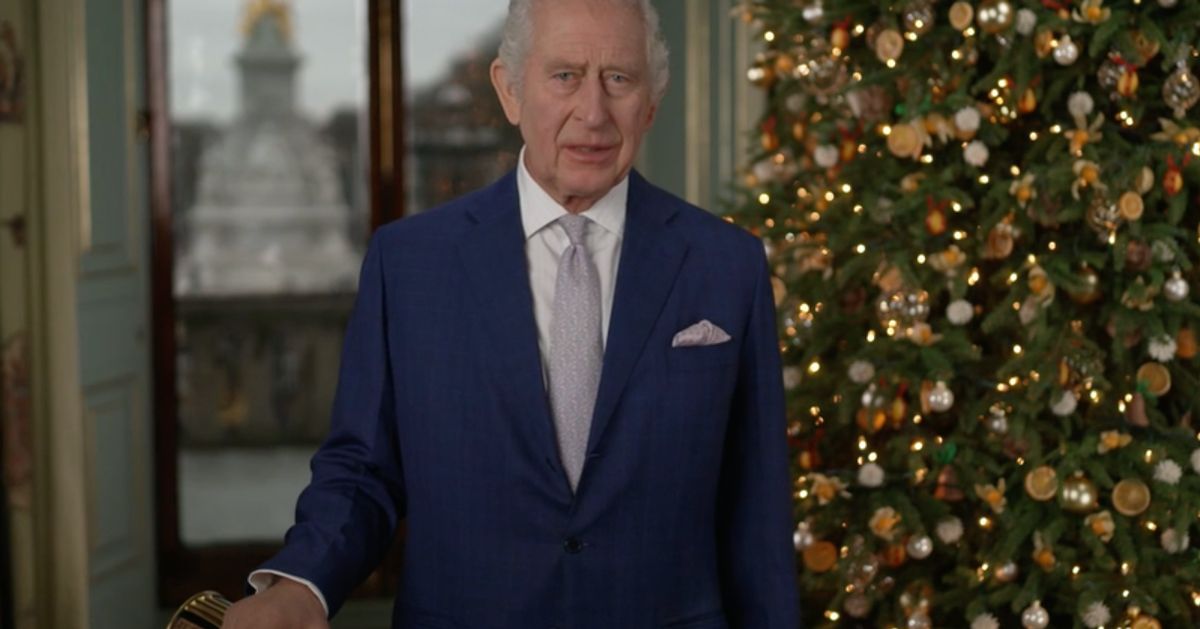
King Charles has used his Christmas message to call on people to imagine themselves in the “shoes of our neighbours” at a time of “increasingly tragic conflict around the world”.

In the speech delivered on Monday afternoon, amid the bloody wars in Gaza and Ukraine, the King said people should “love our neighbour as ourselves”.

The King – a committed environmentalist – also said it was the duty of people “all faiths” to protect the planet.

In his second Christmas message since ascending to the throne, the King said: “At a time of increasingly tragic conflict around the world, I pray that we can also do all in our power to protect each other.

“The words of Jesus seem more than ever relevant: ‘Do to others as you would have them do to you.’

“Such values are universal, drawing together our Abrahamic family of religions, and other belief systems, across the Commonwealth and wider world.

“They remind us to imagine ourselves in the shoes of our neighbours, and to seek their good as we would our own.”

It came following reports Egypt has put forward a plan to end the Israel-Hamas war with a cease-fire, a phased hostage release and the creation of a Palestinian government.

Israeli airstrikes have been heavily pounding central and southern Gaza, crushing buildings on families sheltering inside.

In the Maghazi refugee camp, rescue workers pulled dozens more bodies from the wreckage hours after a strike levelled a three-story building and shattered others nearby.

On the environment, the King said: “Service to others is but one way of honouring the whole of creation which, after all, is a manifestation of the divine. This is a belief shared by all religions.

“To care for this creation is a responsibility owned by people of all faiths and of none. We care for the Earth for the sake of our children’s children.

“During my lifetime I have been so pleased to see a growing awareness of how we must protect the Earth and our natural world as the one home which we all share.”

Share Button

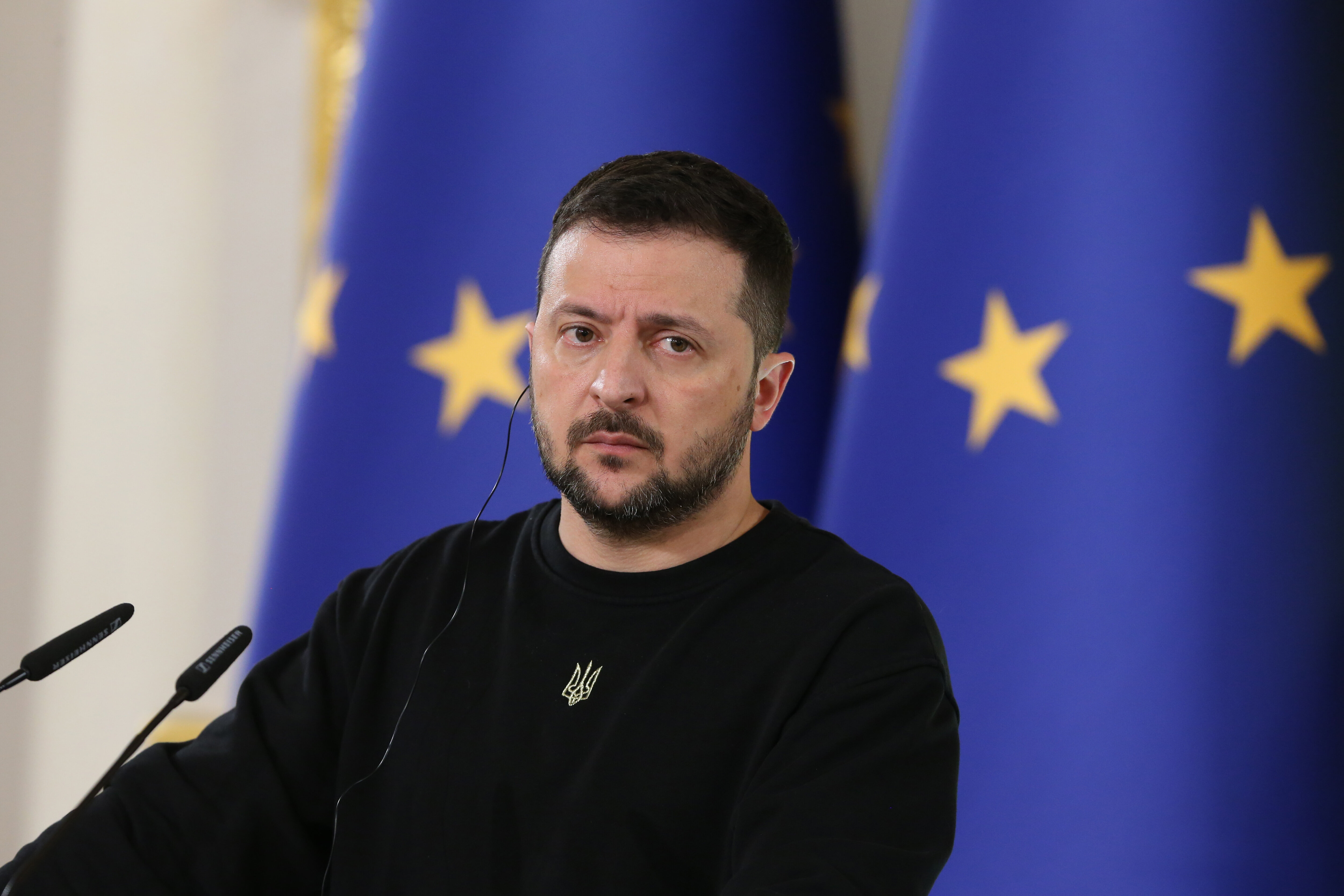
‘A Victory’: Volodymyr Zelenskyy Hails EU’s Decision To Start Ukraine Accession Talks

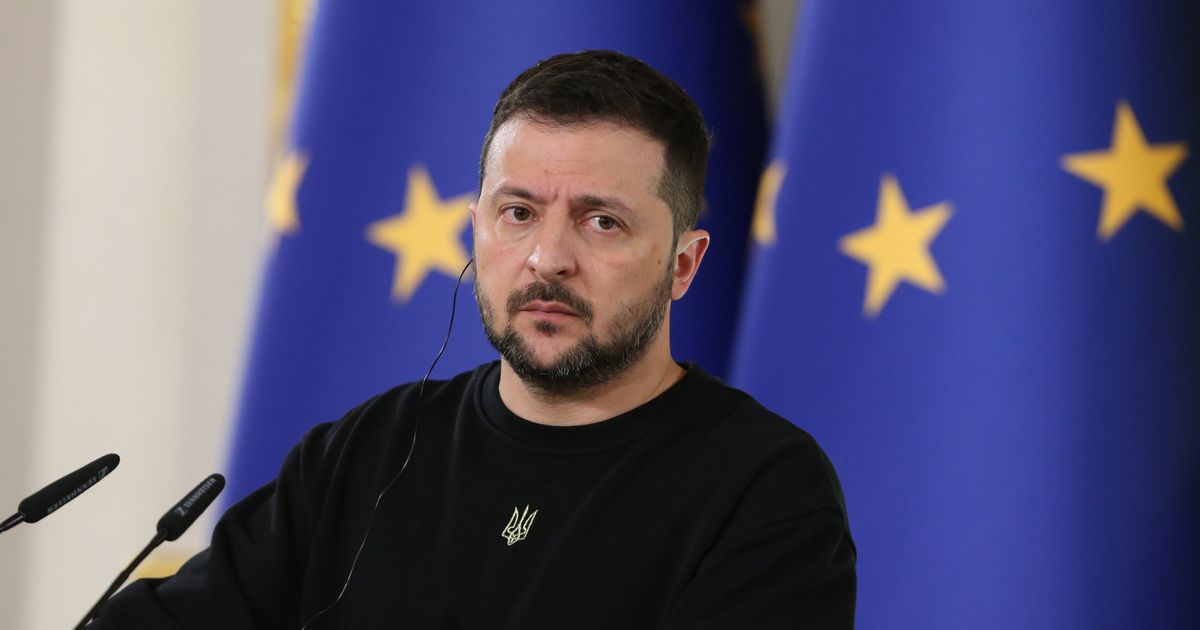
Volodymyr Zelenskyy has hailed the decision by the European Union for Ukraine to begin accession talks to become a member of the bloc.

Charles Michel, president of the European Council, announced the move on X (formerly Twitter).

Responding on the same platform, the Ukrainian president said: “This is a victory for Ukraine. A victory for all of Europe. A victory that motivates, inspires, and strengthens.”

Share Button

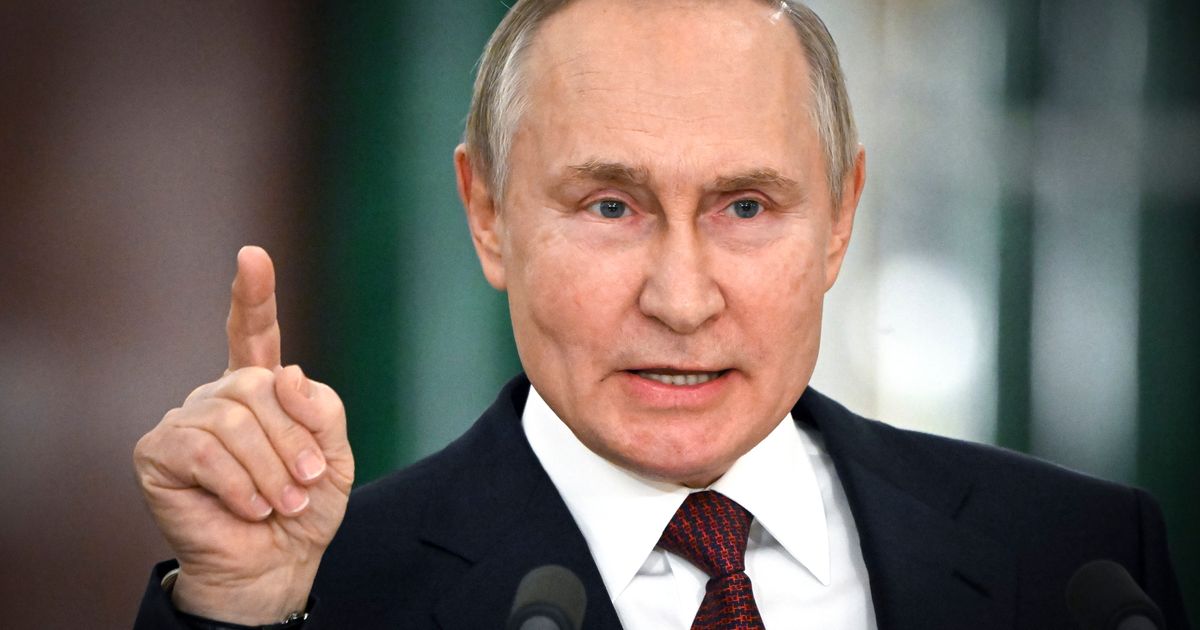
Putin Appears To Forget He Started The ‘Tragedy’ Of War In Ukraine In Bizarre G20 Appearance

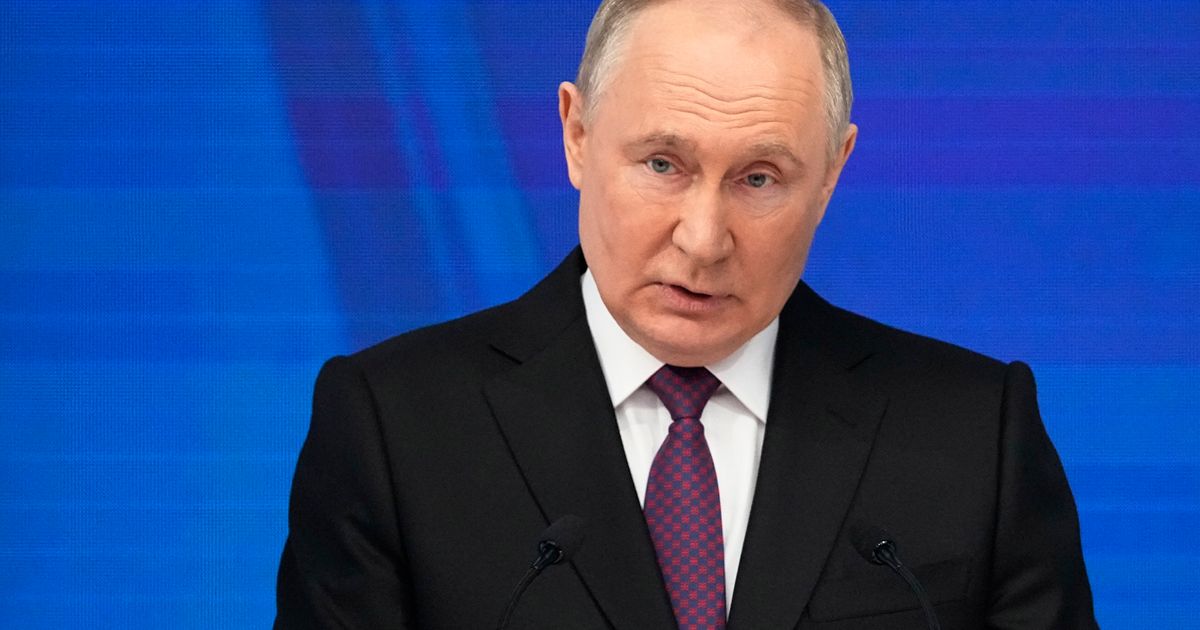
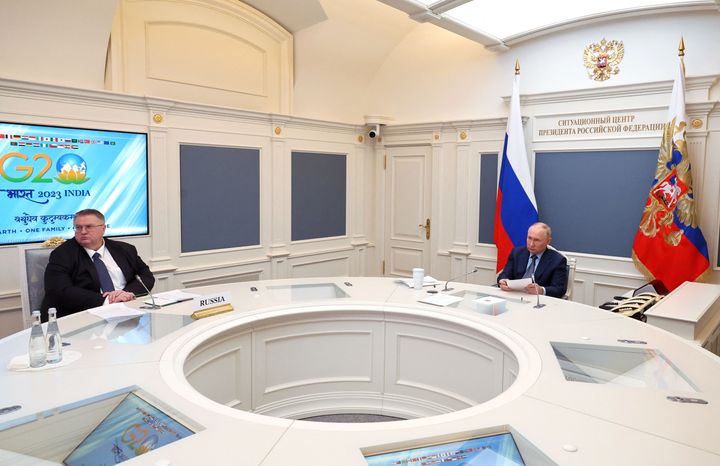
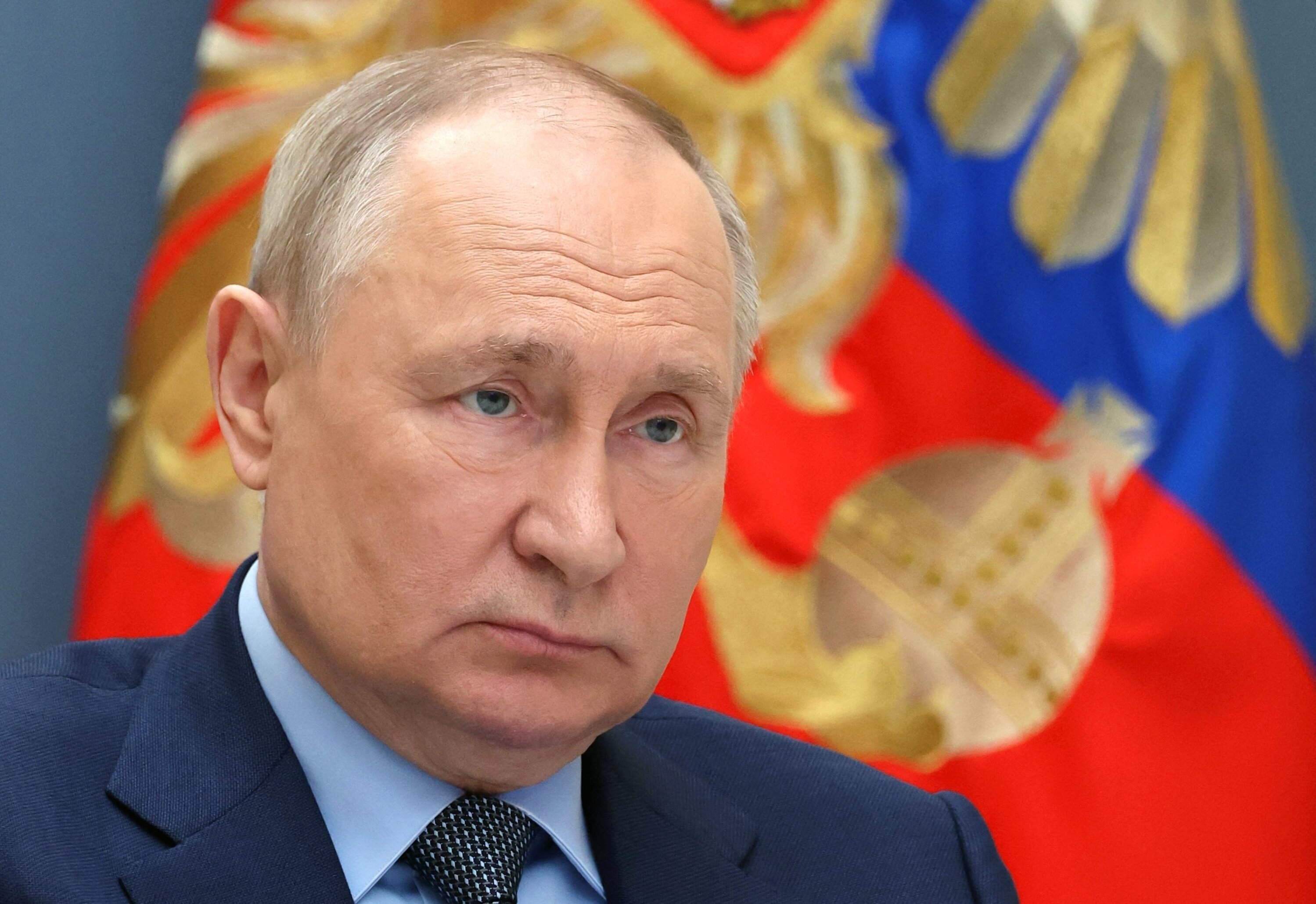
Vladimir Putin seemed to forget he initiated the war in Ukraine during his surprise appearance at a virtual G20 summit on Wednesday.

In his first address to the leaders of the world’s largest economies since the Ukraine-Russia conflict began in 2022, the Russian president called for leaders to “stop the tragedy” occurring in the neighbouring country.

After some leaders said they were shocked by the Russian “aggression” in Ukraine, Putin replied: “Yes, of course, military actions are always a tragedy.

“And of course, we should think about how to stop this tragedy. By the way, Russia has never refused peace talks with Ukraine.”

Why was this comment so surprising?

Putin’s remarks omit his own role in starting the conflict.

Back in February 2022, after weeks of growing aggression and building up troops near the Ukrainian border, the Russian president ordered his forces into Ukraine.

He claimed it was important to “demilitarise” the country, and made baseless neo-Nazi allegations about the Ukrainian government to justify the invasion.

It was part of what he dubbed the “special military operation” – he has only referred to the 21-month long fight as a “war” sparingly.

So it was also pretty surprising when Putin used the word “war” to describe the conflict in Ukraine during his G20 meeting.

He said: “I understand that this war, and the death of people, cannot but shock.”

Who did Putin blame for the war, then?

Putin pivoted the G20′s attention to pre-war tensions, by claiming Ukraine had been persecuting people in the east of its country.

This is a reference to the separatist movement which started to gain traction in eastern Ukraine after Ukraine’s 2013 Maidan Revolution and Putin annexed Crimea in 2014.

According to the UN, approximately 14,000 people were killed in the subsequent conflict as Russian-backed separatists fought Ukrainian forces.

Putin also pivoted the conversation towards the ongoing Israel-Hamas war, saying: “And the extermination of the civilian population in Palestine, in the Gaza Strip today, is not shocking?”

The Russian president has positioned himself as a potential mediator in the Middle East conflict since it broke out last month.

This pool photograph distributed by Russian state agency Sputnik shows Russia's President Vladimir Putin taking part in a virtual G20 leaders' summit in Moscow on November 22, 2023.
This pool photograph distributed by Russian state agency Sputnik shows Russia’s President Vladimir Putin taking part in a virtual G20 leaders’ summit in Moscow on November 22, 2023.

MIKHAIL KLIMENTYEV via Getty Images

What else did Putin’s comments reveal?

Putin’s remarks were correct in that there really is a tragedy still unfolding in Ukraine – it’s Europe’s deadliest conflict since World War 2.

The UN Human Rights Office said on Tuesday that more than 10,000 civilians have been killed in Ukraine since Russia invaded, although the real toll is expected to be “significantly higher”.

According to Reuters, Danielle Bell from the head of the UN monitoring mission, said the “severe human cost” in Ukraine right now is “painful to fathom.”

Russia has been accused of targeting civilian structures in Ukraine too, although Moscow has denied this.

Ukraine has also only agreed to peace negotiations if Russia agrees to hand back all of the Ukrainian land (one fifth of its total land mass) it has illegally annexed since 2014 – which includes the peninsula of Crimea.

But Putin claims this area now belongs to Russia.

He also broke international law by illegally annexing four other regions in eastern Ukraine in September 2022.

Putin’s words also come after a senior Russian official said Moscow could not co-exist with the current government in Ukraine.

Why was Putin’s appearance at the virtual summit a surprise?

The Russian leader has barely left Russia since the the International Criminal Court issued an arrest warrant for him over the illegal deportation of Ukrainian children.

He did visit Iran back in July and ventured to Belarus last December, but has steered clear of any NATO country since February 2022 – so his virtual appearance at the summit was a big deal.

He sent his foreign minister Sergey Lavrov to the last two G20 meetings in India and Indonesia, and has not attended a summit meeting in person since 2019.

Share Button

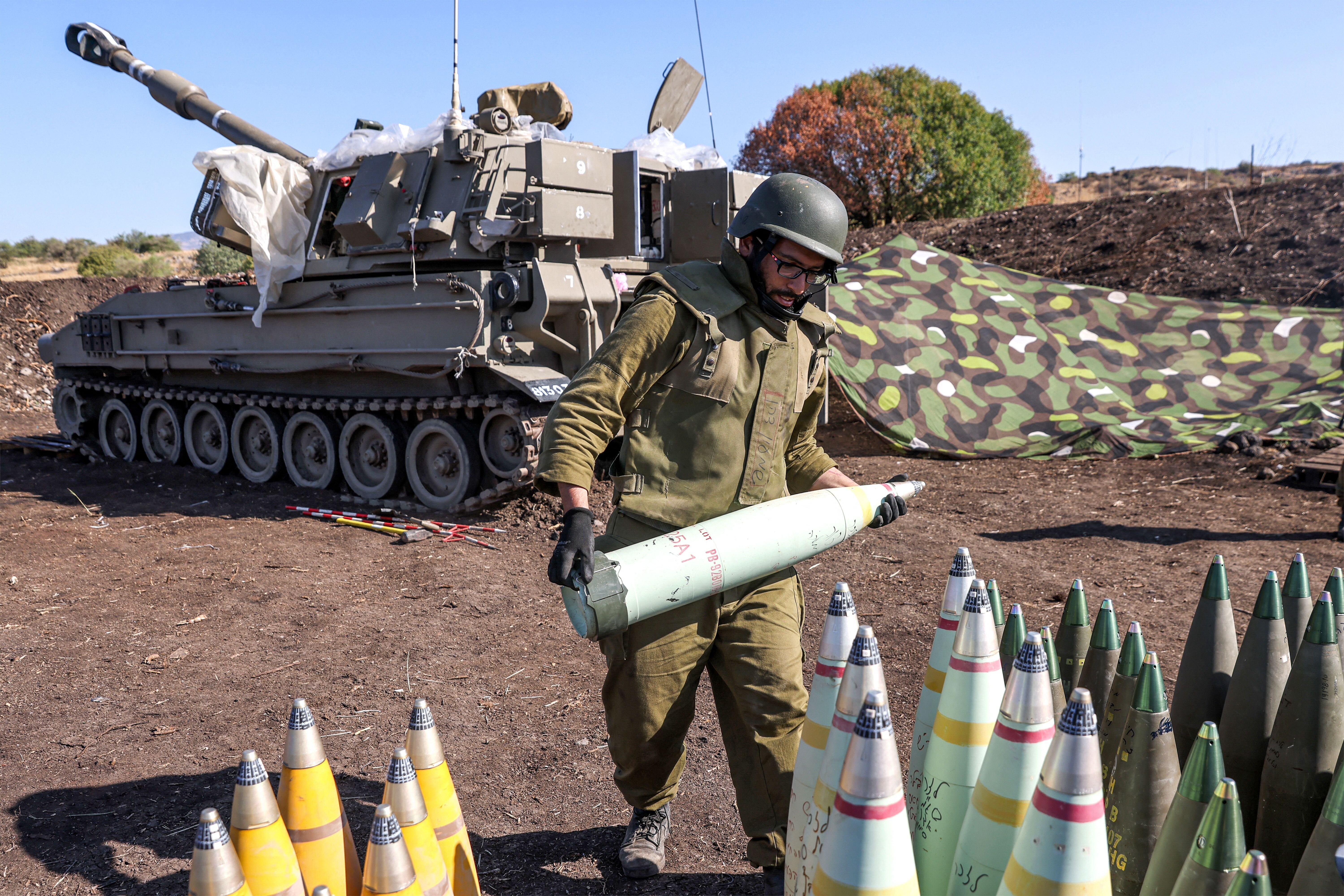
US Confirms It Has Sent Artillery Previously Meant For Ukraine To Israel

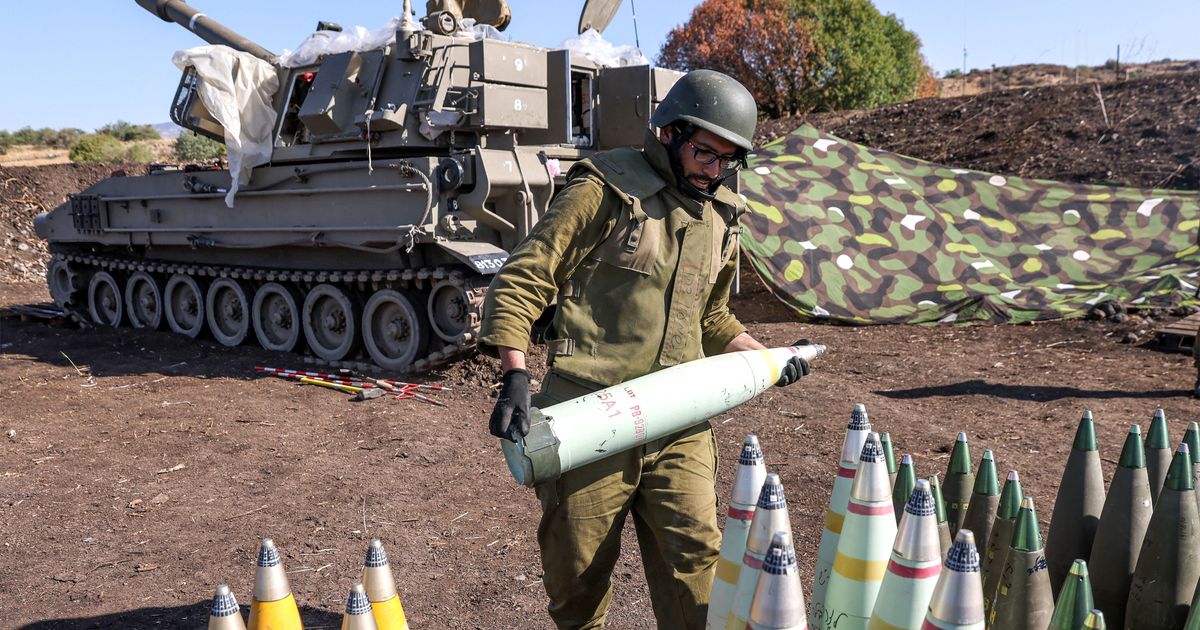
The US has confirmed that shells originally intended to aid Ukraine in its war against Russia have now been sent to Israel amid its conflict with the Palestinian militants, Hamas.

Reports that tens of thousands of artillery shells – specifically 155mm projectiles – previously earmarked for Ukraine, were being redirected to Israel started circulating last week.

And on Monday, a US senior defence official confirmed some had indeed been re-routed.

The unnamed official told journalists that “prior to the October 7 Hamas terrorist attack, some 155[mm shells] had been withdrawn from the war reserve stockpile in Israel, to replenish US stocks in Europe”.

The New York Times has previously reported that the US had been moving munitions, potentially up to 300,000 shells, from Israeli storage to Ukraine since 2022.

But, as the official noted, there’s now been a U-turn in the Pentagon, following the outbreak of war in the Middle East.

They said: “Much of that has been redirected and provided to the Israel Defence Forces for their use.”

The Pentagon had been keeping munitions in Israel as an emergency in case of war in the region or as a resource for other US allies.

The US does not formally need Israel’s consent to move such items, but local officials confirmed they had it anyway – from then-prime minister Yair Lapid’s –when looking to transport the munitions to Ukraine.

As Reuters noted in January, if such transfers had happened under current PM Benjamin Netanyahu’s watch, it may have stretched his budding relationship with Russia.

Now, munitions have been redirected back to Israel – even though Ukraine still has more than 1,000km of active frontline to fight.

Ukraine’s minister for strategic industries, Oleksandr Kamyshin, told POLITICO on Monday that the Israel-Hamas war showed the West needs to increase its arms production.

“The free world should be producing enough to protect itself. That’s why we have to produce more and better weapons to stay safe,” Kamyshin said.

Back in the US media briefing on Monday, journalists asked the Pentagon representative why weapons were going to Israel, even though the White House has regularly emphasised how much munition Ukraine needs.

The official said the US is “assessing US stocks globally and what can be made readily available to the needs of Israel as well as Ukraine”, before adding: “Also the United States can walk and chew gum at the same time.

“So we’re going to continue to ensure that Ukraine has what it needs to defend its territory. And at the same time we’re ensuring that Israel has what it needs. Two very different operational environments with different levels of need and consultation. And we’re continuing to prioritise both.”

The change follows a domestic split in US politics about just how much funding and weaponry Washington DC should continue to send to Kyiv more than 18 months after Russia first invaded.

As Nikolay Kozhanov, a consulting fellow at the Russia and Eurasia Programme of think tank Chatham House told HuffPost UK, the conflict in the Middle East works to Russia’s advantage as a means to distract the West from the Ukraine war.

The Kremlin spokesperson Dmitry Peskov claimed in his own press briefing on Tuesday that the West’s ability to keep supplying Ukraine was limited, according to Sky News.

It’s worth remembering that are some complicated international politics at play between the two wars, too.

Since the Hamas massacre on October 7 and the following war between Gaza and Israel, Ukraine has sided with Tel Aviv.

Meanwhile, Russia has reiterated its support for a Palestinian state, after years of trying to build a friendship with Israel. Moscow is openly calling for a ceasefire, too.

The Israel-Hamas war is threatening to spill into a regional conflict – a fight which began in the Gaza Strip, has already led to many deaths in West Bank – and the war in Ukraine is expected to continue for some time yet.

Share Button

Ukraine’s Activity In 1 Occupied Territory Has Russian Sources ‘Concerned’

Russian sources are “concerned” over Ukraine’s activity in the occupied region of Kherson, according to a US think-tank.

The Ukrainian oblast of Kherson was illegally annexed by Moscow in September 2022 – but a flurry of military activity in the region is causing a stir as Kyiv fights to retrieve the land.

Last weekend, Russia shelled Kherson alone more than 200 times, according to the regional governor Oleksandr Prokudin.

Ukrainian president Volodymyr Zelenskyy also confirmed that these attacks had disrupted the region’s electricity and water supply.


But Ukrainian forces are now said to be crossing the region’s part of the Dnipro river – where one bank is controlled by Ukraine, the other by Russia – according to a prominent Russian military blogger named as “Rybar” by Sky News.

In its most recent update, the think tank Institute for the Study of War (ISW) explained that these worries are becoming more widespread.

It said: “Russian sources expressed pronounced concern about ongoing Ukrainian activity on the east bank of Kherson Oblast and framed these activities as part of a potential larger Ukrainian operation.”

Ukraine has previously struggled to reclaim any of this area.

Rybar claimed on Tuesday night that Ukrainian formations near the destroyed Antonisky bridge had moved forwards, and occupied a village.

Increasing its presence on the other side of the river would enable Kyiv to send troops, tanks and artillery across, and apply more pressure to the Russian forces on that long frontline.

The Russian ministry of defence has acknowledged Ukrainian operations too, according to ISW, claiming they stopped four Ukrainian sabotage and reconnaissance groups near Kherson City.

ISW also reported: “The milblogger reacted to the reported [Ukrainian] assault on the night of October 17 to 18 by accusing the Russian MoD of not taking the threat of a Ukrainian crossing seriously.”

In another indication that Ukraine’s progress in Kherson is troubling Moscow, the Russian president Vladimir Putin recently described Ukrainian activity in Kherson as the “next counteroffensive”.

But, as ISW noted, the Russian president has also “continued his typical rhetorical line by painting all Ukrainian offensive operations as a failure”.

The think tank has a policy of not forecasting Ukrainian actions though, so it did not speculate over the possibility that Kyiv will launch an offensive over the Dnipro river any time soon.

Still, ISW added: “It is noteworthy that prominent and generally reliable Russian sources are discussing Ukrainian activities on the east bank as occurring at a larger scale than previously documented.”

Share Button

Russian Defence Spending To Surge As Kremlin Prepares For ‘Multiple Years’ Of War In Ukraine

Russia is set to dramatically increase the amount of money it spends on defence as the country prepares for “multiple years” of war in Ukraine, according UK intelligence.

The Ministry of Defence’s latest intelligence update on the war said documents apparently leaked from the Russian finance ministry shows its military spending will reach 30% of all public expenditure in 2024.

“The ministry proposes a defence budget of 10.8 trillion roubles (£91.7 billion), equivalent to approximately 6 per cent of GDP and a 68 per cent increase over 2023,” the MoD said.

To put that in context, the UK spends around 2% of its GDP on defence. In 2021/22, that worked out at around £45bn.

The MoD said Russia’s military spending splurge will come “at the expense of the wider economy”.

“Full details on Russian defence spending are always classified, but these figures suggests that Russia is preparing for multiple further years of fighting in Ukraine,” they said.

“This follows public comments by Defence Minister Sergei Shoigu on 27 September 2023, suggesting he was prepared for the conflict to continue into 2025.”

Russia invaded Ukraine in February 2022 in a “special military operation” that Vladimir Putin believed would be over in days.

Share Button

Senate Clears Bill To Prevent Government Shutdown

With hours left to go on the eve of a government shutdown, Congress passed a stopgap bill to keep federal agencies funded and workers at their desks through mid-November.

The price? About $6 billion in aid to help Ukraine defend itself against Russian invaders and new worries Russian dictator Vladimir Putin will be encouraged to continue the full-scale invasion he started in February 2022.

On Saturday afternoon, the House voted 335 to 91 for a temporary funding bill to keep the government operating through Nov. 16 and also fund disaster assistance. Two hundred and nine Democrats joined 126 Republicans in voting for the package.

Later that night, the Senate passed it 88 to 9, though only after some last-minute public misgivings by a few Democratic senators, including a brief hold on floor action by Democratic Senator Michael Bennet over the Ukraine aid.

The bill will now go to the White House for President Joe Biden’s signature.

The deal will avoid the worst case politically that both parties feared ― being blamed for the first government shutdown since 2019 ― but leaves several issues unaddressed, like the future of House Speaker Kevin McCarthy.

Putting the bill on the floor was a stark turnaround for McCarthy, who has spent all year trying to placate far-right members of his conference — something that has proved almost impossible. On Friday, he moved a bill that would have kept the government open with severe spending cuts and 21 hard-line Republicans still voted no, dooming it.

Republicans such as Representative Matt Gaetz have said they would force a no-confidence vote in McCarthy if the House passed a funding bill with Democratic support.

But pulling his party back from the brink of a shutdown may have boosted his stock with the more moderate wing of his party. “If we have folks in the conference that don’t like his leadership, that want to put a motion to vacate forward, that’s on them to do that and explain to the American people why,” said Republican Representative Mike Lawler.

And McCarthy remained defiant.

“If somebody wants to make a motion against me, bring it. There has to be an adult in the room,” he said.

Another open question is what happens when the stopgap bill expires. While lawmakers have a few more weeks to work on spending bills, it’s unclear that they will get them finished by then. And the near-shutdown this time could merely be a dress rehearsal for an actual one later in the year.

Democrats initially balked at the bill, saying they had not been given enough time to read its 71 pages. But faced with the political reality that they could be blamed for a shutdown by insisting on aid to war-torn Ukraine, many decided to embrace the bill.

Representative Rosa DeLauro, the top Democrat on the Appropriations Committee, however, read a letter from Mike McCord, the Pentagon’s undersecretary for defense, who warned that European allies would be unlikely to keep up their support for Ukraine without U.S. leadership.

“From the very beginning of the war, Putin has bet that America is weak, unreliable, and that his desire to rebuild the Soviet Empire was greater than our will to oppose him,” said Scott Cullinane, director of government affairs at Razom for Ukraine, a pro-Ukraine advocacy group. “Our unwillingness to give Ukraine the weapons it needs to win and Congress’ delay in funding threaten to prove Putin right.”

McCarthy has said there is enough Ukraine aid still in the pipeline for another 45 days. Aid could be attached to another bill later on, but would probably have to be more than the $6 billion that was at issue here and it’s unclear what bill it would have to be attached to in order to pass.

Representative Jim McGovern said the stopgap was a win for Democrats, especially compared with what House Republicans had been proposing earlier in the week. He also said he thought Ukraine aid would eventually be passed.

“Talk to me in a few weeks,” he said.

“We have to deal with these issues again in 45 days but, for today, I’ve got a little bounce in my step.”

CORRECTION: An earlier version of this story incorrectly included the word “all” when referring to the 126 Republicans who voted for the House bill. There are currently 221 Republicans in the House.

Share Button

Ukraine Says It Killed A Russian Admiral, But Russian Media Says He’s Alive. Experts Don’t Know What To Believe

Russian media just put out more supposed evidence that an admiral Ukraine claims to have killed is actually alive – but experts still don’t know what to believe.

On Monday, Ukraine alleged that Viktor Sokolov, the commander of Russia’s Black Sea Fleet, died along with 33 other officers following a missile strike on Moscow’s naval headquarters in Crimea last Friday.

If true, it would deal a significant blow to the Russian Navy, on par only with Ukraine’s successful sinking of the flagship of Russia’s Black Sea Fleet last year.

But, on Tuesday, Russia’s defence ministry released a video on Telegram – supposedly filmed the day before – which apparently showed the admiral remotely attending a large military conference with the defence minister.

While the BBC used facial recognition software to confirm the man in the clip was indeed Sokolov, the broadcasters were not able to pinpoint when it was filmed.

The clip prompted Ukraine’s military to clarify their statement, saying: “According to available sources, the commander of the Black Sea Fleet is among the dead. Many have not yet been identified due to the fragmentation of body parts.”

However, it’s also not clear how Kyiv would be able to look at the area it struck because it took place in Russian occupied land.

The following day, the Russian state media started to issue more unverified videos of the admiral – and this time, he could be heard speaking to journalists.

An undated clip posted on the Russian state-run TV network, Zvezda, seemed to show Sokolov saying the Black Sea Fleet has been “fulfilling goals that are set by command”.

Another video posted by a local news outlet showed Sokolov responding to a question about the impacts about a Ukrainian strike, saying: “What happened to us? Nothing happened to us. Life goes on.”

This turn of events – the latest in the ongoing information war between the two countries – have left experts quite bewildered.

The US think tank, the Institute for the Study of War, said in its daily update that it is “unprepared at this time to make an assessment about the authenticity of the footage or the date of the filming”.

It added: “The Kremlin and Russian Ministry of Defence have been notably silent on the matter and have not directly confirmed that Sokolov is alive.”

Russia also has a reputation for obscuring narratives which might cause embarrassment for the Kremlin.

While Sokolov’s fate is still unknown, clips on social media suggest the attack last Friday did take place in one form or another.

Russia also claimed at the time that it had shot down five incoming missiles and only one serviceman had died in the incident, though it admitted its headquarters were damaged.

Russia’s foreign ministry spokesperson, Maria Zakharova, said at a briefing that the West were to blame for the strike.

She said: “There is no doubt that the attack had been planned in advance using Western intelligence means, NATO satellite assets and reconnaissance planes and was implemented upon the advice of American and British security agencies and in close co-ordination with them.”

The Black Sea has become the new focal point of the war, with Kyiv attacking Russian warships to stop any advances towards the Ukrainian mainland, deter cruise missiles and disrupt Moscow’s blockade on Ukraine’s ports.

Ukraine is also determined to liberate Crimea, which was illegally annexed by Russia in 2014.

Share Button

Justin Trudeau Responds After Canadian Parliament Accidentally Honoured Ex-Nazi

Justin Trudeau has spoken up after the Canadian parliament gave a Ukrainian man who fought for the Nazis in World War 2 a standing ovation.

Yaroslav Hunka was declared a hero by the Canadian House of Commons speaker, Anthony Rota, on Friday, while the Ukrainian president Volodymyr Zelenskyy was visiting.

Rota pointed to Hunka when he was sitting in the gallery, calling him a “Ukrainian hero, a Canadian hero”, adding: “We thank him for all his service.”

However, the 98-year-old veteran’s connections to the Nazis have since been uncovered.

He actually served in a voluntary unit primarily made up of ethnic Ukrainians under Nazi command. The unit has been accused of killing Polish and Jewish civilians, but has not been found guilty of war crimes.

It was renamed the First Ukrainian Division before its surrender in 1945.

The speaker of the House, who had invited Hunka, said in a statement on Sunday that he only became aware of such information after the veteran’s visit, and now “regrets” his decision.

“No one, including fellow parliamentarians and the Ukraine delegation, was aware of my intention or of my remarks before I delivered them,” Rota said.

He added: “This initiative was entirely my own, the individual in question being from my [district] and having been brought to my attention.”

He extended his “deepest apologies” to the Jewish communities around the world, and accepted full responsibility for the incident.

He apologised again in person on Monday from the house.

Opposition politicians have called on him to stand down.

But, Trudeau has not echoed these calls, even though they belong to the same Liberal party.

He told reporters on Monday that it was “extremely upsetting that this happened”, while denying he had a private meeting with Hunka or had a hand in choosing to invite the veteran.

He added: “This is something that is deeply embarrassing to the parliament of Canada and by extension to all Canadians.”

Ukrainians fought both for Germany and the Soviet Red Army during World War 2.

Some of those who joined the Nazis reportedly aimed to achieve independence from the Soviet Union.

The Canadian Jewish group, the Centre for Israel and Jewish Affairs said it appreciated the apology, but called for ”proper vetting” to prevent “such an unacceptable incident” happening again.

Poland’s ambassador to Canada has expressed anger too, saying he wants an apology.

This is an especially unfortunate turn of events because the Russian president Vladimir Putin has repeatedly claimed Kyiv is operated by neo-Nazis – and claiming his invasion of Ukraine will be a “de-nazification”.

These claims are baseless – Zelenskyy is Jewish, and had relatives who died in the Holocaust. He was also democratically elected in 2019.

Trudeau noted on Monday that the incident in the Canadian parliament would help reinforce that rhetoric.

Kremlin spokesperson Dmitry Peskov has already waded into the saga, claiming inviting Hunka was an “outrageous” act.

He said: “Many Western countries, including Canada, have raised a young generation that does not know who fought whom or what happened during the Second World War.

“And they know nothing about the threat of fascism.”

Share Button

Russia Likely Concerned Over Explosions At ‘Sensitive’ Air Base Near Moscow, UK Says

Attacks on a “sensitive” air base near Moscow are “likely to be of most strategic concern” for Russian leaders, according to UK intelligence.

The ministry of defence (MoD) explained in its daily update that “both Russia and Ukraine have experienced unusually intense attacks deep behind their lines” over the last four days.

Moscow launched a wave of missile attacks across Ukraine earlier this week, targeting six cities including the capital of Kyiv.

It came just as the Ukrainian president Volodymyr Zelenskyy was denouncing Russia in a speech to the UN’s General Assembly, on International Day of Peace.

While much of the war has taken place on Ukrainian soil, attacks in Russia have become increasingly common in recent months as Kyiv hits back – and this week was especially eventful, according to the MoD.

In a post shared on X, formerly Twitter, the UK intelligence officers claimed: “There have been reports of explosions at Russian logistics sites, air bases and command posts in Crimea, the Krasnodar region and near Moscow.”

Crimea is the Ukrainian peninsula which Russia illegally annexed in 2014 but which Kyiv is determined to retrieve.

The Krasnodar region is to the south of the Ukraine-Russia border, while Moscow, the capital, is much further north and deeper within Russia.

The MoD continued: “It is highly likely that Russia’s Black Sea Fleet has again been heavily targeted.

“However, the explosions at Chkalovsky Air Base, near Moscow, are likely to be of most strategic concern to Russian leaders.”

The UK intelligence officers claimed that this is a “sensitive location” because it’s where Russia stores its military aircrafts and VIP transport for Russian leaders.

The MoD noted that Moscow responded quickly: “Russia has launched long-range strikes at targets across Ukraine repeatedly over the last week.

“This unusual intensity is likely partially in response to the incidents in Russia and Crimea.

“With the ground battle relatively static, each side is seeking advantage by striking through their adversary’s strategic depth.”

Ukraine’s highly-anticipated counteroffensive has made slow progress in recent months, despite claims that it has broken through the Russian defensive lines in some places.

Ukraine has also faced pushback from Poland over its grain exports this week, with Warsaw announcing it plans to stop sending weapons to its beleaguered neighbour.

Share Button