Revealed: How Labour’s Whips Will Try To Prevent A Huge Rebellion Over Welfare Cuts

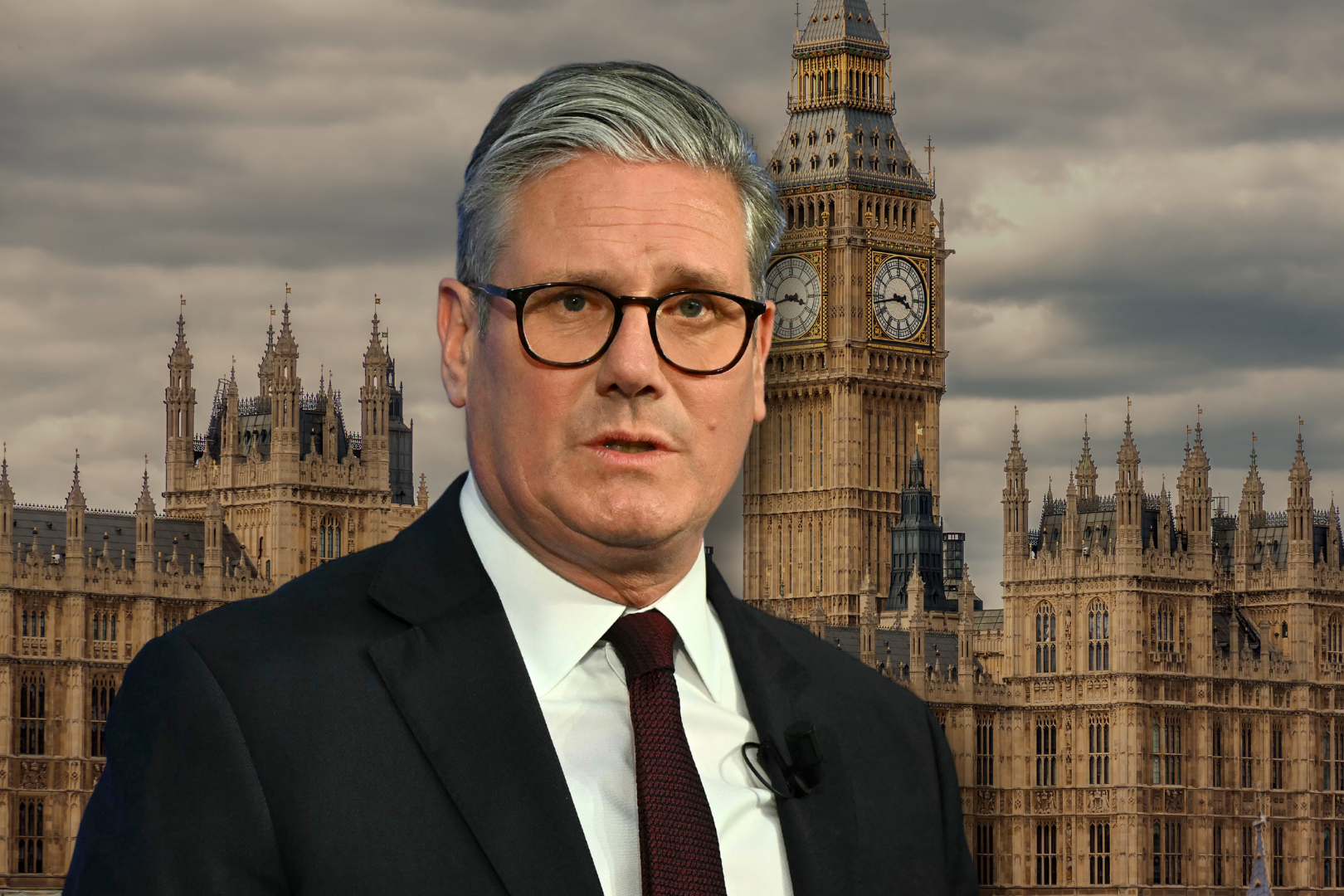
If Keir Starmer wasn’t already aware of the strength of feeling among Labour MPs at the government’s plan to slash the welfare bill, it was brought home to him on Thursday evening.

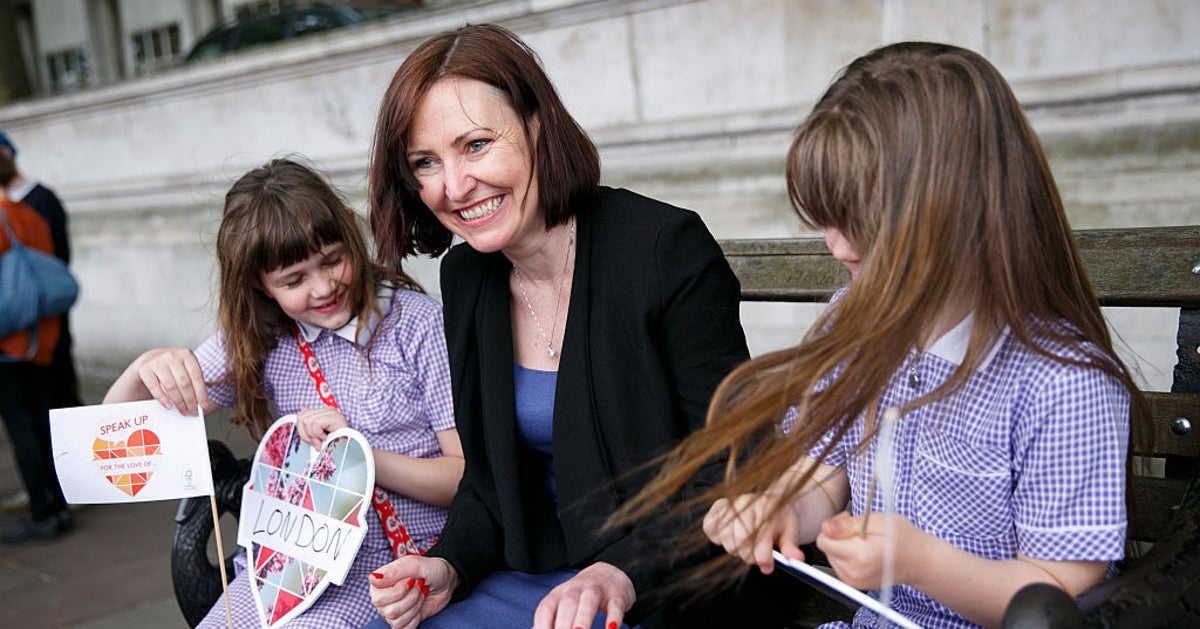
Party whip Vicky Foxcroft – someone whose job it was to persuade Labour MPs to back the government – resigned in protest, saying she could not vote for reforms which will hit the incomes of disabled people.

In her letter to the PM, she said: “I have wrestled with whether I should resign or remain in the government and fight for change from within. Sadly it now seems that we are not going to get the changes I desperately wanted to see.

“I therefore tender my resignation as I know I will not be able to do the job that is required of me and whip – or indeed vote – for reforms which include cuts to disabled people’s finances.”

As a former shadow minister for disabled people, and a party loyalist, Foxcroft’s resignation will have sent a shiver up spines in No.10.

The government’s plans, set out in a bill published last week, will make it harder for people to claim Personal Independence Payment (PIP) and reduce the health element of Universal Credit.

Ministers insist it will make the benefits system more sustainable by cutting costs by £5 billion, while also encouraging more people into work.

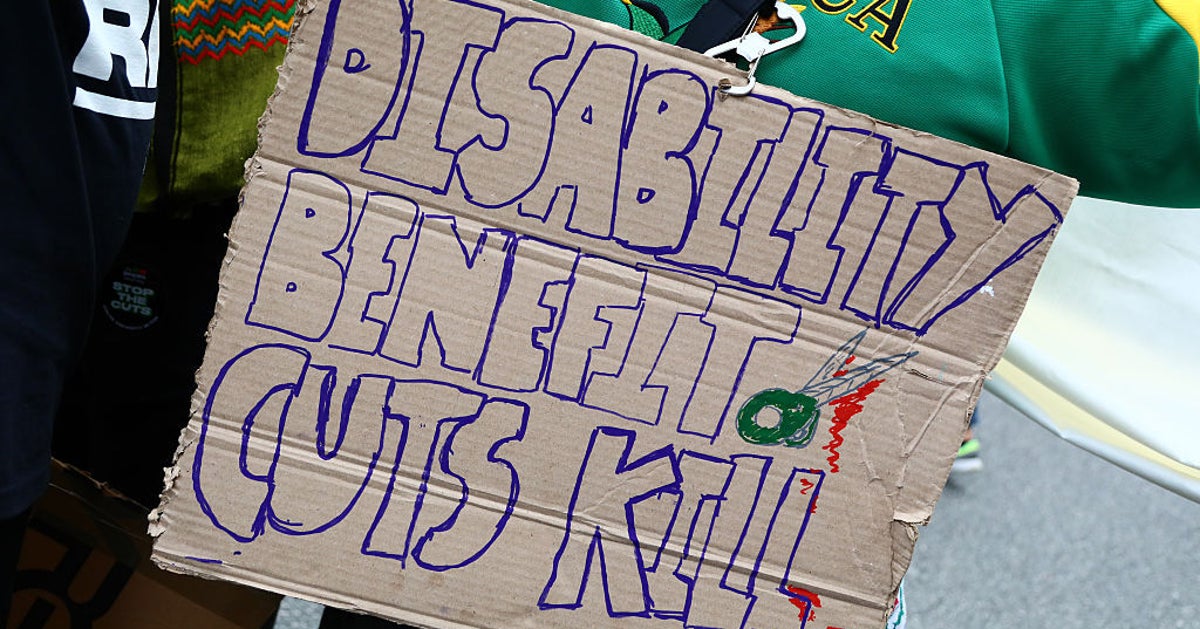
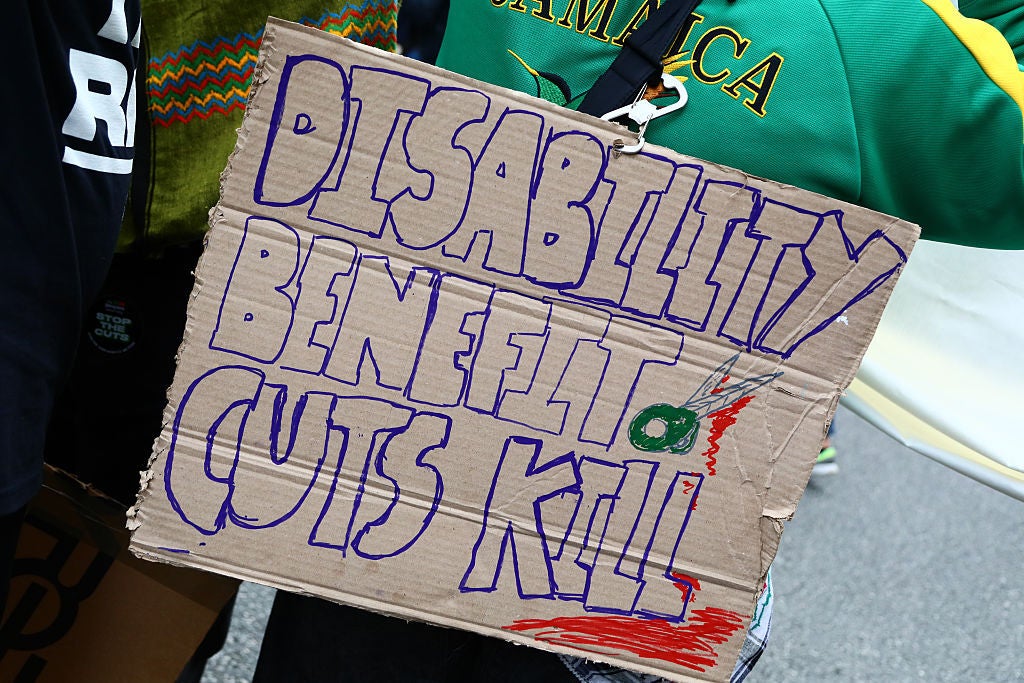
But there is widespread anger among Labour MPs, more than 100 of whom have written to the government’s chief whip, Alan Campbell, telling him they cannot support the measures.

In a bid to buy off some rebels, work and pensions secretary Liz Kendall announced that those losing their PIP will continue to receive their money for 13 weeks. For many MPs, however, this is nowhere near enough to win their support when the Commons vote takes place on July 1.

Between now and then, the government’s remaining whips will engage in a concerted campaign of arm-twisting in an attempt to reduce what at the moment is on course to be the biggest Labour rebellion of Starmer’s time as PM.

One rebel MP told HuffPost UK that more than 100 of their colleagues will abstain, with a further 50 potentially voting against.

“It might not be enough to kill the welfare cuts, but it’s definitely enough to kill Keir’s authority over his MPs,” the backbencher said.
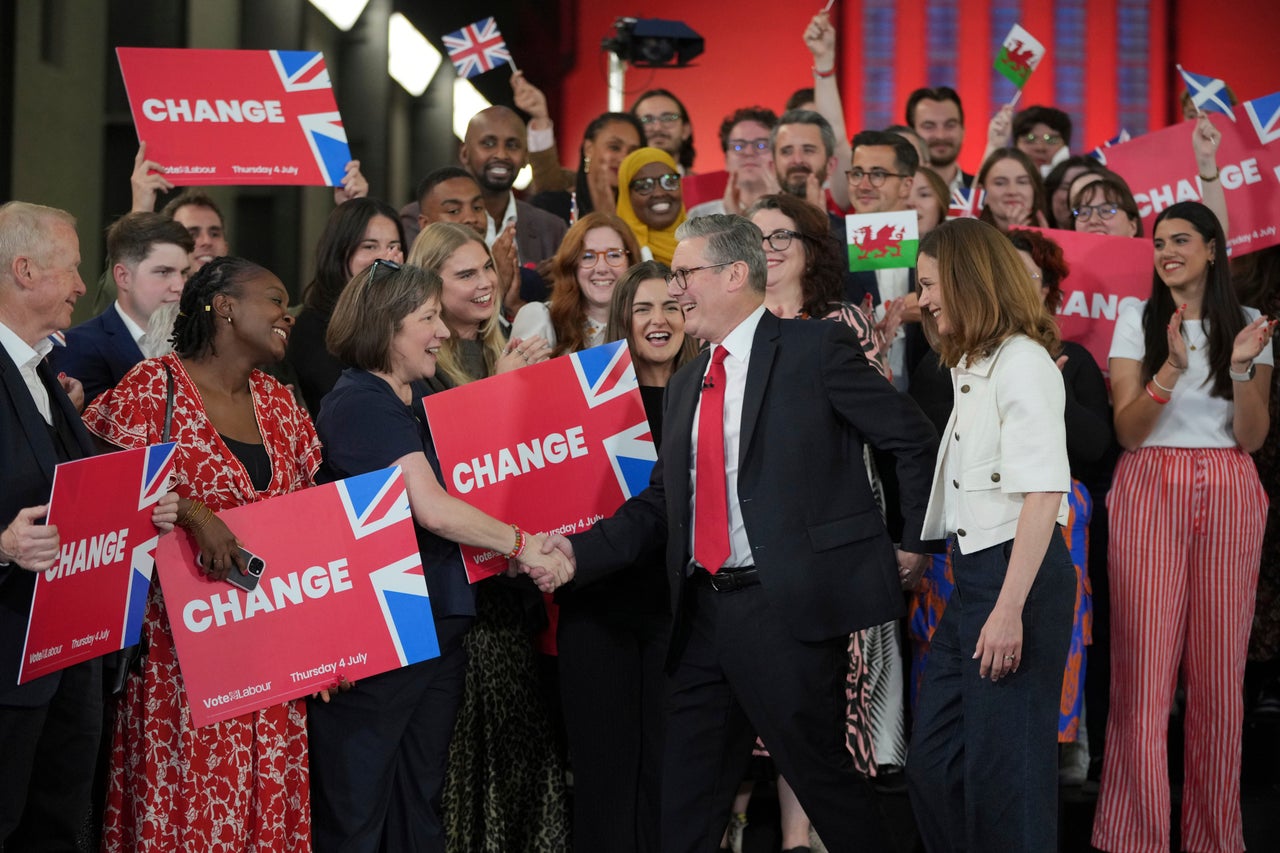
Labour Party leader Keir Starmer shakes hands with his supporters at the Tate Modern in London, Friday, July 5, 2024.

via Associated Press

The tactics allegedly being employed by the whips as they try to persuade Labour MPs are also proving to be controversial.

Some potential rebels claim to have been threatened with losing the Labour whip, the same fate which befell seven MPs who voted against the King’s Speech last July.

Others have been told their chances of promotion to the ministerial ranks will be zero should they vote against the government, while others have been warned that they’ll lose campaign funding come the next election.

“I’ve huge respect for the whipping process, but what they’re doing is not whipping, it’s Labour students stuff,” said one MP. “They’re trying to divide and conquer.”

Claire Reynolds, No.10′s political director, recently met with a group of Labour MPs who were elected last year and warned them against walking through the same voting lobbies as Nigel Farage.

It’s pure tribalism,” said one MP. “You can’t run the Parliamentary Labour Party like it’s a student union. They’re trying the carrot and stick approach, but the carrots aren’t working and their sticks keep breaking.”

Luke Sullivan, who was a special adviser in the Labour whips’ office between 2008 and 2021 and is now a director at Headland Consultancy, said he doubted whether his former colleagues will really be using such heavy-handed tactics.

“No government whip would ever make any of those threats,” he told HuffPost UK. “Ultimately, every whipping operation I’ve ever been part of has always taken the view that however big the vote is, there’s always a bigger one coming down the track, so you need to maintain relationships with people.”

Sullivan said the chief whip will have a huge spreadsheet setting out where each Labour MP is on the vote, which will dictate the tactics the party employs over the next 10 days.

“At the moment, they’ve got a very good idea where people are,” he said. “As we get closer to the vote, MPs will start coming into No10 and speaking to senior staff about their concerns.

“Others will speak to the ministerial team in the Department of Work and Pensioners. Right up until and including the day of the vote, the whips will arrange for MPs to speak to whoever might be most persuasive for them, all the way up to the prime minister.

“They will be trying to sell the welfare reforms by telling MPs it about getting people back into work and giving them the support they need. It’s going to be a long two weeks.”

Former Tory MP Steve Baker is no stranger to rebelling against his own government, having regularly done so over Brexit and Covid lockdowns.

He also whipped his fellow rebels into line, so knows a thing or two about how to persuade MPs to vote in a certain way.

“There are two categories of MP – those who have firmly made up their mind and will not change it, and those who will change their mind under pressure,” he said.

“The whips will first seek to ensure the MP has understood the policy, understood the trade offs surrounding the policy and understood why the alternatives are all worse.

“They also seek to ensure the member of parliament has considered the consequences for the country, for their constituency, for their party and for themselves if they vote against the government. These are the rich seams which constitute a whipping operation.”

Baker also had some advice for the Labour whips struggling to get their MPs into line.

“Labour cannot allow their members to get a taste for it,” he said.

“If you rebel, the sky doesn’t fall in. All that happens is your colleagues are grumpy with you for a few days and then everyone moves on. Once they realise that, they will keep rebelling. This is the true horror the Labour whips face.

“They cannot once have a large rebellion, because if they do they will have many more.”

Whether they have to employ the dark arts or not, a lot rests on how effective the Labour whipping operation is in the run-up to July 1.

A large rebellion may not be enough to stop the welfare cuts, but could be a portent of even greater danger ahead for the prime minister.
Share Button

Blow For Keir Starmer As Labour Whip Vicky Foxcroft Quits Over Welfare Cuts

A Labour MP has quit as a government whip over controversial plans to slash the welfare budget by £5 billion.

In a major blow for Keir Starmer, Vicky Foxcroft said she could not vote for the policy and had no option but to resign.

In a letter to the prime minister, she said: “I have wrestled with whether I should resign or remain in the Government and fight for change from within.

“Sadly it now (seems that we are not going to get the changes I desperately wanted to see.

“I therefore tender my resignation as I know I will not be able to do the job that is required of me and whip – or indeed vote – for reforms which include cuts to disabled people’s finances.”

A government spokesperson said: “This Labour government was elected to deliver change. The broken welfare system we inherited is failing the sick and most vulnerable and holding too many young people back. It is fair and responsible to fix it.

“Our principled reforms will ensure those who can work should, that those who want to work are properly supported, and that those with most severe disabilities and health conditions are protected.”

Foxcroft is the first Labour frontbencher to resign over the proposed benefit cuts, which will be voted on my the Commons on July 1.

More than 100 Labour MPs have written to the government’s chief whip making clear their opposition to the plans, which would see cuts to Personal Independence Payments (PIP) and Universal Credit.

The government’s own assessment of the policy has suggested that 250,000 people could be pushed into poverty as a result, including 50,000 children.

Share Button

Keir Starmer Facing Major Labour Rebellion Over ‘Cruel’ Welfare Cuts

Keir Starmer is battling to avoid the biggest Labour rebellion since he became prime minister after the government published details of its plan to slash £5 billion from the benefit bill.

Work and pensions secretary Liz Kendall insisted the Universal Credit and Personal Independence Payment Bill “marks the moment we take the road of compassion, opportunity and dignity”.

But campaigners said the legislation would be “a disaster for disabled people”, while rebel Labour MPs said attempts by the government to soften its impact on benefit claimants did not go far enough.

The government says its aim is to get more people off sickness benefits and into work by making it harder for people to claim personal independence payments (PIP) and cutting the sickness-related element of universal credit (UC).

But the government’s own assessment found that the changes will push 250,000 people – including 50,000 children – into poverty.

More than 100 Labour MPs have signed letters to the government’s chief whip making clear their opposition to the plans.

A Commons vote on the plans will take place within weeks.

In a bid to address the rebels’ concerns, the government has announced that those claimants who are set to lose out will continue to receive their money for 13 weeks.

Kendall said: “Our social security system is at a crossroads. Unless we reform it, more people will be denied opportunities, and it may not be there for those who need it.

“This legislation represents a new social contract and marks the moment we take the road of compassion, opportunity and dignity.

“This will give people peace of mind, while also fixing our broken social security system so it supports those who can work to do so while protecting those who cannot – putting welfare spending on a more sustainable path to unlock growth.”

But one Labour rebel told HuffPost UK the government’s attempts to make the bill more palatable to its opponents were insufficient.

He said: “Saying benefit claimants can keep getting their money for 13 weeks before having it taken away is like giving someone a redundancy payment – it doesn’t change the fact that you’re still losing your job.

“At the very least there are 100 Labour MPs who are opposed to the bill, and I’ve seen nothing from the government that is likely to reduce that number.

“The whips and ministers will now start reaching out and trying to persuade people to at the very least not vote against the bill, but I think we’re still looking at a sizeable rebellion.”

Another rebel MP said opposition to the bill is “hardening”.

“Lots of new MPs are gearing up to actually oppose the bill rather than just abstain, which is very interesting,” the MP said. “The chief whip has now decided that threatening people is unhelpful – horse and bolted spring to mind.”

Siân Berry, the Green MP for Brighton Pavillion, said: “With this bill the government is making a cruel, unnecessary and callous political choice.

“Recklessly pushing this bill through parliament shows that ministers are still not listening to the millions of disabled people who will be catastrophically affected by these reforms about how their daily lives really work.”

Charities representing those affected by the bill have also condemned the government.

Mark Rowland, chief executive at the Mental Health Foundation, said: “This bill is a disaster for disabled people, and we urge MPs to reject this legislation in its current form.

“It will take vital financial support away from hundreds of thousands of disabled people, many of whom have mental health problems. Previous austerity measures worsened people’s living conditions, undermined their mental health and increased the risk of suicide and premature deaths – and that’s likely to be the case here too.

“These plans will not help the UK government reduce the number of disabled people out of work. PIP is also granted to disabled people who are in work to help them meet the cost of their disability, and removing this support will make it harder for them to remain in the workforce.

“The Office for Budget Responsibility has also said there is no robust analysis showing this will encourage anyone to return to the workforce. Given that, our view is that these cuts are counterproductive and cruel.”

Share Button

Starmer Faces A Case Of The Monday Blues As EU Deal And Labour Rebellion Loom

Bob Geldof sang about not liking Mondays more than 40 years ago. Come Tuesday morning, there is a decent chance that Keir Starmer will know how he felt.

The prime minister faces a date with destiny on two fronts at the beginning of next week.

First up on his agenda is a UK-EU summit in London where, he hopes, the details of his “reset” with Brussels will be unveiled.

Later in the day, Starmer will run the gauntlet when he faces a Parliamentary Labour Party (PLP) that is growing more fractious by the week.

Government sources say negotiations on the EU deal will go to the wire and that, inevitably, “nothing is agreed until everything is agreed”, but there is little doubt that a deal of some kind will emerge.

It will include an agreement on the movement of agri-foods between the UK and the bloc, a key demand of British businesses left frustrated by the trade barriers which have resulted from Brexit.

A youth mobility scheme making it much easier for 18 to 30-year-olds to travel between the UK and the EU will also form part of the deal, although Downing Street is keen to emphasise that this does not mean a return to freedom of movement.

Those entering this country will be able to stay for a limited time only, while the Home Office is pushing for a cap on numbers as they try to bring down immigration.

“We already have similar youth mobility agreements with the likes of India, Uruguay and Australia, and any scheme will be smart and controlled,” one senior government figure pointed out.

An agreement on closer security and defence co-operation between London and Brussels will also be struck, with the UK giving the French greater access to British fishing waters in return.

Starmer is ready for hardened Brexiteers to cry betrayal, while those on the other side of the debate will accuse him of not going far enough by ruling out a return to the EU customs union and single market.

But he believes that the vast majority of voters will welcome his attempts to improve relations with the UK’s closest trading partner.

One insider told HuffPost UK: “The Tories took us out of the EU without a plan for growth or on things like asylum.

“The British public know that the current deal isn’t working, which is why we are negotiating a better one.”

The agreement on agri-foods – Sanitary and Phytosanitary (SPS) products in the EU jargon – will “remove barriers to trade to stop all those lorries getting backed up at Dover while also making food will be cheaper in the shops”, No.10 says.

“We know that the opposition will say it’s a Brexit betrayal, but that’s a silly argument because that’s saying we don’t want any deal with the EU,” a government source said.

“That means they’re happy for all that red tape to continue and for British businesses to be hamstrung. The Tories have already criticised the India and US trade deals, so who do they expect British businesses to go and trade with?.

“We’re in a strong place to show the country that we’re delivering for workers.”

New polling by Ipsos shows that the British public are increasingly of the view that the UK needs closer ties with Europe, even if it comes at the expense of our relationship with America. Just over half (51%) are of that opinion, up from 42% in March.

Naomi Smith, chief executive of the pro-EU campaign group Best for Britain, said: “Removing trade barriers with the EU will deliver significant economic growth in every region of our country – more than any other policy idea in the government’s arsenal – and Starmer must urgently secure a common sense deal with Europe to make this happen.”

Happily for the PM, the vast majority of Labour MPs appear to be backing his EU strategy.

Bolton West MP Phil Brickell told HuffPost UK: “This isn’t about going over old Brexit battles, but ensuring we can address the issues that matter so much to my constituents – tackling cross-border crime, building a stronger defence industry, preventing irregular migration and supporting British firms wanting to do business in Europe. All of these matter at a time of increasing global insecurity.”

Starmer would be advised to focus on his EU deal when he addresses the PLP in Committee Room 14 at 6pm on Monday.

In the wake of Labour’s local elections disaster, and the by-election defeat in Runcorn and Helsby, it isn’t difficult to find an MP with an axe to grind.

The most common complaint is about the decision to means test the winter fuel payments, at a stroke removing it from 10 million pensioners.

In Hamilton, Lanarkshire, where Labour is battling to beat Reform UK to second place behind the SNP in a Holyrood by-election, voters are registering their disapproval of that policy before slamming the door on anyone who comes calling wearing a red rosette.

“Winter fuel has the potential to do as much damage to us as increasing tuition fees did to the Lib Dems,” said one Labour MP.

“The people in No.10 need to take off their lanyards and get out and meet some voters.”

HuffPost UK understands that Rachel Reeves is now convinced of the need to at least water down the policy so that more pensioners qualify for the payment, making a U-turn far more likely.

A third place finish for Labour in Hamilton would certainly register in Downing Street. The local MP is Imogen Walker, the wife of Starmer’s chief of staff, Morgan McSweeney.

One Conservative MP who has been canvassing in the constituency even suggested that the prime minister is as unpopular north of the border as Margaret Thatcher. In Scottish political terms, there is no harsher criticism.

Meanwhile, more than 100 Labour MPs have signed a letter to the government chief whip warning that they cannot, without some concessions from Downing Street, vote for planned cuts to disability benefits.

Starmer’s speech last Monday’s speech unveiling the government’s plans to slash immigration – which drew comparisons with Enoch Powell – has also enraged many of his backbenchers.

While the PM’s own position is not currently up for debate, he quickly needs his EU deal, alongside those with India and the US, to translate into an increase in support among the country at large.

A YouGov poll showed that his favourability rating is now the lowest its ever been, with even Labour voters turning against him in alarming numbers.

With the next election potentially still four years away, and with politics in a seemingly permanent state of flux, Starmer has plenty of time to turn things around.

On Monday night, he will be left in no doubt that he needs to up his game, and soon.

Share Button

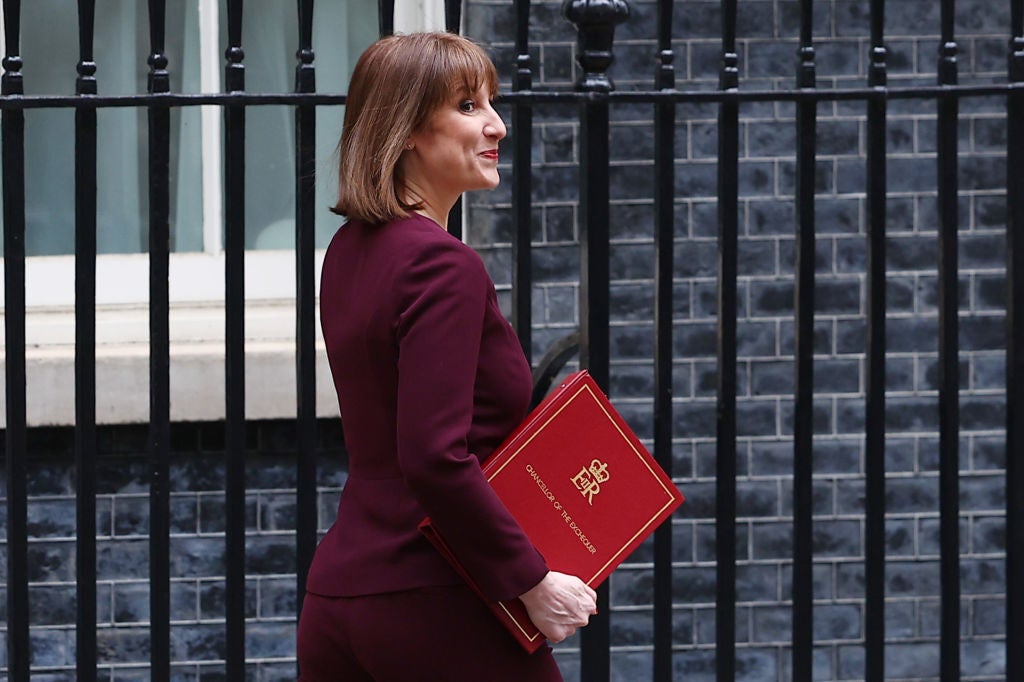
Exclusive: Rachel Reeves On Her ‘Weird’ Life And Why She Won’t Change Course

“My life is a bit weird these days,” Rachel Reeves candidly admits just hours after delivering her Spring Statement to a packed House of Commons.

She is sitting with HuffPost UK in her small office inside the rabbit warren that is 11 Downing Street.

Having endured a torrid nine months since taking up her role in the wake of Labour’s landslide election victory, it is perhaps unsurprising that she seems tired.

The widespread criticism of decisions like removing winter fuel payments from 10 million pensioners, hiking the employers’ rate of National Insurance and slashing nearly £5 billion from the welfare bill have clearly taken their toll.

“Rachel is very bruised and feels like she’s been made the public face of all the unpopular things that the government is having to do,” one ally said. “Being chancellor is a very lonely position when the economy is in trouble.

“She is effectively the domestic prime minister, which means she has to do a lot of things that people don’t like. It’s not a surprise that she sometimes just looks beaten.”

Reeves has become a lightning rod for the mounting public and political anger that threatens to engulf Keir Starmer’s government.

Nevertheless, there is no sign of her changing course. Calls to increase taxes on the wealthy, or for the government to borrow more rather than impose deep cuts on unprotected Whitehall departments are, for now, falling on deaf ears. The lady, it seems, is not for turning.

“It’s a job that I’ve always dreamed of doing, it’s a job that I’ve always wanted and it’s a huge privilege to be in this role and work with all of the talented people at the Treasury,” Reeves says.

She points to the fact that NHS waiting lists have fallen for five months in a row as proof that the government is making a positive difference to people’s lives.

A rise in the national living wage and the introduction of free breakfast clubs in all English primary schools are also offered up as evidence that Labour is working.

“A government doesn’t get to choose their inheritance,” Reeves says. “I wish the inheritance had been more rosy and that I hadn’t had to take such big and difficult decisions in the early months of my time in office.

“But because we took those decisions and wiped the slate clean after 14 years of economic mismanagement by the Conservatives, it means that in the changing world that we face today, we’re able to respond quickly, effectively and decisively, including reducing overseas development spending to put that money into defence.

“That’s the right thing to do in the world that we are confronted with today.”

Political jeopardy is never far away, however. Labour insiders believe more than 150 of the party’s MPs are currently opposed to the government’s welfare cuts, which they say unfairly target some of the poorest people in the country.

And while not enough of them will vote against the government to overturn Labour’s huge majority, dozens will.

“They are in a real pickle on the welfare stuff,” one source told HuffPost UK. “There is a lot of angst among Labour MPs.”

The Department of Work and Pensions’ own assessment, published on the same day as the Spring Statement, warned that 250,000 people – 50,000 of them children – will be pushed into poverty by the reforms. Reeves rejects that analysis, however.

She says: “Those numbers are based on not a single person moving from welfare into work and we are, alongside this package of welfare reforms, putting in £1 billion of targeted, personalised and guaranteed support for anybody on sickness and disability benefits to help them find work that’s appropriate for the situation that they are in.

“I know that there are thousands of people with disabilities who are desperate to work if only they were provided with the support.

The government wants to make sure “that everybody who can work, does work, while at the same time ensuring there is proper support for those who genuinely because of their sickness or disability cannot work”, she adds.

One senior Labour said many of their MPs “need to get into the real world”.

“Instead of listening to special interest groups in their constituencies, they need to go to the school gates and speak to some real people,” he said.

“Voters who get up in the morning and go to work are angry when they see their next door neighbour staying in bed.”

Reeves has also come under fire in recent days for accepting free tickets to a Sabrina Carpenter concert at the O2 in London.

Some in Labour were aghast that the chancellor had not realised the potential political pitfalls, especially given the row last year over MPs – including Starmer himself – accepting freebies.

While defending her decision, the chancellor tells HuffPost UK that it is not a mistake she will make again.

She says: “I went with a member of my family. As a 46-year-old woman, I wouldn’t say that I’m a massive Sabrina Carpenter fan, but that’s something a member of my family wanted and I took them to the concert.

“A lot has changed since the election in my life, and it’s the privilege of my life to do this job and I wouldn’t change it for anything, but of course there are security considerations that I haven’t had to think about in the past. That means getting tickets for a concert and just sitting in a normal row is not something I can do easily now like I could in the past.

“For security reasons, I was advised to be in a box and the owners of the O2 said that they could sort that for me. They’re not tickets that you could buy. I declared it in the proper way, but I do understand why people think it’s a bit weird – my life is a bit weird these days – but I do understand why people have concerns and I will reflect on that.”

The controversy shone a spotlight on the problems facing senior politicians as they try to juggle their public duties with their private lives.

Asked how she switches off from controlling the nation’s purse strings, Reeves says “I’ve got a young family and so I spend time with them. I go running. I used to go swimming, I haven’t done much of that since the election.

“I do try and have a bit of balance in my life – you’ll need to ask my family how good I am at achieving that.”

With the UK’s economic outlook set to remain unsettled for years to come, it may be a while before Rachel Reeves makes an appearance at a swimming pool near you.

Share Button

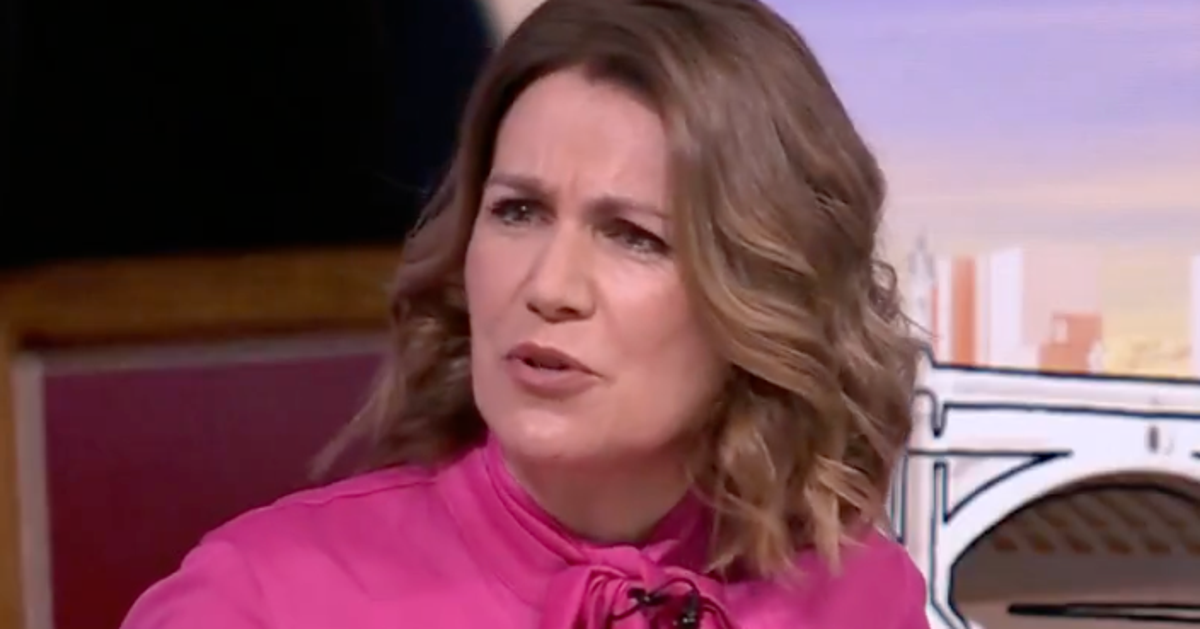
Susanna Reid Pinpoints 1 Thing That Could Fuel Voter Anger At Keir Starmer

Susanna Reid has warned Keir Starmer that he risks a voter backlash by cutting benefits while boosting defence spending.

The prime minister has confirmed that the military budget will increase from 2.3% to 2.5% of national income from 2027 amid mounting tensions over the war in Ukraine, paid for my slashing the amount spent on international aid.

Work and pensions secretary Liz Kendall will also unveil plans to cut the welfare bill by up to £6 billion on Tuesday.

But on the BBC’s Sunday with Laura Kuenssberg this morning, Reid said those policy decisions could land the PM in a fresh political crisis.

The Good Morning Britain presenter said: “There’s no doubt that [Keir Starmer] has developed a reputation as somebody who can operate very effectively on the international stage.

“But the thing is, if you ask people on the doorsteps, of course they want to back Ukraine but at what price?

“If the things that he’s flexing his muscles over at home – be it benefits or Personal Independence Payments for people – if it looks like he’s using cuts to welfare to pay for war, I’m not sure that’s going to be popular at all.”

Kuenssberg had earlier asked health secretary Wes Streeting: “As a Labour politician, did you get into politics in order to take money from some of the poorest and most vulnerable people in society?”

He replied: “We don’t want to take money from the poorest in society, we want to support people who are the poorest and most vulnerable to make sure they’ve got dignity, independence and great quality of life.”

Share Button