Are Onions The Reason For Your Stomach Issues?

Onions are found in most cuisines across the world. They’re cheap, they have a good shelf life and they grow year-round. About 6.75 billion pounds of onion are produced each year just in the United States, according to Colorado State University’s food source database, and global production reaches as high as 105 billion pounds per year. You probably have onions in your pantry, and they could even be in the food you are eating right now.

But did you know onions may make a large portion of the population feel sick?

Yes, the onion and its relatives (chives, shallots and even garlic) can cause a wide range of symptoms including gastrointestinal distress, migraines and, though rare, anaphylactic shock. And yet onions are found everywhere. U.S. consumption has grown 70% since 1982, according to the National Onion Association.

But for some people, onions can be part of a recipe for disaster. For patients with irritable bowel syndrome, or IBS, onions are “one thing most of our patients can’t tolerate,” said Dr. Jane Muir, associate professor and head of translational nutrition science at Monash University. Onions and garlic are high in fructan, a carbohydrate found in many fruits and vegetables that many people cannot digest well and can cause bloating or diarrhoea. The Cleveland Clinic estimates that 10% to 15% U.S. adults have IBS, so that’s a lot of folks who may have issues with onion and garlic.

Some people may even have an allergic response to onion, but that is far rarer. In a patient registry maintained by the organisation Food Allergy Research and Education, “139 of 11,411 individuals (or 1.2%) self-report as having an onion allergy,” said Dr. Bruce Roberts, chief research strategy and innovation officer at FARE. While you have to take the numbers with a grain of salt since they are self-reported, a 2020 Spanish study of garlic and onions had similar results, with 1.1% of people reporting an onion and garlic allergy.

While it may be a rare allergy, it is more common as a food intolerance. “Onion and garlic are common [food intolerances] that I definitely hear” from patients, said Dr. Kara Wada, assistant clinical professor in allergy and immunology at Ohio State University. The other two common categories of food intolerances that she regularly sees are lactose intolerance and fructose intolerance.

Dr. Sai Nimmagadda, attending physician and clinical assistant professor of allergy and immunology at Northwestern University, estimated that 1%-5% of his patients have reported some kind of onion sensitivity. When asked, Wada said that figure was comparable to her practice. But the actual number of people with an onion and garlic food intolerance in the U.S. or elsewhere is not currently known due to challenges in testing for it, and is likely to be higher.

However, cases of food intolerance, along with food allergies, are rising according to all the doctors interviewed in this article. Given the significant amount of onions and garlic consumed, it’s not something to sniff at. The Spanish study mentioned above concluded, “Allergic hypersensitivity to garlic and onions should not be underestimated and, given their high consumption, should be included in the diagnostic food allergy battery.”

So what’s the difference between a food allergy and food intolerance? The latter is “a condition when the body is unable to digest or absorb certain nutrients,” explained Dr. Ruslan Medzhitov, professor of immunobiology at Yale University and chief scientific officer at the Food Allergy Science Initiative. The offending nutrient then builds up in the gut and draws in water, which causes bloating and diarrhoea.

Then there are allergies. These involve the immune system, which attacks the noxious food in the gut. There are two types, Roberts noted: IgE mediated response and non-IgE mediated response. The former is what most people think of as an allergy; when someone ingests, inhales or comes into contact with an allergen, the entire body reacts, involving multiple organs like your skin and your cardiovascular and respiratory systems. It’s pretty immediate and can be lethal.

Non-IgE mediated responses tend not to be quite as potent and are less likely to be life-threatening. The reaction tends to be delayed by a few hours and can cause nausea, vomiting and/or diarrhoea.

While food reactions can cause headaches, Roberts noted, “The question concerning migraines is challenging because patients can experience headaches due to sinus congestion in the case of IgE mediated food allergy or anxiety but not a true migraine. The literature suggests food intolerance is more likely to trigger a migraine.”

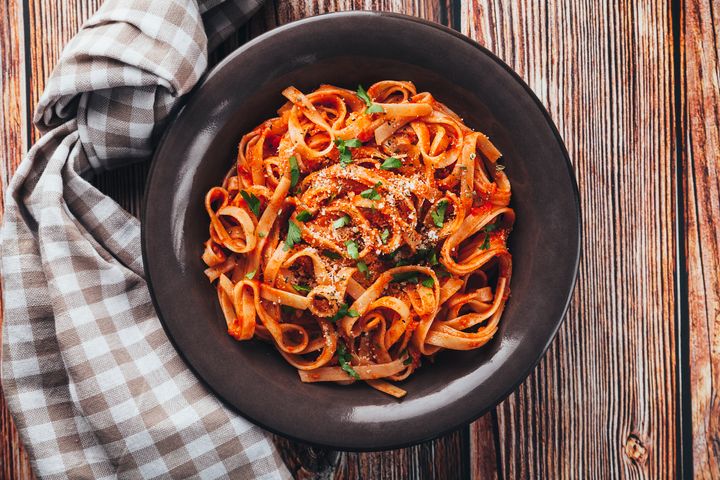
See that marinara sauce? It's probably has onions in it.

Cris Cantón via Getty Images

See that marinara sauce? It’s probably has onions in it.

As to why food intolerance could cause migraines, Roberts noted that the gut-brain connection is strong. There are sensory receptors in our guts that will send up signals to the brain that “there’s something amiss,” he explained.

“And so that’s when you have things like nausea, headaches and other things,” Roberts said.

Getting To The Root Cause

While it stinks to have a true onion allergy, researchers and medical professionals know a lot more about IgE mediated allergic reactions since they are something that can be tested for and possibly treated. Non-IgE mediated allergic response and food intolerance are a lot harder to uncover, Roberts pointed out. There’s “no reliable testing [for food intolerances] worth spending your time, energy or money on,” Wada added.

So it’s a challenge to know exactly how many people have an intolerance to onion or garlic without an easy way to evaluate for it.

On top of it all, Nimmagadda said the challenge is that “there’s a lot that we don’t understand about foods.” Food is so complex, filled with all sorts of proteins, carbohydrates, lipids and more; humans are all different, including the microbiome in our stomach. For instance, he noted, “I’ve had some patients that cannot have Chilean wine, but they’re fine with Italian wine.” And of course, there’s such a spectrum of reactions on top of it all. Wada noted that someone may have issues with fructan in the onions and garlic, or something else like the sulfites in it.

The symptoms and root causes of food intolerances can also differ from person to person. For instance, people with food intolerances may be able to tolerate a certain quantity of onions, or cooked onions. But when the person eats over that threshold or eats raw onions, that’s when all bets are off. Nimmagadda noted that cooking onions can degrade some of the proteins that cause people trouble. However, he said cooking food can sometimes make the reaction even stronger, such as with peanuts. (Raw peanuts are less potent than cooked peanuts.)

It’s important to note that people with a food allergy cannot tolerate any amount of the allergen.

You may not know what is actually causing your upset stomach or your migraine. It could be the sauce that you put in your favorite dish or maybe the ingredient not even listed on the restaurant menu.

So how do you figure it out? All the doctors recommended seeking medical professionals if you suspect a certain food or foods are bothering you. Nimmagadda recommends keeping a food diary so that you may be able to correlate your symptoms with the foods you eat and even the quantity of food. Working with a doctor and a reliable food allergy may help to figure out which food is problematic for your system. Perhaps it’s a single restaurant that’s causing all your digestive problems.

For people medically diagnosed with IBS, there’s the FODMAP diet, developed by Muir and her colleagues at Monash University. FODMAPs are a variety of carbohydrates that are naturally found in food that can trigger symptoms; onions and garlic are one of the offending foods.

The basic idea is that for two to six weeks you swap out high-FODMAP foods with low ones and then gradually introduce them back into your diet one at a time. Muir said, “It’s a learning diet or process where people have to learn which of their FODMAPs [are causing problems] because everyone is different.” But she noted that this diet is intended only for people medically diagnosed with IBS and collaborating with a dietitian.

Hold The Onions

For many people, avoiding the offending food might be the best practice, but that’s not always possible when we eat food that we haven’t cooked ourselves. Nimmagadda said you can talk to the chef about what’s in the food to get in front of any unpleasant surprises. Or maybe find restaurants that you’ve had a favourable history with. Definitely let people who cook for you know about it.

If you have been feeling less than stellar after eating, it may be time to investigate whether you have an intolerance, or worse, an allergy to onions or other food. Nimmagadda summed it up best: “Educate yourself; know your body, know your symptoms, and then seek out treatment. Get evaluated. You can find solutions. You don’t have to live with this.”

Share Button

9 Things Only People With IBS Will Understand

Even though irritable bowel syndrome affects 5% to 10% of people worldwide, it’s still not taken totally seriously. To someone who doesn’t have it, IBS may seem like no big deal – like a run-of-the-mill stomachache.

But for people with IBS, a condition that may present with symptoms of chronic abdominal pain, bloating, diarrhoea, constipation or some combination of these, it can quickly become what your entire life revolves around.

“People with IBS are often physically and emotionally exhausted by their symptoms and by repeated efforts to get answers and treatments that could help,” Dr. Lauren Tormey, a gastroenterologist at Dartmouth Hitchcock Medical Center in Lebanon, New Hampshire, tells HuffPost. “Not only can it be challenging to make a diagnosis of IBS, but symptoms can change over time, causing confusion and frustration for both patients and doctors.”

This can lead to an all-consuming cycle of avoiding trigger foods, social gatherings that involve food and drinks (so, all of them) and any situations that entail not knowing where the nearest bathroom is – along with the following things only people with IBS would understand:

1. Being so worried you’ll experience gastro symptoms, you make them come true

“I wish I could say having IBS is always in the back of my mind, but truthfully, it’s front and centre – all day, every day,” Lauren Schneider, senior PR and communications manager at Compt, tells HuffPost. “The only time I’m not worried about it is if I know for a fact I won’t be leaving home that day.”

When we’re stressed about our gut health and anticipate a flare-up or a worsening of symptoms, it sends signals from our brain to our gut, which can actually affect our digestive system. The result? Tightened abdominal muscles, colon spasms and an uptick in discomfort.

“The stress associated with the fear of experiencing IBS symptoms can even result in an inability for the body to properly digest food,” Dr. Vanessa Méndez, a board-certified gastroenterologist and founder of Planted Forward, tells HuffPost. “This can lead to bloating and diarrhoea or even a slowing down of the digestive system that triggers constipation.”

2. Eating or drinking something spontaneously – and immediately paying for it

With IBS, because of the hyper-responsiveness of the enteric nervous system (the part of the nervous system located in our digestive tract), symptoms can often be unpredictable. This means turning down the chance to try a new menu item at a restaurant, or cocktails at happy hour, so as to not risk an attack of symptoms.

For people who have never dealt with IBS, these boundaries might seem like overkill. But they can mean the difference between enjoying time spent with others, or being so focused on masking your symptoms you miss out on the experience (or spend the bulk of the experience in the bathroom).

“That one scoop of ice cream is enough to make me feel like I’ve had food poisoning,” Abi Cowell, a vegan food blogger, tells HuffPost. “Will it kill me like a food allergy would? No. But it will cause an awful lot of pain and misery.”

3. Socialising is filled with mental – and intestinal – anguish

“Having IBS and socialising is filled with emotional landmines, especially when meals are involved,” Lindsay Barnes, media relations manager at Evoke Kyne, tells HuffPost.

There’s the frustration of people not understanding that needing to go to the bathroom means you need to go now. The fear of entering the dating world and having to explain why you go so much. The awkwardness when you’re having a good time and suddenly need to make a run to the loo.

“When you just want to sit down and have a normal meal, whether by yourself or with family and friends, these things can be emotionally exhausting,” Tormey says. “The pain experienced by individuals with IBS is in part due to visceral hypersensitivity.”

Visceral hypersensitivity is pain or discomfort coming from internal organs (like those in the abdomen), under circumstances that wouldn’t normally be painful (like eating or during a bowel movement).

The nervous system experiences these sensations and communicates them to the brain for processing via the gut-brain connection.

“Food – eating it, even thinking about it – regardless of the food type, stimulates normal digestive function and can therefore result in pain in IBS,” Tormey says. “Sometimes eating is accompanied by the immediate urge to have a bowel movement because of a heightened stomach-colon reflex.”

Putting food or fluid in the stomach sends a signal via the nervous system to the colon. The colon understands this as a stimulus to empty whatever waste is there – and doesn’t care if you’re mid-sentence on a first date.

Social outings, like dates or meals with friends, can cause emotional and physical discomfort.

10’000 Hours via Getty Images

Social outings, like dates or meals with friends, can cause emotional and physical discomfort.

4. Changing so many ingredients in a recipe or food order, it becomes a different meal

The average person can control the effects of what they put into their body, and can adapt to food-centric situations, because their sensitivities to certain foods remain relatively consistent and clear-cut.

“I don’t have that luxury,” Barnes says. “I have absolutely no control over my body anymore – I can be as mindful as possible and work really hard on my diet, but at the end of the day, my gut controls my body now, and not in a good way.”

Food intolerances are common in IBS, and dietary modifications can help manage symptoms for some people. But for others, “visceral hypersensitivity and abnormal gut-brain communication can cause flare-ups to happen anyway, despite watching what you eat,” Tormey says.

“And who knows how long the flareup will last?” Barnes said. “A half hour? Two hours? The rest of the day?”

5. Mapping out where every public bathroom is before you leave the house

When Schneider leaves her home, she’s always planning – always conscientious of where she can find a restroom if she needs to stop. “If I’m going to be driving somewhere without quick access to a bathroom, I won’t eat before my trip,” she says. “I’ll wait until I get there.”

These coping strategies are actually pretty common, and can be a normal response to a situation that’s outside of our comfort zone, even for people who don’t suffer from IBS.

“When anxiety levels are high in a situation such as traveling, your digestive processes can get dysregulated,” Méndez says. “During stress, the brain sends signals to the gut that influences motility and digestion, which can lead to diarrhoea or constipation.”

Because the gut is constantly at work, the brain typically filters out the nerve signals it sends (paying attention and responding to some in order to regulate gut activity, while not focusing on others). Normal gut-brain communication can go wrong when something disturbs the nervous system or the brain for a long period of time – like when traveling, working a stressful job or rushing to get errands done.

“In these circumstances, the brain perceives stronger signals from the gut, and even the mildest stomach cramp can immediately trigger the brain to start worrying about the potential for worsening pain or a bowel movement coming on,” Tormey says. “The brain subsequently sends inappropriate signals back that disrupt gut function and can worsen symptoms.”

As a result, you might find yourself doing the same as Schneider: scouting bathrooms on your route or delaying meals.

6. Maintaining excuses for why you’re taking so many bathroom breaks

“Something I want others to understand about how IBS impacts my life is the daily secrecy and diversions that surround my use of the bathroom,” Amanda Dexter, 36, tells HuffPost. “There’s a lot of sneaking (multiple) trips to the bathroom or making excuses as to why it took you so long.”

Eating food and having bowel movements are essential to our survival – and across cultures, food is social and often enjoyed and shared with others. But unless you’re potty training a toddler, bowel movements aren’t exactly a typical subject of dinner-table conversation.

“These aspects of daily life pose regular challenges for those with IBS,” Tormey says, and can lead to a loss of enjoyment around food, a fear of eating and even disordered eating habits, such as skipping meals to avoid needing to use the bathroom.

If more people were to open up about their own horror stories, Dexter believes it would help alleviate the unnecessary embarrassment that many people with IBS feel. “Commiseration can go a long way into helping IBS sufferers not feel so alone,” she says.

7. Having flare-ups so exhausting, you need to take the rest of the day off

IBS is a disorder of “dysmotility,” meaning that movement of food, fluid and waste through the gut is altered.

“This leads to irregular bowel habits (diarrhoea, constipation or both),” Tormey says. “You might spend a lot of time in the bathroom, either having bowel movements, trying to have a bowel movement or dealing with pain around the time of bowel movements.”

It’s not uncommon for people with IBS to miss days of work or school because of these exhausting, intrusive symptoms – only to be further stressed out over the resulting lost productivity and wages.

“There have been times where I feel so emotionally drained and frustrated that I’ll just cry in the bathroom,” Barnes says.

Flare-ups can be so painful and taxing, it's hard to motivate yourself to leave the house.

PixelsEffect via Getty Images

Flare-ups can be so painful and taxing, it’s hard to motivate yourself to leave the house.

8. The relief of knowing you don’t have anywhere to go that day

For Schneider, being able to work from home has alleviated much of the anxiety associated with her condition. She’s able to eat more intuitively and with a bathroom always nearby.

“Work trips are a little difficult, especially when the whole group goes out to dinner,” Schneider says. “That’s when I just resort to my old ways, and either barely eat or only eat my tried-and-true few things that won’t upset my stomach.”

Because IBS symptoms can be intermittent and unpredictable, varying in both nature and severity, the condition can leave you with a great deal of uncertainty and anxiety about what might happen outside the home.

“To compound matters, there’s a well-established recognition that the central nervous system, or brain, also has a significant role in regulating not only gastrointestinal motility, but sensation – from both an unconscious and a higher emotional level,” Dr. Brooks Cash, professor of gastroenterology at the University of Texas McGovern Medical School, tells HuffPost.

This typically leads to people with IBS becoming hyper-vigilant about their symptoms, and trying to be as ready for them as possible – including doing everything in their power to avoid potential triggers.

“Sometimes these triggers are absolutely accurate, and other times they’re merely innocent bystanders,” Cash says. “Either way, we often see patients changing their lifestyle, daily activities, diet, habits and social activities for the sake of avoiding them.”

9. Losing count of how often you’ve been told your IBS symptoms are all in your head

Schneider has done what’s recommended to treat IBS. She’s seen doctors, done the tests. The endoscopy and colonoscopy didn’t show anything helpful – just that she also has gastro-oesophageal reflux disease.

“I’m on an SSRI, so it isn’t anxiety-related, like one doctor so unhelpfully assumed,” she says. “She literally said to me, ‘Well, nothing’s shown up in your bloodwork or other tests – you have IBS-D but it’s probably all in your head.’ Thanks, super helpful.”

After being poked and prodded enough, Schneider gave up. “I’m tired of advocating [for] myself to doctors who won’t listen and paying co-pays that are essentially a waste of money to hear the same things over and over.”

While doctors don’t have an IBS biomarker to test for, there are formal diagnostic criteria for IBS called the Rome IV criteria.

“To make a diagnosis of IBS, patients should meet Rome IV criteria and not have any other ‘alarming’ signs such as blood in the stool, unintentional weight loss or new onset symptoms over the age of 50 without prior colon cancer screening,” Tormey says.

These criteria must be fulfilled for the past three months, with symptom onset at least six months prior to diagnosis. “IBS should then be sub-classified by the predominant bowel pattern – such as IBS-C, or IBS with constipation – which helps guide treatment,” Tormey says.

A diagnosis of IBS can be made confidently after a detailed history, a complete physical exam and a few thoughtfully selected diagnostic tests to evaluate for conditions that can present with similar symptoms.

So if your doctor implies – or straight-up tells you – your symptoms are all in your head, Méndez encourages you to get a second, third or even fourth opinion. “You know they’re not in your head and that IBS is a very real condition,” she says. “In fact, IBS is the most common functional digestive disorder. If you have symptoms, please keep seeking help until you find a healthcare provider you trust.”

Share Button