Rishi Sunak Facing Major Tory Rebellion Over Online Safety Bill

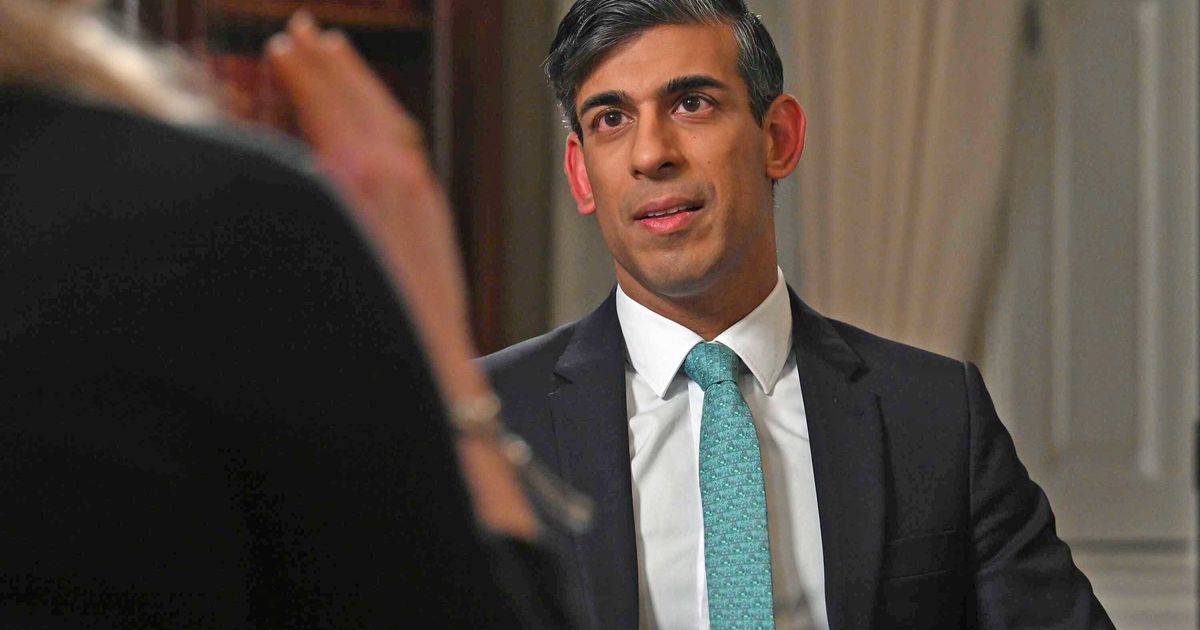
Rishi Sunak is facing a fresh Tory backbench rebellion over a law aimed at protecting children when they use the internet.

Nearly 40 Conservative MPs – including former cabinet ministers – have signed an amendment to the online safety bill which could see social media bosses jailed if their platforms publish harmful content.

The prime minister has already been forced to perform embarrassing U-turns over housebuilding targets and new onshore wind farms in the face of rebellions by Tory MPs.

Among the 36 Conservatives backing the rebel amendment are former party leader Iain Duncan Smith and Andrea Leadsom.

With Labour also backing it, Sunak is heading for his first parliamentary defeat as PM unless the government changes its position.

Culture secretary Michelle Donelan hinted that the government was preparing for a climbdown.

Speaking to the BBC’s Newscast podcast, she said: “I’m not ruling out any of those amendments because I’ve been working through them and they’ve been coming in today as well, looking at, you know, what colleagues are putting forward.

“I’m somebody that always takes a sensible approach to these things. If people have good ideas, just because I didn’t think of them, doesn’t mean that we’re not going to do them.”

Ian Russell and Ruth Moss, parents of children who killed themselves after viewing harmful content online, are among those campaigning for the government to accept the proposed change.

The prime minister’s official spokesperson said: “Our aim is to hold to account social media platforms for harmful content while also ensuring the UK remains a great place to invest and grow a tech business.

“We are confident we can achieve both of these things.

“We will carefully consider all the proposed amendments to the online safety bill and set out its position when report stage continues.”

Share Button

Putin’s Decision To Dump Army Chief Shows Russia Is Failing In Ukraine, Says UK

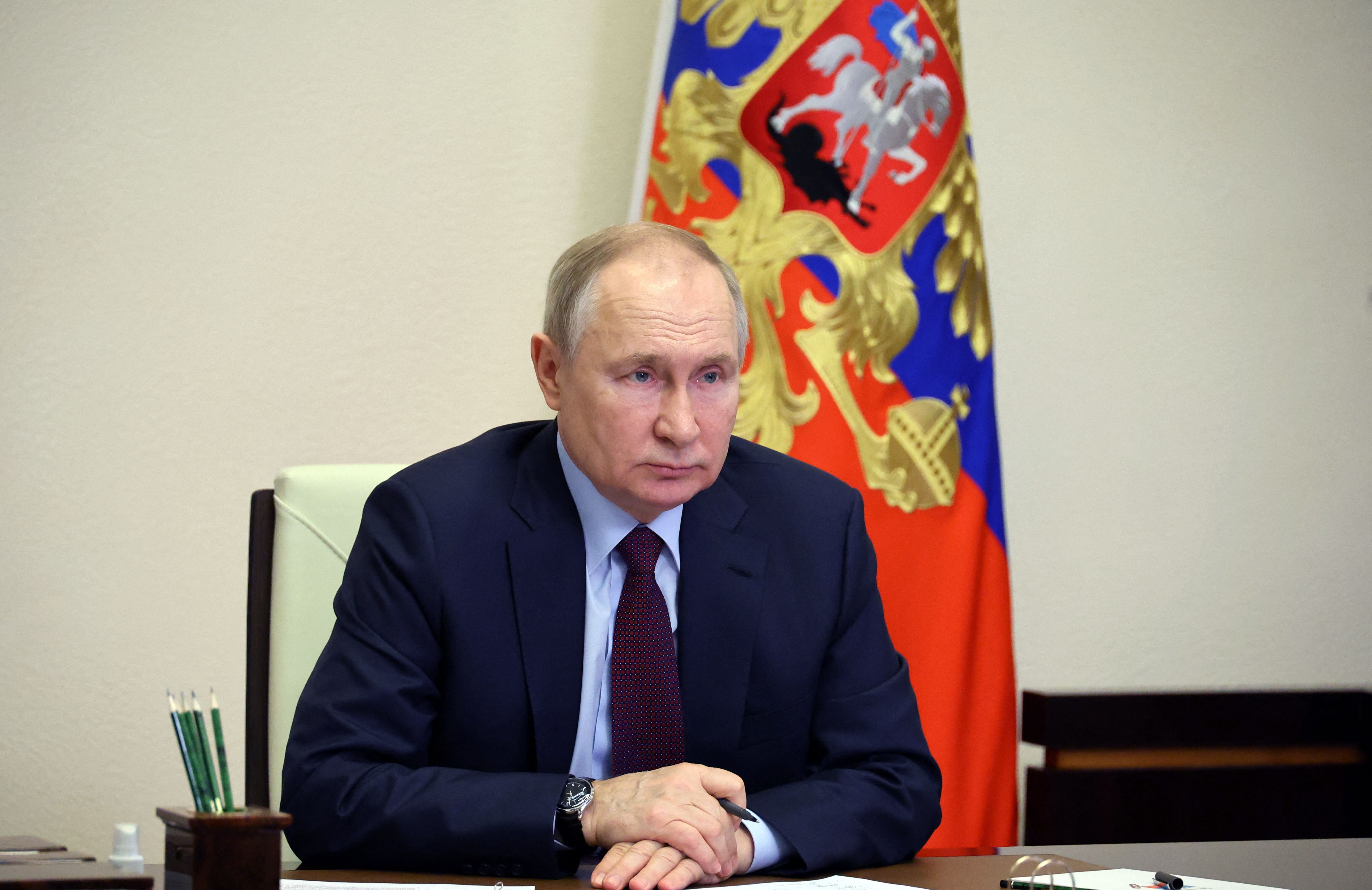
Vladimir Putin has replaced the army chief in charge of Russian troops in Ukraine because his invasion of the country is failing, according to UK intelligence.

Chief of the general staff (CGS) Valery Gerasimov, the head of the Russian military, has taken over from General Sergei Surovikin, who will now be one of his three deputies.

In their latest intelligence update on the war, the Ministry of Defence said: “This is a significant development in Russian president Vladimir Putin’s approach to managing the war.

“The deployment of the CGS as theatre commander is an indicator of the increasing seriousness of the situation Russia is facing, and a clear acknowledgement that the campaign is falling short of Russia’s strategic goals.”

The MoD also said the surprise move “is likely to be greeted with extreme displeasure by much of the Russian ultra-nationalist and military blogger community, who have increasingly blamed Gerasimov for the poor execution of the war”.

They said that in contrast, Surovikin “has been widely praised by this community for his championing of a more realistic approach”.

The changes are further evidence of Russia’s struggles in Ukraine.

Earlier this week, Kyiv denied Russia’s claim that it had killed more than 600 Ukrainian troops in a deadly attack.

Russia claimed that this was its “retaliatory strike” for the New Year’s Day attack, which Moscow says killed 89 of its own soldiers while they were in a Russian base.

It came after Vladimir Putin suggested a 36-hour ceasefire last week, so Russian citizens could mark the Orthodox Christmas, although shelling began very soon after.

Ukraine’s military intelligence has also alleged that Russia is looking to mobilise as many as 500,000 conscripts in mid-January, on top of the 300,000 brought into the army back in October.

Russia has denied any plans for a second wave of mobilisation – it’s worth noting that the September call-up sparked protests across the country.

Share Button

Boris Johnson Described A Lockdown Leaving Do As ‘Most Unsocially Distanced Party In UK’

Boris Johnson described a Downing Street leaving do during lockdown as “the most unsocially distanced party in the UK right now”, it has been claimed.

According to a new podcast by ITV, staff were left stunned when Johnson later denied knowledge of any rule-breaking in Number 10.

The fresh partygate allegations come amid speculation that the former prime minister is plotting a Downing Street comeback.

Johnson is accused of making the comment at a leaving party for his director of communications, Lee Cain.

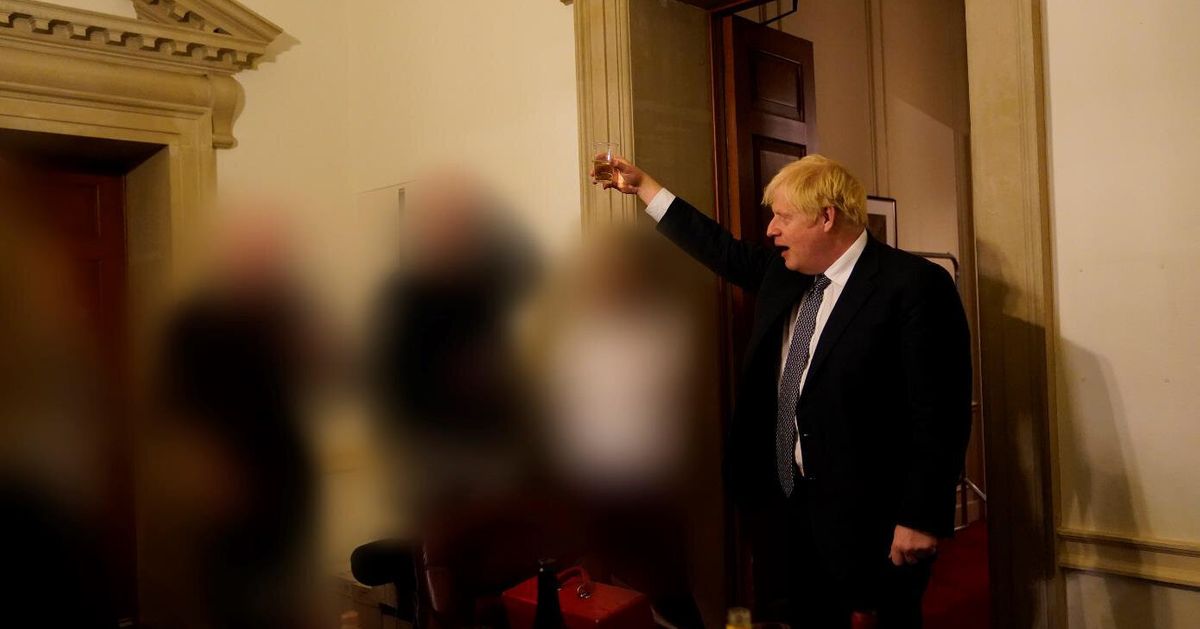
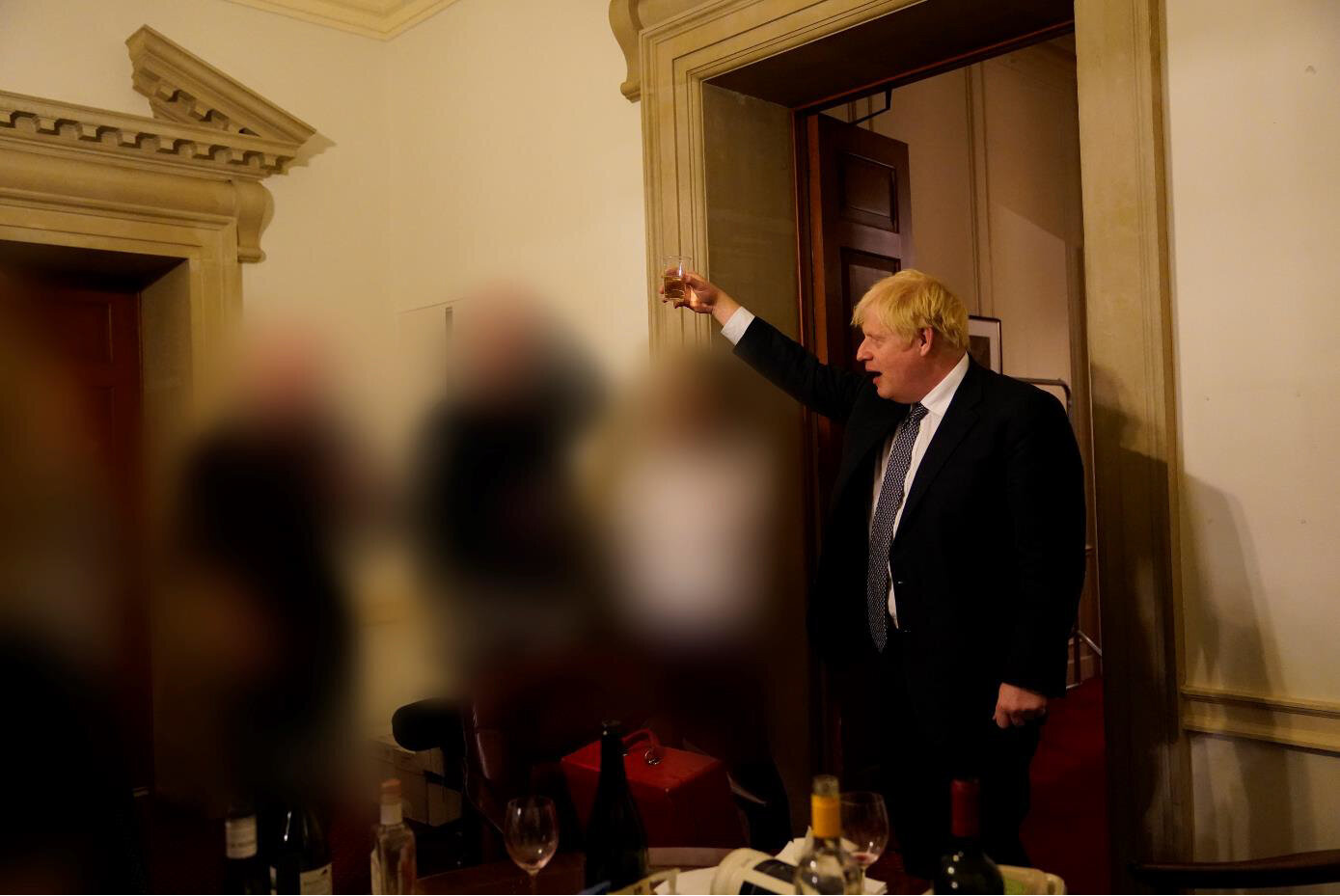
Pictures later emerged of the then PM raining a glass after delivering a speech at the gathering.

One source told the ‘Partygate – The Inside Story’ podcast: “I was working late – some music came on, the mumbling sort of rose, and there were loads of people stood around, but this time I came out because I heard the prime minister speaking and that’s when I heard the quote: ‘This is the most unsocially distanced party in the UK right now’ and everyone was laughing about it.”

The source added: “The PM making that comment really sticks out in my mind, that was pretty bad, because the picture showed one side of this going on.

“But what it didn’t capture is the 20 odd people sat on top of each other on the opposite side – they’re literally shoulder to shoulder, clamped in like a tube carriage.

“And he was there seeing people sat on other people’s laps (in) close proximity, crowded, scrunched up in front of him. He saw that, he saw people with drinks. You saw the picture. It had booze all over that desk. He’s not blind, he’s not stupid. He saw that and didn’t shut it down.

“That was really bad, but that was a normal sight, a regular occurrence, so it wasn’t unusual to see that sort of thing.”

Johnson later told MPs that no lockdown rules were broken in Number 10 – comments which are now the subject of a Commons inquiry.

Another source said of the PM’s comments: “We all watched it live and we were just gobsmacked. We all looked at each other and thought ‘why the hell is he saying this?’ We all know it had happened, he knew it happened – he was there.

“We were all just shocked that he would even deny it. He was there. We were there. We were all there together. And suddenly he’s denying it.”

The podcast also claimed that staff “shredded” key documents ahead of Sue Gray’s partygate investigation and corroborated their stories before filling out Metropolitan Police questionnaires on the scandal.

Johnson, along with his wife Carrie and Rishi Sunak, was fined for attending a birthday party thrown for him in 10 Downing Street during lockdown – but not over Lee Cain’s leaving party.

A spokesperson for Johnson did not deny he had made the “unsocially distanced party” comment.

They said: “During the pandemic, 10 Downing Street staff worked to coordinate the UK government’s national response.

“The work of Downing Street staff was crucial as they helped marshal the UK’s response to a national emergency.”

Liberal Democrat chief whip Wendy Chamberlain said: “These shocking revelations confirm Boris Johnson’s total disregard for the rules he asked us all to follow. He laughed and partied while the rest of the country suffered.

“Conservative MPs should be ashamed that they backed Johnson for so long and that some are even considering putting him back in Number 10.”

Share Button

‘Life And Limb Must Come First’ – Grant Shapps Defends Controversial Anti-Strikes Bill

Grant Shapps today said “life and limb must come first” as he defended a controversial new anti-strike bill.

The Business Secretary was promoting the new law aimed at ensuring a minimum level of service in crucial sectors during industrial action.

Shapps said the government want to end “forever strikes” and argued that the government’s legislation would bring the UK “into line” with other European countries.

The move has sparked threats of legal challenges, while Labour has said it would likely repeal the legislation.

The bill will be introduced to parliament on Tuesday afternoon, a day after crisis talks between ministers and unions failed to resolve industrial disputes involving nurses, teachers and rail workers.

Shapps told GB News: “I’ll be introducing a minimum safety level bill, which will sort of say, ‘look, we will never withdraw the right to strike from people but when there are strikes on life and limb must come first, and there has to be a minimum safety standard put in place for that’.”

He added: “We don’t really ever want to have to use that legislation.

“In those most recent strikes, the Royal College of Nursing, the nurses, agreed a set national level of support.

“Unfortunately, we couldn’t get there with ambulances across the country, meaning there was a bit of a postcode lottery as to whether an ambulance would turn up in the case of something serious, like a heart attack or a stroke.

“We can’t have that, so common sense tells us that we need to have minimum safety levels.”

Health Secretary Steve Barclay is considering backdating next year’s NHS staff pay increase to prevent further strikes.

He suggested that improvements in efficiency could “unlock additional funding”, leading to an increased offer for the 2023/24 pay settlement in the spring.

Sara Gorton, from Unison, said there had been an “acknowledgement” that avoiding strikes would “involve a reach-back” into the current pay year.

It raises the prospect that the pay deal for 2023/24, which is due to be agreed in time for April, could be backdated and applied to the final quarter of the 2022/23 financial year.

Ministers have previously refused to discuss wages for nurses and other public-sector workers, insisting those were matters for the independent pay review bodies.

Prime minister Rishi Sunak will chair his first Cabinet meeting of in 2023 on Tuesday morning.

Share Button

Exclusive: Downing Street Accused Of ‘Quietly Editing’ One Of The PM’s Five Promises To Voters

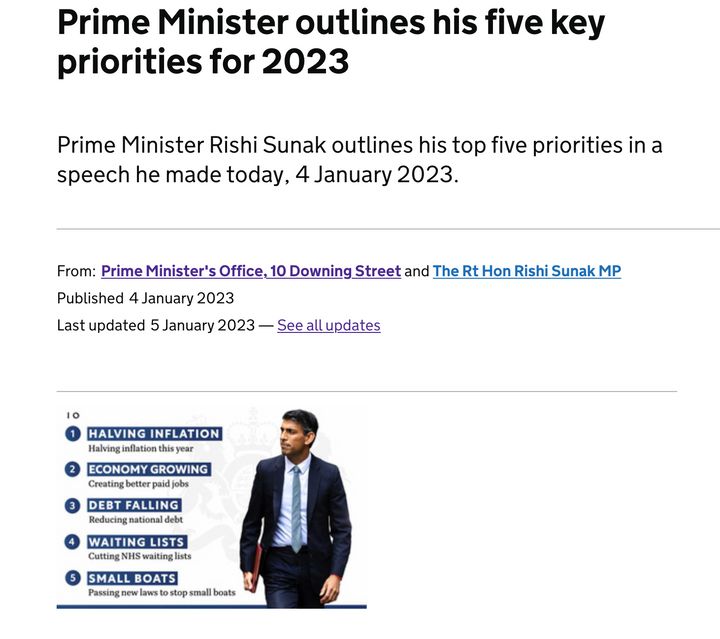
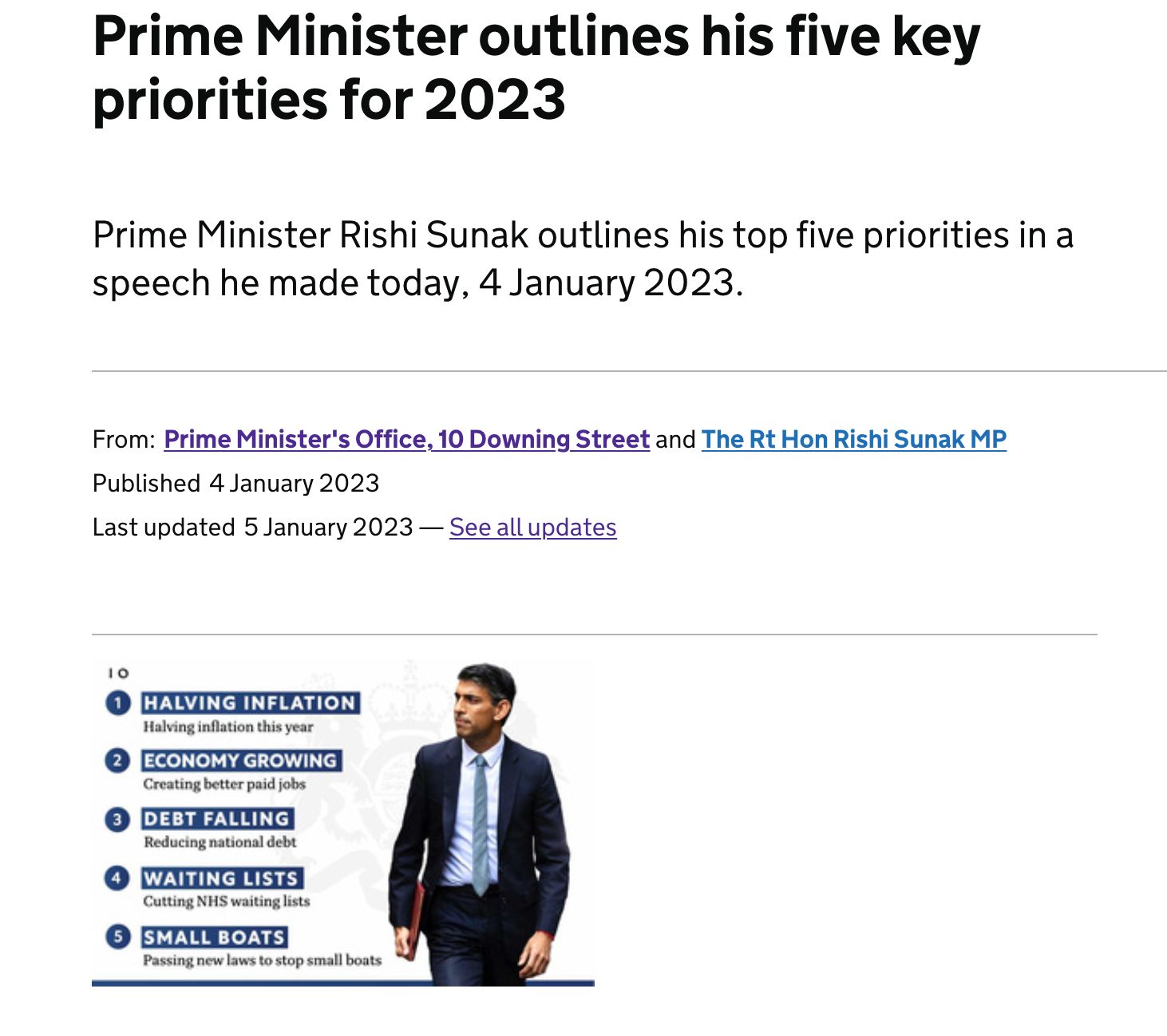
Downing Street has been accused of “quietly editing” one of Rishi Sunak’s five new promises to voters.

The prime minister unveiled the pledges in a major speech setting out his plans for 2023.

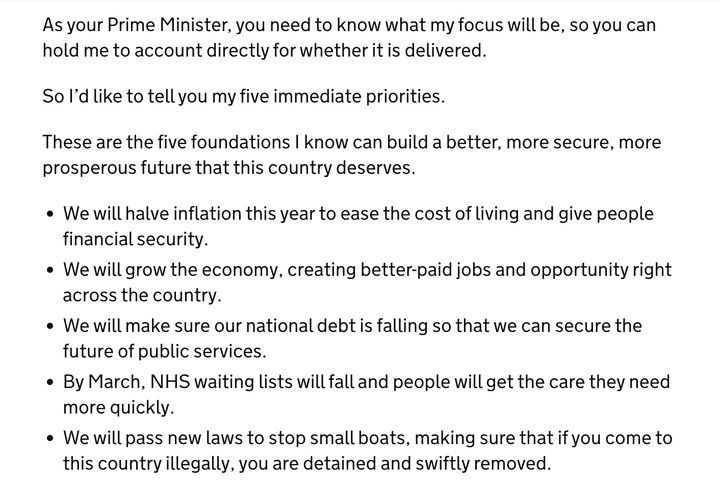
They included a vow to halve inflation this year, grow the economy and cut hospital waiting lists.

Sunak said: “No tricks, no ambiguity – we’re either delivering for you or we’re not.”

The original version of the announcement published on the government website after Sunak made his speech on Wednesday says: “By March, NHS waiting lists will fall and people will get the care they need more quickly.”

The fourth bullet point claims waiting lists will fall "by March".
The fourth bullet point claims waiting lists will fall “by March”.

UK government

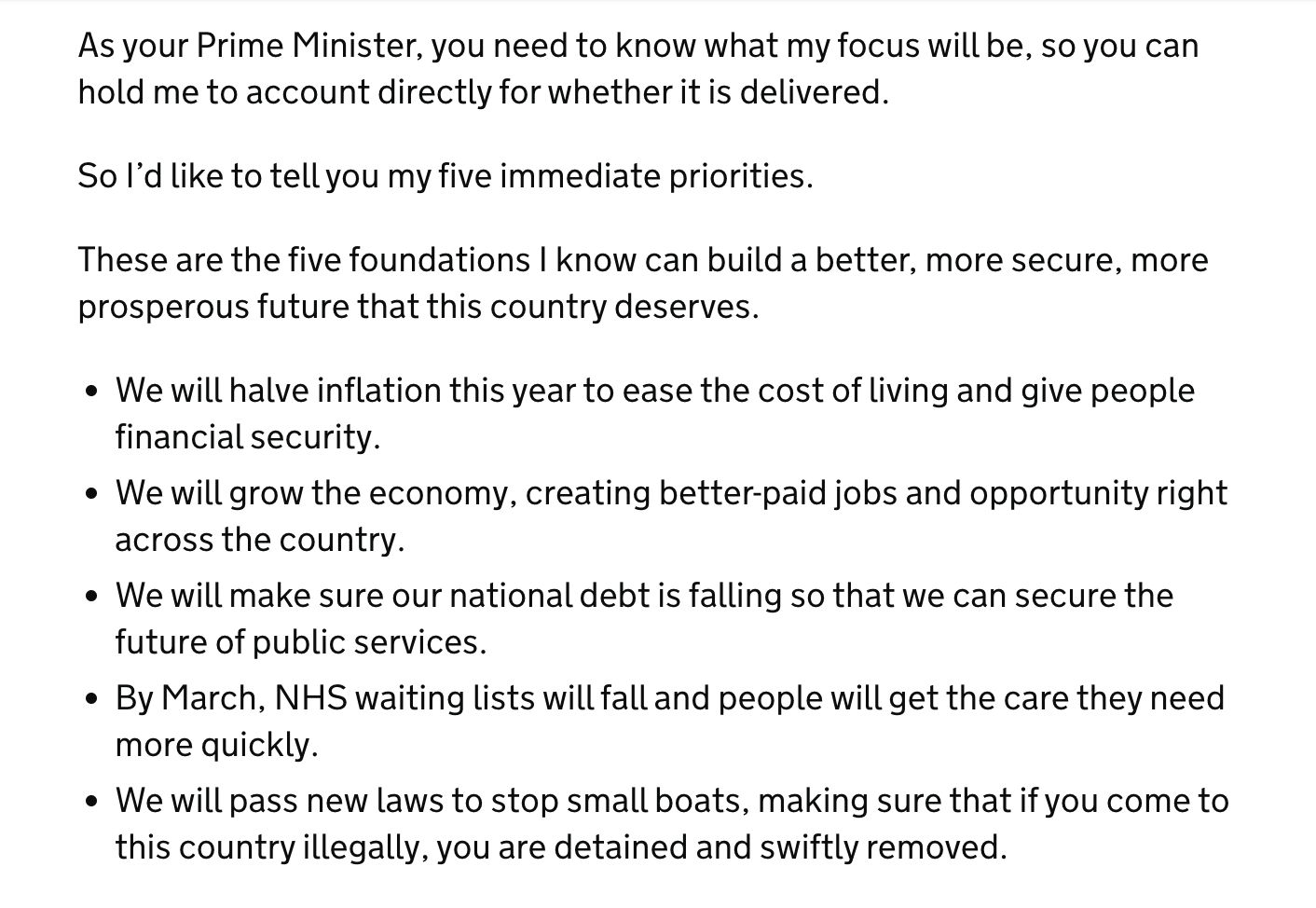
However, visitors to the same page are now told that it was “updated” on Thursday and the March reference has been removed.

That pledge now says: “NHS waiting lists will fall and people will get the care they need more quickly.”

The page has since been edited and the March reference removed.

UK government

Shadow health secretary Wes Streeting told HuffPost UK: “Just 48 hours after promising the British people a series of cast-iron promises, Sunak is already quietly editing the small print.

“The longer we give the Conservatives in power, the longer patients will wait.”

Answering questions from journalists after his speech, the PM said: “By spring of next year, we will have practically eliminated those waiting over a year, with the overall waiting list falling.”

A Downing Street source said the target for bringing waiting lists down is March 2024, and the government website had been edited to avoid any confusion.

HuffPost UK can also reveal that former health secretary Sajid Javid first made the March 2024 vow almost a year ago.

Speaking last February, he said: “Assuming half of the missing demand from the pandemic returns over the next three years, the NHS expect waiting lists to be reducing by March 2024.

“Addressing long waits is critical to the recovery of elective care and we will be actively offering longer waiting patients greater choice about their care to help bring these numbers down.”

Share Button

Exclusive: Teachers’ Strike Ballot Result Will ‘Go Down To The Wire’

A strike ballot organised by the UK’s largest education union will go “down to the wire”, HuffPost UK understands.

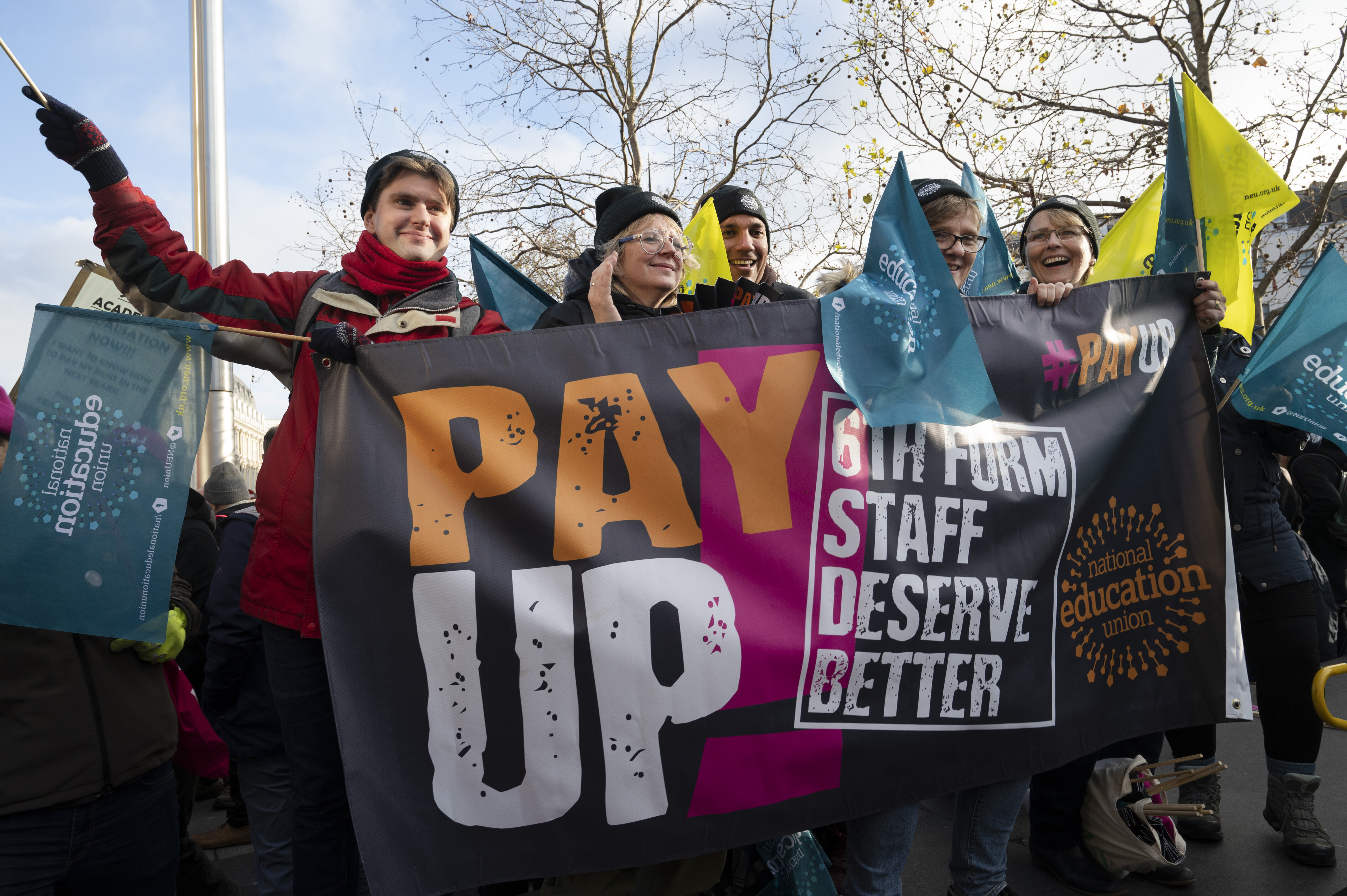
The National Education Union (NEU), which represents around 450,000 teaching staff across England, Wales and Northern Ireland, is currently holding a formal ballot calling for a “fully-funded, above inflation pay rise” following a decade of eroded wages.

A preliminary indicative ballot by the NEU in October showed strong support among teachers and support staff for taking industrial action to achieve a pay rise — but there are fears that turnout for the formal postal ballot has been hampered by Royal Mail strikes and bad weather.

Under the Trade Union Act, NEU members are bound by higher turnout thresholds to push through strike action.

The union must achieve a turnout of 50% in both the teacher and support staff ballots. Some 40% of those eligible to vote must back strike action for it to go ahead.

A source close to the Trades Union Congress (TUC), which represents unions across England and Wales, told HuffPost UK: “The result is going to be very close in terms of turnout.

“The NEU could meet the threshold or it could not — it’ll be down to the wire.

“The fact that the NEU is on the verge of this historic result, despite the massive barriers of the Trade Union Act, shows how angry teachers are about the way they’ve been treated and the formidable NEU data-led operation.”

They added: “It’s true the situation at Royal Mail could delay some ballots and this could make it very close, so individual votes will matter.”

If teachers back strike action, it will create another headache for the government which is so far refusing to back down on union pay demands — increasing the likelihood that disruptive strikes could go on for months.

Already this week the government is battling a series of damaging walkouts by the RMT and Aslef rail unions which began on January 3 and will finish on Saturday.

Nurses will also go on strike on January 18 and 19 unless negotiations are opened, having already withdrawn their labour for two days in December.

And in Scotland, primary school teachers will walkout on January 10 and secondary school teachers on January 11, with more strikes planned for later in the month and into February.

The average primary classroom teacher in England currently earns £38,200, rising to £41,600 for a secondary classroom teacher.

Heads of primary schools typically take home £67,400, which rises to £94,900 for the average secondary school.

The government has offered most teachers a pay rise of 5% for this year, up from an original offer of 3%. Those who are newly qualified will receive a pay rise of 8.9% to meet the Department for Education’s (DfE) commitment to increase starting salaries to £30,000 by 2023.

However, the teaching unions argue that the pay offers amount to a real-terms pay cut given that the rate of inflation stands at 10.7%. Research by the NEU estimates that its members have lost a minimum of £64,350 in earnings since 2010.

Last year, the NEU’s indicative ballot found that 86% of teachers would be prepared to take strike action to demand a pay rise, on a 62% turnout.

A separate ballot of school support staff also strongly supported taking strike action over pay, with 92% of staff rejecting the government’s offer and 78% backing industrial action.

The NEU’s formal postal ballot will close on January 13 next year, with strikes potentially taking place towards the end of the month.

Fellow teaching unions the National Association of Schoolmasters Union of Women Teachers (NASUWT) and The National Association of Head Teachers (NAHT) are also holding strike ballots for members in England and Wales that will close on January 9 and 11, respectively.

Sources within the education sector expressed concern that strikes by the Communication Workers’ Union (CWU), whose members work for Royal Mail, have resulted in some members not receiving their ballots on time, potentially hampering turnout.

The CWU has not yet announced strike dates for 2023 but held walkouts over the Christmas period, including on Christmas Eve, in a bitter dispute with Royal Mail over pay.

If the turnout threshold is reached and strike action is approved, around 24,000 schools in England and Wales could be forced to close as children are sent home.

“The knock-on impact on parents and wider society will be huge,” the source said.

“The government can continue to pretend there’s not a problem or sort it out. Teachers are simply tired of what’s happened to education since 2010 and the strength of feeling is high.”

A spokesperson for the NEU said the union was confident that the thresholds for strike action would be met and that members would be able to re-order any mislaid postal ballots.

“The NEU supports the CWU and the postal workers’ strike,” they said.

“Despite the unfair threshold set by government for strike action to go ahead we are confident our members will vote in the margins required for action to take place. The NEU ballot for strike action for a fully-funded pay increase closes on the January 13 and the results will be known shortly afterwards, most likely on January 16.

“Until this date we will not have the final numbers. It is an indication of the anger felt by teachers and support staff that the union’s electronic indicative ballot had an overwhelming yes vote for action resulting in the union moving ahead with a formal ballot.”

They added: “Through successive below inflation pay rises teachers and support staff have suffered losses of over 20% in salary since 2010. Many are leaving the profession. Government recruitment targets are missed year on year and nearly a third of teachers leave within the first five years of entering the profession. Something has to change.

“Government needs to start negotiating in good faith with the education unions to ensure children get the education they deserve, and teachers and support staff are fairly paid for the vital role they play.

“We don’t want to have to take this action — and we are calling on government to negotiate. It is in the government’s gift to avert these strikes with a new offer on a fully funded pay rise.”

In response, sources at the DfE said plans were being put in place to minimise any disruption if strikes do take place.

They said the best way of making money go further in schools was for the government to tackle inflation and for schools to be made away of the “resource management” available to them.

They also pointed to the £5 billion in funding to help children recover from lost learning in the aftermath of the pandemic, including more than £1 billion for the national tutoring programme.

A DfE spokesperson said: “There are no great schools without great teachers which is why we are making the highest pay awards in a generation – 5% for experienced teachers and more for those early in their careers, including an 8.9% increase to starting salary.

“We are also investing an additional £2 billion in schools next year and £2 billion the year after, taking school funding to its highest-ever level.

“After two years of disrupted education for young people, strike action is simply not a responsible solution.”

The CWU has been contacted for comment.

Share Button

Rishi Sunak Must ‘Step Up To The Plate’ To End Strikes, Says Union Chief

Rishi Sunak has been urged to “step up to the plate” by personally sitting down with union bosses to end the strikes.

TUC boss Paul Nowak has written to the prime minister demanding talks on how to find a solution to the industrial action crippling public services.

Nurses, railway workers and ambulance drivers are among those taking part in strike action throughout January in the ongoing disputes over pay and conditions.

Nowak said Sunak must “allow his ministers to get around the table with our unions reach a fair settlement on pay.”

He said striking workers “can’t afford another year of a real terms pay cut”.

“The reality is their mortgages are going up, their food bills are going up, their rents are going up – the only thing that isn’t going up is their wages,” he told Sky News.

“I think the government has got to take some responsibility now, step up to the plate, facilitate those talks and lets get a fair pay settlement for our NHS workers and public sector workers right across the piece.”

The TUC boss said Sunak had “forgotten some of those basic lessons” from the pandemic, when the TUC worked with him to develop the furlough scheme during lockdown.

He said: “I think he’s forgotten the value of sitting down and reaching an agreement and taking ideas from people outside his own cabinet.

“And frankly, I think it would be really good for Rishi Sunak to talk to our unions, but also to talk to some of those frontline parandemics, those physiotherapists, teachers in the classrooms, civil servants – people who for the last decade have been placed under real pressures on workload who feel they’re at breaking point.

“Let the prime minister talk to those workers and understand their concerns and their issues. I think that’s what any decent employer would do, and as someone responsible for the employment of millions of public sector workers, that’s exactly what the prime minister should do as well.”

Sunak will today set out his plans for the year ahead in a major speech in London.

The PM will unveil plans to make all pupils study some maths until they are 18, as well as explain how he plans to tackle the NHS crisis, illegal immigration and boost the economy.

Share Button

2022 Review: A Look Back At A Year When Politics Went Mad

Every year in British politics is now almost always weirder than the last. But surely 2022 – which saw the country rattle through three prime ministers – will be peak stupid?

Below is a quick rundown of some, if not all, of the bonkers moments of the last year. May it rest in peace.

January

At the start of the year, Boris Johnson was prime minister and under intense pressure over the partygate scandal. On January 12, he admitted had actually attended a No.10 garden event during lockdown. Having previously insisted no rules were broken in Downing Street.

February – Jimmy Savile smear

Johnson spent the first few days of February doubling down on a discredited smear that Keir Starmer failed to prosecute Jimmy Savile. The then prime minister made the allegation during heated Commons debate over the Sue Gray report into partygate. The false claim led Munira Mirza, his policy chief, to resign.

March – Boris’ Russia links

Russia’s invasion of Ukraine saw the British government rollout sanctions on people close to Vladimir Putin’s regime. Johnson himself came under pressure to explain his links to prominent Russians including former KGB agent Alexander Lebedev and Lubov Chernukhin, the wealthy Tory donor and wife of a former Russian minister. Dominic Raab explained it away as the PM simply being “very social”.

April – Partygate fines

On April 12, Johnson was handed a fixed penalty notice by the police for breaking his own Covid lockdown rules. It was the first time a sitting prime minister was found to have broken the law. Despite this, he did not resign.

May – Tractorgate

Tory Neil Parish formally resigned from parliament after he admitted watching porn on his phone in the Commons. Twice. The Tiverton and Honiton MP said it had been a “moment of madness” as he initially was innocently looking at pictures of tractors. Easy mixup.

June – Blue wall blues

On June 23 by-elections were held in the Tory seats of Tiverton and Honiton and Wakefield. The party lost the former to the Lib Dems and the latter to Labour. Ed Davey celebrated his party’s victory with a classically stupid stunt. The double by-election loss did little to settle the nerves of Tory MPs about Johnson’s leadership.

July – Bye bye Boris

After a wave of resignations finally triggered by the Chris Pincher scandal, Johnson resigned as prime minister on July 7. Yet the previous day he had been determined to cling on. The farce was captured live on TV as he was told a delegation of cabinet ministers was at that very moment in No.10 waiting to tell him to quit. The group included very loyal Nadhim Zahawi, who Johnson had promoted to chancellor 24-hours earlier.

Johnson’s resignation triggered a months long Tory leadership contest which included so many idiotic moments it has its own list here.

August – The lady’s not for turning

Perhaps the, highlight, of the contest was Liz Truss announcing plans to pay workers living in cheaper areas of the country less than their counterparts in places like London and the South East.

Tory MPs were livid, with one describing it as “austerity on steroids”. Truss complained there had been a “wilful misrepresentation” of the plan by the media. There had not. Quickly U-turning on the proposal, Truss said it showed she was “honest and decisive”. Perhaps the signs were there all along.

September – Trussonomics

Truss hit the ground as prime minister on September 6. Her tenure lasted 49 days, during which time the Queen died, her mini-Budget caused the markets to have a panic attack and Tory poll ratings cratered. In a boost for Global Britain, the race for survival between her and the Daily Star’s lettuce became international news.

October – Rishi v Boris

Rishi Sunak succeeded Truss as prime minister on October 26, having lost out to her in the contest to takeover from Johnson. But over the course of a crazy weekend at the start of the month, Johnson flew home from his Caribbean holiday to try and stage a dramatic comeback as PM. Before then dropping out of the race in the face over overwhelming opposition from Tory MPs.

November – Hancock in the jungle

As health secretary Matt Hancock helped lead the country through its biggest crisis since WWII. In November 2022 he decided it was a good idea to join ITV’s I’m A Celebrity… Get Me Out Of Here. He promptly had the party whip withdrawn and everyone else had to listen to constant jokes about him eating testicles.

December – normal service resumed?

The final month of 2022 in Westminster was somewhat stable when it came to nonsense, as the government grappled with strikes, inflation and the war in Ukraine. This could signal 2023 will be more serious if not calmer. But let’s not count on it.

Share Button

Exclusive: Keir Starmer Warns His Shadow Cabinet To Up Their Game

Keir Starmer has told his frontbenchers and their teams to up their game as the party prepares for a crucial 12 months.

Shadow cabinet members are being urged to increase the number of parliamentary questions they submit to hold the government to account.

The number of ideas each shadow minister comes up with for Labour’s media grid – which lists stories issued to journalists on specific topics – is also being monitored to see who is pulling their weight.

Starmer also wants his shadow cabinet teams to come up with suggestions for the party’s national policy forum in July, where Labour’s manifesto for the next election will take shape.

The crackdown by the leader of the opposition’s office (Loto) comes as Labour maintains its commanding lead over the Conservatives in the opinion polls.

A survey of public opinion by Sevanta earlier this month suggested Starmer is on course for 10 Downing Street with an astonishing 314-seat majority

Nevertheless, the Labour leader is eager for his frontbench team not to take their foot off the gas with the next election still two years away.

2023 is seen as a crucial year, with council elections in England in May, as well as the ongoing political battles over the UK’s economic future.

One senior Labour source told HuffPost UK: “Like any zombie, this government may look like it’s on its way out, but they’ll keep going until they are eviscerated.

“We cannot take our eyes off them for a second. Our mantra has been ‘no complacency’ and that is even more important next year.”

Analysis by HuffPost UK shows that shadow defence secretary John Healey has tabled the most parliamentary questions of any Labour frontbencher this year with 1,317.

He is followed by shadow attorney general Emily Thornberry on 993, shadow rail minister Tan Dhesi on 784 and shadow education secretary Bridget Phillipson on 510.

At the other end of the spectrum, climate change secretary Ed Miliband submitted none, while shadow Welsh secretary Jo Stevens has only tabled seven.

It is understood that Starmer’s team were also impressed by shadow health secretary’ Wes Streeting’s recent ‘health week’, which sought to highlight the government’s failures on the NHS.

“That won plaudits from Loto for its content and the initiative Wes and his team demonstrated in proposing it,” said one Labour insider.

“That is precisely the type of thing we need to be doing to keep the Tories on their toes.”

Share Button

Exclusive: Soaring Cost Of Living Causing Mental Health Crisis, Official Figures Show

The cost of living crisis is “heaping misery” on households this Christmas, with the poorest families twice as likely to suffer from depression.

A survey carried out by the Office for National Statistics (ONS) this autumn showed people’s mental health is suffering as a direct result of rising energy bills and double-digit inflation.

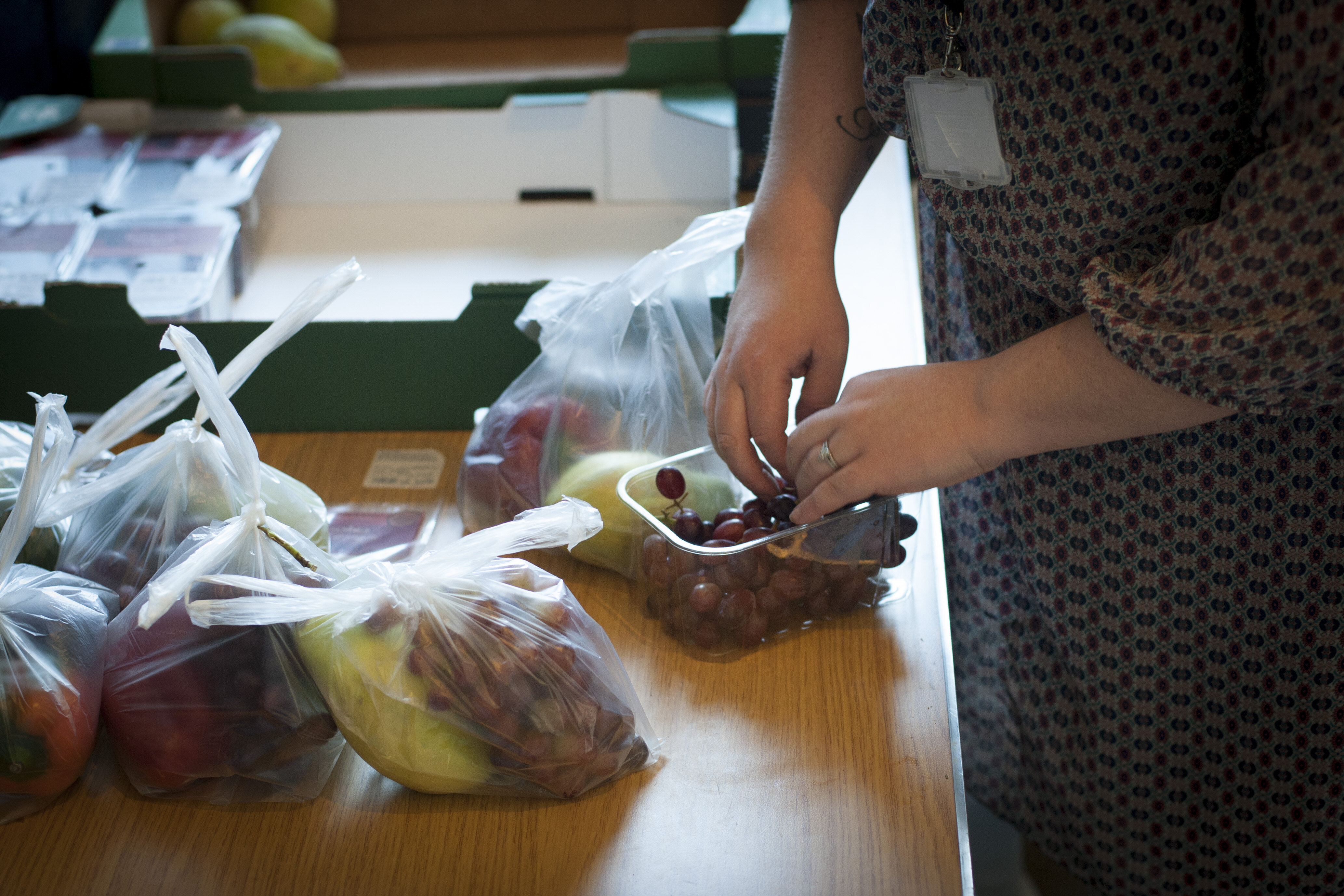
Food bank co-ordinators say many families feel “excluded” from Christmas this year because they can’t afford to take part in school parties or trips. Many are facing poverty for the first time.

The poorest 20% of households are twice as likely to have moderate or severe depression compared to the richest 20%, the survey found, while over a quarter of renters now have moderate depression.

The ONS also found that those struggling to afford energy bills are five times more likely to suffer from depression on a moderate or severe level and that those who were forced to spend less because of the rising cost of living were twice as likely to have moderate depression.

Last year, 18 million days were lost to mental illness, making it the biggest driver of economic inactivity in the UK. The days lost are estimated to have cost the economy £117 billion a year.

Rosena Allin-Khan, Labour’s shadow cabinet minister for mental health, said Liz Truss’s mini budget in September, which sent the financial markets into freefall and led to an increase in mortgages rates, had contributed to the crisis.

She said Labour would abolish so-called “non-dom” status — which allows foreign nationals living in the UK to avoid paying tax in this country on their overseas earnings—- and spend the money on the NHS instead.

“The disastrous economic policies of successive Conservative governments are heaping misery on millions this Christmas — but Christmas has come early for non-doms,” she told HuffPost UK.

“Labour has a plan to transform mental health services and prioritise prevention, by recruiting 8,500 staff in our first term, guaranteeing treatment starting within a month, providing access to a mental health professional in every school and a mental health hub in every community,” Allin-Khan said.

Charlotte White, who helps coordinate a foodbank in Wandsworth, said she had noticed an increase in people seeking support for their wellbeing through the foodbank.

“Many guests are struggling with their mental health, facing poverty for the first time as they suddenly find themselves unable to heat their homes and feed their families,” she said.

“More and more people are seeking support through our onsite wellbeing service.

“As Christmas approaches, I know that many of our families will be feeling particularly anxious. Whether it is paying for their child to attend the school Christmas party, school Christmas outing or buying a Christmas jumper for the non-uniform day, this year many will feel excluded.”

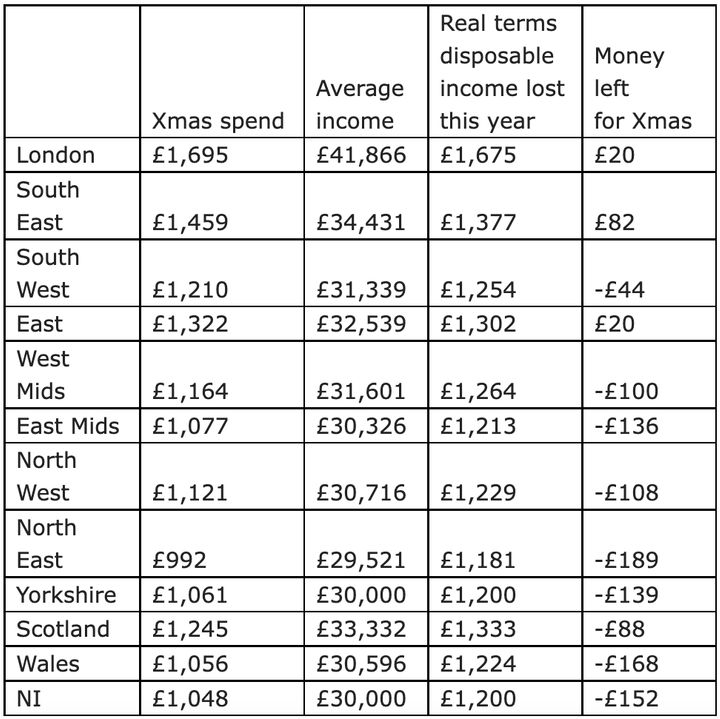
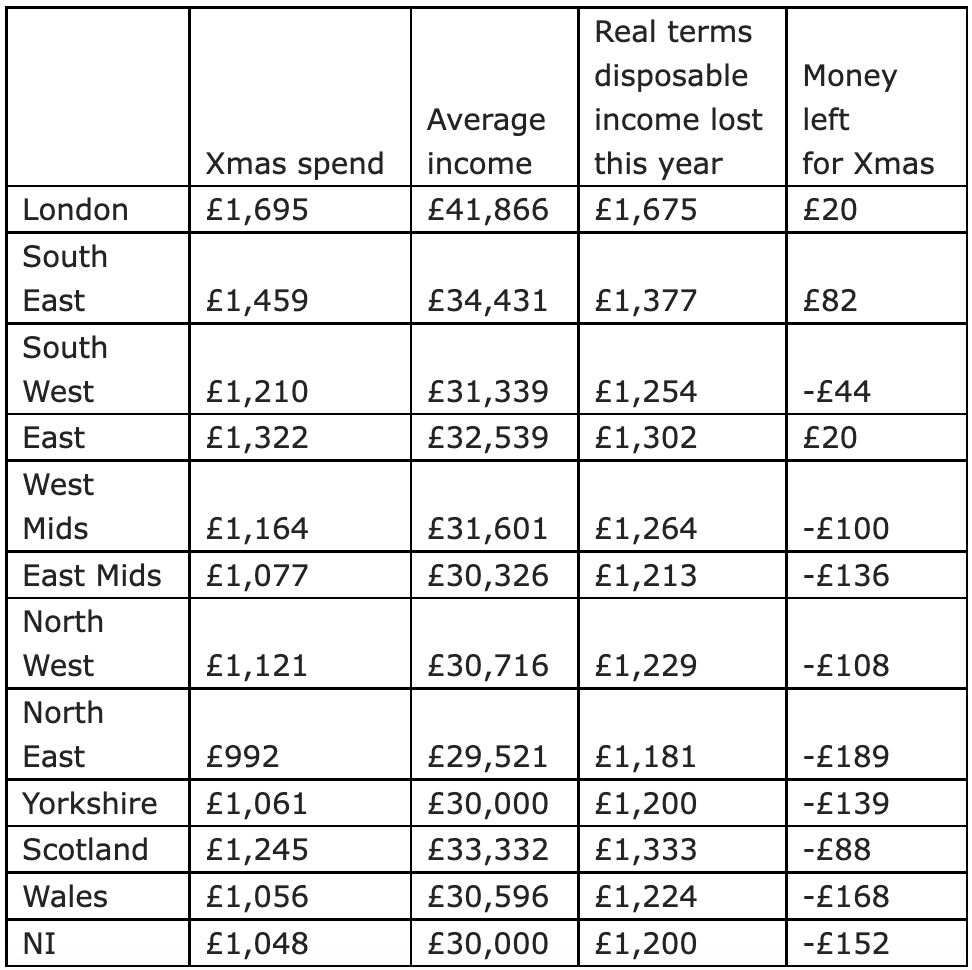
Separate analysis from Statista found that people living in the North East of England had the least money left to spend over Christmas after losing £189 of their disposable income this year.

They were followed by households in Wales, who will lose £168 and those in Northern Ireland who will lose £152.

Statista/Labour Party

One user at Little Village, a baby bank which operates across London, said Christmas this year would be “very, very difficult”.

“Christmas will just be a normal day,” they said.

“I can’t really afford to celebrate how I used to. I can’t afford gifts for the children, it’s very sad. My daughter will be even more sad. We won’t eat anything special.”

A Treasury spokesperson said: “We understand the impact that global price rises are having here in the UK and the toll that can take on people’s mental health.

“That’s why tackling inflation is this government’s number one priority, with a plan to more than halve inflation next year, and the typical household will save more than £900 as we hold down energy bills this winter.

“Over 8 million vulnerable households have received £1,200 in additional cost of living support this year, with a further £26 billion support package on the way next year – on top of increasing benefits in line with inflation, which is worth £11 billion to working age households and people with disabilities.

“It’s also vital that people can access mental health support during this challenging time, which is why have invested £500 million this year to expand provision of mental health services and address waiting times, as well as committing to an additional £2.3 billion in funding each year by 2024.”

Share Button