Older Men Reveal The Things They’ve Completely Stopped Caring About — And They Have Zero Regrets

Three weeks ago, my wife told me my hair looked ridiculous and I needed a haircut. I agreed. But I still haven’t booked one.

This is not new behavior. The time between haircuts keeps stretching. Six weeks becomes eight. Eight becomes “when I get around to it.” My wife and sons mention it. But my hair routine is simple. However I wake up is how it looks. I haven’t stopped caring — style has just slid down the priority list.

It’s common once men reach middle age. There comes a point where keeping up just stops feeling worth the effort. The stomach doesn’t get sucked in at the beach, and the gray doesn’t get touched up. Phrases that kids call “such a boomer thing to say” get used without shame.

“Almost as if I was given a magic spell, somewhere just after my 50th birthday, I stopped pretending to care whether my shoes matched my outfit,” said Nathan Rice, 53. “Pre-50 me would’ve judged Crocs like they were a moral failing.” Now he owns multiple pairs. Fuzzy for winter, breezy for summer. “It’s full-time comfort mode, and honestly, I know it’s not anyone’s idea of cool, and don’t care.”

And it goes well past wardrobe.

“

For decades, their identity is often tied to performance, providing and fitting into a specific mold of success. When they hit their 50s, there is a profound sense of relief that comes with realizing they don’t have to perform anymore.

– Kym Tolson, social worker

At 57, Elias Friedman no longer feels the need to look busy. “If I am done at work, I am done and I leave for the day,” said Friedman, a financial planner. The “I shouldn’t eat this” routine over dessert? “Just order it and move on. I exercise four-plus days per week. It’s time to enjoy life more.” As for networking events, he’d rather “have one real conversation than 10 forgettable ones.”

It started around 50, he said. “It was realizing how much mental bandwidth was going to things that had zero impact on my actual life. It feels like a combination of earned confidence and fatigue. You’ve run the experiment long enough to know what matters and what doesn’t.” His family has noticed, too. “I have less patience for anything inauthentic.”

Sometimes it’s clearer from the outside. Runbo Li saw it in his father, a Chinese immigrant who spent decades running small businesses in Pennsylvania. “He’d rehearse small talk before parent-teacher conferences like he was prepping for a deposition,” Li said. “Pressed shirts to go to Costco. Careful English around neighbors.”

Licensed mental health counselor Matt Grammer says the need for “social camouflage” often falls away in the early to mid-50s.

andreswd via Getty Images

Licensed mental health counselor Matt Grammer says the need for “social camouflage” often falls away in the early to mid-50s.

Then somewhere around 55, “he started wearing the same three polo shirts in rotation. Not because he couldn’t afford more. Because, and I quote, ‘Nobody is looking at me.’” He once wore house slippers to a restaurant, and when Li’s mom pointed it out, he said, “The food tastes the same.”

At a family barbecue, a neighbor asked what he thought about some political topic. “He just said, ‘I don’t think about it,’” Li said. “My mom looked at me like she’d lost him. I thought he’d finally found himself.”

There’s a reason this tends to hit men around the same age. Licensed clinical social worker Kym Tolson said it’s less about giving up and more about what she calls radical acceptance. “For decades, their identity is often tied to performance, providing and fitting into a specific mold of success. When they hit their 50s, there is a profound sense of relief that comes with realizing they don’t have to perform anymore.”

According to Tolson, families usually notice first, because “the man’s behavior changes before he even consciously realizes his mindset has shifted. He’s just living his life, but the family sees the sudden absence of anxiety.”

Licensed mental health counselor Matt Grammer calls it “social camouflage,” and says it falls away in the early to mid-50s. One of his clients sat through a 15-minute conversation about cryptocurrency at a barbecue, went home and told his wife, “Next time I’m just going to say, ‘I have no idea what you’re talking about.’” He felt relieved, not resigned. “Men at this age understand that all of the little social acts, looking busy, staying on trend, going the extra mile, do not change the social outcome,” Grammer said.

The thing that took Mark Shrime, 51, longest to let go of was the dance floor. At a wedding late last year, the music started, everyone rushed to the floor, and the pleas kicked in: “Come on, just one dance!” He’d always felt the guilt of being the one person who stayed seated, and he would join in. “This was the first time I ever felt like, you know what? I don’t actually want to … and I don’t have to.” Shrime calls it freeing. “I’ve finally accepted that I’m content sipping my whiskey and being around my friends who are having the time of their lives.”

There’s a reason this tends to hit men around the same age. Licensed clinical social worker Kym Tolson said it’s less about giving up and more about what she calls radical acceptance.

xavierarnau via Getty Images

There’s a reason this tends to hit men around the same age. Licensed clinical social worker Kym Tolson said it’s less about giving up and more about what she calls radical acceptance.

The shift isn’t always about what you stop doing. Sometimes it’s about what you stop saying. Keith Holloway used to justify every decision to anyone who raised an eyebrow. “I used to explain myself. Constantly,” he said. “Someone would push back on a decision, and I’d justify it until they agreed. I’ve completely stopped. I know what I know. If you’re curious, ask me. If you disagree, good for you.” After his separation, he saw that “a staggering amount of my energy had gone toward managing other people’s opinions of me. That’s done now.” He also hasn’t worn pants that button on a Zoom call since 2021. And won’t ever again.

Some men have taken it further than they’d ever admit to their families. Ian Glennon, a 57-year-old writer, hasn’t shared this with his family yet. “The thing that I do now, that I would never have done pre-50, is wear the same pairs of underpants and socks two days in a row,” he said. “I turn them inside out so there’s at least a cognitive resonance that they’re ‘clean.’” He admits that two days occasionally stretch to three. Public holidays falling on a Monday are, he said, a case in point.

He hasn’t told his 16-year-old daughter. “I’m sure the response would contain the words: ‘gross,’ ‘too much information’ and ‘do NOT post that on social media.’” He plans to send her the link when this article runs.

My wife still tells me I need a haircut, and my sons groan when I play country music. Last week, I described something as “absolute cinema” and my sons looked at me like I’d committed a crime. I’ll book the haircut eventually. But I’m not rushing. And when I wake up tomorrow, however my hair looks is how it’s going to stay.

Share Button

Scientists just created exotic new forms of matter that shouldn’t exist

Quantum technology is widely expected to transform how large and complex data sets are processed. Although it is currently used mostly in laboratories and research environments, the field is steadily moving toward real-world applications across a range of industries.

In a recent study exploring the fundamentals of quantum physics, researchers examined how matter behaves at extremely small scales, including atoms, electrons, and photons. The work, led by Cal Poly Physics Department Lecturer Ian Powell, focused on how varying a magnetic field over time can cause matter to exhibit unusual and previously unseen properties.

Powell and student researcher Louis Buchalter, who earned a Cal Poly bachelor’s degree in physics in 2025, published their findings in Physical Review B in a paper titled “Flux-Switching Floquet Engineering.” Their research shows that when magnetic fields are changed in a controlled, time-dependent way, they can generate quantum states that do not exist in materials that remain unchanged over time (remaining in the same state as time elapses).

“On a big-picture level, I would describe this as an advance in our understanding of how time-dependent control can create and organize new forms of quantum matter,” Powell said. “The central idea is that useful quantum properties can depend not just on what a material is, but on how it is driven in time. In our case, we show that periodically changing a magnetic field can produce driven quantum phases with no static counterpart.”

Toward More Stable Quantum Technologies

By carefully timing how magnetic fields are applied, scientists can design quantum systems with properties that are more stable and less vulnerable to “noise” or imperfections. These disruptions are a major challenge in quantum technology, often leading to errors in calculations or system performance.

Powell noted that while the technical details can be difficult to explain outside the field, the broader concept is clear. The findings suggest new ways to create and study these unusual quantum states in controlled settings such as ultracold-atom experiments.

“The most direct industry relevance of our study is to quantum computing and quantum simulation, rather than to a specific end-use sector at this stage,” Powell said. “Any eventual impact on areas like pharmaceuticals, finance, manufacturing or aerospace would likely be indirect, by contributing to the longer-term development of better quantum technologies. To move toward industry use, the next steps would be experimental validation and further work connecting these ideas to realistic quantum-device platforms.”

New Mathematical Patterns in Quantum Systems

Beyond creating new quantum states, the research also identified a mathematical organizing principle that mirrors patterns typically found in higher-dimensional quantum systems. This suggests that relatively simple systems driven by changing conditions could provide new ways to explore more complex quantum physics.

The team also mapped out how these exotic states form, revealing a precise structure in the system’s topological phase diagram. This diagram serves as a visual guide to different stable quantum phases, each defined by fixed topological properties.

Why Quantum Control Matters for Computing

Quantum mechanics allows computing systems to process information in ways that far exceed the capabilities of classical computers. These systems can perform large-scale simulations, analyze vast data sets, and solve complex problems more efficiently.

Magnetic fields play a central role in this process. They are commonly used to control and measure quantum bits (or qubits), the fundamental units of quantum information. Qubits are comparable to the units of 0s and 1s in classicalcomputing (applied in commonplace computing currently) used to represent physical electrical states.

Student Research Experience and Future Work

For Buchalter, participating in the study provided valuable insight into the research process and scientific communication.

“A lot about the process of conducting research and how new research findings are effectively communicated with the broader scientific community.”

“I learned that research is rarely a straightforward process, often requiring persistence and creative problem solving during the course of a research project,” Buchalter said. “I believe our results help demonstrate the power of Floquet engineering for realizing quantum systems with highly-tunable properties, paving the way for further research into periodically driven quantum matter and the development of its applications.”

Buchalter plans to begin a Master of Science program in materials science and engineering at the University of Washington in the fall, where he will focus on experimental studies of quantum matter. He is also considering a future career at a national laboratory working on quantum device development.

“I initially took on the project due to my interest in condensed matter physics, however, I became fascinated with the field of quantum materials through my experience,” Buchalter said. “I am very interested in continuing to study quantum matter and helping develop its applications in electronic and photonic devices.”

Share Button

Scientists say travel could slow aging and boost your health

Retinol creams may get most of the attention in the fight against visible aging, but researchers at Edith Cowan University (ECU) have pointed to a much bigger and more adventurous possibility: travel.

In a 2024 interdisciplinary study published in the Journal of Travel Research, ECU researchers applied the theory of entropy to tourism, proposing that positive travel experiences may support physical and mental health in ways that could help slow some signs of aging. The work does not suggest that travel can stop aging, but it frames tourism as more than a break from routine. It may be a way to help the body maintain balance, resilience, and repair.

How Travel Could Influence Aging

Entropy is often described as the universe’s movement toward disorder. In the context of health, the researchers suggest that experiences can either support or disrupt the body’s ability to stay organized and functioning well. Positive travel experiences may help reduce that drift toward disorder, while stressful or unsafe travel may push the body in the opposite direction.

“Aging, as a process, is irreversible. While it can’t be stopped, it can be slowed down,” ECU PhD candidate Ms. Fangli Hu said.

According to Ms. Hu, travel may improve well being by placing people in new environments, encouraging movement, increasing social interaction, and creating positive emotions. Those same ideas already appear in areas such as wellness tourism, health tourism, and yoga tourism.

“Tourism isn’t just about leisure and recreation. It could also contribute to people’s physical and mental health,” Ms. Hu added.

Travel Therapy and the Body’s Defense Systems

Viewed through an entropy lens, travel therapy could become a meaningful health intervention, Ms. Hu said. The idea is that positive travel experiences, as part of a person’s environment, may help the body maintain a healthier low entropy state by influencing four major body systems.

Travel often combines unfamiliar surroundings with relaxing experiences. New settings can stimulate the body, raise metabolic activity, and help activate self organizing processes that keep biological systems working smoothly. These experiences may also prompt the adaptive immune system, which helps the body recognize and respond to outside threats.

Ms. Hu said that this reaction improves the body’s ability to perceive and defend itself against external threats.

“Put simply, the self-defense system becomes more resilient. Hormones conducive to tissue repair and regeneration may be released and promote the self-healing system’s functioning.”

Stress Relief, Movement, and Healthy Aging

Relaxing travel activities may also help reduce chronic stress and calm an overactive immune response. Recreation can ease tension and fatigue in the muscles and joints, supporting metabolic balance and strengthening the body’s ability to resist wear and tear.

This matters because travel is rarely just sitting still. Trips often include walking through cities, hiking trails, climbing, cycling, or simply spending more time on your feet than usual. That physical activity can increase metabolism, energy use, and nutrient movement throughout the body, all of which may support the systems that keep the body repaired and resilient.

“Participating in these activities could enhance the body’s immune function and self-defense capabilities, bolstering its hardiness to external risks. Physical exercise may also improve blood circulation, expedite nutrient transport, and aid waste elimination to collectively maintain an active self-healing system. Moderate exercise is beneficial to the bones, muscles, and joints in addition to supporting the body’s anti-wear-and-tear system,” Ms. Hu said.

A Field That Is Still Taking Shape

Since the 2024 study, related work has continued to explore travel therapy as a possible health and wellness approach. A 2025 research note by Hu and colleagues described travel therapy as an emerging approach in which positive travel experiences may promote well being, while also emphasizing the need to weigh benefits against risks.

Another 2025 paper called for closer collaboration between travel medicine and tourism, reflecting a growing interest in how vacations, health risks, preventive care, and traveler well being overlap. A 2025 systematic review also found that tourism and healthy aging is becoming an important interdisciplinary research area, but remains underexplored and in need of stronger methods and clearer future research directions.

Together, these newer findings support a careful interpretation: travel may offer real health related benefits, especially when it includes movement, social connection, novelty, and restoration, but researchers are still working to understand how strong those effects are and who benefits most.

The Risks Behind the Benefits

The same research also cautions that travel is not automatically healthy. Tourists can face infectious diseases, accidents, injuries, violence, unsafe food or water, and other risks linked to poor planning or unsuitable travel choices.

“Conversely, tourism can involve negative experiences that potentially lead to health problems, paralleling the process of promoting entropy increase. A prominent example is the public health crisis of COVID-19.”

The central message is not that any trip will slow aging. Rather, positive travel experiences may help the body and mind function better by combining novelty, relaxation, physical activity, and social connection. When travel is safe, restorative, and active, it may do more than create memories. It could help support healthier aging from the inside out.

Share Button

My Intentions for CGC Year 10

Earlier today we had our first new Synchronize call for Conscious Growth Club Year 10.

Synchronize is our monthly orienting call where we check in with the current pulse of the group. What are people moving through? What kind of support would help this month?

Today’s call also gave me a clearer sense of what wants to happen in CGC this year – not as a rigid plan, but as an evolving direction.

Some of the words and themes that came up were:

connection
belonging
intimacy
action
momentum
relationship
ease
rest
integration
calm
openness
experimentation
wonder
surprise
courage
trust
devotion
creative flow
sharing the half-baked stuff
sharing more of our real journeys

That provides some nice clarity about how the CGC Year 10 energy is opening for us.

It also helped clarify the kinds of people we’d love to invite into CGC this year.

Not everyone. CGC has never been meant for everyone.

But if this kind of space would genuinely support you, I’d love for you to recognize yourself more clearly in the invitation.

A Year of Connection and Belonging

One of the strongest intentions for CGC Year 10 is to help the group become an even stronger space for real connection and belonging.

A lot of people are doing plenty of inner work these days.

They’re reading. Journaling. Watching videos. Listening to podcasts. Thinking about their patterns. Trying to improve their habits. Trying to understand themselves.

That can all be useful.

But there’s a certain kind of growth that doesn’t really activate until you bring your actual self into relationship with other self-aware, growth-oriented, action-taking people.

Not your polished self.
Not your “here’s my impressive update” self.
Not your “I’ve already figured this out” self.

Your real self – the part of you that is still experimenting.
Still sensing what wants to change.
Still learning how to trust your own deeper signals.

That’s one of the things we want CGC to support more strongly this year: people being able to show up in a real way, while they’re still in motion.

You don’t have to arrive fully formed – it’s actually better if you don’t.

Fully formed people are usually either done growing or pretending.

More Action, Less Solo Circling

Another strong theme from today’s Synchronize call was action.

Not frantic action.
Not grinding.
Not chasing.
Not hustling harder until your heart feels like it’s trapped in a cage.

More like: let’s stop circling the same things alone.

Let’s bring the stuck points into the room.

The decision you keep postponing.
The relationship pattern that needs attention.
The creative project that keeps almost becoming real.
The part of life that feels cluttered, heavy, vague, or unfinished.
The invitation you keep not sending.
The body signal you keep ignoring.
The truth you keep nibbling instead of claiming.

CGC works best when people bring what’s actually happening.

A decision.
A desire.
A transition.
A stuck place.
A longing.
A half-baked idea.
A request for support.

Then we can work with it together.

One intention for Year 10 is to help the club become a better bridge from insight to lived movement.

Not just more self-awareness.

More like:

I had the conversation.
I made the request.
I cleared the old thing.
I rested to replenish my energy.
I reached out.
I started the project.
I stopped pretending that old path still fits.
I let myself be seen.
I let life help me more.
I completed.
I cleared.
I released.

That’s the kind of progress I love seeing in CGC.

Sometimes it’s big and dramatic. Sometimes it’s beautifully simple. Both count.

Creative, Open-Hearted, Relational People

We’d especially love to welcome more people this year who are creative, open-hearted, socially warm, and willing to experiment with life.

By creative, I don’t necessarily mean professional artists, although we always have some of those in CGC each year.

I mean people who relate to life as something they’re actively shaping.

Writers, artists, entrepreneurs, coaches, weirdly brilliant nerds, intuitive explorers, relationship builders, community-minded people, project starters, experience designers, sensitive humans with unusual inner worlds – yes, please… more of these people.

People who have ideas they haven’t fully landed yet.

People who want to publish something, build something, host something, heal something, explore something, simplify something, or open a new doorway in life.

People who are willing to say:

“This isn’t finished yet, but here’s where I am.”

That kind of honesty is powerful in our group, and the group energy is especially good at helping such people move into meaningful next steps.

This gives other people permission to be real too. One person’s progress often inspires others to move into action.

I’d rather be in a room with sincere half-baked liveliness than polished pretense. CGC is a club where energy loves to move into action, not just circulate in possibility space. And given the recent Spirit Airlines news, there’s a timely reminder here: spirit is wonderful, but the quality of the journey matters too – and eventually, the plane needs to land.

A Healthier Relationship With Support

A lot of thoughtful people are oddly bad at receiving support.

They can be very good at helping others.
Very good at thinking.
Very good at coping.
Very good at being self-sufficient.

But self-sufficiency can quietly become isolation.

One of my intentions for CGC Year 10 is to normalize receiving more support.

Bring the thing you need help with.

Bring the part that feels unclear.

Bring the place where you’d love perspective, encouragement, mirroring, truth, warmth, or a nudge.

This doesn’t mean we turn CGC into a therapy space. It isn’t that.

It’s a growth club. A live, relational, participatory space. A place for adults who are willing to engage with honesty, responsibility, curiosity, and care.

But it does mean you don’t have to keep pretending that your life is a solo engineering project.

Humans need supportive rooms.

Humans need honest mirrors.

Humans need other humans who can say, “Yes, I get that,” or “Have you considered this?” or “That sounds like the old pattern talking,” or “I think you already know what you want here.”

That kind of support can change the direction of a whole month – and sometimes a whole life. People often become bolder and braver when they have a rock-solid base of social support. They take more action. They hesitate less. They trust themselves more.

Stretch, But Don’t Strain

Another intention for this year is to keep CGC stretchy but humane.

I want people to grow.
I want people to experiment.
I want people to become braver, warmer, more expressive, more honest, and more alive.

But I don’t want the group field to feel like pressure.

A good growth space should help people breathe.

This year I want CGC to hold a healthy range:

Symbolic mandala representing the balanced rhythm of CGC Year 10 call formats
  • Support when life feels messy and you don’t want to sort through it alone.
  • Flow when your energy is scattered and you want to turn insight into forward motion.
  • Release when something is complete, stale, heavy, or ready to leave your life.
  • Embody when you’ve been too much in your head and your body wants a vote.
  • Touch when relationships, friendship, trust, or real human contact need more care.
  • Wonder when the world feels too narrow and possibility wants to open again.
  • Play when life has become too serious and delight needs a place to land.
  • Connect when you want warmth, belonging, laughter, and deeper connection with your fellow CGCers.
  • Synchronize when we want to sense the month together and choose a shared direction.

That’s the new rhythm of CGC Year 10.

It’s not a rigid curriculum. It’s a living structure.

We’ll keep listening to what people are actually moving through, and we’ll shape the flow accordingly.

Who Will Probably Feel at Home Here

You may be a strong match for CGC Year 10 if you want more connection, support, honesty, and aliveness in your life.

You’ll probably feel at home if you’re willing to show up live, be on camera, and participate in good faith.

You’ll probably fit well if you like thoughtful people, warm conversation, personal growth, experimentation, emotional honesty, practical movement, curiosity, and a bit of wonder.

You don’t have to be extroverted.

You don’t have to be perfectly confident.

You don’t have to have your life neatly arranged and color-coded.

But you do need to be willing to bring your real self into the room.

CGC is probably not a fit if you mainly want private content to consume in the background, if you prefer hiding, if you don’t want live interaction, or if you want a rigid step-by-step formula where someone else tells you exactly what to do with your life.

It’s also not a good match for cynical, contemptuous, cruel, or dehumanizing energy.

We’re creating a warm room together.

That means the quality of the people matters.

My Deeper Intention

My deeper intention for CGC Year 10 is simple:

I want CGC to help people stop growing alone and start living more fully – in motion, in connection, and in real life.

More honest conversations.
More invitations.
More warmth.
More courage.
More grounded action.
More creative experiments.
More relational aliveness.
More support that actually fits what people are moving through now.

I want CGC to be a place where people can bring their lives into the room and feel something shift because they did.

Not every call needs to be profound.

Some calls may be playful. Some may be practical. Some may be tender. Some may be surprising. Some may be clarifying in a way that seems small at the time but creates powerful ripples.

That’s real growth.

Not always fireworks. Sometimes it’s a door finally opening because someone had the courage to touch the handle and ponder, “What if?”

Join Us for CGC Year 10

Enrollment for Conscious Growth Club Year 10 is open now, and it closes Thursday, May 7 at 11:59 PM Pacific.

This is our only opening for new members this year, so if CGC feels aligned, this is the window to join us. After enrollment closes, the next planned opening won’t be until April 2027.

This new CGC year runs from May 1, 2026 through April 30, 2027, and your membership begins as soon as you join.

If this feels like the kind of space you’ve been wanting – more honest, more alive, more connected, more supportive, and more worth showing up for – you’re warmly invited to join us.

If you’ve been craving a place where growth feels more relational, honest, and alive, this may be your year to join us inside.

Here’s the full invite page:

Conscious Growth Club Year 10

If you read the invitation and feel a clean yes, trust that.

We’d love to welcome more creative, open-hearted, growth-oriented people into the room this year.

Especially if you’re ready to bring more of your real life with you.

Share Button

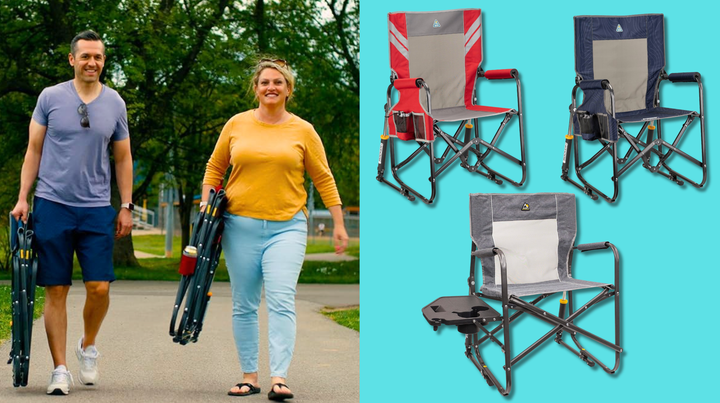
Rocking Chairs May Have Surprising Health Benefits — And This 20% Off Outdoor Version Lets You Take Them Anywhere

Gliding back and forth on your favorite rocking chair isn’t just relaxing; in fact, government studies show that regularly using a rocking chair can help you with knee strength, balance, walking speed and getting out of chairs — especially if you’re of mature age. If you spend a lot of time outdoors, you’ll be happy to know we spotted a folding, rocking camp chair for 20% off, the lowest price it’s been since November, which lets you enjoy the benefits of rocking wherever you go. For added convenience (and just $20 more), there’s even a version with a handy folding side table with a cup holder. How rockin’ is that?

The travel-friendly, folding design lets you rock anywhere you’d like.

When you’re watching a T-ball game, enjoying a campfire or having a cool drink on the porch, this travel-ready rocker is there to bring you comfort and give your knees a little movement. It comes in a selection of great colors, for each family member to have their own. “This is an amazing chair that is well built, sturdy, and most importantly, rocks smoothly,” one said. ”…If you are a rocking lover, it can be used everywhere regular rocking chairs cannot.”

The folding chair weighs less than 14 pounds, making it easy to carry via the shoulder strap or built-in handle. With a durable steel frame and padded armrests, the chair can hold up to 250 pounds. Reviewers of all sizes speak to the comfort and durability of the seat.

“I am a bigger guy but within the weight limit of this rocker and I have no issues,” one wrote. “The back is at a comfortable height for my 6’ and the arm rests are more comfortable than my other rocker who suffers from a short back and uncomfortable arm rests.”

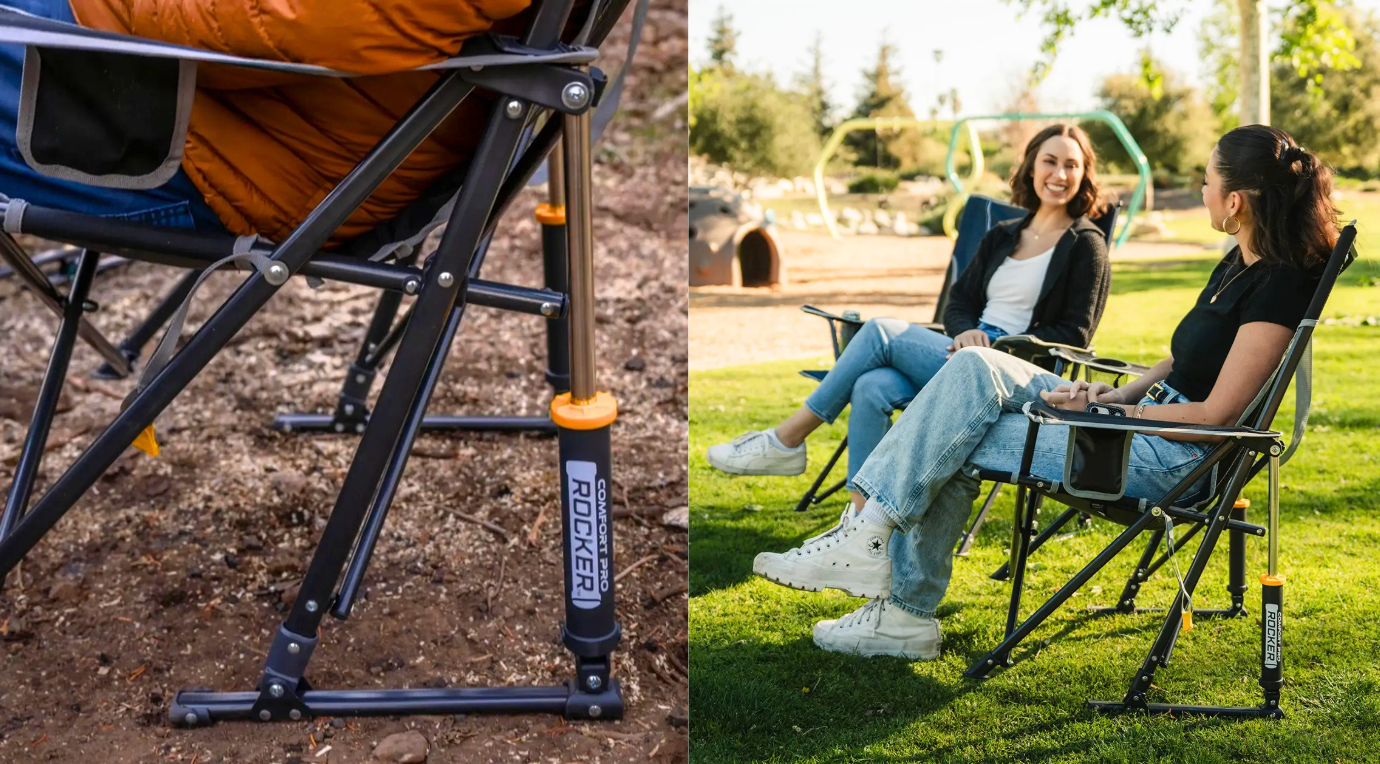
The crown jewel of the chair is the brand’s patented “spring-action rocking technology” (which you can read about in depth here), which is designed to let you rock smoothly and consistently, without taking up extra space.

The brand says the chair is designed to reduce pressure in your knees and boost circulation as you sit. Per government research, that’s likely not an overstated possibility.

As previously mentioned, rocking doesn’t just feel nice; research shows it may help our bodies, especially as we get older. There’s a lot of cool research on rocking, but we love this blog post from Alegre Home Care, a California home health care company specializing in dementia care, that breaks down some rocking highlights and shares studies on rocking. Take this study from the University of Rochester on rocking eases symptoms of dementia and relieving inflamtion.

Medical research aside, reviewers say the chair is seriously supportive and comfortable — like you may fall asleep in it, with one calling it a “solid rocker to take anywhere.” “Solid built, comfortable and smooth motion,” one wrote. “Perfect height for getting in and out, and sets up very easily.” “The back provides decent lumbar support and the seat is comfortable,” another wrote. “The rocking motion is smooth, easy, and never feels like you’re going to tip over.”

Though watch out, because they’re so comfortable, your whole family will want one.

Called a “must-have” for summer comfort, many reviewers say the rockers will become a crowd-favorite. “We brought these on a family camping trip. They were LOVED! Our parents loved them and took them over, offered them to all their friends to try out,” one wrote. ”…We barely got to use our own chairs!”

“This chair was recommended to us from a friend…It’s great the back is mesh makes it comfortable to sit in on hot days,” another wrote. “My mom sat in it and is begging for one for herself now. Great buy!”

Reviewers love this camping rocking chair for bringing comfort and a little motion wherever they are. Read more 5-star reviews and grab one on sale.

“We brought these on a family camping trip. They were LOVED! Our parents loved them and took them over, offered them to all their friends to try out. Everyone complimented them and stayed in them. We barely got to use our own chairs! Everyone was asking about them. A must have item” — Sarah

“This is an amazing chair that is well built, sturdy, and most importantly rocks smoothly. The back is high enough to support your entire back but not the head. It deploys and folds up easily and can be stored in very small spaces being only 4.5′ wide when folded up. It weighs 13.5 lbs. so it’s not the lightest lawn/camping chair around but it has hand and shoulder straps. Most importantly if you are a rocking lover, it can be used everywhere regular rocking chairs cannot.” — Robert A.

“This rocker is fantastic. It’s one of the most comfortable outdoor chairs I have ever had. I really appreciate how easy it is to fold it up and carry it with the built in carry strap. It is comfortable to sit on and the rocking action is great. It is a bit heavier than conventional fold up chairs, but well worth it for the comfort it brings to the sitting experience. I highly recommend this chair.” — Bruce Hankee

“Great in and out of doors. Year round use. Rocking great for ’old legs’” — Arthur Jaeger

“This chair was recommended to us from a friend. This is a very comfortable chair. Bought for the lovely softball game days and tournament weekends. It’s great the back is mesh makes it comfortable to sit in on hot days. My mom sat in it and is begging for one for herself now. Great buy”!” — JP42

The Real Deal: We use deal trackers and commerce experience to sift through “fake” hike-and-drop deals and other deceptive sales tactics. Products will usually be rated at least 4 stars with a minimum 15% discount. (And when there’s an exception, we’ll tell you why.)

Share Button

This simple amino acid supplement greatly reduces Alzheimer’s damage

Alzheimer’s disease (AD) is a progressive brain disorder and a leading cause of dementia worldwide. Despite years of research, there is still no cure. New antibody-based treatments that target amyloid β (Aβ) have recently emerged, but their benefits have been modest. These therapies can also be expensive and may trigger immune-related side effects, underscoring the urgent need for safer, more affordable options that can slow the disease.

A recent study published in Neurochemistry International offers a surprising possibility. Researchers from Kindai University and partner institutions found that arginine, a naturally occurring amino acid, can reduce the buildup of harmful Aβ proteins in animal models of Alzheimer’s. Arginine also acts as a safe chemical chaperone, helping proteins maintain their proper structure.

The team noted that while arginine is widely available as an over-the-counter supplement, the doses and methods used in this study were specifically designed for research and are not the same as commercial products.

The research group included Graduate Student Kanako Fujii and Professor Yoshitaka Nagai from the Department of Neurology at Kindai University Faculty of Medicine in Osaka, along with Associate Professor Toshihide Takeuchi from the Life Science Research Institute at Kindai University.

Lab and Animal Studies Show Strong Effects

In laboratory experiments, the scientists first showed that arginine can block the formation of Aβ42 aggregates, which are considered especially toxic. The effect increased with higher concentrations.

They then tested oral arginine in two well-established Alzheimer’s models:

  • A Drosophila model, expressing Aβ42 with the Arctic mutation (E22G)
  • An AppNL-G-F knock-in mouse model, carrying three familial AD mutations

In both cases, arginine treatment reduced the accumulation of Aβ and lessened its harmful effects.

“Our study demonstrates that arginine can suppress Aβ aggregation both in vitro and in vivo,” explains Prof. Nagai. “What makes this finding exciting is that arginine is already known to be clinically safe and inexpensive, making it a highly promising candidate for repositioning as a therapeutic option for AD.”

Improved Brain Health and Reduced Inflammation

In the mouse model, the benefits went beyond reducing protein buildup. Arginine lowered amyloid plaque levels and reduced the amount of insoluble Aβ42 in the brain. Treated mice also performed better in behavioral tests.

The researchers found that arginine reduced the activity of genes linked to pro-inflammatory cytokines, which are associated with neuroinflammation, a major feature of Alzheimer’s disease. This suggests that arginine may not only prevent harmful protein aggregation but also protect brain cells more broadly.

“Our findings open up new possibilities for developing arginine-based strategies for neurodegenerative diseases caused by protein misfolding and aggregation,” notes Prof. Nagai. “Given its excellent safety profile and low cost, arginine could be rapidly translated to clinical trials for Alzheimer’s and potentially other related disorders.”

A Low-Cost Path Toward New Alzheimer’s Treatments

The study highlights the growing interest in drug repositioning, which involves finding new uses for existing, well-established compounds. Because arginine is already used clinically in Japan and has been shown to safely reach the brain, it could bypass some of the early hurdles that slow down traditional drug development.

Still, the researchers caution that more work is needed. Additional preclinical and clinical studies will be required to determine whether these results can be reproduced in humans and to establish the most effective dosing strategies.

Even so, the findings provide strong early evidence that simple nutritional or pharmacological approaches may help reduce amyloid buildup and improve brain function.

Expanding Understanding of Alzheimer’s Biology

Beyond its potential as a treatment, this work sheds new light on how Aβ proteins form and accumulate in the brain. It also points to a practical and cost-effective strategy that could eventually benefit millions of people living with Alzheimer’s worldwide.

Professor Yoshitaka Nagai, a neurologist and Chair of the Department of Neurology at Kindai University Faculty of Medicine in Osaka, focuses his research on neurodegenerative diseases including Alzheimer’s, Parkinson’s, and amyotrophic lateral sclerosis. His work centers on protein misfolding and RNA-related mechanisms, and he has received multiple honors from organizations such as the Japanese Society of Neurochemistry and the Japanese Dementia Society.

This research was supported by the Ministry of Education, Culture, Sports, Science, and Technology (MEXT) (Grant No. 20H05927), Japan Society for the Promotion of Science (JSPS) (Grant Nos. 24H00630, 21H02840, 22H02792, and 25K02432), Japan Science and Technology Agency (JST) Super-Highway Program (SHW2023-03), and National Center of Neurology and Psychiatry.

Share Button

Should you worry about napping?

Dr Aziza explains why napping could be a sign of a bigger issue

Share Button

These Sex Positions Can Actually Be Dangerous After 70

As you age, your go-to sex positions might not age as gracefully alongside you. After decades of showing off your flexibility in bed, you may notice as you enter your 70s that your joints ache, your back hurts and you maybe can’t bend as easily as before.

Arthritis and other age-related conditions may also come into play — issues that likely didn’t affect you when you were younger. Not to mention there’s the age-old (no pun intended) myth that your sex life somehow “ends” after a certain age.

“Body image shifts, loss of a long-term partner and deeply internalized ageism are among the biggest barriers to intimacy after 70,” Alicia Sinclair, sex educator, founder and CEO of Le Wand, told HuffPost. “Sexual desire doesn’t have an expiration date, and neither does the need for connection and pleasure. Open communication with a partner — being explicit about what feels good and what doesn’t — often leads to greater intimacy than couples experienced in earlier years.”

Arthritis and other conditions may affect sex as you age.

pidjoe via Getty Images

Arthritis and other conditions may affect sex as you age.

Which means sex isn’t off the table after 70. Instead, it simply requires more adaptability and a better understanding of what works and what doesn’t.

Below is a list of sex positions that can become risky or uncomfortable after 70, — and expert-backed advice for what to try instead.

Traditional Missionary (Particularly For The Bottom Partner)

“This one catches people off guard,” according to Annette Benedetti, sex and intimacy coach and host of the podcast ”Talk Sex With Annette.” “Seventy-five percent of hip fractures happen in women, and bone density takes a nosedive after menopause. [The top partner’s] weight pressing down on [the bottom partner’s] hips and pelvis during missionary is exactly the kind of sustained force that can snap a fragile femur. Add vaginal atrophy and deep thrusting from above, and you’re also looking at vaginal tears and bleeding.”

Adds Sinclair: “Lying flat with a partner’s weight on top can compress the spine and make it difficult to breathe, especially for anyone with osteoporosis, spinal stenosis or limited hip mobility.”

Instead, Sinclair recommends using a wedge or positioning pillow under the hips to reduce lumbar strain or shifting to a side-lying position that keeps the spine in a neutral position.

Benedetti suggests flipping the dynamic with a modified cowgirl position, with the receiving partner on top, sitting upright on their partner’s lap or kneeling. “[The kneeling position] is what orthopedic specialists recommend for women with osteoporosis. She controls the depth, the pace, and the pressure goes through his body, not hers.”

Doggy Style (Kneeling)

“Sustained kneeling puts significant pressure on the knees and wrists, and the position can destabilize the lower back,” Sinclair said. “For anyone with knee replacements, arthritis or balance issues, it’s a real injury risk.”

Benedetti adds that rear-entry positions with deep thrusting may also become uncomfortable over time. “With age — especially after menopause or other hormonal changes — internal tissues can become shorter, thinner and more sensitive. What once felt pleasurable can start to feel uncomfortable or even painful, with a higher risk of irritation or small tears.”

As an alternative, Sinclair recommends a supported standing variation, where one partner leans over a bed or cushioned surface, keeping weight off the knees entirely.

Another option is spooning. “You get a similar rear-entry angle and sense of closeness, but the receiving partner can control depth by adjusting their leg position,” Benedetti said. “It also removes pressure from the knees, wrists and shoulders, making it a much more comfortable choice overall.”

Adapting your favorite sex positions to your body and your comfort is the right choice at every age.

Halfpoint Images via Getty Images

Adapting your favorite sex positions to your body and your comfort is the right choice at every age.

Legs Up Over Shoulders Positions

“This position demands hip flexion that older joints often can’t handle safely, especially for people with hip replacements or conditions like arthritis,” Benedetti said. “It can also create very deep penetration at a time when tissues may be more sensitive. That’s a challenging combination.”

The better option? Reclining with a pillow wedge under the hips. Keep the knees bent and slightly apart, with the hips gently elevated to achieve a similar angle — without putting excess strain on the joints. This allows for better alignment and comfort while reducing orthopedic risk.

Cowgirl / Reverse Cowgirl (On Top)

“This requires quad strength, hip flexibility and balance — all of which decline with age,” Sinclair said. “A fall or sudden movement can cause hip fractures or knee injuries, which are among the most serious fall-related injuries in older adults.”

If you’re keen on doing the position, Sinclair recommends using a supported seated straddle — sitting face-to-face in a sturdy chair or using a dedicated intimate machine like The Cowgirl with a low, stable platform, which distributes weight differently and reduces fall risk dramatically.

Standing Sex

“Balance and bone density both decline after 70, and the one-year mortality rate after a hip fracture sits around 25%,” Benedetti said. “A fall during sex isn’t a punchline; it’s a serious event.”

What can you do instead? Benedetti suggests using a sturdy armchair. One partner sits while the other straddles. Face-to-face, full-body contact — all the closeness without the risk of a fall.

Sex might look and feel different in your 70s than it did in previous decades, but it doesn’t mean it has to feel less pleasurable. With a better understanding of the body’s changing needs, couples can adapt their sex life rather than give up on it.

Share Button

Calls for Reformer Pilates regulation amid boom

Reformer Pilates businesses in the UK rose nearly ten-fold between 2024 and 2025.

Share Button

Weight loss drug Ozempic linked to lower depression and anxiety risk

Medications used to treat type 2 diabetes and obesity, including well-known brands like Ozempic and Wegovy, may offer unexpected mental health benefits. These drugs belong to a class called GLP-1 receptor agonists, and a large new study found they are linked to fewer psychiatric hospital visits and less time off work due to mental health conditions. The research was conducted by scientists from the University of Eastern Finland, Karolinska Institutet in Sweden, and Griffith University in Australia.

Conditions like obesity and diabetes are often connected with a higher risk of depression, anxiety, and other mental health challenges. At the same time, people with psychiatric disorders are more likely to develop metabolic diseases. Because of this two-way relationship, researchers have been exploring whether treatments for physical health conditions might also influence mental well-being.

Large Study Tracks Nearly 100,000 People

To investigate this, researchers analyzed data from Swedish national health registers, following nearly 100,000 individuals between 2009 and 2022. More than 20,000 participants had used GLP-1 medications during that time. This large dataset allowed scientists to compare periods when people were taking the drugs with periods when they were not.

Significant Reductions in Depression, Anxiety, and Hospital Care

The findings showed a strong link between GLP-1 drug use and improved mental health outcomes. The use of GLP-1 medications — particularly semaglutide, the active ingredient in Ozempic and Wegovy — was associated with fewer psychiatric hospital visits and reduced sickness absence.

During times when people were taking semaglutide, psychiatric-related hospital care and sick leave dropped by 42% compared with periods when they were not using these medications. The risk of depression was 44% lower, while anxiety disorders were reduced by 38%.

Lower Risk of Substance Use and Suicidal Behavior

The study also found notable reductions in substance use disorders. Hospital care and work absence linked to substance use were 47% lower during periods of semaglutide use. In addition, GLP-1 receptor agonists were associated with a reduced risk of suicidal behavior.

One of the study’s authors, Professor Mark Taylor from Griffith University, says such results were to be expected: “An earlier study examining Swedish registers found the use of GLP-1 medications to be associated with a reduced risk of alcohol use disorder. Alcohol-related problems often have downstream effects on mood and anxiety, so we expected the effect to be positive on these as well.”

Why Might These Drugs Affect the Brain?

Even so, the strength of the results surprised the researchers. Because the study relied on registry data, it cannot prove exactly how or why these medications influence mental health.

“Because this is a registry-based study, we cannot determine exactly why or how these medications affect mood symptoms, but the association was quite strong. It is possible that, in addition to factors such as reduced alcohol consumption, weight loss-related improvements in body image, or relief associated with better glycemic control in diabetes, there may also be direct neurobiological mechanisms involved — for example, through changes in the functioning of the brain’s reward system,” says Research Director, Docent Markku Lähteenvuo from the University of Eastern Finland.

Published in a Leading Psychiatry Journal

The findings were published in The Lancet Psychiatry, a leading journal in the field. While some earlier studies on GLP-1 drugs and mental health have produced mixed results, many of those were smaller in scale. This large, long-term analysis adds stronger evidence that these widely used medications could have broader effects beyond managing blood sugar and weight.

Share Button