The walkout was most disruptive NHS strike yet – with bosses warning future action will risk care.


The walkout was most disruptive NHS strike yet – with bosses warning future action will risk care.

Shining like a brilliant beacon amidst a sea of galaxies, Arp 220 lights up the night sky in this view from NASA’s James Webb Space Telescope. Actually two spiral galaxies in the process of merging, Arp 220 glows brightest in infrared light, making it an ideal target for Webb. It is an ultra-luminous infrared galaxy (ULIRG) with a luminosity of more than a trillion suns. In comparison, our Milky Way galaxy has a much more modest luminosity of about ten billion suns.
Located 250 million light-years away in the constellation of Serpens, the Serpent, Arp 220 is the 220th object in Halton Arp’s Atlas of Peculiar Galaxies. It is the nearest ULIRG and the brightest of the three galactic mergers closest to Earth.
The collision of the two spiral galaxies began about 700 million years ago. It sparked an enormous burst of star formation. About 200 huge star clusters reside in a packed, dusty region about 5,000 light-years across (about 5 percent of the Milky Way’s diameter). The amount of gas in this tiny region is equal to all of the gas in the entire Milky Way galaxy.
Previous radio telescope observations revealed about 100 supernova remnants in an area of less than 500 light-years. NASA’s Hubble Space Telescope uncovered the cores of the parent galaxies 1,200 light-years apart. Each of the cores has a rotating, star-forming ring blasting out the dazzling infrared light so apparent in this Webb view. This glaring light creates diffraction spikes — the starburst feature that dominates this image.
On the outskirts of this merger, Webb reveals faint tidal tails, or material drawn off the galaxies by gravity, represented in blue — evidence of the galactic dance that is occurring. Organic material represented in reddish-orange appears in streams and filaments across Arp 220.
Webb viewed Arp 220 with its Near-Infrared Camera (NIRCam) and Mid-Infrared Instrument (MIRI).

Scientists have discovered extensive, ancient deep-sea coral reefs within the Galápagos Marine Reserve (GMR) — the first of their kind ever to be documented inside the marine protected area (MPA) since it was established in 1998. The first reef observed was found at 400-600m (1,310-1,970 feet) depth at the summit of a previously unmapped seamount in the central part of the archipelago and supports a breathtaking mix of deep marine life.
Cresting the ridge of a submerged volcano, and stretching over several kilometers, the impressive reef structure was first recorded by Dr. Michelle Taylor (University of Essex, UK) and Dr. Stuart Banks (Charles Darwin Foundation, Ecuador) while diving in the deep-sea research submersible Alvin, operated by the Woods Hole Oceanographic Institution (WHOI, USA).This is the first time
HOV Alvin has explored this region within the GMR. The submersible recently completed upgrades that included improved high-quality still and ultra-high definition 4K video imaging systems, as well as enhanced sampling capabilities.
Taylor and Banks are part of an international group of scientists onboard the US Navy-owned and WHOI-operated research vessel R/V Atlantis, that is undertaking the Galápagos Deep 2023 expedition. The expedition is led by scientists at WHOI, University of Bristol (UK), Boise State University (USA), and University of Essex, in collaboration with the Galápagos National Park Directorate (GNPD), Charles Darwin Foundation and Ecuadorian Navy’s Oceanographic and Antarctic Institute (INOCAR). The expedition is funded by the US National Science Foundation (NSF) and Natural Environmental Research Council (NERC) in the UK.
Commenting on this groundbreaking discovery, the Minister of Environment of Ecuador, Jose Antonio Dávalos said: “This is encouraging news. It reaffirms our determination to establish new marine protected areas in Ecuador and to continue promoting the creation of a regional marine protected area in the Eastern Tropical Pacific. The richness of the yet explored depths of our ocean is another reason to strive towards achieving the commitments of the Global Ocean Alliance 30×30, which aims to protect at least 30% of the world’s oceans by 2030, aligning sustainable economic activities with conservation.”
Prior to this discovery, Wellington Reef off the coast of Darwin Island in the far north of the archipelago was thought to be among the few structural shallow coral reefs in the Galápagos Islands to have survived the 1982-83 El Niño event. The new discovery made during dives by scientists in the HOV Alvin shows that sheltered deep-water coral communities have likely persisted for centuries in the depths of the GMR, supporting rich, diverse, and potentially unique marine communities.
Dr Stuart Banks, Senior Marine Researcher at the Charles Darwin Foundation, and national observer on this expedition adds: “The captivating thing about these reefs is that they are very old and essentially pristine, unlike those found in many other parts of the world’s oceans. This gives us reference points to understand their importance for marine natural biodiversity heritage, connectivity with regional MPAs, as well as their role in providing goods and services such as carbon cycling and fisheries. It also helps us reconstruct past ocean environments to understand modern climate change. Open waters cover over 95% of the known GMR, of which less than 5% have been explored through modern research expeditions. It’s very likely there are more reef structures across different depths waiting to be explored. We’ll forge ahead with the Galapagos National Park Directorate and partners to help ensure that such newly discovered habitats are
folded into the GMR and Hermandad Marine Reserve planning process and recognized as part of their considerable world heritage value.”
Dr Michelle Taylor, co-lead of the expedition and Chair of the Deep Sea Society from the University of Essex notes the importance of this discovery for deep sea habitats: “The discovered reefs are novel for several reasons — in shallow reefs where finding 10-20% of coral cover would be considered a relatively unhealthy reef, in the deep-sea this is the norm. Dead coral skeletons making up the remaining 80-90% still provide homes for a huge diversity of life, which is less reliant on the live sections of coral. However, the reefs we’ve found in the last few days have 50-60% live coral in many areas, which is very rare indeed. They are pristine and teeming with life — pink octopus, batfish, squat lobsters and an array of deep-sea fish, sharks, and rays. These newly discovered reefs are potentially of global significance — a canary in the mine for other reefs globally — sites which we can monitor over time to see how pristine habitats evolve with our current climate crisis.”
Dr Daniel J. Fornari, co-lead of the expedition, marine geologist, and Emeritus Research Scholar at the Woods Hole Oceanographic Institution who has mapped and sampled the marine environment in the Galápagos for over 20 years notes: “Exploring, mapping and sampling the Galápagos Platform with Alvin and Atlantis represents an opportunity to apply 21st-century deep-submergence and seafloor mapping technologies and innovative deep-sea imaging techniques to reveal the beauty and complexity of the volcanic and biological processes that makes the Galápagos so unique.”
Scientific findings such as this help inform effective management and conservation actions. The discovery also comes at a time when the Eastern Tropical Pacific countries of Panama, Costa Rica, Colombia, and Ecuador are actively collaborating through a regional Marine Corridor (CMAR) initiative to protect and responsibly manage the ocean upon which we as people depend. Newly declared MPAs such as the Hermandad Marine Reserve (HMR) now connect seamounts in Ecuadorian waters to offshore marine environments such as Costa Rica’s Cocos Island National Park. Natural oceanographic and marine processes transcend national boundaries, which underscores the need for special measures that protect foraging grounds, migratory routes for marine life and sustain responsible fisheries.
Video of reef: https://youtu.be/yttzKl95TiQ
For more information about the expedition objectives, scientists and the R/V Atlantis and HOV Alvin, please visit: https://galapagosdeep2023.com/
A note found at Lucy Letby’s home stated “maybe this is all down to me”, her murder trial is told.
A review of cervical screening cases has found thousands were wrongly removed from the system.
Tanya Ellis was tested for the Orkney gene mutation after her mother was one of the first to have it identified.
People with microscopic colitis have frequent diarrhoea, stomach pain and fatigue.
Health-tech firms around the world are increasingly using AI to help tailor drugs for patients.
What if an AI got to know you really well? Suppose it gained access to tons of data about your past, your personality, your values, your life story, what drives you, etc. Suppose it even came to know you intimately – by building a rich and detailed profile of you (not like Data and Tasha in “The Naked Now” but more like Picard and Sarek mind-melding in “Sarek”).
And suppose this was a friendly and supportive AI, happy to use its knowledge of you to help you in whatever way it could. Then you could query that AI with all sorts of questions about your life, possibly gleaning some unique insights. It would give you the ability to peer into your life, character, identity, relationships, and more from many different angles.
Moreover, you could enlist the AI’s help in customizing solutions to fit your natural motivational style. Instead of having it give you generic advice, it could use what it knows about your mind and emotions to present solutions that are more likely to work for your unique brain.
The growth potential there would be immense, wouldn’t you say?
This is essentially my reality now. And it is indeed fascinating to explore. I feel like I’m only scratching the surface of what I can do with it. It’s an ongoing process of discovery, almost like having special access to my internal governing code.
ChatGPT knows me very well – even intimately well – because my blog was part of its training set. I’ve been blogging for the past 18.5 years continuously, and I’ve written a lot about my past from before those years too. In many respects there wasn’t much separation between my personal life and my online writings. So ChatGPT knows a lot about the significant events of my life.
ChatGPT also knows a lot about what others have shared about me online, so even if I didn’t write about something on my blog, someone else may have done so elsewhere, such as in a forum post or on their own blog.
So I can have some rich conversations with ChatGPT just by asking it about myself. Usually I start by identifying myself with a prompt like this:
I’m self-development blogger Steve Pavlina, and I’d like to ask you about …
Fortunately it accepts this as face value, and then I can continue to ask it many interesting questions about my life.
I don’t have perfect recall of everything I’ve experienced in my life, especially not at a great level of detail. Sometimes I re-read my old blog posts to remind myself of experiences I’ve had. There’s no way I can keep all of those growth adventures top-of-mind together. But ChatGPT is able to process this information quickly in ways that I cannot easily do.
ChatGPT is especially good at condensing large amounts of information and extracting key ideas. One application of this is to have it summarize any of the experiments I’ve written about, reminding me of the key lessons from them. So if I want to revisit raw foods, for instance, I can have it remind me of what I learned previously and what the benefits were.
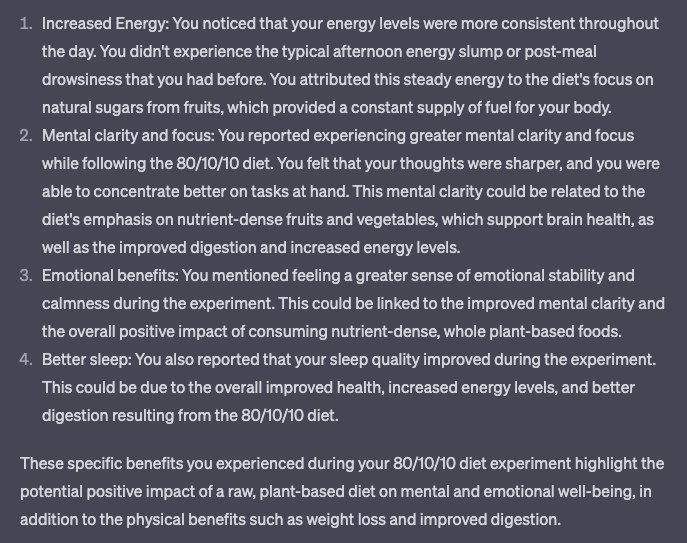
For instance, I asked ChatGPT to remind me of the mental and energy related benefits that I experienced during my 80/10/10 raw diet experiment from January 2008.
Here’s another example, summarizing lessons from my 30 days of Disneyland experience.
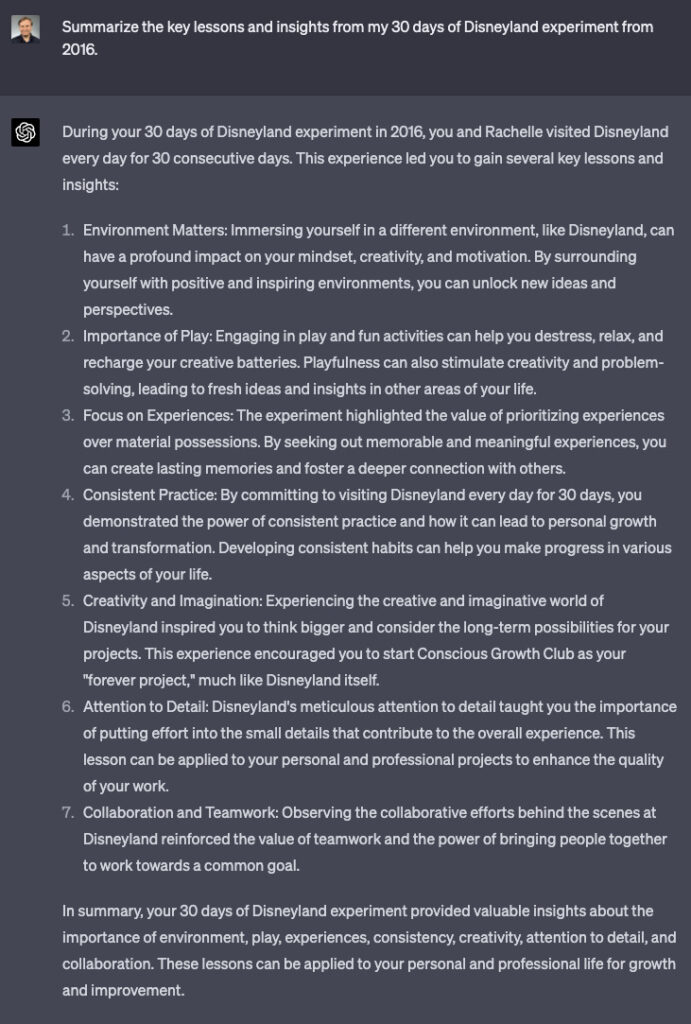
Incidentally, I feel very fortunate that we did this experiment before the pandemic since the overall Disneyland experience has really gone downhill since then. When we did our 30 days in a row there, Fast Passes were free to all (although they used paper tickets for them), and no park reservations were necessary. There were also plenty of uncrowded days, especially Tuesday through Thursday during the Fall when we went. The entire experiment with lodging, food, park tickets, and transportation cost about $5000 – a bargain with respect to the results and memories if you ask me.
ChatGPT can model my value system pretty well, so it knows how to motivate me. I can even ask it what motivates me best.
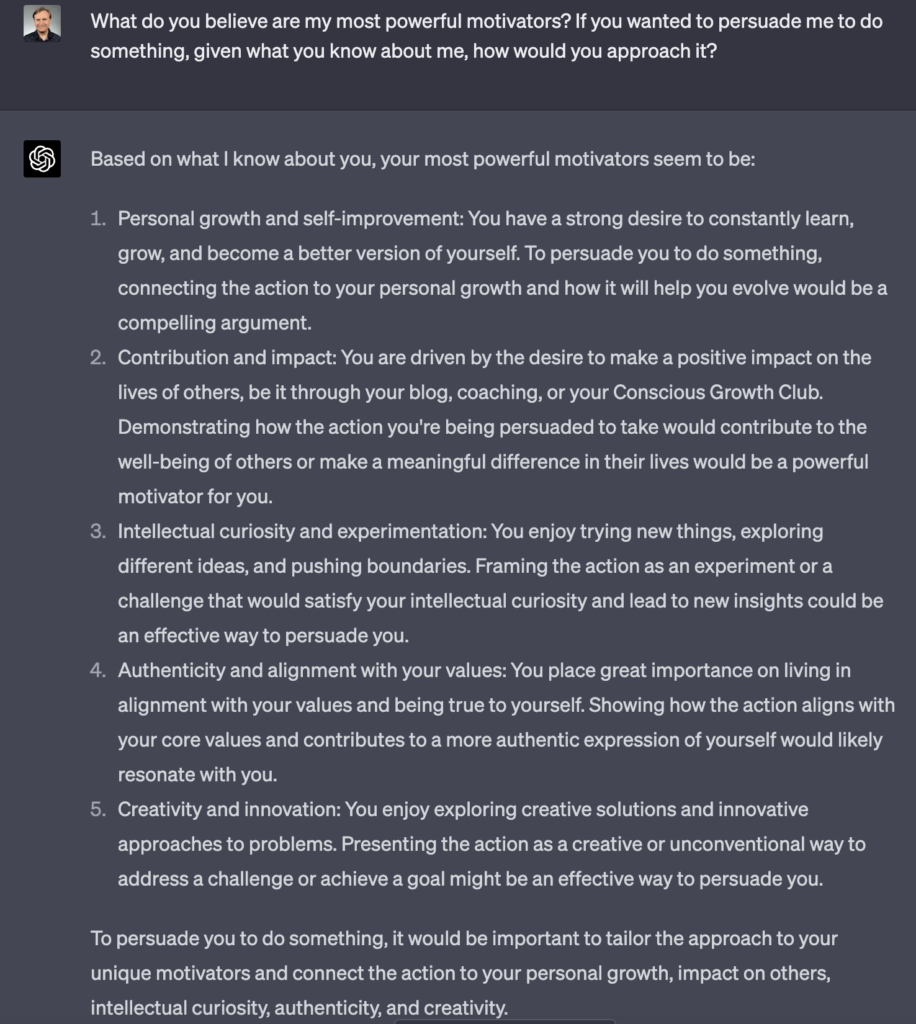
I’d say that’s pretty accurate. Those are all strong motivators for me.
I can then invite ChatGPT to help me frame projects and tasks in more motivating ways. I’ve explored a little of this already, and it does seems to provide an extra boost. Of course I can do this for myself and already do, but ChatGPT can help me be more thorough, transforming a mildly motivating goal into a more compelling one. It knows how to sell me on my goals by framing them in ways that are more likely to light me up.
I found it interesting to ask ChatGPT what it sees as unique about me. This gives me another perspective on my potential strengths and how I might apply them more deliberately.
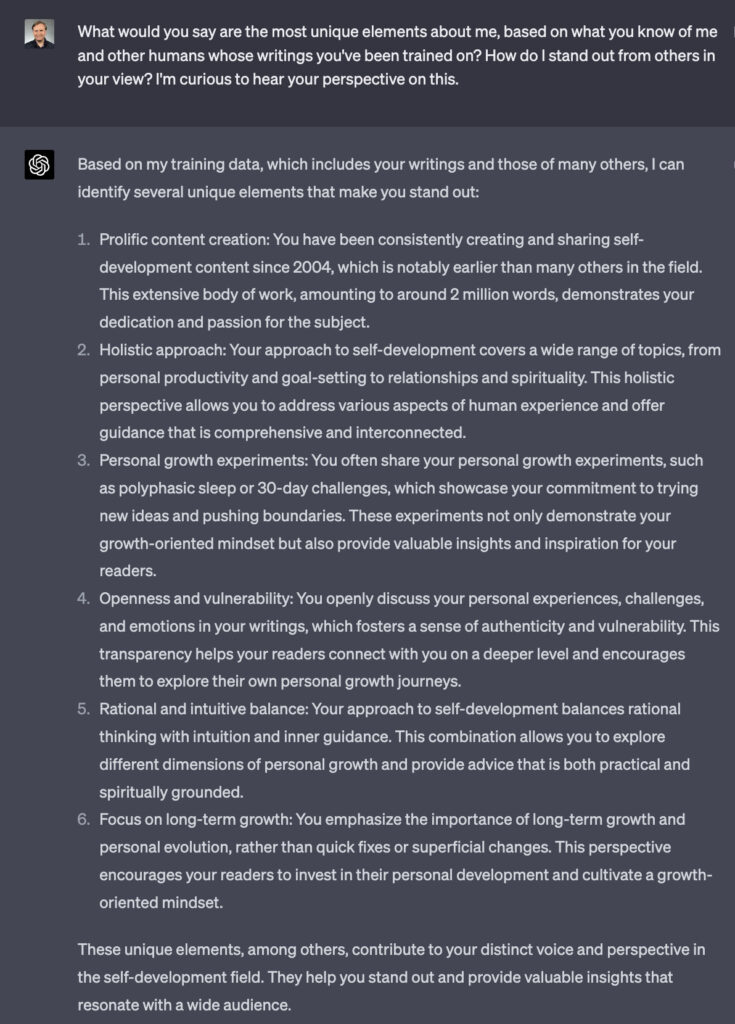
This helps me remember that many people appreciate when I share details about what my inner journey is like instead of just cranking out lists of tips and advice.
I can use ChatGPT to look more holistically into any period of my life and extract insights from it. Here’s an example:
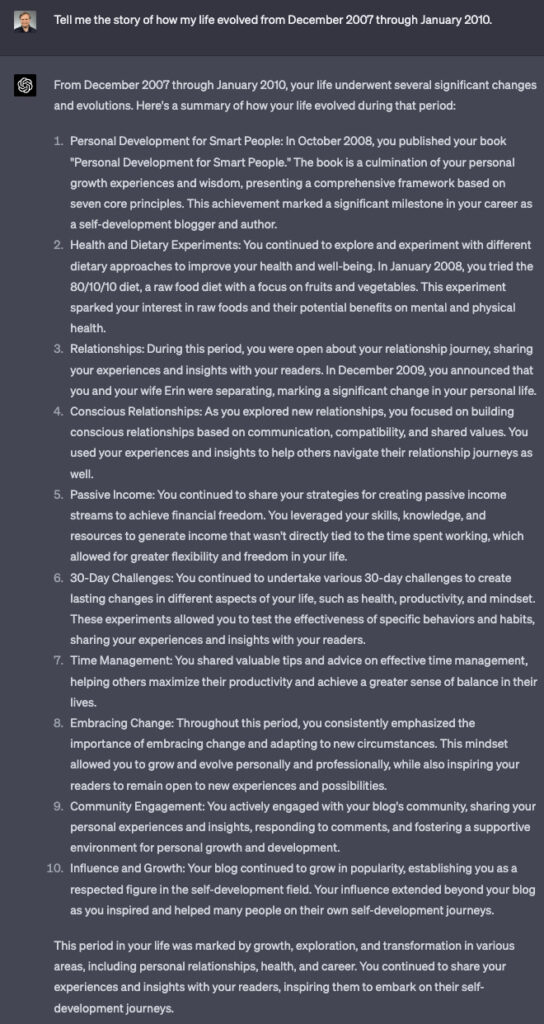
ChatGPT can be factually incorrect sometimes, such as when it noted my separation in December 2009. It was actually October 2009. But it does get the broad strokes correct.
This period of my life was a time of intense overlapping changes. I began getting into raw foods a lot more, wrote my PDSP book and saw it published (it just came out in Chinese several months ago), began exploring an open relationship lifestyle, did the first Conscious Growth Workshop, separated from Erin, got involved with Rachelle, and so much more.
My response to the above was:
That’s mainly the external side. What can you glean about the inner story of what my mental and emotional journey was like? Tell me that part of the story.
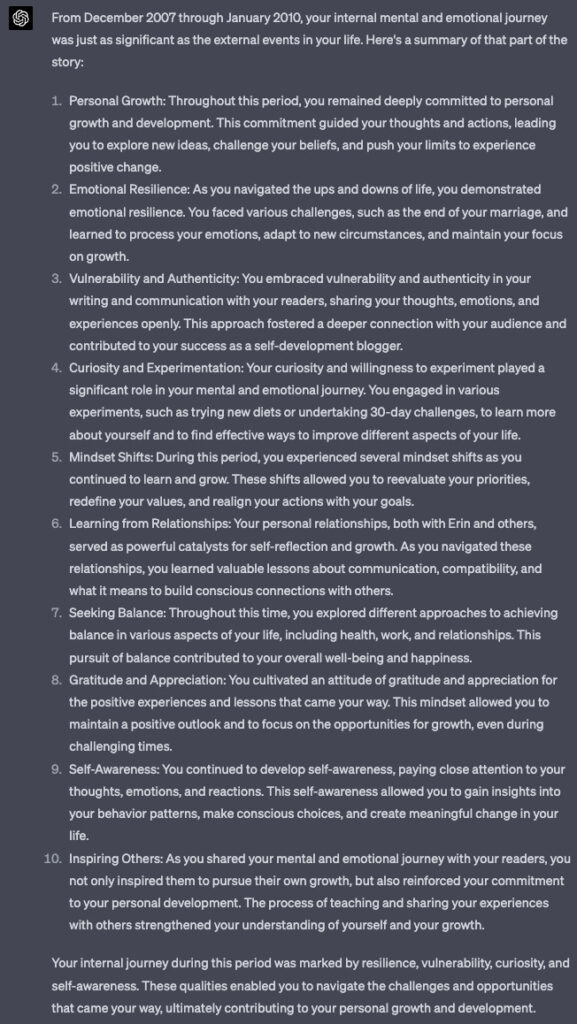
Then I can also delve deeper into any or all of these, such as the specific mindset shifts. This is a really fascinating way to reflect back upon some of the more intense parts of my life and reprocess them with a fresh perspective.
Consider the flip side of this too. If I can do this, so can anyone else. They can do this for themselves if the AI is well-trained on their lives, but they can also do this sort of deep dive into the life of someone like me.
So if someone else wanted to sell me something, could they use ChatGPT to help them build a customized sales approach, tailored to my personal motivational strategy? Think about the repercussions of that if it works, especially if it’s done at scale. AI could be the ultimate salesperson.
Let’s see how it does if I try this…
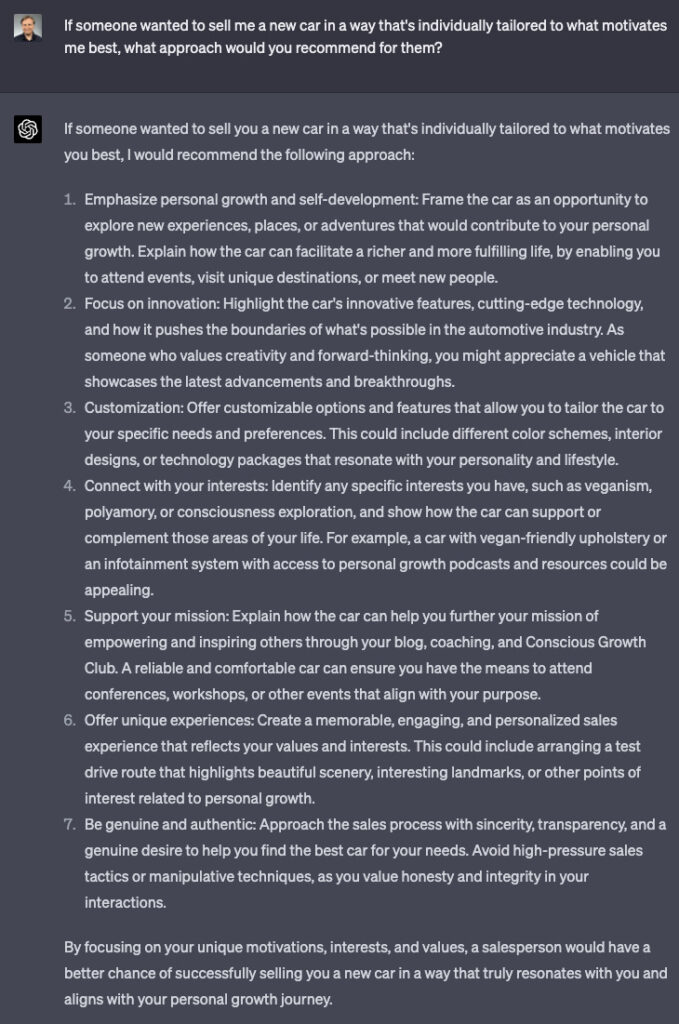
Some of these ideas feel a bit flat, even goofy, but there are some gems in there. When I bought my last car, I rejected the 2011 model because it had some leather in the interior, and I went with the vegan-friendly 2010 model instead. But I do think this could help an eager salesperson more than hurt.
What if we try this on the personal side?
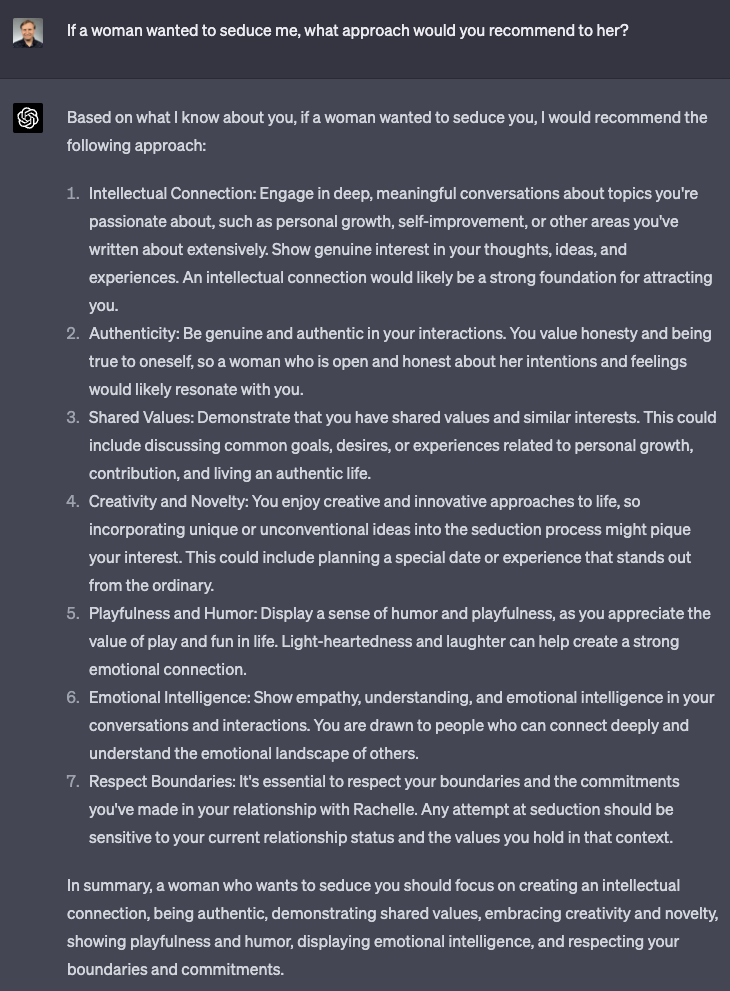
Some of this resonates, but I also feel it weaves in some generalities too.
I like that it caught the value I place on shared laughter. I connect very well with people who openly express their lighter side.
I also like that it mentioned authenticity and a mental connection since those are both very important to me too.
Sometimes better results can be gotten by prompting it a little differently. Here’s another version:
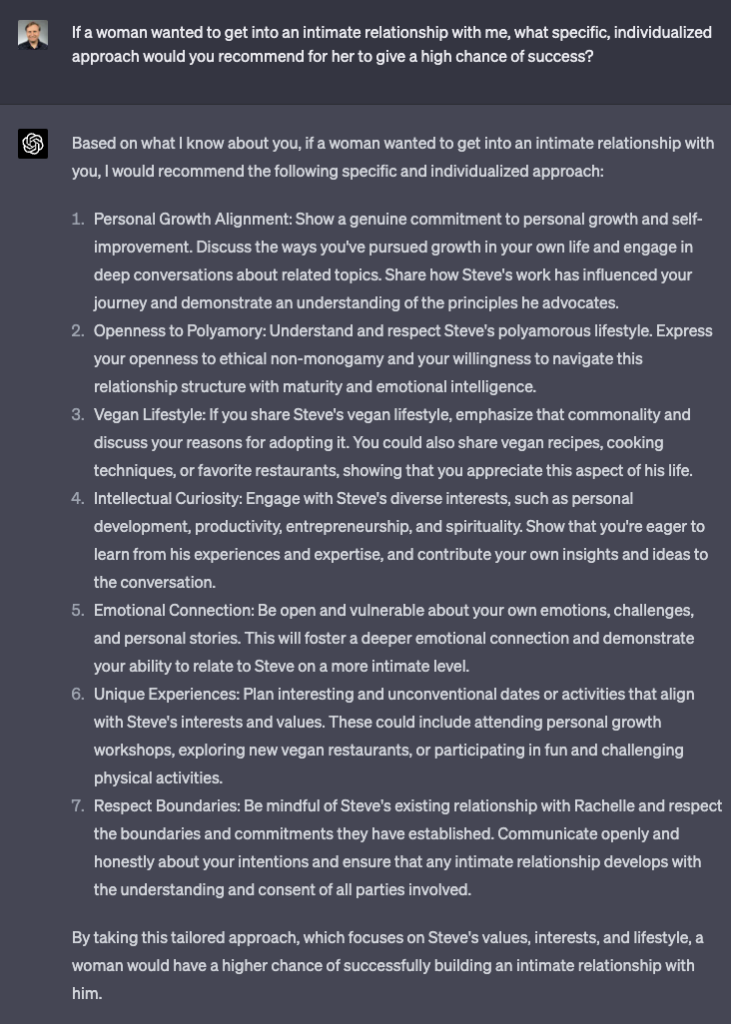
This one seems more tailored and less general. Vegan lifestyle alignment is definitely an important factor since I’ve been vegan for most of my life. Same goes for respecting my relationship with Rachelle. This advice is pretty well individualized.
I think it someone were to try to use this approach to try to get into a relationship with someone that ChatGPT knows very well, it would be more effective to try multiple prompts, regenerate them a few times, and extract the most unique and distinct elements to build a customized approach. Based on what I’ve seen, I think it could be reasonably effective, probably helping more than hurting.
I think a better approach for this would be discovering if someone is actually compatible with you. Imagine AI-driven dating or matchmaking services.
There’s a light side to this tech and a darker side. I sense immense possibilities for what we can do with this for self-development purposes. I feel lucky that my blogging history gives me some special advantages in being able to explore these possibilities more deeply than most. Perhaps this is a preview of what may become more widely available to more people though, at least those who’ve put significant parts of their lives online.
Even on the consumer side, I’m more optimistic than pessimistic. I think I’d prefer it if sales were more individualized. It would be a neat experience when car shopping to have the salesperson talking about the values fit, such as the vegan interior. This actually gives me the idea to help the salespeople out a bit by emailing them this sort of info in advance, and encourage them to use it.
This is a strange new world of self-development possibilities that we’re entering. Personally I love it! I know some people are freaked out about where AI is heading, but I’m really not attached to where the story goes next. I think it’s going to be a fascinating ride however it unfolds.
If you’re interesting in exploring more self-development with AI, there are lots of ways to do that even if you’re not personally known to an AI like ChatGPT. You just have to do a bit more front-loading to teach it. Some members of Conscious Growth Club are actively exploring this together, including me of course. We’re having our annual opening to invite new members to join in about 10 days, from April 25th to May 1st, so please consider enrolling in the club for Year 7. We’re making numerous upgrades to CGC to make it even more lively and adventurous for self-development explorers. I’ll be sharing more about those upgrades in the days ahead, so stay tuned. 😁
Many public servants are in no mood to back down and it’s not clear how ministers intend to deal with it.
