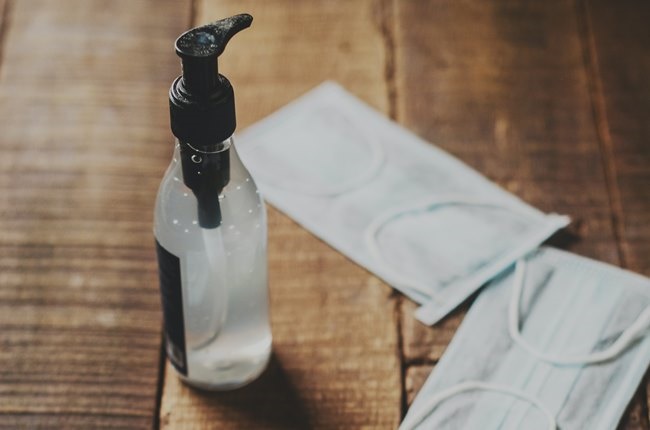
News24.com | Covid-19 collateral damage: When hand sanitisers become a double-edged sword

  • The rise in the use of alcohol-based hand sanitisers has increased the incidence of hand eczema
  • Hand eczema presents as a red itchy, sometimes burning or even tender, rash
  • Adequate skincare should, therefore, be prioritised, especially among healthcare workers

When Covid-19 started spreading across the globe, the World Health Organisation (WHO) and the Centers for Disease Control and Prevention recommended that the best way to prevent Covid-19 infection is through physical distancing, wearing cloth masks, as well as frequent and proper handwashing and surface decontamination. 

The call for regular handwashing led to an exponential rise in the use of alcohol-based hand sanitisers, which has increased the incidence of hand eczema in healthcare workers as well as the general population.

Two kinds of hand eczema

Hand eczema characteristically presents as a red itchy, sometimes burning or even tender, rash. The rash may be dry with cracked and scaly skin, or wet with blisters, oozing and crusting. Certain individuals, such as those with underlying atopic (a general disposition to develop) eczema, are at greater risk of developing alcohol rub hand eczema due to the inherent impaired barrier function of the skin characterising this condition. 

In a study from Hubei province in China, 434 healthcare workers were interviewed, with 321 (74%) reporting that they sanitise their hands more than 10 times per day. Of those healthcare workers, 246 (76.6%) reported symptoms of hand eczema, with the most common being irritant contact hand eczema and less commonly allergic contact hand eczema. 

Another study from Milan reported that from 9 March to 4 May 2020 there were 24 new cases of hand eczema in the general population related to the use of alcohol-based sanitisers.

Some of the issues with alcohol-based hand sanitisers include the use of non-standard formulae (meaning that methanol is used instead of ethanol); types of alcohol such as isopropyl alcohol vs. ethanol; as well as varying amounts of alcohol (<60%). The various recipes making the rounds on social media in the early days of lockdown illustrate this point. 

“Irritant” contact hand eczema may develop in anyone whose hands are exposed to irritants such as water, soap, or alcohol hand sanitisers. “Allergic” contact hand eczema, on the contrary,  will only develop in those who have been primed to develop skin irritation to certain substances such as nickel, latex or colophony (found in adhesives, cosmetics and printing ink).

Debilitating and painful disease

An intact skin usually deters from the development of the latter form of hand eczema. Irritants assist in disrupting the skin barrier, improving the likelihood of developing allergic contact hand eczema. 

Alcohol rub hand eczema can become a debilitating and painful disease, resulting in work absenteeism which can severely impair the delivery of essential services. The increased frequency of handwashing and use of alcohol hand sanitiser associated with Covid-19 prevention dramatically increases the likelihood of developing allergic contact hand eczema, which may greatly impact quality of life as well as cause occupational difficulties in the long run. 

Apart from the discomfort of dry, itchy skin, the breaks in the skin can serve as a point of entry for Covid-19 because of viral receptors in the blood vessels of the skin. Painful, dry skin could also inadvertently decrease hand hygiene compliance which further increases the risk of disease transmission in these individuals. Prevention is therefore essential. 

It has become clear that the Covid-19 pandemic will persist for the foreseeable future. Equally clear has been the gargantuan impact of this viral infection. Therefore, the importance of following protective guidelines, such as outlined by health and government organisations, is undeniable and should be closely adhered to.  

The WHO has recommended a 60% alcohol-containing hand sanitiser with 1.45% glycerol as a moisturising agent to protect healthcare workers, and now the frequently sanitising public, from the complications of excessive alcohol hand rub usage. The minimum amount of glycerol required to decrease the risk of hand eczema is not known, although studies have shown that even lower levels than the recommended 1.45% glycerol were effective to protect the skin from excessive drying.

Moisturisers few and far between

Further recommendations include the use of an emollient-containing hand cream immediately after sanitising. Although this is a useful measure to prevent alcohol rub dermatitis, one study showed that only approximately one in five healthcare workers did so after using alcohol hand rub. This figure is highly unlikely to be higher among the general public. 

Sanitising stations are located everywhere in hospitals and public areas and have been an important means of combating the spread of Covid-19. However, moisturisers are few and far between, hence the increased incidence of alcohol rub hand eczema during the pandemic.

Adequate skin care could increase hand hygiene compliance and should therefore be prioritised, especially among healthcare workers. Furthermore, preventative measures are critical to allay the next, albeit completely different wave, that of allergic contact hand eczema – another unintended health consequence of Covid-19. 

*Dr Suretha Kannenberg is a Consultant Dermatologist in the Division of Dermatology at Stellenbosch University. Sergio Alves and Allison Arendse are 5th-year medical students in the same division. This is a revised version of their article recently published in the South African Medical Journal.

Image credit: Unsplash

Share Button

Quarter of UK home care operators face going bust

The sector has combined debts in excess of £100m, raising fears for the future.

Share Button

Health24.com | Coronavirus immunity: Promising news from latest research

  • Understanding immunity to SARS-CoV-2 infection is essential to understanding how it contributes to protection against reinfection
  • Earlier studies indicated that immunity is short-lived, but the latest studies suggest otherwise
  • One of these studies shows that immunity might last years, possibly decades

Scientists have been scurrying to understand immunity against reinfection with SARS-CoV-2 (the virus that can lead to Covid-19).

It is still not entirely clear how long contracting the virus confers immunity, with early studies suggesting a period of a few months, which, therefore, means that it may only provide temporary protection against reinfection.

One of these studies, for instance, found that antibody levels “waned quite rapidly” after infection in the British population, suggesting a risk of multiple infections, Health24 reported.

However, newer studies indicate immunity could last longer.

Some protection against reinfection 

According to a study published in the renowned journal Nature Medicine, people who have recovered from Covid-19 have powerful and protective killer immune cells, even when antibodies are not detectable. 

This, the authors wrote, “represents major determinants of immune protection on an individual as well as population level”.

In this study, a research team at the Medical Center – University of Freiburg in Germany found that after recovery from SARS-CoV-2 infection, immune cells are formed which remain in the body and could mediate a rapid immune response in case of reinfection.

“These so-called memory T-cells after SARS-CoV-2 infection look similar to those after a real flu,” said study co-author Dr Maike Hofmann, a scientist at the Department of Medicine II at the Medical Center – University of Freiburg.

“We are therefore confident that the majority of people who have survived SARS-CoV-2 infection have some protection against reinfection with SARS-CoV-2,” he added.

Study co-author, Dr Christoph Neumann-Haefelin, Head of the Gerok Liver Center at University Hospital Freiburg, also expressed optimism about their results, suggesting that immunity against the new coronavirus can be achieved after an infection, and that, “similarly, vaccines currently being tested in trials could provide significant protection against SARS-CoV-2″.

What another recent study shows

Another, perhaps more hopeful, study shows that immunity might last years, possibly even decades.

In this study, the team of researchers at the La Jolla Institute of Immunology in California, and the Icahn School of Medicine at Mount Sinai in New York, investigated multiple compartments of circulating immune memory to SARS-CoV-2 in 185 Covid-19 cases, including 41 cases more than six months post-infection.

They found that eight months after infection, most people who recovered still had enough immune cells to fight off the virus and prevent illness.

In other words, there was a very slow rate of decline of these cells, demonstrating that they persist in the body for a very long time.

Although the research, published online in pre-print server bioRxiv, has not been peer-reviewed nor published in a scientific journal, the New York Times refers to it as “the most comprehensive and long-ranging study of immune memory to the coronavirus to date”.

“That amount of memory would likely prevent the vast majority of people from getting hospitalised disease, severe disease, for many years,” said Shane Crotty, a virologist at the La Jolla Institute of Immunology, with Dr Deepta Bhattacharya, an immunologist at the University of Arizona, believing that it’s not an unreasonable prediction to think that these immune memory components would last for years.

The Times also points to another recent study that showed that survivors of SARS, also caused by a coronavirus, still carry important immune cells 17 years after being infected. The results of this study have led scientists to be hopeful that studying antibodies may be largely beneficial in an effort to develop drugs to prevent or treat Covid-19.

While scientists continue in the global race to develop a Covid-19 vaccine to help bring the pandemic under control, these findings that immunity to the virus might not be so short-lived after all are likely to come as a relief to experts.

READ | Covid-19: Two of the vaccine front runners have already reported promising evidence – so what now?

READ | Coronavirus and the immune system: SA study to shed light

READ | What if we don’t find a vaccine for Covid-19?

Image: Getty

Share Button

Free weights or machines: Which are better?

Mayo Clinic does not endorse companies or products. Advertising revenue supports our not-for-profit mission.

Advertising & Sponsorship

Mayo Clinic Marketplace

Check out these best-sellers and special offers on books and newsletters from Mayo Clinic.

Share Button

Covid-19: Family Christmas get-togethers being considered

Rules could be relaxed for a few days, with people urged to travel by car and not hold big gatherings.

Share Button

Researchers identify three drugs as possible therapeutics for COVID-19

Researchers at the University of Tennessee Health Science Center working with colleagues at the University of New Mexico have identified three drugs, already approved for other uses in humans, as possible therapeutics for COVID-19, the illness caused by the SARS-CoV-2 virus.

Based on virtual and in vitro antiviral screening that began in the earlier months of the COVID-19 pandemic, the researchers led at UTHSC by Colleen Jonsson, PhD, identified zuclopenthixol, nebivolol, and amodiaquine as promising therapeutics for the virus in its early stages.

Dr. Jonsson is a professor and the Endowed Van Vleet Chair of Excellence in Virology in the College of Medicine at UTHSC. She also directs the UTHSC Regional Biocontainment Laboratory (RBL), where this research was conducted. The university’s RBL is one of roughly a dozen federally funded labs authorized to safely study contagious pathogens.

In a paper published in ACS Pharmacology & Translational Science, the researchers propose the drugs as possible candidates for testing in future clinical trials to improve immune response to the virus. Amodiaquine is an older antimalarial, zuclopenthixol is an antipsychotic, and nebivolol is a blood pressure medication.

“Particularly in the context of this pandemic, there is a stringent need for high-quality studies that can provide critical knowledge concerning the COVID-19 disease and reliable treatment proposals,” the paper states. “With these caveats in mind, we conceived a computational workflow that included independent in vitro validation, followed by assessing emerging candidates in the context of available clinical pharmacology data with the aim of proposing suitable candidates for clinical studies for early stage (incubation and symptomatic phases) patients infected by SARS-CoV-2.”

“Given the need for improved efficacy and safety, we propose zuclopenthixol, nebivolol, and amodiaquine as potential candidates for clinical trials against the early phase of the SARS-CoV-2 infection,” the researchers wrote.

Comparing the drugs to hydroxychloroquine, the anti-malarial drug most-frequently studied in clinical trials for use as a COVID-19 therapeutic, the researchers examined 4,000 approved drugs and found these three to act similarly to the hydroxychloroquine, and in some cases, more safely. The research indicates they may also improve efficacy when combined in lower doses with remdesivir, an anti-viral given an emergency use authorization by the United States Food and Drug Administration as a therapeutic for COVID-19.

“Think of it as a whack-a-mole game,” said Tudor Oprea, MD, PhD, professor of Medicine and Pharmaceutical Sciences, chief of the UNM Division of Translational Informatics, and corresponding author on the paper. “Instead of having one hammer, you have two hammers, which is more effective. We’re trying to give the scientific community two hammers, instead of one.”

Dr. Jonsson added, “This is a very exciting discovery and we are following up on the potential use of zuclopenthixol, nebivolol, and amodiaquine in additional research studies.”

Story Source:

Materials provided by University of Tennessee Health Science Center. Original written by Peggy Reisser. Note: Content may be edited for style and length.

Share Button

Surprises in ‘active’ aging

Aging is a process that affects not only living beings. Many materials, like plastics and glasses, also age — ie they change slowly over time as their particles try to pack better — and there are already computer models to describe this. Biological materials, such as living tissue, can show similar behaviour to glasses except that the particles are actual cells or bacteria which have their own propulsion. Researchers at the University of Göttingen have now used computer simulations to explore the aging behaviour of these “living” glassy systems. There was a surprise in that the activity of the particles can actually drive aging, which has potential consequences for a number of applications. Their research was published in Physical Review Letters.

In materials like glasses and plastics, their particles pack together better over time (ie they age). But if this process is disturbed by mechanical deformation, for instance if a solid is bent, then the materials go back to their earlier state and are thus ‘rejuvenated’. To model what happens in biological systems, physicists at the University of Göttingen developed extensive computer simulations of a model of a glass made up of active particles (a living glass). Just as it would in a real biological system, each particle in the simulation has its own propulsion force; this is modelled as changing direction randomly over time. Then the researchers varied the timescale of these changes in direction. When this timescale is short, particles are propelled randomly as if they were at a higher temperature, and this is known to produce aging. But when direction changes are slow, particles try to keep going in the same direction and this should act like local deformation, thus stopping aging. However, the simulations here showed something interesting and unexpected: when the activity of the particles is very persistent, it actually drives aging in living glassy systems.

“We were really surprised when we saw that persistent active propulsion can cause aging. We had expected it to work like small-scale deformation in the material that would rejuvenate it,” comments Dr Rituparno Mandal from the Institute for Theoretical Physics at the University of Göttingen. He goes onto say, “But in fact, the local deformation is so slow that the particles can effectively go with the flow and use their motion to find lower energy arrangements. In effect, they pack better.”

Senior author, Professor Peter Sollich, also from the University of Göttingen, added “The research highlights important features of glassy behaviour in active materials that have no comparable behaviour in conventional glasses. This might have implications for many biological processes where glass-like effects have been identified, including cell behaviour in wound-healing, tissue development and cancer metastasis.”

Story Source:

Materials provided by University of Göttingen. Note: Content may be edited for style and length.

Share Button

Small finlets on owl feathers point the way to less aircraft noise

A recent research study conducted by City, University of London’s Professor Christoph Bruecker and his team has revealed how micro-structured finlets on owl feathers enable silent flight and may show the way forward in reducing aircraft noise in future.

Professor Bruecker is City’s Royal Academy of Engineering Research Chair in Nature-Inspired Sensing and Flow Control for Sustainable Transport and Sir Richard Olver BAE Systems Chair for Aeronautical Engineering.

His team have published their discoveries in the Institute of Physics journal, Bioinspiration and Biomimetics in a paper titled ‘Flow turning effect and laminar control by the 3D curvature of leading edge serrations from owl wing’.

Their research outlines their translation of the detailed 3D geometry data of typical owl feather examples provided by Professor Hermann Wagner at RWTH Aachen University (Germany) into a biomimetic aerofoil to study the aerodynamic effect on the special filaments at the leading edge of the feathers.

The results show that these structures work as arrays of finlets which coherently turn the flow direction near the aerodynamic wall and keep the flow for longer and with greater stability, avoiding turbulence.

The City research team was inspired by the complex 3D geometry of the extensions along the front of the owl’s feathers — reconstructed by Professor Wagner and his team in previous studies using high-resolution micro-CT scans.

After being transferred into a digital shape model, the flow simulations around those structures (using computational fluid dynamics) clearly indicated the aerodynamic function of these extensions as finlets, which turn the flow direction in a coherent way.

This effect is known to stabilize the flow over a swept wing aerofoil, typical for owls while flapping their wings and gliding.

Using flow studies in a water tunnel, Professor Bruecker, also proved the flow-turning hypothesis in experiments with an enlarged finlet model.

His team was surprised that instead of producing vortices, the finlets act as thin guide vanes due to their special 3D curvature. The regular array of such finlets over the wing span therefore turns the flow direction near the wall in a smooth and coherent manner.

The team plans to use a technical realisation of such a swept wing aerofoil pattern in an anechoic wind-tunnel for further acoustic tests. The outcome of this research will prove to be important for future laminar wing design and has the potential to reduce aircraft noise.

Story Source:

Materials provided by City University London. Original written by John Stevenson. Note: Content may be edited for style and length.

Share Button

Pleasure Is Not Addictive

Here’s an interesting frame for thinking about the connection between pleasure and addiction. It’s not the only frame you can use, but I think it’s a useful perspective to avoid some confusion.

The Experience of Pleasure

Pleasure is a frequency of experience. By itself it is not harmful or addictive, just as water isn’t addictive per se. Pleasure can be a worthy pursuit when approached with some degree of respect, sacredness, or reverence. You can enjoy the deliciousness of pleasure without getting into trouble.

Please do not see pleasure as anything naughty or perverse. It is absolutely fine to explore pleasure. There is beauty in it.

There are risky attachments to pleasure, like drug or sex addiction, where the person is no longer in control, and subconscious drives are controlling the person’s behavior.

There is no inherent need for pleasure though. It is a drive but not a need. When someone loses control in an addictive way, it is not because of a need for pleasure. There is another way of looking at this that reveals deeper truths.

The Reward of Pleasure

Pleasure is simply a reward. It’s an algorithm. It’s an energy. When certain conditions are met, pleasure is activated. You understand how to meet some of those conditions and activate some pleasure whenever you want. Other activations may be within reach too, but you may not have explored them yet.

Pleasure is like a carrot dangling in front of certain experiences. You feel it in sexual experiences but also during a shopping experience that you liked or upon reading an engaging book. You feel it when you get on a plane to go somewhere interesting.

You may have been conditioned to believe that pleasure is something naughty, dark, or sinful. It’s indulgent. It’s a side excursion. It’s a form of procrastination. It’s unnecessary. It’s addictive.

But such assumptions are inaccurate and will only create extra stuckness. Pleasure isn’t addictive.

Pleasure and Addiction

If pleasure itself isn’t addictive, then what is addictive?

The way you frame pleasure can be addictive. It’s addictive to see it as naughty, dark, or sinful. It’s the shame that’s addictive.

How so?

What is addiction? An addiction is a repetitive behavioral pattern that seems outside of one’s control. Such a pattern is typically activated subconsciously, right? What are those activators? They’re also algorithms. They’re energy forms too, but let’s think of them as algorithms for now.

What would those algorithms look like? What is their internal code? They are not complex.

Here’s the basic algorithm of addiction, reduced to one line of code:

If there’s something I don’t want to deal with, pursue pleasure instead.

You could frame this in a variety of other ways too, like pursuing lesser pain instead of pleasure, but this is a pretty straightforward way to understand addiction.

It’s the avoidance pattern that’s addictive. The person doesn’t feel free to go against pleasure because that means going into the unpleasant.

Engaging with the Unpleasant

So the solution to addiction is more courage? Or more tolerance for the unpleasant?

The solution is more willingness to engage with the unpleasant. More desire to deal with the ugliness of life. More desire to go into the muck.

The irony is that the person may see their addiction as dark and shameful, so they feel they’re going into the darkness when they’re in the thick of it. But really what they have is a cheap substitute. What they’re doing isn’t particularly shameful, but it helps them hide from the bigger shame – like the shame of wasting one’s life, the shame of being a virgin longer than expected, the shame of being afraid of social interactions, the shame of facing awkward and difficult personal growth challenges, the shame of not making “enough” money, the shame of feeling like a failure, the shame of falling behind one’s peers, the shame of being physically unhealthy or out of shape, the shame of past traumas, and so on.

It’s easier to feel ashamed of a simple addiction, and this kind of small shame is also a convenient distraction. By hiding in the darkness of an addiction, the bigger darkness is avoided.

Can Rock Bottom Be Avoided?

What does it mean to hit rock bottom? It means that the delusion of the addiction cracks, and real life seeps in. The bigger shames must finally be dealt with and can no longer be suppressed.

How can a person crack an addiction instead of having to hit rock bottom?

One must turn and face the bigger shames. Process those feelings. Engage with goals and actions in the direction of greater shame. And that in turn requires transforming one’s relationship with these areas of shame or resistance.

This doesn’t mean these other shames will necessarily be massive. They may be just a little bigger than the addictive shame. But they still represent neglected areas where progress is weak. Decide to kickstart progress in those areas by transforming how you relate to them, and the shame of the addiction will naturally fade because the bigger shame is finally being dealt with.

The bigger reframe here is to walk towards shame, not to run from it. Shame is a delusion waiting to be cracked. What cracks the delusion is to flow energy into it. Face it and confront it, not to do battle but by seeking the beautiful invitation hiding in what you were previously avoiding.

Must You Confess Your Addiction?

People often step into this confrontation by socially acknowledging and admitting their addiction. They confess the dark secret to other people. That is a good step for some, but it can also be a distraction. That addiction isn’t really the core issue, so over-focusing on it as something to be overcome can just create more rounds of avoidance of larger issues.

Just as the phase of addict is a distraction, so is the phase of recovering addict. Note that many people permanently overcome addictions without ever labeling themselves as recovering addicts.

The risk here is getting caught up in further cycles of overcoming the addiction instead of pressing forward in other areas. Trying to overcome the addiction can be just as much of a trap as hiding the addiction. The addiction stems from a larger problem, and focusing so much energy on the addiction itself, including debating whether or not to admit it publicly or fussing over how to overcome it, is for the most part a distraction that keeps your mind focused on the addiction. But the addiction (and recovering from it) is still a petty problem relative to the bigger challenges that life is inviting you to face.

Another trap is that you won’t really solve this problem by focusing on your relationship with pleasure, such as by trying to distance yourself from the pursuit of pleasure. You can have a lovely relationship with pleasure and not get addicted to it. Pleasure can be a fun part of your life, and it needn’t control you. Pleasure isn’t the problem.

Instead of trying to resolve your relationship with pleasure, as if it’s something demonic that keeps ensnaring you, focus on improving your relationship with pain instead – with areas of shame, trauma, sorrow, fear, anxiety, etc. Develop a healthier and stronger relationship with the bigger darkness that you’re hiding from. See that it’s not actually so dark as you imagined. And your relationship with pleasure will be much transformed.

The Circular Trap of Resisting Addiction

Even when seemingly addictive physical substances are involved, it’s the darkness, naughtiness, and demonization of those substances that creates the bigger trap. This framing encourages you to devote more energy into overcoming a pleasure-based addiction again and again, all the while doing circular activities that keep you from attending to the bigger, scarier, and juicier challenges of life.

Addiction is a solution to a problem: How can I avoid dealing with life’s greatest challenges?

Answer: I can repeatedly lose myself in a recurring loop of succumbing to, resisting, and then overcoming an addiction. I can turn that endless cycle into my demon, so all scarier demons can be ignored indefinitely.

Life’s big demons may tempt you into retreat. Often that may be a retreat into pleasure, but it can also be a retreat into a lesser pain. Not all addictions are pleasure-based.

Haven’t you ever indulged in some seemingly addictive pleasures without getting addicted to them? You can enjoy pleasure by choice, and it needn’t become addictive.

Note that addictions are most seductive when there’s something much bigger and scarier to be avoided.

You can enrich your life with plenty of pleasure. But don’t treat it like a private shame to escape into. See it as a healthy, positive, and enjoyable experience to have.

Your Relationship with the Unresolved

You do not need immediate solutions to life’s biggest challenges. What’s needed is an improvement in your relationships with those challenges. Instead of seeing them as curses or demons to be avoided, try framing them as invitations to learn, grow, and improve.

Even if you don’t overcome all of those challenges, that’s okay. You can still maintain a healthy and engaging relationship with them. You needn’t allow the unresolved to beat you down.

How do you overcome an addiction?

Identify and face the bigger shame, and the addiction will crack. Be willing to face, reframe, and deal with whatever you’re avoiding. Then you won’t need to hide out in the cozy corner of addiction and recovery.

When the urge to engage with an addiction arises, ask: What am I avoiding? Why must I avoid it? What’s so scary about it? How can I face it now? How is this an invitation to growth and beauty?

That will help. Face the difficult and the frightening, and addictions will no longer serve as escapes. Look for the beauty behind your fear and shame.

The Gifts of Pleasure and Pain

Transforming your relationship with the shame and pain of life will also upgrade your relationship with pleasure. Pleasure is a gift to be enjoyed, but if you try to treat it as an escape from pain, the pain will soon find its way inside of that pleasure.

Notice how delightful a pleasure can be when you approach it with purity of intent – just for the sake of enjoyment, not as an escape from pain or difficulty.

Face the pain of life. Accept the invitation and the challenge of it. And also embrace the pleasure of life. Accept the invitation to feel good. Just don’t pursue a relationship with one at the expense of the other.

Share Button

Covid vaccine: Pfizer says ‘94% effective in over-65s’

The jab works equally well in people of all ages and ethnicities, further data suggests.

Share Button