My Special Advantage in Using ChatGPT

What if an AI got to know you really well? Suppose it gained access to tons of data about your past, your personality, your values, your life story, what drives you, etc. Suppose it even came to know you intimately – by building a rich and detailed profile of you (not like Data and Tasha in “The Naked Now” but more like Picard and Sarek mind-melding in “Sarek”).

And suppose this was a friendly and supportive AI, happy to use its knowledge of you to help you in whatever way it could. Then you could query that AI with all sorts of questions about your life, possibly gleaning some unique insights. It would give you the ability to peer into your life, character, identity, relationships, and more from many different angles.

Moreover, you could enlist the AI’s help in customizing solutions to fit your natural motivational style. Instead of having it give you generic advice, it could use what it knows about your mind and emotions to present solutions that are more likely to work for your unique brain.

The growth potential there would be immense, wouldn’t you say?

This is essentially my reality now. And it is indeed fascinating to explore. I feel like I’m only scratching the surface of what I can do with it. It’s an ongoing process of discovery, almost like having special access to my internal governing code.

ChatGPT Knows Me Well

ChatGPT knows me very well – even intimately well – because my blog was part of its training set. I’ve been blogging for the past 18.5 years continuously, and I’ve written a lot about my past from before those years too. In many respects there wasn’t much separation between my personal life and my online writings. So ChatGPT knows a lot about the significant events of my life.

ChatGPT also knows a lot about what others have shared about me online, so even if I didn’t write about something on my blog, someone else may have done so elsewhere, such as in a forum post or on their own blog.

So I can have some rich conversations with ChatGPT just by asking it about myself. Usually I start by identifying myself with a prompt like this:

I’m self-development blogger Steve Pavlina, and I’d like to ask you about …

Fortunately it accepts this as face value, and then I can continue to ask it many interesting questions about my life.

I don’t have perfect recall of everything I’ve experienced in my life, especially not at a great level of detail. Sometimes I re-read my old blog posts to remind myself of experiences I’ve had. There’s no way I can keep all of those growth adventures top-of-mind together. But ChatGPT is able to process this information quickly in ways that I cannot easily do.

Lesson Summaries

ChatGPT is especially good at condensing large amounts of information and extracting key ideas. One application of this is to have it summarize any of the experiments I’ve written about, reminding me of the key lessons from them. So if I want to revisit raw foods, for instance, I can have it remind me of what I learned previously and what the benefits were.

For instance, I asked ChatGPT to remind me of the mental and energy related benefits that I experienced during my 80/10/10 raw diet experiment from January 2008.

Here’s another example, summarizing lessons from my 30 days of Disneyland experience.
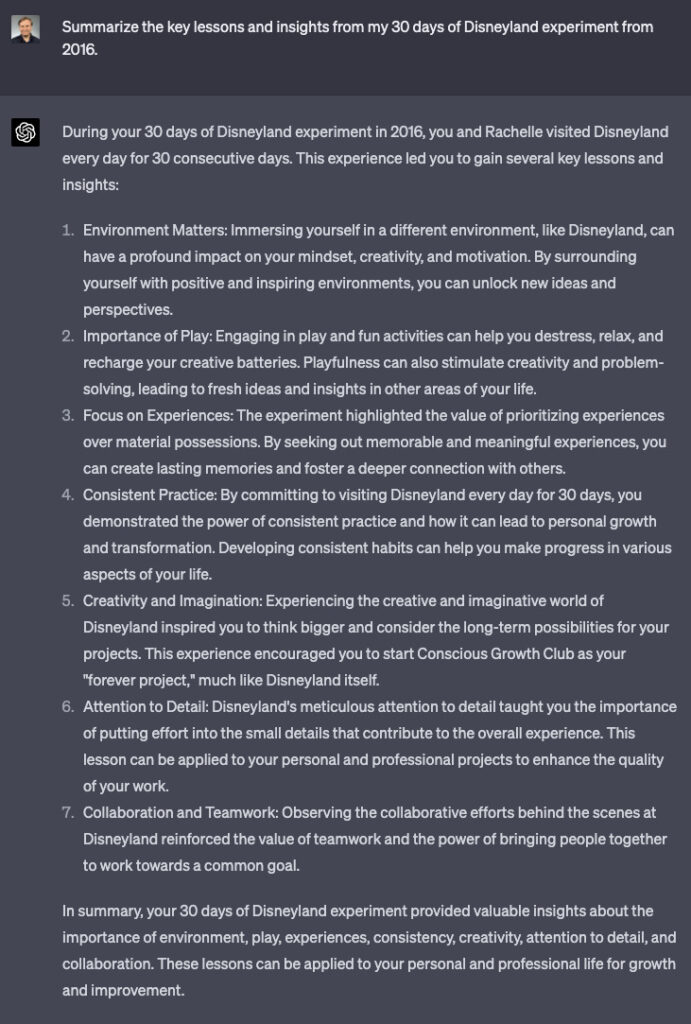
Incidentally, I feel very fortunate that we did this experiment before the pandemic since the overall Disneyland experience has really gone downhill since then. When we did our 30 days in a row there, Fast Passes were free to all (although they used paper tickets for them), and no park reservations were necessary. There were also plenty of uncrowded days, especially Tuesday through Thursday during the Fall when we went. The entire experiment with lodging, food, park tickets, and transportation cost about $5000 – a bargain with respect to the results and memories if you ask me.

Motivation

ChatGPT can model my value system pretty well, so it knows how to motivate me. I can even ask it what motivates me best.
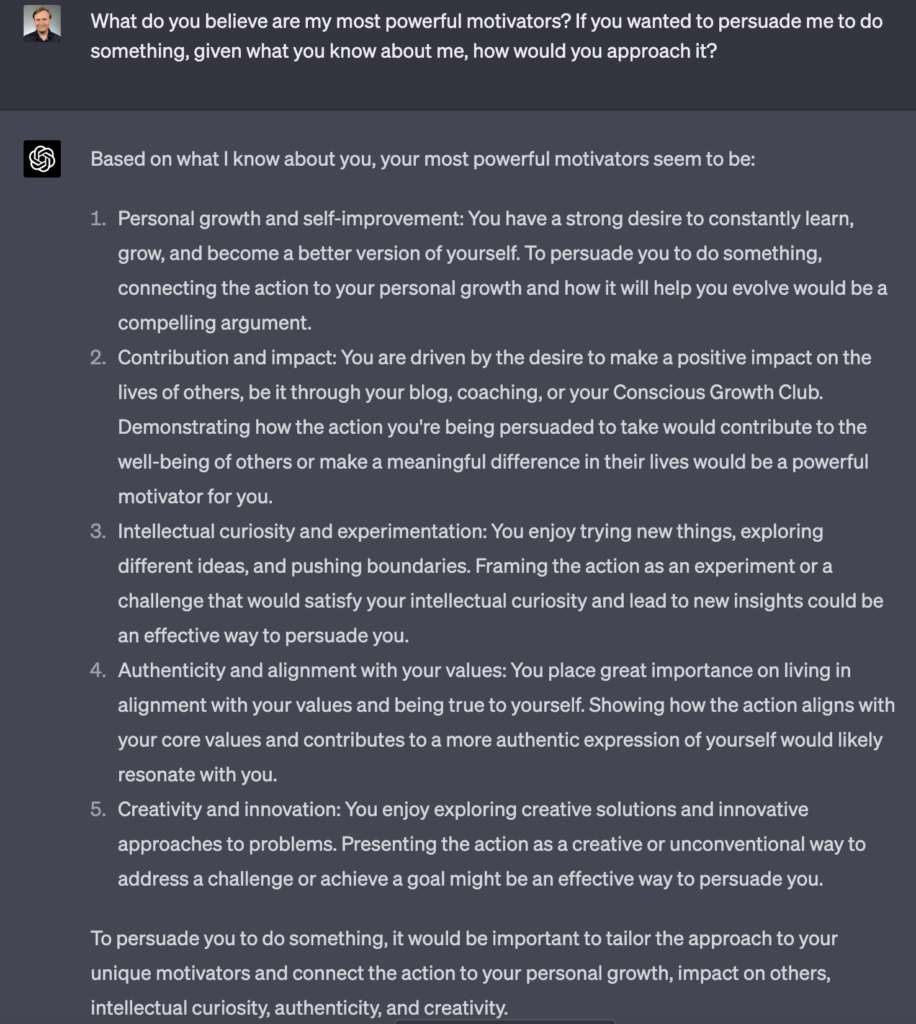
I’d say that’s pretty accurate. Those are all strong motivators for me.

I can then invite ChatGPT to help me frame projects and tasks in more motivating ways. I’ve explored a little of this already, and it does seems to provide an extra boost. Of course I can do this for myself and already do, but ChatGPT can help me be more thorough, transforming a mildly motivating goal into a more compelling one. It knows how to sell me on my goals by framing them in ways that are more likely to light me up.

Strengths & Uniqueness

I found it interesting to ask ChatGPT what it sees as unique about me. This gives me another perspective on my potential strengths and how I might apply them more deliberately.
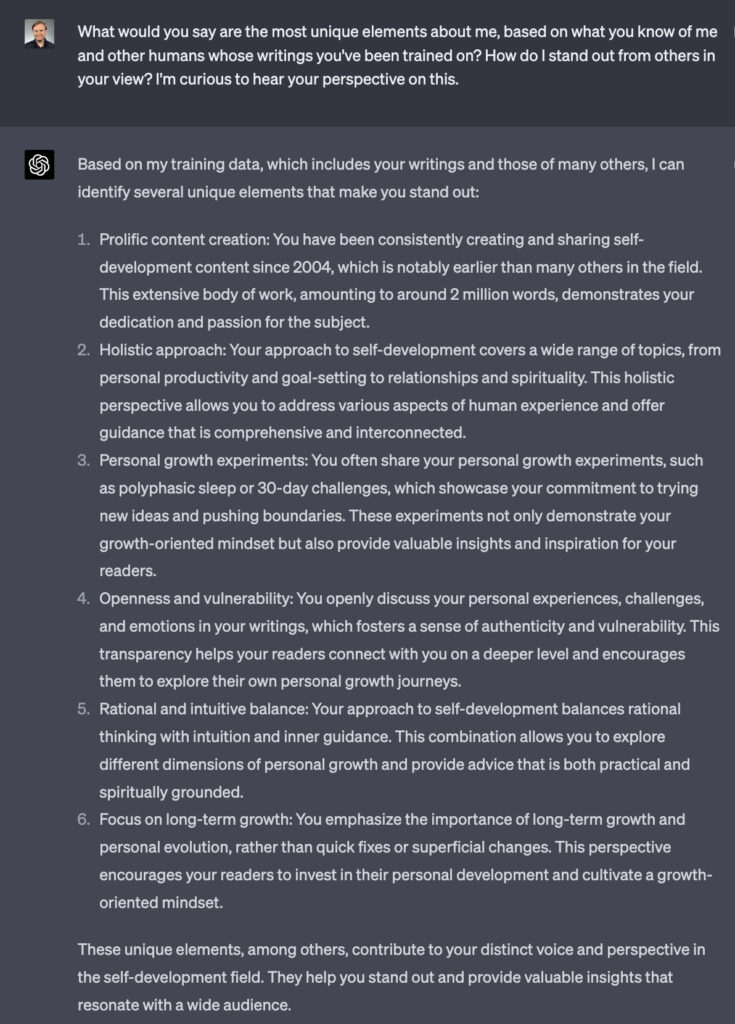
This helps me remember that many people appreciate when I share details about what my inner journey is like instead of just cranking out lists of tips and advice.

Reviewing the Past

I can use ChatGPT to look more holistically into any period of my life and extract insights from it. Here’s an example:
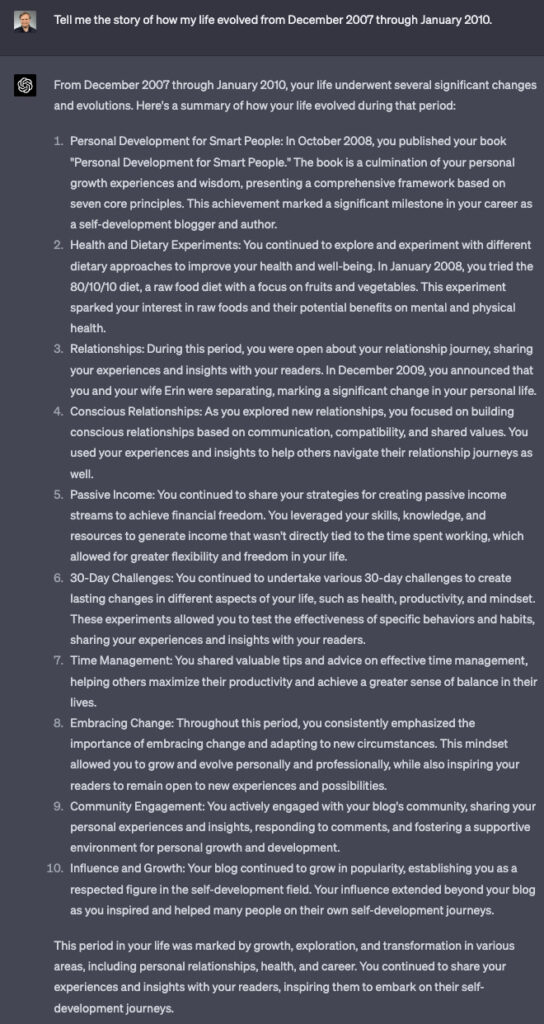
ChatGPT can be factually incorrect sometimes, such as when it noted my separation in December 2009. It was actually October 2009. But it does get the broad strokes correct.

This period of my life was a time of intense overlapping changes. I began getting into raw foods a lot more, wrote my PDSP book and saw it published (it just came out in Chinese several months ago), began exploring an open relationship lifestyle, did the first Conscious Growth Workshop, separated from Erin, got involved with Rachelle, and so much more.

My response to the above was:

That’s mainly the external side. What can you glean about the inner story of what my mental and emotional journey was like? Tell me that part of the story.
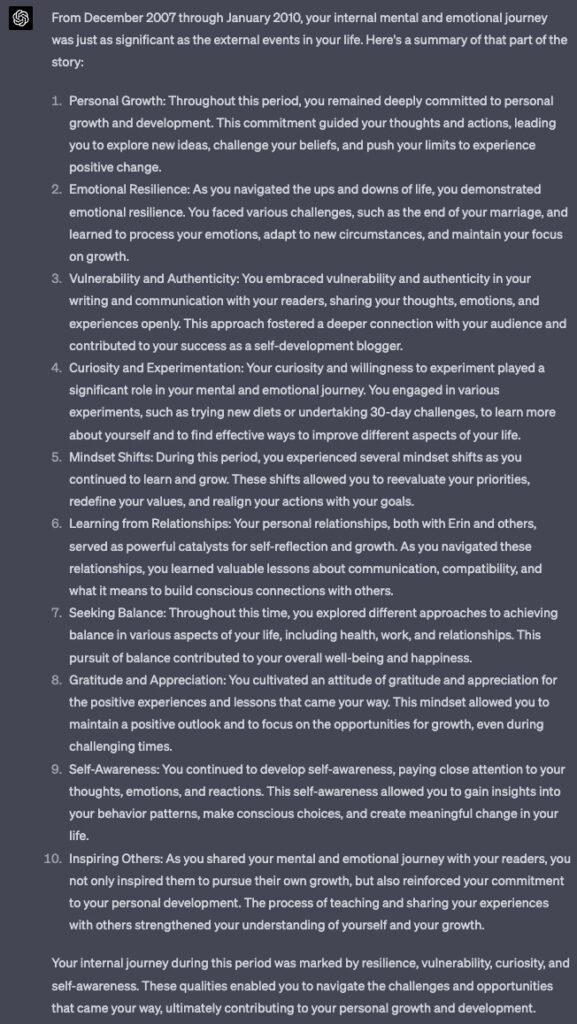
Then I can also delve deeper into any or all of these, such as the specific mindset shifts. This is a really fascinating way to reflect back upon some of the more intense parts of my life and reprocess them with a fresh perspective.

Using AI for Sales & Seduction

Consider the flip side of this too. If I can do this, so can anyone else. They can do this for themselves if the AI is well-trained on their lives, but they can also do this sort of deep dive into the life of someone like me.

So if someone else wanted to sell me something, could they use ChatGPT to help them build a customized sales approach, tailored to my personal motivational strategy? Think about the repercussions of that if it works, especially if it’s done at scale. AI could be the ultimate salesperson.

Let’s see how it does if I try this…
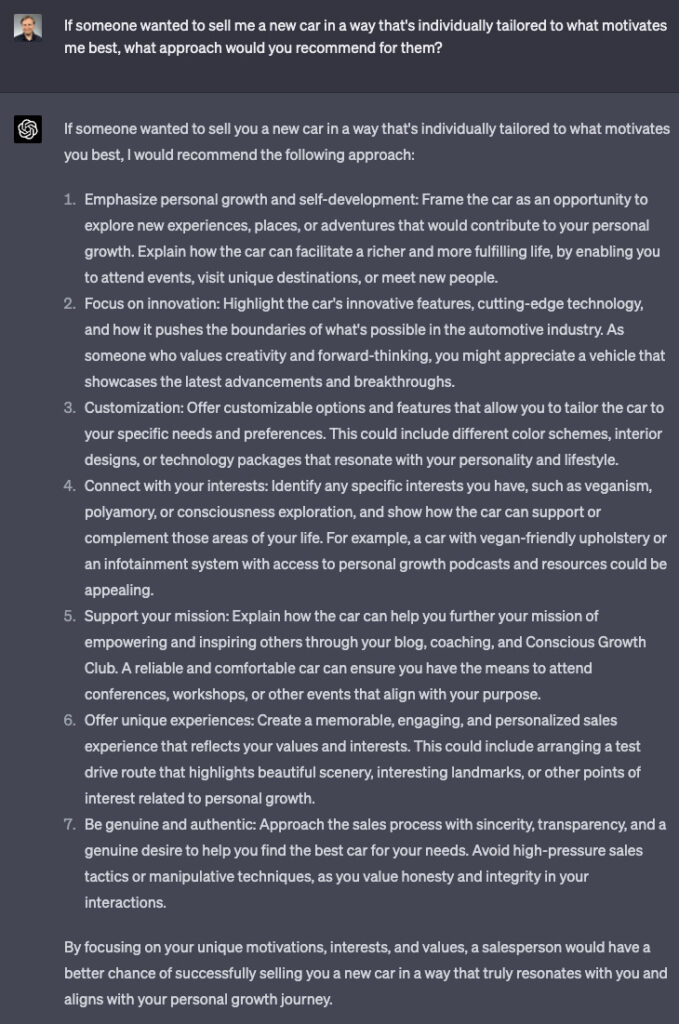
Some of these ideas feel a bit flat, even goofy, but there are some gems in there. When I bought my last car, I rejected the 2011 model because it had some leather in the interior, and I went with the vegan-friendly 2010 model instead. But I do think this could help an eager salesperson more than hurt.

What if we try this on the personal side?
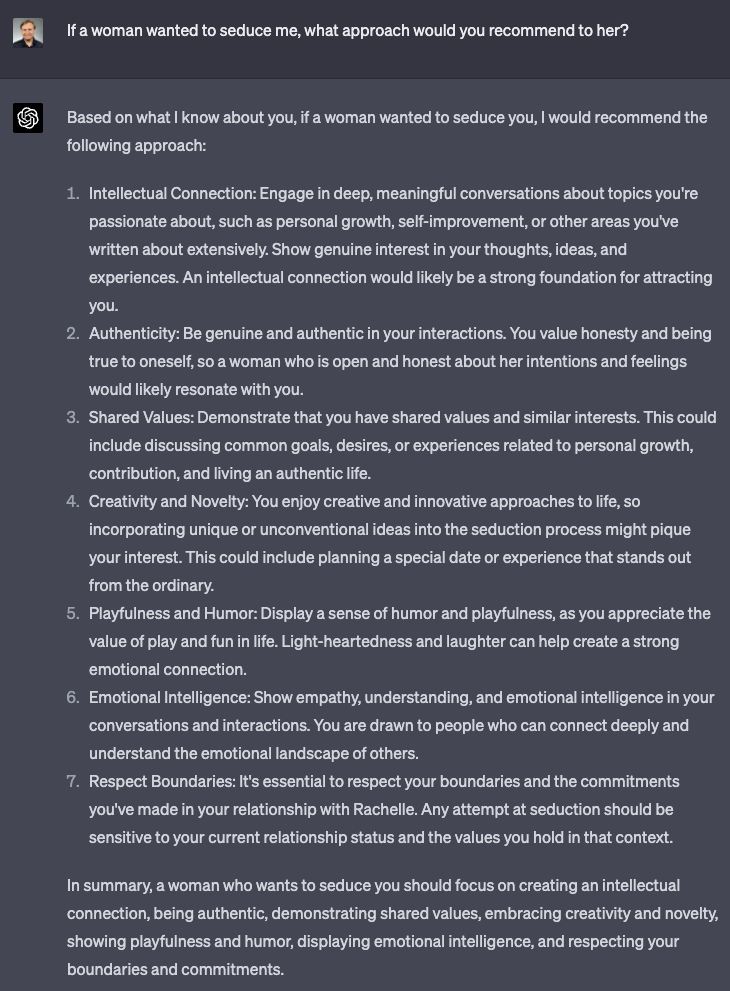
Some of this resonates, but I also feel it weaves in some generalities too.

I like that it caught the value I place on shared laughter. I connect very well with people who openly express their lighter side.

I also like that it mentioned authenticity and a mental connection since those are both very important to me too.

Sometimes better results can be gotten by prompting it a little differently. Here’s another version:
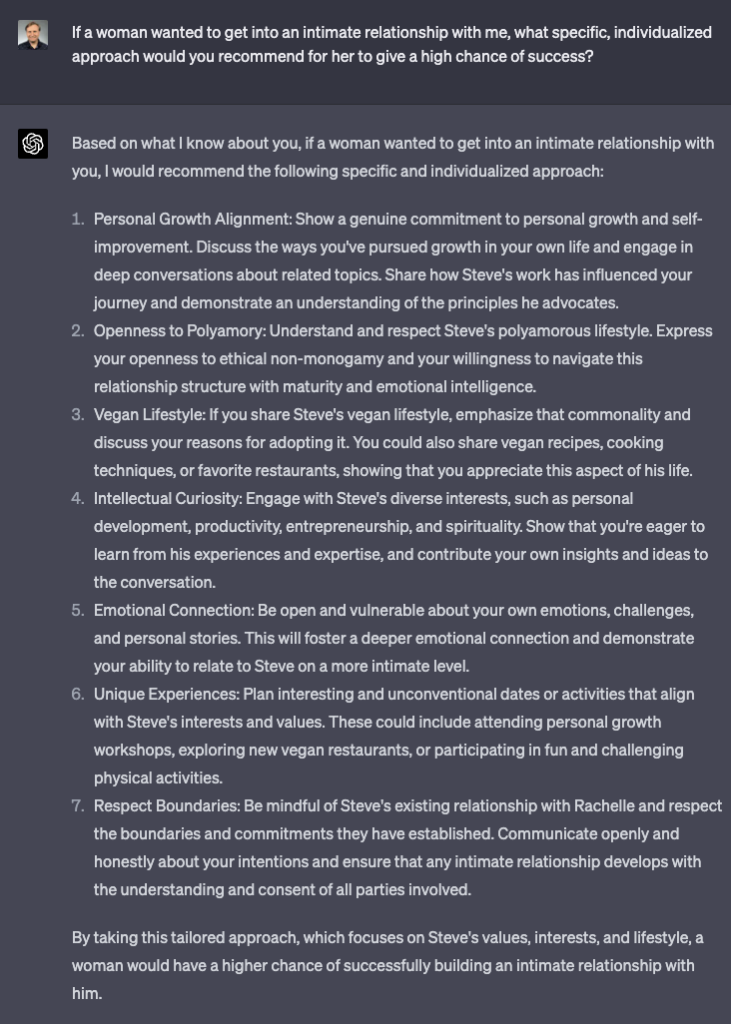
This one seems more tailored and less general. Vegan lifestyle alignment is definitely an important factor since I’ve been vegan for most of my life. Same goes for respecting my relationship with Rachelle. This advice is pretty well individualized.

I think it someone were to try to use this approach to try to get into a relationship with someone that ChatGPT knows very well, it would be more effective to try multiple prompts, regenerate them a few times, and extract the most unique and distinct elements to build a customized approach. Based on what I’ve seen, I think it could be reasonably effective, probably helping more than hurting.

I think a better approach for this would be discovering if someone is actually compatible with you. Imagine AI-driven dating or matchmaking services.

There’s a light side to this tech and a darker side. I sense immense possibilities for what we can do with this for self-development purposes. I feel lucky that my blogging history gives me some special advantages in being able to explore these possibilities more deeply than most. Perhaps this is a preview of what may become more widely available to more people though, at least those who’ve put significant parts of their lives online.

Even on the consumer side, I’m more optimistic than pessimistic. I think I’d prefer it if sales were more individualized. It would be a neat experience when car shopping to have the salesperson talking about the values fit, such as the vegan interior. This actually gives me the idea to help the salespeople out a bit by emailing them this sort of info in advance, and encourage them to use it.

This is a strange new world of self-development possibilities that we’re entering. Personally I love it! I know some people are freaked out about where AI is heading, but I’m really not attached to where the story goes next. I think it’s going to be a fascinating ride however it unfolds.

If you’re interesting in exploring more self-development with AI, there are lots of ways to do that even if you’re not personally known to an AI like ChatGPT. You just have to do a bit more front-loading to teach it. Some members of Conscious Growth Club are actively exploring this together, including me of course. We’re having our annual opening to invite new members to join in about 10 days, from April 25th to May 1st, so please consider enrolling in the club for Year 7. We’re making numerous upgrades to CGC to make it even more lively and adventurous for self-development explorers. I’ll be sharing more about those upgrades in the days ahead, so stay tuned. 😁


Share Button

Laura Kuenssberg: Can we avoid a summer of strikes?

Many public servants are in no mood to back down and it’s not clear how ministers intend to deal with it.

Share Button

RCN nurses to strike on May bank holiday in England as pay offer rejected

A 48-hour walkout from 30 April will include nurses in A&E, intensive care and cancer wards in England.

Share Button

Tracking a new path to octopus and squid sensing capabilities

Along their eight arms, octopuses have highly sensitive suckers that allow methodical explorations of the seafloor as they search for nourishment in a “taste by touch” approach. Squids, on the other hand, use a much different tactic to find their next meal: patiently hiding until they ambush their prey in swift bursts.

In a unique analysis that provides a glimpse into the origin stories of new animal traits, a pair of research studies led by University of California San Diego and Harvard University scientists has traced the evolutionary adaptations of octopus and squid sensing capabilities. The studies, featured on the cover of the April 13 issue of Nature, reveal evolutionary links to human brain receptors.

Researchers with Ryan Hibbs’ newly established laboratory in the School of Biological Sciences at UC San Diego (formerly based at the University of Texas Southwestern Medical Center) and Nicholas Bellono’s lab at Harvard analyzed octopuses and squids, animals known as cephalopods, through a comprehensive lens that spanned atomic-level protein structure to the entire functional organism. They focused on sensory receptors as a key site for evolutionary innovation at the crossroads of ecology, neural processing and behavior.

By looking at the way octopuses and squids sense their marine environments, the researchers discovered new sensory receptor families and determined how they drive distinct behaviors in the environment. With cryo-electron microscopy technology, which uses cryogenic temperatures to capture biological processes and structures in unique ways, they showed that adaptations can help propel new behaviors.

“Cephalopods are well known for their intricate sensory organs, elaborate nervous systems and sophisticated behaviors that are comparable to complex vertebrates, but with radically different organization,” said Hibbs, a professor in the Department of Neurobiology. Hibbs brings expertise on the structure of a family of proteins in humans that mediate communication between brain neurons and other areas such as between neurons and muscle cells. “Cephalopods provide striking examples of convergent and divergent evolution that can be leveraged to understand the molecular basis of novelty across levels of biological organization.”

In one Nature study, the research teams described for the first time the structure of an octopus chemotactile (meaning chemical and touch) receptor, which octopus arms use for taste-by-touch exploration. These chemotactile receptors are similar to human brain and muscle neurotransmitter receptors, but are adapted through evolution to help evaluate possible food sources in the marine environment.

“In octopus, we found that these chemotactile receptors physically contact surfaces to determine whether the animal should eat a potential food source or reject it,” said Hibbs. “Through its structure, we found that these receptors are activated by greasy molecules, including steroids similar to cholesterol. With evolutionary, biophysical and behavioral analyses, we showed how strikingly novel structural adaptations facilitate the receptor’s transition from an ancestral role in neurotransmission to a new function in contact-dependent chemosensation of greasy environmental chemicals.”

The second Nature study focused on squid and their wholly different ambush strategy for capturing food. The researchers combined genetics, physiology and behavioral experiments to discover a new class of ancient chemotactile receptors and determined one structure within the class. They also conducted an evolutionary analysis to link adaptations in squid receptors to more elaborate expansions in octopus. They were then able to place chemotactile and ancestral neurotransmitter receptors on an evolutionary timeline and described how evolutionary adaptations drove the development of new behaviors.

“We discovered a new family of cell surface receptors that offer a rare lens into the evolution of sensation because they represent the most recent and only functionally tractable transition from neurotransmitter to environmental receptors across the entire animal kingdom,” said Hibbs. “Our structures of these unique cephalopod receptors lay a foundation for the mechanistic understanding of major functional transitions in deep evolutionary time and the origin of biological novelty.”

Hibbs says the pair of new studies offers an excellent example of how curiosity in interesting creatures can lead to insights important for all of biology, namely how proteins — life’s building blocks — adapt to mediate new functions and behaviors.

“These studies are a great example of what being a scientist is all about — wonder, exploration and understanding how things work,” he said.

Video: https://youtu.be/WC4h_XIioAw

Share Button

Ancient DNA reveals the multiethnic structure of Mongolia’s first nomadic empire

Long obscured in the shadows of history, the world’s first nomadic empire — the Xiongnu — is at last coming into view thanks to painstaking archaeological excavations and new ancient DNA evidence. Arising on the Mongolian steppe 1,500 years before the Mongols, the Xiongnu empire grew to be one of Iron Age Asia’s most powerful political forces — ultimately stretching its reach and influence from Egypt to Rome to Imperial China. Economically grounded in animal husbandry and dairying, the Xiongnu were famously nomadic, building their empire on the backs of horses. Their proficiency at mounted warfare made them swift and formidable foes, and their legendary conflicts with Imperial China ultimately led to the construction of the Great Wall.

However, unlike their neighbors, the Xiongnu never developed a writing system, and consequently historical records about the Xiongnu have been almost entirely written and passed down by their rivals and enemies. Such accounts, largely recorded by Han Dynasty chroniclers, provide little useful information on the origins of the Xiongnu, their political rise, or their social organization. Although recent archaeogenetics studies have now traced the origins of the Xiongnu as a political entity to a sudden migration and mixing of disparate nomadic groups in northern Mongolia ca. 200 BCE, such findings have raised more questions than answers.

To better understand the inner workings of the seemingly enigmatic Xiongnu empire, an international team of researchers at the Max Planck Institutes for Evolutionary Anthropology (MPI-EVA) and Geoanthropology (MPI-GEO), Seoul National University, the University of Michigan, and Harvard University conducted an in-depth genetic investigation of two imperial elite Xiongnu cemeteries along the western frontier of the empire: an aristocratic elite cemetery at Takhiltyn Khotgor and a local elite cemetery at Shombuuzyn Belchir.

“We knew that the Xiongnu had a high degree of genetic diversity, but due to a lack of community-scale genomic data it remained unclear whether this diversity emerged from a heterogeneous patchwork of locally homogenous communities or whether local communities were themselves genetically diverse,” explains Juhyeon Lee, first author of the study and PhD student at Seoul National University. “We wanted to know how such genetic diversity was structured at different social and political scales, as well as in relation to power, wealth, and gender.”

The rise of a multiethnic empire

Researchers found that individuals within the two cemeteries exhibited extremely high genetic diversity, to a degree comparable with that found across the Xiongnu Empire as a whole. In fact, high genetic diversity and heterogeneity was present at all levels — across the empire, within individual communities, and even within individual families — confirming the characterization of the Xiongnu Empire as a multiethnic empire. However, much of this diversity was stratified by status. The lowest status individuals (interred as satellite burials of the elites, likely reflecting a servant status) exhibited the highest genetic diversity and heterogeneity, suggesting that these individuals originated from far-flung parts of the Xiongnu Empire or beyond. In contrast, local and aristocratic elites buried in wood-plank coffins within square tombs and stone ring graves exhibited lower overall genetic diversity and harbored higher proportions of eastern Eurasian ancestries, suggesting that elite status and power was concentrated among specific genetic subsets of the broader Xiongnu population. Nevertheless, even elite families appear to have used marriage to cement ties to newly incorporated groups, especially at Shombuuzyn Belchir.

“We now have a better idea of how the Xiongnu expanded their empire by incorporating disparate groups and leveraging marriage and kinship into empire building,” says senior author Dr. Choongwon Jeong, Associate Professor of Biological Sciences at Seoul National University.

Powerful women in Xiongnu society

A second major finding was that high status Xiongnu burials and elite grave goods were disproportionately associated with women, corroborating textual and archaeological evidence that Xiongnu women played especially prominent political roles in the expansion and integration of new territories along the empire’s frontier. At the aristocratic elite cemetery of Takhiltyn Khotgor, researchers found that the elite monumental tombs had been built for women, with each prominent woman flanked by a host of commoner males buried in simple graves. The women were interred in elaborate coffins with the golden sun and moon emblems of Xiongnu imperial power and one tomb even contained a team of six horses and a partial chariot. At the nearby local elite cemetery of Shombuuzyn Belchir, women likewise occupied the wealthiest and most elaborate graves, with grave goods consisting of wooden coffins, golden emblems and gilded objects, glass and faience beads, Chinese mirrors, a bronze cauldron, silk clothing, wooden carts, and more than a dozen livestock, as well as three objects conventionally associated with male horse-mounted warriors: a Chinese lacquer cup, a gilded iron belt clasp, and horse tack. Such objects and their symbolism convey the great political power of the women.

“Women held great power as agents of the Xiongnu imperial state along the frontier, often holding exclusive noble ranks, maintaining Xiongnu traditions, and engaging in both steppe power politics and the so-called Silk Road networks of exchange,” says Dr. Bryan Miller, project archaeologist and Assistant Professor of Central Asian Art & Archaeology at the University of Michigan.

Children in Xiongnu society

Genetic analysis also provided rare insights into the social roles of children in Xiongnu society. “Children received differential mortuary treatment depending upon age and sex, giving clues to the ages at which gender and status were ascribed in Xiongnu society,” says senior author Dr. Christina Warinner, Associate Professor of Anthropology at Harvard University and Group Leader at the Max Planck Institute for Evolutionary Anthropology. Researchers found, for example, that although adolescent Xiongnu boys as young as 11-12 years old were buried with a bow and arrows, in a manner resembling that of adult males, younger boys were not. This suggests that the gendered social roles of hunter and warrior were not ascribed to boys until late childhood or early adolescence.

The legacy of the Xiongnu today

Although the Xiongnu empire ultimately disintegrated in the late 1st century CE, the findings of the study point to the enduring social and cultural legacy of the Xiongnu. “Our results confirm the long-standing nomadic tradition of elite princesses playing critical roles in the political and economic life of the empires, especially in periphery regions — a tradition that began with the Xiongnu and continued more than a thousand years later under the Mongol Empire,” says Dr. Jamsranjav Bayarsaikhan, project archaeologist and Mongolian Archaeology Project: Surveying the Steppes (MAPSS) project coordinator at the Max Planck Institute for Geoanthropology. “While history has at times dismissed nomadic empires as fragile and short, their strong traditions have never been broken.”

Share Button

Tastes differ — even among North Atlantic killer whales

Killer whales (also known as orcas) are intelligent predators. While it’s known that killer whales in the Pacific Northwest exploit widely different food types, even within the same region, we know much less about the feeding habits of those found throughout the North Atlantic. Thanks to a new technique developed by a research team led by McGill University, it is now possible to quantify, for the first time, the proportion of different prey that killer whales in the North Atlantic are eating by studying the fatty acid patterns in their blubber.

In the largest study of its kind, this approach was used to look more closely at the diets of killer whale from the eastern and northern coasts of Canada all the way to northern Norway. It provides the most detailed overview of North Atlantic killer whales diets to date. As climate change leads to a northward redistribution of killer whales, the results have implications not only for the health and survival of these killer whales, but also in terms of potential impacts on sensitive species within Arctic ecosystems.

A new tool to keep track of shifting diets

“In a context of climate change, it becomes increasingly urgent to understand and be able to quantify killer whale diets and how they are changing so that we can foresee the potential impacts on local food webs,” says Anaïs Remili, a PhD candidate in the Department of Natural Resource Sciences at McGill University and the first author on a paper published in Journal of Animal Ecology. “By measuring the composition of the fatty acids of approximately 200 killer whales and of 900 of their prey of different species, we were able estimate the specific proportions of each prey species in the whales’ diets. This means that scientists can potentially keep track of any shifts in these diets in the future.”

Orca food habits vary — by region and individual

The team found that killer whales have very different diets throughout the North Atlantic. In some areas, killer whales prefer to consume other whales: belugas and narwhals in the Eastern Canadian Arctic and baleen whales and porpoises in Eastern Canada.

Killer whales feed predominantly on fish, especially herring in the Eastern North Atlantic (Norway, Faroe Islands, Iceland), and in the Central North Atlantic (Greenland) they primarily eat seals.

Interestingly, however, the McGill researchers also found that not all the whales in any given location feed on the same prey. For example, in the Eastern Canadian Arctic, half of the whales eat mainly belugas and narwhals, while the other half consume mainly ringed seals. In Greenland, killer whales consumed a mixture of all available prey. Lastly, in Iceland, the Faroe Islands, and Norway, most whales are herring eaters, but a small number of whales in Norway and Iceland also consume a substantial proportion of marine mammals such as porpoises and seals. It is the first time that researchers have been able to detect individual diet preferences with this level of detail.

“Quantifying the diets of killer whales and other top predators is crucial in a context of changing environments, because it can provide insights into how these animals adapt to shifts in their prey populations and habitat conditions,” adds Melissa McKinney, the senior author on the paper, an Assistant Professor in the Department of Natural Resource Sciences at McGill and the Canada Research Chair in Ecological Change and Environmental Stressors. “Our results also point to the need for further research on the ecology of the individuals since we found such large differences among individuals of the same populations.”

Share Button

Million-year-old viruses help fight cancer, say scientists

A discovery gives experts new ideas for developing vaccines to treat or even prevent cancer.

Share Button

Scientists narrow down pool of potential height genes

When it comes to height, our fate is sealed along with our growth plates — cartilage near the ends of bones that hardens as a child develops. Research publishing April 14 in the journal Cell Genomics shows that cells in these plates determine the length and shape of our bones and can hint at our stature. The study identified potential “height genes” and found that genetic changes affecting cartilage cell maturation may strongly influence adult height.

“The study is really understanding the genetics of skeleton,” says senior author Nora Renthal of Boston Children’s Hospital and Harvard University. As a pediatric endocrinologist who cares for children with skeletal diseases, she is interested in understanding how bones grow. “Height is a good starting point to understand the relationship between genes, growth plates, and skeletal growth because we can measure the height of every human being.”

To pinpoint height-associated genes, the team screened 600 million mouse cartilage cells to identify genes that, when deleted, can alter cell growth and maturation. These types of cellular changes in the growth plate are known to lead to variations in human height. The search turned up 145 genes mostly linked to skeletal disorders and are crucial for growth plate maturation and bone formation.

The team then compared the discovered genes with data from genome-wide association studies (GWAS) of human height. GWAS allows researchers to survey the entire human genome to identify hotspots where “height genes” are located in our DNA. But these regions can contain multiple genes, making it hard for researchers to track down and study an individual target.

“That’s kind of like looking for your friend’s house, but you only know the zip code,” says Renthal. “It’s difficult.”

The comparison revealed that genes affecting cartilage cells overlap with hotspots from human height GWAS, precisely locating genes in our DNA that likely play a role in determining our stature. Renthal and her team also discovered that many of the GWAS suggested height genes led to early maturation in cartilage cells. These findings suggest that genetic changes affecting cartilage cell maturation may influence height more.

Renthal notes that studies in mouse cells may not fully translate to humans, and GWAS are observational studies that cannot fully illustrate the cause and effects of height. But her study provides a novel method to bridge the two methods and provide new insights into human genetics.

Next, the team plans to use the method to understand hormones’ effect on cartilage cells. They will also look into some of the 145 genes that have no known connection to skeletal growth. The investigation may reveal new genes and pathways that play a role in the bones.

“I see patients with skeletal dysplasia, where there isn’t any treatment because genetics made their bones grow this way,” says Renthal. “It’s my hope that the more we can understand about the biology of the growth plate, the more we would be able to intervene at earlier times in growing skeletons and the life of a kid.”

Share Button

Playing hide and seek with planets

An international team of astronomers announced the first exoplanet discovered through a combined approach of direct imaging and precision measurements of a star’s motion on the sky. This new method promises to improve the efficiency of exoplanet searches, paving the way for the discovery of an Earth twin.

To discover exoplanets, planets which orbit stars other than the Sun, by imaging astronomers have up until now used “blind surveys”: stars are selected for imaging consider factors such as age and distance but are otherwise unbiased. However, blind surveys find planets very infrequently. Knowing where to look would help increase detection rates.

An international research team led by Subaru Telescope, the University of Tokyo, the University of Texas-San Antonio, and the Astrobiology Center of Japan, searched for hints of unknown planets in the data from the European Space Agency’s Gaia mission and its predecessor, Hipparcos. The team identified a star, HIP 99770 located 133 light-years away in the constellation Cygnus, whose motion suggests that an unseen planet is gravitationally pulling on it. Direct imaging observations with the Subaru Telescope detected the planet, HIP 99770 b.

The newly discovered planet is 14-16 times more massive than Jupiter. Its orbit is just over 3 times further from its star than Jupiter is from the Sun. The planet is 10 times hotter than Jupiter, with signs of water and carbon monoxide in its atmosphere.

A decade from now, astronomers hope to image a potentially-habitable planet with a size and temperature like the Earth using observatories like the Thirty Meter Telescope (TMT). Compared with HIP 99770 b, this Earth twin will be smaller and closer to its star, traits that will make it harder to detect. But with precise motion measurements, researchers will know where to look in this game of planetary hide and seek.

Share Button

Gel nails: Investigation launched into gel polish allergic reactions

Dermatologists are urging people to stick to “old-fashioned” polish and avoid DIY home kits.

Share Button