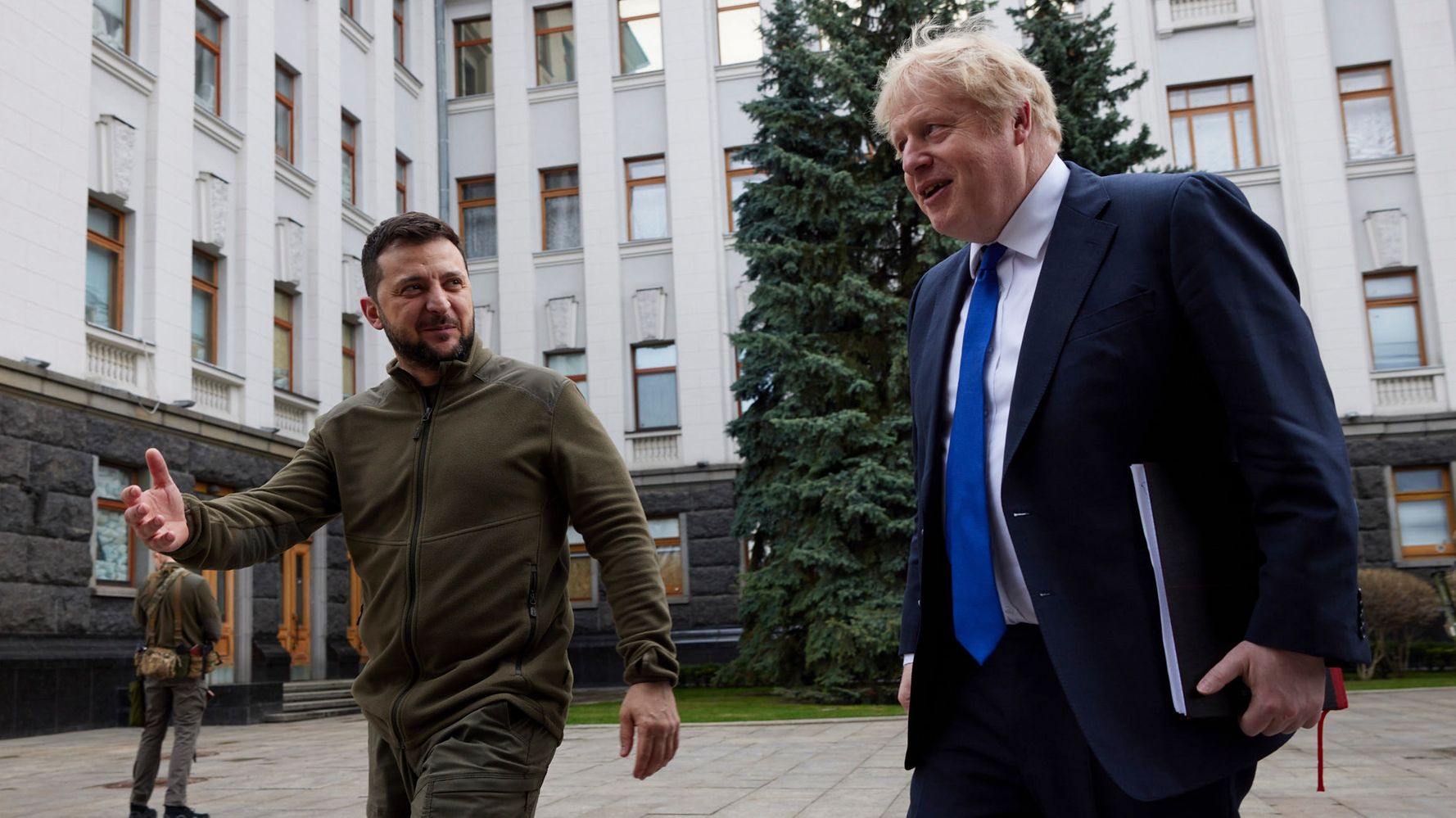
‘We Will Support Ukraine For As Long As It Takes’ Boris Johnson Says During Walkabout In Kyiv

Britain will support Ukraine “for as long as it takes”, Boris Johnson has vowed during a surprise visit to the war-ravaged country.

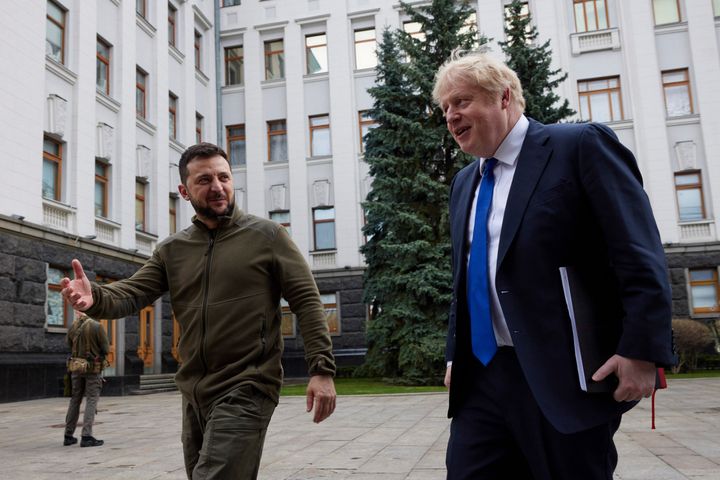
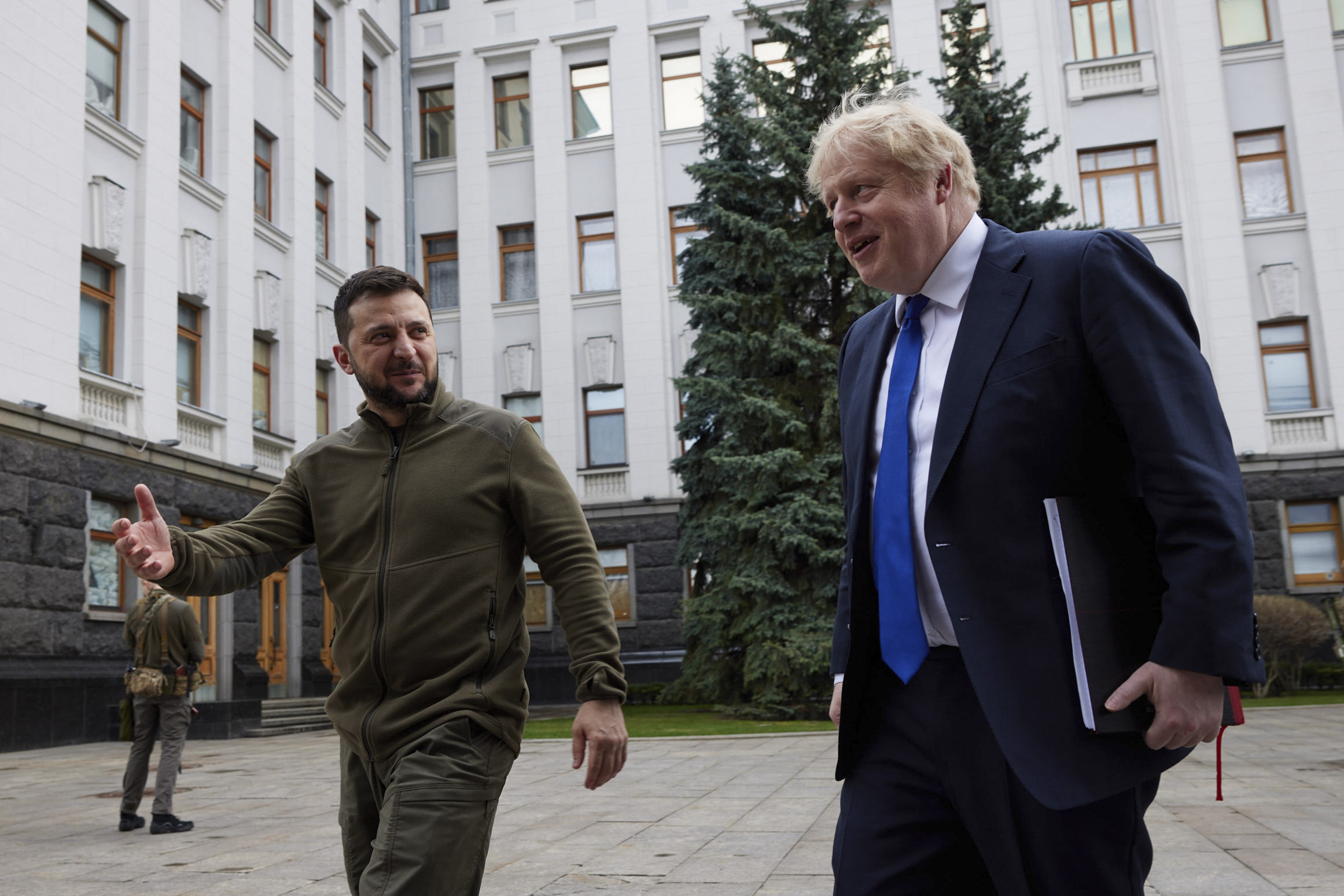
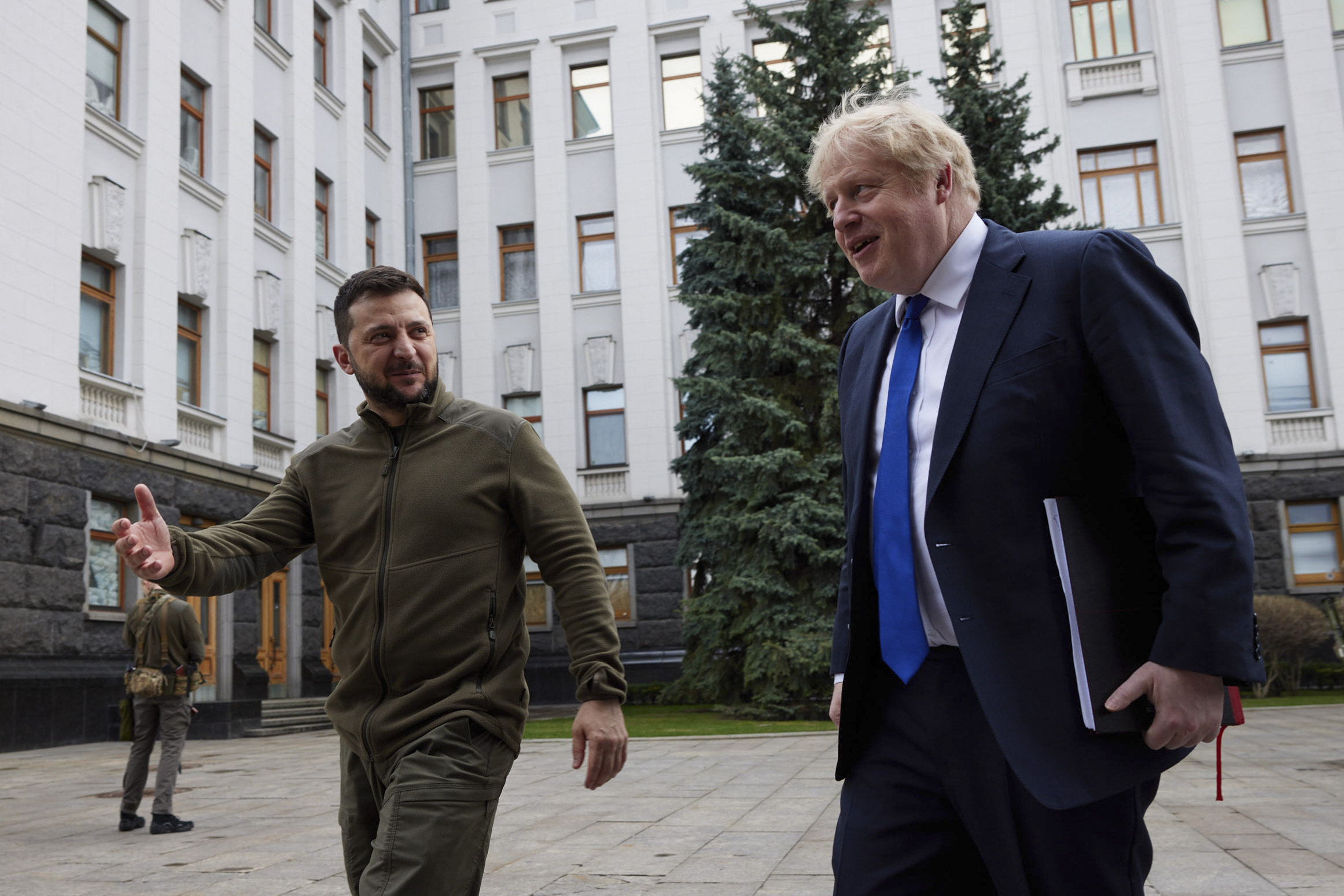
The prime minister spoke to ordinary Ukrainians as he walked around the capital city Kyiv with president Volodymyr Zelenskyy.

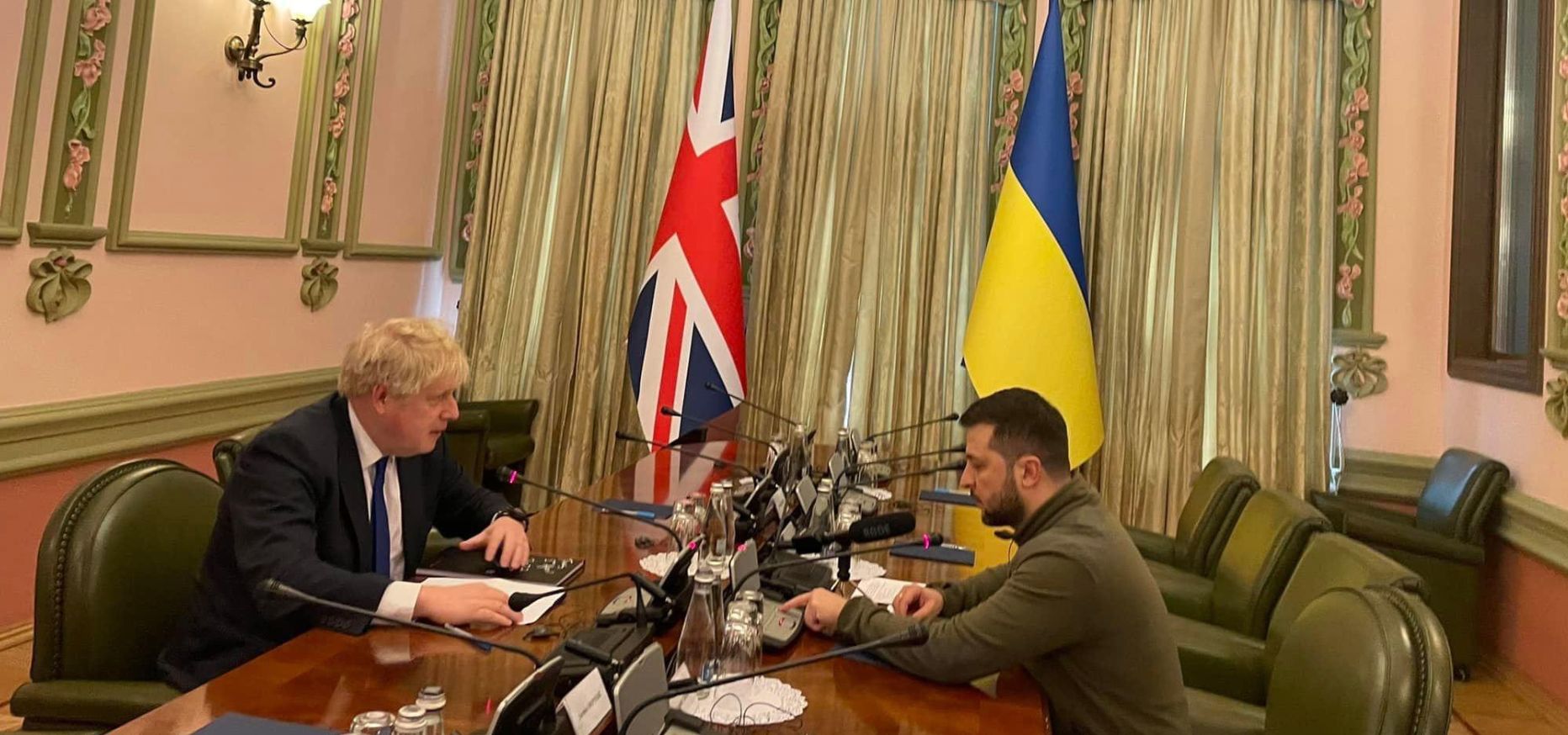
Johnson held talks with his opposite number after flying in to Ukraine on an unannounced visit amid tight security.

A video was later posted on Twitter showing the two leaders walking through the centre of Kyiv.

At one point, a local man expresses his gratitude to the PM for the support the UK has provided to Ukraine since Russia’s invasion began on February 24.

In response, Johnson said: “It’s nice to meet you and it’s been our privilege to help. You have a remarkable president, Mr Zelensky, who’s done an outstanding job and we simply wish to keep supporting the people of Ukraine for as long as it takes.”

Appearing alongside Zelenskyy in a recorded broadcast clip, Johnson said the West would continue to “ratchet up” sanctions on Moscow as he praised the courage of the Ukrainian resistance.

“I think that the Ukrainians have shown the courage of a lion, and you Volodymyr have given the roar of that lion,” he said.

“The UK and others (will) supply the equipment, the technology, the know-how, the intelligence, so that Ukraine will never be invaded again.

“So Ukraine is so fortified and protected – that Ukraine can never be bullied again. Never be blackmailed again. Never be threatened in the same way again.”

The Ukrainian president said: “I am very grateful for this visit. It is very important at this very difficult and turbulent time for our country.

“You came here and we are especially grateful for this to happen. This is a true reflection of the decisive and significant support for Ukraine from the United Kingdom and we will always remember that.”

It was also announced that the UK has agreed to provide Ukraine with 120 armoured vehicles and new anti-ship missile systems.

That is on top of the £100 million worth of high-grade military equipment announced yesterday, including more Starstreak anti-aircraft missiles, another 800 anti-tank missiles, and high-tech loitering munitions for precision strikes.

The UK is also guaranteeing £385m in World Bank lending to Ukraine, taking its total loan guarantee to up to $1 billion.
Share Button

Boris Johnson Flies To Kyiv For ‘Surprise’ Meeting With Volodymyr Zelenskyy

Boris Johnson has flown to Kyiv for “surprise” talks with Ukrainian president Volodymyr Zelenskyy.

Downing Street said the prime minister made the unannounced trip “in a show of solidarity with the Ukrainian people”.

The lightning visit was revealed in a tweet by the Ukrainian embassy in London, which showed Johnson holding talks with Zelensky.

Above the picture was a winking emoji and “surprise”.

The trip had been shrouded in secrecy due to security concerns.

Afterwards, it was announced that the UK has agreed to provide Ukraine with 120 armoured vehicles and new anti-ship missile systems.

That is on top of the £100 million worth of high-grade military equipment announced yesterday, including more Starstreak anti-aircraft missiles, another 800 anti-tank missiles, and high-tech loitering munitions for precision strikes.

The UK is also guaranteeing £385m in World Bank lending to Ukraine, taking its total loan guarantee to up to $1 billion.

The PM said: “It is a privilege to be able to travel to Ukraine and meet President Zelenskyy in person in Kyiv today.

“Ukraine has defied the odds and pushed back Russian forces from the gates of Kyiv, achieving the greatest feat of arms of the 21st century.

“It is because of President Zelenskyy’s resolute leadership and the invincible heroism and courage of the Ukrainian people that Putin’s monstrous aims are being thwarted.

“I made clear today that the United Kingdom stands unwaveringly with them in this ongoing fight, and we are in it for the long run.

“We are stepping up our own military and economic support and convening a global alliance to bring this tragedy to an end, and ensure Ukraine survives and thrives as a free and sovereign nation.”

A Downing Street spokesperson said: “The prime minister has travelled to Ukraine to meet President Zelenskyy in person, in a show of solidarity with the Ukrainian people.

“They will discuss the UK’s long term support to Ukraine and the PM will set out a new package of financial and military aid.”

It is the first time the prime minister has visited Ukraine since the Russian invasion on February 24.

Boris Johnson meets Volodymyr Zelensky in Kyiv

No10 Downing Street

Number 10 later issued a picture appearing to show the two leaders on a walkabout in Kyiv.

The BBC reported that in a Facebook post, Andriy Sybiha, deputy head of the Ukrainian president’s office said: “The UK is the leader in defence support for Ukraine. The leader in the anti-war coalition. The leader in sanctions against the Russian aggressor.”

Share Button

‘He’s In Trouble’: Have Rishi Sunak’s Tax Controversies Ended His Leadership Hopes?

At his peak, Rishi Sunak was the most popular politician in the country.

It was a reputation forged after the “crisis chancellor” rose to the challenge of the Covid pandemic — splashing billions on furlough and business support and later the “eat out to help out” scheme to keep the hospitality sector afloat.

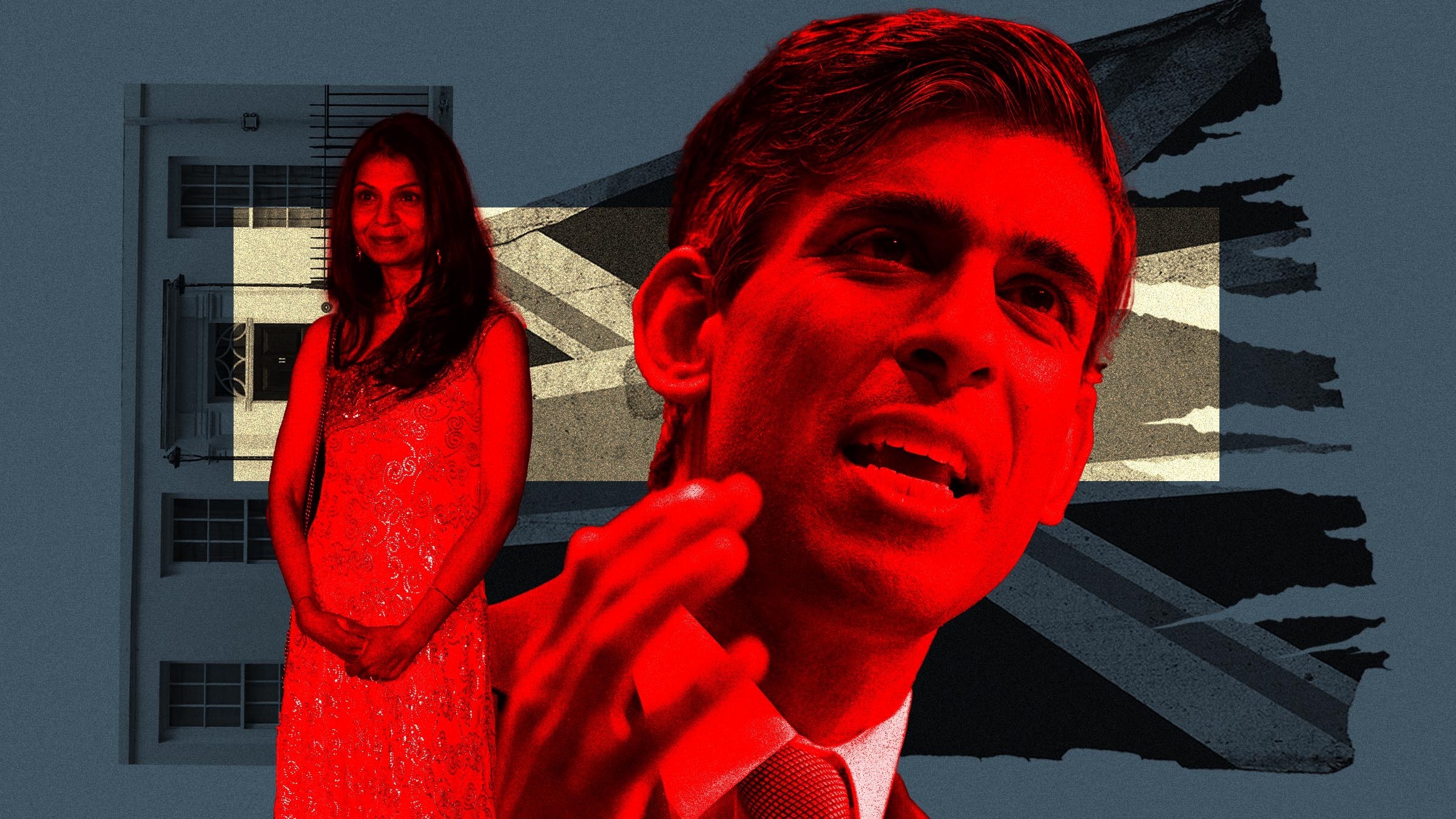
Now, the image of Sunak as a sympathetic chancellor who is in touch with the needs of ordinary people appears to be in tatters — and the same could be said of his ambitions to succeed Boris Johnson as prime minister.

Although she was forced into a screeching U-turn on Friday night, the damage to her husband’s reputation was already done.

Meanwhile, the chancellor himself was also hit by claims in the Independent that he has been listed as a beneficiary of tax haven trusts linked to Murty in the British Virgin Islands and Cayman Islands.

Pat McFadden, Labour’s shadow chief secretary to the Treasury, said the allegations were “extremely serious”.

“We need full transparency about this and the other stories about the chancellor emerging over the past 24 hours,” he said.

Murty always paid UK tax on any income she earned here, but under the non-dom arrangement, domestic rates did not apply to the vast majority of her foreign wealth, derived from her stake in her father’s Indian company Infosys.

It reinforced the already damaging perception that it’s “one rule for them, one for the rest of us”.

Reports suggest that Murty’s non-dom status, which is perfectly legal, may have allowed her to avoid millions in tax.

Given the fact that her husband has just increased national insurance contributions for working people during the worst cost-of-living crisis in decades, the timing of the revelations could hardly have been worse.

Following Murty’s U-turn, one Labour insider said: “Rishi Sunak has realised that being a total hypocrite doesn’t wash with the British public.”

One former minister admitted to HuffPost UK that the stories emerging about Sunak had put him in “a lot of trouble”.

“It looks like a coordinated campaign and that there will be more to come. Also, there’s not much support being expressed for him publicly.”

Discussing the chancellor’s leadership prospects a few weeks ago, one senior Tory backbencher said that while they liked Sunak, he was not a “political operator” like the foreign secretary, Liz Truss, and questioned whether he had any allies in the Conservative party.

“Who are his allies? I don’t know who they are.”

<img class="img-sized__img landscape" loading="lazy" alt="Chancellor of the Exchequer Rishi Sunak alongside his wife Akshata Murthy.” width=”720″ height=”553″ src=”https://www.wellnessmaster.com/wp-content/uploads/2022/04/hes-in-trouble-have-rishi-sunaks-tax-controversies-ended-his-leadership-hopes-3.jpg”>
Chancellor of the Exchequer Rishi Sunak alongside his wife Akshata Murthy.

Ian West via PA Wire/PA Images

Another Conservative said that while the chancellor may be feeling the pain now, it was only just the beginning.

“Everyone is talking about the cost of living,” one Labour source said.

“It’s a massive issue. Rising bills, rising taxes, the cost of food and fuel — the cost of petrol is in the minds of most people you speak to. They can tell you the price they last paid to the half penny.

“The Tories are of course making the chancellor the scapegoat: rule number one in the current Tory party is protect Johnson.

“But voters don’t seem to blame Sunak when you speak to them. They blame the government.

“They know there’s a stink but it’s from a steady and constant flow not from one single burst pipe.”

Sunak was quick to defend Murty’s tax’s affairs, launching a spirited defence of his wife in an interview with the Sun on Thursday evening.

He claimed the couple were the victim of “unpleasant smears” and that those responsible were wrong to target her as a “private citizen”.

“She has had her own career,” he said. “She has her own investments and is paying the taxes that she owes in the UK.

“She is 100 per cent doing everything this country asks of her.”

Some of Sunak’s colleagues rallied to his defence, also suspecting he is the victim of an orchestrated campaign to undermine his credibility.

Alec Shelbrooke, who represents a constituency in Yorkshire, said it was “disgraceful that the chancellor’s wife should change her life, just because of her husband’s job”.

“She hasn’t done anything illegal, she has followed the law, but people are trying to say she should be subservient to her husband’s choices — any feminist attacking her, needs to find a dictionary.

“It’s nasty politics at all levels and its fundamentally sexist. The people attacking are, at best, confused on feminism and inconsistent on tax policy.

“Good smear campaign for them, but vacuous politics.

“Rishi has my full support.”

Another backbencher said: “I think this is quite smeary — Labour looked at non-dom when they were in power and decided to keep it with a fee, which we then jacked up when we were in charge.

But they added: “Notwithstanding that, it’s still politically damaging for him.”

<img class="img-sized__img landscape" loading="lazy" alt="Rishi Sunak places an "eat out to help out" sticker in the window of a business during a visit to Rothesay on the Isle of Bute, Scotland.” width=”720″ height=”479″ src=”https://www.wellnessmaster.com/wp-content/uploads/2022/04/hes-in-trouble-have-rishi-sunaks-tax-controversies-ended-his-leadership-hopes-4.jpg”>
Rishi Sunak places an “eat out to help out” sticker in the window of a business during a visit to Rothesay on the Isle of Bute, Scotland.

Jeff J Mitchell – PA Images via Getty Images

What is also worrying for Sunak is the confirmation that he held a US green card for the first 18 months of his role as chancellor.

Green card holders must pay US tax on their worldwide income and declare the US as their permanent residence.

The Liberal Democrats have demanded that the cabinet secretary, Simon Case, open an investigation into the claims and whether Sunak broke the ministerial code.

Sunak’s spokeswoman said: “Upon his first trip to the US in a government capacity as chancellor, he discussed the appropriate course of action with the US authorities,” she said.

“At that point it was considered best to return his green card, which he did immediately.

“All laws and rules have been followed and full taxes have been paid where required in the duration he held his green card.”

For some Tories this is where the real danger lies.

Asked whether the constant drip of revelations meant it was all over for Sunak, one former Cabinet minister said: “For his leadership ambitions, certainly, and probably for his current job. The green card stuff is incredible.”

A backbencher added: “Not over non-dom, but if this green card stuff is true, then I expect it is over for him. Probably even as an MP.”

At a press conference on Friday, the prime minister was repeatedly dogged by questions on Sunak’s tax affairs.

Asked whether he was behind the briefings, the prime minister said: “If there are such briefings they are not coming from us in No 10 and heaven knows where they are coming from.”

“I think that Rishi is doing an absolutely outstanding job.”

The question now is whether Sunak can make that case himself to a weary, cash-strapped public who are feeling the pinch like never before.

Share Button

‘Life without Covid rules is much worse than we thought’

Vaccines and treatments have helped many in the UK but Isabel, 11, is among those still at risk.

Share Button

Insights into the dynamic ultrastructure of the heart

What happens below the cellular level when the heart contracts and relaxes has long been unexplored. Thanks to new ultra-high-resolution electron microscopy techniques, scientists can now watch the heart beating — almost at a molecular level. Researchers at the Medical Faculty of the University of Freiburg summarise the most important developments in cardiac electron microscopy and their significance for research in a recent publication, published in Nature Reviews Cardiology. Insight at the nanometre scale is of great importance for the development of new therapies, for example for heart attacks or cardiac arrhythmias.

“With the high-resolution microscopy techniques developed by us and others worldwide, we gain fascinating insights into the dynamic ultrastructure of the heart,” says the study’s lead author Dr Eva Rog-Zielinska. She heads the 4D Imaging Section at the Institute of Experimental Cardiovascular Medicine (IEKM) of the University Heart Centre at the University Medical Centre Freiburg. “We can use this insight to analyse the three-dimensional structure of heart cells with unprecedented precision. Our images are made up of cubes — so-called voxels — with an edge length of one nanometre or less. For illustration: one nanometre is the distance a fingernail grows in one second,” Rog-Zielinska explains.

Watching the heart beat in super slow motion

A challenge is to link ultra-high resolution mapping of the heart to a moving target. “Thanks to recent advances in imaging, we now have a much better understanding of how muscle and connective tissue cells behave in the beating heart,” says co-author Prof Peter Kohl, Director of the IEKM, who is also the spokesperson of the German Collaborative Research Centre 1425 dedicated to exploring cardiac scarring.

Electron microscopy itself, but crucially also newly developed methods for the preparation and post-processing of corresponding samples, play a central role in the generation of molecular insight. “It is particularly exciting that we can record muscle cells like individual frames in a film — thanks to millisecond-precise high-pressure freezing. This allows us to watch the heart’s molecular structures beating in super slow motion, as it were,” says Kohl.

Experiments, simulations and artificial intelligence intertwine

The microscopic images are evaluated at IEKM with the help of artificial intelligence, assisted by computer simulations to depict heart function and pathological changes as realistically as possible. “Newly gained insight allows us to gain a completely new understanding of cardiac activity and, based on this, to develop new therapeutic concepts. We are looking forward to a very exciting time in heart research,” says Kohl.

Story Source:

Materials provided by University of Freiburg. Note: Content may be edited for style and length.

Share Button

Melting ice caps may not shut down ocean current

Most simulations of our climate’s future may be overly sensitive to Arctic ice melt as a cause of abrupt changes in ocean circulation, according to new research led by scientists at the University of Wisconsin-Madison.

Climate scientists count the Atlantic Meridional Overturning Circulation (or AMOC) among the biggest tipping points on the way to a planetary climate disaster. The Atlantic Ocean current acts like a conveyor belt carrying warm tropical surface water north and cooler, heavier deeper water south.

“We’ve been taught to picture it like a conveyor belt — even in middle school and high school now, it’s taught this way — that shuts down when freshwater comes in from ice melt,” says Feng He, an associate scientist at UW-Madison’s Center for Climatic Research.

However, building upon previous work, He says researchers are revising their understanding of the relationship between AMOC and freshwater from melting polar ice.

In the past, a stalled AMOC has accompanied abrupt climate events like the Bølling-Allerød warming, a 14,500-year-old, sharp global temperature hike. He successfully reproduced that event using a climate model he conducted in 2009 while a UW-Madison graduate student.

“That was a success, reproducing the abrupt warming about 14,700 years ago that is seen in the paleoclimate record,” says He, now. “But our accuracy didn’t continue past that abrupt change period.”

Instead, while Earth’s temperatures cooled after this abrupt warming before rising again to plateau at new highs for the last 10,000 years, the 2009 model couldn’t keep pace. The simulated warming over the northern regions of the planet didn’t match the increase in temperatures seen in geological archives of climate, like ice cores.

In a study published this week in the journal Nature Climate Change, He and Oregon State University paleoclimatologist Peter Clark describe a new model simulation that matches the warmth of the last 10,000 years. And they did it by doing away with the trigger most scientists believe stalls or shuts down the AMOC.

Warming temperatures on Earth’s surface cause sea ice in the Arctic Ocean and the Greenland Ice Sheet to melt, releasing fresh water into the ocean. Scientists widely believed that the freshwater influx disrupts the density differences in the North Atlantic that make the AMOC’s north-bound water sink and turn back south.

“The problem,” says He, “is with the geological climate data.”

Though the climate record shows an abundance of freshwater that came from the final melting of the ice sheets over North America and Europe, the AMOC barely changed. So, He removed the assumption of a freshwater deluge from his model.

“Without the freshwater coming in making the AMOC slow down in the model, we get a simulation with much better, lasting agreement with the temperature data from the climate record,” He says. “The important result is that the AMOC appears to be less sensitive to freshwater forcing than has long been thought, according to both the data and model.”

This is particularly important to climate models that evaluate how the AMOC will respond to future increases of freshwater from ice melt.

“It’s built into many models,” He says. “Future global warming from increasing carbon dioxide in the atmosphere melts sea ice, and the freshwater from the melting ice is believed to cause the AMOC to weaken.”

The widespread consequences of a drastic weakening of the AMOC include rapid sea-level rise on the eastern coast of North America, cooling over Europe that could disrupt agriculture, a parched Amazon rainforest and disruption of Asian monsoons. The new modeling study anticipates a much smaller reduction in AMOC strength, but that doesn’t rule out abrupt change.

“We suggest until this challenge is solved, any simulated AMOC changes from freshwater forcing should be viewed with caution,” He says. “We can’t be certain why the AMOC shut down in the past. but we are certain it did change. And it can change again.”

Share Button

Will Smith Is Banned From Attending Oscars For 10 Years Over Chris Rock Slap

The Academy of Motion Picture Arts and Sciences announced Friday that it will ban Will Smith from attending the Oscars for the next decade.

In a statement, academy President David Rubin and CEO Dawn Hudson said Smith will be banned from “any Academy events or programs, in person or virtually,” for a 10-year period starting April 8.

“The action we are taking today in response to Will Smith’s behavior is a step toward a larger goal of protecting the safety of our performers and guests, and restoring trust in the Academy,” the statement reads. “We also hope this can begin a time of healing and restoration for all involved and impacted.”

Smith issued a brief statement on the decision, per The Hollywood Reporter: “I accept and respect the Academy’s decision.”

The news comes less than two weeks after Smith slapped Chris Rock for making a joke about his wife Jada Pinkett Smith’s bald head while the comedian was presenting an award at the March 27 ceremony. Jada Pinkett Smith has been open about her struggles with alopecia, a condition that causes hair loss.

Rubin and Hudson also apologized for not addressing the incident during the telecast.

“This was an opportunity for us to set an example of our guests, viewers and our Academy family around the world, and we fell short — unprepared for the unprecedented,” they wrote.

The incident shocked viewers around the world and led to several days of reaction and discussion. Will Smith, who was awarded Best Actor for his role in “King Richard” just minutes after slapping Rock, has since apologized for his actions. He also resigned his membership in the academy and said he was prepared to “accept any further consequences” that the organization deemed appropriate.

“The list of those I have hurt is long and includes Chris, his family, many of my dear friends and loved ones, all those in attendance, and global audiences,” Smith said in a statement on April 1.

Rock briefly addressed the slap during a comedy show last week.

“I’m still processing what happened, so at some point, I’ll talk about that shit,” he said at Boston’s Wilbur Theatre. “It’ll be serious. It’ll be funny. But right now, I’m going to tell some jokes.”

Share Button

Rishi Sunak’s Wife Now Says She Will Pay UK Taxes On Overseas Income

Chancellor Rishi Sunak’s wife, Akshata Murty, has moved to end the controversy around her financial status by saying she will now pay UK taxes on all her overseas income.

Murty is estimated to be worth hundreds of millions of pounds, and the “non-dom” status exempted her from paying tax in the UK on foreign income.

Some reports suggested the fashion-designer daughter of a billionaire potentially avoided up to £20 million in UK tax.

In a statement, Murty said she did not want her non-dom status to be a “distraction” for her husband.

“For this reason, I will no longer be claiming the remittance basis for tax,” she said.

“This means I will now pay UK tax on an arising basis on all my worldwide income, including dividends and capital gains, wherever in the world that income arises.

“I do this because I want to, not because the rules require me to.

“These new arrangements will begin immediately and will also be applied to the tax year just finished.”

Earlier, Sunak faced further embarrassment after he admitted holding a US green card while chancellor, amid demands he “come clean” about his finances.

And the chancellor was also hit by claims in the Independent that he has been listed as a beneficiary of tax haven trusts linked to Murty in the British Virgin Islands and Cayman Islands.

In response, a spokeswoman close to the Sunak family said: “No-one in Akshata’s family is aware of this alleged trust.”

Murty confirmed she holds non-dom status after the Independent website revealed the arrangement on the day a national insurance hike hit millions of workers.

Sunak said his wife was entitled to use the non-dom arrangement as she is an Indian citizen and plans to move back to her home country to care for her parents.

He insisted she is not attempting to pay less tax, saying “the dates don’t make a difference”.

Murty is reported to hold a 0.91% stake in Infosys, an IT business founded by her father, and has received £11.6 million in dividends from the Indian firm in the past year.

Non-dom status means she would not have to pay UK tax at a rate of 39.35% on dividends. India sets the rate for non-residents at 20%, but this can fall to 10% for those who are eligible to benefit from the UK’s tax treaty with India.

Public records show Infosys has received more than £50 million in UK public sector contracts since 2015.

Murty pays an annual levy of £30,000 to the UK government to keep her non-dom status, her spokeswoman said.

Earlier, a spokeswoman for Sunak released a statement confirming that he held a green card while chancellor until seeking guidance ahead of his first US trip in a government capacity, in October last year.

The US inland revenue says anyone who has a green card is treated as a “lawful permanent resident” and is considered a “US tax resident for US income tax purposes”.

The spokeswoman said Sunak continued to file US tax returns, “but specifically as a non-resident, in full compliance with the law”, having obtained a green card when he lived and worked in the States.

Share Button

Producing ammonia through electrochemical processes could reduce carbon dioxide emissions

Ammonia is commonly used in fertilizer because it has the highest nitrogen content of commercial fertilizers, making it essential for crop production. However, two carbon dioxide molecules are made for every molecule of ammonia produced, contributing to excess carbon dioxide in the atmosphere.

A team from the Artie McFerrin Department of Chemical Engineering at Texas A&M University consisting of Dr. Abdoulaye Djire, assistant professor, and graduate student Denis Johnson, has furthered a method to produce ammonia through electrochemical processes, helping to reduce carbon emissions. This research aims to replace the Haber-Bosch thermochemical process with an electrochemical process that is more sustainable and safer for the environment.

The researchers recently published their findings in Nature Scientific Reports.

Since the early 1900s, the Haber-Bosch process has been used to produce ammonia. This process works by reacting atmospheric nitrogen with hydrogen gas. A downside of the Haber-Bosch process is that it requires high pressure and high temperature, leaving a large energy footprint. The method also requires hydrogen feedstock, which is derived from nonrenewable resources. It is not sustainable and has negative implications on the environment, expediting the need for new and environmentally friendly processes.

The researchers have proposed using the electrochemical nitrogen reduction reaction (NRR) to produce ammonia from atmospheric nitrogen and water. The benefits of using an electrochemical method include using water to provide protons and the ability to produce ammonia at ambient temperature and pressure. This process would potentially require lower amounts of energy and would be less costly and more environmentally friendly than the Haber-Bosch process.

The NRR works by using an electrocatalyst. For this process to succeed, nitrogen must bond to the surface and break apart to produce ammonia. In this study, the researchers used MXene, a titanium nitride, as the electrocatalyst. What differentiates this catalyst from others is that nitrogen is already in its structure, allowing for more efficient ammonia formulation.

“It’s easier for ammonia to form because the protons can attach to the nitrogen in the structure, form the ammonia and then the ammonia will leave out of the structure,” said Johnson. “A hole is made in the structure that can pull the nitrogen gas in and separate the triple bond.”

The researchers found that using titanium nitride induces a Mars-van Krevelen mechanism, a popular mechanism for hydrocarbon oxidation. This mechanism follows a lower energy pathway that would allow for higher ammonia production rates and selectivity because of the nitrogen from the titanium nitride catalyst.

Without modifications to the materials, the researchers reached a selectivity of 20%, which is the ratio of the desired product formed compared to the undesired product formed. Their method could potentially reach a higher selectivity percentage with modifications, forging a new pathway to ammonia production through electrochemical processes.

“The Department of Energy has set a goal of a selectivity of 60%, which is a challenging number to reach,” said Johnson. “We were able to reach 20% using our material, showcasing a method that we might be able to take advantage of moving forward. If we upgrade our material, can we reach 60% soon? That is the question we will continue to work to answer.”

This research could potentially reduce the carbon footprint and global energy usage on a larger scale.

“In the future, this could be a major scientific reform,” said Djire. “About 2% of the world’s total energy is used for ammonia production. Reducing that huge number would drastically reduce our carbon footprint and energy consumption.”

This study was funded by the Startup Research Fund. Other contributors to the publication are Eric Kelley from the chemical engineering department at Texas A&M, Brock Hunter from Auburn University, and Jevaun Christie and Cullan King from Prairie View A&M University.

Story Source:

Materials provided by Texas A&M University. Original written by Michelle Revels. Note: Content may be edited for style and length.

Share Button

Dynamic rivers contributed to Amazon’s rich bird diversity

One of the most contentious questions in evolutionary biology is, how did the Amazon become so rich in species? A new study focused on birds examines how the movements of rivers in the Amazon have contributed to that area’s exceptional biological diversity. The research team, led by the American Museum of Natural History, found that as small river systems change over time, they spur the evolution of new species. The findings also reveal previously unknown bird species in the Amazon that are only found in small areas next to these dynamic river systems, putting them at high risk of imminent extinction. The study is detailed today in the journal Science Advances.

The lowland rainforests of the Amazon River basin harbor more diversity than any other terrestrial ecosystem on the planet. It is also a globally important biome containing about 18 percent of all trees on Earth and carrying more fresh water than the next seven largest river basins combined. Researchers have long wondered and hotly debate how the Amazon’s rich biodiversity arose and accumulated.

“Early evolutionary biologists like Alfred Russel Wallace noticed that many species of primates and birds differ across opposite riverbanks in the Amazon, and ornithologists now know that rivers are associated — in one way or another — with the origin of many avian species,” said the study’s lead author Lukas Musher, a postdoctoral researcher at the Academy of Natural Sciences of Drexel University and a recent comparative biology Ph.D. graduate of the American Museum of Natural History’s Richard Gilder Graduate School. “Moreover, accumulating geological evidence has suggested that these rivers are highly dynamic, moving around the South American landscape over relatively short time periods, on the order of thousands or tens of thousands of years.”

To investigate how the movement of rivers across the landscape has influenced the accumulation of bird species in the Amazon, the researchers sequenced the genomes of six species of Amazonian birds.

“Even though birds can fly, our study confirmed that current rivers across the Southern Amazon rainforest, even relatively small ones, are highly effective at isolating populations of these six species, which leads to genomic divergence and ultimately speciation,” said the study’s senior author Joel Cracraft, Lamont Curator and curator-in-charge in the Museum’s Department of Ornithology.

However, because these rivers move around the landscape at different time scales, their movements can have varying outcomes for bird species: when river rearrangements occur quickly, populations of birds on each side can merge before they’ve had time to differentiate; when river changes happen slowly, species have a longer time to diverge from one another; and when rivers change at intermediate rates, bird populations diverge and then join back together and co-occur when a river moves.

The scientists also identified distinct populations of birds that should be described as separate species but have been considered a single species until now.

“Though we know Amazonian biodiversity is unmatched by any other terrestrial ecosystem, we demonstrated that its species richness may be greatly underestimated even in well-studied groups such as birds,” Musher said. “Our results corroborate those of other studies that have reported fine-scale patterns of diversity across the southern Amazon basin — a region threatened by rapid and ongoing deforestation — yet this diversity is generally unrecognized. Many of the distinct populations are relatively young and endemic to a small Amazonian region, meaning that a large portion of the Amazon’s birds may be threatened with loss to imminent extinction.”

Other authors on this study include Melina Giakoumis, City College of New York; James Albert, University of Louisiana at Lafayette; Glaucia Del-Rio, Marco Rego and Robb T. Brumfield, Louisiana State University; Camila C. Ribas, Instituto Nacional de Pesquisas da Amazônia; Alexandre Aleixo, University of Helsinki, Museu Paraense Emílio Goeldi, and Instituto Tecnológico Vale, Belém, Brazil; and Gregory Thom and Brian Smith, American Museum of Natural History.

This work was funded in part by the American Museum of Natural History’s Richard Gilder Graduate Research Fellowship, The Linda Gormezano Memorial Fund research grant, the Society for Systematic Biologists graduate student research grant, and NSF/NASA Dimensions US-Biota-Sa?o Paulo grant # 1241066.

Story Source:

Materials provided by American Museum of Natural History. Note: Content may be edited for style and length.

Share Button