‘Bring Your Own Booze’ Party Organiser Leaves No.10 As Partygate Fallout Continues

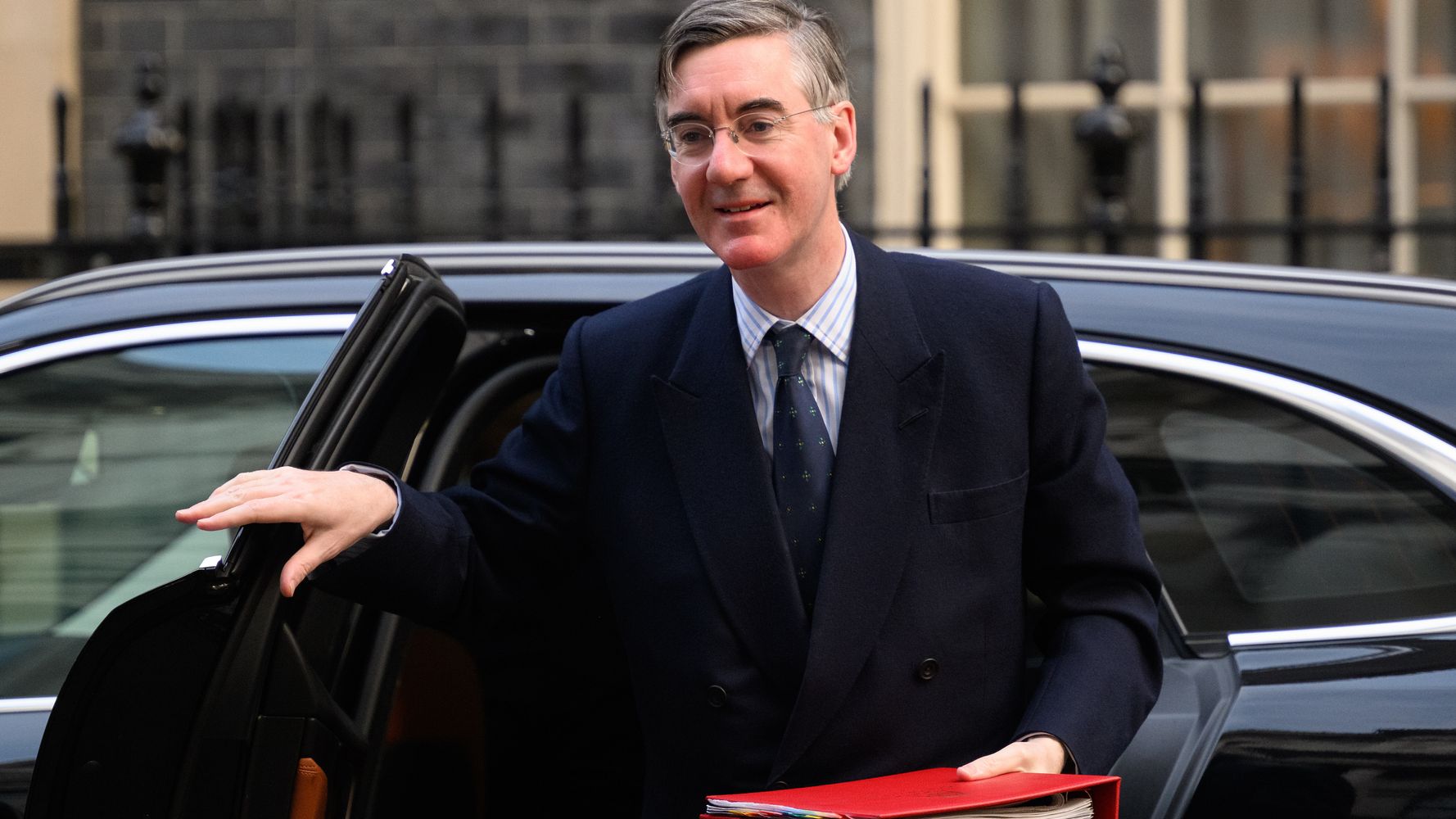
The top civil servant who organised a ‘bring your own booze’ party in Downing Street during lockdown has quit Number 10.

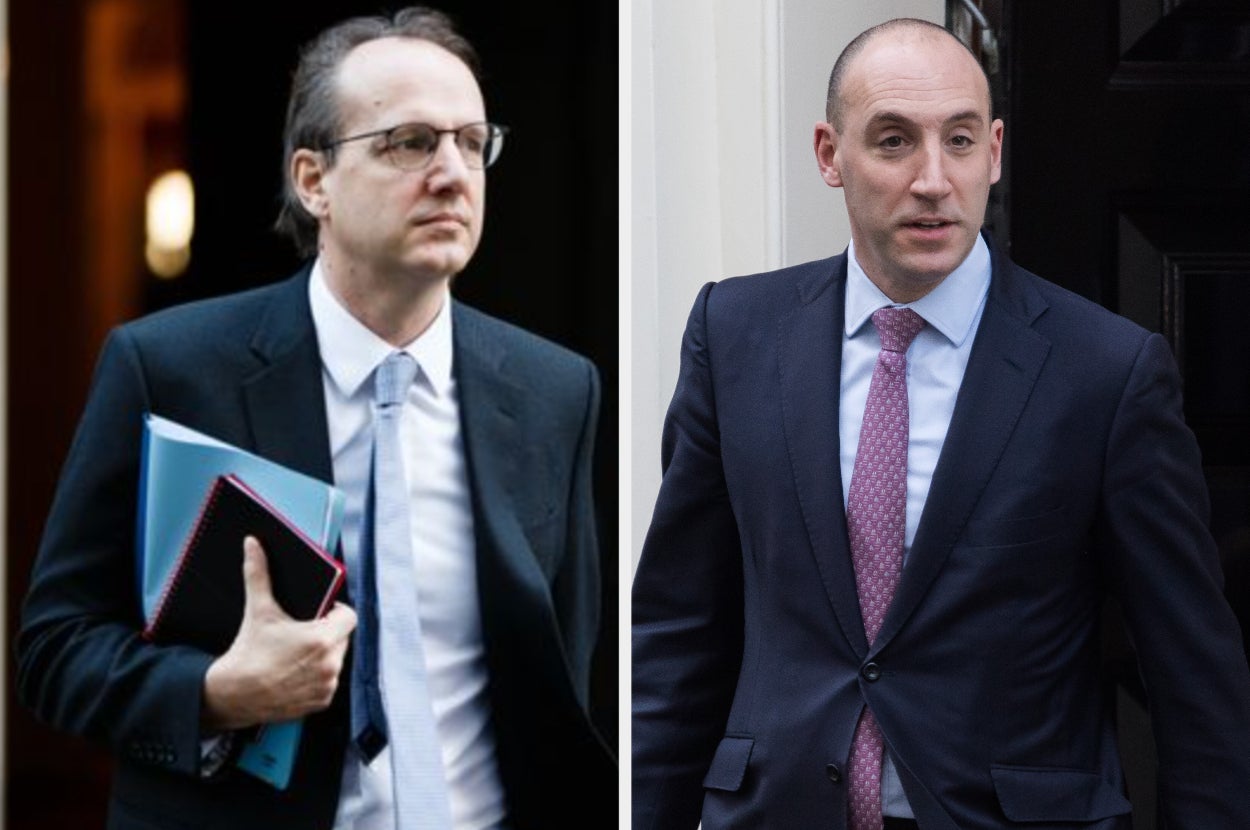
Martin Reynolds, the principal private secretary to Boris Johnson, is one of four senior aides to leave Number 10 on another day of political drama.

He was joined by Downing Street chief of staff Dan Rosenfield, who was also forced out as the PM carries out a major shake-up of the Number 10 operation.

Their departures follow the resignation of Munira Mirza, Johnson’s policy chief, who dramatically resigned in protest at the prime minister wrongly accusing Keir Starmer of failing to prosecute Jimmy Savile when he was Director of Public Prosecutions.

The other aide to leave today was Jack Doyle, the Number 10 director of communications.

A No.10 spokesperson said: “Dan Rosenfield offered his resignation to the prime minister earlier today, which has been accepted.

“Martin Reynolds also informed the prime minister of his intention to stand down from his role as principal private secretary and the prime minister has agreed to this.

“He has thanked them both for their significant contribution to government and No 10, including work on the pandemic response and economic recovery.

“They will continue in their roles while successors are appointed, and recruitment for both posts is underway.”

It is understood that Reynolds – dubbed “Party Marty” – will return to his previous job at the Foreign Office.

In a farewell speech to staff, Jack Doyle said: “Recent weeks have taken a terrible toll on my family life.”

The departures of Reynolds, Rosenfield and Doyle are part of Johnson’s attempts to re-structure Number 10 in response to the Sue Gray inquiry into the partygate scandal.

Earlier this week, her report blamed “failures of leadership and judgment” for lockdown-busting parties which took place in Downing Street and Whitehall.

The Metropolitan Police are investigating 12 alleged gatherings, including one in the flat Johnson shares with his wife and their two children.

The ongoing row has plunged his premiership into crisis, with a succession of Tory MPs publicly calling on him to resign.

A leaked email last month revealed Reynolds had invited more than 100 Downing Street employees to a get-together on May 20, 2020.

It said: “Hi all, after what has been an incredibly busy period we thought it would be nice to make the most of the lovely weather and have some socially distanced drinks in the No 10 garden this evening. Please join us from 6pm and bring your own booze!”

The PM and his wife, Carrie, were both there, but he has insisted he believed it was a “work gathering” and therefore did not break the lockdown rules which were in place at the time.

The event, which was attended by around 30 members of staff, is also being investigated by the police.

In a Commons statement following the publication of the Sue Gray report, the prime minister vowed a major shake-up of Number 10.

He told MPs: We asked people across this country to make the most extraordinary sacrifices – not to meet loved ones, not to visit relatives before they died, and I understand the anger that people feel.

“But it isn’t enough to say sorry. This is a moment when we must look at ourselves in the mirror and we must learn.”

Johnson said a new office of the prime minister will be created with a new permanent secretary to lead No.10 to simplify the chain of command.

This is a breaking news story and will be updated. Follow HuffPost UK on Twitter, Facebook and Instagram.
Share Button

How a SARS-CoV-2 infection can become severe COVID-19

Infection with SARS-CoV-2 leaves some people almost unaffected, while others develop life-threatening COVID-19 symptoms. So far, we do not understand exactly why symptoms and disease severity, especially in infections with the original variant, vary so significantly. A team of scientists has now discovered that severe courses of the disease are not only marked by strong immune activation and inflammatory reactions, but also by a dysfunctional endothelium, in other words, the vascular system: If this barrier between blood flow and tissue is damaged, the patient’s condition deteriorates.

‘In our study, we investigated which immune cells are activated in severe cases and in what way the endothelium, in other words the blood vessels, and their activation play a role in the disease progress’, explains Prof. Christine Falk, Scientist at the Hanover Medical School (MHH) and the German Center for Infection Research (DZIF). Many clinical symptoms, such as the destruction of blood vessels in the lungs and acute respiratory distress syndrome, pointed to an impact on the endothelium.

The endothelium is a thin layer of cells that line blood vessels, forming a barrier between blood flow and the surrounding tissues. Infection with SARS-CoV-2 appears to cause strong activation of immune and endothelial cells in the lungs, resulting in the release of various soluble plasma proteins. Severe COVID-19 cases are associated with a dysfunction of the endothelium, wherein the barrier between the alveoli and the surrounding vessels is no longer intact.

The scientists studied 25 patients with severe COVID-19 and 17 recovered patients in the intensive care unit (ICU). They were able to prove that the severity of the disease is linked to disruption of the endothelial barrier and can be measured by looking at inflammatory and endothelial plasma proteins. A pattern of seven plasma proteins appears to be associated with a severe form of the disease, which is characterised by strong inflammatory processes and in which the endothelium is permanently damaged. Furthermore, recovery from severe COVID-19 cases seems to be related to the regeneration of this endothelial barrier.

Which immune cells were detected in the COVID-19 ICU patients? The study showed excessive activation of T-lymphocytes and natural killer cells as well as development of memory T-cells and strong proliferation of plasmablasts, cells that can produce large amounts of antibodies. Furthermore, ICU patients infected with SARS-CoV-2 had high titres of spike- and nucleocapsid-specific antibodies. The researchers found particularly interesting that the immune cell phenotype of these patients mainly changed over time and was less related to progressive severity of the disease. The progression of COVID-19, on the other hand, was closely linked to increased levels of various soluble plasma proteins, namely certain inflammatory mediators and especially endothelial factors.

‘We were able to demonstrate that ICU patients with COVID-19 can be divided into different groups based on their plasma protein profile, which are associated with disease severity’, explains lead author Louisa Ruhl, a PhD doctoral student at MHH. This finding is of great importance for identification of potential biomarkers for severe COVID-19 courses as well as for the development and use of new therapeutic concepts.

Christine Falk’s team now wants to investigate which elements of the immune system lead to activation and damage of the endothelium and whether the strong activation of the immune system also leads to the development of virus-specific T-lymphocytes that can recognise and destroy infected cells and thus contribute to overreaction. Moreover, the study has shown that there are also shifts in the immune cell repertoire in recovered ICU patients with COVID-19. This could be related to the development of Long-COVID cases. These aspects are currently being promoted as part of the COFONI initiative of the state of Lower Saxony with a Fasttrack and a Flexfund project. In collaboration with partners from pneumology (Prof. Tobias Welte, MHH and DZL) and neurology (Prof. Günter Höglinger, MHH), they are not only investigating as to whether the endothelial inflammation with the overreaction of the T-lymphocytes and natural killer cells causes lasting damage, but also to what extent the regeneration of the lung is impaired and the nervous system is affected.

The study was conducted jointly with scientists and clinicians at the MHH, the German Center for Lung Research (DZL) and scientists at the Erlangen University Hospital.

Story Source:

Materials provided by German Center for Infection Research. Note: Content may be edited for style and length.

Share Button

Scientists detect novel SARS-CoV-2 variants in NYC wastewater

First delta, then omicron. The latest Covid variants have spread like wildfire across the globe in recent months, leading many scientists to wonder when the next variant will appear. Now, scientists may be one step closer to making that determination.

A multi-institutional team of researchers, including virologist Marc Johnson, a professor of molecular microbiology and immunology at the University of Missouri, has detected at least four “cryptic” variants of SARS-CoV-2, the virus that causes COVID-19, in samples of wastewater from New York City’s public sewer system. Their findings were recently published in Nature Communications, a journal of Nature.

According to the Centers for Disease Control and Prevention (CDC), viruses such as SARS-CoV-2 can continually evolve by acquiring mutations. Variants, such as delta or omicron, may contain one or more mutations within their viral sequence that help to distinguish themselves from other variants of SARS-CoV-2.

Johnson, a co-corresponding author on the study, believes the results suggest the “cryptic” mutations they identified in New York City could be linked to possible animal origins. While these origins have not been verified yet, he believes one possible source could be the rats that frequent New York City’s sewer system.

“For instance, we still don’t know where the omicron variant came from, but it had to come from somewhere,” Johnson said. “These variants are bubbling up everywhere, including omicron, which eventually spilled into the general population and wreaked havoc. We think these weird lineages could be where the next variant of concern for COVID-19 comes from.”

Hunting for virus mutations

The idea for this project started in March 2020 after John Dennehy, a virologist and professor of biology at Queens College, City University of New York, began looking for different ways to analyze the impact of the COVID-19 pandemic. Monica Trujillo, an associate professor at Queensborough Community College, City University of New York, shared with Dennehy a study from Australia that described using wastewater to track the spread of a coronavirus, and it inspired Trujillo to ask officials from the New York City Department of Environmental Protection to send her wastewater samples in order to conduct similar work.

In the summer of 2020, Dennehy and Trujillo teamed up with Davida Smyth, the lead author on the study. Smyth, now an associate professor at Texas A&M University-San Antonio, was at The New School, New York at the time. They put together a team of researchers to begin tracking the spread of coronavirus via New York City’s wastewater. Since then, Dennehy, a co-corresponding author on the study, found some interesting results. When he shared some of the more unusual results during a March 2021 episode of Vincent Racaniello’s podcast “This Week in Virology,” a popular podcast with virologists nationwide, Johnson happened to be listening.

“The mutations that we were observing in our sample weren’t typical among any of the known sequences circulating at that time,” Dennehy said.

Ironically, Johnson was simultaneously reaching out to various researchers across the United States who were doing similar work with wastewater after he observed some unusual results from his analysis of wastewater in some of his samples from the greater St. Louis area. On the podcast, he heard Dennehy describe their targeted approach, which happened to be the same method MU was using to test samples of wastewater for SARS-CoV-2 in Missouri, but with one key difference — MU was analyzing a larger region of the virus genome for possible mutations. Within a week, Johnson had samples of NYC wastewater delivered to MU for further analysis.

“When we first started with the samples from New York City, I was looking to see if they had the same virus sequences that I saw in some of my samples from St. Louis,” Johnson said. “They were different, but all of them had similar mutations in common at one particular location on the virus — Q498. What’s amazing is that in most of the samples from New York City, the Q in Q498 had turned into a Y, or glutamine into tyrosine. If you look at the database, there was not, and continues to not be, a human patient who has had that mutation.”

Dennehy believes a possible explanation could be a biological process called convergent evolution.

“An animal in Missouri is not going to mix with the same type of animal in New York City,” Dennehy said. “Therefore, the evolution of the virus in each geographic area is independent of each other, but because it’s the same animal, the virus looks the same in both places. For instance, we think conditions in South Africa that gave rise to the omicron variant are the same conditions in New York City that gave rise to our cryptic variants. As a biologist, I thought the spread of delta was menacing, but the speed in which omicron took over New York City is on another level.”

Understanding the broader impact

Smyth joined the research team in part due to her passion for taking science from inside a laboratory to showing how it can be applied through a broader, real-world impact. A proud Irish immigrant, she transitioned from studying the basics of biology early in her career to now pursuing her passion by engaging her students in real-world health issues, such as antibiotic resistance, and tracking coronavirus in wastewater.

“I’m interested in how we can take what we know and apply it to the real world where it is needed the most,” said Smyth, who is also the deputy director for the National Center for Science and Civic Engagement. “Wastewater surveillance is really important in the context of community-based, public health measures where we have the ability to communicate health information at a level where decisions, practices and interventions can be implemented. Wastewater surveillance is fast, inexpensive and unbiased, and for that reason it has the ability to be implemented depending on resource availability in a variety of contexts, especially in areas with limited resources such as low testing and vaccine availability.”

“Tracking cryptic SARS-CoV-2 lineages detected in NYC wastewater,” was published in Nature Communications. Funding was provided in part by the New York City Department of Environmental Protection, a donation from the Linda Markeloff Charitable Fund, and a grant from the National Institutes of Health (U01DA053893-01).

Co-authors include Devon Gregory, Maddie Graham, Yue Guan, Caitlyn Guldenpfennig, Terry Lyddon, Clayton Rushford, Reinier Suarez, Emma Teixeiro and Mark Daniels at MU; Davida Smyth and Geena Sompanya at Texas A&M University-San Antonio; Monica Trujillo at Queensborough Community College, City University of New York; Kristen Cheung, Anna Gao, Irene Hoxie, Sherin Kannoly, Nanami Kubota, Michelle Markman, and Kaung Myat San at the City University of New York; and Fabrizio Spagnolo at Long Island University.

Share Button

New anti-HIV antibody function discovered: Tethering of viral particles at the surface of cells

Teams at the Institut Pasteur, CNRS, Vaccine Research Institute (VRI) and Université de Paris have discovered a new function of anti-HIV-1[1] antibodies by applying cutting-edge microscopy techniques to in vitro viral cultures. The scientists found that certain antibodies already known for effectively targeting HIV-1 envelope (Env) protein can prevent infected cells from releasing viral particles, thus halting viral spread. The antibodies are Y-shaped, enabling them to attach themselves between the infected cell and viral particles or directly between viral particles. This chain composed of antibodies and viral particles prevents viral spread. These findings demonstrate that these powerful antibodies exhibit different antiviral activities in addition to neutralization. The study is published in the February 2, 2022 issue of Nature Communications.

Broadly neutralizing antibodies (bNAbs) targeting virus envelope (Env) protein have significant potential for treating HIV-1. They were initially identified in rare cases of patients whose serum was capable of inhibiting numerous HIV strains. These antibodies exhibit multiple antiviral activities. As well as neutralizing the virus, i.e. preventing it from infecting new cells, they also kill infected cells. Consequently, they are referred to as polyfunctional molecules. It is necessary to fully understand the scope of these antiviral activities in order to use existing antibodies more effectively or refine the selection criteria for new antibodies. It is moreover useful to further investigate the polyfunctionality of anti-HIV-1 antibodies in order to improve our understanding of the role played by antibodies and thus tackle other viral infections.

Initially, teams at the Institut Pasteur, CNRS, VRI and Université de Paris sought to determine whether antibodies were capable of preventing infected cells from producing viral particles. To that end, they cultured CD4 T cells (HIV’s natural target) in vitro with various antibodies for 24 hours. They subsequently measured the quantity of viral particles produced by the cells in the culture medium and the quantity of viral particles remaining in the cells. As a result of these experiments, the scientists were able to demonstrate that certain antibodies increased virus quantity in cells but reduced it in the culture medium. This intriguing finding led them to believe that certain antibodies impeded the release of viral particles without preventing their production.

To test this theory, the scientists used various microscopy techniques to observe cells’ production of viral particles. They initially examined the cells by fluorescence microscopy, a technique used to differentiate virus proteins. This enabled them to demonstrate that infected cells accumulate large quantities of mature viral protein. This finding suggests that full viral particles accumulate in cells. To determine the precise location of these viral particles, the scientists subsequently used scanning electron microscopy to observe the surface of infected cells. “Using this method, we observed that these antibodies (bNAbs) prompt an accumulation of viral particles at the surface of cells, forming clusters and highly atypical structures (see illustration),” comments Timothée Bruel, co-last author of the study and scientist in the Virus and Immunity Unit[2] at the Institut Pasteur.

Next, the scientists combined a transmission electron microscopy technique with immunogold labeling. This enabled them to demonstrate that antibodies interpose themselves between viral particles and the infected cell, forming a chain cluster. Experiments with mutant antibodies subsequently demonstrated that the antibodies’ Y shape creates this clustered structure. Their arms are capable of linking two viruses, or one virus to the infected cell membrane, and their attachment points are sufficiently strong to prompt this phenomenon.

“We have demonstrated that only the most powerful antibodies tether viral particles at the surface of infected cells. Trapped viral particles can no longer infect new cells,” concludes Olivier Schwartz, co-last author of the study and Head of the Virus and Immunity Unit at the Institut Pasteur.

This work has revealed a new antiviral activity for broadly neutralizing anti-HIV-1 antibodies. It deepens our understanding of these antibodies’ mechanism of action and explains their efficacy in clinical trials. The scientists are now examining antibodies targeting other viruses, including SARS-CoV-2, to determine whether they also inhibit viral spread through this mechanism.

[1] HIV-1 is the pandemic form of the human immunodeficiency virus. The other less common type is HIV-2.

[2] This is named the “Virology Unit” at the CNRS (CNRS/Institut Pasteur).

Story Source:

Materials provided by Institut Pasteur. Note: Content may be edited for style and length.

Share Button

Novavax Covid jab approved by UK drugs regulator

UK regulator the MHRA says Nuvaxovid is safe as a first and second dose in adults.

Share Button

Fresh Blow For Boris Johnson As Policy Chief Quits Over Jimmy Savile Slur

Boris Johnson was dealt a fresh blow today after his policy chief dramatically quit over the Jimmy Savile smear row.

Munira Mirza resigned just hours after the prime minister finally backed down over his untrue claim that Keir Starmer had failed to prosecute the notorious sex offender when he was Director of Public Prosecutions.

In a devastating resignation letter, revealed by The Spectator, Mirza revealed that she had urged Johnson to apologise for the slur, which he initially made in the Commons on Monday, but that he had refused.

Hours later, Jack Doyle, No. 10’s director of communications, also resigned.

Meanwhile, Rishi Sunak become the first Cabinet minister to directly criticise Johnson over Starmer slur, telling a press conference: “Being honest, I wouldn’t have said it.”

The departures from heap further pressure on the PM, who is facing mounting calls to quit from disgruntled Conservative MPs.

In her letter, Mirza said: “I believe it was wrong for you to imply this week that Keir Starmer was personally responsible for allowing Jimmy Savile to escape justice.

“There was no fair or reasonable basis for that assertion. This was not the usual cut and thrust of politics; it was an inappropriate and partisan reference to a horrendous case of child sex abuse.

“You tried to clarify your position today but, despite my urging, you did not apologise for the misleading impression you gave.”

She added: “You are a better man than many of your detractors will ever understand which is why it is so desperately sad that you let yourself down by making a scurrilous accusation against the Leader of the Opposition.”

Mirza’s resignation is particularly damaging as she has been one of Johnson’s closest, and most loyal, aides in Downing Street.

She has worked for him for 14 years and he once described her as one of the five women who have most inspired him.

No.10 said Andrew Griffith, the MP for Arundel and South Downs who already serves as parliamentary private secretary to Johnson, would replace Mirza.

Downing Street said in a statement: “We are very sorry Munira has left No 10 and are grateful for her service and contribution to government.”

Dominic Cummings, a friend of Mirza’s and Johnson’s one-time chief adviser and now sworn enemy, tweeted: “Moral courage from Munira who has done her best to make progress with a professional team throughout the horror since 11/20. It’s also an unmistakeable signal the bunker is collapsing & *this PM is finished*. Flicker of moral courage from Cabinet & Cabinet Office asap please.”

Of Doyle’s resignation, a No 10 spokesman said: “Jack Doyle has left government. He has made a huge contribution and the prime minister is immensely grateful for the work he has done.”

Asked about the row at a Downing Street press conference on his plans to tackle the cost of living crisis, Sunak described Mirza as “a valued colleague” who he had enjoyed working with.

On the PM’s Savile remarks, the Chancellor said: “Being honest, I wouldn’t have said it and I’m glad the prime minister has clarified what he meant.”

To add to the chaos, chief secretary to the Treasury, Simon Clarke, was at odds with his boss Sunak.

“I have the highest regard for the Chancellor…but it is my view that it was a perfectly reasonable remark for the PM to have made,” he reportedly told BBC Newsnight.

Earlier, Johnson climbed down from his initial claim, made on Monday, that Starmer had “spent most of his time [as DPP] prosecuting journalists and failing to prosecute Jimmy Savile”.

In an interview with broadcasters, the PM said he wanted to “clarify” that he was “not talking about the leader of the Opposition’s personal record.”

During PMQs this week, Starmer angrily accused Johnson of peddling the “conspiracy theories of violent fascists”.

Several Tory MPs have cited Johnson’s decision to link Starmer to Savile as a reason for demanding he resign as prime minister.

Tobias Ellwood, the chairman of the Commons defence committee, said the “false allegation” should be withdrawn.

And Anthony Mangnall, the MP for Totnes and South Devon, said “standards in public life matter” when he called for a no confidence vote in Johnson.

Amber Rudd, the former Conservative home secretary, told ITV that Johnson’s comments had been “Trumpian”.

In 2013, Starmer, as DPP, said Savile could have been prosecuted in 2009 – two years before he died – had police taken victims more seriously.

His comments followed a review of the Savile case by Alison Levitt QC, the legal adviser to the DPP. Starmer said at the time: “I would like to take the opportunity to apologise for the shortcomings in the part played by the CPS in these cases.

“If this report and my apology are to serve their full purpose, then this must be seen as a watershed moment.”

In 2020, fact checking charity Full Fact also looked into the claim that Starmer had stopped Savile being charged in 2009.

It said Starmer was head of the CPS when the decision not to prosecute Savile was made on the grounds of “insufficient evidence”, adding: “The allegations against Savile were dealt with by local police and a reviewing lawyer for the CPS.

“A later investigation criticised the actions of both the CPS and the police in their handling of the situation.

“It did not suggest that Mr Starmer was personally involved in the decisions made.”

Savile – who is now thought to have been one of Britain’s most prolific sex offenders – died in 2011 aged 84 having never been brought to justice for his crimes.

Share Button

7 Tory MPs Who Think They’re Helping Boris Johnson But Are Actually Making It Worse

Quite a few Tory MPs want Boris Johnson to resign. But the prime minister does still have some allies willing to defend him in public — with varying degrees of success.

Dominic Raab

The deputy prime minister and justice secretary, who got a less important job but a shinier title in the most recent reshuffle, has done his best to downplay the seriousness of the partygate allegations. One gathering in the Downing Street garden could not be a party, he explained, because those photographed eating cheese and drinking wine were “all in suits”.

Nadine Dorries

The culture secretary is probably Johnson’s closely ally in cabinet. In a series of spiky tweets she has attacked the rebels as “a handful of egos” and, as things appeared to be calming down, poked fun at Tory MPs from the so-called Red Wall for being part of a “pork pie” plot to oust the PM.

Jacob Rees-Mogg

<div class="js-react-hydrator" data-component-name="YouTube" data-component-id="8370" data-component-props="{"itemType":"video","index":12,"contentListType":"embed","code":"

","type":"video","meta":{"url":"https://www.youtube.com/watch?v=7SWfqXwSonI","type":"video","version":"1.0","title":"Jacob Rees-Mogg: ‘Douglas Ross has always been quite a lightweight figure’","author":"OldQueenTV","author_url":"https://www.youtube.com/channel/UC_1mDKnRagiJYrS060VQ9ig","provider_name":"YouTube","thumbnail_url":"https://i.ytimg.com/vi/7SWfqXwSonI/maxresdefault.jpg","thumbnail_width":1280,"thumbnail_height":720,"cache_age":86400,"options":{"_start":{"label":"Start from","value":"","placeholder":"ex.: 11, 1m10s"},"_end":{"label":"End on","value":"","placeholder":"ex.: 11, 1m10s"},"_cc_load_policy":{"label":"Closed captions","value":false},"click_to_play":{"label":"Hold load & play until clicked","value":false}}},"fullBleed":false,"flags":[],"enhancements":{},"options":{"theme":"news","device":"desktop","editionInfo":{"id":"uk","name":"U.K.","link":"https://www.huffingtonpost.co.uk","locale":"en_GB"},"slideshowAd":{"scriptTags":[],"otherHtml":""},"slideshowEndCard":{"scriptTags":[{"attribs":{},"scriptBody":"\r\n (function(){\r\n var c = document.getElementById(‘taboola-endslate-thumbnails’);\r\n c.id += ‘-‘ + Math.round(Math.random()*1e16);\r\n \r\n var taboolaParams = {\r\n loader: \"//cdn.taboola.com/libtrc/aol-huffingtonpost/loader.js\",\r\n mode: \"thumbnails-b\",\r\n container: c.id,\r\n placement: \"Endslate Thumbnails\",\r\n target_type: \"mix\"\r\n };\r\n \r\n if (typeof window.modulousQueue === \"function\") {\r\n \twindow.modulousQueue.add(function(){ doTaboola(taboolaParams); });\r\n } else {\r\n \tdoTaboola(taboolaParams);\r\n }\r\n }());\r\n"}],"otherHtml":"

"},"isMapi":false,"isAmp":false,"isVideoEntry":false,"isMt":false,"entryId":"61fac5ffe4b0f8a1b83e3661","entryTagsList":"uk-news,","sectionSlug":"politics","deptSlug":null,"sectionRedirectUrl":null,"subcategories":"","isWide":false,"headerOverride":null,"noVideoAds":false,"disableFloat":false,"isNative":false,"commercialVideo":{"provider":"custom","site_and_category":"uk.politics","package":null},"isHighline":false,"vidibleConfigValues":{"cid":"60afc140cf94592c45d7390c","disabledWithMapiEntries":false,"overrides":{"all":"60b8e525cdd90620331baaf4"},"whitelisted":["56c5f12ee4b03a39c93c9439","56c6056ee4b01f2b7e1b5f35","59bfee7f9e451049f87f550b","5acccbaac269d609ef44c529","570278d2e4b070ff77b98217","57027b4be4b070ff77b98d5c","56fe95c4e4b0041c4242016b","570279cfe4b06d08e3629954","5ba9e8821c2e65639162ccf1","5bcd9904821576674bc55ced","5d076ca127f25f504327c72e","5b35266b158f855373e28256","5ebac2e8abddfb04f877dff2","60b8e525cdd90620331baaf4","60b64354b171b7444beaff4d","60d0d8e09340d7032ad0fb1a","60d0d90f9340d7032ad0fbeb","60d0d9949340d7032ad0fed3","60d0d9f99340d7032ad10113","60d0daa69340d7032ad104cf","60d0de02b627221e9d819408"],"playlists":{"default":"57bc306888d2ff1a7f6b5579","news":"56c6dbcee4b04edee8beb49c","politics":"56c6dbcee4b04edee8beb49c","entertainment":"56c6e7f2e4b0983aa64c60fc","tech":"56c6f70ae4b043c5bdcaebf9","parents":"56cc65c2e4b0239099455b42","lifestyle":"56cc66a9e4b01f81ef94e98c"},"playerUpdates":{"56c6056ee4b01f2b7e1b5f35":"60b8e525cdd90620331baaf4","56c5f12ee4b03a39c93c9439":"60d0d8e09340d7032ad0fb1a","59bfee7f9e451049f87f550b":"60d0d90f9340d7032ad0fbeb","5acccbaac269d609ef44c529":"60d0d9949340d7032ad0fed3","5bcd9904821576674bc55ced":"60d0d9f99340d7032ad10113","5d076ca127f25f504327c72e":"60d0daa69340d7032ad104cf","5ebac2e8abddfb04f877dff2":"60d0de02b627221e9d819408"}},"connatixConfigValues":{"videoPagePlayer":"19654b65-409c-4b38-90db-80cbdea02cf4"},"customAmpComponents":[],"ampAssetsUrl":"https://amp.assets.huffpost.com","videoTraits":null,"positionInUnitCounts":{"buzz_head":{"count":0},"buzz_body":{"count":0},"buzz_bottom":{"count":0}},"connatixCountsHelper":{"count":0},"buzzfeedTracking":{"context_page_id":"61fac5ffe4b0f8a1b83e3661","context_page_type":"buzz","destination":"huffpost","mode":"desktop","page_edition":"en-uk"},"cetUnit":"buzz_body"}}”>

[embedded content]

The Commons leader dismissed the leader of the Scottish Tories as a “lightweight” after Douglas Ross called for Johnson to resign. An intervention that will have done wonders for the Union. Rees-Mogg also decided to warn off would-be rebels by wrongly arguing a general election would need to be held if the party chose a new leader.

Conor Burns

The Northern Ireland minister, another close ally of the PM, explained Johnson had not deliberately attended a short party in Downing Street, rather that he had been in fact “ambushed with a cake”. Burns also went onto argue that in fact “there actually wasn’t a cake”.

Every Westminster scandal has a standout moment, and this one made it to the White House, with Joe Biden’s press secretary jokingly denying the president had not himself ever been surprised by cake.

Andrew Rosindell

Sure, the prime minister might have broken the rules, but the MP for Romford argued everyone was getting a bit overexcited. “Lots of people break the law in small ways, sometimes unintentionally,” he told Sky News. “He’s not robbed a bank.”

Mark Jenkinson

Johnson could be in line for a Fixed Penalty Notice (FPN) should he be found to have broken Covid regulations. But Jenkinson, the MP for Workington, rode to the rescue to argue they were just a “minor” punishment.

Adam Wagner, the human rights barrister who has spent a lot of time explaining the Covid laws, was not so sure. “This is wrong,” he told Jenkinson.

“A fixed penalty notice can only be given if the police *reasonably believe someone has committed a criminal offence* under the coronavirus regulations. They are not minor. On the contrary, the PM and government spent 2 years telling us they were deadly serious.”

Boris Johnson

The prime minister is sometimes arguably his own worst enemy. In an attempt to change the story, Johnson accused Keir Starmer of having “failed” to prosecute Jimmy Savile when he was director of prosecution. The claim, which has been widely discredited, was cited by at least one senior Tory MP as a reason why they had submitted a letter calling for a no confidence vote.

Share Button