Boris Johnson Does Not Back ‘Outright Ban’ On MPs’ Second Jobs, Says No.10

Nick Ansell via PA Media

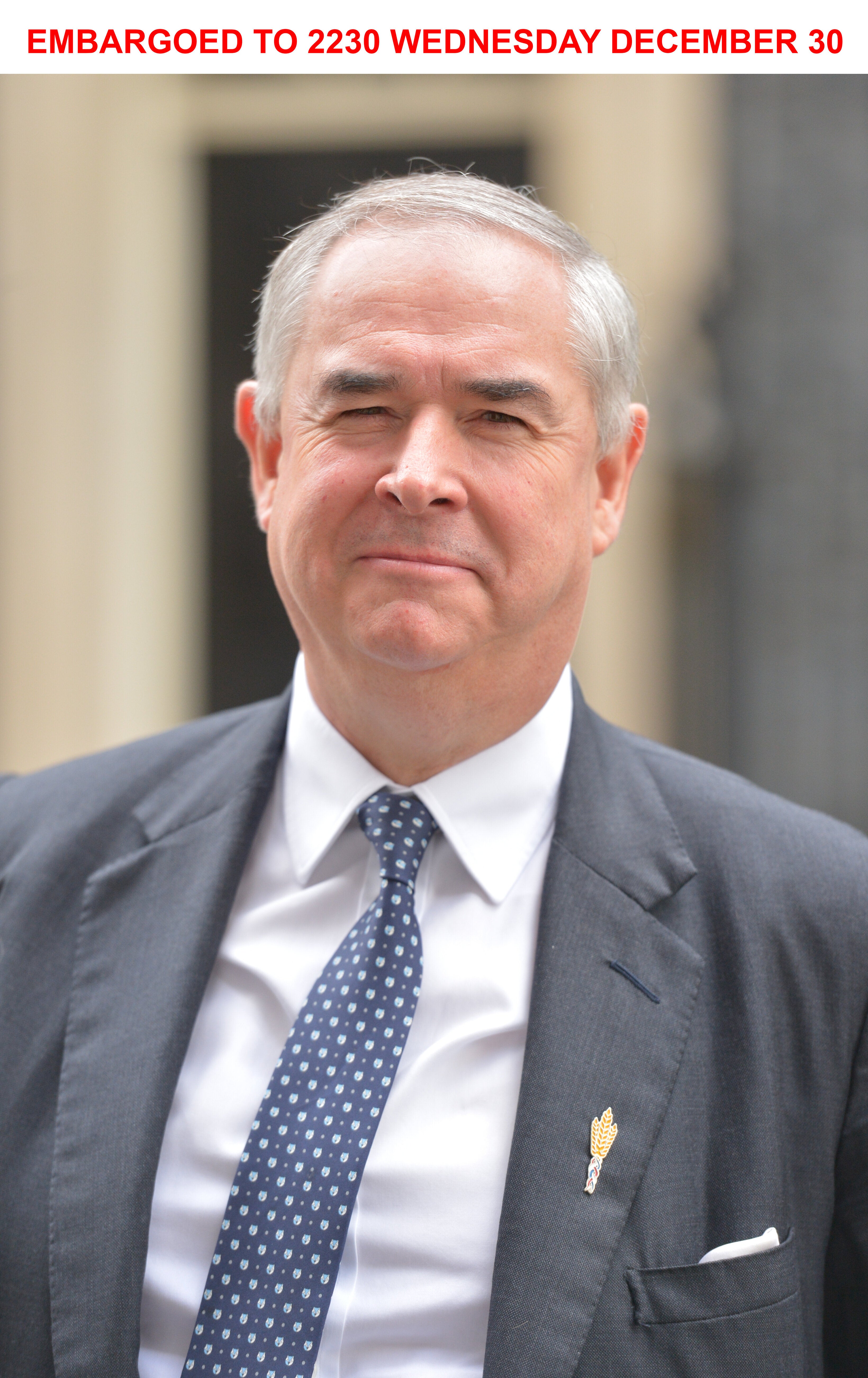
Geoffrey Cox, the former attorney general, is under pressure over his second jobs.

Boris Johnson has rejected imposing a ban on MPs holding second jobs, despite the backlash over Westminster sleaze.

It was revealed on Tuesday that Tory MP Geoffrey Cox earned hundreds of thousands of pounds giving legal advice the British Virgin Islands.

He was hired to defend the islands in an inquiry launched by the UK Foreign Office.

According to the Daily Mail, the former attorney general took part in Commons votes by proxy while working from the Caribbean during the pandemic.

The ability of MPs to hold second jobs on top of their work in parliament came under scrutiny after Owen Paterson was found to have broken sleaze rules by lobbying ministers on behalf of two companies he worked for. 

But No.10 said the prime minister “doesn’t back an outright ban on second jobs”.

“A ban on second jobs will catch those who still work in roles such as doctors and nurses,” the PM’s spokesperson said.

Downing Street added parliament “can and historically has” benefited from MPs having second jobs but that parliamentary duties should “take priority”.

“MP’s primary job is and must be to serve their constituents and to represent their interests in parliament”.

“If they’re not doing that, they’re not doing their job and will rightly be judged on that by their constituents.”

Labour meanwhile has called on Johnson to launch an urgent investigation into Cox’s activities.

 In a letter to the prime minister, Anneliese Dodds, Labour’s chair, said: “It appears that your former attorney general is profiting from advising an administration accused of corruption and tax avoidance.

“The people of Torridge and West Devon must be wondering if Geoffrey Cox is a Caribbean-based barrister or a Conservative MP.”

Deputy prime minister Dominic Raab told BBC Breakfast that were “very strict rules” surrounding MPs’ second jobs and that it is “respectable and legitimate” for them to carry them out.

Share Button

Regular 10pm bedtime linked to lower heart risk

Synchronising sleep to match our internal body clock appears to be good for the heart, claim scientists.

Share Button

Bedtime linked with heart health

Going to sleep between 10:00 and 11:00 pm is associated with a lower risk of developing heart disease compared to earlier or later bedtimes, according to a study published today in European Heart Journal — Digital Health, a journal of the European Society of Cardiology (ESC).

“The body has a 24-hour internal clock, called circadian rhythm, that helps regulate physical and mental functioning,” said study author Dr. David Plans of the University of Exeter, UK. “While we cannot conclude causation from our study, the results suggest that early or late bedtimes may be more likely to disrupt the body clock, with adverse consequences for cardiovascular health.”

While numerous analyses have investigated the link between sleep duration and cardiovascular disease, the relationship between sleep timing and heart disease is underexplored. This study examined the association between objectively measured, rather than self-reported, sleep onset in a large sample of adults.

The study included 88,026 individuals in the UK Biobank recruited between 2006 and 2010. The average age was 61 years (range 43 to 79 years) and 58% were women. Data on sleep onset and waking up time were collected over seven days using a wrist-worn accelerometer. Participants completed demographic, lifestyle, health and physical assessments and questionnaires. They were then followed up for a new diagnosis of cardiovascular disease, which was defined as a heart attack, heart failure, chronic ischaemic heart disease, stroke, and transient ischaemic attack.

During an average follow-up of 5.7 years, 3,172 participants (3.6%) developed cardiovascular disease. Incidence was highest in those with sleep times at midnight or later and lowest in those with sleep onset from 10:00 to 10:59 pm.

The researchers analysed the association between sleep onset and cardiovascular events after adjusting for age, sex, sleep duration, sleep irregularity (defined as varied times of going to sleep and waking up), self-reported chronotype (early bird or night owl), smoking status, body mass index, diabetes, blood pressure, blood cholesterol and socioeconomic status.

Compared to sleep onset from 10:00 to 10:59 pm, there was a 25% higher risk of cardiovascular disease with a sleep onset at midnight or later, a 12% greater risk for 11:00 to 11:59 pm, and a 24% raised risk for falling asleep before 10:00 pm. In a further analysis by sex, the association with increased cardiovascular risk was stronger in women, with only sleep onset before 10:00 pm remaining significant for men.

Dr. Plans said: “Our study indicates that the optimum time to go to sleep is at a specific point in the body’s 24-hour cycle and deviations may be detrimental to health. The riskiest time was after midnight, potentially because it may reduce the likelihood of seeing morning light, which resets the body clock.”

Dr. Plans noted that the reasons for the observed stronger association between sleep onset and cardiovascular disease in women is unclear. He said: “It may be that there is a sex difference in how the endocrine system responds to a disruption in circadian rhythm. Alternatively, the older age of study participants could be a confounding factor since women’s cardiovascular risk increases post-menopause — meaning there may be no difference in the strength of the association between women and men.”

He concluded: “While the findings do not show causality, sleep timing has emerged as a potential cardiac risk factor — independent of other risk factors and sleep characteristics. If our findings are confirmed in other studies, sleep timing and basic sleep hygiene could be a low-cost public health target for lowering risk of heart disease.”

Share Button

Blood plasma protein fibrinogen interacts directly with nerve cells to cause brain inflammation

Neuroinflammatory diseases, including Alzheimer’s disease and traumatic brain injury, have been linked to deposits of a tough protein known as fibrin, derived from the blood clotting factor fibrinogen. These mesh-like fibrin deposits occur outside blood vessels in the brain, contributing to the death of certain central nervous system cells (neurons) that eventually leads to impaired memory.

Now for the first time, a team at the University of South Florida Health (USF Health) Morsani College of Medicine, reports that before soluble fibrinogen is converted into insoluble fibrin molecules that can adversely accumulate, it can connect directly with neurons and cause a damaging inflammatory reaction. The researchers further discovered that fibrinogen specifically binds to two fibrinogen receptors on the surface of neurons: cellular prion protein (PrPC) and intracellular adhesion molecule-1 (ICAM-1).

Their preclinical study was published Sept. 18 in a special issue entitled “Prions and Prion-Like Mechanisms in Disease and Biological Function” in MDPI–Biomolecules.

The findings have implications for identifying targeted therapies to help prevent or stop neurodegeneration in Alzheimer’s disease, traumatic brain injury, or other chronic neuroinflammatory diseases associated with abnormal vascular permeability (leakage) in the brain.

“Fibrinogen is one of the overlooked culprits involved in the processes of neurodegeneration and resulting memory loss,” said principal investigator David Lominadze, PhD, a USF Health professor of surgery, and molecular pharmacology and physiology. “Our study shows that fibrinogen is not only a marker (biological indicator) of inflammation but can be a cause of inflammation in the brain.”

Fibrinogen is a protein naturally produced in the liver and travels throughout the bloodstream to other organs and tissues. Outside of blood vessels, fibrinogen is converted by the enzyme thrombin into fibrin during blood clot formation, playing a key role in wound healing.

Dr. Lominadze’s laboratory focuses on understanding molecular changes affecting circulation of blood in the body’s smallest blood vessels — including how microvascular changes induced by inflammation may damage cognition, in particular short-term memory.

Dr. Lominadze and others have shown that inflammatory disease is associated with a higher concentration of fibrinogen in the blood, increased generation of potentially damaging free radicals, neuronal cell activation and microvascular permeability. In previous studies using their mouse model for mild-to-moderate traumatic brain injury, Dr. Lominadze’s group reported that fibrinogen after crossing the vascular wall accumulated in spaces between the microvessels and astrocytes (another brain cell type connecting vessels and neurons) and activated the astrocytes. This activation coincided with increased neurodegeneration and reduced short-term memory.

In this latest study the USF Health researchers tested whether fibrinogen, beside interacting with astrocytes, could connect directly with neurons — nerve cells critical for carrying information throughout the human body and coordinating all necessary functions of life.

They treated healthy mouse brain neurons grown in a petri dish with fibrinogen. Fibrinogen increased the death of these neurons, a process that was not influenced by the presence or absence of a thrombin inhibitor preventing the conversion of fibrinogen to fibrin. The finding suggests that soluble fibrinogen and, at later stages, fibrin can have similar toxic effects on neurons.

Furthermore, blocking the function of PrPC and ICAM-1 fibrinogen receptors on the surface of neurons (essentially stopping fibrinogen from binding tightly to these receptors) reduced inflammatory reactions resulting in neurodegeneration.

“The study revealed that an interaction between fibrinogen and neurons induced an increase in the expression of proinflammatory cytokine interleukin-6 (IL-6), enhanced oxidative damage, and neuronal death, in part due to its direct association (contact) with neuronal PrPC and ICAM-1,” the study authors wrote.

More research is needed. But altogether the USF Health study suggests that short-term memory problems stemming from neurodegenerative diseases with underlying inflammation may be alleviated by several interventions, Dr. Lominadze said. These include “dampening general inflammation, decreasing fibrinogen concentration in the blood by reducing the synthesis of fibrinogen, and blocking the binding of fibrinogen to its neuron receptors,” he said.

The USF Health research was supported by a grant from the National Heart, Lung and Blood Institute, part of the National Institutes of Health.

Share Button

Diet restricted size of hunter-gatherer societies

Short growing seasons limited the possible size of hunter-gatherer societies by forcing people to rely on meat, according to a recent study by a team of international reseachers including McGill University professor Eric Galbraith.

After looking at population size for the roughly 300 hunter-gatherer societies which existed until quite recently, the researchers found that many of these groups were much smaller than might have been expected from the local ecosystem productivity. In regions with short growing seasons, hunter-gatherer groups had smaller populations per square kilometre than groups who depended on abundant plant foods throughout the year.

Need for meat limited population size

“Basically, if people had to live through long dry or cold seasons when plant food was scarce, in order to survive they had to depend on hunting a very limited number of animals,” explains Galbraith, a professor in McGill’s Department of Earth and Planetary Sciences and at the ICTA-UAB (Institut de Ciència i Tecnologia Ambientals of the Autonomous University of Barcelona), and a senior author on the paper published recently in the journal Nature Ecology & Evolution.

“This led to a seasonal bottleneck in the amount of food available, which then set the overall limit on the population size, no matter how much food there was during the plentiful times.”

The team developed a mathematical model that simulates daily human foraging activities (gathering and hunting) and the resultant carbon (energy) flows between vegetation, animals, and hunter-gatherers in a realistic global environment.

“We were struck by the fact that — despite a long list of unknowns — a very strong result emerged from the model equations,” says Galbraith. “Wherever growing seasons were short, hunter gatherers required meat to make up a high percentage of their diets. And — just as in the modern world — it took much more land to produce the same amount of meat as plant-based food.”

The researchers then went back to look at the detailed ethnographic observations and found that, although its significance had not been noticed, this finding was well supported by records of hunter-gatherers including the Ache in the tropical forest, the Hiwi in the savannah, and the Bushmen groups in the Kalahari Desert. Due to similarities between the lifestyles of contemporary hunter gatherers and those of our foraging ancestors, it is likely that strong seasonality limited population sizes throughout our species’ past.

Story Source:

Materials provided by McGill University. Note: Content may be edited for style and length.

Share Button

David Fuller: Independent inquiry announced into mortuary abuse

The inquiry comes after David Fuller sexually abused the bodies of more than 100 women in hospitals.

Share Button

Where Is Boris Johnson On The Day MPs Debate Sleaze?

Pool via Getty Images

Prime Minister Boris Johnson attends Diwali celebrations in Neasden over the weekend

Boris Johnson will avoid today’s emergency debate on MPs’ sleaze due to a “long-standing” visit to the north-east of England.

The prime minister’s official spokesman revealed that Johnson was on a hospital visit to “see the importance of NHS staff getting their booster jabs”.

Instead, the Chancellor of the Duchy of Lancaster Steve Barclay will represent the government.

The spokesman insisted Mr Barclay was the right person to appear at the debate because of his cross-government role.

He said Johnson’s visit was a “long-standing plan for him to go up there and see the importance of NHS staff getting their boosters”.

The spokesman insisted the visit was planned before the standards debate was scheduled and because he is travelling by train – he would not arrive back in Westminster in time for the debate.

Asked why he could not fly back to London as he did from the Cop26 summit last week, the spokesman said: “I gave you the reason for that flight before.”

However, the Labour Party sought to capitalise on the PM’s absence by launching social media graphics and accusing him of “running scared”. 

It comes just a few hours after a cabinet minister suggested Johnson did not need to attend the debate and could follow proceedings on a TV in his office. 

International trade secretary Anne-Marie Trevelyan said instead Johnson should be focusing on “important” prime ministerial matters.

It follows an extraordinary week in the House of Commons in which the government faced accusations of a return to “1990s sleaze culture”. 

Last Thursday, Johnson was forced to u-turn over a controversial plan to prevent Tory MP Owen Paterson facing a 30-day commons suspension for a serious breach of lobbying rules. The row resulted in Paterson quitting as an MP. 

The government is set to face another tough few days with further allegations of sleaze emerging in the Sunday papers – including a “cash for honours” row.

Labour leader Keir Starmer said that a no-show by the prime minister in Monday’s debate would demonstrate he was “either too arrogant or too cowardly to take responsibility” for the Paterson lobbying scandal.

All eyes will be on commons speaker Lindsay Hoyle who is expected to make a significant intervention, including a review of the standards process and whether MPs should be allowed second jobs.

Starmer will lead Labour’s response to the debate, which should start after 4pm. 

Share Button

People Are Falling For This Hilarious Robert Dyas Spoof Ad. Again.

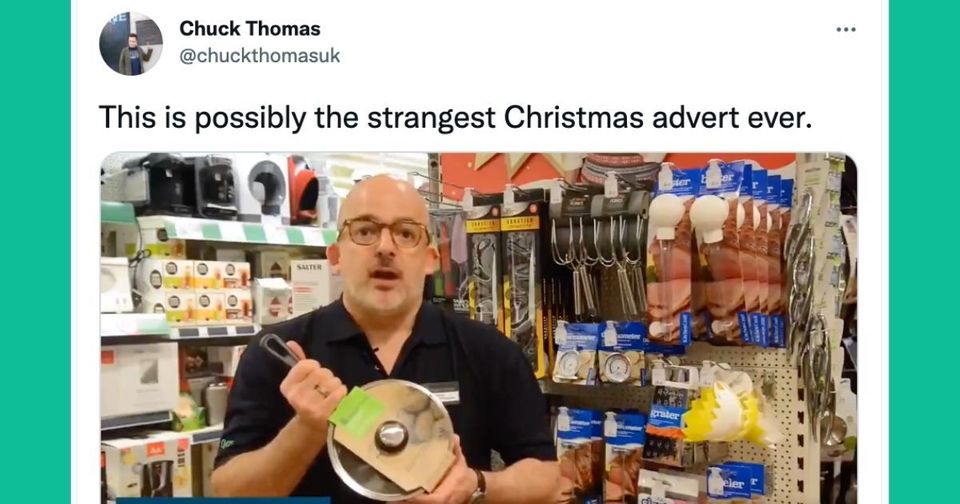
Twitter @chuckthomasuk

Robert Dyas’ six-year-old spoof ad is continuing to amaze people

Robert Dyas’ spoof ad from 2015 makes waves every time Christmas is just around the corner – and people seemed to have fallen for it yet again this year.

A collection of staff and customers from the DIY chain talk directly to the camera for the ad and randomly announce their sexuality while promoting the store.

The first person on screen says: “Hi, my name’s Marcus, I work at Robert Dyas and I’m gay.

″I like going out with my friends and playing volleyball. I also like showing our gay and straight customers our funky range of our Christmas gifts.”

Then another Robert Dyas worker called James appears on the screen and announces that he is straight, likes sailing and baking, along with showing off all of the shop’s Christmas items.

The ad only gets better as random customers – gay, straight and bisexual – announce their sexuality while confirming their love for the hardware shop.

It was even accompanied by the hashtag #DyasComingOut when it was first shared online.

Even though it came out six years ago, not everyone is in on the joke, including actor Laurence Fox.

Not everyone has been quite so gullible though.

The ad itself is actually a spoof of another spoof advert dating back to 2009, from the North Carolina store the Red House Furniture.

This US clip begins by telling the audience that “we can” all just get along in this particular furniture store, despite our differences.

The comedy duo Rhett and Link harmonise in the background of the clip (an element missing from the Robert Dyas ad) while various staff members talk to the camera about their own racial identity. And their love of furniture.

One man says: “Hi I’m Richard, aka Big Head. I work at the Red House and I’m Black.

“I like pumping iron and pumping furniture into people’s homes.”

His colleague then adds: “I’m Johnny, aka T-engage. I work at the Red House and I’m white.”

It goes on like this, with random customers confirming their own race and explaining how much they love the furniture shop while occasionally shaking Richard or Johnny’s hand.

Oh, and don’t forget Richard’s great line: “Look at this sofa. It’s perfect for a Black person. Or a white person.”

This line was then replicated in Robert Dyas’ ad, when one employee says: “Look at this Christmas tree. It’s perfect for a gay person or a straight person.”

Richard and Johnny even point out at the end that “Hispanic people” and “all people” buy furniture from their store, too.

It remains unclear why Robert Dyas decided to do their own take on the clip six years later, but it appears to have turned into a joke that doesn’t get old.

Share Button

Vin Diesel Makes Very Public Plea For ‘Little Brother’ Dwayne Johnson To Return To Fast & Furious

Moviestore/Shutterstock

Vin Diesel and The Rock in the fifth Fast & Furious film

Vin Diesel has launched a very public appeal urging former co-star Dwayne “The Rock” Johnson to return to the Fast & Furious franchise for its upcoming 10th film.

The two actors have not exactly always seen eye-to-eye while making the street-racing action series, with the two-part 10th instalment slated for release in 2023.

On Sunday night, Vin posted a snap of himself and The Rock on Instagram, asking his “little brother” to return as agent Luke Hobbs for one last outing.

“My little brother Dwayne… the time has come,” he began. “The world awaits the finale of Fast 10.

“As you know, my children refer to you as Uncle Dwayne in my house. There is not a holiday that goes by that they and you don’t send well wishes… but the time has come. Legacy awaits. I told you years ago that I was going to fulfil my promise to Pablo. I swore that we would reach and manifest the best Fast in the finale that is 10!”

He continued: “I say this out of love… but you must show up, do not leave the franchise idle, you have a very important role to play. Hobbs can’t be played by no other. I hope that you rise to the occasion and fulfil your destiny.”

The Rock is yet to respond to Vin Diesel’s very extra Instagram post, but has posted on the site since it was uploaded, to promote his new film Red Notice.

Earlier this year, Vin – a producer on Fast & Furious, as well as one of its stars – made headlines when he appeared to try and take credit for The Rock’s performance in the fifth film.

He claimed: “My approach at the time was a lot of tough love to assist in getting that performance where it needed to be.

“As a producer to say, ‘Okay, we’re going to take Dwayne Johnson, who’s associated with wrestling, and we’re going to force this cinematic world, audience members, to regard his character as someone that they don’t know’ – Hobbs hits you like a ton of bricks.

“That’s something that I’m proud of, that aesthetic. That took a lot of work. We had to get there and sometimes, at that time, I could give a lot of tough love.

“Not Fellini-esque, but I would do anything I’d have to do in order to get performances in anything I’m producing.”

Felipe Dana/AP/Shutterstock

Vin Diesel and Dwayne “The Rock” Johnson posing together at a premiere

Responding to his former co-star’s comments a few weeks later, Dwayne said he “laughed hard” when he heard them.

“I laughed and I laughed hard,” the former WWE star told The Hollywood Reporter. “I think everyone had a laugh at that. And I’ll leave it at that.”

He also reiterated that he would not be returning to the franchise, after bowing out in the eighth film.

Dwayne had previously expressed his frustration with male co-stars during the production of The Fate Of The Furious in 2016, with many speculating he was referring to Vin Diesel

“Some conduct themselves as stand-up men and true professionals, while others don’t,” he said at the time.

“The ones that don’t are too chicken shit to do anything about it anyway. Candy asses. When you watch this movie next April and it seems like I’m not acting in some of these scenes and my blood is legit boiling – you’re right.”

Share Button

Covid: Unvaccinated urged to come forward before winter

NHS bosses say it’s never too later to protect your family at Christmas, whether you’re 18 or 80.

Share Button