There are “good reasons” for keeping the new variant out of the UK, scientist Prof Mark Walport says.


There are “good reasons” for keeping the new variant out of the UK, scientist Prof Mark Walport says.
Samir Jassal, who has campaigned with the PM, was a contact in a £100m deal for Covid safety gear.
The government has promised to do “whatever it takes” to stop six English football clubs breaking away from mainstream competition for form a so-called European “super league”.
Culture secretary Oliver Dowden condemned the clubs as “tone deaf” and said he would not stand by and “watch football be cravenly stripped” of what the fans love about it.
He said the government would give “full backing” to the Premier League and other football bodies, which are considering sanctions to stop the clubs breaking away.
But he made clear: “If they can’t act we will.
“We will put everything on the table to prevent this from happening.
“We are examining every option, from governance to competition law and mechanisms that allow football to take place.”
He added: “I want to reassure this House of a very robust response.
“We will do whatever it takes to protect our national game.”
Dowden also said he was “formally triggering” a fans-led review of football promised by the Tories in the party’s 2019 election manifesto, which will be led by former sport minister Tracey Crouch.
He also hinted that the government could change the law to allow the football authorities to take strong action, and that a windfall tax on the clubs involved was under consideration.
It came after Conservative Damian Collins warned that under existing powers for the Premier League and FA “there’s nothing that can be done to stop these six clubs joining the ‘super league’”.
He went on: “Is the government prepared to consider amendments to the law in order to give those bodies the powers they need – in particular to prevent clubs joining competitions that have not been sanctioned by either the FA or Uefa?”
Dowden replied: “On competition law, we’re already engaging with Beis (department for business, energy and industrial strategy) in terms of our response to it. We rule out absolutely nothing.
“I know from my conversations with the Premier League and with Uefa they’re already proposing to take some pretty draconian steps to stop this, but we stand ready and we will not allow anything to stop us from doing this in terms of timing, we’ll get on with it as soon as we need to.”
The decision of Manchester United, Liverpool, Manchester City, Arsenal, Chelsea and Spurs to create a “closed shop” European competition without promotion or relegation has been met with a fierce backlash from fans, players, politicians and the football authorities.
Critics believe it would fundamentally distort competition in Europe for the benefit of the richest few clubs.
Among the sanctions under consideration by the football bodies are kicking the teams out of the Premier League and banning their players from playing for international teams.
Downing Street earlier said a “range of options” were being considered by the government in response, with a German-style system of fan ownership of clubs and clawing back coronavirus support loans included as possibilities.
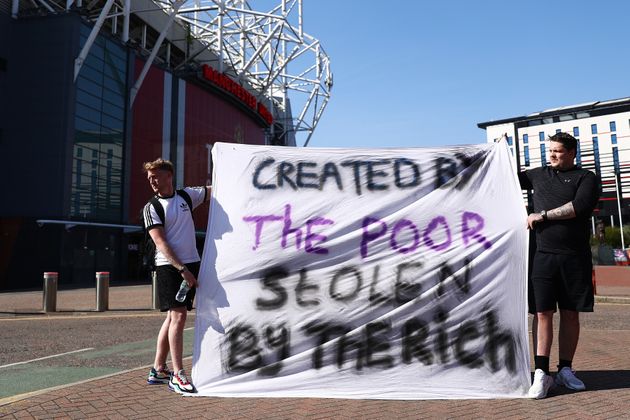
Tim MarklandPA
The European Super League plans also involve Spanish sides Atletico Madrid, Real Madrid and Barcelona and Italian clubs AC Milan, Juventus and Inter Milan.
German giants Bayern Munich and Borussia Dortmund, as well as French champions Paris St Germain have refused to join the league.
The proposal has support from investment bank JP Morgan, which will provide around £4.3bn in debt financing for the competition.
Shadow culture secretary Jo Stevens called this “a watershed moment for our national game” and said Dowden’s statement was “short on detail and the urgency that this situation merits”.
The Labour frontbencher went on: “Football governance is broken, football finance is broken, and football fans whichever club we support, are ignored.
“The hedge-fund owners and billionaires who treat football clubs like any other of their commodities have no care for history of our football, for the role it plays in villages, towns and cities up and down our country and especially for the fans who are the beating heart of it.
“They should understand their role as custodians rather than cartel chiefs.The future of our national game and all our clubs depend on it.”


The health secretary hails the “terrific milestone”, urging those eligible to come forward for the jab.

A new study led by researchers at Johns Hopkins and the University of Pennsylvania uses computer modeling to suggest that eviction bans authorized during the COVID-19 pandemic reduced the infection rate and not only protected those who would have lost their housing but also entire communities from the spread of infections.
With widespread job loss in the U.S. during the pandemic, many state and local governments temporarily halted evictions last spring, and just as these protections were about to expire in September, the Centers for Disease Control and Prevention (CDC) declared a national eviction ban.
However, the order is only extended a few months at a time and is under constant challenge in the court system, including debates about whether such measures control infection transmission.
The research team aimed to study if eviction bans help control the spread of SARS-CoV-2, the virus that causes COVID-19, explains Alison Hill, Ph.D., an assistant professor of biomedical engineering at Johns Hopkins.
In a bid to document the potential impact, Hill and Michael Levy, Ph.D., of the University of Pennsylvania, teamed up with experts in housing policy from the University of Illinois Urbana-Champaign. Hill and Levy specialize in using mathematical models to study how infections spread.
A report on the research was published April 15 in Nature Communications.
In the new report, the investigators say they used simulations to predict the number of additional SARS-CoV-2 infections in major U.S. cities if evictions had been allowed to occur during the fall of last year.
They estimated, for example, that in a city of approximately 1 million residents with evictions occurring at a heightened rate of 1% of households per month, an additional 4% of the population could become infected with SARS-CoV-2, which corresponds to about 40,000 more cases. Even with a much lower eviction rate of 0.25% per month, which is similar to the pre-pandemic level in cities such as Atlanta, Detroit and Tucson, Arizona, estimates were for about 5,000 additional cases.
To make these predictions, the researchers first calibrated their math model to re-create the most common epidemic patterns seen in major U.S. cities in 2020. The model took into account changes in infection rates over time due to public health measures, and it was tailored to match reported COVID-19 cases and deaths. The researchers used the model to track the spread of infection in and out of households. Then, they ran another version of the model in which eviction bans were lifted, to estimate how the bans have affected transmission of the virus.
Hill and her colleagues found that without eviction bans, people who are evicted or who live in a household that hosts evictees have 1.5 to 2.5 times more risk of being infected with SARS-CoV-2 than if the eviction bans were in place.
“People who experience eviction often move in with other households, increasing the density of people living together,” says Hill. “Households are known to be an important setting for SARS-CoV-2 infection, so this can increase transmission rates.”
The researchers’ computer simulations also found that without eviction bans, the risk of SARS-CoV-2 infection would rise for all residents of a city, not just those who are evicted.
Even when the researchers evaluated a different version of the model, in which a city is divided into neighborhoods of different socioeconomic status and evictions are restricted to certain districts, evictions still could cause increases in infections with the virus.
“Some opponents of eviction bans say that evictions only affect a narrow part of the population, but our simulations indicate that evictions not only put disadvantaged households at risk of infection, but entire communities as well,” says Hill. “When it comes to a transmissible disease like COVID-19, no neighborhood is entirely isolated.”
When the researchers used this data to examine how evictions would specifically impact Philadelphia residents, they found that people in all neighborhoods of the city would experience increased COVID-19 levels due to evictions.
Teaming up with researchers from Northeastern University who used de-identified information about how city residents travel throughout neighborhoods, the researchers estimated that, without eviction bans, there could have been approximately 5,000 more COVID-19 cases in Philadelphia if evictions occurred at pre-pandemic levels, and up to 50,000 additional cases if evictions were five times more frequent.
An early version of this research was cited in court cases challenging eviction bans in Philadelphia, and in the CDC’s national eviction order.
To alleviate infection risk and reduce economic burdens, the researchers say, governments should consider not only extended eviction bans but also financial assistance for both tenants and landlords, as well as resources for households to reduce transmission of the virus within the home.
Funding for the research was provided by the National Institutes of Health (DP5OD019851, R01AI146129), the CDC’s COVID Supplement, Google Cloud and Google Cloud research credits.
In addition to Hill and Levy, researchers who contributed to the study include co-first authors Anjalika Nande from Harvard University and Justin Sheen from Princeton University; Andrei Gheorghe and Ben Adlam at Harvard University; Julianna Shinnick and Maria Florencia Tejeda at the University of Pennsylvania; Emma Walters, Andrew Greenlee and Daniel Schneider at the University of Illinois Urbana-Champaign; and Brennan Klein, Matteo Chinazzi, Samuel Scarpino and Alessandro Vespignani at Northeastern University.

Atlantic bluefin tuna have returned to UK waters and can once again be seen during the summer and autumn months.
Their numbers appear to be increasing, following a long period of absence linked to population decline, according to research led by Cefas and the University of Exeter.
Marine scientists in the UK and Ireland have analysed multiple datasets, spanning a 16-year period, to document the increase in bluefin, which arrive into the waters of the Celtic Seas and off South West England, the Scilly Isles, and North West Ireland to feed in late summer and autumn.
The research is part of the Defra-funded “Thunnus UK” research project.
Thunnus UK was established to improve knowledge of this species, as an essential first step in ensuring a positive future for Atlantic bluefin tuna around the UK.
Central to the project’s success has been a concerted effort to share and combine important data on where people have observed Atlantic bluefin tuna.
This will help to identify where and when these fish are found in UK waters.
Nearly 1,000 unique observations were recorded between 2013 and 2018 by citizen scientists, scientists, fishers and eco-tour leaders.
Researchers found that Atlantic bluefin tuna begin to arrive in May and stay as late as January.
However, peak numbers were recorded between August and October each year.
The research draws on five key data sources:
Lead author Tom Horton, of the University of Exeter, said: “Atlantic bluefin tuna are once again a feature in nearshore waters off the UK and Ireland.
“We’ve been able to document this story by using data from a wide variety of sources.
“We need to work together to ensure a future for Atlantic bluefin tuna, both in the UK and Ireland and more broadly throughout their range in the Atlantic Ocean.
“This is a really exciting study and the return of these fish suggest an important role in the UK’s ecosystem.”
Jeroen van der Kooij, Principal scientist and Peltic Survey Lead, Cefas, said: “The unique data collected during our annual pelagic ecosystem survey of SW English waters is fundamental to this research.
“Marine animal observers from MARINELife on board our research vessel recorded not only the arrival, but also a subsequent year-on-year increase in sightings of bluefin tuna in the area.
“We will continue to collect this information, which, in combination with data on their prey fish and habitat collected during the same survey, will hopefully increase our knowledge of these exciting yet enigmatic animals.”
Story Source:
Materials provided by University of Exeter. Note: Content may be edited for style and length.

A recent study finds that social inequality persists, regardless of educational achievement — particularly for men.
“Education is not the equalizer that many people think it is,” says Anna Manzoni, author of the study and an associate professor of sociology at North Carolina State University.
The study aimed to determine the extent to which a parent’s social status gives an advantage to their children. The research used the educational achievements of parents as a proxy for social status, and looked at the earnings of adult children as a proxy for professional success.
To address the research question, Manzoni examined data from people who were interviewed as part of the National Survey of College Graduates between 2010 and 2017. Specifically, Manzoni focused on United States citizens between 35 and 67 years old who reported on their wages and parental education. The final sample size was 56,819 individuals: 32,337 men and 24,482 women.
The analysis found that if a son gets a degree similar to the degree that a parent had, the son will earn more money than if his parent did not achieve the same level of education.
For example, imagine that Son A becomes a doctor, and he had a parent who was also a doctor. Meanwhile, Son B also becomes a doctor, but his parents only had bachelor’s degrees. The study found that, in general, Son A will earn more money than Son B, even though they have the same degree.
This effect also exists for daughters, but it is much weaker.
“The effect we see here essentially preserves social stratification for sons — less so for daughters,” Manzoni says. “We like to think that if someone makes it to college, becomes a lawyer, becomes a doctor, they have ‘made it.’ But what we see is that even earning an advanced degree is unlikely to put you on the same professional footing as someone who earned the same degree but started higher on the social ladder.
“One take-away is that expanding access to education is valuable, but education alone is not enough to resolve our society’s challenges in regard to inequality,” Manzoni says.
“This work shows that social origin matters, but it’s not clear what drives this structural inequality,” Manzoni adds. “Is it social capital? Access to networks? Differing financial resources? Is parental background becoming more important as a larger percentage of the population is getting a college degree? Is the advantage at the beginning of a child’s career? There is still a lot of room for additional research on this subject.”
Story Source:
Materials provided by North Carolina State University. Note: Content may be edited for style and length.
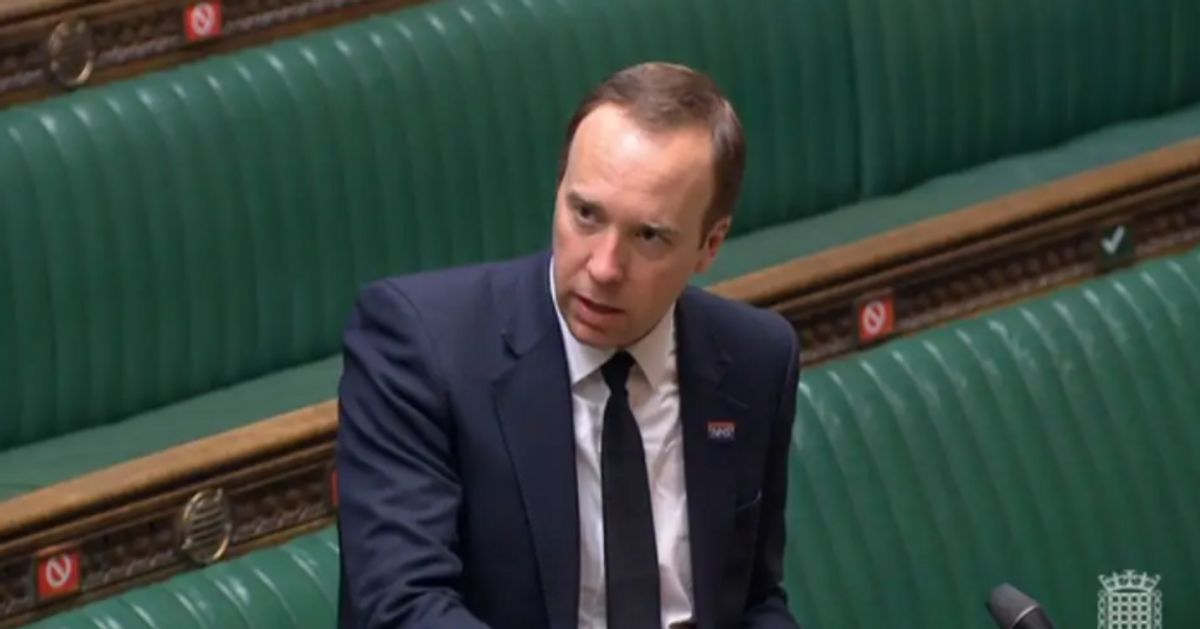
India will be added to the UK’s “red list” for travel, Matt Hancock has announced.
It means from 4am on Friday April 23, only British, Irish and third-country nationals with residency rights travelling from India can enter England.
Anyone arriving in the country will be required to self-isolate in a government-approved hotel for ten days.
Hancock told the Commons on Monday: “We’ve recently seen a new variant first identified in India.
“We’ve now detected 103 cases of this variant, of which again the vast majority have links to international travel and have been picked up by our testing at the border.”
The health secretary said the samples have been analysed to see if the new variant has any “concerning characteristics” such as greater transmissibility or resistance to treatments and vaccines.
He added: “After studying the data, and on a precautionary basis, we’ve made the difficult but vital decision to add India to the red list.”
Boris Johnson cancelled his visit to India next week, as the coronavirus crisis deepened in India and concerns grew over the new variant.
The already-curtailed trip was postponed indefinitely on Monday, but the prime minister said he planned to hold a call with his Indian counterpart Narendra Modi ahead of a rescheduling “as and when circumstances allow”.
Johnson had until that point resisted demands to hold the talks, aimed at fostering closer ties with the nation, on a virtual basis amid calls to impose greater restrictions on travel to and from India.
The cancellation came as New Delhi entered a week-long lockdown to tackle a surge in cases and prevent a collapse of the capital’s health system, as India reported 273,810 new infections – the highest daily rise since pandemic began.
Downton Abbey bosses have finally confirmed a second film is now in the works, and is scheduled to hit cinemas around Christmas.
The first Downton Abbey film was released in 2019, and proved popular with fans of the original period drama, which began on ITV and went on to become a global success.
On Monday afternoon, it was revealed that the wheels had been put in motion for a long rumoured sequel, with all of the show’s original cast returning.
This includes Hugh Bonneville, who tweeted shortly after the announcement, and his on-screen wife Elizabeth McGovern.
Dame Maggie Smith is also expected to return, after her iconic Downton character confided in her granddaughter that she was dying at the end of the first film.
New cast members for the sequel have also been revealed, including Hugh Dancy, Laura Haddock, Nathalie Baye and Dominic West, the latter of whom has been heavily rumoured to be playing Prince Charles in the forthcoming fifth series of The Crown.

Isa Foltin via Getty Images
Filmmaker Simon Curtis – whose recent credits include the films My Week With Marilyn and Goodbye Christopher Robin – will direct the second Downton Abbey film.
Executive producer Gareth Neame said: “After a very challenging year with so many of us separated from family and friends, it is a huge comfort to think that better times are ahead and that next Christmas we will be reunited with the much beloved characters of Downton Abbey.”
Focus Features chairman Peter Kujawski agreed: “There’s no place like home for the holidays, and we can’t imagine a better gift than getting to reunite with Julian, Gareth, and the entire Downton family in 2021 to bring the Crawley’s back home for their fans.”
Downton Abbey 2 is slated to hit UK cinemas on 22 December 2021. All six series of Downton Abbey are available to stream now on BritBox.



East Kent Hospitals Trust admits failings that came to light after family’s campaign for “justice”.
